Investigations revealed that the three male youths had assaulted the victim and took his wallet containing S$700 in cash.
Source link
3 teens arrested for robbing, assaulting man at Beatty Road
Seven years’ preventive detention for serial conman who faked accident

SINGAPORE – A serial conman who tried to cheat compensation from drivers by throwing himself against their vehicles was on Thursday (Aug 25) sentenced to seven years’ preventive detention – a form of punishment for repeat offenders that does not allow a…
Source link
How S R Nathan won over suspicious reporters and built bridges between them and Govt

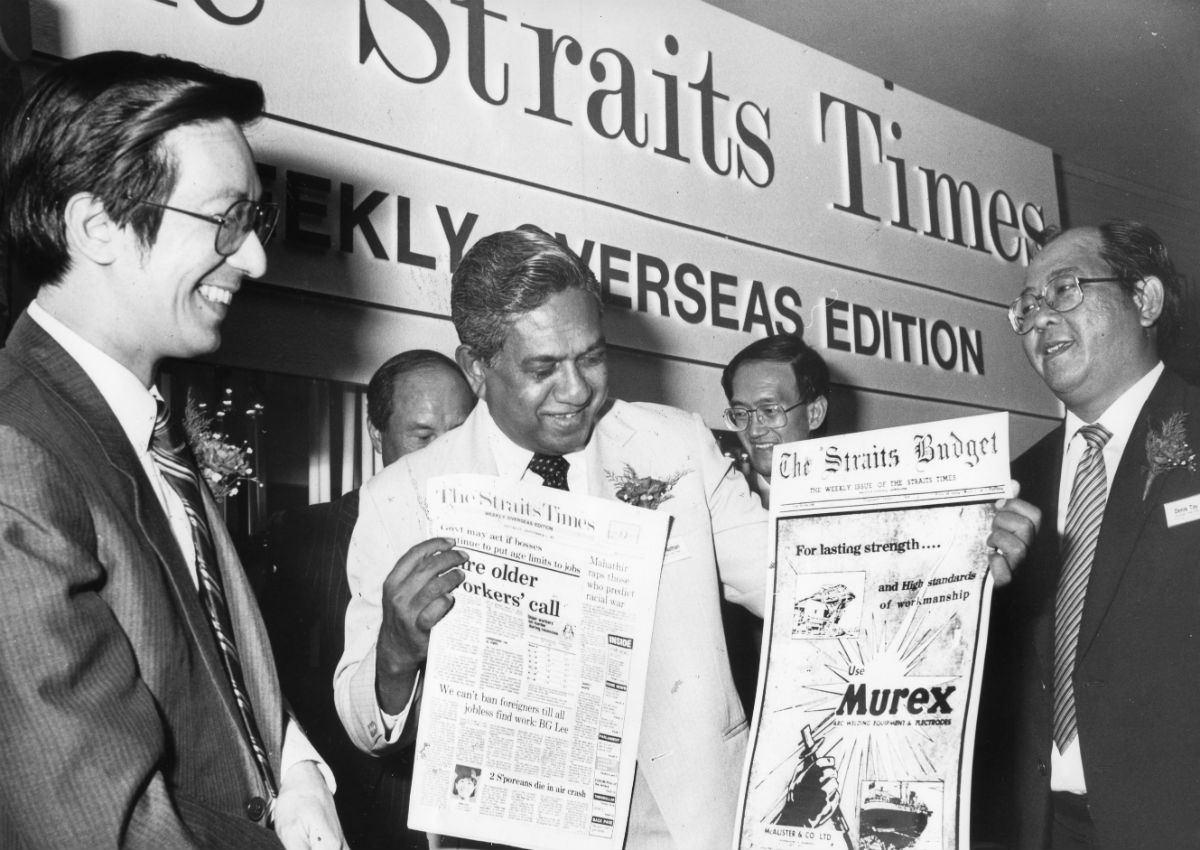
SINGAPORE – Clad in a white, short-sleeved shirt and dark pants, Mr S R Nathan was on a stroll in The Straits Times newsroom to get acquainted with his new workplace when a reporter stopped him and said: “Eh, can you get me the file?”
Without a word of protest, Mr Nathan, then 57, went and got the file of news clippings from the library for the reporter.
Days later, the reporter was mortified to discover that the modestly dressed man was his new big boss – the first senior civil servant-turned-executive chairman of The Straits Times Press group.
It was February 1982, a time when ministers made the public announcements and civil servants worked anonymously behind the scenes, rarely in the public eye.
But in quietly delivering the file, Mr Nathan made a powerful statement that he was a man of humility and would go out of his way to bridge the chasm between The Straits Times newsroom and the Government, said the company’s former editor-in-chief Cheong Yip Seng.
Mr Cheong, then editor of The Straits Times, was in the vortex of the changes. He recalled relations between the newspapers and Government were at a low, following the People’s Action Party’s loss in the 1981 Anson by-election, after 25 years as the only party in the House.
Mr S R Nathan’s Lying In State at Parliament House
Click on thumbnail to view photos. Source:
AsiaOne, The Straits Times, Ministry of Foreign Affairs
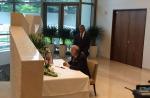
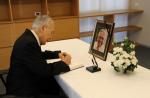


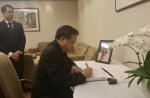


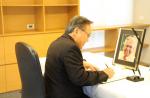
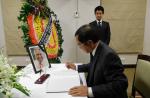
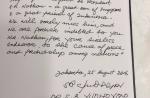
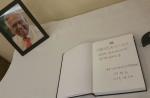






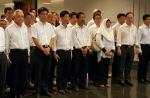

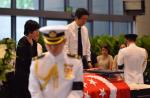


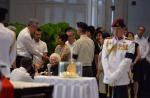
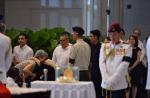













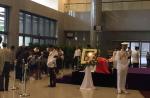











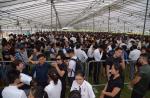

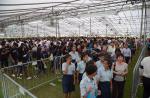
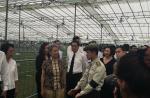





















Then-prime minister Lee Kuan Yew believed the editors could not control younger reporters, who desired more opposition in Parliament and wanted scoops above all.
The appointment of Mr Nathan, then permanent secretary of the Foreign Ministry, was a compromise accepted by senior editors to prevent other more hardline civil servants from taking over.
Some in the newsroom, however, did not see it that way. Buoyed by the resentment, a few reporters wore black arm bands in protest on Mr Nathan’s first day in the newsroom, which was in the now-demolished Times House in Kim Seng Road.
But Mr Nathan did not take umbrage, said Mr Cheong.
Neither did he behave, as feared, like a government censor scrutinising the daily line-up of news stories, killing or changing reporters’ stories.
“He went out of his way in the early days to show he was not there to do a hatchet job,” said Mr Cheong. “His agenda was to build bridges.”
He added: “If he didn’t have credibility in the newsroom, his position as a bridge would be undermined. So he needed credibility with Government, he needed credibility with us.”
Over time, his actions won over the newsroom, said Mr Cheong.
The reporters, he added, could see their new executive chairman did not correct stories, nor call up editors to order them to change stories or tell reporters what to do.
He also went out of his way to help journalists develop their skills, said Mr Cheong.
Singapore’s former president S R Nathan dies
Click on thumbnail to view photos. Source:
tabla!, The Straits Times, The New Paper, Berita Harian

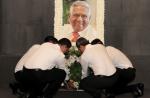
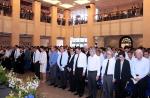























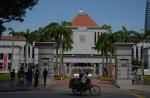
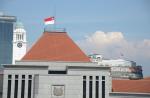






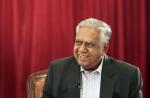
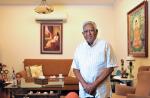
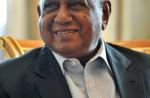
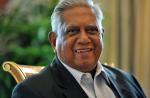
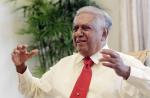
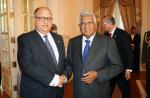
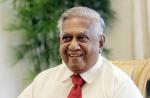
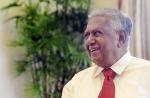
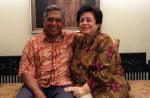


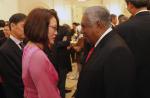

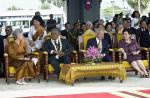
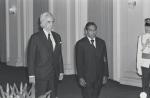







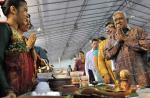



Mr Nathan talked regularly to younger reporters to get a sense of how they felt and with editors, he had “coffeebreak” meetings in the evenings to discuss hot-button issues and policies.
He wanted the Government to understand how the newsroom operated, and that editors were not out to undermine it.
Mr Nathan also knew some senior editors, including editor-in-chief Peter Lim, from the time he was in the National Trades Union Congress between 1962 and 1966. As head of its Labour Research Unit, he helped the unionised reporters negotiate for better pay and work conditions from the management.
Mr Cheong said he got to know Mr Nathan better while covering ministerial trips abroad and later, from the regular briefings on foreign affairs he would hold for editors.
He added: “He was one permanent secretary who reached out to the media and that was very rare among permanent secretaries then.”
These efforts narrowed the gulf between the editors and the Government, so much so that some of Mr Nathan’s former civil service colleagues told him he had “gone native”.
He probably regarded it as a jibe but laughed it off, said Mr Cheong.
While he spent time and effort coaxing and convincing editors to consider the Government’s view, he also defended them.
Mr Cheong recalled an episode when a minister was so enraged by a news story that he phoned and berated Mr Nathan.
“He later told us that he heard the minister, but because the minister was repeating the point, he put the phone down on the table and carried on working. In other words, he wasn’t someone who would take a call from a minister and just roll over and play dead.”
Mr Cheong credits him with convincing politicians to be more willing to hear reporters out and understand their side of the story.

This article was first published on August 25, 2016.
Get a copy of The Straits Times or go to straitstimes.com for more stories.
Image:
Publication Date:
Friday, August 26, 2016 – 09:00
Keywords:
Send to mobile app:
Source:
Rotator Headline:
How S R Nathan won over suspicious reporters & built bridges
Story Type:
Others
Local footballers offer last respects to S R Nathan
He loved his football – especially when it came to his home ‘club’, the Lions national team.
Not only would former president S R Nathan turn up to watch finals of competitions they…
Source link
A boy who saw larger-than-life President grows up to meet down-to-earth S R Nathan
When Mr S R Nathan became President in 1999, I was an awkward kid on the cusp of teenagehood, ignorant of current affairs and blissfully unaware of the challenges he had to overcome.
Neither did I know what the President represented in the greater scheme of things.
Indeed I was one of many – as I have come to realise from conversations with my friends and reading online tributes – who saw the President and his wife as larger-than-life figures whose portraits graced assembly halls in schools.
It was Mr and Mrs Nathan who cast a watchful eye over my formative years as my peers and I sang the National Anthem and recited the National Pledge, as well as over our many accomplishments and, certainly, youthful indiscretions.
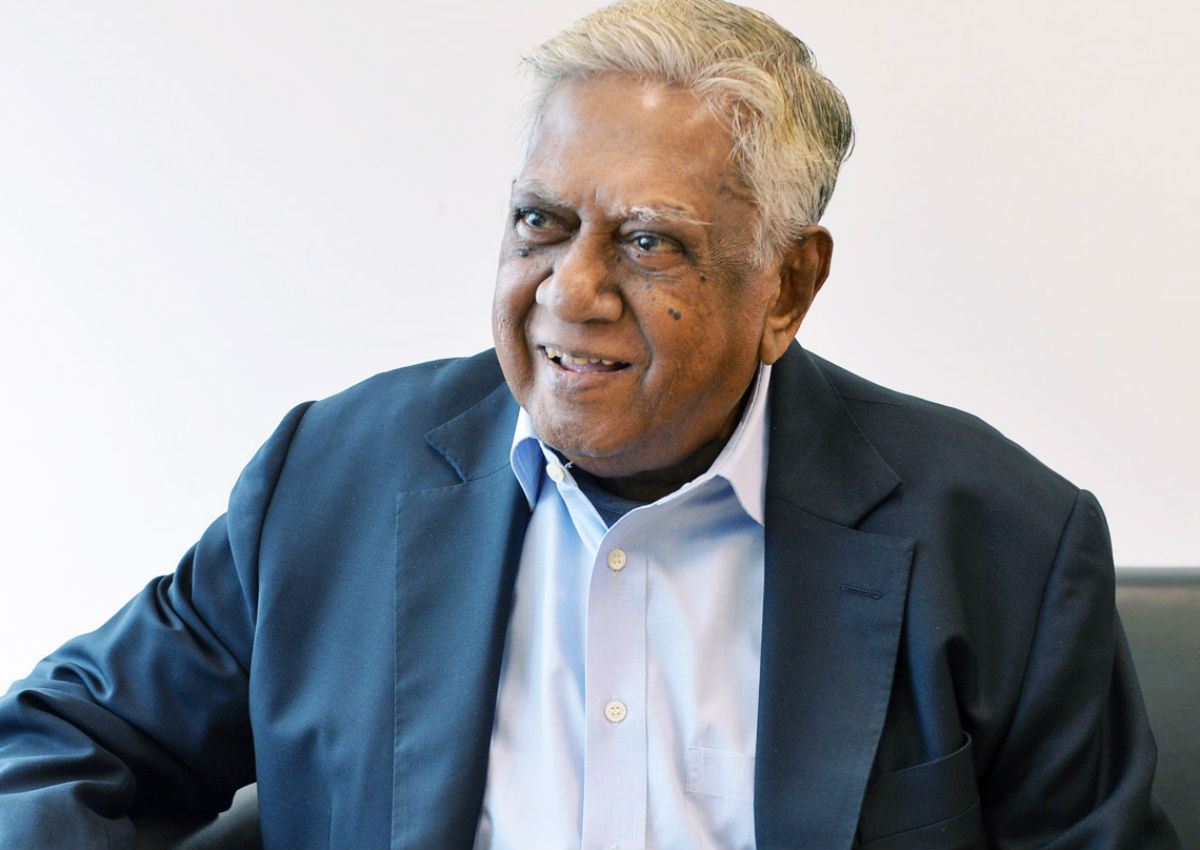
Which was why in January last year, when I met Mr Nathan for the first of three interviews I would come to have with him over 14 months, I was instantly struck by his down-to-earth manner.
I was a rookie reporter on the political beat, and he had graciously opened his Ceylon Road home to me and my colleagues for an interview for a feature series with newsmakers to talk about topical issues.
It lasted an illuminating 75 minutes during which he spoke, with what seemed like a mixture of reminiscence and pride, of having beaten the odds despite his humble beginnings.
From winning the hand of Mrs Nathan “against parental objections” to being given challenges “which you never knew whether you had the capacity (to succeed in)”, he appeared confident that most obstacles could be overcome with tenacity and the right attitude.
He thrived on it.
“Every time you go into the deep end of the pool and come out of it, there’s a satisfaction,” he said during the interview, in what would be my biggest takeaway from the session. It was a reminder to hunker down and carry on when the going gets tough.
We shared a meal after the interview – Mr Nathan had mee goreng and orange squash prepared for me and my colleagues.
The chat took place shortly after the launch of his last book S R Nathan In Conversation.
Mr Nathan died on Monday, August 22, at age 92.
Read more: He treated everyone equal, including staff
This year I met him twice, in January and March, to discuss a slated revamp of the elected presidency which he was a part of, and the legacy of late founding prime minister Lee Kuan Yew for an article to mark the first anniversary of Mr Lee’s death.
On both occasions, he invited me to chat with him at Singapore General Hospital, where he had been undergoing regular dialysis sessions.
It had felt like an intrusion to what might, for some, be a private moment. But he immediately put me at ease, cracking jokes while also stressing his ambition to keep his mind active even as his body becomes frail.
When I asked if he still occasionally took the walks at East Coast Park which used to be a daily routine, he said with a tinge of regret: “No. And I miss the opportunity to meet people”. In his walks, he got to know some of the regulars so well that he would check on them should he not see them.
He was acutely aware of his humble beginnings, as well as the view among many Singaporeans that he was elected unopposed in two presidential elections.
Mr Nathan’s varied career has spanned the labour movement, the newsroom, diplomacy and the highest office of the land. But he acknowledged that today’s youth are, perhaps, quite unaware of the part he had played in Singapore’s history.
“There are many things competing for their attention: football, entertainment, technology and so on,” he said last year. “For the young, the past hasn’t impacted them. They’re off to tomorrow. They’re not going to live their lives because of what happened in the past.”
Singapore’s former president S R Nathan dies
Click on thumbnail to view photos. Source:
tabla!, The Straits Times, The New Paper, Berita Harian




Though many see today’s youth as members of a “strawberry generation” that cannot cope with hardship, he refused to pass any such judgment.
“I think if the test comes, they will be strong. It appears to be like that. But you cannot prove it until it happens, and I’m fairly confident they will develop their own capacity to deal with the problems of society in a different way.”
Good night, Mr President. It is now up to us to prove you right.
waltsim@sph.com.sg
Walter Sim, 29, is The Straits Times correspondent in Japan
Read more:
Queues form in blazing sun as people pay last respects to former president S R Nathan
Businessman who painted S R Nathan: ‘We bonded like old friends’
This article was first published on August 25, 2016.
Get a copy of The Straits Times or go to straitstimes.com for more stories.
Image:
Category:
Publication Date:
Friday, August 26, 2016 – 09:00
Keywords:
Send to mobile app:
Source:
Rotator Headline:
Boy who saw larger-than-life President meets down-to-earth S R Nathan
Story Type:
Others
S’pore Scout Association to set up fund in Mr Nathan’s name

 SINGAPORE – In honour of Mr S R Nathan, who was Chief Scout during his presidency, the Singapore Scout Association will be setting up a fund to give scouts in need the chance to attend international jamborees and other overseas scouting events.
The target for…
Source link
Is love colour blind? Mixed race couples tackle challenges
1 in 5 marriages here is inter-racial, but social acceptance of such unions remains mixed. On The Red Dot profiles the stories of three couples.
Source link
CJ rebukes lawyer for questioning morality of sex crime victim

 SINGAPORE – A defence lawyer who insinuated that a minor suffered no trauma from a sexual crime as she was in a sexual relationship with someone else at that time drew the ire of Chief Justice Sundaresh Menon on Thursday (Aug 25)
The judge questioned the need…
Source link
Outdoor system that cools air to 24 deg C on trial at Singapore Zoo
SINGAPORE – Visitors to the Singapore Zoo could soon be able to stave off the heat in some areas of the park, thanks to a new outdoor cooling system that is touted to blow air as cool as 24 deg C.
The Airbitat Smart Cooler, developed by Innosparks, an ST Engineering subsidiary, was unveiled at the zoo on Thursday (Aug 25), at a joint media briefing with Mandai Park Development.
Each unit, about the size of a refrigerator, can cool an area of about 600 sq m, and has a reach of 5m to 10m.
The cooler is eco-friendly, using 80 per cent less energy than an average air conditioning unit, and does not produce heat.
Four units have been placed at the zoo’s ticketing area since Tuesday (Aug 23) for a six-month trial. If successful, 80 to 100 units will be rolled out in the near future at “cool zones” within four of Mandai Park Holdings’ wildlife parks: the Singapore Zoo, River Safari, Night Safari and Jurong Bird Park.
The cool zones include areas such as ticketing counters and restaurants, said Mandai Park Holdings’ group chief executive officer Mike Barclay.
“Singapore’s outdoor heat and humidity can discourage our guests from extending their stay. We would like to address this heat issue in a sustainable, energy-efficient manner,” said Mr Barclay.
While a timeline for the rollout and cost have not been determined, Mr Gareth Tang, the project’s engineering lead and general manager for Innosparks, said that cost effectiveness is key for cooling large outdoor spaces.
An Airbitat unit costs $2.50 a day to run, while an conditioning unit with similar capacity costs about $12.50, said Mr Tang.
The machine is built around a “cold water core”, where water is circulated and chilled through an evaporation process. Warm air is drawn in, and cooled by passing through the running water.
It also has an intelligent system that uses sensors to monitor the environmental temperature and humidity, and determine its output.
After 18 months of development, the units are expected to go into production next year, said Mr Tang. Other suitable locations include semi-open industrial spaces that are not suitable for air conditioning, such as aircraft hangars.
“We want to encourage the use of sustainable cooling, and pumping less heat into the environment,” he said.
This article was first published on August 25, 2016.
Get a copy of The Straits Times or go to straitstimes.com for more stories.
Image:
Publication Date:
Friday, August 26, 2016 – 09:00
Keywords:
Send to mobile app:
Source:
Story Type:
Others
Singapore Zoo trials new outdoor system that cools air to 24°C

 SINGAPORE – The Singapore Zoo is trying out a new outdoor air-cooling system that can bring down temperatures to as low as 24°C, while using less energy than an average air conditioner.
The Airbitat Smart Coolers were developed by Innosparks, a subsidiary of…
Source link


