The early months of the Covid-19 pandemic sent Nirmala Murugaian into a blind panic. As Singapore slipped into an economic downturn , funds plummeted at Child at Street 11, the non-profit childcare centre that she runs.
Parents could no longer afford to pay childcare fees as they were hit by job losses or pay cuts. Funds from corporate donors quickly dried up as cost-cutting measures kicked in.
The centre, which currently has 55 children from low-income families and largely relies on donations, only managed to raise $20,000 in February, but its monthly expenses average around $80,000. There was a real threat it would cease to exist, and Singapore’s partial lockdown made the situation even worse.
“That was really scary,” said Murugaian. “We had to close the school, and all our contacts with our usual donors had to stop. It was like seeing your blood pressure readings on a health machine. Is it going to stop? Is it going to end?”
But donations started streaming in when word got out about the 21-year-old centre’s plight, and it raised about $200,000 in three months. Not quite enough yet, but the generosity gave it hope, she said.
As Singapore continues to encourage businesses and staff to Work From Home during this Covid-19 pandemic, Singapore based SMBs and their staff can be facing IT-related challenges in connectivity or just general IT issues with little to no support.
This isn’t the first round of help HP has offered to consumers and businesses.
This time around, HP’s 24/7 limited remote helpdesk service will available free of charge to registered users from May 11 to June 10.
Whether it’s your personal HP device or a corporate device, support is now easy, accessible, and secure! Upon registration, SMBs will receive a toll-free hotline number for their use, with each registration made covering one PC and one peripheral device like a printer.
SINGAPORE – A poster put up by GrabFood more than a year ago at a River Valley condominium has been swept up in an online controversy recently after it was posted on social media.
It tells the company’s food delivery riders to use the stairs, not the lift, to deliver food to residents of RV Point, a seven-storey residential block.
The message left a sour taste in the mouth of many netizens.
But when contacted on Thursday (May 28), both GrabFood and the condo’s managing agent said the online uproar was a case of a message that went down the wrong way.
GrabFood said its poster was actually meant to remind its delivery riders to take the stairs a floor down to the basement to collect the food that had been ordered from what it called its “food fulfilment hub”.
Mr Andy Lim, managing director of Ocean IFM which manages the condo, told The Straits Times: “The food delivery riders have been permitted from Day One to use the lift to deliver food to the residents, and the arrangement is ongoing.”
After telling his family that he was going out to buy drinks, a man went to meet his girlfriend’s former boyfriend to resolve their differences.
The meeting on Wednesday evening landed the 20-year-old in hospital with serious injuries after he was attacked by a group of men.
His older brother, 24, told Shin Min Daily News that his family later found out he had agreed to meet his girlfriend’s ex-lover at a void deck.
To his horror, the victim, who was not named, realised the meeting was an ambush when four to five men set upon him, the brother said.
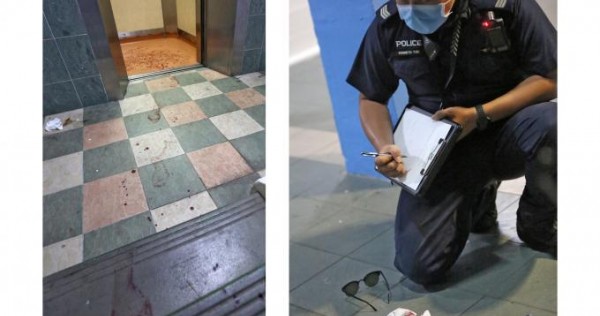
The family was shocked to see the victim bleeding profusely from multiple slash wounds when he returned 15 minutes after stepping out.
SURGERY
The father told Lianhe Wanbao his son was slashed on the forehead and suffered a deep cut on his left arm that exposed the wrist bone, for which surgery was required.
The police told The New Paper yesterday they were alerted to a case of voluntarily causing hurt by dangerous weapon at Block 106 Lorong 1 Toa Payoh at about 6pm on Wednesday.
A 20-year-old man was taken conscious to Tan Tock Seng Hospital, they added.
SINGAPORE: John Ng was hoping to use 2020 to get his new company StyleLab off the ground. He had taken over the distribution rights to fashion label G-Star RAW last July from Sidefame, where he was previously the director and general manager, and successfully acquired the distribution rights foragnès b in the same month.
But then COVID-19 struck, putting a halt to any plans he had to build the business up and expand into Southeast Asia in the second half of this year. Currently, he has shops and counters at five locations in Singapore: Jewel Changi Airport, Paragon, Isetan Scotts, Robinsons The Heeren and Takashimaya Department Store.
Some establishments at Jewel Changi Airport have seen a 70 per cent fall in business amid the COVID-19 crisis. (Photo: Raj Nadarajan/TODAY)
Sales in February and March fell by 70 per cent, Mr Ng said, which meant that the business was already loss-making. During those months, travel restrictions were gradually introduced, and Singaporeans started to work from home.
Revenue has since dropped to zero after the “circuit breaker” kicked in on Apr 7 when most retailers were forced to shut their doors.
During the circuit breaker, Mr Ng has had to spend most of his time reassessing his balance book, trying to stem the bleeding caused by the COVID-19 pandemic.
The Jobs Support Schecme – which co-funded 75 per cent of local employees’ wages in April and May – as well as the foreign worker levy rebates have cushioned some of the manpower costs, while the possibility of getting four months of rental relief could buffer further losses, Mr Ng acknowledged.
However, the wage subsidies have only covered about half of his 24 employees’ wages so far, Mr Ng said, pointing out that he still has to contribute to their central provident funds.
And equally worrying, he said, is the question of when retailers can restart their business, as they can only open their stores in phase two of the post-circuit breaker timeline.
There is no certainty yet about when that might happen.
While Minister for National Development Lawrence Wong said on Thursday (May 28) that it could come as soon as the end of June, it would be conditional on community infection rates remaining low and stable.
“The key is income. There is no income right now, so everything is a cost,” said Mr Ng, who has taken out a temporary bridging loan to to cover his bank obligations and employees’ salaries.
A G-Star RAW store. (Photo: John Ng).
“How long more (can we last)? Certainly not very long,” Mr Ng said. “We were thinking even just this month or next month, to start cutting staff or even scale the business down and close some outlets.”
“Besides the cost, how can we justify to our investors that we continue to pay salaries when there is no income? And not one month, not two months, but three months (at least),” he stressed.
Throughout Singapore, the retail scene has been reeling from the economic impact of COVID-19 and the health precautions put in place to mitigate the virus’ spread.
Even before the circuit breaker, the retail industry saw its biggest drop in sales in 22 years in March, falling by 13.3 per cent. Sales of apparels and footwear tumbled by 41.6 per cent year-on-year.
The situation could deteriorate further. KPMG economist Paul Kent said that Singapore is likely to continue seeing a significant drop in retail sales, since the country had effectively shut its malls and non-essential services from the second week of April.
“This coupled with the cautious spending by consumers in light of the uncertainty, means that we will likely see a continuation of the negative trajectory,” he said.
With cut backs on retail spending, Mr Kent said about 90,000 to 100,000 jobs could be affected – some could be laid off, but others restructured – and 120,000 to 150,000 if the wider retail supply chain is taken into consideration.
Plummeting retail sales could have wider implications on the economy. He noted the the Monetary Authority of Singapore’s report in April which highlighted that around 60 per cent of consumer spending has been impacted by the circuit breaker measures.
“If you consider travel restrictions and the lack of foreign visitor spending, a 60 per cent drop in final demand of retail spending could cause an impact on the GDP of around -1 per cent to -2 per cent,” Mr Kent said.
OUTLOOK REMAINS BLEAK AFTER SHOPS REOPEN
Even as the industry eventually sputters back to life, retailers said that reopening their stores may not bring an end to their woes.
Travel restrictions are still likely to be in place, meaning there will still be a lack of tourists.
Mr Ng said this group of spenders accounts for 50 to 60 per cent of total sales. The current economic fallout also suggests fewer dollars coming from domestic customers.
By the time they open, current stocks will possibly be a season behind too, said Mr Ng.
Similarly, Rainforest Design’s co-founder Sharon Kong said she has about S$100,000 to S$200,000 worth of spring/summer inventory that she has been unable to sell.
She is unsure whether next season’s collections will come in given supply chain disruptions globally.
The 22-year old company, which has several counters at Takashimaya selling luxury fashion items from brands such as Naracamicie and Swany, had already seen revenue decline by 75 to 80 percent in February and March, before it hit zero during the circuit breaker.
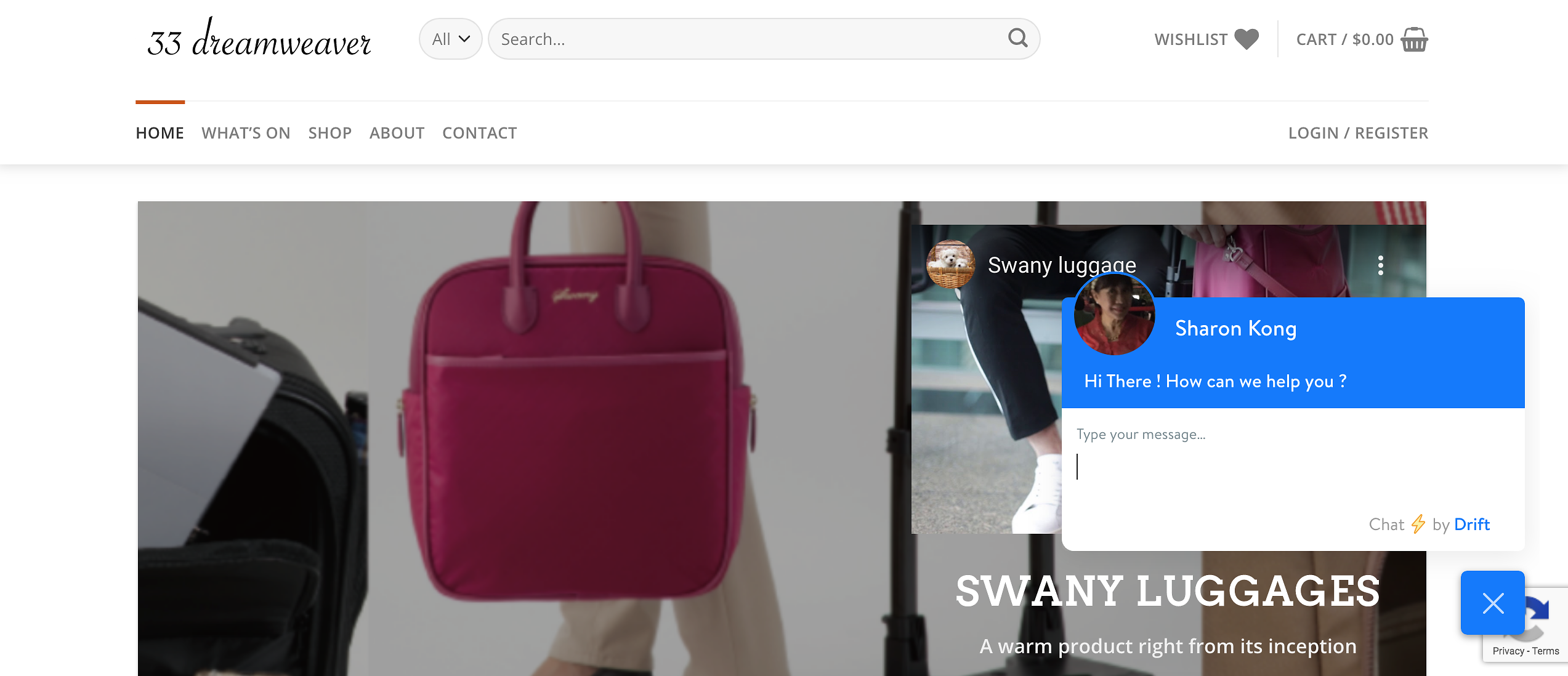
Sales on their e-commerce store is negligible, Ms Kong said, as hardly any customers order through it.
A screenshot of Ms Kong’s online store 33dreamweaver.com’s webpage taken on May 28, 2020.
“We were really looking forward to opening on June 2,” she said.
But she acknowledged that sales might not pick up much after restrictions are eased.
“We sell discretionary goods. A pair of pants is a pair of pants, you don’t need a new one when the economy is bad.”
Samuel Tan, the course chair of Temasek Polytechnic’s diploma in retail management, said that expecting the industry to recover within 2020 itself might be too optimistic as consumers will be cautious with opening up their wallets even after the circuit break ends.
A good indicator whether the sector has recovered would be to study the year-end festive season, when spending is higher than normal, Mr Tan said.
Retailers could also find attracting investments difficult during this period of economic uncertainty, Mr Kent said, which will present longer-term business challenges among business owners.
MOVE TO E-COMMERCE
One suggestion observers have made is to start selling goods online to steer the business through the pandemic, and to ride the rising e-commerce wave at the same time.
“(Retailers) should then take advantage of this current downtime, undergo short courses on e-commerce, and work with suitable partners to roll out their e-commerce business,” said Megan Ong, the director of Nanyang Polytechnic’s Singapore Institute of Retail Studies.
Aside from subsidised training courses, the Government recently launched an ‘E-Commerce Booster Package’ under Enterprise Singapore (ESG) to help retailers go online, subsiding 90 per cent of costs – capped at S$9,000 – to set up on e-commerce platforms like Amazon and Shopee.
ESG will also pay for 90 per cent of manpower costs for three months under the initiative.
On Tuesday, the Government also announced its S$500 million plan to spur businesses to adopt digital tools amid COVID-19.
Part of the slew of financial incentives include a grant of up to S$10,000 if the firm incorporates things like data analytics softwares and e-commerce platforms.
Despite the concessions, retailers say pivoting online is not just about how much the new setup will cost.
Mr Ng said that he has to first negotiate with the brands he represents for rights to sell their goods online in Singapore.
One of his brands, agnès b, is also already sold separately on Zalora, an online marketplace for fashion products.
Getting collaterals like photos and copy material could take weeks, especially if studio shoots are considered non-essential right now, he said.
Ms Kong added that going online is “a whole other set of investments”. Even with money from the government, labour to run an online channel in the long-term does not come cheap.
Online consumers also play by a different set of rules, Ms Kong added, like wanting their products delivered almost immediately.
There will be data processing systems to create, logistical channels to revise, and another category of inventory to manage, which she is not sure her small firm of 15 people can handle.
Lucas Tok, a marketing lecturer at Singapore Polytechnic, agreed with the retailers’ sentiments, adding that it can be hard to understand what vendors offer to them if they set up their own site, or which site suits them best if they went a marketplace platform.
An employee works at Amazon’s Prime Now fulfillment centre in Singapore, Jul 27, 2017. (Photo: Reuters/Edgar Su)
Other questions merchants might ask is why would they want to invest in something which has a risk involved, or they may need two months to finally get familiar with – by which time their store’s business may be back to normal, he pointed out.
With everyone, including larger retailers, trying to take their business online, it has also become harder to grab the customer’s attention online, said Wang Xiaofeng, a senior analyst at market researcher Forrester.
Supply chains and delivery resources have run thinner during the pandemic too, Ms Wang said.
However, the analysts said that with the entire retail landscape shifting online – online sales encompassed 8.5 per cent of retail trade in March 2020, compared to 5.3 per cent a year ago – going digital is the only means of survival, during and after this pandemic.
Lazada Singapore’s chief executive James Chang said it has seen more than 4,500 businesses and entrepreneurs signed up as new sellers on Lazada in April, four times its usual average monthly sign-ups.
To help local retailers during this period, his company has been holding online shopping events – like a virtual tech show in March after the physical IT Show was postponed – and plans to keep holding similar campaigns in the coming months, Mr Chang said.
A screenshot of Lazada’s webpage taken on May 28, 2020.
On the consumers’ end, Temasek Polytechnic’s Mr Tan said that the circuit breaker has created many online shopping converts who are now “assured by the positive shopping experience”.
“Online buying is here to stay,” he said, and the only way for retailers to stay afloat is to cater to their customers’ new habits.
More than just going digital, retailers will have to look at new business models like a “click-and-collect” strategy or contactless delivery as well, as consumers are likely to be more wary of crowds and public spaces during this time, said Mr Kent.
One retailer that managed to modify her business model quickly is Fatimah Mohsin.
The owner of a bridal gallery and home decor shop said she spent her time in April revamping her online boutique store.
When May arrived, she began to promote her products to her 50,000-odd Instagram followers and conducting free virtual home decor classes ahead of Hari Raya Puasa.
“After they announced the circuit breaker in April, I felt horrible,” Ms Mohsin said. “I was so afraid my cash flow will deplete in three to four months.”
“So I asked myself, what can I do if this goes on?”
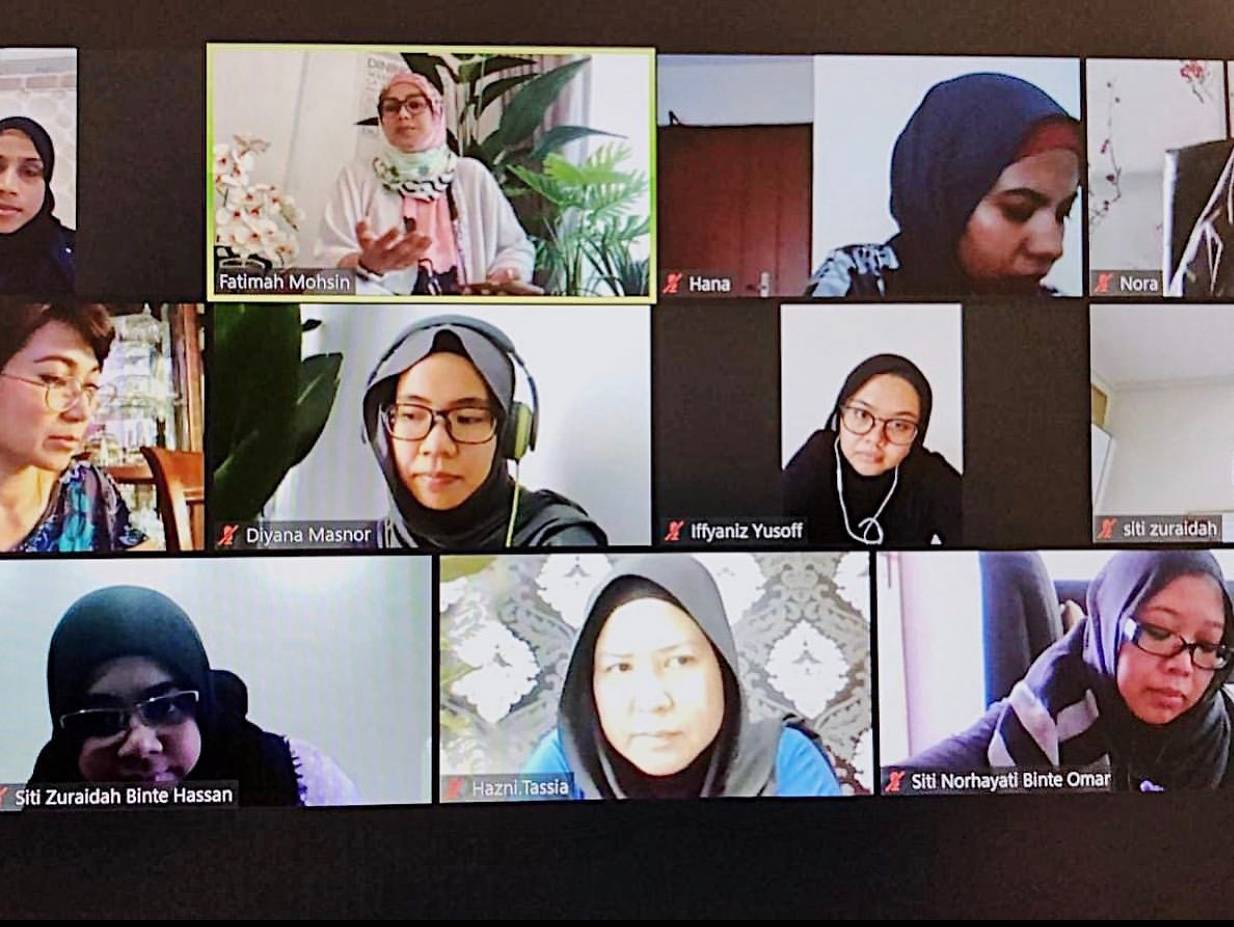
Fatimah Mohsin teaching an interior design class online. (Photo: Fatimah Mohsin/Instagram).
Ms Mohsin’s online store has since raked in 700 per cent more in sales in May so far compared to the whole of April.
However, she said she has only managed to break even since the circuit breaker started, since she still has May’s rent to pay for – her Arab Street shophouse lease costs a “five-figure sum” every month – and her bridal studio income has dropped to zero.
Still, focusing on her online boutique is the only way forward, she believes.
“I think (the current shopping trend) is the new norm,” Ms Moshin said. “I can’t just wait around for things to go back to what it used to be. I have to keep trying new ideas.”
Sanif Olek’s journey in filmmaking began on a very personal note.
Not long after his father’s death in 2004, the Singapore filmmaker found the urge to remember the elderly man in a special and heartfelt way. He created his very first short film as a tribute to him.
“When people start out in their career, they want to be good in their work and sometimes, they neglect their family. It was the same with me and my parents. So after my dad passed away, I really missed him and I felt I needed to do something,” the 50-year-old told AsiaOne recently in a phone interview.
And from one short film, he went on to create more. His debut feature film Sayang Disayang received the Special Jury Prize for Best Asian Film at the 2013 SalaMindanaw Asian Film Festival in the Philippines. It subsequently represented Singapore at the 2015 Academy Awards for Best Foreign Language Film.
Sanif — who was among the first batch of graduates from Ngee Ann Polytechnic’s Film, Sound & Video faculty — spent the first decade of his career doing television dramas and info-ads, something he regarded necessary to polish up skills and create a network of industry contacts.
Regardless of how well-intentioned this project could be, using a simple board game to introduce the Gordian knot of ethnicity and religion to kids might prove to be a wee bit ill-judged.
Attempting to break down complicated issues like racial harmony and diversity for children to comprehend is always worthy of praise, of course. But perhaps it could be deemed problematic when cultural mores are used for what appears to be a simplistic race-to-the-end board game, turning a delicate subject into competitive fun.
Raymond Tay, whose bio describes himself to be a veteran in the “human capital development” business, recently launched a campaign on Kickstarter, seeking funds for something called “Race to Harmony”. The man believes that his board game can promote racial and religious understanding among Singapore kids.
“It is important for every generation to promote and preserve such harmony in order to achieve peace and prosperity for all,” he wrote in the description of his campaign.
As we near the end of the circuit breaker and ease into a new semblance of normalcy, it’s all too easy to forget the unsung heroes in the frontlines.
Enter Alex Chua, a Lieutenant-Colonel in the Singapore Armed Forces who has been pulling back the curtain on the epicentre of Singapore’s Covid-19 fight with his daily photos, anecdotes and insights from migrant workers and frontliners.
Since April 13, Chua, who is part of the Regional Humanitarian Aid & Disaster Relief (HADR) Coordination Centre (RHCC) at the Singapore Armed Forces (SAF), has been chronicling life at the purpose-built dormitories housing some 200,000 migrant workers on his Facebook page.
Both a daily dose of inspiration and a sobering reminder that the fight against Covid-19 is far from over, the project even caught the attention of Speaker of Parliament Tan Chuan-Jin, who took to Facebook on Wednesday (May 27) to give Chua a shout-out.
According to the Ministry of Health (MOH), this includes while you are on public transport, when you are walking, or when you are at work.
If you fail to do so, you can be fined S$300, with repeat offenders facing higher fines or prosecution in court.
2) WHAT TYPES OF MASKS SHOULD I WEAR?
According to MOH, any mask that “covers the nose and mouth” offers “adequate basic protection” in places where safe distancing and good personal hygiene can be observed.
This includes reusable face masks, DIY masks or plastic face shields – plastic spit guards predominantly covering the mouth are not considered masks.
Face masks
A woman wearing a reusable mask at Raffles Place. (Photo: Gaya Chandramohan)
Face masks should:
Closely cover the nose and mouth
Not leave a gap between the mask and face.
Face shields
The face shields can be washed with soap and water. (Photo: Temasek Foundation)
Face shields can be considered in situations where individuals may have difficulty wearing masks due to health conditions which include breathing difficulties, or where “impractical to use a face mask”.
If you are a teacher, trainer or lecturer, you can also consider a face shield as long as safe distancing can be maintained.
However, if you have to interact with another person in close proximity, you should put on a face mask.
3) SHOULD I WEAR A FACE MASK BELOW MY FACE SHIELD?
According to infectious disease experts, face shields provide limited protection and should be worn together with other masks in order to be effective.
Face shields are not meant to replace surgical masks or reusable cloth masks.
The open nature of the face shield protects users against “more forceful projections” but does not completely eliminate exposure or dissipation of droplets, says a professor.
4) WHAT IF I’M …
WORKING
If you are at work, you need to wear a mask – it does not matter if you are a frontline staff member or someone who is performing back office functions.
Food handlers, including those who do not face customers, should wear a face mask.
EXERCISING
If you are engaging in strenuous exercise outdoors, you may remove your mask. But you need to put your mask back on once you have completed your exercise.
FILE PHOTO: People exercise along a reservoir during the COVID-19 outbreak in Singapore on Apr 27, 2020. (Photo: REUTERS/Edgar Su)
RIDING/DRIVING
Motorcyclists can remove their masks when riding, but should otherwise wear them at all times.
Anyone travelling in a car or van alone does not have to wear a mask. If the driver and passengers live in the same household, they do not have to use a mask when they are in the vehicle together.
EATING/DRINKING
You can remove your mask when eating, drinking or cleaning your face, but you have to put it back on immediately after.
SMOKING
Members of the public are reminded that they can only leave their homes for essential purposes, working in essential services or to buy food.
Leaving the house just to smoke is not an essential activity.
If you are out for an essential purpose and wish to smoke, you may do so with the mask removed under the following conditions:
Being in an area where smoking is not prohibited under the smoking prohibition law
Observing safe distancing measures
Not loitering after smoking
After smoking, the mask should be put back on immediately.
All Designated Smoking Areas within the Orchard Road No Smoking Zone (ORNSZ) as well as smoking corners located beyond the ORNSZ have been closed as part of measures brought in to prevent the spread of COVID-19.
5) WHAT ABOUT MY CHILD?
Wearing a mask is not recommended for children below the age of two for safety reasons. Children who are older than two have to wear masks at all times like everybody else.
A child wearing a reusable mask at Raffles Place. (Photo: Gaya Chandramohan)
If you cannot find a suitable mask for your child, you can adjust reusable masks or make your own out of fabric or similar materials.
6) WHAT IF I HAVE DIFFICULTIES WEARING A MASK?
If you have shortness of breath and find that wearing a mask makes the problem worse, you may be more vulnerable to serious COVID-19 infection.
In this case, you should stay at home as much as possible, and avoid going out unless necessary.
An elderly woman wearing a protective face mask pushes a cart in Singapore on May 8, 2020. (Photo: AFP/Roslan Rahman)
According to medical experts, some groups may have difficulties when using face masks, including children with special needs and even children older than two.
MOH said that it would “exercise flexibility in enforcement for these groups”.
SINGAPORE – The Workers’ Party (WP) has called on the Government to publish ground rules on how political parties should campaign if a general election is to be held amid the ongoing coronavirus pandemic.
In a statement issued on Thursday (May 28), WP said there has been a “distinct lack of clarity” as to how campaigning would be modified in view of the Covid-19 pandemic.
“Several ministers have made vague and unspecific comments since March that campaign methods would need to be modified. However, despite the party’s calls, there has been no definitive announcement by the Elections Department (ELD) on these anticipated changes,” WP said.
It added that political parties risk squandering resources due to this uncertainty and that the window of time to find suitable suppliers for relevant services was narrowing.
For example, the party said that while it has been said that streaming of videos may be employed during the next election, it is not known if there will be regulations governing the content and format of these videos.






.jpg "volunteer1-1.jpg")