30.7 C
Singapore, SG
Saturday, September 12, 2026
Home Blog Page 2950

New York-based Singaporean wins a Student Academy Award

0

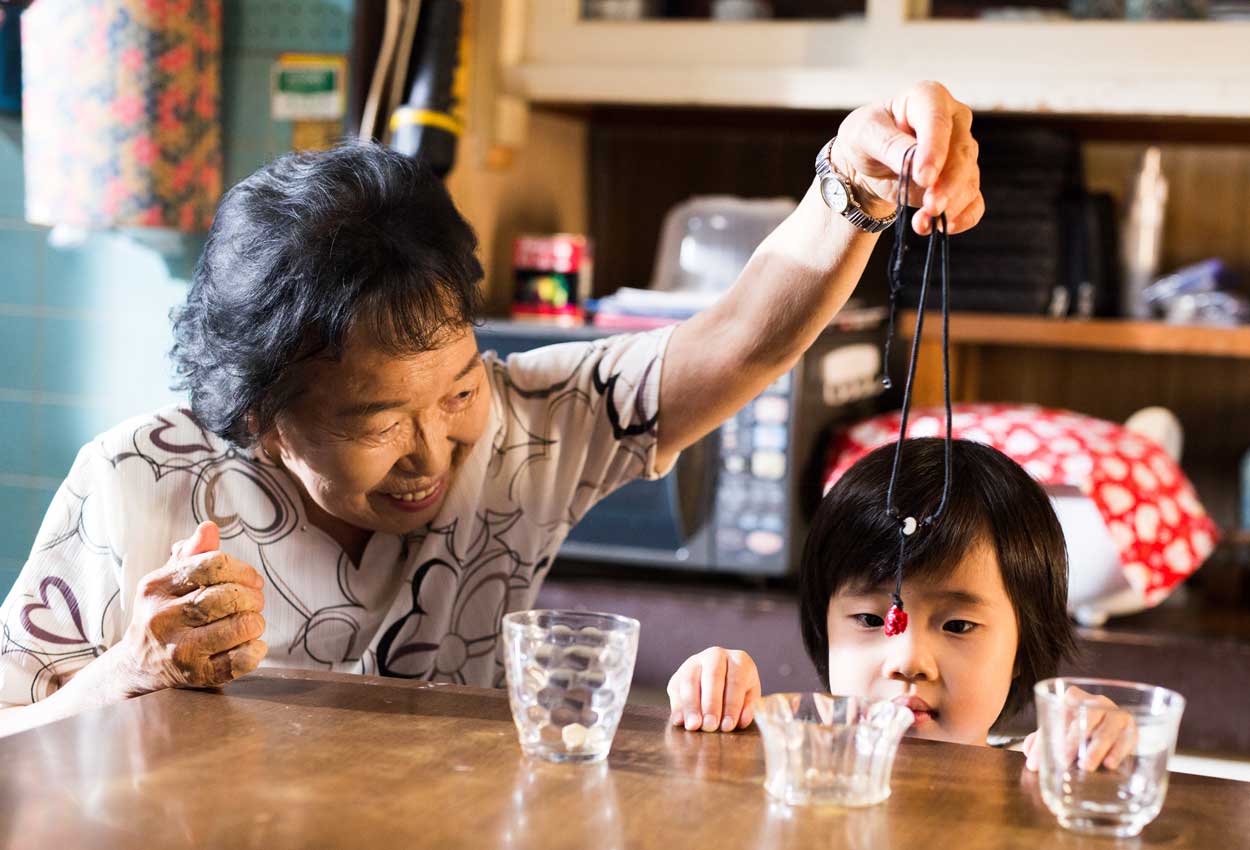
Singaporean Yvonne Ng has become an Oscar winner with her first overseas production short film, Cloud Kumo. From a record 1,749 entries worldwide, 17 were chosen as the winners of the 43rd Student Academy Awards competition.

The win was particularly sweet as Ng, 33, says: “I was turned down by seven other film festivals prior to this. It was very unexpected.”

She was speaking over the telephone from New York, where she has been based for 10 years.

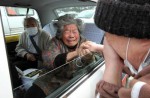
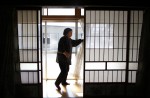
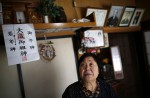
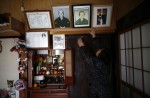
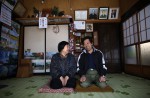
The 15-minute work is about a survivor of the Hiroshima atomic bomb attack and her granddaughter. Costing US$30,000 (S$40,800), it was shot in New York and Hiroshima.

At the prize-giving ceremony on Sept 22 at the Samuel Goldwyn Theater in Beverly Hills, the gold, silver and bronze awards will be announced in seven categories. Cloud Kumo is one of three winners in the Alternative category. Also, all 17 winners are eligible for the Oscars in the short-film categories next year.

The Student Academy Awards were established in 1972 to encourage excellence in film-making at the collegiate level. Past winners include John Lasseter, Robert Zemeckis, Spike Lee and local film-maker Tan Pin Pin for Moving House (2001), about a family exhuming their ancestors’ grave.

The idea for Cloud Kumo (kumo means cloud in Japanese) was seeded when Ng represented Buddhist organisation Soka Gakkai International at a nuclear non-proliferation treaty conference at the United Nations in 2014.

“I realised how little the media has been highlighting this issue (of the Hiroshima bombing) and I felt very compelled to do something about it. That’s why I came up with the idea of making a film.”

Given that her background was in photography, she decided to pursue a master’s of fine arts degree in film and production with The City College of New York. She graduated in June and Cloud Kumo was her thesis.

The film was challenging to make as she did not speak a word of Japanese. Also, she had envisioned non-actors in the roles, but was turned down by many of the survivors who had travelled to New York last year for the 70th anniversary of the atomic bombings.

Eventually, musician-poet Michiko Ishii, who was seven when the bomb was dropped and suffered severe burns all over her body, said yes to playing the role of the grandmother.

Ng had met her when she went to Hiroshima for the first time last year to scout for locations and cast actors.

The process of talking to the survivors shaped the work. These were people whose hands had “touched that scorching ground” and whose mouths “had tasted the ashes in the air” and, yet, they remained positive in the face of tragedy.

She says: “I did not want to make a movie that is all about the heaviness of the bomb. What I wanted to portray is the future, the hope, the perseverance and the strength of all these people.”

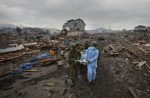
Cloud Kumo is the first chapter of a planned trilogy on stories about nuclear power. The second one will be about the Fukushima nuclear plant, where there was a major accident in 2011 following an earthquake and tsunami.

There is more to celebrate at home as her husband, Italian actor Luca Manganaro, recently starred in family flick Ace The Case with actress Susan Sarandon.

Going forward, Ng sees herself continuing to work in both of her favoured media. She had previously studied at Temasek Polytechnic and graduated from the prestigious Brooks Institute of Photography in Santa Barbara in 2006.

As a photographer, her work has been featured on the front page of The New York Times and won various accolades, including at the International Photography Awards and The Prix de la Photographie competition in Paris.

She says: “Photography or film- making, it’s a tool for me to voice my opinions and ideas to the world. I don’t see them as separate.”


This article was first published on September 05, 2016.
Get a copy of The Straits Times or go to straitstimes.com for more stories.

Image: 
Category: 
Publication Date: 
Monday, September 5, 2016 – 17:00
Send to mobile app: 
Source: 


Story Type: 
Others

Source link

Only 10 per cent of population returns to Fukushima town

0

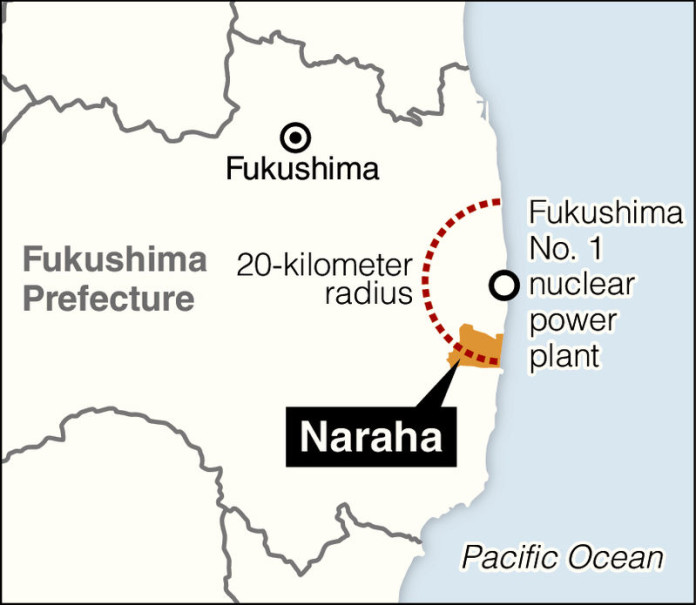
Monday marks one year since the lifting of an evacuation order for Naraha, Fukushima Prefecture, that was imposed following the accident at Tokyo Electric Power Company Holdings, Inc.’s Fukushima No. 1 nuclear power plant.

However, less than 10 per cent of the town’s registered population has returned.

The number of new housing built in the town this year reached 296 in June, 4½ times more than last year’s total. However, among Naraha’s registered population of 7,300, only 681 people had returned to live there as of Friday, according to the municipality.

Photo: The Japan News

Residents who have resumed farming, the town’s key industry, are also limited in number.

According to the Naraha government, about a quarter of the households were involved in farming before the accident. However, planting has resumed in only about 20 hectares of rice paddies this year, about 5 per cent of the town’s farming area before the accident.

Shuko Watanabe, a 55-year-old cattle breeder in the town, restarted work in July, becoming the first farmer to start breeding for beef among the about 40 farmers who used to be in Naraha.

He breeds five Japanese black cattle while continuing to mainly live in Iwaki, also in the prefecture. Although he only has half the cattle he did before the accident, Watanabe thinks resuming work will encourage others to return to the town.

According to a Reconstruction Agency survey, about 8.4 per cent of the 2,000 households that responded said they intend to return early. About 34.7 per cent said they will return when certain conditions are met.

Combined with the 7.6 per cent of the town’s population that has already returned, about half of the households intend to return.

Image: 
Category: 
Publication Date: 
Monday, September 5, 2016 – 14:02
Send to mobile app: 
Source: 


Story Type: 
Others

Source link

Trade is sluggish, and causing angst among people: PM Lee

0

Speaking on the second and final day of the G20 Leaders’ Summit, Mr Lee suggests three ways to promote trade.

Source link

Chongqing Connectivity Initiative can be testbed for new policies and ideas: PM Lee

0

The third Government-to-Government project can break new ground by being a testbed for the Chinese to try out “new policies or new emphasis in their development strategies”, said Prime Minister Lee Hsien Loong on the sidelines of the G20 Summit in Hangzhou.

Source link

'Humans of Seoul' captures lives of everyday Seoulites

0

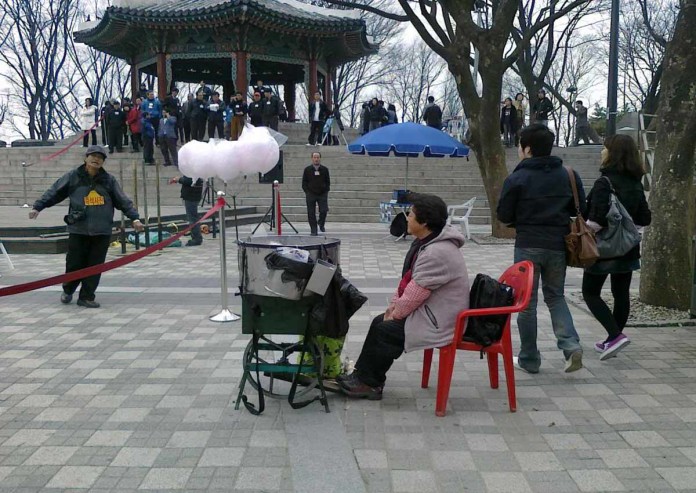
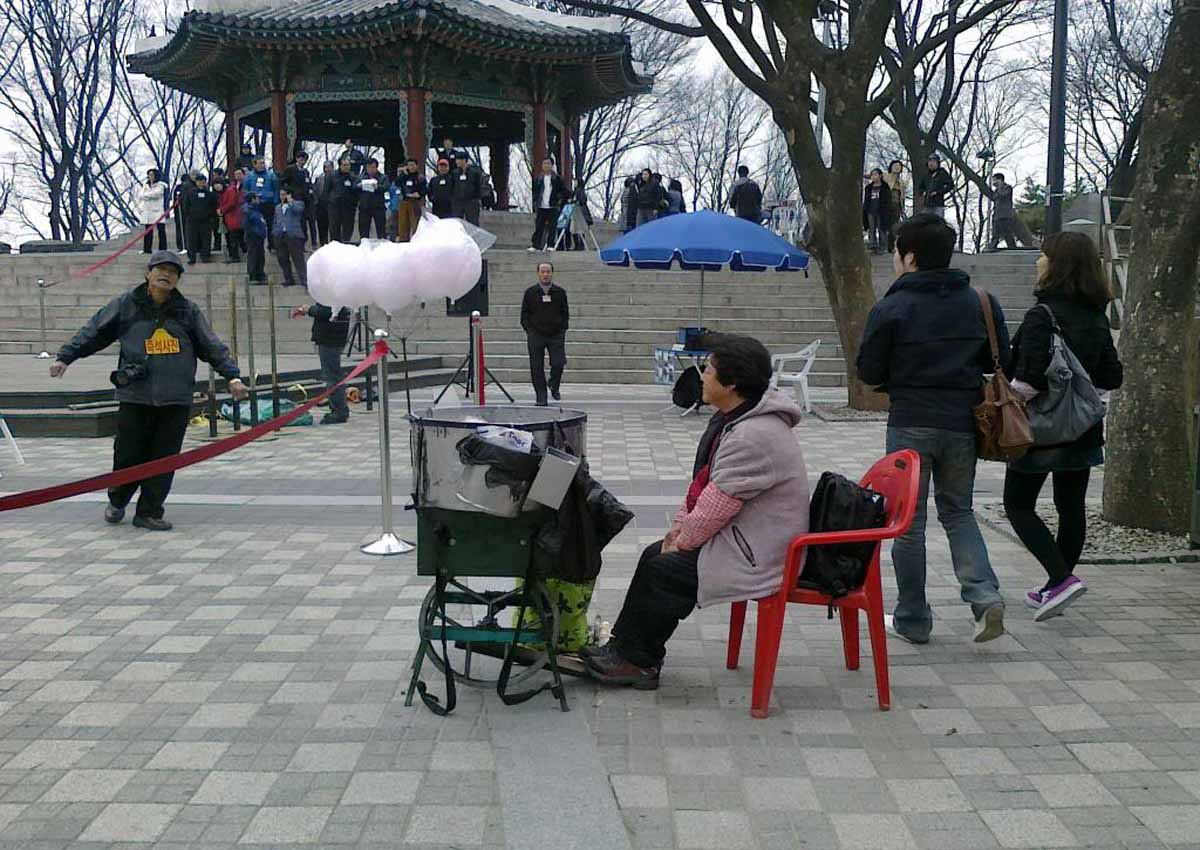
A post from the Humans of Seoul Facebook page features a photo of a 20 or 30-something-year-old man with a short crown top hat and two suitcases, accompanied by a childhood episode about his brother’s damaged hearing after a physical attack by an elementary school teacher: “My father fought a legal battle for five, six years on his own with what little money we had…

But eventually, I heard that the teacher quit teaching and, after being sentenced to one year in jail, went into a mental institution. When I was young, my heart was always plotting revenge, but as time passed by, I saw that people who do wrong eventually end up paying for their actions.”

The philosophy behind the online photo blog, which boasts over 100,000 Facebook followers, is that those leading the most ordinary lives often bear the most extraordinary stories.

People featured on the social media page feel simultaneously familiar and unfamiliar — familiar because their unique stories are meant to inspire empathy, but unfamiliar because they are, ultimately, strangers.

Inspired by the global hit Humans of New York that captures street portraits and untold stories of everyday New Yorkers, longtime friends Jeong Seong-kyoon and Park Ki-hun started Humans of Seoul in November 2013 with what seemed like an out-of-reach goal.

“In the beginning, we were just aiming to gain 100,000 Facebook followers, but it turned out to be not very difficult,” blog director Park Ki-hun told The Korea Herald in an interview at a cafe in Yeouido, Seoul last month. “Now our goal is to maintain this page for as long as possible.”

The editing process behind each of the over 1,000 photos and captions shared on social media so far is a formidable task. In fact, there have been several similar, but failed attempts by others prior to the one now managed by Park and Jeong.

Those now-defunct blogs evolved to become personal branding platforms for their respective founders, according to Park, who oversees the photo editing process and team management, while his co-founder Jeong serves as the editor-in-chief.

“We want to focus purely on what we’re best at — writing and photography,” said Park, 33.

From the beginning, Humans of Seoul, which now has a team of nearly 30 volunteers, has featured a wide array of seemingly unassuming Seoulites, from a mother experiencing the full effect of the empty nest syndrome to a 72-year-old man who started wearing women’s clothing to fill the void of his wife’s mysterious disappearance.

A professional photographer by day, Park says one of most memorable people he has captured over the years is an elderly gentleman dressed neatly in a white dress shirt with a mauve tie, carefully cradling a months-old baby.

It turned out he was looking after his grandchild to give his daughter-in-law a moment of peace.

“Older people are surprisingly open to being interviewed and having their pictures taken,” Park explained about vetting and approaching potential subjects. “Unlike younger generations that are well-acquainted with smartphones, older people often feel lonelier, so they enjoy opportunities to share their stories.”

While most street interviews are conducted in Korean, all posts — translated with the help from a group of in-house translators — are in both Korean and English. In fact, approximately 40 per cent of the online traffic to the blog’s Facebook, Naver, Tumblr and Instagram accounts come from outside of Korea, according to Park.

A place where personal identity is masked just as effortlessly as it is exposed, the internet is at times inundated with ill-natured content. However, the Humans of Seoul Facebook page is filled with supportive and empathetic comments, from “You have such a pretty heart,” to “I noticed this too!”

“Our page shows people in their raw and unguarded state,” said Park. “Since people come here to seek solace, the comments can’t help but be positive.”

Unlike Humans of New York, which is now financially sustained by proceeds from the occasional business collaborations, magazine pieces and royalties, Humans of Seoul primarily relies on the time and effort donated by the team members. However, Park said there are offline projects currently in the works.

“This has never been about money,” explained Park. “I want this to be a platform where people can put aside their judgements and expand their boundaries of acceptance.”

By Kim Yu-young (ivykim@heraldcorp.com)

Image: 
Category: 
Publication Date: 
Monday, September 5, 2016 – 13:42
Keywords: 
Send to mobile app: 
Source: 


Story Type: 
Others

Source link

Get your fill of Singapore's food faves with Makan Bus

0

A specially curated food tour takes locals and tourists right into the heartlands to hunt for Singapore’s hawker gems, which were chosen after much extensive research, says Makan Bus co-founder Smith Leong. 

Source link

All eyes on Duterte's international debut

0

As Laos gets ready to host two ASEAN summits back to back this week from tomorrow, one leader who will get much media attention will be President Rodrigo Duterte.

The newly-elected Philippine leader may be very popular in his country but to the world outside, the first impression is that he is someone who shoots from the hip.

He has criticised many people, from US President Barack Obama and UN secretary-general Ban Ki- moon to even calling the US ambassador to the Philippines “gay son of a whore” after accusing him of meddling during the presidential campaign.

Several ASEAN diplomats who are accompanying their leaders for the 28th and 29th ASEAN Summit and Related Summits are of the view that Duterte may seem brash but in Vientiane this week, he may be a different person.

“First of all, the Philippines will take over the ASEAN chairmanship from Laos next year.

“Like previous ASEAN chairs, surely the Philippines will want to forward certain ideas that need support from other ASEAN countries. ASEAN works by consensus; if you don’t get support from even one country, you cannot move,” said one of the diplomats.

The ASEAN way of consensus may, in fact, frustrate Duterte.

“He is a different man, he has a mind of his own. It is interesting to have this character at ASEAN meetings, but at the end of the day, how do you conduct diplomacy in a regional grouping that ideally supports each other and must be seen as united?” said another diplomat.

For the first time, Laos decided to hold the 28th and 29th summits back to back this year, unlike pre­vious years, such as in Kuala Lumpur where the summits were held in April and November.

Diplomats cited the lack of resources and manpower as the reason.

It will be the first time Duterte is sitting together with his ASEAN colleagues where every word he utters and gesture he makes will be closely scrutinised.

After the 10 leaders of ASEAN meet, they will face their dialogue partners, including Obama, Chinese Prime Minister Li Keqiang and Japanese Prime Minister Shinzo Abe.

Interestingly, the Philippine and Chinese leaders will be in the same room after the international tribunal arbitration awarded in Manila’s favour that China’s claim to historical and economic rights in most of the South China Sea had no legal basis.

Duterte already indicated in interviews last week that he would not raise the issue in Laos. So, the anticipated fireworks may not happen.

It will also be farewell for Obama, who is making his last ASEAN summit appearance as his presidency ends soon.

Obama hosted ASEAN leaders in Sunnylands, California, in February, the first to be held in the United States as US-ASEAN relations were elevated to strategic partnership and in the shadows of China’s increasing influence among ASEAN countries.

Another interesting leader ma­­king a first appearance will be Myan­mar’s Aung San Suu Kyi.

ASEAN officials confirmed that Suu Kyi, who is Myanmar State Counsellor, will represent President Htin Kyaw.

This is the second time Suu Kyi is attending an ASEAN meeting.

She attended the ASEAN Foreign Ministers meeting here in July.

Officials noted in the past that Suu Kyi was frustrated with the grouping’s policy of non-interfe­rence in domestic affairs of an ASEAN member and instead held constructive engagement with the military junta to release her from house arrest.

“Her statements during the July meeting have been quite conciliatory, like over the South China Sea issue. She used words like patience and understanding.

“Now that she is in power she understands how ASEAN works because she has her own problems domestically,” said an official in an obvious reference to the oppressed Rohingya Muslims.

Suu Kyi has been criticised for saying too little about the abuses faced by the Rohingya Muslims.

She said the world needed to give her space to sort out her nation’s ills.

Prime Minister Datuk Seri Najib Tun Razak is scheduled to arrive today.

Image: 
Category: 
Publication Date: 
Monday, September 5, 2016 – 13:33
Send to mobile app: 
Source: 


Story Type: 
Others

Source link

Singaporean fails in bid for refugee protection in Australia

0

A Singaporean has failed in his application for refugee protection in Australia, with an Australian tribunal noting that being in debt and threatened by unlicensed moneylenders in Singapore is no grounds to seek such protection.

The tribunal cited the sound system for law and order here, saying there was no reason why the applicant could not seek redress for his problems in Singapore.

Based on the evidence before it, the tribunal considered that the applicant could access “effective” and “durable” protection in Singapore, noting the country’s appropriate criminal law, effective police force and impartial judicial system.

“Accordingly, the tribunal considers that the applicant does not have a real chance of serious harm for this reason, on return to Singapore,” tribunal member Stuart Webb wrote in decision grounds released last month.

Australia is a signatory to the international 1951 Status of Refugees Convention obliging member states to grant protection to people recognised as refugees due to well-founded fears based on various reasons.

The Singaporean, whose details were redacted from the judgment grounds, had appealed to the Administrative Appeals Tribunal at a Melbourne hearing in June after his application for a protection visa was rejected by a representative of Australia’s Immigration Minister.

“My life will be in danger if I return to Singapore. All I hope for is a chance for me to start anew and to keep my life safe,” said the Singaporean at the tribunal hearing.

He had completed military service, worked well in Singapore but claimed that he was bound to pay for his clients who suffered losses during the 2009 financial crisis.

He had worked as a sales executive on a commission basis, for which he received 40 per cent of the returns. He had undertaken in his contract with the company to be liable for any losses.

He started borrowing after using up all his savings, and went into overdrive by working up till the “wee hours of the morning” to no avail.

” Because of my debts, problems arose from everywhere,” he said, adding that his debts never decreased over the four years because of the high interest rates.

“They would threaten me, they would be abusive to me and I had suicidal thoughts,” he said, referring to the unlicensed moneylenders.

He added that after he fled Singapore for Australia in 2013, his Singapore-based mum told him “they came to look for me and threatened to kill me if they found me”.

Details of the sums involved were redacted from the judgment grounds. He had borrowed from two licensed moneylenders and another unlicensed one.

The tribunal noted he left Singapore in a “very orderly” manner after organising his affairs in May 2013, having resigned from the company a month earlier.

It further observed that his parents were asked where he was in 2013 but have not been approached in the three years since and neither has he disclosed any further threats to him.

The tribunal discussed information about the Singapore police and the authorities in general, citing various sources, including a United States State Department report.

The Singaporean agreed with the tribunal’s summation that the Singapore police had a good reputation and ” Singapore was noted for the security it had”.

Other attempts that were rejected

  • Last month, a Canadian Federal Court in British Columbia turned down a Singaporean’s bid for refugee protection in Vancouver, finding his claims of alleged potential persecution in Singapore unfounded. Mr Jedidiah Tan, 23, who was exempted from national service on medical grounds after serving two months, had claimed the exemption was revocable and that he had no redress in Singapore except military justice. The court was not convinced, ruling that “clear and convincing evidence that is both relevant and reliable, and sufficient” must be produced to show that state protection is inadequate. It noted that the Singapore authorities had “acted reasonably and expeditiously” in exempting Mr Tan from national service.
  • In October 2013, a Canadian court based in Toronto rejected a refugee status bid by a Singaporean who feared he would be discriminated and persecuted here because he is gay. The court accepted that he was harassed in the past but this did not mean persecution as it “did not amount to the denial of a core human right”. The court added that his fears of being abused in national service were “speculative”.


This article was first published on September 5, 2016.
Get a copy of The Straits Times or go to straitstimes.com for more stories.

Image: 
Publication Date: 
Monday, September 5, 2016 – 15:00
Keywords: 
Send to mobile app: 
Source: 


Story Type: 
Others

Source link

So touched, she couldn't stop crying

0

For the past 17 years, Madam Jurina Johari has lived with just one kidney.

Years after her right kidney was removed in 1999 because of chronic kidney disease since her teens, the single parent would discover blood in her urine, feel nausea, experience bloating on her face and feet, and have trouble walking for long hours.

But she would visit the doctor only when the situation was dire.

Deep down, she knew she needed further treatment, but she was worried about the medical bills.

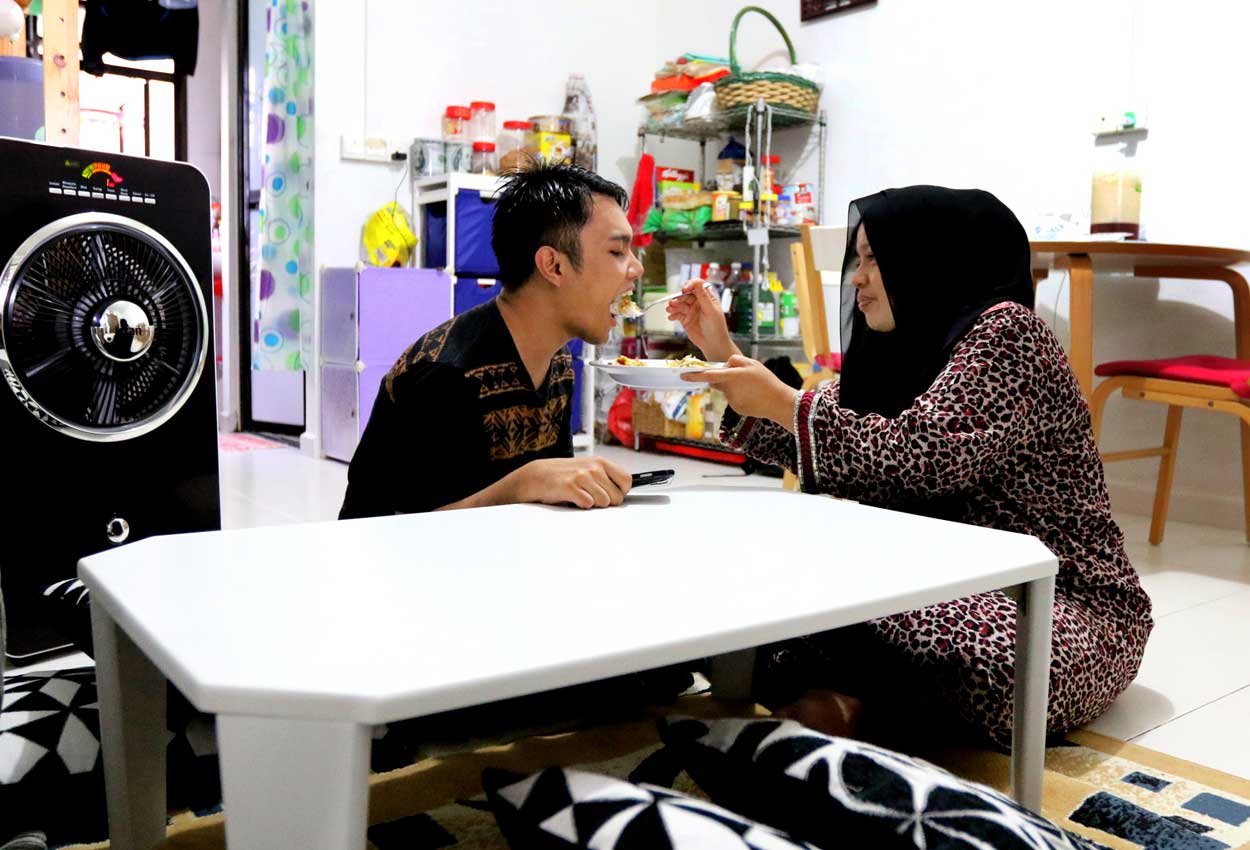
Money is hard to come by for Madam Jurina, who cares for her 60-year-old mother and her two sons in their 20s, one of whom is autistic, in a one-room rental flat in Sembawang.

In July, Madam Jurina, 42, finally sought treatment for her kidney condition after a flood of donations poured in following a video The New Paper did on her for a Ramadan series.

The video, which has close to 420,000 views to date and has been shared more than 6,300 times on Facebook, touched the hearts of thousands when they learnt of her financial and personal struggles.

On Aug 24, Madam Jurina underwent surgery to insert a ureteric catheter, or tube, to determine the cause of hydronephrosis, or swelling of her left kidney.

She dipped into the donations to pay the subsidised fee of about $560 for the surgery.

Madam Jurina told TNP: “As long as I could live with my condition, I would. (Having this surgery) was just not within my means.

“But from the generosity of people, I was able to, and I am very grateful.”

When TNP visited her home last Thursday, Madam Jurina was visibly weak, walking with a slight limp from the pain in her left kidney area.

She is due for a check-up next month to determine the next course of treatment for her condition.

She has been advised against working and doing strenuous activities for the next six to seven months.

But the determined mother’s only thought is putting food on the table for her family.

She was forced to quit her job as a part-time assistant pharmacist just before Ramadan to care for her autistic son, Mr Muhammad Shahirul Junadi, 21. His brother, Mr Muhammad Shafiee, 22, is serving his national service.

“I want to go back to work and be healthy again. My mother and sons are all I live for and I want to take care of them,” said Madam Jurina, wiping away her tears.

When the donations poured in, Madam Jurina took her mother, Madam Rabiah Salim, 60, for her “monthly” check-up to test her diabetes and cholesterol levels, and check for hypertension and heart disease.

Previously, Madam Rabiah would have a check-up once every three months to save on the expense.

After the TNP video, more than 2,000 people reached out to see how they could help. They also visited Madam Jurina and her family.
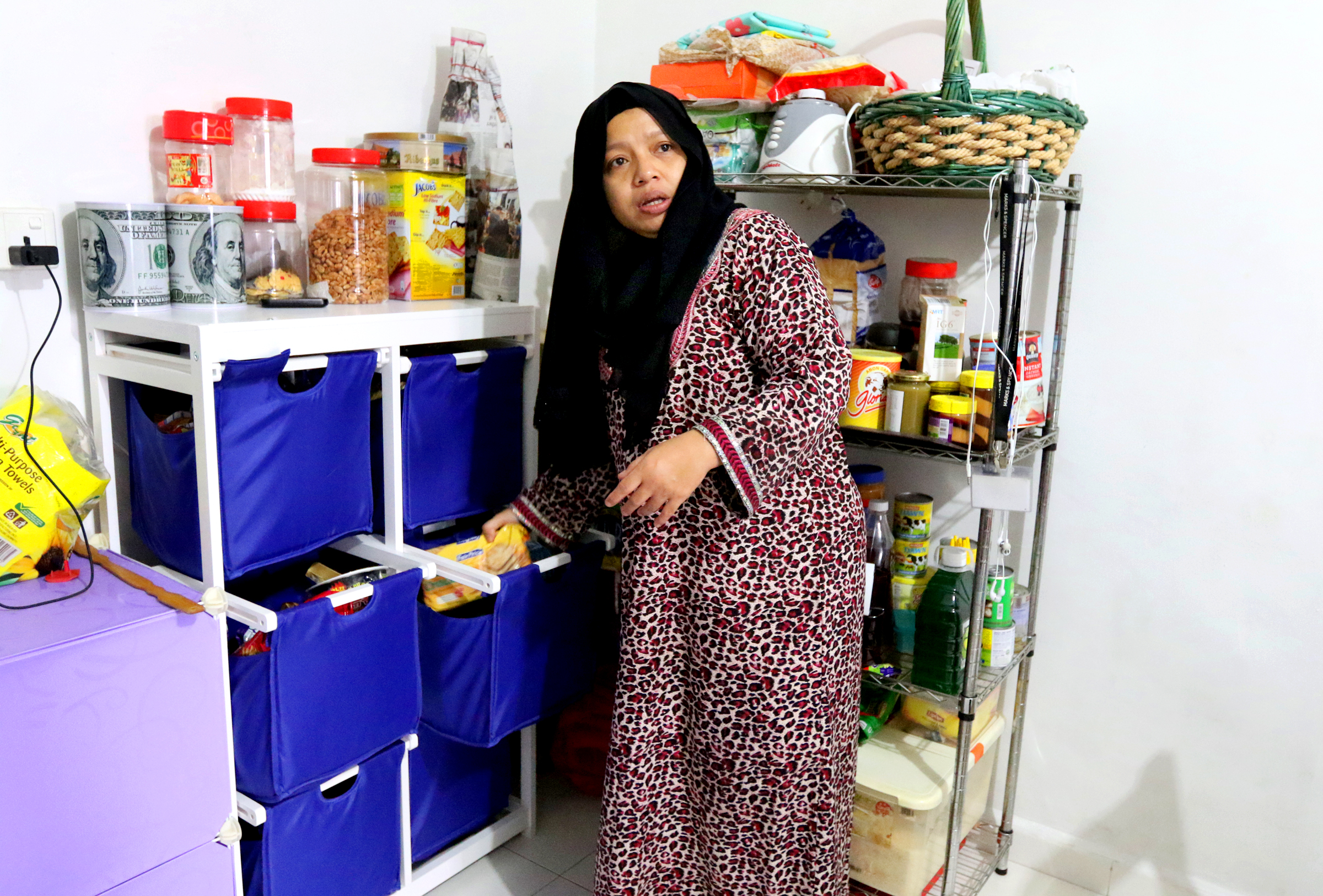
Madam Jurina showing the food and toiletries she received from generous The New Paper readers. Photo: The New Paper

The family members now have their meals at a round dining table, which occupies a previously bare corner, or at a small rectangular table. Both were gifts from well-wishers.

Previously, they ate their meals on foldable trays placed on the floor.

A new fridge, also donated, has replaced a faulty second-hand one that had forced Madam Jurina to keep fish in a styrofoam box filled with ice.

Three cabinets and shelves line a wall and are stocked with at least six months’ supply of essentials such as cooking oil, sugar, cereals, beverages, and dried goods.

Others offered her job opportunities and lessons on sewing and baking so she could earn money from home.

Madam Jurina said: “A day after the video was released, visitors streamed in from day until night, with some even waiting at the void deck. My home was packed with people who came with their generous donations.

“I was so touched I couldn’t stop crying. My mother cooked our Hari Raya feast for the first time this year.”

Some of her well-wishers moved her to tears. “A man in his 20s suffering from stage four cancer visited me. A man in a wheelchair came with his children. He told me, ‘I don’t watch videos, but the one of you broke my heart’.

“As I said in the video, there are so many others who are less fortunate (than me),” she said.

Ms Chin Tong Mui, general manager of the Social Service Office at Sembawang, told TNP that Madam Jurina and her family are eligible for financial assistance, including rental, utilities, and service and conservancy charges until November.

She said the SSO is in contact with Madam Jurina to provide support, where appropriate, and to explore care arrangements for her mother.

Madam Jurina worries about needing a kidney transplant one day.

She said: “I fear that my left kidney may suffer the same fate as my right. If that happens, I hope to be able to get a transplant… That, and for me to be able to care for my family for as long as I can.”

She raised $1,500 in vouchers
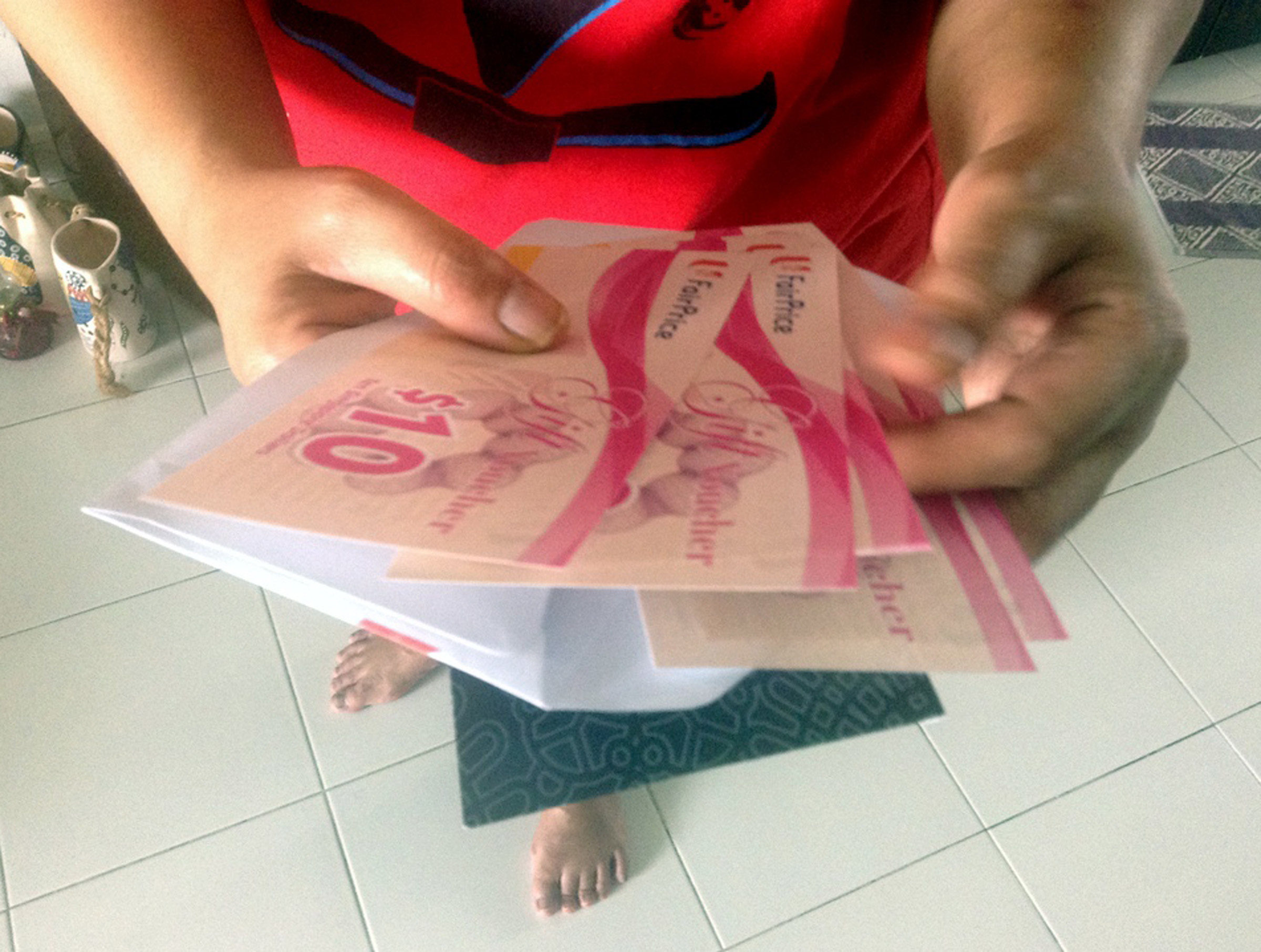
Madam Jurina and her family have been receiving donations from TNP readers. Photo: The New Paper

Back in July, she reached out to The New Paper to see how she could help Madam Jurina Johari and her family.

She found out about the mother of two from a video in TNP’s Ramadan series, which showed Madam Jurina cooking a simple meal for iftar (breaking of fast) and talking about her struggles supporting her family.

After sharing the video to her 600 friends on Facebook, Ms Karen Chan helped raise $1,500 in FairPrice vouchers for Madam Jurina’s family.

On July 8, she visited Madam Jurina at her one-room rental flat in Sembawang, where they discussed work-from-home opportunities for the single mother.

Madam Jurina, who has had chronic kidney disease for more than 25 years, lives with her two sons, one of whom is autistic, and her 60-year-old mother.

TNP first reported on her in May, after she lost her last $50 in a snatch theft.

Ms Chan, 35, was one of the many people who rallied to Madam Jurina’s aid afterwards. Her own background was a huge factor in driving her to help.

“I empathised with (Madam Jurina’s) hardship… I knew that I could do something to help, whatever that was within my means,” she said.

“I was born into a family who lived in a one-room rental flat. I was fostered out as a baby and saw very little of my parents, who were trying to make ends meet.”

When she was five, Ms Chan and her two older siblings were separated after being fostered out to different families following her father’s death from nasopharyngeal cancer.

The digital marketing manager told TNP: “(My mother) had difficulties juggling being a breadwinner for her three children, and (caring for) my grandmother, who had heart disease, and an unemployed sister.”

After her guardian died, Ms Chan was once again left to fend for herself.

WORKED 3 JOBS

The then-18-year-old worked three jobs to pay for her education at the Nanyang Academy of Fine Arts (Nafa).

“I had to think of ways to put food on the table. People asked me, ‘How can you be poor? You’re wearing Nike.’ But they didn’t know I was working for the company, and it gave employees $150 a month to spend (on in-house products).”

Ms Chan works at the Singapore Human Resources Institute (SHRI), where she kick-started #SocialHR, a monthly human relations event that encourages community building, collaboration and sharing of experiences among attendees.

TNP attended a #SocialHR event at Dignity Kitchen restaurant on Aug 16, which featured guest speakers from Dignity Kitchen, charity organisation Daughters of Tomorrow and Job Club by the Institute of Mental Health (IMH).

Ms Chan said SHRI would be hiring someone through Job Club by IMH to work in her department.

She said: “I made a promise to myself to help others if I succeeded in getting myself out of the rut. My mantra is simple: ‘Whether you can or can’t, you are both right’.”

About Madam Jurina’s condition

Hydronephrosis, or swollen kidney, may be due to urinary stones, cancer or scarring from previous infections, among other causes.

Dr Sim Hong Gee, a senior consultant urologist at Gleneagles Medical Centre, said that inserting a ureteric catheter is part of an examination to evaluate the cause.

If there is an obstruction or narrowing present, a double J stent is inserted after evaluation to allow the urine to bypass the obstruction or narrowing, from the kidney to the bladder, said Dr Sim.

Patients with urinary stones, cancer or infection will need separate definitive treatment.

If the obstruction is not relieved by the stent, the kidney function deteriorates as the urine is unable to flow into the bladder to be passed out. The obstructed kidney eventually fails, he said.

Those with just one kidney do not need a transplant if it is functioning well.


This article was first published on September 05, 2016.
Get The New Paper for more stories.

Image: 
Category: 
Publication Date: 
Monday, September 5, 2016 – 14:00
Send to mobile app: 
Source: 


Story Type: 
Others

Source link

SkyVille@Dawson, Punggol Waterway Ridges clinch HDB Design Awards

0

Both the SkyVille and Punggol Waterway Ridges are among the winners of this year’s HDB Design Awards to recognise industry partners for creating quality homes for Singaporeans. 
Source link