“Bearing in mind that there are 80 per cent of our infected patients do not have symptoms and therefore they are not treated by our doctors, just isolating 20 per cent of our symptomatic patients has very limited effect,” says Health Minister Gan Kim Yong.
Source link
No isolation of Zika patients in Singapore going forward: Health Minister
16 new Zika cases confirmed on Monday, bringing total to 258
16 new cases of locally transmitted Zika were confirmed on Monday. 11 are linked to the Aljunied/Sims Drive cluster, one case is linked to the Joo Seng Road cluster and the other four cases have no known links to any existing cluster.
Source link
Subsidised Zika testing extended to all Singaporeans: MOH
The Ministry of Health (MOH) will extend subsidies for Zika testing to all Singaporeans with symptoms of the infection, not just those who live, work or study in the affected areas.
Source link
‘Low’ odds of haze in Singapore over next few days: NEA

SINGAPORE – The likelihood of Singapore being affected by transboundary haze is low over the next few days, the National Environment Agency (NEA) said on Monday (Sept 5).
This is because prevailing light winds are expected to continue blowing from the…
Source link
Singapore should brace for long-term battle with Zika – experts
Wealthy Singapore has the funds and expertise to fight Zika, but its warm, wet climate and one of the world’s most densely packed populations mean the mosquito-borne virus may be controlled but not eradicated, at least for years, infectious disease experts say.
Source link
Isolation no longer needed for Zika cases; subsidised rates for those with symptoms

 SINGAPORE – From Tuesday (Sept 6), suspect Zika cases will no longer need to be isolated while waiting for test results, as the Ministry of Health (MOH), in a statement released on Monday.
The ministry added that it will also extend subsidies for the Zika…
Source link
Malaysian infected by Zika died from heart disease complications – ministry
A 61-year-old man diagnosed with the first case of a locally transmitted Zika infection in Malaysia has died from heart disease complications, and not from the mosquito-borne virus, the health ministry said on Saturday.
Source link
PM Lee to attend ASEAN Summit in Laos
Prime Minister Lee Hsien Loong will also meet with US President Barack Obama and Chinese Premier Li Keqiang among other world leaders at the Summit.
Source link
Radical democrats gain foothold in Hong Kong poll likely to rile China
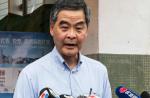
HONG KONG – Several pro-independence candidates won seats in Hong Kong’s legislative election which saw a record turnout in the Chinese-controlled city on Sunday, results likely to further strain ties with Communist Party rulers in Beijing.
An initial count on Monday also suggested Hong Kong’s pro-democracy opposition might retain its crucial one-third veto bloc in the 70-seat Legislative Council over major legislation and public funding that has helped check China’s influence.
Full results weren’t due till later in the day.
This was the first major election since the student-led, pro-democracy “Umbrella Revolution” protests in 2014 that blocked roads for 79 days in a turning point in the city’s politics, even though Beijing gave no ground.
Since then, many disaffected youngsters have decried what they see as increasing Beijing interference stifling dissent and civil liberties, leading to a radicalization of the political scene and occasional violent protests.
The former British colony was handed back to China in 1997 under a “one country, two systems” agreement that promised to maintain the global financial hub’s freedoms and separate laws for at least 50 years, but gave ultimate control to Beijing.
Hong Kong elections 2016
Click on thumbnail to view photos. Source:
AFP
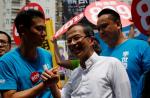
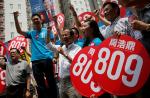
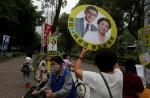
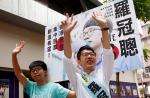
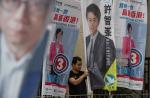
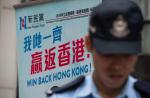
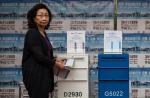
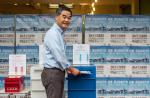
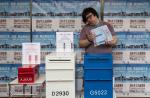
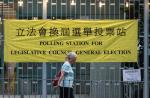
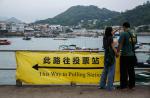
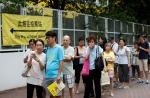
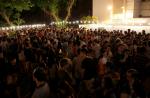
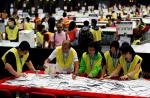
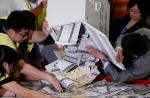
Several veteran democrats failed to retain their seats, as voters backed a new batch of younger democrats espousing self-determination and a more confrontational stance with China.
“It’s a new era,” said Lee Cheuk-yan, a democratic lawmaker who lost his seat after more than two decades in public office.
“People want change, change meaning that they want new faces … but the price is a further fragmentation (of the democracy camp). Ideologically they’re talking about independence and they want to assert themselves.”
Hong Kong Secretary for Constitutional Affairs Raymond Tam said the government would do its best to “bring them around to a more centrist position”.
“But it’s too early to say if this will be an issue,” he said.
Pro-establishment lawmakers like Elizabeth Quat said she hoped the issue of splitting from China wouldn’t enter the legislature or it could damage Hong Kong’s longer-term economic interests.
“Independence is not realistic at all,” she said. “Hopefully this will not be their main objective.”
Also In World News G20 summit warned of risks to economy as North Korea test-fires missiles North Korea fires three ballistic missiles as G20 leaders meet in China Blasts hit govt-held and Kurdish parts of Syria: state media, monitor Suspected US drone strike kills six Qaeda militants in Yemen
Voters flocked to cast ballots in record numbers with some having to wait several hours after the close of polling past midnight at congested voting booths, leading to some delays in vote counting on Monday.
“Hong Kong is really chaotic now. I want to do something to help,” said 28-year-old Maicy Leung, who was in a snaking queue of several hundred. “It’s to help the next generation and to help myself.”
The Electoral Affairs Commission said 58 per cent of the city’s 3.8 million eligible voters had cast their ballot, up from 53 per cent in 2012 and the highest turnout for any legislative election since 1997.
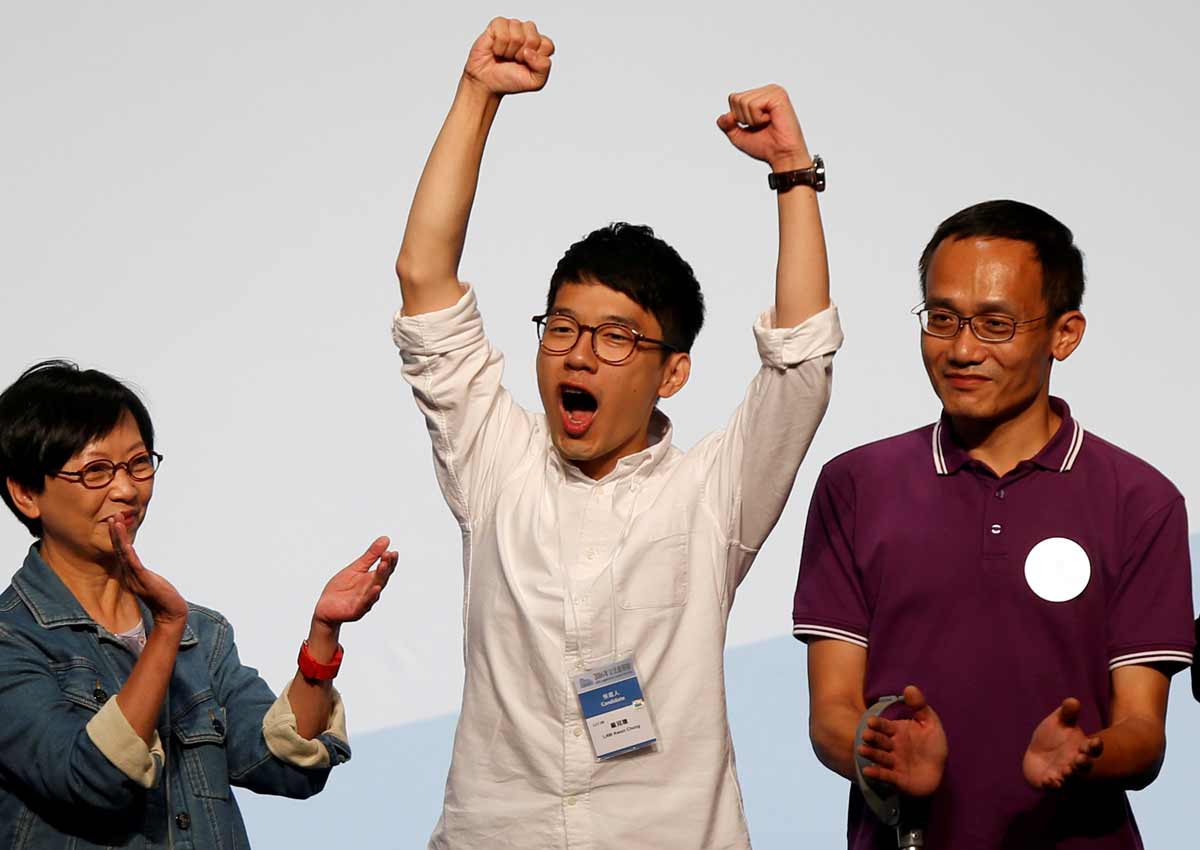
Despite the disqualification of six pro-democracy election candidates from the election in July on the grounds that they backed independence, at least five “localists” and younger democratic newcomers won seats, including one of the leaders from the mass democracy protests of 2014, Nathan Law.
Localists put the interests of Hong Kong before those of Beijing.
“I’m quite shocked,” said Law, 23. “We inherit some spirit from the movement and I hope that can continue in the future … We still have to unite in order to have stronger power to fight the Chinese Communist Party.”
Image:
Publication Date:
Monday, September 5, 2016 – 16:37
Keywords:
Send to mobile app:
Source:
Story Type:
Others
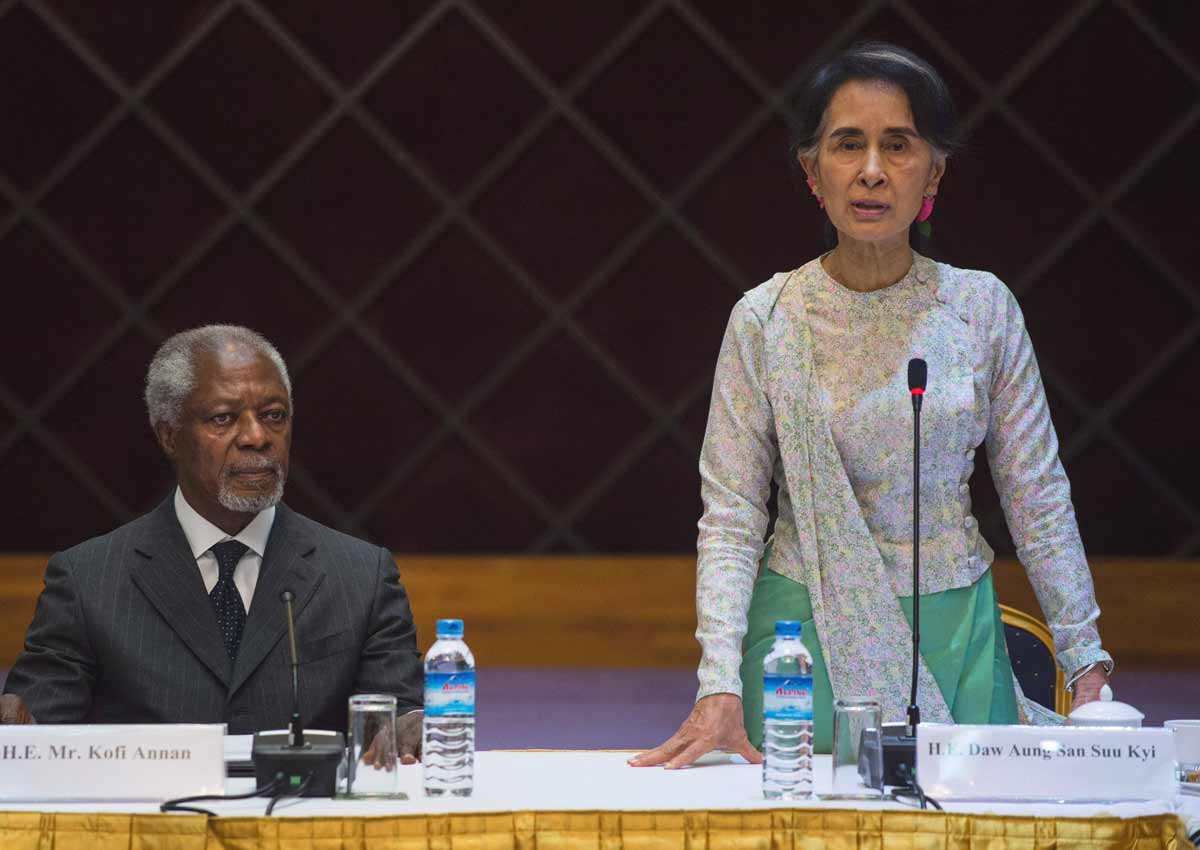
Suu Kyi oversees panel on plight of Myanmar's Rohingya Muslims
YANGON – Myanmar leader Aung San Suu Kyi and former UN chief Kofi Annan on Monday oversaw the first meeting of a panel tasked with bringing peace to a region where violence between Buddhists and minority Rohingya Muslims has cast a pall over the country’s democratic transition.
The plight of the Rohingya has raised questions about Suu Kyi’s commitment to human rights and represents a politically sensitive issue for her National League for Democracy, which won a landslide election victory last year.
The commission, whose aim is to stop human rights abuses in the northwestern state of Rakhine, was chaired by Annan.
“This is an issue that we have failed to meet squarely and fairly, and to which we have not been able to find the right solution,” Suu Kyi said at the meeting in the commercial capital, Yangon.
“We hope that this commission will help us to find solutions to the problem.”
Rohingya, victims of human trafficking
Click on thumbnail to view photos. Source:
Reuters, The Nation/ANN, The Daily Star/ANN, The Star/ANN, Vice News, AFP





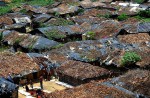
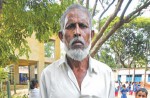


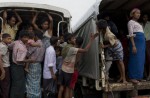



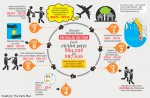
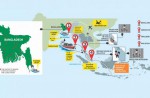
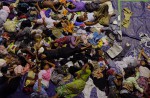

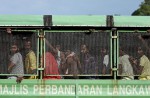
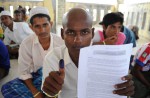






More than 100 people were killed in violence in Rakhine in 2012 and some 125,000 Rohingya Muslims took refuge in camps where their movements are severely restricted. Thousands have fled persecution and poverty by boat.
The Rohingya are considered by many in Myanmar to be illegal immigrants from Bangladesh and most do not have citizenship.
Suu Kyi, who is constitutionally barred from being president but leads the government as state counsellor and foreign minister, last month announced the nine-member commission, made up of six Myanmar citizens and three foreigners, to advise her government on the Rohingya issue.
Suu Kyi plans this month to visit the United States, where she is thought to be seeking further sanctions relief for her country but is likely to face questions over her efforts to improve conditions for the Rohingya.
The panel’s members were set to travel to the state capital of Sittwe, where Annan will deliver a speech on Tuesday, and commissioners are expected to meet with members of both the Rohingya and Buddhist Rakhine communities.
Annan said the panel would come up proposals to the issue over the coming months.
“I can assure you, and the people of Rakhine, that the advisory commission will deploy every effort with rigorous impartiality to find and propose ways to address these challenges,” he said.
The largest political party in Rakhine State, the Arakan National Party (ANP), has criticised the commission, insisting that foreigners cannot understand the history of the area, raising the prospect of tensions or protests during the visit, expected to last two days.
Some members of the ANP – formed by hardline Rakhine Buddhists – will participate in a protest against the commission on Tuesday.
Image:
Blurb:
Publication Date:
Monday, September 5, 2016 – 16:19
Keywords:
Send to mobile app:
Source:
Story Type:
Others


