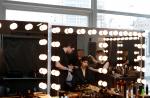
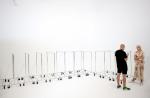
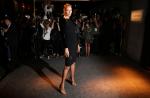
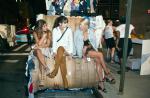
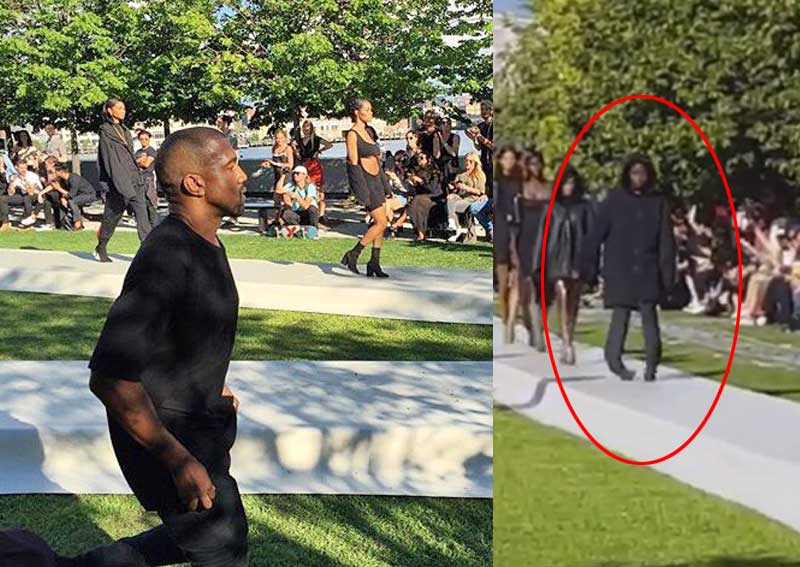
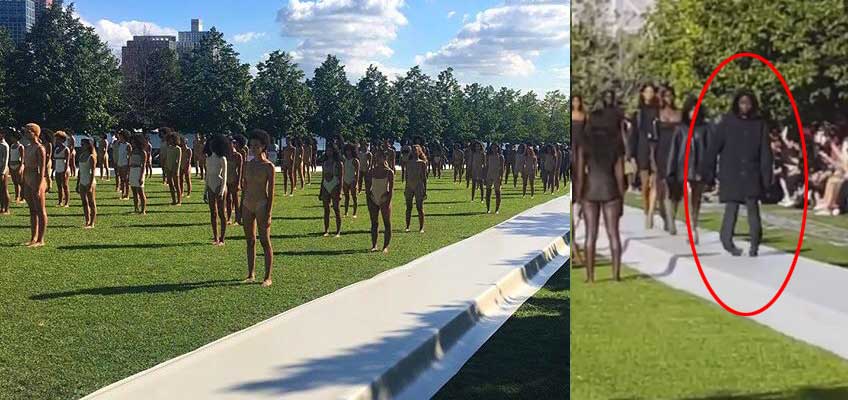
The heat and sky-high stilettos got the better of some models at Kanye West’s Yeezy Season 4 fashion show, after a few reportedly collapsed and some suffered embarrassing shoe woes.
Media outlets reported that the live-streamed show started under the blazing sun at about 4.40pm in the afternoon. The highly-anticipated event, which kicked off the first day of New York Fashion Week, had been slated to begin at 3pm but was delayed by about one and a half hours.
Models stood or sat barefoot on a lawn dressed in imitation speedos, skin-tight crop tops, bandeau strips, athletics knickers and cycling shorts, reported AFP.
Maybe it was the heat, or the dehydration from standing under the sun for two hours, but there were reports of models passing out.
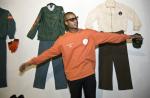
Yeezy Season Four – dominated by body suits and stilettos – was his latest collaboration for Adidas and a meditation on ethnic diversity, according to AFP.
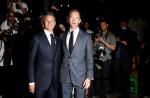
In attendance at the show were West’s reality star wife Kim Kardashian and clan, Vogue editor-in-chief Anna Wintour and British racing car driver Lewis Hamilton.
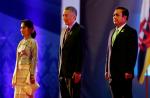
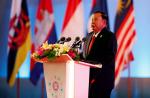
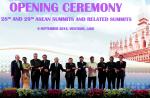
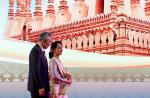
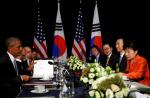
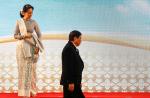
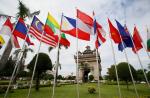
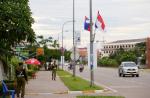
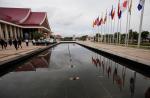
VIENTIANE – North Korea’s defiant missile testing and the South China Sea territorial row were among a barrage of security threats in focus Thursday as US President Barack Obama gathered with East Asian leaders in Laos.
The annual event this year comes at a time of heightened tensions on a wide range of fronts across the region, with terrorism also a concern after deadly bomb blasts in Thailand and the Philippines in recent weeks.
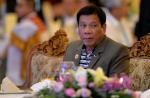
Obama was due to meet on Thursday morning with the leaders of the 10-member Association of Southeast Asian Nations (ASEAN) bloc, pitting him against firebrand Filipino leader Rodrigo Duterte who this week branded him a “son of a whore”.
The expanded East Asia summit will then take place, which involves members of the long-running and increasingly fraught six-nation talks aimed at convincing North Korea to give up its nuclear ambitions.
Defying the international community and UN sanctions, North Korea on Monday conducted the latest in a series of ballistic missile tests that have rattled nerves across the region.
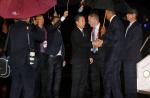
ASEAN Summit 2016
Click on thumbnail to view photos. Source:
AFP, Reuters, Lianhe Zaobao
Obama warned on Monday shortly after arriving in Laos that Kim Jong-Un’s regime was dooming itself to further isolation, and the UN Security Council condemned the tests.
But North Korea responded in typically bellicose fashion, threatening on Wednesday to take “further significant measures”.
The 18 East Asia summit nations will voice “serious concern” over the latest North Korean tests, according to a draft of their end-of-meeting statement obtained by AFP.
“We reaffirmed the importance of peace and security in this region and reiterated support for the denuclearisation of the Korean Peninsula in a peaceful manner,” the statement said.
The statement will also emphasise the importance of maintaining peace in the South China Sea, the other major regional flashpoint.
China came under pressure at ASEAN’s standalone summit on Tuesday and Wednesday over its land reclamation efforts in the sea, which are aimed at cementing control over the strategically vital waters.
An international tribunal ruled in July that Beijing’s claims to nearly all of the sea had no legal basis, and its artificial island-building activities were illegal.
China insists it has sovereign rights to most of the sea – through which $5 trillion in global shipping trade passes annually – even waters close to Southeast Asian nations.
But it has vowed to ignore the ruling and the Philippines released photos on Wednesday claiming to show that Beijing was continuing with its island-building campaign.
Chinese Premier Li Keqiang has been in Laos this week and faced questioning over the issue, with ASEAN leaders voicing alarm.
“We remain seriously concerned over recent and ongoing developments and took note of the concerns expressed by some leaders on the land reclamations,” said a joint statement at the end of their summit on Wednesday.
Nevertheless, intensive Chinese lobbying helped to ensure there was no mention of the July ruling in the ASEAN statement.
The East Asia bloc was expected to urge all parties to follow international law, but otherwise release a muted statement on the South China Sea.
“We reaffirmed the importance of maintaining peace, stability, security and freedom of navigation in and over-flight in the South China Sea,” the draft of its post-summit statement said.
A spectacular sideshow to this week’s diplomacy in Laos has been the spat between the acid-tongued Duterte and Obama, leaders of nations that have been longtime allies.
Duterte launched a barrage of insults against Obama after being told the US president planned to raise concerns about a war on crime in the Philippines that has claimed 3,000 lives in just over two months.
“You must be respectful. Do not just throw away questions and statements. Son of a whore, I will curse you in that forum,” Duterte told reporters.
Obama cancelled a meeting with Duterte scheduled for Tuesday because of the outburst.
They met briefly on Wednesday night before a leaders’ dinner, but only exchanged “pleasantries”, according to the White House.
A married lawyer, who had an affair with a former air stewardess he was representing in divorce-related matters, was given a three-month suspension by a Court of Three Judges yesterday.
Mr Lee Terk Yang, 41, a lawyer for 13 years, admitted to having a tryst with the client at a hotel over two days in January 2014.
Her boyfriend complained to the Law Society, which then convened a disciplinary tribunal, before referring the case to the apex court.
Yesterday, Law Society counsel Ajaib Haridass asked for a six- to 12-month suspension for Mr Lee.
“(Mr Lee) breached his fiduciary duty owed to the client when he advanced his personal interests… (He) took advantage of his client by… having sexual intercourse with her on three occasions over two days in January 2014.”
He added that in deciding on punishment for Mr Lee, there was a need to protect the reputation of the legal profession and public confidence in it.
Mr Eugene Thuraisingam, counsel for Mr Lee, argued for a fine, saying Mr Lee did not do anything that affected the client’s legal interests during their affair, from late December 2013 to early February 2014.
Mr Lee’s suspension starts on Oct 1. He also has to pay $10,000 in costs.
After the hearing, he told reporters: “I’m very sorry that I’ve hurt the people around me. I hope to be given the space to recover.”
This article was first published on Sep 08, 2016. Get a copy of The Straits Times or go to straitstimes.com for more stories.
Redeem your free Panadol Haze Kit at all Guardian pharmacies! The Panadol Haze Kit contains the following items: Panadol Cough and Cold Leaflet, N95 Haze Mask and more
Two of the three candidates who ran and lost in the last presidential election – Dr Tan Cheng Bock and Mr Tan Jee Say – will not make the cut for the next presidential polls under changes to the eligibility criteria proposed by the Constitutional Commission.
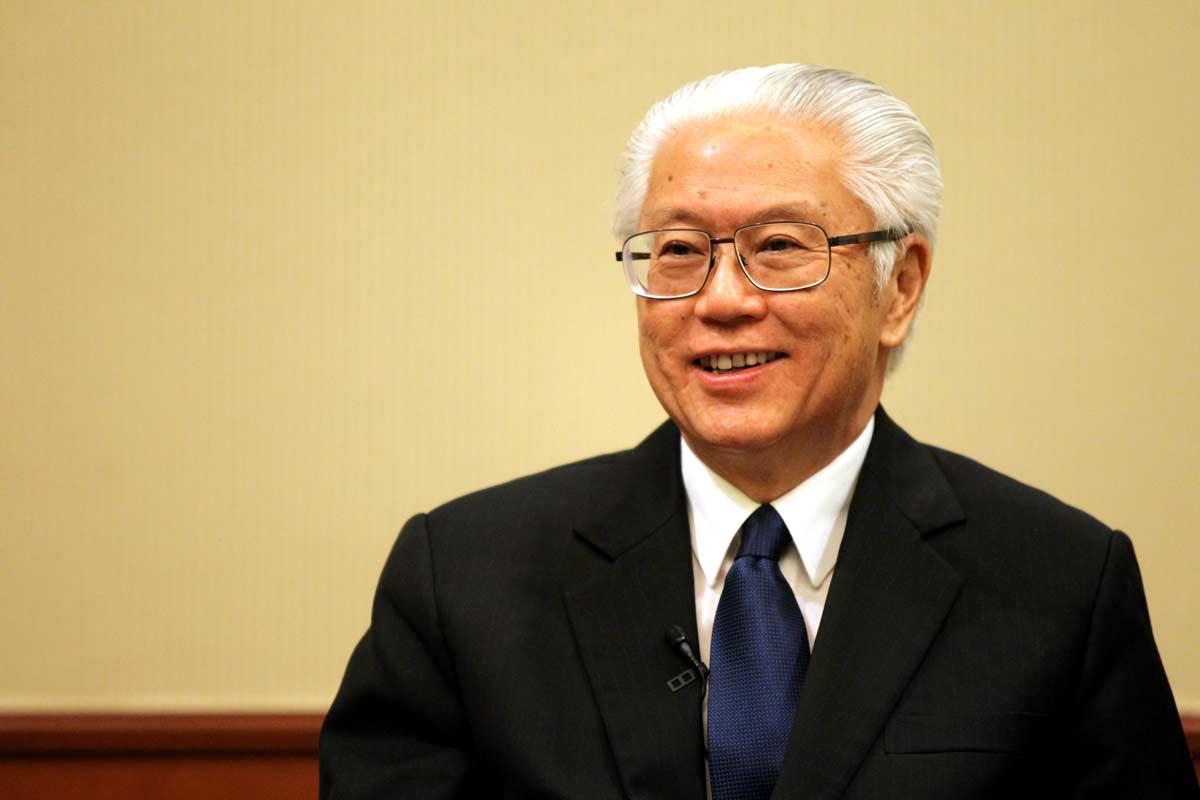
The other losing candidate, Mr Tan Kin Lian, will likely qualify, along with President Tony Tan Keng Yam, who won in 2011.
The commission recommended raising the bar to ensure candidates have the necessary experience and expertise to safeguard the country’s reserves.
Among other things, they must have been, for at least six years, the most senior executive of a company with up to $500 million in shareholders’ equity.
Dr Tan Cheng Bock, who said this year that he would make another presidential bid, will not qualify on both counts.
The former People’s Action Party MP qualified in 2011 as he had been non-executive chairman of investment holding company Chuan Hup since 1991.
But the proposed “most senior executive position” requirement excludes non-executive chairmen, who usually lead the board but do not actively run the company. Candidates must have been chief executive officer, managing director or executive chairmen, for instance, to meet this criterion.
As at June 30, Chuan Hup did not meet the proposed shareholders’ equity threshold as the company had $300.7 million in shareholders’ equity then.
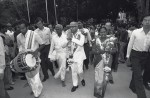
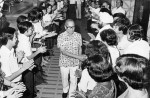
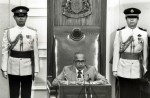
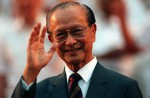
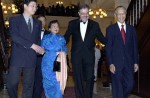
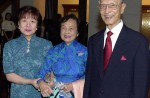
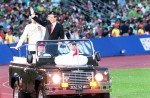
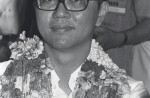
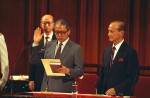
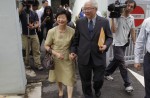
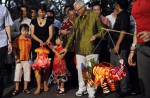
A look at the presidents of Singapore
Click on thumbnail to view photos. Source:
The Straits Times, Zawiyah Salleh, New Nation, Wee Kim Wee, The Business Times, The New Paper, The Ong family, Lianhe Zaobao
Dr Tan Cheng Bock declined to comment last night when The Straits Times visited his home.
As for Mr Tan Jee Say, he was regional managing director of asset management company AIB Govett Asia from 1997 to 2001, where he managed funds in excess of $100 million. But by the next presidential election, due next year, he would have left the post for more than 15 years. This means he will not meet another proposed criterion for a candidate’s qualifying tenure to be within 15 years before nomination day of the election.
Contacted yesterday, Mr Tan Jee Say, the Singaporeans First party chief, said raising the threshold of a company’s size to “$200 or $300 million” would be more reasonable. He had not ruled out contesting again, saying his options will become clearer after the Government decides which of the commission’s proposals to accept.
Mr Tan Kin Lian, who also ran and lost in 2011, is likely to meet the proposed new criteria. He was head of insurance cooperative NTUC Income from 1977 to 2007. According to its 2015 annual report, it had some $2.6 billion in equity as at Dec 31 last year. Mr Tan Kin Lian, who now runs his own consultancy, could not be reached for comment.
As for President Tan, he is the incumbent.
After he left the Cabinet in 2005, he held key corporate posts, including deputy chairman and executive director of the Government of Singapore Investment Corporation.
chiaym@sph.com.sg
Additional reporting by Charissa Yong and Rachel Au-Yong
This article was first published on September 08, 2016. Get a copy of The Straits Times or go to straitstimes.com for more stories.
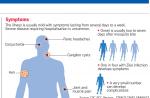
A paint is said to keep mosquitoes off your walls, and one town council is going to test it out.
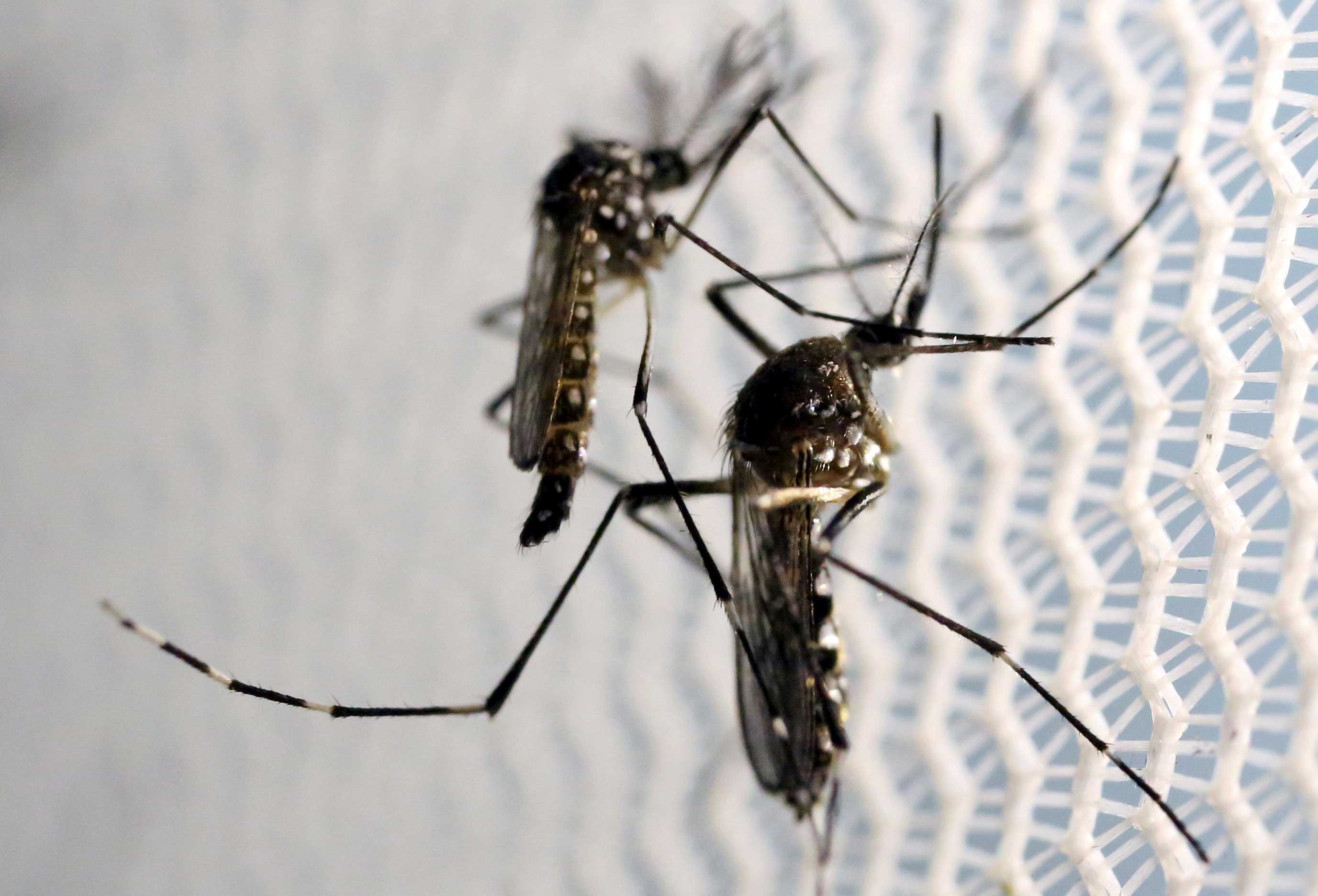
Developed by Japanese firm Kansai Paint, the paint contains permethrin, a commonly used insecticide that could ward off the Aedes aegypti mosquitoes that are able to spread both the Zika and dengue viruses. It can also keep at bay other small insects such as ants and small spiders, but it works only indoors.
After a successful trial in April and May this year, Nee Soon Town Council plans to use the paint for 18 residential blocks in Nee Soon by the year end.
Locally-transmitted Zika in Singapore
Click on thumbnail to view photos. Source:
The Straits Times, The New Paper
A spokesman for the town council said it tried the paint at a block in Nee Soon after getting feedback from residents about cobwebs forming on the internal walls of the block. The trial showed it was effective in reducing cobwebs, she said.
But she added that the paint does not repel insects from the blocks completely as it is suitable only for use on internal walls, such as at void decks, and not exterior walls.
Fighting Zika: Which mosquito repellent to use
Click on thumbnail to view photos. Source:
The Straits Times, New Straits Times, Avon, Reuters, The Business Times, Ronnie Lim, Far East Flora
The chemical permethrin affects the nervous systems of mosquitoes and other insects.
It has been used as an insecticide for decades and also in insecticide- treated bed nets, for instance, said Associate Professor Roderick Wayland Bates from Nanyang Technological University’s School of Physical and Mathematical Sciences. “It is regarded as having very low toxicity to humans and so poses no hazard in normal use,” he said, adding that permethrin is based on a natural compound found in chrysanthemums.
Kansai Paint (Singapore) chief operating officer Richard Leong said the paint costs about 10 per cent to 15 per cent more than conventional paint. He added that as mosquitoes like to rest on walls during the day, the paint would prevent them from coming indoors.
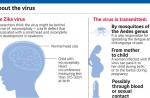
What is the Zika virus?
Click on thumbnail to view photos. Source:
Reuters, The Straits Times, The New Paper, NEA
Nonetheless, the paint alone cannot be a solution to the dengue and Zika situations, said the town council spokesman. “It only deters insects from landing on the walls; it does not kill them.”
She said the town council will continue urging residents to do the Mozzie Wipeout. It has also stepped up efforts to fight Zika transmission by cleaning and oiling drains. “We will monitor the effects of this paint and review whether to use it again when other blocks are scheduled for repair and redecoration.”
Broad changes to tighten the eligibility criteria for presidential candidates from the public and private sectors have been recommended by the Constitutional Commission.
The changes are to ensure that whoever is elected has the expertise and experience to carry out the president’s duties as guardian of the national reserves, which will involve complex and highly technical issues, the commission said in its report made public yesterday.
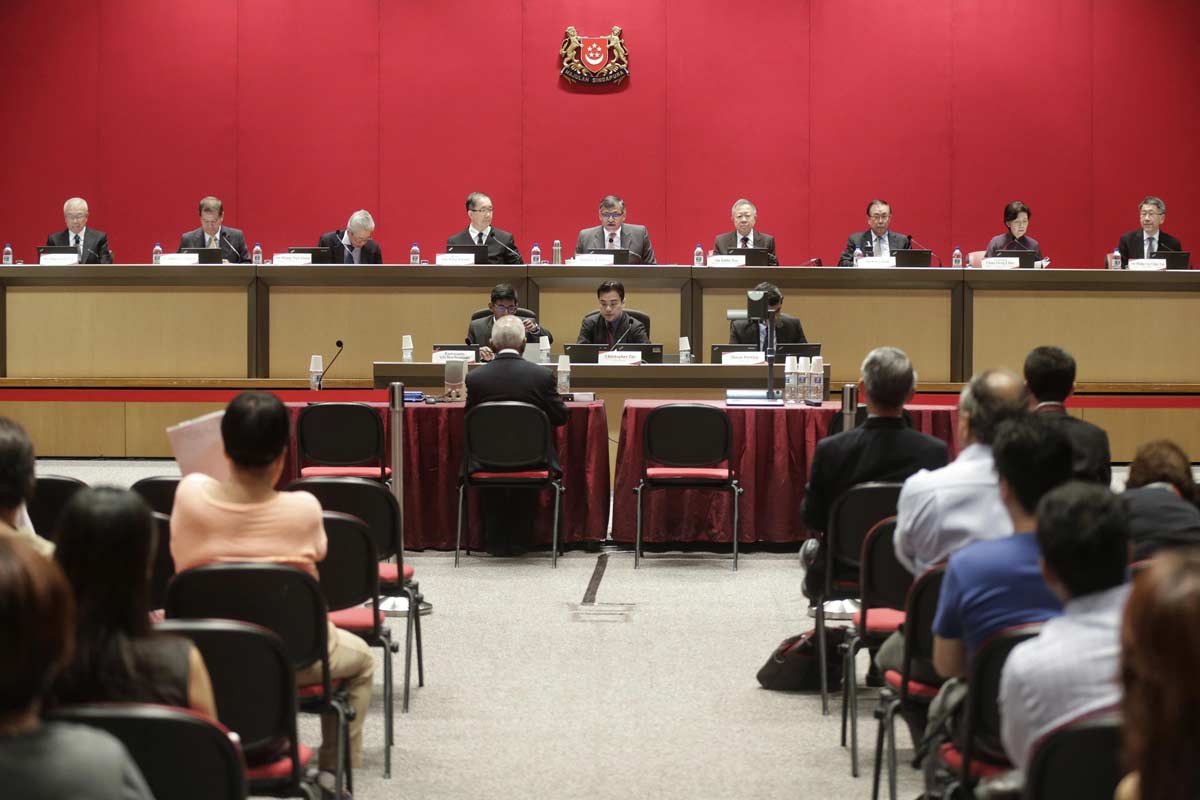
The commission, chaired by Chief Justice Sundaresh Menon, was appointed by Prime Minister Lee Hsien Loong in February to review the institution of the elected presidency. It submitted its report to Mr Lee last month.
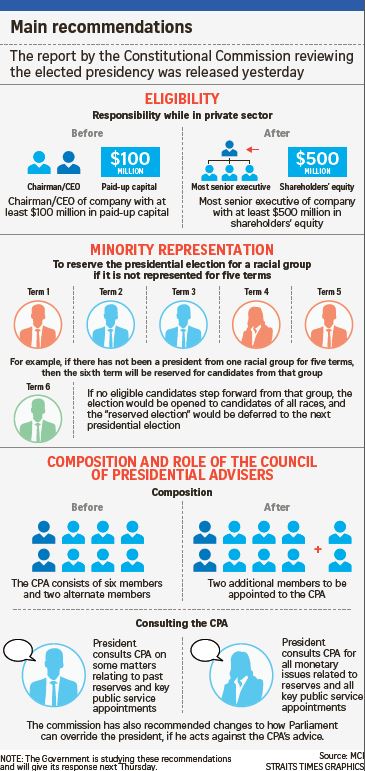
One key proposal is that potential candidates must have served six years in a public or private sector position which qualifies them to stand for election. This is double the current requirement of three years.
To ensure that a candidate’s experience is current, the commission recommended that the entire period of the candidate’s qualifying tenure must be within 15 years before the nomination day of the presidential election.
This means if the presidential election takes place in August next year, a potential candidate must have held his qualifying position for at least six years since 2002.
Another significant proposed change is to the current criterion that a candidate must have had experience running large, complex companies that have a paid-up capital of $100 million.
The commission suggests revising the amount to $500 million in shareholders’ equity, as it is a better indicator of a company’s size and complexity. “Unlike paid-up capital, shareholders’ equity reflects the company’s current (and not just its historical) recorded worth,” the report explained.
The $500 million figure was derived after considering the magnitude of the decisions that a president may have to make, and the confidence he must have in making decisions involving very large sums of money, including from the reserves.
The $500 million figure should also be reviewed periodically. This could be done a year before every alternate presidential election, the commission proposed.
A look at the presidents of Singapore
Click on thumbnail to view photos. Source:
The Straits Times, Zawiyah Salleh, New Nation, Wee Kim Wee, The Business Times, The New Paper, The Ong family, Lianhe Zaobao
“Quantitative thresholds cannot remain fixed in perpetuity for the self-evident reason that the economic situation in a country, or, for that matter, even the value of money in real terms, does not remain static,” the report said.
The commission also said that only the person holding the most senior executive position who “bears the ultimate weight of responsibility for the fate of a company” should be eligible. Current rules allow the chairman or chief executive of a qualifying company to stand.
But this places “undue emphasis on form rather than substance”, the commission said, noting that a non-executive chairman not actively running a company would not have the necessary expertise.
The commission also proposed a profitability requirement to show that a potential candidate performed acceptably while helming a company. The firm should have recorded a net profit during the candidate’s time heading it. The company must also not go into liquidation or insolvency within three years of the candidate’s departure.
The commission said public sector candidates should not be subject to a similar performance assessment, as it is harder to measure the performance of a public sector entity whose task is to advance the public interest and whose policies may bear fruit only in the long run.
But the commission said its proposal to double the duration which applicants must have served in the qualifying office will be an “indirect indication” of performance for public sector candidates, as it will “filter out those who were either removed or not reappointed because they had been found wanting”.
Key public service appointment holders who qualify include ministers, the Chief Justice, Speaker of Parliament, Attorney-General and permanent secretaries.
The commission said the Accountant-General and Auditor-General should be removed from the list for automatic qualification as they do not deal with the pressures of government decision-making, and “play an indispensable but ultimately ancillary (and comparatively narrow) role” in public service.
The commission also noted that it received feedback that raising the eligibility criteria will shrink the pool of potential candidates.
But it said that “an undue focus on the size of the pool is a distraction from the real task at hand, which is to ensure that candidates possess the requisite qualifications to satisfactorily discharge the responsibilities of the office”.
ziliang@sph.com.sg
This article was first published on September 08, 2016. Get a copy of The Straits Times or go to straitstimes.com for more stories.
Analysts and MPs yesterday welcomed a panel’s proposed changes for the elected presidency, but cautioned that some might lead to negative consequences if enacted.
They point to three possible changes that worry them. One, the more stringent eligibility criteria could reduce the number of minority candidates from the private sector, especially among Malays.
Two, the higher financial threshold for those in the private sector means more of them would be kept out of the contest. And with the greater likelihood of a public-sector candidate being elected, some say such a president would find it harder to be a check on the Government.
Three, reserving elections for minority candidates from time to time may cause some Chinese to vote only for Chinese candidates. The reason: They feel that since minority races are already guaranteed a president of their own race, there is no need to vote for them in normal elections.
The reaction was most robust on the eligibility criteria of candidates.
A look at the presidents of Singapore
Click on thumbnail to view photos. Source:
The Straits Times, Zawiyah Salleh, New Nation, Wee Kim Wee, The Business Times, The New Paper, The Ong family, Lianhe Zaobao
The Constitutional Commission proposed in its report yesterday that private-sector candidates must have run large companies whose shareholders’ equity is at least $500 million. This is a change from the current threshold of $100 million in paid-up capital.
The panel also recommended that if there was no president from a particular race for five terms, the next election should be reserved for candidates of that race.
Iseas – Yusof Ishak Institute fellow Norshahril Saat said the Malay community may find it hard to produce a private-sector candidate as there are relatively fewer of them compared with the other main races. Hence, its candidates would very likely be former ministers or Speakers of Parliament, unless the scheme is expanded to include junior ministers, he said.
But Chua Chu Kang GRC MP Zaqy Mohamad said there are “a number” of Malays in top positions in business. “It has always been about whether they want to step forward.”
But since reserved elections would occur once every 30 years, he did not think it would be “that difficult to find such a candidate”.
Workers’ Party (WP) chief Low Thia Khiang said last night that he foresees a president with a public-sector background struggling to act as a check on the Government.
“At the end of the day, who is qualified to stand as a candidate? It has to be from the Government, right? So who are they checking? Who is checking whom?” Mr Low said, adding that WP MPs would respond to the proposals in Parliament.
Institute of Policy Studies’ Dr Gillian Koh and law don Eugene Tan think some Chinese voters may deliberately vote only for a Chinese when previously they may not have given much thought to a candidate’s race.
Analysts welcomed the call against any easing of the eligibility criteria. Dr Koh said this effectively counters any perception of tokenism, or that a race may need a handicap for its candidate to successfully become president.
This article was first published on Sep 08, 2016. Get a copy of The Straits Times or go to straitstimes.com for more stories.
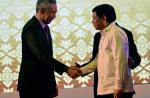
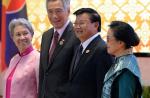
Singapore Prime Minister Lee Hsien Loong tells an ASEAN Summit in Laos that the American presence in the region is a “welcome” one which has helped build order and parity between countries big and small.
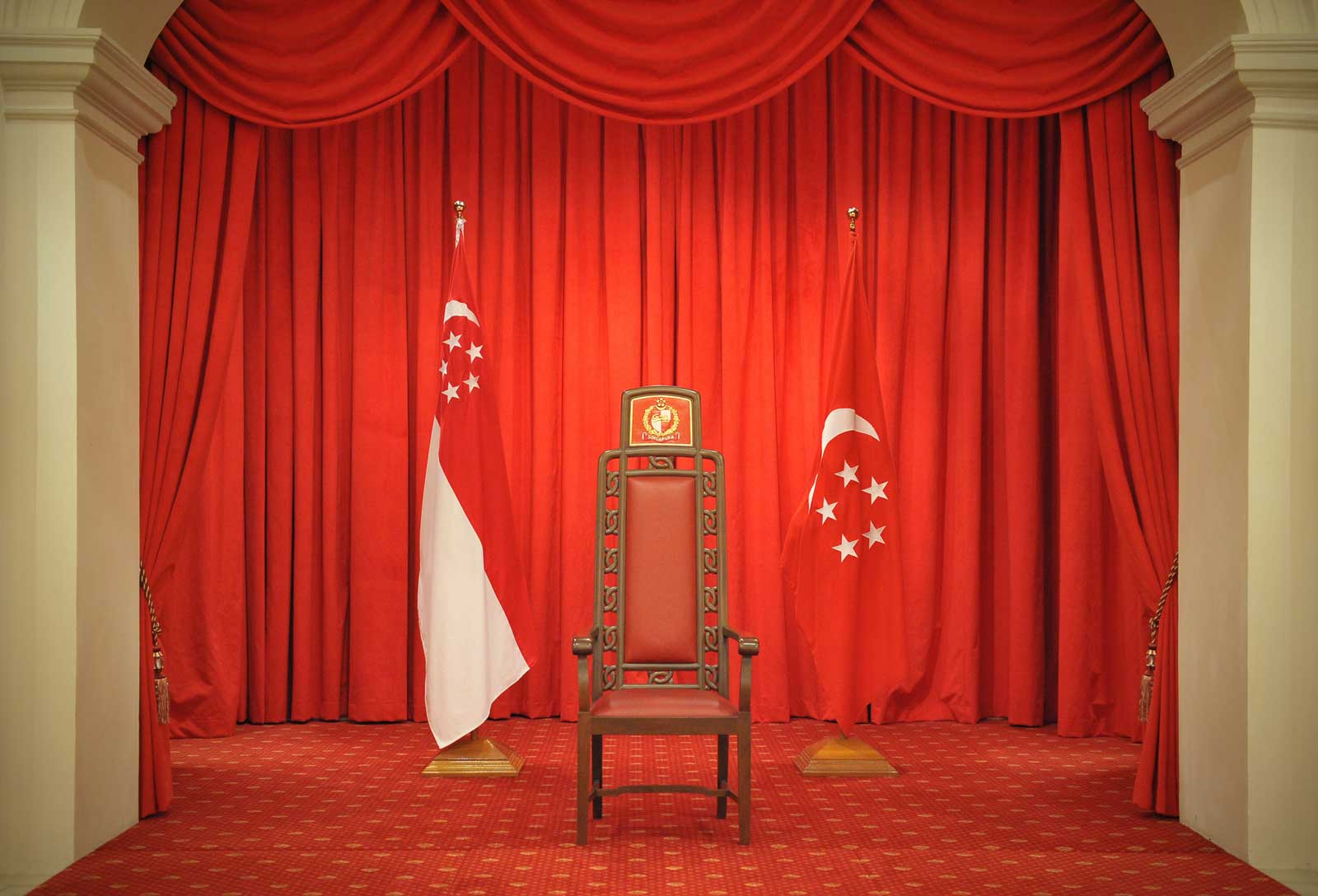
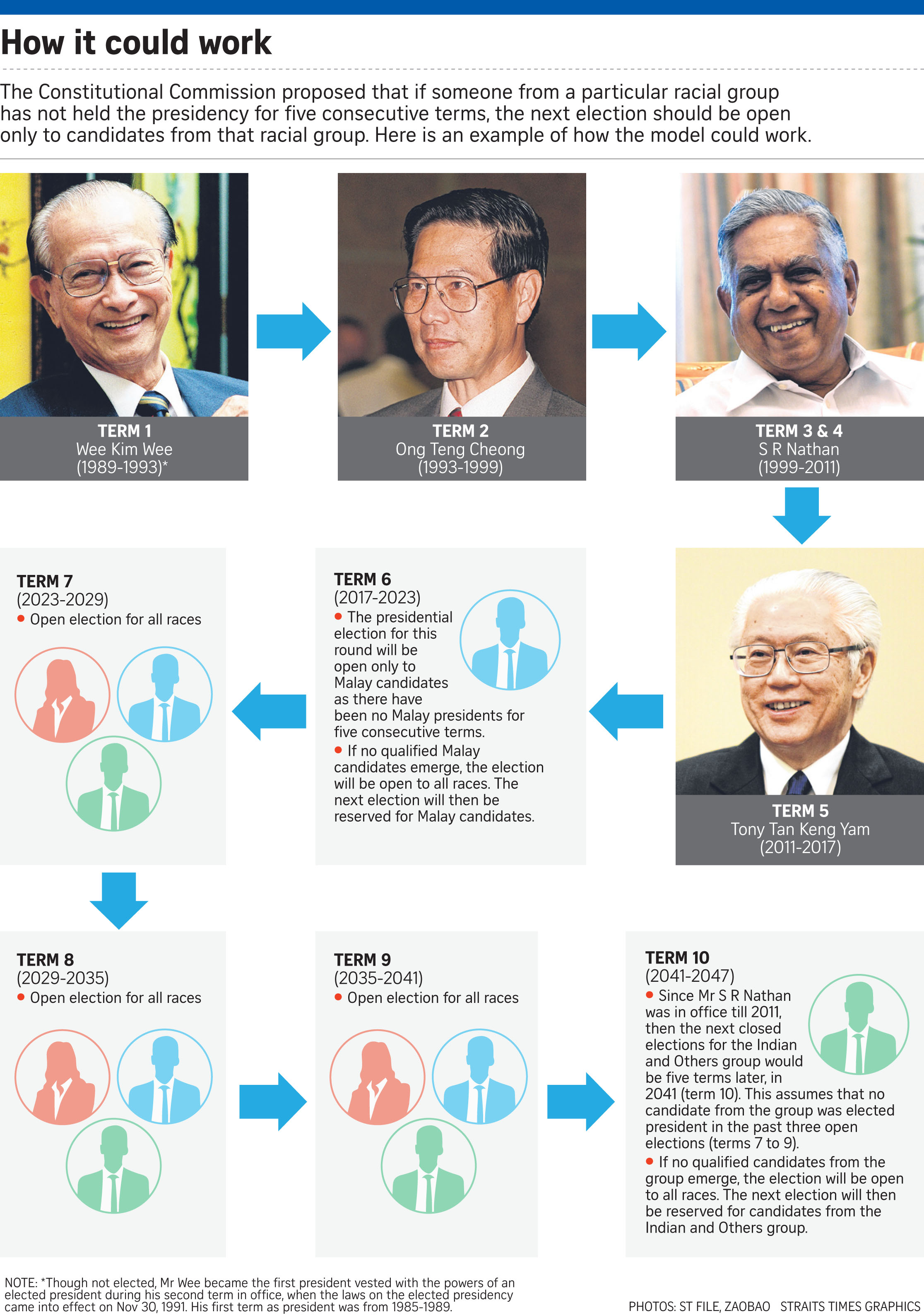
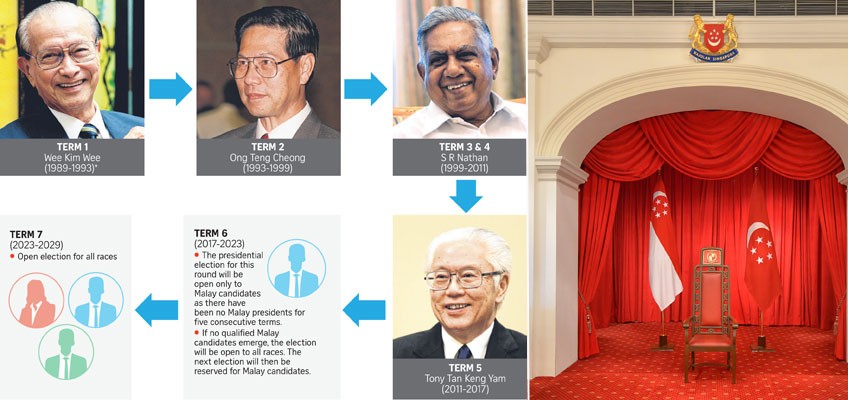
If Singapore has not had a president from a particular racial group for five continuous terms, the next presidential election should be reserved for candidates from that group, a high-level panel tasked to review the elected presidency proposed.
This ensures that the highest office in the land can be held periodically by someone from a minority community, which is crucial as the president symbolises the nation and should reflect its multiracialism, said the Constitutional Commission.
But it made clear that the eligibility criteria for candidates must not be lowered for anyone from particular racial groups to qualify.
The recommendation addresses a much-debated aspect which the commission was asked to look at by Prime Minister Lee Hsien Loong: whether there should be a special provision in the law to ensure that Singapore has minority presidents from time to time.
The commission, chaired by Chief Justice Sundaresh Menon, concluded that it is necessary as Singapore is still working towards the ideal of being race-blind, but is not there yet.
In the meantime, there is a pressing need to ensure that no racial group is shut out of the presidency, said the commission.
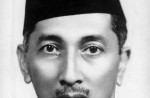
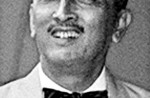
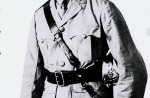
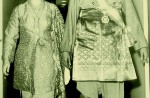
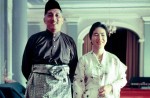
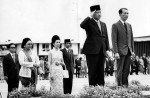
The country has not had a Malay president since Singapore’s first president Yusof Ishak held the post from 1965 to 1970. Before independence, he had been Yang di-Pertuan Negara of the State of Singapore, the precursor to the presidency, from 1959 until 1965.
In its report to PM Lee, the commission said it is vital that minority candidates do not see the presidency as unattainable. So there are “strong justifications” for introducing safeguards that make sure the office “is not only accessible, but is seen to be accessible, to persons from all the major racial communities in Singapore”, it added.
To achieve this, it proposed a safeguard that kicks in only when there has been no president from any racial group for five terms, which works out to 30 years.
But if no qualified candidate of the particular race emerges, then that election will be opened to candidates of all races. The subsequent election will then be reserved again for candidates of the particular race.
Asked about this proposal, Law Minister K. Shanmugam said the Government is asking the Attorney-General (A-G) for advice on aspects of the commission’s recommendations to ensure representation of all the major races in the office of the president.
A look at the presidents of Singapore
Click on thumbnail to view photos. Source:
The Straits Times, Zawiyah Salleh, New Nation, Wee Kim Wee, The Business Times, The New Paper, The Ong family, Lianhe Zaobao
“The Government will announce its position once the A-G has given his advice and the Government has considered it,” he said.
The commission, in recommending the model, said it is the least intrusive way of ensuring minority representation.
For one thing, the provision is race-neutral and does not single out any one racial group for protection. It also has a “natural sunset” as it may never be triggered if presidents from various racial groups are elected during open elections.
Said the commission: “It enables the representation of all racial groups in the presidency in a meaningful way while being minimally prescriptive.”
There is also no danger of undermining meritocracy, as long as candidates are held to the same stringent qualifying standards for all elections, it added.
This was an area of concern raised during the commission’s hearings in April and May, by some groups and individuals who felt that reserving elections for particular racial groups would result in a president being elected by virtue of his race and not his abilities.
Some others had been against having a special provision, saying it may lead to calls for similar safeguards for other public offices.
But this argument, the commission said, failed to recognise the unique symbolic function that the president plays. “No other public office – not that of the prime minister, the chief justice or the Speaker of Parliament – is intended to be a personification of the state and a symbol of the nation’s unity in the way that the presidency is.”
The commission also said that “placing undue focus on the custodial role, to the exclusion of the symbolic, would oversimplify what is in truth a multifaceted institution”.
While a key role of the president, after the elected presidency was introduced in 1991, is to safeguard Singapore’s reserves, this did not diminish the office’s symbolic role.
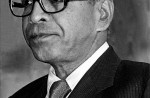
Former prime minister Lee Kuan Yew, in a 1999 interview with The Straits Times, said that “the convention of rotating the presidency among the races was important to remind Singaporeans that their country was multiracial”, the commission pointed out. After Mr Yusof, Singapore’s next presidents were Dr Benjamin Sheares, a Eurasian, then Mr Devan Nair, an Indian, followed by Mr Wee Kim Wee, a Chinese.
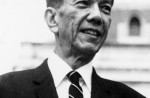
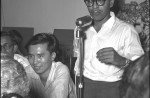
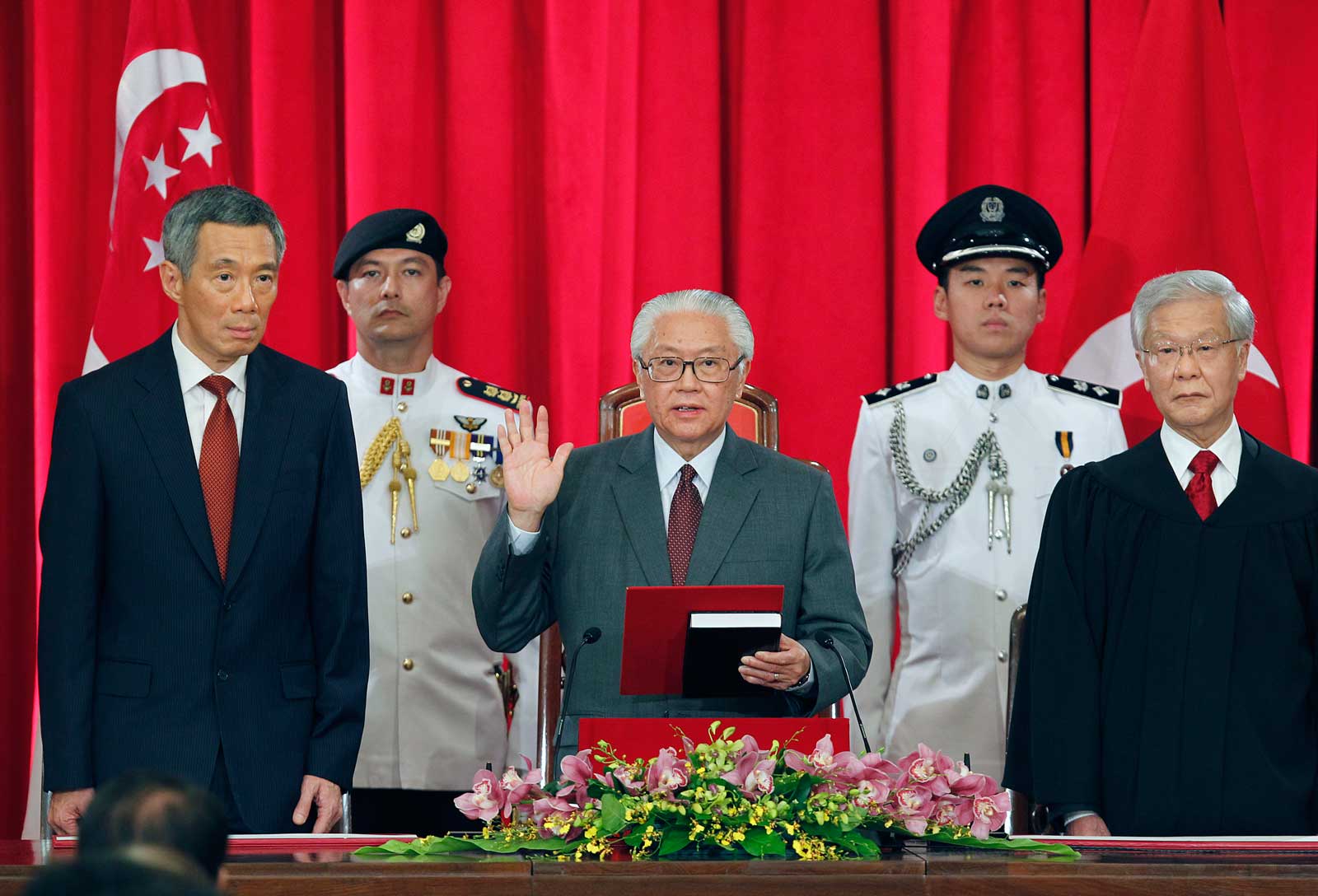
The elected presidency came into effect in 1991, and Mr Ong Teng Cheong, a Chinese, was the first Singapore president to be elected at the polls. He was followed by Mr S R Nathan, an Indian, who served for two terms, and current President Tony Tan Keng Yam, a Chinese.
Said the commission: “It is because of the crucial symbolic role performed by the president that the office should periodically be held by persons from minority races.”
This article was first published on Sep 08, 2016. Get a copy of The Straits Times or go to straitstimes.com for more stories.