The new Retail Industry Transformation Map aims to improve productivity to address headwinds, such as fewer business travellers and consumer shifts from brick-and-mortar to e-commerce.
Source link
Promoting multichannel retailing key in Singapore's new industry roadmap
Promoting omni-channel retailing key thrust in new retail industry roadmap: MTI
The new Retail Industry Transformation Map aims to improve productivity to address headwinds, such as fewer business travellers and consumer shifts from brick-and-mortar to e-commerce.
Source link
Embracing new technology crucial for fish farm sustainability: Koh Poh Koon
To keep the industry sustainable and competitive, Dr Koh Poh Koon encouraged farmers to open their minds to new technologies, as well as attracting young talent to the aquaculture industry.
Source link
Aedes mozzies can't be wiped out, say experts
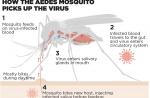
With new Zika infection cases in Singapore emerging every day, the public and experts are debating whether Aedes aegypti – the mosquito responsible for the spread of dengue, Zika, chikungunya and yellow fever – can be wiped out for good.
The answer is no, say scientists, and there are a number of reasons that have allowed the insect to thrive and evolve to become the world’s deadliest animal.
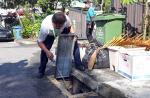
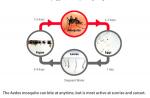
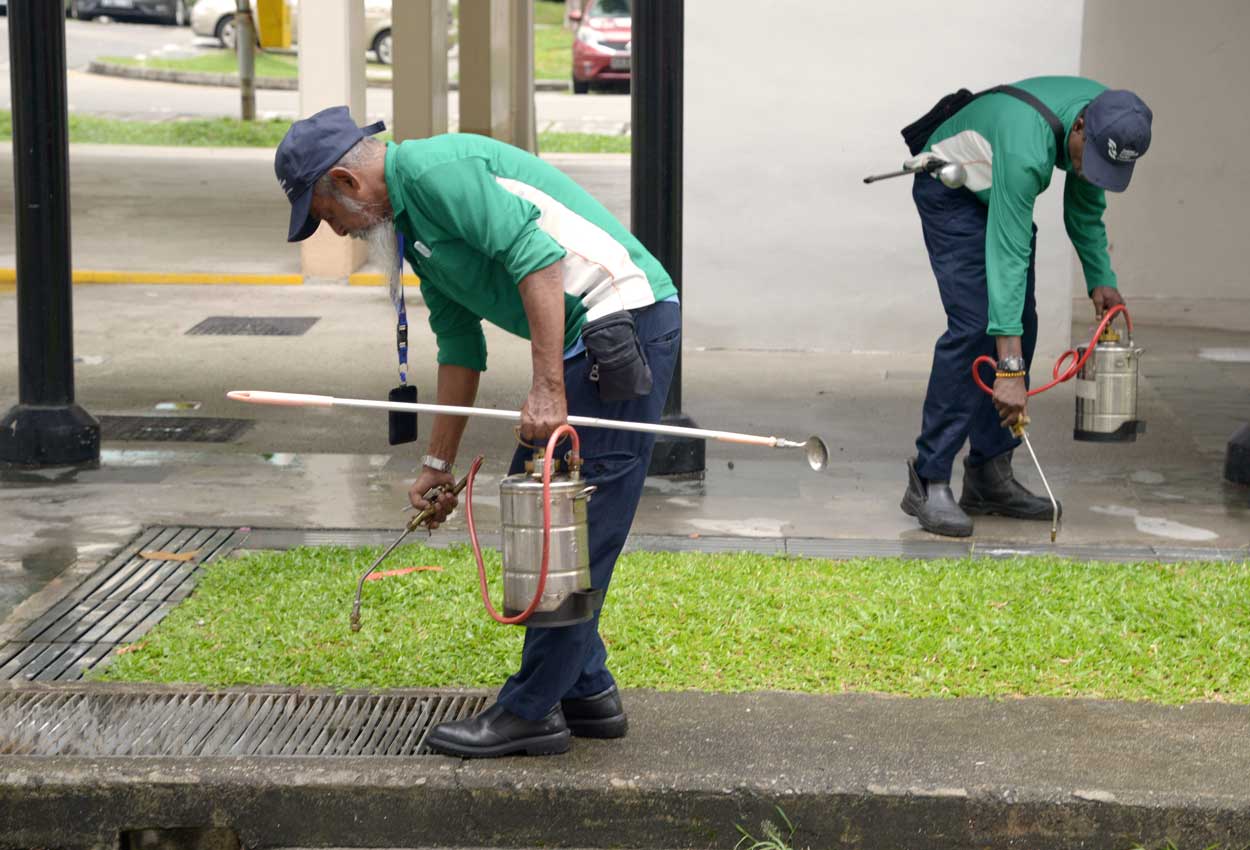
For one thing, evolution has made the insect highly adaptable to the urban environment, enabling it to breed in any small accumulation of stagnant water, explained Assistant Professor Roman Carrasco from the National University of Singapore’s biological sciences department. Most of its breeding habitats, such as gutters and crevices, are small and difficult to locate.
“It is able to breed very fast, with females laying 100 to 200 eggs per batch and five batches in a lifetime,” explained Prof Carrasco.
As it cannot do without human blood, it makes sense for the mosquito to live around people.
The Aedes aegypti has evolved to feed exclusively on humans, said Professor Ooi Eng Eong, deputy director of the Emerging Infectious Diseases Programme at the Duke- NUS Medical School.
According to Dr Hwang Wei Song of the Lee Kong Chian Natural History Museum, the mosquito’s natural ability to adapt to changes in the environment is what makes it such a difficult target.
Locally-transmitted Zika in Singapore
Click on thumbnail to view photos. Source:
The Straits Times, The New Paper






















Total eradication of mosquitoes in Singapore is not a feasible course of action, he pointed out. “We simply don’t have the tools now to eradicate all mosquitoes without seriously damaging the natural and human environment,” he said.
Prof Ooi also said eradicating Aedes aegypti is not the “best path to go down” under present circumstances as it is not sustainable and will be very costly.
“When you say you would need to spend millions to combat dengue and Zika, no one would bat an eyelid when there are lots of cases.
“But after eradication, you still will need to spend millions to sustain the mosquito control programme to prevent reintroduction and re-emergence of dengue and other Aedes-borne diseases… We have only finite resources,” he said.
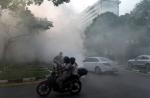
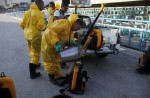
Minister for the Environment and Water Resources Masagos Zulkifli pointed out in Parliament on Tuesday that while fogging is helpful in killing adult mosquitoes with the dengue or Zika virus, it “would not be wise to conduct fogging indiscriminately” outside clusters.
“I know everyone likes fogging because it’s very optical – everyone can see it and everyone feels better. But it does not solve the problem,” he said.
What is the Zika virus?
Click on thumbnail to view photos. Source:
Reuters, The Straits Times, The New Paper, NEA


























The news is not all bleak though.
Trials are already ongoing to evaluate the potential of genetically modified mosquitoes and Aedes aegypti mosquitoes infected with Wolbachia bacteria to control the Aedes aegypti population.
Wolbachia is a bacterium which can be found in many insects, and when Wolbachia-carrying male mosquitoes mate with wild females, the females produce eggs which do not hatch.
The World Health Organisation (WHO) said these new methods could play a “significant role” in long-term dengue prevention.
After a six-month study of the technique here, it could be rolled out to high-risk areas by 2020. Further down the road, it may be possible to selectively remove the Aedes aegypti mosquito from the urban ecosystem at a low cost and without damaging the environment.
Prof Carrasco highlighted the Sterile Insect Technique as a species-specific method of biological insect control, whereby large amounts of sterile insects are released into the environment.
“It is used a lot against agricultural pests with remarkable large area eradication success histories,” he said. “It is certainly more affordable than current control methods.”
The technique, however, has yet to be fine-tuned to combat the Aedes aegypti mosquito population.
“When this happens, we will have our most powerful mosquito control technique ever ready,” said Prof Carrasco.
What is the Zika virus?
Click on thumbnail to view photos. Source:
Reuters, The Straits Times, The New Paper, NEA

This article was first published on September 15, 2016.
Get a copy of The Straits Times or go to straitstimes.com for more stories.
Image:
Publication Date:
Thursday, September 15, 2016 – 15:00
Keywords:
Send to mobile app:
Source:
Story Type:
Others
Aedes mozzies can't be wipes out, say experts
With new Zika infection cases in Singapore emerging every day, the public and experts are debating whether Aedes aegypti – the mosquito responsible for the spread of dengue, Zika, chikungunya and yellow fever – can be wiped out for good.
The answer is no, say scientists, and there are a number of reasons that have allowed the insect to thrive and evolve to become the world’s deadliest animal.
For one thing, evolution has made the insect highly adaptable to the urban environment, enabling it to breed in any small accumulation of stagnant water, explained Assistant Professor Roman Carrasco from the National University of Singapore’s biological sciences department. Most of its breeding habitats, such as gutters and crevices, are small and difficult to locate.
“It is able to breed very fast, with females laying 100 to 200 eggs per batch and five batches in a lifetime,” explained Prof Carrasco.
As it cannot do without human blood, it makes sense for the mosquito to live around people.
The Aedes aegypti has evolved to feed exclusively on humans, said Professor Ooi Eng Eong, deputy director of the Emerging Infectious Diseases Programme at the Duke- NUS Medical School.
According to Dr Hwang Wei Song of the Lee Kong Chian Natural History Museum, the mosquito’s natural ability to adapt to changes in the environment is what makes it such a difficult target.
Locally-transmitted Zika in Singapore
Click on thumbnail to view photos. Source:
The Straits Times, The New Paper


Total eradication of mosquitoes in Singapore is not a feasible course of action, he pointed out. “We simply don’t have the tools now to eradicate all mosquitoes without seriously damaging the natural and human environment,” he said.
Prof Ooi also said eradicating Aedes aegypti is not the “best path to go down” under present circumstances as it is not sustainable and will be very costly.
“When you say you would need to spend millions to combat dengue and Zika, no one would bat an eyelid when there are lots of cases.
“But after eradication, you still will need to spend millions to sustain the mosquito control programme to prevent reintroduction and re-emergence of dengue and other Aedes-borne diseases… We have only finite resources,” he said.
Minister for the Environment and Water Resources Masagos Zulkifli pointed out in Parliament on Tuesday that while fogging is helpful in killing adult mosquitoes with the dengue or Zika virus, it “would not be wise to conduct fogging indiscriminately” outside clusters.
“I know everyone likes fogging because it’s very optical – everyone can see it and everyone feels better. But it does not solve the problem,” he said.
What is the Zika virus?
Click on thumbnail to view photos. Source:
Reuters, The Straits Times, The New Paper, NEA
The news is not all bleak though.
Trials are already ongoing to evaluate the potential of genetically modified mosquitoes and Aedes aegypti mosquitoes infected with Wolbachia bacteria to control the Aedes aegypti population.
Wolbachia is a bacterium which can be found in many insects, and when Wolbachia-carrying male mosquitoes mate with wild females, the females produce eggs which do not hatch.
The World Health Organisation (WHO) said these new methods could play a “significant role” in long-term dengue prevention.
After a six-month study of the technique here, it could be rolled out to high-risk areas by 2020. Further down the road, it may be possible to selectively remove the Aedes aegypti mosquito from the urban ecosystem at a low cost and without damaging the environment.
Prof Carrasco highlighted the Sterile Insect Technique as a species-specific method of biological insect control, whereby large amounts of sterile insects are released into the environment.
“It is used a lot against agricultural pests with remarkable large area eradication success histories,” he said. “It is certainly more affordable than current control methods.”
The technique, however, has yet to be fine-tuned to combat the Aedes aegypti mosquito population.
“When this happens, we will have our most powerful mosquito control technique ever ready,” said Prof Carrasco.
What is the Zika virus?
Click on thumbnail to view photos. Source:
Reuters, The Straits Times, The New Paper, NEA
This article was first published on September 15, 2016.
Get a copy of The Straits Times or go to straitstimes.com for more stories.
Image:
Publication Date:
Thursday, September 15, 2016 – 15:00
Keywords:
Send to mobile app:
Source:
Story Type:
Others
Manhattan Fish Market: Coupon Deals from 15 Sep – 30 Nov 2016

JUST IN: Manhattan Fish Market coupon deals – just flash to redeem (till 30 Nov)
Manhattan Fish Market: Coupon Deals from 15 Sep – 30 Nov 2016
FISH MATE IS BACK! Once again, Manhattan Fish Market has paired their signature hand-battered fish fillet with an exciting sea-lection of premium seafood! Simply flash these e-coupons to enjoy
I will retire happy with one world title: Button

The final seven races of this season might be the last of Jenson Button’s career. And while he has pocketed one Formula One (F1) world championship, his career since his grand spell in 2009 has tapered off after a disappointing few seasons with McLaren.
Yet the Briton is keeping his chin up, and insists that he will retire happy when the time comes.
“As a kid, the dream was to win the world championship in Formula One. I’ve reached my goal,” he told the media at a fan event held at Esso’s Toa Payoh station yesterday.
“Would I like to win more? Of course, but would I retire upset? No. I’m very happy winning one world championship, 15 grands prix, and having 50 podiums.”
At 36, Button is one of the oldest maestros of his trade. And after 17 years in the sport, the Briton is ready to take a back seat next year with a sabbatical as a McLaren ambassador.
328753
Photo GalleryF1 drivers arrive for Singapore Grand Prix 2016
Source:
-

<!–
-

<!–
-

<!–
-

<!–
-

<!–
-

<!–
-

<!–
-

<!–
-

<!–
-

<!–
-

<!–
-

<!–
-

<!–
-

<!–
-

<!–
-

<!–
-

<!–
-

<!–
“I’ve been doing this job for 17 years now, which is my whole adult life,” he said.
“The problem is it’s been my life – racing is my life and everything that follows after a grand prix is either recovery or preparation, so I need something else in my life next year.
“I want to live a year that’s not by the Formula One schedule – I want to spend more time with my friends, family, and to do other things that I love, like triathlons.”
The Briton ventured into Singapore’s heartlands to surprise a fan at an event hosted by McLaren-Honda sponsor Esso at its Toa Payoh Lorong 2 service station.
As the winner of Esso’s “Who is Singapore’s biggest McLaren-Honda fan?” social media competition, Yasser Abdul Razak received a car wash from a McLaren F1 “pit crew” before his F1 hero pulled into the petrol station in a snazzy McLaren 650s, stepped out and shook his hand.
The IT systems engineer was stunned when he saw his idol walking towards him as he stepped out of the car.
“Oh my gosh, I can’t believe Jenson is here! Someone pinch me!” he exclaimed.
He also received a bag of goodies including tickets to this weekend’s Singapore Airlines Singapore Grand Prix, fuel vouchers from Esso and McLaren-Honda memorabilia which Button signed.
nchew@sph.com.sg
This article was first published on September 15, 2016.
Get a copy of The Straits Times or go to straitstimes.com for more stories.
Image:

Publication Date:
Thursday, September 15, 2016 – 16:00
Send to mobile app:
Source:
Story Type:
Others
Changi splits gates to dock more planes
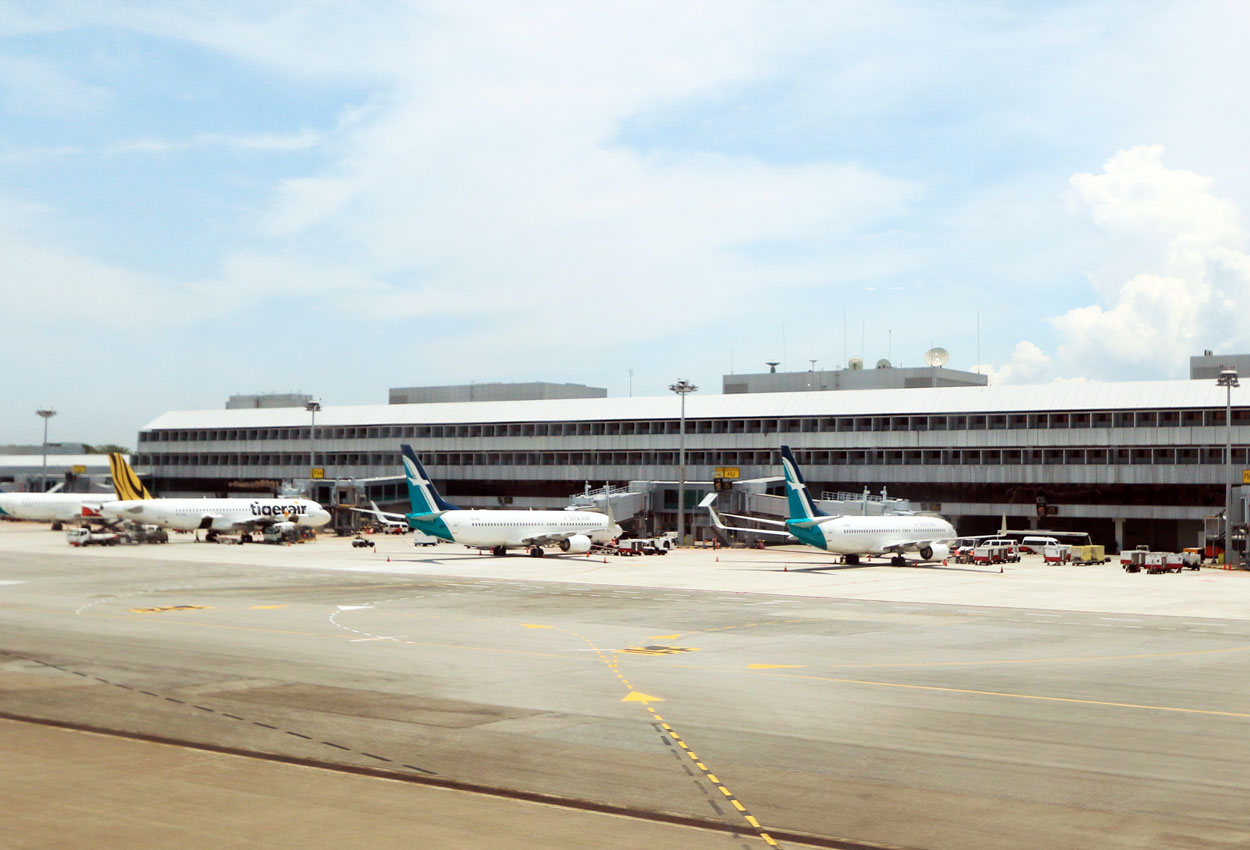
Changi Airport is splitting some of its terminal gates to accommodate more flights and minimise the need to ferry travellers by bus to and from their planes.
At Terminal 2, four gatehold rooms, the area where passengers wait before boarding, have so far been split. Another four – two at T2 and two at T1 – will be modified next year, Changi Airport Group said.
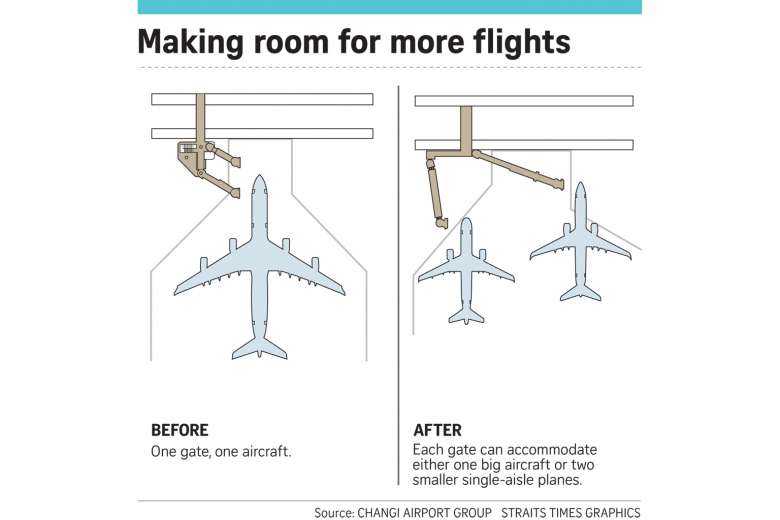
This effectively doubles the capacity of each gate, which can then accommodate either one big aircraft or two smaller single-aisle planes.
Typically, each gate handles just one aircraft – big or small.
The move to add capacity comes as traffic volumes continue to rise at Changi Airport, which handled a record 55.4 million travellers last year. Between January and July this year, passenger traffic hit almost 34 million, a 7.7 per cent jump from the same seven months last year.
Changi Airport Group spokesman Ivan Tan said that while commercial flights are generally scheduled, there are occasionally last-minute changes to schedules which result in the need for gate allocation to be dynamic to prevent a bottleneck situation.
“On the whole, we aim to assign aircraft to contact gates as much as possible for the convenience of our passengers,” he said.
But in some instances, for example, when flights arrive late or during high peak periods, remote bays may have to be be used, he said.
With contact gates, passengers use aerobridges to board and disembark from aircraft. But when planes are parked farther away at remote bays, buses are needed to ferry them to and from the terminals.
The splitting of gatehold rooms will increase overall capacity and minimise such cases which happen occasionally, he said.
When T4 opens next year, the airport will also have an extra 21 gates.
Some flights, including those operated by Cathay Pacific and AirAsia, will move from the current terminals to the new facility.
“This will help spread traffic and free some of the capacity at T1, T2 and T3”, which will allow more flights to be docked at the gates, Mr Tan said.
Besides making space for planes at the gates, the airport is also adding aircraft parking spaces, which should decrease the number of flight delays if flights do not have to circle unnecessarily before landing.
In 2013, work to clear a plot of land – the size of over 40 football fields, which would be able to accommodate more than 30 single- aisle planes – began.
The 38.5ha stretch of land where T3 is used to house a plant nursery that has since been relocated, as well as a reservoir and a pond which have been backfilled.
The new parking area will be progressively opened from later this year.
When the project is completed by the end of the decade, about 215 planes will be able to park at Changi Airport at any one time, 24 per cent more than now, Mr Tan said.
Marketing executive Benjamin Tan, 49, said: “Compared to other major airports, it is really quite rare at Changi Airport for passengers to take buses to and from the terminals and planes, which is good because aerobridges are so much more convenient.
“As flight numbers increase though, I think we have to accept the fact that this could become more common.”
This article was first published on September 15, 2016.
Get a copy of The Straits Times or go to straitstimes.com for more stories.
Image:
Publication Date:
Thursday, September 15, 2016 – 15:00
Keywords:
Send to mobile app:
Source:
Story Type:
Others
PM Lee urges S'poreans to use water wisely, avoid waste and recycle
Use water wisely, avoid waste, and recycle wherever possible.
This was the message from Prime Minister Lee Hsien Loong on Facebook yesterday, as he related the worrying sight that greeted him as his flight passed over Johor’s Linggiu Reservoir en route to China two weeks ago.
PM Lee had taken a photograph which he posted on Facebook showing the water level in the reservoir at a record low of 25 per cent after several years of low rainfall. Alongside it was a satellite image from Google Earth showing the reservoir at full capacity.
“The difference is stark, and worrying,” said PM Lee.
Built and run by Singapore’s national water agency PUB, the Linggiu Reservoir is allowed to supply up to about 60 per cent of Singapore’s current water needs, as provided by the Separation Agreement between Singapore and Malaysia.
Besides water imported from Malaysia, Singapore diversifies its water sources across three other national taps – local reservoirs, Newater, which is treated wastewater, and desalination.
Singapore’s reservoirs
Click on thumbnail to view photos. Source:
The Straits Times, MCI, PUB, Wikimedia Commons, Simon Ong














“Singapore is fortunate to be sheltered from many natural disasters, but our water supply is still at the mercy of the weather,” noted PM Lee. “Our Four National Taps have mitigated this, but we must still do all we can to conserve water.”
The world has been experiencing one of its strongest episodes of El Nino on record, which has contributed to hot weather and dry spells in Malaysia.
However, it is expected to be followed by La Nina next year, with prospects for higher rainfall.
Many Facebook users echoed PM Lee’s sentiments, while others offered suggestions such as deepening reservoirs at home, tapping into groundwater reserves, and even building specialised towers to condense water from the humid tropical air.
This article was first published on Sep 15, 2016.
Get a copy of The Straits Times or go to straitstimes.com for more stories.
Image:

Publication Date:
Thursday, September 15, 2016 – 14:00
Send to mobile app:
Source:
Story Type:
Others
Thai deputy PM contradicts police, says bombings not linked to Muslim insurgency
1.jpg "thailandbomb11.jpg")
BANGKOK – Last month’s bombings in Thai tourist towns were not linked to Muslim separatists, Thailand’s defence minister said on Thursday, contradicting the police.
There has been a series of bomb attacks in the central and far south, including coordinated bombings in tourist towns in August that killed four Thai people and wounded dozens, including foreigners.
Analysts say separatist insurgents in the country’s three southern Muslim-majority provinces of Yala, Narathiwat and Pattani bordering Malaysia were behind the attacks.
Tourist towns in the central south have for years been spared any spill-over of violence from the deep south and analysts say the government is loath to blame the coordinated bombings on southern Muslim insurgents because of fear of damaging tourism in the predominantly Buddhist country.
Click on thumbnail to view photos. Source:
AFP











So far, two suspects have been arrested in connection with the tourist-town attacks.
“Even though the arrested suspects were from the southern provinces this is not an expansion of the insurgency and not related to southern violence,” Deputy Prime Minister and Defence Minister Prawit Wongsuwan said at an event outlining the military government’s achievements since a May 2014 coup.
His comments contradicted a police statement last month linking the tourist town attacks to separatists in the far south.
Thailand and Malaysia on Friday agreed to consider building a border wall to combat transnational crime and smuggling.
More than 6,500 people have died – the majority of them civilians – since 2004 in fighting between Malay Muslim rebels and Thai security forces stationed in the area.
Violence in the three southern provinces had decreased by 60 per cent since the junta took power, Prawit said.
Image:

Publication Date:
Thursday, September 15, 2016 – 12:43
Keywords:
Send to mobile app:
Source:
Story Type:
Others


