Home Blog Page 2778

Laura Wasser: Hollywood divorce lawyer you want on your side

0

LOS ANGELES – If you are a celebrity and want to call it quits on your marriage, you probably want to have Laura Wasser in your camp.

The high-powered US divorce attorney who is representing Angelina Jolie in what is looking to be an acrimonious split with Brad Pitt has some of Hollywood’s A-listers as clients.

She recently defended Johnny Depp in his divorce from Amber Heard and prior to that represented Megan Fox, Britney Spears, Heidi Klum, Stevie Wonder and Kim Kardashian, as well as her mother Kris Jenner.

The “Disso Queen”, as she is nicknamed, also represented Jolie during her split from actor Billy Bob Thornton in 2003.

The 41-year-old actress filed for divorce from Pitt, 52, on Monday, citing irreconcilable differences, and asked for sole physical custody of their six children.

That means the “World War Z” actor would get visiting rights.

Jolie decided to end their marriage reportedly because she was fed up with her husband’s weed and alcohol consumption and his anger issues.

Hollywood insiders say Jolie could not have picked a better defence than Wasser, who has a reputation for being a “pit bull.” She reportedly charges $850 an hour and demands a minimum $25,000 as a retainer fee.

“She’s a very fine lawyer and more often than not with celebrity clients, she keeps it out of the press,” said Stacy Phillips, a divorce attorney who has also handled celebrity cases.

Wasser, who has been through one divorce herself and has two children from separate fathers, is the daughter of well-respected family attorney Dennis Wasser with whom she works.

She said that “law runs in the family” in her 2013 book entitled “It Doesn’t Have to Be That Way: How to Divorce Without Destroying Your Family or Bankrupting Yourself.”

A graduate of the University of California, Berkeley, she explains in her book that her parents’ amicable split had been an example for her and believes that couples should take an educational course about marriage before tying the knot.

And despite the fact that she is working in Tinseltown, she is not keen on speaking to the news media, at least not when it comes to her clients.

“Hello, our firm doesn’t accept media solicitations,” says a message on her office answering machine.

Still she does not shy away from appearing on the pages of fashion magazines where her celebrity clients often grace the covers.

She told the magazine Vanity Fair in a recent interview that she sometimes has to have a reality check with celebrity clients used to getting their way.

One client, she recalled , asked if he could add a clause to his prenuptial agreement stipulating that his wife lose her baby weight within a certain period if she wanted to receive her annual bonus.

“I said, ‘Yeah, dude. We can’t put that in,'” Wasser told Vanity Fair.

She said her clients often are also keen to share details about their sex lives and she has to plead with them not to submit pictures or videos.

She told Vanity Fair that more often than not she tries to hammer out a divorce settlement with her celebrity clients before the formal split is announced.

“People may not even realise that this couple is getting divorced but we’re actually all the way through the entire settlement before they even file anything with the court and announce to the world that they’re splitting up,” she told the magazine.

She said she also advises clients on the best time to publicize a split to lessen media attention – preferably during the summer, a Friday or on the eve of a holiday weekend.

Phillips said that as far as the split between Jolie and Pitt, which made headlines worldwide, “maybe Angelina is just trying to give Brad a wake-up call or maybe she’s staking out her position.” As for Wasser, she told Vanity Fair that if there is one thing she has learned during her career it is not to judge her clients.

“Some of the most unlikely relationships have lasted the longest both in and out of Hollywood, and some of the ones that you would have thought would have been great matches, fall apart a year later,” she said.

And though her job is all about relationships breaking down, she says she still believes in love.

“I’m a sucker for a good love story and I tear up at weddings along with everybody else,” she said in her book.

Image: 
Category: 
Publication Date: 
Saturday, September 24, 2016 – 15:36
Send to mobile app: 
Source: 


Story Type: 
Others

Source link

Foreign passport forgers charged with hiding body in Bangkok

0

Bangkok – Three foreigners belonging to a suspected passport forgery ring were charged Saturday after police found them with drugs, guns and a dismembered body stashed in the freezer of a Bangkok building.

Police said they are trying to confirm the nationalities of the English speakers, who were found with multiple passports, but suspect they are American or British.

A US Embassy spokesman said he was following the case but could not comment due to privacy concerns.

Police said one of the men grabbed a gun and opened fire during Friday’s raid, injuring one officer who has been hospitalised.

Officers then rounded up a cache of drugs and guns and discovered the bagged body parts of a man, described as a blond foreigner, inside a padlocked freezer on the ground floor.

“They are charged on five counts including attempting to kill an official on duty, resisting arrest, illegal possession of firearms and ammunition, forging official documents and concealing a corpse,” said Chanin Vachirapraneekul, commander of the police station in Bangkok’s Phra Khanong district where the men were taken.

Forensic officers are working to identify the deceased.

A Burmese housekeeper and her husband, who were initially detained with the group, have not been charged with any crimes and are being treated as witnesses in the case, said Bangkok’s deputy police commander Suwat Jangyodsuk.

“As of now we suspect that they are a passport forgery gang,” he said of the three men in custody.

“We seized more than ten fake documents, including passports,” he added.

Thailand has long served as a base for foreign criminals and fugitives lured by the kingdom’s porous borders, lax visa requirements and notoriously bribable police force.

A thriving forged documents trade has also helped shield countless crime syndicates populating Thailand’s vast underworld.

In February Thai police arrested an Iranian man known as “The Doctor” who crafted pristine passports from his home in a Bangkok suburb and sold the documents to thousands around the globe – including gangsters, rebels, refugees and migrant workers.

Image: 
Category: 
Publication Date: 
Saturday, September 24, 2016 – 15:38
Keywords: 
Send to mobile app: 
Source: 


Rotator Headline: 
Foreigners charged in Thailand after police find dismembered body in freezer
Rotator Image: 
Hermes ID: 
2 620 878
Hermes ID String: 
SY_THAIFORGERS_0924
Hermes Author: 
SEANYAP
Story Type: 
Others

Source link

Social media wades into Thai tourism video controversy

0

The Culture Ministry’s decision to red-flag a music video “Tiew Thai Me Hey” that promotes Thai tourism via Khon characters has drawn even more attention to the controversy.

The ministry said scenes showing the Ramakien epic character Thotsakan (Ravana) on horseback, a jet ski, a go-kart, and a tuk-tuk as well as the scenes showing the imaginary king of giants cooking Thai sweetmeat were inappropriate.

Tachaya Pathumwan, one of the singers who sang the song, posted a picture of his mirror reflection with a tape over his mouth and a caption that read, “Saliva and sweat are both liquid, but they are released through different processes.”

In just a few days, the petition at Change.org against the complaint gained over 64,000 names in support.

Many social media users shared a drawing showing the back of a sad-looking Thotsakan with a message reading, “I can’t do this. I can’t do that. I can’t even cook sweetmeat … Oh, please! I am grown up already.” Some shared the picture of frozen-food box labelled “Frozen culture”, and called on friends to sign the petition.

To promote the character as popular culture, Drama-Addict Page organised a competition on Thotsakan fan art. Prizes up for grabs are Bt25,000 (S$980.60), Bt15,000, Bt10,000 cash and Thotsakan figure toys. The competition ends on September 30.

Not surprisingly, debates on whether the music video was appropriate have flooded the timeline.

Nitipat Bhandhumachinda wrote: “When our favourite people [celebrities] or characters come to shop, cook, ride bicycle or do ordinary things, people feel love and connection and feel they are close to us. Our love, respect and faith in them never recede because of that.”

Songwriter and musician Nitipong Honark posted, “Hey, let’s help. Don’t be too conservative. Help Thai children enjoy Khon and the good things of Thailand. Thai children know Snow White and the Seven Dwarfs more than Nang Sibsong [Thai folklore Twelve Ladies].”

Pipope Panitchpakdi wrote, “The conservation of performance norms is extremely important, like staying true to Shakespeare’s words or Mozart’s notes… But for this MV [music video], we should look at it as borrowing representation to stimulate the domestic economy. It has no significant impact on development or destruction of the art of Khon.”

Jessada Jezzy Sarapun shared comments by drama director Yutthana ‘Pa Jaew’ Lophanphaibunthat: “Making Classics pop culture is not wrong. But something misplaced was the design and production of the MV. Without good taste they can make the integrated Classics not as beautiful as it should have been.”

Khao Mai Ha Namta Kor Led posted pictures with the caption, “Hanuman cannot take a tour in Thailand, but he can be a presenter to promote the national referendum.”

However, AP Photomusic earlier this week coincidentally posted a series of pictures featuring Khon monkey character Hanuman at prominent places in Lop Buri, a province known a monkey habitat.

The pictures attracted more than 5,000 “Likes” in a few days. At the same time, some people shared a YouTube clip of a Thai film produced 22 years ago featuring Hanuman and Ultraman. The film was also selected by the Culture Ministry to be conserved in 2012.

On Twitter, @markpeak posted about Japan’s Anime Tourism 88 website and strategies that use cartoon characters to promote places including train stations and shrines for tourists.

@penguin997 wrote: “They rebuke if we turn to foreign [cultural items]. But when some people try to make Thai culture interesting, they say it’s wrong. What do you expect me to do, wait and see our country’s failure?”

@jurairat23 wrote: “What are the authorities thinking? They ban the MV featuring giants that invite people to travel, but they don’t ban obscene MVs.”

@SaraUpdate wrote: “The [Culture] Ministry’s move to protect precious literature characters from too many adaptations is right and they should not be blamed.”

Image: 
Category: 
Publication Date: 
Saturday, September 24, 2016 – 15:10
Send to mobile app: 
Source: 


Story Type: 
Others

Source link

World's highest delivery service station established in Tibet

0

Alibaba’s logistics arm, Cainiao Network, set up the world’s highest delivery service station in Southwest China’s Tibet to expand businesses and services to far remote areas.

Located in Tashi Dzom in Tingri county with the altitude of 4,119 meters at the foot of Qomolangma, the station is managed by young Chinese man Yang Tao and his father who ran a vegetable store in the town.

Yang, born in 1990s, has to drive his pickup for hours to the county seat of Tingri and back periodically to fetch parcels from online shopping, mainly from Alibaba’s shopping sites Taobao and Tmall, as delivery of packages stops in Tingri after being sent by air to Shigatse. And then parcel recipients come to his station to pick up their packages.

The service station brings much convenience and more products to the small town with a population of about 7,400.

Image: 
Category: 
Publication Date: 
Saturday, September 24, 2016 – 15:02
Keywords: 
Send to mobile app: 
Source: 


Story Type: 
Others

Source link

Feuding neighbours: Noise, littering among complaints handled by tribunals

0

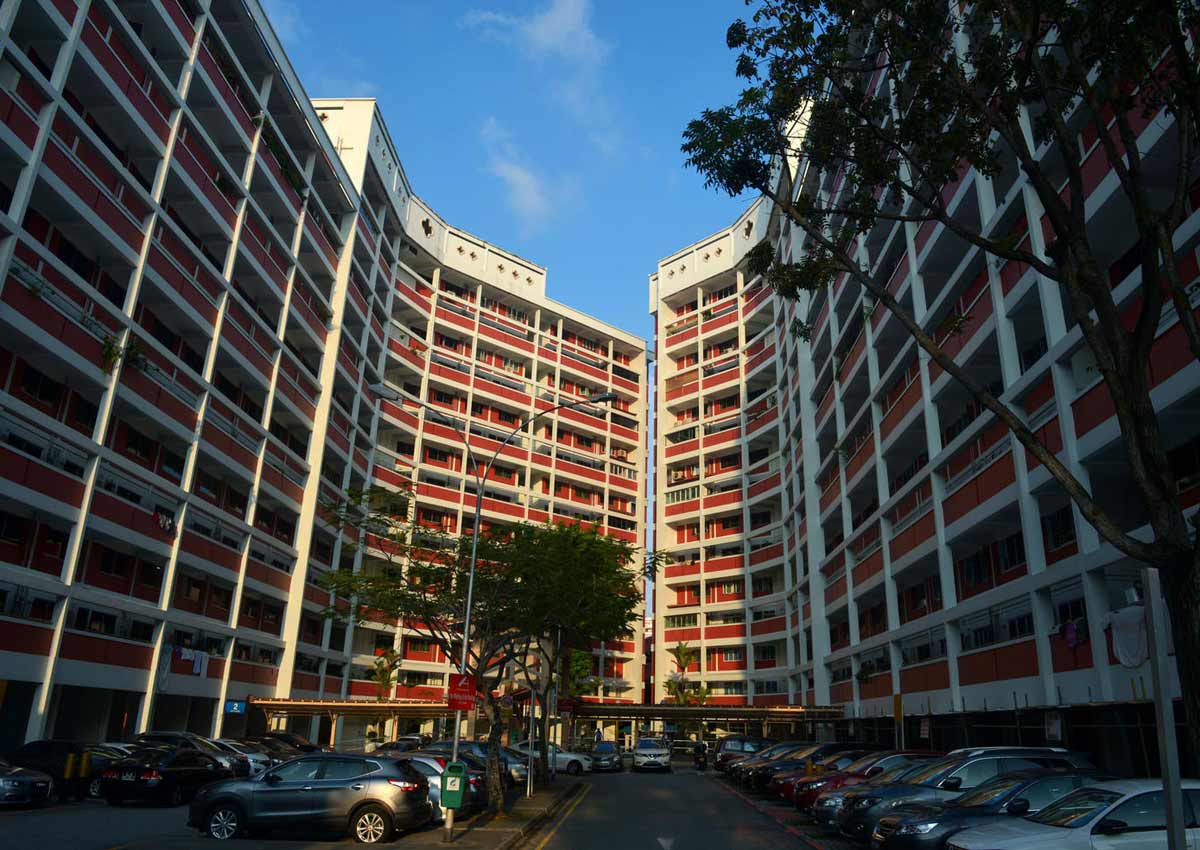
A woman complained about the din made by her neighbours downstairs when they sang karaoke.

They hit back by leaving their main door and windows open, and hurling vulgarities at the woman and her family. Early this year, the woman filed a claim with the Community Disputes Resolution Tribunals (CDRT) – one of almost 80 made from October last year, when it opened, to July 31.

The tribunals, which are given powers to resolve disputes between neighbours under the Community Disputes Resolution Act passed last year, received more than 930 inquiries in the same period.

These statistics were revealed yesterday by the State Courts, which oversees the tribunals, in conjunction with its first seminar on resolving community disputes. Some 300 people from government agencies and community groups attended the event.

As in the case of the woman and her karaoke-singing neighbours, nearly 70 of the cases included complaints about excessive noise.

Other pet peeves are littering and interfering with movable property, each forming about a quarter of the cases. There may be more than one cause of dispute for each claim.

In the case of the woman, an order was issued to the other family to close all windows and doors completely when using the karaoke machine. They were not to use the machine when her children were having examinations, if told of the exam periods.

Both parties were also not to stare at each other or make abusive comments and sounds if they met.

Before the tribunals were introduced, people turned to the Community Mediation Centre (CMC) if they could not settle disputes on their own or even with the help of grassroots leaders. But there is little the authorities can do if the neighbours do not want to make up. Some do not even turn up. The no-show rate at the CMC was about 60 per cent.

The tribunals, which have jurisdiction on claims of up to $20,000, has more teeth. For unresolved disputes, the judge may order a hearing, in which he can make certain orders, like getting a neighbour to pay damages or apologise.

Still, while the tribunals do not conduct mediation, a State Courts spokesman said parties are “strongly encouraged” to go for mediation voluntarily before filing a claim.

Those who inquire with the tribunals will be referred to a free consultation to understand court processes and consider alternatives to resolution. Even when a claim has been filed, parties may be ordered to go through mediation.

MPs told The Straits Times that spats between residents are common.

Said Minister for Social and Family Development Tan Chuan-Jin: “There are often several sides to an issue, and it does take time to find solutions. Sometimes, we are not able to achieve a positive outcome.”

Chua Chu Kang GRC MP Zaqy Mohamad added: “Mediation has a certain weakness to it. You can’t force parties to attend it.”

Nee Soon GRC MP Lee Bee Wah said: “It is neither practical nor desirable for most disputes to go to the CDRT. I hope most cases can continue to be resolved with compromise and consideration, with the grassroots leaders’ help.”


This article was first published on September 24, 2016.
Get a copy of The Straits Times or go to straitstimes.com for more stories.

Image: 
Category: 
Publication Date: 
Saturday, September 24, 2016 – 15:09
Send to mobile app: 
Source: 


Story Type: 
Others

Source link

Bad policies, not Duterte's language, would turn away investors: Senator

0

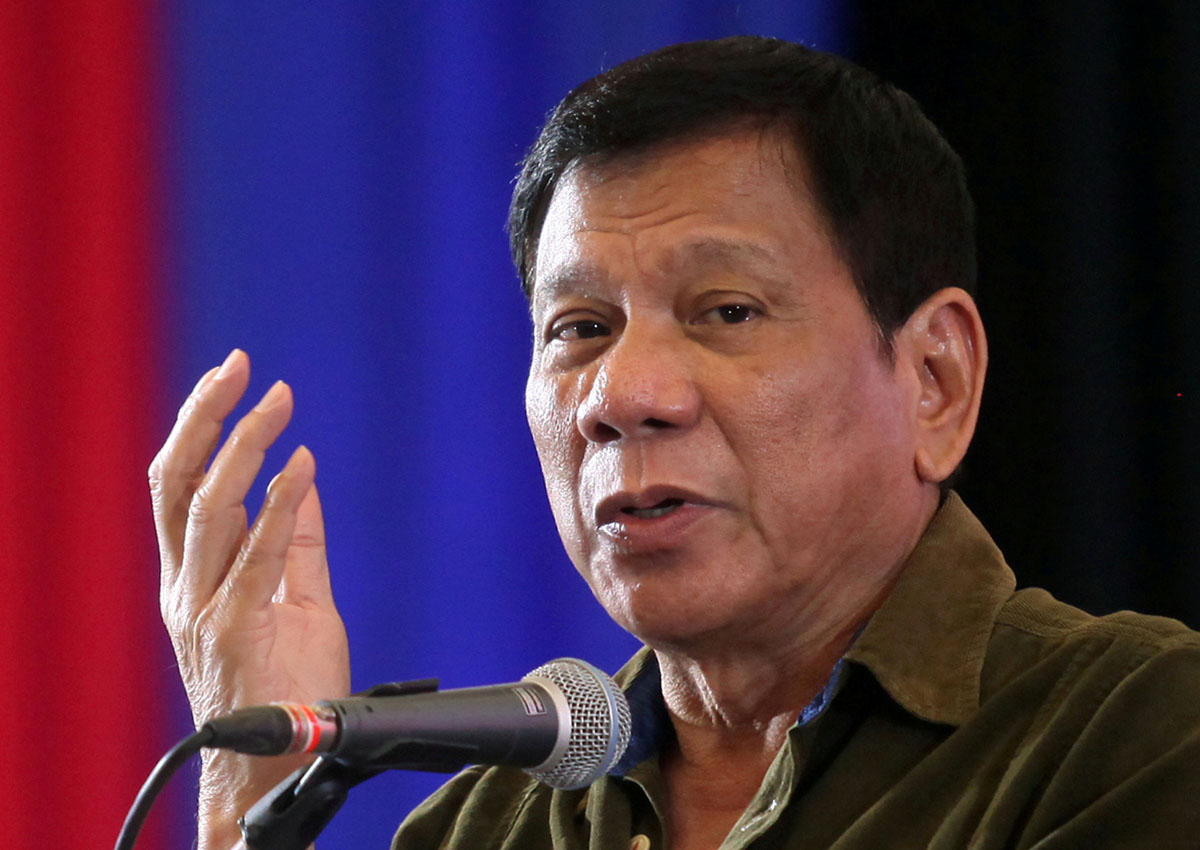
MANILA – A Philippine senator believes that President Rodrigo Duterte’s ‘colourful language’ will not scare off investors.

For as long as President Rodrigo Duterte’s verbal tirades do not “metamorphose” into official state policy, then no great harm is done, “except maybe to our sensitive ears,” Senate Minority Leader Ralph Recto said on Friday.

Recto though acknowledged that there is a need to boost the country’s “global tourism PR drive to negate the bad press we are getting.”

“Investors are not complaining about the President’s bad language. The objects of their ire are bad traffic, bad infrastructure and slow internet,” he said in a statement.

“But this is not to say that we should condone presidential outbursts. I think those close to him should start speaking truth to power and remind him that good statecraft requires the discipline of carefully choosing the right words for the right occasion,” the senator added.

Duterte, who is known for his colourful language, has repeatedly cursed international organisations like the United Nations and the European Union for calling an end to alleged spate of extrajudicial killings in the country since he assumed office barely three months ago.

“I read the condemnation of the European Union against me. I will tell them f*** you. You’re doing it in atonement for your sins,” Duterte said in a recent speech in Davao City.

But Recto remained confident that no amount of the President’s invectives could drive away businessmen from the Philippines.

“Hard-nosed investors are attracted by incentives, and are not easily repelled by invectives. They go to where money can be made, and the Philippine is an irresistible large market of over 100 million consumers,” he said.

“The leader of the land where they’ll be sinking their money in can drop ‘F’ bombs for all they care. In search for the almighty profit, business will go where it can be made, even to places where real bombs explode on a daily basis.”

“What is, however, impolite to investors are the abrupt changes in rules. What is inelegant language to them are the rules of red tape,” Recto said.

He said investors could probably live with a president, who constantly curses, for as long as government policies are consistent, and contracts, except fraudulent ones, are honoured and for as long as the rules of business are predictable.

“A president’s colourful language is not a risk to be managed. Trading does not stop because the president has again thrown a tantrum,” the senator said.

Image: 
Category: 
Publication Date: 
Saturday, September 24, 2016 – 14:54
Keywords: 
Send to mobile app: 
Source: 


Story Type: 
Others

Source link

Norwegian hostage freed by Abu Sayyaf flies home

0

MANILA – Days after being released by his Abu Sayyaf captors, Kjartan Sekkingstad has flown back to Oslo, this as the bandit group released another one of its Indonesian hostages.

Abu Sayyaf gunmen have released an Indonesian captive in Sulu province, the military said, as freed Norwegian captive Kjartan Sekkingstad flew out of the Philippines on Thursday.

Herman Bin Manggak, 32, was released to the Moro National Liberation Front and later handed over to concerned Joint Task Force Sulu members.

The Abu Sayyaf abducted Manggak in waters off Sandakan in Sabah on Aug. 3, 2016.

A report from the Armed Forces of the Philippines Western Mindanao Command (Wesmincom) said the victim was brought to Camp Teodulfo Bautista Station Hospital for medical examination and debriefing before being turned over to Wesmincom authorities.

Brig. Gen. Arnel dela Vega, joint task force commander, said the release was a result of the continued military offensives of the joint task force against Abu Sayyaf members, who have split into smaller groups to evade the pursuing soldiers.

The good news came as freed Norwegian hostage Kjartan Sekkingstad left on Thursday, days after the Abu Sayyaf group freed him from nearly a year in captivity. Two Canadian nationals kidnapped with him in the southern city of Davao have been beheaded, while a fourth victim, a Filipina, was freed months into captivity.

The lanky Norwegian, now clean-shaven, boarded at around 1:30 p.m. Thai Airways flight TG-621 to Bangkok at the Ninoy Aquino International Airport Terminal 1.

Escorted by Norwegian Embassy officials, Sekkingstad was headed to catch a connecting flight to Oslo.

Sekkingstad was abducted on Sept. 21, 2015, from a resort in Samal Island along with Canadian nationals John Ridsdel and Robert Hall, as well as Filipino Tess Flor Hall.

Image: 
Category: 
Publication Date: 
Saturday, September 24, 2016 – 14:49
Keywords: 
Send to mobile app: 
Source: 


Story Type: 
Others

Source link

Time for Great Singapore Shake-up

0

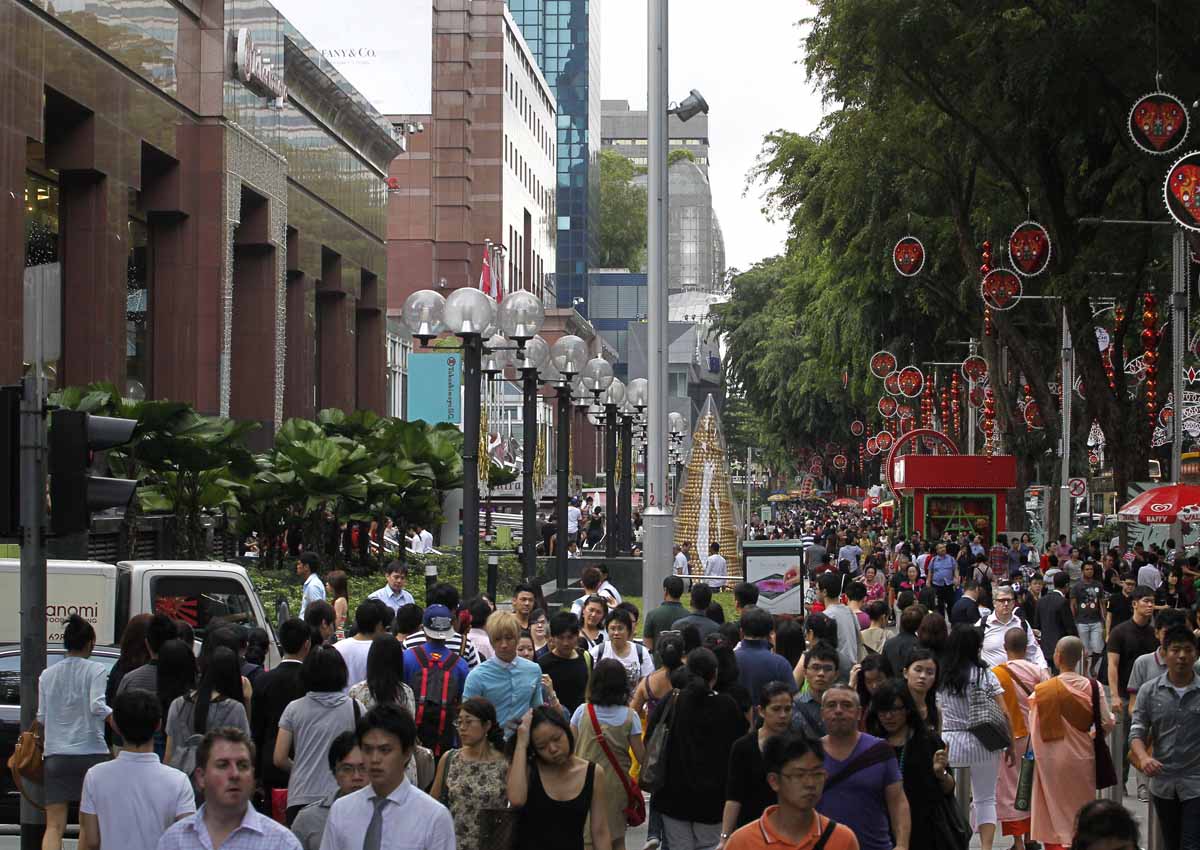
The Great Singapore Sale (GSS) got a new official card, a longer sales period and a more specific target audience – tourists from China. Still, it did not get shoppers to spend more.

Now, its organiser, the Singapore Retailers Association (SRA), has said it is reassessing the direction of the 23-year-old sale and plans to discuss with the tourism authority if there is even a point in continuing it.

This comes after three consecutive years of decline in retail sales during the GSS period, which took place from June 3 to Aug 14 this year.

Latest official statistics show that in July, retail sales excluding motor vehicles fell 3 per cent, compared with the same month last year. This follows a similar dip in June’s figure, which was 3 per cent lower than last year’s.

To be fair to the SRA – and as pointed out by experts – the slowing economy and weaker consumer sentiments were likely key factors in this year’s poor showing.

An obvious solution? Give steeper discounts, as suggested by some readers. But this would eat into retailers’ profits and would not be sustainable for their businesses in the long run.

Experts and shoppers have raised other ideas on how to revive the excitement for the annual sale, from holding it twice a year – one for tourists, one for locals – to lowering charges for excess baggage at the airport.

Straits Times readers said the event could also tie in with the annual F1 race, feature a mascot, and have a “pasar malam” or night-market atmosphere.

But is a revamp enough to save the GSS, and the retail industry, when fundamental problems persist?

Experts have pointed out problems with Singapore’s shopping environment, such as a lack of differentiation in malls, which mostly carry similar brands and food-and-beverage offerings.

Perhaps retailers, too, should reassess how they can stand out from their competitors and attract shoppers – whether the GSS continues or not.

mellinjm@sph.com.sg


This article was first published on September 24, 2016.
Get a copy of The Straits Times or go to straitstimes.com for more stories.

Image: 
Publication Date: 
Saturday, September 24, 2016 – 15:00
Keywords: 
Send to mobile app: 
Source: 


Story Type: 
Others

Source link

Mum and daughter jailed for abusing maid

0

They slapped their maid, pinched her mouth, jabbed her foot with a metal prong and even used the back of a knife to hit her hand. Whenever the bruises showed, the maid, who was left scarred and with a permanent disability in her left ear, was forced to wear a face mask.

Yesterday, the abusers, a 65-year- old woman and her daughter, were jailed for hurting the maid.

Housewife Anpalaki Muniandy Marimuthu was convicted of six charges of hurting Ms Sriyatun, 27, and imprisoned for 16 months. Her daughter, 43-year-old warehouse supervisor Jayasheela Jayaraman, was found guilty of three charges, sentenced to 12 months’ jail and ordered to pay $840 in compensation.

The duo are appealing.

District Judge Jasvender Kaur said there was a clear pattern of abuse each time the victim had done a wrong. She said Ms Sriyatun has a “cauliflower ear”, a permanent disability, due to both women slapping her left ear.

Jayasheela first slapped Ms Sriyatun on the ear as the maid had not carried her employer’s shoes into the family’s Bendemeer Road flat one evening in 2012. She slapped the maid’s hand when she tried to cover her ear as a result of the pain. Later that night, she slapped the maid’s hand again when the latter was massaging her ear.

The Indonesian woman, who has a six-year-old son, testified that the pair pinched her swollen ear before it healed, and that it hardened.

Read also: ‘Maids are not their slaves’

Some time in 2013, Jayasheela grabbed her breast, squeezed and twisted it for being slow in her work.

On Oct 24 that year, a day before Ms Sriyatun decided to flee, Jayasheela dragged her into the bedroom, demanding to know why she had disturbed her then seven- year-old son. She pinched the corner of the maid’s mouth and knocked her head twice with her hand. The assault caused her mouth to bleed and left a 2cm teeth imprint over her inner upper lip.

The court heard Anpalaki hurt Ms Sriyatun with household objects on a few occasions. Once, in November 2012, she jabbed the maid’s foot with the sharp base of an aluminium prong for taking her son’s shoes into the unit while she was praying. The maid’s foot bled profusely and she was left with a 2cm scar.

In another incident in 2013, Anpalaki used the back of a kitchen knife to hit the maid’s left hand and a rolling pin to hit both her hands a few times. She also used a wooden prong to hit her thighs.

When police visited the family’s unit on Oct 25, 2013, they saw Ms Sriyatun wearing a face mask and shower cap. She said that whenever she was hit by either of them or had an injury, she was made to wear the mask.

Deputy Public Prosecutor James Chew said the maid felt so mentally tortured that she tried to kill herself. “The fact that the accused persons had egregiously abused their authority and exploited the vulnerability of the victim is a significant aggravating factor that warrants a strong deterrent sentence,” he said.

The maximum penalty for causing hurt to a domestic worker is three years’ jail and a $7,500 fine per charge.


This article was first published on September 24, 2016.
Get a copy of The Straits Times or go to straitstimes.com for more stories.

Image: 
Publication Date: 
Saturday, September 24, 2016 – 14:39
Keywords: 
Send to mobile app: 
Source: 


Story Type: 
Others

Source link

Elected Presidency changes: It's not just about the politics

0

The passion in the public discussion on the proposed changes to the elected presidency is palpable. This is not surprising as the issues involve multiracialism and meritocracy, which are core principles that Singapore upholds as a society.

Next month, the Government will table a Bill that encompasses changes to the elected presidency. Parliament will debate the Bill during its second reading in November.

How should policymakers and the public approach the discussions in the next two months? Here are my suggestions on ways to make a positive difference in the discourse:

PERCEPTIONS

First, we must remember that perceptions matter. We need to recognise that issues relating to the elected presidency are complex because they are interrelated. A decision on an issue can lead to benefits and positive multiplier effects, or unintended negative consequences.

The fact (or perception) that many issues are intertwined makes it difficult to look at the issue through a single lens and to evaluate the arguments for or against a proposed change or position. Instead, we must understand that people’s views on the issues are likely to be affected by human psychological processes.

Discussions on the elected presidency are not just political or legal in nature, but are social and emotional as well. After all, the presidency is an institution that is meant to symbolise the unity of the nation. When an institution (and a person) is invested with such values and aspirations, it is not surprising that debate about changes to it can become heated.

Policymakers and citizens alike must thus realise that people may be unduly influenced by what is salient at the moment, such as a sound bite in the media. They may focus on the immediate past and imminent future, such as the previous presidential election and the next, rather than longer timeframes. They may also make inferences based on what the changes mean for specific individuals and concrete cases, rather than consider more abstract issues, such as how the changes will affect the system of governance or future changes in government.

And it is human to selectively seek out information and interpret it in a way to support preconceived ideas.

So for the public and policymakers alike, it is important to discuss issues frankly and keep an open mind.

Singaporeans – both the people and the Government – aspire to, and demand, a high standard of integrity in public and political service. This explains why one proposed change is for potential presidential candidates to have their character and reputation assessed more stringently by the Presidential Elections Committee. This proposal is based on the value of integrity. It complements the other proposals to raise the eligibility criteria relating to financial and executive management which, while relevant to technical competence and ability, may not predict integrity.

SOCIAL HARMONY

Second, social harmony must be kept paramount in discussions on the elected presidency. Social harmony has always been a shared value underlying Singapore’s efforts to address differences, especially when multiracial issues are involved. It should guide how changes to the elected presidency are reviewed and discussed, and how differences in views are expressed and managed.

For the public and policymakers, social harmony should be a key consideration when they decide, if and when, to advocate a position, support a policy option or implement it. This is most relevant when there are reasons to believe that the positions or policy options have a risk of negatively affecting race relations and social cohesion.

Threats to cohesion occur when policies or public actions send signals – sometimes unintentionally – that one race is assumed inferior or unfairly advantaged as compared to another.

This leads to intergroup suspicion, tension and misunderstanding. There may also be negative individual or community effects on beliefs about perceived efficacy and self or public image. All these may eventually result in conflict, or civic and political disengagement.

When the shared value of social harmony is salient, individuals, groups and policymakers have a common and constructive basis to discuss issues of individualism versus collectivism, and group versus national interests.

Social harmony is especially relevant when discussing the need for a reserved election for a particular race and how the “hiatus-triggered” provision is consistent with Singapore’s multiracialism and meritocratic ideals, or not.

Racial communities in Singapore have been living in harmony and in a way that is consistent with both multiracialism and meritocracy simultaneously. This precious societal asset that enables social cohesion must be preserved.

Like interpersonal trust and trust in government, social cohesion is difficult to build but easy to lose, and, once lost, is difficult to restore. We should appreciate why people are anxious about the proposal to reserve an election for a race if no person of that race has been president after five continuous terms, and encourage honest discussions and seriously consider how the reserved election compares with alternative options.

In this way, people from all communities can be assured and will express their concerns honestly. Sensitive issues that need to be surfaced will not be self-suppressed out of fear of alleged racism.
FAIRNESS

Third, we must understand that people will assess the proposed elected presidency changes according to whether they think the changes are fair. As I wrote in a previous article, people perceive fairness on four dimensions: outcomes, processes, performance and access to opportunities.

Changes to the elected presidency will be seen by citizens as fair if:

It results in an outcome where capable candidates with integrity are deemed eligible to contest, and the contest produces a president with capability and integrity.

If the process to determine eligible candidates has clear and objective criteria, and they are consistently applied.

If citizens can see that those who perform well are rewarded, based on objective assessment.

If citizens can see that everyone eligible has equal access to the contest. The consideration here is whether the access is unduly decreased, or increased, because of group membership or societal situations beyond the individual’s control, and independent of effort and true potential.

In other words, people will assess the proposed changes to the elected presidency based on whether they provide an objective means of evaluating a potential candidate, and whether they think the changes hobble some individuals while privileging others.

MOVING FORWARD

Bearing in mind that feelings and perceptions matter, that people want processes to be fair, and social harmony is paramount, how should the parliamentary debate and public discussion proceed?

If social harmony is paramount, then we must make sure that political scapegoating and squabbles do not dominate the discourse.

Such rhetoric may be entertaining but the impact can be adverse. It will not only create confusion but also cause cynicism. It can even divide Singapore society and threaten the cohesion built up over the years.

Everyone contributing to the discussion should be constructive. The following are some concrete steps that can shed light in the heat of passionate debate.

Get the facts right and make them clear. Verify claims. Identify false beliefs, and dispel myths and misinformation. Explicate and emphasise the facts. Start by reading the government White Paper.

Distinguish between laws and values. What is not illegal and what can be passed as laws may not always coincide with what is acceptable by people socially or psychologically, or what they consider morally right or fair.

See things from another’s perspective because feelings and perceptions matter. Find out from the various communities what is important or acceptable to them, what they think, how they feel and when they would or would not do something. Ask to find out their concerns and circumstances. Never just assume and attribute.

When making judgments on potential policy outcomes and the psychological impact on people, distinguish between theory and practice. When something is theoretically possible, consider the extent to which it is practically plausible. Good science, context-sensitivity and representative feedback from the people are critical here.

Frankly discuss implications of policy options and consider how likely they are to achieve the intended national goals or result in unintended negative consequences. In the light of new information or circumstances, have the intellectual honesty and political courage to change one’s current position.

If all parties take a constructive approach when considering the proposed changes to the elected presidency, it is possible to evolve a system of governance that benefits Singapore and Singaporeans.

stopinion@sph.com.sg

-The writer is director of the Behavioural Sciences Institute, Lee Kuan Yew Fellow and professor of psychology at the Singapore Management University.


This article was first published on September 24, 2016.
Get a copy of The Straits Times or go to straitstimes.com for more stories.


Image: 
Publication Date: 
Saturday, September 24, 2016 – 15:00
Send to mobile app: 
Source: 


Story Type: 
Others

Source link