The number of babies born in Singapore’s Jubilee year surpassed 2012’s Dragon year, which was an auspicious year for Chinese couples to have babies.
Source link
SG50 baby boom: 33,725 born in 2015, highest in more than a decade
Over 90% of world breathing bad air: WHO
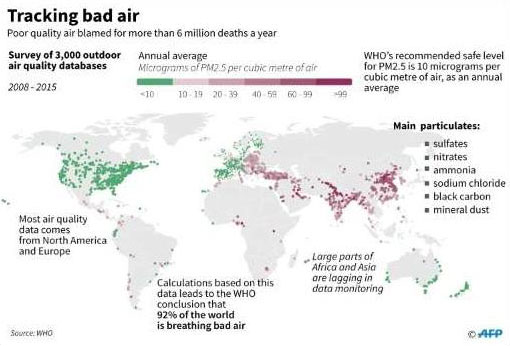
GENEVA – Nine out of 10 people globally are breathing poor quality air, the World Health Organisation said Tuesday, calling for dramatic action against pollution that is blamed for more than six million deaths a year.
New data in a report from the UN’s global health body “is enough to make all of us extremely concerned,” Maria Neira, the head of the WHO’s department of public health and environment, told reporters.
The problem is most acute in cities, but air in rural areas is worse than many think, WHO experts said.
Poorer countries have much dirtier air than the developed world, according to the report, but pollution “affects practically all countries in the world and all parts of society”, Neira said in a statement.
“It is a public health emergency,” she said.
“Fast action to tackle air pollution can’t come soon enough,” she added, urging governments to cut the number of vehicles on the road, improve waste management and promote clean cooking fuel.
Tuesday’s report was based on data collected from more than 3,000 sites across the globe.
It found that “92 per cent of the world’s population lives in places where air quality levels exceed WHO limits”.
The data focuses on dangerous particulate matter with a diameter of less than 2.5 micrometres, or PM2.5.
PM2.5 includes toxins like sulfate and black carbon, which can penetrate deep into the lungs or cardiovascular system.
Air with more than 10 microgrammes per cubic metre of PM2.5 on an annual average basis is considered substandard.
In some regions satellite data has been complemented by ground-level PM2.5 measurements, but in much of the developing world ground readings remain unavailable, forcing the WHO to rely on cruder estimates.
Despite these data gaps, Neira said the UN agency now had more information than ever about pollutants in the planet’s air.
Using both satellite and ground measurements “is a big step forward towards even more confident estimates of the huge global burden”, of dirty air, she added.
Six million deaths a year
The WHO has estimated that more than six million deaths per year are linked to exposure to outdoor and indoor air pollution.
Data is more solid for outdoor pollution, which is blamed for more than three million fatalities annually.
But indoor pollution can be equally as harmful, especially in poorer developing world homes where cooking often involves burning charcoal.
Nearly 90-per cent of air pollution-related deaths occur in low and middle-income countries, the WHO said.
Southeast Asia and the Western Pacific region — including China, Malaysia and Vietnam — are the hardest hit, the data showed.
Carlos Dora, coordinator at the WHO’s public health and environment department, said that some of the strategies adopted to safeguard against polluted air have limited effectiveness.
For example, daily air quality warnings — like those sometimes issued in Beijing — likely do little to help the average person, since the real threat is exposure to sub-par air over extended periods.
Staying indoors on a day when the air is particularly bad accomplishes little, Dora said.
Additionally, the WHO has seen no conclusive evidence that face masks do much to filter dirty air, Dora added.
Using a different data set, the WHO reported in May that 80 per cent of the world’s city dwellers breathe poor quality air, a figure that rose to 98 per cent in poorer countries.
Image:
Category:
Publication Date:
Tuesday, September 27, 2016 – 15:59
Keywords:
Send to mobile app:
Source:
Story Type:
Others
Singapore should target complex, transnational money laundering cases: Global agency
A report by the Financial Action Task Force says Singapore has a strong regulatory and supervisory framework in place against money laundering and terrorism financing, but more can be done.
Source link
Amazon.com: 24hr Deal – Up to 50% Off Logitech Mice, Webcams, Keyboards & More from 27 – 28 Sep 2016

24HR DEAL – Amazon up to 50% off selected Logitech products till 28 Sep, 3pm. Free shipping with US$125 spend
Amazon.com: 24hr Deal – Up to 50% Off Logitech Mice, Webcams, Keyboards & More from 27 – 28 Sep 2016
Save up to 50% off selected Logitech PC accessories with Amazon’s 24hr Gold Box deal of the day. Many of them are eligible for free shipping to Singapore with US$125 worth of qualifying products.
Golf: Palmer, America's first commercial hero

CHASKA, Minnesota – The earthy, endearing and gifted Arnold Palmer left a brilliant legacy in golf but he transcended the links, launching an era of sports stars as high paid pitchmen and pioneering in sports media.
“Something of a pop hero,” Bob Dorfman, creative director at San Francisco’s Baker Street Advertising, told Reuters about Palmer, who died on Sunday aged 87. “A trend-setter in terms of sports endorsements on TV. It was kind of the right guy, the right personality, the right time.”
Palmer, winner of seven majors, captured the public’s imagination with his everyman demeanour, swashbuckling style and good looks just as television was coming of age nearly 60 years ago.
“Our first commercial sports hero,” former CBS Sports president Neal Pilson said in a telephone interview. “He created the television audience that still exists today.” Beyond his go-for-broke style and accomplishments on the course, Palmer was also remembered on Monday as a philanthropist in his adopted hometown of Orlando.
Mike McCarley, president of the Orlando-based Golf Channel that was co-founded by Palmer, spoke to yet another side of ‘The King’.
“There’s a medical centre that bears his name in Orlando because he decided that we, as a community, could do better for the kids of the community,” McCarley told Reuters. “Children are born in Winnie Palmer Hospital (named after his late wife). When they get sick, they go to the Arnold Palmer Hospital for Children. Across the entire community, it’s an incredible impact.”
Big Brands
At a time when leading sports athletes were supplementing their salaries with local advertisements for car dealerships, supermarkets and the like, Palmer’s qualities enabled him to become a national spokesman for several big brands.
Both Pilson and Dorfman credited the deft steering of his agent Mark McCormack, who went on to found the International Management Group. “He wasn’t this elite country-club type guy. He seemed to be very friendly and approachable,” said Dorfman. “He really crossed the line there in terms of sports guys doing products outside of just equipment or things related to their sport. “He did everything from cars, Cadillacs, and Coca-Cola and Pennzoil and again the fact that golfers have such a long shelf life also kept him going well into his 80s. He was making US$40 million (S$54.5 million) off the course.”
Dorfman said Palmer, who owns Orlando’s Bay Hill golf resort which hosts a regular PGA Tour stop, said another factor helped make him “one of the forefathers of modern sports endorsers.”
“He also had the advantage of being in a sport where the following was a little more moneyed, so there was a stronger connection maybe between upscale brands and him as a pitchman.” Pilson said the TV production of the Masters, where Palmer won his first major and the first of four titles at Augusta National in 1958, also had a hand in his popular rise. “We had at the time an extraordinary golf producer, Frank Chirkinian.
Frank was always searching for heroes. He converted coverage of sports from the game and the event to the focus on the athletes themselves.” “Golf lends itself very well to storytelling and Arnold was a wonderful story. Not only his background, but his capability for dramatic moments, come from behind victories.”
Business Legacy
One of Palmer’s lasting business legacies is the Golf Channel, which he helped launch in 1995 as America’s first 24-hour TV station dedicated to one sport. “At launch, it was in something like 10,000 homes,” said Golf Channel president McCarley.
“We’ve gone from 10,000 homes in one country to 84 different countries and 200 million homes around the world in 11 different languages.” McCarley summed up Palmer the man with an anecdote of how the Golf Channel deal was finally closed.
“Joe Gibbs, an Alabama cable TV entrepreneur, wanted Arnold as the right partner,” McCarley said about a series of negotiations about his investment in the venture.
“In a famous meeting at Bay Hill, he had his advisers around the room, including a lot of lawyers. Arnold had that go-for-broke style that made him so popular throughout his career. “His advisers were advising him not to put anymore of his own money into the venture. He stopped and said, ‘Guys, if I hadn’t tried to hit it through the trees sometimes in my life, none of us would be here.’
Image:

Keywords:
Send to mobile app:
Source:
Story Type:
Others
Marriott to add 1,300 rooms in Singapore
Marriott International is bullish about its prospects in Singapore and plans to add more than 1,000 rooms to its local portfolio in the coming years.
It said it could create as many as 2,000 jobs in the next three to five years to support the expansion.
Marriott operates 11 hotels in Singapore, following the completion of its $13 billion acquisition of Starwood Hotels & Resorts Worldwide last Friday.
It is upbeat about the local hotel industry’s outlook despite the large incoming supply of rooms in the market, executives said yesterday.
With the addition of Starwood’s portfolio, Marriott now has 30 hotel brands globally under its umbrella, creating the world’s largest chain with more than 5,700 hotels and 1.1 million rooms in over 110 countries.
Their loyalty programmes – Marriott Rewards and Starwood Preferred Guest – have a combined 85 million members. Members can link accounts to continue enjoying benefits.
Its stable of hotels in Singapore comprises the Marriott and Ritz- Carlton brands, as well as Starwood’s Design Hotels, Sheraton, Westin, W Hotels, Four Points, Le Meridien and St Regis.
“We have about 3,000 rooms operating between nine brands, we have another 1,300 rooms under construction as we speak that will be ready in the next couple of years,” said Mr Rajeev Menon, chief operating officer for Asia-Pacific (excluding Greater China) at Marriott International Asia-Pacific.
In December, the South Beach hotel in Beach Road will be rebranded as JW Marriott Hotel Singapore South Beach.
Upcoming brands include Edition, The Luxury Collection, Tribute Portfolio and a 250-room Courtyard by Marriott in Novena, which will open next year.
Mr Menon noted that another brand with good potential in Singapore is Moxy Hotels – boutique hotel for budget-conscious travellers – which will be launched in Bandung, Indonesia, later this year.
The group is confident demand will catch up despite concerns about the oversupply of rooms in Singapore, with some analysts expecting several thousand new rooms to hit the market by 2018.
The occupancy rate for its hotels here ranges from 80 to 85 per cent.
Mr Menon noted: “Intra-Asia travel is the biggest growth story in the next decade and for decades to come. You see that Singapore is getting ready with the (Changi Airport) Terminal 4, Terminal 5. That is going to bring considerable amount of travel and tourism into this market.”
In addition, Singapore’s ability to keep its offerings fresh will give the hotel industry a boost.
“It used to be a one-day destination, where people stop over to go to Malaysia or Thailand, but now they stay three to four days and that’s because Singapore has actually reinvented itself,” said Mr Stephen Ho, chief executive for Greater China at Marriott International Asia-Pacific.
The group employs about 3,800 staff in Singapore, and says it is hoping to add 2,000 jobs in the next three to five years as it expands its presence.
Upcoming plans include sourcing for bigger office space to house the employees from Marriott and Starwood, who are now based at different locations.
Marriott is also looking at building up its business in the Asia-Pacific, where it has a total of more than 500 hotels in operation across 20 brands.
“We have a lot of markets in the Asia-Pacific that are still under-developed and don’t have enough hotel rooms and could use more, especially in China where the middle class continues to grow,” Mr Craig Smith, president and managing director at Marriott International Asia-Pacific, said yesterday.
Apart from China, Marriott also sees further growth opportunities in Japan and India. It operates 79 hotels with 18,000 rooms in India, and has a further 100 hotels under construction.
wongsy@sph.com.sg

This article was first published on September 27, 2016.
Get a copy of The Straits Times or go to straitstimes.com for more stories.
Image:
Publication Date:
Tuesday, September 27, 2016 – 17:00
Keywords:
Send to mobile app:
Source:
Story Type:
Others
Singapore envoy refutes China report on South China Sea
Singapore did not raise the South China Sea territorial dispute or a July arbitral tribunal ruling on the dispute at a recent multilateral summit in Venezuela, the Republic’s Ambassador to China Stanley Loh said yesterday, in a letter refuting allegations made in a Chinese newspaper last week.
The actions and words attributed to Singapore are “false and unfounded”, Mr Loh said in the letter about an article dated Sept 21 in the Chinese edition of the Global Times on the 17th Non-Aligned Movement (NAM) Summit.
The NAM was formed in 1961 by a grouping of newly-independent countries that did not want to take sides in the Cold War between the United States and the Soviet Union. It meets once every three years.
In its report, the Global Times said that at the meeting held on Venezuela’s Margarita Island, Singapore insisted on adding contents that endorsed the Philippines’ South China Sea arbitration case against China in a document that will guide the development of the grouping for the next three years.
Singapore had attempted to strengthen the contents on the South China Sea, said the newspaper which is linked to the Chinese Communist Party.
Quoting unnamed sources, it said “the Singapore representative was flustered and exasperated, and made sarcastic remarks” on the stance of countries that opposed strengthening the contents on the South China Sea.
“The representative even used offensive words during the argument, and launched malicious attacks on the representatives of countries taking a fair position,” the newspaper added.
Mr Loh, who described the report as “irresponsible” and “replete with fabrications and unfounded allegations with no regard for the facts”, said Singapore is disappointed that such a report has been published.
He wrote to the Global Times yesterday to publish Singapore’s rebuttal to its article but The Straits Times understands that it has not been published.
In his letter, the Singapore envoy said the proposal to update the South-east Asia paragraphs in the document was not done at the last minute nor by any single ASEAN country. Laos – as the current ASEAN chair – had conveyed the group’s common position through a formal letter to Iran, the former NAM chairman, in July.
Yet, Venezuela, the current NAM chairman, had refused ASEAN’s request to update the paragraphs related to the region.
This is a departure from the established practice in the NAM, which had always allowed for such regular updates without interference from NAM countries that did not belong to the region or external parties, Mr Loh said.
“The paragraphs on South-east Asia, including those referring to the South China Sea, have been part of the… document since 1992, and regularly updated based on the common position of the ASEAN countries,” he added.
Contrary to what the Global Times had described, Singapore had adopted a “principled position” throughout and defended NAM principles and established practices, Mr Loh added.
During the meeting, Laos had protested on behalf of all 10 ASEAN countries to Venezuela “on its improper decision to reject ASEAN’s updates”.
It had also intervened in writing to the Venezuelan Foreign Minister after the meeting.
In that letter, Lao delegation leader Kham-Inh Khitchadeth expressed “deep regret” that the final document did not reflect current developments in the region with regard to the South China Sea.
“The question of South China Sea is a matter of vital interest for peace, stability, security and co-operation in South-east Asia,” he added, and asked to put on record ASEAN’s collective reservation that the relevant paragraph was not updated.
kohping@sph.com.sg
This article was first published on September 27, 2016.
Get a copy of The Straits Times or go to straitstimes.com for more stories.
Image:

Publication Date:
Tuesday, September 27, 2016 – 17:05
Keywords:
Send to mobile app:
Source:
Story Type:
Others
Outback Steakhouse: 1-for-1 Outback Favourites on Tuesdays from 27 Sep – 25 Oct 2016

OUTBACK STEAKHOUSE: 1-for-1 Outback Favorites every Tues till end Oct 2016
Outback Steakhouse: 1-for-1 Outback Favourites on Tuesdays from 27 Sep – 25 Oct 2016
Get any item on the Outback Steakhouse Favorites menu on a 1-for-1 deal every Tuesday. Choose from the following Outback Favourites – Baby Back Ribs, Black Pepper Steak Bites, Garlic Glazed Pork Loin, No Rules Pasta & many more
Small states need rules-based systems like the UN, says Vivian
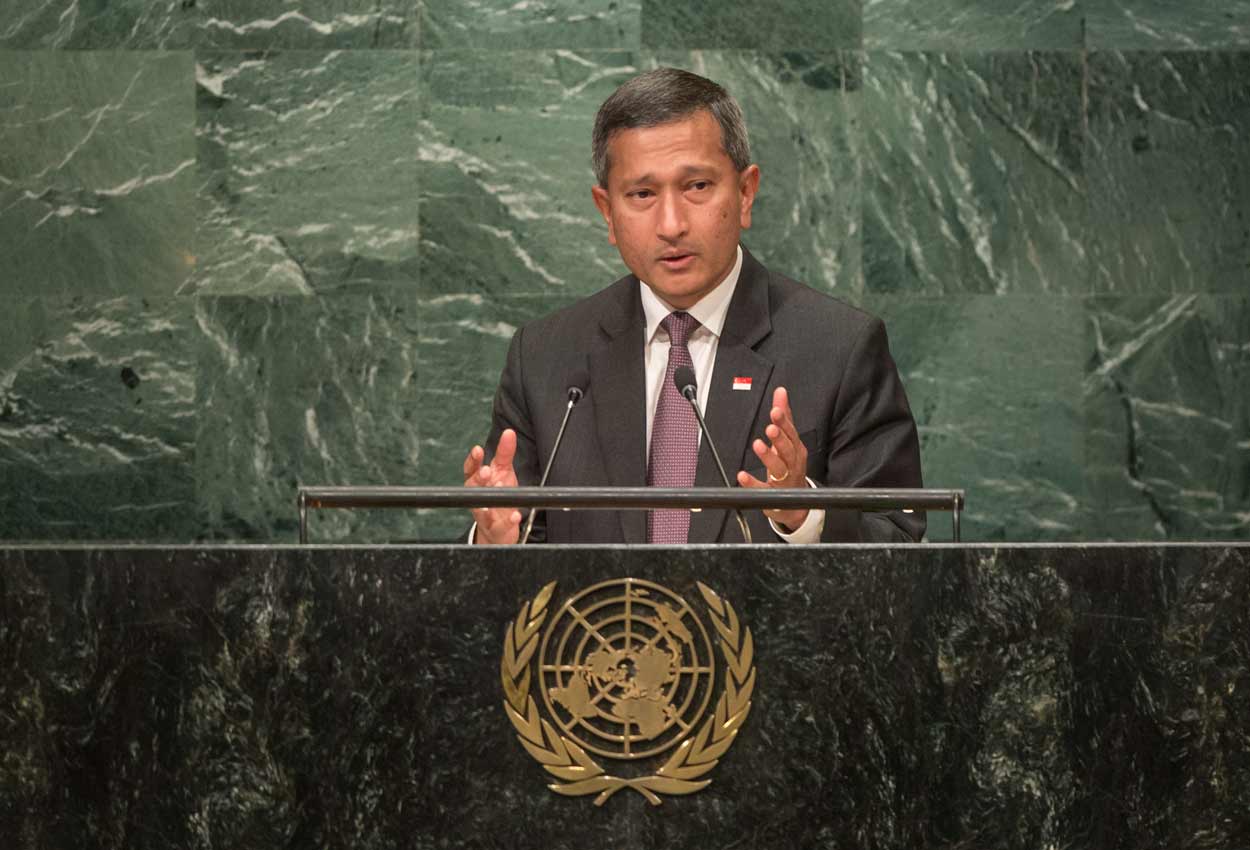
Rules-based international orders like the one represented by the United Nations are critical to the survival of small states, Foreign Minister Vivian Balakrishnan told world leaders yesterday, as he outlined the predicament smaller nations face in a period of global uncertainty.
“The United Nations is essential for the survival and prosperity of small states,” he said during a five- minute address at the UN General Assembly in New York.
“We are usually at the receiving end of the decisions and actions of large powers. Fortunately, the General Assembly affirms the principle that all nations large and small, rich or poor have an equal stake and equal right to participate in shaping the discourse on global issues.”
Dr Balakrishnan added that a rules-based system that allows all states to deal with one another fairly was a “precondition to our existence as independent, sovereign states”. “We reject the notion that might is right. This is why small states are often the strongest proponents of the UN.”
He also said the uncertainty that has marked much of 2016 meant smaller countries have “had to work that much harder to stay afloat”.
“Small boats on a rough sea are more likely to be tossed and turned much more than a large tanker with heavy ballast,” he said.
“For our survival and prosperity, small states have to stay open and we have to stay connected to the world. But by definition, our very openness makes us vulnerable to external shocks and threats. Small states like us do not have the option of retreating inwards or opting out of the global system.”
And he also had a message for large powers. He said that though competition is inevitable, international relationships do not need to be a zero-sum game.
“All countries benefit when there is peace and stability. This is essential for building partnerships and economic co-operation everywhere,” he said.
Then, touching on international partnership and sustainable development, he laid out the many ways small countries have already worked together to play a role on the world stage.
He noted, for instance, how the Alliance of Small Island States had “played a catalytic role during climate-change negotiations” and how the Global Governance Group – a platform for small and medium-sized countries – has helped make the Group of 20 process more inclusive.
“Small states can play an even greater role, provided we work together,” said Dr Balakrishnan.
“Ultimately, small states need the United Nations to build the framework for building partnerships, promoting development and pursuing peace and security within a rules- based system.”
jeremyau@sph.com.sg
This article was first published on September 27, 2016.
Get a copy of The Straits Times or go to straitstimes.com for more stories.
Image:
Publication Date:
Tuesday, September 27, 2016 – 17:00
Keywords:
Send to mobile app:
Source:
Story Type:
Others
Gentle Bones wins big
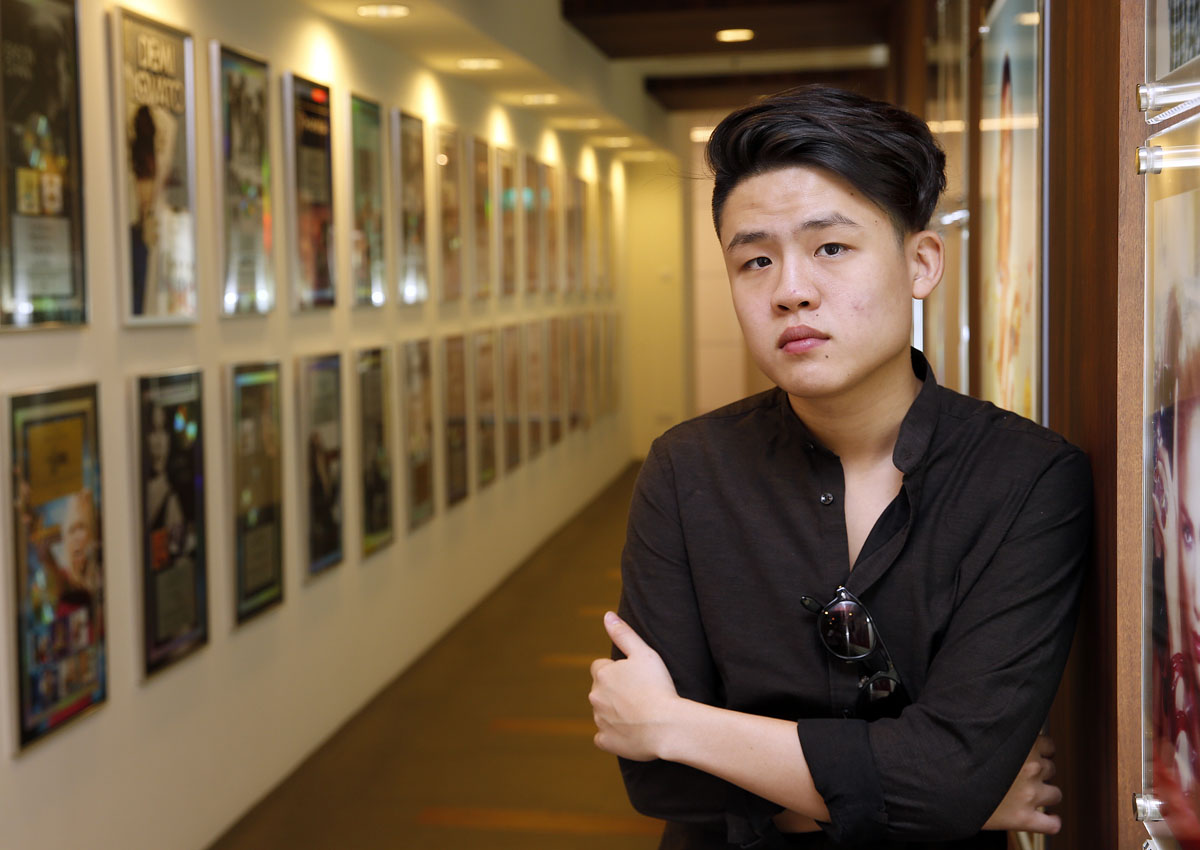
Home-grown singer-songwriter Gentle Bones, who started out in the indie scene, won two major awards at this year’s Composers and Authors Society of Singapore (Compass) Awards.
The 22-year-old, whose real name is Joel Tan, won the Top Local English Pop Song for his first single, Until We Die, from his debut EP, Gentle Bones, and the Young Songwriter of the Year award.
Until We Die, which came out in 2013, went to the top of the Singapore iTunes singles chart.
Tan did not pick up his award in person, but said in a telephone interview with The Straits Times yesterday that he was “honoured” to have won.
The annual Compass awards ceremony, which is in its 21st year, was held on Sunday night at Resorts World Convention Centre.
Compass awards are given to Singapore musicians who earned the highest royalties last year. Compass tracks the royalties musicians earn based on how many times their songs have been performed live, played on radio and in nightspots and food and beverage outlets.
Tan, who released his sophomore EP Geniuses And Thieves earlier this year, says: “It’s been quite a dream that companies are asking for the right to use my songs and that radio stations are playing them. Ask me just 1 1/2 years ago what royalties are and I would have no idea.”
While he says that he is not raking in the big bucks yet, he has made enough to pay his bills. Universal Music Singapore, which signed Tan last year, declined to say how much Tan’s two EPs have made so far.
It has been a big year for Tan. In June, he played his first ticketed solo show at the Esplanade Concert Hall. All 1,500 tickets to the show were sold out within 10 days and a second concert was quickly added.
He was also the first Singapore artist to win the Super Nova Award at the Hong Kong Asian-Pop Music Festival 2016 and the first to be listed on the inaugural Forbes 30 Under 30 list for entertainment and sports personalities in Asia.
Up next for him is next week’s 2016 Asia Song Festival in Busan, South Korea, where he is among the performers.
Although he seems like he has made it as a musician, he remains realistic. “Even if there’s money coming in now, it’s about the sustainability and longevity of being an artist in Singapore. My dream is to write the best song possible, so I’m going to keep working at it.”
This year, 11 awards were given to top-earning Singapore songwriters in various music genres.
Mandopop singer-songwriter JJ Lin, who has won at least one Compass award every year since 2006, when he was named Young Songwriter of the Year, kept his title as the top Singapore songwriter.
But the Top Local Artiste of the Year award, which he won last year, went to fellow Mandopop singer Stefanie Sun. Both did not attend the awards ceremony.
Awards in four categories were also given to Singapore musicians to recognise their artistic excellence and contributions to the local music scene.
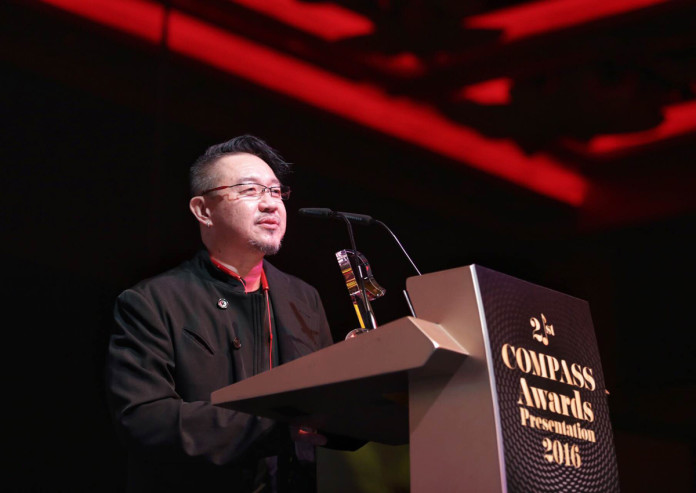
Singer-composer Mark Chan, 57, was one of three veterans who took home the Artistic Excellence Artist award. Chan, who is putting out a new album next month, said: “Many people might not know me today, but there are others who remember. I never think of the awards. I just want to make music.”
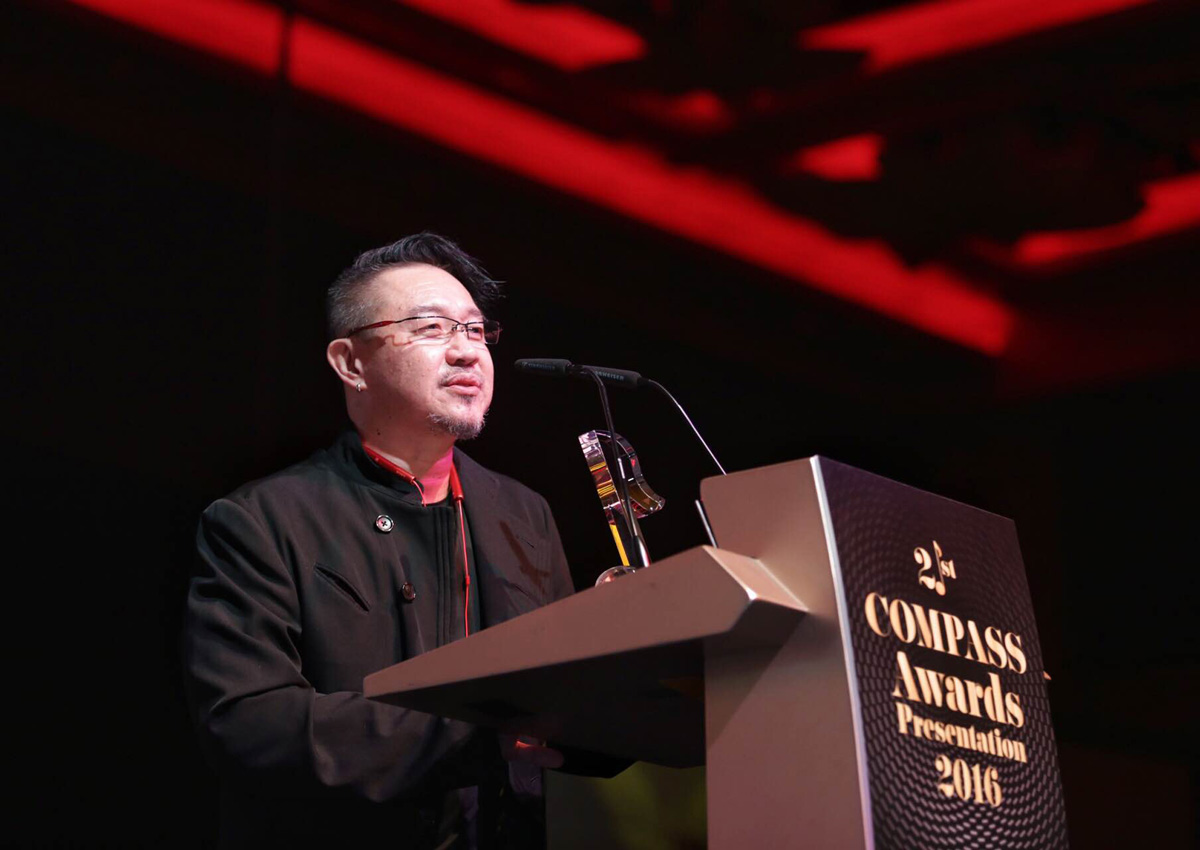
He has not made an album in recent years and moved back from living in Shanghai, Hong Kong and Paris to Singapore only two years ago.
Despite this, Ms Caroline Heng, who manages membership and public relations at Compass, said the award honoured his body of work.
The other two Artistic Excellence winners were music arranger George Leong and the late singer- songwriter M. Osman, who was a symbol of the Pop Yeh Yeh era in the 1960s. The latter’s wife accepted the posthumous award.
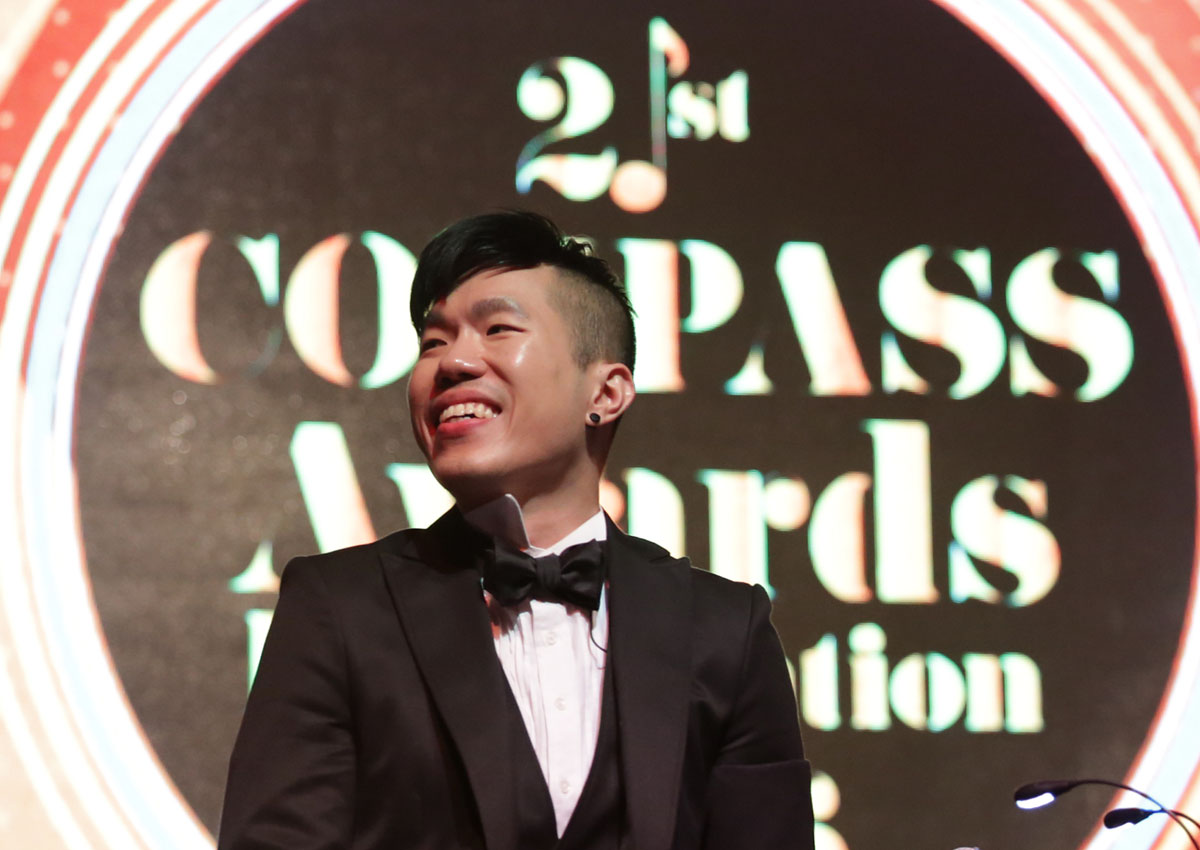
Mr Tong Hong Tat, 34, who has produced, written and arranged music for the likes of Taiwanese singer Show Lo and Australian singer Troye Sivan, took home the Wings of Excellence award, given to an individual who has achieved an outstanding performance internationally.
natashaz@sph.com.sg
This article was first published on September 27, 2016.
Get a copy of The Straits Times or go to straitstimes.com for more stories.
Image:
Publication Date:
Wednesday, September 28, 2016 – 14:00
Keywords:
Send to mobile app:
Source:
Story Type:
Others


