Home Blog Page 2730

Zoo breed animals by the studbook

0

Breeding animals in the zoo is not as simple as putting any male and female together and expecting them to mate.

Zoologists around the world work behind the scenes to find the perfect match for animals in order to ensure good genetic diversity.

They do this with the help of studbooks, which are online databases on the parenting history of animals.

A demographic and genetic analysis is then done based on the data so that breeding programme coordinators can find out which two animals should be bred together.

Dr Cheng Wen-Haur, chief life sciences officer and deputy chief executive officer of Wildlife Reserves Singapore (WRS) – which manages the Singapore Zoo – said the ultimate goal for breeding animals under human care is to ensure that their populations can be self-sustaining.

“You breed them cooperatively for all the institutions that hold them around the world so you don’t have to keep taking them from the wild,” said Dr Cheng.

One example would be the two Goodfellow’s tree kangaroos which arrived at the Singapore Zoo from Australia in June and July this year. The two kangaroos are classified as endangered under the International Union for the Conservation of Nature Red List of Threatened Species due to unsustainable hunting and loss of habitat.

It is hoped that both will start their own family here, as an “assurance colony” in Singapore, under a global plan to ensure the species’ survival.

WRS also wants to breed other species like the red panda and emperor tamarin, a kind of small monkey known for its long white moustache.

More than 700 baby animals were born or hatched in WRS parks last year.

Globally, San Diego Zoo in the United States is among the zoos that stand out for their success in breeding animals. It has won numerous awards for breeding several animals successfully, including koalas and thick-billed parrots. It received an award in 1961 for the first koala birth in the Western Hemisphere, said the zoo’s website.

Wildlife consultant Subaraj Rajathurai said studbooks help to ensure that the gene pool of a particular species does not become too small.

“If the zoo has only a small number of each species, and you try to breed them with the small numbers you have, the offspring will become non-viable due to inbreeding,” he said.

Dr Cheng said the ultimate aim of breeding animals under human care is to release them into the wild.

But this is often hard to do with the increasing destruction of animal habitats. “Most of the time, the wild is not ready to take them back,” he said.


This article was first published on Sept 30, 2016.
Get a copy of The Straits Times or go to straitstimes.com for more stories.

Image: 
Publication Date: 
Friday, September 30, 2016 – 13:11
Send to mobile app: 
Source: 


Story Type: 
Others

Source link

Tan Cheng Bock disappointed over forum's cancellation

0

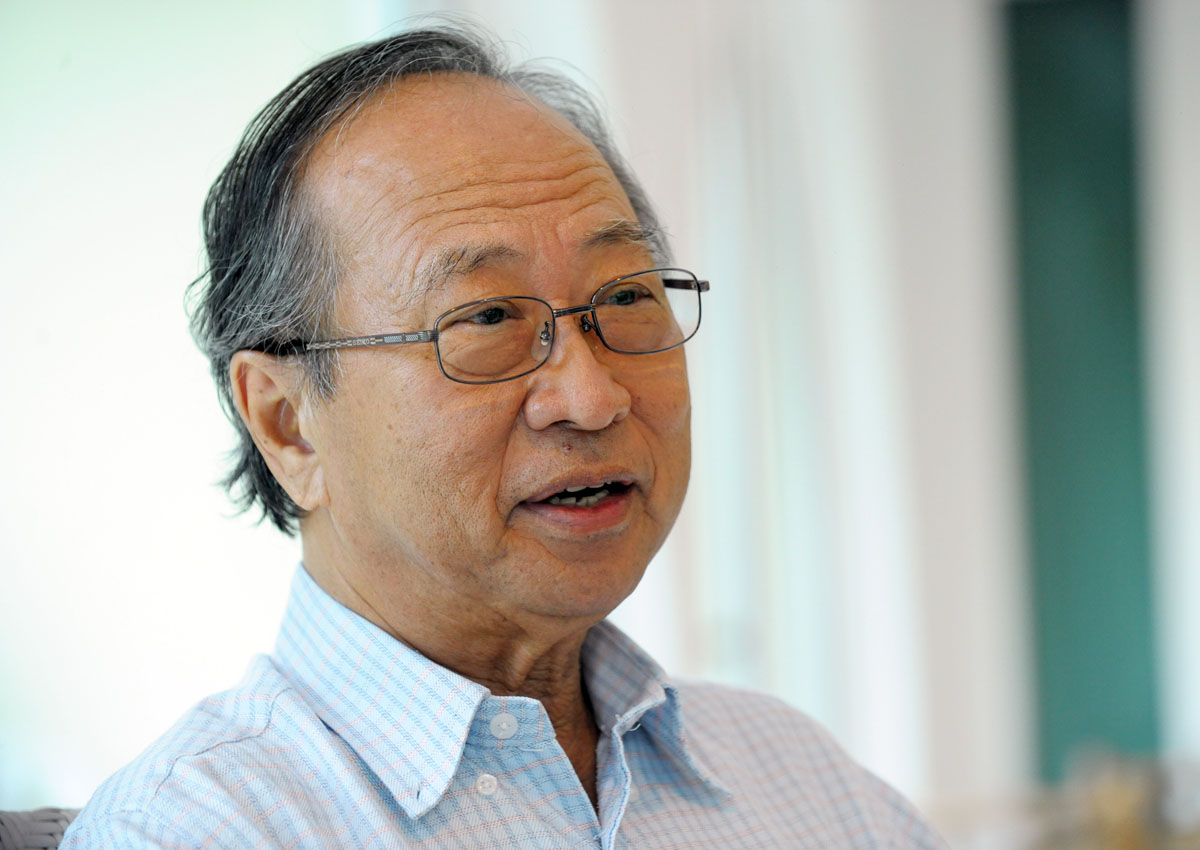
Former MP and presidential candidate Tan Cheng Bock expressed his disappointment in a Facebook post yesterday at the cancellation of a public forum on the elected presidency, which he said he had signed up to attend.

Dr Tan, who ran for the presidency in 2011 and expressed interest in contesting the next one, said he had registered last week for the event, which was scheduled to be held yesterday.

But the forum organiser, Government feedback unit Reach, said in a post on its Facebook page yesterday that the event was cancelled because of poor response, and a cancellation notice was released on Wednesday. It added: “In response to queries, we confirm that we do not have any registration under the name of Dr Tan Cheng Bock for this dialogue.”

Some netizens, writing on Dr Tan’s Facebook page, suggested that the forum was cancelled because Reach knew he would be attending.

When contacted by The Straits Times and told that Reach had no registration for a “Tan Cheng Bock”, Dr Tan said he registered as “Adrian Tan”, which is part of his full name on his identity card.

The cancelled forum was one of several organised after the release earlier this month of a Constitutional Commission report on the elected presidency which recommended changes in a number of areas. The Government responded with a White Paper and Parliament is expected to debate the issue in November.

In his post, Dr Tan said he had planned to attend the forum with his friends and family and was keen to hear from Law Minister K. Shanmugam, who was due to speak.


This article was first published on September 30, 2016.
Get a copy of The Straits Times or go to straitstimes.com for more stories.

Image: 
Category: 
Publication Date: 
Friday, September 30, 2016 – 14:00
Send to mobile app: 
Source: 


Story Type: 
Others

Source link

It takes a team to make a panda baby

0

There is still no sign of a baby, but vets at the River Safari believe they are becoming more versed in the art of panda love.

And science too.

In the last two years, they have tried to help Kai Kai and Jia Jia out a little through artificial insemination.

The pandas have been together for about four years but are still young and inexperienced when it comes to mating.

So when Jia Jia shows signs of becoming fertile, humans spring into action (see other story).

Though this year’s attempt was again unsuccessful, Dr Cheng Wen-Haur, chief life sciences officer and deputy chief executive officer of Wildlife Reserves Singapore (WRS), believes they now have a better handle on Jia Jia’s behavioural cues and the period she is fertile, which happens once a year.

“Both Kai Kai and Jia Jia have also shown improvements in their mating techniques since their first mating attempt last year,” said Dr Cheng.

While Kai Kai, nine, and Jia Jia, eight, are friendly to each other, the furry duo, on a 10-year loan from China, are still teenagers in panda years. Unsuccessful mating is therefore not uncommon for the young and inexperienced like them.

Experts in China report a 60 to 80 per cent success rate in getting pandas to mate successfully but, outside of China, it is pretty much “hit or miss”, said Dr Cheng.

Part of it is to do with experience and part of it is the fact that the Chinese simply have more pandas to work with.

All that aside, breeding pandas in captivity is a headache in itself.

In the wild, a receptive female panda would have its pick of the most virile bear – an experienced male in its prime.

“Cut back to us, we have got a boy and a girl – no experience whatsoever, and we expect them to go on and do it,” said Dr Cheng.

Trying to anticipate when the female giant panda is most fertile is also a tricky business. It has only one reproductive cycle per year and is receptive to mating for one or two days. It is fertile for just 24 hours.

This means the vets have a one-day window period or less to ensure the best chance of success. Artificial insemination has to be carried out as soon as the oestrogen level drops, after it peaks.

“By the time it has dropped too much, we would have missed the window period,” said Dr Cheng.

And even if the vets score a hit with the insemination, various other factors could stand in the way of a successful pregnancy taking.

“Female pandas have pseudopregnancy, a state in which pregnancy symptoms are shown but the panda is not pregnant. This makes it challenging to detect a genuine pregnancy,” he explained.

Despite the challenges, vets at the River Safari believe they are getting closer to helping the young pandas become proud parents.

For instance, they were better this year at reading Jia Jia’s signs, and so the procedure was carried out closer to when she was fertile, said Dr Serena Oh, assistant director of veterinary services at WRS.

“This year we did it the very day her oestrogen level dropped. Last year, we did it the day after,” said Dr Oh. Vets and keepers will continue to perfect their timing of Jia Jia’s fertile period.

As giant pandas are seasonal breeders, with females coming into heat in the spring, zookeepers will continue to vary daylight hours and the temperature in their space to simulate the passage of the seasons as they would occur in the pandas’ homeland in Sichuan, China.

“If we want it to get brighter earlier, we just turn on the lights early. If we want it to get darker, we just turn it off and we have dark curtains to make it all black,” said Dr Oh.

Latest estimates have put the population of adult giant pandas at 1,864, moving the status of the cuddly, charismatic species from “endangered” to “vulnerable”.

Fertility specialist Liow Swee Lian said artificial insemination is the cheapest and safest procedure for animal breeding in livestock and wildlife conservation.

Other methods of conservation, including animal cloning and in-vitro fertilisation, are costlier.

“Most importantly, we should do our part to conserve the natural habitats for all animals threatened with extinction. It will be a very sad day for us when we can find these animals only in the zoo,” said Dr Liow.

But while conserving natural habitats is important, breeding animals under human care is a good backup.

Dr Cheng said: “Captive breeding is an important component in the conservation of giant pandas. We need to have an assurance colony in case something disastrous happens in nature.”


This article was first published on Sept 30, 2016.
Get a copy of The Straits Times or go to straitstimes.com for more stories.

Image: 
Category: 
Publication Date: 
Friday, September 30, 2016 – 12:53
Send to mobile app: 
Source: 


Story Type: 
Others

Source link

Amos Yee jailed 6 weeks, fined $2k

0

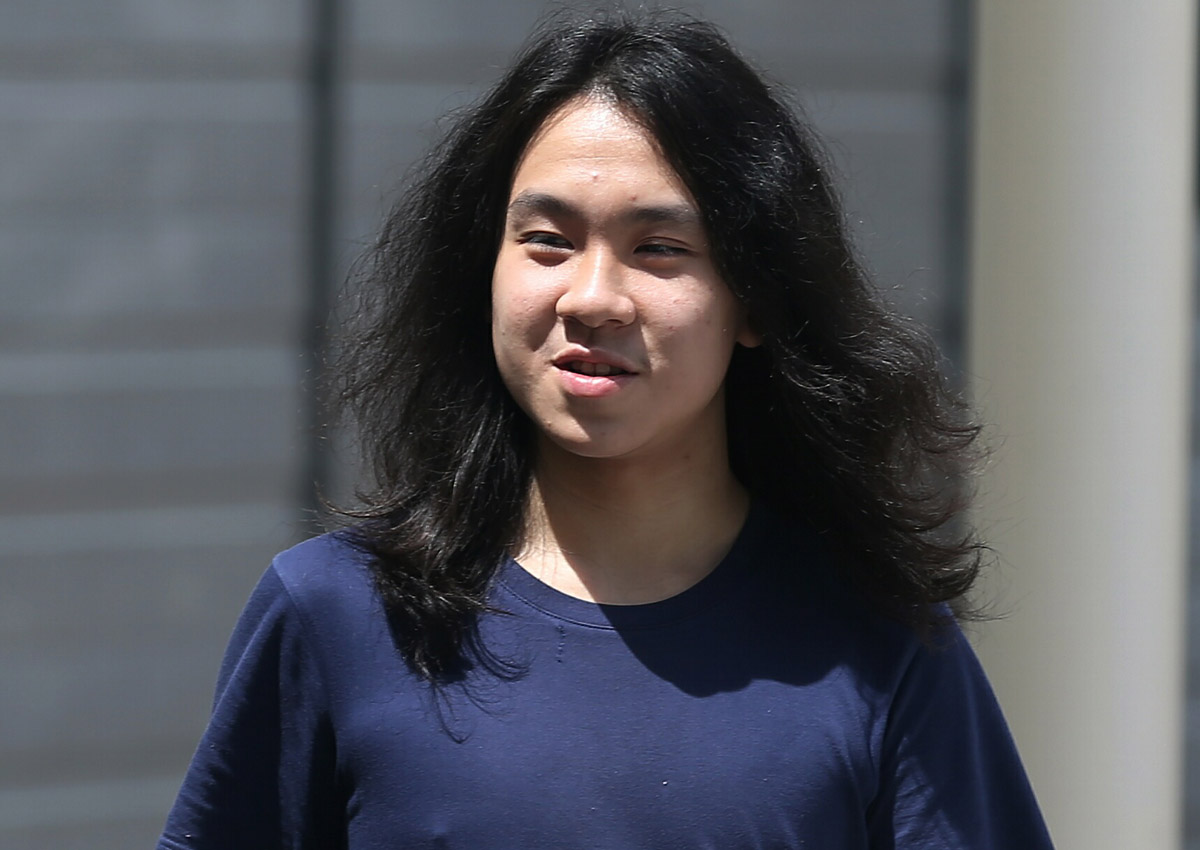
Four months after he was given a prison sentence for making remarks that were derogatory and offensive to Christians in an online video, teenage blogger Amos Yee posted an expletive-laden video on the Internet which aimed to hurt the feelings of Muslims.

Yesterday – 15 months after he was given the earlier four-week jail term – Yee was again sentenced to jail for wounding religious feelings.

The 17-year-old was given six weeks’ jail and fined $2,000 in total for eight charges – two for failing to turn up at a police station and six for intending to wound the feelings of Muslims and/or Christians.

Principal District Judge Ong Hian Sun said he found Yee “not lacking in his mental capacity to make rational choices”.

But the judge said: “(Yee) has, on several occasions, deliberately elected to do harm by using offensive and insulting words and profane gestures to hurt the feelings of Christians and Muslims. His contemptuous and irreverent remarks have the tendency to generate social unrest and undermine the religious harmony in our society.”

If Yee does not pay his fine, he will have to spend another 10 days in jail. He will start his sentence on Oct 13.

The prosecution had sought six weeks’ jail and a $2,000 fine in total, while Yee’s lawyer had asked for four weeks’ jail and a $1,000 fine, in default five days’ jail.

Deputy Public Prosecutor (DPP) Hon Yi said: “This case is about an accused person who, even after a previous brush with the law for a similar offence, deliberately upped the ante by escalating the offensiveness of the material which he created.

“In sentencing (Yee), this court should send a clear message that acts which impugn the racial and religious harmony of this country will not be tolerated.”

Defence lawyer N. Kanagavijayan said: “(Yee) admits that he does not possess any religious, scholastic and/or intellectual ability to discuss religion.

“He admits that his contemptuous and vituperative language that he had used… shows his shallowness of his thoughts in respect of both Christianity and Islam.”

On Wednesday, Yee pleaded guilty to three charges that he had originally denied. He uploaded a photo and two videos online, between April 17 and May 19, with the intention of wounding Muslim feelings.

The admission of guilt marked the end of his trial, which began last month on all eight charges. His defence had still to be called during the four-day trial.

Yee first admitted to two of the charges on the third day of the trial, on Aug 23. He had failed to show up at Jurong Police Division at 9am on Dec 14 last year, despite a police officer’s notice. He also did not turn up at the same place at 9am on May 10, in spite of a magistrate’s order.

He admitted to three more charges on the fourth day of the trial, on Aug 24. He had made one Facebook post and one blog post, which intended to wound Muslim feelings. He also admitted posting a video online, which intended to wound Christian feelings. These crimes were committed between November last year and April this year.

Yee first came to the attention of the authorities when he uploaded an expletive-laden video on March 27 last year, four days after the death of founding Prime Minister Lee Kuan Yew. Yee later also posted an obscene image on his blog.

He was convicted on May 12 last year, and sentenced on July 6 to four weeks’ jail. He was released the same day as the punishment was backdated to include his time in remand. He had spent about 50 days in prison after repeatedly breaching bail conditions.

For his two counts of failing to turn up at Jurong Police Division, Yee could have been jailed for one month and fined $1,500 per charge.

For his six counts of intending to wound religious feelings, he could have been jailed for three years and fined per charge.

amirh@sph.com.sg


This article was first published on September 30, 2016.
Get a copy of The Straits Times or go to straitstimes.com for more stories.

Image: 
Publication Date: 
Friday, September 30, 2016 – 14:00
Send to mobile app: 
Source: 


Story Type: 
Others

Source link

High Court dismisses application by Lee Kuan Yew's estate over transcript

0

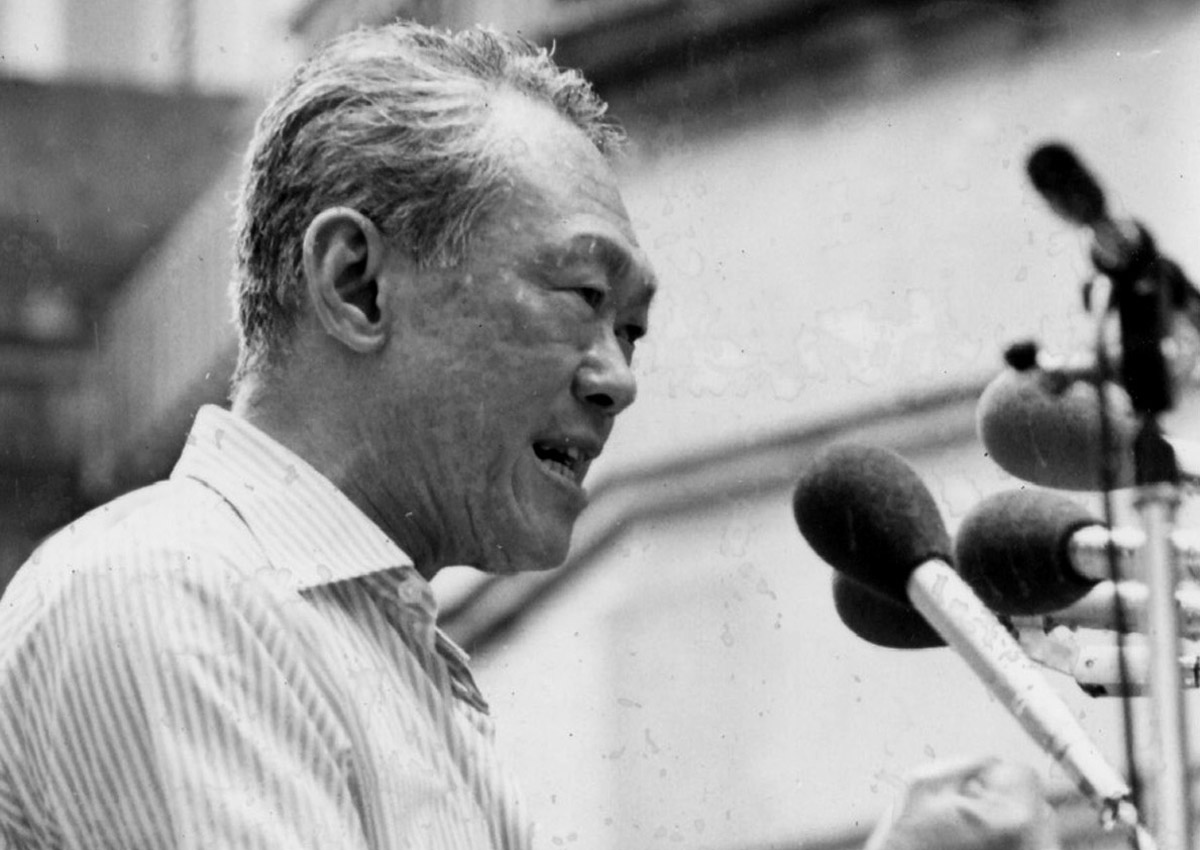
The High Court yesterday dismissed an application by the estate of Mr Lee Kuan Yew against the Government.

The estate’s executors, Dr Lee Wei Ling and Mr Lee Hsien Yang, had claimed that it was entitled to use and have copies of the oral history transcripts of the late Mr Lee done in the early 1980s, as it held the copyright after Mr Lee’s death on March 23 last year.

But the court agreed with the Government that Mr Lee Kuan Yew’s right to grant permission for access, copies and use was personal to him, and it was not his intention for his estate to have free use or custody of the transcripts.

In his judgment, Justice Tay Yong Kwang noted that Mr Lee Kuan Yew, in drafting an agreement on the transcripts over 30 years ago, emphasised the political sensitivity of the material and the need to safeguard their confidentiality.

He added that the transcripts were protected under the Official Secrets Act (OSA) and the estate could not grant access, copies or use of them without government authorisation.

The transcripts were part of a government oral history project in the early 1980s, and contained accounts of affairs of state as observed and experienced by then Prime Minister Lee Kuan Yew.

Due to the political sensitivity of its contents, Mr Lee Kuan Yew and the Government put in place a “two key” system – where he would retain the copyright, while the Government would have physical custody of the tape recordings and transcripts – to control its usage.

Mr Lee Kuan Yew signed an agreement with the Cabinet Secretary and the Director of Archives in 1983 with specific terms governing the transcripts’ use and administration.

The agreement said the transcripts would be kept in the Cabinet Secretary’s custody until 2000 or five years after Mr Lee’s death, whichever is later, after which the Government may hand the transcripts to the Director of Archives.

During this moratorium period, no person should have access to, supply copies or be able to use the transcripts without Mr Lee Kuan Yew’s express written permission. He himself retained all copyright in the transcripts during this period, after which copyright would vest in the Government.

In agreeing with the Government, Justice Tay said extracts of parliamentary debates during the period showed that Mr Lee Kuan Yew did not give the interviews as a private individual, but as prime minister.

“In my view, the excerpts above support the Government’s position that the transcripts were not created as a personal enterprise by LKY to record his observations for his own benefit,” he said.

“Instead, they were one of a series of similar recordings that were created as part of the Government’s project to document the history of Singapore, then a city-state with shallow historical roots.”

Correspondence between Mr Lee Kuan Yew, the then Cabinet Secretary and then Attorney-General, and the fact that the resulting agreement was signed by three parties, also support the Government’s claim that the transcripts dealt with politically sensitive matters and come within the purview of the Official Secrets Act, said Justice Tay.

He dismissed the estate’s argument that the transcripts did not come under the OSA as there was no reference to it in the interview agreement.

“The OSA as a statute operates by law and needs no explicit reference,” he said.

As such, the estate does hold the copyright to the transcripts, “but only for the purpose of ensuring the Government’s compliance with the terms” of the agreement Mr Lee had signed regarding the interviews, which were conducted between July 8, 1981 and July 5, 1982.

The terms of the agreement also meant the Government had committed a technical breach when it allowed Mr Lee Hsien Yang to view the transcripts in late May last year, said Justice Tay, as only Mr Lee Kuan Yew could have provided the written permission this required.

But he said the breach was minor, and accepted it was done because of a request by the late Mr Lee’s estate.

The transcripts were at the late Mr Lee’s Oxley Road home when he died, but a family member, thinking they were official documents, handed them over to Cabinet Secretary Tan Kee Yong without the knowledge or consent of the estate.

The estate became aware of them when told by the family member there was an acknowledgement of receipt from the Cabinet Secretary.

Mr Lee Hsien Yang asked to see the transcripts, and the Government agreed on condition that he did so at the Home Affairs Ministry and sign an undertaking on secrecy before viewing them.

Mr Lee agreed, but after looking through the transcripts, realised they were not marked “Secret”.

He and his sister filed the court application last September, as executors of Mr Lee Kuan Yew’s estate, to clarify the agreement their father made in early 1983 over the use of these interviews.

Justice Tay noted that there was no record of the circumstances under which the transcripts were transferred from the Cabinet Secretary to Mr Lee before his death.

But he said the fact that the transcripts were specified to be kept by the Cabinet Secretary “indicates that the interview agreement was not the usual copyright agreement”.

What the executors sought

As executors to Mr Lee Kuan Yew’s estate, Dr Lee Wei Ling and Mr Lee Hsien Yang applied to the High Court last September to clarify an agreement their father made in early 1983.

The agreement was over the control and use of oral interviews the late Mr Lee had given to the Government’s then Oral History Department in 1981 and 1982.

In their filings, they sought to have the court declare that all rights to the interview transcripts belong to the estate following Mr Lee’s death, as is stated under copyright law.

They argued that the wording of the agreement meant that Mr Lee did not intend for the copyright to be limited such that it did not transfer to his estate following his death.

The executors also claimed that the agreement meant that the copyright is retained by the maker, in this case Mr Lee Kuan Yew, even if the transcripts were created as part of a government project.

The executors added that the Official Secrets Act (OSA) was irrelevant to the case, which they claimed was contractual in nature and was about competing interpretations of the agreement.

They argued that the agreement governed the copyright and use of the transcripts and did not make reference to the OSA and that, in any case, the OSA cannot modify the contract terms set out in the agreement, among other things.

Therefore, the executors asked the court to declare that the estate is entitled to use and have copies of the transcript, and that no access to or use by anyone of the transcripts can be granted without the estate’s permission.

The executors also asked the court to declare that the Cabinet Secretary, as custodian of the transcripts, has a duty to inform the estate of any requests following Mr Lee’s death to access or use them, and if it has granted any such requests without the permission of Mr Lee’s estate.

What the Government said

Transcripts of interviews that Mr Lee Kuan Yew gave in the early 1980s were part of an oral history project to record the observations of Singapore’s first prime minister, the Government said.

The political sensitivity of the transcripts, which contain the “personal and unvarnished accounts of important events and affairs of state in Singapore’s history”, meant that it was Mr Lee’s intention that there be a five-year moratorium following his death before they are used, it added.

To achieve this, Mr Lee and the Government put in place a “two key” system that split copyright ownership and physical possession of the transcripts via an agreement, with the Cabinet Secretary as custodian to the documents.

This, the Government said, was because Mr Lee sought to safeguard the confidentiality of the transcripts, so that they could not easily be used or exploited by either the copyright holder or the Government.

It added that the agreement is worded such that Mr Lee himself retained all copyright in the transcripts for the moratorium period, after which the copyright will pass to the Government.

The Government also countered the estate’s view that the Official Secrets Act (OSA) was not relevant to the case, saying it mattered as it affects how the agreement is interpreted contractually.

Also, the OSA applies to the transcripts due to Mr Lee’s position, and did not require explicit reference.

In documents it submitted to the court, including excerpts of parliamentary debate and Mr Lee’s correspondence as the agreement was being drawn, the Government argued that the transcripts were part of a government project and done in his capacity as prime minister, not a personal enterprise by Mr Lee to record his memoirs for his own benefit.

The politically sensitive nature of the transcripts was also reinforced by this evidence, the Government added.

What the court found

The High Court largely agreed with the Government’s interpretation of the agreement and ruled that, while Mr Lee Kuan Yew’s estate has the copyright to the interview transcripts, it is only for the purpose of ensuring that the Government complies with the terms of the agreement.

It also ruled that the Official Secrets Act (OSA) is relevant and applicable in this case.

In dismissing the estate’s application, Justice Tay Yong Kwang said Mr Lee’s right to grant permission to access, copy and use the transcripts was personal to him, and it was not Mr Lee’s intention for his estate to have free use or custody of them.

“Based on a plain reading of the Interview Agreement, I agree with the plaintiffs’ interpretation… that the LKY estate inherited the copyright to the transcripts for the five-year period after LKY’s death,” said Justice Tay.

“However, this copyright is a limited one,” he said.

Justice Tay noted that the transcripts come within the category of protected information covered by the OSA, thus restricting anyone in possession or control of them from dealing with them without the Government’s authorisation.

“The Interview Agreement cannot be interpreted based solely on contractual principles applicable to a normal copyright assignment,” he said.

That the agreement stipulated the transcripts be kept in the custody of the Cabinet Secretary and was signed by three parties also lends support to the Government’s claim that the documents dealt with politically sensitive matters, he added.

However, Justice Tay said it would be proper for the Government to inform lawyers for Mr Lee Kuan Yew’s estate if he had given written permission to anyone to access the transcripts.

And if such permission had been given, the Government should provide evidence to the estate.

Statement from estate of LKY

Rajah & Tann, solicitors for the Lee Kuan Yew estate, yesterday issued this statement on the High Court judgment.

The estate of Lee Kuan Yew welcomes the High Court’s decision that the estate has the copyright to the tape recordings and transcripts of the late Mr Lee’s interviews. This resolves a key point on which the Government disagreed with the estate. The estate also awaits the Government’s compliance with the court’s direction to inform the estate within two weeks whether the late Mr Lee had given his express written permission to anyone for access to, supply of copies or use of the tape recordings and transcripts.

The estate is reviewing the court’s ruling that the copyright vested in the estate is limited to ensuring the Government’s compliance with the interview agreement, and does not include a right to use or make copies of the tape recordings and transcripts.

The estate believes that such an interpretation of the interview agreement runs contrary to the context, language and purpose of the interview agreement, and is considering an appeal against this ruling.

The estate is also considering seeking leave to appeal against the court’s decision to expunge parts of affidavits and documents filed for the purpose of the hearing.

yanliang@sph.com.sg


This article was first published on September 30, 2016.
Get a copy of The Straits Times or go to straitstimes.com for more stories.

Image: 
Category: 
Publication Date: 
Friday, September 30, 2016 – 14:00
Keywords: 
Send to mobile app: 
Source: 


Rotator Image: 
Story Type: 
Others

Source link

Formula One: Magnussen leaps to safety in pit lane fire drama

0

SEPANG – The first practice session for the Malaysian Grand Prix was halted in dramatic fashion after just 11 minutes on Friday when Kevin Magnussen’s Renault burst into flames in the pit lane.

Magnussen, who had completed just one lap, was forced to leap to safety when fire broke out in his engine outside the Renault garage.

Pit crew and fire marshals were quickly on the scene with extinguishers to quell the flames.

But with fuel appearing to be leaking across hot engine parts, the fire reignited several times before it was finally brought under control.

With foam from extinguishers and smoke sweeping across the pit lane, organisers had no choice other than to raise the red flags to halt the session.

Magnussen was unhurt, although one member of the Renault pit crew seemed to be suffering slightly from the effects of inhaling smoke.

The session got back under way after a 15-minute delay.

Image: 
Category: 
Publication Date: 
Friday, September 30, 2016 – 13:01
Keywords: 
Send to mobile app: 
Source: 


Hermes ID: 
2 634 748
Hermes ID String: 
SP_SEPANGFIRE
Hermes Author: 
SPANAECH
Story Type: 
Others

Source link

Philippines leader likens himself to Hitler, wants to kill millions of drug users

0

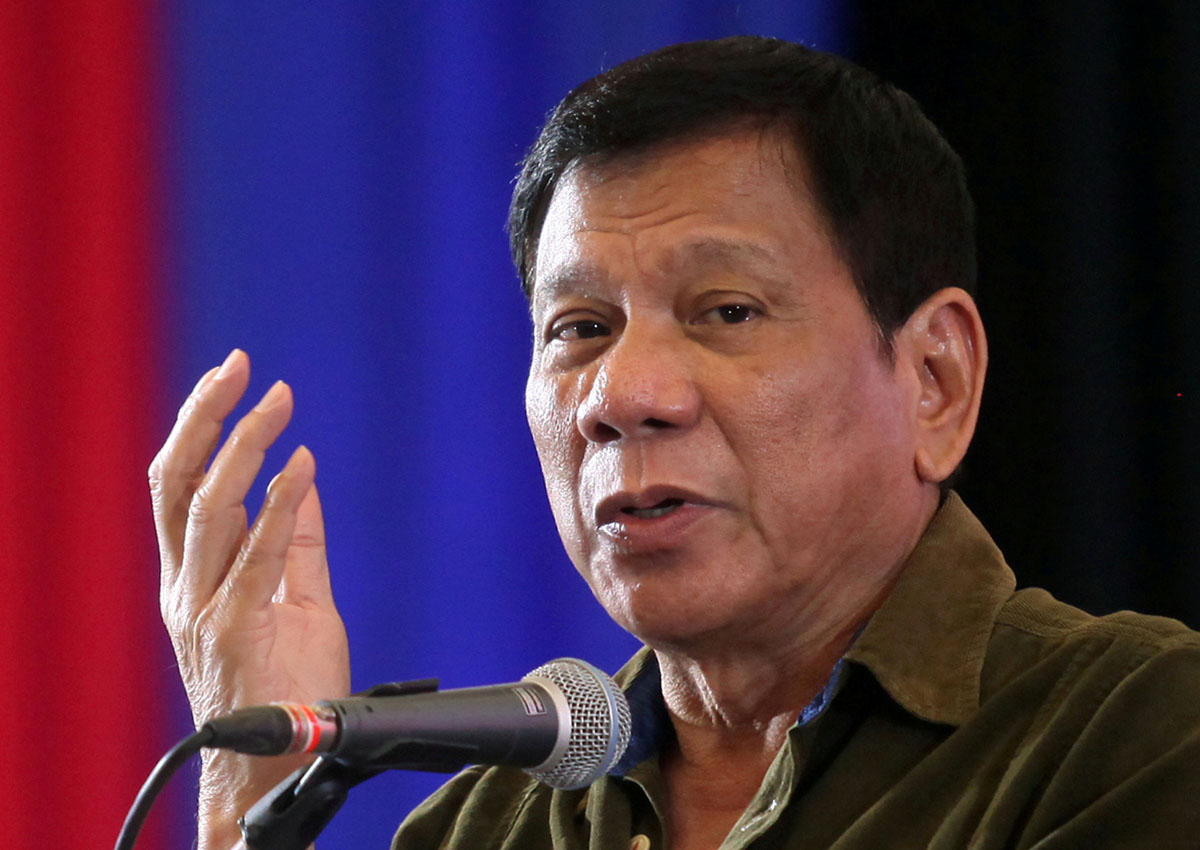
MANILA – Philippine President Rodrigo Duterte appeared to liken himself to Nazi leader Adolf Hitler on Friday and said he would “be happy” to exterminate three million drug users and peddlers in the country.

In a rambling speech on his arrival in Davao City after a visit to Vietnam, Duterte told reporters that he had been “portrayed to be some cousin of Hitler” by critics.

Noting that Hitler had murdered millions of Jews, Duterte said: “There are three million drug addicts (in the Philippines). I’d be happy to slaughter them.

“If Germany had Hitler, the Philippines would have…,” he said, pausing and pointing to himself.

“You know my victims. I would like (them) to be all criminals to finish the problem of my country and save the next generation from perdition.”

Duterte was voted to power in a May election on the back of a vow to end drugs and corruption in the country of 100 million people.

He took office on June 30 and over 3,100 people have been killed since then, mostly drug users and peddlers, in police operations and in vigilante killings.

Image: 
Category: 
Publication Date: 
Friday, September 30, 2016 – 13:00
Keywords: 
Send to mobile app: 
Source: 


Hermes ID: 
2 634 733
Hermes ID String: 
SP_PHILTER
Hermes Author: 
SPANAECH
Story Type: 
Others

Source link

2026 start for S'pore-KL high-speed rail 'realistic but not easy'

0

SINGAPORE – The 2026 operational deadline for the Singapore-Kuala Lumpur High Speed Rail, though realistic, will not be easily met and requires political commitment for it to happen, a regional director for French rail company Alstom has said.

In an interview with The Business Times on Thursday, Jean-Francois Beaudoin, senior vice-president for the Asia-Pacific for Alstom Transport, also confirmed the company’s interest in becoming an asset company for the service.

Leaders from Singapore and Malaysia signed a memorandum of understanding in July to commit their governments to the 350km high-speed rail project. A legally binding bilateral agreement is expected later this year.

Mr Beaudoin said: “It really depends on how fast the various key decisions have to be made. For me, it seems realistic. It’s not a walk in the park – but massive projects cannot be a walk in the park.”

Alstom’s interest in the project puts it in the running with other companies from China and Japan, which have also signalled their interest lately.

In particular, East Japan Railway Company made a presentation to officials, saying that if it wins the bid, commercial operations can start at the end of the seventh year.

Mr Beaudoin was a bit more reticent on Thursday, saying that deadlines for the project need to be out soon for it to meet the 2026 deadline; technical specifications need to be issued so that civil works can begin.

The asset company, which will provide tracks and trains and be appointed through an international tender, will then join in before the service gets up and running in 2026.

But adhering to timelines is not enough for the service to be ready in 10 years, he said: “Beyond the timelines, if you want these kind of massive projects to become real, they have to be supported by very strong political willingness.”

For now, Alstom is actively speaking to officials on both sides to let them know the capabilities it can provide. Mr Beaudoin said that he hopes that doing this can help the authorities “frame the way they want to ultimately specify the technology that they will ask for”.

He believes that Alstom, with its 88-year history and global footprint, has gained enough experience across different eras and regions to put it in good stead for the bid to provide assets for the project. The company pioneered the TGV system, France’s intercity high-speed rail service.

“We have the specificities, the opportunity on our own, or, if it makes business sense, to address it in whatever form of partnership with other players,” he said.

Alstom is today a technological provider exclusively in the railway sector that provides rolling stock, after-sales service, signalling systems and related services, and infrastructural solutions.

Of its annual turnover of roughly 7 billion euros (S$10.7 billion), about half comes from trains and a fifth from services; signalling makes up slightly less than that.

It has about 33,000 staff across the world, about 3,700 in the Asia-Pacific. Alstom has been in Singapore since 1997, when it first registered real growth in Asia-Pacific.

While Alstom has had much experience in Europe matching up different railway infrastructure across borders, Mr Beaudoin said that the cross-border operations should not matter for the asset company of the Singapore-KL High-Speed Rail because the system is being built from scratch.

But what needs to be considered is whether Malaysian officials want to also have the high-speed trains serve existing stations with existing infrastructure, he added. This is “typically what high-speed trains in Europe do”.

Alstom’s possible edge lies in its double-decker trains – something its potential competitors do not have. These trains, at about 200 m long, can carry about 600 passengers, assuming a configuration of two power cars with eight passenger ones. A single-deck one can carry about 500 passengers. Euroduplex and Avelia are two of its double-deck models.

soonwl@sph.com.sg

@SoonWeilunBT


This article was first published on September 30, 2016.
Get The Business Times for more stories.
Image: 
Category: 
Publication Date: 
Friday, September 30, 2016 – 14:30
Send to mobile app: 
Source: 


Story Type: 
Others

Source link

Betting operators unveil safeguards against addiction to online gaming

0

SINGAPORE – The country’s two main betting operators – Singapore Pools and Singapore Turf Club (STC) – have stressed that their move to offer online gambling will be carried out with the strictest of safeguards in place.

They gave this assurance following the government’s announcement on Thursday that it had approved the applications by the two not-for-profit entities to be exempted under the Remote Gambling Act for three years.

Singapore Pools chief executive officer Seah Chin Siong pointed to the organisation’s track record of nearly half a century of operations here as an advantage.

“We’ve been around for almost 50 years, since 1968, and we have a strong record. I believe Singapore Pools has the capability to operate the online channel in a very responsible manner,” he told reporters at a press conference.

He noted that Singapore Pools was originally set up to provide a “safe, trusted and legal channel” for those who wished to gamble – a mission that has remain unchanged to this day.

STC president and chief executive Yu Pang Fey made a similar point at a separate briefing. He said: “In developing our wagering platforms, we have worked very closely with the authorities and put in place strong social safeguards to minimise possible harm to our account holders.”

He noted that illegal online wagering has grown with technology advancements over the last 20 years and that STC wanted to have a “legal alternative” to unregulated betting in the online space.

Singapore Pools will launch its online operations on Oct 25, and offer its existing products – Toto, 4D, football and F1 betting – on its web-based service.

Tickets for the monthly Singapore Sweep draw, however, can only be purchased in person at one of about 300 betting outlets islandwide.

Singapore Pools will continue giving punters the option of placing their bets by phone, which it has done since 2005.

Meanwhile, STC said it will launch both a web-based betting service and a new mobile app on Nov 15; it will also continue to offer its phone betting service.

The Ministry of Home Affairs said in a statement that both operators are not allowed to introduce casino-style games or poker, and will need to seek its approval before adding new betting products down the road.

Singapore Pools has a rigorous three-step registration process that will take about three to seven working days to process.

Applicants must first fill up an online form and turn up at one of the branches for their identity and age to be verified.

Singapore Pools will then carry out the necessary checks with the National Council on Problem Gambling (NCPG), to ensure that applicants are not among the 51,000 individuals currently on the casino exclusion list.

STC is taking a slightly different approach to its registration process. Those seeking to place online bets on horse races must first visit one of its nine branches in person to fill up an application form. Their original identity documents will be verified, and their names submitted to the NCPG for the necessary checks.

The process could take about two weeks to complete.

Both Singapore Pools and STC will allow punters to set their own daily funding and expenditure limits. Requests to decrease these limits will take effect immediately, but requests for increases will take effect only the next day.

At each log-in, punters will be shown, among other things, an advisory on responsible gambling and a summary of the deposits, bets and their win-loss record over the last 24 hours. Punters will also receive an alert if they hit 75 per cent of their daily funding or expenditure limit.

leeuwen@sph.com.sg

@LeeUwenBT


This article was first published on September 30, 2016.
Get The Business Times for more stories.
Image: 
Category: 
Publication Date: 
Friday, September 30, 2016 – 14:00
Keywords: 
Send to mobile app: 
Source: 


Story Type: 
Others

Source link

Egypt’s Mahmoud Mohamed: “You Will See an Exciting Fight”

0

Mahmoud “El Deep” Mohamed of Cairo will attempt to snap his two-fight losing streak on Friday Night, 7 October, when he faces the Godfather of Pakistani MMA, Bashir “Somchai” Ahmad, at ONE: STATE OF WARRIORS.  The event will take place at the Thuwunna Indoor Stadium in Yangon, Myanmar.

While the 37-year-old has deep appreciation for his opponent’s talent, he remains confident in his own skill level. “I respect him,” Mahmoud says. “He’s good. I’ve seen him fight before. He has all the weapons to defeat me, but I’m also ready and I have some new weapons myself.”

Though Bashir has become famous for pioneering mixed martial arts in Pakistan over the past nine years, the Egyptian MMA scene was also in its infancy during that time and slow to develop. For warriors like Mahmoud, he had to blaze his own trail.

“MMA in Egypt wasn’t much before six years ago,” Mahmoud admits. “I think the main forms of martial arts were kickboxing and wushu.”

Initially a wrestler and kickboxer, Mahmoud jumped headfirst into the fight game in 2013. The man known as “El Deep” joined the ranks of Cairo-based Egyptian Top Team, an MMA camp he has been firmly anchored in, and made his professional debut in February 2013. The bout didn’t go according to plan, however, as he was submitted by Ahmed El Gharib in the opening round at Egyptian FC 9.

Undeterred by the defeat, Mahmoud went back to the drawing board and returned with a vengeance the following year. He went undefeated in 2014, notching two wins via rear-naked choke and another via strikes.

“I love submissions and I am training more in Brazilian jiu-jitsu with my team,” he states.

He’s struggled a bit after those victories. The Egyptian went three hard rounds with Sami Amin in August 2015, earning a draw on the judges score cards after the final bell, and then tapped out to Ali Al-Ahli in December 2015.
Despite those losses, he caught the attention of ONE Championship and signed with the largest MMA organization in Asia. “El Deep” made his debut in the promotion this past January when he faced off against dangerous teen prospect Christian Lee at ONE: CLASH OF HEROES in KL, Malaysia. Lee outworked Mahmoud and submitted him via kimura just two minutes and twenty seconds into the first round.

“I learned a lot of things during that fight. I have to be more careful,” the tight-lipped Mahmoud says, reflecting on the defeat. “I have more lessons, but I’ll keep that to myself.”

Now, over eight months removed from that contest, the featherweight will attempt to snap his two-fight losing streak and earn his first win inside the ONE Championship cage when he meets Bashir “Somchai” Ahmad in Yangon next Friday. 

Bashir is just as hungry for a victory as his opponent. Similar to the Egyptian, he holds a 3-3 record and is also coming off two losses. “Somchai”, who owns and operates the Lahore-based Synergy Fitness & MMA Club, has been preparing for the upcoming match at Team Quest Thailand in Chiang Mai. Not only has the heavy hitter been focusing on sharpening his skills, but he has been concentrating on mixing everything together.

Mahmoud knows he has a stiff test ahead and isn’t looking past Bashir, but while the Egyptian Top Team product won’t pick a winner, he promises to deliver fireworks once the cage door closes.

“The best in this fight is the one that can use his weapons right. That man will win,” Mahmoud states. “You will see an exciting fight.”


Image: 
Egypt’s Mahmoud Mohamed: “You Will See an Exciting Fight”
Category: 
Publication Date: 
Friday, September 30, 2016 – 12:05
Send to mobile app: 
Source: 


Story Type: 
Others

Source link