Home Blog Page 2728

Se7en gearing up for return

0

Singer Se7en has finally revealed details about his return to the spotlight.

“Se7en will be releasing a new album ‘I am Se7en’ on Oct. 14,” according to the singer’s management agency Eleven9 Entertainment on Thursday morning.

This is the singer’s first album in over four years, since the release of his mini album “Se7en New Mini Album” in 2012.

Written and produced in part by the artist himself, the album will boast a wide array of genres, including dance and funk.

Most recently, the 31-year-old artist unveiled a new rhythm and blues single “I’m Good” last month.

He also resumed promotional activities in Japan for his latest three-track Japanese mini album “Rainbow.”

Earlier this month, the singer announced that he is in a relationship with actress Lee Da-hae, with whom he has been involved for over a year.

Meanwhile, Se7en is gearing up for his upcoming performances at the Busan One Asia Festival on Sunday, and at the 2016 DMC Festival on Oct. 6.


Image: 
Category: 
Publication Date: 
Friday, September 30, 2016 – 16:22
Keywords: 
Send to mobile app: 
Source: 


Story Type: 
Others

Source link

LTA mulls ERP at KPE tunnel after Tampines Road towards city

0

LTA noted that traffic speeds along the stretch of KPE between the Tampines Expressway and Airport Road have “persistently fallen below the optimal speed range” and led to “significant and persistent traffic congestion”.

Source link

Big Bang to release new album

0

Global K-pop icon Big Bang is gearing up for a new album.

“Big Bang’s new release will be unveiled shortly,” member Seungri announced on his live-broadcasting channel “Hello Seungri” on Naver V Live + on Wednesday.

“I can’t disclose the specific details of the schedule, but we plan on sharing a very good new track with everyone.”

The group’s management agency YG Entertainment also confirmed the news Thursday.

“Despite their hectic schedules, Big Bang members have been preparing for a new album,” the company announced. “Lately, they have been working at the YG studio every day to wrap up the final stages of the album.”

This has been a big year for the group.

In celebration of its 10th debut anniversary, Big Bang has been carrying out various activities — including concerts, exhibitions and a movie release — at home and abroad in recent months.

The currently untitled album is scheduled to be released sometime this year.

Image: 
Category: 
Publication Date: 
Friday, September 30, 2016 – 16:13
Keywords: 
Send to mobile app: 
Source: 


Story Type: 
Others

Source link

Gold rush: Chinese head out on holiday en masse, skirting Taiwan and Hong Kong

0

BEIJING – Millions of Chinese tourists are packing their bags for distant and not-too distant shores for the National Day holiday, with early indicators pointing to a slump in bookings for neighbouring Taiwan and Hong Kong.

The “Golden Week” break, which starts on Saturday in one of the world’s biggest mass movements by plane, boat and train, offers an important snapshot of Chinese holidaymakers and their changing tastes and habits as economic growth at home stutters.

It is also a peak season for retailers outside China looking to lift their top line. Singapore is luring Chinese shoppers with discounts and promotions while South Korea is trumpeting a month-long Korea Grand Sale.

Shinsegae Duty Free in Seoul’s Myeongdong area popular with Chinese has been making preparations since July. “We are expecting many Chinese tourists, so we think sales will increase a lot,” shop official Ahn Joo-yeon told Reuters.

Thailand expects 220,000 Chinese visitors during the break, up about 30 percent from last year, Tourism Authority of Thailand Governor Yuthasak Supasorn told Reuters, despite a doubling in visa fees, a spate of bombings in the south of the country and fears of the spread of the Zika virus.

Thailand confirmed on Friday that Zika had caused two cases of microcephaly, a condition that results in babies being born with small heads, the first time the condition had been linked to Zika in Southeast Asia. “So far there has been no impact (from Zika fears) on our Thailand route,” said Wang Yanfei, market and PR manager at Shanghai Spring International Travel Service, the parent of Spring Airlines. “We will give warnings and tips on our group notices. Team leaders will remind travellers of Zika and mosquito issues before the tour starts.” Thailand’s tourism authority said it expects Chinese visitors to spend 7.8 billion baht (S$306 million) during the Oct. 1-9 break, up 39 percent from a year earlier.

Total tourist spending in China and by Chinese abroad is expected to surge 13.5 percent to 478 billion yuan (S$98 billion) during the holiday, according to China Travel Academy, a government-backed research institute.

That would be four times Iceland’s gross domestic product.

But the number of mainland tourists visiting Taiwan, a self-ruled island China considers a breakaway province, has taken a tumble.

The decline reflects deteriorating relations with Communist Party rulers in Beijing since President Tsai Ing-wen, of the independence-leaning Democratic Progressive Party, took office in May.

“WE STILL WELCOME CHINESE TOURISTS”

Chinese tourists travelling alone and in groups during the holiday will slump 50 percent from a year ago to 30,000, Taiwan’s tourism bureau said. “The drop in Chinese tourists numbers is mostly owing to political factors,” said Chiu Chui-cheng, a deputy minister of Mainland Affairs Council, Taiwan’s China policymaking body. “We still welcome Chinese tourists.” China says it is natural its tourists are avoiding Taiwan given the current tensions between the two sides and what Beijing views as Taipei’s insensitive handling of a July bus crash, deliberately caused by the driver who set the vehicle on fire, killing 24 Chinese tourists.

Taiwan’s tourism bureau does not publish estimates for mainlanders’ spending during the holiday. It projects full-year spending of T$110 billion (S$4.8 billion) versus T$140 billion for 2015.

A reduced appetite for luxury due to a slower Chinese economy and a crackdown on extravagance has also hit visits to the former British colony of Hong Kong, which has been racked by pro-democracy protests and anti-China sentiment in recent years, infuriating Beijing.

Paul Leung, chairman of the Hong Kong Inbound Travel Association, expects a 20-30 percent slide in mainland tour groups from about 300 tours a day last year. “For tour operators, Golden Week is no longer a golden period,” said Joseph Tung, executive director of the Travel Industry Council of Hong Kong.

Due to short flight times and looser visa policies, South Korea and Japan have remained popular.

Beijing has protested against a U.S. decision to deploy an advanced anti-missile system in South Korea, the Terminal High Altitude Area Defence system, to counter missile threats from North Korea. China worries the system’s radar will be able to track its own military capabilities. “There are some travellers putting off going to South Korea because of the THAAD issue,” said a sales official at Qucheng Travel Agency in Shanghai.

Still, all the travel groups to South Korea and Japan, with which Beijing has a rocky relationship due to a territorial row and other disputes dating back to World War Two, were sold out at major agencies two months before the holiday.

Image: 
Category: 
Publication Date: 
Friday, September 30, 2016 – 16:10
Keywords: 
Send to mobile app: 
Source: 


Hermes ID: 
2 635 506
Hermes ID String: 
AS0930-GOLDWEEK
Hermes Author: 
SSANDREA
Story Type: 
Others

Source link

1 in 3 pre-schools in Singapore now SPARK-accredited

0

There are currently 601 pre-schools certified under the Singapore Pre-school Accreditation Framework, up from 431 last year, said the Early Childhood Development Agency in a press release. 

Source link

20th century heritage list salutes Chinese structures

0

A national list of architectural masterpieces was released in Beijing on Thursday to remind people of disappearing heritage.

Ninety-eight sites were inscribed into the first edition of the 20th-Century Chinese Architectural Heritage List, which was drafted by the Chinese Society of Cultural Relics and the Architectural Society of China.

Landmark architecture of New China, like the Great Hall of the People and the Monument to the People’s Heroes, ranked high on the list.

Renowned Western-style architecture from the early 20th century was also included, such as the Bund in Shanghai; the Russian-style Saint Sofia Cathedral in Harbin, Heilongjiang, and Tianjin’s Marco Polo Square, a former Italian community.

College campuses host another major type of architecture. Old buildings at Tsinghua University, Nanjing University and Wuhan University are among the examples.

“Many of the included structures have abundant stories and are witnesses of historical vicissitude, and they are thus alive,” said Shan Jixiang, head of the Chinese Society of Cultural Relics. “However, more historical communities from the 20th century outside the list are endangered.”

He added that the new list will make people aware of preserving more recent architectural sites for future generations.

“When restoring them, they should be treated as cultural heritage sites rather than general construction. Otherwise, historical information will be irreversibly lost,” he said.

As an architect, Shan criticised the way China became a playground for foreign designers’ maverick blueprints in the first decade of the 21st century.

“Masterpieces of the 20th century prove that Chinese architects’ spirit and techniques are well inherited,” he said. “And they deserve to be passed on to modern times.”

“The list shows that a new type has been added into categories of immovable cultural heritage sites,” said Gu Yucai, deputy director of the State Administration of Cultural Heritage. “This meets common practice in the rest of world.”

Still, Ma Guoxin, an academician at the Chinese Academy of Engineering, pointed to the lack of sufficient legal oversight to protect the heritage of the last century.

“There is a void in legislation concerning these sites, and a tailored rule is urgently needed to avoid further sabotage,” Ma said.

Image: 
Category: 
Publication Date: 
Friday, September 30, 2016 – 15:27
Send to mobile app: 
Source: 


Story Type: 
Others

Source link

Cricket: The wizard and the warrior

0

In The Lord Of The Rings, shot in beautiful New Zealand, wizards use spells to conjure fire and create light.

In distant Kanpur, visitors from Middle Earth must have thought Gandalf had reappeared in the rather unlikely garb of an engineering graduate from Sri Sivasubramaniya Nadar College of Engineering.

Ravichandran Ashwin made magic as Tolkien’s Gandalf did, Mitchell Santner got one that pitched outside leg and took the outside edge of his bat, as he eased past 200 Test wickets.

I don’t know if spells have antidotes but New Zealand will have to find one very quickly if they have to save the series in Kolkata. And they will have to contend with a warrior too.

There is little that is subtle about Ravindra Jadeja. His bat is his sword and he brandishes it like his forefathers might have in grimmer battles.

And the ball, his arrow.

It follows a predictable if angry path till it hits the turf a little shorter than where the batsmen would like it to.

Then one deviates and keeps going straight, which is not normally too bewitching, except that few know which is which.

Four of his five wickets in the first innings were LBW with the batsmen presumably playing for turn. On a turner, the straight ball is often more deceitful.

They form a nice combination, the wizard and the warrior. And they help each other.

Ashwin admitted that Jadeja’s miserliness allows him to concede a few in search of a wicket.

Ravindra Jadeja. Photo: AFP

It came as no surprise to me that Jadeja was man of the match because he knows the ways of his homeland well.

When he plays overseas, the pitch is not his ally but in India they are friends, spinning yarns and having countless cups of tea together.

As New Zealand discovered, and South Africa did under a year ago, he is a match-winner at home.

He does not do a lot, certainly doesn’t seem to (Ashwin alluded to his ability to stay within his capability) but in cricket, sometimes you only need to turn it as much as the width of the bat. And he gets wickets past the outside as well as the inside of the bat.

Much of his power comes from a powerful shoulder. It is the mightiest throwing arm I have seen in Indian cricket. Not many throw as flat from as far as he does.

At the bowling crease, the jerk is replaced by a smooth arc but the ball still arrives at the batsmen very quickly.

Occasionally he will let it hold in the air, only occasionally, as if to lull the batsmen into thinking he has time. Then the arrow will appear again, as his coach’s rocket ball did.

The simplicity gives him longevity in his spells and a spinner who can bowl long spells for very few is a captain’s delight.

In the second innings at Kanpur, while Ashwin took 6 for 132 at 3.71 runs/over, Jadeja’s 1-58 came from 34 overs at only 1.7/over I am delighted he is back to scoring runs. There were crucial moments against South Africa last year where he suggested he was quite at home batting on dusty tracks.

But in Kanpur he had, over the two innings, 92 from a mere 102 balls.

He must aspire to move up the order. There may not be too much space at the moment but it never hurt anybody to think bigger.

In course of time he will have to reinvent himself, with bat and ball, to playing overseas. But, happily for him, that isn’t something he needs to think about for a year!

tabla@sph.com.sg


Get a copy of tabla! for more stories.

Image: 
Category: 
Publication Date: 
Friday, September 30, 2016 – 15:28
Keywords: 
Send to mobile app: 
Source: 


Story Type: 
Others

Source link

From IMH patient to pillar of support

0

Desmond Ng was 18 and a second-year polytechnic student when he began hearing voices in his head, especially around people in school.

“I would get this feeling of fear and paranoia around them and hear a voice telling me that other people were trying to hurt me, and that I should retaliate before they do,” said Mr Ng, now 22.

He thought the voices stemmed from his thoughts and feelings, and did not dwell on them until he felt increasingly stressed. Six months later, he sought help from his tutor and was referred to a counsellor.

“That was when I got to know more about psychosis and schizophrenia, and realised the voices might not be my own thoughts,” he said.

Psychosis refers to a group of mental disorders, including schizophrenia. Those with the illness can experience hallucinations or delusions, or display abnormal behaviour.

Mr Ng’s counsellor suggested he go to Chat Hub, a centre at *Scape that offers free mental health assessments for youth. There, he was referred to the Early Psychosis Intervention Programme (EPIP) at the Institute of Mental Health (IMH).

But his parents did not initially accept the diagnosis and believed he was possessed by spirits. “They took me to a medium a few times to see if anything worked,” he said.

He and his parents had a lot of arguments over how to deal with his episodes. But multi-family group sessions helped them accept his illness after three years.

The sessions were held once a month by the EPIP. Five to six families gather to discuss patients’ symptoms and coping strategies used by patients and parents.

While speaking to a therapist and taking medication helped alleviate the symptoms of his illness, it was meeting his peers at EPIP that really paved Mr Ng’s way to recovery.

He was reluctant to interact with people initially but was persuaded not only to do so, but to also join activities like sports. He said that meeting those who got better and “hearing their stories and struggles really drives me to think that I can do this”.

He met a “peer support specialist” at a workshop and thought about becoming one himself. Such specialists can be recovering patients or caregivers of recovering patients.

“They showed me that they could use their stories to inspire others, help others, and learn more about themselves in the process.”

While Mr Ng still hears voices and goes for occasional follow-ups with his doctor and psychotherapist, the condition does not bother him as much now. He works part-time at EPIP as a peer support specialist to facilitate activity groups that explore each person’s strengths and remind patients that there are ways to cope with the illness.

Mr Ng hopes more patients will share their stories. “Right now, there’s a stigma around… talking about mental illnesses, so hopefully we might have people seeing that it’s okay to talk about it.”


This article was first published on September 30, 2016.
Get a copy of The Straits Times or go to straitstimes.com for more stories.

Image: 
Category: 
Publication Date: 
Friday, September 30, 2016 – 15:11
Keywords: 
Send to mobile app: 
Source: 


Story Type: 
Others

Source link

51 young Singaporeans voice their views on the next big thing for the country in book

0

Last year, Singapore turned 50 years old. To celebrate this milestone and to also look forward to what the country’s future holds, a new book of essays titled The Birthday Book was launched recently.

It contains essays from 51 young Singaporeans, on what they think would be Singapore’s next big thing.

The book was launched on Aug 27, soon after the Republic’s 51st birthday celebrations. Edited by the associate director of Public Affairs and Communication at The Head Foundation Malminderjit Singh, the book puts forward thoughts and arguments on various opportunities and challenges the country is likely to face going into the future.

The contributors to the book include entrepreneurs, literary personalities, academics, journalists, civil servants, a stand-up comedian and many others.

The essays cover a diverse range of topics from sports to economics, racial harmony to international law and government policy to arts and theatre.

The voices in the book lend varied tones to it. Some essays are formal, discussing technological futures and economic advancements. Others feature the recipe of a local dish, a letter from the future, a design brief and a fictional newspaper story.

Mr Singh conceptualised the book together with Mr Aaron Maniam, director of industry division, in the Ministry of Trade. Mr Singh said that on the country’s 50th birthday, the nation took stock of the past and celebrated many of its successes. He felt the need to look forward was equally important, which he wanted the book to do.

He said: “In reflecting on our achievements and celebrating an improbable journey, a strong sense of national pride was created, fostering a collective identity and a sense of belonging. But, what next? That was the question I asked myself.”

Around the same time as the idea for the book was taking shape in his head, his first child, a girl, was born. He calls it “parental instinct, paranoia about her future” because suddenly the urge to think deeper about Singapore’s future and to act on it, became stronger.

The idea took its final shape in a taxi he shared with Mr Maniam after a dinner party. He discussed the ideas and questions with Mr Maniam. The two thought a book like this could be a useful platform for “young voices in Singapore to share their thoughts about the country and be a vehicle to catalyse a wider civic movement.”

Happy with the final product, Mr Maniam told tabla! that the book gives both hindsight on the past and insight to the future.

“Hindsight because these are stories that capture part of the national imagination at this point in time – just after SG50. It is a point of reference to which we can look back as we take stock of our evolution as a country, economy and society.

“But the essays also look forward, providing insights into possible futures for Singapore. There are ideas about how we can try to create the future we want, and hopefully avoid the future we don’t,” he said.

The running theme of the book is Singapore’s next big thing, keeping true to the narrative that was forward-looking.

Mr Singh explained that this theme would provide a glimpse into the minds of young leaders in the nation on “what they envisioned a driver of the Singapore of the future would be.”

Besides stimulating intellectual discussions and arguments, Mr Singh and Mr Maniam hope the book brings together young Singaporeans who identify with a particular thread or cause highlighted in it.

“The Birthday Book will aim to catalyse movements and additional ground-up projects around these causes,” Mr Singh said.

Mr Maniam said he has been encouraged by the positive reactions to both the print version and online shares of the book.

“Some of the writers are meeting in smaller groups to discuss collaborations and how to take their ideas further. There have already been volunteers to write for the 2017 edition. This is all very much part of the aim to have the book as a nucleus around which a community develops and thrives,” he said.

The book is going to be published each year around National Day, with the number of contributors intentionally congruent to Singapore’s age (51 this year, 52 next year, and so on).

The book was put together in three months, with work on it starting in May this year.

Mr Singh said: “All the contributors played a key role in ensuring that we met this tight timeline and achieve a difficult task. Firstly, they all agreed to write, which made it easier for us. In fact, out of the 53 potential contributors, 51 accepted our invitation. The two who declined only did so because of work commitments and they promised to contribute next year.”

The book is published by Ethos Books and available in bookstores like Times, Kinokuniya and MPH.

The essays

Mr Singh and Mr Maniam are among the 51 contributors.

Mr Singh has written his essay as a fictional newspaper article from the future where he speaks about education being the soft power tool for Singapore.

It highlights a trend for government leaders in Asia to be educated within the continent, rather than going to the US/UK to study. He sees Singapore playing the role of “regional educator and capacity builder” in the future.

Singapore’s universities like National University of Singapore and Nanyang Technological University are among the best in the world. Mr Singh told tabla!: “With the global centre of power shifting towards Asia, students from the region may find a declining lure from the West and so look within their region for other sources of education.

“Singapore, with its unique blend of Asian roots and Western influences, provides a good alternative to those who want to stay in an emerging region. “As more young people come here to study, including emerging leaders, Singapore’s appeal to people and governments of Asia is likely to increase.”

In Mr Maniam’s essay, which is a letter from his future self, he speaks about the importance of moving beyond the scarcity mindset and living in an age where “resources like data, networks and relationships are generative rather than scarce”.

He told tabla!: “Not all resources are generative, but many of the most important ones in the future will be: Data and knowledge in a digitalized economy; social capital and trust in a hyper-connected world. Singapore is well-placed to harness the potential of both, given the growing drive towards digitalization and technology adoption, which build on many of our existing strengths as a global hub and integrated economic ecosystem.”

In another essay titled 21st Century Girls: Cultivating Creative Confidence with Tech, Ms Ayesha Khanna, an innovation and technology expert who has served on the Ministry of Education’s ASPIRE steering committee, writes about “girl power” in technology being the next big thing.

Ms Khanna runs a non-profit organisation called 21C Girls, which teaches technology to girls in relevant ways. The 21C Girls programmes are run in various schools and universities in Singapore.

Ms Khanna wants to change the perception, more prevalent in Asia, that engineering and technology are male professions.

“This thought stems from the early days when engineering involved working with construction companies and factories. But in an age where every industry, even the world’s largest manufacturing companies like ABB and GE, are becoming more digital in nature, society can start afresh and not have old biases associated with physical engineering extend to digital engineering,” she told tabla!.

However, change is happening around the world.

“More and more women are entering the digital workforce, but we still have a long way to go,” said Ms Khanna.

Her belief is that young women, equipped with right technology tools, have the power to be Singapore’s next big thing and have the potential to empower others.

Another essayist in the book, Mr Veerappan Swaminathan, speaks about the Maker Movement being the next big thing for Singapore.

The movement focuses on enabling individuals and societies with knowledge and tools to solve their own problems. It is about changing the consumption-minded society to one of production-minded.

Mr Swaminathan is the co-founder of the Sustainable Living Lab (SL2), a social enterprise. He says the Maker Movement gained a foothold in Singapore in 2011 and since then he has seen many encouraging changes.

He told tabla!: “The biggest changes I have seen are in two areas – startups and education. SPRING Singapore launched a $1 million tender for a Prototyping Lab at the National Design Centre in 2014 and in the same year Infocomm Development Authority of Singapore (IDA) launched the IDA Labs, both aiming to promote hardware startups in an ecosystem that was largely focused on software/Internet innovation.

“Now NUS and NTU are following suit along with some private companies coming in with huge amount of investments for similar setups.”

Civil servant Sheila Pakir in her essay focuses on setting the communication gap between government and public right. In her essay titled Speaking To One Another, she writes about the imperativeness of having citizens understand the big moves and policy of the government and how it affects them. She said the “small-seeming act of simply having more people talk to fellow citizens about policies and benefits available to them could end up being a rather big thing indeed”.

She told tabla!: “I think such a gap is only natural, and occurs between every government and electorate in the world. Part of the reason for this is that policies are usually complex, because they have to cater to so many different types of people in different situations.”

She stressed that personalisation is key to making communication more effective.

Stand-up comedian Rishi Budhrani in his essay stresses the importance of the role art plays in a society.

Mr Budhrani, who has performed in comedy shows in New York, Los Angeles, Sydney and India among other places, believes that open discussion and debate without the risk of regulation and control could be the way forward for the country.

He said Singapore is in a good position to start an open discussion about “issues such as politics, race, gender and sexuality among others”.

He added: “The Internet and social media have already begun providing a platform for discussions like these, so rather than fight the free platform, we might be better off educating society on the value of ethics and responsibility in structured discussion on these once ‘taboo’ topics, as opposed to ignoring these topics in the mainstream media. These conversations ARE being had, so why don’t we make it part of our national conversation.”

These and many such riveting reads make up The Birthday Book.

tabla@sph.com.sg


Get a copy of tabla! for more stories.

Image: 
Category: 
Publication Date: 
Friday, September 30, 2016 – 14:42
Send to mobile app: 
Source: 


Story Type: 
Others

Source link

More than 80 per cent of faulty Note7 phones replaced

0

More than 80 per cent of faulty Samsung Galaxy Note7 phones in Singapore have been swopped for new ones, two days before the official exchange programme ends.

Altogether, tens of thousands of Note7 phones have been exchanged in Singapore’s first major mobile phone recall.

Samsung is slated to resume sales of its latest flagship phone by the end of October even as it strives to replace the remaining faulty devices, including parallel import sets.

“Our top priority is to support Galaxy Note7 owners in the exchange programme,” said a Samsung Singapore spokesman.

The South Korean smartphone maker had earlier this month suspended sales of the Note7 and recalled 2.5 million units globally after incidents in which the phone caught fire.

Note7 users here can exchange their phones at the Suntec Singapore Convention and Exhibition Centre until Sunday, after which they will have to call the 1800-SAMSUNG (7267864) hotline to arrange to exchange their phones.

Retiree Linda Chow, 54, said she did not have to wait long as there were many exchange counters. “I was also pleasantly surprised that the apps in my new phone were arranged in exactly the same way as in my old phone,” she said.

But some consumers here have had to go back for a second swop after their replacements were found to overheat and rapidly drain power while being charged.

Samsung’s spokesman said only a “very small number” of customers had asked for a second exchange. The defects in these sets were not battery-related, she added.

On concerns over a rainbow screen that appears when the phone is charging, the spokesman said this is not a defect. As for complaints that the phones take unusually long to charge, she said users should check if fast charging is on, although it should be a default setting.

Samsung has also come up with a way to certify Note7 replacement phones from the original ones with faulty batteries. It did so amid fears that some faulty Note7 devices may still be sold in online marketplaces.

Note7 customers here can enter their phone IMEI (identity) number on the website www.samsung.com/sg/support to check against an online database.

Last week, the US Federal Aviation Administration posted a notice stating that Note7 phones with a green battery charge indicator can be turned on and charged on flights and stored in checked baggage. These sets are not defective.

Even so, Singapore Airlines still does not allow the use or charging of the phone on its flights.

“Our policy remains unchanged; the powering up and charging of Samsung Galaxy Note7 is prohibited on all our flights,” a Singapore Airlines spokesman told The Straits Times yesterday.

Read More:

Samsung washing machines are also exploding now, and has turned Singaporeans into conspiracy theorists

Why Samsung’s Galaxy Note 7 recall will have temporary impact on earnings

Galaxy Note 7 banned in office


This article was first published on September 30, 2016.
Get a copy of The Straits Times or go to straitstimes.com for more stories.
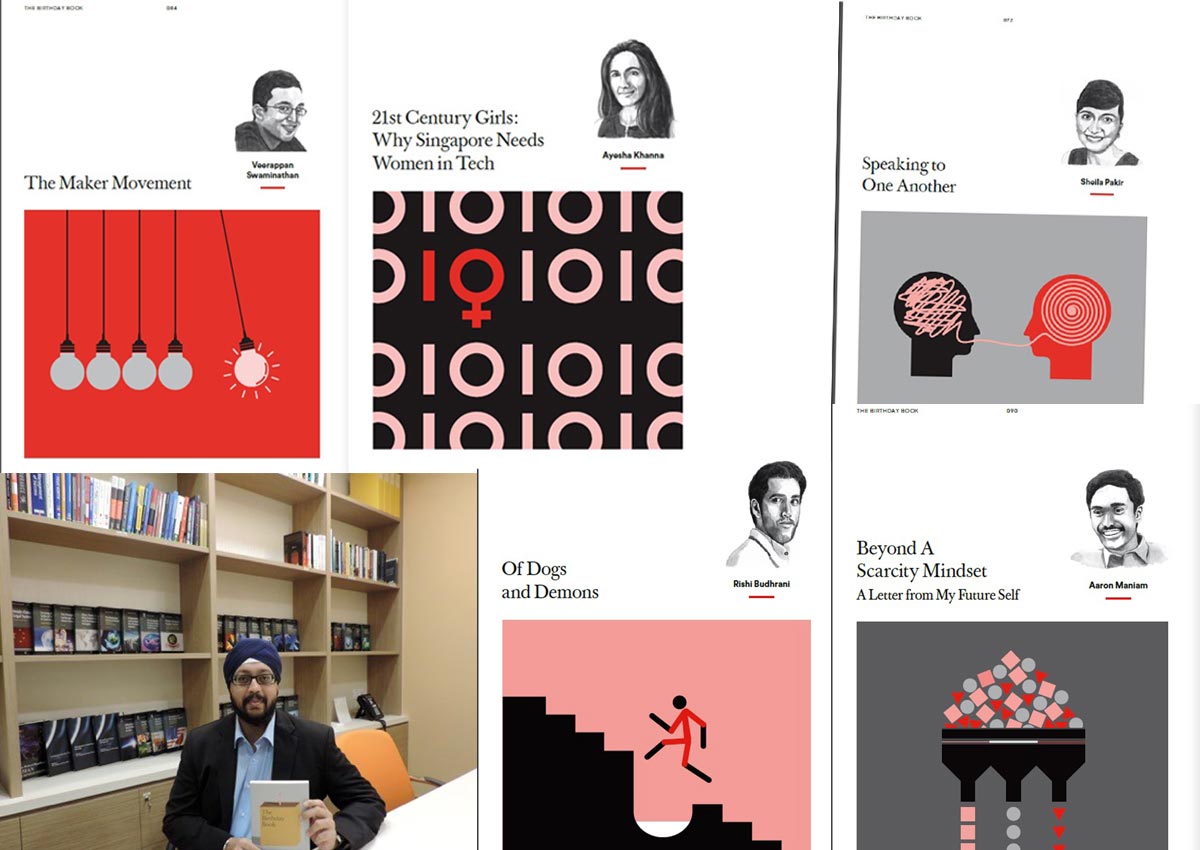
Image: 
Publication Date: 
Friday, September 30, 2016 – 14:42
Keywords: 
Send to mobile app: 
Source: 


Story Type: 
Others

Source link