Home Blog Page 2708

Are supplementary classes after school really necessary?

0

There has been lots of play time after school the past two weeks.

From playing hide-and-seek, to laughing at each other’s off-pitch singing, to experimenting with freezing various objects in the freezer, my 10-year-old son and seven-year-old daughter have been enjoying their weekday afternoons together.

And when they are not concocting yet another crazy game or experiment, they are playing with their eight-month-old baby sister, chuckling at her antics or just having fun with her.

Ironically, the reason for the sibling fun is that year-end exams are round the corner – so after-school activities like co-curricular activities and extra classes have been put on hold for my son.

I’m relishing these few weeks of “exam preparation” because it means more opportunities for sibling bonding, more free time to read, play, help me with cooking, or simply do nothing.

Sure, my son has to revise for the exams, but there is a limit to how much he can and wants to study in a day. And once he is done, he is free.

Compare this to a usual school week where he gets home only at 6pm three times a week because of football practice and, occasionally, an extra class. He is now home for lunch every day.

Having them home together for long stretches in the day has meant more bickering, but more fun as well, once they finish quarrelling.

Such weekday afternoons with time for unstructured play is especially precious because once he enters Primary 5 next year, he will have extra classes after school.

Some schools call it supplementary lessons, others call it enriched or enhanced curriculum. It basically means that lessons for the upper levels stretch on past 3pm at least two days a week.

These are not remedial lessons meant for the weaker students, but classes held in the afternoon in preparation for the Primary School Leaving Examination (PSLE).

So come next year, my son will have extra afternoon lessons twice a week and CCA three times a week.

Schools carry out these lessons differently. Some use them for the usual curriculum, others see them as time for extra practice, so worksheets with more challenging problems are given out and corrections done.

Some parents have pulled their children out of these lessons, preferring them to attend private tuition instead.

My son does not have tuition (for now), but for the many pupils who do, and still attend supplementary lessons, I wonder when they get to rest? Or play?

I saw first-hand the effects of over-scheduling a child when for two weeks last year, my son unwittingly led the life of an over-scheduled child.

Ironically, it was due to post-exam activities offered by his school. We signed him up for a Spoken Malay course, thinking it would be a useful skill to have. The lessons were held daily after school for two weeks.

Learning the language was well and good – but after a week of staying back late every day, I could see it was taking a toll on him. He was tired, less chatty and more impatient – even though he was getting enough sleep at night.

And exams were over so it wasn’t stress that was causing it. I can only guess that the lack of free time and lack of play time were causing the difference in his behaviour.

Child psychiatrist Alvin Rosenfeld who wrote the book, The Over-scheduled Child, cautioned parents about the effects of over-planning a child’s life, which could eventually lead to anxiety, lack of problem-solving skills and lack of creativity, among other problems.

With plans to remove the over-emphasis on the PSLE, perhaps it is time to rethink school hours for primary school children. After all, it seems contradictory to replace the PSLE T-score with wider scoring bands and then keep the long school hours.

To have time to play and explore, children need more free time after school. But after a day in school, extra lessons, or CCA if any, homework, or tuition for many, it would be difficult to fit play in if a child is to sleep at a decent time.

My daughter in Primary 1 ends school at 1.40pm four times a week, except for Wednesday when school ends at 12.40pm. By the time she has lunch, it is past 2pm on most days. No prizes for guessing which is her favourite day of the week.

Late school dismissal is a phenomenon not peculiar to my children’s school, a neighbourhood school. Parents from various schools I meet say school hours are longer now compared to before.

Part of it is due to incorporating Programme for Active Learning into curriculum, so that children get to try their hand at various outdoor or arts activities.

Schools have made up for the long hours by introducing snack time at noon, or lunch breaks to ensure kids do not get too hungry.

All that is well and good, and much appreciated. But I can’t help wondering: Are supplementary classes for upper-primary pupils really necessary?

Are teachers unable to finish teaching the syllabus during curriculum time? Or are schools bowing to parental pressure to offer such classes because some schools have them?

Is there a way to fit what pupils need to learn within school hours? And keep the after-school hours for targeted revision, rest or play?

After all, I see my kids honing their negotiation skills when they argue while playing; I see their creativity at work when they use a tripod and bedsheet to build a tepee; I see maths coming to life when they measure ingredients to make pancakes.

And to me, these are just as important as what they learn in school.

• Jane Ng, a former education journalist, is now a freelance writer.


This article was first published on October 03, 2016.
Get a copy of The Straits Times or go to straitstimes.com for more stories.


Image: 
Publication Date: 
Monday, October 3, 2016 – 14:00
Send to mobile app: 
Source: 


Story Type: 
Others

Source link

REACH announces new 'diverse' supervisory panel

0

Government feedback unit REACH announced the appointment of its 6th supervisory panel in a media release on Monday (Oct 3). 

Source link

Sheep year in 2015 saw highest number of babies in 13 years

0

The supposedly mild sheep has pummelled the most powerful beast in the Chinese zodiac calendar.

A mix of factors – the SG50 feel-good factor, more parental perks, and demographics – resulted in a bumper crop of Singaporean babies in 2015, the Year of the Sheep.

There were 33,725 citizen births, the highest number in the last 13 years, according to population figures released last week.

It eclipsed even the 33,238 births in 2012 – a dragon year which some Chinese consider to be the most auspicious, believing that those born under the sign would embody the creature’s traits of dominance and intelligence. This is the first time in about two decades that the number of dragon babies has been overshadowed by those born in other years, based on available population statistics.

Ryker Jedd Ng was born just as the clock struck 12 on Aug 9 last year – the moment Singapore turned 50.

“We were in disbelief,” said his mother Angeline Lim, 35.

One obvious reason to reach out for is the celebratory mood over Singapore’s jubilee and the attendant enhanced parental perks on offer. But sociologists say demographics also played a large part.

“It could be because children of baby boomers are hitting about 30 years of age, which is the median age of citizen mothers at first birth,” said National University of Singapore sociology professor Tan Ern Ser. “It is possible that the children of baby boomers may keep this up for the next decade, but that is subject to the economic climate.”

Malays and Indians were more productive. The total fertility rate (TFR) for Malays increased from 1.73 in 2014 to 1.79 and that for Indians went from 1.13 to 1.15.

The TFR for Chinese declined from 1.13 to 1.10.

This pulled the overall TFR down a notch, from 1.25 to 1.24. The replacement TFR – which is when a population can replace itself – is 2.1.

Ms Kasthuri Davaraj, 28, had a son last May and is planning to try for another this year. “We have been married for two years so we felt the time was right to have a baby and we want to have a two-year gap for the next one,” said the teacher.

The hope is that the trend will continue.

According to the Population in Brief 2016 report, Singapore will see larger cohorts of citizens approaching the peak marriage and parenthood ages over the next few years. Many are children of post-war baby boomers.

Already, last year saw 480,900 Singapore citizens in the age group of 20 to 29, a jump from 432,300 a decade earlier.

The Government’s enticements may also be bearing some fruit.

Singapore began tackling its dearth of births in 1987 and over the years has offered, among other things, tax rebates, baby bonuses, priority in getting bigger HDB flats and subsidies at specified childcare centres.

Last year, significant perks were also proffered. They included a doubling of the one-week paternity leave and an extra $2,000 in baby bonus. Singaporean babies born last year also received a special birth certificate and gift set. Insurers jumped in to offer the newborns free health insurance.

Ms Joanne Sng, 34, who had her fourth child last September, said: “The parenthood benefits have increased quite a bit since we had our first child in 2008. The introduction of the paternity leave is especially appreciated.”

While noting that incentives are not the paramount factors for parents in deciding to have children, parenting coach Chong Ee Jay, 37, whose wife gave birth to a son in September last year, said more support throughout the children’s growing years would help.

Dr Kang Soon-Hock, head of the social science core at SIM University, thinks that there may be a possible “mindset change” among young Singaporeans who are starting to embrace parenthood.

“Previous Marriage and Parenthood packages have laid the groundwork and it is now showing results.”

The outpouring of sentiments and discussions over Singapore’s 50th birthday could also have helped.Dr Mathew Mathews, senior research fellow at the Institute of Policy Studies, said: “I don’t think people go out of their way to have a child just to be part of SG50 or to get a goodie bag.”

He said that SG50 could have offered the final push to those who might otherwise have just waited.

Already, there is a very Singaporean concern coming to the fore. Some parents are concerned that their children being born last year could mean stiffer competition down the road.

“One consideration we had in planning for a baby last year was that the Year of the Sheep is usually not popular with Chinese families,” said research and development engineer Jeremy Gan, 32, whose daughter was born in May last year.

“We thought she would not have to face as much competition in school but we couldn’t be more wrong.”


This article was first published on October 03, 2016.
Get a copy of The Straits Times or go to straitstimes.com for more stories.
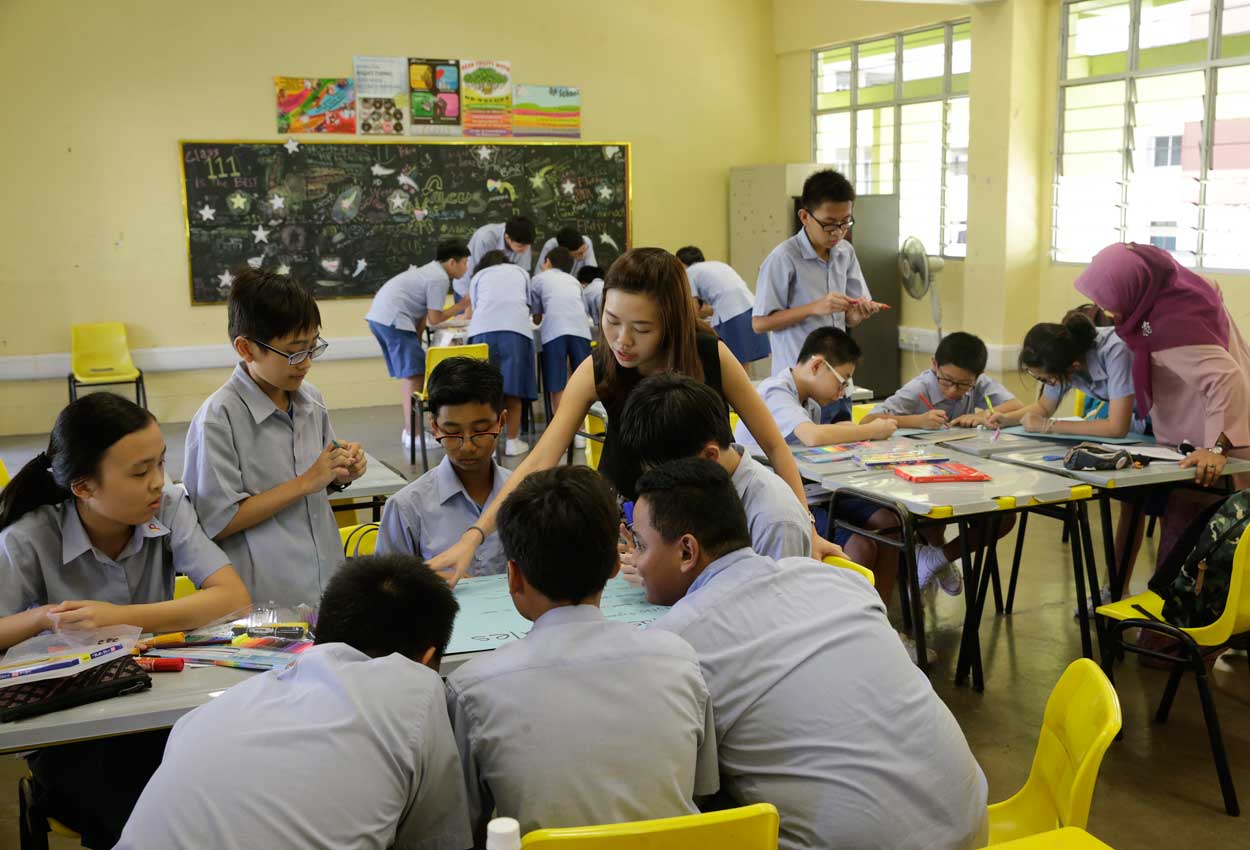
Image: 
Category: 
Publication Date: 
Monday, October 3, 2016 – 14:00
Send to mobile app: 
Source: 


Story Type: 
Others

Source link

5,000 teachers leave service over five years

0

About 5,000 teachers have left the teaching force over the last five years, prompting calls from observers for more to be done to retain them by reducing their administrative load.

That said, the annual resignation rate of teachers has “remained low at around 3 per cent” the last five years, said the Ministry of Education (MOE).

The teaching force of more than 33,000 officers has remained stable, it added, in response to queries from The Straits Times.

Still, the resignation rate has gone up from 2 per cent, or 400 to 500 resignations a year, a figure disclosed by MOE at the Budget debate in 2000. There were about 23,000 trained teachers then.

The Straits Times spoke to a dozen teachers who had left and two-thirds said they did so because of the administrative workload – a longstanding complaint that underscores the challenge the MOE faces in trying to resolve the issue.

As far back as 2005, the ministry had hired allied educators to help teachers with their paperwork and students’ counselling needs. It had said previously it aims to employ 2,800 of them by last year.

The ministry said the top three reasons for teachers’ resignations are “for childcare, other family considerations and a desire for a change of job”.

Former chemistry teacher Lily Sim, 36, left the profession in 2014.

On a typical day, Ms Sim, who spent 10 years at National Junior College, would be in school from 7am to 7pm. More than half of those 12 hours were spent on tasks such as organising school events.

“Teachers are not given enough time to build the depth in teaching skills due to other duties that they have to juggle,” said Ms Sim.

“I decided to leave as I wasn’t able to focus fully on what I love to do, which is to teach.”

Long hours, huge class sizes, and overly demanding parents are reasons they called it quits, some former teachers said.

Mr Bernard Lim, 59, who has about 20 years of experience teaching in schools, said the “paperwork increased many-fold over time”. It took a toll on him, resulting in two bouts of depression in 2003 and 2005. “When I was close to recovery, I reasoned the illness would recur if I stayed on, so I resigned,” said Mr Lim, who left the profession at the end of 2005 and is now a tutor.

While observers note the proportion of exits is low compared with other professions, they say it is a waste of the trained teaching talent.

Jalan Besar GRC MP Denise Phua, who heads the Government Parliamentary Committee for Education, said the annual resignation rate for teachers is “not overly alarming, compared to other industries”. “But every excellent educator who leaves the sector is still one too many,” she said, adding that the MOE should continue looking into how the marking load can be reduced.

The ministry has made several improvements in recent years. In August last year, it said up to 30,000 teachers will get 4 per cent to 9 per cent increases in their monthly wages to keep pace with the market.

Mr Clarence Tng, 40, a head of department at Tanjong Katong Secondary School, said the MOE and schools have been looking at ways to assist teachers. For instance, teachers are supported by allied educators and the schools’ administrative team.

He added that being an educator involves putting students’ interests first. “That is the very uniqueness of this profession. Sometimes, we sacrifice at our end so that their lives can be more fulfilled.”


This article was first published on October 03, 2016.
Get a copy of The Straits Times or go to straitstimes.com for more stories.

Image: 
Publication Date: 
Monday, October 3, 2016 – 14:00
Send to mobile app: 
Source: 


Rotator Image: 
Story Type: 
Others

Source link

Kardashian held up at gunpoint in her hotel in Paris: CNN

0

Kim Kardashian West was held up by masked men in her Paris hotel room on Sunday, CNN reported, citing her spokeswoman.

Kardashian West is in France for Paris Fashion Week along with her mother, Kris Jenner, and sisters, Kourtney Kardashian and Kendall Jenner.

“Kim Kardashian West was held up at gunpoint inside her Paris hotel room this evening, by two armed masked men dressed as police officers. She is badly shaken but physically unharmed,” spokesperson Ina Treciokas told CNN.

Her husband, rapper Kanye West, left his set early at the Meadows Festival in New York on Sunday after telling the audience there had been a “family emergency”, CNN said.

Read also: Gigi Hadid’s prankster assaults Kim Kardashian in Paris

Image: 
Category: 
Publication Date: 
Monday, October 3, 2016 – 12:26
Send to mobile app: 
Source: 


Hermes ID: 
2 640 576
Hermes ID String: 
SP_KIMKGUN
Hermes Author: 
SPANAECH
Story Type: 
Others

Source link

LTA looking at buses with 3rd door at the end

0

Public buses with three doors would not only take longer to deliver but also cost significantly more if the Land Transport Authority (LTA) were to introduce them in response to the Public Transport Council’s (PTC) Advisory Report.

Public buses currently have one door in front and another in the middle, between the two axles. But the LTA is looking at buses with a third door at the end, behind the rear axle, and two staircases for improved commuter flow and to encourage commuters to move to the rear of the bus.

The move follows some of the recommendations made in the PTC’s Advisory Report, which aims to enhance the commuting experience by making bus and train travel more comfortable and accessible for all.

While three-door variants are commonplace in Europe, virtually all of them are left-hand-drive (LHD) models and cannot be easily converted for Singapore’s right-hand-drive (RHD) market.

This is because the bus engine is located in the rear and the entire chassis has to be re-configured before the doors can be moved to the left side of the vehicle.

The senior executive of a bus supplier said: “We have buses with three doors but not in right-hand-drive. In fact, this option is not available in the market.”

But he added that even though this configuration does not yet exist, current models can be re-engineered to meet the requirement.

“It is not impossible but it will involve significant cost,” he said.

The senior executive declined to be named as he said that the LTA could be calling for a tender soon for both single- and double-decker buses with three doors, and he did not want to jeopardise his prospects.

There are currently more than 5,500 public buses in Singapore, operated by former incumbents SBS Transit and SMRT Buses, as well as newcomers Tower Transit and Go-Ahead.

Of these, SBS Transit runs about two-thirds and SMRT a quarter. Tower Transit and Go-Ahead together operate the remaining 10 per cent or so for now.

The transport operators use mainly the Volvo, Mercedes-Benz, Scania and Man brands, and one of these is understood to be specially developing a three-door RHD bus for the Singapore market but only in single-deck trim.

Soon Chow Corp, Singapore’s oldest bus manufacturer, recently built a three-door double-decker for UK bus body supplier Alexander Dennis Limited (ADL).

The mock-up does not have an engine and will be displayed at this month’s Singapore International Transport Congress and Exhibition.

The managing director of a bus chassis manufacturer said converting a three-door LHD bus to RHD “is difficult and involves a lot of work”.

He said: “The development fees are high and because of Singapore’s small volume, the cost of each bus will also be high.”


This article was first published on October 03, 2016.
Get The Business Times for more stories.

Image: 
Category: 
Publication Date: 
Monday, October 3, 2016 – 14:00
Send to mobile app: 
Source: 


Story Type: 
Others

Source link

Yusup Saadulaev Proud to Represent Dagestan Martial Arts Traditions in Yangon

0

Yusup “Maestro” Saadulaev (14-4-1, 1NC) is set to battle against 22-year-old Australian Jordan Lucas (8-1) on the main card of ONE: STATE OF WARRIORS, which takes place on Friday 7 October at the Thuwunna Indoor Stadium in Yangon, Myanmar.

The bout is set for three rounds in the bantamweight division, and will likely determine Saadulaev’s future in the organization’s rankings.

“Lucas is a great striker,” acknowledges Saadulaev, who also admits that his opponent’s young age could be an advantage. “He is nine years younger, he is eager, and he is strong. I will have to be vigilant throughout the fight.”

Hailing from Dagestan, a mountainous region on the southern border of Russia, Saadulaev has warriors’ blood in his veins. Despite a population of just 2.9 million, the country is well-known for sporting achievements — especially in the fields of wrestling and MMA. 

ONE Featherweight World Champion Marat Gafurov and K-1 WAKO Pro champion Datsi Datsiev all come from small villages and towns in Dagestan, as well as Abdulrashid Sadulaev, the world’s best pound-for-pound wrestler alive. 

“Wresting is a national sport in Dagestan,” explains Saadulaev. “Wrestlers are very respected in the community, and every father wants his son to do well in this sport.”

image

Saadulaev is, however, a Brazilian jiu-jitsu practitioner, holding a black belt in the submission discipline. 

“The elder generation definitely prefers wrestling to BJJ and looks down at the Brazilian sport, but the situation is changing,” says Yusup. He admits that wherever he fights, he always feels the support of the Dagestan community and his friends and family. 

“It is always easier for me to fight in Russia, because I do not need to get acclimatised, there is no jet-leg, and the support of the fans is amazing,” he says. “But ONE Championship’s shows are amazing, so I was extremely happy to get signed in 2012, and my goal is a belt.”

However, with three losses in the ONE cage, he will have to work hard to achieve his goal. The competition in his weight class is also very strong with fighters the likes of ONE Bantamweight World Champion Bibiano “The Flash” Fernandes, Kevin Belingon, and Tajikistan’s Muin Gafurov. Belingon and Gafurov are also on the Yangon card. 

image

Saadulaev’s recent three-fight winning streak, with two of these outside the ONE Championship cage, makes him feel a lot more confident about the forthcoming bout than back in 2012, when the athlete first arrived in ONE.

The Russian had a rocky start in Asia’s biggest promotion with two consecutive losses, one via unanimous decision and another via TKO. With his future on the line, he had to work hard to not to fall into depression. “ I tried to snap myself out of that negative field of emotions, started training harder,” confessed Saadulaev.  “And it paid off — in May 2013, I came back with a victory after defeating Ryan Diaz via submission.”

He claims that his coaching career stood in the way of winning those early fights saying: “I got too excited about my coaching job and did not spend enough time training. That was unprofessional of me.”

They say that every defeat is an opportunity for growth, and those losses were great lessons for Saadulaev. 

image

“I learnt that every opponent and every fight, however easy sometimes it might be perceived, must be treated seriously,” said “Maestro” resolutely on what he took away from defeat. “I push 100 per cent through my fight camps now, admitting that anything can happen in the cage, and I have to be prepared. In Dagestan, we are warriors. It is not in our character to back off.”

Saadulaev has been polishing his craft in Moscow at the Fight Nights gym, where he has access to some of the best sparring partners in his weight class. 

“I have been teaching less and sparring more, because now I look upon MMA as my job. It is more than a job, actually, it is a way of life,” confesses the BJJ black belt. “I love Brazilian jiu-jitsu, but MMA is a true passion of mine, because it gives me an opportunity to fight both standing up and on the ground, and allows me to develop as a well-rounded athlete.”

Not one to mince words, Saadulaev also had a few choice words regarding his upcoming opponent in Jordan Lucas. 

“All that I want to say, I will say inside the cage on 7 October,” stated Saadulaev. “I will do my best for the fight to be an exciting one. People expect me to try and take it to the ground as soon as possible, but I am ready to exchange punches with this guy. I hope he trained hard.”

Image: 
Yusup Saadulaev Proud to Represent Dagestan Martial Arts Traditions in Yangon
Category: 
Publication Date: 
Monday, October 3, 2016 – 12:13
Send to mobile app: 
Source: 


Story Type: 
Others

Source link

Football: Mourinho says United could have put seven past Stoke

0

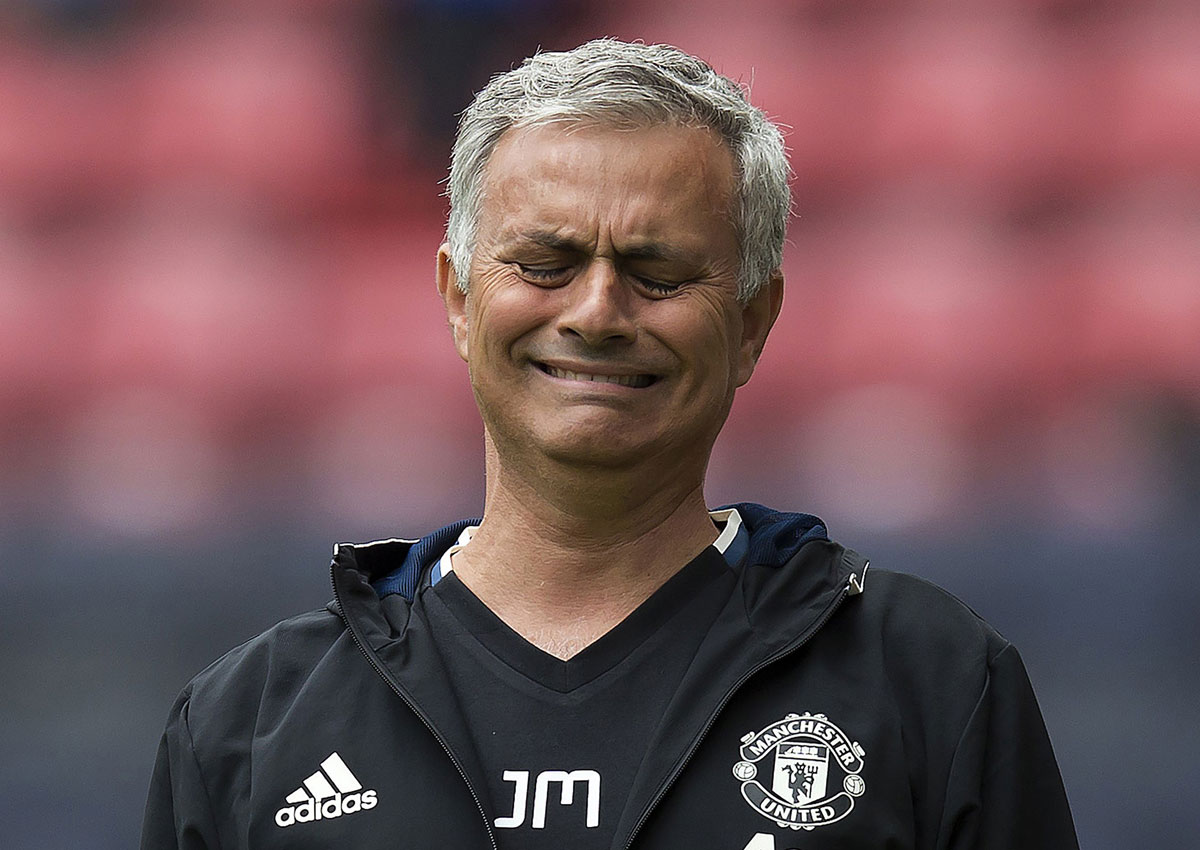
MANCHESTER, United Kingdom – Jose Mourinho insisted Manchester United had played their best football of the season and could have put seven goals past lowly Stoke City after their 1-1 draw on Sunday.

Substitute Anthony Martial’s first goal of the season was cancelled out eight minutes from time by Joe Allen following a rare error by David de Gea.

But Mourinho refused to be critical either of the goalkeeper or his forwards, who missed a host of chances.

“It’s simple – that was the best performance of the season” said Mourinho, whose side beat reigning champions Leicester 4-1 the previous weekend.

“Three or four-nil at half-time, six or seven-nil at the end of the game… but the result was 1-1.

“That’s football. That’s very undeserved but, I repeat, that was a much better performance than against Leicester.

“Against Leicester, the result made more than the performance,” the Portuguese manager added. “Today, it was the exact opposite.”

“That was our best performance by far. We had six, seven, eight great chances to win the game.” Zlatan Ibrahimovic and Paul Pogba, on at least two occasions, wasted glorious chances for United while Stoke goalkeeper Lee Grant, on loan from second-tier Derby County and making just his second Premier League appearance at the age of 33, was man of the match.

“In the first minute, their goalkeeper made an unbelievable save,” said Mourinho. “And he kept doing that until the end of the game.

“He started with an amazing save from Zlatan and ended with an amazing save from Zlatan.

“In between we had five, six, seven great chances and complete control of the game. But I never criticise my players for missing chances.” Mourinho said Grant fully merited his man of the match award – and also suggested that the goalposts deserved some recognition.

“The goalkeeper is the man of the match and deservedly. The post, too. We had some open chances where we could be better but I am never critical of my players,” Mourinho said.

“I can be critical of the quality of the performance, the naive mistakes sometimes but not in front of the goal.

“We should be not just with the three points but a fat result.” Stoke manager Mark Hughes praised back-up goalkeeper Grant, who joined the club on transfer deadline day on a six-month loan.

“He has done great for us, I’m really pleased for him,” said Hughes.

“I don’t think he has played here before. He has travelled with teams here but never actually started a game.

“But you know when you come to places like Old Trafford, everyone has to play well, not least your ‘keeper as well,” the former United striker added.

“They have to keep you in games and make match-defining saves and he made great saves. That is what he is there for. That is what he is paid to do.” Ander Herrera might have compounded United’s frustrations had referee Robert Madley handed him a straight red card, rather than a yellow, for a studs-up challenge on Allen early in the second half.

Referee-turned-pundit Howard Webb insisted the thigh-high challenge was a clear red card, and Hughes said Allen’s reaction may have prevented Herrera’s dismissal.

“Credit to Joe, he didn’t make a meal of it,” said Hughes.

“At the time, I thought it was mistimed to say the least. He was clearly hurt and down a while and maybe his reaction allowed the referee to just give a yellow.”

Image: 
Category: 
Publication Date: 
Monday, October 3, 2016 – 11:45
Send to mobile app: 
Source: 


Story Type: 
Others

Source link

Win or lose, it seems we'll be getting Nathan Hartono's iced Milo treat

0

SINGAPORE – In a show of support for Singapore’s very own Nathan Hartono, who will be competing in the final of reality TV singing competition Sing! China, Milo Singapore has said that Hartono doesn’t need to rent Milo vans to fulfil his promise to treat everybody to Milo peng if he wins.

In an interview with The Straits Times, Hartono promised: “If I win, I will rent a fleet of Milo vans and treat everybody to Milo peng (iced Milo).”

After the interview was published on Saturday, Milo Singapore shared the article on Facebook and expressed its support for Hartono by telling him: “Nathan, win or lose, MILO will support you all the way! No need to rent, also can. Just tell us where, we bring the van.”

So it looks like we’re definitely getting our Milo peng.

The only question remaining, then, is where will this van be?

Milo has asked Singaporeans for suggestions on the location, and plenty of Singaporeans have responded. The winning suggestion seems to be one that we can’t argue with – “North, South, East, West and Central!!!”

Milo vans are a treasured childhood memory of many in Singapore. The vans are often rented by schools to supply iced Milo at sporting events, and for many, a main reason to be at those events back in the days.

Hartono and five other singers will be competing at the Beijing National Stadium on Friday (Oct 7).

sinsh@sph.com.sg

Image: 
Category: 
Publication Date: 
Monday, October 3, 2016 – 11:50
Keywords: 
Send to mobile app: 
Source: 


Rotator Image: 
Story Type: 
Rewritten Story

Source link

Fight Preview: Aung La N Sang vs Michal Pasternak at ONE: STATE OF WARRIORS

0

ONE Championship lead commentator and Fox Sports Presenter Steve Dawson gives his take on this middleweight matchup that could have huge implication for the ONE Middleweight World Championship.

Few sights in MMA can draw parallels with the reception Aung La N Sang receives when he returns from the place he calls home in the USA to his native Myanmar. Perhaps only Brandon Vera in the Philippines is comparable.

In a country where lethwei dominates combat sport, mixed martial arts provides an international bridge for its fighters. Fans are eager to see their countrymen compete with the world’s best fighters, but as lethwei has few international peers, MMA provides the best platform for international pride among the Myanmar people.

Aung La N Sang (18-9) certainly provided that in March when he made his Myanmar debut, beating Mohamed Ali by guillotine choke midway through the first round. That was his second ONE fight; the first was also over early via TKO by punches after just 67 seconds.

The big test came against Aleksei Butorin in Hefei, China. An arm triangle choke did the business there in the second round, which was impressive given Butorin’s undefeated 10-0 record at the time.

His opponent, Michel Pasternak had his last outing during a shot at the ONE Light Heavyweight World Title, where he came unstuck in the second round against Brazil’s Roger Gracie. The BJJ world champion always looked a little bigger as well as a little better, and the smart money was therefore on Pasternak coming down to middleweight for his immediate ONE future.

That Gracie chocked the Polish fighter into oblivion underlined the new champion’s successful transition from BJJ to MMA, and Pasternak would do well not to take it to heart.

However, meeting Aung La N Sang in the middleweight division where the Myanmar fighter is comfortable and in his own backyard of Yangon, is another in-your-face matchup that severely threatens another blemish on Pasternak’s proud 11-1 record.

The home fighter uses his weight tremendously well, leaning on opponents, punching in a downward arc, and presenting a wide base on the ground. He has a 100 per cent finishing record from his 18 wins which is simply remarkable.

Aung La N Sang is as valuable to ONE championship in Yangon as Vera is in Manila, and Ann Osman has been in Kuala Lumpur. But ONE is no slave to the box office. These fighters are matched with the best fighters available, and Pasternak represents a fearsome proposition.

With home support perhaps providing a winning edge, this one could be a gruelling battle. If it goes all the way, it’s worth noting that the Myanmar hero has been the distance three times, but never won. Pasternak, on the other hand, has seen five of his 11 wins go to the judges’ scorcards.

Steve Dawson is ONE Championship’s lead commentator, a Fox Sports presenter and an author of sporting biographies. He can be found on Twitter & Instagram as @Gulasahi and on Facebook as Steve Dawson.


Image: 
Fight Preview: Aung La N Sang vs Michal Pasternak at ONE: STATE OF WARRIORS
Category: 
Publication Date: 
Monday, October 3, 2016 – 11:50
Send to mobile app: 
Source: 


Story Type: 
Others

Source link