25.3 C
Singapore, SG
Wednesday, September 23, 2026
Home Blog Page 2701

How will India spend its $14 billion tax windfall?

0

India’s state coffers are $10 billion (S$14 billion) richer thanks to the unexpected success of a government-led income declaration scheme. But among the many areas in need of urgent investment, from farmers’ welfare to job creation schemes, Prime Minister Narendra Modi faces a difficult decision on how to spend the cash.

From June to September, Modi’s administration sent about 700,000 notices to suspected tax dodgers, persuading them to reveal undeclared income and assets, referred to as black money, and pay a penalty. In return, the tax evaders would not be prosecuted, the government promised.

Finance Minister Arun Jaitley announced on Saturday that the programme had so far resulted in 64,275 declarations worth a provisional $9.8 billion, well above the government’s internal goal of $7.5 billion, Reuters reported. The final figure could be even higher, Jaitely said.

The heavyweight Asian economy has long struggled to collect tax revenues from its 1.2 billion strong population, for many reasons.

For one, many Indians are employed in the country’s informal economy that typically pays in cash. Moreover, deeply rooted issues of excessive bureaucracy, inefficiency and corruption make it difficult for the government to collect what it’s owed. As a result, just 1 per cent of the population paid taxes during the 2012-2013 fiscal year, according to the latest government data released in May; 28.7 million people filed returns that year, but of these, 16.2 million did not pay tax, the report revealed.

Modi pledged to crack down on the billions lost in black money during his 2014 election campaign and so far, he appears to be delivering. His administration unveiled new rules this year that made it compulsory to declare a unique taxpayer number when purchasing goods over $2,980.

Jaitley announced that the newly-acquired funds would be allocated to social security purposes, local media reported. But current geopolitical tensions in Kashmir could prompt higher defence spending, Citi economists said in a Monday note.

“Part of the additional inflow from the Income Declaration Scheme may support higher defence spending in fiscal year 2018,” Citi said.

India and Pakistan have been at loggerheads over the disputed territory for decades, but the conflict escalated on September 18 when Indian soldiers were killed in an attack in the Indian-administered town of Uri. New Delhi has blamed Pakistan, which denied the charges. In response, India launched “surgical strikes” inside Pakistan-controlled Kashmir. Both sides exchanged gunfire over the border at the weekend and at least one person was killed when six militants attacked an Indian army camp on Sunday.

Citi referred to historical evidence as justification, pointing to one of the many wars New Delhi and Islamabad fought over Kashmir.

“After the Kargil conflict in 1999, defence spending rose 18 per cent on-year in fiscal year 2000 to 16 per cent of total expenditure, or 2.3 per cent of gross domestic product,” the note said.

US-India Business Council (USIBC) President Mukesh Aghi echoed those sentiments, in comments to The Hindu newspaper on Monday. Aghi said he expected spending on defence and security to “go up dramatically” due to the ongoing crisis in Kashmir.

But for some, the current geopolitical situation-however concerning-does not necessarily warrant an increase in military expenditure.

India’s decisions to increase its naval capacity or buy weapons were typically aimed at catching up with China’s military modernization, not battling Pakistan, noted Abhijnan Rej, fellow at New Delhi-based think-tank Observer Research Foundation.

“The decision to upgrade the defence sector is typically based on long-term integrated perspective planning, not just one single event,” he said. “If the government can maintain a strong revenue base for some time to come, then it’s possible we will gradually see an increase in military spending.”

India was the world’s fourth largest defence spender this year, according to IHS.

The bulk of economists believe the black money windfall should be allocated to social programs instead.

“It would certainly boost market confidence if the government were to target these funds towards spending that increases the economy’s productivity and long-term growth potential,” Eswar Prasad, senior professor at Cornell University and senior fellow at the Brookings Institution, told CNBC on Monday.

“Productivity-enhancing expenditures, such as on infrastructure or education, would not only direct boost growth but also have a positive effect on investor and consumer confidence,” he continued.

Economists have long warned New Delhi to upgrade the nation’s rickety roads, trains and ports, as well as health, education and other social programs that would benefit citizens, 12.4 per cent of which lived below the poverty line in 2011-12, according to the latest World Bank data.

Image: 
Category: 
Publication Date: 
Tuesday, October 4, 2016 – 10:28
Keywords: 
Send to mobile app: 
Source: 


Story Type: 
Others

Source link

Insta-gratification: Cafes seek success in a Snap

0

With the rise in the number of “hipster” cafes in Singapore, is it more important to be a “food Instagrammer’s paradise”? Channel NewsAsia speaks to industry players and customers to find out.

Source link

UK's Red Arrows aerobatic team to thrill Singapore again on Oct 13

0

SINGAPORE – The Red Arrows are set to dazzle Singapore crowds again after last thrilling fans more than a decade ago.

The aerobatic team of the Britain’s Royal Air Force will soar high into the Singapore sky at noon on Oct 13 in a 30-minute fly-past around the Marina Bay area.

The performance involves 10 planes and is free of charge.

The Red Arrows were first here in 1986, then 1996 and most recently in October 2003.

Red Arrows pilots fly the BAe Systems Hawk T. Mark 1, which is being used by the RAF as an advanced fast jet trainer. Each Hawk carries a bullet-shaped pod under its belly that enables the aircraft to emit red, white or blue smoke plumes during its aerobatics routine.

One of the world’s premier aerobatic display teams, they are known for their Diamond 9 Formation.

The visit to Singapore is part of the team’s visit to the Middle East and Asia, including countries like China, India and Malaysia to contribute to a campaign to showcase the best of what Britain has to offer.

During the visit the Red Arrows will take part in programmes that will promote Britain’s long standing relations in Singapore aimed at increasing trade and investment. They will also be part of Rolls-Royce’s STEM (Science, Technology, Engineering and Mathematics) Event at the company’s Seletar Campus on Oct 13.

British High Commissioner to Singapore Scott Wightman said: “We are excited by the visit of the Red Arrows and their participation in a number of activities in Singapore that will deepen the strong ties between Singapore and the UK.”

Fans of the Red Arrows can use the hashtag #RedArrowsinSG across all social media platforms to get up to date information on the team’s movement.


This article was first published on October 04, 2016.
Get a copy of The Straits Times or go to straitstimes.com for more stories.

Image: 
Category: 
Publication Date: 
Tuesday, October 4, 2016 – 09:38
Send to mobile app: 
Source: 


Story Type: 
Others

Source link

Silkair: All-in Return Fares fr $159 to over 40 Destinations from 3 – 17 Oct 2016

0

SILKAIR: Exclusive Mastercard all-in return fares fr $159 to over 40 destinations via Silkair app

Silkair: All-in Return Fares fr $159 to over 40 Destinations from 3 – 17 Oct 2016

Tap your way to great getaways with the new SilkAir app. Download it now for exclusive deals and more. Exclusive Mastercard all-in return fares from $159 to Kuala Lumpur, Langkawi, Medan. Palembang and many more

Source

Dislodged platform door causes disruption on Downtown Line

0

Train service on the Downtown Line was disrupted during the morning rush hour on Tuesday, after a platform door at Sixth Avenue station was damaged.

Source link

More trained in CPR here, ahead of anti-terror drive

0

More people are arming themselves with life-saving skills, even before the launch of a national drive to prepare the public to deal with terrorist threats and emergencies.

About 84,000 people were trained in cardiopulmonary resuscitation (CPR) last year, nearly thrice as many as the 32,000 in 2008, according to the National Resuscitation Council Singapore.

The jump in numbers follows a greater awareness of the benefits of being trained in CPR, said Professor Venkataraman Anantharaman, chairman of the council.

This is also partly the result of more schools, community centres and companies teaching CPR, as well as the Singapore Armed Forces teaching its recruits such skills, he added.

The greater availability of accredited training centres – from 28 in 2008 to 93 last year – has also helped.

“The more people who learn CPR, the more likely it is they will intervene when someone collapses,” said Prof Anantharaman.

“The bystander has the greatest chance of saving the (victim’s) life – for every minute of not performing CPR, the chances of survival are reduced by 7 to 10 per cent.”

The growth in people trained in CPR comes on the back of the SGSecure drive launched last month to prepare the public against terrorist threats.

Across the island, the People’s Association has also introduced CPR and automated external defibrillator (AED) training to residents as well as members of Community Emergency Response Teams.

AEDs are devices used to restart a heart that has stopped beating.

One initiative that has encouraged more people to sign up for CPR courses is the Dispatcher-Assisted first Responder programme piloted in 2014.

The one-hour scheme teaches a simplified form of CPR not involving mouth-to-mouth resuscitation.

Instead, participants are taught to check if the victim is responsive, call 995 and stay on the line with the medical dispatcher to perform CPR as directed, and use an AED until the ambulance arrives or the victim is revived.

Nearly 36,000 students and teachers from more than 70 schools have taken part in the programme by the Unit for Pre-hospital Emergency Care at the Ministry of Health.

“The programme is targeted at non-medical professionals because it’s easier and responders can work with dispatchers to render assistance, rather than performing CPR alone,” said Associate Professor Marcus Ong, the unit’s medical director.

Participants are also encouraged to sign up for CPR certification afterwards, he added.

feliciac@sph.com.sg


Get MyPaper for more stories.

Image: 
Category: 
Publication Date: 
Tuesday, October 4, 2016 – 08:55
Keywords: 
Send to mobile app: 
Source: 


Story Type: 
Others

Source link

Strong case for UniSIM graduates opting for family and criminal law

0

Family and criminal lawyers – a sector of Singapore’s law scene that has been plagued by falling numbers – may soon get some much-needed help.

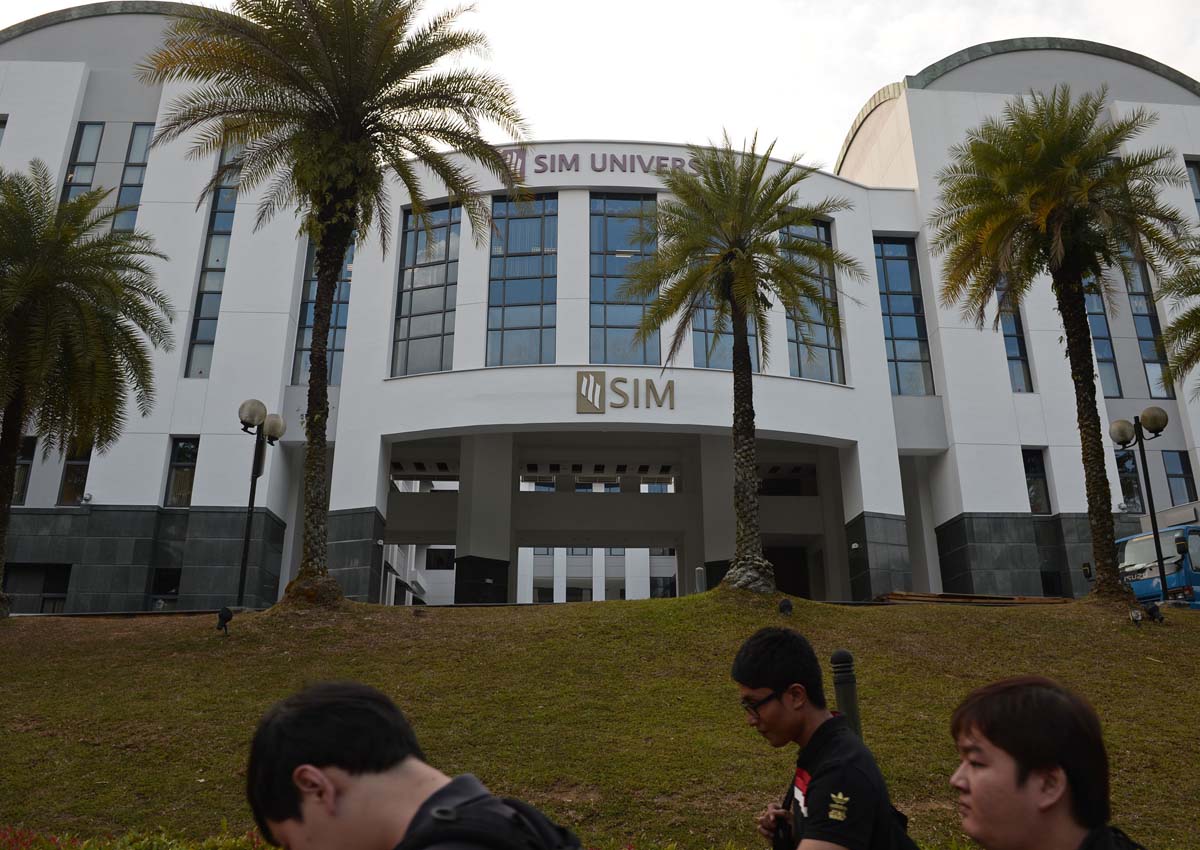
With a curriculum tilted towards community law, a focus on practical training and a rigorous selection process – Singapore’s third law school is quietly confident that its 60 students will take up family and criminal law once they graduate from 2020.

Young graduates have traditionally shunned family and criminal law, perceiving them to be harder work and less lucrative than other areas such as arbitration.

But even though graduates of SIM University’s (UniSIM) Bachelor of Laws and Juris Doctor programme – which start in January – will be able to go into any field of practice, the school is confident its students will stay the course.

SIM University (UniSIM) law school dean Leslie Chew told The Straits Times: “We cannot guarantee that they will go into family and criminal law but I’m confident that the way we select and train them will push them in that direction.”

While they will study core subjects such as contract and torts, students will spend the entire second year on criminal and family law modules.

They will also take two non-law modules in forensic science and social services.

At National University of Singapore and Singapore Management University, criminal law is compulsory but family law is optional.

UniSIM will also emphasise practical training with six months set aside for a work stint, said Prof Chew.

“You’re not sitting there to write the best essays – someone is sitting in front of you asking for real-life advice.”

These are all backed by a selection process that puts aspiration and background ahead of paper grades.

Nearly all the 388 applicants were each interviewed by a panel of four: an academic from the law school, a criminal lawyer, a family lawyer and a community representative.

There were 62 panellists, including Speaker of Parliament Halimah Yacob and former Chief Judge of the State Courts Richard Magnus.

P.E. Ashokan, partner in litigation and dispute resolution at Withers KhattarWong, one of the interviewers, gave his vote to “candidates with real life experiences, like going through a divorce, or having closely witnessed friends and family going through it or having brushes with criminal law”.

Lawyers in these fields hope the students eschew the glam and higher pay of corporate law to fill an important need.

Charlotte Lee, 42, who found pro-bono legal help during a divorce, hopes to “pay it forward” by being a family lawyer. She now trains volunteers and will start the JD law course next year.

About 80 per cent of UniSIM’s first law cohort have worked on average for 11 years. Only a fifth are fresh school-leavers.

ateng@sph.com.sg


Get MyPaper for more stories.

Image: 
Publication Date: 
Tuesday, October 4, 2016 – 08:48
Send to mobile app: 
Source: 


Story Type: 
Others

Source link

Appeal over Yang Yin's 'inadequate' jail term

0

THE prosecution is appealing against what it called the “manifestly inadequate” six-year jail term for a former tour guide from China, Yang Yin, who misappropriated $1.1 million from an elderly Singaporean widow.

Last Friday, Principal District Judge Bala Reddy had sentenced Yang, 42, to six years’ imprisonment for committing two criminal breach of trust offences. The Chinese national had misappropriated $500,000 and $600,000 from the elderly widow, Chung Khin Chun, in 2010 and 2012.

Elaborating on the decision to file a notice of appeal yesterday, the AGC said the court had not given adequate consideration to two features of the case.

Firstly, Yang was a foreigner who had come to Singapore with the aim of committing criminal acts.

“Secondly, not only did he take advantage of a vulnerable elderly person, he has also failed to disclose the full extent of his criminality, return any portion of the misappropriated monies and he has not shown any remorse,” added the AGC.

The prosecution had originally asked for a deterrent sentence of 10 years to 12 years.

Judge Reddy, however, said in his grounds of decision last week that a deterrent sentence need not be “crushing”, adding 10 years’ to 2 years’ imprisonment would be “manifestly excessive”.

Apart from the criminal breach of trust, Yang was also jailed two years and two months for a slew of crimes regarding his immigration status, including falsifying receipts for a sham company in order to stay in Singapore.

Though the former tour guide faces a total of eight years and two months in jail, his 26-month sentence was backdated to Oct 31, 2014, when he was taken into remand.

Together with a possible one-third remission of the sentence for good behaviour, it could mean a much shorter jail term for Yang in the end.

Yesterday, Madam Chung’s niece, Hedy Mok, told The Straits Times she was glad to hear the prosecution had filed a notice of appeal.

“What he (Yang) got was incredibly lenient,” said the 62-year-old tour agency owner.

kcarolyn@sph.com.sg

Read also: Yang Yin saga: A recap of the case


Get MyPaper for more stories.

Image: 
Category: 
Publication Date: 
Tuesday, October 4, 2016 – 08:25
Send to mobile app: 
Source: 


Story Type: 
Others

Source link

Downtown Line disrupted after platform door damaged

0

The disruption was caused by a platform screen door fault at Sixth Avenue station, says operator SBS Transit.

Source link

One of 2 Singapore-born manatees resettled in the Caribbean dies

0

One of two manatees released into the Caribbean in August under a pioneering repopulation scheme has died of a suspected kidney infection.

Source link