#TuesdayTheatre Embark on a journey with Disgraced, a Pulitzer Prize-winning play by Ayad Akhtar, as it explores the clash between modernity and faith. The thought-provoking play tells the story of a successful Pakistani-American lawyer who has distanced himself from his cultural roots as he moves up the corporate ladder.
Amir has worked hard to achieve the American Dream. He’s come a long way from his South Asian roots and has a successful career in law, a beautiful American wife and even a wardrobe of $600 custom-tailored shirts. His life however, begins to unravel when a celebratory dinner with friends leads to a…
They received the accolades at the Energy Efficiency National Partnership Awards 2016 ceremony from Minister of Environment and Water Resources Masagos Zulkifli.
Family and criminal lawyers – a sector of Singapore’s law scene that has been plagued by falling numbers – may soon get some much-needed help.
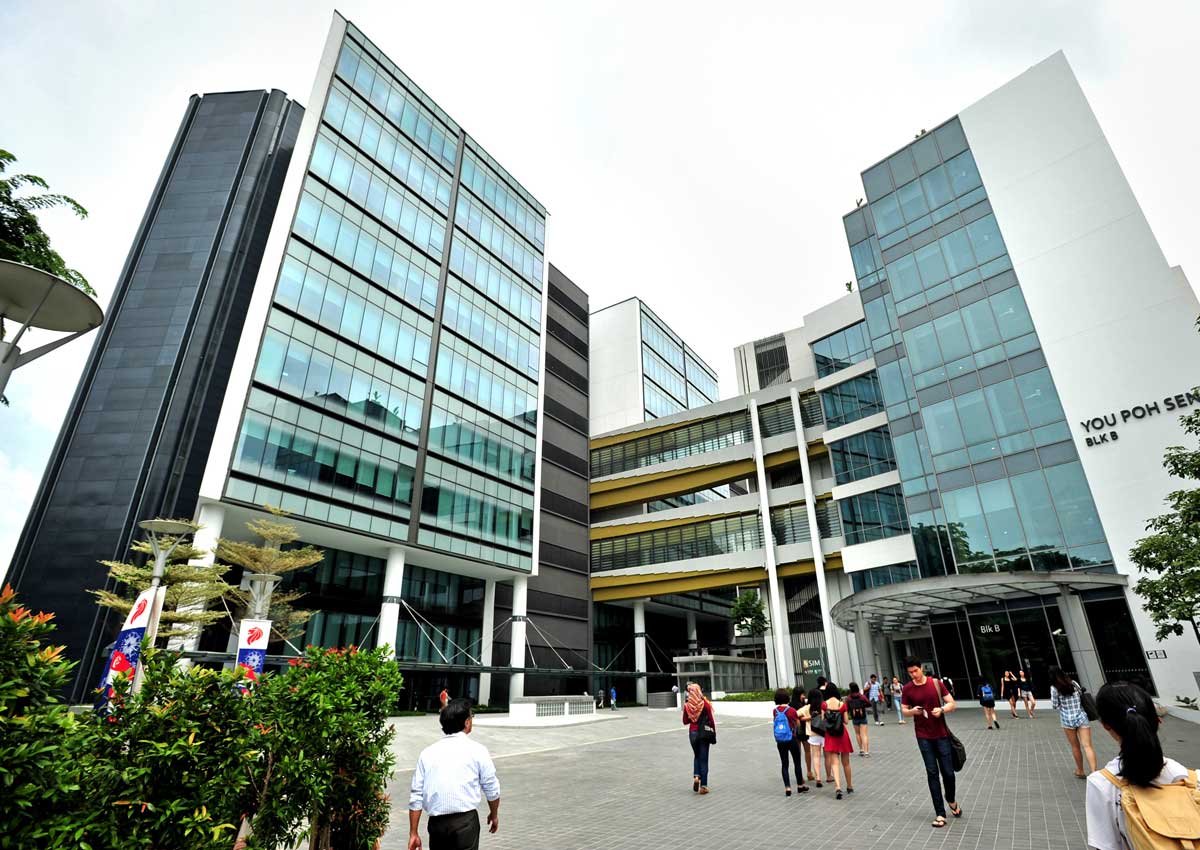
With a curriculum tilted towards community law, a focus on practical training and a rigorous selection process, Singapore’s third law school is quietly confident that its 60 students will take up family and criminal law once they graduate from 2020.
Young graduates have traditionally shunned family and criminal law, perceiving them to be harder work and less lucrative than other areas such as arbitration.
But even though graduates of SIM University’s (UniSIM’s) Bachelor of Laws and Juris Doctor programmes – which start in January – will be able to go into any field of practice, the school is confident its students will stay the course.
UniSIM law school dean Leslie Chew told The Straits Times: “We cannot guarantee that they will go into family and criminal law, but I’m confident that the way we select and train them will push them in that direction.”
While they will study core subjects such as contract and torts, students will spend the entire second year on criminal and family law modules. They will also take two non-law modules in forensic science and social services.
At the National University of Singapore and Singapore Management University, criminal law is compulsory but family law is optional.
UniSIM will also emphasise practical training with six months set aside for a work stint, said Professor Chew. “You’re not sitting there to write the best essays. Someone is sitting in front of you asking for real-life advice.”
These are all backed by a selection process that puts aspiration and background ahead of paper grades. Nearly all the 388 applicants were interviewed by a panel of four: an academic from the law school, a criminal lawyer, a family lawyer and a community representative.
There were 62 panellists, including Speaker of Parliament Halimah Yacob.
Mr P.E. Ashokan, partner in litigation and dispute resolution at Withers KhattarWong, one of the interviewers, gave his vote to “candidates with real-life experiences, like going through a divorce, or having closely witnessed friends and family going through it or having brushes with criminal law”.
Lawyers in these fields are also hoping that students eschew the glamour and typically higher pay of corporate law to fill a vital need.
Ms Charlotte Lee, 42, who found pro-bono legal help during a divorce, hopes to “pay it forward” by becoming a family lawyer. She now trains volunteers and will start the Juris Doctor law course next year.
Family and matrimonial lawyer Helen Chia said she looked for “genuine people who wore their hearts on their sleeves” and could relate to others. About 80 per cent of UniSIM’s first law cohort have worked on average for 11 years.
Prof Chew added: “Some did volunteer or counselling work, worked with families and juveniles, or are police officers who are familiar with the court system.”
This has led to increased hope that the country’s newest law school will fulfil its key aim of supplying much-needed community lawyers.
According to the Ministry of Law (MinLaw), there were about 1,600 criminal and family lawyers here as of 2014, about a quarter of whom were in their 20s and 30s. In comparison, about 45 per cent of the 3,600 corporate and commercial lawyers are in their 20s and 30s.
UniSIM aims to increase its law intake to about 75 in 2020. Some are hopeful that its law graduates, with the advantage of experience, will be able to change the game.
Said Mr Ashokan: “With their networks and contacts, they could command better pay or employment terms.”
A MinLaw spokesman said it will “work with UniSIM to monitor the practice areas their graduates enter after graduation”.
This article was first published on Oct 04, 2016. Get a copy of The Straits Times or go to straitstimes.com for more stories.
The safety of private-hire car services has been thrown into the spotlight, in the wake of a fatal accident last Sunday involving an Uber vehicle.
The death of student Goh Pei Ling, 18, a passenger, has raised concerns about private drivers – they do not possess vocational licences or go through training – who ferry customers for fares.
Another question is whether private-hire cars are adequately insured to compensate passengers, or drivers, for injuries.
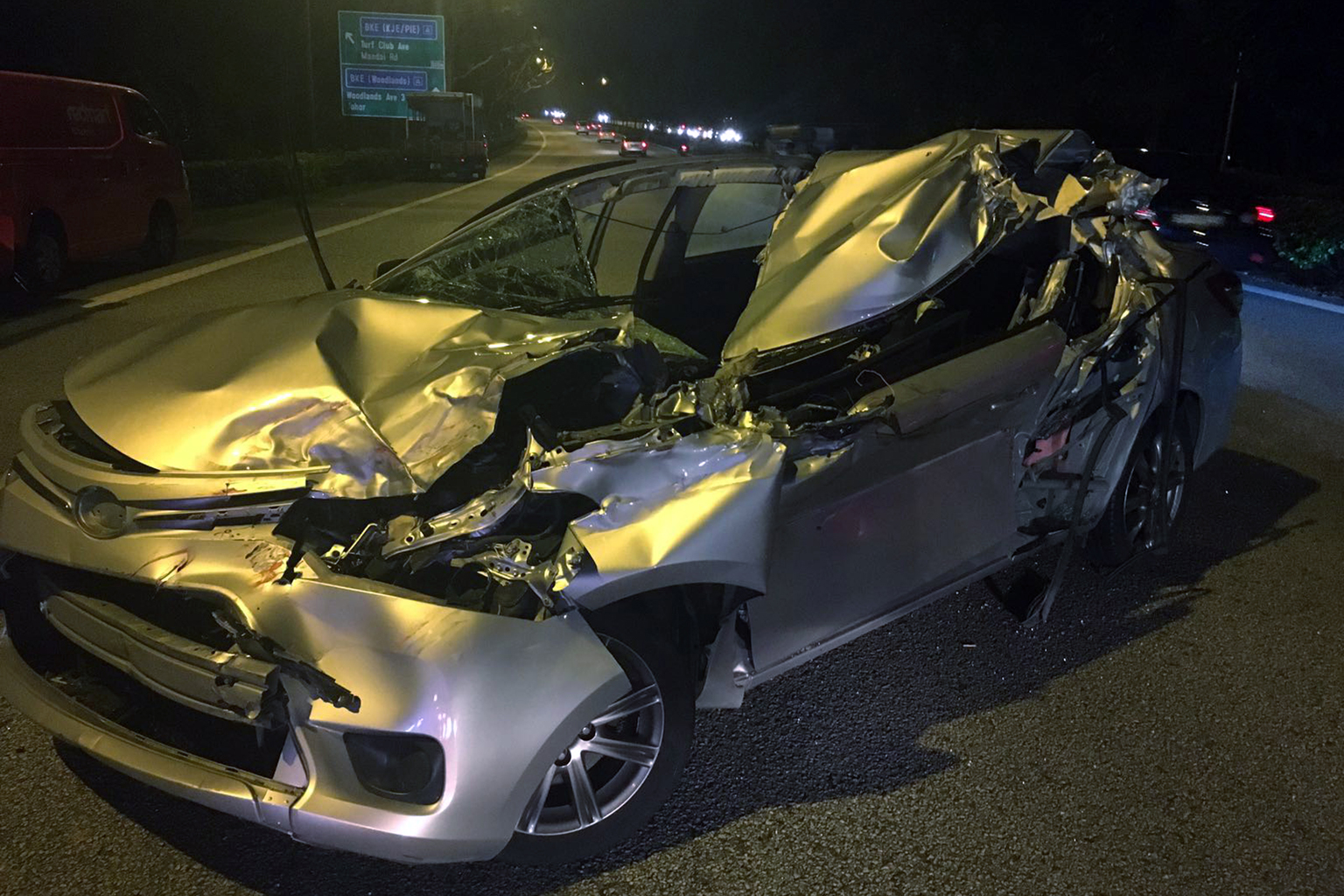
The Sept 25 accident took place along the Seletar Expressway when the Uber car that Miss Goh was travelling in crashed into a stationary lorry. A van was also involved. It is believed to be the first fatal accident involving a ride-hailing service here.
Last month, Uber suspended two of its drivers – one for allegedly driving drunk and harassing a female passenger, and the other for allowing another person to use his driver account to pick up customers.
Student Goh Pei Ling died when the Uber car (above) she was in crashed into a lorry. Photo: The Straits Times Reader
Since Uber launched here in 2013, followed by rival GrabCar a year later, private-hire car services have been touted as the solution to commuters’ woes during peak hours, when taxis can be hard to find.
But do recent events suggest that the convenience comes at a price?
One key issue is the driver. Private-hire drivers currently do not receive any formal training, unlike cabbies who go through a 25-hour classroom and self-study programme run by the taxi academy.
But this is set to change. By the first-half of next year, they will have to attend a 10-hour course when licensing of Uber and GrabCar drivers becomes mandatory. They will also undergo medical checks and background screenings and be subject to a demerit point system.
This should go some way to improvesafety in the industry, where drivers can be as young as 21. In comparison, taxi drivers have to be at least 30 years old.
But as with the training for taxi drivers, it is unlikely that private-hire drivers will be put through any on-road assessment of their driving abilities.
The training for cabbies covers topics such as customer service, route knowledge, and rules and regulations.
A second issue is insurance and whether both drivers and passengers are covered.
Both Uber and GrabCar have said that they only allow cars which are commercially insured and registered to a company to be used, as required by the Land Transport Authority (LTA).
But assuming the checks are in place, there is still the worry that insurers could repudiate a victim’s claims. What if, for example, the Uber or GrabCar driver did not pay his insurance premiums?
RHTLaw Taylor Wessing’s insurance litigation partner, Mr Anthony Chey, said that the Motor Vehicles (Third-Party Risks and Compensation) Act is an “overriding law” that protects all injured victims.
When an insurer has repudiated liability due to breach of policy conditions, the insurer is still obliged to handle the victim’s claim, he said.
“In a case where there is no valid insurance, the Motor Insurers’ Bureau – an independent body funded by all motor insurers in Singapore – will compensate the victim,” he said.
However, Mr Chey said that in any claims process – assuming the private-hire car driver is at fault – his or her identity has to be first established by the victims.
This may take time for Uber and Grab drivers, considering that private-hire drivers are known to their passengers only by the user names in the apps, he said.
However, when the licensing kicks in, these drivers will have to display their identification prominently in the car.
Still, it is difficult to ascertain factually whether private-hire car services are more or less safe than the taxi incumbents. Both Uber and GrabCar have been tight-lipped about accident rates. While taxi operators do not make public their accident numbers, they are accountable to LTA.
The authority sets a standard that there should be no more than 0.02 accident per 100,000km clocked each month, and the performance of each cab firm – in terms of a pass or fail grade – is put up on the LTA’s website.
Anecdotally however, Uber drivers claim they are safer than cabbies because they do not have to fulfil LTA regulations like clocking a daily minimum mileage of 250km. When they are fatigued, they stop, they say.
But some users have countered that part-time Uber drivers hit the roads at night, after a long day at their day jobs and may not have their full concentration to bear at the wheel.
Last month, Traffic Police (TP) commander Sam Tee said that it sees taxi drivers as a “vulnerable group”, because they spend many hours on the road.
TP has partnered with ComfortDelGro and SMRT to incorporate alerts into the data terminals of their taxis, to remind cabbies when they are approaching a red-light or speed camera.
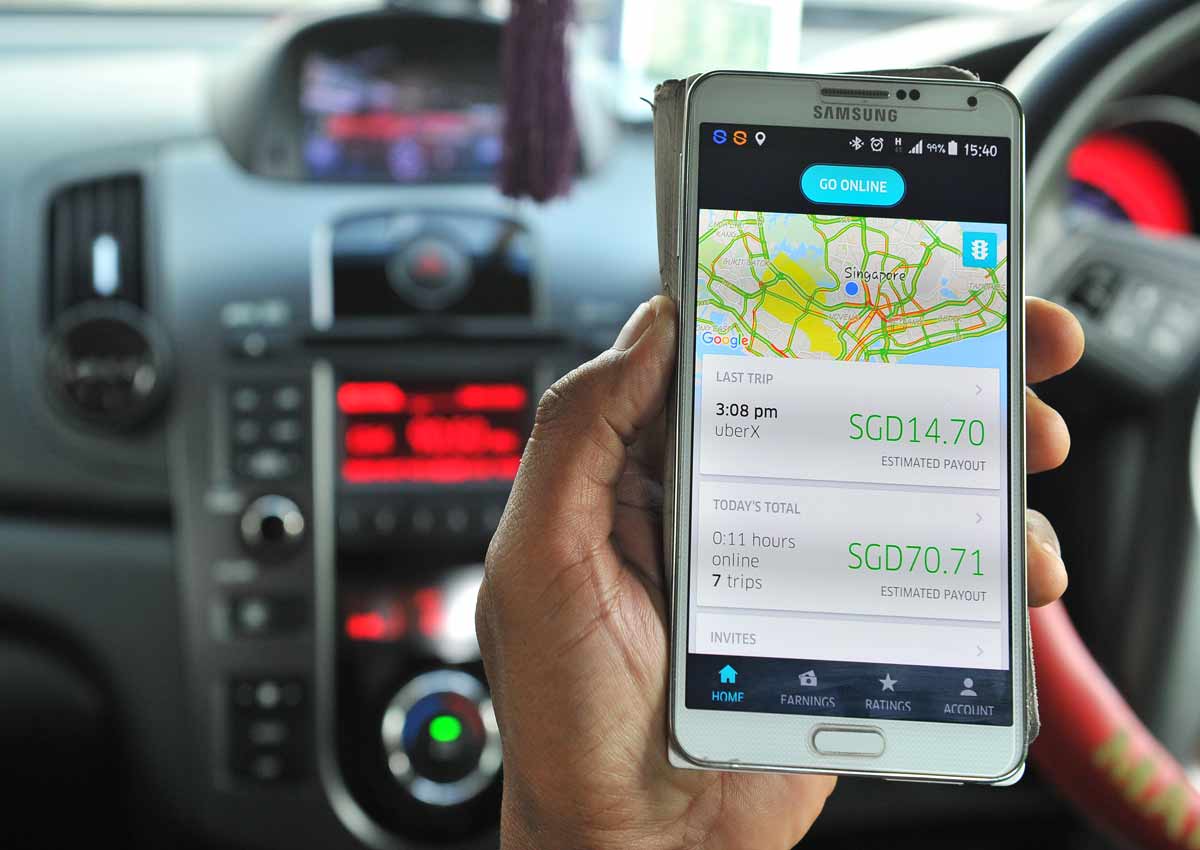
Incidentally, Uber launched a tracking function in its app last month. Tapping the Global Positioning System capabilities of drivers’ mobile devices, Uber will measure how hard they brake and how rapidly they accelerate, and submit daily reports to drivers on how to improve.
But this is not enough.
As the popularity of private-hire car services grows and they become a major part of the transportation landscape, it is vital for Uber and GrabCar to start opening up their accident records – if not to the public, then to the Government.
It’s not about naming and shaming.
Instead, it will make for a frank assessment of whether safety is an issue in a new and lightly-regulated industry. Are Uber and GrabCar drivers “vulnerable” like cabbies, too?
Having the convenience of tapping an app to get a ride has radically changed the way we commute but it should not be at the price of safety and lives.
This article was first published on Oct 04, 2016. Get a copy of The Straits Times or go to straitstimes.com for more stories.
<p>The safety of private-hire car services has been thrown into the spotlight, in the wake of a fatal accident last Sunday involving an Uber vehicle.</p>
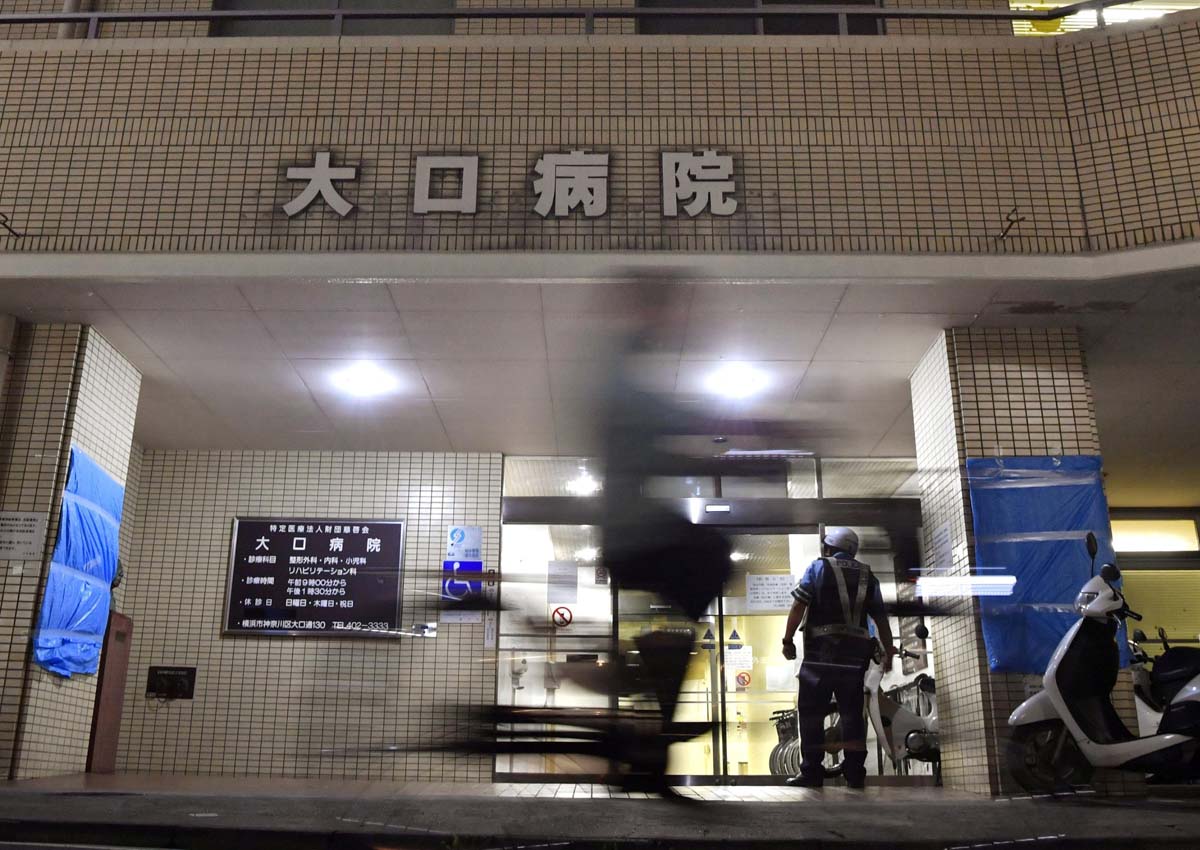
Nearly 50 people died in a Yokohama hospital for the elderly between July and last month, in what Japanese police increasingly suspect to be a series of mercy killings.
The perpetrator behind the deaths at the 85-bed Oguchi Hospital in Japan’s second-largest city is likely to be an insider with medical knowledge and who has connections with the facility, police said.
No arrests have yet been made in the probe, which was launched last month after two patients, both aged 88, were poisoned to death within days of each other.
The modus operandi of the culprit, who has been dubbed the “angel of death”, has been to inject a chemical used in disinfectants into the patients’ intravenous drips.
The police are trying to determine the cause of death of 46 patients who had died earlier, but they admit this may be difficult as many of the bodies have been cremated.
“We see many people die as we take in elderly patients, but we had the impression that the number of those dying was increasing a bit,” a hospital official was reported as saying.
Another official added that the hospital initially thought the spike in deaths was because there were more seriously ill patients.
Five patients died on a single day in late August and another four on a single day early last month.
But hospital officials did not suspect anything amiss until Mr Nobuo Yamaki died on Sept 20 and a nurse noticed the abnormal presence of small bubbles in the IV drip bag he was using. He died two days after Mr Sozo Nishikawa, who was found to have been poisoned.
The two deaths occurred around the time of a three-day long weekend last month to mark the Respect For The Aged public holiday, with the hospital thinly staffed.
Police suspect the killer might have targeted the victims indiscriminately. Ten of the 50 unused drip bags stored behind the nurses’ desk on the fourth floor of the hospital were found to have puncture marks.
Many of those warded at Oguchi Hospital, which is not taking in any new patients while the probe is ongoing, are bedridden and have trouble eating on their own.
This is not the first incident to mar the hospital in recent months. In April, a nurse’s apron was found slashed, while in August, an employee suffered blistered lips after drinking a beverage purportedly laced with bleach.
The latest case, if proven to be a mercy killing, would be similar to that of Danish nurse Christina Hansen, who was given a life sentence in June for murdering three elderly patients and trying to kill a fourth via drug overdoses.
In 2006, German male nurse Stephan Letter was convicted of administering lethal injections to 28 mostly elderly patients.
An editorial in the English- language Japan Times last Friday called for security at care facilities to be beefed up.
“Security systems in hospitals and care facilities are often said to be based on a positive view of human nature,” it said.
“But, in reality, many incidents have taken place where vulnerable patients have been exposed to harm – and, in some cases, lost their lives – in these supposedly safe places.”
In 2014, a former care worker at a nursing home in Kawasaki was said to have killed three elderly residents by pushing them off a balcony.
In July this year, 19 inmates at a home for the disabled in Sagamihara were slashed to death by a former employee.
This article was first published on Oct 04, 2016. Get a copy of The Straits Times or go to straitstimes.com for more stories.
<p>Nearly 50 people died in a Yokohama hospital for the elderly between July and last month, in what Japanese police increasingly suspect to be a series of mercy killings.</p>
He was unhappy that he couldn’t get a day off to celebrate his son’s first birthday.
So Verner Low Jun Han confronted his boss – who is also his aunt – and the argument ended with his aunt telling him that he could quit if he wished to.
His aunt also said he could move out of the home they shared with other family members.
She repeated those words when they were home – a semi-detached house on Saint Patrick’s Road off Telok Kurau – and Low punched her face, leaving her with a bleeding and fractured nose.
Yesterday, Low, 26, was jailed 20 weeks for voluntarily causing grievous hurt to Ms Susie Oh Yen Peng, 42.
The court heard that Low was working as a delivery driver at Ms Oh’s cafe at East Coast Road.
The house they were sharing is co-owned by Ms Oh and is a few minutes’ walk from the cafe.
On July 10 last year, Low had wanted to take the day off to celebrate his son’s birthday. He applied for it the day before, but it was rejected.
At about 8.40am, Low reported for work but got into an argument with another employee.
Low had insisted on leaving with some delivery items even though they were not ready.
Ms Oh told Low to better manage his work attitude.
Shortly after, he again requested for the day off but she refused, citing staff shortage.
Upset, Low said he wished to resign. Ms Oh said he could and also suggested that he move out of their house if he wanted to be fully independent.
Low then left the cafe and headed home.
Ms Oh also went home a few minutes later and saw Low there.
She again told him that he could move out. Low repeatedly punched the left side of her face.
Ms Oh fell to the ground, bleeding from her nose, and Low was stopped by another family member who had rushed out.
Ms Oh was taken to Mount Elizabeth Hospital and discharged four days later. A medical report said she suffered fractures to her nose and face.
The court heard that her medical expenses came to $9,245 and that Low did not make any compensation.
REMORSEFUL
Yesterday, Low’s lawyer said in mitigation that his client was remorseful and regretful.
He said Low had turned up for work that day even though he wanted to celebrate his son’s birthday, only for Ms Oh to scold him.
But Deputy Public Prosecutor Lester Ho said that was no excuse to punch his aunt and injure her.
District Judge Terence Tay agreed with the prosecution.
The judge said there may have been some provocation, but Low should not have taken the law into his own hands.
For voluntarily causing grievous hurt, he could have been jailed up to 10 years, with fine or caning.
This article was first published on October 04, 2016. Get The New Paper for more stories.
NEW YORK – Rap superstar Kanye West late Monday rescheduled two tour dates after his wife, reality television celebrity Kim Kardashian, was robbed at gunpoint in Paris.
West will no longer perform Tuesday in Philadelphia or Thursday in suburban Detroit “due to family concerns,” promoter Live Nation said in a statement.
The rapper, one of the biggest draws in US live music, is scheduled to resume his arena-packing “Saint Pablo” tour on Friday in his hometown of Chicago.
West rescheduled the Philadelphia concert for December 13 and the Detroit area show for December 22, with previously sold tickets to be honored, Live Nation said.
Kardashian, one of the most identifiable US celebrities, was tied up and locked in the bathroom of her Paris hotel late Sunday by armed thieves disguised as officers, according to French police.
The 35-year-old mother of two, who was taking part in Paris fashion week, was robbed of jewelry worth US$10 million (S14 million).
West learned of the incident while performing in New York as the headliner of the new festival The Meadows and abruptly left stage mid-song.
The celebrity couple, who are hardly known as camera-shy, have not commented since the robbery and dodged reporters as they arrived Monday at a luxury apartment in New York.
331140
Photo Gallery
Kim Kardashian back in New York after robbery in Paris
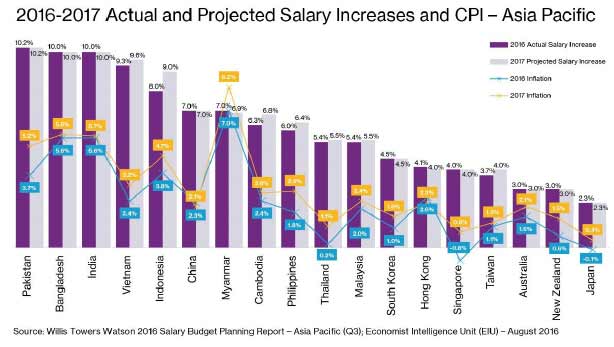
SINGAPORE – Slowing economic growth looks set to have an effect on coming salary increases, with employees in Singapore expected to receive the fifth-lowest pay raises in the region in 2017, a new report has revealed.
According to findings from advisory firm Willis Towers Watson’s (WTW) 2016 Asia Pacific Salary Budget Planning Report, base salaries in the city state are expected to rise just four per cent in 2017, before factoring in inflation.
Only Australia and New Zealand (3 per cent each) and Japan (2.3 per cent) are expected to see lower pay increases.
Recently, Deputy Prime Minister Tharman Shanmugaratnam noted that Singapore’s economy will be “in for a tough period”, and the gloomy economic climate in 2016 has already seen earnings in a number of industries take a hit.
Hong Kong salaries are also expected to go up by 4 per cent. However, higher inflation means that salary increases at the Chinese Special Administrative Region are set to be much lower in real terms (1.7 per cent) than in Singapore (3.2 per cent).
The findings are based on a survey conducted in July 2016, which saw approximately 4,000 responses from companies across 22 Asia Pacific markets.
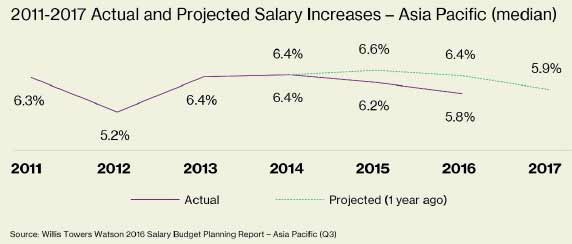
Across the region, salaries are projected to rise 5.9 per cent in 2017. In 2016, wages had been projected to rise 6.4 per cent, but in reality rose just 5.8 per cent.
Once average inflation for the Asia Pacfic region of 3 per cent is taken into account, the projected salary increases in real terms for 2017 will be 2.9 per cent, down from 3.5 per cent in 2016.
Of the countries included in the study, South Asian countries Pakistan (10.2 per cent), Bangladesh (10 per cent) and India (10 per cent) are expected to see the highest pay rises next year.
Mr Sambhav Rakyan, data services practice leader for Asia Pacific at WTW, said that there was a trend of lower salary increase budgets across much of the region, as companies are being more prudent and seeking to keep costs low.
“Back around 2012 and 2013, companies in Asia pumped a lot of money into their salary budgets and drove salaries up, but they didn’t see the revenues rise in tandem, so it made such increases unsustainable,” he explained.
High performers rewarded
Meanwhile, organisations are increasingly prioritising their top performers when it comes to pay raises.
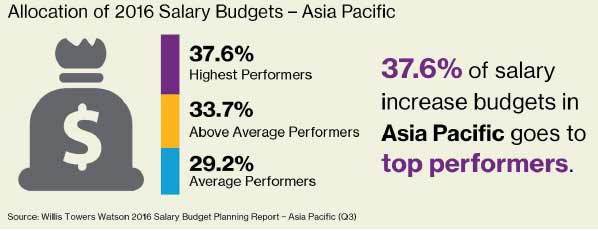
According to the report, 37.6 per cent of an organisation’s salary increase budgets are going to the top performers, while 33.7 per cent is shared by above average performers. Just 29.2 per cent are allocated to average performers.
“Nowadays people are looking for other options besides a standard annual pay rise. Employees are looking at how and when their performance is rated, and also for more flexibility in their benefits packages,” noted Ms Maggy Fang, head of talent and rewards at WTW Asia Pacific.
She added that companies should adopt more holistic approaches to remuneration by considering total rewards factors such as career development opportunities, recognitions, ongoing communications, and flexible working arrangements.
ANGELES CITY, Philippines – Movie and television actor Mark Anthony Fernandez was arrested here on Monday night for allegedly possessing a kilo of marijuana.
The police found the pack of marijuana, still classified as a dangerous drug in the Philippines, inside the actor’s yellow Ford Mustang, according to Supt. Sydney Villaflor, the city police chief.
The police chased Fernandez when the actor drove through a checkpoint at the portion of the MacArthur Highway in Barangay Virgen de los Remedios here.
Heavy traffic toward the Pampanga capital of San Fernando forced him to stop, Villaflor said.
Fernandez, son of actress Alma Moreno with now-late action star Rudy Fernandez, is detained in Station 6 of the police.
He faces charges for violation of the Comprehensive Dangerous Drugs Act (Republic Act 9165).
The arrest of Fernandez came after the Angeles City police apprehended a tricycle driver who allegedly ferried 28 kilos of marijuana in 32 bricks worth P480,000 (S$13,600) last Thursday, Sept. 29.
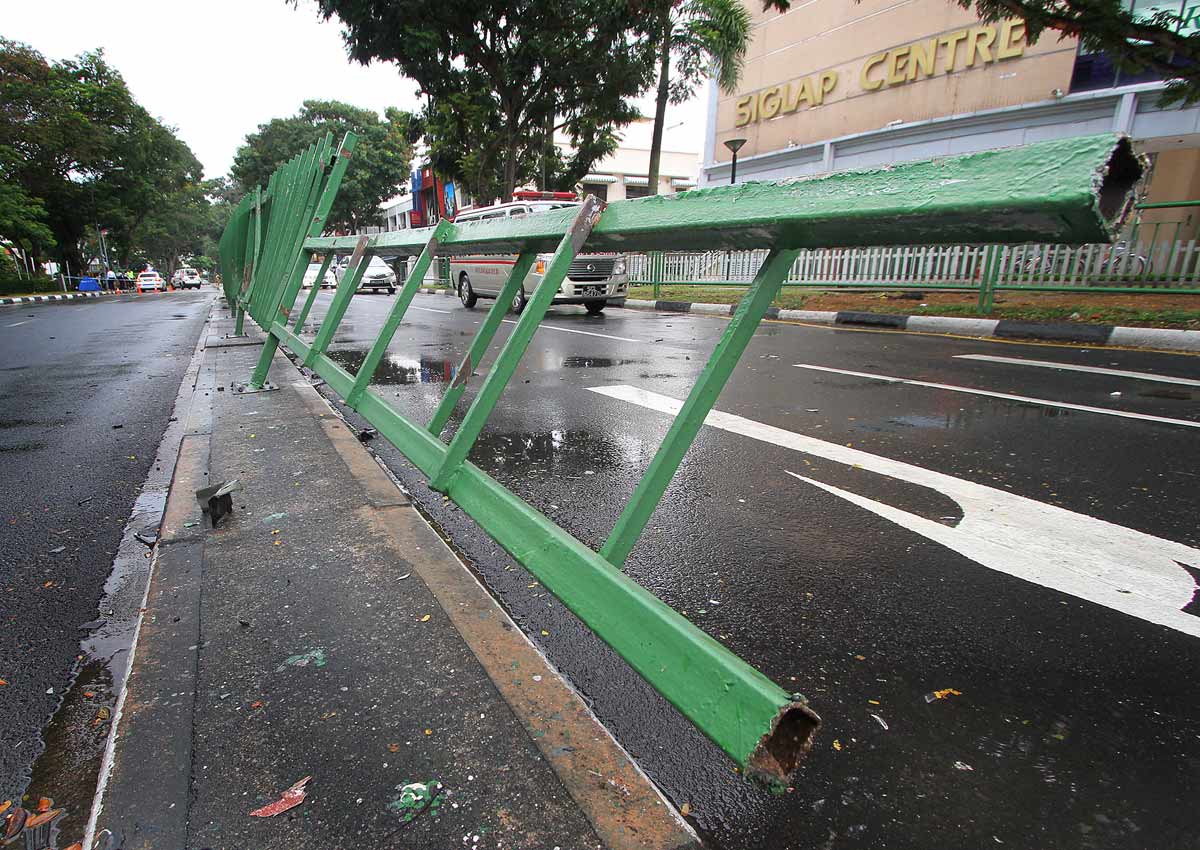
A 25-year-old man died early yesterday morning after his Jaguar crashed into the centre divider of East Coast Road in Siglap.
The car tore off about 35m of fencing before hitting a kerb and coming to rest about 100m away.
The crash, which happened in heavy rain, caused a traffic jam affecting morning commuters as East Coast Road had to be completely closed for about an hour until the car was towed away.
An East Coast Road resident thought a building had collapsed when he was roused at 5.28am by the sound of the car crashing, about 60m from his home.
He called the police immediately.
The man, who wanted to be known only as Mr Alan, 47, realised it was a traffic accident only when he looked out of the window of his two-storey terrace house and saw the car, which had been heading towards Mountbatten Road.
Mr Alan, who works in the shipping industry, told The New Paper: “I saw smoke coming out from the car and a few passers-by attending to the driver.
“There was a woman who was trying to pull open the victim’s door as well, but to no avail.”
Mr Muthu, 42, a nearby resident who was also roused from sleep and rushed to the scene, told Chinese daily Lianhe Wanbao that the driver was conscious but trapped in the car when he got to the scene. He became unconscious about five minutes later.
Singapore Civil Defence Force (SCDF) officers extricated him, and he was pronounced dead by paramedics at the scene.
At about 6am, LTATrafficNews tweeted that an accident had taken place on East Coast Road towards the city and it was closed after Siglap Road.
When TNP arrived at the scene at 9am, there was still debris at the accident site, including a dented section of the fencing, and pieces of the car. The crash also led to a massive jam which affected morning commuters for about two hours.
A Subway employee, who wanted to be known only as Madam Gan, 50, saw many people walking past the crash site at 7.30am as she was going to work.
Passer-by Noah Ali, 68, said he was on his way to a coffee shop near Siglap Centre at about 7am when he realised there was a bad traffic jam stretching to Upper East Coast Road.
‘REALLY BAD’
The contract worker said: “The jam was really bad. It stretched all the way up to Woo Mon Chew Road.”
The jam became worse later.
A short video filmed at 7.50am by Ms Jill Lim, a TNP copy-editor, showed more than 30 buses and 40 private vehicles still stuck in the jam.
SBS Transit also tweeted at about 8am, announcing that services 10, 14, 40 and 155 were delayed along East Coast Road towards the city because of the accident.
An SCDF spokesman confirmed that four vehicles were dispatched to the scene – an ambulance, a fire engine, a Red Rhino and a support vehicle.
Investigations are ongoing.
This article was first published on October 04, 2016. Get The New Paper for more stories.