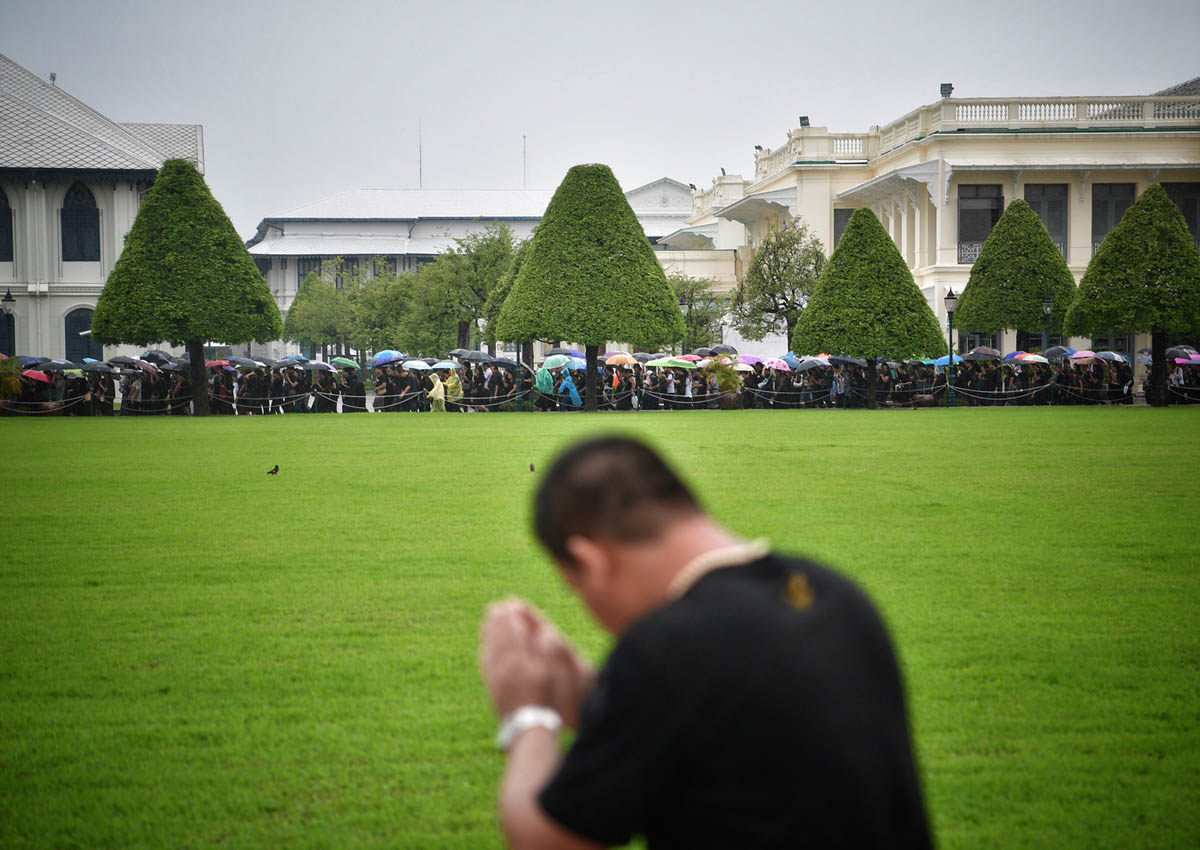
As Thais snap up black clothes to mourn the loss of King Bhumibol Adulyadej, a government spokesman has urged the public not to condemn those who are dressed in other colours.
Some may be too poor or cannot find them because of short supply, Lieutenant-General Sansern Kaewkamnerd told reporters yesterday.
“If you can’t find a black or white shirt, you can put a black or white ribbon on your shirt, on your arm or chest. Make it appropriate in your way. I would also like to ask the society not to judge these people.”
The comments came after some Thais were scolded or criticised on social media for not donning black as a sign of respect for the monarch, who died last Thursday at the age of 88 following a long illness.
King Bhumibol reigned for 70 years and was seen as a unifying father figure for the often politically turbulent nation.
The Thai government has declared a one-year mourning period and asked the people to refrain from entertainment for one year. Guidelines for media outlets require TV presenters and announcers to be dressed in white or black, The Nation reported.
Over the weekend, Thais flocked to shops to stock up on black clothing, while window displays in shopping malls were changed to showcase attire in black, white or grey.
332244
Photo Gallery
Thais in Singapore and Thailand mourn passing of King Bhumibol
But some Thais have criticised their countrymen for not dressing in the appropriate colours. Mobs in southern Thailand have also descended on the homes of people accused of insulting the king.
Under Thai law, anyone who insults or defames the king, queen, heir apparent or regent can be jailed for up to 15 years on each count.
Last Saturday night, a crowd confronted the family of an alleged lese majeste offender in Phang Nga province.
In a Facebook Live video posted by “JJ Khomta”, one person could be heard saying: “This is the land of father, if you don’t like him, go away!” Soldiers had to be called in to control the situation.
Meanwhile, the government has stepped up scrutiny of offensive comments about the royal family.
Yesterday, telco providers asked customers to report inappropriate comments about the monarchy, following a request from the state broadcasting and telco regulator, said Reuters news agency.
Last Friday, the regulator told Internet service providers to monitor and block inappropriate content and to inform platforms such as Facebook, Twitter and YouTube to do the same.
331856
Photo Gallery
A look back at Thailand’s King Bhumibol Adulyadej’s life
<p>As Thais snap up black clothes to mourn the loss of King Bhumibol Adulyadej, a government spokesman has urged the public not to condemn those who are dressed in other colours.</p>
They came in droves – Indonesians, Thais and Malaysians – to receive quality medical treatment in Singapore’s private hospitals.
But 15 years on, Singapore’s ambitions to become a healthcare hub appear to be receding quietly.
The region’s well-heeled medical tourists are looking elsewhere for treatment, meaning that local players have had to extend their reach abroad.
According to figures from the Singapore Tourism Board, medical tourism receipts stood at $1.1 billion in 2012, dropped to $832 million the following year, before going up slightly to $994 million in 2014.
Last year, the board stopped providing the figure.
Instead, medical tourism was placed under a generic category called Others, which includes money tourists spend on local transport, education and business.
This stood at $5.8 billion last year.
The STB declined to comment on the change.
It is quite a change from the days in 2002, when the Economic Review Committee said that healthcare was an exportable service that could boost economic growth.
The main reason Singapore is falling behind is that hospitals in countries such as Malaysia and Thailand have stepped up their game, said Mr Jean-Luc Butel, president of consulting firm K8 Global.
While they may not have the state-of-the-art technology that Singapore’s private hospitals possess, they can carry out standard surgery at a fraction of the cost.
“There are outstanding surgeons in a lot of these countries; they may not be the best in the world, but they are fully qualified,” Mr Butel said.
“This makes the competition very, very tough – our ability to attract the low- or medium-budget traveller is virtually gone.”
Dr Zubin Daruwalla, healthcare director of PwC South East Asian Consulting, said that while it is still possible for Singapore to keep its spot at the top for medical tourists, costs must come down.
“The value of the Singapore dollar and its appreciation make us less affordable… flight and accommodation costs also contribute to this, especially if patients require regular follow-up,” he said.
In Singapore, a relatively low-cost total hip replacement surgery at a private hospital would set a patient back around $14,000.
In comparison, the same procedure at Mahkota Medical Centre in Malaysia – which treats more than 80,000 foreign patients a year – costs the equivalent of only $8,800.
A basic single room at Farrer Park Hospital costs $562 a day.
The equivalent in one of hospital services company Columbia Asia Group’s hotels in Indonesia is $77.
In the face of all this, some hospitals have developed innovative ways to make medical travel about more than just treatment.
At Farrer Park Hospital, where foreigners make up half the number of patients, a tablet can be used to view medical records, order meals and even shop online, and have the purchases delivered to a location of the patient’s choice.
Thomson Medical, on the other hand, refers patients from its centres in Malaysia and Indonesia here – or vice versa – if they require technology or expertise that is not available readily in their home country.
“If we can manage our services and costs properly, maintain our high standards of… care, there is no reason why Singapore cannot be at the forefront of not just the regional, but also the global medical tourism market,” said Mr Roy Quek, chairman of Thomson Medical.
He added that Singapore will always be a popular destination for complex treatments, a sentiment echoed by Dr Kelvin Loh, chief executive of Parkway Pantai’s Singapore operations division.
“There is a growing trend of international patients coming to Singapore for complex medical treatment,” he said, adding that its ability to handle such cases has drawn patients from new markets such as China and India.
“We are also expanding by opening new hospitals overseas.”
Dr Beng Teck Liang, chief executive of the Singapore Medical Group, said his company recently took the “forward approach” by partnering Indonesia’s Ciputra Group to set up an eye-care centre in Jakarta.
Dr Beng said: “Although we are still able to attract foreigners to Singapore for medical tourism, we should also reach out to these emerging countries.”
This article was first published on Oct 17, 2016. Get a copy of The Straits Times or go to straitstimes.com for more stories.
Bank employee Jeffrey Tan considers himself to be savvy in making financial investments.
But last December, the 30-year- old began putting $20,000 in an offshore sports arbitrage betting company and went on to lose half of it.
He also persuaded about six friends and his parents to invest about $200,000 in all. They lost all their money.
“I felt so guilty for dragging them in that I tried to kill myself,” he said, showing The Straits Times a letter from Tan Tock Seng Hospital, where he was hospitalised for depression after taking an overdose.
He claims to have fallen victim to a sports betting syndicate run by 33-year-old Singaporean Alvin Ang Jun Bin, who claimed to be representing Isle of Man-registered offshore betting company Keystone Trading in Singapore. He has made a police report against Mr Ang.
Police confirmed that more than 20 reports have now been lodged against Mr Ang. The alleged victims, mostly in their 20s and early 30s, have set up a WhatsApp chat group to share information.
Their losses are estimated to total more than $1 million, according to fellow victim Lau Cheng Yi. The 22-year-old, who runs a food and beverage business, lost about $55,000 in cash and three luxury watches valued at $72,000 in total.
“He promised returns of 2 to 10 per cent every month,” said Mr Lau. “I did not get a single cent and he is now uncontactable.”
Mr Lau said he met Mr Ang in March at a roti prata restaurant in Upper Bukit Timah. “He came in a Nissan GTR sports car and was wearing Louboutin shoes and a Rolex watch,” Mr Lau said.
Attracted by the promise of “risk-free returns”, Mr Lau handed over his Audemars Piguet Las Vegas watch worth more than $30,000 on the spot. A day later, Mr Ang opened an online account for Mr Lau at the Keystone Trading website with 20,000 credits to his name.
Over two more months, he progressively invested more money after being persuaded. By June, he had put in $127,000.
He sensed something was amiss that month when the website was down. He met Mr Ang at the void deck of his Bangkit Road Housing Board flat. He said Mr Ang claimed that his boss – “Sky” – had run away with the money and promised to look for him to return it.
Other victims said Mr Ang assured them the betting programme was legal as the bets were not placed in Singapore, but through Keystone Trading’s offices located in Shenzhen, China, and the United States.
Mr Ang’s mobile line was disconnected and he did not reply to messages to his phone.
When reporters visited his HDB flat in Bangkit Road, his father said he moved out last year and came home only occasionally.
Asked if his son was overseas, he said: “I will also avoid people if I were him. Why you ask so many questions?”
Police did not have figures for investment scams specifically. There were a total of 5,150 cheating cases from January to September this year, while the whole of last year saw 6,560 cases, up from 3,898 in 2014.
Mr Tan is now coping with his depression, but the episode has taught him not to be lured by promises of easy money. “I paid a price for learning this,” he said.
How does sports arbitrage betting work?
Punters place a series of bets that will either win or minimise their losses, regardless of a game’s outcome. They take advantage of different odds offered by bookmakers, who are sometimes based in different countries.
For example, countries A and B could be facing off in a World Cup match. Each team is favoured to win in its own country, so bookmakers on the home turf of each offer different odds. It is thus possible for a punter to place bets in both countries in such a way that, whatever the outcome, the winning bets will offset the losses.
Experts say it is about spreading risk through multiple bets. “You just need to find the right bookmakers with the right combination of odds,” said Mr Lau Kok Keng, who heads intellectual property, sports and gaming at law firm Rajah and Tann Singapore LLP.
“Some people have designed robot software to track odds offered on the Internet and automatically place bets when they add up to sure-win scenarios.”
But such bets are illegal in Singapore for both offshore operators and punters.
“All offshore betting sites that have customers who are physically in Singapore are illegal under Singapore law,” said Mr Lau.
“Operators of such sites will be committing an offence under the Remote Gambling Act.
“For residents here, arbitrage betting is also a ‘sure offence’. The only bookmaker they can legally place sports bets with is Singapore Pools.”
Lawyer Ramesh Tiwary said people should be wary if they have to transfer money out of Singapore: “It’s the young people who tend to believe the Internet is a safe place.”
Police advise the public not to fall for “get rich quick” schemes.
This article was first published on Oct 17, 2016. Get a copy of The Straits Times or go to straitstimes.com for more stories.
What can the dying teach the living? Quite a bit, it seems.
A small but growing number of people spend their last days recording their thoughts on life and how they cope with impending death in order to share them with others.
They hope to get people thinking and talking about death early enough to re-examine their priorities in life, and take action on matters such as making wills or signing advance medical directives.
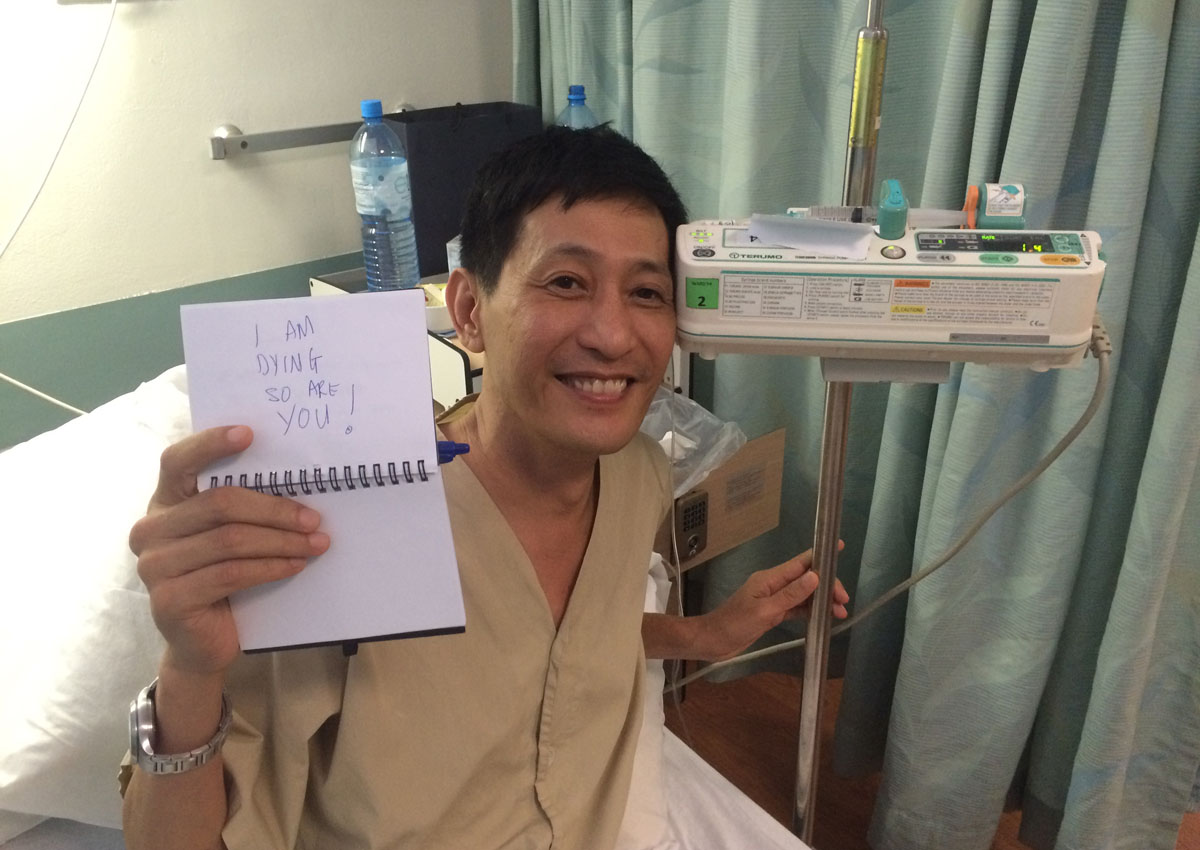
Mr Stephen Giam, 51, for instance, had advanced bile duct cancer. He died three weeks ago.
But before his death on Sept 26, he spent five of his last 20 days filming short videos of himself tackling various topics from his hospital bed. Titled “Stephen Says”, the series of 19 YouTube videos covers issues such as: What’s it like to have cancer? How do you make death your “slave”? How do you leave a legacy?
During his life, Mr Giam was a motivational coach. He told his doctors that perhaps being a “death coach” would be useful for others.
“People are afraid, but they also want to learn from you. They are curious: what is it like to be dying?” he said in one of his videos.
The videos have since garnered about 70,000 views.
Mr Giam is not alone in his quest to use his dying moments to reduce the stigma associated with death. Industry observers say they see more of such projects nowadays because of a maturing consciousness among people who want to explore what it means to die well, and the availability of online platforms to get the discussion going.
“Our country is at a juncture where people are starting to question whether we should focus on curative treatment to extend life at all costs or whether it is about quality of life and minimising suffering,” said Mr Mark Lin, deputy director of the charity Monfort Care which started a project called “Good Death” in April.
Mr Lee Poh Wah, chief executive of Lien Foundation, said: “In our various projects involving the terminally ill, we were never short of people who wanted to speak up and tell their stories.
“But perhaps the greater appeal now stems from the fact that the dying know that they have direct access to a much larger audience in our increasingly connected, online world.”
The Good Death initiative, led by Mr Lin, has a “Last Interview” segment where those who are terminally-ill consent to allow their last few verbal exchanges with their social workers to be recorded and released via videos on Facebook and on a website.
“Benny”, for instance, had pancreatic cancer. In the interview, he said his biggest regret was to divorce his wife and the most important thing he learnt, after knowing that he had little time left, was to treasure his family.
Another video showed the dilemma that “Mr Tan”, who had oesophageal cancer, faced when he had to decide whether or not to opt for a high-risk operation that would extend his life for a while.
Both Benny and Mr Tan have since died and their videos were uploaded online a few weeks ago.
Lien Foundation and the Asia Pacific Hospice Palliative Care Network also released a documentary called “Life Asked Death” about a week ago.
The 26-minute online film showed the challenges and triumphs of bringing palliative care to different parts of Asia, through interviews done with people who were dying and who were in pain due to a lack of pain medication.
Beyond the online space, other projects, such as “Before I Die”, venture into the community to engage heartlanders on the issue.
The people who were willing to publicly share the very personal journey of facing death do so for various reasons.
For Mr Giam, it is not only about helping others learn from his experience, but also a therapeutic process for him to talk through how he was feeling.
His last words on the video were: “I hope the videos are interesting and meaningful to you because these are the things I am also struggling and working on on a daily basis now.”
Although death remains a taboo topic for many, the dying hope their videos will get these important conversations going long after they die.
Said Dr Jamie Zhou, an associate consultant in the division of palliative care at the National University Cancer Institute, who helped edit Mr Giam’s videos: “Nothing is more powerful than a patient’s perspective and Stephen kept it real by being authentic and vulnerable. He believed very strongly in what he was doing.”
Promises to keep; miles to go before I sleep
From seeing the Northern Lights to writing a book, many Singaporeans have laid down their plans for the things they want to do during their lifetimes.
Before I Die, a global art project, was brought here last year by a group of National University of Singapore medical and nursing students last year, including Jonas Ho and Zachus Tan, both 21.
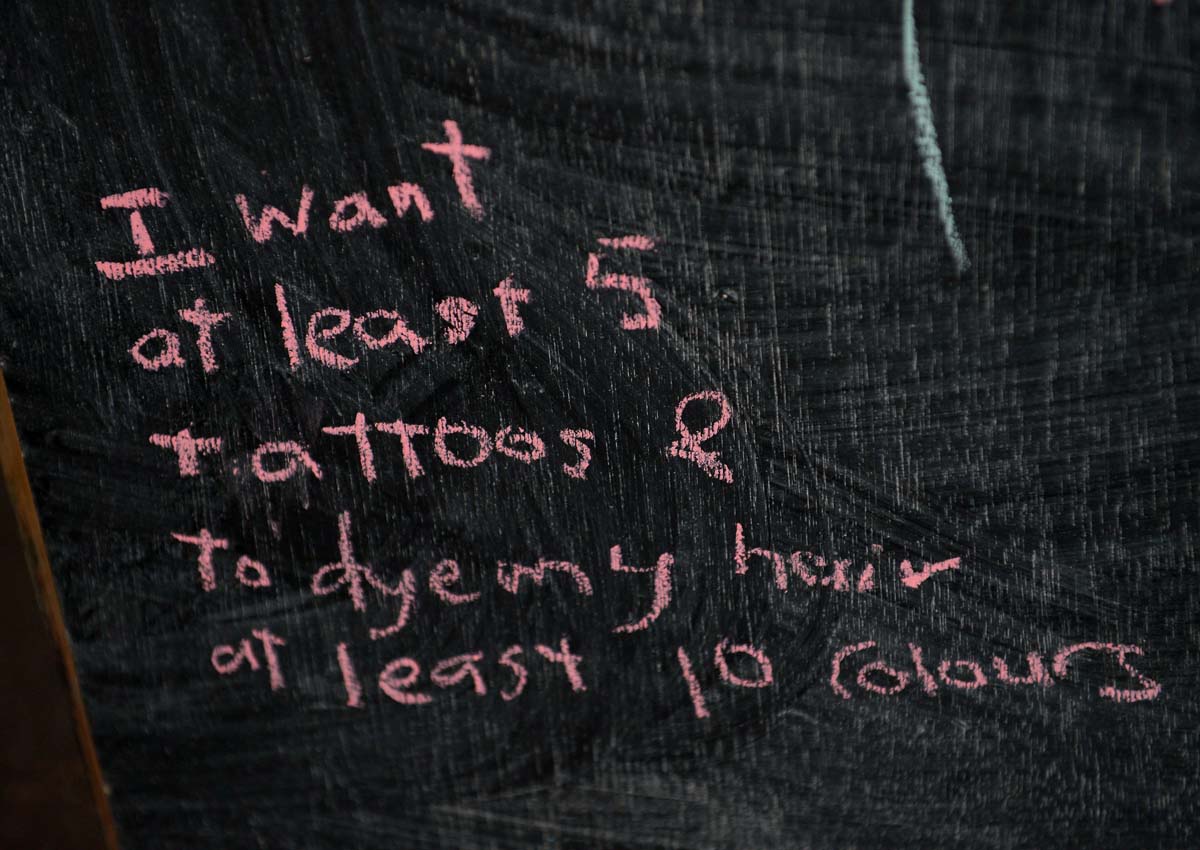
Chalkboards with the tagline Before I Die: My Last Year are being set up in shopping centres, hospitals and universities this month for people to put down their thoughts on what they wish to do.
Photo: The Straits TimesPhoto: The Straits TimesPhoto: The Straits TimesPhoto: The Straits TimesPhoto: The Straits Times
For some, it is just spending time with family and friends, finding peace within themselves and catching the sunrise and sunset every day. Others plan to use up all the money in their bank account.
For more information, visit the Before I Die Sg page on Facebook.
Getting some form of closure
When Mr E. W. Lok dies, he does not want a funeral. The 59-year-old has end-stage lung cancer and only a few months to live, but his family does not know of his situation.
Mr Lok just wants to leave this world quietly because he has had enough of people being “kua suay” (Hokkien for “looking down” on him) .
However, he recently chose to do the “Last Interview” with social workers from charity Monfort Care recently.
It is part of a project in which terminally- ill clients give consent for the last few verbal exchanges between them and their social workers to be recorded and released online after they die.
“My social worker told me to leave no regrets, so perhaps, through the video, I can leave behind my life story to encourage the younger generation,” Mr Lok told The Straits Times in Mandarin.
The bachelor, who used to do odd jobs, has been struggling with low self-esteem and alcoholism for many years.
He felt there was nothing in his life to be proud of and turned to the bottle.
But his drinking problem ceased when he later started caring for his mother, who has schizophrenia and dementia.
Unfortunately, he had to give up his caregiving role this year when he found out he had cancer. Since then, he has started drinking again.
Said Ms Annie Lee, his social worker: “The Last Interview was more for him to review his life and for us to highlight his strengths so that he is able to get some form of closure.”
Getting ready for death
Stephen Says: https://www.youtube.com/ channel/UCCD0xdbDhi0nQ24QKy2G5bA
Good Death: http://www.gooddeath.org.sg
Life Asked Death: http://lifeaskeddeath.com
This article was first published on October 17, 2016. Get a copy of The Straits Times or go to straitstimes.com for more stories.
There’s just something about knockouts that captivates combat sports fans. When a strike connects with speed, accuracy, and power, it is truly a sight to behold.
Over the past three months, ONE Championship fans have been witness to some spectacular knockouts that do not seem to run in short supply.
Here are the five best ONE Championship knockouts of the past three months.
#1 Narantungalag Jadambaa one-shots Eric Kelly
Eric Kelly likes to think of himself as a born fighter, hence his moniker “The Natural.” But what happened when he met another fighter even more adept than he is?
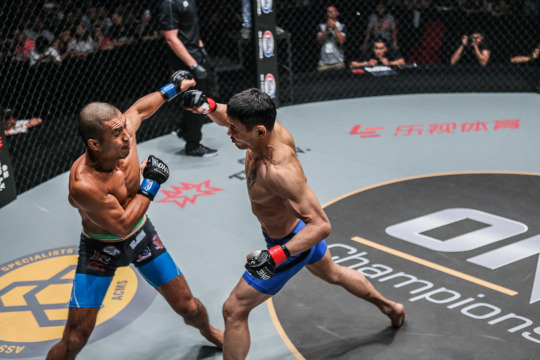
Mongolia’s Narantungalag Jadambaa was just the man at ONE: DYNASTY OF CHAMPIONS (HEFEI) last July during the evening’s main event. An overwhelming force that is hard to deny for any opponent, Jadambaa needed only one punch to separate Kelly from his senses in just 44 seconds of the very first round.
“I have no weaknesses,” Jadambaa exclaimed in the pre-fight build up. He didn’t seem to think there was anything Kelly brought to the table that he needed to worry about, and it showed.
Jadambaa plodded forward, stalking Kelly with full intention of landing the finishing blow. He knew all he needed to do was land one big punch and it was lights out, and once Kelly made a mistake, the Mongolian countered with dynamite. Kelly fell to the mat instantly, bringing a swift end to a highly-anticipated clash of top featherweights.
In any case, the finish is without a doubt the most significant of the past quarter, and earned Jadambaa the right to challenge ONE Featherweight World Champion Marat Gafurov in a thrilling rematch at ONE: DEFENDING HONOR in Singapore on 11 November.
#2 Shannon Wiratchai batters a resilient Peter Davis
Shannon Wiratchai and Peter Davis may have started as equals across each other in the ONE cage at ONE: UNBREAKABLE WARRIORS, but Wiratchai proved just why he is one of Thailand’s top fighting prospects with a comprehensive TKO victory.
Wiratchai is one of the promotion’s most capable offensive fighters, mixing a variety of styles together to form a unique approach to striking that is hard to match. Davis looking to work in the clinch and take matters to the ground was hardly a surprise, but it proved difficult for the 35-year-old veteran in Kuala Lumpur this past September.
The Thai fighter was just better in every aspect of the stand-up game. Yes, he played around too much and his overconfidence led to him getting briefly dropped by the hometown favorite Davis, but in the end, there was no denying a stoppage.
At 3:32 of the second round, Wiratchai slipped Davis’ telegraphed punches and masterfully countered with brilliant pinpoint combinations, putting on a striking clinic. A fleeing Peter Davis took one last blow to the chin before slumping to the canvas and absorbing a volley of unanswered strikes, adding to the Thai’s growing highlight reel.
#3 Burn Soriano’s spectacular spinning back fist
Indonesia’s Mario Satya Wirawan is no stranger to the quick knockout, co-owning a ONE Championship record for fastest KO in history with a six-second stoppage of Cambodia’s Chan Heng last December.
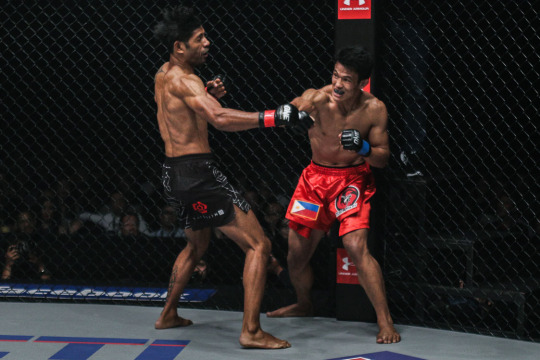
Against the Philippines’ Burn Soriano, however, he found himself on the wrong end of a devastating highlight-reel stoppage, and in just 15 seconds, no less. The bout was the opening bout of ONE: TITLES & TITANS in Jakarta on 27 August.
The spinning back fist is a beautiful thing when it connects. Fighters like to use it often, but rarely is it ever effective enough to make a huge difference in a fight. This time it was used to near-perfection. Soriano, nicknamed “The Hitman”, taught Wirawan (and everyone watching) the importance of keeping your guard up and to protect yourself at all times.
As Wirawan stalked Soriano up against the cage fence, the Filipino warrior unleashed a wickedly-fast spinning backfist that landed right on the button. It was short and crisp, but filled with concussive knockout power. Wirawan never saw it coming.
#4 Edward Kelly stuns veteran Vincent Latoel
Team Lakay has recently made strides to greatly improve their ground game to hang with the growing skillset of opposing teams, but Edward Kelly needed none of it against MMA veteran Vincent Latoel in Jakarta.
Kelly fought intelligently off the back foot the entire matchup as Latoel charged in without respect, and the Dutch-Indonesian hero suffered for it. Kelly unleashed a stunning counter hook-cross combination to turn Latoel’s lights out at 57 seconds of the second round, taking matters out of the judges’ hands.
The Filipino featherweight stalwart now has a pair of solid victories under his belt and is expected to land another big fight soon.
#5 Nuerdebieke Bahetihan needed just 8 seconds to derail Bruno Pucci
All signs pointed to a resurgence by Brazilian jiu-jitsu champion Bruno Pucci. After laboring through numerous injuries and surgeries to make a painstakingly difficult comeback, Pucci was poised to make a strong statement. Nuerdebieke Bahetihan spoiled that party.
In less time than it would take to learn to pronounce his name, Bahetihan flattened Pucci with a right hook to the temple that caught the Brazilian completely unawares.
It was both shocking and bittersweet. Once again Pucci was sent back to the drawing board, leaving Bahetihan to bask in the glory of having beaten a former BJJ no-gi world champion.
Lin seemed to confirm that in a series of posts on social media over the weekend.
But then again, maybe not.
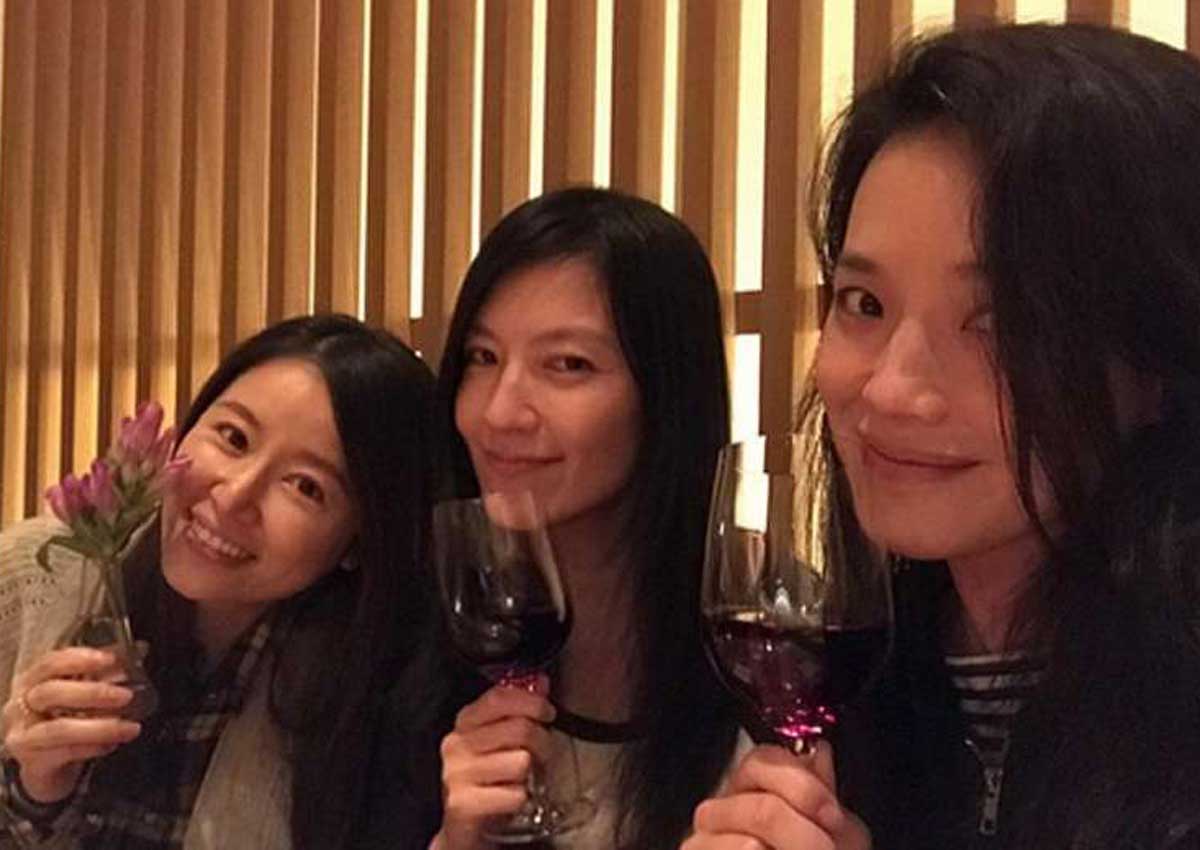
Lin, 40, was travelling in Japan with her actress friends Shu Qi and Kelly Lin last Friday when Shu Qi posted a photograph of the trio sitting with their backs to the camera and with the text: “Travel by four girls”.
Fans took that as a giveaway that Ruby Lin is carrying a girl.
But it was then revealed online that trio were indeed travelling with another woman, who was not in the picture, and a man.
Still, Lin kept fans guessing when she later shared a picture of pink balloons on Facebook – with pink being associated with girls – and writing: “Girl Power”.
On Weibo, she also repeated that line while sharing Shu Qi’s post, this time not forgetting to add emojis of four little girls and four hearts. As if those hints were not enough, she also shared pictures of the three holiday-makers which were posted last Saturday by Kelly Lin. Echoing Kelly Lin’s caption, “Girls just want to have some fun”, she wrote “Fun Fun Fun”, while adding, not three, but four heart emojis.
Said to be five months pregnant, she is pictured in one of the snaps with her tummy shielded by her friends.
She has been sidestepping questions about her rumoured pregnancy since she married actor Wallace Huo in July.
Earlier this month, actor Huang Xiaoming also set off baby congratulations when he posted a photo of himself and his wife, actress Angelababy, on holiday.
The picture showed the two facing the sea on a yacht and he had written: “Travel by three. Will do it together many more times in future.”
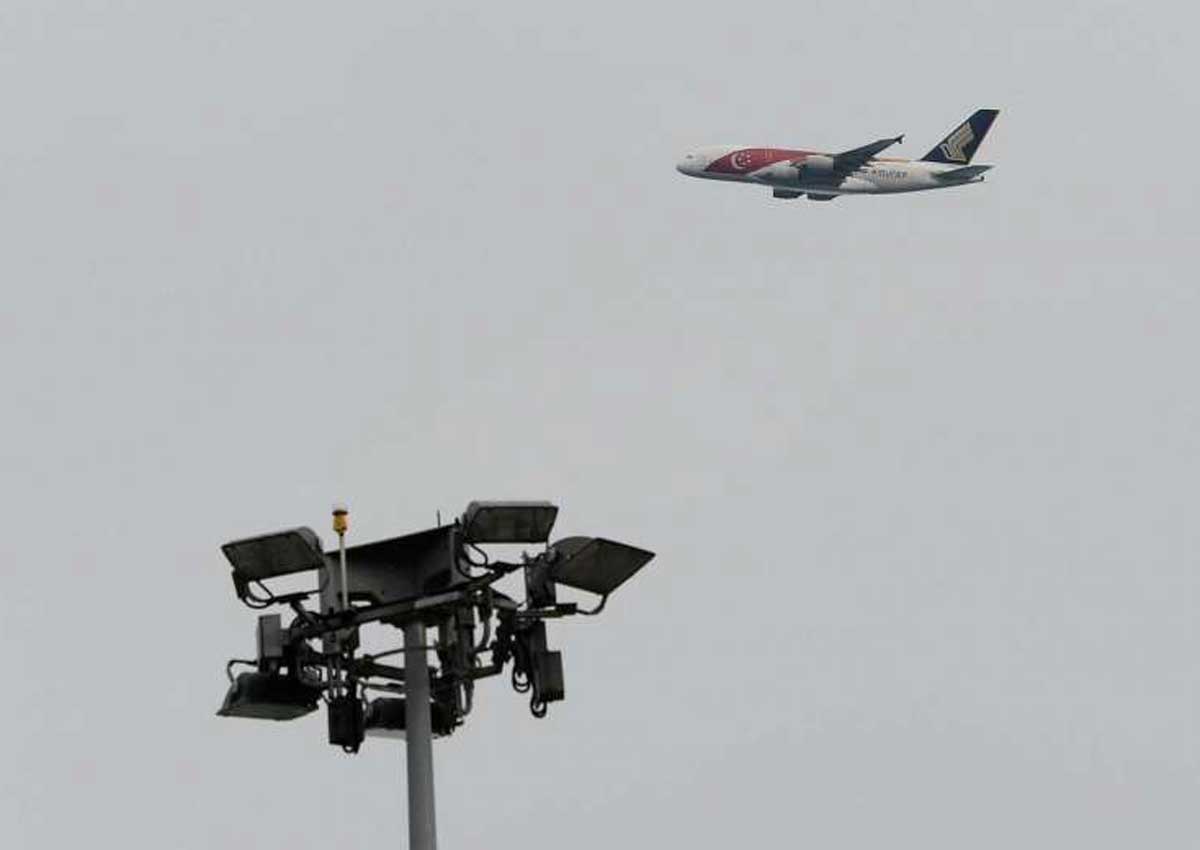
Every passenger has experienced it: trapped in a plane while it circles for what seems an interminable period above the airport where it is supposed to land.
Now, airports and airlines in the region have reached agreement that while delays may be mostly inevitable, it is better to have travellers wait on the ground than in the air.
With this in mind, a Singapore push to work on sharing information and planning flights – the first of its kind in this region – is gaining steam.
The idea is that planes should just stay on the ground instead of taking off, if there is a foreseen delay for any reason – for instance, overcrowded runways or bad weather – at the arriving airport.
The goal is to avoid aircraft circling in the air.
So far, 26 airports and close to 20 airlines in six Asian territories – Singapore, China, Hong Kong, Thailand, Malaysia and Indonesia – are on board.
Trials have been conducted successfully.
The system is expected to be fully operational in a few years.
The air traffic flow management initiative is supported by global airline body International Air Transport Association (Iata) and the Civil Aviation Authority of Singapore (CAAS).
The benefits are immense, they tell The Straits Times.
Flight times will be trimmed, allowing for reduction of fuel burn.
Airports will be able to handle flights more efficiently, in turn increasing total capacity.
And delayed passengers can wait in the airport terminals instead of being stuck in the aircraft.
All this is critical for a region that continues to attract more air travellers and flights, say experts.
For instance, said a CAAS spokesman, “having flights held on the ground at the departure airport rather than in the air around the arrival airport helps to reduce the aircraft’s fuel burn and carbon emissions”.
Better flight management also provides airlines with more predictability.
This then allows for better planning and more efficient deployment of ground resources at airports as well, she said.
Recent trials bore this out.
During the three rehearsal days prior to and on National Day itself, a total of 112 flights flying to Singapore were involved.
With better planning, there was a reduction in airborne holding time by about six minutes for each flight, which translated into fuel savings of approximately $100,000, the spokesman said.
Mr Nicholas Ionides, the spokesman for SIA, said: “The value for our customers is better predictability of landing time.”
The initiative came despite the challenges of forging a cross-border partnership.
Iata’s regional director in Asia for safety and flight operations Blair Cowles said “many complex issues need to be resolved”.
Harmonising processes between jurisdictions, for instance, will take time.
“The positive thing is the region has started on this journey,” he said.
China, Japan and South Korea are also working on a similar initiative.
Elsewhere, such planning happens mainly for domestic flights, for example within the US.
The main exception is in Europe where a single authority controls all flights within the European Union.
With air traffic in the Asia-Pacific projected to triple by 2030, steps must be taken now to manage air traffic flows in future, say the experts.
Apart from cooperating in flight planning, work is also under way within the 10-member Asean group to analyse air traffic flows, predict future air traffic demand and assess airspace capacity.
In a world where “airlines operate without borders”, the same approach should apply to air traffic management, Mr Cowles said.
This article was first published on Oct 17, 2016. Get a copy of The Straits Times or go to straitstimes.com for more stories.
<p>Every passenger has experienced it: trapped in a plane while it circles for what seems an interminable period above the airport where it is supposed to land.</p>
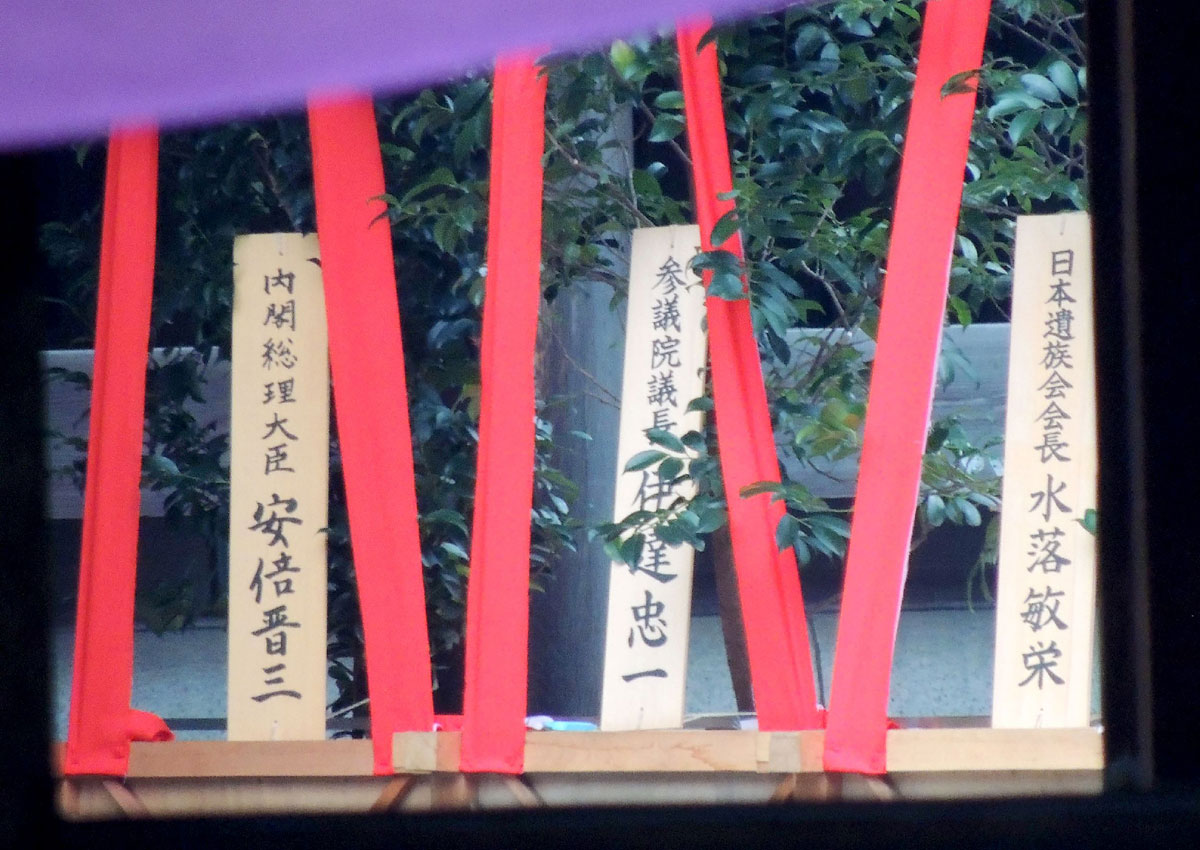
Japan’s Prime Minister Shinzo Abe sent a ritual offering to a controversial war shrine on Monday but did not visit, possibly avoiding an angry reaction from China and South Korea.
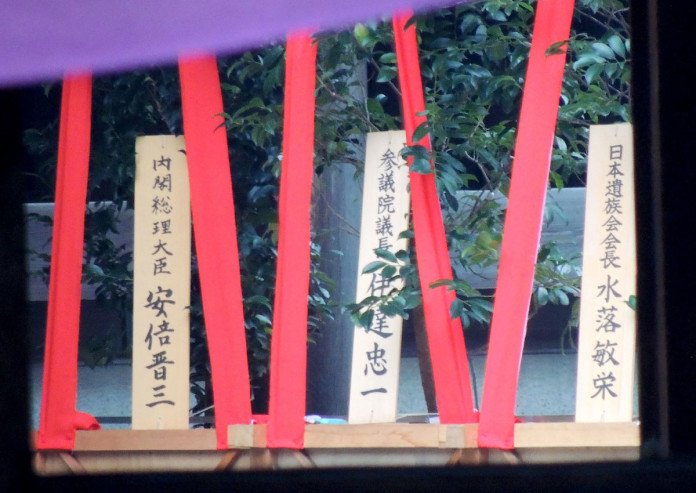
The conservative premier – who has been criticised in the past for what some see as a revisionist take on Japan’s wartime record – sent a sacred “masakaki” tree bearing his name to Yasukuni Shrine at the start of a four-day festival.
The shrine honours millions of Japanese war dead, but also senior military and political figures convicted of war crimes after World War II.
The site has for decades been a flashpoint for criticism by countries that suffered from Japan’s colonialism and aggression in the first half of the 20th century, including China and the two Koreas.
More controversial than the shrine is an accompanying museum that paints Japan as a frustrated liberator of Asia, and a victim of the war.
Abe and other nationalists say Yasukuni is merely a place to remember fallen soldiers and compare it with Arlington National Cemetery in the United States.
Abe visited in December 2013 to mark his first year in power, a pilgrimage that sparked fury in Beijing and Seoul and earned a diplomatic rebuke from close ally the United States, which said it was “disappointed” by the action.
But he has since refrained from going, sending ritual offerings instead.
Scores of conservative lawmakers, possibly including cabinet ministers, are expected to go to the shrine to mark the autumn festival on Tuesday.
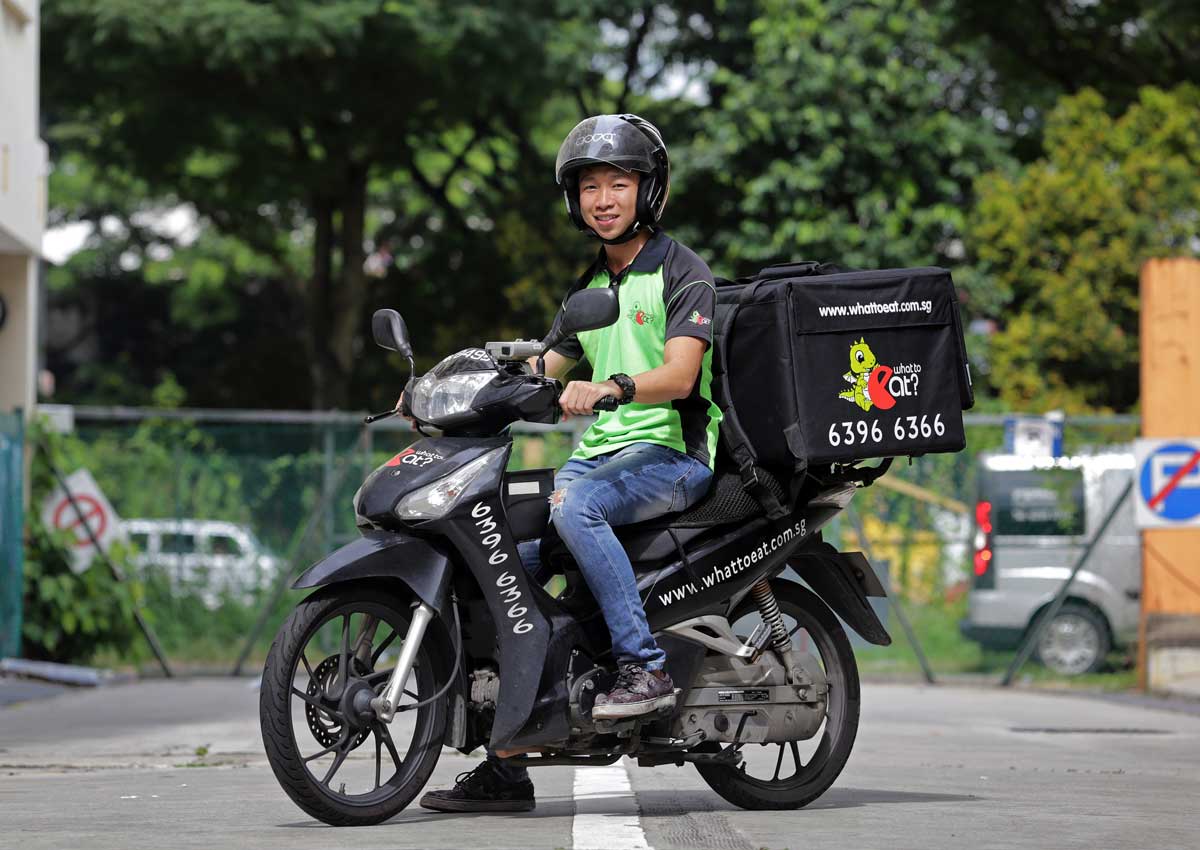
Delivery rider Gerry Tan has seen his monthly earnings rise 80 per cent – from $2,000 to $3,600 – since he started his job almost two years ago.
The 25-year-old, who transports everything from steaming plates of pad thai to sandwiches for What To Eat, is not the only one receiving a larger slice of the pie.
As Singaporeans embrace having food delivered to their doorsteps, the demand for delivery staff has soared – and wages for the service have risen with it.
Mr Paul Lim, founder and president of industry body Supply Chain Asia, estimates that earnings have gone up by an average of 50 per cent over the past two years, while the number of food-delivery riders is rising by about 15 per cent a year.
Food-delivery services have emerged as a bright spot in a tepid job market.
According to Manpower Ministry figures, the average gross wage of a delivery rider was $1,914 in June last year.
Firms have also seen their pool of delivery staff grow.
What To Eat has 30 full-time delivery staff and 50 freelancers. Both pools have been growing by about 25 per cent a month over the past year.
A full-time rider’s earnings there have grown by about 40 per cent in the last two years to about $3,500 a month, according to business development director Nikola Rudic.
But a delivery rider’s life is no walk in the park.
The hours are long: Full-timers at What To Eat make about 20 deliveries from 11am to 10.30pm, five days a week, while freelancers work on average about 41/2 hours a day, 21/2 days a week.
“The rate of growth has been much faster because of the increased awareness of different food-delivery options among Singaporeans,” said Mr Rudic.
At Food Panda, one of the biggest players in the market, orders have been increasing by 25 per cent a month this year.
It has seen its delivery fleet surge to 2,500 riders since it started building the fleet in March last year. When it started out in April 2012, restaurants it partnered handled the deliveries.
However, 90 per cent of Food Panda’s delivery crew is made up of part-timers.
With the surge in orders, firms are finding it difficult to hire riders, and struggle to cope during peak periods like Chinese New Year, Mr Lim said.
He added that potential riders generally perceive the job as involving long hours on the road and offering few prospects of skills development or pay rises.
Mr Rudic agreed that it is “very difficult” to hire riders as more firms are competing for a limited supply.
UberEats, which was set up in May, said it had trebled its pool of drivers over the last eight weeks.
Meanwhile, NTUC assistant secretary-general Ang Hin Kee believes firms may turn to technology to meet their needs.
Delivery jobs could be carried out by driverless or autonomous vehicles, for instance.
He suggested that if delivery riders want to boost their pay, they could learn how to run such systems.
And if existing companies do not provide the chance for them to upgrade their skills, they can take up career-conversion programmes.
For Mr Tan, the job and its benefits are satisfactory for now.
He earns a basic salary of $2,000 and gets $7 per delivery for the 101st to 200th delivery he makes each month.
Beyond that, he gets $8 per delivery.
He said: “I find the pay rewarding. As a diploma-holder just out of army, I would expect to earn about $2,100.
I haven’t made plans to leave.”
Bicycles faster than motorbikes for deliveries
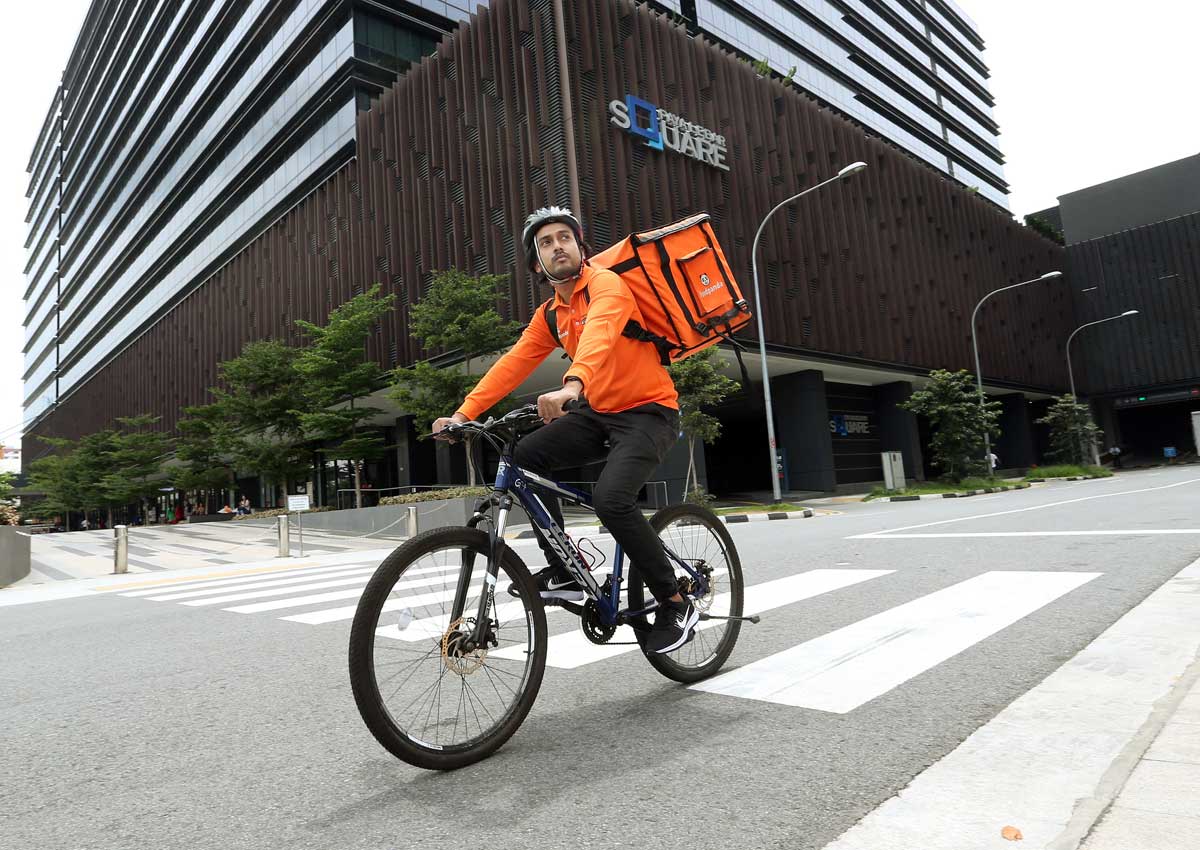
Mr Fazli Nasser, a food-delivery cyclist with Foodpanda, with his bicycle that he uses for his food deliveries. He says riding a bicycle is more flexible as he can use the pavement to avoid traffic. Photo: The Straits Times
It is lunchtime in Amoy Street in the Central Business District (CBD) and, just as office workers sit down to eat, a delivery rider hefts a backpack full of food and zooms off.
This is a common sight in the CBD but, these days, the rider might be on a bicycle rather than a motorbike.
Food-delivery firms are turning to bicycles and electric bicycles to make deliveries – which they say are quicker.
Deliveroo announced in August that it would start doing deliveries by bicycle that month – beginning with a fleet of 50 riders serving the River Valley, Tanjong Pagar and City Hall area.
Meanwhile Foodpanda, which has a fleet of 2,500 delivery riders, started bicycle deliveries six months ago.
It now has about 150 cyclists and hopes they will eventually make up over a third of its fleet.
“Cyclists work quite well, especially in the CBD,” said its chief executive Jakob Angele.
“They have more flexibility with parking at malls.
With motorbikes, it’s very restricted. In traffic, cyclists move equally fast or faster.”
The company counts among its 150 cyclists and e-bikers a diverse group of people, including professionals, who are looking for a bit of exercise after work, and students.
Most are in their early 20s.
Hiring a cyclist also costs about 30 per cent less than a motorcycle rider, since the company does not have to pay taxes and fees for motorbikes.
At the moment, Foodpanda’s cyclists mostly cover the CBD area.
Mr Fazli Nasser, 32, says he can deliver about 20 orders by bicycle over the course of a 10-hour shift.
“One thing I like about being a cyclist – you can avoid traffic.
It’s a bit more flexible because you can go on the pavement,” said Mr Fazli, adding that each delivery ranges between 2km and 4km.
“Especially in the central area, there are a lot of one-way roads.
If I use a bicycle, I can use the pavement and go through.”
The company is also looking into using e-scooters, but is holding off for now as legislation governing the use of these personal mobility devices (PMD) is likely to be tabled in Parliament before the end of the year.
National University of Singapore transport researcher Lee Der Horng said more delivery companies will use PMDs as infrastructure for cycling is developed.
“We have been seeing this in Western cities like New York… There, it has already become part of the city.”
This article was first published on Oct 17, 2016. Get a copy of The Straits Times or go to straitstimes.com for more stories.

<p>Delivery rider Gerry Tan has seen his monthly earnings rise 80 per cent – from $2,000 to $3,600 – since he started his job almost two years ago.</p>