 SINGAPORE – The possibility of setting up a Speakers’ Corner was first mooted by the late Lee Kuan Yew, when he was Senior Minister, in an interview with New York Times columnist William Safire, published in February 1999.
Mr Lee shared that politicial…
Source link
The evolution of S’pore’s Speakers’ Corner

As Duterte embraces China, Japan's Abe set to roll out warm welcome

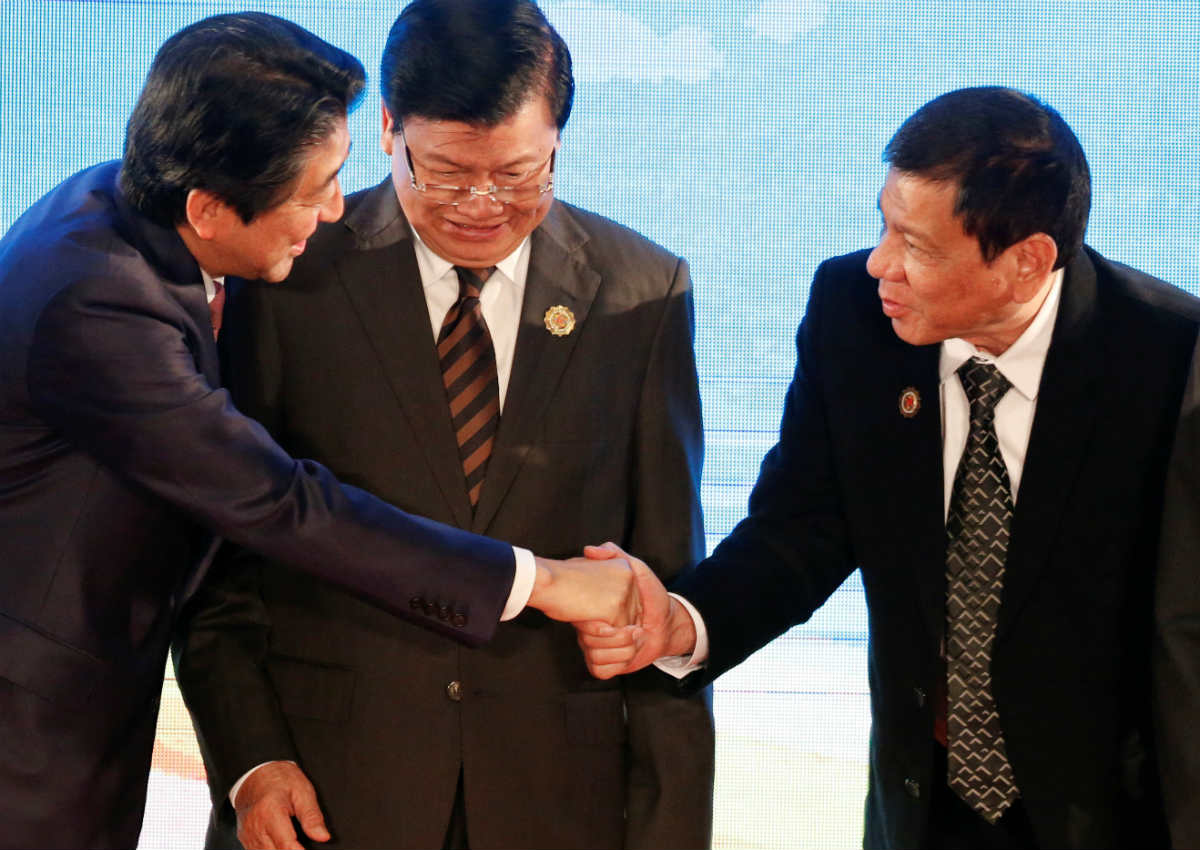
Japanese Prime Minister Shinzo Abe plans private personal meetings with Philippine President Rodrigo Duterte in Tokyo next week, three sources said, seeking to keep him onside with US-led efforts to contain Beijing’s South China Sea ambitions.
With Duterte winding up a trip to China where he announced his “separation” from the United States, Abe faces a delicate task to promote the closely aligned security goals of Tokyo and Washington without pushing the Philippine leader deeper into Beijing’s embrace.
“Japan wants to explain its regional stance, including its thinking regarding the South China Sea,” said one of the sources. “Abe wants to make a connection with Duterte,” he added, asking not to be identified because he is not authorised to talk to the media.
Duterte’s apparent cosying up to Beijing has both Tokyo and Washington worried that the commitment under former Philippine President Benigno Aquino to stand up to China in the hotly disputed waterway is under threat.
333028
Photo GalleryDuterte in China to promote economic ties
Source:
-

<!–
-

<!–
-

<!–
-

<!–
-

<!–
-

<!–
-

<!–
-

<!–
-

<!–
-

<!–
-

<!–
-

<!–
-

<!–
-

<!–
-

<!–
-

<!–
-

<!–
-

<!–
-

<!–
-

<!–
-

<!–
-

<!–
-

<!–
-

<!–
-

<!–
-

<!–
-

<!–
-

<!–
-

<!–
-

<!–
-

<!–
-

<!–
-

<!–
-

<!–
-

<!–
-

<!–
Aquino angered China by lodging a case with an arbitration court in the Hague challenging the legitimacy of Beijing’s maritime claims in the resource-rich sea.
The ruling earlier this year emphatically favoured Manila but was rejected by China, which has repeatedly warned the United States and Japan to stay out of the dispute.
WORRY
Abe will hold one-on-one talks with Duterte at his residence in Tokyo on Wednesday night following a larger, more formal meeting with senior officials, the sources said. “It’s unusual for the Japanese prime minister to hold a second smaller meeting,” another of the sources said.
Japanese Foreign Minister Fumio Kishida will also host Duterte for an informal dinner on Tuesday.
Duterte visited Beijing first with an entourage of around 200 business people. On Thursday, he declared the United States had lost and he had “realigned” with China.
Duterte has railed against US criticism of his deadly war on drugs and called President Barrack Obama a “son of a b****”but has so far maintained cordial ties with US ally Japan. “Right now Japan seems determined to cultivate a relationship with him and will avoid the hot-button topics (eg human rights) lest Duterte also junk them as well,” said one of the sources.
Japan wants to confirm the importance of the rule of law and freedom of navigation, a Japanese government official told Reuters. It’s unlikely, however, that Abe will try to intervene in Duterte’s spat with Washington or discuss the Hague ruling, he added.
Duterte places “great value on the Philippines’ vibrant and dynamic relationship” with Japan, a Philippine government spokeswoman said ahead of the visit.
Chief Cabinet Secretary Yoshihide Suga said Tokyo was looking at how the developments between China, the Philippines and the United States might affect Japan but would not comment. “In regard to the problem in the South China Sea, we are looking reach a diplomatic solution through co-operation between with the countries involved,” Suga told a regular media briefing on Friday.
Japan in June committed itself to a bigger security role in Southeast Asia when then Minister of Defence Gen Nakatani said his country would help nations such as the Philippines and Vietnam build their security capabilities to deal with”unilateral, dangerous and coercive actions” in the South China Sea.
“There is more Chinese assertion in the South China Sea and Japan has more worries it will do the same the same in the East China Sea,” said Alison Evans, deputy head of Asia Pacific Desk, Country Risk at IHS Markit. “Japan has to be more concerned now than six months ago.”
On Wednesday, Abe will sign an agreement to supply two new patrol boats to the Philippines, the sources said, adding to the vessels and aircraft Japan has already provided to help keep tabs on activity in the South China Sea.
Duterte and his entourage will then meet leaders from companies including Toyota Motor Corp and Mitsubishi Motors to seek further investments in the Philippines.
Duterte concludes his trip on Thursday with a call on Japan’s Emperor Akihito.
Image:
Publication Date:
Friday, October 21, 2016 – 16:12
Keywords:
Send to mobile app:
Source:
Hermes ID:
2 685 772
Hermes ID String:
JLABEDUT21
Story Type:
Others
Foreign companies and NGOs will need permit to take part in Speakers' Corner event
 SINGAPORE – From Nov 1, foreign entities including companies and non-governmental organisations will need a permit to organise, sponsor or participate in an event at the Speakers’ Corner.
The Government announced amendments to the Public Order (Unrestricted…
Source link
Halloween thrills and party fun for everyone
Party fun or devilish chills? Treats or tricks?
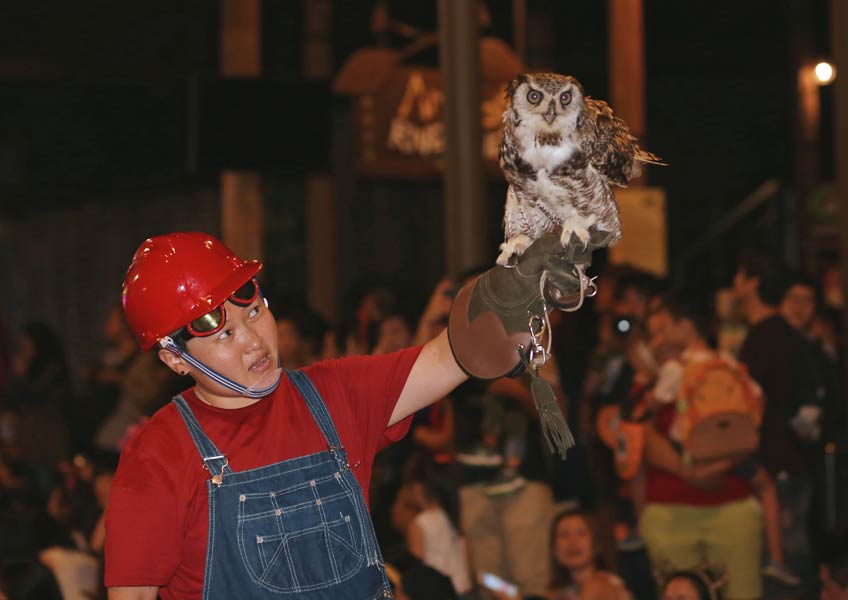
If you’re still scratching your head as to where to enjoy things macabre as the spooky Halloween mood creeps up on us, here are some suggestions – from mild ones that will not traumatise tots to those designed to give you a hair-raising experience.
For kids, family
1) Touted as a ‘merry-not-scary kids event’, Safari Boo is a family-style party which begins at dusk at the River Safari this weekend (Oct 21-23) and the next (Oct 28-30).
Themed Aliens and Monsters, the 6-10pm event will thrill kids and visitors with an underwater performance featuring four ‘mermaids’ swimming alongside some friendly manatees.
Although the event also offers encounters with ‘monsters’ and ‘aliens’, they are unlikely to be scary enough to send kids screaming for mummy. Put on monster or alien outfits as a family during Monster Boo! time at ‘Area 51’ and stand a chance to win prizes.
Lastly, be warned: Look out for tricks as you’re trying to reach out for the tempting treats. Website: https://safariboo.wrs.com.sg
2) Another suitable outing for kids is ‘The Not So Creepy Halloween’ at Singapore Science Centre.
The day event on Oct 30 – 31 allows participants to play undercover agents on on a ‘top secret’ mission to nab the super villains that have taken over the building.
Wear your best costume for an Instagram shot and stand to win a magnetism kit worth $49.90.
3) Even the government’s clubhouse HomeTeamNS Sembawang is jumping on the bandwagon with ‘Terroween’.
Enjoy a ‘Boo-fay” with tricks and treats, party games, a treasure hunt, tarot card reading at its ‘House of Torment’ tomorrow night (Oct 22). Scoot for your life if you bump into a serial killer.
Open to HomeTeam, Safra and PAssion members, but they can bring their family and friends. Suitable for kids who are accompanied by adults. Website: http://www.hometeamns.sg
4) Cold Storage Spooktacular Carnival on Oct 29 is probably the least scary event for kids.
They can take part in a record-breaking feat for the “Most Number of Halloween Pumpkins Painted”! at Guthrie House. The pumpkins and painting kits are limited, so sign up quick via this link – goo.gl/UbvwrR
You and your family can try to win Halloween hampers in the ‘best-dressed’ and ‘scariest roar’ contests. Other activities include face-painting, balloon sculpture and Lolli Spider workshops.
Details at Cold Storage Facebook page (https://www.facebook.com/events/548013738727944/).
5) If you’ve laughed your head off at Florence Foster Jenkins’ bad singing of opera (as seen in the movie showing currently), you might be tickled again at OperaCalypse Now!
Presented by L’arietta Productions, a chamber opera company, the musical fantasy takes you to a bizarre world of asteroid disasters and brain-chomping zombies accompanied with piercing screams and quirky arias.
The plot: Love in catastrophic times. Nov 5 – 8 at Aliwal Arts Centre. This post-Halloween event is suitable for the whole family. Giggles and squeals are welcome.
Details at http://lariettasg.peatix.com
For party-lovers
1) Rooftop skybar CÉ LA VI at Marina Bay Sands is bringing back London’s award-winning boutique club Cirque Le Soir for another thrilling experience this Halloween.
If you don’t want the magicians, acrobats, clowns or sword swallowers to steal the show on Oct 29, then come dressed in your best Halloween costume. You stand a chance to snag a magnum bottle of champagne when you post your picture with the hashtag #CLVFreaks.
From 9pm till late. For more details, visit http://sg.celavi.com
2) If you’re familiar with Zouk’s legendary Halloween parties, you need not be reminded that entry is free for all those in a full costume. But entry is not guaranteed if the club is already full, so arrive early on Oct 29.
To give you an idea as to what to wear, the theme is The Scream Diner in a 1950s setting.
Be warned: Party-goers gulping burgers and alcoholic slushies might go ‘missing’. As the plot unfolds, the prime suspect will go missing too. Don’t bother figuring it out now – just enjoy the suspense as you get entrapped in the confines of 17 Jiak Kim Street.
Why you should be there: The best Halloween getup stands a chance to win a combination of cash prizes, ZoukOut VIP tickets and accommodation at W Singapore – Sentosa Cove during ZoukOut plus flights to your favourite cities in Asia which offer unique party experiences.
Furthermore, the winner of the best #ZoukHalloween social media post will win a 2D1N stay at Resorts World Sentosa BeachVillas. More details at http://zoukclub.com
3) OverEasy Orchard is also offering an American Diner theme, but it will be a Battle Royale between costumed fighters. Come dressed as Bruce Lee, Chuck Norris or Sigourney Weaver for a campy fight night on Oct 29.
The nastiest ‘baddie’ will win a holiday to Bali. Details in OverEasy Facebook page.
4) Slip into your horror-party best before you pub crawl at Clarke Quay on Oct 29. Clubs and bars like Attica, Crazy Elephant, Harry’s, Highlander, Hooters, Paulaner and Prive will also take part in ‘Nightmare on Clarke Street’ with spooky-themed entertainment and drinks.
Photo opportunities abound at creepy stops such as ‘Clarke Quay Abandoned Hotel’ (near the taxi stand) and ‘The Bloody Butcher Shop’ (near Tan Tye Gate). More details athttp://www.capitalandmallasia.com.sg
Not for the faint-hearted
1) An intense roller coaster of traumatic extremes could make this the mother of all Halloween events in Singapore.
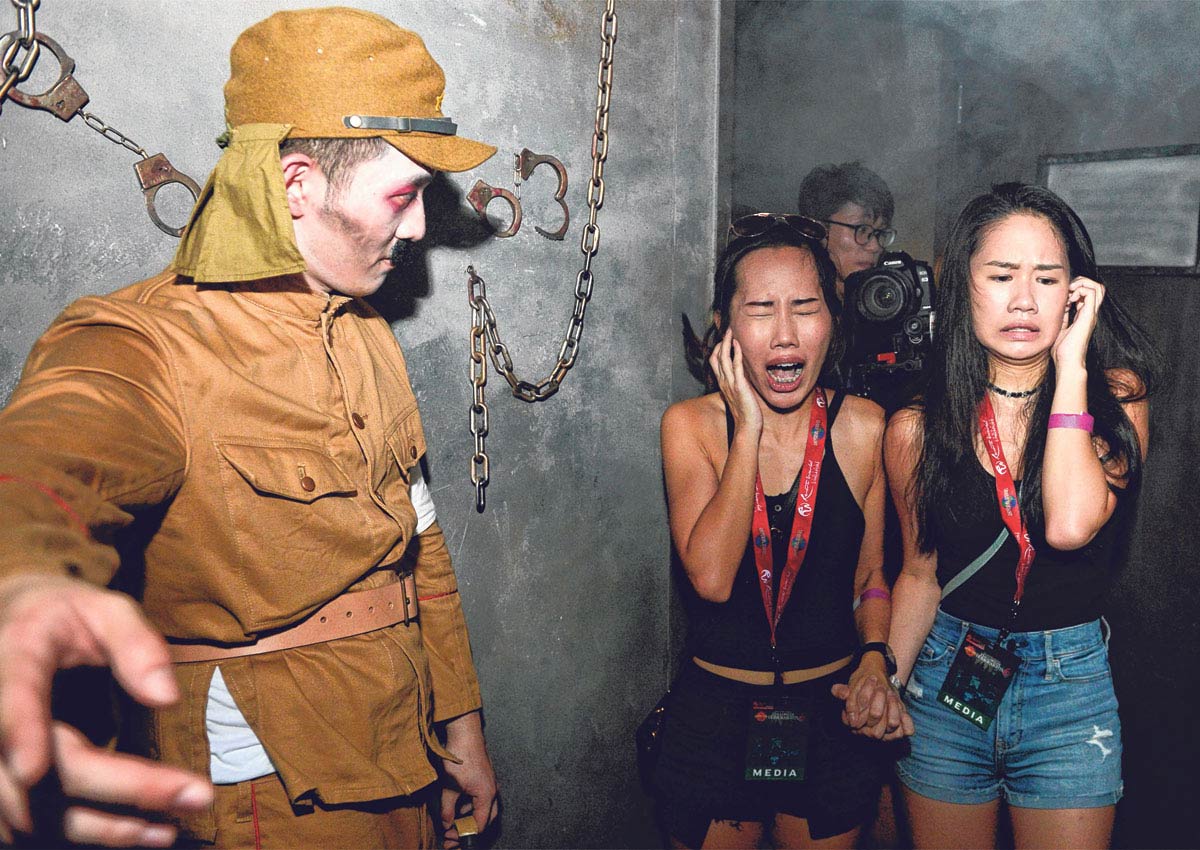
Universal Studios Singapore has launched Halloween Horror Nights, a massive scare fest every night from now till Oct 31.
You’ll get to check out not one, but five ‘haunted’ buildings and two ‘scare’ zones, all fleshing out frightful scenes from true horror tales at notoriously haunted places in Singapore and abroad.
Fat hope if you think an escape from nightmarish hell is possible. You are likely to see yourself fleeing from the old Changi Hospital to Salem Witch House. Or running into all kinds of ghouls or a pile of dead bodies with the revolting smell of rotting flesh.
For details, visit www.halloweenhorrornights.com.sg
330738
Photo GalleryLingering souls at haunted houses of USS’ Halloween Horror Nights
-

<!–
-

<!–
-

<!–
-

<!–
-

<!–
-

<!–
-

<!–
-

<!–
-

<!–
-

<!–
-

<!–
-

<!–
-

<!–
-

<!–
-

<!–
-

<!–
-

<!–
-

<!–
-

<!–
-

<!–
-

<!–
-

<!–
-

<!–
-

<!–
-

<!–
-

<!–
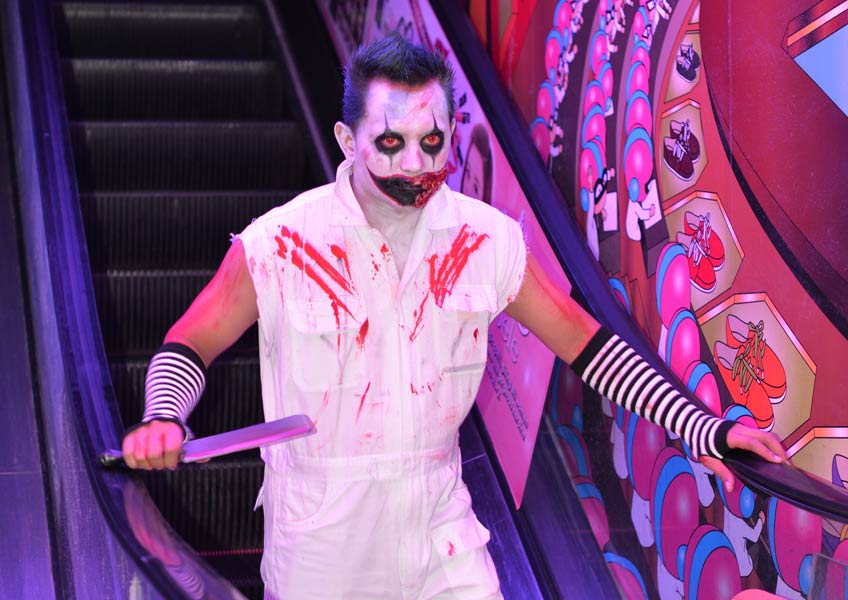
2) Bugis Street will not just be about shopping fun when the landmark market village presents Nightmare On Bugis Street.
This year’s Halloween event promises to be bigger and scarier, with two scare zones, dark alleys, creepy puppets and prison inmates.
If you’re scared stiff after the event, nurse yourself back to sanity with some late-night retail therapy. There will also be a flea market and thumping music by a DJ. This event will be held nightly from Oct 28 to Nov 5. Check out Bugis Street Facebook page.
3) SCAPE’s The Ground Theatre will be turned into The Doll Factory in its sixth edition of Museum of Horrors from Oct 26 to Nov 6. The plot is no fairy tale: A deranged doll maker murders his family in order to preserve them as dolls forever. Expect terrifying screams, bodies in a slaughterhouse, vengeful ‘souls’ at a graveyard and creepy dolls.
If you manage to get out of a dark maze, drop by at the gift shop. You never know who or what will follow you after you have snagged a queer knick-knack.
Find out more at http://museumofhorrors.peatix.com/
chenj@sph.com.sg
Image:
Publication Date:
Friday, October 21, 2016 – 15:42
Send to mobile app:
Source:
Rotator Headline:
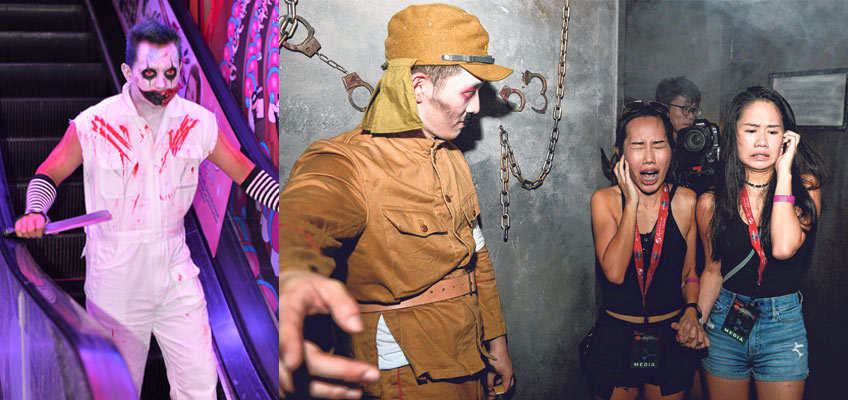
Where to enjoy Halloween fun this weekend and next week
Rotator Image:
Story Type:
Rewritten Story
Rituals in a Royal's death
Mourners from all over the country are continuously heading to the Grand Palace, with long lines forming along Sanam Luang to pay homage to His Majesty King Bhumibol Adulyadej who passed away peacefully at the age of 89 on October 13.
The royal prayer ceremony will be held for 100 days with prakhom yum yam – the traditional instrumental band – performing daily every three hours from 6am to midnight.
The late King’s body was moved to the Grand Palace on October 14, a day after his passing, in a simple van said to be His Majesty’s favourite mode of transport while visiting his people nationwide.
The royal procession moved out of Siriraj Hospital at 4.35pm accompanied by Somdej Phra Wannarat, the chief monk of Thammayut Buddhism, and members of the Royal Family, with hundreds of thousands of grief-stricken mourners lining the route.
The motorcade arrived at the Grand Palace through Viset Chaisri Gate at 5pm and His Royal Highness Crown Prince Maha Vajiralongkorn presided over the bathing ritual at Phiman Rattaya Throne Hall.
331856
Photo GalleryA look back at Thailand’s King Bhumibol Adulyadej’s life
-

<!–
-

<!–
-

<!–
-

<!–
-

<!–
-

<!–
-

<!–
-

<!–
-

<!–
-

<!–
-

<!–
-

<!–
-

<!–
-

<!–
-

<!–
-

<!–
-

<!–
-

<!–
-

<!–
-

<!–
-

<!–
-

<!–
-

<!–
-

<!–
-

<!–
-

<!–
-

<!–
-

<!–
-

<!–
-

<!–
-

<!–
-

<!–
-

<!–
-

<!–
-

<!–
-

<!–
-

<!–
-

<!–
-

<!–
-

<!–
-

<!–
The Throne Hall was built in the reign of King Rama I as one of the residential palaces in the complex and was also used as the bathing ritual venue for His Majesty the King’s grandmother, Queen Savang Vadhana, and elder brother, HM King Ananda Mahidol (Rama VIII).
After lighting the candle and incense for altar offerings, the Crown Prince paid respects to the late King’s body before bathing the King’s feet with scented water and turmeric water.
In line with the traditional royal rites, the Crown Prince then combed the King’s hair once upward, then down and upward again.
The comb was then broken in half and placed on a tray. The body was later moved to Dusit Maha Prasat Throne Hall for the royal funeral ceremony.
According to the “Thai Historical Archives” Facebook page, the act of breaking a comb is symbolic, suggesting that from this point onwards, beauty and worldly pleasure are no longer significant and no physical adornment is needed. At King Chulalongkorn’s bathing ritual, Queen Saovabha Phongsri performed the breaking of the comb.
In the old days before formalin was used to preserve the body, beeswax was used to fill all nine orifices to stop the leakage of bodily fluid. A golden death mask was also placed on top of the face to honour the monarch.
His Majesty King Bhumibol also received a death mask to comply with the royal protocols but it was not fitted with the five-tier headdress, as his body was laid in a coffin and not propped upright in the royal urn.
The five-tired headdress was instead placed beside his head in the coffin.
In his book “Thamniam Phraboromasop Lae Phrasop Chao Nai”, published by Matichon, Nontaporn Yumangmee explains that the tradition of bathing the deceased applies to both commoners and aristocrats in the belief that the body should be properly cleansed for the soul to move on to the next life.
It is also believed that as the soul ascends to heaven, it pays respect to Chula Manee Chedi, the highly respected shrine believed to be located in the second level of heaven.
332244
Photo GalleryThais in Singapore and Thailand mourn passing of King Bhumibol
-

<!–
-

<!–
-

<!–
-

<!–
-

<!–
-

<!–
-

<!–
-

<!–
-

<!–
-

<!–
-

<!–
-

<!–
-

<!–
-

<!–
-

<!–
-

<!–
-

<!–
-

<!–
-

<!–
-

<!–
-

<!–
-

<!–
-

<!–
-

<!–
-

<!–
-

<!–
-

<!–
-

<!–
-

<!–
-

<!–
-

<!–
-

<!–
-

<!–
-

<!–
-

<!–
-

<!–
-

<!–
-

<!–
-

<!–
-

<!–
-

<!–
-

<!–
-

<!–
-

<!–
-

<!–
-

<!–
-

<!–
-

<!–
-

<!–
-

<!–
-

<!–
-

<!–
-

<!–
-

<!–
-

<!–
-

<!–
-

<!–
-

<!–
-

<!–
-

<!–
-

<!–
-

<!–
-

<!–
-

<!–
-

<!–
-

<!–
-

<!–
-

<!–
-

<!–
-

<!–
-

<!–
-

<!–
-

<!–
When King Chulalongkorn passed away on October 23, 1910, the ritual of bathing the body was done twice.
The first rite took place at 10am in the king’s bed chamber at Amphorn Sathan Villa in the presence of close relatives and officials.
The body was then moved to the reception room and placed on a golden platform brought from the Grand Palace for the rest of the Royal Family members to pay respect.
The royal funeral ceremony for Queen Rambhai Barni, Queen Consort of King Rama VII in 1984, was prepared with immense attention to detail, from the intricately carved platform, the fine silk pillow in white on which her body was placed, the full shrine with the Buddha image facing east, and an altar offering set in pure gold.
A bouquet of lotus flower, rakam wood incense and candles and the golden headdress were placed on the queen’s head as she was placed in the urn. Slanted cushions were placed alongside for Their Majesties the King and Queen to pay respect.
A notable difference in the royal ritual is that, while commoners pour water on the deceased’s hands, those bathing a king’s body can only pour water on his feet, as he is revered as the figure with the highest status in the Kingdom.
When HM King Bhumibol performed the ritual on Queen Rambhai Barni, he poured water on her chest instead of her hands or feet while HM Queen Sirikit poured water on the deceased queen’s feet, as did other members of the Royal Family.
Ancient royal traditions practised to this day dictate that at the demise of a king or a queen, or a high-ranking member of the Royal Family who has done service for the country, the royal remains should be ceremoniously encased in a royal urn, or phra kot, consisting of a jewelled gold ornamented outer urn and an unadorned inner one, and placed in state on a gilded catafalque in a royal hall.
The kot, or funeral urn, comes from the Sanskrit word for “something that covers or wraps”.
This type of funeral urn is used for kings, Royal Family members, aristocrats and high-ranking noblemen according to the Brahman belief that, for the souls to return to heaven after death, the bodies have to be in a standing position or sitting or kneeling with two hands clasped.
Phra boroma kot refers to funeral urns used for kings and queens.
Phra kot are those for Royal Family members and aristocrats while simple kot are those for commoners. Phra boroma kot and phra kot both comprise two interlocking parts.
332459
Photo GalleryLarge crowds gather as convoy transports Thai king’s body to Grand Palace
Source:
-

<!–
-

<!–
-

<!–
-

<!–
-

<!–
-

<!–
-

<!–
-

<!–
-

<!–
-

<!–
-

<!–
-

<!–
-

<!–
-

<!–
-

<!–
-

<!–
-

<!–
-

<!–
-

<!–
-

<!–
-

<!–
-

<!–
-

<!–
-

<!–
-

<!–
-

<!–
-

<!–
-

<!–
-

<!–
-

<!–
-

<!–
-

<!–
-

<!–
-

<!–
-

<!–
-

<!–
-

<!–
-

<!–
-

<!–
-

<!–
-

<!–
-

<!–
-

<!–
-

<!–
-

<!–
-

<!–
-

<!–
-

<!–
-

<!–
-

<!–
-

<!–
-

<!–
-

<!–
The outer part, called long, is made of a gold-plated wooded frame adorned with gemstones and coloured glass pieces.
The decoration varies according to the rank of the deceased. The inner part is called kot and is made of bronze or gold-plated silver.
The kot is the actual vessel that holds the body.
Constructed of rolled metal sheet, the cylinder-shaped container with a slightly flared top is approximately 95cm high.
The diameter of the top is 65cm while the bottom is 46cm.
The bottom is lined with a welded metal grille to support the weight of the body and for the convenience of cremation.
The whole urn is propped on a wooden pedestal with a shallow bowl-shaped feature, or lined with a lotus leaf-shaped tin container, to collect fluids dripping from the decomposing body.
In the old days, the deepest part of the bowl was fitted with a small hole and a long, thin pipe to carry bodily fluids to the “cave” below.
The lid of the cave was then sealed with beeswax.
The collected fluid was not discarded but dried in a hot pan along with fragrant herbs.
The dehydrated fluid masses would then be cremated along with the body in the funeral pyre or Phra Meru.
In ancient times, royal funerals were usually held in the dry season, as the funeral pyre was normally set up outdoors and rain could disrupt the process. But death cannot be dictated.
Those who perished in the rainy season would have to wait until the dry season to be cremated, and as they waited, their bodies started to decompose, especially when body- preserving chemicals did not exist.
To keep everything gracefully neat, the body was usually defleshed before cremation.
The remaining flesh and skin on the body was carefully removed from the bones.
The flesh was then boiled with fragrant herbs and dried, waiting to be cremated along with the bones, the fluids from the cave and the burial shroud.
The last defleshing ritual mentioned in the national archive was for the cremation of Queen Savang Vadhana.
Since then formalin has been used to preserve the bodies.
The last body to be propped on the phra kot was Queen Rambhai Barni of King Rama VII’s reign in 1984.
Today, the bodies of royalty and high-ranking aristocrats are often placed in coffins, while the adorned urns are placed out front to maintain tradition.
The bodies of Her Royal Highness the Princess Mother and Her Royal Highness Princess Galyani Vadhana were also placed in coffins.
HM King Bhumibol’s royal coffin is made of a single sheet of a century-old gold teakwood and plated with pure gold.
The inside is lined with the finest silk in an ivory shade.
HM King Bhumibol ordered the building of a new royal sandalwood urn in 2000 to replace the one created in 1900 during the reign of King Rama V.
This royal urn was first used during the royal funeral ceremony of HRH Princess Galyani Vadhana in 2008 and is being used now in the rituals for the late Monarch.
The royal urn is plated with carved pure gold with patterns regulated by tradition of royalty, characterised by exquisite craftsmanship of Thai art while presenting the honour and ranking of the Monarch.
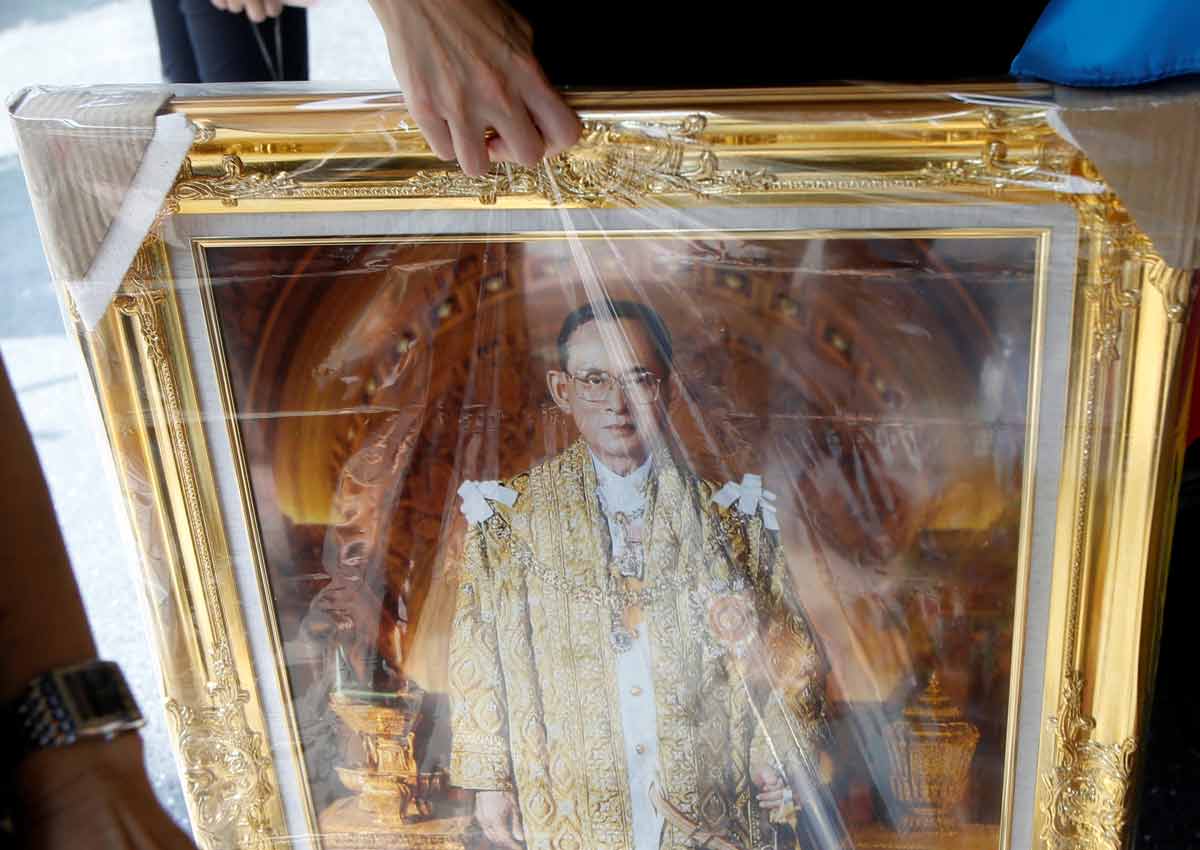
Members of the public are able to pay homage to HM King Bhumibol before his portrait at Sala Sahathai Samakhom between 8.30am and 4pm daily.
They will be allowed to pay respects in front of his royal urn inside the Grand Palace’s Dusit Maha Prasat Throne from October 28. The national mourning period is one year.
For the cremation, a temporary funeral pyre or Phra Meru will be constructed at Sanam Luang in line with tradition.
Its size, design and magnificence have varied over time, but depend as well on the degree of beneficence of the deceased royal personage.
This is in keeping with the Buddhist belief that when a person of great might dies, his and her soul proceeds to the Tavatimsa heaven on Phra Meru Mountain, to attain peace and happiness.
HRH Crown Prince Maha Vajiralongkorn has assigned Her Royal Highness Princess Maha Chakri Sirindhorn to make the final decisions on the construction of Phra Meru for the royal cremation.
The design is under the supervision of the Fine Arts Department.
Image:
Publication Date:
Friday, October 21, 2016 – 15:11
Keywords:
Send to mobile app:
Source:
Story Type:
Others
High zinc in brain linked to poor memory
The difficulty some people have with long-term memory loss in old age could be linked to an abnormally high level of zinc in a special region in the brain, suggests a new finding by Singapore scientists.
The team of three from the National University of Singapore (NUS) has found that the drug TPEN could help to reverse this.
Zinc is a mineral – found in food like cabbage and shiitake mushrooms – that is essential for a body to function well, playing a role in maintaining a person’s sense of smell and a healthy immune system.
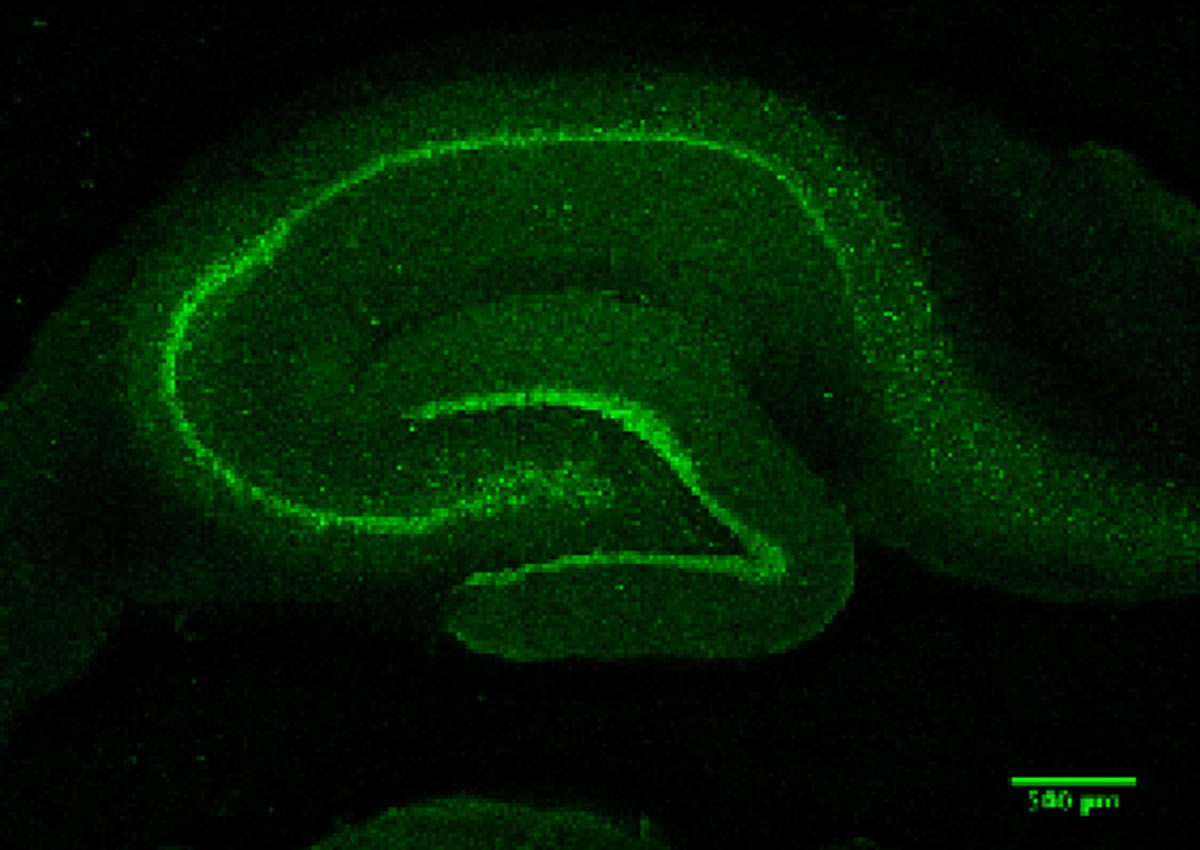
It is also found in the nerve cells in the brain’s hippocampus, a region associated with learning and long-term memory, where it helps the cells to communicate with one another.
While previous research found that the level of zinc in the blood declines as a person ages, the researchers from the NUS Yong Loo Lin School of Medicine claim that their study on animals indicates a significant increase in zinc in the hippocampus of aged brains.
They believe the level of zinc in the blood does not accurately represent the amount of zinc in the brain, and that their finding warrants further investigation.
The study was published recently in peer-reviewed scientific journal Aging Cell.
The scientists believe that the increase in zinc likely happens due to malfunctioning “transporters”.
“These transporters within the hippocampus work as gatekeepers that ensure there is not too much or too little zinc,” explained Assistant Professor Sajikumar Sreedharan, who led the study.
“But they go awry in advanced ageing,” he added.
A study of rats found that this high level of zinc in the hippocampus – nearly doubled in an aged brain compared to an average adult brain – affects the animal’s ability to form long-term memories.
Long-term memory is formed through a process called consolidation, where it is converted from short-term memory through association.
A person is more likely to remember the name of the wine he drank at his wedding than the wine he drank last week because in the first instance, the wine – which by itself is a short-term memory – is associated with his wedding, a strong memory.
The team found that this ability to associate is impaired when there is a high level of zinc in the hippocampus.
They also found that when they gave the drug TPEN to the rats, it helped restore their ability to associate and form long-term memories.
The drug is currently used only in pre-clinical studies. It has previously been used to study the role of zinc and how it is released in neurons.
Previous studies on animals have also suggested that a high-zinc diet leads to learning and memory deficits in old age.
“The common practice so far is to recommend the use of zinc supplements in old age as there is a lot of evidence that points to systemic zinc deficiency,” said Dr Mahesh Shivarama Shetty, who recently obtained his PhD from NUS.
“What our study suggests is that perhaps you should rethink whether taking a lot of zinc supplements is really helpful,” he said.
Next, the team plans to do further studies on the malfunctioning transporters and to study the level of zinc in post-mortem human brain tissues of older people.
Professor Christiani Jeyakumar Henry, director of the Clinical Nutrition Research Centre at the Agency for Science, Technology and Research, said the NUS study further reinforces the link between diet and memory.
“The association between zinc and memory opens up a new line of research that attempts to understand how diet may be used to modulate many aspects of human brain activity,” he said.

This article was first published on Oct 21, 2016.
Get a copy of The Straits Times or go to straitstimes.com for more stories.
Image:
Category:
Publication Date:
Friday, October 21, 2016 – 15:12
Keywords:
Send to mobile app:
Source:
Story Type:
Others
Two men jailed for buying and selling contraband cigarettes via WeChat
 SINGAPORE – Two men were jailed on Thursday (Oct 20) after they were found guilty of buying and selling duty-unpaid cigarettes via messaging app WeChat.
The Chinese nationals, Bao Jiancao, 29, and Zhu Xingbing, 45, were arrested in two separate operations…
Source link
Errant riders are a few black sheep, says embattled e-scooter community
Singapore’s under-fire electric scooter enthusiasts call for strict penalties to be handed out to the few “reckless” users hogging the headlines, but reject a total ban of the devices as suggested by online crowds.
Source link
Principals appointed for 7 merged secondary schools
The seven are part of the 61 principals named to lead junior colleges, secondary and primary schools, the Ministry of Education says.
Source link
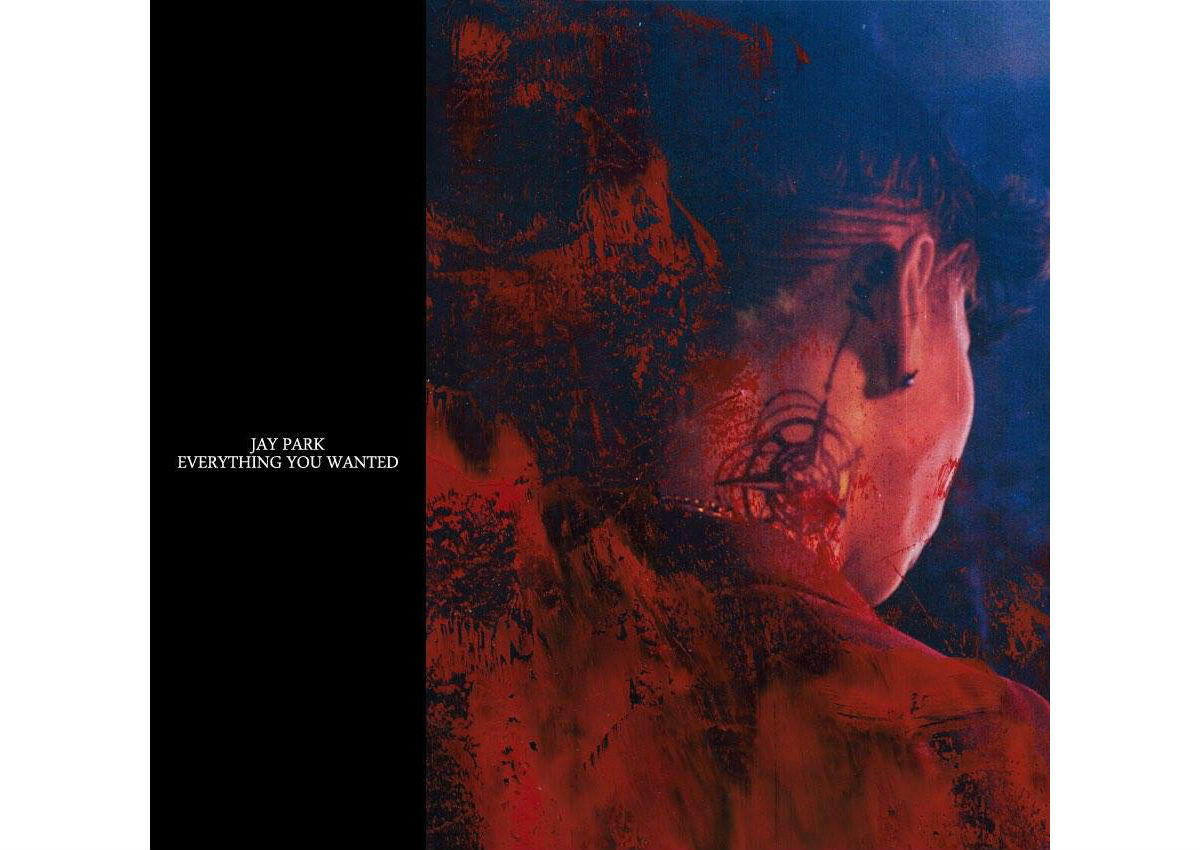
Jay Park returns with new album "Everything You Wanted"
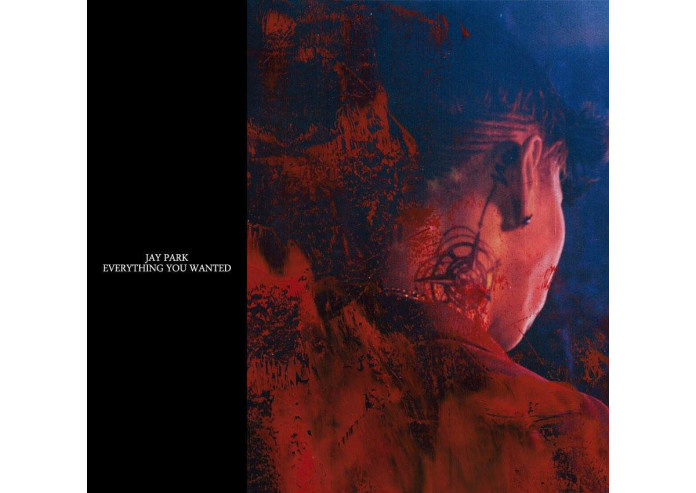
Korean-American singer Jay Park has returned with a new album.
Park unveiled his fourth full studio album “Everything You Wanted” on local music sites Thursday morning.
The artist’s first album since last November, “Everything You Wanted” contains 19 songs, including two title tracks, “Drive,” featuring singer-producer Gray, and “All I Wanna Do,” featuring rapper Loco and rhythm-and-blues singer Hoody. Both songs were produced by Park’s labelmate Cha Cha Malone, who has worked with other K-pop artists, including Red Velvet, Dok2, Shinhwa and others.
Along with the album, Park also released the official music video for “Drive,” which stars Bora from girl group Sistar. A jack of all trades, Park began his career in entertainment as a member of Seattle-based dance group Art of Movement in 2003. After a yearlong stint as a member of K-pop boy band 2PM, he continued on as a solo artist and founded AOMG, an independent hip-hop record label, in 2013.
Park’s new album will be available on offline channels starting Oct. 25.
Image:
Publication Date:
Friday, October 21, 2016 – 14:39
Keywords:
Send to mobile app:
Source:
Story Type:
Others


