30.7 C
Singapore, SG
Wednesday, September 30, 2026
Home Blog Page 2504

ChildAid inspires young talents to live their dreams

0

SINGAPORE – A young guzheng student who plays pop music on her instrument; a ukulele and vocal student who aspires to be a world-famous gamer; an aspiring ballet dancer who enjoys showing her humorous side to entertain. These are some of the young talents who will get to live their dreams at Singapore’s major annual children’s charity concert, ChildAid, come November.

Aptly themed “Living Dreams”, ChildAid 2016 will see 11-year old guzheng student Sylvia Tan whose “biggest dream is to travel around the world and to perform at different concerts” fulfil part of her dream on 18 and 19 Nov at Resorts World Sentosa. Sylvia will perform with 20 members of local harp ensemble, the Rave Harpers, for her showcase. Similarly, Megan Lau, 15, who religiously trains daily and hopes to do Singapore proud on the international dance stage, will also have an opportunity to display her emceeing skills aside from dancing in one of the song segments.

The concert, into its 12th edition, is organised by The Straits Times and The Business Times, in support of two children’s charities. The charities are The Straits Times School Pocket Money Fund (STSPMF) and The Business Times Budding Artists Fund (BT BAF).

For 2016, the 90-minute show will feature song, dance and music performances by about 170 talents aged 19 and below, who were selected from auditions held earlier this year.

The concert will also present some unique collaborative pieces by young musicians. Said Mr Jeremiah Choy, ChildAid’s creative director, on the concert’s artistic direction: “We facilitated the performers’ imagination and experimented with different combinations to showcase the best of our performers. Many of them proposed interesting ideas to translate their dreams into pieces which they could perform onstage. For instance, when we paired vocalists Nandini, who is rather shy, and Zhe Ee, who is an outgoing ukulele player and avid gamer, they each suggested their favourite songs and discussed how they could collaborate. Eventually, they came up with a creative mashed-up version of Maroon 5’s Daylight and Imagine Dragons’ Radioactive.”

In line with its theme of “Living Dreams”, this year’s concert will also see a special segment that documents the achievements of the beneficiaries of both the charities.

Mr Alvin Tay, ChildAid’s co-organising Chairman and Editor of The Business Times, said: “Living Dreams is a portrayal of the hopes and aspirations of the young performers and the beneficiaries of STSPMF and BT BAF, whom ChildAid supports. 2016 has been a spectacular year with breaking news of many young Singaporeans ‘living their dreams’ such as Joseph Schooling and ex-ChildAid alumnus, Nathan Hartono. We hope to celebrate the dreams of those who have persevered on a road less taken and achieved success in spite of their odds, especially those who were less privileged. This year’s concert will feature stories of the many who have benefited through the two children’s funds and have blossomed through the years of support.”

Last year, the concert raised nearly $2million for STSPMF and BT BAF. STSPMF gives financial assistance to children from low-income families to help them through school, and BT BAF provides fully-sponsored arts training for young people from financially-disadvantaged backgrounds. This year’s ChildAid is produced by arts and cultural non-profit organisation, The RICE Company Limited. Resorts World Sentosa is the official venue partner.

Tickets will be available at all SISTIC outlets from 28 October onwards.

The public can also support the two child charities by donating to http://bit.do/ChildAid2016.

Image: 
Category: 
Publication Date: 
Wednesday, October 26, 2016 – 23:03
Keywords: 
Send to mobile app: 
Source: 


Story Type: 
Others

Source link

Train captain who gave elderly man piggyback ride to station during disruption commended

0

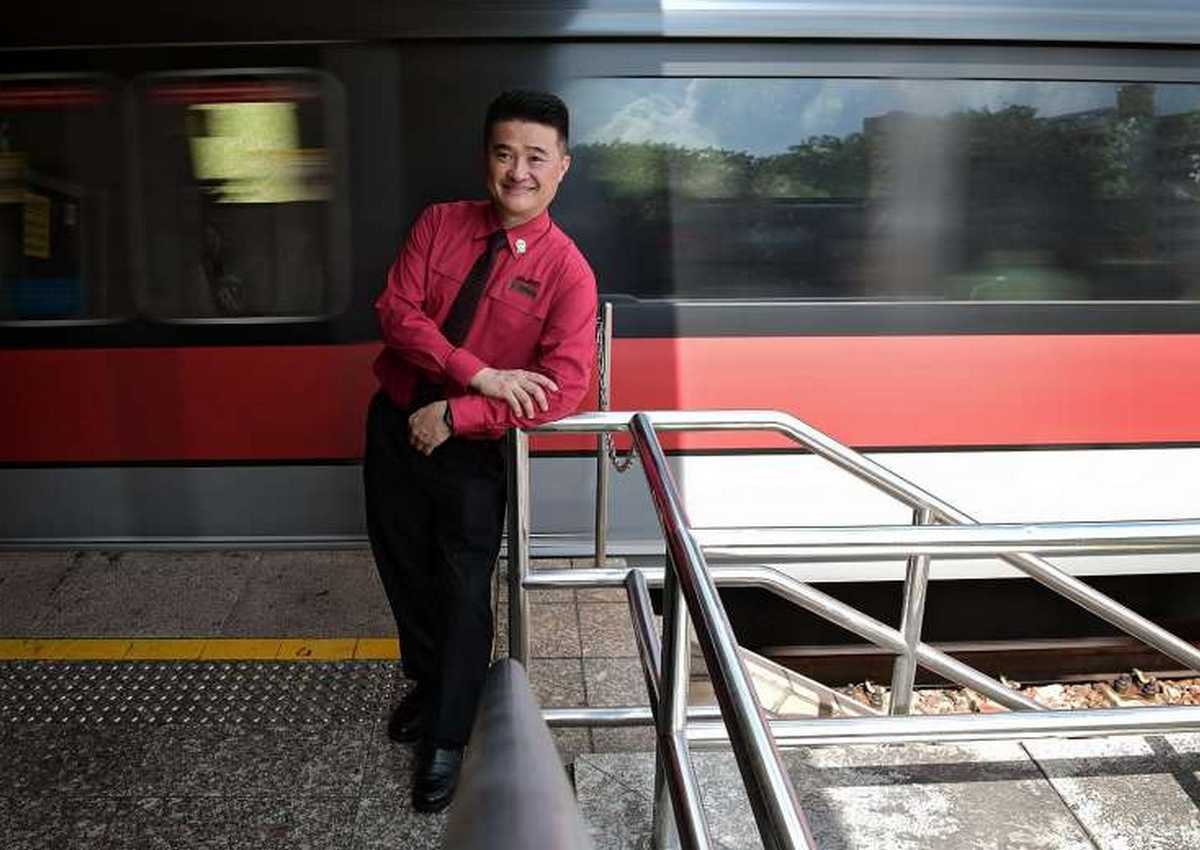
SINGAPORE – During a train service disruption on the North-South Line on Jan 9, in which commuters were forced to get off the train, train captain Goh Kim Han’s primary concern was guiding passengers to the nearest station safely.

As commuters cautiously picked their way over the tracks towards Marsiling Station, Mr Goh, 51, noticed an elderly man struggling to navigate the uneven surface. Rather than risk the man falling, he immediately approached the man and offered him a piggy-back to the station platform.

Mr Goh’s small act of kindness drew the attention of local media and later earned him an Outstanding Award at the National Kindness Award – Transport Gold.

The train captain was one of 25 public transport sector personnel to receive an Outstanding Award at the 17th edition of the ceremony on Wednesday (Oct 26). A total of 419 service staff received commendation awards in recognition of their exemplary service.

Jointly organised by the Singapore Kindness Movement, Land Transport Authority (LTA) as well as public transport companies and associations, the ceremony recognises service staff who consistently provide excellent service and go the extra mile in the course of their work. It also seeks to promote gracious behaviour in the public transport industry.

Said Dr William Wan, general secretary of the Singapore Kindness Movement: “Millions of trips are made on our public transport every day, made possible and enjoyable by our dedicated frontline service and backend support staff. We are very pleased to recognise those who have gone beyond the call of duty for their passengers. Their heartwarming stories show that as long as one makes an effort to reach out to someone with kindness, it can make a huge difference.”

The award recipients were picked from five categories – bus operations, taxi operations, rail operations, automotive and engineering, as well as customer service and all other support functions. A total of five winners from each of the five categories were selected by a panel of judges for the Outstanding Awards.

Dr Wan noted that every year, there has been a rise in the number of nominations and the number of people who are given the award.

“That goes to show…that this idea of kindness breeding kindness and graciousness multiplying itself is actually working. When people see their own colleagues being praised, awarded and recognised, I think others would also like to do the same.”


This article was first published on Oct 26, 2016.

Get a copy of The Straits Times or go to straitstimes.com for more stories.

Image: 
Category: 
Send to mobile app: 
Source: 


Story Type: 
Others

Source link

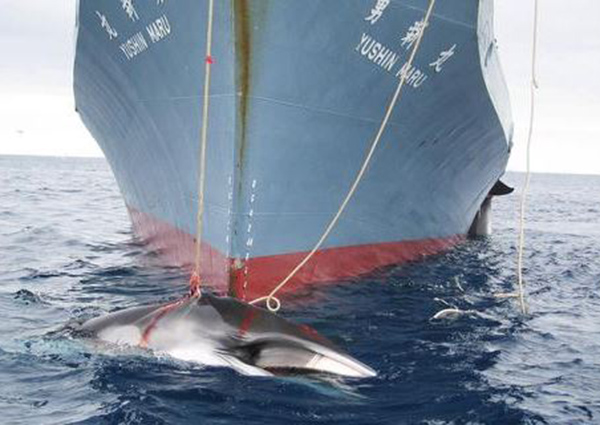
Japan, West clash over 'cultural' whale hunts

0

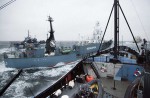
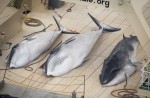
PORTOROZ, Slovenia – Japan pleaded with the world’s whaling watchdog Wednesday to allow small hunts by coastal communities, arguing that for three decades these groups had been unjustly barred from a traditional source of food.

The issue of “small type coastal hunting” is a key dispute between pro- and anti-whaling nations gathered in Slovenia for the 66th meeting of the International Whaling Commission (IWC).

As in other years that the issue has come up, Japan’s ambitions were backed by fellow whalers Norway and Iceland, and vehemently opposed by the United States, Europe, Australia and others.

All whaling other than for aboriginal subsistence or for scientific research is banned under an IWC moratorium introduced 30 years ago.

“There is this perception that we are asking (for the) total lifting of the moratorium, that is not the case,” Japan’s commissioner to the IWC, Joji Morishita told delegates.

“We are just asking for a small quota based on science, and of particular species in particular water. That’s it.” Japan seeks a quota for minke whales in the West Pacific, and argues that stock numbers can sustain small hunts.

The takings would be “exclusively for local consumption” by four coastal communities, it said.

“I’m not asking other countries to change their basic positions,” said Morishita, nor “to eat whale meat.” He urged other nations to look beyond their “principled position against whaling under any circumstances” in the quest for a compromise on this and other deeply divisive whaling questions.

“It’s not like one side is bad and one side is good. This is not a dichotomy or a black and white situation,” the commissioner said.

Along with Norway and Iceland, which argued the IWC was “held hostage” by anti-whalers, Japan’s position was also supported by Russia.

“I think that we all have to remember that those four communities in Japan that have been asking for quota, they have a 5,000-year history of whaling,” said Russia’s deputy IWC commissioner, Valentin Ilyashenko.

“Our task is not only to conserve biodiversity but also to conserve culture and traditions.” The European Union and United States spoke out strongly against the proposal.

“We can only reiterate our stong support for the maintenance of the global moratorium on commercial whaling and our serious concerns about the impact of small type coastal whaling on whales,” the Dutch commissioner Roel Feringa, said on behalf of the EU bloc.

For the US, commissioner Russell Smith said it was also an issue of values.

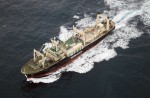
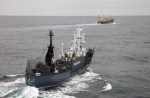
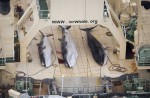
“Those values for the US include ensuring that our subsistence farmers have their right, have the access to the whales that they need, but they also include the value that we at this time should not be engaged in commercial whaling.” The disagreement sets Japan up for an even bigger clash later this week, about its annual whale killings in the name of scientific research – which other nations claim is a cover-up for commercial hunting for meat.

New Zealand and Australia have submitted a proposal to the IWC for scientific hunts, which are allowed under a loophole in the moratorium, to be much more closely scrutinised.

If countries cannot agree on a compromise on the proposal, a vote will be held, probably on Thursday.

Norway, too, came under fire on Wednesday – from conservation groups which accuse the IWC of giving the world’s biggest whale hunter, a free ride.

Norway, which conducts commercial hunts under a formal objection it had lodged to the moratorium, took 736 minke whales in 2014, according to IWC numbers, compared to Japan’s 196 – 81 minke, 25 Bryde’s whales and 90 sei whales.

With a dwindling appetite for whale meat in Norway, as in Iceland, much of the Norwegian catch is exported to Japan, and some used as animal feed, said Sandra Altherr of Pro Wildlife.

“Commercial whaling and trade is ongoing, and Norway is a huge part of that,” she said. “But we don’t see any diplomatic measures on Norway.”

Image: 
Category: 
Publication Date: 
Wednesday, October 26, 2016 – 22:35
Keywords: 
Send to mobile app: 
Source: 


Hermes ID: 
2 698 315
Hermes ID String: 
VLWHALE26
Hermes Author: 
GRONGLOH
Story Type: 
Others

Source link

Istana opens doors to public on Deepavali

0

One of the programme highlights at the open house will be the music performances by the Hwa Chong Institution Band and Presbyterian High School Band. 

Source link

SingCERT publishes advisory following attack on Starhub's network by its customers' infected devices

0

SINGAPORE – The Singapore Computer Emergency Response Team (SingCERT ) has published an advisory on Wednesday (Oct26) following the first major attack to hit Singapore’s telco infrastructure on Monday (Oct 24).

Besides checking for software updates regularly and installing them, businesses and individuals were advised to turn off remote access to Internet-connect devices like cameras and printers.

Default passwords was also a vulnerability that could be exploited, SingCERT said.

Telco operator Starhub confirmed on Tuesday (Oct 25) that its network was overwhelmed by a Distributed Denial of Service (DDoS) attack that caused two outages.

Read also: StarHub confirms cyber attacks on servers caused broadband disruptions on Saturday and Monday

The Cyber Security Agency (CSA) and the Infocomm Media Development Authority (IMDA) will be working closely with Starhub following the attacks on its broadband service.

“DDoS attacks on Domain Name Services (DNS), as seen in the Starhub’s case are generally rare, although the latest Dyn incident in US has shown that it is surfacing as an emerging trend,” CSA and IMDA noted in their joint statement.

DNS is a database that converts web addresses like www.nameofwebsite.com into machine readable sets of digits, for customers to view websites on their computers. When a DNS is not operating normally, customers may face difficulty in accessing the internet.

“In DDoS attacks, attackers usually scan for vulnerable internet-connected devices and employ a list of techniques (e.g. password cracking) to gain access to the devices,” the two agencies added.

“Any Internet-connected device, from wifi- routers to printers to cctvs, can inadvertently be part of a network of “bots” that can be activated to attack other systems.

“Given the increasing connectedness of digital systems, there is no fool-proof solution.”

Starhub confirmed on Wednesday evening (Oct 26) that the infected devices that brought down its network were from its own customers.

Read also: Amazon, Spotify, Twitter suffer service disruptions due to attack on infrastructure provider

Monday’s attacks on Starhub’s networks “were unprecedented in scale, nature and complexity”, the telco said in an earlier statement.

In response to the infection, Starhub will be deploying its “HubTroopers” technical team top help troubleshoot their customers’ compromised machines, Channel NewsAsia reported.

It is still not clear if Starhub’s outages were isolated, or linked to the US-based Dyn DNS attacks, the report added.

Echoing StarHub’s Chief Technology Officer Mock Pak Lum advice for everybody to play a role in cybersecurity, CSA and IMDA wrote: “Owners of internet-connected devices should adopt good cyber hygiene practices to secure their devices.”

grongloh@sph.com.sg

Read also: Cyber attack likely mitigated, US Homeland Security says

​

Image: 
Publication Date: 
Wednesday, October 26, 2016 – 22:11
Keywords: 
Send to mobile app: 
Source: 


Rotator Image: 
Story Type: 
Rewritten Story
W.T.M. (Why This Matters): 
Singapore experienced its first attack on its telco infrastructure on Monday. Here's how you can secure your internet connected device to prevent yourself from becoming both perpetrator and victim.

Source link

Lack of trust between US, China despite economic links: PM Lee

0

“There is an absence of strategic trust in the sense that the Chinese are convinced that (the Americans are) trying to slow their growth, and you are convinced that the Chinese may do something unpredictable,” says Singapore Prime Minister Lee Hsien Loong.

Source link

PM Lee sounds warning on drop in US standing and credibility in region if TPP is not ratified

0

SINGAPORE – The United States risks injuring its standing and credibility with several Asia-Pacific countries if the Trans-Pacific Partnership (TPP) trade deal is rejected by its lawmakers, Prime Minister Lee Hsien Loong said.

It will be a “very big setback for America” as some countries, like Japan, have gone out of their way to support the 12-nation Pacific Rim trade pact, he added.

The pact, which the Obama Administration supports, is before Congress which is in recess until after the Nov 8 presidential election.

Mr Lee, speaking last Thursday (Oct 20) in an interview with US weekly magazine Time and published in its latest edition, also said the pact needs to be ratified by January.

Otherwise, it would be a “casualty” of the US presidential election because both candidates – Mrs Hillary Clinton and Mr Donald Trump – are opposed to it.

Mr Lee indicated he was not optimistic of the pact being ratified by then.

The TPP, co-founded by Singapore, will create a giant free-trade zone and give the 12 countries access to 800 million consumers, representing one third of global trade.

It is a key thrust of the US’ foreign policy in Asia aimed at countering China’s rising influence in the Asia-Pacific.

Mr Lee said China sees trade as an extension of its foreign policy, going around to countries “with lollipops in its pockets” like giving aid or building them a Prime Minister’s office. The US does not “do these retail items”, he added.

“The one big thing which you have done is to settle the TPP, which Obama has done. It shows that you are serious, that you are prepared to deepen the relationship and that you are putting a stake here which you will have an interest in upholding,” he added.

But its credibility will take a hard knock if the pact falls through.

Japan’s Prime Minister Shinzo Abe “has made very difficult arrangements on agriculture, cars, sugar and dairy,” Mr Lee noted.

“Now you say, ‘I walk away, that I do not believe in this deal.’ How can anybody believe in you anymore?” Mr Lee said.

Similarly in strategic issues, he added. Citing North Korea, he said the country is unpredictable and is developing its nuclear capabilities and missiles.

“You do not want the South Koreans to do that, you do not want the Japanese to do that. What is the restraint on them? It is your credibility as an ally and as a deterrent.

“I do not think failing to rectify the TPP will strengthen that at all.”

There also seems to be a lack of strategic trust between US and China, Mr Lee said.

“The Chinese are convinced that you are trying to slow their growth and you are convinced that the Chinese may do something unpredictable.”

To ensure China does not push against the interest of the US, dialogue between them must happen at the top, he said.

Mr Lee noted that the US-China relationship is broad, but also different from that of the US and Soviet Union during the Cold War.

Then, they could rely on “backchannels” like former US Secretary of State Henry Kissinger’s relationships with former Soviet ambassador to Washington Anatoly F. Dobrynin and former Soviet foreign minister Andrei Gromyko.

“They were opponents, but they made some progress,” he added.

“Now you have the mechanisms with China… But I am not sure the degree to which you are able to engage and come down to brass tacks,” he said.

On the domestic front, Mr Lee discussed the challenges confronting Singapore as it restructures its economy and prepares its people for disruptive technologies and a future it cannot quite define.

“There are things you can do to help: training, transition assistance, social support if people are out of a job. But you cannot stop the change from happening,” he said.


This article was first published on Oct 26, 2016.

Get a copy of The Straits Times or go to straitstimes.com for more stories.

Image: 
Category: 
Send to mobile app: 
Source: 


Story Type: 
Others

Source link

Singapore is the 28th most generous country in the world, its best ever showing in World Giving Index

0

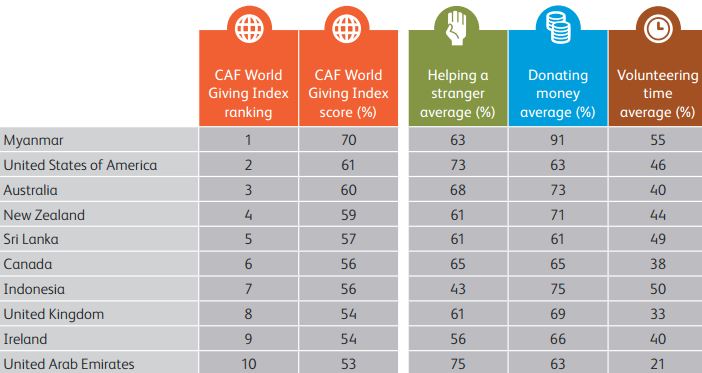
Myanmar has been named the most generous country in the world for the third consecutive year, according to the latest Charities Aid Foundation (CAF) World Giving Index.

The annual index, which compiled an average of 1,000 responses each from 140 countries, looked at three major yardsticks: helping strangers, donating money and volunteering time.

Singapore, meanwhile, climbed up six spots from the previous year to 28th – its best ever showing since the index was launched in 2010.

The Republic improved on two fronts: helping strangers and donating.

Half of the Singaporeans surveyed were found to have helped a stranger, while nearly six in 10 (58 per cent) had donated money last year.

The third yardstick, volunteering, saw Singapore’s percentage score fall slightly from 27 to 23.

But there is still some way to go before it can emulate Myanmar, where a whopping nine in 10 people give money to charity.

The top 10 most generous countries in the world. PHOTO: 2016 WORLD GIVING INDEX

According to the index, Myanmar’s generous giving reflected the practice of Sangha Dana, where the country’s largely Theravada Buddhist population donate to those living a monastic lifestyle.

It also attributed Myanmar’s improvement in its overall index score to a “widespread sense of optimism” ahead of last November’s landmark general election.

The United States, Australia, New Zealand and Sri Lanka rounded out the top five most generous countries.

China was ranked last overall, with particularly poor scores in volunteering and donating. It was one of only a handful of countries with a single digit score in both categories.


This article was first published on Oct 26, 2016.

Get a copy of The Straits Times or go to straitstimes.com for more stories.

Image: 
Category: 
Keywords: 
Send to mobile app: 
Source: 


Rotator Headline: 
Singapore is the 28th most generous country in the world
Story Type: 
Others

Source link

PM Lee on TPP, US-China ties and jobs in Singapore

0

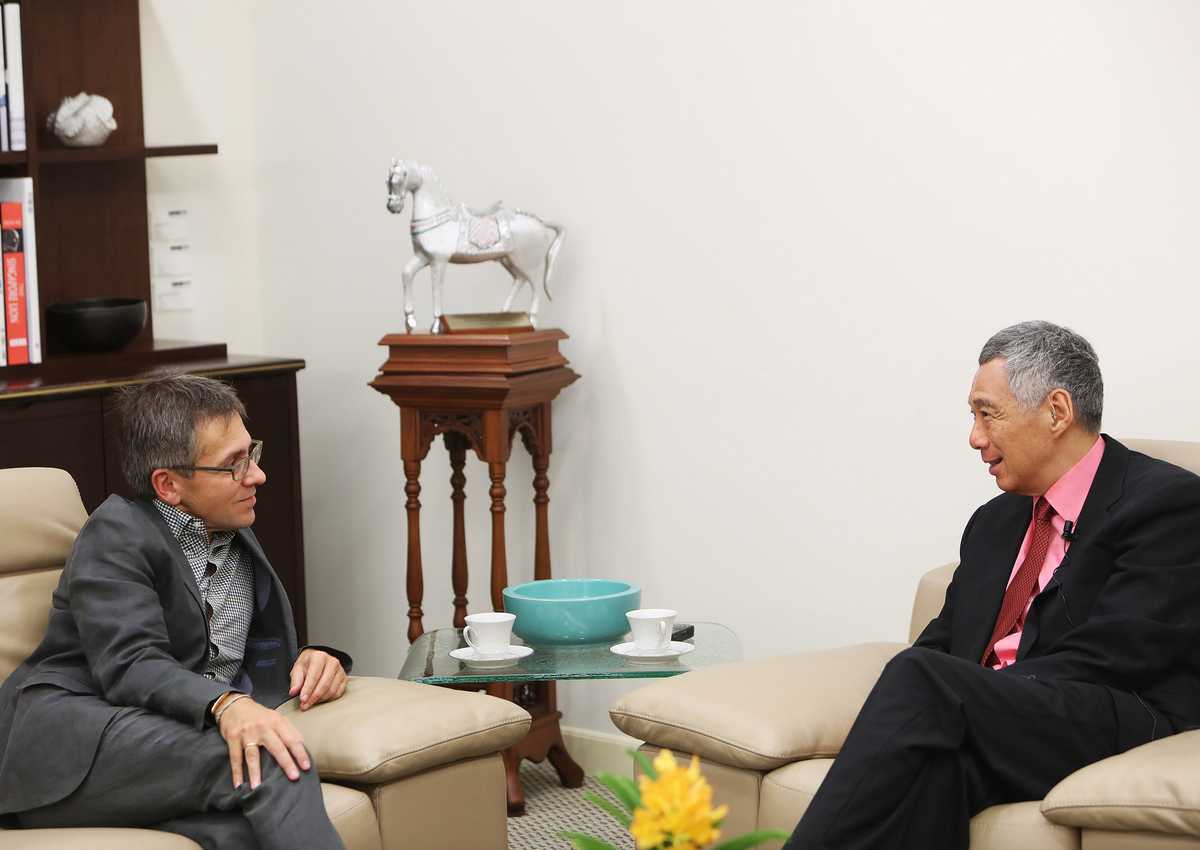
Prime Minister Lee Hsien Loong was interviewed by Mr Ian Bremmer, President of Eurasia Group and Editor-At-Large and foreign affairs columnist at Time Magazine last Thursday (Oct 20). Among the issues raised, they spoke about the Trans-Pacific Partnership,…
Source link

DDoS attack on StarHub first of its kind on Singapore's telco infrastructure: CSA, IMDA

0

This comes after the telco revealed that compromised devices led to the DDoS attacks in a media briefing on Wednesday.

Source link