APSN Delta Senior School, Eden School, Metta School and Rainbow Centre – Yishun Park School have been honoured for their innovations to enhance students’ learning, the Ministry of Education said.
Source link
4 schools recognised for contributions to special needs education
Food mag's version of halo-halo draws flak from Filipinos
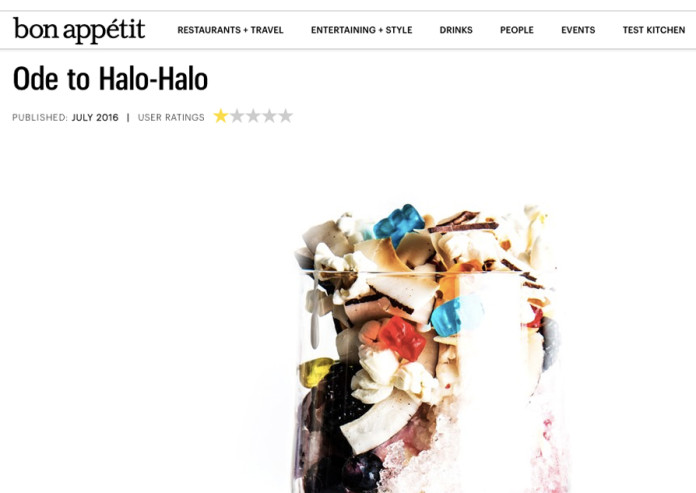
Would you dare to try halo-halo with ingredients such as gummy bears, popcorn and blueberries?
Bon Appetit, a popular food magazine, unveiled its take on the Philippines’ most celebrated chilled dessert. But it’s not the type of halo-halo someone would expect – it missed out its key ingredients in favour of American snacks.
Read also: Canadian chef’s upscale version of Hainan chicken rice outrages Asians
“Our reimagined version plays off the original with store-bought toppings like coconut flakes and gummies. Macerating the fruit makes it extra juicy and saucy, but you could just throw in any unadulterated berry,” the description read.
Here are the ingredients of the mag’s “Ode to Halo-Halo”:
– 2 very ripe bananas, sliced ¼-inch thick
– 2 tablespoons light brown sugar
– ¼ teaspoon vanilla extract
– Kosher salt
– 6 ounces fresh blueberries (about 1 cup)
– 6 ounces fresh blackberries (about 1½ cups), cut in half if large
– 2 tablespoons fresh lime juice
– 1 tablespoon granulated sugar
– ¾ cup unsweetened coconut milk
– 2 tablespoons sweetened condensed milk
– 4 cups shaved ice
– ½ pint vanilla or coconut ice cream
– Toasted unsweetened coconut flakes, gummy bears, and/or popcorn (for serving)
Read also: Food fight as Jamie Oliver’s paella inflames Spain
Filipino netizens singled out the magazine for its desecrated halo-halo creation. According to them, adding “irrelevant” bits to the Filipino summer refresher would miss out its authentic taste and unique culture.
“Bad takes on Filipino food hurt my soul. Like when halo-halo becomes movie theatre floor garbage ice dessert,” one Twitter user lamented.
The food magazine previously crowned Bad Saint, a Filipino restaurant in Washington, DC, as the second-best restaurant in its overly envied list.
This is the second time Bon Appetit was keenly scrutinised for “whitewashing” Asian delicacies. Recently, it released a short clip about pho, a Vietnamese noodle soup, which depicted a white chef demonstrating his viewers how to “properly” ingest pho.
Many viewers decried it as “cultural appropriation,'” for which Bon Appetit apologised.
Read also: Chicken rice with edible flowers? Culinary ‘innovations’ that leave foodies in tears
Image:
Publication Date:
Monday, October 31, 2016 – 13:29
Keywords:
Send to mobile app:
Source:
Story Type:
Others
Pregnant women in China to receive improved access to services

China’s top health authority will take steps in the next few years to improve maternal health, as mortality rates have risen following the adoption of the universal second-child policy in January.
The National Health and Family Planning Commission said that 89,000 obstetrics beds will be added to hospitals across China, and local health authorities will be guided to optimise their resources.
The commission will also help local authorities improve their ability to save pregnant women and newborn babies in critical condition, and better equip hospital obstetrics and pediatrics departments to deal with emergencies, the commission said.
The commission will select some national training bases for midwifery techniques and organise emergency training to help pregnant women in critical condition. The commission will co-operate with other departments in the training of obstetricians and midwives, aiming to produce 140,000 more in the next few years, it said.
More than 8.3 million babies were born in the first half of the year in China.
The maternal mortality rate in China in the first half of the year was 183 deaths per 1 million population, a rise of more than 30 per cent over the same period last year, the commission said.
That’s slightly higher than the rate in the United States – 140 deaths per million population last year – but far less than the average maternal mortality rate in developing countries globally, which was 2,390 per million last year, according to the World Health Organisation.
The WHO defines maternal mortality as “the death of a woman while pregnant or within 42 days of termination of pregnancy”.
At the end of last year, China’s top leadership approved a change in national policy to allow all couples to have a maximum of two children.
Of the 90 million women who became eligible to have a second baby, 60 per cent are more than 35 years old, a group considered to be subject to greater risk, according to the commission.
The increase in the number of pregnant women, particularly of those at higher risk, such as older women, has resulted in an increase in maternal deaths in the first half of the year, the commission said.
In addition, the sudden rise in pregnancy also put new strains on maternal health services, and both facilities and hospital staff are underequipped, the commission said.
Gu Hong, a pediatrician at Beijing’s Anzhen Hospital, said the number of pregnant women with cardiovascular complications received by the hospital has been increasing in the past few years, and seven pregnant women died from complications in the hospital in the past five years.
“The situation is serious,” she said. “Now more women are trying their best to have a second child, including some who face life-threatening risks, such as those with serious cardiovascular disease.”
Easing of China’s one-child policy: Too late for those who lost only child
Click on thumbnail to view photos. Source:
Reuters













Image:

Publication Date:
Monday, October 31, 2016 – 13:11
Keywords:
Send to mobile app:
Source:
Story Type:
Others
Fan of JJ Lin dead, cyber-bullying suspected
A fan of singer JJ Lin died in an apparent suicide following suspected cyber-bullying.
The 27-year-old Taiwanese fan, surnamed Wu, hanged herself in the bathroom of a Taipei hotel last Thursday. She was dressed in red.
Wu, from Kaoshiung, left a note written in blood, in which she told another fan of Lin’s, “Go to hell Huang”, giving the woman’s full name.
She also posted the letter on Facebook, which led the police to trace her to the hotel and find her body. On Facebook, she told Huang that she “should always remember how you took away a life with several keystrokes”.
JJ Lin ‘marries’ Ayumi Hamasaki in new music video
Click on thumbnail to view photos. Source:
YouTube screengrabs
























HELPLINES
SAMARITANS OF SINGAPORE
(24-hour hotline) 1800-221-4444
TINKLE FRIEND
1800-274-4788
SINGAPORE ASSOCIATION FOR MENTAL HEALTH
1800-283-7019
CARE CORNER COUNSELLING CENTRE (IN MANDARIN)
1800-353-5800
MENTAL HEALTH HELPLINE
6389-2222
AWARE HELPLINE
1800-774-5935
JJ Lin rips pants while imitating Michael Jackson on stage
Click on thumbnail to view photos. Source:
News QQ, Lollipop, Sina News, ON.CC












































Police said Wu had a tiff with Huang, who is also a JJ Lin fan and shared the dead woman’s flat.
Reports said that, from Wu’s Facebook posts, the two appeared to have had a tiff over someone surnamed Lin.
Wu was said to have been aggrieved that Huang had posted pixellated selfies which Wu had taken at Lin’s house, threatening to unveil them.
Wu is said to be a constant supporter at JJ Lin’s concerts and had even booked tickets to catch him in Shanghai next month and in Singapore in December.
Apple Daily said the singer, through his manager, expressed his “grief and pain” over Wu’s death. The manager declined further comment, citing respect for Wu’s family and her privacy.
JJ Lin, 35, was linked romantically last year to a woman dubbed “Kaohsiung girl”. Wu was not that girl, Apple said, citing a record company source.
JJ Lin teams up with Apple’s Tim Cook to promote GarageBand
Click on thumbnail to view photos. Source:
Warner Music Singapore, facebook







This article was first published on Oct 31, 2016.
Get a copy of The Straits Times or go to straitstimes.com for more stories.
Image:

Publication Date:
Monday, October 31, 2016 – 14:00
Keywords:
Send to mobile app:
Source:
Story Type:
Others
Singapore artist silent on why he took blood oath at biennale event
A Singapore artist who took a blood oath last Friday to express his disappointment at not being able to perform his work in the Singapore Biennale had originally been amenable to its presentation as a static display of an intended performance piece, says the biennale’s organiser, the Singapore Art Museum.
The work, Unwalked Boundaries, by multidisciplinary artist S. Chandrasekaran is presented in the biennale, which opened last Thursday, as an installation of materials for a performance piece he had intended to carry out – a walk in the Bras Basah-Bugis area to remember the forgotten stories of Indian convicts who were transported to British colonial Singapore in the 1800s to serve their sentence as manual labourers, constructing, among other things, buildings in the Bras Basah area.
The 57-year-old artist had intended to walk with pieces of ice attached to his body using hooks and wearing a metal headband inscribed with his identity card number, to personify and pay homage to the 19th-century Indian convicts.
The installation exhibited at the Singapore Art Museum’s annexe building in Queen Street includes the metal headband, a set of six hooks and a map of the walking route etched onto ceramic slabs.
Chandrasekaran was among a longlist of artists whom the biennale’s curators had invited to submit a proposal for the exhibition because their artistic practice resonated with the biennale’s explorations of the complex social, political, geographical and historical relationships shared by people and places in Asia.
The artist is known for performances that test the physical limits of the body to raise questions about an individual’s ethnic, religious and national identity.
The museum’s head of marketing communications and international relations, Ms Lynn Sim, told The Straits Times that the artist first sent in a proposal in March that later evolved into the intended performance, which was submitted in May.
The biennale’s associate curator Michael Lee, who curated the artist’s work, said: “During our conversations, we realised that his proposed performance may be perceived as resembling religious rituals such as the Thaipusam, so we gave the artist feedback that this might be taken as offensive by certain segments of the community.”
Ms Sim said the biennale curatorial team had consulted the biennale’s advisory committee, which includes eminent Singapore curators T.K. Sabapathy, June Yap and Ahmad Mashadi; and, separately, the Ministry of Culture, Community and Youth, whose Hindu Advisory Board gave feedback about the religious sensitivities of the proposed artwork.
She said that when the feedback was shared with the artist at a meeting on July 4, as part of the curatorial process where the biennale’s curators discuss with participating artists how best to present their works in the show, he “initially felt that he did not want to adapt the artwork any further” and said that he may consider withdrawing from the show.
However, after further discussions at the same meeting with the biennale’s curators and creative director, Dr Susie Lingham, “the artist expressed that he was amenable to the development of an alternative artwork proposal for the biennale that would still address the original artwork’s subject matter and also maintain the concept of the initial work”, said Ms Sim.
He submitted the revised proposal for Unwalked Boundaries on July 7.
Mr Lee said: “My curatorial process with Chandra(sekaran) has been enriching and enjoyable as we worked together with the rest of the curatorial team to explore ways to present his idea with conceptual integrity.”
However, at the biennale’s opening weekend artist talks where artists share informally with visitors in the galleries about their works, Chandrasekaran took a blood oath.
A report by Today newspaper quoted the artist as saying: “I’m making a blood oath today, that I will never perform in Singapore until this is performed. And every day I will mark my skin, a scar, until I (get to) perform. This is my oath.”
Ms Sim said the museum’s staff offered the artist first aid to stop the bleeding, but he refused help.
When asked by The Straits Times if he has continued to abide by the oath he took, he declined to comment. He also did not respond to questions about the curatorial process or why he chose to take a blood oath at the artist talk.
Ms Sim said the biennale’s curators reached out to the artist after his talk to have a discussion and a meeting is scheduled for Thursday.
This article was first published on Oct 31, 2016.
Get a copy of The Straits Times or go to straitstimes.com for more stories.
Image:

Blurb:
<p>A Singapore artist who took a blood oath last Friday to express his disappointment at not being able to perform his work in the Singapore Biennale had originally been amenable to its presentation as a static display of an intended performance piece, says the biennale's organiser, the Singapore Art Museum.</p>
Publication Date:
Monday, October 31, 2016 – 14:00
Keywords:
Send to mobile app:
Source:
Story Type:
Others
Sports Hub will address roof leak
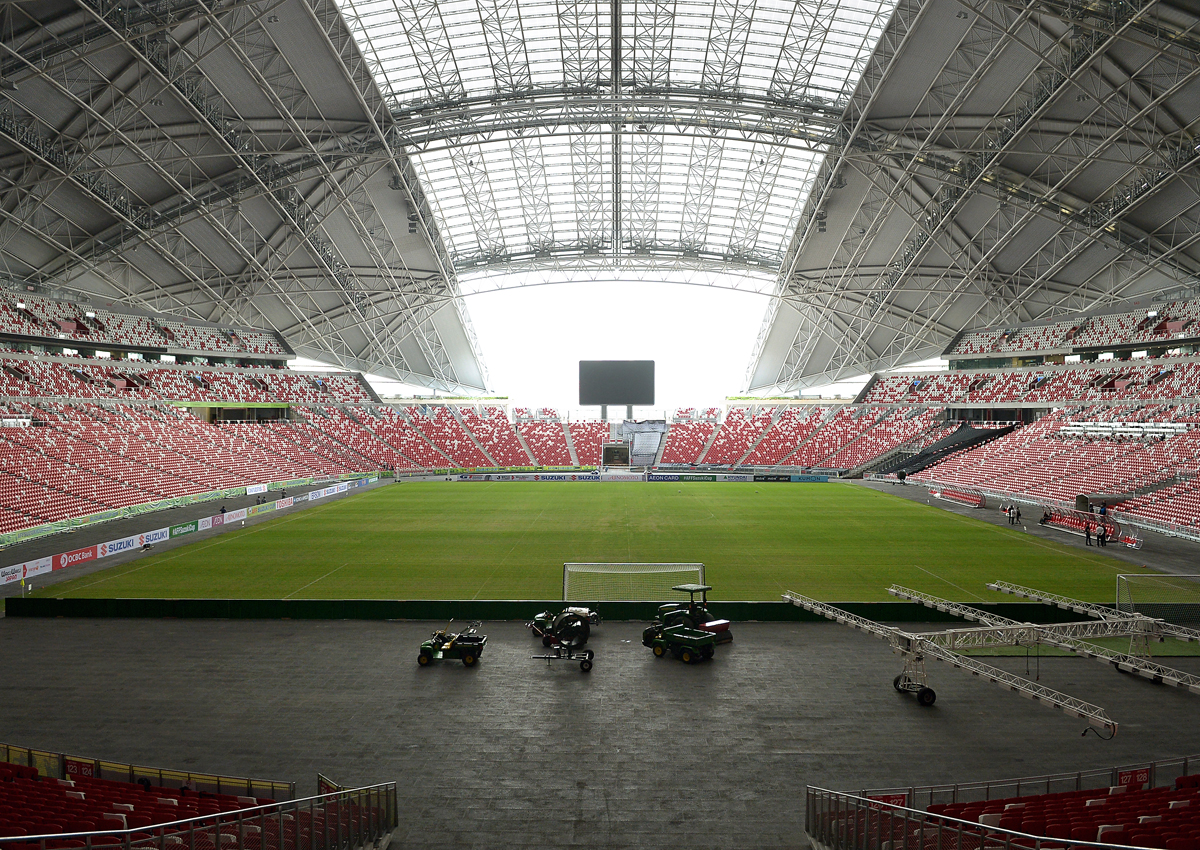
Call it deja vu, but for the second time in three years, it literally rained on a WTA Finals match involving Russians Ekaterina Makarova and Elena Vesnina at the Singapore Indoor Stadium.
In 2014, an afternoon downpour caused water to drip onto the court during their quarter-final defeat by Alla Kudryavtseva and Anastasia Rodionova.
On Saturday, they were trailing by a set in the semi-final against Martina Hingis and Sania Mirza when water dripped from the roof, following heavy rain.
Undeterred, they bounced back to win and progressed to the final, which they won against Bethanie Mattek-Sands and Lucie Safarova yesterday.
The Singapore Sports Hub told The New Paper it would look into the matter to prevent a repeat incident.
Chin Sau Ho, Singapore Sports Hub senior director for corporate communications and stakeholder management, said: “Due to heavy rainfall, water found its way from the roof onto the field of play at the Singapore Indoor Stadium.
“Measures taken since previous tournaments include resealing affected roof joints and adding additional membranes; reinforcement activity was also carried out prior to and during the current tournament.
“These have proven effective until we encountered the storm yesterday.
“We will be conducting a thorough investigation into the matter and working with the relevant parties to assess next steps in ensuring the viability and integrity of the roof at the Singapore Indoor Stadium, which has been a national icon since 1989.”
davidlee@sph.com.sg

This article was first published on Oct 31, 2016.
Get The New Paper for more stories.
Image:
Publication Date:
Monday, October 31, 2016 – 14:00
Keywords:
Send to mobile app:
Source:
Story Type:
Others
Singapore considers measures to help struggling marine sector

 SINGAPORE – The Singapore government is considering whether to help the city-state’s marine and offshore engineering (M&OE) sector, which is facing a prolonged downturn due to the slump in the oil market, the trade and industry minister S Iswaran said…
Source link
Singapore lifesaver and kayaking trainer drowns in Perak
He was a lifesaver, a kayaking trainer and a lover of water sports.
But that only made the circumstances of Mr Koh Kah Wei’s death a bigger blow for Mr Moe Aripe, his mentor of 15 years.
On Saturday, Mr Koh, 30, died doing what he loved.
He drowned while kayaking in white water with six friends in the Sungai Tesong in Perak.
His body was found yesterday after a day’s search.
Mr Moe, 56, told The New Paper: “He was well-equipped to deal with all kinds of water situations. To die due to drowning is very shocking. I’m still in a state of disbelief.”
Adding that they had met up about two weeks ago, Mr Moe, who runs Angel Lifesaver School, said: “He must have been unconscious.”
The Bidor Fire and Rescue Department in Perak received a distress call about the incident on Saturday at about 4.50pm.
Department chief Nadzir Razak told Bernama: “His kayak hit driftwood and overturned, throwing him into the water. His friends tried to help but failed as the current was swift.”
A 30-man search and rescue operation was conducted on the same day, but was hampered by bad weather.
Tapah Fire and Rescue Department’s Assistant Superintendent Kamarulzaman Busirun said the search resumed at about 7am yesterday with a 67-man team.
He told TNP: “It was a relay rescue operation with one group taking over from another. We wanted to make sure the search was continuous.”
At 3.15pm, Mr Koh’s body was found near a rock about 1km from the site of the accident.
His shirt was stuck between rocks.
Family grief
Mr Kamarulzaman said: “The victim’s family who were present were crying. We tried to calm them down, and tell them nobody would wish for this to happen.”
He added that the body has been sent to Tapah Hospital for a post-mortem.
Last night, Mr Koh’s sister, Yu Xiang, posted details of his wake at Block 301D, Anchorvale Drive on his Facebook account.
In Singapore, the lifesaving fraternity is coming to terms with news of Mr Koh’s death.
Said Mr Moe: “I have been receiving calls from other instructors and lifesaving teacher colleagues asking me about it. It’s been a hard time for me trying to explain to everyone what has happened.”
The loss is more painful for him as he had come to see Mr Koh like his son, after mentoring him for 15 years.
He said: “Kah Wei was a very good swimmer. I pushed him hard.
“He was among a group I handpicked and trained to become swimming instructors and lifesaving coaches because they are good.
“I became not just a coach or mentor but a fatherly figure to them. I would be fierce or harsh whenever any one of them did something out of line.”
Mr Koh was qualified to conduct lifesaving examinations.
He was also a lecturer at the National Community Leadership Institute, the community leadership development arm of the People’s Association (PA).
He was also an instructor at PA-Water Venture, which offers water and adventure sports activities.
Said Mr Moe: “He achieved what he wanted. I was really very proud of him. Suddenly, all that is taken away.”
fjieying@sph.com.sg
This article was first published on Oct 31, 2016.
Get The New Paper for more stories.
Image:

Publication Date:
Monday, October 31, 2016 – 14:00
Send to mobile app:
Source:
Story Type:
Others
LKY estate appeals against ruling over transcripts
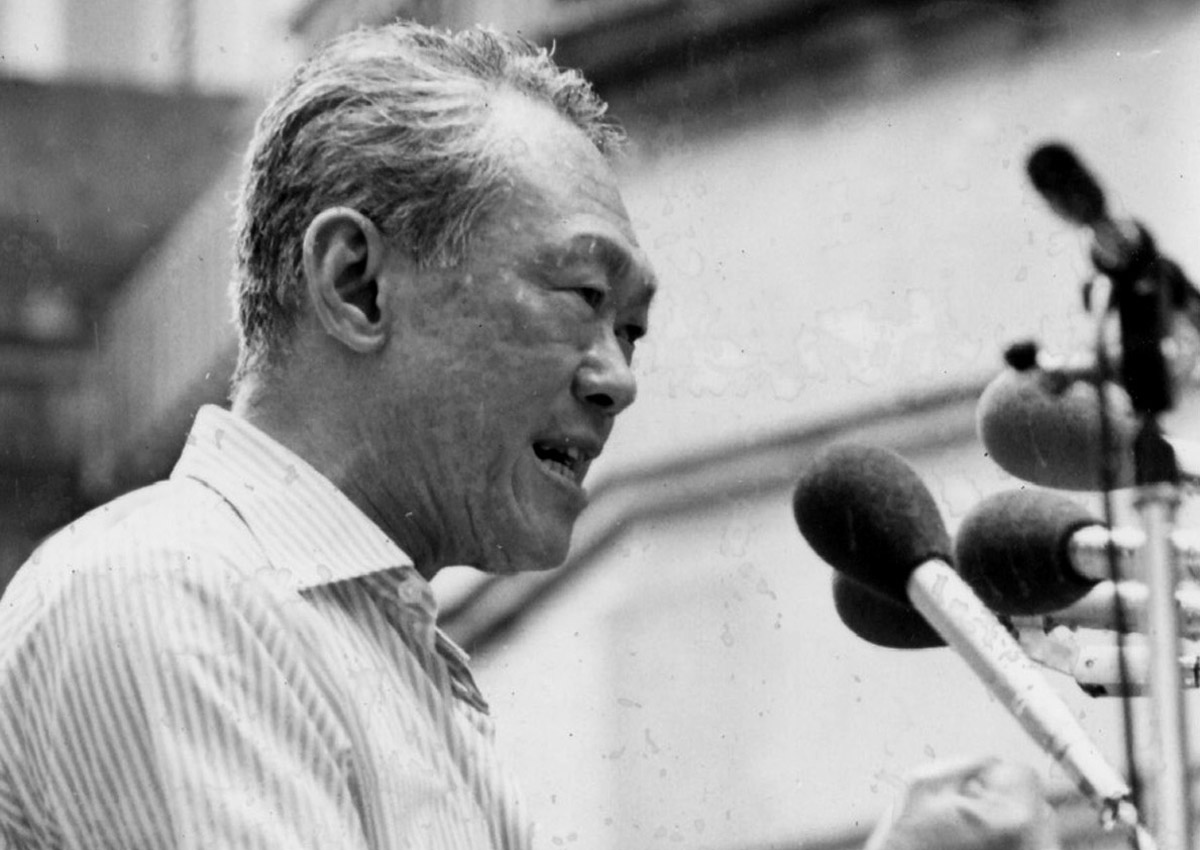
The estate of the late Mr Lee Kuan Yew has appealed against the High Court’s ruling on an agreement he made with the Government regarding interviews he gave in the 1980s.
Dr Lee Wei Ling and Mr Lee Hsien Yang, as executors of their father’s estate, filed an appeal on Thursday. They had gone to court last year to seek a declaration that all rights to the interview transcripts belong to the estate following Mr Lee’s death on March 23 last year.
But the High Court ruled last month that while the estate held copyright over the transcripts, it did not have custody over them or have the rights to freely use them.
Earlier this month, Dr Lee and Mr Lee had also applied to appeal against a particular decision of Justice Tay Yong Kwang: They had wanted to submit an account of how their father’s interview transcripts ended up with the Government after his death, but Justice Tay did not allow it, saying “the details were unnecessary and quite irrelevant” to the case.
The estate wanted to appeal against this particular decision, but withdrew the application on Oct 21.
Mr Lee Kuan Yew and team housed thousands after massive fire
Click on thumbnail to view photos. Source:
The Straits Times









The transcripts contain accounts of affairs of state as observed and experienced by Mr Lee, who was prime minister when he gave the interviews as part of a government oral history project in the 1980s.
He had signed an agreement with the Cabinet Secretary and the Director of Archives in 1983 specifying terms for the transcripts’ use and administration. Under these terms, they would be kept in the Cabinet Secretary’s custody until 2000, or five years after Mr Lee’s death, whichever is later. During this moratorium, no person should have access to, supply copies or be able to use the transcripts without having had Mr Lee Kuan Yew’s express written permission. After this period, the Government may hand the transcripts to the Director of Archives.
The estate had argued that it should have all rights over the transcripts after Mr Lee’s death.
But the Government countered that Mr Lee’s right to grant permission for use of the transcripts, access to them, or for copies to be made, was personal to him.
In his judgment last month, Justice Tay ruled that it was not the intention of the late Mr Lee for his estate to have free use or custody of the transcripts. He noted that while the estate does hold the copyright to them, it was only for ensuring the Government’s compliance with the terms of the agreement.
Based on the agreement, the transcripts were to have been kept by the Cabinet Secretary. But they were found at the late Mr Lee’s Oxley Road home after his death.
Sometime between March 23 and May 5 last year, a member of the late Mr Lee’s family handed them to the Cabinet Secretary without the knowledge or consent of the estate.
The statement the estate had wanted to submit was to have provided more details on what transpired. But Justice Tay said the details “would only serve to distract from the real issues”.
This article was first published on Oct 31, 2016.
Get a copy of The Straits Times or go to straitstimes.com for more stories.
Image:
Blurb:
<p>The estate of the late Mr Lee Kuan Yew has appealed against the High Court's ruling on an agreement he made with the Government regarding interviews he gave in the 1980s.</p>
Publication Date:
Monday, October 31, 2016 – 15:04
Keywords:
Send to mobile app:
Source:
Story Type:
Others
Pink Dot just 'catalyst' for Speakers' Corner reminder
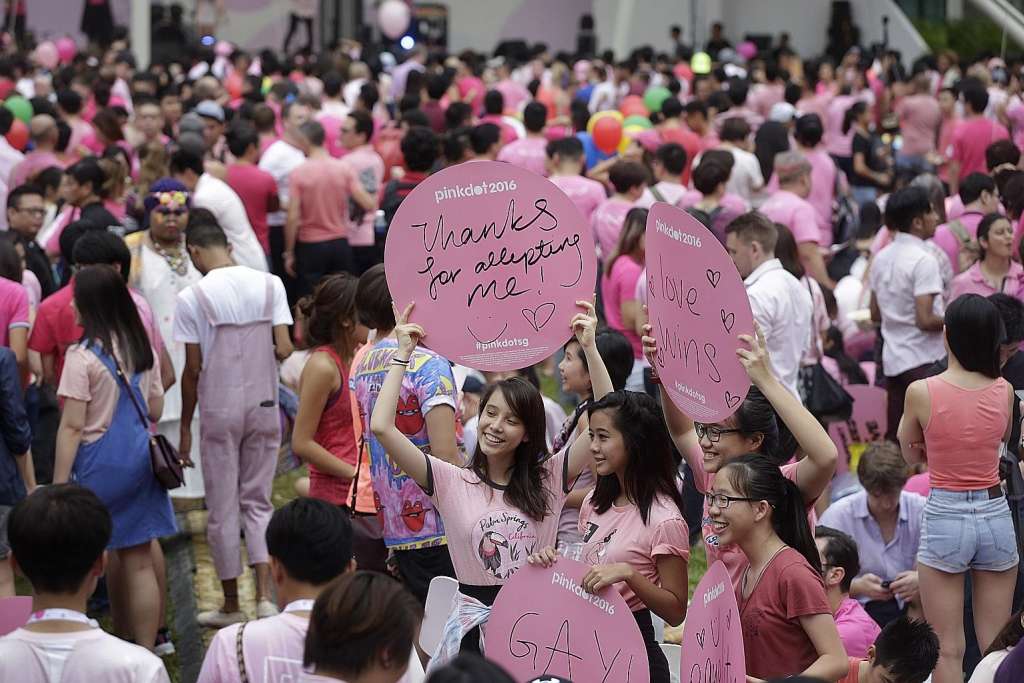
It started in 2009 with just 2,500 supporters and no sponsors.
Its first sponsor, Google, came on board in 2011. This June, the Pink Dot lesbian, gay, bisexual and transgender (LGBT) rally had 18 sponsors – most of whom were foreign companies.
Then two weeks ago came a reminder from the authorities: Foreign companies need a permit to sponsor, promote, or get their employees to attend Speakers’ Corner events.
This clarification drew mixed reactions. Political observers said it was a pre-emptive move to prevent foreign money from influencing ideology here, but some activists felt it stifled civil society.
Singapore Management University law don Eugene Tan said Pink Dot was “the trigger and catalyst” for this reminder from the authorities, but the move was meant to quell foreign influences – not LGBT issues.
He said the danger is in foreign companies backing contentious issues, using money to bring prominence to a Speakers’ Corner event, and fanning the flames. For example, talking about government policies or suggesting euthanasia in an ageing society.
“The stakeholders should be Singaporeans because if tensions escalate and there is instability, the foreign companies can just up and go,” he said.
National University of Singapore political scientist Bilveer Singh agreed: “Today it is Pink Dot, tomorrow it could well be anything outsiders may want to be involved in.”
He said the political corridor here will open up and Singapore does not want money to determine the agenda. “These outsiders (foreigners), no matter how magnanimous they may appear – we do not want their values, norms, mores and whatever interest and agenda that may harm us.”
But activist for migrant worker rights Jolovan Wham believes there is no danger in foreign influence because given today’s technology “we are influenced by foreign ideas and cultures all the time”.
“The Government is worried about the expansion of our civil and political space,” he added.
Mr Leow Yangfa, executive director of LGBT counselling group Oogachaga, saw the reminder as a clampdown on LGBT groups and is worried that companies may become reluctant to support groups such as his.
The Ministry of Home Affairs, however, has maintained that it is neutral about the causes Singaporeans choose to support.
Law and Home Affairs Minister K. Shanmugam said two weeks ago: “Politics in Singapore is for Singaporeans and controversial, social, political issues are to be discussed and dealt with by Singaporeans. Foreigners cannot play a role in that.”
Meanwhile, from tomorrow Singaporean entities will be able to organise events at Speakers’ Corner in Hong Lim Park without a permit after the Government relaxed its rules. There is trust that local companies will be mindful of which topics to back since they have local shareholders and society to account to, said Associate Professor Tan.
What is interesting to note, said observers, is how the authorities will handle local non-governmental organisations with foreign affiliation, should they choose to take up political causes.
Associate Professor Singh said: “Clearly these are like multinational corporations, financially driven and assisted by their external headquarters. The challenge is – will they be ‘controlled’ by Singaporeans?”
Habitat for Humanity, for example, is an American Christian organisation which builds homes for the poor. Its Singapore arm started in 2004 and is governed by a board of local directors.
Its national director, Mr Yong Teck Meng, said the foreign link is “moral in nature, not legal”. While the organisation is faith-based, Mr Yong said it does not push its faith.
“They have no control over us,” he said.
This article was first published on Oct 31, 2016.
Get a copy of The Straits Times or go to straitstimes.com for more stories.
Image:
Blurb:
<p>It started in 2009 with just 2,500 supporters and no sponsors.</p>
Publication Date:
Monday, October 31, 2016 – 15:01
Send to mobile app:
Source:
Story Type:
Others


