Home Blog Page 2432

Bryan Lim fined for threatening to 'open fire' on LGBT community

0

SINGAPORE: A Facebook user who threatened to “open fire” on the lesbian, gay, bisexual and transgender (LGBT) community was fined S$3,500 on Friday (Nov 4).

Bryan Lim Sian Yang, 37, pleaded guilty on Friday morning to “making a threatening communication likely to cause alarm” under the Protection from Harassment Act. 

On Jun 4, Lim commented that he wanted to “open fire” and “protect his nation” in response to a Facebook post on foreign funding of Pink Dot, an annual event organised in support of the LGBT community.

“I am a Singaporean citizen. I am a NSman. I am a father. And I swore to protect my nation,” the 36-year-old Lim wrote on Jun 4. “Give me the permission to open fire. I would like to see these £@€$^*s die for their causes.”

After his comment made the rounds on social media, several Facebook users lodged police reports against him. “This man made an open threat of violence to a specific group of Singaporeans if given the opportunity,” Mr Stanley Tan wrote on the Facebook page of the Singapore Police Force. “Would this be considered an internal terrorist act?”

Police investigations commenced against Lim shortly after, and he was charged in court on Jun 30. 

Lim subsequently apologised for his strongly worded comment, claiming that it had been “taken out of context”.

“I did not mean physical bullets nor physical death,” he wrote. “I mean open fire in debate and remove them from Singapore domestic matters.”

For making a threatening communication likely to cause alarm, Lim could have faced a fine of up to S$5,000. 

Source link

Telco services on Circle Line suspended for whole of Friday amid tests for signal fault

0

SINGAPORE – Mobile services along the entire the Circle Line (CCL) will be shut for a full day on Friday (Nov 4), as the authorities escalated efforts to track down the source of a persistent signal fault that’s been causing widespread delays.

Telcos M1 and Singtel first announced a suspension of telecommunication signals on the 30-station line for about two hours on Friday morning. After an extension to 9.30am, Singtel announced on Facebook that the service disruption would be extended for a full day on Friday. It is unclear when the suspension would be lifted.

“Please note that the suspension of mobile services along the Circle Line has been extended for the rest of today on LTA’s instructions,” Singtel wrote on Facebook at 9.55am. “We apologise for the inconvenience caused and thank you for your understanding.”

Friday’s shutdown of mobile telecommunication signals on the CCL is the second in two days and the most drastic yet by the authorities. They had previously ordered a smaller-scale suspension of mobile signals on Sept 2, in a similar bid to trace the source of the interfering signal, which resulted in train service delays spanning five days. The suspension then lasted two hours and involved only four CCL stations: Kent Ridge, Haw Par Villa, Pasir Panjang and Labrador Park.

They were unsuccessful in tracking down the source of the interference, which resurfaced this week on Wednesday morning, disrupting service between six stations, including Bishan and Serangoon interchanges.

Neither the Land Transport Authority (LTA) nor train operator SMRT have shed light on the progress they are making in their efforts to find the cause of the signal fault. Messages posted by SMRT on Thursday and Friday merely alluded to “ongoing tests”.

Earlier on Friday morning, SMRT warned of fresh delays on the CCL due to the recurrence of the signal fault which disrupted Wednesday morning’s rush-hour commute. But the trains appeared to run smoothly at several CCL stations that TODAY visited.

Source link

Thermos Christmas Offers (Up to 60% Off) at Takashimaya from 2 – 11 Nov 2016

0

Thermos Christmas offers w/ up to 60% OFF at Takashimaya till 11 Nov

Thermos Christmas Offers (Up to 60% Off) at Takashimaya from 2 – 11 Nov 2016

Get Thermos gifts for everyone, this Christmas! Enjoy up to 60% off your favourite stainless steel tumblers, food jars, lunch totes and Shuttle Chef thermal cookers! Fill your life with goodness.

Source

MOE extends compulsory education to special needs children

0

SINGAPORE – To ensure that learning opportunities are accessible to all Singaporean children, the Education Ministry (MOE) is extending compulsory education to all children – including those with moderate to severe special education needs – from 2019.

This will bring some 40 children in every cohort, who are currently exempt from the Compulsory Education Act, under the law mandating that all children aged above six to below 15 have to attend a national primary school.

Minister for Education (Schools) Ng Chee Meng made the announcement at a Special Education (Sped) conference involving some 2,200 representatives across 20 Government-funded Sped schools and voluntary welfare organisations (VWO) on Friday (Nov 4) morning.

Noting that it was an important milestone in Singapore’s drive towards national inclusiveness, Mr Ng said: “This is a reaffirmation that every child matters, regardless of his or her learning challenges.” 

Currently, MOE said there are some 1,770 children with special educational needs in every cohort. Of these, 75 per cent with mild needs attend mainstream primary school.

The remaining 25 per cent have moderate to severe education needs, majority of whom attend Government-funded Sped schools.

However, as parents can ask for exemption from compulsory education with medical proof of physical or mental disabilities, some 40 children in every cohort could fall through the cracks, and MOE has no way to track if these children receive any education at all, whether through home-schooling or private schools.

So this legislative change will allow MOE to ensure that all children, including special needs children, will have equal access to education.

The rule change will start with the Primary 1 registration exercise in 2018.

In making his announcement, Mr Ng said it is a testament to the Sped sector’s “considerable progress” that children with moderate to severe special needs will be able to fulfill their compulsory education obligations in specified VWO -run Sped schools, similar to their peers who regularly attend the mainstream school system.

As part of the move, MOE said it will ramp up capacity in Sped schools in the coming years to ensure there are enough places, although it does not expect the number of students to “increase significantly”.

An advisory panel, chaired by Minister of State for Education Janil Puthucheary, will also be looking at how to implement compulsory education to best serve the needs of children with special education needs.

The panel will comprise members in the public healthcare sector, social service sector, educational psychologists and school leaders, and is targeted to come up with its recommendations by next year.

For parents who prefer to home-school their special needs children, MOE said it will adopt a “customised” approach with exemptions considered on a case-by-case basis.

“Our approach is to work with parents to help them understand the child’s needs and make an informed decision about which setting best meets their child’s needs,” said an MOE spokesperson.

Dr Puthucheary said that MOE and various VWOs had been working closely to step up on the quality, affordability and accessibility of Sped schools, as well as to beef up support for children with special education needs in mainstream schools.

“The advisory panel will have some work ahead, to make sure that we implement CE in a way that serves the needs of all children, but with the community and the professionals coming together I’m sure we’ll be able to,” he added.

Calling the move a significant one, long-time special needs advocate Denise Phua, who is also the chairperson of the Government Parliamentary Committee (Education), said: “It brings to par children with or without special needs and ensures that every child has access to education opportunities; education being an important passport to a better life.”

Noting challenges like a lack of skilled manpower and reluctance of professionals to serve those with more complex needs, the Member of Parliament (Jalan Besar) said it was important to “look deeper” into how the law will be enforced, especially for children with more severe conditions.

Beyond sending a “strong signal” that every child is important, Mrs Koh-Lim Ai Lay, principal of the Cerebral Palsy Alliance Singapore School, said this move also was a form of recognition that Sped schools are able to provide an education that caters to the specific needs of children with moderate to severe special needs. 

This would thus provide an “impetus” for some parents who might not see the need for an education for their special needs children, or are too overwhelmed with family issues and unable to prioritise their child’s education.

“With this move, more help from the social service sector will come in to render support to these parents so that their child’s education can become their priority,” she said. 

However, going forward, Sped schools would also need to “work closely” with families to address their challenges, such as transportation arrangements. For instance, children with severe conditions might require hydraulic buses to bring them to school, which could be very costly.

Calling compulsory education is “only one way” of improving the lives of children with special needs, Mr Phua also stressed that educators should not let up on measures to improve the quality of education through curriculum development.

And she added that going further, education offerings should also be made available to students with special needs, even after they exit their formal school years.

Source link

Suspension of telco services on Circle Line extended until further notice on Friday, as signal fault recurs

0

SINGAPORE — For the second time in 12 hours, mobile telecommunication signals were shut along the entire the Circle Line (CCL) on Friday (Nov 4) morning as the authorities conducted further tests to track down the source of a persistent signal fault that’s been causing widespread delays.

M1 and Singtel announced on social media at 7.15am that the suspension of mobile services on CCL would last till 9am. The suspension was initially extended to 9.30am, but at 9.32am, M1 posted an update on Facebook saying that mobile signals on the CCL would be suspended until further notice “on instructions from the authorities”.

Earlier on Friday morning, SMRT warned of fresh delays on the 30-station line due to a recurrence of the signal fault which disrupted Wednesday morning’s rush-hour commute. “For safety, CCL trains are manned this morning. We are sorry,” the train operator added without giving further details.

Friday’s announcements came after mobile signals were shut down for at least two hours throughout the entire CCL on Thursday night with little advance warning. The unprecedented move, which upset thousands of commuters, was ordered by the Land Transport Authority (LTA) as it tries to flush out the culprit behind the recent signal interferences that caused several disruptions since August.

Commuters fumed, saying an SMS alert could have been sent out moments before the shutdown, even if tests had to run promptly.

The authorities had previously ordered a smaller-scale suspension of mobile signals on Sept 2, in a similar bid to trace the source of the interfering signal, which resulted in train service delays spanning five days. The suspension then lasted two hours and involved only four CCL stations: Kent Ridge, Haw Par Villa, Pasir Panjang and Labrador Park.

They were unsuccessful in tracking down the source of the interference, which resurfaced on Wednesday morning, disrupting service between six stations, including Bishan and Serangoon interchanges.

Source link

I can sniff acting talent from 2km away, says director Lee Ang

0
From L-R: Actors Mason Lee, Joe Alwyn and Oscar-winning director Ang Lee salute while promoting their latest film "Billy Lynn’s Long Halftime Walk" outside the Taipei Train Station on November 2, 2016. / AFP PHOTO / SAM YEH

Oscar-winning director Lee Ang had no qualms casting rookie actor Joe Alwyn in the titular lead role of his new movie Billy Lynn’s Long Halftime Walk.

“If a young actor is talented, I can sniff it out from 2 kilometers away. Within the first or second minute of an audition, I pretty much know,” said Lee, who has helped to make stars of fresh faces such as Tang Wei in the espionage thriller Lust, Caution (2007).

He was speaking at a press event in Taipei on Thursday (Nov 3) for Billy Lynn, in which British newcomer Alwyn plays an American soldier hailed for his bravery in Iraq for rushing to his sergeant’s aid under fire.

To prepare for the role, Alwyn, 25, reported for a tough bootcamp, one which approximated “70 per cent of Navy Seal training”, said Lee.

Alwyn, who also attended the press event, had only had good things to say about his director: “I’ve always admired him for trying new things in all of his films and always pushing boundaries.

“At the same time, this was such new territory for me, it was definitely overwhelming.”

The shoot was also overwhelming for another reason: There were a lot of close-ups of Alwyn’s face.

He said: “The camera was only centimeters from my face but I didn’t know the level of how intimate it was going to be. I didn’t know the clarity and just how detailed it was going to be when you see right into somebody’s eyes, right into someone’s soul.”

Lee’s son, Mason, 26, who appears in the film as one of Billy’s squadmates, had to experience the bootcamp as well.

The director said he was not worried about “torturing” his son. Instead, “I was more worried about others going through that training and I couldn’t sleep well while they were at the training centre”.

He probably also had technical matters on his mind – he took a risk on an unusual format and made the film at a high frame rate of 120 frames per second, at 4K resolution and in 3D.

The effect, he said, is to make someone watching the film feel as though he has gone through the exact journey as Billy, so that “you empathise deeply and you feel emotions more sharply”.

Even though the Taiwan-born film-maker has been feted for much of his oeuvre, the two-time Oscar winner for Best Director (Brokeback Mountain, 2005; Life Of Pi, 2012) admitted he did not know if audiences will take to the groundbreaking format.

Ultimately, the format might not matter, because many cinemas, including those in Singapore, will be screening the movie in the regular format.

As Lee said: “In the end, it comes down to the movie’s story, the performances and whether the content is moving – that’s most important.”

The film opens in Singapore on Nov 10.


This article was first published on Nov 3, 2016.
Get a copy of The Straits Times or go to straitstimes.com for more stories.

Image: 
Category: 
Publication Date: 
Friday, November 4, 2016 – 09:11
Keywords: 
Send to mobile app: 
Source: 


Story Type: 
Others

Source link

Elephant in the room: How Singapore’s Gajah Gallery embraced regional art

0

SINGAPORE: More than two decades ago, art dealer Jasdeep Sandhu went on an extensive trip around Southeast Asia. The 50-year-old Singaporean was about to open a new art gallery and was wondering what to call it.

“I was in Thailand and was about to take the train to Yangon. It was a hot afternoon and I was sweating, and right in front of me was an elephant tied to a lamp post,” he recalled. The image stuck and Sandhu had his name: Gajah, the word for elephant used in many parts of Asia.

“It’s a respected animal across the region, and it’s also a slow-moving but steady animal that will get to its destination after some time,” he said.

It also proved to be an apt name for one of Singapore’s longest-running commercial galleries. In an era when galleries and art spaces come and go, Gajah Gallery is celebrating its 20th anniversary with a two-week exhibition that opens Nov 5. It will feature works by 25 notable artists from Southeast Asia and beyond, many of whom had worked with the gallery from the very start.

FROM TEMP STAFF TO GALLERY OWNER

It has been quite the journey for Sandhu, a trained lawyer, who started as a temp staff at another gallery. “I was just hands-and-legs for the gallery, but within a month of not understanding (art), I fell in love with the art scene, especially Southeast Asian art.”

After reading about Indonesian art in a magazine, he decided to take his newfound passion a step further: To start a gallery.
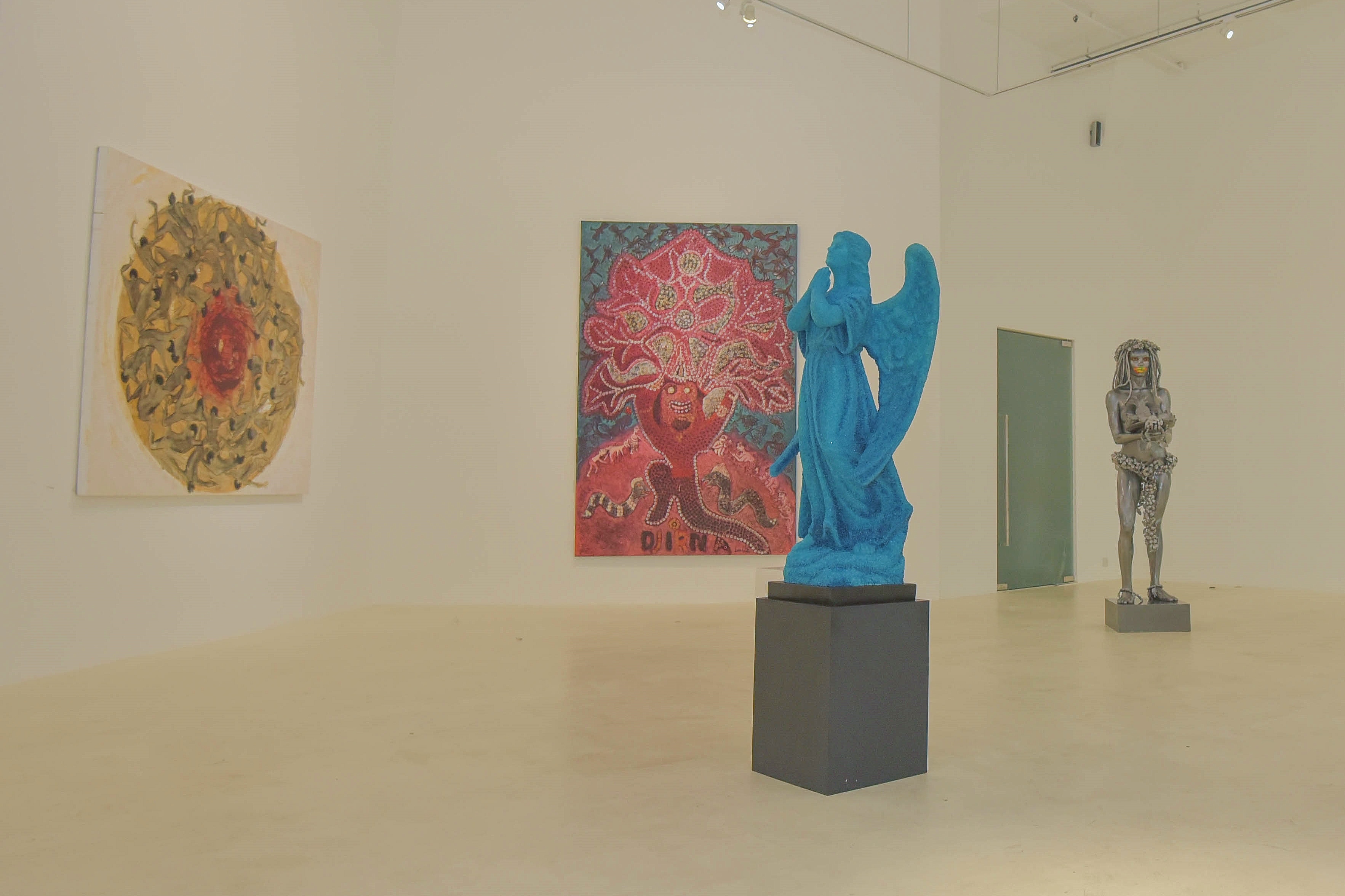
Among the artworks at Gajah Gallery’s 20th anniversary exhibition is a work by Singaporean artist Suzann Victor (foreground). (Photo: Shawn Lim)

Gajah Gallery held its first exhibition in 1996, the same year that the Singapore Art Museum opened. It was a steep learning curve for the newbie, especially during the nascent days of the local art scene, which he described as “pretty barren”.

At the start, the gallery didn’t even have a space and would hold “handicraft” pop-up shows. “Those were the difficult days. You’d do anything for some sort of exposure.”

But Gajah Gallery soon found a place and a focus. Its first space was an apartment at Monk’s Hill Terrace near the Newton Circus hawker centre, where it began showing then-unknown Indonesian artists.  

“We started off with Entang Wiharso and Nasirun. They were definitely not famous (back then) but they were young and they trusted me. I’m proud to have shown them.”

Within the next few years, Gajah Gallery became known as a place to see and buy artists from Vietnam, Thailand, Singapore and especially Indonesia. Among these were now-established names such as Heri Dono, Vasan Sitthiket, Jason Lim, Nyoman Masriadi, Yunizar, Rudi Mantofani, Handiwirman and the Jendela Art Group collective.

“Looking back, I think I was extremely lucky to have picked up on these artists. They were not just financially viable but they were also very inspiring to a young gallerist,” he said.

BIGGER AMBITIONS

He would also eventually find a bigger space, at the MICA building. It was the largest concentration of galleries in Singapore before Gillman Barracks, and Gajah Gallery would gain more exposure being right at the heart of the city.

“We moved from a 900 sq ft space to a 3,000 sq ft space, which was amazing. It was a very good initiative from the Government to actually give these galleries a bit of a chance to start developing the art scene,” he said.

During the past few years, the gallery has taken things to the next level. It opened a metal foundry in Yogyakarta, where the gallery’s roster of artists could create bigger works. They are currently working with Singaporean artist Suzann Victor for a series of sculptures. “It does take away quite a lot from our resources but perhaps it shows our intention to try and give back to the community,” he said.
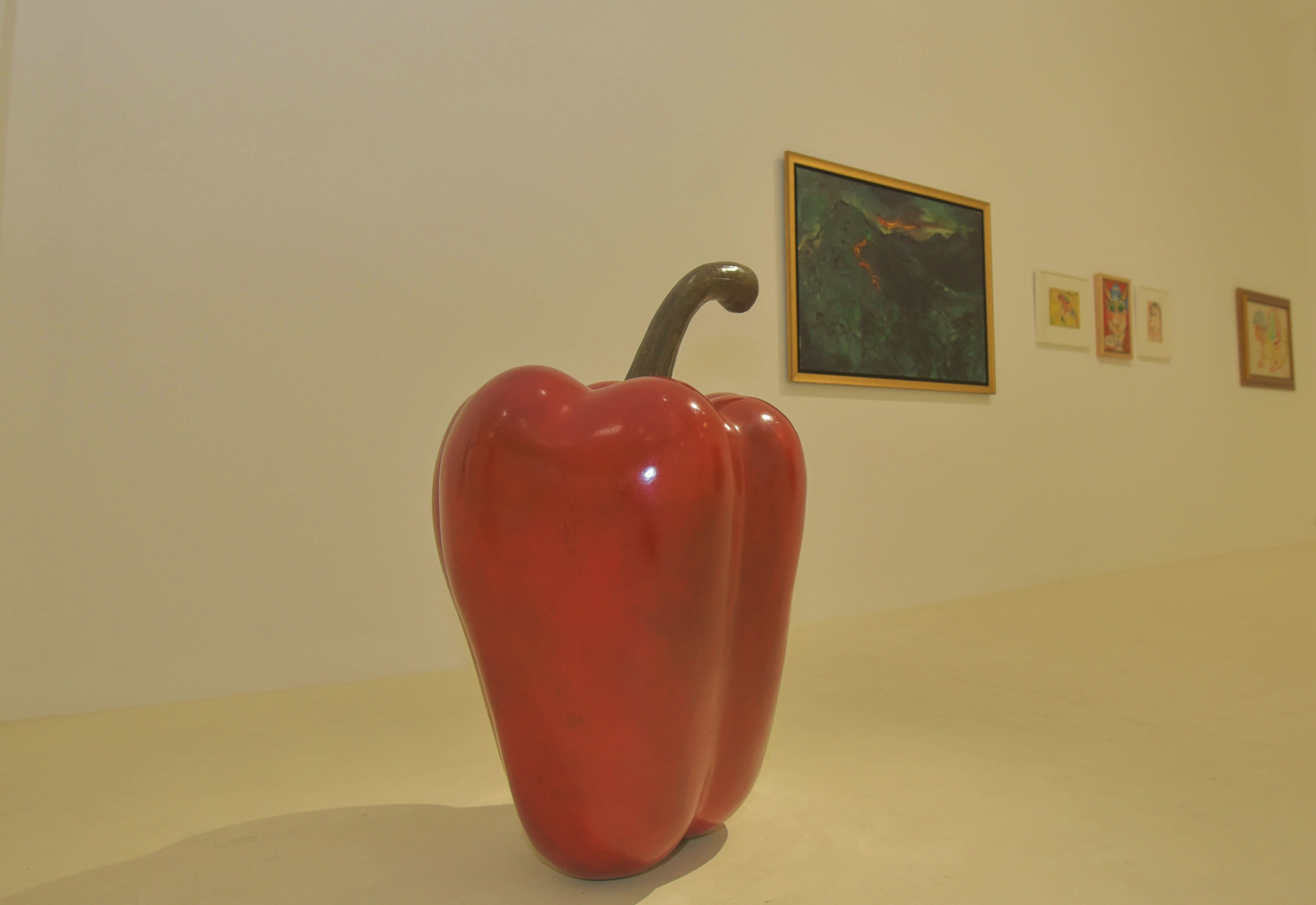
A sculpture by Singaporean artist Kumari Nahappan. (Photo: Shawn Lim)

Last year, the gallery moved to an even bigger space, a 6,000 sq ft gallery at Tanjong Pagar Distripark. The high ceilings and bigger area have allowed them to be more experimental in the works they show, said Sandhu.

“We’ve had a huge Handiwirman, which I think is five metres tall, and it looked pretty small in the space. In most galleries, it wouldn’t even fit through doors. So (the new space) allowed us to move to that next step. It gave us a broader ability to show a lot of interesting art from the region and also Singapore.”

TWO DECADES OF CHANGE

Being in the business of selling art for two decades, Sandhu has witnessed a lot of changes. Among the biggest have been the impact of the Internet and the rise of artwork prices.

“You’ve had an Internet revolution. Back then, it was rare to find an image of an Affandi (painting). Now, you just Google and bang, you’ve got 300 of his finest works in front of you. It has allowed us to communicate with everyone around the world.

“We’ve also had an upward movement of prices, which has allowed us to employ more than just the proverbial gallery girl. We have gallery managers, curators, a good staff base, which then allows us to broaden our scope of activity.”

It has also led to a sustainable industry capable of surviving on its own, he added.

“When the gallery is successful, the artists get paid, the framer, the lighting guy gets paid, your manager gets paid, your gallery assistant gets paid. You see that happening.

“There’s only so much you can do when the price range for the artworks you sell is S$5,000, but there’s a lot more when the range is S$50,000 — the artworks get a lot more exciting, especially when you have gallerists trying to put back into the industry and raising the level of professionalism within the region.”
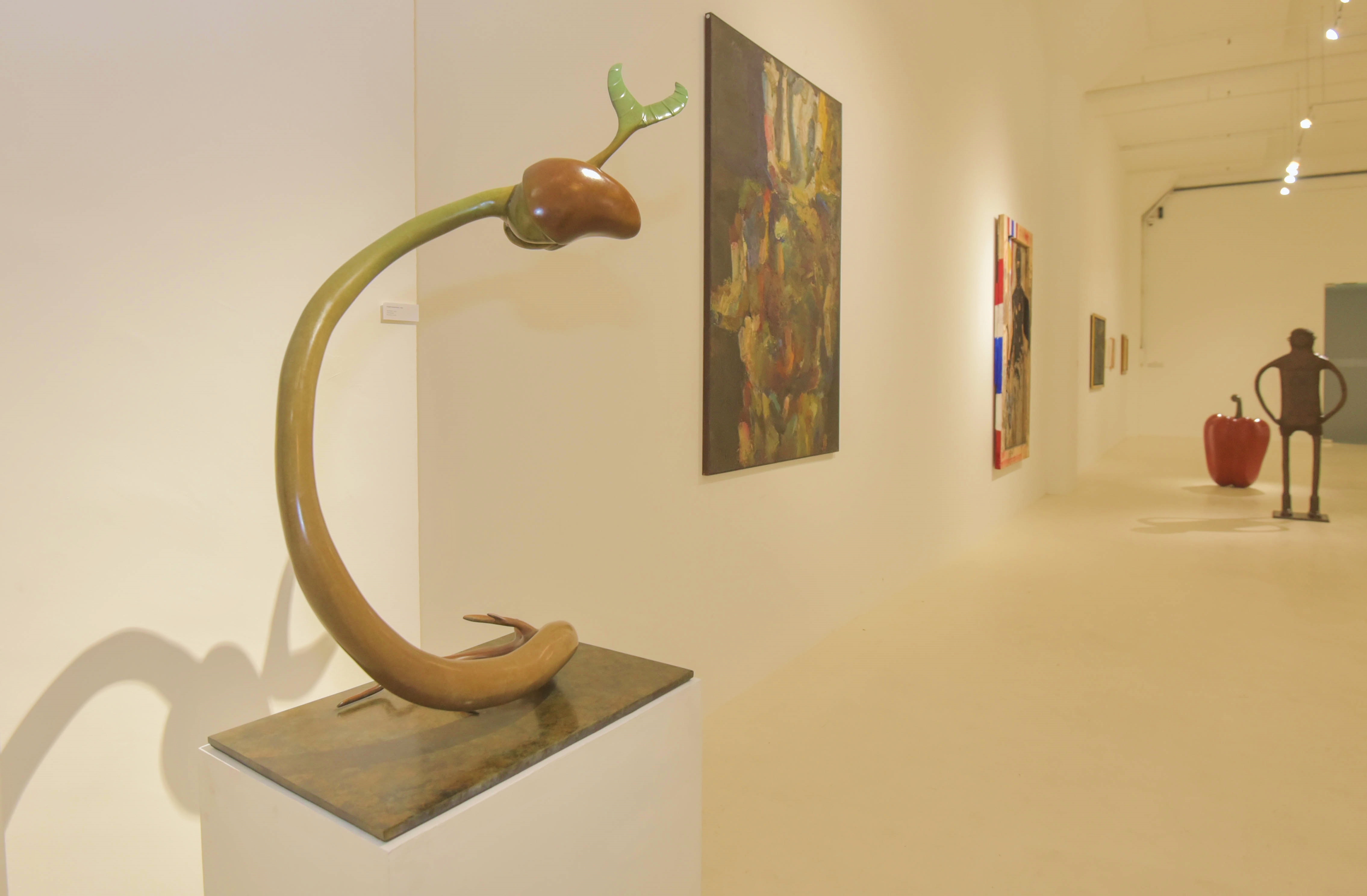
(Photo: Shawn Lim)

But Sandhu also cautioned that, at the moment, the art scene as a whole is going through“one of the hardest financial times in a long while. “We had SARS, which was almost fatal, but it was for three to four months, whereas this is a three to five year episode we’re going through,” he said.

But despite that, he pointed out that it’s exciting times for Southeast Asian art, citing the growing interest in looking at the histories of art development in the region.

“With initiatives that the government has taken, such as the National Gallery, we will start believing in ourselves a lot more. Hopefully, there’s a lot more confidence in the art of the region. And we want very much to be on top of that.”

And like the slow-but-steady animal it’s named after, Sandhu’s Gajah Gallery might be able to do just that.

More details on Gajah Gallery’s 20th anniversary exhibition can be found on its website.

Source link

Tigerair to come under Scoot brand from next year

0

SINGAPORE — Singapore low-cost carrier Tigerair will come under Scoot’s brand from next year, Budget Aviation Holdings (BAH), which manages both airlines, said on Friday (Nov 4).

Both companies will also adopt a single operating licence, said BAH, a Singapore Airlines (SIA) holding company.

The integration is expected to be realised between mid and end 2017, taking into account commercial, operational and regulatory considerations, the company said.

It will encompass flight scheduling and connections, as well as a common website, contact centre and check-­in counters for passengers.

SIA chief executive and BAH chairman Goh Choon Phong noted that both airlines had “made good progress in their integration since the establishment of (BAH) as a common holding company in May” this year.  

“The integration has already led to commercial and operational synergies between Scoot and Tigerair that are providing growth opportunities for both airlines,” said Mr Goh.

He added that “the logical next step is to pursue a common operating licence and common brand identity to enable a more seamless travel experience for customers.”

On the brand integration, Budget Aviation Holdings CEO Lee Lik Hsin said: “A single brand touchpoint will also enable a more seamless travel experience for guests across our network and allow us to bring Scootitude to more guests in the region.”

Source link

Tigerair to come under Scoot brand name

0

SINGAPORE: By the end of next year, the Tigerair brand will cease to exist. Instead, it will come under Scoot – its sister budget airline under the Singapore Airlines (SIA) Group.

The integration is expected to happen between mid and end of 2017. Scoot and Tigerair will also operate under a single licence, both airlines said in a joint announcement on Friday (Nov 4).

The integration between the two airlines will encompass flight scheduling and connections, as well as touchpoint integration for guests including a common website, contact centre and check-in counters.

SIA CEO and BAH Chairman Goh Choon Phong said that since the establishment of BAH in May, the two airlines have made “good progress” in their integration. 

“The integration has already led to commercial and operational synergies between Scoot and Tigerair that are providing growth opportunities for both airlines, an example being Scoot’s plan to launch its first European service to Athens next year,” he said.

“Following a review, we have determined that the logical next step is to pursue a common operating licence and common brand identity to enable a more seamless travel experience for customers.” 

Source link

No doors in student dorms means no sex, says Indonesian minister

0

Indonesian students and activists said on Wednesday that a minister’s suggestion to remove doors at college dormitories to prevent sexual promiscuity would infringe privacy and compromise security.

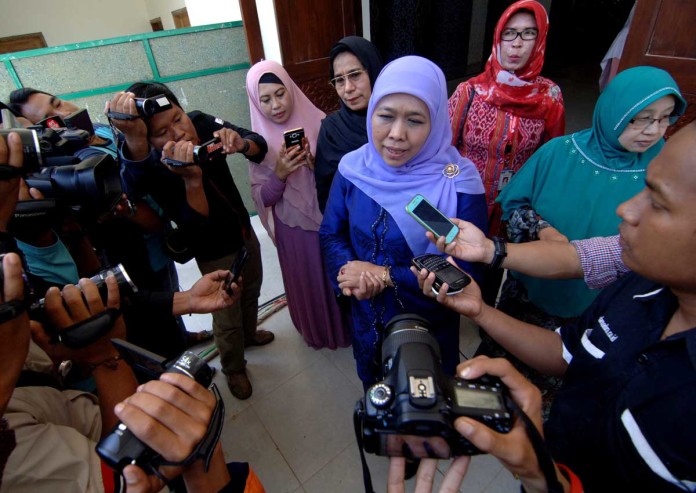
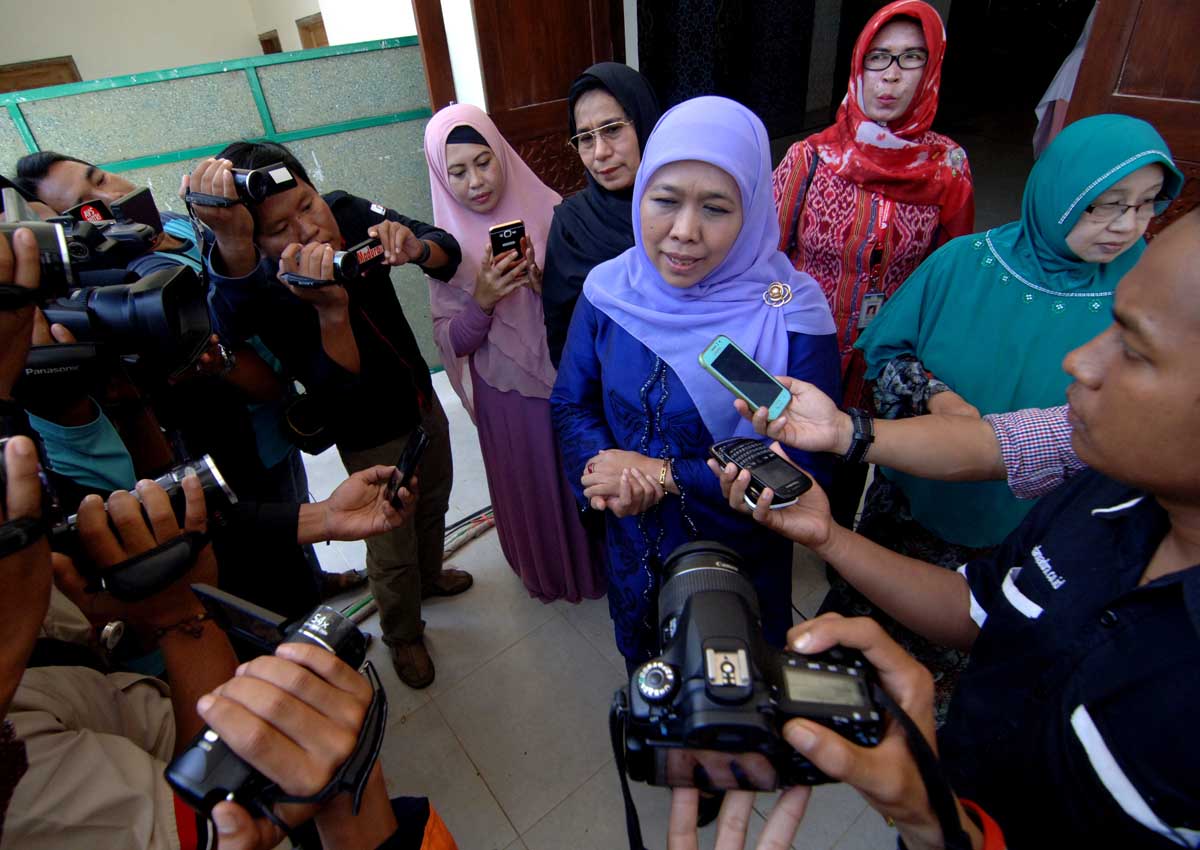
Indonesian social affairs minister Khofifah Indar Parawansa said she was inspired by her visit to the doorless dormitories of a “very prestigious” university, where the activities of students in their rooms can be effectively monitored.

“There are no more worries about the possibility of contact between men and men, and women and women,” Parawansa told reporters. “I have seen how effective this is, and I think it can be made a role model.”

Parawansa did not disclose the name of the university she visited.

“Such a plan, if true, obviously does not make sense,” said Bonar Tigor Naipospos, deputy chairman of Setara Institute, an Indonesian non-governmental organisation (NGO) that advocates democracy and peace.

A door represents the individual need for privacy, Naipospos said. “Yet the state, for reasons of morality, wants to smash through that door and make the behaviour and consciousness of individuals uniform.”

Dian Najean Lestari, a student at the State Islamic University in Jakarta, also rejected the minister’s proposal, saying that it might encourage theft and bring about other security risks.

The rights of Indonesia’s lesbian, gay, bisexual and transgender (LGBT) community may have come under “unprecedented attack” from government officials and some members of the public this year, according to New York-based NGO Human Rights Watch.

A presidential spokesman said in August that there was “no room” in the country for an LGBT “mass movement to influence other parties to become like them.”

Image: 
Category: 
Publication Date: 
Friday, November 4, 2016 – 08:41
Send to mobile app: 
Source: 


Story Type: 
Others

Source link