Home Blog Page 2430

Batam boat accident: 36 dead, 24 missing

0

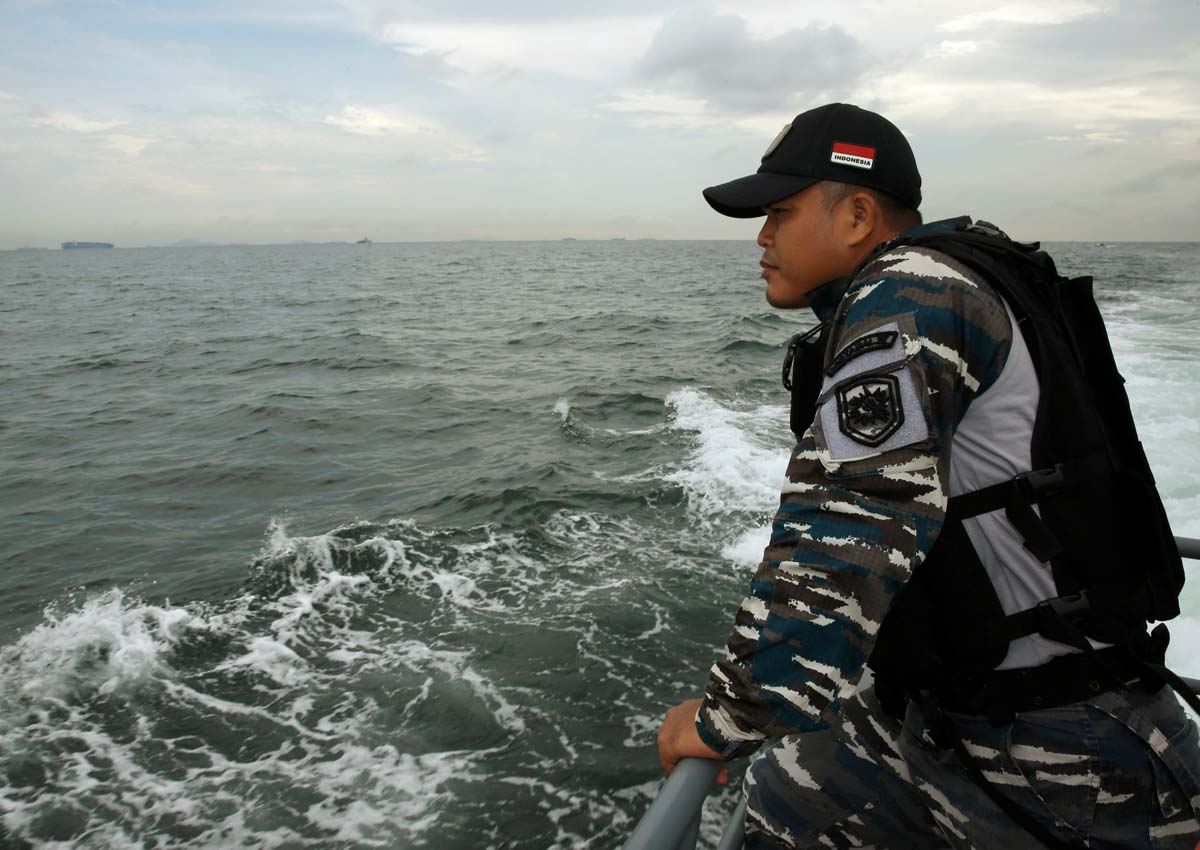
JAKARTA – The death toll from a boat accident off an Indonesian island rose to 36 on the third day of a search for survivors, police said, with hopes fading on Friday for 24 people still missing.

A packed speed boat carrying 98 Indonesian migrant workers, most of them illegal, and three crew sank off Indonesia’s Batam island at around dawn on Wednesday, having departed from Malaysia’s southern state of Johor.

Airlangga, a police spokesman for Riau Islands, which includes Batam, put the latest death toll at 36.

Police say 41 survivors have been found. A crew member has been detained on suspicion of a shipping violation, and police were looking for the captain, who had fled. The fate of a third crew member was unknown.

Image: 
Category: 
Publication Date: 
Friday, November 4, 2016 – 12:55
Send to mobile app: 
Source: 


Story Type: 
Others

Source link

Disguised retrenchment is 'not progressive'

0

More cases of disguised retrenchments – workers getting laid off without their employers treating it as a retrenchment to avoid paying a fair package – are surfacing.

There has been an increase in disguised retrenchment cases, said NTUC assistant secretary-general Patrick Tay, who is also the director of NTUC Legal Services and its PME (professionals, managers, executives) unit.

About 15 to 20 people have approached the NTUC’s U PME Centre for help, compared to fewer than 10 in 2015.

In disguised retrenchment, a company avoids treating the layoff as a retrenchment so as not to pay fair benefits.

Mr Tay told The New Paper on Wednesday that cases of irresponsible retrenchments are not rampant. But they remain a concern because companies are carrying out such practices without breaking the law. 

For example, some workers are terminated with a month’s notice – allowed under provisions in employment contracts – and do not get retrenchment benefits.

He said: “The employee might be working for them for 15, 20 years, then they are told, ‘You don’t have to come back any more.’ “Legally, the employer may have the right to do that because the employment contract doesn’t have any severance package but this is not progressive.”

Nine in 10 companies paid retrenchment benefits, according to the last survey in 2013 on retrenchment carried out in the previous year.

It showed that the prevailing norm was to pay a retrenchment benefit of between two weeks’ and one month’s salary per year of service, Manpower Minister Lim Swee Say told Parliament in September.

In May, tripartite guidelines on managing excess manpower and responsible retrenchment were issued by the Ministry of Manpower (MOM), the Singapore National Employers Federation and NTUC. They highlighted the measures that companies are supposed to take during a retrenchment exercise, such as giving ample notice to affected employees and paying them benefits.

Mr Tay thinks irresponsible retrenchments could happen to employees across all industries and age groups.

He said: “It affects firms that are facing challenges and need to fire people. If (disguised retrenchments) are legal, it doesn’t matter if you are old or young.”

There are tell-tale signs when a company is trying to get rid of employees to reduce costs, Mr Tay added.

For instance, workers who have been doing the same job are suddenly given poor performance ratings when they had previously received consistently good ratings. Another sign is when a company’s order books are empty.

Mr Tay urged companies to inform MOM and the Tripartite Alliance for Fair and Progressive Employment Practice of any impending retrenchment exercise so that affected employees can get help finding another job.

According to the tripartite guidelines on retrenchment, the relevant union is supposed to be consulted as early as possible if the company is unionised.

Where it is provided in the collective agreement, the norm is one month before notifying the employee.

Mr Tay said: “We want to know early so that we can help workers who are affected as best as we can. We want to help them with a seamless transition to another employer.

“We can also negotiate the retrenchment payout which might not be prescribed in the collective agreement.”

In September, Labour NMP K. Thanaletchimi asked in Parliament whether it could be made compulsory for companies to notify MOM about any retrenchment exercise.

Mr Tay said the matter is currently being discussed with MOM and there will be an announcement in the coming months.

Asked if compulsory notifications could lead to more disguised retrenchments, he thinks that would be unlikely but he called on companies to conduct retrenchment exercises in a “fair, responsible and progressive” manner.

“There is more to lose for the employer if word goes around and employees still with the company will give them a dirty look. It affects morale and productivity.”

He added that the employer’s reputation could suffer, especially if the “retrenched” employees go to the media or use social media to reveal how the employer had treated them.

BY THE NUMBERS

4,100 The number of workers who lost their jobs in the third quarter of this year.

13,610 Redundancies (consisting of retrenchments and workers under contracts) so far this year.

15,580 Redundancies last year.


Firms carry out disguised retrenchment to avoid payout

Disguised retrenchments happen when companies seek to avoid paying retrenchment benefits or have reputational concerns, said lawyer Ian Lim.

Mr Lim, who heads TSMP Law’s employment and labour team, said employees in industries more affected by the economic slowdown, such as oil and gas, could be more prone to disguised retrenchments.

“Employees could also be more susceptible to disguised retrenchments when they have individual contractual entitlements to retrenchment benefits, but are not from a unionised company and are not union members,” he said.

Nonetheless, employers would seek to comply with the tripartite guidelines when it comes to retrenchments, said lawyer Jenny Tsin, joint head of employment practice at Wong Partnership.

“On the whole, companies do their best to be good corporate citizens,” she said.

“As long as the termination is done in accordance with the provisions of the contract, it would on balance be difficult for any employee to successfully bring a claim in respect of the termination unless there are other factors in play, for instance a breach of some implied term of mutual trust and confidence.”

Singapore Human Resources Institute president Erman Tan thinks disguised retrenchments are rare because of tripartite agreements.

But if it happens, there are options for employees to seek recourse, such as the Employment Claims Tribunal, which will start hearing salary-related disputes next April, he said.

It will cover all workers including those who do not come under the Employment Act – professionals, managers and executives earning more than $4,500 a month, who would otherwise have to file claims with the civil courts.

RESPECT

Mr Tan also called for retrenchments to be carried out with empathy and respect.

“I have heard of employees being escorted out by a security guard or workers who were logged out of their e-mail accounts,” he said.

Mr Tan added that given the current economic situation, retrenchments may be unavoidable, but should be used as a last resort.

“It is important to prioritise the welfare of the staff. This means making them feel appreciated and giving them a fair compensation.”


Retrenchment notice and benefits

Under the Employment Act, employers are supposed to inform their workers before they are retrenched.

There is minimum requirement, ranging from one day’s notice for employees who have worked less than 26 weeks to four weeks’ notice for those who have worked for at least five years.

Employees who have worked for at least two years are also eligible for retrenchment benefits.

It depends on the collective agreement or contract of service, but the prevailing norm is a payout of between two weeks’ to one month’s salary per year of service.

In unionised companies, where the quantum of retrenchment benefit is in the collective agreement, the norm is one month’s salary for each year of service.

Disguised retrenchments mean companies terminate employees without taking the necessary responsibilities.

NTUC assistant secretary-general Patrick Tay outlined more scenarios:

Workers axed by firms and given a one-off or ex-gratia payment, some of which are below industry norms.

Contract workers terminated due to loss of business contracts.

Contract workers have their contracts discontinued after their firms fail to retain business deals or have to shed staff on account of a slowdown. While legally permissible, this could be considered a layoff.

Workers asked to resign voluntarily. The companies tell them that being terminated “doesn’t look good ” on their resumes


HELPLINES

For assistance on employment facilitation, companies can contact:

Singapore Workforce Development Agency

URL: www.wda.gov.sg Tel: 6883 5885 Feedback: portal.wda.gov.sg/feedback

Employment and Employability Institute

URL: www.e2i.com.sg Tel: 6474 0606 E-mail: followup@e2i.com.sg


Employees who encounter irresponsible retrenchment practices not in compliance with the Employment Act can approach the Ministry Of Manpower for help.

Those not covered by the Act can approach their unions.

Non-union members whose contract stipulates a notice period or the retrenchment benefits quantum can seek recourse through the Civil Courts.


linheng@sph.com.sg


This article was first published on NOVEMBER 04, 2016.
Get The New Paper for more stories.
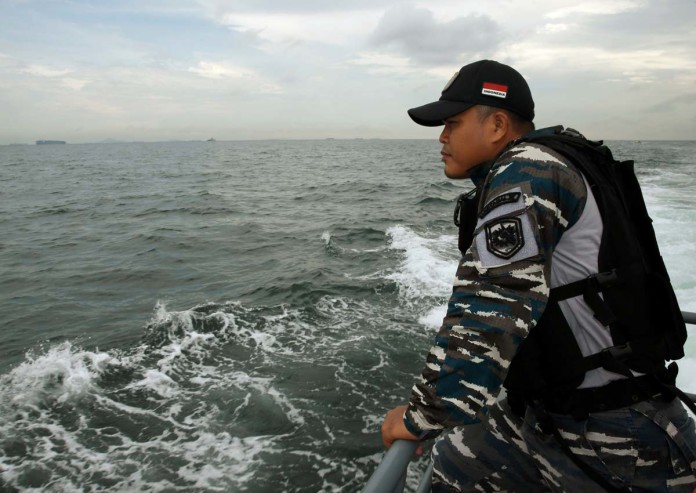
Image: 
Publication Date: 
Friday, November 4, 2016 – 14:00
Keywords: 
Send to mobile app: 
Source: 


Story Type: 
Others

Source link

Integration of Scoot, Tigerair to strengthen SIA’s position: CEO

0

SINGAPORE: The integration of Tigerair and Scoot will strengthen parent company Singapore Airlines’ (SIA) position in the low-cost segment and provide new opportunities in a challenging global environment, SIA CEO Goh Choon Phong said on Friday (Nov 4).

In the second half of next year, Tigerair will come under the Scoot brand name and both airlines will operate under a single licence, according to a statement from Budget Aviation on Friday, which owns and manages the low-cost airlines under the SIA Group.

Commenting on the decision, Mr Goh said the group realised that the creation of Budget Aviation in May was insufficient to capture the full benefits of an integration, and hence “the best way is to go with one brand”.

“There are other synergies that we cannot fully exploit because they remain different brands,” he said. “One single brand will bring about the ultimate benefits of full integration in all aspects in the budget side of the business.”

Mr Lee Lik Hsin, CEO of Budget Aviation, added that both Scoot and Tigerair have contributed to the group’s profitability, with both airlines’ earnings improving over the past six months. The integration will help to improve revenue further, he said.

“Economies of scale will definitely have benefits but there will be a limit on what that can bring. On the revenue side, we are a lot more optimistic on what we can gain from a single brand.”

In response to queries from Channel NewsAsia on manpower plans, Mr Lee said the group will need more staff despite the integration.

“We have talked about growth over the next one year and beyond that. We recently had some communication about pilots and cabin crew growth that we need. In general, it will be that kind of situation and we need more people.”

The announcement of a timeline for the integration of Scoot and Tigerair comes one day after a disappointing earnings report card from SIA.

For the three months to September, the national carrier posted a near 70 per cent plunge in net profit to S$64.9 million, compared to S$213.6 million a year ago. Group revenue fell to S$3.65 billion from S$3.84 billion.

With the exception of Scoot and Tigerair, all other companies in the group – including parent airline SIA, as well as SilkAir, SIA Cargo and SIA Engineering – saw their earnings take a hit in the second quarter.

KEY STRATEGIES PLAYING OUT WELL: SIA CEO

In a briefing with media and analysts on Friday, Mr Goh outlined the group’s continued emphasis on four key areas: Strengthening its premium positioning, having a varied portfolio of airlines, maintaining a multi-hub approach and seeking new business opportunities.

While he does not expect the gloom in the global economy to “last forever”, structural challenges such as an increasingly competitive landscape will likely remain, he said.

“We continue to enforce these strategies that we have implemented over the past years,” Mr Goh said. “They are taking shape and augurs well for the group.”

As part of its positioning as a premium airline, SIA will continue to roll out its new SilverKris Lounges, with the latest opening slated to be in Bangkok during the first quarter of 2017.

Other initiatives include extending its premium economy class to more aircraft, as well as the recent introduction of Teochew dishes to its in-flight menu.

The national carrier also plans to add 12 new destinations this financial year, Mr Goh revealed, noting that this is “not a small feat” given the challenging business environment.

“We will not be able to do so without the push with the portfolio model and taking decisive steps to acquire new aircraft,” he said. “Our portfolio allows us to be nimble … With new aircraft types, we are able to grow in a manner that is feasible for the airline.”

Source link

Tigerair to come under Scoot brand in 2017

0
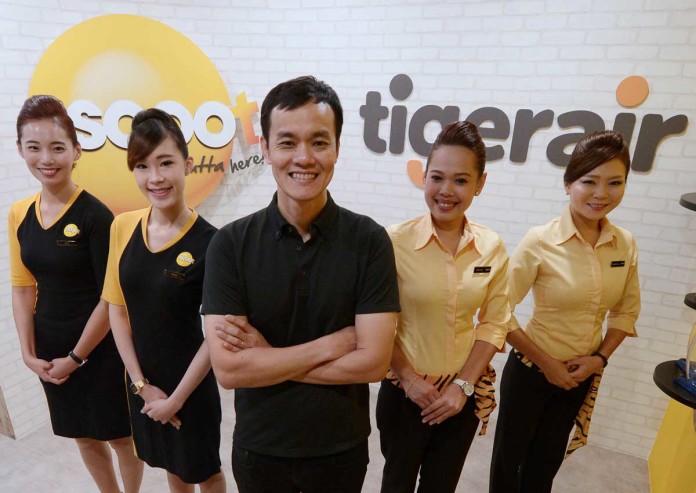
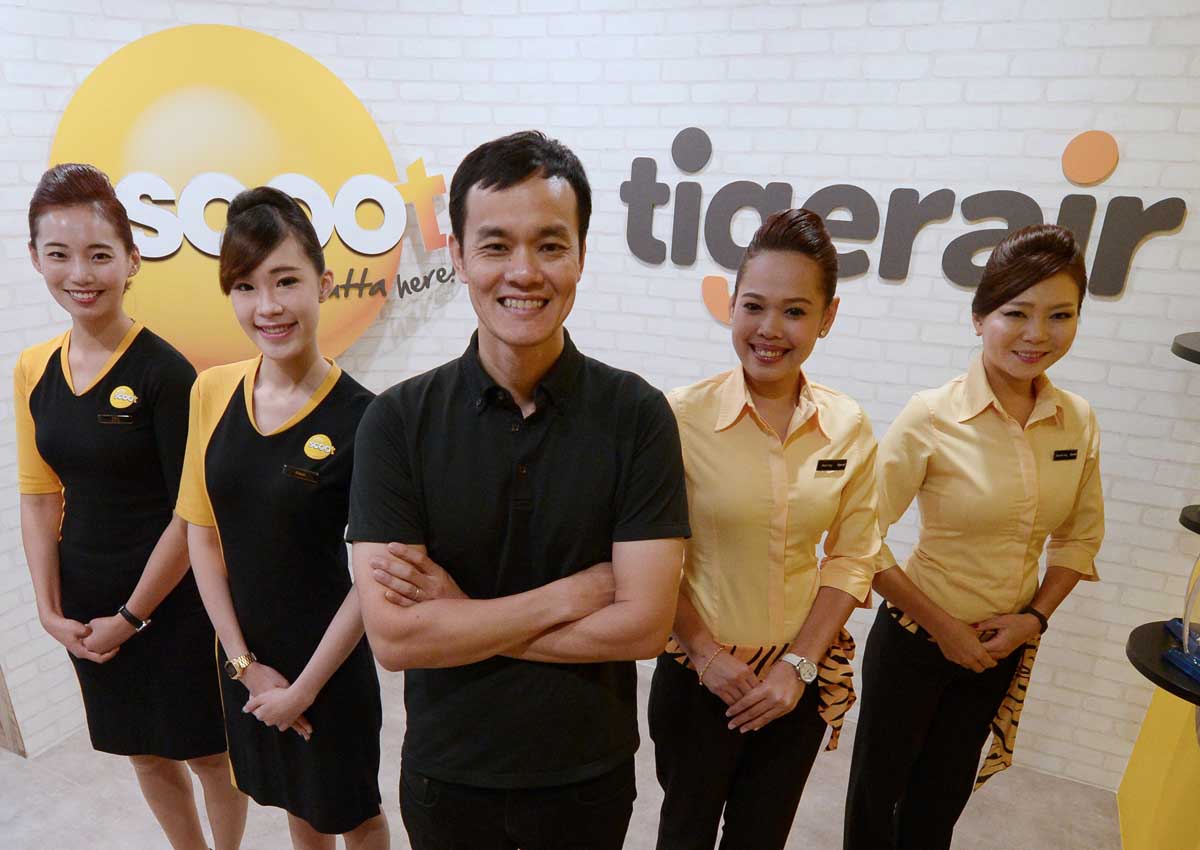
ST16082016_1622867478/ Marcus Tan/ Karamjit Kaur Interview with Lee Lik Hsin, the new CEO of the merged Scoot and Tigerair Katie An Kyu Young, Cherie Neo Jia En, Mr Lee Lik Hsin, CEO, Scoot and Tigerair, Nickii Ang Jia En, Michelle Yang Jeong Ah ST PHOTO: MARCUS TAN

Budget airlines Tigerair will come under the Scoot brand name in the second half of next year, Budget Aviation Holdings Pte Ltd announced on Friday (Nov 4).

The company, which owns and manages SIA Group’s Scoot and Tigerair, said it has intentions to pursue a single brand and operating licence next year.

It added that the integration of the two budget airlines, expected to take place between mid- and end-2017, will provide passengers a more seamless travel experience.

This will include integrated flight scheduling and connections, as well as a common website, contact centre, and check-­in counters.

Budget Aviation Holdings CEO Lee Lik Hsin said: “The Tigerair business, which has an established network and market presence in Southeast Asia, will benefit from the strength of Scoot’s brand for the next phase of its growth.”

minlee@sph.com.sg

Image: 
Publication Date: 
Friday, November 4, 2016 – 12:34
Keywords: 
Send to mobile app: 
Source: 


Story Type: 
Rewritten Story

Source link

Manhattan Fish Market: Dine-in Coupon Deals valid till 30 Nov 2016

0

Manhattan Fish Market dine-in coupon deals valid till 30 Nov

Manhattan Fish Market: Dine-in Coupon Deals valid till 30 Nov 2016

FISH MATE IS BACK! Once again, Manhattan Fish Market has paired their signature hand-battered fish fillet with an exciting sea-lection of premium seafood! Simply flash these e-coupons to enjoy

Source

Speaker’s Corner: Singapore risks stymieing local voices by blocking ‘foreign’ funding

0


LATE in October, Singapore’s Ministry of Home Affairs (MHA) reiterated rules that “Foreigners will need a permit if they organise or participate in an event at the Speakers’ Corner.” This includes sponsorship and promotion of events, as well as the amendment to include speaking through remote means.

These amendments to the Public Order (Unrestricted Area) Order 2016, which will come into effect on Tuesday, are designed to “reinforce the key principle that the Speakers’ Corner was set up primarily for Singaporeans.”

Launched in 2000, Speakers’ Corner is an area located within Hong Lim Park in downtown Singapore where citizens and permanent residents may demonstrate and speak freely on topics mostly free from government restriction. As this behaviour is highly regulated in other parts of the country, Speakers’ Corner is seen by many as playing an integral part in the widening of political and social discourse.

After receiving criticism for their restrictions on foreign entities in June, the Government stressed that it was not an attempt to hinder the country’s ability to learn from others or to close Singapore off from foreign views, but to prevent organisations from actively supporting divisive social issues in the public sphere.

In a letter to the Straits Times, Director of Information Planning and Strategy, Ms Lee May Lin, stressed that learning from others could not be regulated in our modern and interconnected world and that the legislation was put in place purely to reinforce the Government’s belief that “the right to decide on sensitive social and political matters in Singapore should be reserved for Singaporeans”.

While foreign entities are still able to apply for a permit, comments from Home Affairs and Law Minister K Shanmugam this month point towards the Government being more restrictive on those supporting controversial causes.

SEE ALSO: Singapore tells ‘foreign’ corporate sponsors to stop supporting LGBT event

“The foreigners can take part in the events with a permit, but we will have to look at the kind of events”, Mr Shanmugan said. He goes on to explain that the authorities will “try to be accommodating” when approving permits “unless it is really something that has the potential to really rile up opinion on both sides” or supports “causes where Singaporeans are sharply divided in their opinions”.

As the review of the rules was prompted by the Pink Dot 2016 event, an annual event in support of the LGBT community, these comments give a clear indication that, due to Government restrictions, this event and other contentious events will no longer be receiving the financial backing once afforded to them from international organisations.

With this legislation to prevent passive foreign sponsorship, Singapore runs the risk of not just stymieing the voice of foreigners but those of their own people too. By pulling funding for the more marginal and progressive events, Singapore risks losing them all together and with them the opportunity for crucial and necessary social debate.

Participants of the Pink Dot rally gather and form the word 'Love' at the speakers corner. Pic: AP

Participants of the Pink Dot rally gather and form the word ‘Love’ at the speakers corner. Pic: AP

It is not foreign companies or even foreign people speaking at these events, it is Singaporeans with an important message. In the case of the Pink Dot, their sponsors are some of the world’s biggest super powers in industry; they count amongst them Google, J. P. Morgan, Goldman Sachs, BP, Bloomberg, Twitter, Apple, Facebook and Microsoft. Now, no one can claim these to be vulnerable entities in need of a platform, but the important point is that they support and give voice to those people that do. Without the funding from these sources, events may be unable to go ahead thereby preventing those voices from ever being heard.

The Government stresses that it does not wish to censor the messages of these events, merely regulate foreign support. In keeping with this, Singaporean entities, such as local companies and non-governmental organisations, are able to sponsor events without need for a permit. Whether this will be able to generate as much support for the more unconventional events is yet to be seen. But it is possible that they may be more reluctant than their international counterparts to make their voice heard on controversial issues.

But if the Government is genuine in its desire to avoid censorship, does it matter where the funding comes from? If Singaporean voices are being heard on issues that impact Singaporean citizens, surely it has the full support of the Government; so why risk curtailing it with pointless regulation?

To limit permits to only those topics the Government deems appropriate sets a dangerous precedent. The issues that “rile up opinion” are exactly the topics that we should be discussing. The causes that people are most passionate about are usually the ones of greatest importance. They need to be aired openly and discussed without reproach in the hope of triggering public debate. Without this open interaction our views will never be challenged, we will never have the chance to learn from others and we will never grow as a society.

These views may not always be popular, and they may cause some uncomfortable feelings for many, but they need to be heard nonetheless and they should be afforded any means possible to allow them to do so.

** This is the personal opinion of the writer and does not reflect the views of Asian Correspondent


Source link

Swimming: Gary Tan appointed de facto Singapore head coach

0

SINGAPORE: The Singapore Swimming Association (SSA) unveiled Gary Tan as head coach of the National Training Centre (NTC) on Friday (Nov 4), effectively putting the 34-year-old in charge of the elite squad.

Two-time Olympian Tan succeeds Sergio Lopez, who left in August following the gold medal-winning campaign at the 2016 Olympic Games in Rio de Janeiro.

Tan had been Lopez’ assistant throughout the Spaniard’s 18-month stint with the SSA from January 2015, and was part of the team that masterminded Singapore’s record 23 gold medals at the South-east Asian Games here later the same year.

He had been endorsed as a successor by Lopez, after the Spaniard announced his departure plans.

Back in May, Lopez wrote on his Facebook page that Tan should be the next national coach.

“I have had the privilege of working alongside Gary Tan from day one I arrived to Singapore and he is what Singapore swimming needs to keep the local coaches aligned to work for the ultimate gain of Singapore,” he said.

Lopez played a crucial role in grooming swim star Joseph Schooling, who went on to make history as Singapore’s first-ever Olympic gold medallist with his victory in the 100m butterfly in Rio.

As NTC head coach, Tan’s immediate task is to oversee the preparations of swimmers training for next year’s SEA Games in Kuala Lumpur.

His appointment will ensure continuity and stability for the NTC, according to SSA president Lee Kok Choy.

Said Lee: “Gary has had a tremendous learning experience assisting Sergio Lopez to start up and build SSA’s National Training Centre, which has been instrumental to Singapore’s swimming successes in 2015 and 2016. He is now ready to helm the NTC and bring the elite swimmers training here to greater heights.”

As for Tan, the promotion is a continuation of his athletic journey.

“(In my new capacity), I truly believe we will see the next Olympic medallists emerge. I am honoured with the vote of confidence from the executive committee of SSA and thankful for the support of the many talented coaches and high performance professionals I’ve had the privilege to work with in my career.”

Tan will be supported by SSA technical director Sonya Porter, to continue developing the Long Term Athlete Development Pathway, as well as other related parties on enhancing the swimming eco-system.

“It has been a steep learning curve over the past two years and I look forward to continued learning and growth as we build the coaching capabilities in SSA,” Tan said. 

“There are still many areas to strengthen in the coaching structure, and I am still learning to be a better coach for our swimmers.

“I believe Singapore will see greater things to come from our national swimmers, and I’m excited to be part of this journey.”

Source link

New short film about pupils and PSLE stress to be released online on Nov 10

0

Teen suicides so concerned them that they made a film addressing the issue and are releasing it just before the PSLE results are announced later this month.

Mr Jerome Lau, 39, and Mr Stanley Yap, 42, the owners of Splash Productions, started the company initiative. The actors and others involved donated their services because they wanted to help teens in need.

The English language film, titled Juanzi2: PSLE-Go, is about two PSLE pupils and is due for release on Nov 10. Juanzi means “exhausted child” in Mandarin and looks similar to the Chinese character for “exam paper”.

Mr Lau, the managing director, and Mr Yap, creative director, made the original Juanzi short film about children and their academic dreams in 2012.

The mobile game, Pokemon Go, was referenced because the creators of the film thought the initial hype of the game in Singapore reminded them of the paper chase.

Concerned, they decided to find out more about teen suicides.

They were shocked to find out from a Samaritans of Singapore report that teen suicide rates in 2015 were the highest in 15 years, with 27 people aged 10 to 19 committing suicide.

“Our first thought was, wow, there are actually a lot of young people committing suicide, it’s just that they are not made known to the public,” said Mr Lau.

Zihui is like many pupils who feel the pressure to do well for the PSLE. Then in August, two students from a top JC killed themselves within 10 days of each other. This provided the impetus to start.

Mr Lau, who is married with two children, a 12-year-old son who has just finished his PSLE and a nine-year-old daughter who is in Primary 3, became the executive producer of the film.

He said: “We thought that we really needed to do something about this.

“We wanted to start a conversation… To try and help parents manage their mindsets and expectations with their children’s results.”

FEARS

PSLE-Go is about Zihui and Justin, two 12-year-olds in Singapore who are preparing to take their PSLE.

Zihui, the lead, is having a particularly hard time coping with exam stress because she fears disappointing her parents.

The only person who notices is Justin, her classmate, who tries to convince people that she needs help.

The 25-minute short film will be released on Nov 10, and can be viewed for free at www.juanzi.sg before the release of the PSLE results, tentatively expected to be between Nov 24 and 28.

When asked why the filmmakers decided to use PSLE as a focal point in their film, Mr Yap, who is single, said: “The PSLE is the first major milestone a kid has to go through.

“Parents should not use this first milestone as an indication of success as the child might blossom at a later stage in life.”

Everybody who was involved in the film – all 25 employees at Splash Production and about 50 actors – did it for free.

Filming took three weeks and it was a busy time for lead actress Zihui Zhou and her parents, who were acting in the film.

Madam Yar Ai Lin, 43, Zihui’s mum, plays her mum in the film.

Madam Yar, who is a regional head leading a team of engineers, told The New Paper about how she juggled work and acting.

She said: “One of the hardest days was when I took an overnight flight from working in Tokyo and reached Singapore on Friday morning. Filming was in the afternoon and I didn’t have enough sleep.”

Madam Yar was supposed to have taken a flight back to Singapore the next morning, but she decided to take the overnight flight because of the film.

It was an important project for the mother, who has a daughter in Primary 6 and a son in Primary 4.

She said: “When I read in the news about the 11-year-old boy who committed suicide because of his exam grades, I was very sad because I feel that there are a lot more important things in life.

“I hope the film encourages conversation between parents and educators about this issue.”

HELPLINES

If you are in emotional distress, you can get help from:

Samaritans of Singapore (24-hour hotline) 1800-221-4444

Tinkle Friend 1800-274-4788

Singapore Association for Mental Health 1800-283-7019

Care Corner Counselling Centre (in Mandarin) 1800-353-5800

Mental Health Helpline 6389-2222

Aware Helpline 1800-774-5935

leeganjp@sph.com.sg


This article was first published on NOVEMBER 04, 2016.
Get The New Paper for more stories.

Image: 
Category: 
Publication Date: 
Friday, November 4, 2016 – 15:32
Send to mobile app: 
Source: 


Story Type: 
Others

Source link

Singapore to standardise emissions reporting system by 2017: DPM Teo

0

SINGAPORE: By next year, there will be a standardised system for reporting greenhouse gas emissions across all industries, Deputy Prime Minister Teo Chee Hean said on Friday (Nov 4).

This comes after the National Environment Agency called a tender in April to develop measurement and reporting systems. Channel NewsAsia understands that the authorities are currently in consultation with companies. 

Speaking at the award ceremony for the 2016 National Climate Change Competition, Mr Teo said the move will give big energy users information about their greenhouse gas emissions, thus helping them better monitor their energy efficiency performance. This will allow them to reduce the use of electricity and fuels and save costs, he noted. 

“With more accurate data, companies can also incorporate energy and fuel efficiency considerations early in their decision-making processes and take action,” Mr Teo added. 

Currently, energy-intensive companies in the industrial sector are required to monitor and report their energy use and carbon dioxide emissions but do not know how much these contribute to national emissions. 

The announcement is part of Singapore’s commitment under the Paris climate change agreement to reduce emissions intensity by 36 per cent from 2005 levels by 2030 and stabilise emissions with the aim of peaking around the same time. The historic accord, signed by 195 nations, also took effect on Friday. 

Source link

"My heart is breaking", says South Korean President Park Geun-hye in tearful apology

0

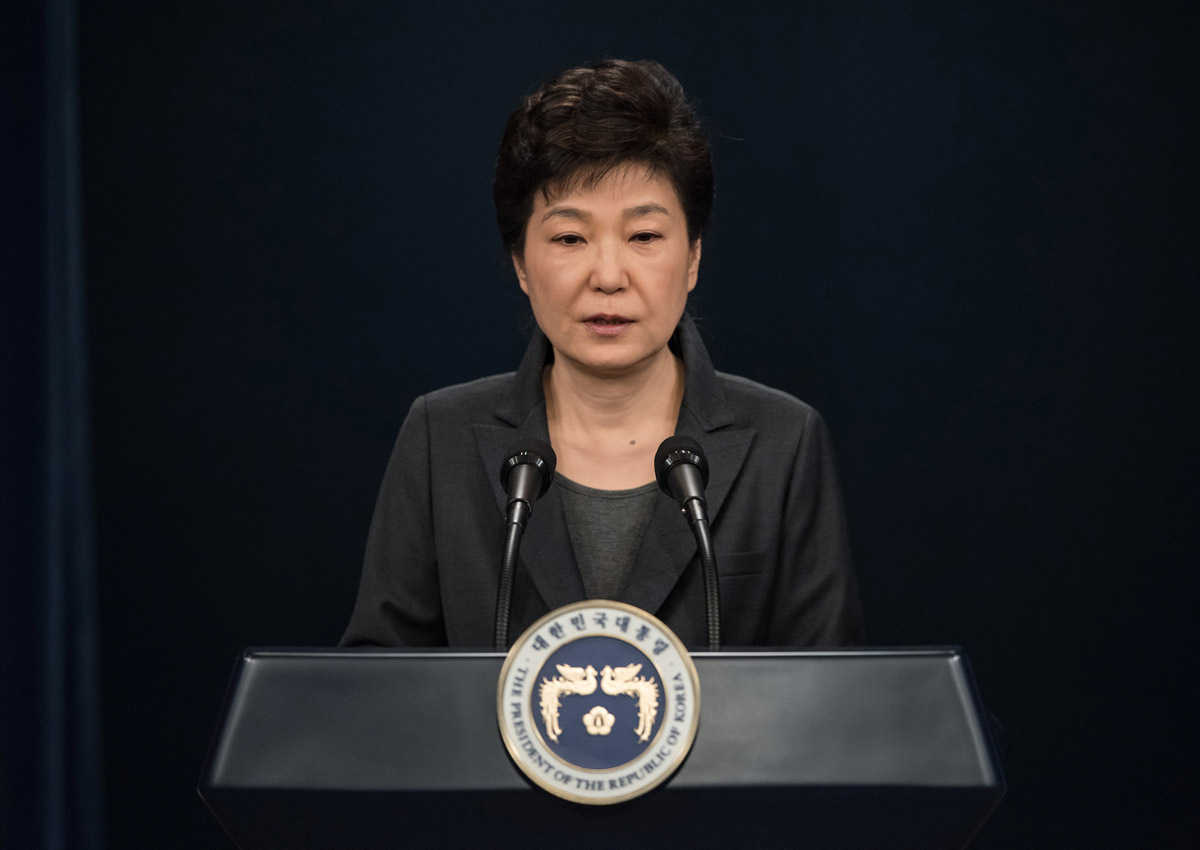
President Park Geun-hye on Friday said she would agree to prosecutors’ questioning on the extensive corruption scandal involving her lifelong confidante Choi Soon-sil.

While vowing to take “full responsibility” for her mistakes, the president also urged the government to resume its state management so as to prevent a greater vacuum and chaos in the national security and economy sectors.

“I feel sorry and miserable that a specific individual derived benefits in the process of key state projects, the purpose of which was to improve the nation’s economy and the people’s lives,” Park said in an address broadcast live to the nation.

The address, delivered 10 days after her previous acknowledgment of Choi’s suspected interference in presidential speeches, came amid burgeoning criticism against her recent personnel decision regarding the Cabinet and presidential secretariat.

“I have ordered the presidential secretariat and security team to fully co-operate in the prosecutorial investigation,” the president said.

“I, too, am ready to accede to the probe if necessary.”

Though the president refrained from further comments, citing the ongoing prosecutorial probe, she did once again refute rampant rumours her connection to Choi was based on a shamanist cult background.

Park’s consent followed remarks made by key officials the previous day that the president, too, could become subject to a prosecutorial probe over her alleged involvement in the state scandal.

“There are many questions regarding an investigation into the president. My answer is that all people, including the president, are equal before the law,” said Prime Minister-nominee Kim Byong-joon.

Justice Minister Kim Hyun-woong also said he would propose the president respond to a prosecutorial investigation.

 
Image: 
Category: 
Publication Date: 
Friday, November 4, 2016 – 11:53
Send to mobile app: 
Source: 


Rotator Headline: 
S Korean President Park Geun-hye says she will accept prosecutorial probe over Choi scandal
video embed code: 
<div style="display: block; position: relative; max-width: 100%;"><div style="padding-top: 56.25%;"><iframe src="//players.brightcove.net/4802324435001/default_default/index.html?videoId=5196176574001"
allowfullscreen
webkitallowfullscreen
mozallowfullscreen
style="width: 100%; height: 100%; position: absolute; top: 0px; bottom: 0px; right: 0px; left: 0px;"></iframe></div></div>
Video Media: 
Other Video Media
Story Type: 
Others

Source link