Home Blog Page 2424

Four car crash caused by man charging phone while driving

0

A driver found himself in a twist when he tried to change lanes at Pasir Ris Drive 1 yesterday morning.

He was charging his mobile phone and the wire got tangled around the steering wheel.

As a result, he lost control of his vehicle and crashed into the car in front, causing both vehicles to hit a road divider.

The accident happened at Pasir Ris Drive 1, towards Pasir Ris Drive 12, at about 9.30am, reported Shin Min Daily News.

It caused a metre-long portion of the divider to be dislodged and thrown to the other side of the road.

The metal parts hit a taxi and a private-hire car on the other side of the road.

The Singapore Civil Defence Force told The New Paper that it sent two fire bikes and an ambulance to the scene.

There were no injuries, but the drivers were in shock.

The front of the private-hire car was hit by a metal spike, leaving the 26-year-old driver stunned.

He told Shin Min: “It happened so suddenly. It’s lucky no one was injured. I am also fortunate to escape unscathed.”

The driver of the car that was hit from the back told Shin Min that he was on his way to have breakfast nearby when the accident happened.

Witnesses saw his car spinning 180 degrees after hitting the road divider.

He said: “I heard a crashing sound from the back and before I could react, my car started moving.”

The police are investigating.

Source link

Wenger: Xhaka has to stay cool in derby

0

Arsenal manager Arsene Wenger admitted that he is concerned by Granit Xhaka’s disciplinary record ahead of tomorrow’s North London Derby at home to Tottenham.

The Switzerland midfielder is in line to play against the Gunners’ fierce local rivals for the first time, with Santi Cazorla likely to be still sidelined with an Achilles problem.

Xhaka, 24, has picked up eight red cards for club and country since April 2014 and is returning from a domestic ban following his dismissal in last month’s 3-2 win over Swansea.

He scored his first Champions League goal as Arsenal came from 2-0 down to beat Ludogorets in Sofia on Tuesday and progress into the last 16 for the 17th straight season.

But the number of cards collected by the £35-million ($60m) summer recruit is a worry for Wenger as Arsenal look for a first home Premier League win over Spurs in three years.

“Am I a bit concerned? Yes, of course,” he said, when asked if Xhaka’s record was an issue.

“The discipline is important and we want to be effective in all situations we face and, in the derby, it is important to keep control of your reaction and to have a strong discipline, because it is part of the effectiveness in these games.

“Normally he is a very composed and calm guy. Sometimes on the field, he has a reaction that is a bit impulsive and he knows that.

“It is not because you talk about that. He has to work on that and keep control of his reactions in the game.”

Tottenham have yet to finish above Arsenal since Wenger took over 20 years ago, but they came closest to doing so last term.

Mauricio Pochettino’s side were in the title race for much of the campaign but, having lost out to Leicester, they then fell to third behind Arsenal on the last day after a 5-1 defeat by relegated Newcastle.

UNBEATEN

Spurs are unbeaten in the league this season and sit three points behind Arsenal, who are level on points at the top with Manchester City and Liverpool.

And Wenger is anticipating another tight derby after both of last season’s meetings ended in draws.

“It is an interesting clash because for us, it is a very important game because we are in a strong position in the league that we want to strengthen,” he said.

“Overall Tottenham as well, so it is very tight at the top of the league. We are more focused that it is a home game, to win the game – whether it is Tottenham or somebody else.

“We want to win our home games because our position in the league is very important and we go into a period where we play big games and we want to win the big games.”

Theo Walcott, Hector Bellerin and Nacho Monreal also missed the win in Bulgaria and face fitness tests.

Kieran Gibbs may also miss out after he suffered a shoulder injury in the victory over Ludogorets, while Aaron Ramsey and Olivier Giroud will be hopeful of retaining their places. – PA Sport.

Source link

Gunners' title dream hinges on ending 'November Nightmare'

0

ARSENAL v TOTTENHAM

(Tomorrow, 7.55pm, Singtel TV Ch 103 & StarHub TV Ch 228 – Eleven Plus HD)

There is a strange, ominous sound drifting across the Emirates Stadium.

It’s unusual, unseasonal and a cause for concern for Tottenham Hotspur ahead of the North London Derby tomorrow.

It’s the sound of silence.

Arsenal supporters aren’t apoplectic. The “Wenger Out” camp, which usually screams, shouts and spins in more directions than the Brexit debate, is quiet.

Arsene Wenger isn’t being ordered to fall on his sword. The angry Gunners have fallen silent.

If Tottenham aren’t terrified, or at least slightly tentative, ahead of their trip to the Emirates, then they haven’t paid enough attention to the calendar.

Like the autumnal leaves, Arsenal usually fall in November. That’s what they do. That’s their stock in trade, their cachet, their “thing”.

Wenger calls it the “November Nightmare”, the annual pre-Christmas sale where games, points and any sense of momentum are all essentially given away.

Last season, Wenger’s flops failed to win an EPL match in the jinxed month. Draws with Tottenham and Norwich and a woeful defeat by West Brom saw seven points dropped.

The wretched form fed the Gunners’ soft stereotype. As the temperature drops in England, the scarves and gloves come out and Wenger’s frilly artists hibernate for the winter.

At a time when mental fortitude takes precedence, Arsenal’s pocket dynamos display the consistency of flaky pastry. They crumble when touched. They disintegrate.

Whoever came up with the cliche about being able to do “it” on a wet Wednesday night in Stoke was probably thinking about Arsenal and their annual winter of discontent.

Most fans sing when they’re winning. Gunners fans sing when it isn’t winter.

Wenger’s track record in November is really close to hopeless. In his 20 years at the club, the 11th month has always been the worst. 

The Gunners won 36 from a possible 78 games and gained an average of 1.59 points per game, the lowest total of any month in the season (September’s average stands at 2.14 points and October’s figure is 2.15).

POOR

Wenger has good reason to hate November.

Traditionally, the month represents an awkward transition at the club.

November usually includes a couple of dicey European contests when Arsenal’s craftsmen seem to recoil from the chilly temperatures.

So Tottenham’s visit is a chance to end the November nightmare and allow the title dream to begin in earnest.

The fixture list already looks pivotal. Manchester United come after Tottenham and then there’s a home Champions League tie against Paris Saint-Germain, followed by the visit of Bournemouth.

And the timing is just about perfect.

It’s hard to recall another occasion when two clubs from the same part of the world, played with the same formation and believed in the same attacking principles, but experienced such different results.

Arsenal and Spurs both play 4-2-3-1, with an emphasis on getting the ball to their wide creators as quickly as possible, but that’s where the similarities end.

Against Bayer Leverkusen in midweek, Mauricio Pochettino’s plodders were a clumsy, confused rabble.

Their high pressing game, so impressive against Manchester City, looked predictable for the first time.

Familiarity bred contempt in their opponents. The German side threw a blanket over central midfield and suffocated a narrow Tottenham side with no width (and no goal-scoring threat without Harry Kane).

Arsenal sent out the same formation at Ludogorets Razgrad, but the outcome was different, with Alexis Sanchez and Aaron Ramsey pushed wide (Alex Iwobi and Alex Oxlade-Chamberlain did the same at Sunderland).

Of course, the Champions League results should not be overstated. Leverkusen are a better side than Ludogorets and it was only a month ago that Pochettino was being hailed a revolutionary and Spurs were runaway title favourites.

But something has gone stale at Spurs.

Injuries play a part, but opponents are learning how to stop Tottenham. No wins in six matches, scoring just three goals along the way, prove that.

The Gunners, on the other hand, are in scintillating form, having lost just once in all competitions since mid-March.

But they face the only unbeaten side left in the EPL in a derby where the form guide traditionally makes less sense than Son Heung Min in the penalty box.

For Arsenal, though, it’s more than a derby. It’s an opportunity to shine through the winter and shake off that old stereotype.

Wenger’s men must come in from the cold with a victory to put serious heat on their title rivals.


BY THE NUMBERS

4.1

The number of goals averaged in the 10 Premier League games between Arsenal and Tottenham at the Emirates Stadium since it opened in 2006, with back-to-back 5-2 Arsenal wins in 2012 ranking as two of the most memorable clashes.

48

The number of North London Derbies Arsenal boss Arsene Wenger has managed in during his 20-year tenure with the Gunners. The Frenchman has won on 22 occasions.

Source link

Taxi hits 'cardboard uncle', but he's more worried about his trolley

0

The “cardboard uncle” was lying on the road, bleeding, after he was hit by a taxi.

But all he wanted to know when passers-by rushed to his aid was: “Where is my trolley? Where is my trolley? I have two packets of biscuits inside.”

The accident happened at the junction of Yishun Avenue 3 and Sembawang Road at about 2.30pm on Thursday.

The elderly man, later identified as Mr Wong Kum Chew, 63, was crossing the road at the junction with his trolley when the taxi, which was making a left turn, hit him, witnesses told Lianhe Wanbao.

One of the passers-by who rushed to help him, Ms Irene Lim, 36, a marketing director, told the Chinese evening daily that she saw the accident and rushed over.

She found Mr Wong lying on the road near his trolley loaded with cardboard, with cuts, grazes and blood all over his body.

“It was heartbreaking seeing him like that,” she said.

An eyewitness told Wanbao that the impact of the crash knocked Mr Wong to the ground and sent him tumbling for about 2m.

“Thankfully there were many others who came together to take care of him. Hopefully, more or less, that would have lessened his pain,” she said.

A Singapore Armed Forces officer, Lieutenant Colonel (Dr) Timothy Teoh, told Wanbao: “I was worried that (Mr Wong) had suffered a fracture. So I checked his injuries, his back and body to make sure nothing was fractured.”

He also helped Mr Wong to the side of the road.

Staff from a McDonald’s outlet nearby also brought water to clean his wounds, reported Wanbao.

A police spokesman told The New Paper they were alerted to the accident at about 2.40pm.

A 63-year-old male pedestrian was takento Khoo Teck Puat Hospital.

MEAGRE EARNINGS

Mr Wong later told Wanbao that he would collect cardboard pieces near his home every day. He earns about $6 to $7 a day.

The elderly man – who lives with his wife and son – would do so to help out his son, who is the family’s sole breadwinner and earns about $1,000 a month.

“I take the opportunity, while I’m still fit, to walk about and collect cardboard to sell. It’s not just helping my son, but I also stay healthy,” he said.

Ms Lim, who remained by Mr Wong’s side until the ambulance had left the scene, told TNP that she and her husband later pushed Mr Wong’s trolley back to his home.

They took about 30 minutes.

“Even my husband, who is of a big build, was drenched in sweat by the time we were done,” she said.

“The elderly Mr Wong has to do this every day. It must not be easy and we really respect him for his perseverance.”

TNP understands no one has been arrested so far. Police are investigating the accident.

Source link

Jail and caning for slashing wife

0

She could have died after her husband slashed her throat with a knife.

Singaporean teacher Boomichelvi Ramasamy, 38, now suffers from sleepless nights and has a phobia of people coming close and harming her.

Her husband, Krishnan Karunakaran, 45, severed her jugular vein in the neck in the attack outside her fifth-storey flat at Block 244, Hougang Street 22, on Oct 27, 2013.

Krishnan, an Indian national, was sentenced to eight years’ jail and nine strokes of the cane yesterday. He pleaded guilty on Tuesday to one count each of criminal intimidation and attempting to commit culpable homicide not amounting to murder.

A second criminal intimidation charge and one count of attempting to voluntarily cause grievous hurt were taken into consideration.

The couple, who got married in a temple ceremony in 2011, separated in June 2013.

On Oct 26 that year, he met his estranged wife near her home to seek her help to extend his visa. He also asked to see their one-year-old daughter.

When she refused, Krishnan bought a knife with a 12.5cm blade at a Little India supermarket.

He confronted her in a lift the next day and slashed her throat following a scuffle.

Yesterday, Deputy Public Prosecutor (DPP) Mohamed Faizal Mohamed Abdul Kadir urged Justice Chan Seng Onn to jail Krishnan for a year to 18 months for criminal intimidation, and nine years with nine strokes for attempted culpable homicide.

Stressing that the injuries were potentially life-threatening, the DPP said: “The attack on the victim had been carried out with considerable premeditation and deliberation.”

Krishnan’s lawyer, Mr Eugene Thuraisingam, asked for not more than four years’ jail without caning.

He said: “The offence in this case took place in a moment of impulse and folly. Krishnan had repeatedly tried to gain access to his daughter – which he is entitled to as a father – but Boomichelvi kept refusing his demands.”

Calling the attack premeditated, Justice Chan told Krishnan: “There is no reason for you to resort to such violence even if you wanted to see your daughter. You took matters into your own hands.”

For attempting to commit culpable homicide, Krishnan could have been jailed up to 15 years and fined or caned.

Source link

Fined for hate speech on Facebook

0

Man who posted online remark threatening to ‘open fire’ at LGBT supporters had 13 police reports lodged against him

His online comments against supporters of the lesbian, gay, bisexual and transgender (LGBT) cause created such a stir that 13 people made police reports against him.

On June 4, Bryan Lim Sian Yang, 37, an employee at Canon Singapore, posted a Facebook comment which read: “I am a Singaporean citizen. I am an NSman. I am a father. And I swore to protect my nation.

“Give me permission to open fire. I would like to see these (people) die for their causes.”

He was fined $3,500 yesterday after pleading guilty to creating the threatening comment on the Facebook page of a group known as “We are against Pinkdot in Singapore” (WAAP).

Pink Dot is a pro-LGBT event held at Hong Lim Park every year.

THE NEW PAPER, JUNE 14, 2016

Yesterday, Deputy Public Prosecutor (DPP) Wong Woon Kwong told the court that at around 11am on June 4, a netizen known as Michael Low, shared a picture with the heading “Say no to foreign intervention in Singapore’s politics” on the WAAP Facebook page.

Lim posted his threatening comments about an hour later.

DPP Wong said: “In making the offending comment, the accused’s intention was to express his strong objection against the perception that foreign organisations were supporting the LGBT cause and attempting to normalise homosexuality in Singapore.”

FEARED FOR SAFETY

He added that on June 12, there was a mass shooting at an American gay nightclub in which 50 people, including the gunman, died.

Alarmed, Oogachaga executive director Leow Yong Fatt, 41, made a police report the next day as he feared for the safety of his staff, volunteers and counselling clients. Twelve other people did likewise.

Oogachaga provides counselling and support for LGBT individuals.

DPP Wong urged District Judge Low Wee Ping to issue Lim a fine of at least $4,000.

DPP Wong said: “The offending comment made by the accused generated significant alarm, in particular throughout the LGBT community. The accused’s aggravated and inflammatory comment contained a clear threat of violence through gunfire. This was intentional.”

Lim’s lawyer, Mr Adrian Wee, asked the judge to sentence his client to a fine of between $1,500 and $2,000.

Stressing that Lim is remorseful and had posted the comment in a moment of folly, he said: “There was no indication that the accused had any ability to carry out gun violence.”

For creating the threatening post, he could have been fined up to $5,000.

Source link

MOE hopes to attract more special education teachers

0

Singapore’s special educational needs (SEN) landscape has changed over the years, thanks to efforts by the Ministry of Education (MOE) and various voluntary welfare organisations (VWOs) to make special education (Sped) affordable, accessible, and of quality, said Dr Janil Puthucheary.

Also in place are measures to support children with mild SEN in mainstream schools, the Minister of State for Education added.

Against this backdrop, Minister for Education (Schools) Ng Chee Meng announced the inclusion of children with moderate to severe SEN under the Compulsory Education framework yesterday.

This takes effect from the 2019 Primary 1 cohort.

Minister of State for Education Janil Puthucheary

He said: “This is a significant milestone in Singapore’s move towards building a more inclusive society.

“It is heartening to see that, today, the majority of children with SEN are able to access education in mainstream or Sped schools.

“This move is possible with the strong partnership between the community and government.

“MOE will continue to work with the VWOs and parents to ensure that learning opportunities are accessible to all Singaporean children who are able to benefit from them.”

Agreeing, Dr Janil told The New Paper: “We want to make sure that every child benefits from education.

“This is not something to be taken lightly. It’s not a care arrangement, it’s an education arrangement.”

He will be chairing the advisory panel which will ensure that the implementation will best serve the needs of children with SEN.

In every cohort of about 1,770 children with special needs, a quarter have moderate to severe SEN.

Of that, about 40 children do not go to school.

Dr Janil said: “We want to get to know them and the challenges they face. For example, some have medical conditions so severe, they can’t go to school. We want to make sure we can find places for all the 40 children. And to make sure these places are suitable for them.”

Dr Victor Tay, the president of the Association for Persons with Special Needs, said this is a step towards inclusivity. Singapore is tolerant and aware at best, he told TNP.

Mrs Koh Ai Lay, principal of the Cerebral Palsy Alliance Singapore School, agreed and said the move also recognises that Sped schools can provide an education that caters to the specific needs of children with SEN.

She told TNP: “This would act as an impetus for some parents who may not see the need for an education for their child with special needs.

“There could also be parents who may be overwhelmed with family issues and not able to give priority to their child’s education.”

While we have a better supply of skilled Sped teachers through the National Institute of Education today, Dr Tay said that one of the challenges is changing societal perception of teaching in a Sped school.

MNC VS SME

Likening mainstream schools to multinational corporations (MNC) and Sped schools to small- and medium-sized enterprises (SME), he said: “It’s like MNC versus SME. Most would want to work in an MNC.”

The career prospects of teaching in a mainstream school may also differ in a Sped school, said Dr Tay.

Dr Tay said: “A Sped school is a place that’s intensive and manages behavioural challenges rather than intellectually stimulating teaching, and may not necessarily pay the best.

“We need to solve this perception issue, to let people understand that a Sped school is a place that’s missionary, meaningful, and touches lives.

“Therein lies this challenge, to project Sped well, and give the right perception so that it can continue to attract the best and brightest.”


“We want to make sure that every child benefits from education. This is not something to be taken lightly. It’s not a care arrangement, it’s an education arrangement.”

– Minister of State for Education Janil Puthucheary

Source link

Woman calls mum of special-needs boy "useless"

0

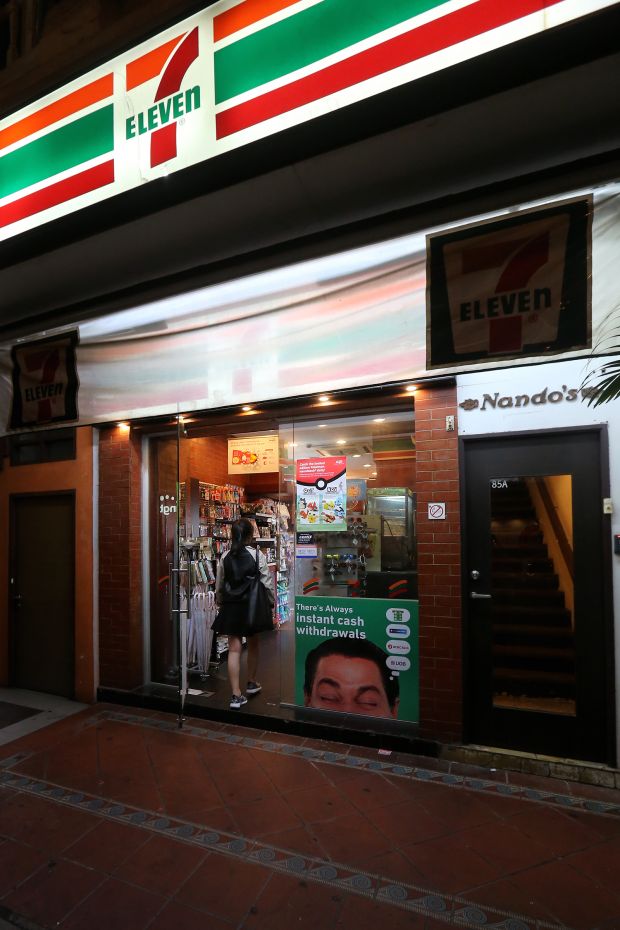
Woman told off by 7-Eleven customer for letting her son enter a room behind the store counter

She is a regular at the 7-Eleven store in Killiney Road because her 10-year-old son, who has Williams syndrome, has been attending speech therapy lessons nearby for more than five years.

And the store employees are aware of the boy’s special needs.

But on Tuesday, Madam Elaine Chan’s encounter with a female customer who objected to her son’s behaviour in the store turned nasty.

The 44-year-old, who works in a bank, said that despite her telling the woman that her son is a child with special needs, the woman verbally abused her, calling her useless for giving birth to him, and called him a b******.

Williams syndrome is a rare genetic disorder that causes learning disabilities and developmental delays in children. Those with the syndrome, however, tend to be sociable, friendly and endearing.

The single mother told The New Paper: “My son loves fans and whenever he sees one, he wants to play with the buttons on it.

“The counter staff at 7-Eleven are very patient. They are fine with my son going into the room behind the counter to let him touch the buttons on the fan.”

But at 8.45pm on Tuesday, the female customer told Madam Chan off for letting her son enter the room.

“I thought she was an off-duty employee, which would sort of give her the right to scold my son,” said Madam Chan.

“I told her he’s a special needs child and usually people would understand. But she replied, ‘All the more you have to control your son.'”

When Madam Chan tried to explain about her son and his special needs, the woman raised her voice and became even more aggressive.

WHERE IT HAPPENED: The 7-Eleven store in Killiney Road.

Madam Chan then realised the woman was not a 7-Eleven employee and decided to film her with her smartphone in the hope that it would make her leave. But the woman continued scolding her and called her son a b******.

In the video, the woman, seen to be wearing a straw hat and covering her face with a piece of cloth, yelled at Madam Chan in Mandarin: “You are useless. Why must you give birth to a special needs child?”

She then hit Madam Chan’s hand with her handbag, causing Madam Chan to drop her phone.

“My (11-year-old) daughter started crying because she thought the woman had hurt me, so I went to comfort her,” said Madam Chan.

The loud noises also scared her son and he covered his ears with his hands.

After the woman left the store, a police officer walked in and Madam Chan told the officer about the incident. The officer went to look for the woman, but was unable to find her.

Madam Chan subsequently shared her 37-second video of the incident on a WhatsApp group for parents whose children have Williams syndrome.

Her friend Janet Yeo, who was in the group, later posted the clip on Facebook.

She told TNP: “I was upset that Elaine had to go through this.

“As a parent of a Williams syndrome child myself, I feel sad when my child gets disapproving stares from strangers.

“Labelling them ‘useless and a ‘b******’ is way too much. So I shared the video on Facebook to create awareness and to seek the public’s understanding for special needs children and their parents.”

A report on the incident also went viral on citizen journalism site Stomp, attracting 43,000 views.

Madam Chan said: “I was shocked that someone would use such profanity. This is the first time something like this has happened to me.

“At most, people would give me disapproving stares because my son may be doing things that are unusual.

“But when I explain that Ian is a special needs child, they would understand.”

She said she had seen many negative comments online about the woman, but she did not approve of such comments.

UPSET

“I was upset because she was ignorant and made my daughter cry, but I think we shouldn’t judge her,” said Madam Chan.

“Instead, we should highlight the people who are caring and compassionate towards special needs children because there are a lot of them around.”

Dr Carol Balhetchet, senior director for youth services at the Singapore Children’s Society, said strangers should respect the mother of a child with special needs.

“I think all she wanted to do was make a statement about what was wrong (the boy’s action of going to the room behind the counter), but instead she spiralled into anger and attacked both the mother and her child, which was disrespectful,” she said.

“What she used to label the child is appalling and insensitive. It was uncalled for.”

Dr Balhetchet said that in such cases, people should respect the mother and the child with special needs.

“Leave the mother to deal with the child,” she advised.

“Give them space, and be more sensitive and supportive, and maybe advise the mother to be a bit more careful if their child is running around as they may hurt themselves.”


ABUSED: Madam Elaine Chan was verbally abused by a customer who also hit her hand with a handbag.  TNP PHOTOS: PHYLLICIA WANG

“At most, people would give me disapproving stares because my son may be doing things that are unusual. But when I explain that Ian is a special-needs child, they would understand.”

– Madam Elaine Chan

Source link

He will see animals he reads about

0

Animal-loving boy will celebrate his birthday at The New Paper Courts Big Walk at S’pore Zoo

Kenneth Tan, who turns seven on Nov 28, is going to get a big birthday surprise.

His father, Mr Tan Say Yam, will be taking the boy to The New Paper Courts Big Walk.

Joining them will be Kenneth’s mother, his younger brother and the family’s domestic helper.

Mr Tan, 45, a stay-at-home dad, said he intended to share the news only days before the event.

“If I tell the boys now, they would get too excited and start pestering me by saying ‘I want to go now’,” he said.

This will be their first time taking part in the Big Walk as a family.

Kenneth, a Primary 1 pupil at Pathlight School, has an immense love for animals and nature. That is why Mr Tan feels it would be a perfect birthday celebration for his son.

Both Kenneth and his three-year-old brother, Daniel,love reading books like Animals (a children’s encyclopedia) and picture books such as The Very Hungry Caterpillar, Mister Seahorse and The Mixed-Up Chameleon by author Eric Carle.

TOYS

The boys also own stuffed toys of their favourite animals such as the giraffe, zebra, bear, rhinoceros and penguin.

Kenneth has a zebra that never leaves his sight, while Daniel is always clinging to his bear.

Their mother, Madam Foo Sheh Ling, 43, an administrator, said: “We want them to see the animals that they read about in their books because seeing the animals in books and in real life is very different.

“It is important to foster the curiosity for nature and animals in them.”

Mr Tan said: “There used to be farms with a lot of cows, but Singapore is like a concrete jungle now.

“There is no real contact with the animals, and to be able to actually see them is rare.”

Kenneth loves going to the zoo. “Kenneth has been to the zoo so many times because he loves it so much,” said Mr Tan.

“Last year,we visited about five times, and this year, about three or four times.”

Madam Foo added: “They prefer being around greenery, places like the Singapore Botanic Gardens.”

Ms Jacqueline Pascual, 29, their domestic helper, will also be joining the family at the Big Walk.

She said: “When sir told me that he signed everyone up for the walk, I was very excited.”

Source link

Disruption Economy 2.0: Guess who’s having to share their lunch?

0

SINGAPORE — About 18 months ago, algorithmic trader-turned-serial entrepreneur Lin Shijing, 35, was studying the operations of car-hailing app companies Uber and Grab. There has to be a smarter way to use the pool of drivers, he thought.

His friend from junior college, Mr Arthur Chua, 34, had earlier toyed with the idea of developing an algorithm to pick up and drop off food in a more efficient way than what existing solutions offered. The pair put their heads together and came up with a business model that they believe can give Uber and Grab a run for their money.

“They are definitely faster in getting commuters from point A to point B, but we are more efficient in moving more people with the same amount of resources. We can take more passengers, with more rides per hour — about six or seven,” Mr Lin said.

Less than four years after Uber and Grab had burst onto the scene and become the poster boys of the disruption economy, these disruptors are having their business disrupted and things are already getting ugly: Brazil-based Easy Taxi, which was among the first batch of entrants, packed its bags last year and left the Singapore market.

Now, new boys such as Swat — co-founded by Mr Lin and Mr Chua — are out to get a slice of the pie, by setting themselves up against the incumbents. In September, TODAY reported on Swat’s entry into the market. The company charges a flat fare of S$5 no matter the distance of the rides and uses 13-seater vans to ferry people around. It promises commuters that travelling time will be no more than 10 minutes longer than a conventional taxi ride. Its technology optimises both vehicle routes and passenger pick-ups to generate the “most efficient route” for all, and allows new passengers to join a ride without delaying the travel times of commuters already onboard, said Mr Lin.

Apart from the ride-hailing industry, a similar phenomenon is being played out in other sectors, including logistics and food delivery: A brutal face-off where only the fittest survives, and where the hunter quickly becomes the hunted. Welcome to the Disruption Economy 2.0.

FIGHTING FOR A SLICE OF THE PIE

Former private-bus driver Imm Streamways, 42, has signed up with Swat, which has put up a recruitment video claiming that its perks for drivers are better than Uber’s. Mr Streamways said he prefers driving for Swat to driving for Uber or Grab as the route is simpler. “I don’t have to go through blocks to find the passenger, as the pick-up points are standard — at bus stops and such,” he said. “The route is not complicated — no need to detour or go up and down all over the place as it is planned out for the driver.”

Real estate agent and Uber driver Rennu Mahajan, 55, prefers to stick with the more-established players, as they are able to offer better perks, especially amid fierce competition. “Every time Uber comes up with some incentive, Grab will follow, and vice versa. So I switch between the two, depending on who offers better benefits,” said Ms Mahajan.

She has enjoyed petrol discounts of between 18 and 30 per cent under tie-ups that Uber has with petrol stations. Grab has also offered health screenings for its drivers at cheaper rates or even free, through its partnerships with hospitals, she said.

Uber and Grab did not reply to TODAY’s queries.

Be it the ride-hailing, logistics or food-delivery industries, the intense competition — and the constant innovation that has come about as a result — has benefited large swathes of the population, including those seeking to earn a living, corporate clients and consumers.

Less than three weeks ago, a team of five — comprising four fresh graduates and one undergraduate — launched Heartland Chefs, which enlists housewives, or any resident for that matter, to whip up home-cooked food for sale. Inspired by the notion that many people want to eat home-cooked food but do not have time to prepare it, the team aims to shake things up in the food delivery business, where companies such as Foodpanda and Deliveroo have established a foothold.

Mr Siddiq Poh, 25, a co-founder, said: “Deliveroo or Foodpanda can’t provide home-cooked food. This service is also more convenient as neighbours can meet each other nearby to collect the food. It can even lead to a sense of community as people get to know each other through this service.”

Individuals can list their dishes on the Heartland Chefs app, which residents living nearby can place orders for, and subsequently collect at an agreed time and location within the neighbourhood.

A Deliveroo spokesman played down the competition. “We love seeing new services come into the market — it further proves that Singaporeans love food delivery! The competition also keeps us all on our toes and encourages us to innovate further,” said the spokesman, stressing that the key to retaining consumer loyalty is to provide “consistently great service” to its eatery partners, delivery staff and customers.

Similarly, Foodpanda said it is “constantly optimising both our systems and technology to provide the best customer experience”. Describing the company as an “industry pioneer”, a Foodpanda spokesman pointed out that many restaurants that have come on board as its partners have seen a 20 to 30 per cent increase in revenue. “We will continue to invest in next-generation technology such as drones to ensure that our service can be even more convenient,” he said.

In the area of logistics, disruptors are also fighting tooth and nail for market share, constantly seeking to outdo one another.

Some of the main players to enter the market in the past two years include home-grown start-up Ninja Van, Hong Kong-based GoGoVan and CarPal, which was founded by Dutchman Maarten Hemmes. Each of these companies believes it holds an edge over the others.

Mr Hemmes said: “We can deliver immediately, whereas for Ninja Van, they only do a next-day delivery. This is good for businesses that need to deliver within an hour, such as cakes and flowers — anything that needs to go from point A to point B fast.”

He added that his company goes one step further by offering a personal concierge service, with its drivers running errands for customers. So far, these errands have included queuing up for food or collecting items, he said.

GoGoVan country manager Patrick Wong said his company was not only “asset light”, but also boasts a “good driver network of 11,000 vehicles”.

“Businesses and even traditional logistics companies rely on GoGoVan’s on-demand network of vehicles during periods of surges like the upcoming holiday season. In this uncertain economic climate, we are anticipating that businesses will cut back on their fixed costs of owning vehicles and hiring drivers who are usually not fully utilised during the day,” he said.

The number of drivers on GoGoVan’s books has more than doubled from a year ago. It currently has 300 corporate clients, the company said.

As for CarPal, Mr Hemmes said it has more than 10,000 drivers and 6,000 customers — a 50 per cent jump from a year earlier.

Amid keen competition, the companies are pulling out all the stops to attract drivers. For instance, GoGoVan provides drivers with movers to help with bulky and heavy items — and this drew Mr Lam Chun Chee, 60, to work for GoGoVan over Ninja Van.

“I’m old already and can’t carry heavy things. So it’s good that GoGoVan will provide a mover,” said Mr Lam, who was previously a FedEx deliveryman but had to quit because his old job required heavy lifting.

Unlike Ninja Van, which hires drivers as its employees, those who drive for GoGoVan can do so whenever they wish. Mr Lam said: “I also like the flexibility as I can accept jobs only when I’m free, and this way, I can also do my own things. It’s convenient for me to earn extra money.”

On the growing competition, Mr Lai Chang Wen, chief executive officer of Ninja Van, said its systems are built to cater specifically to the demands of e-commerce players. It has features such as “strong parcel traceability”, as well as flexible pick-up and delivery options. For instance, the company offers collection points at traditional retail shops via tie-ups with it.

It has also set up “Ninja boxes”, or collection points where consumers can pick up their packages. Mr Lai added that Ninja Van was prepared to adopt any new disruptive technology such as drones and self-driving trucks.

‘TO SURVIVE, DEEP POCKETS MATTER’

The intense competition in the ride-hailing app industry, for example, has led to a market norm where companies operate on “very thin margins”, said transport economist Walter Theseira, a senior lecturer at SIM University. “A niche market provider may not be able to survive on the same margins because they have fixed costs to cover and typically higher costs of capital,” he said. “Investors will give money to Uber at a lower price than to a new start-up because Uber already has a market share and is less risky than a completely untested new idea.”

Mr Manjunath Bhat, research director of mobile and client computing at Gartner Singapore, reiterated that, in the disruption economy, companies will have to “create new markets instead of competing on existing ones”. For example, Google and Nutonomy, which have gone into the business of self-driving cars. Uber, too, had announced in August that it is going to introduce a small fleet of self-driving cars in Pittsburgh, United States.

“Companies such as BlackBerry and Nokia, which were slow to respond, didn’t quite make it,” Mr Bhat noted. The best way to respond to disruption is for companies to constantly think of how to be disruptors, by introducing new solutions to existing problems, he said.

Still, Dr Theseira said, new players can carve out a niche within the market that is not well served by incumbents. He cited the example of Schoolber, a new service where parents already making the school runs pick up other children living nearby for a fee. The service, which TODAY reported on last month, has received an overwhelming response from parent-drivers.

Dr Theseira said: “This strategy can work, but it is ultimately limited by the size of the niche market. Translating success here to the bigger market will be very difficult because the mass market may not get the same value from the niche provider as from the main player.”

However, niche providers may need to fend off “copy cat” start-ups that have greater financial muscle. “They (also) face the constant risk that … the big player will be able to innovate to capture its market; for instance, providing an option through Uber for school rides (in the case of Schoolber),” he added.

The situation in Singapore mirrors that in other countries. In the US, for instance, Uber is finding itself having to fend off competition from newcomer Juno, which was set up by the same group of entrepreneurs who co-founded Viber and sold it off for millions to a Japanese company.

Juno had set its sights on Uber right from the start, The New Yorker magazine reported last month. Going all out to woo Uber’s drivers over to its side — offering them stocks in the company and a 10 per cent commission on fares — Juno targeted what the company’s partners reckoned was Uber’s one vulnerability. Juno CEO Talmon Marco told The New Yorker: “(Uber) treats its employees poorly, that’s not that unique. I’m sure there are a lot of Fortune 500 companies, and on their Websites you’ll read, ‘Our employees are our asset, yada yada,’ but they still go on food stamps.”

He added: “But over time, when you’re looking at the independent-contractor model, you can independently take joint custody over … workers. That’s a unique, if you wish, weakness in the sharing economy.”

On its part, Uber is sceptical about the sustainability of Juno’s business model. Several venture capitalists also believe that Uber, with an estimated worth of almost US$68 billion (S$94 billion), has become such a mammoth that it was virtually impossible for any newcomer to disrupt it, The New Yorker reported.

Indeed, experts here agree that any potential disruptor hoping to shake things up needs to have the stomach — or rather, deep-enough pockets — for the fight. Dr Theseira noted that as newer entrants try to gain an edge by being asset-light — for example, logistics delivery companies that do not have any vehicles on its inventory and tap into a network of drivers using their own cars — they cannot afford to be “capital-light”.

Adding that the “high costs of customer acquisition mean that only well-funded players will survive”, Dr Theseira said: “An idea is not enough by itself. Deep pockets are almost certainly necessary. It is almost certainly a bad idea to challenge a major player unless you have deeper pockets than they do.”

He added: “All players in the industry are currently concerned with growing market share but have not considered fully whether profitability is possible once cheap financing is no longer available and they have to face the real costs of doing business.”

Not that it matters for now to consumers such as Mr Jeremy Ng, 35, who are reaping the benefits. The financial consultant has quickly become a fan of Swat.

“It is much cheaper than taxis, and what’s more … (the journey) doesn’t take that much longer,” he said. “The other passengers are all heading in the same direction, and the van can travel in the bus lane. Taxis or Uber/Grab cars can’t do that.”

Source link