Ask a Korean if the devil wears Prada, and the answer is likely to be yes.
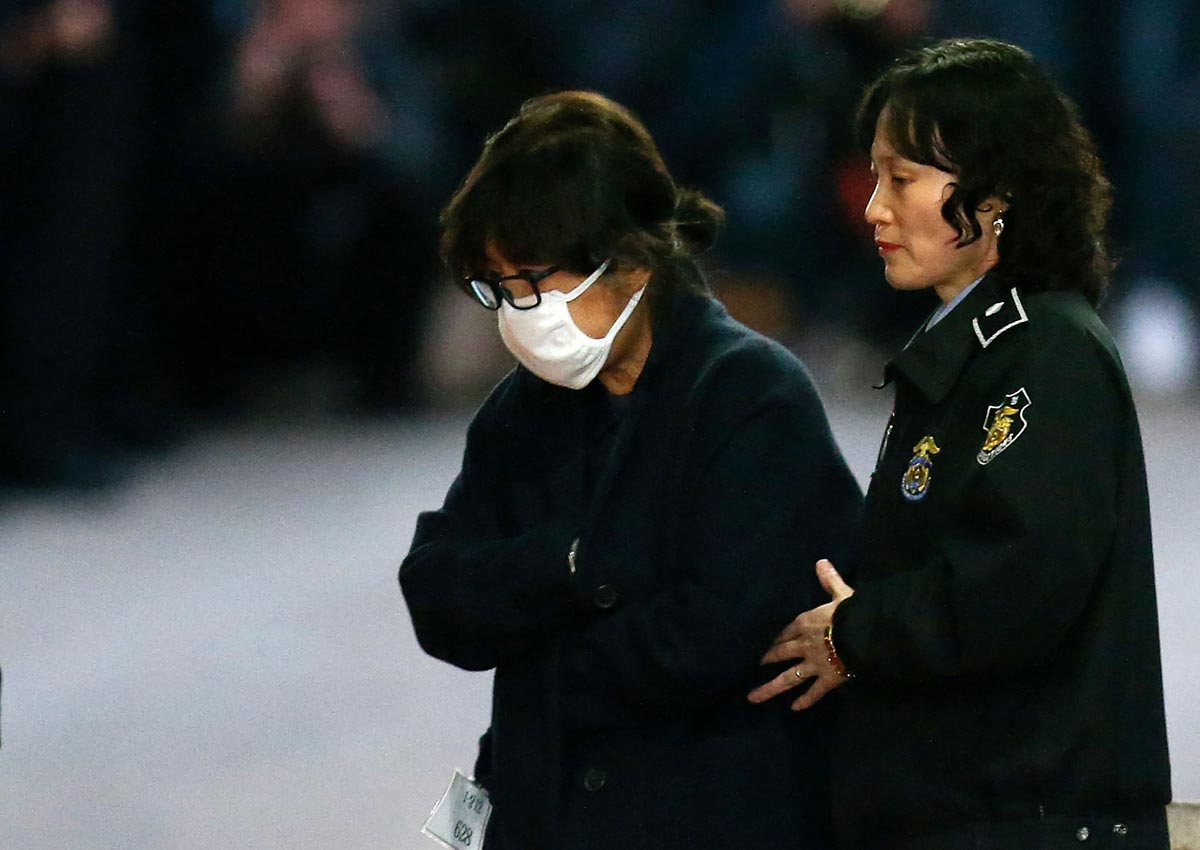
The “devil” in question here is Ms Choi Soon Sil – a cult-linked woman accused of manipulating South Korean President Park Geun Hye and dictating how she runs the country, in the biggest political scandal to rock South Korea in the country’s history.
And the shoe? Well, Ms Choi, 60, lost a black Prada loafer while wading through a media mob to get to the prosecutor’s office last Monday for investigations. She has been arrested on several charges, including abuse of authority and fraud.
The expensive footwear, which has spawned numerous memes, is seen as evidence of her lavish lifestyle and raised further questions about how she got her money. They included whether it has anything to do with the two non-profit foundations, Mir and K-Sports, she started in the past one year and for which she raised about 80 billion won (S$97 million) within days by arm- twisting conglomerates to donate.
Stories have also emerged in the media of how Ms Choi was arrogant and abused her link to the President, a friend of 40 years. One has it that she arrived at a neighbourhood mini-mart 30 minutes before opening time and yelled: “Open up! Do you know who I am?” The security guard who tried to stop her apparently lost his job the next day.
334389
Photo Gallery
Choi accused of interfering in state affairs using relationship with President
The snowballing scandal has caused public outrage, with people lashing out at how ridiculous it is for a head of state to be controlled by a “shamanistic adviser” who does not hold any government position but yet is able to enter and leave the presidential Blue House freely, suggest policies and place her cronies in important posts in various government agencies.
People also could not believe how Ms Choi, who has been labelled “empress dowager” and “female Rasputin”, managed to pull wool over Ms Park’s eyes.
In a national address last Friday, Ms Park, who is estranged from her two siblings, said she had no one else to turn to but Ms Choi.
“I trusted her because she had stayed by my side through the most difficult times of my life. But now, looking back, I realise that my over-reliance on her had blinded my objectivity and allowed my guard to drop,” she said.
Ms Choi is the fifth daughter of religious cult figure Choi Tae Min, who mentored both Ms Park and her father, the late President Park Chung Hee. Mr Choi married six times and had nine children. He had Ms Choi with his fifth wife.
Ms Choi was first introduced to Ms Park by her father in 1974. The two women became good friends, and Ms Choi often played the role of companion and personal aide to Ms Park.
Observers said they were as close as sisters, but there were many differences between them too. While Ms Park was living in isolation after her father’s death in 1979, Ms Choi reportedly studied early childhood education at Pacific State University in the US.
Back in South Korea, she worked with young children, first as the vice-principal of a kindergarten in south-eastern city Daegu from 1988 for five years, and then running another kindergarten in Seoul’s upscale Gangnam district.
But she is now suspected of forging her academic background after local radio station CBS found out that the university did not offer any early childhood education course at the time she claimed she was there.
Unlike Ms Park, who never married, Ms Choi is twice divorced. Her first marriage to a Daegu man ended after four years in 1986. Ten years on, she married her father’s assistant and gave birth to a daughter. They split up in 2014.
Now single, Ms Choi is rumoured to be dating a man 20 years younger than her, former fencer Ko Young Tae, 40. He is said to be part of a team of advisers called “Eight Fairies”, created by Ms Choi to unofficially help Ms Park with state policies.
The term, which has its origins in folklore, can refer to a dance performed during the Joseon Dynasty (1392-1910) or, in modern times, a shamanistic ritual or a gathering of rich men’s wives.
Another “fairy” is Ms Choi’s confidante, film director Cha Eun Taek who shot the music video for K-pop star Psy’s 2014 single Hangover and is involved in numerous big projects supported by the Ministry of Culture.
To Ms Park, Ms Choi was a loyal friend who gave her strength in her darkest periods. Their unusual friendship has fuelled at least two scandals in the past, including a 2014 episode in which Ms Choi and her ex-husband, Mr Chung Yoon Hoi, who had served as Ms Park’s aide, were accused of influence peddling.
When news of this latest scandal broke in September, Ms Choi fled to Germany, where her daughter, now 20, is training in horseriding.
Ms Choi returned to South Korea last Monday to submit herself to investigations.
Observers said she had to save her old friend from being toppled, which would have destroyed her own web of influence.
The saga is ongoing, but their friendship may be over.
Ms Park, in her Friday speech, said: “I will sever all ties and live in solitude from now on.”
351244
Photo Gallery
Tens of thousands of South Koreans stage protest in Seoul calling for President Park Geun Hye to resign
Educators in publicly funded pre-schools in Boston are on the same pay scale as those teaching in primary schools if they have the same qualifications, learnt some Singapore pre-school principals visiting the American city.
Mr Jason Sachs, the director of the early childhood education department in Boston Public Schools (BPS), told them: “This same pay scale is one of the reasons, I believe, that we are getting the results we have. These teachers are of the same quality as those in (higher education levels), and that’s really important.”
He was speaking two weeks ago to 24 Singapore pre-school heads taking part in Principal Matters, a leadership programme led by local philanthropic house Lien Foundation. The six-month programme aims to help principals be more effective leaders and improve the quality of pre-school services.
BPS pre-school educators generally get a starting pay of about US$55,000 (S$76,100) per year with a bachelor’s degree. They have to earn a master’s degree within five years, and their pay can reach US$75,000 a year then, said Mr Sachs.
In Singapore, all new teachers must have at least an early childhood education diploma, but more degree holders have been joining the sector too.
Pre-school teachers earn an average of $2,200 to $3,000, based on data gathered by the Early Childhood Development Agency last year.
This is usually lower than that of primary school teachers.
SIGNIFICANCE OF PAY
Ms Amy O’Leary, an adjunct professor in early childhood education at Wheelock College in Boston, told The Sunday Times that about a decade ago, higher education programmes for pre-school training were closing down when a pre-school educator’s average pay was only US$25,000 a year.
“Why would you go get a four-year degree if you’re going to make only that amount of money?” she said.
Besides attracting teachers, good salaries also help to build the small staff-child ratios needed for inclusive pre-schools where children need more attention, said Ms Vicki Milstein, who leads the Brookline Early Education Programme (Beep) pre-schools in Brookline, a town near Boston.
The public Beep pre-schools are known for their inclusive model, and about a third of their children have special needs.
Good pay also helps to reduce staff turnover and sustain the effects of teacher training, said Mr Sachs.
QUALITY TRAINING
Mr Sachs has been leading the BPS early childhood education department for more than a decade, and he leads a team of career coaches – who each earn US$100,000 a year – and curriculum experts.
Teachers get professional development generally in the form of monthly seminars and one-on-one training from job coaches who go into the classrooms every week or every two weeks.
BPS also decided to “mandate” what teachers should teach, so there is consistency across the pre-schools, said Mr Sachs.
QUALITY RESULTS
In 2013, a Harvard study found that the academic gains achieved by children in the BPS early childhood programmes were the “largest found to date in evaluations of large-scale public pre-kindergarten programmes (for four-year-olds)”.
A BPS study in 2014 also found that participation in its programme for four-year-olds closed “achievement gaps” between racial groups – black and Hispanic/Latino children in the programme performed better in literacy tests than white pupils who were not in the programme.
FUNDING SOURCES
BPS pre-schools get funding from the city of Boston, the state of Massachusetts and federal funds. Mr Sachs also has grants from private and philanthropic groups.
It also helps that the Boston mayors – Mr Thomas Menino who served till 2014, and his successor Mr Martin Walsh – see investment in pre-schools as the key to a better workforce, said Mr Sachs.
Despite a budget deficit, Mr Walsh committed US$3.1 million to public pre-schools for the 2016-2017 fiscal year.
Ms Iris Lim, principal of local pre-school Chiltern House, was one of four mentors who went on the Boston trip.
She said: “For the private sector, we don’t have as much funding as primary schools, so we can’t pay our teachers as well. Our retention rate at Chiltern House is high because of other factors such as medical benefits and the school culture.”
Lien Foundation chief executive Lee Poh Wah said: “There is little impetus and it is also not sustainable for private operators here to supplement teachers’ pay. The Ministry of Education kindergartens and anchor operators (which get government grants) can lead by example… and strive for pay parity with primary school teachers.
“Pre-school teachers impact young lives. We need to build systems and cultures that prioritise great teaching, particularly for disadvantaged children.”
goyshiyi@sph.com.sg
This article was first published on Nov 06, 2016. Get a copy of The Straits Times or go to straitstimes.com for more stories.
<p>Educators in publicly funded pre-schools in Boston are on the same pay scale as those teaching in primary schools if they have the same qualifications, learnt some Singapore pre-school principals visiting the American city.</p>
SINGAPORE — Singapore’s oldest estate of Toa Payoh is also home to Singapore’s oldest Buddhist monastery. But this gazetted national monument is forgotten by most Singaporeans, with majority of its 1,000 visitors monthly made up by tourists. Less than 20 monks live in the compound now, with Singapore’s oldest monk, 95-year-old Venerable Woo Foong, being one of them.
This Friday (Nov 11), Lian Shan Shuang Lin Monastery will reopen its oldest building to the public, bearing the same look as it did in 1901.
The restoration and reconstruction of this historical gem, with a unique blend of architectural styles reflecting the diversity of Singapore’s Chinese immigrants, has been 25 years in the making.
The idea for the S$20-million restoration of the building that houses the compound’s most important hall – Dharma Hall (a hall of sermons) – was mooted in 2003, a year after the completion of a S$30-million restoration, which saw an extensive refit of the Hall of Celestial Kings and Mahavira Hall.
The building used to stand out like a sore thumb because it was the only concrete building in the 24,000 sqm compound — the result of a 1970s restoration project which also totally changed its facade.
Abbot Wai Yim, the monastery’s chief monk, said as the monastery’s Min Nan style of carvings are gradually being phased out, even in Fuzhou, China where it originated, the monastery’s board decided to restore all the buildings to their original style.
The complex of seven buildings has been undergoing various stages of reconstruction and restoration since 1991, after the Building & Construction Authority ordered parts of the compound closed to the public as some of the timber structures were weakened by termites to the brink of collapse. So funds were raised from the public for the extended works.
This latest reconstruction project was led by Mr Chuang Shaw Boon, 60, who considers himself a freethinker.
The civil engineer volunteered for the project as he wanted to help conserve the only monastery in South-east Asia that was done in the Cong Lin style (translated from Mandarin as “layers of forest”), a standardised temple layout coming out from the Tang Dynasty, featuring seven halls oriented along a central axis.
He brought to the table his expertise, which allowed the reconstruction team to circumvent technical requirements listed by the authorities without deviating from traditional features.
First up was a return to the use of wood. This time, chengal timber, a more termite-resistant wood than the original Chinese fir from Fujian, was used.
To make the highly-embellished rooftops more durable, aluminium alloy was used in place of concrete. And the wall motifs originally made of clay and mortar were replicated on granite.
Mr Chuang said these materials were chosen “minimise the need for maintenance” but still give it its original look.
The building, rebuilt to its former glory, now houses five rooms: The Dharma Hall, Sutra Hall (a library), Virtue Hall (a multi-purpose hall), a meditation hall and the abbot’s residence.
This grand old dame is done with construction works — for now — although there are finishing touches still to be made, like adding porcelain motifs to the exterior of the Dharma Hall. There are also plans to restore the Bell and Drum Tower to their original 1907 state, said Abbot Wai.
Looking up at his finished work, Mr Chuang hopes more people will come check out this little-known piece of Singapore’s architectural heritage.
“I’ve heard from far too many Singaporeans that they don’t know about this place… Entry is free of charge!” he said.
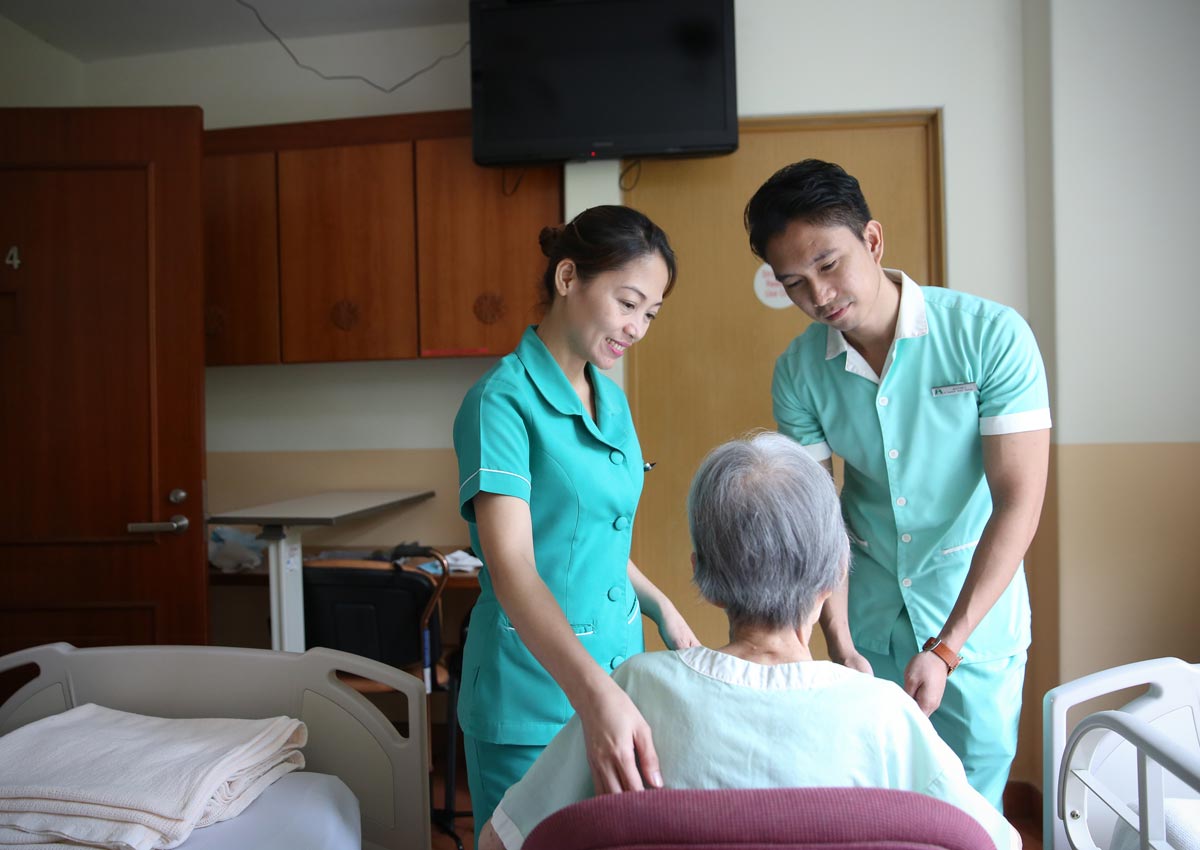
Some 10,000 healthcare workers are needed in the next three years to look after the swelling ranks of ageing Singapore residents.
More than one-third of the vacancies will be for professional, managerial, executive and technical (PMET) jobs such as doctors, nurses, facility managers and administrative staff, the Ministry of Health (MOH) tells The Sunday Times.
The ministry last month announced it needed 30,000 healthcare workers overall by 2020, and has now updated this to state that of these, 10,000 are required for the eldercare sector alone.
The vacancies will be filled by both local and foreign workers, says a ministry spokesman.
Asked how this will be achieved, MOH says: “We are ramping up efforts to build a stronger local core in the healthcare sector, such as investing in skills training and job redesign so that our healthcare workforce can do more at each level.”
It is also “expanding the training and recruitment pipeline to enable young job-seekers, mid-career entrants, former nurses and part-time workers to join the sector”.
But experts say a more pressing issue is to tackle why Singaporeans shun jobs in the healthcare sector.
Last week, a check of the government-run National Jobs Bank, where employers are required to post job vacancies before they can hire foreigners, found more than 800 job vacancies in the healthcare and pharmaceutical sectors (which are lumped together).
“There’s the unpleasant job at the lowest level, bathing and cleaning frail people,” says human resource consultant Martin Gabriel from HRMatters21. “Some people see it as a maid’s job.”
“To draw Singaporeans into the sector, there is a need to provide proper career progression and to minimise the parts of the job that are seen as unpleasant,” he adds.
Indeed, the Government acknowledged in 2012 that foreigners were going to take up the bulk of lower-end jobs such as feeding and bathing of patients that Singaporeans found unappealing.
“We expect that 70 per cent of the new support-care manpower demand, or 6,000 new positions, will need to be met through foreign recruitment,” wrote the Prime Minister’s Office in a research paper in November 2012 on the projection of foreign manpower demand in the healthcare sector.
Healthcare is part of the services sector where employers can hire two foreigners on work permits for every three full-time local workers. The Government has said that it will ensure flexibility in applying the cap so that healthcare institutions are able to fulfil their staffing needs, but it has never spelt out how the flexibility will be applied.
Meanwhile, efforts to fill the PMET vacancies in the sector with Singaporeans may get a push from an unexpected direction – the slowing economy.
“With growing concerns with the economy and jobs, healthcare is increasing in attractiveness,” says Dr Chia Shi-Lu, chairman of the Government Parliamentary Committee (GPC) for Health. “This is a pattern we see with previous economic downturns, as healthcare is traditionally viewed as a ‘safe’ haven where employment is concerned,” adds the orthopaedic surgeon at the Singapore General Hospital.
Mr Patrick Tay, chairman of the GPC for Manpower, says the stability of the healthcare jobs aside, another way of attracting Singaporeans to the sector is to streamline work and automate to raise productivity. “This will reduce the reliance on manpower,” says the long-time productivity advocate.
Member of Parliament Tin Pei Ling is optimistic that there will still be Singaporeans drawn to the sector (see story on Elena Lagman).
“Caring for the elderly requires the human touch,” says Ms Tin, who is a member of the GPC for Health. “There will continue to be those who find meaning and purpose in caring for the elderly, all of whom are Singapore’s pioneers.”
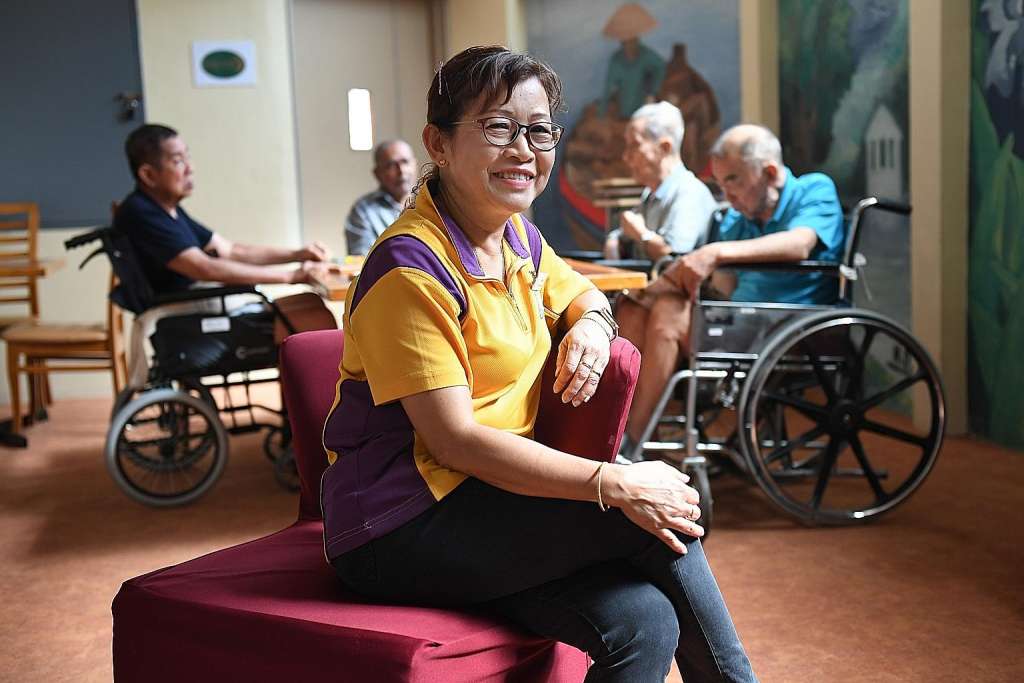
The local: Caring for the elderly feels like home
When Ms Elena Lagman retired from her job working in a family business five years ago, she wanted a job that involved working with people.
“I am a cheerful person and I like interacting with people,” says the 62-year-old.
She found a job as an activities coordinator at a pre-school and childcare centre, helping teachers mind their young wards. But a year later, she decided to switch to working in a nursing home.
“I enjoy looking after children, but I thought it would be more meaningful looking after older people, like I am looking after my parents,” she says.
She responded to an online job advertisement put up by Lentor Residence. Despite her lack of work experience in the field, she was hired as a patient-care assistant.
She was put through training, for example on how to transfer wheelchair users from the bed to the wheelchair, and handle those with dementia.
After working at the nursing home for four years, she now earns about $1,500 a month. “The salary is about the same as in childcare.”
She works from 9am to 6pm on Mondays to Fridays and alternate Saturdays, organising and co-ordinating activities.
When Insight visited her at the home last week, she was playing a Donkey card game with some residents.
“The game involves memory. It is a fun game to keep the mind alert,” says Ms Lagman.
When asked if it was difficult to switch from looking after children to seniors, she says with a laugh: “It is actually the same. Some of the residents, when they have dementia, they are forgetful like children.”
She adds: “My job is to keep them occupied through games and activities, that is also the same.
“And whether they are young or old, I need to listen to them and give them my attention, so it is the same skills.”
The most difficult part about caring for seniors is changing their diapers. “It is the smell. Not everyone can get used to it. For me, I don’t mind,” she says.
But what gives her the greatest satisfaction, she says, is when residents regard her as a family member.
“During Hari Raya this year, one of the residents went to his brother’s home, but wanted to come back to the nursing home on the same day because he said here is his home and I am like his family,” she says.
“It was very touching. At that moment, I knew I made the right move switching (from childcare to eldercare).”
The foreigners: Starting from scratch in Singapore
Both Ms Martinez and Mr Ordonez came here from the Philippines and started out as nursing aides. She is now a senior supervisor at Econ Medicare Centre and Nursing Home, while he is a senior staff nurse. Photo: The Straits Times
Back in the Philippines, they were highly qualified nursing staff – one has a nursing degree, while the other is a trained physiotherapist.
Yet when they came to Singapore to work in nursing homes, they started on the lowest rung as nursing aides because their qualifications were not recognised here.
After spending between eight and 14 years here, they now hold professional, managerial and executive jobs at Econ Medicare Centre and Nursing Home after their employer gradually promoted them.
Mr Jeffrey Lomboy Ordonez came to work in Singapore in 2008 after graduating from university with a nursing degree.
“Singapore is the only place I have worked,” the 29-year-old says.
He was hired as nursing aide on a work permit. The work permit, the lowest category of work pass, is mostly for foreigners doing low- skilled work. Most of the one million work-permit holders here are construction workers and maids.
He got his break in 2010 after he passed a Singapore Nursing Board exam and was officially registered as an enrolled nurse. He was then promoted twice, to staff nurse in 2012 and senior staff nurse in 2014.
He now works 44 hours a week, in morning, afternoon or night shifts, over five or six days a week, administering medication to residents and monitoring their health.
“I do not have to work overtime,” he says. “I know nurses in hospitals do.”
When asked about the stress of the job, he says residents’ family members sometimes expect round- the-clock personal attention.
“It is difficult. There is a staff-to- residents ratio that we follow,” he adds. “Thankfully such requests (for personal attention) are rare.”
His colleague, Ms Melany Vinoya Martinez, agrees. “Most of them treat us as family members because they know we are trying our best to look after their loved ones,” says the 41-year-old.
She came to Singapore as a nursing aide on a work permit in 2002, although she was a trained physiotherapist.
She is now a senior supervisor handling administrative work like admissions and training.
Their employer declined to disclose their pay, citing confidentiality. Both are now on the S Pass, a mid-tier work pass given to foreigners holding junior professional jobs and earning at least $2,200 a month.
On how she feels as a foreigner looking after the old in Singapore, Ms Martinez says: “When their health deteriorates, I feel sad. When they pass away, I cry. I go to their wakes after work. I don’t see myself as a foreigner and them as Singaporeans. I see myself as a caregiver. That’s what matters.”
A stroke in May last year did not kill Mr Goh Keng Char, but the depression that followed almost did.
Before the stroke, Mr Goh, then 77, lived alone in a one-bedroom Housing Board rental flat in Toa Payoh. His flat-mate of over 10 years had died a year earlier.
When he was discharged from Tan Tock Seng Hospital after a seven-week stay, Mr Goh, a bachelor, felt lonely and helpless, having to use a wheelchair to move around.
“I cannot walk… I felt I had nothing to live for,” says the former water tank maintenance worker.
“I took the lift to the 12th floor of the block in my wheelchair and wanted to jump down.
“A Malay neighbour saw me in a daze and stopped me. He saved my life.”
Today, Mr Goh still cannot walk and he continues to live alone at the rental flat, but he no longer thinks about taking his life. “I have many new friends in the neighbourhood, especially the hawkers,” he says. “They do not charge me.”
He relies on voluntary welfare organisation (VWO) Touch Home Care for food, medical care and housekeeping. Twice a day, seven days a week, volunteers from Touch deliver lunch and dinner to his flat. “The food is still warm when they arrive,” says Mr Goh.
A nurse visits weekly to check on his health, and staff from the VWO clean his flat. The services are free because Mr Goh is on long-term public assistance, getting $500 a month from the Government.
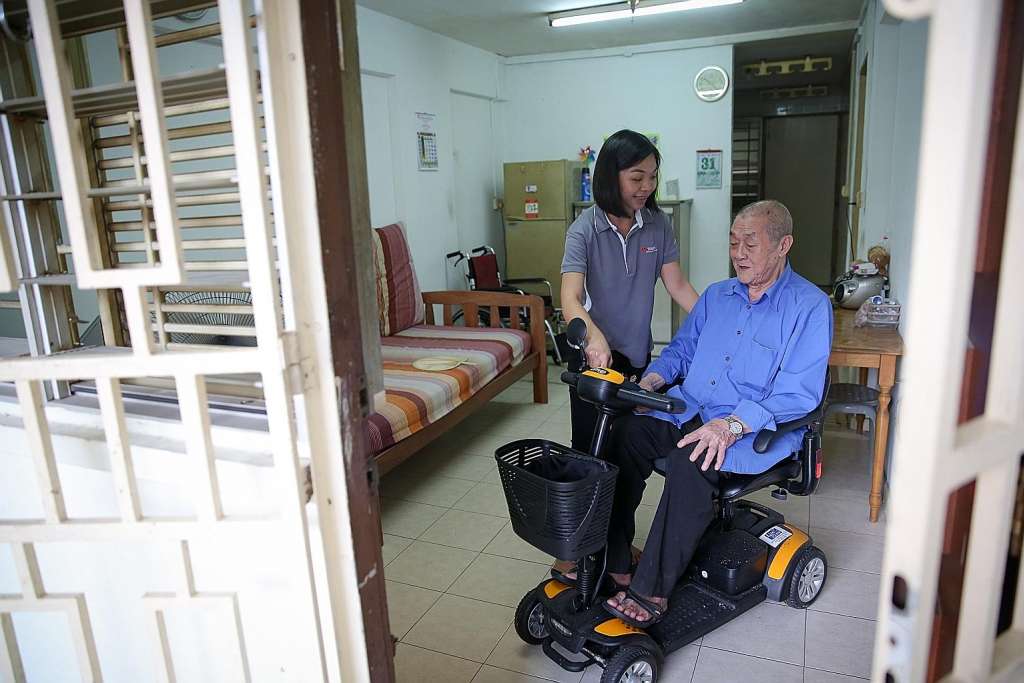
Last December, Touch helped Mr Goh apply for government funding to buy a motorised scooter, and sent two occupational therapists to teach him how to use it this year.
Touch Home Care director Kavin Seow says it provides these services to seniors like Mr Goh as part of a larger government drive to help the elderly grow old where they live, instead of in nursing homes. “We recognise that the elderly want to be independent and many prefer to age at home.”
Volunteers from the VWO deliver daily meals to about 400 seniors living alone. Each month, its nurses make housecalls to about 340 seniors. It also runs a daily ambulance service ferrying the elderly to hospitals for check-ups.
Touch operates in Ang Mo Kio, Jurong and Toa Payoh. It plans to expand to Bukit Batok and Yishun next year, but it is feeling the heat from the manpower crunch in the sector.
“Manpower challenges continue to be a concern for us, as it is important to recruit people with the right skills and heart for the work,” says Mr Seow.
Mr Goh appreciates the help. “I have no relatives, so she is like family to me,” he says, pointing to occupational therapist Doreen Ang, who accompanied Insight to visit him last week. Mr Goh had five siblings but they have died and their children do not visit him.
Ms Ang, who taught Mr Goh how to use the motorised scooter, downplays her role, saying: “Mobility is important for seniors socially, so I helped him get around the neighbourhood safely.”
The 24-year-old graduated with a degree in occupational therapy last year and could have easily found work in hospitals, but she opted to work at Touch. She says: “I can make a direct impact on the seniors in a community setting.”
Mr Goh is thankful for the motorised scooter, saying he is no longer confined to the flat.
When Insight asked if he would consider moving to a nursing home should his health deteriorate, he retorts: “No. I’d rather die than go to a nursing home… I have lived in Toa Payoh for more than 40 years and in this flat for more than 20. I want to die here.”
Ageing in place: More support for seniors living at home
The key thrust of Singapore’s ageing policy is based on the view that most people want to be cared for at home or in the community. That’s because they feel more comfortable in familiar settings and around people they know.
And that is why the Ministry of Health (MOH) has ramped up aged care services significantly of late. Over the past five years, centre-based daycare places rose by 67 per cent, and seniors receiving care services in their homes increased by 82 per cent, says the MOH.
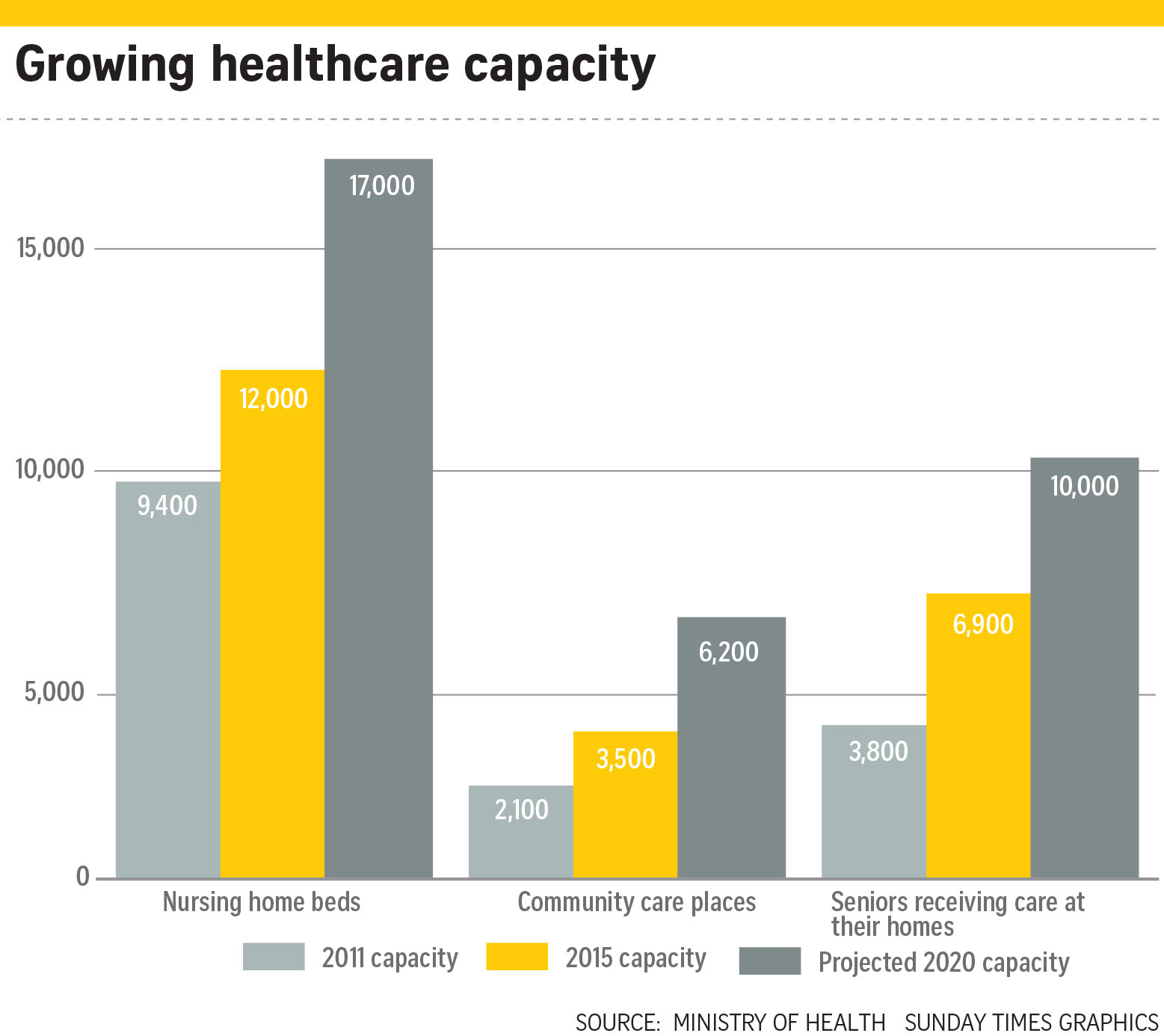
The ministry intends to keep up this momentum. The number of daycare places, where older people go for rehabilitative and social activities, will jump from 3,500 last year to 6,200 in 2020. Likewise, the capacity to care for seniors in their homes is expected to rise by 45 per cent from the 6,900 available last year to 10,000 by 2020.
Daycare centres and home- based care services – such as meal delivery, medical escorts, personal and nursing care, rehabilitation and “elder-sitting” for those with dementia – allow seniors with mild or moderate disability to still be able to age well at home.
For those with more complex needs, the MOH has started piloting integrated care packages this year that bundle both home- based and centre-based care to serve needs of seniors holistically.
However, the capacity to provide daycare and home-based care services remains minuscule compared with the vast, growing ranks of people turning grey.
The number of elderly living alone increased from 6,000 in 1990 to 29,000 in 2011 and is estimated to reach 92,000 by 2030. Disability rates among the elderly are expected to rise, even as the number of family caregivers shrinks.
To cope with heavy caregiving work, Singaporeans have been accustomed to outsourcing care to foreign domestic workers.
The MOH piloted a programme last year to train domestic helpers – both in the classroom and on the job – so that they can look after seniors better. But that pool of labour is dwindling, with source countries limiting supply and maids less keen to work here.
To have enough manpower, the rest of the community will need to fill the gap, experts say – pointing to volunteers. Tsao Foundation, a non-profit group that specialises in ageing issues, has more than 120 trained volunteers who help regularly in counselling and organising activities.
“Volunteers make a critical contribution to the care of our elderly clients,” says Ms Doris Low, director of community relations at Tsao Foundation. “(Volunteering) is also one way in which we can support one another in an ageing society instead of seeing older people as ‘others’.”
Right at home in a nursing home
Photo: The Straits Times
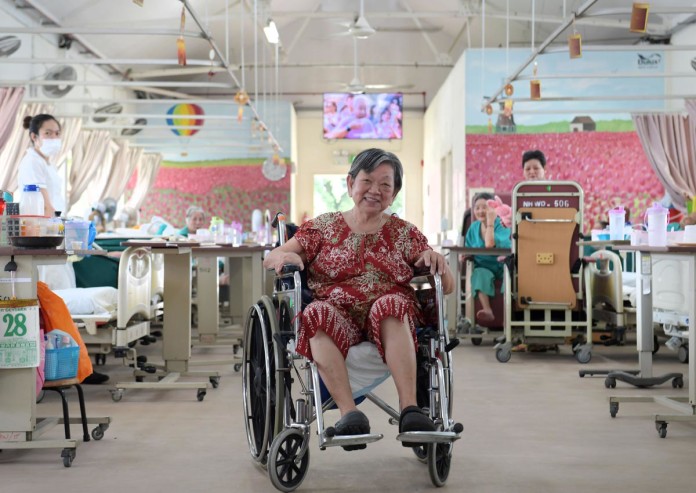
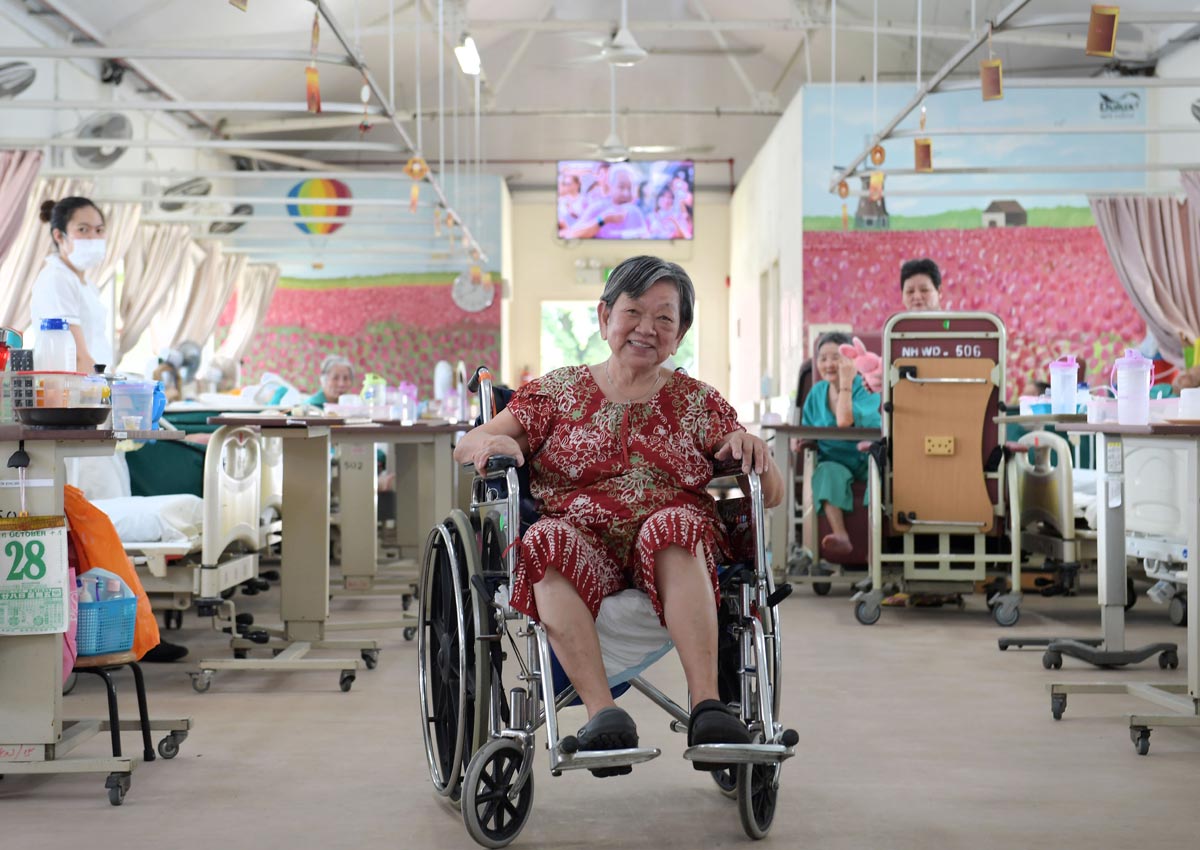
For the past 16 years, home for Madam Chew Eng Huay has been a chronic sick ward, and then a nursing home.
A stroke in 2000 left her unable to walk, talk or feed herself, so she went from her sister’s flat to the Ren Ci long-term care facility in Hougang. Eight years later, she was wheeled into Ren Ci nursing home in Jalan Tan Tock Seng where she continued to be bed- bound and fed through a tube.
The nursing home is made up of seven single-storey buildings. Madam Chew, 70, lives with 29 others in one of the cavernous rooms.
Her first thought when she was brought in was to go back home. She was fearful of not being able to go wherever she wanted. Today,she seems to be a different person.
It was barely lunchtime when The Sunday Times visited her two weeks ago and “Ah Huay”, as she is affectionately called, was already cooking a pot of red bean soup for dessert. She whips up a sweet treat for the residents every Thursday.
“I cook anything, red bean, green bean, chrysanthemum or barley soup,” said Madam Chew, brandishing a ladle as she stretched to stir the soup from her wheelchair. She carefully scooped up pandan leaves from the pot with her left hand, as the right side of her body is paralysed.
With intensive rehabilitation and good care, she is now able to talk, eat on her own and wheel herself around by using her left leg to propel the wheelchair forward.
“I like it here, I like everything about this place,” she said.
Madam Chew may be one of the many residents of the nursing home, but she enjoys helping the nurses run the place.
During breakfast, she helps to feed one of the residents. Then she transfers herself onto a motorised scooter to go around delivering bedsheets, eggs and bread to residents in other wards. After lunch, she sometimes plays mahjong with her close friends using her one good hand.
“I need to have things to do. It makes me happy,” said Madam Chew, who could not sit still even during this interview. Intermittently, she would check on her red bean soup or ensure that someone was feeding a certain resident.
She said she is accustomed to hard work as she used to sell coffee and bread at Lau Pa Sat. Later, she also helped her father sell ice kacang at his hawker stall in Havelock Road.
Madam Chew is single and has an older sister and an estranged younger brother. Their father left them a three-room flat in Bukit Ho Swee, which they sold.
“I don’t like to stay alone at home as I am scared. What if I die and no one finds me even after one or two weeks?” she said in Mandarin.
“Even if there are care workers who can come to my home to help, I don’t think they are able to do so every day,” she added.
She said she does not mind sacrificing personal space and privacy. One neighbouring resident, she pointed out, scolds her each time she passes by and another rambles on about winning the lottery.
She has injected her personality into the impersonal space by pasting Hello Kitty and other cartoon stickers on the cupboard next to her bed. And she wears red and black floral blouses and trousers instead of the green pyjamas that everyone else wears. A nurse from Myanmar, who treats her “like mum”, bought the outfits for her.
Madam Chew, with her cheerful disposition and active lifestyle, may be an exception in her ward. The other residents seem listless and stay in their beds or chairs.
“I used to work so hard in the past and didn’t have time to help others. So this is my form of volunteer work now,” said Madam Chew.
Nursing homes: Mega, multi-storey facilitiesbeing built in rush to increase number of beds
For the past few months, motorists driving along Ang Mo Kio Avenue 1 near Bishan-Ang Mo Kio Park would have seen the new Ren Ci Nursing Home taking shape. When the 11-storey building is completed around next June, it will house up to 470 residents.
Meanwhile, in Chinatown, beds and blood-pressure measuring machines have replaced desk and dusters at a former primary school. The Pearl’s Hill Care Home, which officially opened in September, is Singapore’s first government-run nursing home.
From constructing new buildings to refurbishing old ones, Singapore is expanding the number of nursing home beds in a hurry.
Singapore has around 12,000 nursing home beds, up from 9,200 in 2010. Another 5,000 will be added by 2020, an increase of 85 per cent over 10 years.
By financial year 2015, the Government was spending $360 million on nursing homes, most of it for patient subsidies, manpower costs and construction. This is more than three times what it spent in financial year 2011.
The pressure to ramp up capacity rapidly has led to two heavyweights – the Government and the National Trades Union Congress – jumping into the segment to run their own nursing homes.
By next year, Kwong Wai Shiu Hospital will have Singapore’s largest nursing home in a new 12-storey hub that will see a doubling in its number of beds to 622. An 11-storey, 342-bed home in Chai Chee run by NTUC Health Co-operative and a 290-bed home in Hougang run by Thye Hua Kwan Moral Society are expected to be ready this year.
Such massive projects have led observers to ask whether Singapore is churning out cookie-cutter nursing homes with soulless dormitory-style wards.
Pearl’s Hill Care Home, for example, has four large halls for 32 residents each. The Ministry of Health, which runs the home, declined Insight’s request for a visit.
Dr Phillip Yap, a geriatrician who has published research papers on nursing homes here, says: “Dormitory living and regimented routines are the norm. Residents have little control over their daily routines and there is minimal privacy.”
Meanwhile, the MOH has tried to improve the quality of care in nursing homes by introducing the new Enhanced Nursing Home Standards (ENHS) as part of licensing requirements. Nursing homes were given one year – ended April this year – to comply. Ms Loh Shu Ching, chief executive of Ren Ci Hospital, notes: “The ENHS will definitely provide safer care for the nursing homes but it is going to make things more difficult for those of us trying to turn the nursing home into a home and not a hospital.”
There’s Hope for dementia patients
Photo: The Straits Times
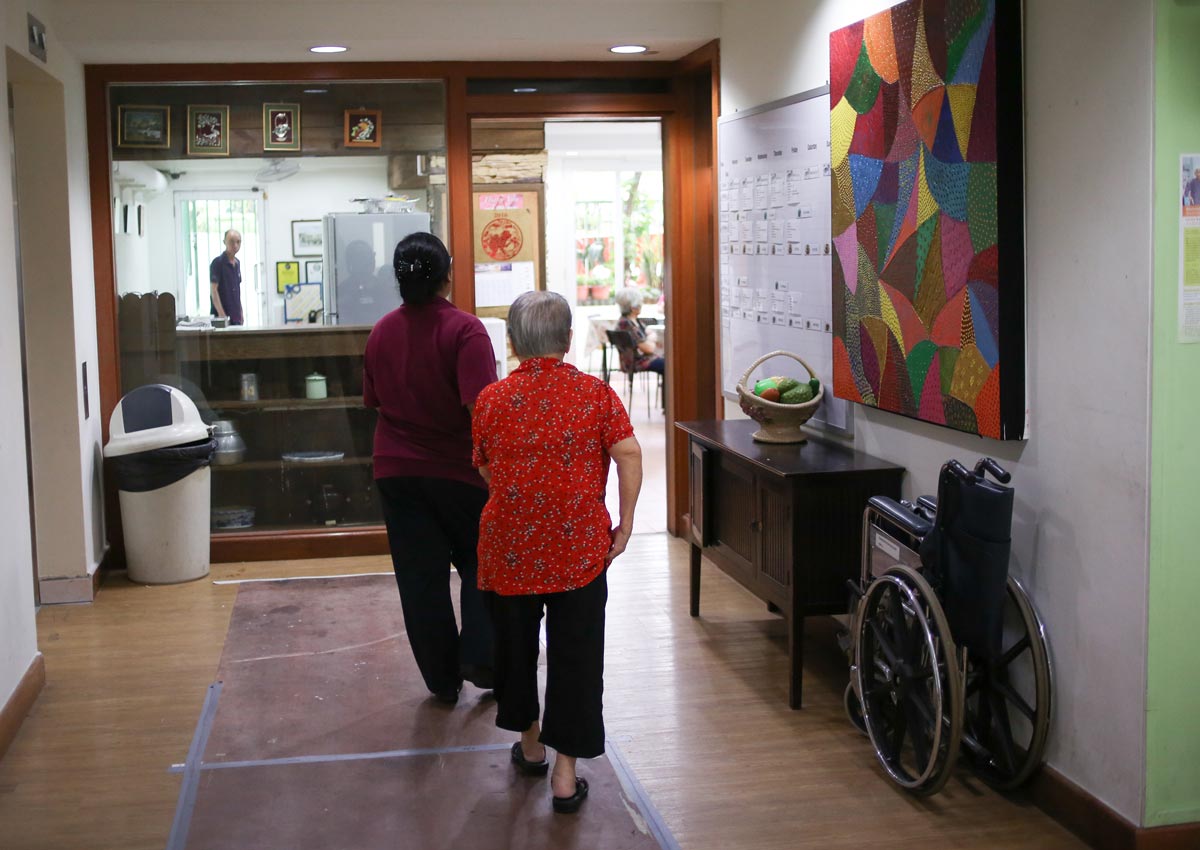
It is only 11.20am but a lunch queue has already formed at an in-house cafe along Upper Changi Road North. In the line are old folk, leaning on walking sticks, waiting patiently for their turn.
They tell the servers the portions they are feeling up to that day. They then carry their plates to nearby tables and join whoever they want to dine with. When they are done, they empty the food waste in a bin and leave the plates and utensils in separate tubs.
These elderly folk, most of whom are in their 80s and 90s, have dementia. But the people who run the assisted living facility where they live believe that getting them to do little things and make decisions for themselves will empower them.
“This is not the kind of place where they just sit there and wait to be served. Giving them a say in simple things matters, because it keeps them engaged in life,” says Ms Josephine Khai, senior staff nurse of Peacehaven nursing home.
The home is run by a charity, the Salvation Army, but these relatively independent seniors are housed next door in a separate five-storey building. Called Hope, the area where they live is modelled after an HDB block. There are about 60 senior citizens with mild to moderate dementia who live in single or four-bed rooms.
In the morning, they wake up whenever they want. They are expected to change out of their pyjamas. In contrast, at some nursing homes, it is common for residents to wear the same outfit all day.
“These are environmental cues and will put them in the frame of mind to get their day going,” says Ms Khai.
When Insight visited two weeks ago, some were in the cafe, piecing together jigsaw puzzles. Others watched television or read the newspapers. Another group went into a room to belt out the classics tunes of Taiwanese pop singer Teresa Teng.
They do not need to follow a regimented timetable, but there is a list of specific activities available each day. If they prefer to rest in their rooms, they may do so.
Before going into their rooms to deliver fresh laundry or remind them to shower, nurses make it a point to knock on their doors first to ask for permission to enter, so as not to intrude on their personal space and privacy.
Though some of the seniors are prone to wander, they are not kept within their “HDB block”. Every Wednesday, they go to a factory across the road for a morning snack at the canteen. Every Friday, they walk to the Japanese school next door to say hello to the children.
Hope was started in 2006 after the charity saw a need to provide care that helps relatively independent seniors with dementia. Since then, about 100 have lived there. They pay the same rates as the nursing home residents next door, between $2,800 and $4,500 before subsidies of up to 75 per cent.
Peacehaven is not alone in having the concept of assisted living facilities.
Over at Lentor Residence, two in three of its 208 beds are in single or twin-occupancy rooms with attached toilets. The floors of the common areas are carpeted and there is free Wi-Fi.
The home’s chief executive Jonathan Koh says it was set up as a retirement village in 1997. “But there was no demand, so we ran it like a nursing home, taking in subsidised residents.”
A room does not come cheap – $240 a day, or more than $7,000 a month. The price includes meals, laundry and housekeeping services.
Ms Khai says that living in a home-like environment has helped residents enhance their quality of life. Assessments show an average of a 30 per cent increase in the sense of well-being after living there.
Assisted living facilities: Govt integrating services for seniors within neighbourhoods
The elderly in Singapore have hardly any other housing options besides nursing homes if they grow frail and need someone to take care of them.
In countries such as the United States, Australia and Finland, about 5 per cent of the elderly population live in some form of residential aged care facility. Going by this estimate, about 50,000 seniors in Singapore will need such facilities by 2030. But there are only about 12,000 nursing home beds now.
Assisted living facilities provide a more home-like environment, such as private rooms, for more independent seniors who need help with personal care.
Standalone assisted living options are virtually non-existent in Singapore. The small pockets that exist are mostly nursing homes that have set aside separate spaces for assisted living.
While Singapore has 14 senior group homes, they do not count as assisted living facilities as residents do not get help with daily activities. Senior group homes are clusters of rental flats meant to let elderly folk with little or no family support live together with one another in an environment which they are familiar with.
The Ministry of Health (MOH) says assisted living is a service worth studying. “Many citizens own their own homes within public housing estates. Therefore, assisted living takes the form of injecting a range of services within such estates in Singapore,” says its spokesman.
The Government seeks to integrate services within neighbourhoods in two ways. First, it has been retrofitting existing mature estates to create conducive environments for seniors. In Marine Terrace, Jalan Batu, Nee Soon Central and Beach Road, for instance, there is a range of services and facilities – including an active ageing centre, community kitchen, senior activity centre and day rehabilitation centre – within the same area.
Second, it is including senior services in new public housing developments. New Housing Board projects will have “Active Ageing Hubs”, or larger spaces where various eldercare services such as daycare centres and rehabilitation are located.
The MOH is also encouraging private operators and voluntary welfare organisations to provide assisted living services, such as housekeeping and grocery-shopping, for seniors who require assistance. A senior activity centre at a new studio apartment development in Marsiling has been offering residents nearby health and dental check-ups, and taking grocery orders.
Nursing homes like Peacehaven have also taken the initiative to experiment and come up with assisted living spaces for more mobile and able seniors, who still get the usual nursing home subsidies of up to 75 per cent.
Home. Nursing home. Hospital and community hospital. Ageing in place. Mrs Theresa Hogan, 88, has experienced them all over the past 15 years.
The widow was living with her son when she suffered a stroke that took away her ability to walk or eat.
So, she was put in a nursing home. The pros: She liked the place as it was clean and its nurses took good care of her. She also enjoyed attending its exercise and flower arrangement classes.
The cons: She was lonely, even though she slept in a room with nine other people. Mrs Hogan recalls: “It was dull. The people there couldn’t really communicate, and my family hardly visited. I would lie on my bed, just looking at the sky outside the window.”
After five years, she went to live with a grandson who managed to obtain a two-room rental flat in Whampoa. She had housekeeping services from homecare company Comfort Keepers, and the non-pro- fit Tsao Foundation helped link her up to services in the community and monitor her well-being.
Which was just as well. Over the past two years, the frail grandmother has had five falls at home, and had to be warded at Tan Tock Seng Hospital and Ren Ci Community Hospital.
Then, four months ago, her grandson died of lung cancer. Mrs Hogan decided to continue living at home alone – what the Health Ministry (MOH) terms ageing in place. Neighbours cook or buy lunch for her every day.
Mrs Hogan’s situation of multiple aspects of care in her senior years is not unique.
By 2030, one in every three people here is projected to need some form of eldercare service.
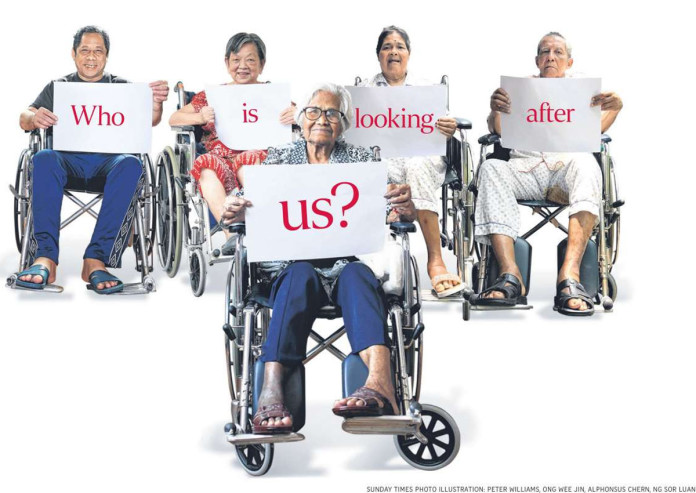
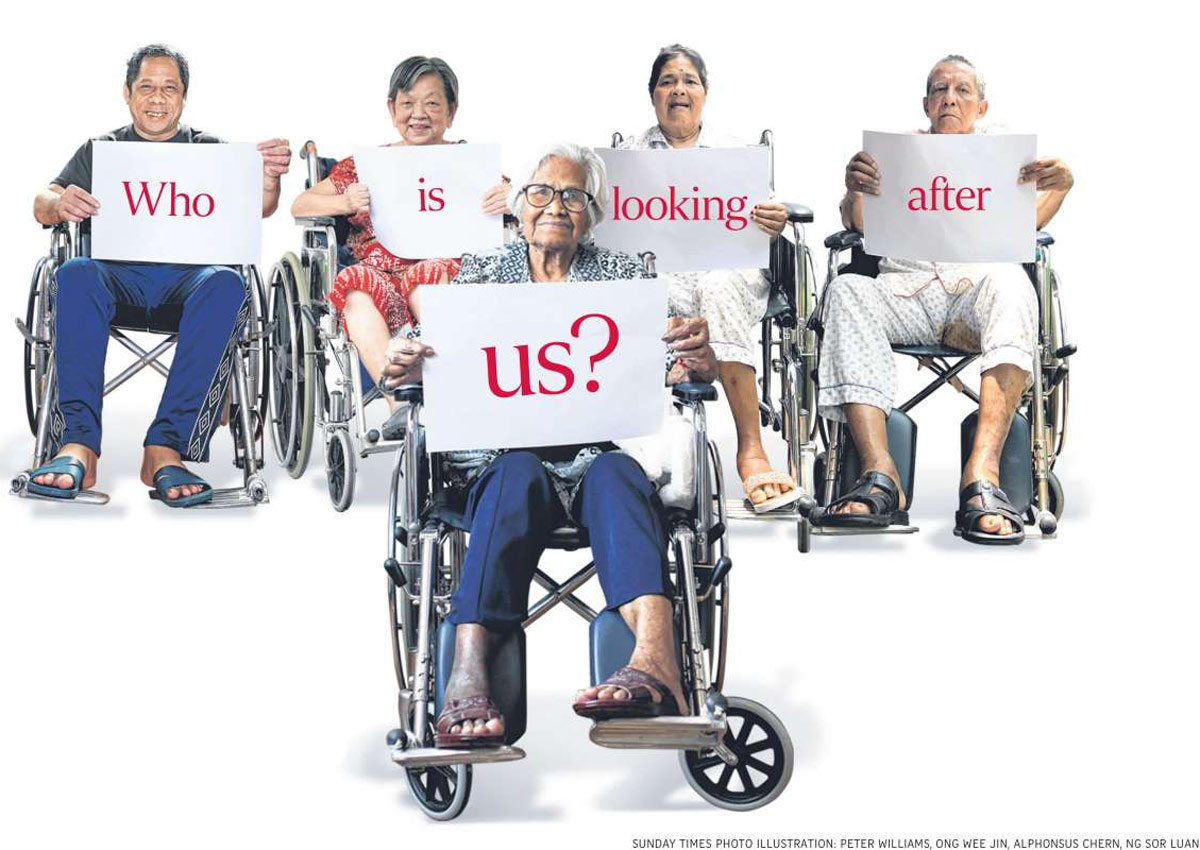
Against the current backdrop of different settings in which to grow old, Insight looks at what is being done to care for the seniors of the future, and whether those moves are fast enough to meet demand.
BEST PLACE TO GROW OLD IN?
Singapore is one of the fastest ageing societies in the world: by 2030, one in four people, or more than 900,000 people, will be aged 65 and above, double the number now.
Ageing is the single most important demographic shift that will affect the future of Singapore, Senior Minister of State for Health Amy Khor said earlier this year when launching a $3 billion Action Plan for Successful Ageing.
The plan’s 70 initiatives to help the elderly lead healthy and active lives include a review of the financing system for long-term care, raising the re-employment age and building more centres where seniors can get physiotherapy or take part in activities.
Health Minister and chairman of the Ministerial Committee on Ageing Gan Kim Yong said when initial details of the national plan were released last year: “We need to plan ahead to ensure that Singaporeans need not worry about getting old, but instead embrace new opportunities that come with longevity. We want Singapore to be the best place for Singaporeans to grow old in, and a model for successful ageing.”
Yet a recent survey of 1,000 Singaporeans, commissioned by NTUC Income and the Lien Foundation, found that eight in 10 Singaporeans are worried about growing old.
Topping their worries is whether they will be able to look after themselves. Financial concerns such as running out of savings comes next.
This is even as the traditional Asian approach of caring for aged parents at home is still the “retirement plan” for most. However, the best-laid plans can fail when the elderly need round-the-clock specialised care for illness. Some people also do not have family members to rely on or cannot afford a maid.
Last month, Mr Gan said Singapore will need to make “deep and fundamental changes” to the way care is delivered to seniors, as the country ages and more of its citizens suffer chronic ailments.
The Government’s focus has been shifting from hospitals to the community – such as polyclinics, nursing homes and daycare facilities – to let the elderly be cared for at home and in familiar neighbourhoods.
There has been much discussion of ageing issues over the past 20 years, and from the early 2000s, MOH has been investing heavily in expanding home-based care services. But are there adequate community resources to ensure the elderly can keep living at home?
Despite the years of discussion, long- term private and public residential care options for the elderly are limited.
For many frail elderly people who live with family without the necessary time or nursing expertise, or for those living alone who are unable hire a full-time helper, nursing homes remain their main option.
LONG-TERM CARE: ENOUGH BEDS?
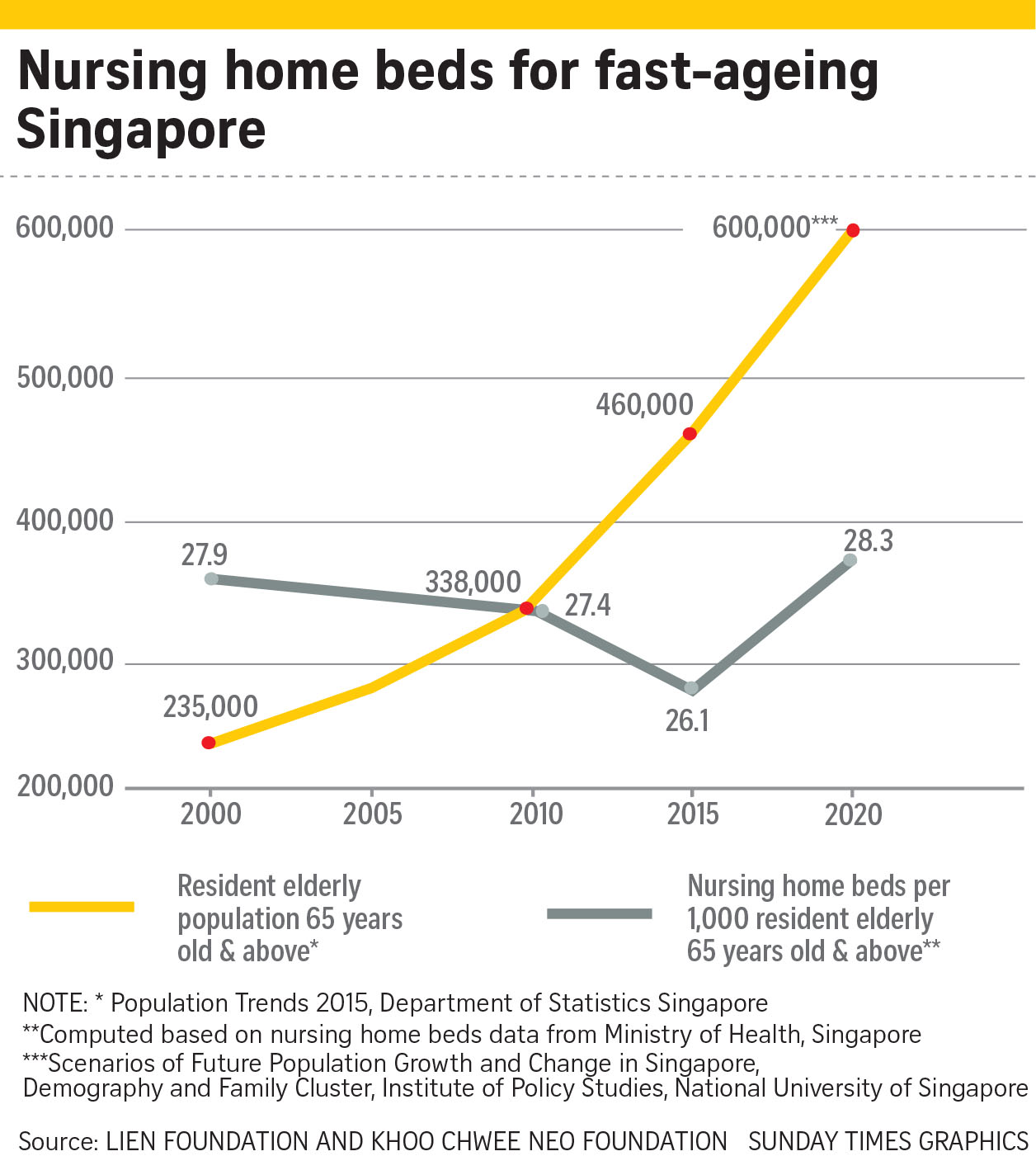
In barely three years, there will be 610,000 people in the above-65 age group, but a projected capacity of only 6,200 centre-based daycare and 10,000 home-based care services.
As of last year, Singapore had 26.1 nursing home beds per 1,000 people aged 65 and above – the lowest proportion in 15 years (see chart) – and well below the OECD average of 45.2 beds.
To put that in perspective, though, researcher Radha Basu notes in her 130-page report on the state of nursing homes here: “With fewer beds than many advanced countries and relatively stronger family networks, it is no surprise that Singapore has very few older folks in nursing homes.”
But she cautions: “As families shrink in size, Singapore will need more long-term care options.”
In countries like the US, Australia and Finland, about 5 per cent of the elderly population live in some form of residential aged care facility such as nursing homes or assisted living. Going by this, about 50,000 seniors in Singapore will need such facilities by 2030. But there are only about 12,000 beds in nursing homes.
This means that even if 95 per cent of the elderly live and die at home, Singapore may need nearly 50,000 alternative senior living options by 2030, says Ms Basu.
When The Sunday Times asked MOH how it comes up with its planning targets for services and facilities for the elderly and why they were not ramped up more and earlier, a spokesman said the demand for aged care services is projected based on a combination of factors.
She explained: “Beyond the population of seniors, we also factor in the incidence of disability, the level of disability and utilisation rate.
“As the needs and circumstances of seniors and their caregivers are different, we have to plan for a diverse range of options to meet the needs.
“Needs are also not static. In tandem with changing social trends, utilisation of different options will change and so we will conduct regular reviews of our projections and adjust our development plans.”
For those who do not need intensive nursing care but are too frail to age in place at home, there is the option of assisted living, which is common in countries such as Australia, Britain and the US. They provide a more home-like environment, such as private rooms, for more independent seniors who need help with personal care.
There are few such standalone facilities here, though the Government says the assisted living concept can take the form of people continuing to live in their own HDB flats but having access to aged care services in their neighbourhoods.
NO ONE-SIZE SOLUTION
It is clear that the more than 900,000 seniors by 2030 will have different needs, financial capabilities and expectations which no single player or model can possibly cater to. A wider range of options will be called for.
The authorities acknowledge the challenges that lie ahead.
“We agree that we should seek to enhance the diversity of aged care options and we welcome more ideas to help our seniors age well in place,” says the MOH spokesman. “We hope we can see new and exciting models emerging to meet our seniors’ needs, that are uniquely Singapore.”
As for Mrs Hogan, when The Sunday Times tried to visit her, she was back at a community hospital after busting her hip in yet another fall at home. She clutched a soft toy rabbit everywhere she was wheeled to.
“My great-granddaughter gave it to me last month for my birthday and I also have a bear, tortoise and doll on my bed at home (in the Whampoa flat). I can’t sleep here without the rabbit,” she says.
For Mrs Hogan, then, the “home” to grow old in and die in has come to mean anywhere that she feels loved.
jantai@sph.com.sg
tohyc@sph.com.sg
This article was first published on Nov 06, 2016. Get a copy of The Straits Times or go to straitstimes.com for more stories.
CP Food is offering 3-box bundle CP Signature Shrimp Wonton at 3 for $7.50 (UP: $5.20 per box). Shrimp Wonton is a simple and delicious shrimp delicacy that warms you and keeps you slurping delightfully.
They have been married for 54 years but were forced to live apart for 11/2 years in different nursing homes due to a lack of beds.
When the once inseparable couple was finally reunited under one roof late last year, the wife’s dementia condition had deteriorated to such an extent that she could not recognise her own husband.
“She told him: ‘This is not my husband’ and rejected him,” said their daughter, Madam Zaleha Abu, 45. “My dad, who was initially very excited to finally meet her, became quiet. It was heartbreaking and my father wept frequently after that,” she added.
Cases such as this raise the issue of whether the shortage of nursing home beds here means that elderly couples who need such services have to spend their golden years apart. In some cases, the separation may be even more acutely felt if one of them has dementia.
The authorities said no priority is given to a person who wishes to enter the same nursing home that the spouse is in, unless the senior citizen’s physical or mental well-being is dependent on both of them being under one roof.
Applications for a bed are processed on a first-come-first-served basis and only those with urgent care needs may get to jump the queue.
A similar story that caught global attention unfolded in Canada in August this year. An elderly man and woman, who have been married for 62 years, were placed in separate nursing homes for the better part of a year due to a backlog in the healthcare system.
Every other day, a family member would drive for 40 minutes to bring one of them to the other so they could spend time together. Every time the husband and wife said goodbye, there were tears.
Their granddaughter pleaded with the community to help speed up the move as her grandfather had dementia. The family feared his memory of his wife would fade faster the longer they were apart. The couple were reunited in September.
Madam Zaleha’s mother, Madam Nashua Adam, 74, was first placed in an Orange Valley nursing home in Marsiling in late 2013 when her dementia worsened.
The family had initially wanted to put her in a cheaper, charity-run nursing home with dementia care services in the north that provided halal food. There were no vacancies and she was placed on an interim scheme at Orange Valley, a private nursing home, until there was a bed elsewhere that would better meet her needs.
Meanwhile, Madam Zaleha cared for her father, Mr Abu Salleh, 80, at home. Mr Abu, who also has dementia, went for dementia daycare services at Sunshine Welfare Action Mission (Swami) home along Sembawang Walk.
Visiting her mother and caring for her father at home took a toll on Madam Zaleha’s health and she developed depression, she said.
So, she applied for a nursing home place for her father and the Agency for Integrated Care (AIC), which oversees nursing home placements, expedited the case because she also had an eye condition that required an operation.
Mr Abu got a place at Swami nursing home in mid-2014. Madam Zaleha then requested for her mother to be transferred to Swami.
The elderly couple always preferred to do things together, so Madam Zaleha thought it would do them good to live together at Swami. But there was no vacancy for female residents at Swami and she said she was told that the expected waiting time was three months to a year.
When one year was up, Madam Zaleha contacted Swami and AIC regarding the move, but she was informed that there was still no vacancy.
In the meantime, she shuttled to and fro between both nursing homes and brought her mother to visit her father once a month. But as time passed, Madam Zaleha grew increasingly anxious.
In August last year, she went to a Meet-the-People session and approached Nee Soon grassroots leaders for help. Her mother managed to get into Swami a few months later in November that year when a bed became available.
Nurses in Swami make it a point to arrange for the married couple to be together every lunch and tea time, as well as during certain exercise sessions or activities.
But after the elderly couple were reunited in Swami, the nurses do not refer to Mr Abu as Madam Nashua’s husband. This is because she now recognises him only as a good friend and gets agitated whenever he touches her, for instance.
The husband and wife also live in separate rooms as nursing home policy in Singapore stipulates separate accommodation for residents of different gender.
The wife sleeps in a 15-bedded room while the husband is in a double-bedded room down the corridor.
Said Madam Zaleha of her parents’ case: “I understand that their dementia condition may have deteriorated similarly even if they were not separated. But if the application for a spouse to join another in the same nursing home were given priority, and if the waiting list had not been so long, perhaps my parents could have spent more lucid moments together.”
She added that while the authorities do face constraints, “they need to bend the rules on a case- by-case basis, even if they can’t break all rules”.
For now, Mr Abu is content with just keeping his wife within sight.
“I prefer to have her in the same room so that if anything happens to me, she will know,” he said. However, he added: “But as long as I can see my wife, it is all right.”
Seniors may have to wait months for bed in subsidised home
Senior citizens hoping to get a subsidised nursing home place can expect to wait a few months.
Applications for a bed are processed on a first-come-first- served basis and priority is given only to those with urgent care needs, said the Ministry of Health (MOH) and the Agency for Integrated Care (AIC), which oversees nursing home placement.
This means that a spouse who wishes to join his or her other half who is already in a particular nursing home will be assessed as any other individual application.
However, if the senior citizen’s physical or mental wellbeing is dependent on the married couple being under one roof, AIC will try to expedite the process. But this depends on the availability of beds.
There are about 12,000 nursing home beds, and the plan is to have 17,000 in four years’ time.
MOH and AIC declined to release specific details on the waiting time for a bed now and would only say that patients may wait for “a few months”.
With Singapore’s ageing population, waiting times may have gone up. The Straits Times reported in 2010 that the average waiting time for a state-subsidised nursing home bed, for instance, rose from roughly 50 days in 2008 to 60 days in 2010.
In assessing the urgency of a nursing home application and placement, an AIC spokesman said it considers a range of factors, such as the care needs of the person, the safety of the person at home, the availability of other care alternatives and the caregiver’s ability to care. “This is then compared against the availability of nursing home beds.”
Experts said the backlog in bed capacity is partly due to the residents’ length of stay, which ranges from months to years. Some need to be at nursing homes because of heavy nursing needs, but many others are there because there is no one to care for them at home.
Once an elderly spouse gets a place in the home, nursing home licensing requirements also stipulate that residents of different genders need to have separate accommodation because of privacy and modesty issues.
But AIC and MOH said they allow operators the flexibility to manage the living arrangements of married couples. “Whether couples can be housed in the same nursing home room depends on whether the nursing home is able to offer such an option,” they said.
“Nursing home operators have facilitated requests from couples to be housed in the same room where possible, or to house a couple in rooms that are in closer proximity with each other. There have also been instances where couples do not want to share the same room.”
Given the expected demand for dementia care as well as nursing home services that come with an ageing population, MOH said “it is important for (the ministry) to continue to focus on expanding the capacity of aged care services”.
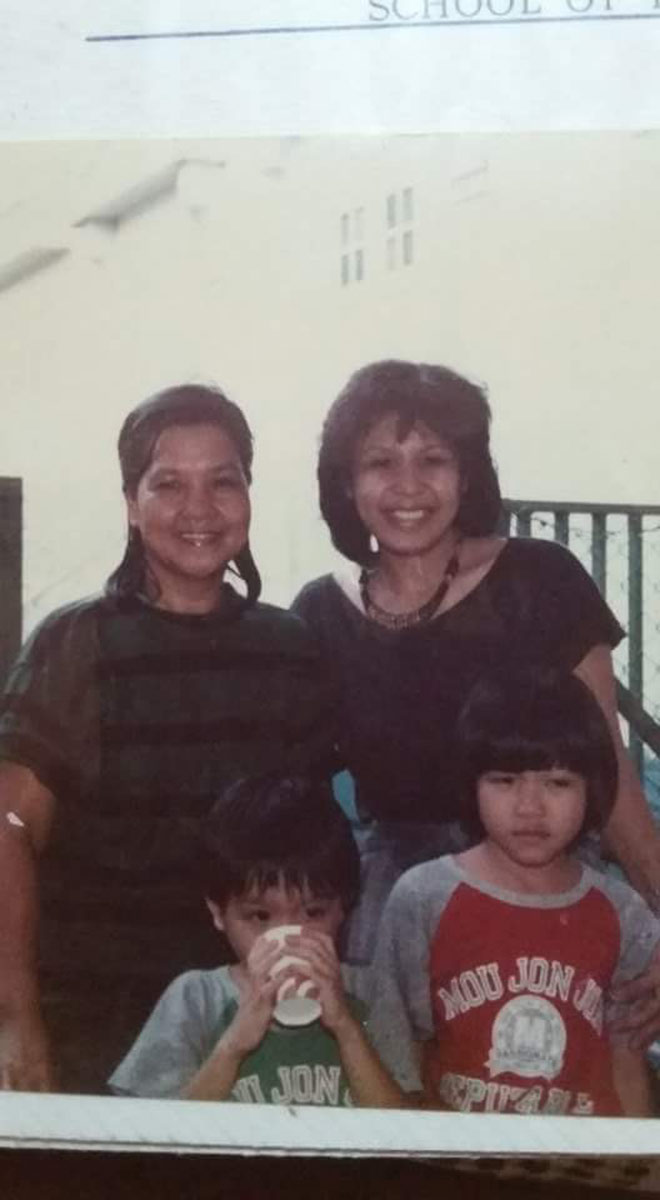
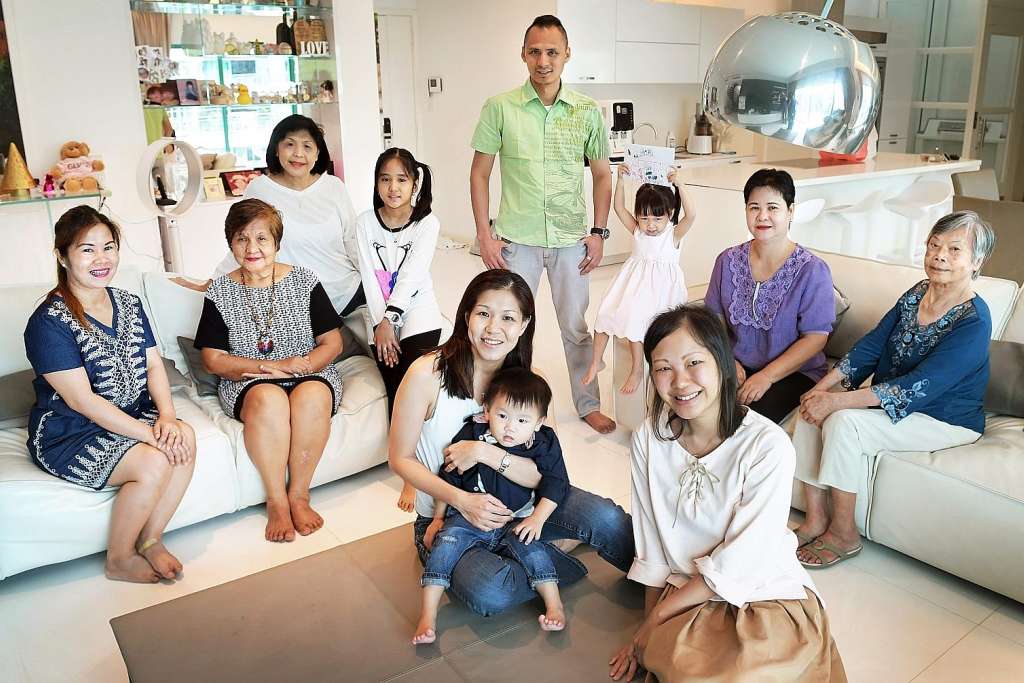
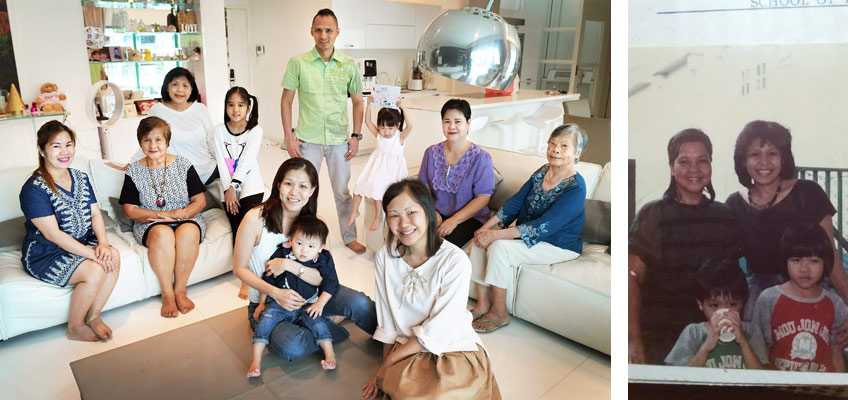
The parting, nearly 30 years ago, was painful for Madam Luzviminda Baraquel and the two children she helped to raise in Singapore, and the recent reunion was just as emotional.
Between 1984 and 1988, the Filipina worked here as a maid for the Lim family and formed such a close bond that she became an extended member of the family.
But like many domestic workers, she had her own children back home and missed them. After five years, she went back to the Philippines and hoped to come here again one day.
She finally returned here with her own family in tow, to reunite with her former employer, Madam Catherine Foo, and daughter Jamie Lim, who is now 37.
“Auntie Luz”, as Madam Baraquel was affectionately called, looked after Ms Lim when she was four years old, and her brother Julian, who was then one year old.
Old photo of Madam Luzviminda Baraquel, Madam Catherine Foo, Julian and Jamie Lim. Photo: Jamie Lim
There were smiles all round, but also poignant moments as Madam Baraquel, now 68, told of how she came here to work as a maid at the age of 34.
Speaking at Madam Foo’s condominium unit in Upper Bukit Timah last Thursday, she told The Sunday Times the 300 pesos she earned a month as an elementary school teacher in the Philippines was not enough to support her three children. Her husband, a bus driver, did not have stable work.
So she made the difficult decision to leave her family for Singapore. She was employed by Mr Lim Pok Chin, founder of furniture company Scanteak, and his wife Madam Foo, who helped with the business, then named Hawaii Furnishing.
Madam Baraquel, who was homesick for the first few months, took care of the children.
The Lims, who then lived in a semi-detached house in Chai Chee, treated her like family. Ms Lim said: “She was strict with us and knew how to put us in our place.”
Madam Foo, 61, said: “I gave her the authority to discipline them because I trusted her. If you love someone, you will not hit them.”
The women bonded over their faith and Madam Baraquel was touched by her employer’s generosity. She said: “Mrs Lim gave me a lot of good experiences and taught me a lot, like how to manage my money,” she said.
The $300 a month she earned was equivalent to about 2,100 pesos then, most of which was sent back to her family along with 10kg boxes filled to the brim with goodies, including McDonald’s Happy Meal toys gifted by Jamie and Julian.
After five years, she returned to Calapan city, her hometown.
“Julian cried a lot, we all cried. She was so much a part of our lives,” said Ms Lim, whose brother was overseas during the reunion.
Three years after Madam Baraquel returned home, her husband died of lung cancer.
Although she lost touch with the Lims, she never forgot them and she reconnected with Jamie and Julian earlier this year through Facebook.
Madam Baraquel, who retired as a school principal, saved up for a trip here with her sister, daughter, son-in-law and granddaughter. She has two other children.
She said of the reunion: “I was speechless. I didn’t expect them to be so kind to me and my family.”
She also met some new members of the Lim family – Ms Lim’s one- year-old son and three-year-old daughter.
Ms Lim said: “My children are about the same age as Julian and I when Auntie Luz was with us.”
Madam Baraquel’s daughter, Charity, 40, finally got to meet the Singapore family that she had heard so much about as a child.
“I was six years old when my mother left and it was hard not having her around. I used to be jealous of Jamie and Julian, like any kid.
“But it was worth it. Her salary paid for my education and my brothers’ too. And the Lims treated her like family.”
Madam Foo said that she hopes their story will encourage closer relationships between employers and domestic helpers.
tiffanyt@sph.com.sg
This article was first published on Nov 06, 2016. Get a copy of The Straits Times or go to straitstimes.com for more stories.
<p>The parting, nearly 30 years ago, was painful for Madam Luzviminda Baraquel and the two children she helped to raise in Singapore, and the recent reunion was just as emotional.</p>
Even as water-efficient devices helped Singaporeans cut water use by nearly 4.5 per cent over the last decade, a renewed call to do more has been made amid worries that water levels at Johor’s Linggiu Reservoir, the country’s main supply, are falling.
Singapore is also pushing ahead to its 2030 target of each person using 140 litres a day, down from the 151 litre-figure of last year.
Despite recent rains, the Linggiu Reservoir, from which Singapore draws more than half its water supply, is now just over a fifth full.
Prime Minister Lee Hsien Loong, speaking yesterday at an event to promote environmental awareness, highlighted the challenges that come with climate change.
“Droughts and water shortages are becoming more common,” he said. “Linggiu Reservoir in Johor, which supplies water to Singapore, is very dry. Right now, (it is) less than one-quarter full, only 22 per cent. And that slightly improved because it rained last week.”
While the country is already moving to increase water supply and making it more reliable, by building desalination plants for instance, there is still a role for all to play.
“Sustainability also depends on each one of us, how we live our daily lives and how we adjust our habits to be greener,” PM Lee said.
Environment and Water Resources Minister Masagos Zulkifli urged Singaporeans to save water by taking shorter showers and washing vehicles less frequently, for instance. Calling the 22 per cent figure worrying, he said water is a resource Singapore must keep a close eye on. Despite efforts to increase local water supply, conditions across the Causeway have a significant impact here.
“When there is a drought up north… it affects our total water supply. We must… ensure our water supply is weather resilient, and take steps to conserve water use.”
There has been some progress in the latter. In 2006, each household used a monthly average of 18,300 litres of water. This fell to 17,600 litres last year, going by figures from national water agency PUB. This roughly works out to every person going from using 158 litres a day a decade ago, to 151 litres last year.
There are two reasons for this – the first of which is the adoption of increasingly water-efficient appliances, such as washing machines.
The second is that the save water message has filtered through to the public, said Professor Ng Wun Jern, executive director of the Nanyang Environment and Water Research Institute at Nanyang Technological University. But there is a need to continue with ongoing efforts in education and increasing water efficiency, he added.
Last month, the authorities called for proposals to develop smart meters which can tell users in near real time, for instance through a mobile application, how much water and electricity they are using. Since August, consumers have been able to compare their water and energy use with that of neighbours within a block as well as with the national average. This is to nudge heavier users to cut back on their usage.
Meanwhile, the Ministry for the Environment and Water Resources yesterday shared updates on the progress made under the Sustainable Singapore Blueprint. One achievement was how three out of five households were within a 10-minute walk of a train station by the end of last year – with a mark of 80 per cent set for 2030.
audreyt@sph.com.sg
This article was first published on Nov 06, 2016. Get a copy of The Straits Times or go to straitstimes.com for more stories.
<p>Even as water-efficient devices helped Singaporeans cut water use by nearly 4.5 per cent over the last decade, a renewed call to do more has been made amid worries that water levels at Johor's Linggiu Reservoir, the country's main supply, are falling.</p>

 Photo Gallery