Home Blog Page 2409

Brunei's second-largest daily newspaper shuts down abruptly

0

KUALA LUMPUR – Brunei’s second-largest daily newspaper, the Brunei Times, published its final edition on Monday, after abruptly announcing plans for closure over the weekend, triggering online speculation about the reason.

The daily, which was launched in 2006, announced on its Sunday front page that it would cease publication the next day.

On Monday, it said in a longer notice that the closure was due to “business issues, reporting and journalistic standards that should meet the mark set, and also issues relating to business sustainability…”

The daily did not address posts on social media that it had been ordered to shut down for publishing an article on Oct 26 about changes in visa fees imposed by the Saudi Arabian government for Brunei haj pilgrims.

The daily carried an apology for the article on its website on Friday.

A spokesman for the Brunei Times declined to comment on the posts and instead referred Reuters to Monday’s front page statement. He said the newspaper had 110 people on its staff.

The Prime Minister’s Department did not respond to an emailed request for comment. “The Brunei Times… no longer has sustainable resources to continue its media and publication operations and the company’s Board of Directors has agreed that the best course of action is to close down the paper,” the paper’s notice said.

Image: 
Category: 
Publication Date: 
Monday, November 7, 2016 – 17:40
Send to mobile app: 
Source: 


Hermes ID: 
2 724 383
Hermes ID String: 
SP_BRUNEITIMES
Hermes Author: 
SPANAECH
Story Type: 
Others

Source link

Stronger core of S’porean humanities researchers needed: Tharman

0

SINGAPORE — Singapore needs to build up its community of home-grown researchers and thought leaders in social science and the humanities, Deputy Prime Minister Tharman Shanmugaratnam said on Monday (Nov 7), when he announced a S$350-million funding by the Education Ministry (MOE) in those disciplines from now until 2020.

The amount is 45 per cent more than the ministry’s spending in the previous five years.

The Social Science Research Council (SSRC), led by former head of civil service Peter Ho, was set up in January to promote research and scholarship to meet some of Singapore’s key challenges. It is developing programmes to help nurture Singaporean talent, and engaging overseas organisations and thought leaders, such as the Social Science Research Council in New York, Mr Tharman said.

“We need to catch up when it comes to local talent development in the social sciences and humanities. We have to build a stronger core of local researchers and thought leaders in the social sciences and humanities,” he said at the launch of the Institute for Societal Leadership at the Singapore Management University.

Mr Tharman, who is Coordinating Minister for Economic and Social Policies, also hopes that more Singaporeans will see social-science research “as a viable career option in academia”.

Giving an update on a grant call by the council in May, Mr Tharman said that 70 proposals have been received from the six public universities, as well as the Iseas-Yusof Ishak Institute, and the S Rajaratnam School of International Studies. The new Institute for Societal Leadership submitted one of SMU’s two proposals.

An expert panel will be shortlisting the proposals this week and the final selection will be done by the SSRC, with results to be announced early next year.

SSRC chairman Peter Ho said that the country now operates in a more complex and challenging environment that is no longer amenable to simple policy prescriptions. Be they challenges in urbanisation or demographics, “you need to take a far more subtle and inter-disciplinary approach”, he said. “You might have a technical solution to the problem. That technical solution needs to be complemented and supported by an insight into how society might respond.”

SSRC member Lily Kong, who is SMU provost, said that research could delve into why people are not going into fields of work where vacancies are available, for instance, and how they could be directed to develop skills in particular areas.

SMU’s new institute aims to advance societal leadership in South-east Asia and beyond, by helping leaders to “do good better”, its executive director Martin Tan said. Its initiatives include online-content platform Catalyst Asia — which tells stories of the impact of societal leaders and organisations in the region — and the Southeast Asian Global Undergraduate Leaders’ Programme, a seven-month programme to strengthen critical thinking and problem-solving skills of participants.

Source link

Pay to go, return for FREE* with Jetstar’s promo from 8 – 11 Nov 2016

0

STARTS TOMORROW (8 Nov 9am): Jetstar pay-to-go & return for FREE to KL, Ho Chi Minh City, Bangkok, Jakarta, Manila & more!

Pay to go, return for FREE* with Jetstar’s promo from 8 – 11 Nov 2016

Jetstar’s Return for FREE* sale is back! Check out some popular destinations on sale and be ready to book from 8 November, 9am onwards! Get ready for your vacation to these destinations and more!

Source

Boy killed in freak fire at Tokyo art event

0

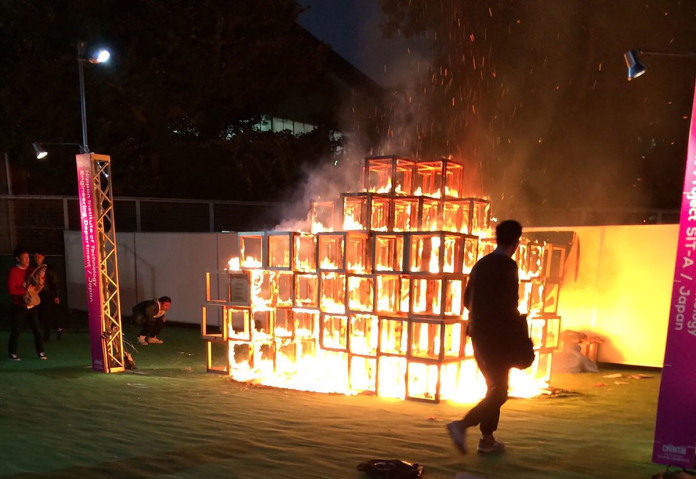
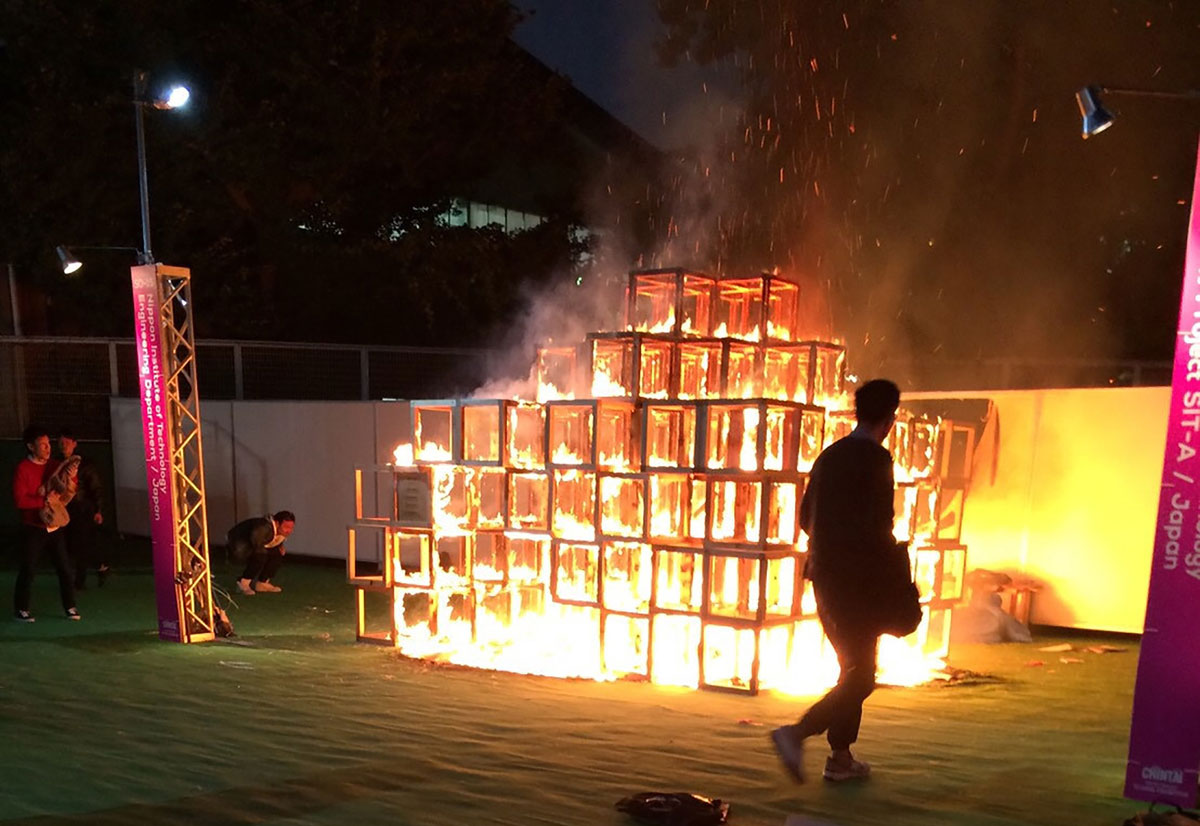
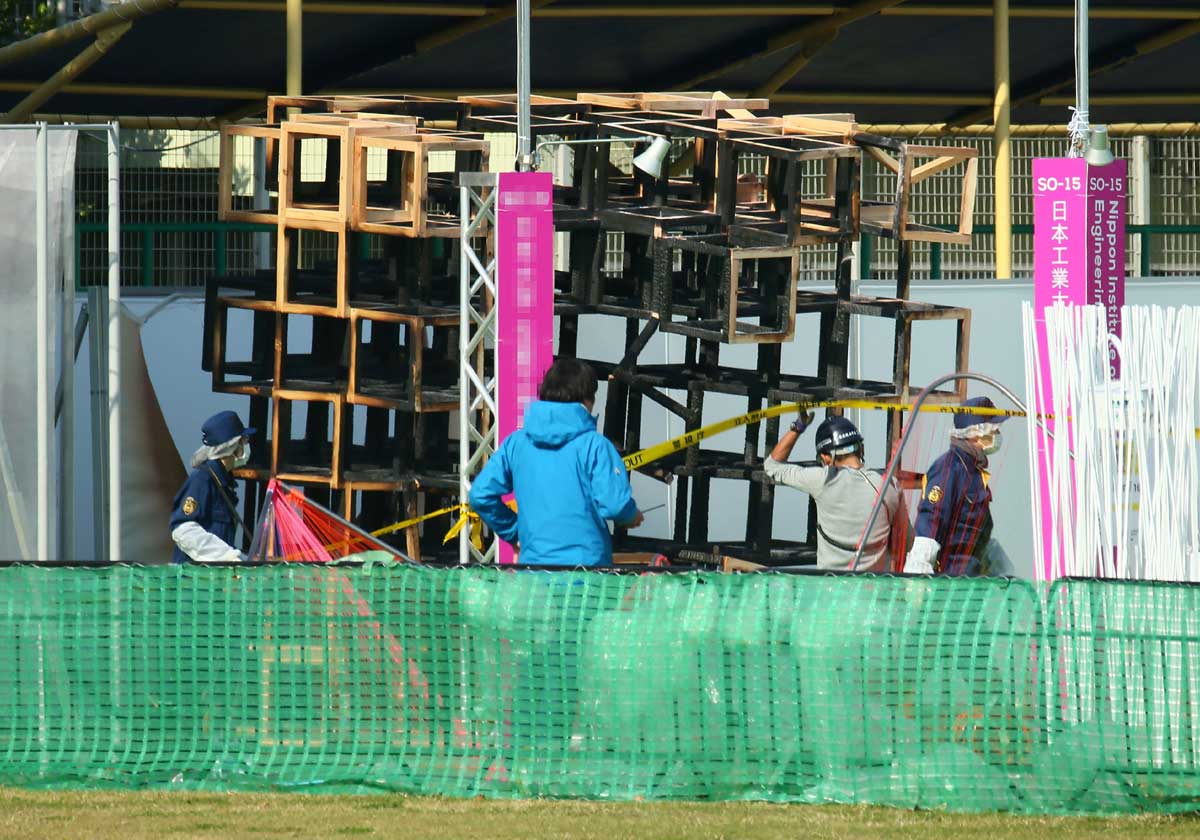
TOKYO – A five-year-old Japanese boy was burnt to death after a wooden jungle gym display created for a Tokyo arts festival suddenly caught fire, reports and officials said Monday.

The freak conflagration on Sunday, caused flames to shoot metres into the evening sky, reports quoted witnesses in the Japanese capital as saying.

A man believed to be the boy’s father screamed for help, tearfully shouting, “My child is inside!”, according to the Asahi Shimbun newspaper and other dailies.

But Kento Saeki was confirmed dead at hospital, police said, without giving an official cause of death.

Newspapers reported that he is believed to have suffered fatal burns. An unconfirmed number of other children reportedly managed to escape.

The structure, built by university students, was one of the displays at Tokyo Design Week, to which many families flocked at the weekend.

The cause of the fire has yet to be officially determined, police and fire officials said.

 People look at a burning wooden jungle gym displayed at a Tokyo art festival in Tokyo on November 6, 2016. Photo: AFP

But Jiji Press quoted an investigation source as saying that a broken incandescent lamp was found at the site, which could have ignited sawdust on the jungle gym’s frame.

The dead boy’s father and another man who joined in the frantic rescue suffered burns, reports said, though they were not life-threatening.

The organiser of the event and the university apologised for the loss of life while netizens expressed sympathy.

“It is painful just to think about the feelings of the father who couldn’t rescue his own son who was on fire,” read a tweet.

Image: 
Category: 
Publication Date: 
Monday, November 7, 2016 – 18:28
Keywords: 
Send to mobile app: 
Source: 


Story Type: 
Others

Source link

Get $5 off Comfort Taxi rides with this promo code valid from 8 – 14 Nov 2016

1

Get $5 off your Comfort Taxi fare when you book using the promo code FB5 this Tue – Mon (8 – 14 Nov)

Get $5 off Comfort Taxi rides with this promo code valid from 8 – 14 Nov 2016

Get $5 off your taxi fare when you book via ComfortDelGro Taxi Booking App from the 8th of November to 14th November and use the promo code “FB5”

Source

Elected Presidency cannot be a second centre of power: President Tony Tan

0

SINGAPORE: The Elected President must act in accordance with the roles prescribed in the Constitution and not hold back the Elected Government of the day from performing its executive role. He or she cannot be a second centre of power, said President Tony Tan Keng Yam in a message to Parliament on Monday (Nov 7). 

Speaker of Parliament Mdm Halimah Yacob delivered the speech on behalf of the President, ahead of a debate in Parliament on the proposed changes to the Elected Presidency. 

The Constitution of the Republic of Singapore (Amendment) Bill, was tabled by Deputy Prime Minister Teo Chee Hean at the last Parliament sitting in October. It will be read for a second time on Monday. 

Dr Tan said there is a need to distinguish between the President’s role as a custodian, and the President acting in opposition to the Government. Drawing from his time as President, Dr Tan said his working relationship with the Government has been “harmonious” and “built on mutual trust and respect”. 

“The Government keeps me informed of all its major decisions. On a regular basis, the Prime Minister and I meet over lunch and on other occasions, for him to brief me on his preoccupations and intentions, and to exchange views on the strategic direction in which Singapore is heading,” Dr Tan said. 

He referenced the Council of Presidential Advisers (CPA), which was set up in 1992 to provide expert advice to the President and moderate the President’s custodial powers. 

The Constitutional Commission in its study and recommendations on aspects of the Elected Presidency had recommended to allow Parliament to override a veto with a two-third majority if the votes by the CPA members are evenly split and the CPA Chairman casts his vote in favour of the President, but this was rejected by the Government to avoid politicising the CPA in its White Paper, released on Sep 15. Currently, Parliament cannot override if a majority of the CPA members agree with the President’s veto.

Dr Tan said the President has the right to accept or reject the Council’s recommendations, and a mechanism to allow for Parliamentary override ensures that the President does not make arbitrary decisions.

In practice, there has not been any need to subject any decision to the Parliamentary override mechanism, President Tan said, as “decisions have been well considered for the long term good of Singapore”.

He added that the CPA as a non-elected body has remained above political fray, and that should be maintained. 

Dr Tan said therefore it is “not practical” to remove all possible scenarios of gridlock and still expect the Elected President to remain an effective custodian.

“We cannot hamstring the Elected Presidency just to guard against a worst-case scenario of a populist or power-hungry President. We must rely upon the wisdom of our electorate to elect a President who is able to work with the Government of the day for the proper and effective governance of Singapore,” Dr Tan said. 

ELECTED PRESIDENT AS CUSTODIAN OF NATIONAL RESERVES

President Tan also agreed with the Government’s decision to accept the Constitutional Commission’s recommendation of updating the qualifying criteria for candidacy. 

Through elections, the President is given the democratic legitimacy to disagree, if need be, with the Government on matters related to the national reserves, and the appointment of its public servants. As such, the Government decided in 1991 to include competency requirements for Presidential candidates – and these should also be updated and fine-tuned over time, Dr Tan said. 

“The scope and complexity of the Presidential oversight on Singapore’s key assets have increased significantly, even in the span of five years of my term,” the President said. 

He added that his experience in the finance industry was useful in understanding the technicalities of the Government’s proposals, but the decisions often also required “good policy acumen and a sound judgement on what is right for Singapore”. 

“I am therefore of the view that the Government’s acceptance of the Commission’s recommendations is in the right direction,” Dr Tan said. 

The President has reviewed Government proposals such as Government expenditures in the yearly Budget. 

RECOMMENDATION TO ENSURE MULTI-RACIAL REPRESENTATION IN ELECTED PRESIDENCY “BALANCED”

Dr Tan also weighed in on the importance of the President as a symbol of national unity. Prior to 1991, he said Presidents were appointed by Parliament to perform ceremonial functions by representing the State in engaging other statesmen overseas. Additionally, the President’s symbolic role extends domestically, with the President engaging with different communities and segments of Singaporeans. 

“In my five years in office, it has been my personal mission to rally Singaporeans towards building a caring, cohesive and inclusive society. In Singapore, an important dimension of this role is working with the different ethnic groups that make up our multiracial composition,” Dr Tan said. 

He drew upon the example of Singapore’s first four appointed Presidents – Mr Yusof Ishak, Dr Benjamin Sheares, Mr Devan Nair and Dr Wee Kim Wee – who represented the Malay, Eurasian, Indian and Chinese communities respectively. 

“As the President remains a symbol of the nation’s unity, it is important that the Office of the Presidency upholds multi-racialism, a core value of Singapore that underpins the social cohesion and harmony we have enjoyed thus far,” Dr Tan said. 

He acknowledged that the role of the President as a Head of State representing Singapore’s multi-racial society is important, and the country should therefore have a system that “not only allows but facilitates persons of all ethnic groups to be President from time to time”, especially as all but one of Singapore’s elected presidents have been Chinese, since the Elected Presidency was instituted. 

“The Government has accepted the Commission’s recommendation for a mechanism of reserving a Presidential election for a specific ethnic group if a member of that group has not held the office of the Elected Presidency after five terms. I agree that this is a balanced approach. The mechanism ensures that Singapore is assured of a minority Elected President from time to time, but does not kick in if one is elected in an open election,” Dr Tan said. 

In concluding, Dr Tan said as Parliament debates proposed changes to the Elected Presidency, members should keep Singapore’s future in mind. 

“The President has previously been described in this House as a goalkeeper. Indeed, if he fails to do the job well, no matter how good our strikers are, more goals will be scored against us and Team Singapore will be set back. We need a capable goalkeeper who works with the other players. Only then will Team Singapore continue to do well in the global league, against competitors who may be bigger, stronger and more intimidating,” he said. 

“For half a century, our Constitution has served us well, with periodic adjustments to bring it up to date and keep Singapore on course. The institution of Elected Presidency was one such adjustment. I encourage all Members of this House to consider the current proposed changes to it with an eye on the next half century and beyond,” he said. 

In his speech, Dr Tan acknowledged that he had refrained from commenting publicly about the Commission’s report or the Government’s White Paper.

“There is no legal necessity for me to present my views on the proposals, nor is it in the Constitutional powers of the President to endorse or oppose any specific recommendations pertaining to the Elected Presidency,” Dr Tan said.

He noted that the Government has made it a practice to seek and consider the President’s views when amending Constitutional provisions which affect the President’s discretionary powers, and to make these views known to Parliament when moving the amendments.

Source link

Govt will continue to review policies to improve safety of building facades: Lawrence Wong

0

SINGAPORE: The Government will continue to review its policies to improve the safety of building structures and facades as well as benchmark against high-rise buildings in other cities to identify areas for improvement, said Minister for National Development Lawrence Wong in Parliament on Monday (Nov 7).

Mr Wong was responding to several MPs who raised concerns over the safety of residents following incidents which saw a concrete structure giving way in Tampines and a wall feature falling off an HDB block in MacPherson in recent months.

Investigations into the incidents are ongoing, said Mr Wong, adding that the full investigation reports by the appointed Professional Engineers will be ready in due course.

To ensure the structural integrity of the HDB buildings, Mr Wong said there is a Periodic Structural Inspection (PSI) regime in place and town councils should ensure that buildings are regularly checked for structural defects. Where necessary, a qualified person will be appointed to follow up on the repairs.

The Periodic Structural Inspection is conducted every 10 years for residential buildings and every five years for other building types. 

For older HDB blocks, inspections are done every five years. HDB will also selectively do inspections annually on the blocks’ building facades, said Mr Wong.

“Safety of buildings is of paramount importance. This includes not just structural safety, but also of other building features such as facade fittings,” said Mr Wong as he encouraged residents to report any defects or potential issues to the relevant authorities. “Everyone has a role to play in ensuring a safe living environment.”

MP for Aljunied GRC Low Thia Khiang asked what are the guidelines HDB has in place in designing HDB building facades and if there any guidelines for the materials used in construction.  

Mr Wong responded that HDB is always looking at improving its design, its guidelines, the way it builds. “HDB makes sure it uses quality materials and uses materials and methods that are reliable and safe.”

He added: “If you look at the way that it has been done progressively over the years, I can say for sure that the methods have improved, and the materials are more reliable and our buildings are safer than before.” 

Source link

Elected Presidency cannot be second power centre: President Tan

0

SINGAPORE — While stressing that the Elected Presidency cannot be a second centre of power, President Tony Tan — making his first comments on the proposed changes to the EP scheme — said that the office of the head of state cannot be hamstrung “just to guard against a worst case scenario of a populist or power-hungry President”.

He pointed out that while the President “should not be unbridled in the exercise of his Constitutional Duties, it is not practical to remove all possible scenarios of gridlock and yet expect the Elected President to remain an effective custodian”. He said: “We must rely upon the wisdom of our electorate to elect a President who is able to work with the Government of the day for the proper and effective governance of Singapore.”

On Monday (Nov 7), Parliament kicked off the debate on amendments to the EP scheme, which is enshrined in the Constitution. In a speech delivered by Parliament Speaker Halimah Yacob on his behalf, Dr Tan spoke about the office’s symbolic and custodial roles. He also voiced his agreement with the recommendations by the Constitutional Commission — which have been accepted by the Government — to enhance the eligibility criteria of presidential hopefuls and to create a mechanism of reserving a Presidential Election for a specific ethnic group if a member of that group has not held the office after five terms.

Drawing on his experience, Dr Tan, who was elected as President in 2011, said the “scope and complexity of the Presidential oversight on Singapore’s key assets have increased significantly, even in the span of five years of my term”.

A former Cabinet Minster, Dr Tan helmed sovereign wealth fund GIC before he took up the presidency. He was previously chairman and chief executive of OCBC bank at one point of his career. “My finance background was useful in helping me understand the technicalities of the Government’s proposals, but the decisions often also require good policy acumen and a sound judgement on what is right for Singapore,” he said.

Dr Tan said he enjoys a “harmonious” working relationship with the Government, which keeps him informed of all its major decisions.

“On a regular basis, the Prime Minister and I meet over lunch and on other occasions, for him to brief me on his preoccupations and intentions, and to exchange views on the strategic direction in which Singapore is heading.  Our relationship is built on mutual trust and respect. This, to me, is key to the effective functioning of our system,” he said.

Reiterating the need to distinguish between the President “acting as a custodian and the President acting in opposition to the Government”, Dr Tan said: “The two are not the same… (The Elected President) must act in accordance with the roles prescribed in the Constitution, and not hold back the Elected Government of the day from performing its executive role.”

He noted that the Council of Presidential Advisers was set up to provide expert advice to the President and to moderate the President’s custodial powers.  “In practice, up till today, the Presidents and the Council have worked well together. There has not been any need to subject any decision to the Parliamentary override mechanism, because decisions have been well considered for the long term good of Singapore,” he said. “And in line with its stature and the principle of collective responsibility, the Council of Presidential Advisers as a non-elected body has remained above any political fray.  We should maintain that.”

Noting that the president had previously been described in the House as a “goalkeeper” for his custodial role, Dr Tan said the office is also “the flag-bearer of Singapore”. “The symbolic role of the President also extends domestically, with the President engaging the different communities and segments of Singaporeans,” said Dr Tan. Adding that it is important for the office to uphold multi-racialism, he cited the “current realities”, where all but one of the Elected Presidents, including himself, have been Chinese.

Calling the work of the commission a “landmark review”, Dr Tan said that constitutional changes “should never be undertaken lightly”. “For half a century, our Constitution has served us well, with periodic adjustments to bring it up to date and keep Singapore on course. The institution of the Elected Presidency was one such adjustment,” said Dr Tan.

Dr Tan noted that he has refrained from publicly comments on the commission’s report or the Government’s White Paper, which details its response to the recommendations. He reiterated that there is no legal necessity for him to present his views on the proposals, “nor is it in the Constitutional powers of the President to endorse or oppose any specific recommendations pertaining to the Elected Presidency”. “These are decisions for the Government to make,” he said. However, the Government has made it a practice to seek and consider the President’s views when amending the Constitutional provisions which affect the President’s discretionary powers, and to make known these views to Parliament when moving the Constitutional amendments, he noted. Adding that his tenure so far has given him a “personal perspective” on the role of the EP, he said: “I have therefore agreed with the Prime Minister that I should send this message to Parliament to share my views on the proposals that are being debated.”

Source link

As it happens: Parliament debates changes to Elected Presidency

0

SINGAPORE: The debate on proposed changes to the Elected Presidency system kicks off in Parliament on Monday (Nov 7).

The debate, which is expected to last three days, will see Members of Parliament (MPs) speaking about the changes, which include raising the eligibility criteria and reserving an election for a particular racial group if there has not been a president from the group for five consecutive terms.

A Bill to amend the Constitution which includes the changes was tabled by Deputy Prime Minister Teo Chee Hean at the House’s previous sitting.

In its White Paper released in September, the Government had broadly accepted the recommendations made by a nine-member Constitutional Commission in its review of the Elected Presidency system.

Source link

No clear evidence of irresponsible retrenchment on the rise: Lim Swee Say

0

SINGAPORE: There is “no clear evidence” that cases of irresponsible retrenchment are on the rise in Singapore, said Manpower Minister Lim Swee Say in Parliament on Monday (Nov 7).

He was responding to questions from Member of Parliament (MP) Dr Tan Wu Meng, who had asked how the ministry is planning to address rising cases of “disguised retrenchments” where a company avoids treating a displaced worker as a retrenchment so as to evade paying fair benefits.

According to Mr Lim, the Ministry of Manpower (MOM) received 94 cases from employees with retrenchment-related issues last year. Out of which, 15 appeals came from employees who have been dismissed but felt that they were retrenched and deprived of their retrenchment benefits. For the first nine months of 2016, the MOM saw 14 appeals out of 63 retrenchment-related cases.

Overall, these cases make up a “small proportion” of the total number of layoffs in 2015 and 2016 so far, Mr Lim said.

He added that in all but one appeal, the workers were either not entitled to retrenchment benefits as they have less than 2 years of service or there were no retrenchment benefits specified in their contracts or collective agreements. For the remaining appeal, the MOM is helping the worker to resolve the issue, Mr Lim said.

Under the Employment Act, an employee who has served less than 2 years is not entitled to retrenchment benefits. For those who have served more than 2 years, payment of retrenchment benefits will be mandatory if it is specified in their individual employment contracts or the collective agreements negotiated by their unions.

As to how the Government will continue to ensure that the public sector agencies do not engage in “disguised retrenchments”, Mr Lim said: “Public sector agencies have signed the Employers’ Pledge of Fair Employment Practices since 2007. They will continue to abide by tripartite guidelines to carry out restructuring responsibly and in consultation with public sector unions.”

MOM TO STRENGTHEN RETRENCHMENT REPORTING FRAMEWORK: LIM

Amid faltering economic growth and ongoing restructuring in some business sectors, Mr Lim said he expects retrenchment figures in Singapore this year to be higher than 2015’s.

According to the preliminary labour market data for the third quarter released last month, 11,890 workers have been retrenched for the first three quarters of 2016, compared with 8,590 in the same period last year. In total, 13,440 workers were retrenched last year.

Given the likelihood of rising layoffs, Mr Lim said in response to a supplementary question from MP Seah Kian Peng that the MOM has been working with tripartite partners to provide more support for retrenched workers.

“We recognise that retrenchment will be a difficult experience for our retrenched workers and that’s why our tripartite has put in place a special task force since early this year. As and when there’s any retrenchment exercise, our taskforce will engage the employer, workers and the union… to first ensure that the retrenchment is carried out in a fair manner,” he added.

Negotiations for retrenchment benefits have been held with unionised companies, while the task force tries to do mediation with non-unionised companies as well, Mr Lim explained. Apart from that, the special task force has also helped employers and unions to organise career fairs for these displaced workers.

Under this special arrangement, the MOM has provided assistance to around 3,300 workers for the first three quarters of 2016. Nearly 2,000 have secured new jobs, he added.

“We are trying to support retrenched workers the best we can… Our main objective is to ensure retrenched workers will be able to go back to work as quickly as possible because the longer you stay out of job, the harder it’ll be to come back to work.

“And that’s the reason why the MOM is now exploring with the unions and employers to strengthen the retrenchment reporting framework because we believe with more timely reporting, we will be able to reach out to these retrenched workers earlier and help them even more,” Mr Lim said.

Source link