Home Blog Page 2408

Singapore must ‘never compromise’ on qualifying criteria for Elected Presidency: Yaacob

0

SINGAPORE: Singapore must “never compromise” on the qualifying criteria for the Elected Presidency, Minister for Communications and Information and Minister-in-Charge of Muslim Affairs Yaacob Ibrahim said on Monday (Nov 7).

Speaking during the Parliamentary debate on the proposed changes to the Elected Presidency (EP), Dr Yaacob said if the proposed tweak to the Constitution to ensure minority representation is passed, it must be done because it is good for Singapore and Singaporeans.

“The candidate, minority or otherwise, must meet the same, exacting requirements, and therefore be seen to be good for all Singaporeans,” he stated.

“TRIBAL TENDENCIES” REMAIN A FACTOR

Dr Yaacob said ensuring minority representation in an electorate where the Chinese community dominates is the “real challenge”.

“Surveys and statistics have shown how despite all our efforts at forging a common Singaporean identity, the current reality in Singapore is that the tribal tendency remains a factor – people still tend to drift towards their own kind.”

“This finding has caused discomfort to some Singaporeans. I myself did not find it pleasant reading,” he said. “It is also my sincere wish that one day, race will no longer matter. But for now, we cannot ignore the facts and trust that the better angels of our nature will surely prevail, especially on a matter as critical as the EP.”  

Building in a “circuit breaker” for the EP, Singapore “will see, over a sufficiently long time, representation from the various communities as EPs, reflecting the racial breakdown of our society”, Dr Yaacob said.

The minister noted that support for the safeguard for minority representation has not been unanimous. He acknowledged that some have argued that Singaporeans are mature enough to know whom to elect in order to maintain a harmonious society, while others feel that the move goes against “the strain of meritocracy as they believe in”, and could be an example of doing too much in helping the minorities in Singapore.

He, too, had concerns when the idea of the safeguard was first mooted, he shared. “I was worried that this move, to ensure that there will be a Malay president, will be seen as the Government going out of its way to help a community that has lagged behind. I was worried that a Malay candidate may not be able to command the respect of all Singaporeans,” he said.

“The truth is that we do not have many Malays in key positions of power and leadership. Having one being a President is not just nice, but timely. But this cannot, and must not, be the reason why we should have a Malay President, Dr Yaacob stated, reiterating that the Malay candidate “must meet the same exacting standards as demanded of candidates from the other communities”.

CHARACTER IMPORTANT

Dr Yaacob also highlighted the need to have candidates of good character for the highest office of the land. “While we have debated much about the qualifying criteria, especially the candidate’s experience in managing large organisations, equally important are the values and ethos of the candidates,” he said.

“We have seen very successful businessmen who are also crooks. To have stayed honest is too low a bar.”

The minister said being President is no mere job, but a “calling to serve all Singaporeans”. “It demands integrity, selflessness and the desire to always promote the common good.

“We must never compromise on standards. We do not want, and we cannot accept, tokenism,” he concluded. “We want a president to command the respect of all Singaporeans.”

Source link

Mindef to acquire new medium- and heavy-lift helicopters

0

SINGAPORE — The Ministry of Defence (Mindef) will be getting new helicopters to replace its ageing fleet of rotary wing aircraft.

The new helicopters — the H225M and CH-47F — will replace the Republic of Singapore Air Force’s (RSAF) existing Super Pumas and older Chinooks, which have been in service since 1983 and 1994, respectively.

The H225M and CH-47F possess better lift and reach capabilities, and will enable the RSAF to meet the Singapore Armed Forces’ (SAF) requirements more efficiently with fewer helicopters and less manpower, Mindef said.

These new helicopters will perform various functions, including Search and Rescue (SAR), Aeromedical Evacuation (AME) and Humanitarian Assistance and Disaster Relief (HADR) operations.

The contract for the new helicopters were awarded to Airbus Helicopters for the acquisition of the H225M Medium Lift Helicopter and to Boeing Company for the CH-47F Heavy Lift Helicopter.

Source link

No additional requirements for Fire Code, in light of Jurong West market blaze: Shanmugam

0

SINGAPORE — There is no need to impose additional fire safety standards on all wet markets, despite a recent blaze which gutted the Jurong West market, Law and Home Affairs Minister K Shanmugam said on Monday (Nov 7).


In a written response to a Parliamentary question from Non-Constituency Member of Parliament (NCMP) Associate Professor Daniel Goh on the aftermath of the Jurong West fire, Mr Shanmugam noted that “the deliberate act here is more appropriately dealt with as a criminal act”.


“SCDF’s assessment is that there is no need for additional Fire Code requirements on all wet markets,” the minister added.


The pre-dawn fire on Oct 11 obliterated the 30-year-old wet market at Block 493, causing the roof of the wet market to collapse, and badly damage an adjacent coffee shop. Around 45 stallholders were affected by the blaze.


Lim Ying Siang, a 41-year-old Singaporean man, has been charged for alleged arson. 


According to Mr Shanmugam, investigations at the market showed that several styrofoam and cardboard boxes at two different stalls were set on fire. The fire spread quickly from these two areas to the other parts of the market, and took about two hours to put out.


Assoc Prof Goh asked if the presence of automatic sprinkler systems at the market and coffeeshop would have slowed or stopped the fire from spreading.


In his response, Mr Shanmugam said it was not mandatory for wet markets like the one in Jurong West, which was designed to be well ventilated and was not enclosed, to be equipped with fire sprinklers.


He added: “The SCDF adopts a risk-based approach in prescribing mandatory fire safety requirements for building premises. Automatic fire sprinklers have not been a requirement for all buildings.
“Such systems are useful in controlling fire spread in higher risk premises, such as those with a large open floor area of more than 4,000 sq m, high-rise enclosed buildings of more than 24m in height, or enclosed basements.”

Source link

Meet Kyoto's all-girls Buddhist pop group

0

Monks and nuns in dazzling robes had taken to the catwalk. Some even chanted sutras in music clubs, while temples have rolled out match-making services, cafes and even a beauty salon.

Japan has seen such trendy outreach methods to lure more young people to the Buddhist faith and temples in recent years.

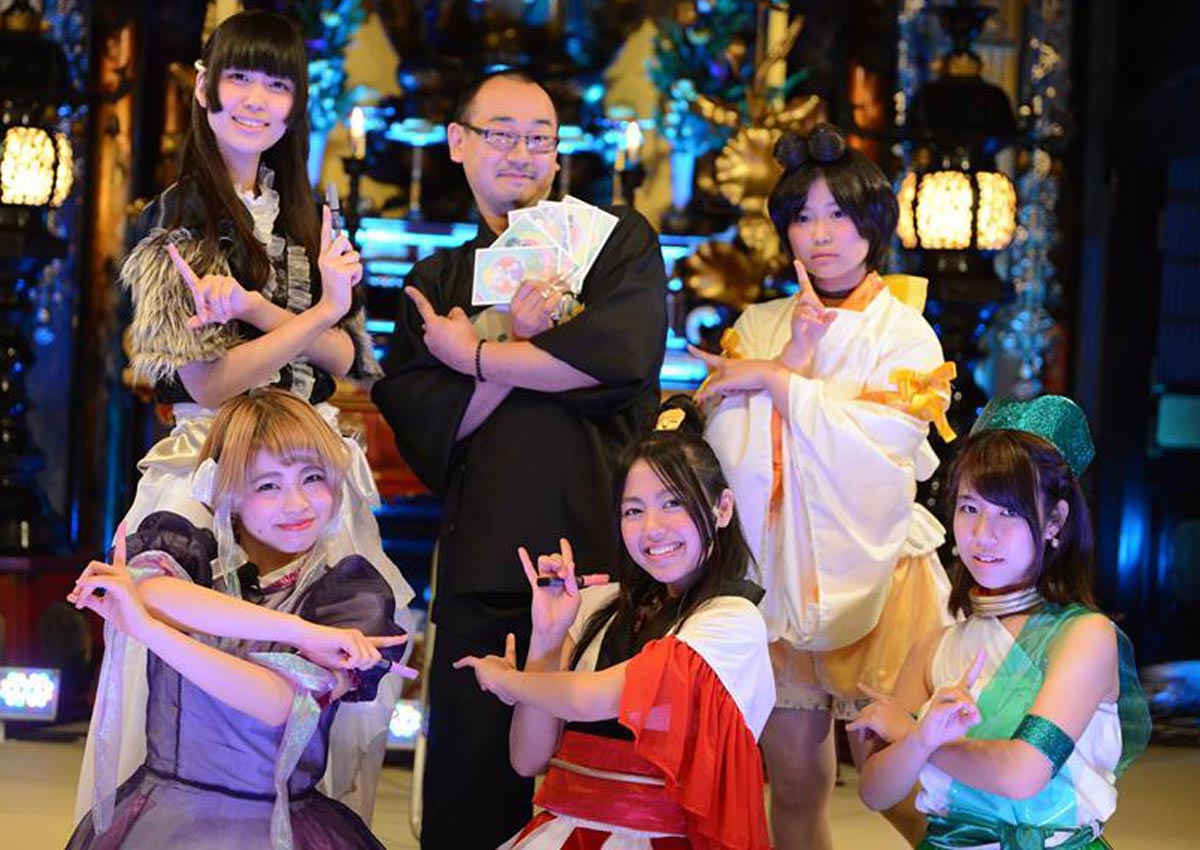
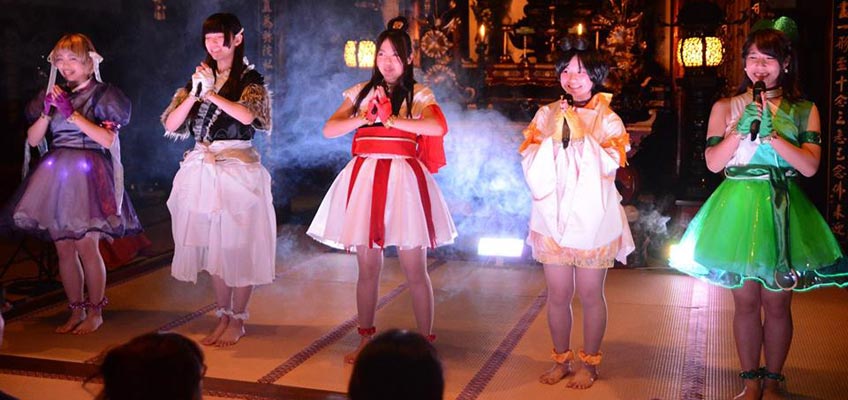
And the latest? An all-girl ‘pop’ group hopes to shake up the sacred world through their animated song and dance numbers.

Called ‘Tera Palms’ (Temple Palms), the five-member band was formed by student Chihiro Hashimoto, who recruited her university pals to carry out their mission to be the new ambassadors of the religion, reported Kyoto News.

The group is on a 10-day tour to promote the faith of the ‘Pure Land’ or Jodo sect at performances at five temples in the ancient capital of Kyoto.

They will perform rousing numbers such as the theme song from hit anime series, Ikkyu-san, which is based on the historical Buddhist monk Ikkyū.

They have also roped in the services of famous Buddhist personality Ryuho Ikeguchi from Chion-in temple, the head temple of the Pure Land sect.

The monk, who is in his 30s, is known for reaching out to the young through unconventional methods, such as distributing a free magazine in Kyoto and Tokyo, and engaging them at non-religious events.

Creating a distinctive branding is important, so the girls have each taken on stage names of Buddhist saints, and you will see them dressed in five different colours – purple, red, white, yellow and green – each representing a type of spiritual quality such as patience, generosity, peace, firm attitude and strong life.

After performing, they will recite Buddhist sutras with monk Ryuho.

Apart from the attendance of millions at temples on New Year’s Day, many young Japanese have shunned the practice of the Buddhist faith in their daily lives over the decades.

And it does not help when more than half a million young people in Japan have chosen to live isolated lives, according to a survey released by the government in September.

The survey found that 541,000 people, aged 15 to 39, preferred to stay at home home for six months or more instead of going to school, work or venturing out to socialise, reported Japan Times.

chenj@sph.com.sg

Image: 
Publication Date: 
Monday, November 7, 2016 – 18:42
Keywords: 
Send to mobile app: 
Source: 


Rotator Image: 
Story Type: 
Rewritten Story

Source link

The desire to see a Malay president cuts across the community: Yaacob Ibrahim

0

SINGAPORE — While younger Malays have grown up with meritocracy as the basis of how society is organised, and appear reluctant to see a “circuit breaker” in the Elected Presidency (EP) to ensure minority representation, the desire to see a Malay president cuts across the community, said Minister in charge of Muslim Affairs Yaacob Ibrahim.

Many from the community would, in closed-door discussions, “raise their hands in wanting to see a Malay president”, said Dr Yaacob, who was speaking at the debate on proposed changes to the EP on Monday (Nov 7).

The Constitutional Commission given the task of reviewing aspects of the EP had proposed a mechanism to reserve elections for a particular minority race if it had not been represented for five consecutive terms, a period that stretches three decades.

Rising to share on the “psyche” of the Malay community and the “historical burden” of being perceived as an “underachieving community”, Dr Yaacob said the Malay community, to a greater degree than other communities, looked forward to seeing one of their own recognised for excellence and leadership.

In 1968, when his oldest brother, Mr Mohd Ismail Ibrahim, was named Singapore’s first Malay President’s Scholar, the Paya Lebar airport was “swamped by Malays” to see him off, he recalled.

On the other hand, his brother’s schoolmate, Mr Christopher Catherasoo, who also bagged the scholarship, was accompanied by only his immediate family.

“The truth is that we do not have many Malays in key positions of power and leadership. Having one being a president is not just nice but timely,” said Dr Yaacob.

The desire is particularly strong among older Malays, having lived under Singapore’s first and only Malay president, the late Yusof Ishak, who died in office more than four decades ago.

But timeliness “cannot, and must not, be the reason why we should have a Malay president”. “The Malay candidate must meet the same exacting standards as demanded of candidates from the other communities,” said Dr Yaacob.

The minister shared that he had been concerned initially that making provisions that would enable a Malay candidate to hold the highest office would be construed as the Government going out of its way to help a minority community “that has lagged behind”.

Hence, the qualifying criteria for candidates must never be compromised, he said. “If we are to carry out the proposed tweak to ensure minority representation, we must do so because it is good for Singapore and Singaporeans, and not just for the minority communities, and certainly not for the Malay community. The candidate, minority or otherwise, must meet the same, exacting requirements, and therefore be seen to be good for all Singaporeans,” he said.

Source link

Changes to Elected Presidency will provide stability, help avoid gridlock: DPM Teo

0

SINGAPORE: Likening the proposed changes to the Elected Presidency scheme to ballast which helps a ship maintain its stability and integrity, Deputy Minister Minister Teo Chee Hean made the case for the changes in Parliament on Monday (Nov 7).

“Our nation, like a ship, needs an optimal amount of ballast – enough to keep us stable, but not so much as to render us sluggish and unresponsive to change,” said Mr Teo, concluding a 1.5-hour speech.

“Our Presidency has always served as our maritime flag, a symbol of our unity at sea. We want to make sure that the Presidency remains a symbol Singaporeans from all communities will continue to identify with.”

The changes, according to Mr Teo, will provide stability to Singapore’s system, and also “help to avoid gridlock in situations where the President and the Government do not agree”.

Tabled in the Constitution of the Republic of Singapore (Amendment) Bill, the changes were the result of a review process set in motion by Prime Minister Lee Hsien Loong in January.

The changes centre on three main areas and will be debated in Parliament over this week. They are: instituting a “five-term hiatus mechanism” to ensure multi-racial representation in the Presidency; and giving more weight to the collective advice of the Council of Presidential Advisors (CPA); and updating the eligibility criteria for Presidential candidates.

MULTI-RACIAL REPRESENTATION

Under current circumstances, “there is a real concern that members of minority groups may not be elected to the Presidency for long periods”, said Mr Teo. This need to be rectified, as it “will undermine the President’s role as the symbol of our multi-racial nation”, he added.

Putting forth the “five-term hiatus” model recommended by the Constitutional Commission as a model which would achieve multi-racial representation without compromising Singapore’s meritocratic ideals, Mr Teo emphasised that the model “involves minimal intervention, and will come into play only if open elections fail to periodically return Presidents from different races”.

According to Mr Teo, if a particular racial group has not held the Presidency for the most recent five consecutive terms, the new Article 19B reserves the next election for candidates from that group. If no eligible candidate from the relevant racial group comes forward, the election becomes an open election, he said.

In the event where two or three racial groups have not held the Presidency for five or more consecutive terms, an election will first be reserved for the racial group which has had a longer hiatus from office. Mr Teo added: “If no eligible candidates come forward, then the election becomes reserved for the racial group with the next longest hiatus, and so on. This continues until the election eventually becomes an open election.”

The establishment of the committees and procedures to decide whether a person belongs to one of the three racial groups will be provided for by way of legislation, said Mr Teo, adding that this approach “has proven to be capable of handling situations involving persons of mixed heritage”.

STRENGTHENING THE CPA

The Bill also improves the framework of the President’s custodial powers by enhancing the role of the CPA.

A key change is to require the President to consult the CPA before exercising any discretionary power on all fiscal and appointment-related matters.

A second key change introduces two additional CPA members – one appointed one appointed by the President and another appointed on the advice of the Prime Minister.

Other changes relate to the parliamentary overruling framework, and disclosure of the President’s and CPA’s reasons in specific instances of disagreement.

According to Mr Teo, where the President and the Government agree with each other, the CPA’s views “will not have any legal weight”. However, where the President exercises his veto, “a veto supported by the CPA should have greater finality than a veto exercised contrary to its recommendations”, he added.

Based on the proposed change, the President veto is final if he acts with the CPA’s support. However, if he exercises his veto contrary to the CPA’s recommendations, a two-third Parliamentary majority may overrule his veto.

Mr Teo added that should the President exercise his veto, he must disclose his grounds and the CPA’s recommendation to the Prime Minister. In the case where the Government wishes to overrule the veto, Mr Teo said the Government must do two things first: publish the President’s grounds in the Gazette, and send the CPA’s recommendation to the Speaker for presentation to Parliament.

For Supply Bills, should the President exercise his veto, he must publish his grounds in the Gazette, as well as send the CPA’s recommendation to the Speaker for presentation to Parliament.

CANDIDATES’ ELIGIBILITY CRITERIA

Pointing out that Singapore’s GDP, foreign reserves, and CPF balances have grown by six to eight times since the Elected Presidency was introduced in 1991, Mr Teo asserted the “need to update and refine the eligibility criteria” for Presidential candidates.

Currently, a person can automatically qualify for Presidential office by having held, for three years, a position: (i) in certain key public offices; (ii) as chairmen or CEOs of Fifth Schedule statutory boards; (iii) as chairmen or CEOs of companies with a paid-up capital of at least S$100 million. Candidates may also qualify via a fourth track, which depends on the deliberations and judgement of the Presidential Elections Committee (PEC).

One key change being proposed to Article 19 of the Constitution is to include a “look-back” or currency period which will apply to all candidates. To ensure that each candidate’s experience and ability is “reasonably current”, any period of service a candidate relies on “must fall partly or wholly within the 20 years that immediately precede the date of the writ of election”, said Mr Teo.

A second key change is to revise the qualifying threshold to S$500 million in shareholders’ equity for private sector companies, and to S$500 million for Fifth Schedule entities. The qualifying office for candidates from the private sector and Fifth Schedule entities have also been reworded as “the most senior executive” of the entity.

In addition, there is also a mechanism to be introduced to permit increases to the minimum required amount of shareholders’ equity. This amount must be reviewed at least once every 12 years, said Mr Teo.

A third key change provides for candidates from both the public and private sectors to qualify via the deliberative track. Under both routes, two separate terms of qualifying public sector office may be aggregated for the purpose of satisfying the three-year requirement. This is subject to each of the terms falling wholly or partly within the 20-year currency period.

A fourth key change relates to the PEC. With the changes to the eligibility criteria, PEC members will have additional responsibilities, said Mr Teo. These include assessing if an applicant held the most senior executive position in a Fifth Schedule entity or private company, or if a private company has fulfilled the size, profitability and solvency requirements. This necessitates increasing the PEC by three additional members, he added.

THE ENTRENCHMENT FRAMEWORK

Currently, the entrenchment framework covering the Elected Presidency is not in operation. One reason for this, said Mr Teo, is that “the Government felt that it needed more time and experience to refine and adjust the provisions governing the Elected Presidency”. This is further complicated by the fact that the entrenched provisions were protected by a national referendum requirement.

“If the President disagreed with a proposed amendment to an entrenched provision, the amendment – however minor or process-related – may be made only with the support of a 2/3 national referendum majority. In making his decision, the President was not required to consult the CPA,” said Mr Teo.

Under the proposed changes, the referendum threshold required will be revised to a simple majority, and the entrenchment framework will be streamlined to cover only the provisions establishing the Elected Presidency and its core custodial powers.

Without committing to a timeframe, Mr Teo said the Government will consider bringing the revised entrenchment framework into force “after observing how the wide-ranging amendments in the Bill operate in practice”. 

Source link

Enjoy $2 off with min $50 spend at Fairprice with MasterCard contactless payments from 7 – 27 Nov 2016

0

FAIRPRICE: Make payment with Mastercard contactless & enjoy $2 off min $50 spend till 27 Nov!

Enjoy $2 off with min $50 spend at Fairprice with MasterCard contactless payments from 7 – 27 Nov 2016

Mastercard cardholders can now enjoy $2 off with a minimum purchase of $50*. Simply tap & go with a Mastercard credit or debit card for payment to enjoy the discount.

Source

Indonesian president's call for calm makes fashion statement

0

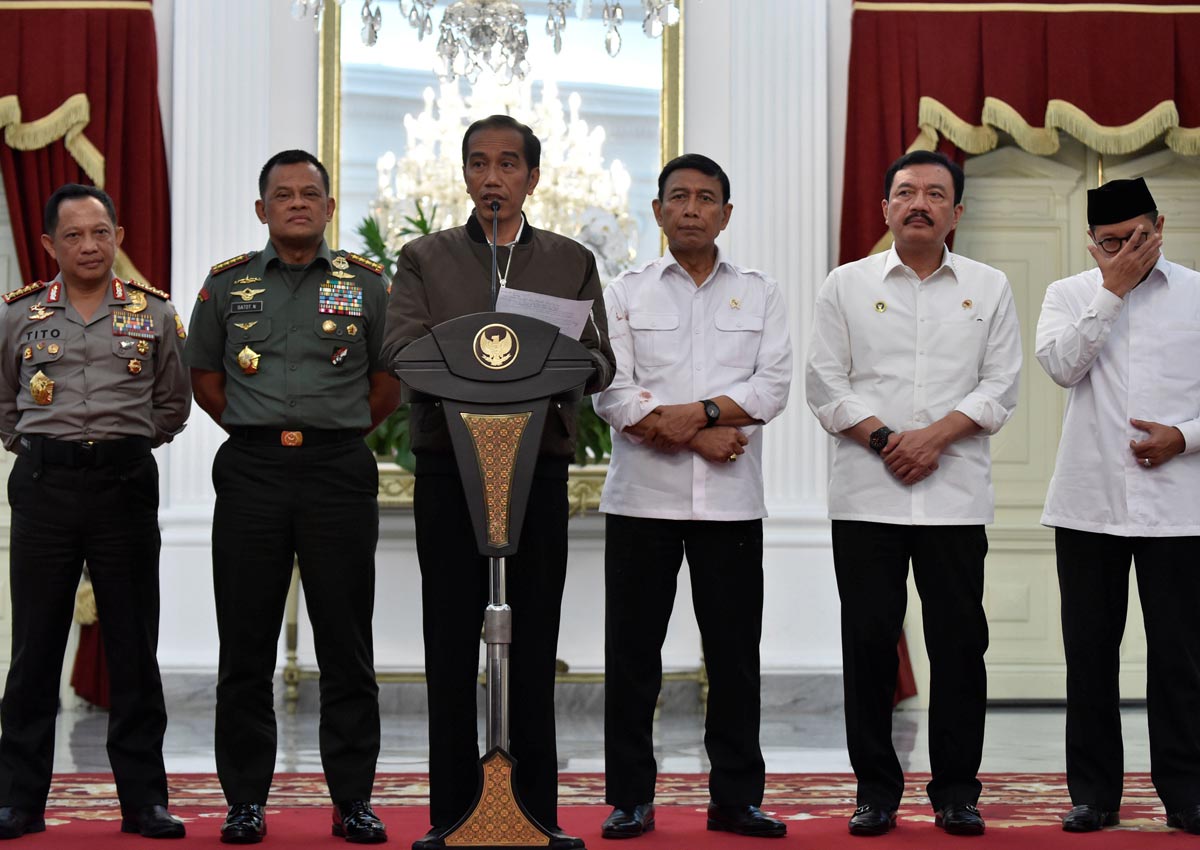
JAKARTA – Indonesian President Joko Widodo called for calm after a violent protest by hardline Muslims last week, yet it was his khaki bomber jacket that excited social media and triggered a rush by Indonesians to snap up similar clothing across the country.

The president, who normally wears a simple, white long-sleeved shirt, is rarely seen as a fashion icon by young Indonesians, who are among the world’s biggest users of social media like Twitter and Facebook.

But Twitter was abuzz for hours with speculation over the brand of the jacket Widodo wore in a televised appearance shortly after midnight on Friday, in which he blamed ‘political actors’ for stirring trouble at a rally attended by more than 100,000 protesters.

Police resorted to using tear gas and water cannon after clashes with Muslim hardliners calling for the resignation of Jakarta’s Christian governor.

An executive at an Indonesian company that owns the franchise rights for Zara in the country said the jacket in question was made by the Spanish clothing retailer and it was already sold out in almost all of its stores.

“The demand for these jackets keeps coming and we have placed a repeat order for them,” Fetty Kwartati, corporate secretary of PT Mitra Adiperkasa Tbk, told Reuters by telephone.

A presidential spokesman declined to comment.

A Zara employee at a Jakarta shopping mall said customers had bought more than 100 of the jackets, which sell for 899,900 rupiah (S$95) each, in just a few days and the store was trying to re-stock as fast as possible.

Local media reported that they were also sold out in other Indonesian cities like Surabaya.

“Everybody started talking about it,” said Rovan, a 25-year-old hotel worker who was trying out the jacket.

“After I saw it on social media, I am kind of interested in it.”

Image: 
Category: 
Publication Date: 
Monday, November 7, 2016 – 18:33
Send to mobile app: 
Source: 


Hermes ID: 
2 724 677
Hermes ID String: 
SP_JACKET
Hermes Author: 
SPANAECH
Story Type: 
Others

Source link

China passes controversial cybersecurity law

0

BEIJING – China Monday passed a controversial cyber-security bill further tightening restrictions on online freedom of speech, raising concerns that it could intensify already wide-ranging Internet censorship.

The ruling Communist Party oversees a vast censorship system – dubbed the Great Firewall – that aggressively blocks sites or snuffs out Internet content and commentary on topics considered sensitive, such as Beijing’s human rights record and criticism of the government.

The law, which was approved by the National People’s Congress Standing Committee, bans Internet users from publishing a wide variety of information, including anything that damages “national honour”, “disturbs economic or social order” or is aimed at “overthrowing the socialist system”.

The law requires companies to verify a user’s identity, effectively making it illegal to go online anonymously.

It also includes provisions for protecting the country’s networks and private user information.

Early drafts of the legislation drew a wave of criticism from rights groups and businesses, which objected to its vague language.

Foreign companies, in particular, expressed concern about language that would require them to co-operate with Chinese authorities to “protect national security”, broadly-worded language that was included in the final version of the law.

Read also: China Internet censorship hurts European businesses: survey

“This dangerous law commandeers internet companies to be de facto agents of the state, by requiring them to censor and provide personal data to the authorities at a whim,” said Patrick Poon, China researcher at overseas-based rights group Amnesty International.

Chinese authorities have long reserved the right to control and censor online content. But the country stepped up its controls in 2013, launching a wide-ranging internet crackdown that targeted activists and focused on the spread of so-called “internet rumours”.

Hundreds of Chinese bloggers and journalists were detained as part of the campaign to assert greater control over social media, which has seen influential critics of Beijing paraded on state television.

Under regulations announced at the time, Chinese internet users face three years in prison for writing defamatory messages that are re-posted 500 times or more. Web users can also be jailed if offending posts are viewed more than 5,000 times.

Comments posted on social media have been used in the prosecution of various activists, such as human rights lawyer Pu Zhiqiang.

“If online speech and privacy are a bellwether of Beijing’s attitude toward peaceful criticism, everyone – including netizens in China and major international corporations – is now at risk,” said Sophie Richardson, China Director of Human Rights Watch.

“This law’s passage means there are no protections for users against serious charges.”

Image: 
Category: 
Publication Date: 
Monday, November 7, 2016 – 18:45
Send to mobile app: 
Source: 


Story Type: 
Others

Source link

Floods kill 15 in Vietnam, thousands evacuated

0

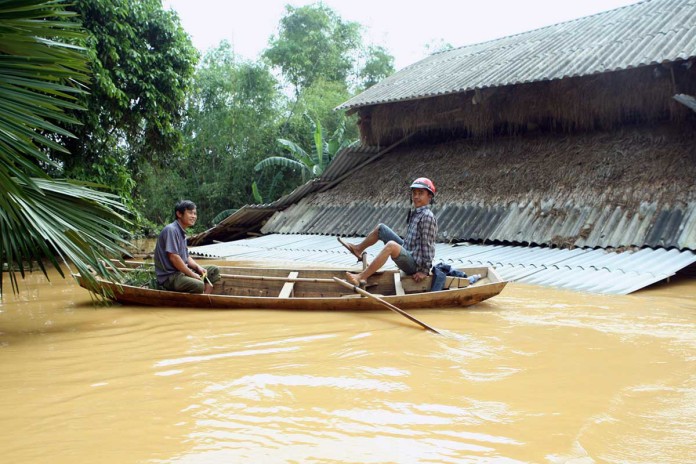
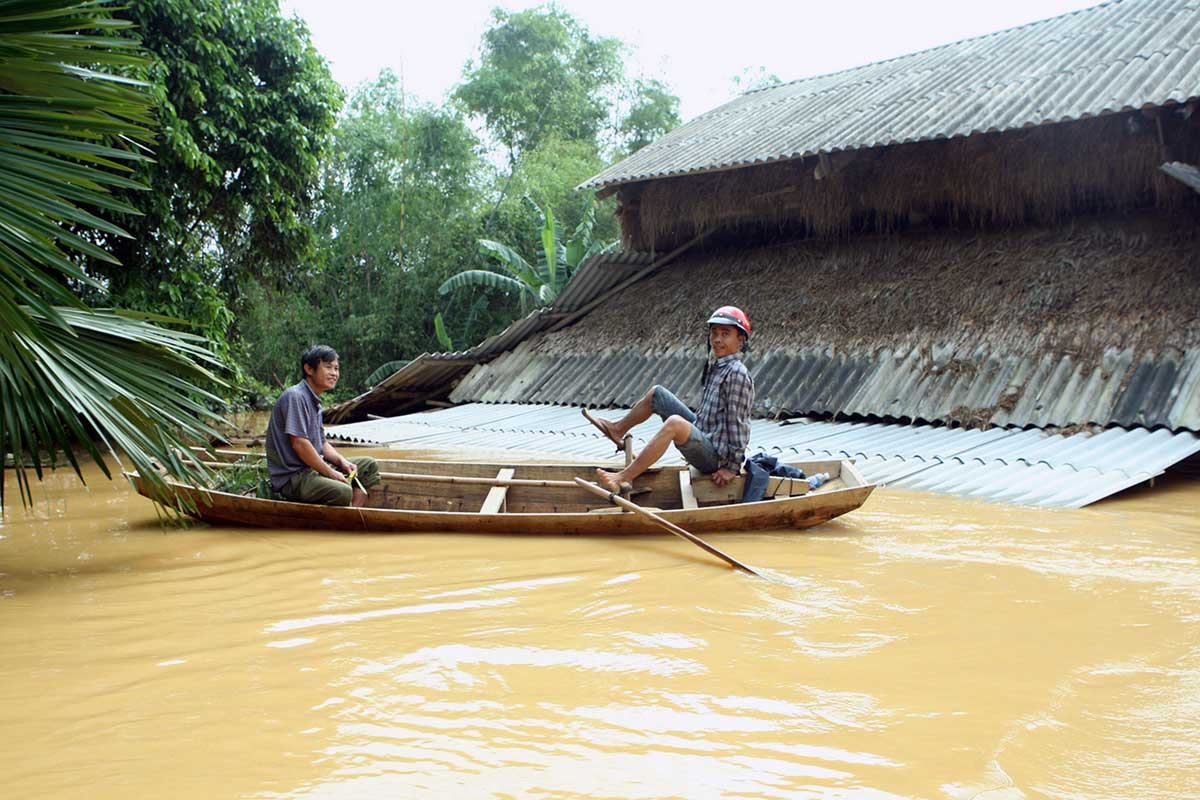
HANOI – Floods in Vietnam’s central, central highland and southern provinces have left 15 people dead and six missing and displaced thousands, the Department of Natural Disaster Prevention and Control said on Monday.

Flooding from very heavy rain brought by cold air and a tropical low pressure system last week have blocked roads, destroyed more than 200 houses and inundated more than 40,000 other houses in 12 provinces, the department said in a report.

A combined 12,000 hectare of crop land were flooded while more than 40,000 cattle and poultry were dead or washed away, the report said.

Last month, floods following torrential rain killed dozens of people in Vietnam’s central region of Ha Tinh and Quang Binh provinces and inundated more than 100,000 houses.


Image: 
Category: 
Publication Date: 
Monday, November 7, 2016 – 18:37
Send to mobile app: 
Source: 


Story Type: 
Others

Source link