
Home Blog Page 2406

Desire for Malay president cuts across community: Yaacob

0

SINGAPORE — While younger Malays have grown up with meritocracy as the basis of how society is organised, and appear reluctant to see a “circuit breaker” in the Elected Presidency (EP) to ensure minority representation, the desire to see a Malay President cuts across the community, said Minister-in-charge of Muslim Affairs Yaacob Ibrahim.

Many from the community would, in closed-door discussions, “raise their hands in wanting to see a Malay President”, said Dr Yaacob, who was speaking at the debate on proposed changes to the EP yesterday.

The Constitutional Commission, given the task of reviewing aspects of the EP, had proposed a mechanism to reserve elections for a particular minority race if it had not been represented for five consecutive terms, a period that stretches three decades.

Rising to share his thoughts on the “psyche” of the Malay community and the “historical burden” of being perceived as an “underachieving community”, Dr Yaacob said the Malay community, to a greater degree than other communities, looked forward to seeing one of their own recognised for excellence and leadership.

In 1968, when his eldest brother, Mr Mohd Ismail Ibrahim, was named Singapore’s first Malay President’s Scholar, the Paya Lebar airport was “swamped by Malays” to see him off, he recalled.

On the other hand, his brother’s schoolmate, Mr Christopher Catherasoo, who also bagged the scholarship, was accompanied only by his immediate family.

“The truth is that we do not have many Malays in key positions of power and leadership. Having one being a President is not just nice but timely,” said Dr Yaacob.

The desire is particularly strong among older Malays, having lived under Singapore’s first and only Malay President, the late Mr Yusof Ishak, who died in office more than four decades ago.

But timeliness “cannot, and must not, be the reason why we should have a Malay President”.

“The Malay candidate must meet the same exacting standards as demanded of candidates from the other communities,” said Dr Yaacob.

The minister said that he had been concerned initially that making provisions that would enable a Malay candidate to hold the highest office would be construed as the Government going out of its way to help a minority community “that has lagged behind”.

“I was worried that a Malay candidate may not be able to command the respect of all Singaporeans,” Dr Yaacob said.

Hence, the qualifying criteria for candidates must never be compromised, he stressed. “If we are to carry out the proposed tweak to ensure minority representation, we must do so because it is good for Singapore and Singaporeans, and not just for the minority communities, and certainly not for the Malay community. The candidate, minority or otherwise, must meet the same, exacting requirements, and therefore be seen to be good for all Singaporeans,” he said.

He noted that surveys show that despite efforts at forging a common Singaporean identity, people still tend to “drift towards their own kind”.

“I have come to recognise that we need such policies to avoid the pitfalls of other societies that have ignored the human tendency to behave in tribal ways and insisted on seeing the world as they sincerely believed it to be. These societies have suffered for it,” he said.

Deputy Prime Minister Teo Chee Hean, in his speech in Parliament, acknowledged concerns that special arrangements to ensure multiracial representation in the Elected Presidency scheme detract from meritocracy.

But meritocracy-related concerns “lose force” if the eligibility criteria apply to candidates of all ethnic groups, he said.

Beyond the President’s custodial functions, the symbolic role is also important. “There is a real concern the members of minority groups may not be elected to the Presidency for long periods. This will undermine the President’s vital role as the symbol of our multi-racial nation,” he said.

The five-term timeline struck a good balance, given that an overly lengthy hiatus may not ensure that the presidency was accessible to various races, and the general principle would be to reserve the election for the racial group that has had a longer hiatus from office, he added. ADDITIONAL REPORTING BY VALERIE KOH
Source link

Ex-BSI banker pilfered S$5.6m via shell firm: Relationship manager

0

SINGAPORE — Former BSI banker Yeo Jiawei used a shell company bearing a similar name to Abu Dhabi state fund subsidiary Aabar Investments PJS to pilfer US$4 million (S$5.6 million) on one occasion, his relationship manager testified yesterday.

This was the first time in Yeo’s trial that a link had been explicitly drawn to scandal-hit Malaysia state fund 1Malaysia Development Berhad (1MDB), which is said to have diverted money in a similar manner. In April, news website Malaysiakini reported that 1MDB transferred US$3.5 billion to Aabar Investments PJS Limited, which is based in the British Virgin Islands.

On the fifth day of Yeo’s trial for interfering with witnesses in allegations of money-laundering, forgery and cheating, the court heard that there are at least four shell companies bearing names similar to the real Aabar, a subsidiary of the International Petroleum Investment Company (IPIC). These shell companies are based in the British Virgin Islands, Samoa and Seychelles.

Mr Jose Pinto, a relationship manager from Amicorp Group, said Yeo, 33, had used one of these shell companies to pilfer US$4 million. Yeo had said the money was “referral fees” owed to this entity for securing a transaction between the governments of Malaysia and Saudi Arabia.

Later, when Yeo was charged in court, it became clear to him that it was a foil to pilfer money, said Mr Pinto, who is named in two of the four charges for perverting the course of justice that Yeo faces.

Yeo is accused of playing a key role in a money-laundering operation linked to 1MDB.

Mr Pinto also gave more details of how Yeo lived the high life after he left BSI in 2014 to work for Low Taek Jho, the Malaysian financier accused of siphoning billions of dollars from 1MDB.

For example, Yeo was flown via private jets to meetings in Barbados between Low, Aabar chairman Mohamed Al Husseiny and Low’s close associate, Eric Tan, among others, and put up at luxury hotels, the court heard.

In April last year, Yeo also joined the crew in Las Vegas for the boxing bout between Floyd Mayweather and Manny Pacquiao, where they had premium tickets that cost between US$30,000 and US$75,000.

“Yeo was very close to them,” Mr Pinto said.

Yeo was also concerned about obscuring his dealings with other individuals, Mr Pinto added, citing names such as Kelvin Ang — the second Singaporean charged in relation to the probe — and Samuel Goh, former head of agency distribution at NTUC Income.

“He told me to remember to compartmentalise, he used this word (‘compartmentalise’) more than one time … I understand it as he was trying not to let one know he was doing business with the other,” Mr Pinto said.

Like previous witnesses, Mr Pinto testified that Yeo adopted discreet modes of communication and would actively set up “secret chats” on Telegram to be self-destructed so as to leave no trace on servers.

After police investigations were launched against him, Yeo also told Mr Pinto to destroy his laptop, and to direct his colleague Aloysius Mun not to reveal his dealings with Amicorp Group if questioned.

Mr Mun is expected to take the stand later this week. KELLY NG

Source link

S’pore committed to support the capacity-building efforts of the Palestinian people: Maliki

0

SINGAPORE — Senior Minister of State for Defence and Foreign Affairs, Dr Mohamad Maliki Osman, who is currently on a working visit to the Palestinian Territories, met Palestinian National Authority (PNA) President Mahmoud Abbas and other PNA leaders on Monday (Nov 7).

During the meetings, Dr Maliki reiterated Singapore’s commitment to support the capacity-building efforts of the Palestinian people, said a Ministry of Foreign Affairs (MFA) statement.

MFA added that as a follow-up to Prime Minister Lee Hsien Loong’s visit to Ramallah in April 2016, Singapore would appoint Mr Hawazi Daipi as the Republic’s non-resident Representative to the PNA to coordinate Singapore’s Enhanced Technical Assistance Package (ETAP) for the Palestinians.

“The PNA leaders welcomed the appointment,” the statement said.

During his visit to Ramallah, Mr Lee had announced a doubling of Singapore’s technical assistance package to the PNA from S$5 million to S$10 million.

The package covers study visits to Singapore, priority places in training courses on education, anti-corruption and economic development, and postgraduate scholarships.

Since 2013, Singapore has hosted six study visits under ETAP, including the most recent one last month by a delegation led by the PNA Minister of Education and Higher Education Dr Sabri Saidam. TODAY understands that there has been an increase in study visit requests to Singapore as well as in technical training applications by Palestinian officials since Mr Lee’s visit in April.

Mr Hawazi Daipi, who was Senior Parliamentary Secretary for Manpower and Education before leaving politics last year, will be resident in Singapore and make occasional visits to the Palestinian Territories.

The appointment is not a diplomatic one as Singapore does not recognise the state of Palestine. Other countries such as New Zealand and Japan have appointed similar representatives to PNA.

Dr Maliki is currently on a five-day visit to the Middle East. On Monday, he also met PNA Prime Minister Dr Rami Hamdallah, Foreign Affairs Ministers Dr Riyad Al-Maliki, Dr Saidam, and Minister of National Economy Abeer Odeh.

In the meetings, Dr Maliki also reiterated Singapore’s consistent position and longstanding support for the two-state solution with Israel and Palestine living side-by-side in peace and security, said MFA.

“He expressed the hope that both sides would resume negotiations and make progress towards a just and durable solution.”

Dr Maliki will visit the Palestine Red Crescent Society Headquarters and meet the Mayor of Al Bireh Municipality Fawazi Abed Salim to convey a donation of books provided by the National Library Board to the Al Bireh Public Library on Tuesday, after which he will depart the Palestinian Territories for Jordan.

Source link

"The World In 2017 Gala Dinner" by the Economist

0

“The World In 2017 Gala Dinner” by the Economist
from Tuesday, November 29, 2016 at 7:00 PM to Tuesday, November 29, 2016 at 10:00 PM

Four Seasons Hotel

190 Orchard Boulevard, Singapore, Singapore

Source link

Singapore appoints Hawazi Daipi as representative to Palestinian Territories

0

SINGAPORE: Former Senior Parliamentary Secretary Hawazi Daipi will be Singapore’s new non-resident representative to the Palestinian Territories, the Ministry of Foreign Affairs (MFA) said on Monday (Nov 7). 

In a press release, MFA said Senior Minister of State for Defence and Foreign Affairs Maliki Osman, who is currently on a working visit to the Middle East, announced Mr Hawazi’s appointment during meetings in Ramallah with Palestinian National Authority (PNA) leaders President Mahmoud Abbas, Prime Minister Rami Hamdallah, Minister of Foreign Affairs Riyad Al-Maliki, Minister of Education and Higher Education Sabri Saidam and Minister of National Economy Abeer Odeh.

“The PNA leaders welcomed the appointment,” MFA said. 

As non-resident representative to PNA, Mr Hawazi will coordinate Singapore’s Enhanced Technical Assistance Package for the Palestinians. In April this year, Prime Minister Lee Hsien Loong had announced that Singapore would double the package to help the Palestinians with capacity-building from S$5 million to S$10 million. 

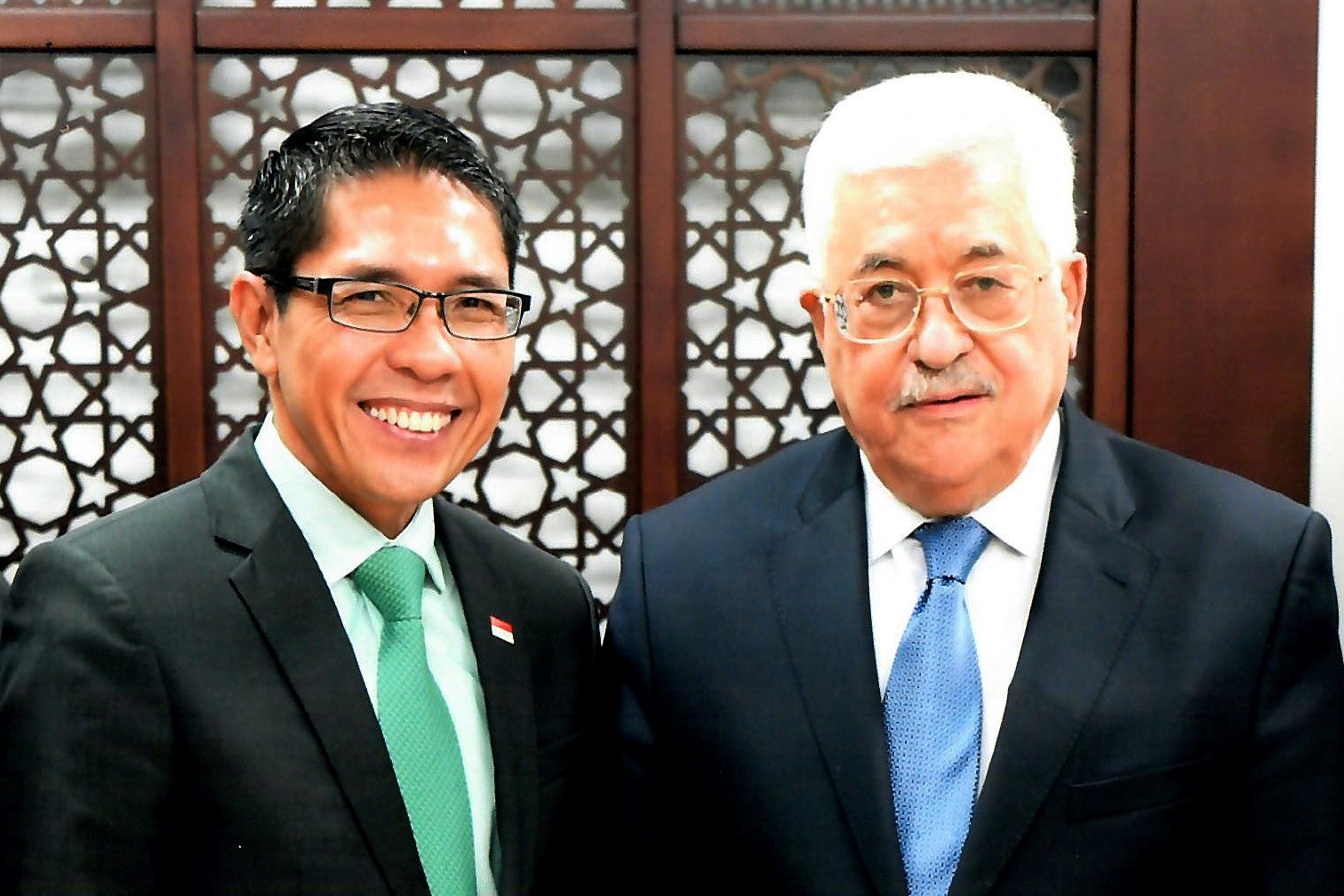
 Senior Minister of State Maliki Osman and Palestinian President Mahmoud Abbas (Photo: MFA)

During the meetings, Mr Maliki reiterated Singapore’s commitment to support the capacity-building efforts of the Palestinian people, MFA said. It added that more than 220 Palestinians have attended courses under the Singapore Cooperation Programme (SCP), which provides training for foreign officials in areas like public governance and administration, urban planning and healthcare in Singapore. 

Mr Maliki also stressed Singapore’s “consistent position and longstanding support for the two-state solution with Israel and Palestine living side-by-side in peace and security” and “expressed the hope that both sides would resume negotiations and make progress towards a just and durable solution”, according to the Foreign Affairs Ministry. 

MFA said that Mr Maliki will host a dinner for senior Palestinian alumni of the SCP on Monday. He will also visit the Palestine Red Crescent Society Headquarters and meet the Mayor of Al Bireh Municipality Fawazi Abed Salim, to convey a donation of books by the National Library Board to the Al Bireh Public Library on Tuesday, before departing for Jordan.

Source link

EP changes ‘will bring stability, prevent gridlock’

0

SINGAPORE — The debate on the proposed constitutional amendments to the Elected Presidency (EP) scheme kicked off on Monday (Nov 7), with Deputy Prime Minister Teo Chee Hean telling the House that the changes would provide stability to the political system, and help to avoid gridlock in situations where the President and the government do not agree.

With at least 30 Members of Parliament (MPs) expected to join in the debate on the constitutional amendment Bill over the coming days, Mr Teo — along with Minister-in-charge of Muslim Affairs Yaacob Ibrahim and three other MPs — rose to speak on Monday, after Parliament Speaker Halimah Yacob read out a message from President Tony Tan, who was making his first public comments on the proposed changes to the EP.

Among other things, Dr Tan stressed that the highest office of the land cannot be a “second centre of power” and pointed out the need to distinguish between the President “acting as a custodian and the President acting in opposition to the Government”,

All the MPs who spoke yesterday — MacPherson MP Tin Pei Ling, Jurong GRC MP Tan Wu Meng and Bukit Batok MP Murali Pillai — held up Singapore’s founding priniciple of multiracialism, and expressed their support for the changes.

In particular, Mr Murali said the safeguarding of minority representation would send “an important signal to all communities within Singapore that she must always remain an inclusive society”.

On his part, Dr Yaacob spoke about a “long-held” desire by the Malay community to see their one of their own serving as President and the pride they have in their community. “The truth is that we do not have many Malays in key positions of power and leadership. Having one being a president is not just nice but timely. But this cannot, and must not, be the reason why we should have a Malay president,” he said. “The Malay candidate must meet the same exacting standards as demanded of candidates from the other communities.”

A review of the EP scheme was first mooted by Prime Minister Lee Hsien Loong in January. Quoting Mr Lee’s comments then on the need to ensure the country does not get “swept off course by a transient public mood, or an erratic government”, Mr Teo reiterated that the Government needs to be able to respond to the mood but not go too far and “capsize the boat”, as Mr Lee put it.

Apart from detailing the proposed changes, Mr Teo noted that the inception of the EP in 1991 “did not change the President’s foremost symbolic and unifying role”. “However, it overlaid onto the office an additional custodial role and transformed it into an elected office,” he said.

He added: “Today, it is no longer this House that balances all the considerations when appointing a President to perform the President’s unifying and symbolic role. We therefore need another framework to achieve and maintain this fine balance.”

A nine-member Constitutional Commission, headed by Chief Justice Sundaresh Menon, was tasked with studying the eligibility criteria for prospective candidates for the Presidential Election, safeguarding minority representation in the presidency, and the framework governing the exercise of the President’s powers. The commission’s report was submitted in August, after six months of deliberations involving public hearings and written submissions from the public.

In a 49-page White Paper published in October, the Government broadly accepted the recommendations, which include raising the bar for candidates to keep up with the times: Prospective private sector candidates would have to have helmed companies with S$500 million in shareholders’ equity, up from S$100 million in paid-up capital. To safeguard minority representation, the Government will adopt the “hiatus-triggered” mechanism recommended by the commission, where presidential elections will be reserved for a particular race that has not been represented in the office for five consecutive terms

Mr Teo stressed that the eligibility criteria must continue to be updated, in order to maintain “a measure of assurance” that Presidential candidates have the necessary experience and expertise for the EP’s custodial role.

Noting the Elected President’s “two equally important” ceremonial and custodial roles, Dr Yaacob nevertheless said he would be most worried about “the character of the candidate”. “After all, we have seen very successful businessmen who are also crooks. To have stayed honest is too low a bar,” he said. “While we have debated much about the qualifying criteria, especially the candidates’ experience in managing large organisations, equally important are the values and ethos of the candidates.”

Mr Murali warned against the assumption that Singapore has arrived as a nation in terms of racial and religious harmony, and “all inter-communal issues have been resolved forever”. Harking back to the Malay community’s “brave” decision to remain in Singapore post-independence, despite finding themselves becoming a minority group, Mr Murali said: “They remained knowing Singapore’s declared commitment to meritocracy, equality, and multi-racial and multi-religious pluralism.”

Dr Tan Wu Meng felt that the reserved elections would serve as a “safety valve”, even as he emphasised the need to strengthen social cohesion among the various races. “Group Representation Constituencuies were controversial in their early years, but today we see their value as a safety check, to avoid a freak election outcome where every elected MP is of the majority race,” he pointed out.

Given that a majority of Singapore’s population are Chinese, the country “must make sure that our Head of State – an important national symbol – reflects our multiracialism”, said Ms Tin. “Non-Chinese Singaporeans are not a “by the way”, we are all an integral part of Singapore,” she said.

The debate resumes on Tuesday.

Source link

Elected Presidency: MPs back minority representation safeguard on Day 1 of debate

0

SINGAPORE: Members of Parliament speaking on Day 1 of the debate on changes to the Elected Presidency scheme expressed support for instituting a mechanism to ensure multi-racial representation in the Presidency.

The three MPs who spoke on Monday (Nov 7) after Deputy Prime Minister tabled the Constitution of the Republic of Singapore (Amendment) Bill were MacPherson Single Member Constituency (SMC) MP Tin Pei Ling, Jurong Group Representation Constituency (GRC) MP Tan Wu Meng, and Bukit Batok SMC MP Murali Pillai.

HEAD OF STATE MUST REFLECT SINGAPORE’S MULTI-RACIALISM: TIN PEI LING

Ms Tin Pei Ling spoke of the need to ensure that the Elected Presidency reflects Singapore’s multiracialism, adding that the imperative of doing so “goes beyond fulfilling our ideal of a multi-racial society”.

There is a need, she said, for Singapore to assert its independence and multi-racial complexion because of the geopolitical realities it faces.

She explained that with 75 per cent of Singapore’s population being ethnic Chinese, it is easy to mistake Singapore as a Chinese society, and “this is not a figment of our imagination.”

“In the not-so-distant past, many people in the West had either not heard of Singapore or often mistook Singapore as part of China. Even today, after years of hard work in fostering multi-racialism and positioning ourselves as a multi-racial society, Singapore is still nicknamed as a ‘po xian‘ amongst some groups of PRC nationals, referring to us being a county – and not even a province – of China,” she said.

And while Singapore should continue strengthening its relationship with China, Ms Tin said perceiving Singapore as a Chinese county “undermines our independence and standing as a sovereign nation”.

“That the majority of our population is ethnic Chinese is a fact,” she said. “But we must make sure that our Head of State – an important national symbol – reflects our multiracialism.”

IMPERFECT HUMAN BEINGS, LESS THAN PERFECT CONTEST: TAN WU MENG

While the GRC system was controversial in its early years, its value as a safety check is now evident today, in order to avoid a freak election result where every elected MP is of the majority race, said Mr Tan Wu Meng.

“Likewise, there is value in reserved elections as a safety valve for the Elected Presidency, so that every generation has a chance to see a President elected from their own community.”

Mr Tan said the reality of human nature is such that we are all “imperfect human beings”.

“And when we have imperfect human beings taking part in a closely contested election with racial differences, the contest can be less than perfect,” he said. “Candidates facing the same finish line, but some will have had to walk further and longer and harder – just to get to the starting line.”

But he noted that improving the process of the Elected Presidency is “just one step”.

“We all can play a part to strengthen our multi-racialism,” he said. “So that someday these provisions of a reserved election will no longer be needed, when we have become a more perfectly united people.”

“A SIGNAL AND A SAFEGUARD”: MURALI PILLAI

Mr Murali Pillai said the amendments to provide for a reserved election “have a direct impact on what it means to be Singaporeans and how we signal to all communities in Singapore the importance of ensuring we always remain an inclusive society”.

Explaining why the change would not just be a safeguard but an important signal to all groups, Mr Murali spoke of how Singapore’s Malay community chose to remain in Singapore, even though they found themselves a minority after independence from Malaya.

“They remained knowing Singapore’s declared commitment to meritocracy, equality, and multi-racial and multi-religious pluralism. This was a brave move on the part of the Malay community. No one could have then foreseen how the different communities in Singapore would manage race relationships between them,” he said.

“But, the Malay community placed full trust and worked with the Government which on its part also ensured that the community’s interests are always protected, in recognition of their commitment to the country.”

Mr Murali noted that ensuring the progress of all communities is a guiding principle of the People’s Action Party, and the successive governments it has formed.

“Singaporeans should continue to vote for the President on the basis of who they feel is the best person for the job regardless of race, language or religion. Should, however, there be a situation where 30 years have elapsed without a President drawn from the minority community, then, for the sake of ensuring we always remain an inclusive society, the inclusion provision will kick in.” 

The debate continues, with more MPs expected to speak over the rest of the week.

Source link

FAS passes constitutional amendments for free elections

0

SINGAPORE: The hurdle has been cleared for the Football Association of Singapore (FAS) to hold democratic elections for its leadership.

That’s after 38 of its 46 affiliates showed up for the Extraordinary General Meeting (EOGM) tonight (Nov 7) at the Jalan Besar Stadium, and unanimously voted in the constitutional amendments that would pave the way for its first elected leadership in over three decades.

The move away from government appointees at the helm of Singapore’s football governing body was announced last December, following a request from football world governing FIFA.

Since then, an FAS taskforce, led by current vice president Lim Kia Tong, has worked in consultation with FIFA to draw up proposed constitutional amendments that would pave the way for such elections.

And he was pleased that the amendments have now been carried.

“It’s an excellent outcome,” said Lim, who is expected to run for the presidency as part of a team yet to be announced.

“The most comforting fact is that it was a unanimous decision, which goes to demonstrate that each and every member that was present tonight is fully comfortable with the essence of this new constitution. And they strongly believe that the elements of this new constitution will be a legal document to propel FAS forward.”

The new constitution will now need to be scrutinised and passed by the Registrar of Societies, the Ministry of Culture, Community and Youth (MCCY), and the Commissioner of Charities, before elections can be called.

Given the current council’s extended term will run out on Nov 15, a provisional council is expected to be elected by the MCCY to run the FAS until elections are held before a May 2017 deadline.

Said Lim: “From the new constitution, the deadline is actually May 2017. That means by then, the new team must be legitimately elected.

“So if you work backwards, all those activities that have to be executed leading to elections must be carried out months before the deadline.”

Source link

Sharp exchange in Parliament over move to exempt two operators from ban on remote gambling

0

SINGAPORE — The Workers’ Party (WP) has alleged that the Government is trying to make more money by exempting two operators from a ban on remote gambling, drawing a sharp rebuttal from Senior Minister of State (Home Affairs) Desmond Lee.

During the adjournment motion he filed in Parliament on Monday (Nov 7), the WP’s Pritam Singh said that by allowing Singapore Pools and Singapore Turf Club to offer remote gambling services, the Government has fuelled public speculation that it “simply wants a piece of the huge global Internet gambling pie, and that this is a revenue-raising exercise done at the expense of Singaporeans’ welfare”.

Mr Lee retorted, noting that the one member of the WP had agreed with the Government’s position that a total ban on remote gambling would drive problem gambling underground, and yet it was singing a different tune now with this “serious allegation”.

“Both the Government and the Opposition agree that online gambling addiction poses serious problems that we are all concerned about, notwithstanding the Member’s assertion that the Government is completely unconcerned and is trying to make money out of this,” said Mr Lee.

In late September, the Ministry of Home Affairs (MHA) announced that people could gamble legally online through Singapore Pools and Singapore Turf Club, as the two operators had been assessed to be suitable for exemption from restrictions under the Remote Gambling Act, which came into force in February last year.

In his speech, Mr Singh, a Member of Parliament for Aljunied GRC, said a common view held by Singaporeans is that these exemptions are a way for the Government to make more money.

“While (I) am sure the Minister will refute this accusation vigorously, the fact remains that a large part of legalised gambling revenue goes into the state’s coffers. Is providing for exempt operators a way to redirect gambling spending away from illegal overseas operators to local operators, which are owned by the Tote Board?” Mr Singh said.

He added that such increased accessibility could further be the “gateway” to more serious gambling addictions. For instance, pathological gamblers might be tempted to fall back into their old habits by placing bets on smartphones without their friends or family noticing, unlike when they go to casinos or the Singapore Turf Club.

And despite the Government’s admission that online gambling would pose a difficult challenge, Mr Singh said there had “a glaring “lack of clarity” on how the authorities were preparing to tackle the issue.

“One cannot help but to get the feeling that it is business as usual, and that online gambling is just another game to gamble on, or just another sport for the public to take a bet on. I am concerned that it is much more ominous than that,” he added.

Mr Singh’s remarks drew a sharp rebuttal from Mr Lee, who said he was “disturbed” by the picture that Mr Singh had painted, and that it was not right for the MP to suggest that the authorities were unaware of the risks posed by online gambling.

Mr Lee reiterated the Government’s stance that a total ban on all forms of online betting — something that the WP had called for earlier — would drive the problem further underground and make it harder to detect.

Given the growing proliferation of an online gambling market and syndicates, a total ban, on its own, “would not be sufficient” to deal with the problem, said Mr Lee. It would be akin to “burying (one’s) head in the sand”.

He noted that Singapore has a “broad and extensive” prohibition against online gambling in place, such as an exclusion system, public education, outreach and counselling.

The authorities also intend to work with the two exempt operators to study the impact and prevalence of online gambling, before deciding whether they should tweak the policy further.

Mr Lee called on the WP to show evidence that a total ban on online gambling will drive such activities to land-based outlets, such as authorised 4D or Toto shops — instead of underground.

“Online gambling is a global phenomenon. It grows at a very fast rate. It is not a problem outside Singapore – it is right here on our shores, in our homes, in people’s pockets when they walk around, when they work, when they are at home…

“Banning it is inadequate as the problem will only grow deeper … A valve may allow people who intend to gamble online to do so in an environment with some social safeguards, and we can track the size and shape of the problem,” Mr Lee said.

Source link

Warm gesture: Singaporeans knit winter clothes for children in Thailand

0

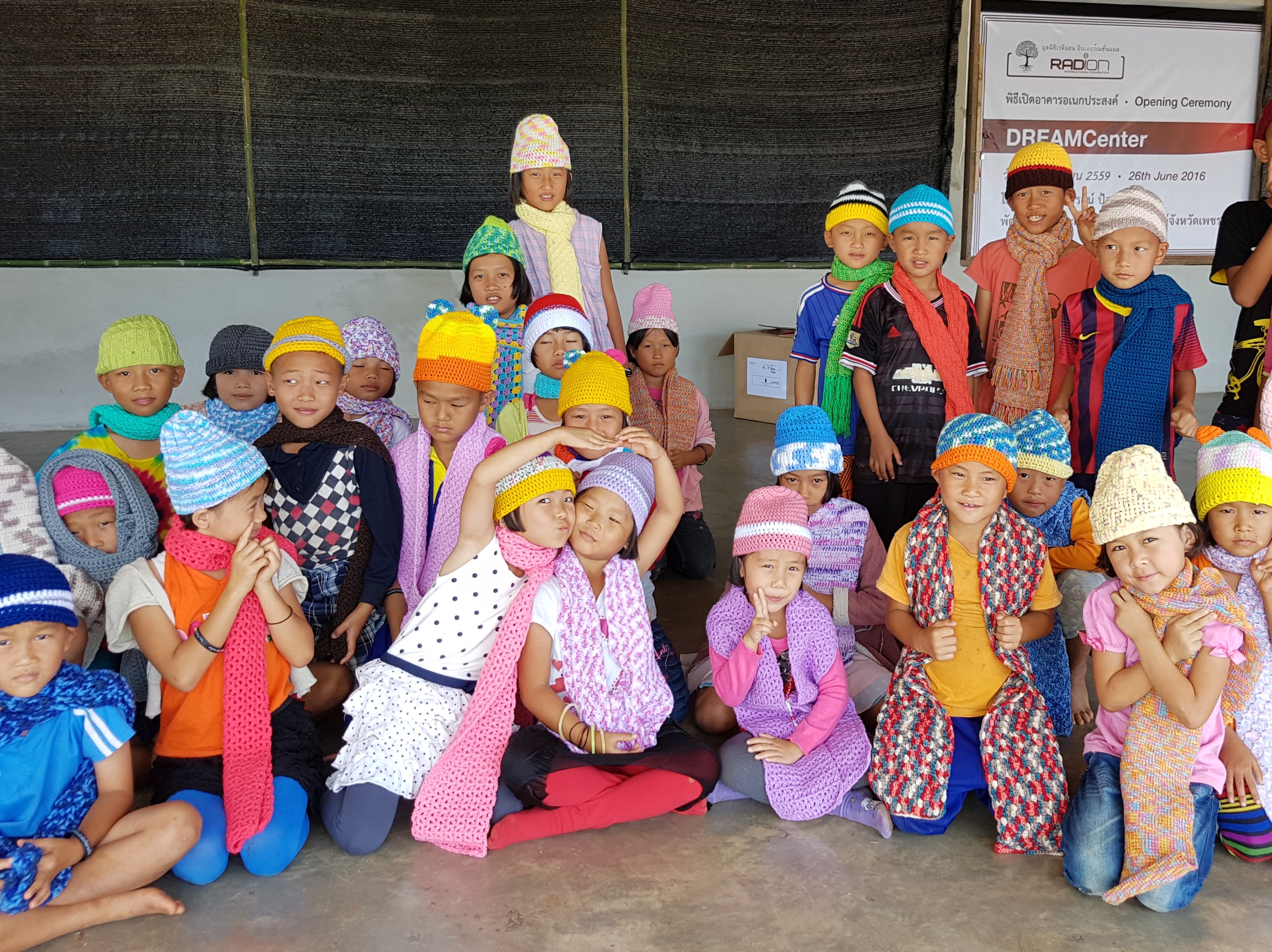
SINGAPORE: A group of underprivileged children from a town in northern Thailand received some help beating the winter blues, with a donation of more than 2,500 hand-knitted beanies, scarves and socks from hobbyists in Singapore. 

The founder and executive director of Radion International, the non-profit organisation behind the Project Lives donation drive, said the children from Khek Noi village in Phetchabun province were “ecstatic” to receive the warm clothing. “They almost never get brand new things,” Mr Eugene Wee said. He estimated that there were about 3,000 children in the village.

The Northern Thailand region is usually chillier than the rest of the country, with temperatures in the northern-most province of Chiang Rai plunging to 8°C in January this year. 

The volunteers who knitted the two car loads of winter gear call themselves Yarns Spree, and have about 500 members. For this project, 150 members, including a 9-year-old boy, helped produce the clothing. 

“We enjoy knitting so much and made so many items but what do we do with all these clothing that aren’t suitable for our tropical climate?” Yarn Spree founder Amanda Seet said. 

“We were so happy to find out about what Radion does and that we can give to those in need.” 

(Photo: Radion International)

Project Lives is an annual donation drive where winter clothing, medical aid and other supplies are collected in Singapore to be distributed to “remote and underserved” communities in Petchabun, where temperatures can drop to as low as 2°C. Last year, about 100 Singaporean youths and residents also helped ship a 40-foot container of winter supplies to the province. 

Source link
