Home Blog Page 2403

Elected presidency: Malay candidates must meet same standards, says Yaacob

0

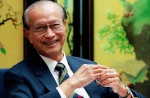
While it is nice and timely for Singapore to have a Malay president, the Malay candidate must meet the same exacting standards demanded of candidates from other communities, Minister-in-charge of Muslim Affairs Yaacob Ibrahim said.

“We do not want, and we cannot accept, tokenism,” Dr Yaacob told the House yesterday, on the first day of debate on proposed changes to the elected presidency. “We want a president to command the respect of all Singaporeans,” he added.

Speaking in English and Malay, Dr Yaacob, who is Communications and Information Minister, sought to explain the psyche and concerns of the Malay community and its historical burden of being perceived as lagging behind other communities.

Describing the issue as an “emotive one”, Dr Yaacob noted that Singapore has not had a Malay president for 46 years. The last Malay president was Singapore’s first president Yusof Ishak, who died in office on Nov 23, 1970.

“An entire generation of Malays have grown up without ever having a Malay president,” said Dr Yaacob. “Among the older Malays, having lived under a Malay president, it is understandable that they yearn for one after a very long time.”

Younger Malays who grew up under meritocracy may be a little reluctant to see the change to ensure a Malay president from time to time, yet in closed-door discussions many would raise their hands when asked if they want to see a Malay president, he noted, adding: “But very few would say this publicly.”

He noted how when the ethnic integration policy for public housing was started in 1989, there was some unease, but today, it has served the national interest, preventing ghettoes and enabling integration.

He himself struggled with it, but recognised the need for such policies “to avoid the pitfalls of other societies that ignored the human tendency to behave in tribal ways”.

The changes to the presidency are a similar policy tweak, he noted.

“To have a qualified Malay to do the job speaks to a long-held desire among the community to see one of us serving in the highest office in the land. It is about our place in this nation that we call home,” he said.

Malays, more so than other communities, look forward to seeing the success of one of their own, Dr Yaacob said. He cited the example of Natasha Nabila who topped the Primary School Leaving Examination in 2007 and broke the record for the highest scores. “The community was overjoyed,” he said.

Dr Yaacob also shared a personal anecdote about his eldest brother Mohd Ismail Ibrahim, the first Malay President’s Scholar. The extended family turned up at Paya Lebar Airport in 1968 to see his brother off for his studies, while a fellow scholar was accompanied only by his immediate family. He said: “The airport was swamped by Malays! It was a moment of celebration.”

“The truth is that we do not have many Malays in key positions of power and leadership,” noted Dr Yaacob. “Having one being a president is not just nice, but timely.”

He added: “But this cannot, and must not, be the reason why we should have a Malay president.”

Dr Yaacob also said he was concerned the debate was putting minority communities in the spotlight again, a situation the Malay community had frequently been in for the last 50 years. “We lagged behind in education, (had) higher divorce rates, higher crime rates and, more recently, Islam has been associated with the terrorism threat,” he said.

The move to ensure a Malay president could be seen as “the Government going out of its way to help a community that has lagged behind”. This is why for a candidate to be respected by all Singaporeans, he must meet the same high standards, regardless of race, he added.

Read also: Seven presidents, 50 years


This article was first published on Nov 08, 2016.
Get a copy of The Straits Times or go to straitstimes.com for more stories.
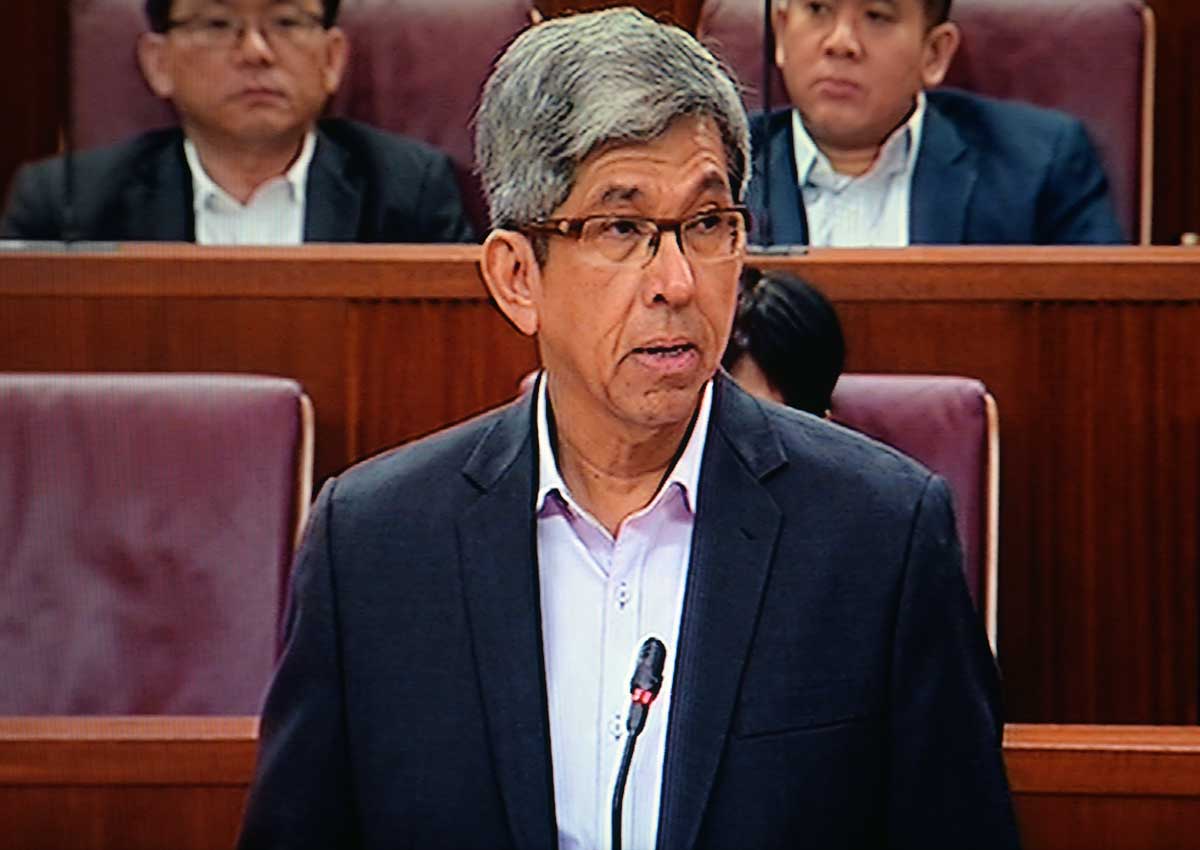
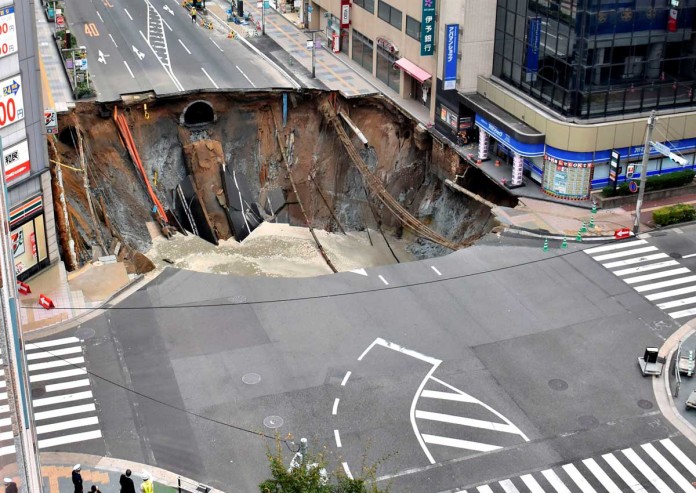
Image: 
Category: 
Blurb: 
<p>While it is nice and timely for Singapore to have a Malay president, the Malay candidate must meet the same exacting standards demanded of candidates from other communities, Minister-in-charge of Muslim Affairs Yaacob Ibrahim said.</p>
Publication Date: 
Tuesday, November 8, 2016 – 14:00
Send to mobile app: 
Source: 


Story Type: 
Others

Source link

Large sinkhole opens up in Fukuoka

0

FUKUOKA – A large sinkhole opened on a road in front of Hakata Station in Hakata Ward, Fukuoka, at about 5:15 a.m. Tuesday.

The hole gradually became bigger. It measures up to about 15 meters deep, about 27 meters wide and about 30 meters long.

According to the Fukuoka City Transportation Bureau, construction work to extend the Nanakuma Line of the city’s subway system was under way about 25 meters below the site.

As water outflow and other phenomena were seen shortly before the occurrence of the sinkhole, construction workers had evacuated from the site. No one was injured.

Due to the accident in the business district, about 350 meters of the east-west road, managed by the city, was closed to all traffic.

Water and power outages occurred in some nearby areas.

Image: 
Category: 
Publication Date: 
Tuesday, November 8, 2016 – 11:57
Keywords: 
Send to mobile app: 
Source: 


Story Type: 
Others

Source link

Boys' standing falls in China as girls win favour

0

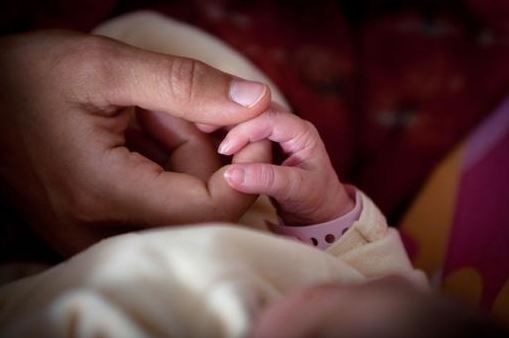
A growing number of parents are eschewing tradition and attempting to ensure that their second child is female. Li Na and Shuang Rui report for China Features at Xinhua News Agency.

Liu Min lay on the bed quietly, looking at her newborn second son. Despite her joy, she felt a sense of loss – because she had failed to have a daughter.

Four years ago, the 31-year-old Beijing resident gave birth to her first son. To care for him, Liu resigned her job in the legal department of an insurance company, sacrificing an annual salary of 200,000 yuan (S$29,500).

When the “one-child policy” was phased out last year, Liu and her husband decided to have another child. They had another boy. “Although having a second child made life more difficult and increased the pressure on us, we still want to have a daughter,” she said.

While her “obsession” with having a daughter is “a challenge to my parents’ ‘patriarchal ideology'”, she is more concerned about the pressures of modern life: “In Beijing, the average home can cost from 5 million to 10 million yuan. I worry about the cost of education, marriage and homes for my sons in the future.”

Read also: China’s one-child policy is gone, but its legacy bites deep 

Liu was born in Ding’an county, Hainan, China’s southernmost province, in 1985. She was the family’s fourth daughter. Her infant name was Zhao Di, meaning “bringing a younger brother”, which she was given because “my parents especially wanted a son (next time around)”.

When she was 2, her family had a fifth child – a boy. “When my brother was born, my family invited all our relatives and neighbours to a feast. We lit firecrackers all day,” she recalled. “In the traditional view of people in my hometown, only boys can keep the family line alive.”

Because Liu’s parent had more children than was allowed under the family-planning policy, they were fined heavily. “We lived in straitened circumstances. Sometimes, my sisters and I only ate one bowl of porridge a day,” she said.

Gender imbalance

In the late 1970s, in a bid to slow population growth in line with the provision of State resources, the one-child policy was strictly implemented, mostly among the urban population. The move was established as a basic State policy in 1982, and finally became law in 2001, with the promulgation of The Population and Family Planning Law of the People’s Republic of China.

However, in a largely agrarian society, many families were still influenced by the tradition of carrying on the family line and raising sons to provide for their parents in old age. Many families lost everything after being fined for having more children than stipulated by the policy.

Read also: Easing of China’s one-child policy: Too late for those who lost only child

The problem has been exacerbated by a rapid decline in the gender ratio at birth. In 1982, it was 107 boys to 100 girls, while by 2004 it had declined to 121.18 per 100 girls. Last year, the number was 113.51 boys to 100 girls – still well off the optimal figure of 103 to 107 – according to the National Bureau of Statistics.

Betrothal debt

The gender imbalance has resulted in a glut of single men of marriageable age in some regions, especially poverty-stricken rural areas. At the beginning of the year, it was reported that the lack of suitable women in the central province of Henan was driving unprecedented frenzied bidding for brides with “betrothal gifts”.

About eight years ago, bridegrooms spent 10,000 yuan on gifts for the bride’s family, according to a cadre in the province. Now they are paying 10 times that figure. Families toil for many years just to buy a home, and the money for betrothal gifts, feasts and home appliances is borrowed from every possible friend or relative.

“Getting married means a burdensome debt, which is heavier for families with several boys,” the cadre said. The rising cost of raising children means both rural and urban families now hope for a daughter if they already have a son.

Read also: End of China’s one-child policy unlikely to boost economy: analysts

“Instead of sticking to the tradition of ‘the more sons, the more blessings’, most people of my generation are content to have a son and a daughter, if possible,” said Wang You, from Liulin village, in Henan’s Gushi county. He and his wife already have a son and they have discussed the idea of having a daughter.

Conversely, Xuan Xuan, 28, and her husband are hoping for a son. They already have a 2-year-old daughter. For her second conception, the traditional therapist researched folk prescriptions on the internet, and has replaced her husband’s favourite fizzy drinks with soda water, which, she believes, can regulate the body’s acid and alkaline environment and improve the chances of conceiving a boy.

“If the second baby is a girl, I’ll still give birth to her as long as she is healthy,” she said. “But before that, we should try what we can.”

That was not the case for architect Wang Yuan, when he and his 3-year-old son accompanied his wife to a private hospital in Beijing for her six-month prenatal check.

A month into the pregnancy, Wang sent a sample of his wife’s blood to a lab in Hong Kong, which said their second child will be a girl. “If it were a boy, I don’t think we would keep it,” Wang’s wife said. “As our society has become more egalitarian, men and women enjoy the same education and job opportunities.”

Nonmedical abortions

In 2003, the Family Planning Commission, the Ministry of Health and the State Food and Drug Administration jointly issued The Provisions on Banning Identifying the Gender of a Fetus for Any Nonmedical Need and Artificial Termination of Pregnancy Due to Preference of Gender, which effectively banned abortions based on the gender of the foetus.

But today, many parents want to know the gender of their unborn baby.

The doctor who conducted the check on Wang’s wife said many parents who visit private hospitals for prenatal checks had managed to learn the gender of their baby through various channels: “In some cases, the baby’s gender is not as hoped, but most parents still chose to keep the child rather than abort it.”

In 2014, authorities in parts of Henan and in Jiangsu province launched a crackdown on the identification of the gender of unborn children and abortions conducted for nonmedical reasons.

The move was intended to rebalance the gender ratio at birth.

Read also: China’s two-child policy working, birthrate figures show

Authorities stipulated that parents with permission to have two children, but who aborted a child because of gender preference would have their permission revoked.

In February, a maternity website visited by 10 million people asked in a survey: “Would you choose an abortion if the gender of your foetus was not what you wanted?”

More than 90 per cent of 1,000 mothers who responded replied, “I would accept whatever comes to me”.

However, for many grandparents living in rural areas and small towns, a grandson is still more welcome than a granddaughter.

Liu Min’s mother-in-law has left her home in a small county in Hunan province to look after her newborn grandson in the capital.

“It’s quite hard to raise a boy nowadays”, she said doubtfully, but she was unable to conceal her pride and joy when she held the boy.

Image: 
Category: 
Publication Date: 
Tuesday, November 8, 2016 – 17:05
Keywords: 
Send to mobile app: 
Source: 


Story Type: 
Others

Source link

Tourist spend up 12% for first six months: STB

0

SINGAPORE — The second quarter of 2016 appears to have been a good one for the tourism sector despite a weak global economy, with tourist receipts up 20 per cent year-on-year to reach S$6.1 billion on the back of higher tourist spending in shopping, accommodation and food and beverage.

A total of 8.2 million visitors spent S$11.6 billion in the first half of 2016, with a 13 per cent year-on-year growth in tourist arrivals accounting for the 12 per cent spike in spending.

Data from the Singapore Tourism Board (STB) showed that Chinese and Indonesian shoppers led the charge, spending 43 per cent and 15 per cent more respectively between January and June this year, compared to the same period last year.

The STB said the increase in tourist spending on shopping, accommodation and food and beverage helped to offset a fall in expenditure in sightseeing, entertainment and gaming.

Tourist spend, however, still lags behind 2014’s level for the same period by 1.7 per cent. Last year,  Singapore’s tourism receipts fell for the first time since the 2009 slump following the 2007 and 2008 global financial crisis.

Sharing key observations, the STB said the Republic is seeing “a shift in visitor profile” for some of its top source markets. 

One trend is that more visitors from India, Australia and Indonesia are spending more on fashion accessories, wellness products, souvenirs, gifts and confectionary. 

Another is that more visitors are choosing to stay in mid-tier hotels (primarily located in prime commercial zones or immediately outlying areas), while Singapore sees a drop in the number of long-stayers typically hosted by their friends and relatives.

These contributed to an estimated S$1.6 billion for gazetted hotel room revenue in the first half of this year, which works out to be a 3.2 per cent year-on-year growth. Average hotel room rates, however, continue to be under pressure, dropping 3.8 per cent year-on-year. 

It remains to be seen how the industry will fare for the full year, as the STB had forecast in February that the tourism sector could see as little as zero growth this year, if the global economy remains weak and corporates continue to cut back on travel budgets. It estimated tourism receipts for the year coming in the range of S$22 billion to S$22.4 billion.

Source link

NUS lists guidelines for more wholesome orientation activities

0

Come the next National University of Singapore (NUS) freshman orientation, there will be one more person attending: a student safety officer to whistle-blow on inappropriate activities.

Workshops will also be conducted beforehand with student leaders and staff advisers to ensure they lead activities in a “safe and respectful” manner.

These are among the new guidelines released by the university yesterday in an effort to stamp out a decade-old practice of raunchy orientation games.

The latest iteration, in late July this year, was especially controversial: NUS students complained about being coerced into taking part in sexually suggestive activities, including being forced to simulate a rape scene.

It led to the suspension of some student-organised orientation activities and calls for a comprehensive review of how activities at orientation camps are carried out. Disciplinary action was also taken against 30 senior students for their role in the activities.

In a circular sent to students yesterday and obtained by The Straits Times, NUS’ deputy president (academic affairs) and provost Tan Eng Chye listed the recommendations by a 13-member orientation review committee, which included faculty members, student leaders and alumni. The university management has studied its report and accepted all recommendations, he said.

About 160 students, including orientation committee members and freshmen living on campus, were also consulted.

Measures include a new framework for orientation. Guiding principles state that orientation should be “enjoyable, educational and memorable”. All freshmen should also feel “welcomed, assured and supported”.

The selection process for student leaders of orientation camps will be tightened, with a selection panel made up of mostly students putting candidates through tests to demonstrate whether they have the right values and attitudes. At least one student leader will also be appointed as a safety officer at each camp, and he or she will report on or put a stop to inappropriate behaviour.

Student orientation leaders selected will have to undergo face-to- face workshops with experienced trainers following complaints that senior students leading orientation activities either initiated or allowed unapproved activities to carry on.

Previously, orientation guidelines did not have these additional layers of checks or personal training. In the past, student leaders went through written materials with examples of “dos and don’ts”. They were also briefed about banned activities such as those involving physical intimacy between members of the opposite sex and ragging.

A practice that requires staff advisers and the Office of Student Affairs to approve plans for orientation will continue, and workshops and talks that “enhance awareness and promote diversity, sensitivity and respect among the student community” should also be adapted and incorporated into orientation programmes by more student groups, said the circular.

Ms Drima Chakraborty, 20, a second-year NUS student, hopes to see more workshops on consent being conducted for freshmen. “The peer pressure that some freshmen might feel (about being coerced into joining activities they are uncomfortable with) still gets dismissed or downplayed. There is a culture of protecting your comrades even if they are in the wrong.”

Read also: 

– 30 NUS students punished over orientation activities

– What NUS students say about orientation camp debacle 

– Sexualised games at NUS orientation: Students re-enact rape


This article was first published on Nov 08, 2016.
Get a copy of The Straits Times or go to straitstimes.com for more stories.
Image: 
Category: 
Blurb: 
<p>Come the next National University of Singapore (NUS) freshman orientation, there will be one more person attending: a student safety officer to whistle-blow on inappropriate activities.</p>
Publication Date: 
Tuesday, November 8, 2016 – 14:00
Send to mobile app: 
Source: 


video embed code: 
<div style="display: block; position: relative; max-width: 100%;"><div style="padding-top: 56.25%;"><iframe src="//players.brightcove.net/4802324435001/default_default/index.html?videoId=5056913709001"
allowfullscreen
webkitallowfullscreen
mozallowfullscreen
style="width: 100%; height: 100%; position: absolute; top: 0px; bottom: 0px; right: 0px; left: 0px;"></iframe></div></div>
Video Media: 
Other Video Media
Story Type: 
Others

Source link

Philippines' Duterte says cancelling US police rifle deal

0

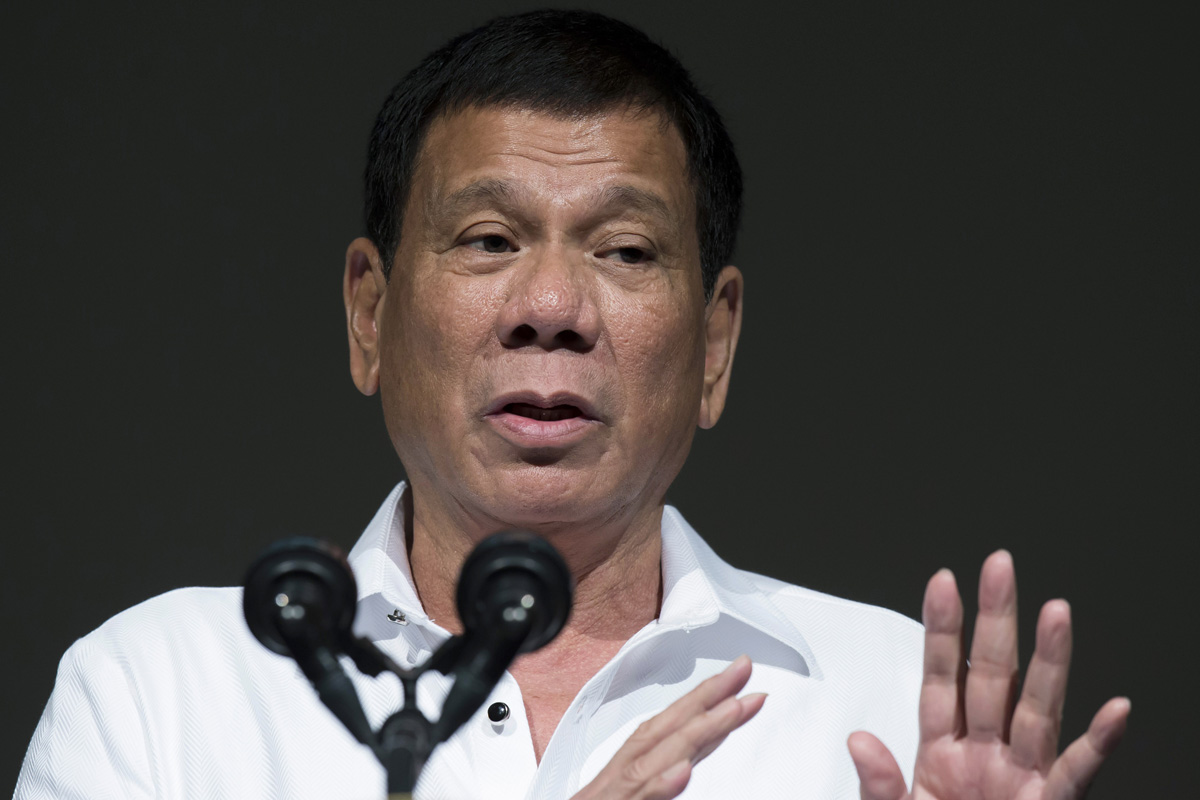
MANILA – President Rodrigo Duterte ordered the cancellation on Monday of Philippine’s purchase of police rifles from the United States, after US senatorial aides said last month that Washington was halting the sale due to concerns about human rights violations.

“We will not insist on buying expensive arms from the United States. We can always get them somewhere else. I am ordering the police to cancel it. We don’t need them,” Duterte said in a televised speech at a event attended by Muslim rebel leaders.


“We will just have to look for another source that is cheaper and maybe as durable and as good as those made in the place we are ordering them,” Duterte said.

In Washington, US State Department spokesman Mark Toner told reporters it was his understanding “we (the United States) have not received any notification … on the cancellation.”

The relationship between the United States and the Philippines, a long-time ally, has been complicated lately by Duterte’s angry reaction to criticism from Washington of his violent battle to rid the country of illegal drugs.

More than 2,300 people have been killed in police operations or by suspected vigilantes as part of government’s anti-narcotics efforts, which was the linchpin of his election campaign.

Last month, Senate aides told Reuters that the US State Department halted the planned sale of some 26,000 assault rifles to the Philippines’ national police after Senator Ben Cardin said he would oppose it because of concerns about human rights violations.

Duterte has said in the past that Russia and China had shown willingness to sell arms to the Philippines.

Image: 
Category: 
Publication Date: 
Tuesday, November 8, 2016 – 11:27
Send to mobile app: 
Source: 


Story Type: 
Others

Source link

Chinese woman becomes hit-and-run victim twice in two minutes

0

A woman in southwestern China was run over twice by two different vehicles and was left lying semi-conscious in the middle of a busy road for two minutes as drivers and passers-by turned a blind eye on her plight.

The woman, surnamed Zhang, was first hit by a motorcyclist as she was trying to cross a road amid heavy traffic in Leshan, Sichuan province, around 7pm on Wednesday (Nov 2), local news portal Leshan.cn reported.

Both Zhang and the motorcyclist fell to the ground from the impact, surveillance footage from the local authorities showed.

After about 10 seconds, the driver picked himself up slowly. He then checked on Zhang, who was still on the ground and appeared to be in pain.

After doing so, the driver quickly restarted his motorbike and drove away, the footage showed.

Zhang was left lying on the road as dozens of vehicles whizzed past her. Pedestrians also walked by, seemingly unconcerned.

About a minute after the incident, a second motorbike ran over Zhang without stopping.

A white van behind the motorbike stopped in front of Zhang.

But instead of getting out of the vehicle to check on the woman lying on the road, its driver simply reversed slightly to create space to drive around her, and quickly went on its way, the footage showed.

A passer-by came to Zhang’s aid only about two minutes after she was first hit.

The report did not say whether Zhang was taken to hospital or the extent of her injuries, but Zhang’s family was quoted as saying on Thursday that her condition was not critical.

The two motorcyclists who ran over her have yet to be found, according to the report.

Image: 
Category: 
Publication Date: 
Tuesday, November 8, 2016 – 11:31
Keywords: 
Send to mobile app: 
Source: 


Rotator Image: 
Story Type: 
Others

Source link

4,500 cartons of duty-unpaid cigarettes found hidden in prime mover

0

SINGAPORE: A total of 4,500 cartons of duty-unpaid cigarettes were discovered in the modified compartment of a prime mover at Jurong Scanning Station, the Immigration & Checkpoints Authority (ICA) said in a news release on Tuesday (Nov 8). 

The prime mover containing duty-unpaid cigarettes. (Photo: ICA)

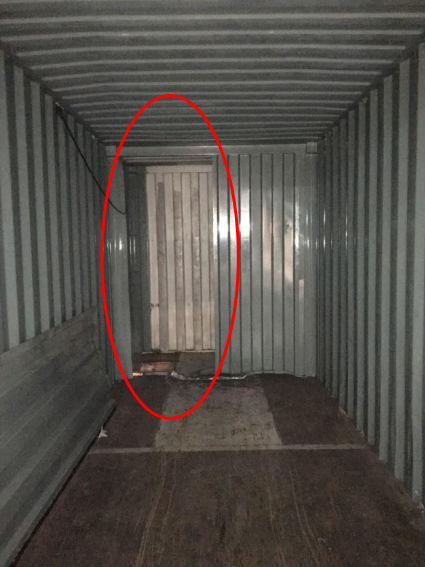
According to ICA, an officer noticed anomalies in the scanned images of the 40-footer container on Nov 4. The driver of the Singapore-registered prime mover, a male Chinese national, had claimed that the container was empty. The ICA officer then directed the vehicle for further inspection. 

Modified compartment in the container. (Photo: ICA)

The 4,500 cartons of duty-unpaid cigarettes were found hidden in a modified compartment of the container. The 31-year-old driver, as well as the vehicle, were handed over to Singapore Customs for further investigations, ICA said. 

The potential duty and Goods and Services Tax of the duty-unpaid cigarettes amounted to about S$429,900 and S$40,070, respectively, ICA added. 

Source link

Singapore among countries stealing US jobs: Trump

0

WASHINGTON, DC: Republican presidential candidate Donald Trump has said that countries in Asia such as China, India and Singapore are taking away jobs from Americans.

Speaking at a campaign rally in Florida on Sunday (Nov 6), Trump told his supporters that they are “living through the greatest jobs theft in the history of the world”, saying that the United States has lost about 70,000 factories since China joined the World Trade Organisation.

“There’s never been a country that’s lost jobs like we do, so stupidly, so easy to solve,” he said.

“Goodrich Lighting Systems laid off 255 workers and moved their jobs to India. Baxter Health Care laid off 199 workers and moved their jobs to Singapore. It’s getting worse and worse and worse.”

He singled out Florida, a key battleground state at every election due to its 29 Electoral College votes on offer, as one of the states keenly affected by the jobs’ flight.

“Florida has lost one in four of its manufacturing jobs since the North American Free Trade Agreement (NAFTA), a deal signed by Bill Clinton and supported by Hillary,” he said.

Trump also spoke about his plans to ensure companies avoid retrenching workers in Florida, saying they would be taxed heavily if they returned to the US.

“If a company wants to fire their workers, leave Florida, move to another country, and then shift their product back into the United States, we will make them pay a tax of 35 per cent,” he said.

“They’re never going to leave this country. They’re never leaving. They’re never going to leave this country. A Trump administration will renegotiate NAFTA. If we don’t get the deal we want, we will terminate NAFTA and get a much better deal for our workers.”

Trump then took another dig at Democratic rival Hillary Clinton, when he said he would nix the Trans-Pacific Partnership (TPP), which he claims would kill off American jobs. Clinton has called the TPP the “gold standard” of trade deals.

“Yeah, it’s the gold standard for other countries, not for us,” said Trump. “The gold standard for the countries that want to be part of that deal.”

Trump added: “As part of our plan to bring back jobs, we’re going to lower taxes on American business from 35 per cent to 15 per cent. We’re the highest taxed nation in the world, one of the main reasons companies are leaving. We will massively cut taxes for the middle class, also.”

Source link

Buy two tubs of Ben & Jerry’s & get $5.90 off plus free 6x Magnum Mini Infinity at Fairprice Online from 8 – 29 Nov 2016

0

FAIRPRICE Online: Get two Ben & Jerry’s pints (u.p. $13.90/ea) & 6x Magnum Mini Infinity (u.p. $10.90) for $21.90 till 29 Nov!

Free delivery with min $60 spend today (8 Nov)

Buy two tubs of Ben & Jerry’s & get $5.90 off plus free 6x Magnum Mini Infinity at Fairprice Online from 8 – 29 Nov 2016

For a limited time, buy two tubs of selected Ben & Jerry’s ice cream pints online at Fairprice Online and get $5.90 off plus a box of Magnum Mini Infinity ice cream 6 x 60ml (worth $10.90) free till 29 Nov 2016

Source