YANGON – A large metal cylinder thought to be from a Chinese satellite or aircraft fell from the sky and slammed into a jade mining area in northern Myanmar, state media reported on Friday.
The large barrel-shaped object, 4.5 metres (15 foot) long and just over a metre in diameter, crashed onto property owned by a jade mining company in Kachin State’s Hpakant township on Thursday, reported the Global New Light of Myanmar.
Another smaller piece of metal bearing Chinese writing tore through the roof of a house in a nearby village at the same time, the paper said. No one was injured.
“The metal objects are assumed to be part of a satellite or the engine parts of a plane or missile,” the Global New Light said, adding that authorities were still trying to confirm their origin.
Pictures circulated on social media showed what appeared to be pieces of technological equipment and wiring attached to the inside of the vast cylinder.
Local residents reported hearing a loud bang before the hunk of metal landed and then proceeded to bounce some 50 metres across the mining area before coming to rest in the mud.
The bizarre events came the same day Chinese state media reported Beijing had recently launched a satellite into space.
“It could not be confirmed whether the launch of the satellite and the metal objects found in Kachin state were related,” the Global New Light said.
Hpakant is the centre of Myanmar’s murky multi-billion dollar jade industry, which feeds a voracious demand for the stone in neighbouring China.
A string of deadly landslides in the mine-pocketed area have killed scores over the past year.
M1 has just announced two new Upsized Data options. Customers who want to boost their data bundles can opt for the M1 Upsized Data Plus, to add an additional 4GB to 24GB to their smartphone and 12-month mySIM plan data bundles.
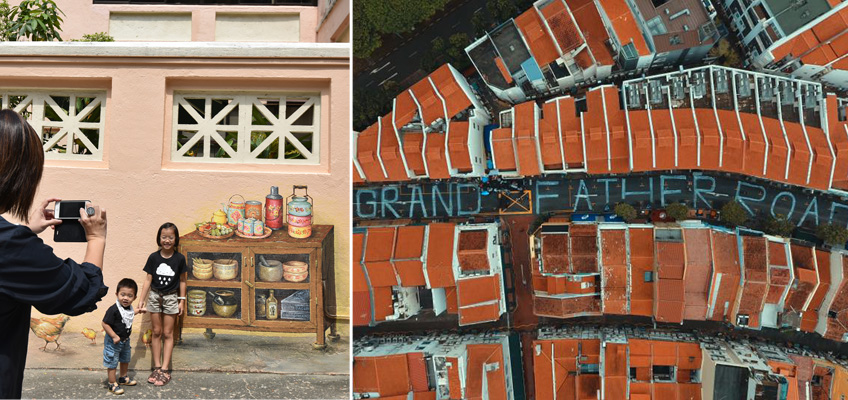
Four years after getting on the wrong side of the law for painting the words “My Grandfather Road” at roads around Robinson and Maxwell in 2012, artist Samantha Lo has done it again – albeit legally this time.
A 170m-long stretch of Circular Road was stencilled with the exact words using chalk paint by Lo and her team of nine on Nov 5, as part of the Singapore River Festival.
In a Facebook post on Thurs (Nov 10), the 30-year-old artist described her latest artwork as “one of the most challenging pieces to date”.
More commonly known as “Sticker Lady”, Lo also grabbed headlines in 2012 when she pasted stickers with phrases such as “Press Until Shiok” and “Anyhow Paste Kena Fine” on the buttons of traffic lights at pedestrian crossings, leading to her arrest for vandalism.
She was later charged with mischief and had to serve 240 hours of community service.
Her grandfather road installation may be gone for now, but here are other 10 other artworks to check out around Singapore with your family (and grandfather):
Self-taught muralist Yip Yew Chong, 47, is enjoying a flourishing second career.
He specialises in nostalgic heritage scenes. Since painting his first mural in Everton Road in August last year – depicting an old-school barbershop and a maid handwashing a kebaya – he has worked on 19 murals, including recent commissions by Plaza Singapura mall for its heritage corner and Hotel NuVe, a budget hotel in Jalan Pinang.
His other works are scattered across the island, in places such as Waterloo Street and Tiong Bahru.
In a way, the low-key artist is one of Singapore’s most prominent muralists, but art is only a sideline for this trained accountant, who works in finance. He spends time on his commissions on weekends.
Though he wishes not to be pigeonholed as a heritage muralist, he recognises that the popularity of his work stems from Singaporeans’ love of nostalgia. “I get a lot of older Singaporeans telling me they can recognise the scenes,” he says.
Artists like him are helping to fuel the growth of Singapore’s public mural scene. Look around heritage and hipster areas such as Arab Street and Tiong Bahru or random facades of shops and housing estates and one will see more artworks adorning the walls.
Although they may be painted in different styles, their subjects often refer to the neighbourhood’s history, culture and identity.
This comforting sense of local heritage has proven a draw for many business owners, which have commissioned such mural art to add colour to their premises. Even government agencies are recognising their appeal.
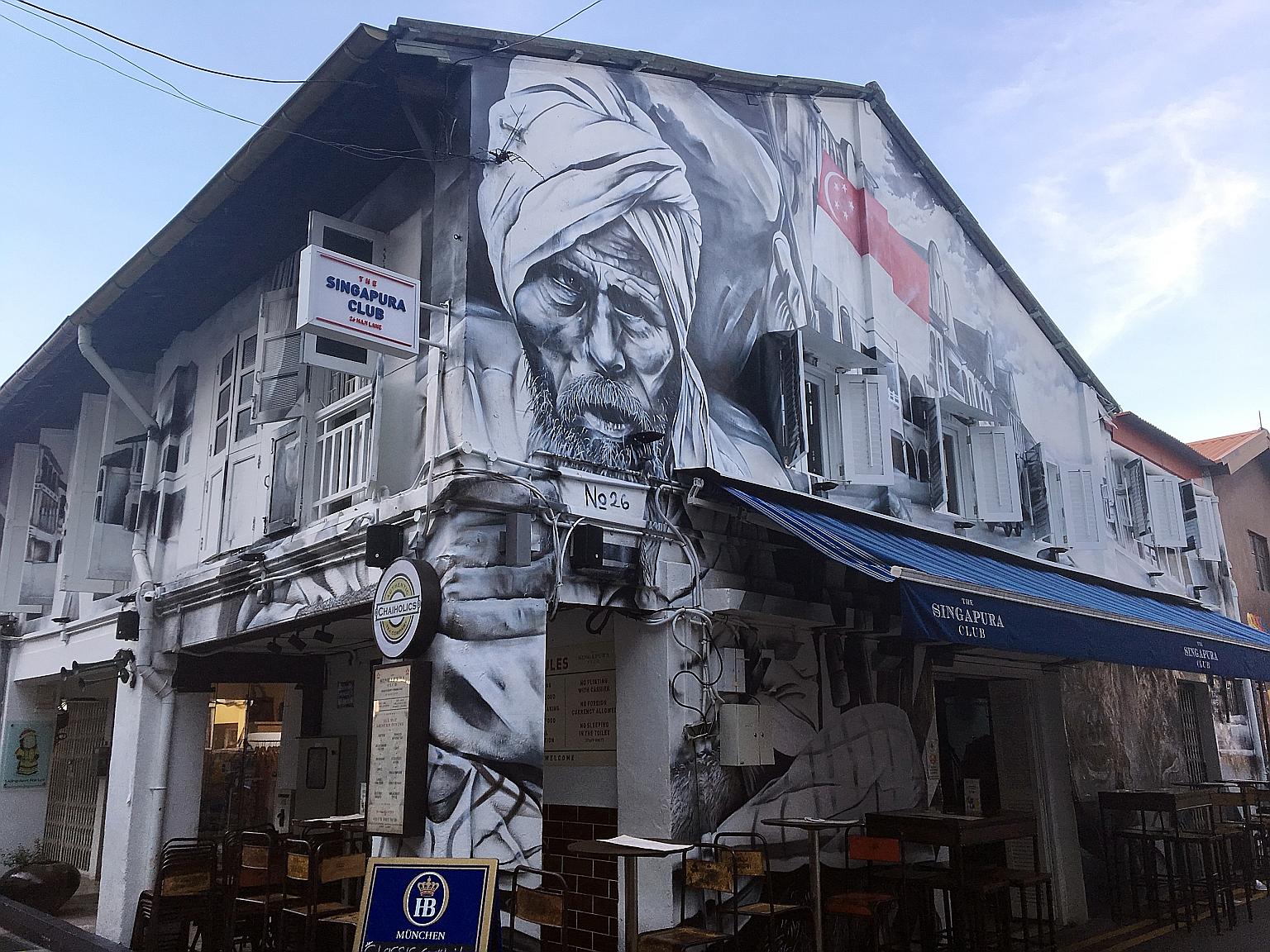
Six-month-old restaurant The Singapura Club in Haji Lane commissioned a mural for its facade, depicting a labourer wearing a turban, a Samsui woman and a Malay man. The artwork, done by graffiti artist Ceno2 using spraypaint, refers to the heritage of Arab Street and the multi-ethnic identity of the restaurant, which serves Asian and North Indian food.
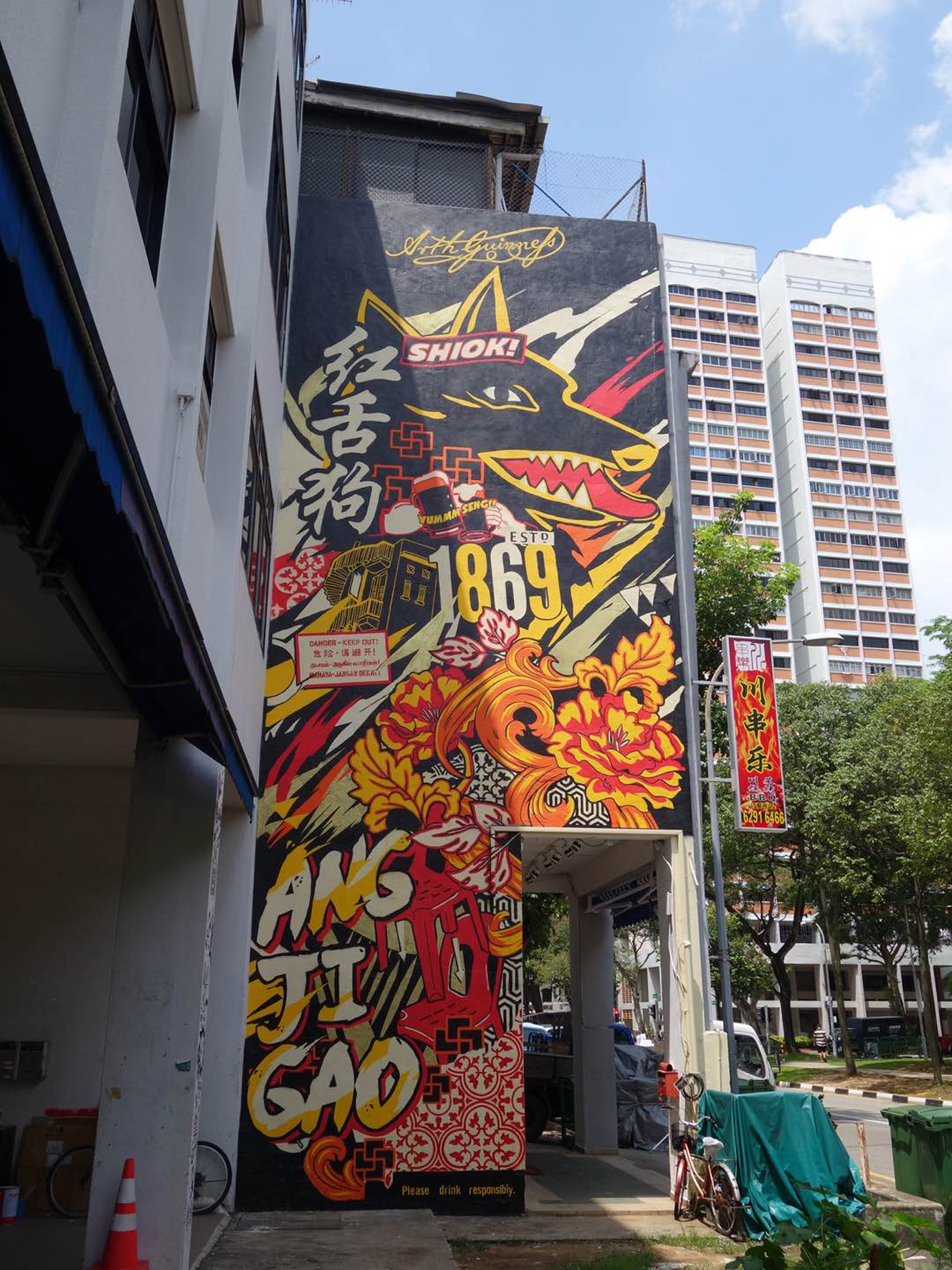
Guinness Singapore recently worked with home-grown artist Ben Qwek to create murals in Jalan Besar to coincide with the launch of a limited-edition of its Foreign Extra Stout.
The three murals highlight local cultural icons as well as Ang Ji Gao, Hokkien for “red-tongued dog” – a reference to the famous dog on the brand’s bottles and cans.
Although heritage themes are most common, murals here come in different artistic styles.
At Skyville@Dawson, a Housing Board (HDB) estate in Queenstown, architecture firm Woha worked with local comic artist Troy Chin to create murals cast onto more than 50 panels of concrete.
The panels, which depict scenes from Queenstown past and present, took about six months to fabricate at a construction site in Sungei Kadut. While the work bears Chin’s signature stark linework, he had to eschew fine lines which would have crumbled easily.
The 39-year-old says: “The HDB was pretty ballsy. It was a gamble for it to work with me. I lucked out.”
Public artworks are sometimes executed in a graffiti or street-art style.
While doing graffiti on public and private property without permission is illegal and considered by the authorities as vandalism, a “sanitised” form of it has become popular.
To encourage young artists to express themselves, there are some walls here on which graffiti is legal, such as those at Somerset Skate Park and Aliwal Arts Centre.
At the arts centre, graffiti artists can hone their skills on a wall at the back of the building. Full-time graffiti artist Slac Satu, whose real name is Rozaimie Sahbi, 36, says the 12m- wide, 4.5m-tall wall is one of the few places where he can practise creating large-scale works.
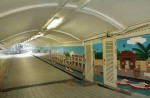
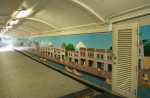
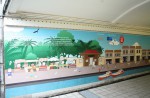
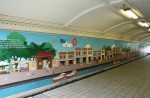
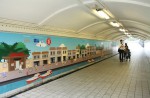
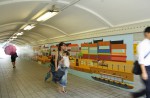
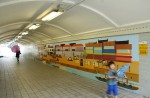
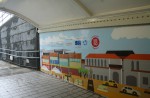
New murals depicting Singapore’s past at Elgin Bridge underpass
Click on thumbnail to view photos. Source:
Handout
The wall has a makeover every few months, undertaken by a roster of artists managed by street-art collective RSCLS, a resident of the building.
Even as permanent murals are prettifying neighbourhoods, they face certain restrictions when it comes to conserved buildings or buildings in conservation areas.
The Urban Redevelopment Authority says murals done on conserved shophouses are generally allowed on side walls, “where they do not affect the main facades of the buildings”. The art also needs to “respect the character and context of the place and public norms and sensitivities”.
Acknowledging that street art “adds a welcome spontaneity and energy to our arts scene”, the National Arts Council’s deputy director of arts and youth, Ms Aruna Johnson, says the council has been working with public and private partners “to open new spaces for street art practice”. These places include *Scape in Orchard Road and Goodman Arts Centre.
Ms Venus Teoh, head of marketing at Asia Pacific Breweries Singapore, which distributes Guinness here, says: “Street-art murals are sometimes seen as vandalism in Singapore. However, if done appropriately, it is a great venue for selfexpression.”
The Guinness murals were done in Jalan Besar, an area chosen for its “distinct heritage”.
Ms Teoh says: “We also hope this inspires consumers to look at the area in a different light and with new-found appreciation for our heritage neighbourhoods.”
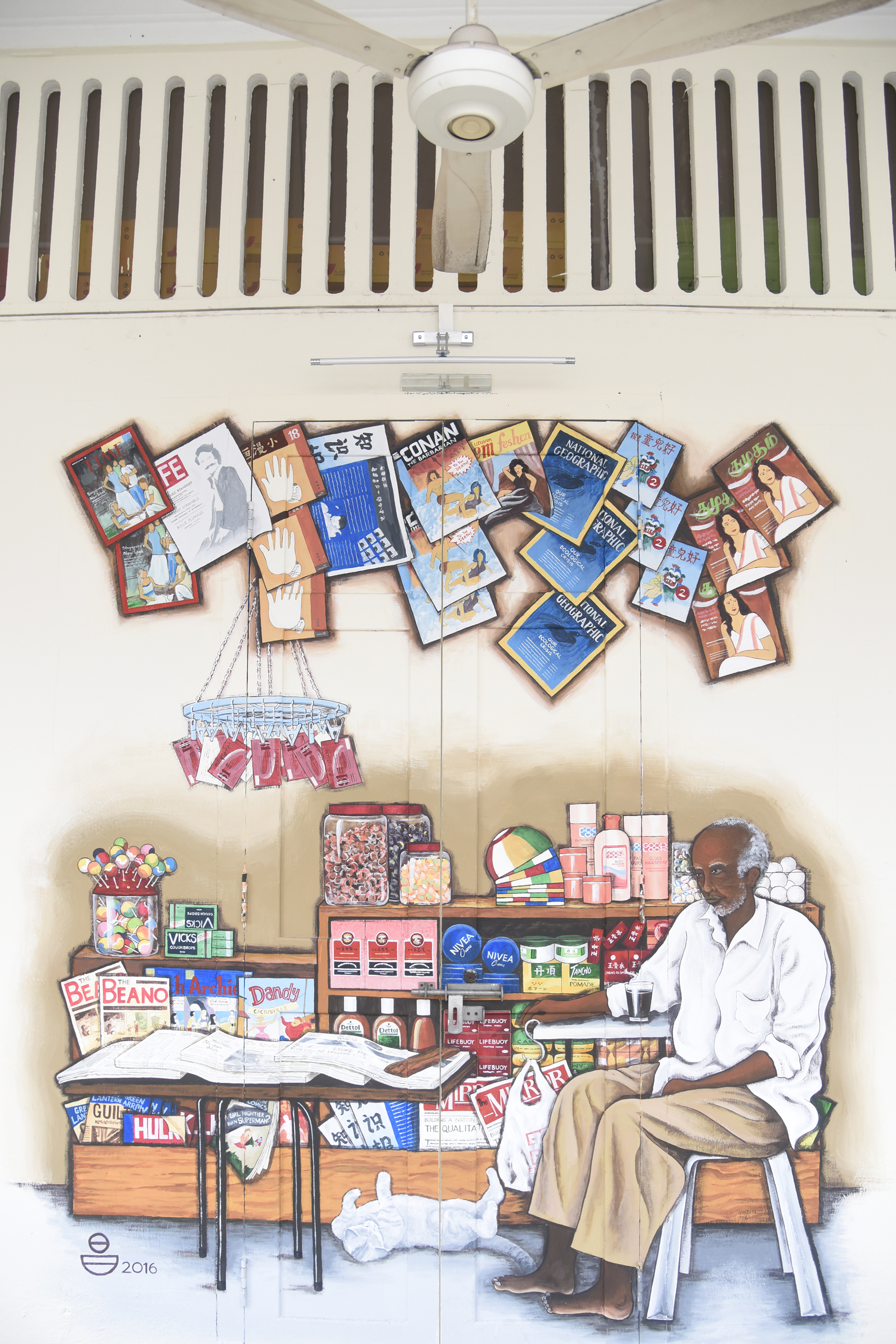
This mural is a nostalgic throwback to the sundry stalls of the past. ST PHOTO: DON CHI
1. Art with heritage theme
Where: 222+51 at 51 Waterloo Street/222 Queen Street
MRT: Bras Basah
On the ground floor of this arts centre are six murals depicting historical scenes of the area.
For example, one artwork features the lobby of the old Odeon Cinema in North Bridge Road, complete with an Indian kacang putih seller and posters of movies such as Malay screen legend P. Ramlee’s Patah Hati (1952) and the first Star Wars (1977).
Or meet Fatimah, a seamstress who works in an army supplies shop – a mural recalling the many such shops that were located in the Beach Road Army Market.
The murals, which incorporate the building’s existing wooden door panels into their designs, were done by Singapore artists Yip Yew Chong and Yuen Kum Cheong.
The works were commissioned by the owners of 222+51 this year to celebrate the 80th anniversary of the building, which used to be the former Catholic High School.
Guinness Singapore’s Ang Ji Gao mural in Horne Road, designed by artist Ben Qwek. PHOTO: GUINNESS SINGAPORE
2. Ang Ji Gao on the walls
Where: 254 Jalan Besar (along Plumer Road), 64 Horne Road and Hamilton Road
MRT: Lavender
To launch a limited-edition version of Guinness Foreign Extra Stout in April, Guinness Singapore commissioned home-grown artist Ben Qwek to create three murals in Jalan Besar.
Completed in May, the artworks are loud and brash, incorporating the iconic red-tongued dog on Guinness’ label, as well as local subjects such as the red plastic chairs in kopitiams and kueh tutu.
The mural also has the words “Ang Ji Gao”, meaning “red-tongued dog” in Hokkien, a common term local Chinese men use to refer to the beverage.
Qwek also designed the special-edition bottles and cans along a similar theme.
Ms Venus Teoh, head of marketing at Asia Pacific Breweries Singapore, which distributes Guinness in Singapore, says: “Ben’s bold bright designs on the pack worked really well in incorporating the local elements that we hold dear, and thus we commissioned him to paint these street art murals as his expression of the Singapore spirit.”
3. Same artist behind iconic murals in Penang
Where: Junction of Joo Chiat Terrace and Everitt Road
MRT: Eunos
One of the main attractions for visitors to George Town, Penang, is the lively street art in the heritage city. In fact, a wall mural of a pair of children screaming in glee while riding a bicycle – with a real one propped against the wall – has become an iconic tourism image of the Malaysian city.
That, and many other playful murals in George Town that interact with real-life objects, were done by Lithuanian artist Ernest Zacharevic.
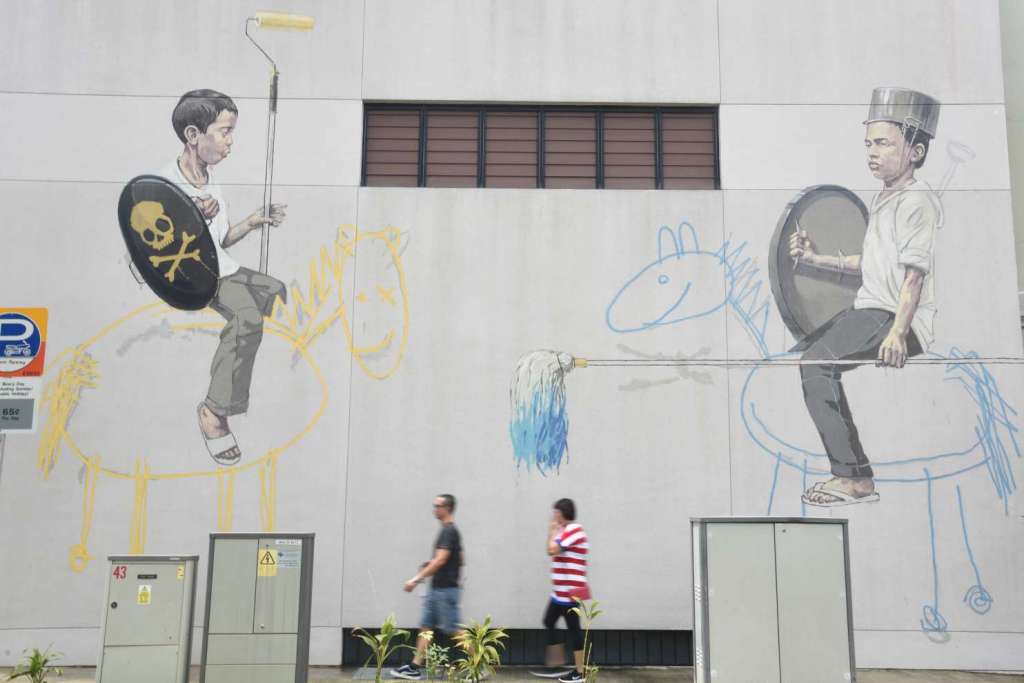
He has left his mark in Singapore too. A 2013 mural, painted on the side of a private building in Everitt Road, features two children play-fighting with a paint roller and a mop dipped in paint.
His other works here, featuring children sitting in trolleys and peeking out from windows, can be found on the facade of events and marketing company amc asia! singapore’s building in Jalan Klapa and Jalan Pisang. They were completed in 2013.
This mural on the exterior of The Singapura Club in Haji Lane is 15m-high. PHOTOS: NABILAH SAID, DON CHI, ERNEST GOH, GIN TAY AND TIFFANY GOH FOR THE STRAITS TIMES
4. Faces from the past
Where: 26 Haji Lane
MRT: Bugis
It is hard to miss the 15m-high man in a turban drinking chai in Haji Lane. He is spraypainted on the facade of The Singapura Club, a six-month-old restaurant that serves Asian and North Indian cuisine.
The work is by graffiti artist Ceno2, who is known for his photo-realistic human portraits.
He spent about three weeks to complete this artwork, working from 11pm to 4am daily.
Although the man is the most eye-catching character on the wall, the mural features other subjects, such as close-up faces of a Samsui woman as well as a Malay man.
Mr Jerry Singh, who owns The Singapura Club and commissioned the piece, says the elderly and historic characters reflect the heritage of the neighbourhood.
Passers-by love the work. Mr Singh estimates that between 100 and 200 photos are taken of it every day. He also gets many queries from tourists and locals about the mural.
5. Old days of Chinatown
Where: Block 4 Sago Lane, Block 5 Banda Street and Block 333 Kreta Ayer Road
MRT: Chinatown
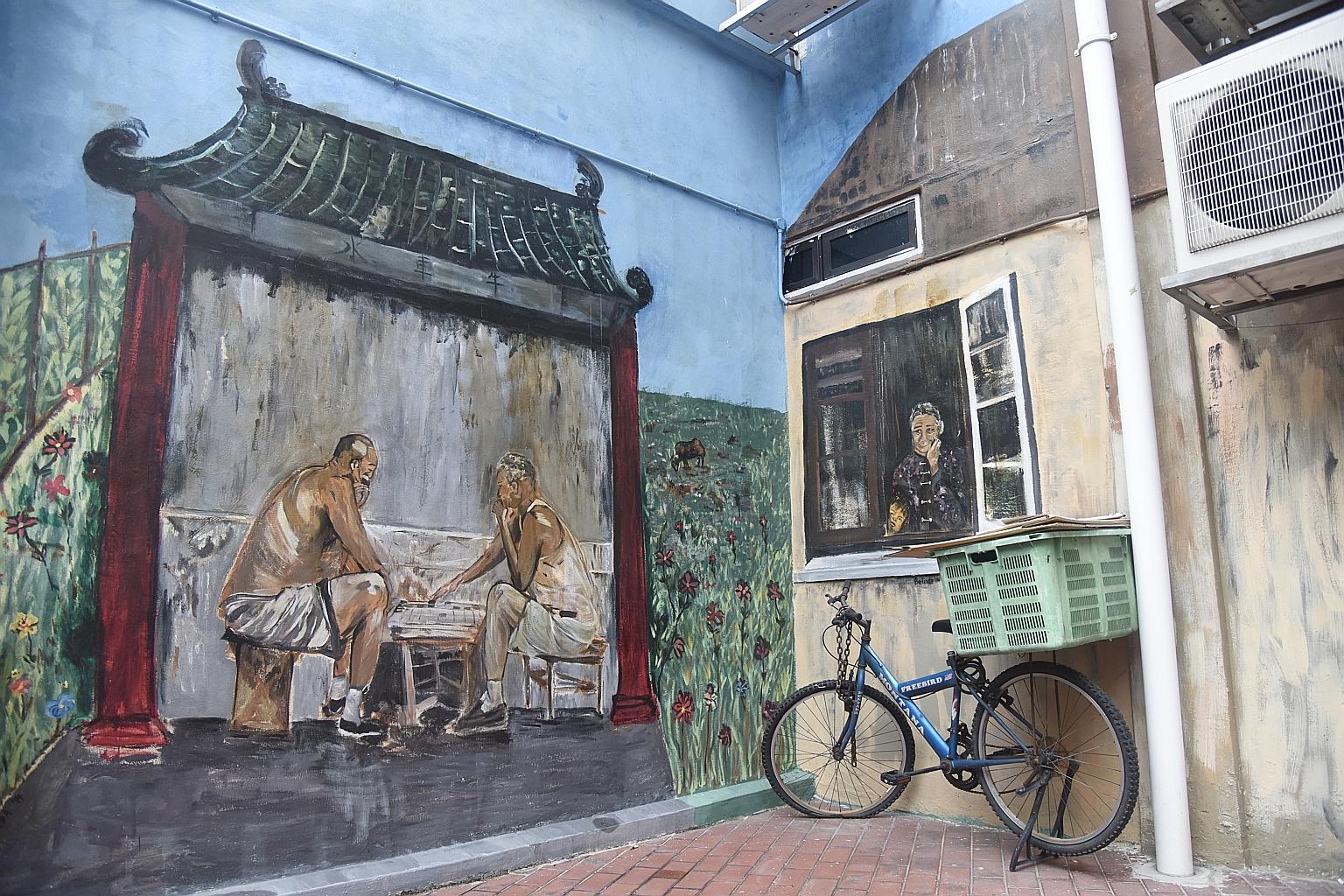
Created by 500 volunteers from accounting firm Pricewaterhouse- Coopers together with 100 Kreta Ayer residents, this set of 13 murals draw on Chinatown’s heritage and modern-day scenes.
Look out for details such as two men playing a game of chess (above) and an erhu player sitting on the steps of a shophouse.
Spread out around the Banda Street area, the murals are part of Colouring Banda Street 2015, a charity initiative by the accounting firm.
Its employees also donated daily necessities to elderly residents living in the one- and two-room flats in the area.
The murals were handpainted over six months, with the largest measuring 18.5m by 3.7m.
6. History in an underpass
Where: Elgin Bridge underpass, North Bridge Road
MRT: Clarke Quay
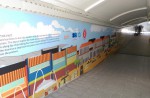
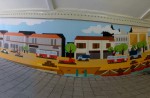
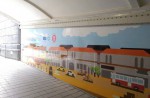
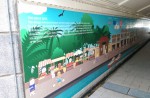
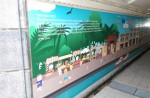
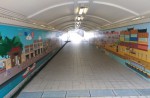
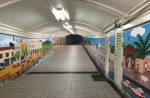
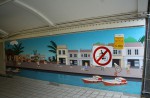
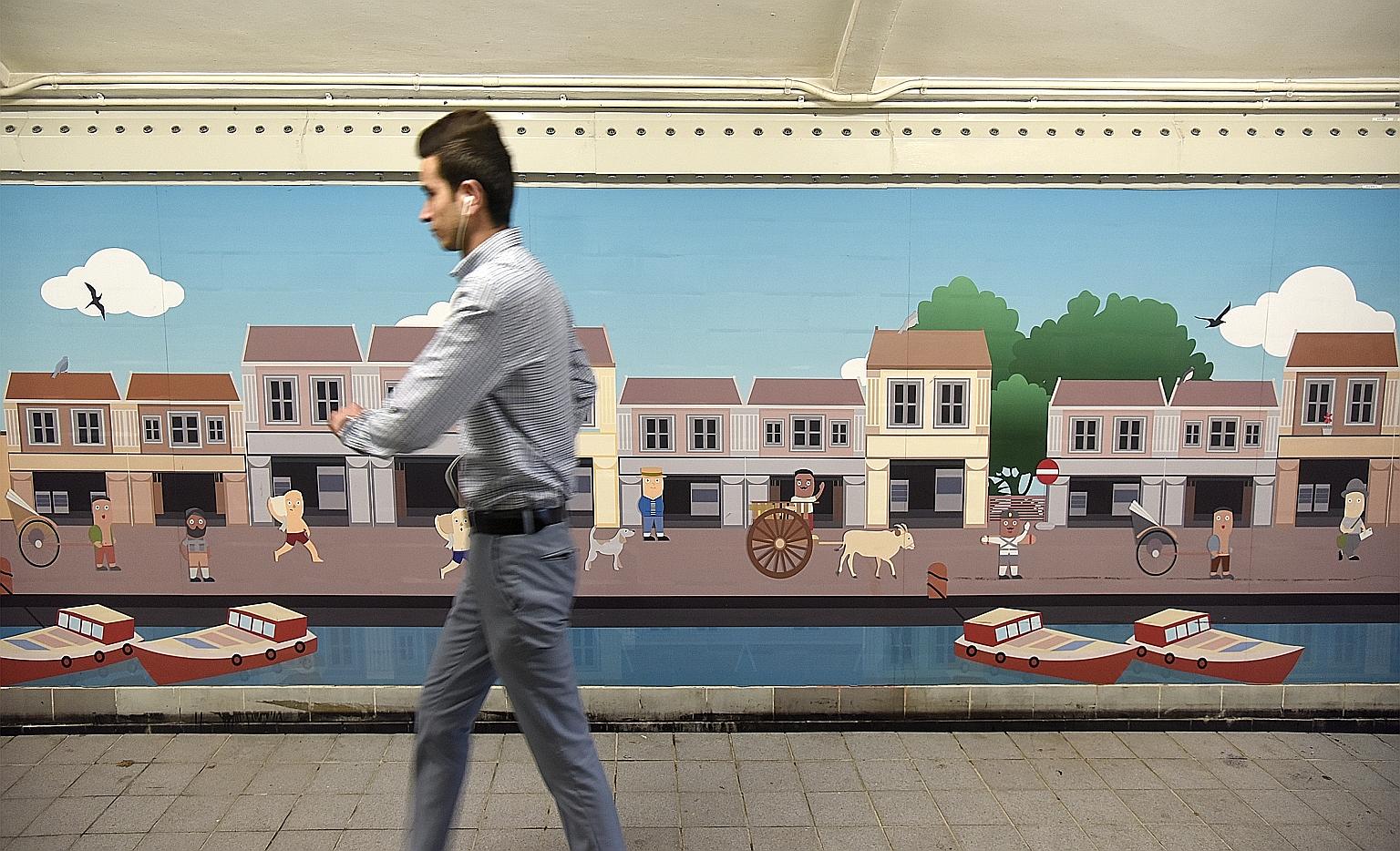
Enlivening the Elgin Bridge underpass are two murals celebrating the history of the Singapore River – in particular, the area around Boat Quay.
Unveiled last year as part of the SG50 celebrations, the works were created by students of Raffles Design Institute and feature a graphic, blocky style. Characters are depicted in flat, 2D shapes that look almost like computer icons.
The 27m-long, 2.19m-high murals stretch across the length of the underpass.
The Back To The Past mural features the trade activities and transportation that took place against the backdrop of Boat Quay shophouses, such as bullock carts and bumboats carrying goods.
The Early Days mural (above) focuses on the people working along the Singapore River, such as rickshaw pullers, merchants and labourers.
7. Ever-changing graffiti art
Where: Aliwal Arts Centre, 28 Aliwal Street
MRT: Bugis/Lavender/Nicoll Highway
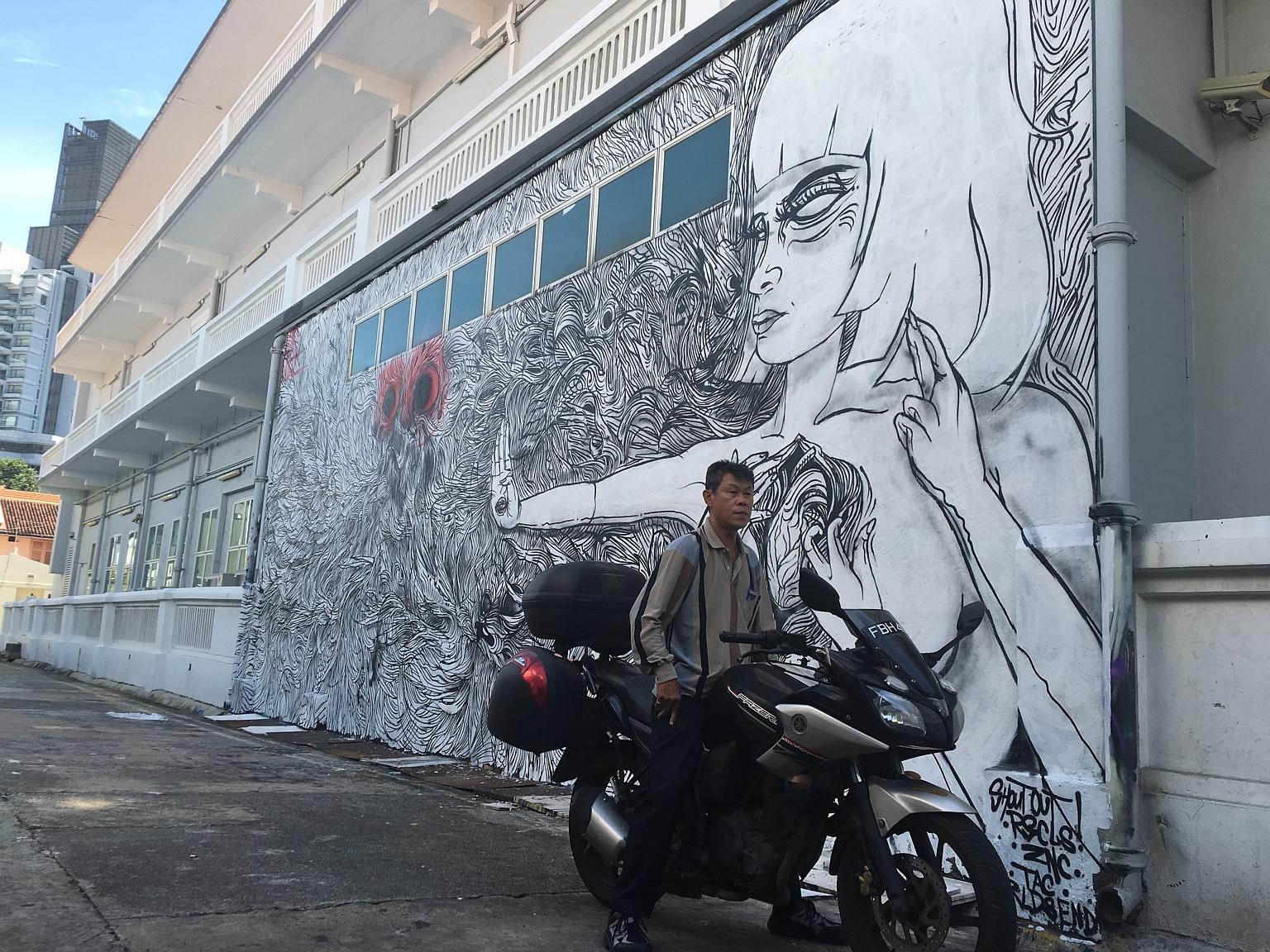
At the back of Aliwal Arts Centre is a wall of artwork that changes every one to six months.
Right now, there is a black-and- white mural (above) featuring a woman peeling open her chest, by home-grown graffiti artist Kilas.
Some time later, it will be replaced by another work by another street artist or group of artists.
The wall is “managed” by street- art collective RSCLS, which has a studio in the arts centre. Other groups which have taken over the wall so far include duo Ink&Clog and graffiti collectives Zinc Nite Crew and Three Flare Krew.
Ms Natalie Tan, Aliwal Arts Centre’s senior manager of place- making, says tourists and visitors often come specifically to see the works.
How often the graffiti art is renewed is an “organic” process and depends on “artists’ schedules and inspiration”, she adds.
8. Concrete reliefs at Skyville@Dawson
Where: Skyville@Dawson, 86 Dawson Road
MRT: Queenstown
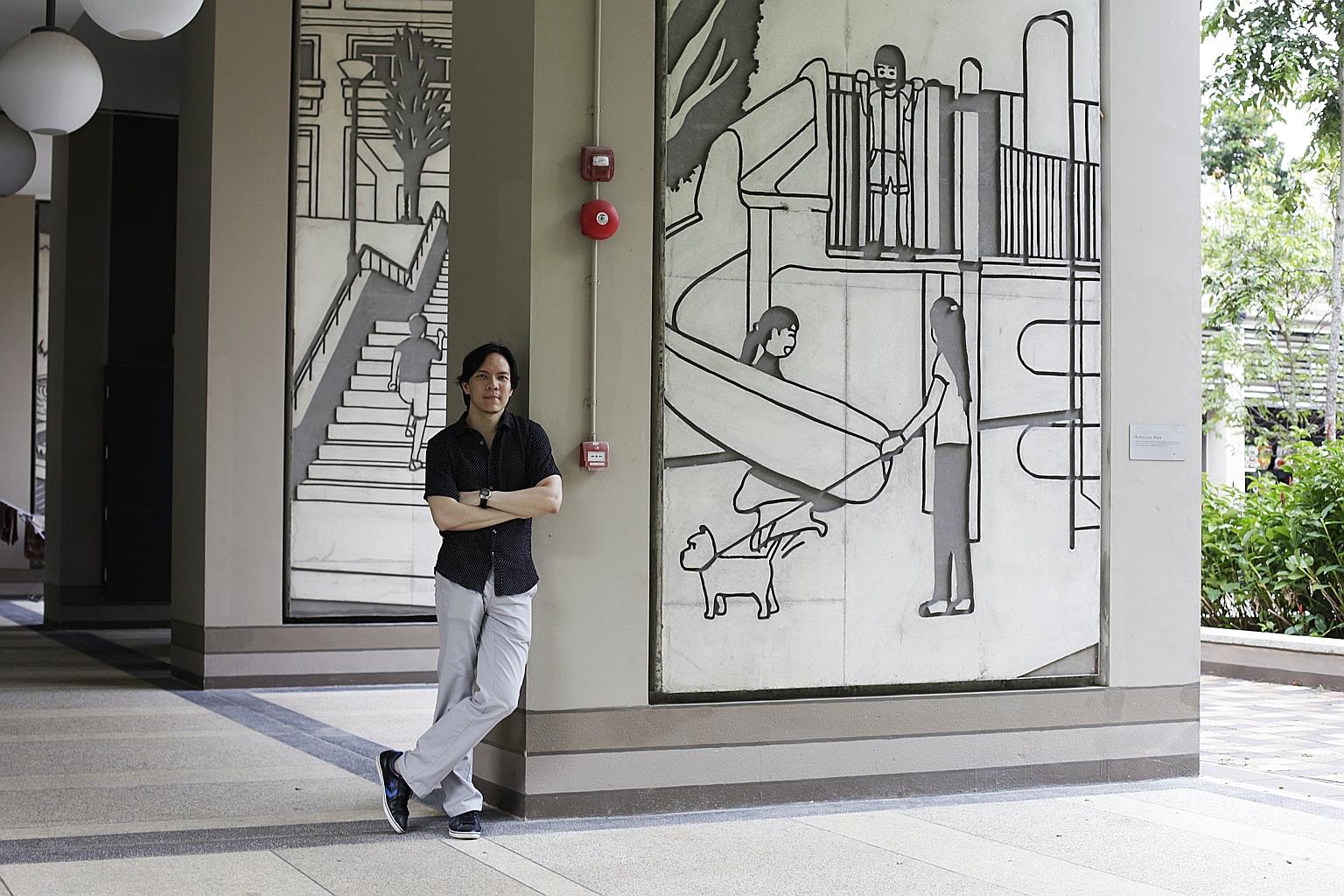
Sleek, graphic and monochrome, these murals at Skyville@Dawson by comic artist Troy Chin (above) differ from the usual street-style art that adorn building walls.
These concrete reliefs, which have the simplicity of woodcut prints, are themed around life in the Queenstown area from its kampung times to the present day.
Ms Pearl Chee of architecture firm Woha, which designed the housing estate, says some panels “capture early life in the Dawson and Queenstown area, such as kampungs and fishing in the canal, and places that people remember in their stories and memories”.
There are more than 50 concrete panels in the three-block estate, including about 30 lining the walls of a common walkway.
Chin, 39, is known for his series of graphic novels titled Resident Tourist, featuring a semi- autobiographical character who feels out of place in Singapore.
As this is his first mural commission, he learnt a lot about how a public artwork can interact with its surroundings.
“I didn’t expect the shrubs to grow so high and partially block one of the panels. But I don’t mind, it’s supposed to be connected to the environment,” he says.
9. Watch out for goats in Tiong Bahru
Where: In and around Tiong Bahru market, 30 Seng Poh Road
MRT: Tiong Bahru/Outram
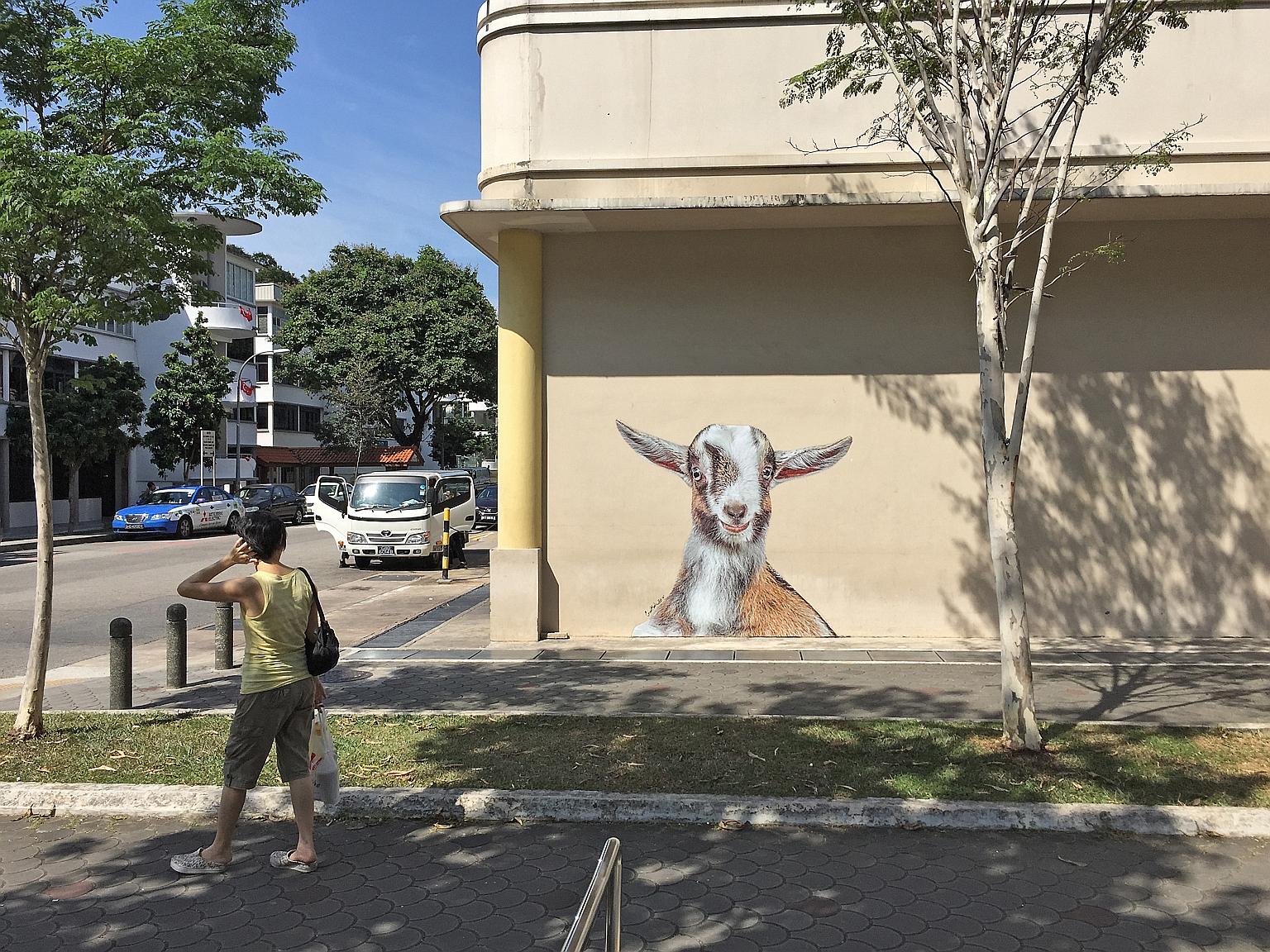
In 2014, artist Ernest Goh created three murals at the Tiong Bahru Market for the Chinese Year of the Goat.
These billy goat paintings continue his animal-inspired series, which he started in the neighbourhood in 2013.
For many hipsters, the three chickens and two fish painted around the pre-war apartments and shophouses provided many photo opportunities over the years. But of these artworks, only one goldfish near the Tiong Bahru Post Office survives.
The images are printed on paper and then applied on the wall using a wheat-pasting method, where wheat flour and water are used as an adhesive. This, says Goh, 37, is “a cheap and fast way to put up murals”, compared with painting or spray painting.
Asked about his subject matter, he said he wanted to depict animals that used to be found frequently in the kampungs in Singapore, such as the wandering chickens and fish in the longkangs.
10. Building’s history on facade
Where: Goh Loo Club, 72 Club Street
MRT: Telok Ayer
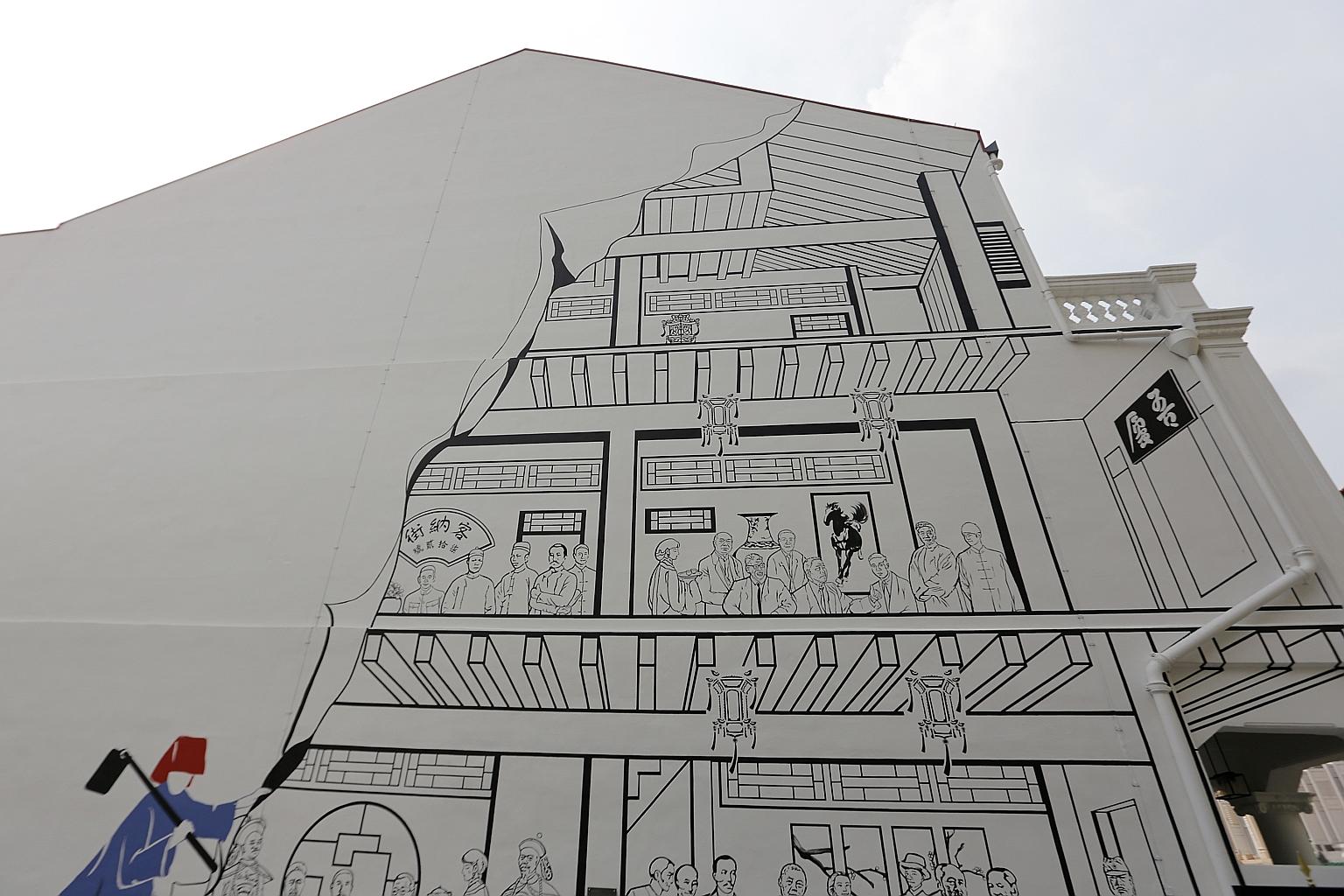
In this artwork on the side of the 111-year-old Goh Loo Club, a Samsui woman “peels away” the wall to reveal a historic scene in the three-storey shophouse.
The mural works like a cross-section of a doll house. Looking in, one can see genteel, old-fashioned rooms decorated with lanterns, paintings and elaborate Chinese window screens.
The occupants are historical too, comprising men in long Chinese tunics and Western suits.
Painted by Singapore artists Benny Ong, Zhao Jian Wen and Didier Ng, this mural recreates what Goh Loo Club was like in the early days when it was a place where the local Chinese community and visiting dignitaries gathered. The mural’s cast of characters include businessmen, Chinese revolutionary figure Sun Yat Sen and a Japanese soldier guarding a door.
The building underwent a major renovation in the interiors, which saw it clinching an Architectural Heritage Award this year.
This article was first published on Nov 11, 2016. Get a copy of The Straits Times or go to straitstimes.com for more stories.
Graffiti artist creates mural spanning 50 buildings in Garbage City
The gang of bikers did not care that there were an elderly woman and a child in the car.
They were out to terrorise the driver and his three passengers in the Singapore-registered Mercedes Benz into handing over their money and valuables.
The Singaporean family had to endure a 45-minute ordeal after they were waylaid on the congested Malaysian North-South Highway following what seemed like a staged accident when a motorcyclist hit their car.
The driver, who wanted to be known only as Mr Jay, 31, told The New Paper on Tuesday that the bikers repeatedly hit his car with their helmets and other objects, damaging the headlights and side mirrors.
They even hit the front windscreen.
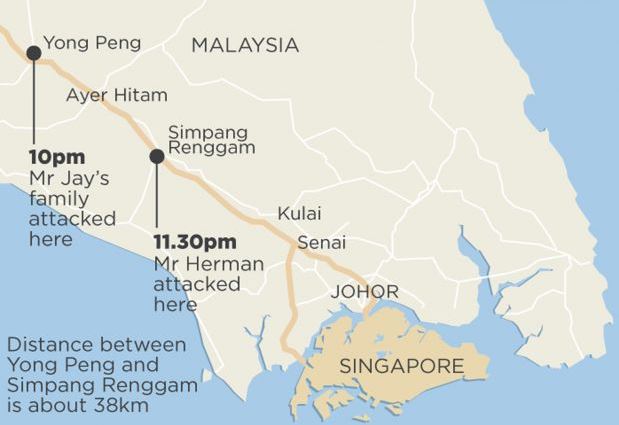
The incident took place between Yong Peng and Machap in Johor, about 45 minute’s drive from Singapore, around 10pm on Oct 30.
Last Friday, TNP reported that Singaporean businessman Herman Zaidin, 31, suffered a similar ordeal when he was robbed by a gang of bikers at 11.30pm on Oct 30 after a motorcyclist hit his Mercedes-Benz from behind.
While it is not known if the same gang was behind both heists, it’s highly probable given the same method used in both incidents, which occurred about 90 minutes and 38km apart.
Mr Jay, an engineer, said he has reported the robbery to the Malaysian and Singapore police, with both confirming the reports.
He said his 20-year-old sister was sitting in the front passenger seat. Their aunt, who is in her 60s, was in the back with her 12-year-old adopted son.
They were returning to Singapore after a family trip to Malacca when a motorcyclist suddenly rode next to their car and kicked the side mirror on the driver’s side.
Mr Jay said he stopped the car when the rider fell.
“I was shocked,” he said.
“Suddenly, another rider came by and hit my car several times with his hands and helmet, asking me to step out. He tried to open my door but it was locked.”
Seconds later, about five motorcyclists stopped in front of his car. They ordered him to come out, but he stayed put out of fear.
Despite the heavy traffic, Mr Jay managed to drive forward in a bid to get away.
But the robbers, numbering about 10 by then, chased after him.
He saw that one of them was carrying a 1.5m wooden pole which he used to whack the already cracked windscreen, causing more damage.
Mr Jay said: “Just one more hit and the windscreen would have given way. I knew I had to step out to save my family.”
He told his sister to lock the doors immediately after he got out. The men took turns to beat him.
His sister, a student who wanted to be known only as Miss Annie, said she was so terrified that she broke down.
She told TNP: “My young cousin was also in tears. I called the Malaysian police.
“I also begged my brother not to get out but he insisted. He could have been killed.
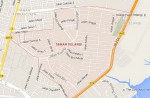
The map of the two Robbery cases mentioned. Photo: The New Paper
“I felt so helpless when they beat him up, but I knew I shouldn’t get out of the car for my own safety.”
Mr Jay said the man who was carrying the pole was about to beat him with it when five motorists, who were passing by, stepped in to stop the attack.
“One of the attackers asked me to hand over my passport and RM2,000 (S$660) as compensation for causing the ‘accident’ with their friend,” he said.
“I gave them $650 and hoped they would leave us alone but they wanted my mobile phone as well. I refused to give it to them.
“Suddenly, they fled. I think they had other friends in the area who told them that the police were coming.”
The police arrived less than a minute later, and Mr Jay and his family went to Kulai Police Station to make a report. He then went to a nearby hospital for a check-up.
“I’m lucky I didn’t suffer any serious injuries. Just some pain and a few bruises here and there,” he said.
Because his car was damaged, he had to drive slowly to Woodlands Checkpoint and they cleared immigration only at around 6am the next day.
He reported the incident to the Woodlands West Neighbourhood Police Centre and had his car towed away to be repaired.Mr Jay estimated the cost of fixing his car to be about $30,000.
“I used to drive to Malaysia twice a month for leisure and to visit family. I think I’ll fly there from now,” he said.
“The attack was the most terrifying experience of my life.”
Lone driver assaulted, robbed
He was driving alone back to Singapore on the North-South Highway near Simpang Renggam in Johor on Oct 30 when he was assaulted and robbed by a group of more than 10 men.
Singaporean businessman Herman Zaidin, 31, told The New Paper that one of the men claimed to have been injured after his motorcycle hit Mr Herman’s Mercedes-Benz on the heavily congested highway.
A group of men then appeared and demanded compensation for the biker.
One of them used a spanner to smash the windscreen of Mr Herman’s car and another opened the door.
The men rained blows on him.
The spanner-wielding man hit Mr Herman on his left eye.
10 crime zones to watch out for in Johor Bahru
Click on thumbnail to view photos. Source:
The Star/ANN
FEAR
The men ordered him to get out of his car, but he refused out of fear that they would take his car.
Realising that he would not budge, they ordered him to hand over his wallet containing about S$300 and RM400 (S$130).
After he gave in to their demands, they helped themselves to his in-vehicle camera, his mobile phone and its power bank.
They also ordered him to open the boot from the driver’s seat and they took his notebook before fleeing on their motorbikes.
Mr Herman said he lost about $2,400 in cash and valuables.
Singapore police and an officer from Simpang Renggam Police Station said Mr Herman had made police reports about the incident.
Experts: Give robbers what they want
If you are being robbed, don’t risk your life – just give the robbers what they want.
This is one of the tips for robbery victims by the Selangor chapter of Malaysia Crime Prevention Foundation (MCPF).
Former Singaporean policeman Joseph Tan, who served in the force from 1985 to 1992, agreed.
He said: “The cases involving the victims on the Malaysian North-South Highway were quite complicated because the road was congested, making it tough for the drivers to flee.
“I think it is best not to aggravate the robbers and give them what they want as soon as possible.”
The founder of the Crime Library, a voluntary group that helps track missing people, said that instead of trying to flee or disobeying the robbers, victims could wind down a window just a crack to find out what they want and try to negotiate.
He said: “Just give them what they want, your life is more precious than your valuables and money.
“This could prevent anyone from getting hurt and minimise the damage to their cars.”
Mr Tan said victims should make a police report as soon as possible.
The MCPF offered similar advice: “If you are robbed or assaulted, report the crime to the police.
“Try to describe the attacker accurately. You can help prevent someone else from becoming a victim.”
If there’s one thing that the voice actress of Disney’s upcoming animated film Moana has in common with her titular ocean-loving character – besides their Pacific islander heritage – it is that they are naturals in the water.
“Along with dancing hula… I also paddle and sail out on the ocean,” said Auli’i Cravalho at Marina Bay Sands Expo and Convention Centre on Tuesday.
The Hawaiian looked every bit a Disney princess, dressed in a sleeveless Tyrian purple gown and with Singapore’s national flower, the Vanda Miss Joaquim, adorning her right ear.
“I don’t do any land sports. I run to the ocean because I’m a klutz on land,” she deadpanned.
Cravalho – whose 16th birthday falls on Nov 22, two days before the film opens here – was on Singapore shores with producer Osnat Shurer, Singaporean lighting artist Roger Lee and Indonesian visual development artist Griselda Sastrawinata for a regional press conference.
The 56th Disney animated feature film tells the story of Moana, the adventurous daughter of a tribal chief, who embarks on an odyssey with demi-god Maui, voiced by Dwayne “The Rock” Johnson, to save her people and restore their connection to the sea.
Peppering her sentences with “like” and “literally”, the bubbly teen fawned over her co-star Johnson, calling him “super cool” and “really nice”.
“Not that I was expecting him to be mean, but he’s had so much success and he’s this big guy in Hollywood, he’s the busiest man, and yet… he gave me flowers. He’s so sweet,” she gushed, drawing “awws” from the audience.
Cravalho feels it is “really important” that Moana does not have a love interest.
“She doesn’t need a Prince Charming because, quite frankly, you don’t need anyone else to help you figure out who you are,” she said, before egging Shurer on to make a sequel.
Shurer said the movie is “going to make you laugh, make you cry and make you think”.
“Moana, in part, is about stopping to listen to the voice inside yourselves. The world will always tell you who you’re meant to be and each one of us has a voice inside that tells us who we really are.
“At any age, any gender, to stop and to listen and to follow the call is something that I think is relevant to every single one of us.”
The Israel-born producer also gave a shout-out to the “hundreds and hundreds of artists in our studio from over 25 countries”, saying “that adds to the richness and diversity of everything we do”.
Griselda said the film-makers have done “incredible” research in order to respect the culture that inspired it.
“We have this Oceanic Story Trust, we have archaeologists, anthropologists, fishermen, elders, tattooists, linguists, dancers. So we really involved ourselves in it,” she added.
Lee shared that the film got him “really interested” in Polynesian culture.
Maui, for example, had him wondering: “Who’s this super cool guy who can pull islands across the sea and is super strong and shape-changing?” He believes the movie will have the same effect on others.
Lee told My Paper that the favourite sequence he worked on was one in which Moana ventures into a cave.
His favourite shot was when the heroine lights up a flame, saying it had “depth” and “atmosphere” and that it was a “fun sequence to showcase what lighting can do”.
With a winsome smile, Cravalho said: “I am so happy and so blessed to be working on a film like this, inspired by Polynesian culture. “And I get to travel to different places with wonderful people. I mean, we’re practically all family from across the sea.”
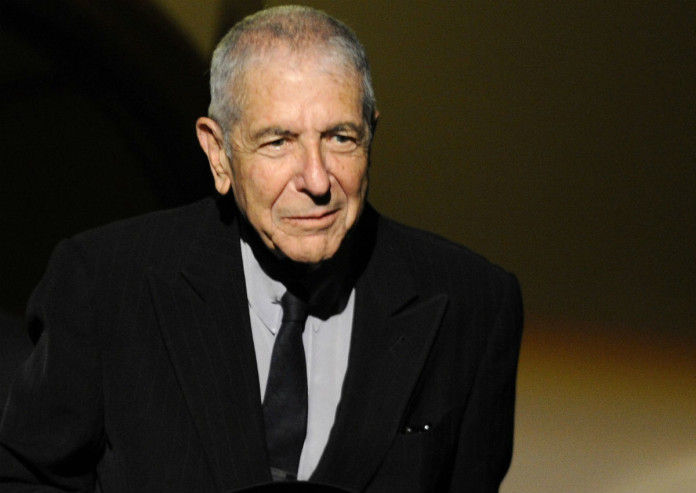
Leonard Cohen, the storied musician and poet hailed as one of the most visionary artists of his generation, has died at age 82, his publicist announced on Thursday.
“It is with profound sorrow we report that legendary poet, songwriter and artist, Leonard Cohen has passed away. We have lost one of music’s most revered and prolific visionaries,” read a statement on Cohen’s Facebook page.
Cohen, who was brought up in Montreal but lived in California late in his life, will have a private memorial service at a later date, the statement said.
Cohen began as a poet before at first reluctantly branching out into music, writing some of his generation’s most reflective songs including the oft-covered spiritual “Hallelujah.”
He released his final album just last month. Entitled “You Want It Darker,” Cohen on the album reflected at length on his own mortality.
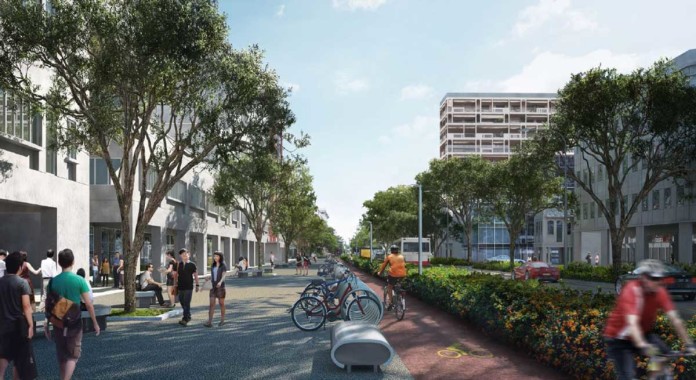
SINGAPORE – Pedestrians and cyclists can cheer when Bencoolen Street reopens next year.
It will boast a “car-lite” design with wider footpaths and dedicated cycling paths, the Land Transport Authority (LTA) said yesterday.
Pedestrians can look forward to tree-lined footpaths and a sheltered walkway between the upcoming Bencoolen MRT station and nearby developments like Manulife Centre.
Cyclists can expect 125 bicycle parking spaces and will also have a dedicated path along the street that is set to connect Rochor Canal and the planned North-South Corridor route to the Central Business District.
Bencoolen Street is currently closed with construction under way for the Downtown Line’s Bencoolen MRT station, but is set to reopen in the first quarter of next year.
Motorists should expect some traffic adjustments in the process, the LTA said.
The stretch of Bencoolen Street, between Middle and Bras Basah roads reopens on Sunday.
From Sunday, only buses will be able to turn left from Bencoolen Street onto Bras Basah Road.
Waterloo Street will become a two-way street and the traffic direction for Queen Street will be converted towards Bras Basah Road.
A dedicated bus lane opens in Bencoolen Street on Dec 11, which is also when a stretch of Prinsep Street and Selegie Road, between Bras Basah and Middle roads, will become a one-way street.
FROM January next year, unmarried mothers will have 16 weeks of paid maternity leave – equal to that of their married counterparts – and fathers will get two weeks of paid paternity leave instead of one.
Giving new parents more time off from work means they can spend more time with their newborns, said Minister for Social and Family Development Tan Chuan-Jin in Parliament yesterday.
He urged parents to take advantage of the leave, saying the children will not be babies forever.
“Our children should be our priority now, not later,” he said.
“Mothers usually are there, but fathers need to be there as well. This is something that we can encourage and support but ultimately the individual parents must make those choices.”
The changes come under the Child Development Co-Savings (Amendment No. 2) Bill that Parliament passed yesterday.
Under the new law, mothers with adopted children will also be entitled to more paid leave from July next year.
They will get 12 weeks against the current four weeks.
There are more than 300 adoptions each year.
Another change will give mothers the option to share up to four weeks of their maternity leave with their husbands from July next year.
Currently, the Shared Parental Leave scheme allows only one week to be shared.
The nine MPs, who spoke during the debate on the Bill, welcomed the amendments.
But they urged the Government to go a step further in its support of parents.
Seah Kian Peng (Marine Parade GRC), a champion of unwed mothers, said giving them 16 weeks of maternity leave was “a baby step in the right direction”.
But other benefits should also be equalised, including giving unwed mothers the $8,000 Baby Bonus and providing for their housing needs, he added.
His call was echoed by Desmond Choo (Tampines GRC), Alex Yam (Marsiling-Yew Tee GRC), Louis Ng (Nee Soon GRC) and Non-constituency MP Daniel Goh.
Last year, 345 children were born to unwed mothers.
In 2014, these babies totalled 375; in 2013, there were 415.