Home Blog Page 2364

Where Singapore's worst and best hawker centres and coffee shop toilets are

0

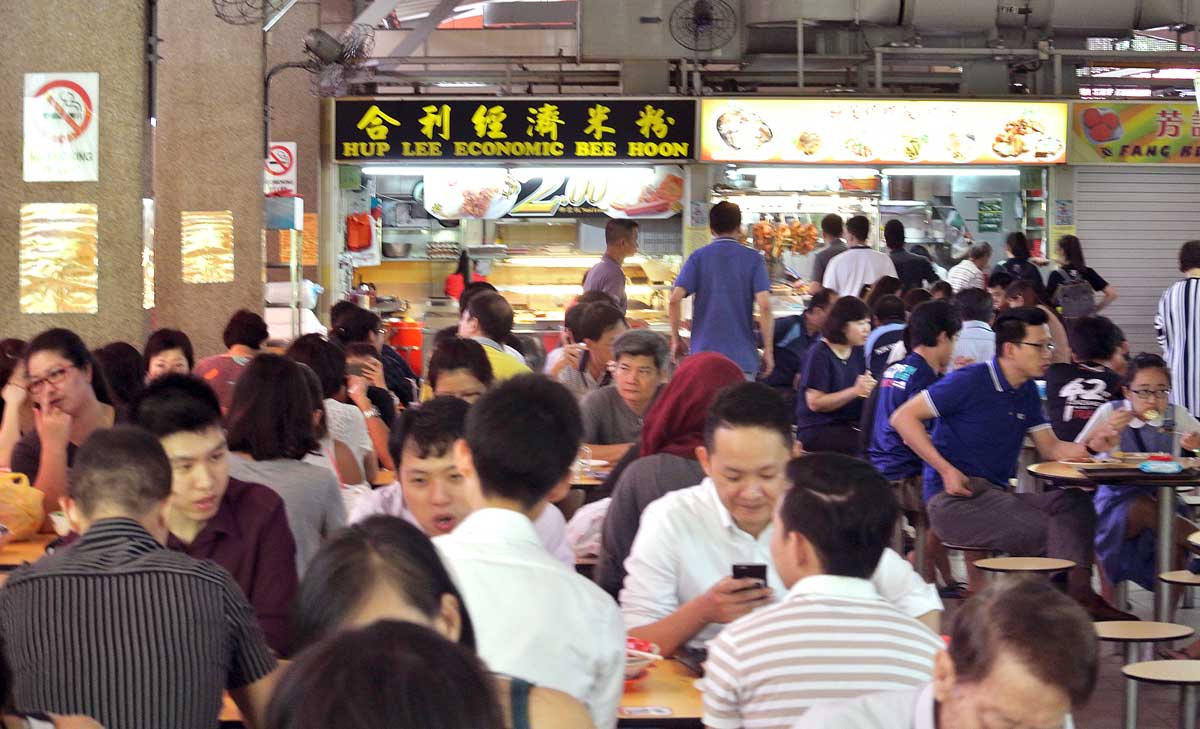
The dirtiest hawker centre and coffee shop toilets are in the neighbourhood of the Singapore River, and in Boon Lay and Bukit Panjang, a recent survey has found.

The cleanest public toilets in hawker centres and coffee shops are those in the Marina South and Western Water Catchment areas.

The comprehensive survey of toilets in all 109 hawker centres and four in five coffee shops across the island was carried out by 178 Singapore Management University (SMU) students over five weeks from August this year, as part of their introductory statistics course.

It was done with the World Toilet Organisation.

SMU senior statistics lecturer Rosie Ching, who teaches the course, said: “Hopefully, the study will get communities to be more aware of the cleanliness of the coffee shops and hawker centres in their regions, and to keep them clean.”

More than 60 per cent of people polled last year said they would not visit an eatery if its toilets were rated the dirtiest, even if its food was good. People have, over the years, expressed disgust at the state of some of Singapore’s public toilets.

Back in 2011, a survey of 500 Singapore citizens and permanent residents showed 27 per cent of them were “unhappy” or “very unhappy” with the cleanliness of the toilets.

A Singapore map highlighting the areas where the dirtiest toilets are found. Photo: The Straits Times

Ms Ching said the data collected was used to produce a Toilet Cleanliness Index for public toilets in hawker centres and coffee shops.

It took into account variables like the cleanliness of toilet features in and outside the cubicles such as sinks, floors, mirrors, the toilet design, and the distance between the toilets and the cooking facilities.

World Toilet Organisation founder Jack Sim said the survey is aimed at pushing residents to do more to maintain Singapore’s reputation as one of the cleanest cities in the world. He hopes the index would be used again in two years to track whether there were improvements.

Students involved in the study were initially apprehensive about doing it, said third-year business student Michael Nai. “A lot of them were very shocked, not just at the amount of work they had to do but the type of work they had to do. But over time, we found it quite fun.”

Added the 23-year-old: “It was an eye-opening experience. It made statistics and learning real.

“It also helps you appreciate what our cleaners do.”

calyang@sph.com.sg


This article was first published on November 15, 2016.
Get a copy of The Straits Times or go to straitstimes.com for more stories.

Image: 
Category: 
Publication Date: 
Tuesday, November 15, 2016 – 14:00
Send to mobile app: 
Source: 


Story Type: 
Others

Source link

Singapore's Swissco to file for judicial management due to debt woes

0

SINGAPORE – Singapore’s Swissco Holdings Ltd, a debt-burdened provider of rig and vessel chartering services, said it has decided to file for interim judicial management after reaching an impasse with major lenders.

Many companies in the offshore oil and gas services sector, a key industry in Singapore, have been struggling to meet debt commitments after a rout in global oil prices until last year led to a scaling back of projects.

Judicial management, a process that allows a financially distressed company the room to return to financial health under court supervision, has also been sought by oilfield services firm Swiber Holdings.

“A significant gap persists between the group’s aim of sustaining its business in the long term and the position of these lenders. As such, the Group is unable to get an agreement on the terms of the restructuring plan,” Swissco said in a stock exchange filing late on Monday.

In October, loss-making Swissco failed to pay interest on a S$100 million ($71 million) note due in 2018 while total debt stood at $255.7 million at end-September.

Swissco said it is currently seeking legal advice on the preparation and filing of the necessary court documentation, which is expected to take place by the end of this week or early next week.

The company named DBS Bank Ltd, Oversea-Chinese Banking Corp Ltd, United Overseas Bank Ltd as its principal bankers in its 2015 annual report.

Trade in the company’s shares has been suspended since Oct. 12. 

Image: 
Publication Date: 
Tuesday, November 15, 2016 – 12:34
Send to mobile app: 
Source: 


Story Type: 
Others

Source link

Hello Kitty event organiser faces jail for contempt

0

The boss of an events company that organised a Hello Kitty event at Resorts World Sentosa (RWS) last year is facing two days in jail and a $40,000 fine for breaching court orders on his firm’s unpaid debt of $320,000 to the resort.

Yesterday, RWS took out contempt of court proceedings, asking for Mr Jacky Teo Choon Leng to be punished for disobeying orders to attend two court hearings to disclose his company’s assets.

Mr Deya Shankar Dubey, representing RWS, argued that two days’ jail and a $40,000 fine would be an appropriate punishment for Mr Teo’s refusal to appear in court without reason, even after he was told of the potential consequences.

Mr Teo is the sole director and shareholder of Mighty Eight, which organised the Hello Kitty Go Around carnival at RWS’ Coliseum from Oct 16 to Nov 10 last year.

Mighty Eight owes RWS about $320,000 after the resort successfully sued for payment of various sums, including event charges and compensation for physical damage to the venue.

After winning the lawsuit in default – as the defendant did not respond to the action – RWS moved to enforce the judgment by applying for Mr Teo to be questioned on the company assets available to pay the debt.

On July 22, the High Court ordered him to attend a session on Aug 12. He did not turn up and did not pick up calls from Mr Dubey.

The hearing was adjourned to Aug 19. Again, he did not show up even though a letter informing him of the details was handed to his sister at his registered address.

Mr Teo was also absent for the court session yesterday. Mr Dubey told the court he phoned him before the hearing and he said he was not attending.

Mr Dubey also said it was unclear what had happened to Mighty Eight’s paid-up capital of $500,000 and its revenue from the Hello Kitty event.

Justice Belinda Ang found that Mr Teo had breached the court order but gave him a chance to come to court to argue on the punishment to be meted out. She adjourned the case to Nov 25.

Mr Teo, when contacted by The Straits Times yesterday, declined to comment.

Mighty Eight had faced many woes over the two Hello Kitty events it organised last year and this year.

In the 2015 carnival, irate Hello Kitty fans demanded full refunds after a limited-edition paper figurine was pulled out from an exclusive pack. Fans were also upset that non-ticket holders could buy limited-edition items outside the venue, which they felt diluted the exclusivity of the merchandise.

In June this year, Mighty Eight organised a Robot Kitty exhibition at Suntec Singapore Convention & Exhibition Centre. About 20 people who were contracted to work at the exhibition made police reports, claiming they were not paid their wages.

The recruitment agency that coordinated manpower services for the exhibition also sued Mighty Eight for not paying its service fee of about $10,000 for hiring the workers. When contacted, its spokesman said the case was still pending.

Read also: Stamps to celebrate a pros-purr-ous friendship​


This article was first published on Nov 15, 2016.
Get a copy of The Straits Times or go to straitstimes.com for more stories.

Image: 
Category: 
Publication Date: 
Tuesday, November 15, 2016 – 14:00
Send to mobile app: 
Source: 


Story Type: 
Others

Source link

Part of lift ceiling in Pasir Ris block falls, injuring two

0

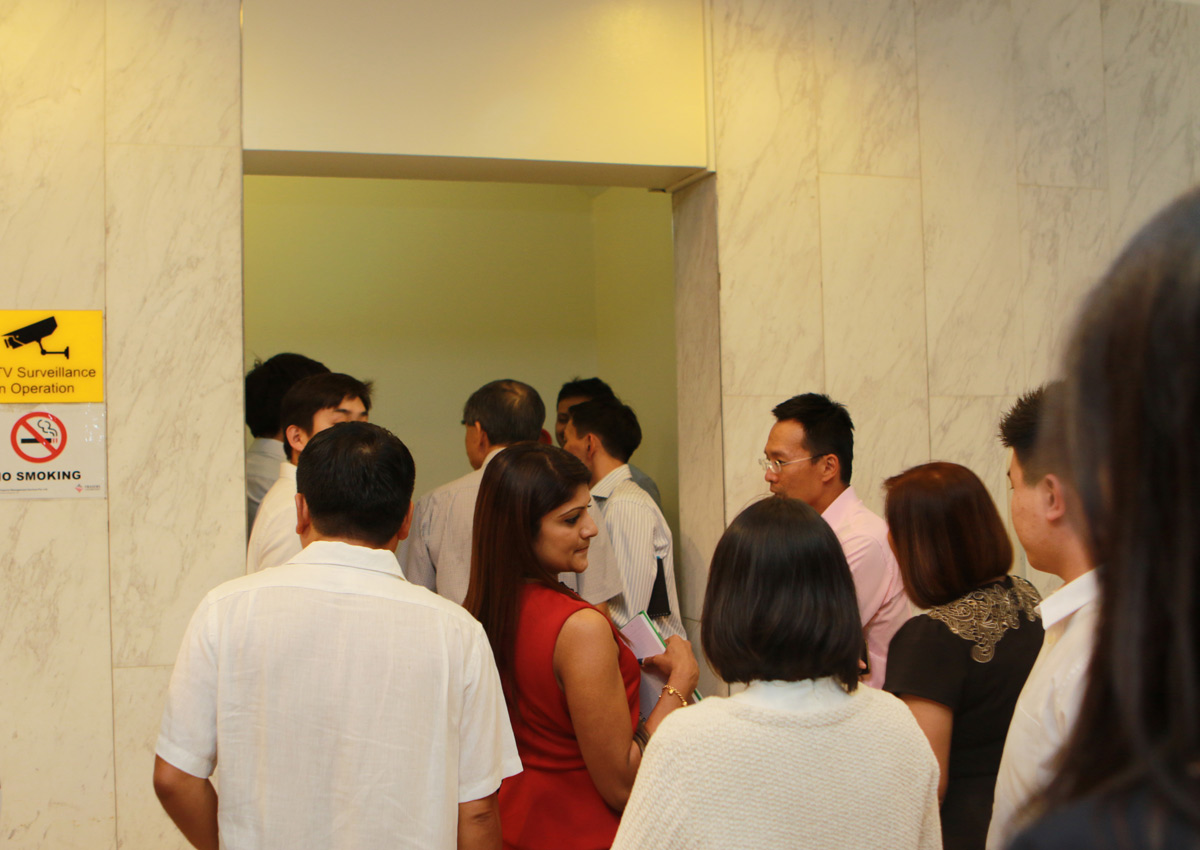
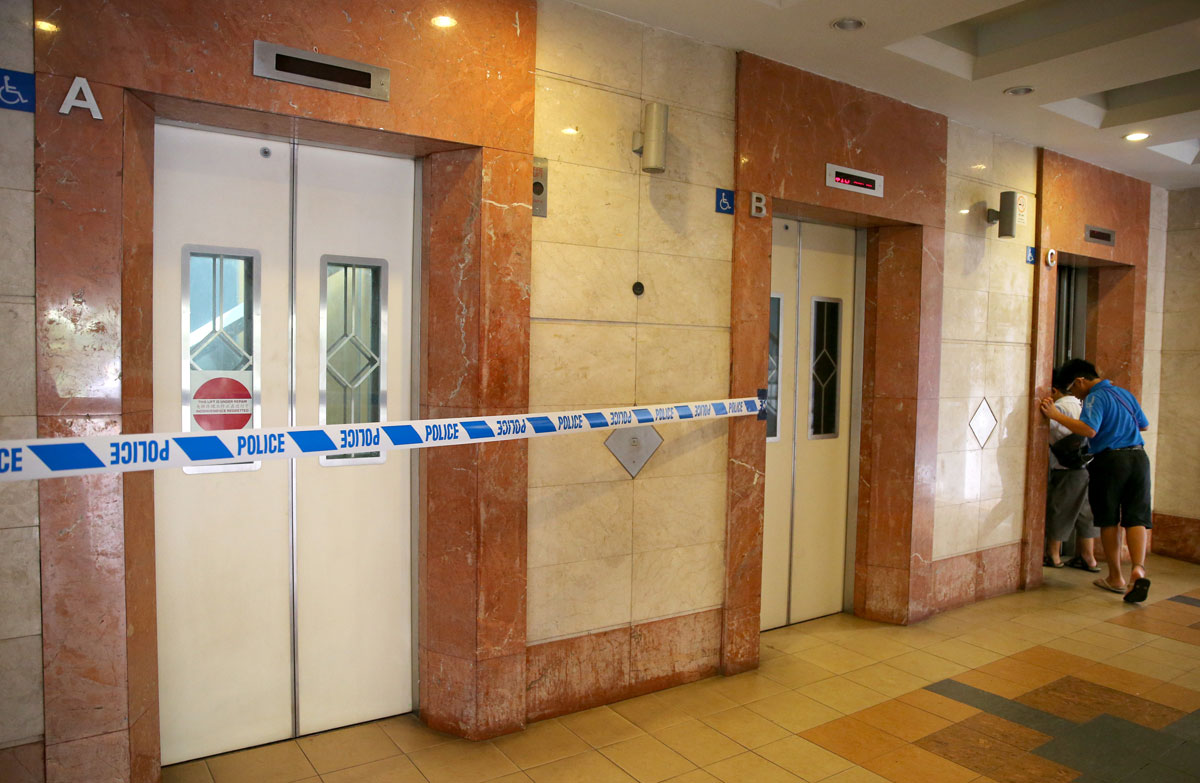
Technical producer Mohammad Yazid Razali was leaving his parents’ flat after dinner last Thursday when an ordinary lift ride nearly became a disaster.

Part of the ceiling of the lift at Block 480, Pasir Ris Drive 4, fell and hit Mr Yazid, his 63-year-old father and his two-year-old son on their heads. “It just dropped on us suddenly. Everybody was shocked,” said Mr Yazid, 36, whose parents live in the block.

While Mr Yazid escaped without injuries, his son suffered a bump on his head. His father was scratched by the metal panel, left dangling on a cable.

His wife and two older daughters, who were also in the lift at the time, were unhurt.

Mr Yazid dialled the emergency number in the lift and also informed Pasir Ris-Punggol Town Council, before going to a nearby 24-hour clinic. The doctor said the injuries were not serious.

But Mr Yazid, who lives in a Housing Board flat in Woodlands, said: “I am angry. What kind of lift is this? My son cried loudly and had nightmares. Now he’s traumatised and afraid to enter lifts.”

He hopes something can be done to prevent such incidents from recurring. “It’s lucky that I am tall and absorbed a lot of the impact (from the dislodged ceiling panel),” said Mr Yazid, who stands at 1.84m.

“But my grandfather and parents use the two lifts in the block every day. There are also quite a number of elderly people and kids who live there. I am worried that something might happen to them.”

He is planning to seek compensation for the $128 that his family spent at the clinic.

In the past year or so, several incidents have occurred in which ceiling boards, cladding or other structures have dislodged from HDB blocks. There have also been incidents involving lifts in which people were hurt.

The Building and Construction Authority (BCA) said it was alerted to last week’s incident on Friday, and investigations are ongoing to determine the reason for the ceiling panel’s dislodgement. “When BCA engineers were on site to inspect the lift, they found that the dislodged ceiling panel had already been put back into place,” a spokesman said.

She added that the lift contractor has conducted checks on lifts within the vicinity and that the BCA has not received any report of similar incidents.

Mr Zainal Sapari, an MP for Pasir Ris-Punggol GRC, said the town council is retrieving the closed-circuit television camera footage to find out what happened last week.

“The urgent thing is to look at the cause of it and decide on any necessary action,” said Mr Zainal, who is also chairman of Pasir Ris-Punggol Town Council.

“We have told the family that we will look into compensation when the investigation is over,” he added.


This article was first published on Nov 15, 2016.
Get a copy of The Straits Times or go to straitstimes.com for more stories.

Image: 
Category: 
Blurb: 
<p>Technical producer Mohammad Yazid Razali was leaving his parents' flat after dinner last Thursday when an ordinary lift ride nearly became a disaster.</p>
Publication Date: 
Tuesday, November 15, 2016 – 14:00
Send to mobile app: 
Source: 


Story Type: 
Others

Source link

Japan approves rescue missions for troops in South Sudan

0

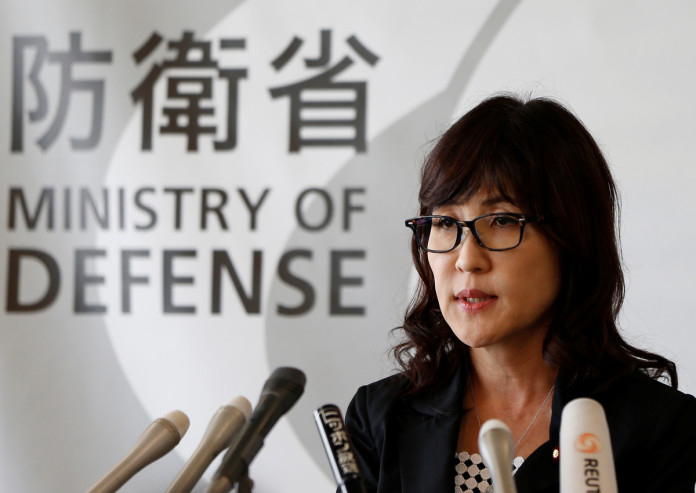
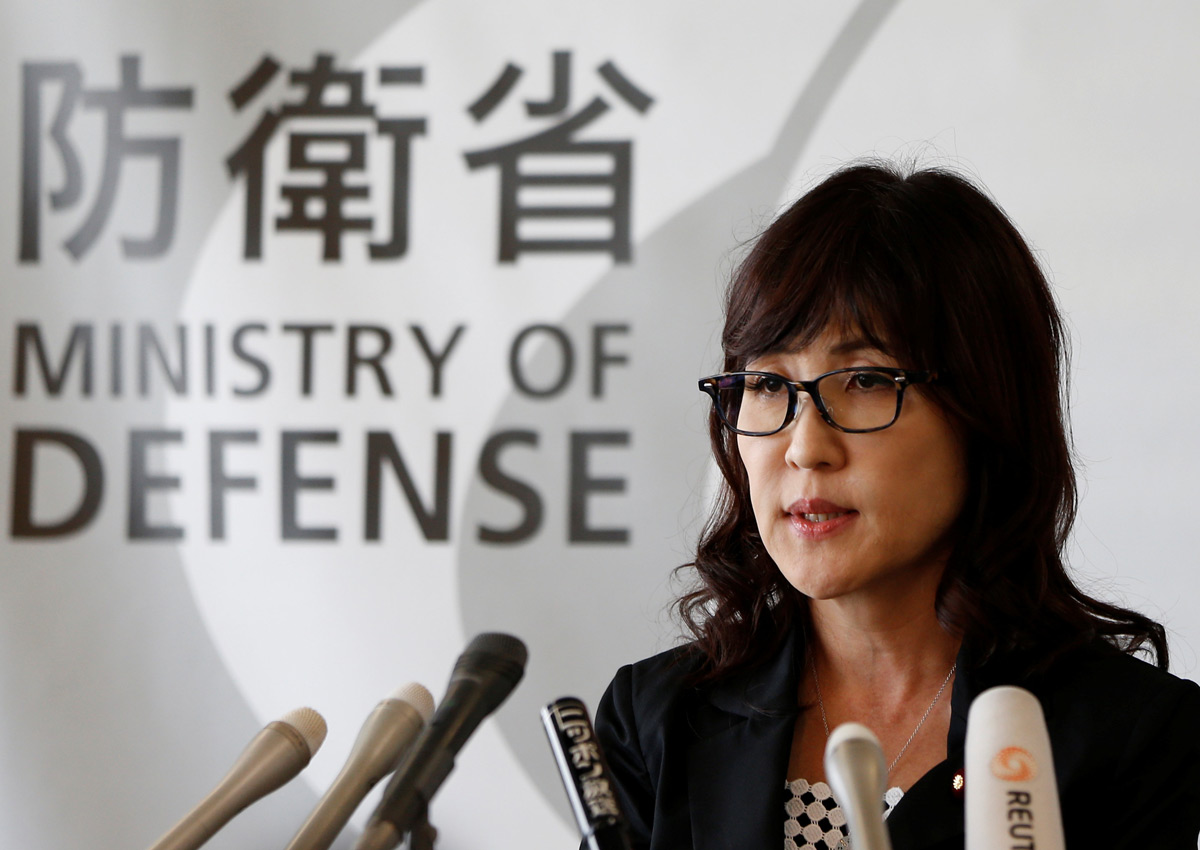
TOKYO – Japan on Tuesday approved a plan for its troops in South Sudan on UN peacekeeping operations to conduct rescue missions, amid critics’ concerns the move risks embroiling Japanese soldiers in their first overseas fighting since World War Two.

The new mandate, which will apply to troops to be dispatched to South Sudan from November 20, is in line with security legislation enacted last year to expand the overseas role of Japan’s Self-Defence Forces (SDF), as the military is known.

“South Sudan cannot assure its peace and stability on its own and for that very reason, a UN peacekeeping operation is being conducted,” Prime Minister Shinzo Abe told a parliamentary committee on Tuesday.

“The SDF is carrying out activities that only it can do in a tough environment.”

The Japanese troops are in South Sudan primarily to help build infrastructure in the war-torn country, but under the new mission will be allowed to respond to urgent calls from UN staff and non-governmental organisation (NGO) personnel.

Defence Minister Tomomi Inada has said the government does not envision Japanese troops rescuing other foreign troops.

The government also plans to assign the troops another new role made possible by the new legislation, to defend UN peacekeepers’ camps jointly with troops from other nations.

Opponents of the move fear the mission will ensnare Japanese troops in fighting for the first time since World War Two.

“Security is a concern. If it weren’t dangerous, why would they need to carry guns?” said Kiro Chikazawa, a Tokyo civil servant who took part in a small protest near Abe’s office.

Other critics say the deployment violates conditions for peacekeeping operations set in line with Japan’s pacifist constitution.

“It goes without saying that the operation must be executed within the confines of the constitution and pertinent Japanese laws,” said an October editorial by the Asahi newspaper.

“But now, South Sudan is effectively in a state of civil war,” the paper added.

“Such being the case, we must opposed the assignment of rush-and rescue operations to the SDF.”

A civil conflict erupted in South Sudan in December 2013, but President Salva Kiir and his rival, former vice president Riek Macharsigned, a peace deal in 2015 that was meant to halt the fighting.

The agreement failed to stick. Machar has since left the country and sporadic clashes have continued.

Image: 
Category: 
Publication Date: 
Tuesday, November 15, 2016 – 12:14
Send to mobile app: 
Source: 


Story Type: 
Others

Source link

(Over 4,700 Sold) Save over 50% off Chicken Up’s Korean Chicken Wings at 6 outlets with this deal

0

Chicken Up over 50% off deal valid at Jurong East MRT, Century Square, Buangkok, Parkway Parade, Centrepoint & Tanjong Pagar

(Over 4,700 Sold) Save over 50% off Chicken Up’s Korean Chicken Wings at 6 outlets with this deal

Seasoned with spices and oozing flavours unique to Korea, Chicken Up serves a selection of dishes from that region with fried chicken as its specialty menu item.

Source

Scaling the odds at Vietnam's pangolin rehab

0

CUC PHUONG NATIONAL PARK, VIETNAM – Pangolin Mi Bo has seen better days. He arrived at a rescue centre in Vietnam missing a paw after it was cut off in a snare trap.

The rest of his body is marked by red lacerations, and he will probably never regain enough strength to return to the wild.

But he is among the lucky ones.

Rescued from poachers, Mi Bo and dozens of other pangolins are being nursed back to health by Vietnamese conservationists fighting to save the scale-covered creatures from extinction.

The reclusive pangolin has become the most trafficked mammal on earth due to soaring demand in Asia for their scales for traditional medicine and their flesh, considered a delicacy.

An estimated one million of the animals, often called “scaly anteaters”, have been plucked from Asian and African forests over the past decade, shunting them onto the list of species at the highest risk of extinction.

About the size of a small dog, pangolins are defenceless in the wild, curling up into a ball when they are scared, allowing poachers to easily scoop them up.

Their dire predicament will be on the agenda at a major wildlife conference opening in Hanoi on Thursday, which will be attended by Britain’s Prince William – a champion of better-known endangered species such as elephants and rhinos.

At the rescue centre in Vietnam, a team of staff and volunteers work late into the night to keep the latest batch of nearly 60 pangolins alive.

“They have a second life here, they’re kind of born again,” Nguyen Van Thai, director of Save Vietnam’s Wildlife, said from the leafy rehabilitation centre in Cuc Phuong National Park southwest of the capital.

A previous group of rescued pangolins arrived barely alive after being stored on ice by poachers who thought it would keep them fresh.

Others have been stripped of scales or pumped full of fluids to make them look fatter to prospective buyers.

The sorry state of the animals leaves no shortage of work for veterinarian Lam Kim Hai, who treats up to 10 pangolins a day.

“I feel at the same time sad and angry,” the 24-year-old told AFP after treating Mi Bo for over an hour under a heat lamp.

Although the pangolin trade is illegal in Vietnam and they are in the government’s “red book” of endangered species, law enforcement remains weak.

Authorities have even been caught selling the endangered animals after seizing them from poachers, according to media reports.

With a booming traditional medicine industry, Vietnam remains both a destination and source country for illegally poached wildlife.

Pangolin flesh is also prized.

Like in China, their meat is steamed, boiled or grilled. It is eaten on special occasions or to grease business wheels, mostly among members of Vietnam’s growing wealthy class willing to spend as much as $1,000 for each creature.

“I don’t care if its name is mentioned in the red book. Whenever I have guests or partners who want it, I absolutely have to obtain it for them,” Vu Trong Phat, a 45-year-old real estate and construction boss, told AFP at a local pub.

At that price, nothing goes to waste. Customers often drink their blood, and their scales are used in special elixirs believed to cure anything from impotence to menstrual cramps to asthma and even cancer.

The scales have also been used as guitar plectrums.

“Pangolin meat is very delicious and nutritious and very good for your health,” said government employee Nguyen Van Thinh, 56.

“Pangolin scales are… very good for heart and blood circulation diseases. Any woman who has no milk for her child can be cured just with a small quantity of the medicine,” he told AFP at the pub.

He shares that belief with many others across Vietnam and China, though there is no scientific evidence for any of the supposed medical benefits of pangolin products.

Scientists don’t know how many pangolins are left in the wild, since the nocturnal and notoriously shy animals are difficult to track.

But experts say the size of illegal pangolin hauls in Asia has grown in recent years – in 2015, two tonnes of dead pangolins from Nigeria were found in a single seizure in Hong Kong.

With wild populations plummeting, some fear that traders may be seeking to set up breeding farms – which conservationists fear are just a cover for black-market trafficking.

Pangolins are also difficult to keep alive in captivity and breeding farms would not necessarily boost their numbers.

“That is not a conservation solution, it’s nothing we would support. It seems to be just kind of a way to aid and abet the (illegal) trade,” John Baker, managing director of WildAid, told AFP from California.

The Hanoi conference follows a decision at a Convention on International Trade in Endangered Species of Wild Fauna and Flora (CITES) summit in September to include pangolins on its “Appendix 1” – the highest level of protection that outlaws all trade in animals facing possible extinction.

Thai, the 34-year-old director of Save Vietnam’s Wildlife, said he has watched in dismay as pangolin numbers have fallen through the floor.

“It’s really sad, it’s like over 20 years later and there are no pangolins in this area. We need to take action,” he said.
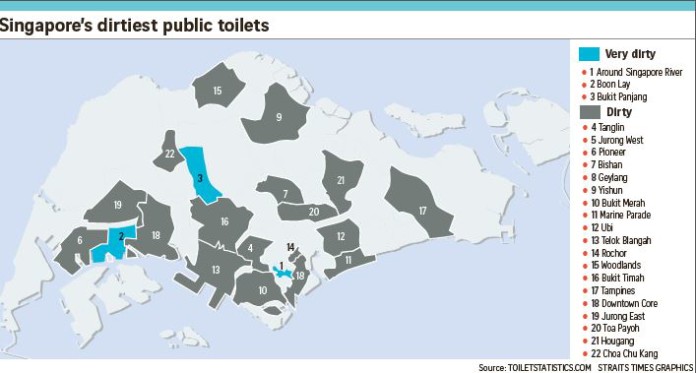
Image: 
Category: 
Publication Date: 
Tuesday, November 15, 2016 – 12:02
Send to mobile app: 
Source: 


Story Type: 
Others

Source link

Drivers in China turn to scary decals to deter motorists from using high beam headlights

0

Fed up with having high beam headlights shone at them on the roads, some drivers in China are turning to scary ghost decals to shock those who use the powerful headlights.

These decals were recently noticed by traffic police in Jinan, eastern Shandong province, with some cars with pictures of pale-skinned ghosts with red tongues, reported the South China Morning Post on Monday (Nov 14).

The decals are being sold on Chinese e-commerce site Taobao from prices as low as 16 yuan (S$3). They include pictures of wolves and ghosts with bloody hands.

According to the sellers, the decals are hardly visible in the dark. They appear only when motorists turn on their high beam headlights at the vehicle in front of them.

The aim? To give these drivers a nasty shock and deter them from using high beam headlights again.

However, drivers who use these light-reflecting decals in Jinan could be fined 100 yuan for posing a risk to road safety, according to Xinhua news agency.

If the decals cause road accidents, drivers could also face tougher punishments, added Xinhua.

Chinese media have previously reported on several accidents where drivers were momentarily unsighted by high beams, leading to deaths.

Earlier in November, police in Shenzhen announced an unusual punishment for drivers who turn on their high beam headlights – staring into the blinding headlights for 60 seconds, and a fine of 300 yuan (S$61).

The usual practice for Chinese police is to dock points on drivers’ licences or fine them up to several hundred yuan for the misuse of headlights.

Read also: The latest scam to hit Uber: Spooky ‘ghost drivers’ ruining rides for people 


This article was first published on Nov 14, 2016.
Get a copy of The Straits Times or go to straitstimes.com for more stories.

Image: 
Category: 
Publication Date: 
Tuesday, November 15, 2016 – 11:52
Keywords: 
Send to mobile app: 
Source: 


Story Type: 
Others

Source link

Japan street swallowed by giant hole reopens

0

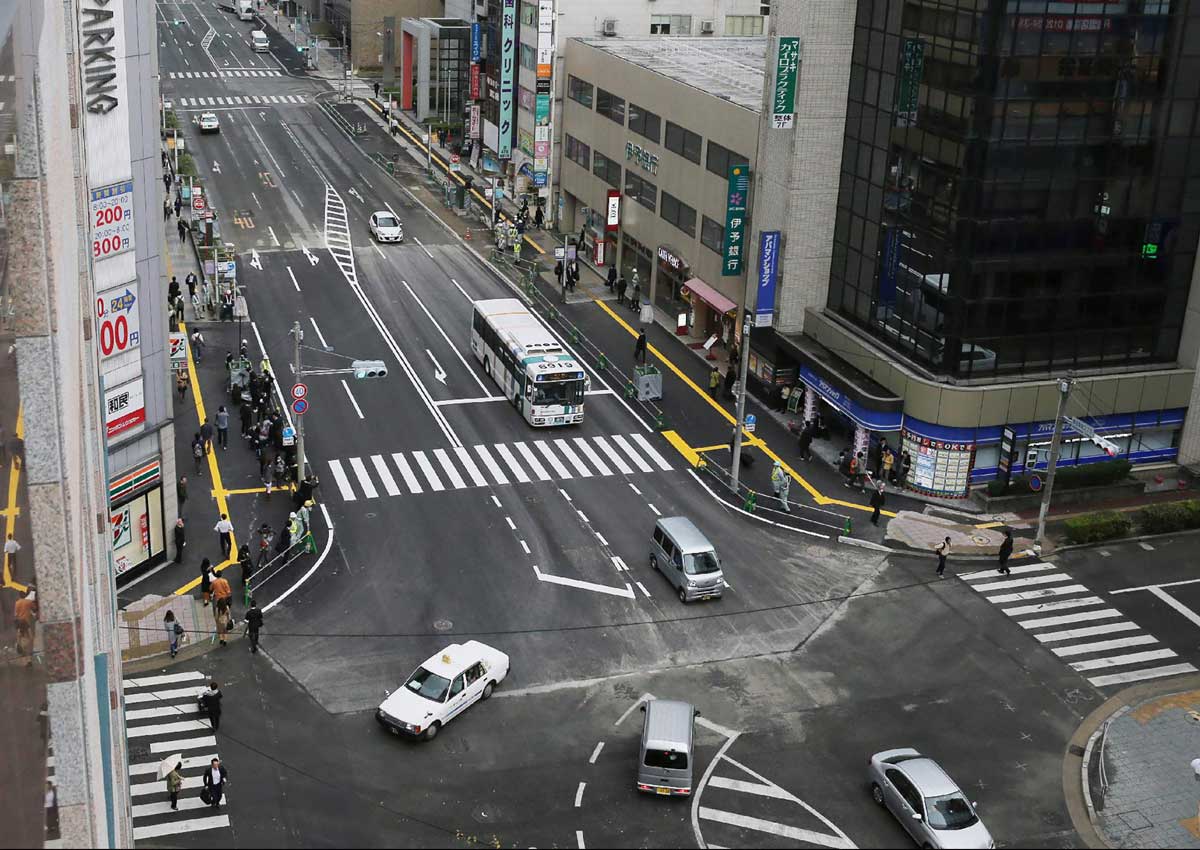
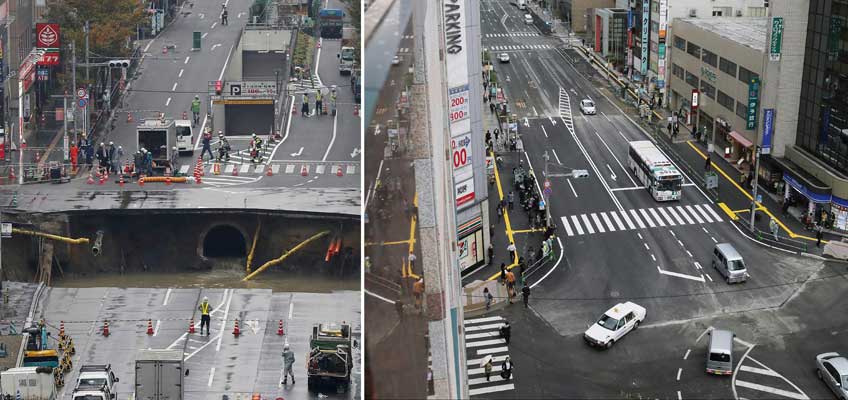
TOKYO – A Japanese city on Tuesday reopened a busy street that collapsed into a giant sinkhole, with the efforts of workers who toiled around the clock for a week drawing praise on social media.

The gigantic sinkhole, measuring around 30 metres (98 feet) wide and 15 metres deep, appeared last Tuesday in a bustling business district in the southwestern city of Fukuoka, swallowing part of a five-lane street.

The sinkhole, apparently triggered by subway construction in the area, had exposed the support columns of nearby buildings at a traffic intersection.

Japanese workers toiled continuously for a week, dumping huge amounts of wet cement and sand into the gaping hole and fixing electricity, gas and water lines that had stopped following the accident.

The street reopened at 5 am Tuesday (2000 GMT Monday), Fukuoka Mayor Soichiro Takashima said in a statement, exactly a week after the ground began sinking.

“We’re very sorry for causing great trouble,” Takashima said, noting that a ban on access to surrounding buildings was lifted.

Miraculously, no one was hurt in the accident in Fukuoka, the biggest city on the southernmost main island of Kyushu.

Many on social media expressed amazement at the quick recovery.

“I’m surprised the road reopened in a week!,” one Twitter user said.

“Impressive. That was fast,” said another.

Image: 
Category: 
Publication Date: 
Tuesday, November 15, 2016 – 11:54
Send to mobile app: 
Source: 


Rotator Image: 
Story Type: 
Others

Source link

Singapore government focuses on recycling, but residents fail to play their part

0

Singapore has impressive public waste-management systems, but there’s just one problem – its residents aren’t pulling their weight when it comes to household recycling.

The land-scarce Asian city-state generated about 8,400 tons of solid waste a day in 2015, but has just one offshore landfill space to bury all its trash.

The landfill “island,” called Semakau, was created in 1999 and extended in 2015, with enough space to meet Singapore’s waste disposal needs until at least 2035.

Singapore gets by with so little space for rubbish through an innovative waste management process, in which it recycles about 60 per cent of its solid waste and incinerates 38 per cent of its total waste in waste-to-energy plants.

Just 2 per cent of the non-incinerable solid waste and the ash from the incinerator plants are buried in the landfill.

But this isn’t due to a heroic environmental effort from Singaporeans. Households recycled just 19 per cent of their waste in 2015, down from 22 per cent in 2010.

“The lack of awareness and indifference only partly explains the absence of recycling habits [in Singapore] … In most cases people do not recycle simply because they are not required to do so,” said Tong Yen Wah, co-director of the Energy and Environmental Sustainability Solutions for Megacities programme at the NUS Environmental Research Institute.

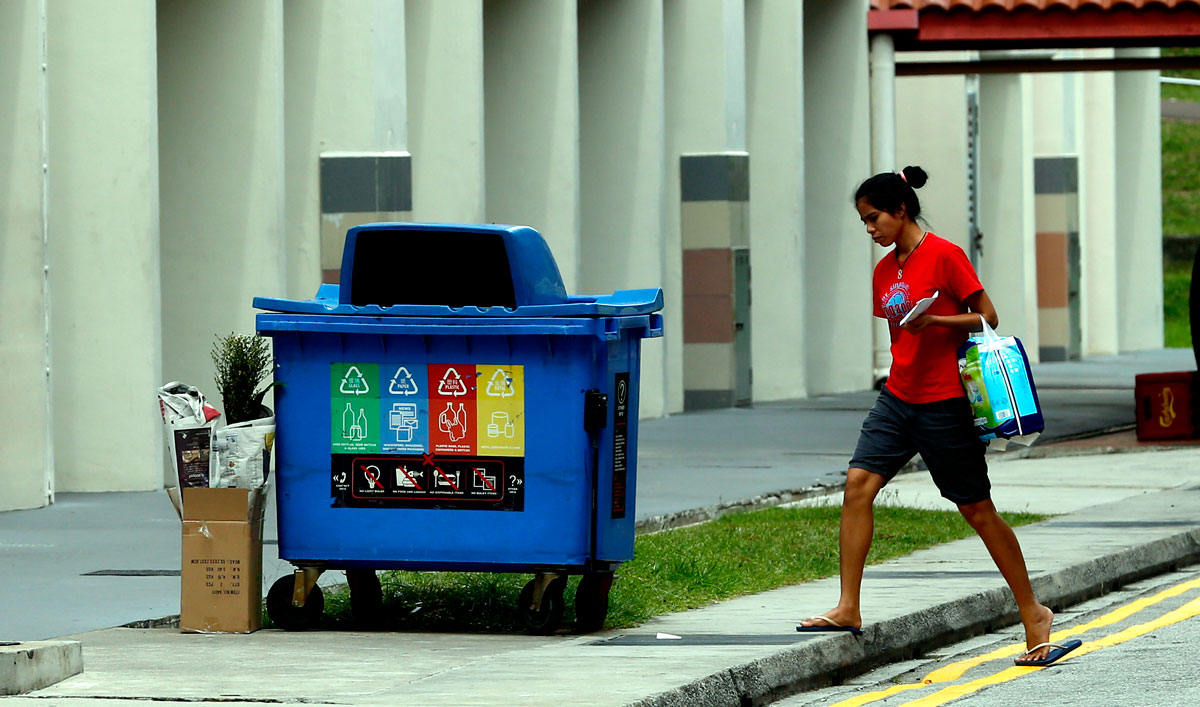
Recycling is easy enough in Singapore. There are shared recycling bins at every block on the island’s public housing estates, with a minimum of three weekly collections. Private landed properties have one recycling bin each, with weekly collections.

Read also: People recycling less despite govt measures to encourage it

“It’s really not that difficult for residents to place their recyclables in these bins,” Melissa Tan, chairman of the Waste Management & Recycling Association of Singapore, told CNBC. “What is needed is a mindset change.”

“I personally think Singaporeans have been too pampered by an efficient government…We need to further develop our recycling culture so that Singaporeans make an extra effort to recycle more instead of simply throwing things away,” Tan added.

Aside from the government measures in place to dispose of their rubbish, Singapore has long relied on a network of rag-and-bone men, known as “Karang Guni men,” who go door-to-door in housing estates, paying residents by weight for newspapers, used clothing or electronics waste, which they then sell to specialised markets or junkyards.

Lynn Su-Lin, a recycling advocate and environmentalist, told CNBC the reason she believed recycling hadn’t caught on in Singapore was because of “the lack of social consciousness in thousands of Singaporean families.”

“Singaporeans also have a love affair with plastic bags, always taking new plastic bags because it comes at no extra charge,” Lynn added.

Experts say that Singapore should look to emulate East Asian countries including South Korea and Japan, which have cultivated successful public recycling behaviours through unorthodox measures.

Read also: Sorting out the recycling blues of Singapore

For example, in South Korea it is mandatory for food waste to be separated by households so it can be recycled into animal feed or compost.

There are also high-tech food waste disposal systems that weigh the food waste and charge residents based on the weight of disposed food waste.

The country managed to cut its food waste from 5.1 million tons in 2008 to 4.8 million tons in 2014, official statistics show.

In Southeast Asia, Malaysia has recently focused on recycling, by introducing compulsory waste segregation in June. Penalties for residents who don’t comply include fines of up to 500 Malaysian ringgit ($120).

The NUS Environmental Research Institute’s Tong said the fines in Malaysia for non-recycling offenders were more of a deterrent than any other measure.

But he said implementing penalties in Singapore might not work as well because most residents lived in high-rise buildings with rubbish chutes inside their apartments that led to shared bins, which meant that identifying individual offenders would be difficult.

“What [Singapore] can do instead is to make people pay according to the amount of garbage they produce, known as the pay-as-you-throw or polluters-pay principle,” Tong said, adding that such measures could be combined with a save-as-you-reduce programme, in which people do not pay to have their recyclables collected.

In 2015, the island state launched a blueprint with targets for a more sustainable Singapore. Some of the new measures to encourage household recycling included dual chutes for waste and recycling in new public housing blocks.

Read also: 159,000 tonnes more waste generated

Image: 
Category: 
Publication Date: 
Tuesday, November 15, 2016 – 10:21
Keywords: 
Send to mobile app: 
Source: 


Story Type: 
Others

Source link