Home Blog Page 2362

India to use indelible ink to ensure people change cash only once

0

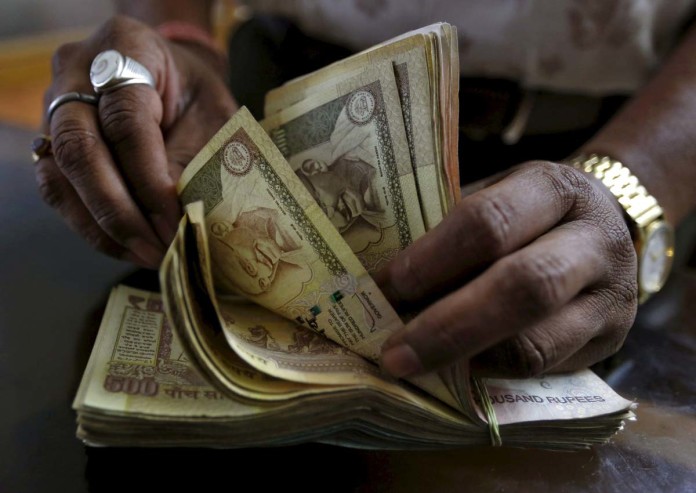
Indian banks will use indelible ink to ensure that people only change old notes for new ones once under Prime Minister Narendra Modi’s scheme to fight “black money”, resorting to a tactic used to prevent multiple voting in elections.

The step comes a week after Modi ordered the withdrawal of large denomination banknotes from circulation, in a shock”demonetisation” drive to fight tax evasion, corruption and forgery.

The government only gave people a few hours notice before cancelling old 500 rupee (S$10.43) and 1,000 rupee banknotes that accounted for 86 per cent of cash circulating in Asia’s third-largest economy.

The sudden move has caused huge disruption to daily life, especially for poor people who live in the cash economy.

There were lengthy queues at banks in New Delhi and Mumbai as people waited in hope that cash dispensers would be refilled.

But people going about their daily business in the country’s two biggest cities said they were willing to put up with the hassle – as long as it doesn’t last too long.

Hari Kishan, who runs a clothing stall in Delhi’s bustling Karol Bagh district, said his business normally turns over up to 60,000 Indian rupees (S$1,252) a day but was making just a sixth of that now.

“People will forget all this inconvenience. When currency returns, by December, the situation should normalise,” said the 40-year-old merchant.

“Credit has to go to the prime minister.”

STATE ELECTION ISSUE

A top finance ministry official said the use of indelible ink – also used to stop multiple voting in Indian elections – would prevent “unscrupulous persons” from sending people from one bank branch to the next to exchange old notes.

Individuals are allowed to swap 4,500 rupees (S$93.87) just once. “You find the same people coming back again and again,”Economic Affairs Secretary Shaktikanta Das told a briefing, saying huge queues were preventing honest people from getting the cash they need.

Campaigning to win power in 2014, Modi had pledged to flush out corruption by forcing people to bring their hidden money back into the system.

And with an important state election just months away, he is again campaigning to justify the demonetisation drive. “After demonetisation, the poor are enjoying a sound sleep while rich are running from pillar to post to buy sleeping pills,” he told a rally on Monday in Uttar Pradesh, which goes to the polls next spring.

Opposition politicians have rounded on Modi, accusing him of tipping off workers from his Bharatiya Janata Party (BJP) and creating an unfair campaign advantage. Party leaders have denied any such leak.

Modi’s black money drive is expected to dominate the reopening of parliament for its winter session on Wednesday and he was due to attend an all-party meeting later in the day to discuss the matter.

Economists say the cash crunch will cause a short-term hit to activity, mainly because a significant chunk of old money will be wiped out and it will take time to print and circulate new 500 and 2,000 rupee notes.

The purple 2,000 rupee notes are smaller that India’s existing banknotes, and it also will take up to three weeks to reconfigure the country’s 200,000 ATMs to handle them.

In a blog post, N.R. Bhanumurthy of the National Institute of Public Finance and Policy estimated that growth could be depressed by 0.6 of a percentage point in the current fiscal year to March 2017.

But an increase in bank deposits and the “multiplier” effect of that money being re-lent, could lift growth in 2017/18 by up to 0.7 of a percentage point, estimated Bhanumurthy, whose think tank is affiliated to the finance ministry.
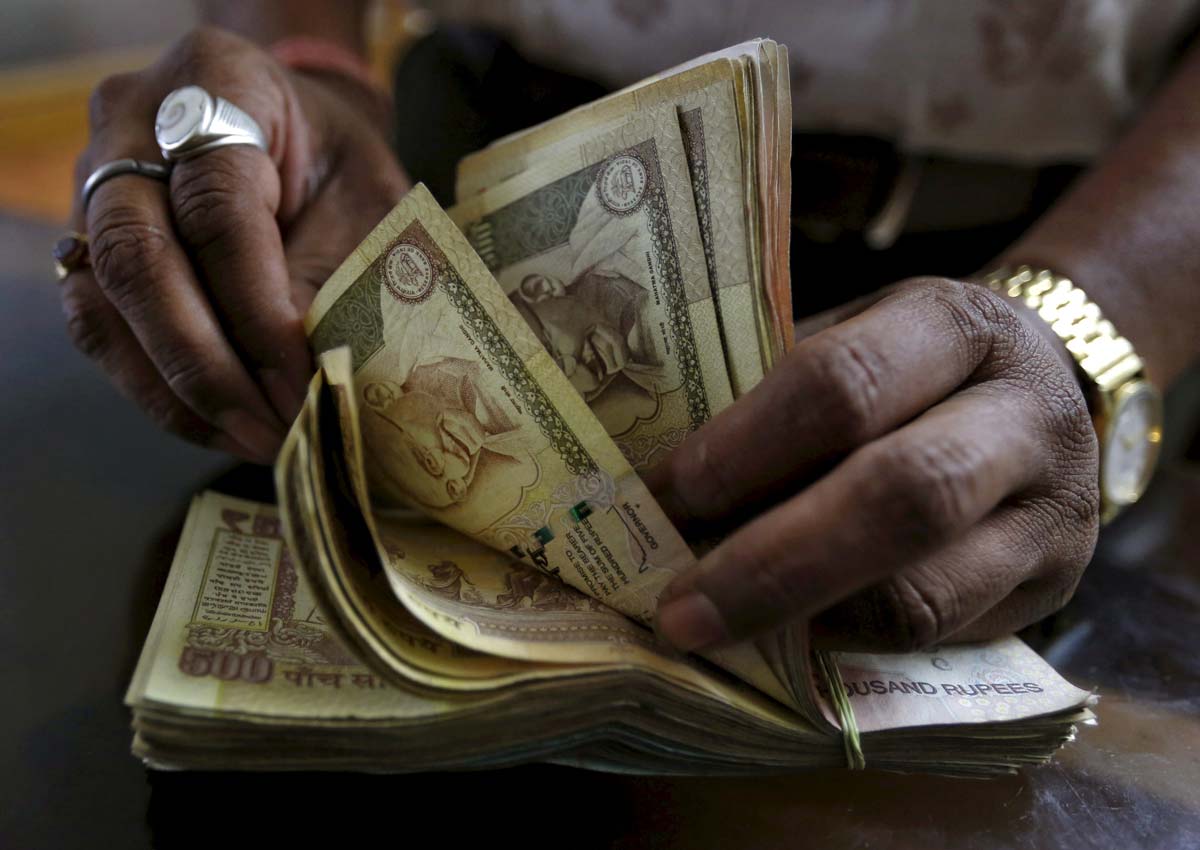
Image: 
Category: 
Publication Date: 
Tuesday, November 15, 2016 – 20:26
Keywords: 
Send to mobile app: 
Source: 


Story Type: 
Others

Source link

2nd Edition Credit Risk Modelling for IFRS 9

0

2nd Edition Credit Risk Modelling for IFRS 9
from Tuesday, November 29, 2016 at 9:00 AM to Tuesday, November 29, 2016 at 5:00 PM

Meritus Mandarin Hotel

231 Adelaide Terrace, Singapore, Singapore

Source link

‘There’s nowhere to be you’, says TV host who lived for 2 weeks in nursing home

0

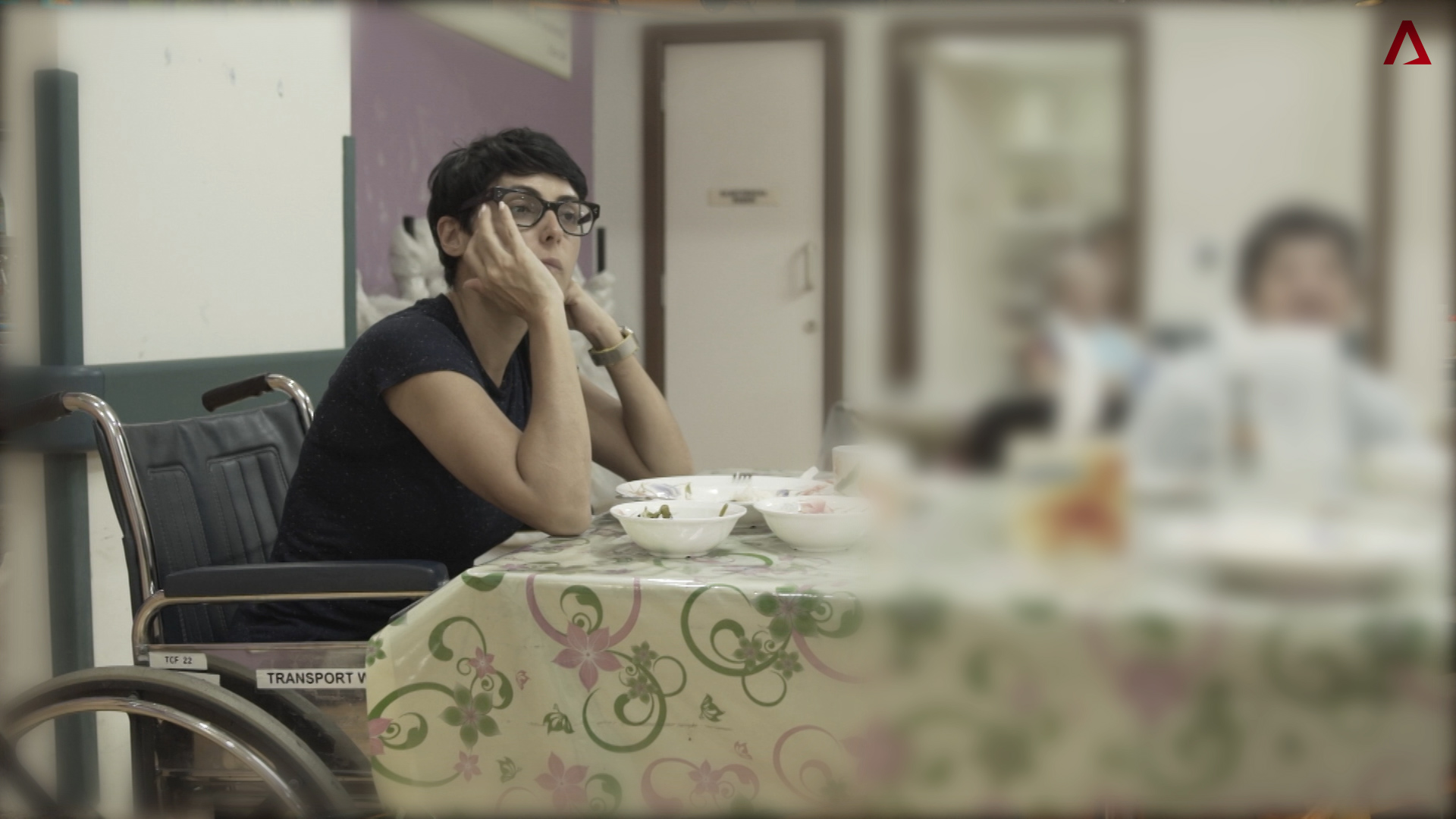
SINGAPORE: When 45-year-old Anita Kapoor set out to spend two weeks living in a nursing home like one of its elderly residents, she had expected “a fairly bleak environment without much energy”. 

“But I didn’t prepare myself for how bad that actually was,” admitted the television host, who was making a social documentary. “I think after two or three days, I just hit a wall – I was really exhausted by the environment.”

Safe but soulless, is how a study commissioned by the Lien Foundation and Khoo Chwee Neo Foundation and released last month described nursing homes in Singapore. Ms Kapoor’s stay in a six-bed ward offered her a first-hand – and emotionally draining – experience of what that meant.

“There is no privacy, there’s nowhere to hang your clothes, there’s nowhere to put your pictures, there’s nowhere to be you,” she told weekly current affairs programme Talking Point, (Watch the episode on nursing homes here,)

“The space just didn’t seem to have any life in it … it feels like your life is on hold.”

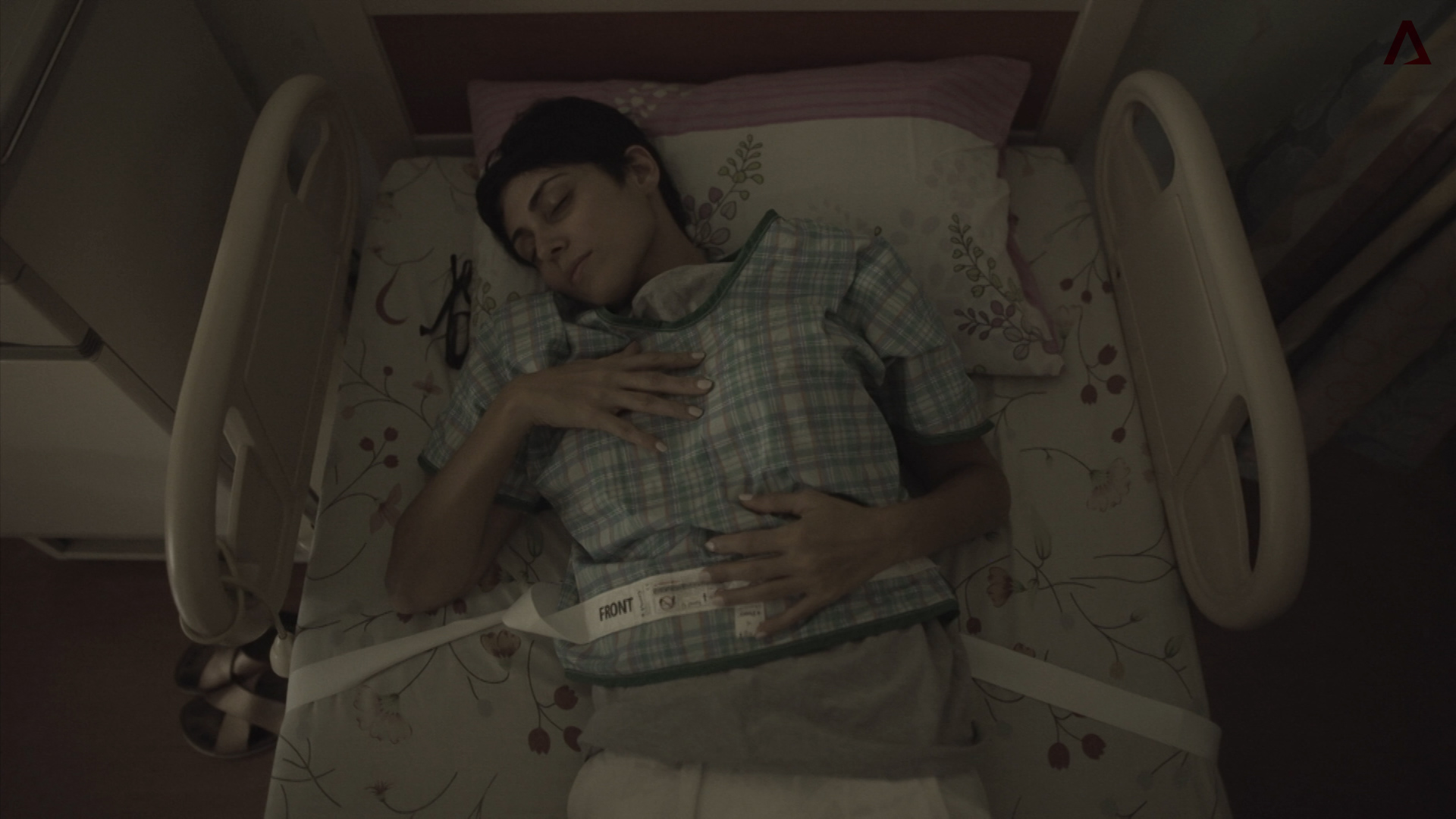
During her two-week stay, she immersed herself in the life of a typical resident and kept a video diary, which sometimes was recorded in tears.  While she described the nursing staff as “very cheerful and joyful”, she found the life regimented, from the moment residents were woken up for morning showers.

She spoke poignantly of residents whose family members never came to visit – and what this reflects of the family and the wider community today.

WATCH: Anita’s experience in a nursing home

“I think the serious lack of choice … it’s like being in a hospital for the rest of your life,” she said.

The question of elder care options is an important one with Singapore set to be a superaged society by 2030 – 960,000 people will be 65 and older, more than double the current number.

While Singapore has ramped up the building of nursing homes, the Talking Point episode discusses the problems of a manpower shortage (up to 85 per cent of staff are foreigners).

Ms Radha Basu, the author of ‘Safe but Soulless – Nursing Homes Need a New Narrative’, said: “I have come across homes at night where one staff member has to look after 20 to 32 residents.”

But others in Singapore are exploring new alternative models of care, such as assisted living at the St Bernadette Lifestyle Village in Bukit Timah. 

WATCH: The St Bernadette alternative

Individual rooms come with attached bathrooms and certified 24/7 medical concierge. The residents are generally independent but may need supervision. Said co-founder Dr Belinda Wee: “The difference is the level of autonomy that they have while being in a safe environment.”

While a stay costs S$3,600 a month, Dr Wee thinks the model could be adapted to more affordable HDB living arrangements, where seniors share a flat and medical concierge service.

For more, watch the full Talking Point episode, Inside Nursing Homes, here on Toggle. New episodes air every Thursday on Mediacorp Channel 5.

Source link

Provisional council appointed to oversee FAS

0

SINGAPORE: A provisional council has been appointed to oversee the Football Association of Singapore (FAS) to help prepare for the election of a new council in early 2017, announced the Ministry of Culture, Community and Youth (MCCY) on Tuesday (Nov 15). 

The provisional council’s term will run from Nov 16 to Mar 31, 2017. Its appointment follows amendments to the FAS constitution that pave the way for democratic elections which must be held by May 2017.

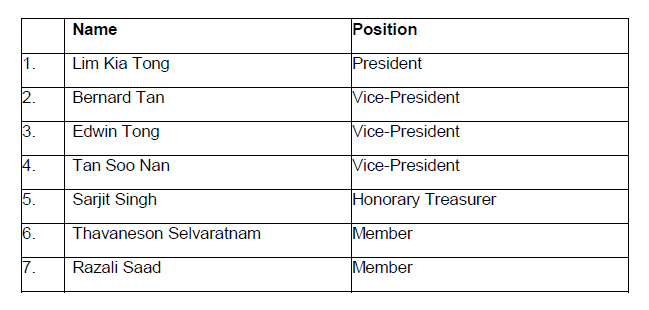
The council will see one of the current FAS vice presidents, Lim Kia Tong succeeding Zainudin Nordin as president of FAS. He will be supported by a team of six other council members.

PROVISIONAL COUNCIL MEMBERS

MCCY appointed the council on the advice of Sport Singapore. The team will have to ensure stability and continuity in FAS operations in the interim period before a new council is elected, MCCY stated.

Source link

Alicia Keys, Rainie Yang to perform at Marina Bay countdown party

0

SINGAPORE – If you’re not going anywhere this year-end, then you could be in for a treat.

Taiwanese stars Rainie Yang, rocker Shin and Eric Chou will be rolling into town for what’s been touted as Singapore’s largest New Year’s countdown concert.

That’s not all. Grammy-winning American singer Alicia Keys, who recently released her sixth studio album entitled Here, will join the stellar line-up to perform a 40-minute set of her soulful classics

The eight-hour-long Countdown concert Rock On! 2017 is set to light up The Float @ Marina Bay on Dec 31 with not just a musical line-up of international acts but local favourites as well.

Local talents like Joi Chua, Chriz Tong, Ferlyn G and Shirlyn & The UnXpected are also set to take to the stage.

There will also be an eight-minute-long firework display to light up the midnight sky of Marina Bay to usher in the start of 2017.

The concert, which expects to attract a 26,000-strong crowd, will run from 5pm to 1am and ticket prices range from $48 to $218.

Tickets will be available for sale from 10am on Nov 18 and can be purchased here.

debwong@sph.com.sg

Image: 
Category: 
Publication Date: 
Tuesday, November 15, 2016 – 17:36
Keywords: 
Send to mobile app: 
Source: 


Story Type: 
Rewritten Story

Source link

Down syndrome 'Be Beautiful' fashion show raises $3 million

0

Movie stars Jamie Foxx, Hilary Swank and Queen Latifah were among celebrities sharing the catwalk with models with Down syndrome for a fundraiser that brought in $2.1 million (S$3 million) for research and medical care.

Foxx, whose sister DeOndra Dixon has Down syndrome, said the aim of the “Be Beautiful, Be Yourself” fashion show in Denver, Colorado on Saturday was to “raise more money, raise awareness so we can attack this situation and bring eyes to it.”

Organizers said the event is the single largest fundraiser benefiting people with Down syndrome. It was hosted by the Global Down Syndrome Foundation.

Also read: Argentine woman with Down syndrome inspires as teacher

Also read: Local womenswear store features models with Down Syndrome

Image: 
Publication Date: 
Tuesday, November 15, 2016 – 17:26
Send to mobile app: 
Source: 


Story Type: 
Others

Source link

Soi 55 offers Hot Coffee or Thai Milk Tea for $1.50 (U.P. $2.80) at One Shenton from 14 – 30 Nov 2016

0

Near Downtown or Telok Ayer areas? Enjoy Soi 55’s Hot Coffee or Thai Milk Tea at $1.50 (U.P. $2.80) till 30 Nov!

Soi 55 offers Hot Coffee or Thai Milk Tea for $1.50 (U.P. $2.80) at One Shenton from 14 – 30 Nov 2016

Attention to all who’re working around Downtown & Telok Ayer areas! Here’s something special for you: Come down to the Soi 55 outlet at One Shenton and get your Hot Coffee or Thai Milk Tea at only $1.50 (U.P. $2.80)

Source

Comfort Delgro releases new $6 off taxi ride promo code valid from 15 – 21 Nov 2016

0

JUST IN: $6 off taxi fare promo code valid from 10pm to 6am daily till 21 Nov

Comfort Delgro releases new $6 off taxi ride promo code valid from 15 – 21 Nov 2016

Get $6 off your taxi fare when you book via ComfortDelGro Taxi Booking App from the 15th of November to 21st November and use the promo code “FB6”. Valid for the first 1000 redemptions

Source

Hope for fewer miscarriages with genetic screening

0

Madam H. Tan, 37, was over the moon when she became pregnant with twins after undergoing in-vitro fertilisation (IVF) two years ago.

But a routine check-up left the logistics specialist grief-stricken. She had miscarried one of them.

With Singapore reviewing its laws on genetic screening of embryos to ensure they have the right number of chromosomes, doctors and potential parents hope there will be fewer miscarriages like Madam Tan’s.

She said: “This will put couples at ease, especially when the woman is above 35 and the quality of her eggs is a concern.

Going through IVF can be emotionally and financially draining.”

She said that couples undergoing IVF are made aware only of the “grades” of the embryos. Hers were grade A -, the highest quality.

“However, there is still no way of knowing about other defects.”

Pre-implantation genetic screening (PGS) of embryos for IVF has long been disallowed by the Ministry of Health (MOH) as its effectiveness was “unclear”.

There was also a risk it would be used to select embryos for non-medical reasons, such as gender.

Some religious groups oppose it as embryos found to be “defective” will be destroyed.

But with new technologies, the MOH is relooking the issue. It announced last week it will review the clinical effectiveness of PGS in a three-year trial to start next year.

It will also look into the ethical concerns and regulation, and consult the public for their views.

An old method of PGS was able to check embryos for only a few chromosomal abnormalities, said Dr Loh Seong Feei, medical director of Thomson Fertility Centre.

New methods can now test all 46 chromosomes in an embryo.

Embryos found to be chromosomally normal can be selected, reducing the risk of miscarriage and eliminating the risk of chromosomal abnormalities.

One concern is that genetic screening of embryos could lead to selecting them based on non-medical reasons, or selecting desirable genetic traits in offspring.

Assistant Professor Tamra Lysaght from the Centre for Biomedical Ethics at the National University of Singapore said this raises “concerns about the stigmatisation of disability in society”.

Some chromosomal abnormalities cause conditions that compromise the embryo’s survival; others result in Down syndrome.

But she said it is important not to lose sight of the goal, which is to help couples conceive in cases where the woman’s fertility is diminished or compromised.

Religious groups are mixed in their reactions.

Singapore Buddhist Federation’s president, Venerable Seck Kwang Phing We, said it has “no objections, as this is a precautionary screening before implantation”.

Others have more fundamental objections. The Catholic Church considers IVF illicit to begin with.

Reverend Father James Yeo said: “Any pre-implantation genetic screening vis-a-vis an IVF treatment is deemed illicit, too, especially when it involves spare embryos and any risks posed to the life of embryos in the screening process.”

The National Council of Churches said it does not have any serious objections to PGS, but it is “concerned that this procedure will be used to select only ‘normal’ or ‘healthy’ embryos for implantation”.

“The council would regard PGS as immoral if it leads to the destruction of defective embryos,” said a spokesman. “To eliminate or destroy ‘undesirable’ human embryos is to already put into practice a form of eugenics.”


This article was first published on November 15, 2016.
Get a copy of The Straits Times or go to straitstimes.com for more stories.

Image: 
Publication Date: 
Wednesday, November 16, 2016 – 00:00
Keywords: 
Send to mobile app: 
Source: 


Story Type: 
Others

Source link

Money changers in Singapore run out of ringgit

0

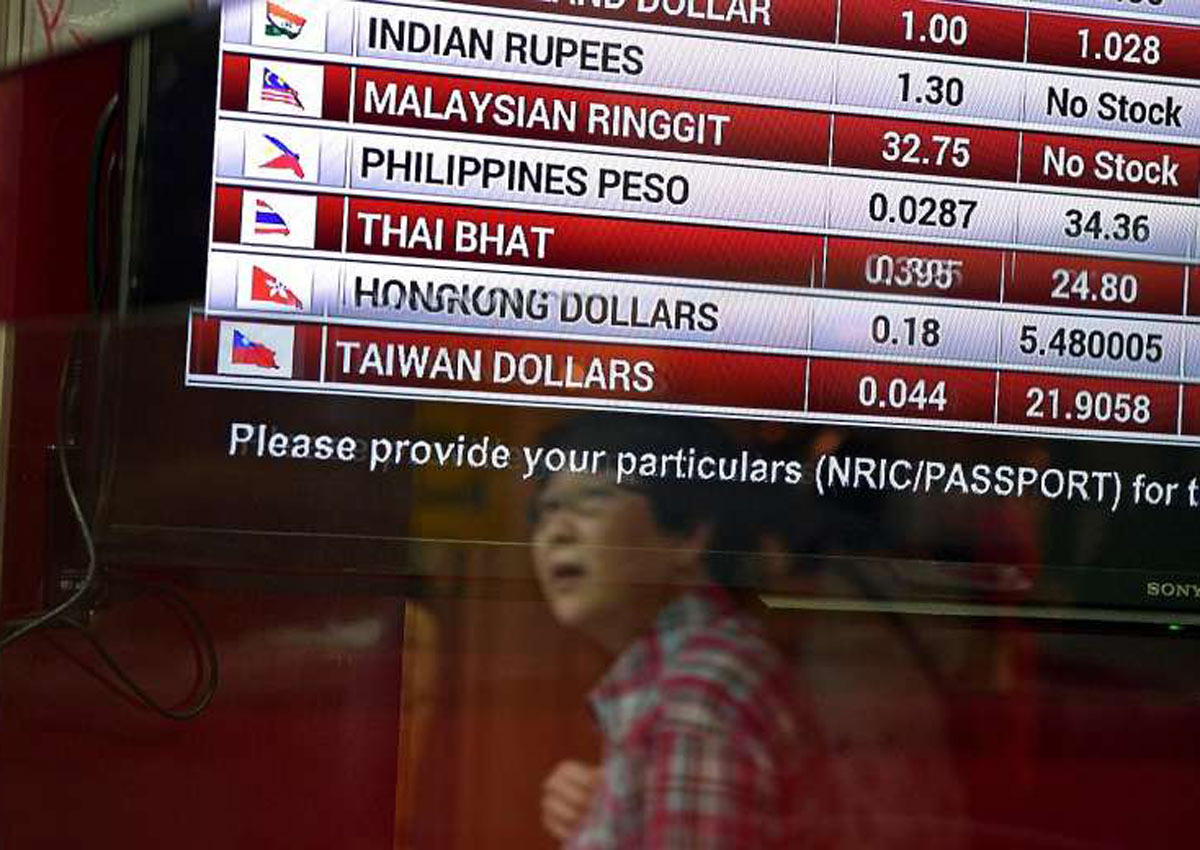
At least four money changers at Change Alley ran out of the Malaysian currency yesterday as people stocked up on the plunging ringgit.

One money changer, who wanted to be known only as Mr Bill, said he was cleaned out within a few hours of opening because he underestimated demand.

Even though the rates on offer yesterday were down on last week, there was still strong demand for the currency. Money changers were offering between 3.01 and 3.03 to one Singdollar – below the 3.05 up for grabs last week.

The volatile currency has been on a rollercoaster ride for months, buffeted first by the commodities downturn and now by fears that Malaysia will suffer badly if United States President-elect Donald Trump follows through on his anti- trade rhetoric once he assumes the top job in January.

Foreign exchange markets are already pricing in more falls. The ringgit was trading at about 3.05 to the Singdollar yesterday, almost at the low point of 3.06 reached in January.

That rate of 3.05 to the Singdollar may filter down to money changers, which would likely spur even more buying by people here, especially those who frequently travel across the Causeway.

One customer, who wanted to be known only as Madam Saiedah, said she travels to Johor Baru twice a month for shopping. The 30-year-old administrator said her frequent visits prompted her to change “a small amount” yesterday, even though she did not think the rate was that good. Others at money changers said they were there to browse and holding off on buying.

Foreign exchange experts said that there is more volatility ahead for the Malaysian currency.

Mr Nizam Idris, head of forex strategy at Macquarie Bank, said he had earlier forecast that the ringgit could weaken further to hit 3.15 against the Singdollar in the first quarter of next year.

He added that he now thinks the ringgit could hit that level earlier, given the political developments in the US.

Mr Heng Koon How, senior investment strategist at Credit Suisse, noted that many Asian currencies have weakened, but the pressure on the ringgit is more intense.

“Malaysia’s foreign exchange reserves have diminished, from about US$120 billion (S$170 billion) at the end of 2014 to about US$98 billion now,” he said.

“This is contrary to the rest of Asia, where most central banks have had strong growth in their reserves. As such, the Malaysian authorities will be less able to mitigate any excessive weakness in the ringgit.”


This article was first published on November 15, 2016.
Get a copy of The Straits Times or go to straitstimes.com for more stories.

Image: 
Publication Date: 
Tuesday, November 15, 2016 – 16:00
Send to mobile app: 
Source: 


Story Type: 
Others

Source link