25.8 C
Singapore, SG
Wednesday, September 30, 2026
Home Blog Page 2351

Gig economy requires adaptation, not avoidance

0

IN HIS now-classic The Age of Unreason, the organisational behaviour and management writer Charles Handy described a scene out of the General Synod of the Church of England in the 1980s. The controversial topic of women priests was being debated, and a speaker from the floor made a desperate and heartfelt plea: “In this matter as in so much else in our great country, why cannot the status quo be the way forward?”

In a similar vein, we see the natural conservatism of bureaucracies everywhere coming to the fore in dealing with the “gig economy”, or an economy characterised by many more freelance or independent contract workers. This process has already been described as the “uberisation” of the workforce – named after the ubiquitous ride-hailing app that has enabled hundreds of thousands of drivers worldwide to offer rides directly to customers.

TWO CONCERNS ABOUT THE GIG ECONOMY

There are at least two main reasons why governments are often resistant to, or sceptical of, the gig economy. The first is that it disrupts traditional business models that rely on firms being employers or the owner of assets that individuals need to produce and sell a service. By disintermediating such firms, the gig economy renders many government rules, regulations and taxes – most of which are imposed on firms – obsolete.

The rise of platforms such as Uber, Grab, Airbnb and other peer-to-peer exchanges in recent years has been driven by the fact that they do not own the (costly) assets that their “old economy” rivals (eg taxi companies and hotels) are encumbered with. They are also able to circumvent many of the rules and regulations that their traditional rivals are subject to. Finally, by shifting power from capital owners to individual workers, the gig economy makes governments less potent in securing compliance or extracting taxes from firms.

Most governmental responses to such platforms have focused on this aspect of the gig economy. They have been scrambling to draw up new rules and regulations – often quite clumsily – to create some sort of regulatory “parity” between the new platforms and the businesses that they are disrupting. But doing so also risks eroding many of the benefits – especially the cost savings that accrue to consumers and the flexibility that accrues to independent workers – that such platforms create in the first place.

The second reason that governments are sceptical about the gig economy is that it undermines the traditional employer-employee relationship. While the labourer gains flexibility and the freedom to work as much (or as little) as he wants, social security systems that rely on employer and employee contributions also become more tenuous. Deputy Prime Minister Tharman Shanmugaratnam alluded to this second aspect of the gig economy when he pointed out at a recent forum: “We’ve got to avoid a continuing drift – risk being passed from companies to workers, who actually can’t take much risk – the risk of instability in wages, and the risk of not being prepared for retirement because of a lack of social security contributions.”

HOW SHOULD THE GOVERNMENT RESPOND?

Not surprisingly, therefore, the disruptions caused by the gig economy tend to be framed as impending threats to be mitigated or even avoided altogether. Such a framing reveals a great deal of the policymaker’s natural instincts.

The new, innovative ways of allocating resources and matching demand and supply that the gig economy brings is “threatening” only because our policy frameworks and regulatory regimes have not kept pace with social and technological innovations. Rather than focus on how these disruptions can be avoided, policymakers should instead think about how social security systems ought to be adapted.

For instance, if the concern is that independent contract workers do not contribute to social security or their retirement savings, then surely the right policy response would be to create the incentives (or rules) that make such contributions far more likely. In Singapore’s context, this would mean expanding the Central Provident Fund (CPF) to cover the self-employed.

Or if the concern is that independent contract workers do not have bargaining power vis-à-vis the platform companies, then the right response would be to mobilise and organise such workers such that they can bargain collectively.

CPF is also a defined contribution system, rather than the defined benefit found in most developed countries. It is probably easier to encourage the self-employed to save for themselves than it is to persuade them to contribute to a pooled fund.

Singapore is thus uniquely placed to embrace the gig economy as our social security system is, mostly, an individualised one. This should provide policymakers the impetus to think creatively about how CPF can be adapted for an economy with a much larger share of independent contract workers.

The Singapore government has long had a reputation for proceeding with caution; incrementalism rather than radicalism has been its preferred mode of dealing with change. This reflects its prudence and the rigour with which it undertakes analyses of challenges (and opportunities). However, a fine line separates deliberate and thoughtful policy responses from policy (non-)responses that are born of risk aversion, a failure of imagination, a lack of courage, or plain inertia.

In fact, the Singapore government has not always approached the novel and the unknown in so ponderous a manner. Many of the policies in the early days of independence had no precedent, and many big leaps forward were nothing more than acts of faith. One need only look at the building of the container port at Tanjong Pagar, undertaken at a time when there was no evidence that global container volume would reach a level that could justify its construction. And of course the development of Jurong Industrial Estate has become the symbol of our policy derring-do and innovation.

Finally, Singapore itself was a disruption. We were the disruptors par excellence, whether in terms of our “developmental state” approach to growth and governance, or our pursuit of export-oriented industrialisation in the face of the import-substitution orthodoxy, or in our whole-hearted and early embrace of technology. It is ironic that a country that has benefited from being a disruptor, and which has disruption at the heart of its DNA, should now look upon disruptions produced by the gig economy with such anxiety and askance.

The writers are respectively senior research fellow (Future Ready Singapore project) and head, Case Studies Unit; and associate dean (Executive Education and Research), at the Lee Kuan Yew School of Public Policy, National University of Singapore


This article was first published on November 17, 2016.
Get The Business Times for more stories.
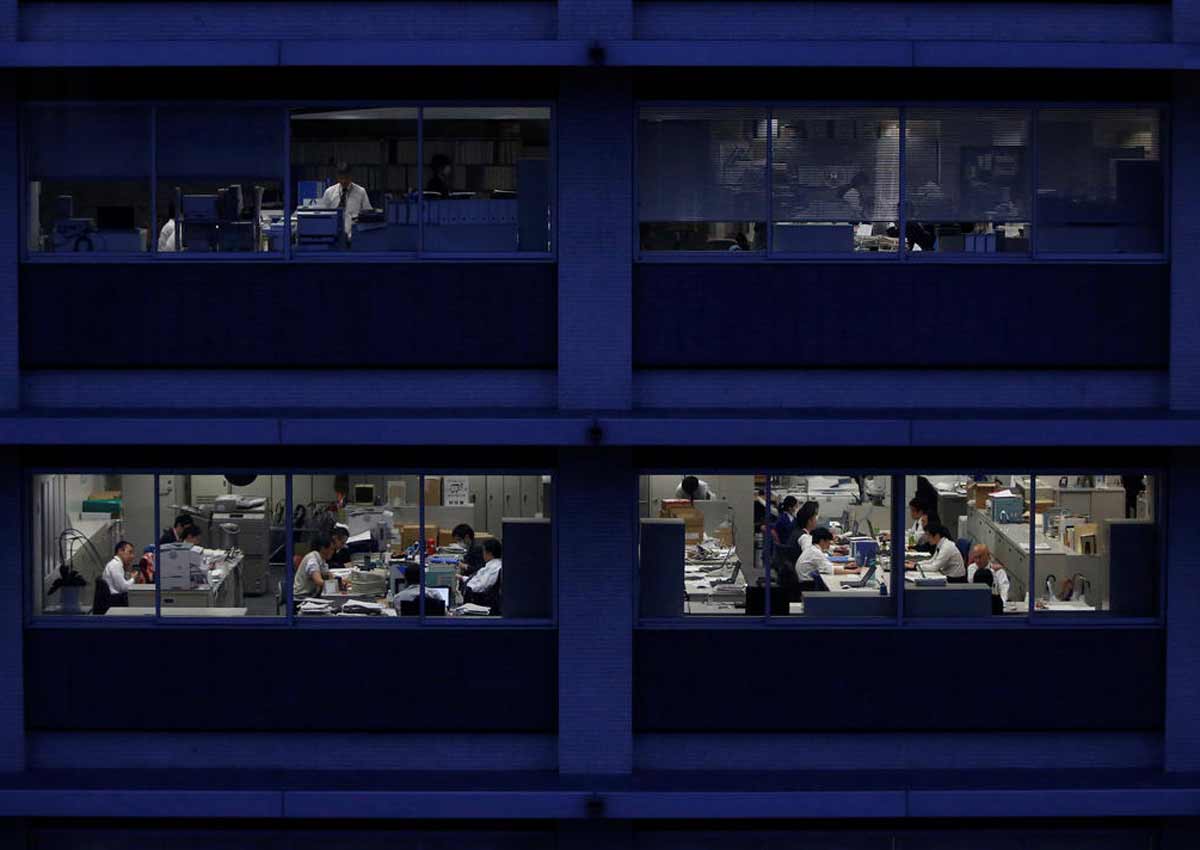
Image: 
Publication Date: 
Thursday, November 17, 2016 – 16:20
Keywords: 
Send to mobile app: 
Source: 


Story Type: 
Others

Source link

Caring for a 154-year-old matriarch

0


The 1860s St Andrew’s Cathedral has been likened to a great-grandmother.

As she ages in tropical Singapore, her list of ailments accumulates.

For instance, the plaster finish encasing the neo-Gothic structure is flaking in a few areas, and its plumbing system was so old it had to be recently upgraded to suit modern-day needs.

The job of making sure that the seat of the Anglican bishop of Singapore ages gracefully is one that Mr Kenneth Ng works at with the utmost devotion. The cathedral’s general manager sees himself as the monument’s custodian.

“It’s like piecing together a puzzle, to put all its pieces right, to keep it functioning and majestic for future generations,” said Mr Ng, 49, who was roped in 12 years ago to oversee the church’s expansion and restoration efforts, which included maintaining its stained glass panels.

Assistant professor of architecture and sustainable design at the Singapore University of Technology and Design, Dr Yeo Kang Shua, has been enlisted to carry out research on the plaster.

Records by the cathedral’s architect John F. A. McNair indicate that Madras chunam had been used. This supposedly comprised shell lime, egg whites, and coarse sugar which were mixed with “water in which the husks of coconuts had been steeped”.

But the historical plaster sampled on site so far contains high levels of sand, which contradicts McNair’s account, said Dr Yeo.

“It appears that different plaster finishes were used to repair the cathedral over time,” he said, noting that McNair’s account came 35 years after the cathedral was completed.

He added: “Now we’re trying to understand the historical materials used, including those from the recent past in order to aid any future conservation works that the cathedral embarks on.

“The iconic Anglican institution, in the heart of the civic district, sits on land that was set aside for a church in 1822 by Sir Stamford Raffles. The first building was completed in 1837 but its tower was struck twice by lightning in the 1840s.

Services ceased in 1852. A second building was completed in 1861 – in an effort that was budgeted at 47,000 Indian rupees.

It was paid for by the East India Company, and built by Indian convict labourers. Granite quarried from Pulau Ubin was used to build the structure.

The building, with its early English Gothic architecture, features simple lines. Sitting on an eight-acre (3.23ha) compound, it is encircled by an expansive lawn.

Consecrated in 1862, it is a living museum in other ways.

For instance, stained glass windows featuring the crests of Sir Stamford Raffles and Singapore governors John Crawfurd and William Butterworth were installed in the nave.

“There’s plenty to see at every corner,” said Mr Ng, who gave as examples the memorial tablets dedicated to historical events, such as one for sailors of the warships HMS Prince of Wales and HMS Repulse, which were sunk by Japanese planes in 1941.

It bore witness to the war in other ways, serving as a hospital while Singapore was shelled heavily.

An account by Anglican priest John Hayter describes the scene on Feb 14, 1942, the day before Singapore fell to the Japanese, as “an unforgettable picture”.

He wrote that the wounded lay in the building’s nave and aisles, which had been emptied of their furnishings.

Doctors and orderlies moved about doing their work and, despite the “noise and fury” and crashing of bombs outside, the building was filled with a sense of peace.

The next day, British Lieutenant-General Arthur Percival visited the church and took communion.

Later, he surrendered Singapore to the Japanese at the Ford Factory in Bukit Timah.

During the war, services continued at the church. This was permitted under Japanese Lieutenant Andrew Ogawa, who was a Christian.

The congregation continues to grow today. Sunday services cater to about 4,000 believers.

In fact, to meet growing demand, the cathedral has started conducting Saturday services, which are attended by several hundred worshippers.

These are held in its extension – a sanctuary underground that was completed in late 2005.

The Cathedral functions as the “mother church” to the 28 Anglican parishes around the island.

“It’s a space that we are ‘upkeeping’ and maintaining for generations to come,” said Mr Ng.


This article was first published on November 17, 2016.
Get a copy of The Straits Times or go to straitstimes.com for more stories.

Image:
Category:
Publication Date:
Thursday, November 17, 2016 – 16:40
Send to mobile app:
Source:

Story Type:
Others

Source link

5 ways that Singapore fintech startups can scale faster

0

TECHNOLOGY is rewiring the financial industry and increasingly altering the way that we transact in our daily lives. From paying for a Grab ride with GrabPay to using Apple Pay to purchase items with the tap of a thumb, cashless has become the currency of progress.

But Singapore’s rise to become a global fintech hub is not just a byproduct of the island’s well-established financial services sector. This progress has been propelled by government efforts to create an environment in which financial technology (fintech) startups can flourish – be that the recently published Payments Roadmap, the regulatory sandbox to support fledgling fintech ventures, or the Looking Glass @ MAS – an innovation lab designed to foster collaboration between fintech startups and the institutions that have historically defined the financial industry.

However, fostering a supportive regulatory environment is only part of the picture. By working with fintech startups around the world – from Monzo to Xero – we have identified a number of tried and tested principles that Singaporean startups can follow to scale faster:

Change is constant – partner up to keep up

Historically, the world of financial services was run by large banks that owned the vast majority of products available to consumers. Any investment was focused on making things more profitable rather than improving customer experience or innovating. This meant that things such as payments, current accounts and online banking got left behind.

Today, however, the dizzying rate of change is clearly evident across mobile payments, near-field communication (NFC), challenger banks, robo-advisers and more. Spoiled for choice, our expectations are constantly being raised by new challengers in the space who focus on a single product and deliver on it.

Working with partners who will help startups execute rapid responses to new industry developments, such as Apple Pay and the latest in machine-learning technology, will be fundamental to getting ahead.

Minimise friction for your customers

Fintech startups risk leaving revenue on the table if they do not make it as easy and quick as possible for their customers to pay, especially on mobile. Today, asking customers to log into their current accounts and do a bank transfer with a reference code is almost akin to asking them to send a physical cheque.

Startups need to ensure that the way that they take money from their customers is compatible with how their product is being used. Providing a simple mobile checkout flow is fundamental to this. In many cases, taking a seamless, tech-forward approach has enabled fintech startups to reduce customers’ pain points more effectively (and swiftly) than the banks. The products and solutions that they offer are personalised to the point that it meets the needs of customers – nipping their challenges and issues right in the bud.

Tap the growth potential of recurring payments

Fintech entrepreneurs are building products that collect loan repayments or regular top-ups from investors. To optimise this process, it is important to securely store customer payment details and choose to bill cards at specific frequencies.

UK-based fintech startup iwoca is a good example of a business that does this well. Being able to collect loan repayments more efficiently provides the company with a strong driver of sustained growth by lending out more money faster. Recurring payments are an amazing (and under-utilised) growth compounder for fintech startups.

Don’t be a jack of all trades – focus on your core

When entrepreneurs start their own fintech business, there is a fair chance that they did so with a singular purpose in mind, such as lowering the cost of international money transfers or allowing friends to split a restaurant bill. As a startup, it is crucial to focus on the product and not peripheral tasks.

Startups can do this by using ready-made tools, which means that they will not need to become a master at PCI (Payment Card Industry) compliance, or design their very own machine-learning system to prevent fraud.

Kickstarter is a good role model. Since its inception, over 100,000 projects have been successfully funded around the world. It was recently launched in Singapore, where individuals have spent nearly S$41 million backing Kickstarter projects – about 16 per cent of the pie worldwide.

There are huge demands on the Kickstarter platform, such as KYC (Know Your Customer) and AML (Anti-Money Laundering) checks on the projects, receiving funds from project backers, and then transferring the funds to accounts based all over the world. Kickstarter managed to expand so quickly internationally by working with the right partners to complete KYC/AML checks for them, and automate their entire international flow of funds.

Simplicity is best

Twenty-first century finance has simplicity at its core. Just as Apple did with the iPhone a decade ago, it is not about removing features but about increasing the usability of those features through an intuitive user experience. Design the product with the customers’ intentions and desired outcome in mind, rather than just to perform a utility function.

The evolution of money remittance is an excellent case study of the role that technology is playing to simplify cumbersome transactions. Toast, the peer-to-peer money transfer app, has placed convenience, speed and ease at the heart of its user experience. With just a few clicks, migrant workers in Hong Kong can remit money home from their smartphones without expensive transfer fees, frustrating delays or the inconvenience of queueing at a money transfer shop.

Singapore is on the cusp of a fintech revolution. The confluence of shifting market conditions, a progressive policy environment and vibrant startup scene has created a perfect storm, placing Singapore in pole position to become the fintech capital of the world.

The writer is head of South-east Asia and Hong Kong at Stripe, an American technology company that deals in online payments.


This article was first published on November 17, 2016.
Get The Business Times for more stories.

Image: 
Category: 
Publication Date: 
Thursday, November 17, 2016 – 16:07
Keywords: 
Send to mobile app: 
Source: 


Story Type: 
Others

Source link

PSLE results to be released on Nov 24

0

SINGAPORE – The Ministry of Education (MOE) has announced that the Primary School Leaving Examination (PSLE) results will be out next Thursday (Nov 24).

In a statement today (Nov 17), MOE said that pupils can collect their result slips from 11am onwards. Eligible students will receive option forms to select secondary schools when they collect their result slips.

Students can submit their forms to the MOE website from the time they collect their result slips to 3pm on Nov 30.

Alternatively, MOE said that students can submit the forms to their respective primary schools between 11am and 3pm on Nov 24, or between 9am and 3pm on Nov 25, 28, 29 and 30.

The posting results will then be released on Dec 21 via an SMS notification, the MOE website or through the primary schools.

Students will report to their new secondary schools on Dec 22, MOE added.

stephluo@sph.com.sg

Image: 
Category: 
Publication Date: 
Thursday, November 17, 2016 – 16:23
Keywords: 
Send to mobile app: 
Source: 


Story Type: 
Rewritten Story

Source link

Breaking the silence on family violence

0

Family violence is not a private matter, say the authorities, who are embarking on a three-year public education campaign to urge people to break the silence if they know someone is being hurt.

The campaign comes as family service centres tackle an increase in family violence, with an average of 1,400 cases reported annually. These include cases of child abuse, which surged to 551 last year, up from 263 in 2008.

In July, a woman and her boyfriend were sentenced to jail for abusing her son, two-year-old Mohamad Daniel Mohamad Nasser. He died after being slapped and kicked almost daily. The authorities did not know about Daniel, who died last year, until it was too late.

“Could we, or anyone, have sounded the alarm earlier? After all, we too could be a housemate, neighbour, relative, friend or passer-by to a victim of family violence who is crying out in distress,” said Minister for Social and Family Development Tan Chuan-Jin at the National Family Violence Networking System conference held at the Singapore Expo yesterday.

“As long as violence in the home is shrouded in silence, the violence will not cease… We can prevent other horror stories.”

Gabrielle, 48, created an artwork titled Speak Up And Reach Out, part of a roving exhibition by the Ministry of Social and Family Development that features art by survivors of family violence.

She said: “When I feel very low, I often share with my close friends and talk to God. I need to speak up, so they know my needs.”

At the conference, the Ministry of Social and Family Development (MSF) released a study that found that people did not come forward to report such cases because they feared it would cause families to break up.


Others saw it as a private matter, or were not sure what family violence entailed. The study included a poll of 2,000 people and focus group discussions with 102 participants.

“Not every report (on family violence) will lead to the break-up of families. Some social workers tell me early reporting can actually help save marriages and keep families intact,” said Mr Tan as he appealed to the audience of 800 professionals, from the judicial, law enforcement, healthcare, social services and academic sectors, to spread the word to get people in the community to flag such cases.

The three-year campaign will employ videos, roadshows and art exhibitions to educate the public on what family violence is, the signs and symptoms to look out for, where to seek help, and what a bystander can do when encountering situations of family violence.

It is encouraging people to share on social media, with the hashtag #breakthesilenceSG, how they stepped in to detect, prevent, interrupt or report suspected family violence cases.

To equip bystanders with resources on how to deal safely with such situations, MSF is distributing materials and running training sessions for community agencies such as grassroots, religious or educational organisations.

Last year, a video of an elderly woman being assaulted by her daughter along a Housing Board flat corridor went viral and prompted MSF to intervene. A police report was made and the daughter was charged.

In his speech at the event, Mr Lim Kok Thai, deputy commisioner of policy with the Singapore Police Force, said the neighbour who filmed it had seen it happen before.

“He had witnessed similar incidents almost daily for approximately six months. He was reluctant to report the incident as he felt that it was a family matter,” said Mr Lim.

Dr Sudha Nair, executive director of Pave, Singapore’s first family violence specialist centre, said the older victims often seek help after enduring years of abuse.

Beatrice, 14, while reflecting on her work of art, Embrace, said: “The bright warm sun shines through the gloomy clouds, like God saving a hurting soul. Shall I welcome and embrace the friendly smile?”

HOW TO STEP IN

DOs

• Approach the victim of abuse privately and make her feel understood.

• Express your concern and encourage her to share her feelings. Be patient and take time to listen.

• Offer to accompany her to see a doctor if she has any physical injuries.

• Inform her about sources of help and provide her with emotional and practical support.

• Help take care of her children or accompany her to the help agencies if needed.

DON’Ts

• Do not downplay the violence and tell the victim of abuse that everything will be fine.

• Do not try to solve her problem and insist that she must do what you say.

• Do not judge or criticise her decision even if she shows that she is not ready to do something positive about it. Respect her decision and assure her of your support if she decides to seek help.

RESOURCES

Family Violence Specialist Centres

• Pave: 6555-0390

• TRANS SAFE Centre: 6449-9088

• Care Corner Project StART: 6476-1482

Child Protection Specialist Centres

• Big Love: 6445-0400

• HEART@Fei Yue: 6819-9170

ComCare Call: 1800-222-0000 or go to http://www.stopfamily violence.sg

Said Mrs Yee-Chow Choy Yin, chief executive of Trans Family Services that specialises in elder abuse: “Already, people do not report explicit violence that they see and hear, what more when it comes to cases such as financial abuse of the elderly, which is even harder to detect?”

She said family members and close friends had to have awareness and act.


This article was first published on November 17, 2016.
Get a copy of The Straits Times or go to straitstimes.com for more stories.

Image: 
Category: 
Publication Date: 
Thursday, November 17, 2016 – 15:54
Keywords: 
Send to mobile app: 
Source: 


Story Type: 
Others

Source link

Road map to boost Singapore's role as global logistics hub

0

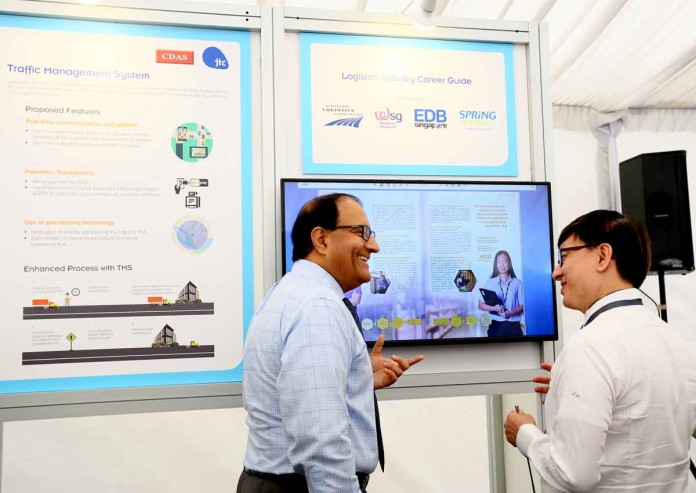
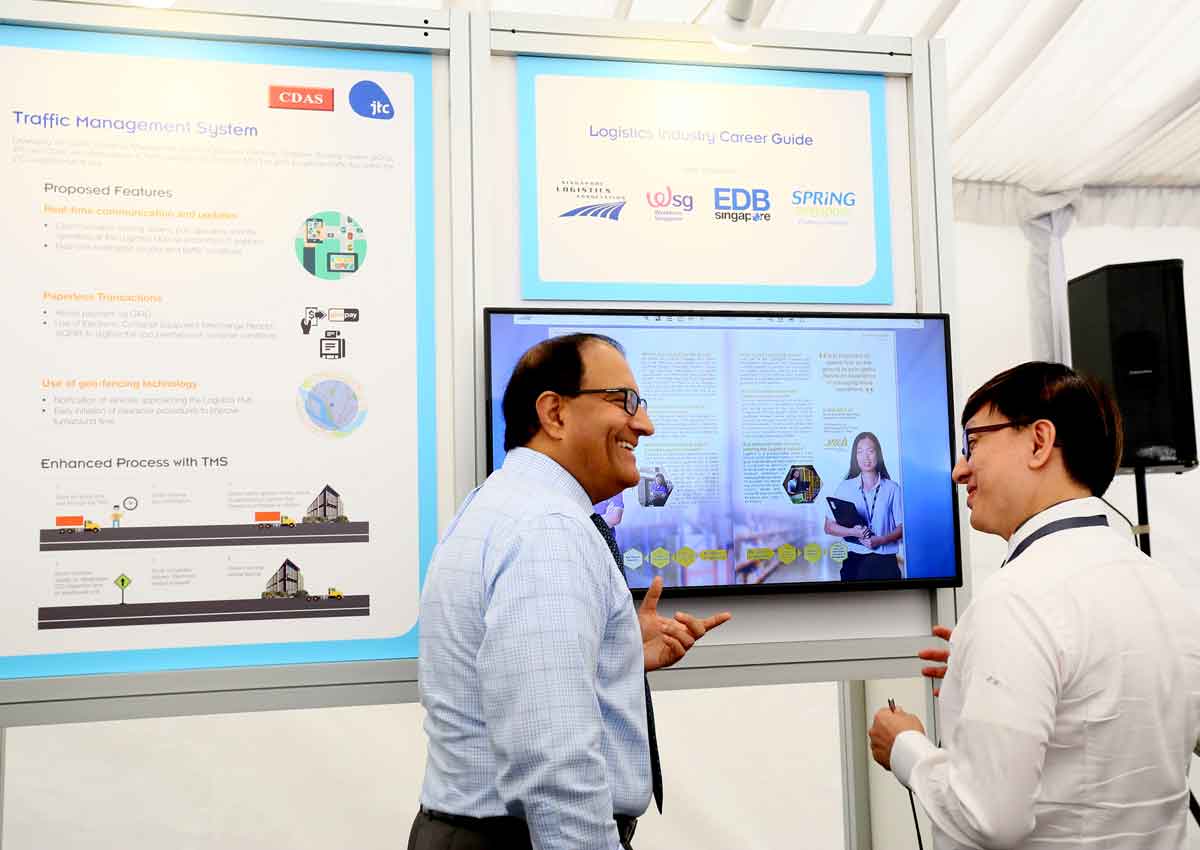
Logistics – the art and science of moving stuff around in a fast-paced economy – is the latest industry to face a bold makeover in the Government’s $4.5 billion Industry Transformation Programme.

The goals are: to be operationally excellent, to be leaders in innovation, and to build up a strong core of local logistics talent and firms.

They were set out by Minister for Trade and Industry (Industry) S. Iswaran at the launch of the Logistics Industry Transformation Map (ITM).

The road map for logistics, aimed at reinforcing Singapore’s position as a global logistics hub, follows ITMs for the food and beverage and precision engineering sectors.

The logistics transformation is set to add $8.3 billion in value to the sector and create 2,000 jobs for professionals, managers, executives and technicians (PMETs) by the end of the decade, said Mr Iswaran.

He noted that the industry is a “critical enabler” of the economy and is expected to continue on a growth trajectory, fuelled by global trends.

“The Logistics ITM will support enterprise-level efforts to transform and grow through productivity and innovation. It aims to nurture a strong Singaporean core through talent development,” said Mr Iswaran at the ground-breaking ceremony of the JTC Logistics Hub @ Gul in Tuas.

“This in turn will help our companies, in particular, the small and medium-sized enterprises, to scale up and internationalise.”

NURTURING SINGAPOREAN CORE

The Logistics ITM will support enterprise-level efforts to transform and grow through productivity and innovation. It aims to nurture a strong Singaporean core through talent development.

This in turn will help our companies, in particular, the small and medium-sized enterprises, to scale up and internationalise.

Under the road map, the Government will work closely with key firms in implementing technologies that “push the frontier of productive operations in Singapore”, he added.

It will invest in next-generation facilities offering opportunities to deploy automation, such as the new JTC Logistics Hub @ Gul.

Mr Iswaran noted that it is key for companies to specialise and deepen their capabilities in key sectors, including food and healthcare logistics, e-commerce fulfilment and aerospace service logistics.

Centres of innovation and centres of excellence will be set up to help firms build differentiating capabilities.

To drive innovation across the industry, the Government will also work with research institutions and universities to bring about new approaches in areas such as digital supply chains and e-commerce logistics, he said.

Mr Iswaran added that the transformation of the industry will spell “exciting opportunities” for the workforce, as “rank-and-file jobs will require more skills, while new professional roles will emerge”.

He noted that the demand for specialist roles will likely increase in the next few years.

One such role is that of solutions engineer Pang Jin-Zhou from Bollore Logistics, whose job involves working with Bollore’s clients to drive productivity gains by designing and implementing automation systems.

Opportunities for career progression are also expected to improve.

The Logistics Professional Conversion Programme under the Adapt and Grow initiative will help those making a mid-career switch transit smoothly into the industry, while Workforce Singapore will help the current workforce acquire niche and emerging skills through the Industry Catalyst Programme.

By mid-next year, the Government will launch the Skills Framework for Logistics, a guide for individuals and companies on career pathways, job roles, requisite skills and wages in the industry, he said.


This article was first published on November 17, 2016.
Get a copy of The Straits Times or go to straitstimes.com for more stories.

Image: 
Category: 
Publication Date: 
Thursday, November 17, 2016 – 16:05
Keywords: 
Send to mobile app: 
Source: 


Story Type: 
Others

Source link

Meiji Warehouse SALE from 18 – 19 Nov 2016

0

STARTS TOMORROW: Meiji warehouse sale! (18 – 19 Nov)

Meiji Warehouse SALE from 18 – 19 Nov 2016

Meiji will be having their annual warehouse sales from 18 November to 19 November 2016 at Jurong Town, 10am to 5pm

Source

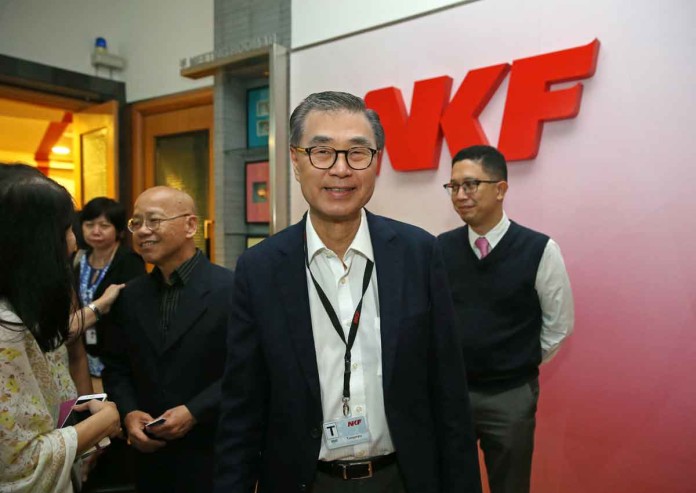
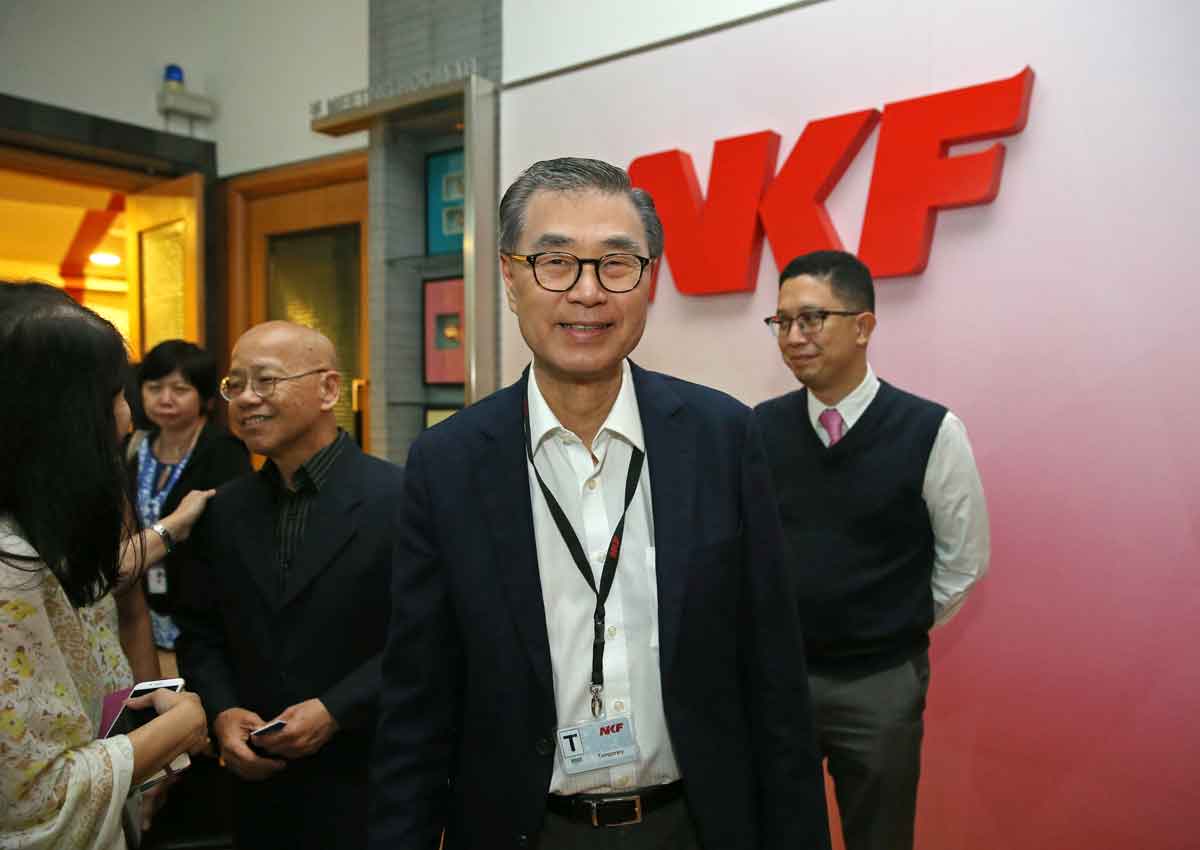
'NKF is not about one man': Board

0

The phone call came out of the blue and caught her by surprise.

What surprised Mrs Eunice Tay even more was being told that the National Kidney Foundation (NKF) needed her back to helm the charity in the short term.

She is now living in Kuching in the East Malaysian state of Sarawak after retiring as NKF chief executive in 2013.

NKF announced yesterday that it had sacked her successor, Mr Edmund Kwok, for a “personal indiscretion”.

Mrs Tay told The New Paper in a phone interview yesterday that she had agreed to take over as interim head until a new CEO is found.

She said she received a call on Tuesday from NKF chairman Koh Poh Tiong, who told her that Mr Kwok was leaving NKF.

He did not tell her the reason and she did not ask.

“He asked if I could come back for a while and take over as CEO until a new one is found. I told him ‘Anything for NKF’,” she said.

Mrs Tay said the earliest that she could start her duties at NKF as interim CEO was mid-December.

“I could not drop everything and come back immediately as I have a commitment to the Anglican Church in Kuching. There are alot of things to settle before I can come back,” Mrs Tay said.

NKF issued a press statement yesterday morning that Mr Kwok had been sacked, which took effect on Monday, citing “personal indiscretion” as the reason.

Mr Koh later told a press conference that the “indiscretion” had involved a male employee who made a complaint to his immediate supervisor against Mr Kwok on Nov 7.

DISCIPLINARY COMMITTEE

He said that given the “seriousness of the case”, the NKF board decided to form an inquiry and disciplinary committee to look into it.

When Mr Kwok met the committee on Sunday to respond to the accusation, he admitted to it.

Based on advice by NKF’s lawyers that such an “indiscretion” is a “reportable offence”, Mr Koh said the board agreed that Mr Kwok’s services should be terminated.

He was informed on Monday and a police report was made the next day.

Mr Koh said the male employee is still working at the charity.

A three-member executive committee comprising Mr Koh, and board members Bennett Neo and Johnny Heng, will take over Mr Kwok’s duties and responsibilities until Mrs Tay becomes interim CEO.

Reporters could not get answers to questions on what Mr Kwok had done, and what had been reported to the police.

Instead, Mr Koh and board member William Wan took pains to stress that “one man’s indiscretion must not affect the whole organisation”.

“As a board, we acted in the best interest of the organisation. The organisation is not about one man. It’s about 4,000 patients and many more… We did what was needed. We terminated his services,” Mr Wan said.

This is the second major scandal the charity has faced in just over a decade.

In 2005, then CEO T.T. Durai was found to be living a lavish lifestyle using funds raised by the charity.

He was later convicted of corruption and sentenced to three months’ jail.

IMPACT

Singapore Management University associate law professor Eugene Tan told TNP that Mr Kwok’s sacking is unlikely to have the same impact as that of the 2005 incident.

“It’s a blow but not fatal. This development does not point to systemic weaknesses but is confined to one person,” he said.

“Yes, it’s something that NKF can do without. It’s a setback but they have built a reservoir of goodwill in the past decade.”

On Mrs Tay’s return as interim head, Prof Tan said it is a stopgap measure “given the unexpected development”.

“With Mrs Tay back on board, it also assures stakeholders who know of her no-nonsense approach to corporate governance,” he added.

On the appointment of a new CEO, Dr Victor Yeo, associate professor of business law at Nanyang Technological University’s Nanyang Business School, said: “The choice must be one that the board believes to be best for the organisation.

“What is key is how the transition is managed and whether the interim measures can minimise any potential negative impact on the organisation concerned.

“A well-thought-out plan, supported by a robust succession planning framework that should already be in place, will help very much in managing any potential fallout that may adversely affect the organisation and its ability to meet the expectations of all of its stakeholders,” he said.

Previous Scandal

This is not the first time a National Kidney Foundation (NKF) chief executive has been involved in a scandal.

In 2005, then CEO T.T. Durai (right) was found to be living a lavish lifestyle using funds raised by the charity.
This emerged after he sued Singapore Press Holdings (SPH) for defamation over a Straits Times report that had questioned the NKF’s transparency and accountability under his leadership.

After investigations by the Commercial Affairs Department and the Corrupt Practices Investigation Bureau, Mr Durai was charged and convicted of corruption.

He was sentenced to three months’ jail and released on Aug 11, 2008.

The NKF later pulled the plug on large-scale public fund-raising events and has since restructured, with better corporate governance.

Timeline of Events

Nov 7
A male employee makes a complaint to his immediate supervisor against CEO Edmund Kwok.

Nov 8
A higher-level supervisor and the human resources department are alerted.

Nov 9
NKF chairman Koh Poh Tiong is informed.

Nov 9-11
NKF’s lawyers are consulted and provide legal advice.

Nov 11
An emergency board meeting is called and the board agrees that the offence is serious enough to warrant Mr Kwok’s sacking.
When Mr Koh speaks to Mr Kwok that night, he admits to the accusation.

Nov 13
An inquiry and disciplinary committee, comprising board members Bennett Neo and Johnny Heng, and chaired by board member William Wan, is formed.

At a hearing, Mr Kwok admits to the indiscretion. The committee recommends that Mr Kwok’s services be terminated and the board agrees.

Nov 14
Mr Kwok is told about his sacking.

Nov 15
A police report is made.


This article was first published on November 17, 2016.
Get The New Paper for more stories.

Image: 
Category: 
Publication Date: 
Thursday, November 17, 2016 – 14:55
Keywords: 
Send to mobile app: 
Source: 


Story Type: 
Others

Source link

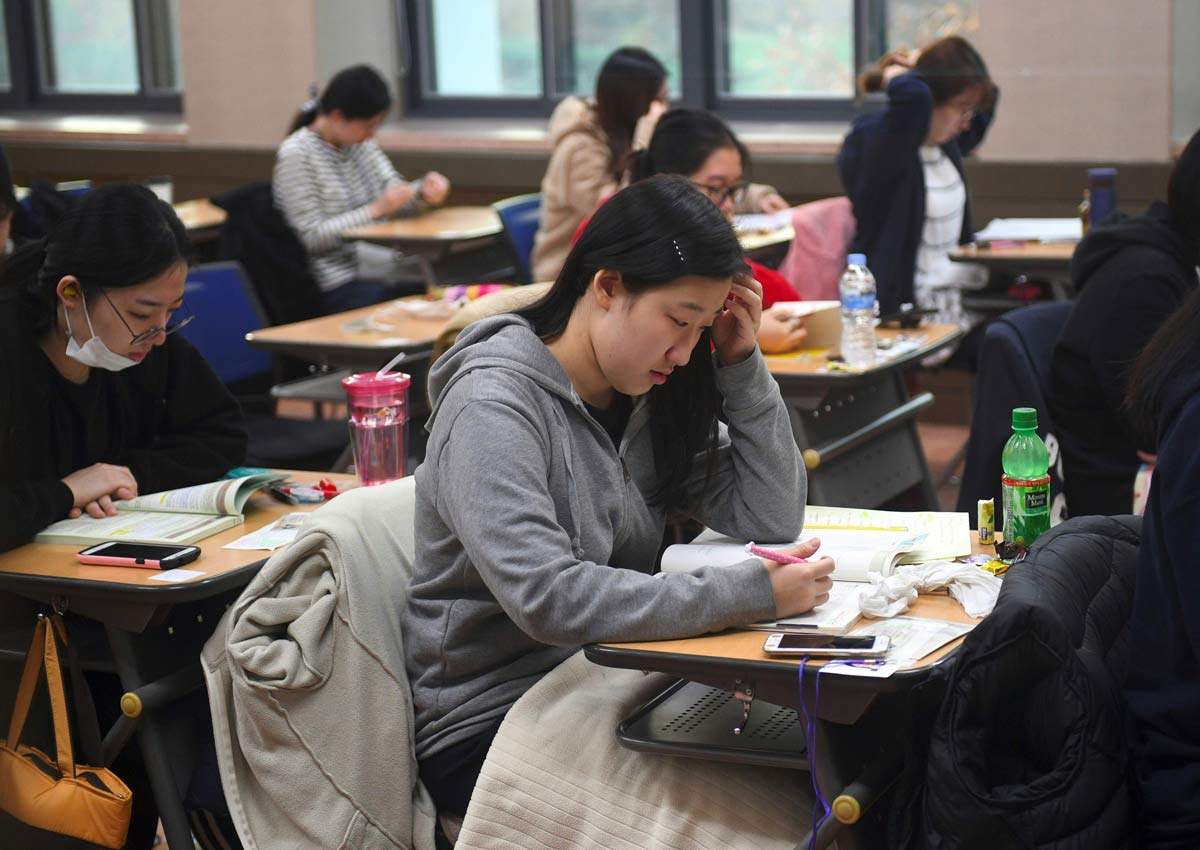
Testing times as South Korean students sit for college exam

0

“All I can do is pray as his mom and I came out here hoping that he can manage his condition well and get a good score he wants,” she said.

The November event, which includes mathematics, sciences and languages tests, sees the country ground to a halt each year.

For 25 minutes, when the listening portion of the English test is administered, the takeoff and landing of aircraft are put on hold and bus drivers travelling near test sites are discouraged from sounding their horns.

Police vehicles and motorcycles were enlisted to escort students running late to the exam.

Financial markets opened an hour later and office workers were advised to be at work later than usual to allow students to get to the exam venue in smoother traffic.

At test sites, students arrived with mixed feelings of concern and anticipation of liberation when the exam is behind them.

“I won’t get nervous and I will work hard to solve problems in exams as I’ve been preparing,” said Lee Se-la, 19, steeling herself for the day-long test.

Image: 
Category: 
Publication Date: 
Thursday, November 17, 2016 – 14:24
Send to mobile app: 
Source: 


Story Type: 
Others

Source link

Abe makes strong pitch for S'pore-KL high-speed rail

0

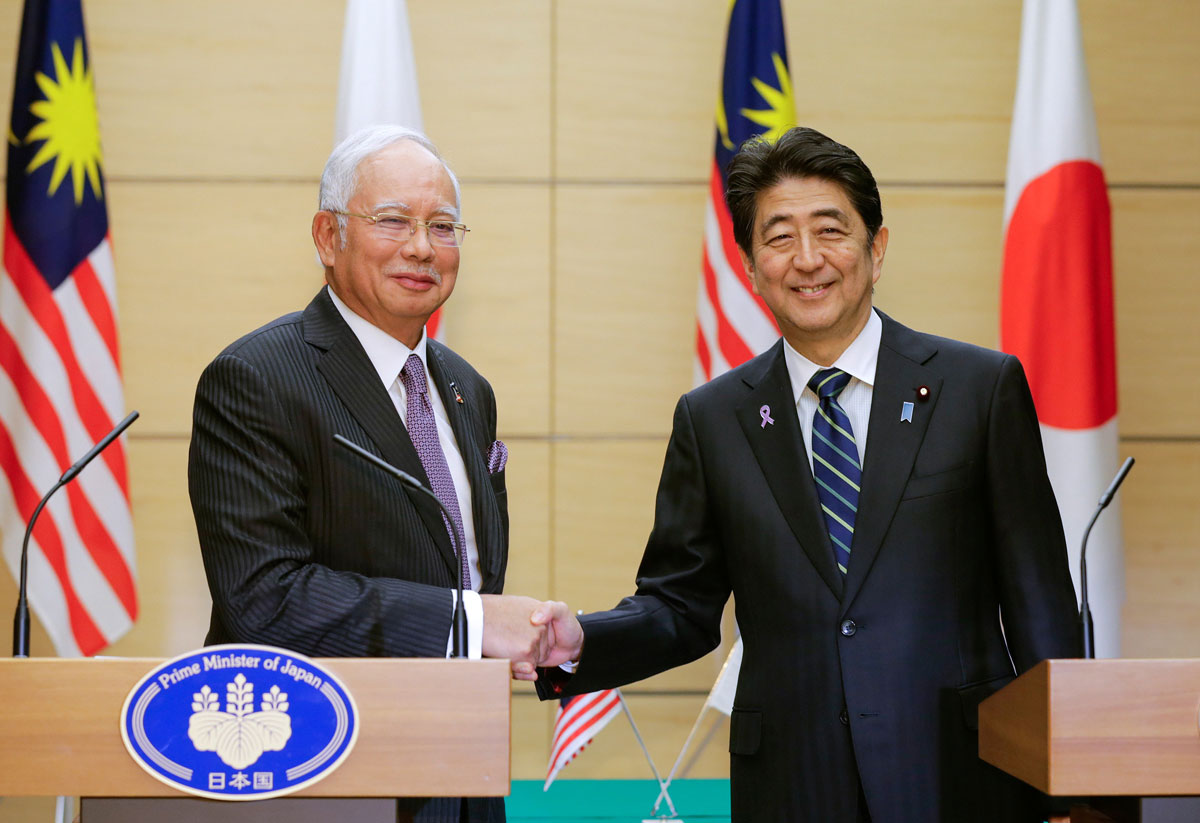
TOKYO – With a lucrative high-speed rail project on the line, Japanese Prime Minister Shinzo Abe yesterday made a strong sales pitch for his country’s shinkansen bullet train technology at a meeting with his Malaysian counterpart Najib Razak.

The pitch was similar to the one Mr Abe made when he met Prime Minister Lee Hsien Loong in Tokyo in September.

The two South-east Asian neighbours are working towards signing an agreement for the 350km rail, with a top speed of more than 300kmh, at the annual leaders’ retreat next month.

Datuk Seri Najib said yesterday that an international tender will be called by the fourth quarter of next year.

The high-speed rail, which is expected to cost more than $17 billion, will slash travelling time between Singapore and Kuala Lumpur to just 90 minutes, compared to the current four- to five-hour road journey.

“We had a very good discussion, and I expressed strong expectation regarding the adoption of Japan’s bullet train technology,” Mr Abe said as the Malaysian PM stood next to him.

Mr Najib, in turn, said he appreciated the long record of safety and reliability of the shinkansen.

“I have reassured (Mr Abe) that the process to arrive at the final decision (on the contract) would be done in an open, transparent and objective manner,” he added.

Japan is drawing up a special financing package for its bid, Malaysia’s The Star reported yesterday.

If its bid is successful, Japan vowed to transfer its bullet train expertise to Malaysia and Singapore.

Japan’s envoy to Malaysia Makio Miyagawa said: “We want you to be able to operate the high-speed rail on your own from the first day. And we want to create a good partnership with Malaysian industries.”

University of Tokyo’s international relations professor Heng Yee Kuang noted that Mr Abe has called himself “Japan’s top salesman in pushing its infrastructure exports overseas”.

Japan and China are seen as among the leading contenders for the railway, which is expected to begin construction in 2018 and start operations in 2026.

Last year, Japan lost a bid to China for a high-speed rail development in Indonesia, and Dr Heng said Malaysia and Singapore may be monitoring the progress of that project for their subsequent decision on the award.

Mr Najib’s three-day working visit to Tokyo, which ends today, comes a mere two weeks after he signed 14 co-operation pacts worth RM144 billion (S$46.5 billion) on a six-day trip to Beijing.

On that trip, he agreed to buy four Chinese patrol boats in Malaysia’s first significant defence deal with China.

Japan yesterday agreed to give Malaysia two used coast guard patrol vessels, following a request by the country’s maritime agency to “meet its urgent need of enhancing its capacity for further ensuring the maritime safety and security”, Tokyo said yesterday.

Read also: Singapore-KL High Speed Rail: What you need to know

One vessel will be deployed to Kuantan, and the other, to Kota Kinabalu.

Malaysia is one of four South-east Asian countries with conflicting territorial claims in the South China Sea with China, and Mr Najib yesterday welcomed Japan’s move as one that reflects the “broad-based” nature of bilateral ties.

“Malaysia continues to play its part to ensure the South China Sea will be an area of peace and stability, without which we cannot achieve prosperity,” he said.

Mr Najib, who is also Finance Minister, said Malaysia is “on the same page” as Japan when it comes to the 12-nation Trans-Pacific Partnership, which now appears unlikely, given American President-elect Donald Trump’s protectionist stance.

Talks between Mr Abe and Mr Trump in New York today (tomorrow, Singapore time) are “very much awaited” by all signatories of the pact, Mr Najib said, adding that he hopes Mr Trump will come to recognise the pact’s strategic importance.

Earlier yesterday, Mr Najib made a pitch for investments at a lunch with Japanese business leaders, saying Malaysia is “no longer competing at the low technology level. We’re moving up the value chain and looking at higher-paying jobs”.

Last year, Japan was Malaysia’s fourth-largest trading partner.

Read also: Speed bumps ahead for ambitious Singapore-KL high-speed rail link

waltsim@sph.com.sg


This article was first published on Nov 17, 2016.
Get a copy of The Straits Times or go to straitstimes.com for more stories.

Image: 
Category: 
Publication Date: 
Thursday, November 17, 2016 – 15:30
Send to mobile app: 
Source: 


Story Type: 
Others

Source link