30.7 C
Singapore, SG
Wednesday, September 30, 2026
Home Blog Page 2341

Coffee Bean & Tea Leaf: 20% Off Regular Size Signature Ice Blended® drinks on 20 Nov 2016

0

Save 20% off Coffee Bean & Tea Leaf’s regular signature Ice Blended drinks tomorrow, 20 Nov (Sunday). Payment via Coffee Bean card

Coffee Bean & Tea Leaf: 20% Off Regular Size Signature Ice Blended® drinks on 20 Nov 2016

Enjoy 20% off Regular Size Signature Ice Blended® drinks at all Coffee Bean & Tea Leaf outlets on 20 Nov 2016 as they celebrate 20 years in Singapore

Source

Rusyaidi crowned 2016 TNP Dollah Kassim Award winner

0

Rusyaidi Salime was crowned the 2016 The New Paper Dollah Kassim Award winner on Saturday morning, during the National Football Academy graduation ceremony held in Jurongville Secondary School.

This was the second time the 18-year-old, who is a second-year diploma in computer engineering student in Singapore Polytechnic, was nominated for the award.

Rusyaidi was selected from a pool of six nominees, which also included, Irfan Najeeb, 17, Nur Adam Abdullah, 15, Danial Syafiq Mustaffa, 16, Justin Hui, 18, and Qayumm Raishyan, 16.

The National Football Academy (NFA) Under-18 right back’s win came following a solid season, in which he had played for the Garena Young Lions, and ended the season with the most starts in the team.

Said Rusyaidi in an interview with The New Paper: “It was a surprising win for me, but a pleasant surprise.

“The other five nominees are very talented players and this time round everyone had an equal chance to win the award.

“I think it’s really a big deal for me because I was nominated twice, so to finally win it is really a blessing.

From L-R: FAS Technical Director Michel Sablon, Guest Of Honour Mr Sarjit Singh, Ezaad Bin Abdullah (son of Dollah Kassim), Rusyaidi  Salime and The New Paper Editor, Mr Dominic Nathan

“It’s important to keep working hard, the moment you start doing so, many opportunities will come your way.”

The Dollah Kassim Award was first started in 2010 to honour young and deserving football talents in Singapore under the age of 18, in memory of the nation’s football legend, Dollah Kassim, also known as the “Gelek King”.

Nominations for the award recipients are made by Football Association Singapore (FAS) NFA coaches who oversee the development and the training of young footballers here.

Nominees are picked based on their technical ability with regards to the game, as well as their character, which were two notable attributes of the late Dollah Kassim.

The winner gets to keep the Dollah Kassim Award trophy for a year and earns himself an overseas training opportunity with a prestigious football club.

Previous years’ winners include Ammirul Emmran Mazlan (2010), Adam Swandi (2011), R Aaravin (2012), Hazim Faiz (2013), Muhelmy Suhaimi (2014) and last year, Joshua Pereira.

Source link

Places of worship in Singapore ramp up security

0

For more than 10 years, the e-mails that Roman Catholic church volunteer Philip Wong received were mostly about his parish church’s activities, like planning funfairs and feastdays, or about announcements by the archdiocese.

But on Thursday, the 66-year-old was surprised to receive an e-mail on how to prepare for a terrorist attack.

The PowerPoint presentation slides were from the Roman Catholic Archdiocese of Singapore, the governing authority of the Roman Catholic church in Singapore.

It has an initiative to form an Archdiocesan Emergency Preparedness Taskforce to train and equip members with basic emergency skills and to improve standard operating procedures for emergencies.

In recent years, terrorists have been attacking places of worship.

Mr Wong, who has been a volunteer for more than 10 years at St Anne’s Church, told The New Paper: “Times have changed. Because of the threat of terrorism, we have to be more aware.”

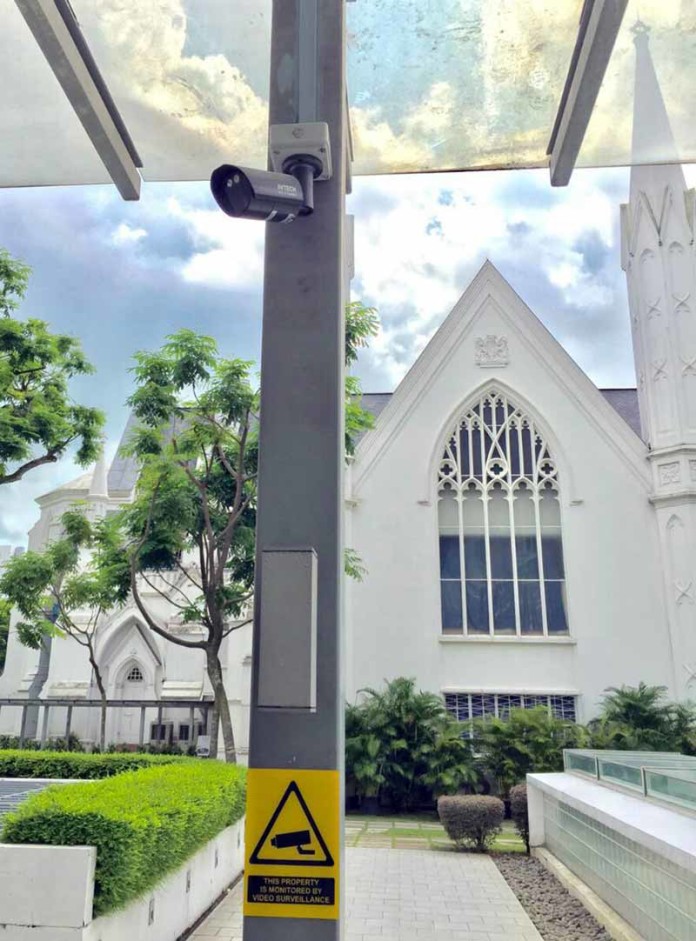
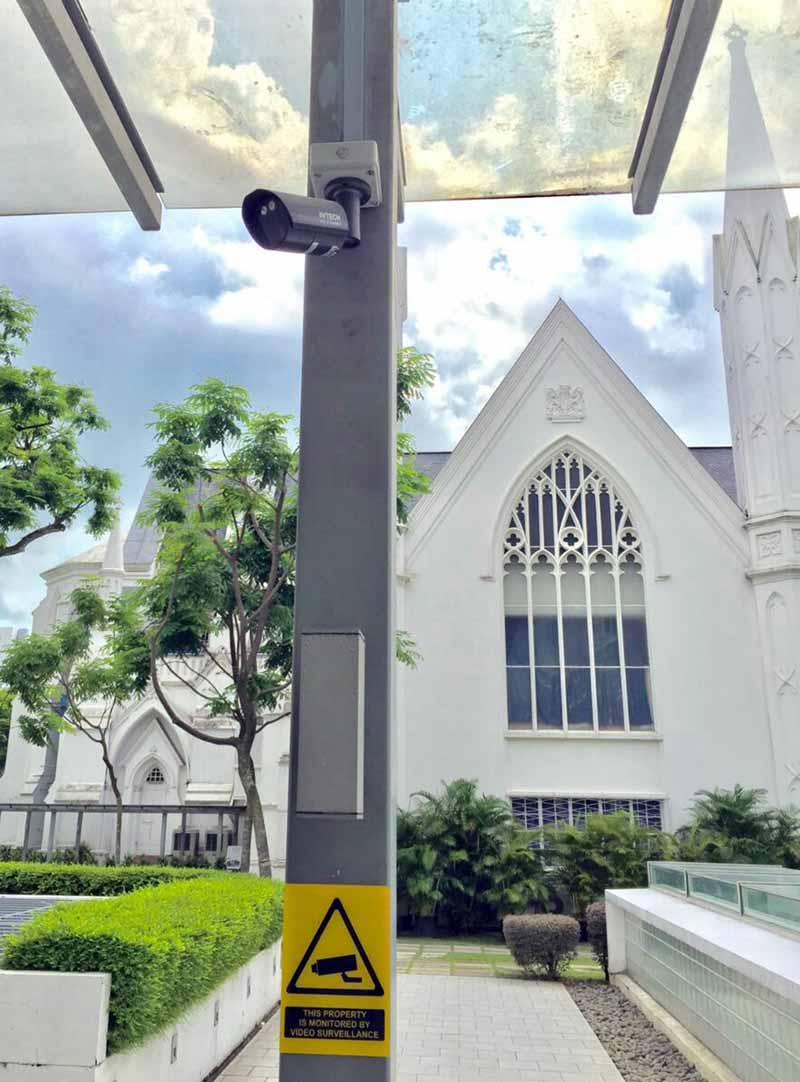
St Andrew’s Cathedral also has closed-circuit television cameras. Photo: Kenneth Lee

VOLUNTEERS

Other Roman Catholic churches, including the Church of St Teresa at Kampong Bahru Road and The Church of the Risen Christ in Toa Payoh Central, were also calling for volunteers with experience in fire-fighting and emergency first aid.

And the churches are not the only religious organisation to be ramping up security.

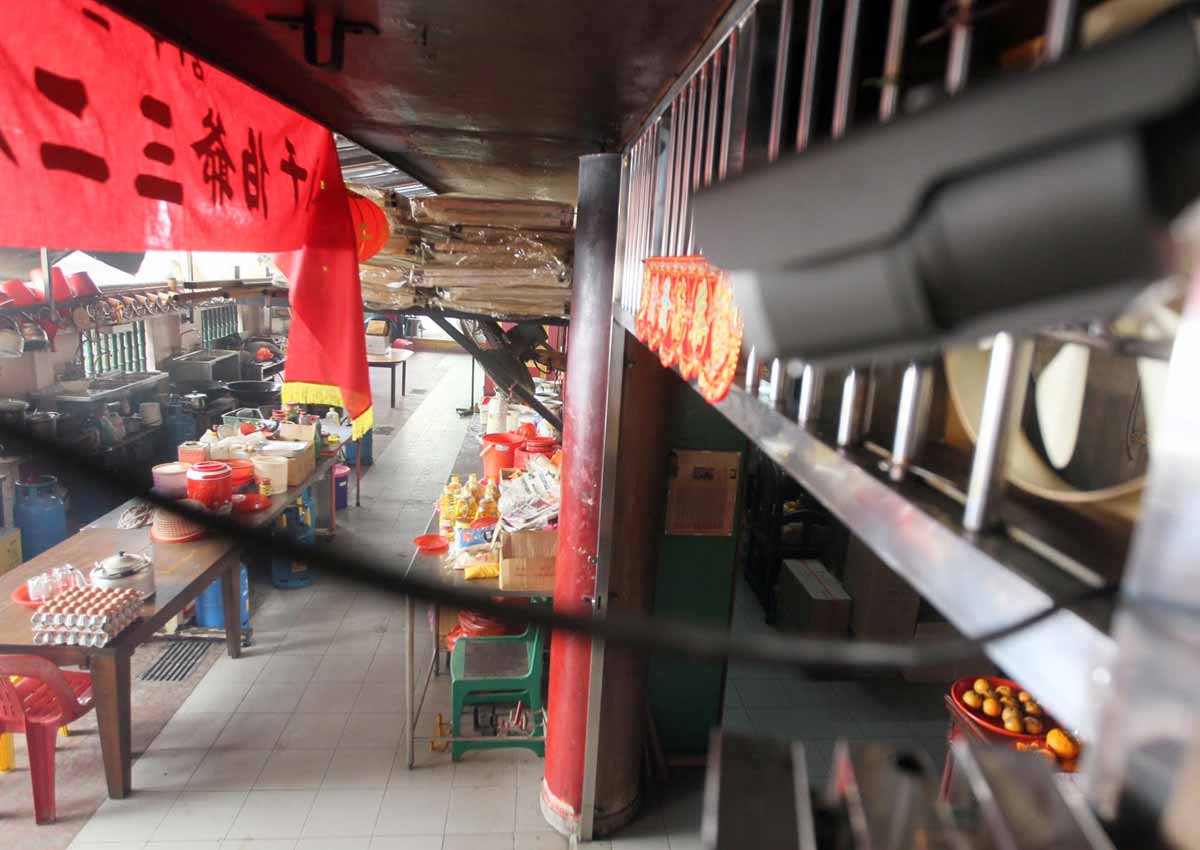
Mosques, which are fitted with closed-circuit television cameras, are secured and locked after midnight, said the Islamic Religious Council of Singapore (Muis).

Last month, the Hindu Endowments Board told The Straits Timesthat its temples have security measures to ensure the safety of their devotees.

These measures are in line with SGSecure, a national movement launched by Prime Minister Lee Hsien Loong in September to increase the public’s preparedness in emergency situations such as a terrorist attack.

SBF’s chief executive Kua Soon Khe told TNP that it has been working with the temples and sharing information about SGSecure with them.

“We are helping to disseminate and translate information on safety protocols to the temples, from emergency evacuation plans to theft prevention measures,” he said.

He added that security is now a national and global challenge and requires the awareness and involvement of every citizen.

“With the collapse of the Islamic State in Iraq and Syria (ISIS) in the Middle East and many ISIS fighters returning to South-east Asia, we have to heighten our awareness for threats in the region,” said Mr Kua.

“The threat is very real. It’s not a matter of ‘if’ but ‘when’.”

“The Government has been sending messages about the threat of terrorism,” he said.

“Accordingly, we tell our members that they should be building networks within their own communities.

“The question is how we communicate if something happens. We hope there won’t be any attack, but if there is, we should stand together – that is the most important thing.”

Some places of worship said they already had security in place.

RESPONSE PLANS

Director of mosques at Muis, Mr Mohd Helmy Isa, said mosques were plugged into their neighbourhood and grassroots organisations, and have crisis response plans for emergencies.

“We view threats as real and serious as the safety of our congregants and children is our upmost priority,” he said.

“Threats do not affect only the Muslim community but the nation at large.

“We will remain vigilant and united with all Singaporeans and continue to strive, stay resilient and strong.”

St Andrew’s Cathedral’s general manager Kenneth Ng said it has had additional cameras and guards in place since the 9/11 attack in the US. It has also engaged a third-party firm to do a security review this year.

These measures have increased the cathedral’s security budget, said Mr Ng, but “it’s necessary”.

‘Security crucial to religious harmony’

Singaporeans The New Paper spoke to had mixed reactions to the increased security at places of worship.

Madam Chen Yi Fang, 50, who goes to Ubin Thai Buddhist Temple, told TNP that the close-circuit television cameras, coupled with alert temple employees, gave her a sense of security.

She said: “People think temples are supposed to be safe places, but that is quite wrong. Those praying are responsible for their own safety.”

Others who welcome the increased security felt that a terrorist attack could be harmful to the racial and religious harmony in Singapore.

Mr Bryan James Francisco, 20, a civil servant and parishioner at St Anne’s Church, said: “With Singapore taking pride in its racial and religious harmony, security is important to ensure that it remains that way.”

Mr Muhammad Faiz, 19, who goes to Masjid Al-Iman Mosque, said he is not worried because Singapore has a cohesive society and the various religious groups are not alone in combatting terrorism.

“I feel as though when I pray in a mosque, people outside it would help keep a lookout,” he said.

Three regulars at the Kwan Im Thong Hood Cho Temple on Waterloo Street said they did not feel threatened by terrorism.

One of them, who wanted to be known only as Madam Tan and who is in her 50s, said she trusted the authorities to keep the country safe.

Mr Kenneth Sum, 19, a parishioner at St Anne’s Church, however, felt conflicted about the increased security at churches.

While he admitted security is crucial, the Nanyang Polytechnic student said he would not feel at peace if he saw armed police at church.

Attacks on places of worship

NOVEMBER 2016

Four children were hurt after a church in Samarinda, East Kalimantan, Indonesia, was attacked on Nov 13. A two-year-old later died of her injuries.

Police said they had arrested a man wearing a T-shirt with the words “jihad” on it and are looking for his accomplice who fled.

Samarinda police chief Setyobudi Dwiputro said the suspects were on a motorcycle when they threw what was believed to be a low-grade Molotov cocktail or homemade bomb.

SEPTEMBER 2016

A suicide bomber killed at least 23 people and wounded dozens of others as they attended Friday prayers at a mosque in Pakistan on Sept 16.

The bombing took place in the village of Butmaina in the Mohmand tribal district bordering Afghanistan, where the army had been fighting against Taleban militants.

AUGUST 2015

A small but powerful bomb packed with ball bearings killed 20 people, including a 34-year-old Singaporean woman, and wounded more than 100 others when it ripped through the Erawan Shrine in Bangkok on Aug 17.

The Hindu shrine is popular among ethnic Chinese visitors, who made up a majority of the dead, with five from Malaysia, five from China and two from Hong Kong.

It was the worst attack on Thai soil.

Two members of China’s Muslim minority Uighur population, Yusufu Mieraili and Bilal Mohammed, were arrested and are facing 10 charges, including premeditated murder and illegal possession of weapons.


This article was first published on Nov 19, 2016.
Get The New Paper for more stories.

Image: 
Category: 
Publication Date: 
Sunday, November 20, 2016 – 06:00
Send to mobile app: 
Source: 


Story Type: 
Others

Source link

Icelandic woman saved by Singaporean tourists: I broke window with my head

0

An Icelandic woman was saved by four Singaporeans after her car turned turtle in an accident in icy road conditions.

But she could not remember anything about the Singaporeans or the dramatic rescue on a road about 40km east of the capital Reykjavik on Tuesday. The rescue was caught on video.

When she finally saw the video, shot by one of the four Singaporeans who helped, she said she cried.

Miss Audur Gisladottir, 21, who works in a nail salon, was on her way to meet a friend in Hverageroi, a town in the south of Iceland when the accident happened.

She can remember listening to US band Korn as she drove in her red 2008 Toyota Yaris behind a big truck that day.

Miss Gisladottir told TNP: “I was driving at 90kmh when I suddenly lost control of the car and hit a sign.

“I think the car rolled three times and I broke the window with my head.”

In the video, Mr Muhammad Nasir can be heard urgently instructing his friends in a mix of English and Malay. Facebook: Auour Gisladottir

The car landed on its roof at the road side, with Miss Gisladottir hanging upside down from her seat, held up by her seat belt.

She said: “I got a big wound on my head, a lot of broken glass went inside of my body and I sprained my back and neck.”

She was admitted to the hospital for nine hours and did not suffer any long-term injuries.

The Singaporeans saw her car overturn and rushed to help, as she screamed.

She said: “I kind of remember everything except after the car stopped. I do not remember screaming and crying like in the video.”

on Facebook

Accident on a free way.. thank god she’s fine

Posted by Denda Maradona on Tuesday, 15 November 2016

The video of the rescue has gone viral, with more than 4,600 views on Facebook.

Mr Muhammad Syahidin, 27, who goes by Denda Maradona on Facebook, posted the video on the day of the accident.

Netizens hailed them as heroes for their bravery and quick-thinking.

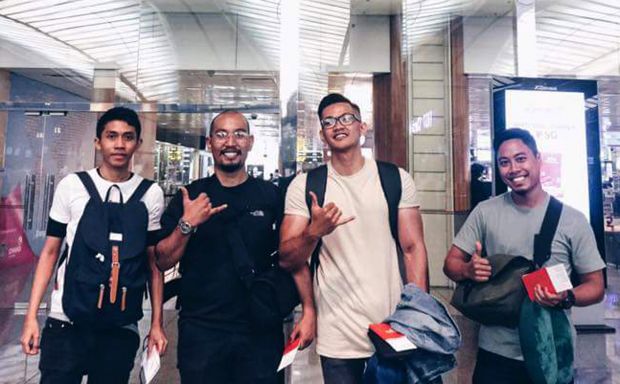
SAVIOURS: The friends who rescued Miss Gisladottir were in Iceland for a holiday. Photo: Facebook/Mohd Shah

Miss Gisladottir had no clue about the video, and its rising popularity.

When asked about how she felt when she saw it, she said: “I was really sad about what had happened and I cried when I first saw the video.

“I am thankful that I survived with no serious injuries.

“I am also very thankful that they (her rescuers) were there and came to rescue me, even though I don’t remember them.”

She posted on Facebook photographs of the accident and of herself in the hospital bed on Tuesday.

on Facebook

Lenti í því óhappi í dag að missa stjórn á lady danger i slabbinu og dúndra svona yndislega fast á skilti fljúga fram…

Posted by Auður Gísladóttir on Tuesday, 15 November 2016

She said thank you in Icelandic to the people who rescued her and the hospital staff.

Mr Muhammad Syahidin and his friends had arrived in Iceland on Nov 15, for an 11-day trip to catch the Northern Lights.

One of the friends, Mr Salihin Idderos, reposted Ms Gisladottir’s post on Facebook, saying: “Glad she’s OK.”

They pull her out of overturned car

Mr Muhammad Syahidin, 27, and his three friends were on the way to Gullfoss waterfall when they saw a car lose control on an icy road, hit a sign and flip thrice before landing onto its roof.

They stopped their car immediately to help the driver, Miss Audur Gisladottir, 21.

Mr Muhammad Syahidin’s friend, Mr Muhammad Nasir, 27, started recording as all four of them rushed towards the overturned car.

Miss Gisladottir, who was hanging upside down in the car, could be heard screaming frantically as Mr Muhammad Nasir got closer.

While Mr Muhammad Syahidin tried to open the front door of the car, Mr Muhammad Nasir can be heard urgently instructing his friends in a mix of English and Malay.

He said: “Get the seat belt. Try to unbuckle.”

At that point, the video shows Icelandic passers-by also stopping to help.

Another friend, Mr Salihin Idderos, 27, managed to unbuckle the woman’s seat belt, while Mr Muhammad Faishal, is seen helping direct traffic.

The video ends with the men freeing Miss Gisladottir, who is seen lying next to the car door, unconscious.


This article was first published on Nov 19, 2016.
Get The New Paper for more stories.

Image: 
Category: 
Publication Date: 
Saturday, November 19, 2016 – 17:00
Send to mobile app: 
Source: 


Story Type: 
Others

Source link

What Duterte's pivot to China means for Filipinos

0

At the centuries-old Chinese enclave of Binondo in the heart of Manila, China is a distant, bygone presence.

Carved out of the Philippine capital by the Spaniards in 1594, the 66ha district is the oldest and largest Chinese quarter in the world. It was where millions of Chinese fleeing the communists in the 1930s till the 1970s docked.

Some settled there, opening small businesses that relied on their connections to the mainland. But most spread out across the Philippines.

Today, with a population of about 15,000, Binondo is just another attraction that Filipinos flock to during Chinese New Year, a superficial representation of Chinese influence in the country.

It is an influence most keenly felt in commerce, and less so in politics, as politicians tend to downplay their Chinese lineage.

President Rodrigo Duterte’s recent efforts to shift the Philippines away from the US and towards China – an old adversary, not least because of the two countries’ row over the South China Sea – is unlikely to change that.

For one thing, the timeframe is too short, with President Duterte limited to just one six-year term in office.

For another, the scale of economic exchange – with US$24 billion (S$34 billion) in investments pledges, US$680 million in annual trade, and the promise of a million Chinese tourists annually – is too small. Even the 30 million Chinese-Filipinos, roughly a third of the country’s population, are unlikely to be moved by Mr Duterte’s shift.

That’s because many of them, while retaining their Chinese surnames, have, like most Filipinos, grown up on a steady diet of everything American. They do not share Mr Duterte’s love for China.

“The common sentiment among my peers is: why is he so tactless, so insensitive, in his speeches, especially against the US?” said Mr Edward Go, a marketing executive whose grandfather briefly lived in Binondo after arriving arriving from China’s Fujian province after World War II.

“We’re not against China or are pro-US, but we believe what makes sound business sense is that you don’t limit yourself to China. We need to look at other countries too,” added Mr Go, 32.

Younger Chinese-Filipinos, noted Professor Henry Chan, an adjunct research fellow at the National University of Singapore’s East Asia Institute, are “very localised and Philippine-centric. They are not keen on international issues”.

GENERATION GAP

It is the older ones, driven by nostalgia and the promise of big money, who are more excited.

Mr Wilson Lee-Flores, an ethnic Chinese columnist with deep connections to the most affluent Chinese families in the Philippines, said Chinese-Filipino tycoons like Mr Henry Sy see in the new rapprochement a rare chance to wet their beaks at a pool that other billionaires in the region have already grown fat from.

“We have been the odd man out. We’ve been so fixated with politics that we have been out of the loop,” said Mr Flores. “They see the pivot as purely business because they are not politicians,” he said of the richer, older Chinese in the Philippines.

Mr Sy’s SM Group retail conglomerate has six shopping malls in China. But the investments pale in comparison to those of Malaysian billionaire Robert Kuok, which include those in the Shangri-La hotels, the China World Trade Centre as well as cooking oil brands that have gained a 50 per cent share of the market.

“Everyone in South-east Asia is all over China, except us,” said Mr Flores. “It’s about time we become a normal Asian country like Thailand, Indonesia, Malaysia,” he added.

Business opportunities aside, older Chinese-Filipinos – many of whom came to the Philippines with nothing but the shirt on their back – also genuinely feel China can help the Philippines on infrastructure development, said Prof Chan.

Mr Sy didn’t even have slippers when he arrived in Manila from Fujian. Through sheer tenacity, cunning and an unbending determination never to be poor again, he turned his tiny shoes and slippers store in Binondo into a US$14 billion conglomerate.

Of the 30 million-strong ethnic Chinese community, about two million are “pure” Chinese, born in China, like Mr Sy, or born in the Philippines to ethnic Chinese parents.

They are the ones with the deepest emotional connections to the mainland, and who have the most fervent hopes riding on Mr Duterte’s “pivot” to China. They are also among the nation’s wealthiest, running companies that account for 60 per cent of the economy.

But their wealth and their tendency to keep a low profile also made them a target for criminals. From 1994 to 1996, about 650 Chinese were kidnapped; 31 were killed and about US$11 million paid in ransom.

The kidnapping scourge ebbed in later years, as criminals, many of them with ties to the police, switched to the narcotics trade.

But with Mr Duterte’s controversial anti-crime drive picking off thousands of drug dealers and addicts, kidnappers are again preying on Binondo’s wealthy Chinese traders.

Ms Teresita Ang-See, founder of the anti-crime Movement for the Restoration of Peace and Order, said six have already been abducted since March this year.

Despite that, the ethnic Chinese community remains firmly Filipino.

They do not see themselves as a motley group of outsiders manning an outpost for China, but as a unique ethnic community that is a blend of where they came from and where they are now, said Ms Ang-See.

That is why they insist on being called “tsinoys”, a portmanteau of colloquial references to Chinese and Filipino, to underscore their Philippine heritage, rather than the derogatory “intsik”, a slur that came out of a Hokkien reference to “uncle”.

Meanwhile, 28 million of the ethnic Chinese population are more accurately described as of mixed heritage – mainly Chinese but also of Filipino, American, Spanish and other European ancestry – who have been so thoroughly assimilated that they are Chinese only in name. They are Catholic, celebrate the New Year on Jan 1, do not observe Chinese festivals like the one for the Hungry Ghost month, and cannot speak Hokkien or Mandarin.

From this crop have come political giants such as Mr Duterte, whose grandmother came from Fujian, democracy icon Corazon Aquino, national hero Jose Rizal and Manila’s former archbishop and kingmaker Jaime Cardinal Sin.

GAME-CHANGER, IF NOT FOR LONG

Then there are the rest of the Filipinos. Half the total population of more than 100 million still distrust China, and nine in 10 Filipinos love the US more than most Americans do, according to surveys in 2014 and this year by pollsters Pew Research and Social Weather Stations, respectively.

Still, Mr Duterte calculates he has everything to win by wooing Beijing and little to lose by giving Washington the cold shoulder.

Growth in the Philippines is underpinned by consumer spending, which is in turn fuelled by billions of dollars worth of remittances from more than 10 million Filipinos abroad, including 3.4 million in the US alone, as well as a burgeoning call centre industry dependent on American money.

Neither pillar is likely to buckle because of Mr Duterte’s cosying up to China.

Hopes are high that Mr Duterte can hit it off with US President-elect Donald Trump, who is just as cocky and undiplomatic.

Prof Chan of NUS said Mr Duterte’s pivot to China, while unlikely to turn the Philippines red, is a ” game changer”.

“The key to whether it can last beyond Duterte’s term or it may be reversed really depends on whether the country and the people can feel the goodies from the policy shift,” he said.

Even if pressed to take sides, the choice will be easy for Chinese-Filipinos, said Manila Councillor Bernie Ang.

“Even China says that wherever you were born and grew up, that place is your country. We are considered Filipinos, so we will fight for the Philippines,” he said.

rdancel@sph.com.sg


This article was first published on Nov 19, 2016.
Get a copy of The Straits Times or go to straitstimes.com for more stories.

Image: 
Publication Date: 
Saturday, November 19, 2016 – 15:50
Keywords: 
Send to mobile app: 
Source: 


Story Type: 
Others

Source link

Friend horrified to discover e-bike accident victim was fellow courier

0

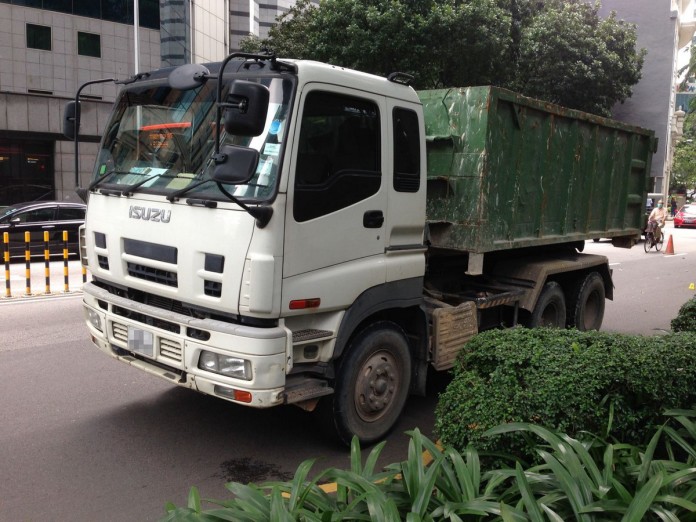
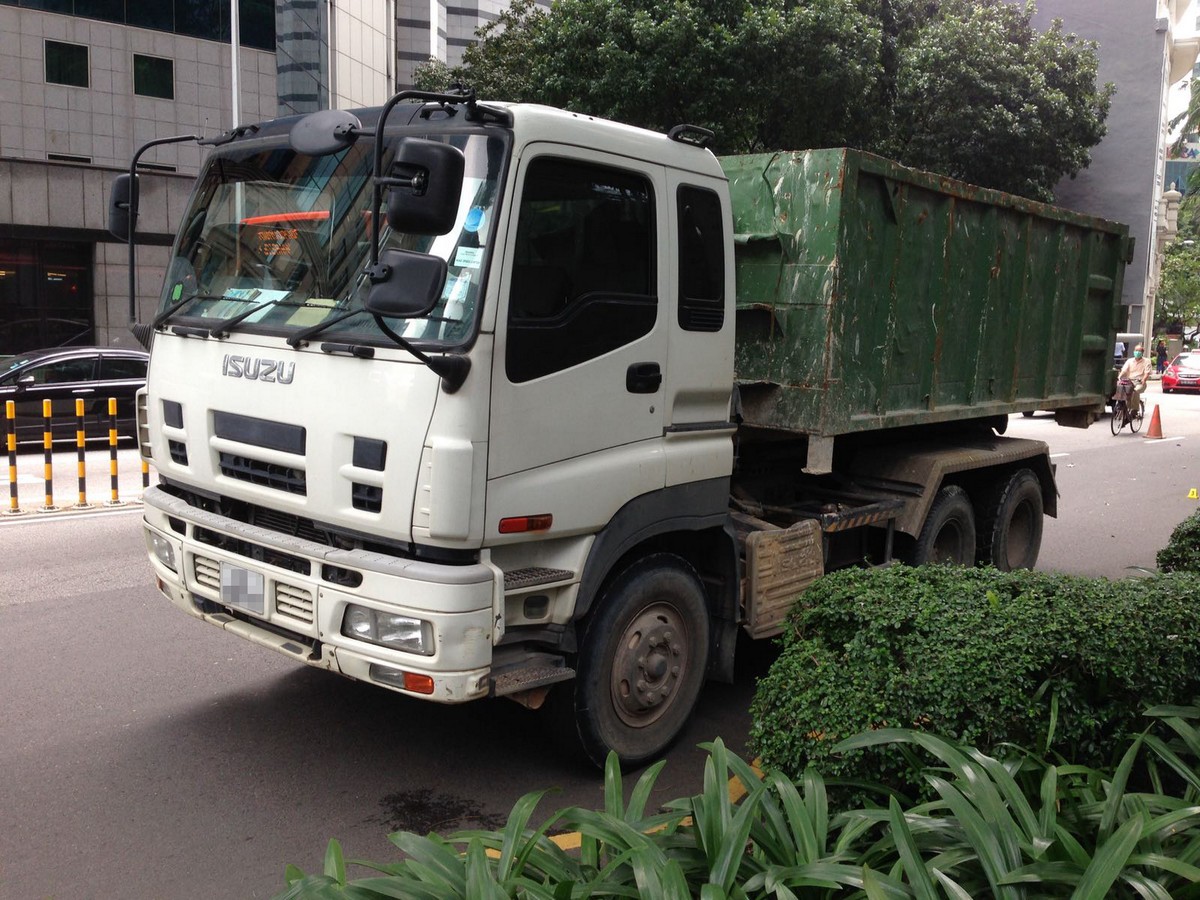
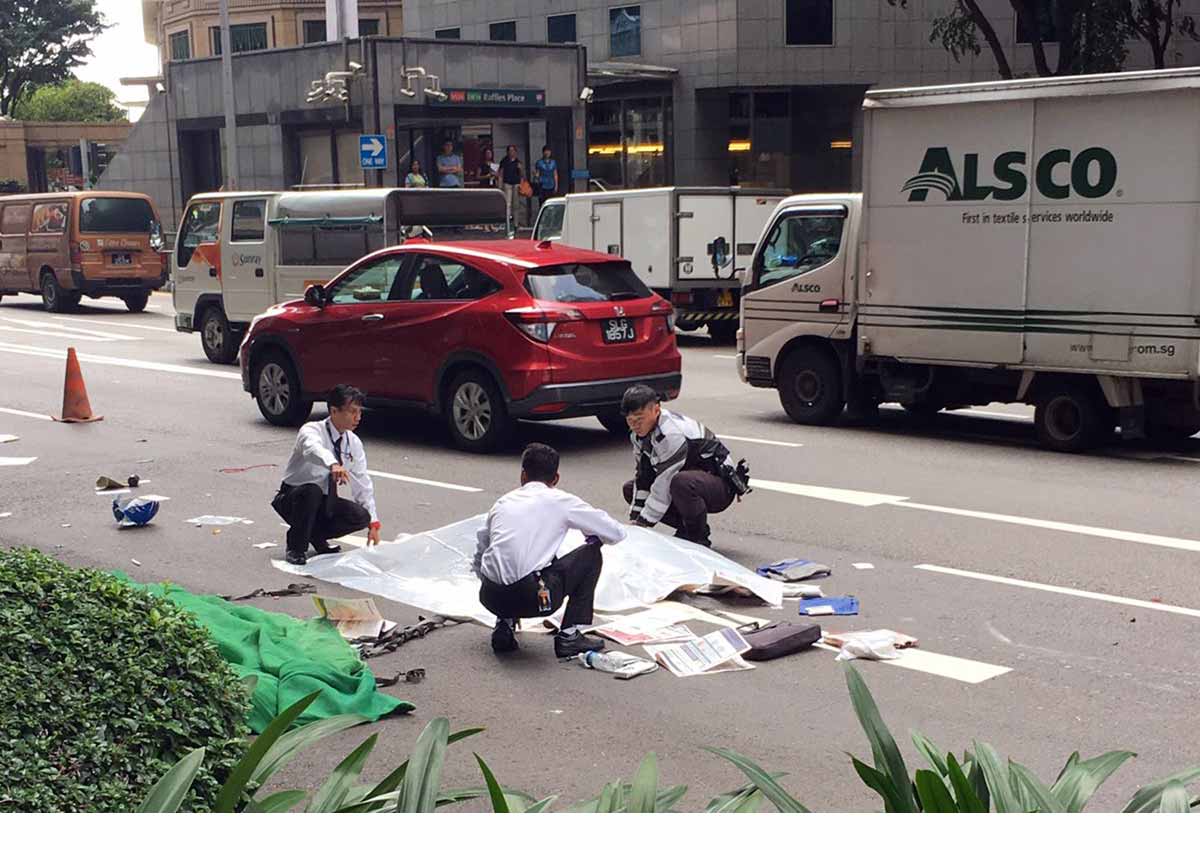
He saw an e-biker being hit by a truck, then dragged along the street.

Mr Lek, 56, a courier, who was on Cecil Street, told The New Paper the shocking sight made him stop in his tracks.

But he was not prepared for what awaited him when he went forward to investigate after the truck had come to a stop several metres down the road.

He said: “I was shocked to see that the victim was my friend. From his badly injured body, I knew he didn’t survive the accident. I can’t believe he is gone.”

Mr Lek said the man was a courier like him and was known as Lao Chek (old uncle in Hokkien) among fellow workers. He does not know the man’s real name.

The duo often saw each other around Raffles Place when they delivered packages for their clients.

The police said they were notified about the accident between the tipper truck and the e-bike at around 10.30am yesterday.

Officers have arrested the 54-year-old driver for causing the death by performing a negligent act. Investigations are ongoing.

Photo: TNP

The Singapore Civil Defence Force paramedics pronounced the 62-year-old dead at the scene.

Mr Lek told TNP that he has known Lao Chek for six years. Heaving a sigh, he said: “Even though we were not from the same company, we always chatted whenever we met.

“He was a friendly guy. I last saw him in the area at 9.15am and he seemed fine. It is sad that he died about an hour later.”

Mr Lek said his friend worked for Courier Circle Asia.

TNP called the company and a man confirmed that the victim was one of its employees.

However, he declined to comment about the incident.

Mr Lek said: “As couriers, we know that we have to ride carefully all the time. I am sad that Lao Chek is no longer with us. I will definitely miss him.”

When TNP arrived at the scene at 12.45pm, a large crowd had gathered on both sides of the road.

Many office workers were seen craning their necks to get a better view of the aftermath of the accident.

Police officers were observed conducting their investigations within a cordoned-off area, and they set up a blue tent over the body.

The crash on the extreme left side of Cecil Street near Republic Plaza caused a traffic jam.

An unidentified bespectacled man arrived at the scene at around 1pm and he broke down when officers showed him the body.

Photo: TNP

He left the scene in a green car 20 minutes later after the body was taken away in a black van.

An onlooker, who wanted to be known only as Miss Lee, 32, said she often sees e-bikes on the road in the area and fears for their safety.

She said: “Cecil Street is a busy road, I feel sorry for the victim in this tragedy. I read the news and many ebikers have already lost their lives on the road.

“I hope the authorities will do something to help both e-bikers and other motorists.”

Another onlooker, Mr Muhammad, shared the same sentiment.

He said: “I think e-bikers need to be trained first before they are allowed on the road. There have already been several accidents involving them recently.”


This article was first published on Nov 19, 2016.
Get The New Paper for more stories.

Image: 
Category: 
Publication Date: 
Saturday, November 19, 2016 – 17:00
Keywords: 
Send to mobile app: 
Source: 


Rotator Image: 
Story Type: 
Others

Source link

Park bent on riding out political crisis

0


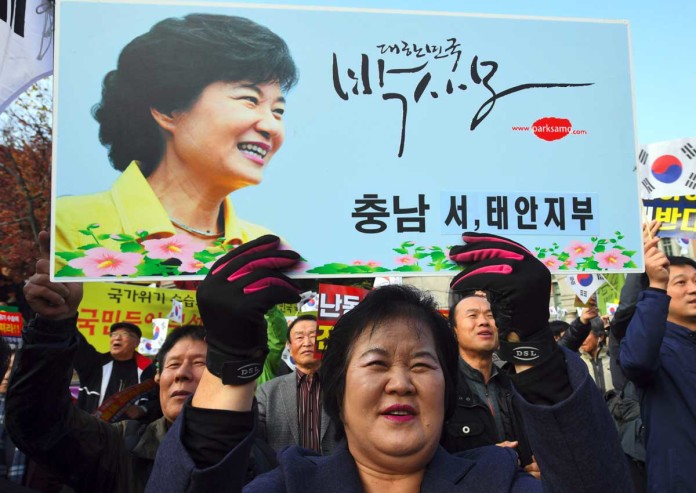
The voices calling for her resignation may be growing stronger, with more than one million people expected to stand in the chill today in protest, but South Korean President Park Geun Hye is showing no sign of bowing out.

Some critics say she is too stubborn. Others call her foolish.

Even as public anger turns into resentment amid a parliamentary gridlock, the 64-year-old daughter of late authoritarian leader Park Chung Hee seems determined to ride out her biggest political crisis and remain in office until the end of her term in February 2018.

Ms Park has even resumed her official duties this week, appointing two vice-ministers, pushing ahead with the deployment of a United States anti-missile system and an intelligence-sharing pact with Japan, and making plans to visit Tokyo in the middle of next month for a trilateral summit with Japan and China.

This is despite a looming probe by prosecutors delayed till next week, to investigate her alleged link to an influence-peddling scandal involving her close friend Choi Soon Sil.

Ms Park’s determined display of will may not go down well with the vocal opposition and protesters, but might score with her so-far silent supporters and those getting tired of an unfolding saga with more twists than a TV soap opera.

Analysts say she has lost her legitimacy and credibility, and that no one will take her seriously now that allegations have emerged that she allowed her civilian friend, Ms Choi, to meddle in state affairs and exert her influence in national policies.

But with no immediate solution in sight – even opposition parties are divided over whether it’s better to purge the President or have her delegate her powers to a neutral prime minister – Ms Park must still go on.

Political commentator Don Lee told The Straits Times: “People think the President is bad and we should just change leadership. But it’s not so clear-cut. Even the worst leadership is better than chaos.”

For now, Ms Park still has powers guaranteed by the Constitution, he added.

But she will not have an easy time trying to steer ahead, given negative public sentiments and her plunging approval ratings.

The snowballing saga is giving not only the President but also the country a bad name.

“This scandal will deal a huge blow to the image of Korea in the international circles,” said political scientist Myungji Yang from the University of Hawaii at Manoa.

“From the perspective of other countries, there will be no reason to meet and negotiate with Ms Park at this moment, both because her term is near the end, and whatever she says will not be credible any longer.”

The country’s already sluggish economy will also be hard hit, and it does not bode well that major conglomerates like IT giant Samsung and Hyundai Motor are also implicated in the scandal.

Some of their bosses have been summoned for questioning by prosecutors over allegations that they donated huge sums of money to two foundations set up by Ms Choi for her own gain.

Political uncertainties will result in a loss of consumer and business confidence, said Dr Hyunju Kang, research fellow at local think-tank Korea Capital Market Institute.

“The President and the government have completely lost the momentum to enforce economic reforms,” he said.

Not all is lost for Ms Park though. With a new team of key aides in place, she has about 15 months to turn the situation around.

But first, she must prove she can withstand next week’s probe, which hinges on the outcome of investigations into Ms Choi, due out tomorrow.

changmc@sph.com.sg


This article was first published on Nov 19, 2016.
Get a copy of The Straits Times or go to straitstimes.com for more stories.

Image:
Publication Date:
Saturday, November 19, 2016 – 15:00
Send to mobile app:
Source:

Story Type:
Others

Source link

More dialogue needed on censorship: Singapore International Film Festival chief

0

SINGAPORE: Yuni Hadi has been promoting independent Singapore films for many years. She has helmed the film programme at The Substation Centre for the Arts, creating milestone projects such as the annual Fly-by-Night Video Challenge and the Singapore Short Film Festival. She also helms Objectifs Films, a Singapore-based international film distributor. She is also the co-producer of award-winning Singapore film Ilo Ilo which saw its box-office takings in Singapore surge, after it attained international accolades.

Today, she is executive director of the Singapore International Film Festival which takes place from No 23 to Dec 4.

She went “On the Record” with 938LIVE’s Bharati Jagdish about censorship and growing the local film industry. They started by talking about the perceived bias against local content.

Yuni Hadi: It’s a problem, but it’s not all gloom and doom. For example, the films by Jack Neo are doing very well in the box office, and Singapore content on YouTube is doing really well, even those that are a little bit more niche. I think people want to feel connected to what is going on in Singapore through Singapore stories.

But for example, if you were not really interested in opera, it is unlikely that you would take that chance to go to a concert. But if it was introduced to you in a different way, let’s say, outdoors in a different setting, you might give it a chance. I think that’s what we’re trying to do with the film festivals. We have different accessibility points.

Traditionally, part of film festivals’ strategy is to present films that you can’t see easily. But in today’s world, films get released so quickly after they get made or they premiere in someone’s film festival or it’s released on iTunes six months later. So the film festival world is, in a sense, questioning its relevance especially today when you can watch films on many different platforms and people have shorter attention spans. I think one of the key things that we do that is, in a way, not replaceable by digital media is having that intimate contact with the people who make the films, the stories and being able to attend a master class or being up close and personal with the heavyweights in the film industry and being in the audience of an emerging filmmaker. Watching a film with an audience is totally different from watching a film by yourself at home, because you have that energy and the vibe of other people. This changes the experience of watching a film.

I still believe the story is what people connect with and sometimes people are surprised after they give themselves a chance to watch films of different genres but what I think is interesting is that the so-called niche audience is actually growing because there are more ways to find information. You can watch the trailer easily, you can read reviews and some of those are entry points for a person to give something they haven’t tried a shot. We show films of all genres. We have animation, action from countries like Vietnam and Thailand. We have the serious arthouse films. So there are entry points for different people and we are always hoping that people will be adventurous and try something new.

BIAS AGAINST SINGAPORE-MADE CONTENT?

Bharati: But whether we’re talking about commercial films or independent arthouse films, to what extent do you feel that there might be a bias against locally made content? Local artistes, not just filmmakers but even singers, say there is – that Singaporean audiences don’t pay attention to local content till it gets international recognition, as in the case of Ilo Ilo.

Yuni: I feel that it has changed quite a bit. In the last 10 years, I think people don’t have the perception that Singaporean films are not as good as Hollywood films. I do think that they may feel that it’s different. Obviously most of our films are in the genre of comedy and drama and documentary. A lot of it has to do with the area of interest of the filmmaker but also budget. So I do think that people are more adventurous because you can watch Singapore films on the plane right now and people do choose it over other types of content.

Bharati: Budgets and financing are a related issue and we’ll touch on that later. But even though some relatively low-budget Singapore films are of high quality, few Singapore films are commercial successes. So while it has gotten better, does the bias still exist? 

Yuni: Personally, I feel that there is some perception that Singapore films may not be something you want to watch for example, over the weekend, if you’re taking a break from work. But I don’t think it is because they feel that it is made with a lower budget or not as good. I think mainly it is about what they find more entertaining. If you want to relax, you would watch a Hollywood blockbuster.

Bharati: So this goes towards themes and genres – they don’t appeal to local audiences enough to make them commercially viable. I keep asking about this because several people have said that they would never go into filmmaking here because it’s not something you can make money from and while audiences abroad may appreciate your work, people feel discouraged when their own population doesn’t. So in order to encourage more filmmakers, this has to change. How do you think the situation can be managed so that Singapore audiences are more open to giving Singapore films more support? Or do you think filmmakers here just don’t have the skills to make commercially viable films or films with a powerful enough message to draw in local audiences. We have seen some successes like the works of Boo Junfeng and Royston Tan who are well-known here, but what’s needed to take this to the next level?

Yuni: There are two ways. First, I think Singapore films or the filmmaker has to be true to themselves and make the films that they want but also, work hard at finding their audience. 

Bharati: When you say work hard at finding their audience, what does that entail that they’re not already doing?

Yuni: Being more creative in marketing, being unafraid to explain what their films are about and the other thing is education in terms of film literacy. I think that is really important for primary and secondary schools. 

So for example, when I was at the Berlin film festival in Germany, they had a youth programme for kids and the kids were really young. They were in primary school and they were exposed to films you would not think to show to little kids and that really surprised me because if we ran a programme like that in Singapore, we may be more conservative in what we would want to show to the children – what we call family films that are rated G. There would be more restrictions and more protectiveness over what our kids watch. But over there, they allow the kids to watch films that are PG13 in terms of classification and they will explain and talk through with the kids what’s going on and the parents allow that to happen.

FILMS ENRICH YOUR PERSPECTIVES 

Bharati: So it could be really difficult themes such as suicide for instance?

Yuni: Yes, so that kids can become more aware of issues and the world around them. So it’s about removing that layer of protectiveness because we shouldn’t underestimate our audiences. Let’s not underestimate our audience including the kids out there. This will definitely increase support for local independent films too. 

Bharati: Film literacy classes for the young sounds like a great idea, but considering what the Singapore school system is like and what our priorities have been for so many years, what do you think it will take for the authorities to start to incorporate this into the curriculum? 

Yuni: In Singapore, we always have hopes that there will be more resources spent on the arts because we shouldn’t see it in a straightforward way in that, “Oh, we are encouraging people to be an artist” But it’s more like: it adds value to your overall perspective as a person.

Bharati: I was just going to go to that. Why should people watch films, why should they discuss them, why should they even think about them? It seems you have to make a case for that because in a utilitarian society like Singapore, the focus is always on the skills that will help get you a job. 

Yuni: Well, I think we have seen the impact of the arts and culture in places like Europe where a lot of resources and money is spent on the arts and we have been doing that a little bit in Singapore with the museums for example. So in that sense, the films that we show are no different from promoting artwork in a museum. After all, we all want to have museums as great as those in the UK or New York. So if we admire those museums or film festivals, why are we not putting the resources in our own museums and film festivals and galleries so we can be on par with other people?

Bharati: But it shouldn’t just be about being on par with other people, right? Earlier, you mentioned how films can add value to your overall perspective as a person. Elaborate on that for me. Why is that so important and how is it that arts and film can imbue that? 

Yuni: I have two children now who are very young and I think about that quite a bit – that balance between doing well in school and having access to different experiences so you can enrich your perspective. You can’t argue with the fact that if you expose children to the arts, sports and different areas in life, there is no downside to it. I suppose, perhaps, the arts are sort of always associated with questioning, society, opening dialogues that may not want to be touched. Opening the dialogue to subjects that people might not want to discuss all the time but that are important nevertheless. We don’t have that sort of culture to question and to unearth things. 

CENSORSHIP COULD DRIVE SINGAPORE ARTISTS OVERSEAS

Bharati: Indeed, a lot of people may think we should let sleeping dogs lie. 

Yuni: Yeah, it’s definitely changing though because there’s so much information out there. Also for example, if you’re not able to release a book or a film or whatever it is in Singapore, people will just go overseas and do it. So it’s a different time. The question is: do we want to allow that space for these things to happen? Or are we going to allow all these artists to go overseas and to let them get their stories released anyway?

Bharati: So here, we’re talking about censorship.

Yuni: I think it’s a matter of perspective when you talk about censorship. So it really depends who you’re comparing to. Every country has rules, regulations and touchy subjects that you are not allowed to go and venture into, and in every country there will be artists who try to push the boundaries and I think we need that kind of interesting tension for things to move forward. 

Bharati: It’s par for the course for an artist, isn’t it?

Yuni: Yeah, even the most liberal countries, there is censorship in one or another. If it doesn’t come from the Government, it may come from a very conservative group for example. So it is something that we all face. In Singapore in particular, I think the dialogue is ongoing and part of the responsibility lies on the artist to push the boundaries to have that discussion with the Government agencies, but a lot of it also has to do with the audience – the Singaporean people. When there is a very strong reaction towards something – a film, for example, that is very controversial – people write in and you realise perhaps there are always two sides to a story.

But I think at a point where if you’re worried about your children watching this or it’s against your belief, then there is a choice always to not participate in it or not watch it. Because how can you really control all the content in the world? If it’s not going to be in the cinema or the bookshop, it’s going to be on the internet. So I think in terms of the audience, it’s part of our responsibility as well instead of relying on the Government to do all the censorship for us. We need to rethink censorship. Don’t always call for Government censorship. Allow the content to be available, but ultimately make your own choices. 

Bharati: People do write to the Government when they have issues with content that goes against their personal beliefs and they want the Government to step in rather than allow it to happen – the film to be screened or the book to be available in public libraries. There’ll always be a camp that feels the option just shouldn’t be out there and they might even say that it goes against “national values”. Do you think the authorities have been too reactive in bowing to such pressure?

Yuni: Yeah, I think there is space for more dialogue to happen. But of course, to be fair, we don’t always understand what is happening behind the scenes. Censorship is always very complicated.

I certainly don’t envy the position that the Government agencies are in, in terms of censorship because there’s a lot for them to balance. They have created some special concessions for festivals to show films that perhaps normally wouldn’t be able to be seen. So I think that is a great starting point. I think there needs to be a little bit more flexibility for classification and our role of course is to create that understanding as to why this film should be shown or why these topics are presented in a film or there’s nudity or whatever the thing is. In the festival environment, it always helps to have the filmmaker there to tell their story so I think that is one of the key differences – to create that dialogue. I think that is something that definitely helps create better understanding.

Bharati: How do filmmakers respond when you have to talk to them about cutting scenes or that their film cannot be shown here? I’m sure you’ve had to over the years.

Yuni: Well, the film festival has a no-cut policy. So we don’t show films that are not allowed to be screened in Singapore for different reasons. So if it needs a cut, we don’t show it at all to keep the integrity of the artists’ vision. So we have that understanding with the artist as well and I think that is one of our roles as a film festival – to fight for the artists’ integrity.

When it can’t be screened, they are disappointed, but they appreciate the integrity that the festival has. But that’s not to say that’s not something we don’t keep trying. There’s no way to protect the people of Singapore because if you can’t watch the film at the festival, you’ll be able to watch it somewhere else. So I feel that it’s actually better to allow that space here even if it’s for a limited audience size, so at least you can have that dialogue with that audience.

Bharati: To what extent has censorship affected Singapore’s reputation among the international community of filmmakers? 

Yuni: We have found that it has not stopped people from sending us their films because the filmmakers separate the role of the festival with censorship classification. They understand that it is a procedure. But we cannot deny Singapore is often associated with censorship not only in films but other areas like media or art etc. That’s the storyline we all want to change because it becomes an easy distraction to what we really do want to talk about which is the art itself.

WE NEED TO TALK ABOUT SENSITIVE ISSUES

Bharati: You talked about how the audience needs to realise that they can make choices and that just because they’re against a piece of art, they shouldn’t advocate that the authorities remove the option for the entire country. How do you think Singaporean audiences can be made more mature to evolve to this type of thinking, aside from through film literacy classes for students?

Yuni: What could be changing is what we perceive as not good for our society – the different subject matters that are taboo. Perhaps it is very much in the Asian culture to feel that needed force of protection. Recently, I was on fellowship in the US for several weeks and I thought what was interesting was the fact that a lot of topics that people often don’t want to talk about, they feel that should be talked about all the more, so that the underlying issues can be addressed.

So for example, in Singapore, one of the very sensitive topics would be race, racial disharmony. But at the exact same time it is what is so celebrated about Singapore. So how do you reach that balance? How can you celebrate something when you don’t want to talk about it in detail and acknowledge some of the problems that still lie beneath the surface? Everything has two sides to it – the good and the bad – and I’m always surprised how topics in Singapore are so sensitive. 

Bharati: When you talk about dialogue in the context of race, I’m sure you mean a completely honest dialogue including the unpleasant aspects of the issue, and potentially divisive and polarising opinions. This could help in terms of increasing true understanding, but you do acknowledge there are two sides to everything, so some people might say that not talking about it is precisely the reason that we are harmonious. They might think that, in fact, talking about it honestly might lead to chaos and disharmony. What do you have to say to that?

Yuni: Well, perhaps the greatest example is what’s happening in US politics – that people are really expressing their views on all sorts of subject matters whether they are taboo or not.

Bharati: But how is that really helping?

Yuni: What comes out of it are a different sort of educational programs or different sort of advocates and educational campaigns. And I think that is always good. Denying such people knowledge – I think there is no plus to that. 

Bharati: So while it may open up a Pandora’s box, it could also be an opportunity for others to learn.

Yuni: I suppose it really depends on whether you are an optimist or a pessimist and obviously, I see the glass as half full instead of half empty. I think we will mature as a society if we did this. 
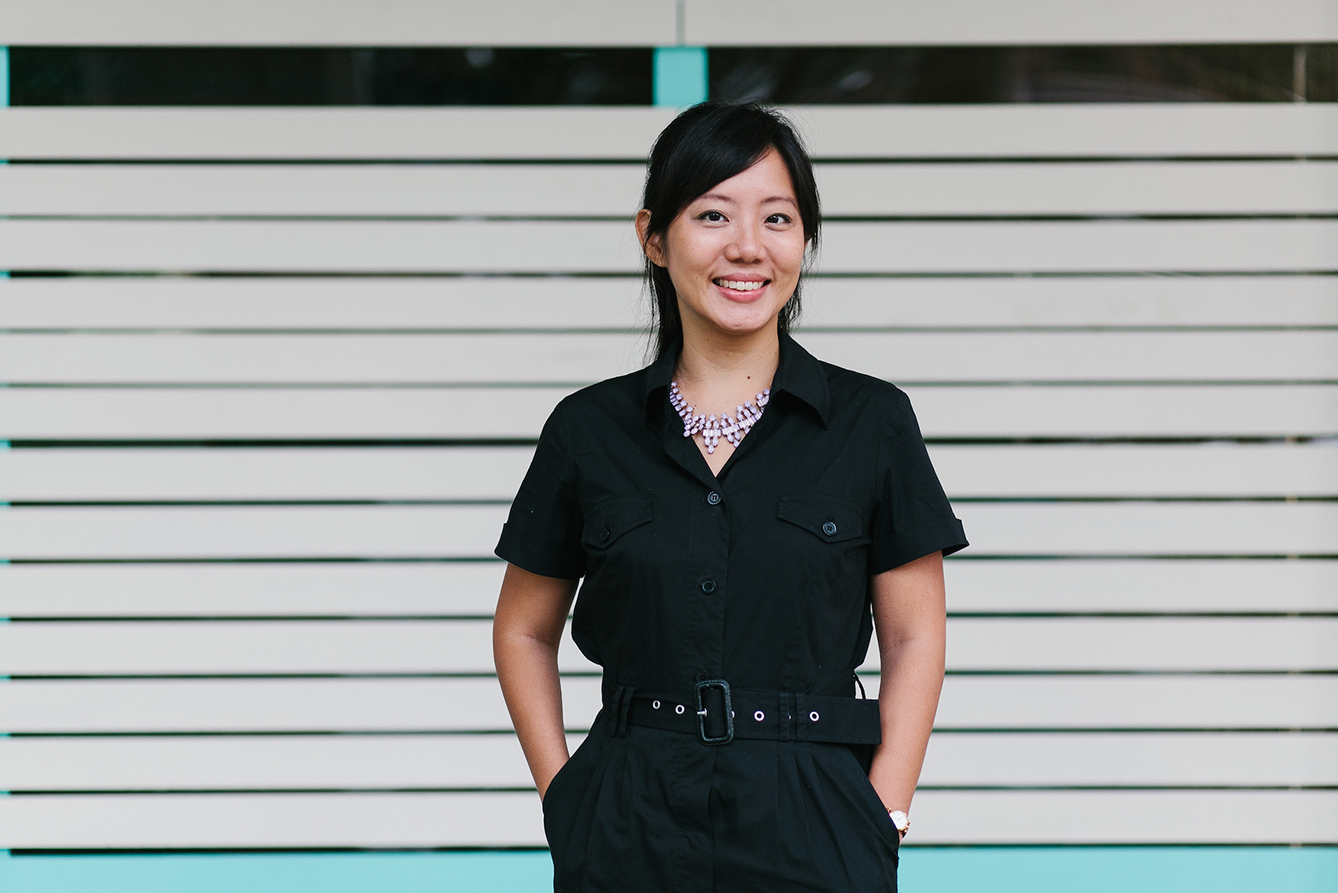
(Photo courtesy of SIFF)

FUNDING FOR SINGAPORE FILMS

Bharati: I promised we would discuss filmmakers’ budgets since that goes towards support as well. What will it take to get more of this from investors and grants?

Yuni: On the creators’ part, it’s about understanding who to approach when you want to get investments, so if you have a commercial product, then you would approach someone who would want to invest in it and later would like to see returns. But if you’re doing something that is more arthouse or more personal, you would be looking at grants rather than investments. You need to understand what the other person wants in return when they are providing you the funds for it.

Bharati: We’ll talk about Government grants in a moment. But let’s discuss private investors and sponsors first. Earlier you said that filmmakers have to be smart about this and approach the right people, make a case for their film to ensure also that there will be returns. But we know that can be a challenge. And if money to make the film is so hard to come by, it can be discouraging and it can ultimately affect the quality of the film, possibly making it harder for the film to succeed. How to get investors to take risks along with the artist? 

Yuni: Well, the secret about the film business is that it makes no sense. So you can have the best cast, the best director and the perfect story but there is that element of luck involved when you’re putting all these things together. It takes so many things to make it a great film but only one thing, for example a simple thing like the actors’ chemistry wasn’t that good, to make a film not so great, mediocre. So there’s no real secret to it and that’s the secret.

So when people are investing in films, it’s usually a different reason rather than just getting your money back. I believe that no one wants to lose their money, but the main reason why people invest in film could be that they’re just really excited about being part of something different from their daily lives or they want to be part of a new community that goes to film festivals, or they just really love a story and feel that it should be told. Sometimes it’s as simple as that, so filmmakers need to tap on that. 

Bharati: Let’s discuss grants now. What’s lacking in Singapore in terms of grants?

Yuni: Arthouse films that are put together for example, in Europe, there are a mixture of grants and market money, but the grants there are more sophisticated than those offered in Singapore as they come from various organisations, not just Government agencies. There might be 20 types of grants that you can apply for. There lies the difficulty in Singapore. 

Bharati: You mentioned earlier that you need to understand what the other person wants in return when they are providing you the funds for your film and while this applies to investors, it also applies to grant-givers. While that is reasonable, some artists have said that Government grants are even more restrictive. Is there still a tension between filmmakers and the Government agencies that provide the grants in this regard in Singapore? 

Yuni: Probably. I always try to have a fair perspective on this. Anyone you’re taking money from will have some sort of criteria. But because it is a Government grant, I feel that the criteria should be loosened because Government money is Singaporeans’ money and we are a diverse population. If not, I feel the criteria should be extremely transparent and this will help people to make better choices about whether they want to embark on that long process of getting a grant, applying for it or not. But the reality is that if we’re not helping our artists continue and achieve their visions and being able to try new things, we are going to lose them because they will find support in other countries or in other ways. And if we want to grow as a society, the arts and culture is a very huge part of that growth to create the sort of sophistication that we seek. So that’s the decision that the Government has to make. Are we willing to be a little bit more liberal and try to engage our community, or are we willing to lose our artists to other countries?

Bharati: The Government might say that by allowing you to put out content that touches on what it considers sensitive issues that could potentially have what it deems a negative impact, it would hurt the wider community. So the Government might say: “I’d rather lose the artist than do that.” What do you have to say to that?

Yuni: Well, in this situation I do feel that transparency is very important so in the case where that is the feeling, then I certainly hope to create that dialogue or have the opportunity to prove them wrong. I think when you go into those kinds of discussions, you’re really talking about getting case studies and data to help create that understanding, trying to balance what society wants and what society needs. I realise that I come from a more liberal perspective, so it’s just as hard for me to understand what someone who is very conservative is thinking.

There is no perfect situation but we live in a time when you cannot avoid discussing these issues anymore. If you don’t do it, it will be discussed in other ways on other platforms. In forums or whatever. But at least if we open the opportunity on our home ground then there is a higher chance we can provide both perspectives. Right now, one of the benefits of a Singapore film being successful at winning awards at film festivals is gaining the attention, putting the spotlight on Singapore and that helps to create a different kind of image for Singapore which is so obviously known for things like censorship and the chewing gum ban. It’s often referred to when we travel. So it achieves so much more. So perhaps there could be more types of grants out there as well. So if you are looking to do a project that’s more commercial, it would be grant A. If it’s something more artistic it would be grant B. So there will be different requirements for each one. 

GROWING THE INDUSTRY

Bharati: In a nutshell, what is your advice to Singapore filmmakers if they want to make a mark and get more in terms of support for their efforts?

Yuni: Well, if you’re starting out as a young filmmaker, one of the best things to do is to join a film lab, which is one of the reasons we created the Southeast Asian Film Lab. It will expose your project to the different markets and you’ll get to meet producers and investors and exhibitors in different countries to give you that broader understanding of different ways you can distribute your film after it’s been made. It will make you more aware of how you can find your audience and not limit it to just Singapore audiences.

Bharati: At the end of the day, many Singaporeans who may have an interest in filmmaking may ultimately not pursue it because of bread-and-butter issues. Can this really be a viable career?

Yuni: Well, there are certainly more film schools in Singapore and programmes where you take up filmmaking or video-making. I think there is a definite interest in it. But like all careers, it’s something people have to try out and really want to do to survive in it, but they have a lot of opportunities and different ways to make a living when they have that skill of film or video production. For many filmmakers in Singapore, making a film is really sort of a personal expression and how you survive in the film industry is by multitasking with a lot of different jobs which could be teaching or making videos for other purposes. It’s a matter of perspective – what you consider the benchmark of success for a career. What’s interesting is that now there are more Singaporeans in the arts that have high positions overseas and that could help newcomers in making the transition too. That’s one way to move forward. 

Bharati: What do you think the targets should be for the local film industry in the next few years? 

Yuni: One of the easy goals is to look at numbers but I try to stay away from that. Saying that we need more films to be made isn’t necessarily great because we already have a reasonable amount of films being made, but I do think that more resources needs to be put into development which takes a lot of time, research, writing and also more opportunities for collaborations to happen between producers. So a skill transfer among filmmakers themselves. I think that’s really important and we attempt to do this through the festival as well in terms of encouraging potential mentors to meet up and coming filmmakers. Bearing in mind also the things we talked about earlier – things like film literacy classes – I think we can make a real impact in the future. 

Source link

Mum waits for reunion with son after 38 years

0

YEONGJU, South Korea – Madam Kwon Pil Ju has been desperately trying to teach herself English before she is reunited with a son she sent away almost 40 years ago.

Her son, Mr Adam Crapser, 41, was deported from an immigration detention centre in Washington state because he lacks United States citizenship, even though he has lived in the country since he was three years old, the New York Times reported.

A spokesman for the US Immigration and Customs Enforcement told Associated Press that Mr Crapser, who was accompanied by deportation officers, had landed in Seoul on Thursday.

It is not known when he will meet his mother.

Until his fate was reported in a documentary broadcast by South Korea’s MBC-TV last year, Madam Kwon did not even know that the son she gave up in 1978 was in the US.

As it turned out, the boy she called Shin Song Hyuk was one of 200,000 South Korean children sent abroad for adoption since the end of the Korean War, most of them to the US.

In recent years, however, some have returned to South Korea as adults, reporting adoptions gone wrong. Some of the most wrenching stories have come from those deported back to South Korea.

Like Mr Crapser, they were abused or abandoned by their adoptive parents, the New York Times reported.

“I have never imagined that he was having this hard life of his,” said Madam Kwon, 61, wiping away tears.

“I should have kept him even if we starved together. What I did was an unforgivable sin.”

Last year, Madam Kwon received a call from a relative who remembered her son and had watched the television documentary. In it, Mr Crapser called out for his birth mother.

Madam Kwon contacted the documentary’s producer, Mr Kim Bo Seul, who arranged a video chat between mother and son, and a DNA test to confirm their relationship.

Mr Crapser, who has a wife, a daughter and two stepdaughters, communicated with Madam Kwon through an interpreter.

Meanwhile, Madam Kwon plans to decorate a small room in her house for her son, according to the New York Times.


This article was first published on Nov 19, 2016.
Get a copy of The Straits Times or go to straitstimes.com for more stories.

Category: 
Publication Date: 
Saturday, November 19, 2016 – 14:50
Send to mobile app: 
Source: 


Story Type: 
Others

Source link

Jakarta governor plans to fight on

0

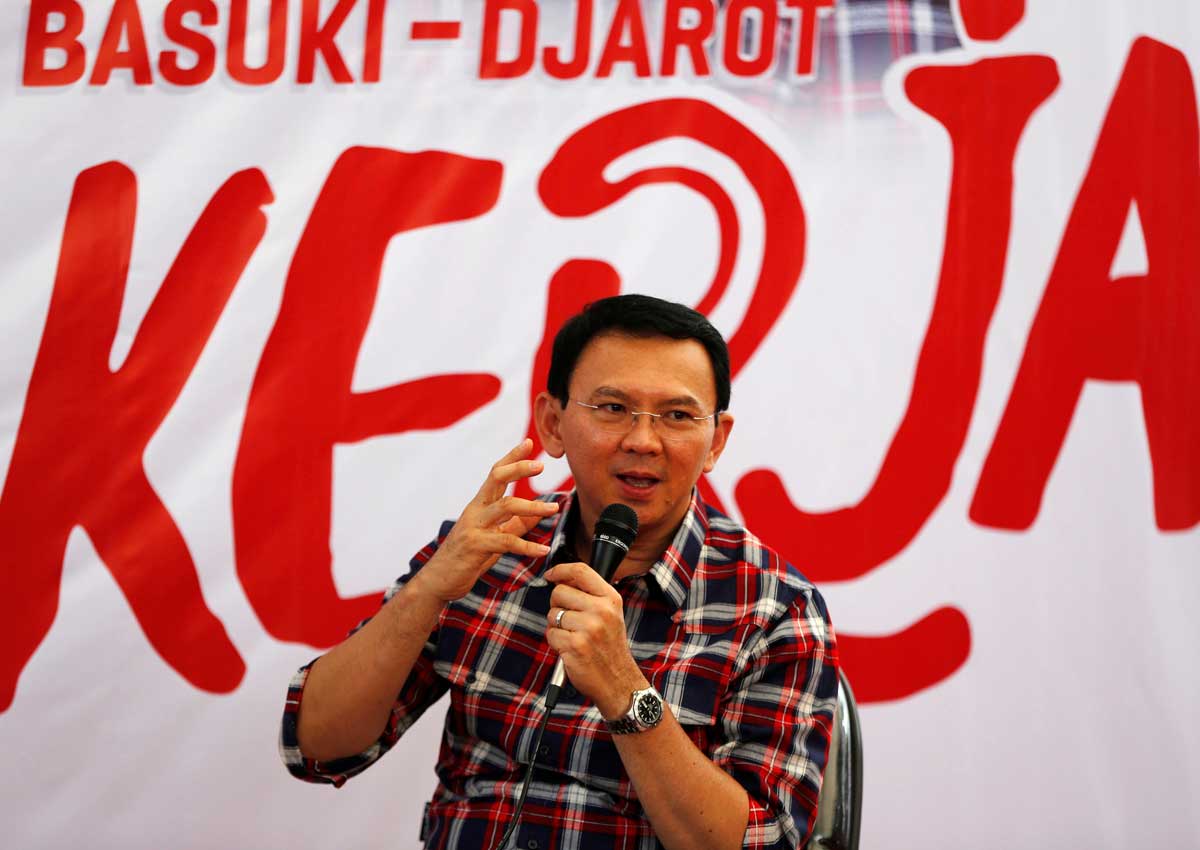
Jakarta gubernatorial candidate Ahok has no plans to quit the race despite calls by Muslim hardliners for his head on a platter over accusations of blasphemy.

The Chinese-Christian, whose formal name is Basuki Tjahaja Purnama, is now facing criminal charges for insulting Islam, but maintained in an interview that he did not set out to do so.

But he added: “Whatever the police decide – that should be the best decision – and I will follow.”

He was speaking to The Straits Times on Thursday at his campaign headquarters in the Menteng area of Jakarta, where more than 800 people had turned up to show their support for the governor, who is running for re-election.

on SPH Brightcove

*/

This was more than double the 400 residents gathered there on Wednesday, the third day since the open house started on Monday.

Photo Gallery

Tens of thousands of Muslim hardliners in protest march against Jakarta governor for alleged blasphemy

Source:

AFP

Reuters

He said nothing has changed for him despite the charges, and there is still “kerja”, which means “work” in Bahasa Indonesia and is his campaign motto.

It is also a nod to the reforms and urban renewal projects he has pledged to carry out if he is elected in February next year.

“In Banka Belitung, where I’m from, we live harmoniously among different faiths,” he said. “Just look at the people who are with me in this room. They are all my friends and they are mostly Muslim.”

The Indonesian police on Wednesday named Ahok as a suspect over comments he made to constituents in late September, telling them not to be misled by his opponents, who had cited the Quran when urging Muslims not to vote for him, a non-Muslim.

He apologised days later, after a video of his comments was posted online.

But it was too late.

The police called him in for questioning after an outcry from some Muslim leaders and the Islamic Defenders’ Front (FPI), a hard-line local group.

The issue came to a head when the FPI led a mass demonstration on Nov 4, which drew an estimated 100,000 protesters – a majority of whom was believed to have been ferried into the capital for the street march by Ahok’s rivals.

Despite the case, Ahok has continued to campaign actively for the election.

He and running mate Djarot Saiful Hidayat are up against the Gerindra Party pair of former education minister Anies Baswedan and businessman Sandiaga Uno, and the Democratic Party’s Mr Agus Harimurti Yudhoyono – an ex-army major and son of former president Susilo Bambang Yudhoyono – and veteran bureaucrat Sylviana Murni.

About 30 residents at the open house on Thursday raised municipal issues with Ahok in a “meet the people session”.

This used to be the norm at City Hall when he was governor, but he is not allowed to use the premises there now because he is officially on leave to campaign.

The blasphemy allegations, however, seem to have given Ahok’s popularity a boost, said his campaign secretary, Mr Ace Hasan Syadzily.

For starters, it has earned him more press coverage than his rivals, as some voters see him as a victim of injustice, he added.

From the size of Thursday’s crowd at Rumah Lembang – a rented house being used as Ahok’s campaign headquarters – many supporters seemed to have remained loyal despite the police investigations.

Indonesian artiste Koes Hendratmo told Ahok: “We appreciate what you do for Jakarta. We do not care that you are a suspect. We need a person with strong hands… otherwise, nothing would move forward.”

Ahok insisted that his remarks were not meant as an insult to Islam and will not give in to calls to pull out of the election.

He believes many of the protesters on Nov 4 were non-Jakarta residents.

“Jakartans are not stupid. If they want to (protest against me), they don’t need to bring people from outside the capital because there are 10 million voters here. So if, say, 10 per cent of them were upset with me, that would be one million people against me,” said Ahok.

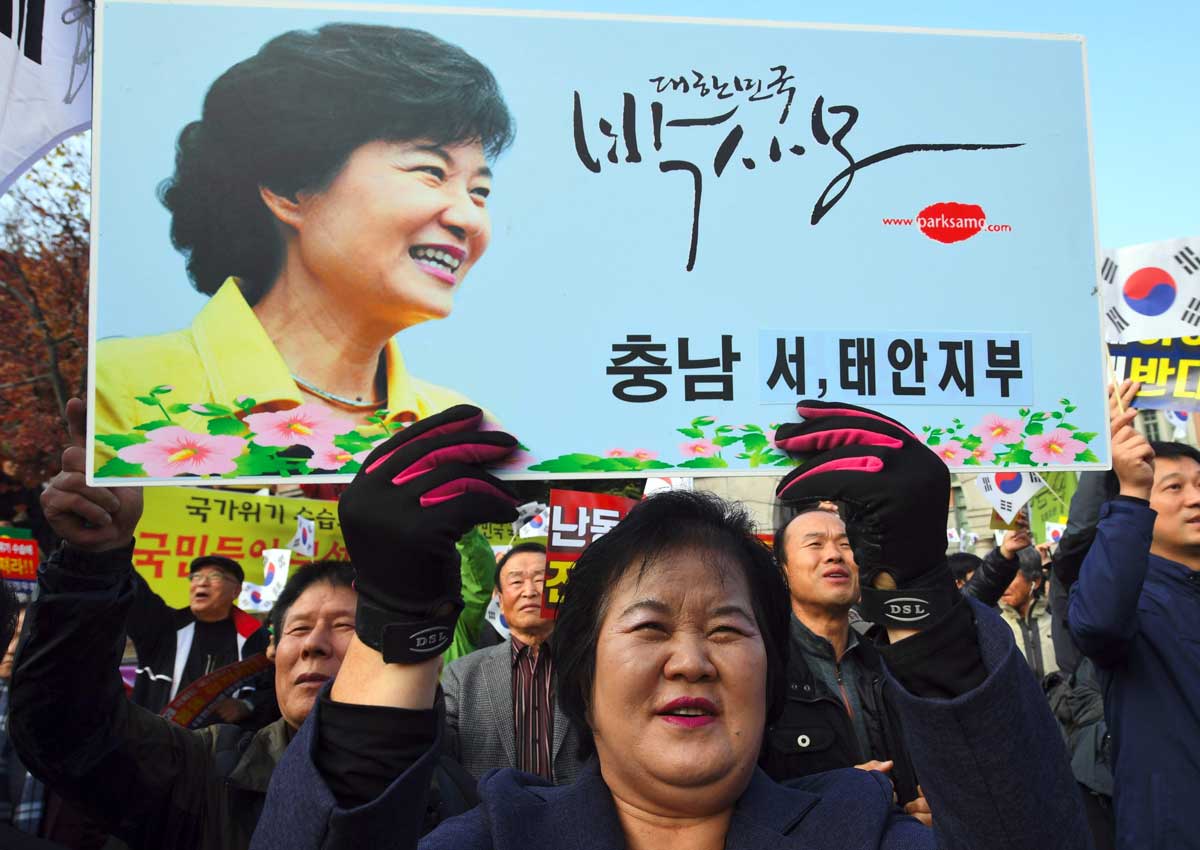
He reiterated that his rivals are just capitalising on his being both Chinese and Christian. “They tried to build an opinion that Muslims are against me, but that is not true.”

wahyudis@sph.com.sg

This article was first published on Nov 19, 2016.


Get a copy of The Straits Times or go to straitstimes.com for more stories.

Image: 

Category: 

News

Asia

Publication Date: 

Saturday, November 19, 2016 – 14:45

Keywords: 

Ahok

protest

Send to mobile app: 

Byline: 

Wahyudi Soeriaatmadja

Source: 


video embed code: 

<div style=”display: block; position: relative; max-width: 100%;”><div style=”padding-top: 56.25%;”><iframe src=”//players.brightcove.net/4802324435001/default_default/index.html?videoId=5217167862001″
allowfullscreen
webkitallowfullscreen
mozallowfullscreen
style=”width: 100%; height: 100%; position: absolute; top: 0px; bottom: 0px; right: 0px; left: 0px;”></iframe></div></div>

Video Media: 

Other Video Media

Story Type: 

Others

Source link