28.3 C
Singapore, SG
Wednesday, September 30, 2026
Home Blog Page 2325

Riding bicycles and going to the gym at Singapore Art Week 2017

0

SINGAPORE: At next year’s Singapore Art Week (SAW), you can take a bicycle for a spin around Gillman Barracks or flex your muscles at a jungle gym.

These are just some of the unusual experiences that audiences can have at the annual visual art event, which will take place from Jan 11 to 22. Now on its fifth edition, SAW comprises around 80 programmes so far. These range from exhibitions and tours to film-screenings and art fairs. Among the notable events taking place are the ongoing Singapore Biennale and the next instalment of Art Stage Singapore fair.

“When people say there’s nothing much happening in the arts, it’s just not true. If you take a consolidated view, there are many things that happen on a weekly basis,” said Low Eng Teong, National Arts Council Director for Sector Development (Visual Art), during a media preview on Tue (Nov 22).

Citing SAW as the perfect way to kick off Singapore’s consistently busy visual art calendar, he added: “In time to come, we hope that (January) will always be that time of the year when people look forward to something new and interesting.”

The logo for DXXXXD’s No Regrets For Our Youth, which will feature an installation inspired by a jungle gym. (Photo: DXXXXD)

Among the offerings at SAW is the multimedia exhibition No Regrets For Our Youth. Organised by Singapore art collective DXXXXD, it examines today’s popular gym culture by transforming a music studio at Aliwal Arts Centre into a jungle gym of sorts, with other sculptures in the form of sporting equipment. There are also plans to hold bodybuilding and wrestling workshops.

“Gym culture usually envisions a utopian reality that has to do with one’s health and body. Nowadays, the purpose of the gym has changed and going to one has become a kind of lifestyle or vanity thing,” said Muhammad Izdi, one of the members of the collective.

Meanwhile, Gillman Barracks’ outdoor spaces will come alive with public artworks courtesy of the group show LOCK ROUTE.

Among these are a dozen bespoke sculptural bicycles created by Acit Salbini, Kilas and The Killer Gerbil, which one can use to cycle around the area – or simply admire when they’re parked.

Curator Khairuddin Hori said the exhibition was partly inspired by the art enclave’s former use as an army barracks and the idea of the route march that army recruits undergo during Basic Military Training.

Other works on display will include a huge mural and a sculpture by Los Angeles urban artist Cleon Peterson (who had previously worked with another famous urban artist, Shepard Fairey); a life-sized melting Volkswagen van courtesy of Austrian artist Erwin Wurm; and a pyramidal sculpture by artist Kirsten Berg, who is known for creating installations for the annual Burning Man Festival in the United States.

An installation by Kirsten Berg at Burning Man Festival in the United States. She will be creating a similar piece for LOCK ROUTE. (Photo: Kirsten Berg)

Elsewhere, a group show at Objectifs Centre For Photography And Film takes a look at the relationship between Batam and Singapore. Titled Fantasy Islands, the multimedia showcase will include works ranging from video to sound installations by Indonesian and Singaporean artists who have been traveling to Batam for the past eight months to do research.

“The two islands are very close yet their realities are very, very different,” said Dr Mitha Budhyarto, one of the show’s curators, who added that they are also exploring the idea of exhibiting the show in Indonesia, too. “In the 1970s, Batam was considered the Singapore of Indonesia. Currently, the popular imagination of it is that of an industrial, port city,” she said.

Other notable events during SAW include a solo show by Singaporean artist Amanda Heng at Singapore Tyler Print Institute, a site-specific performance by OH! Open House revolving around tigers, and an art tour of different sites in Singapore that were used as filming locations.

“One of the challenges is to get people to go out and see art,” said Low. “You can read about it, check it on the Internet, but there’s nothing like going to see the real thing. And that’s fundamentally what (Singapore) Art Week is all about.” 

Untitled, Nongsa, a work by artist ila as part of Fantasy Islands. (Photo: ila)

Source link

Doctors in Singapore treat congenital heart defect sans open heart surgery

0

For the first time in Singapore, doctors are able to treat a form of congenital heart defect without open heart surgery.

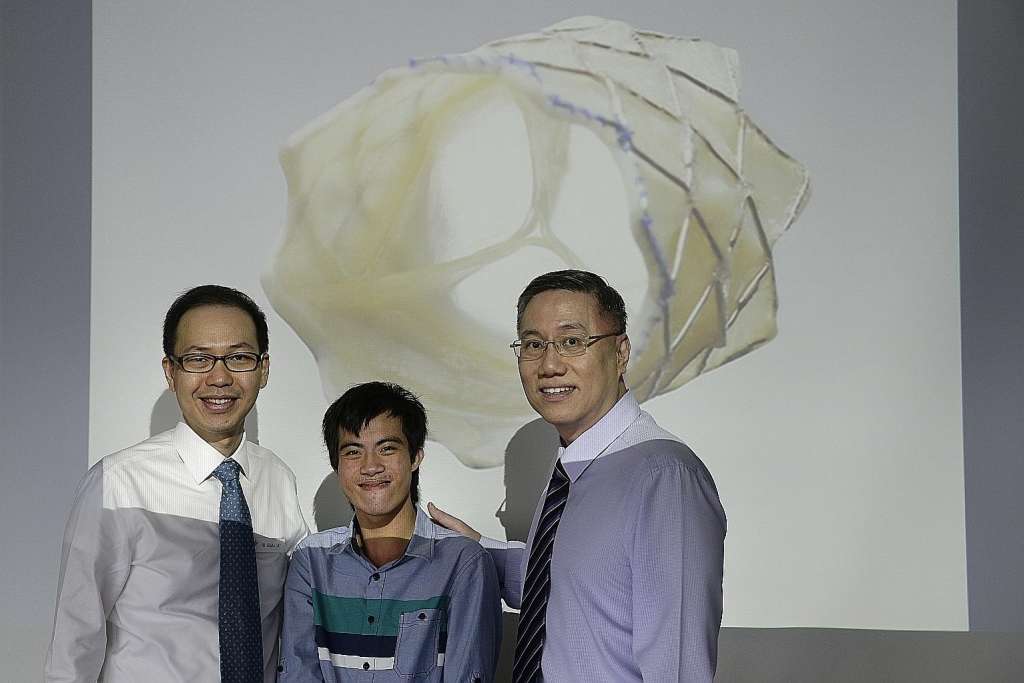
A specially designed heart valve is delivered into the patient via a leg vein near the groin instead to treat Tetralogy of Fallot, a defect that affects the functioning of the valve.

This procedure has been successfully carried out on two patients here since August by a team of congenital heart specialists from the National University Heart Centre, Singapore (NUHCS) and the department of paediatrics at National University Hospital (NUH).

Photo: The Straits Times

In this minimally invasive procedure, doctors insert a thin, hollow tube containing the heart valve into the vein and push it up into the heart. The valve is crimped into a small size but expands with the help of a balloon once it is in the right position .

The procedure takes a few hours and helps to improve heart function so that the need for open heart surgery can be delayed.

Tetralogy of Fallot affects about two in 1,000 live births here. Among other problems, the defect affects the normal functioning of the pulmonary heart valve, which controls blood flow from the right chamber of the heart to the lungs.

While this defect can be picked up early during pregnancy, those born with the condition often have to undergo multiple surgical operations throughout their lifetime.

This is because a patient’s valve is usually replaced by a synthetic tube or blood vessel from a human cadaver early on in life, but this is prone to become leaky or narrowed due to wear and tear.

As a result, patients typically have to undergo a repeat surgical operation every 10 to 12 years, said Dr Edgar Tay, senior consultant at the department of cardiology at NUHCS.

“It (repeat surgery) is almost unavoidable because this is not nature’s gift of a normal vessel,” said Dr Tay, who added that the new procedure will reduce the risks of repeat surgery.

He said: “Patients’ families will tell you that it reduces the psychological stress of repeat surgery.”

Otherwise, patients would have to undergo two open heart surgical operations with the uncertainty about the outcome of the surgery, he added.

While the new procedure was first done in Singapore only in August, it was first performed in London in 2000.

Studies so far have shown good results. For instance, the valves of almost all patients who went through the procedure were free of leakages for up to five years.

While the new device costs $30,000, Associate Professor Quek Swee Chye, head and senior consultant of the division of paediatric cardiology at NUH, said he hopes the new treatment will prove to be cost-effective in the long run.

“If you look at the total package – with a shorter hospitalisation and costly device, it may still be cheaper than a long-term hospitalisation plus the expensive surgery and the manpower to look after the patient post-operatively,” he said.

“Hopefully if proven to be good, some day there will be subsidy from the ministry,” he added.

Photo: The Straits Times

​

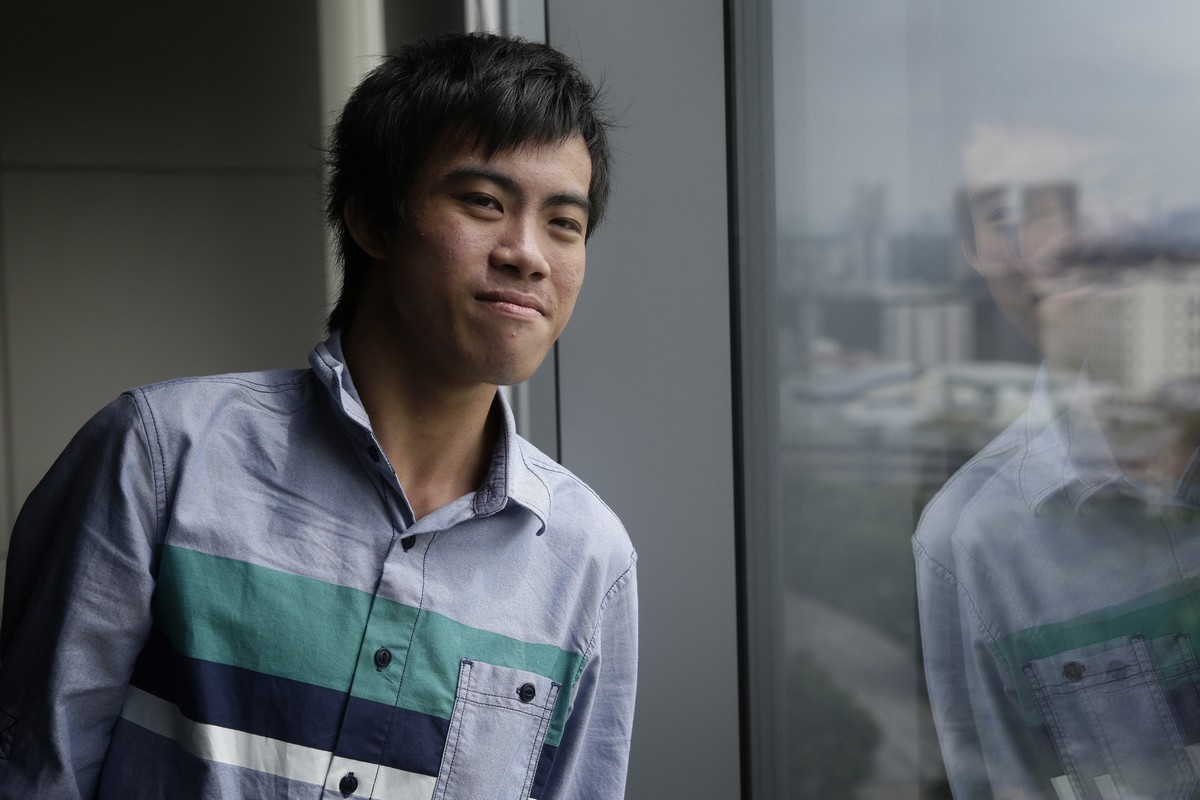
One patient who has tried the new procedure is Mr Gary Cheng.

The 21-year-old underwent his first surgery to have his heart valve replaced when he was just two.

About a year ago, however, Dr Tay realised that his heart function had started to deteriorate.

As his parents were not keen for him to go for another surgery, he decided to go for the new procedure in August.

“The procedure wasn’t painful and I can resume my normal activities now,” said Mr Cheng, who is a trainee at a sheltered workshop at voluntary welfare organisation Movement for the Intellectually Disabled of Singapore.

He is now able to pursue recreational activities such as badminton, without worry that his heart might fail.


This article was first published on Nov 22, 2016.
Get a copy of The Straits Times or go to straitstimes.com for more stories.

Image: 
Blurb: 
<p>For the first time in Singapore, doctors are able to treat a form of congenital heart defect without open heart surgery.</p>
Publication Date: 
Tuesday, November 22, 2016 – 13:00
Keywords: 
Send to mobile app: 
Source: 


Story Type: 
Others

Source link

New insulation foam invented to keep buildings quieter, cooler

0

SINGAPORE: Scientists have developed a thin foam that could make buildings and vehicles cooler and quieter than if conventional insulation materials in the market were used, announced Nanyang Technological University (NTU) on Tuesday (Nov 22).

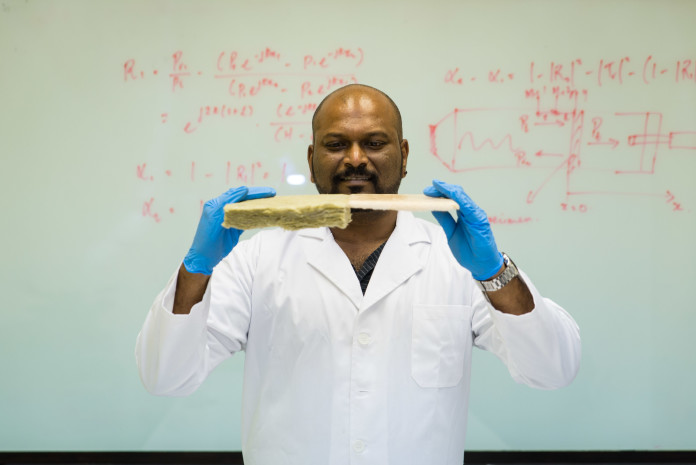
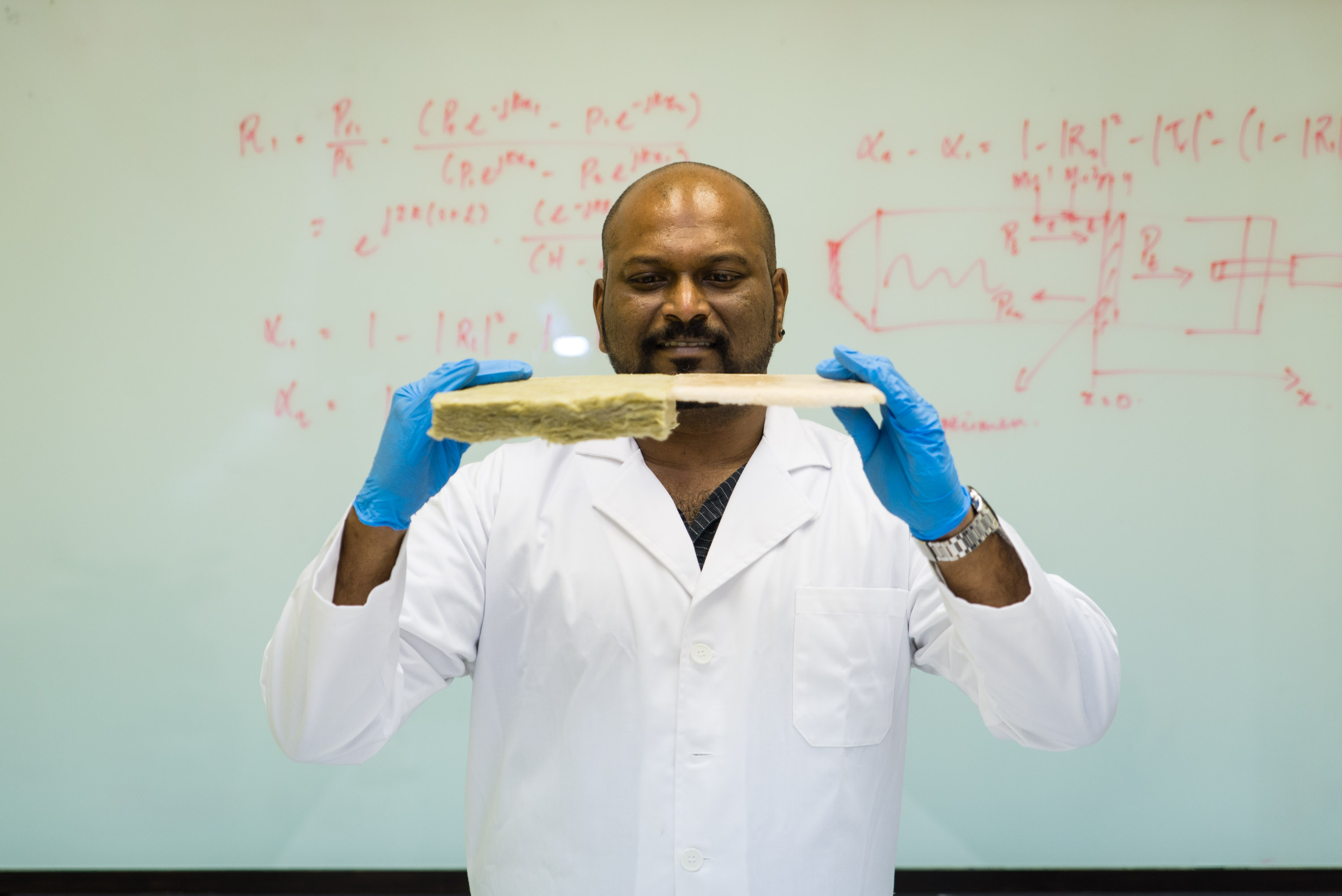
The new material – known as aerogel composites – is thinner than conventional foam “yet has better performance”, said NTU Associate Professor Sunil Chandrankant Joshi.

It is able to block out 80 per cent of outside noise, 30 per cent more than conventional insulation foams. The new material also insulates against heat 2.6 times better, according to NTU in a press release.

This also means less material is needed to achieve the same effect. For example, to reduce the noise generated by a moving truck to the level of a normal conversation, it would require a 25mm-thick common insulation foam, whereas only 15mm of the new material would be needed, explained NTU.

Insulation foams are commonly used in the interiors of building walls, vehicles, as well as oil and gas pipes for heat insulation and sound-proofing.

The new material is on 15mm thick (left), while common sound-proofing material is around 25mm thick (right). (Photo: NTU Singapore)

The aerogel composites took Assoc Prof Sunil and his former student Dr Mahesh Sachithanadam four years to develop. They said the material is also greener to manufacture, “as it does not require high heat treatment or toxic materials in its production.”

In addition, it is able to withstand high temperatures more than 1,000°C, allowing it to last up to eight years in environments such as those found in the oil and gas industry. Conventional insulation foams can last up to two years in such high-temperature environments.

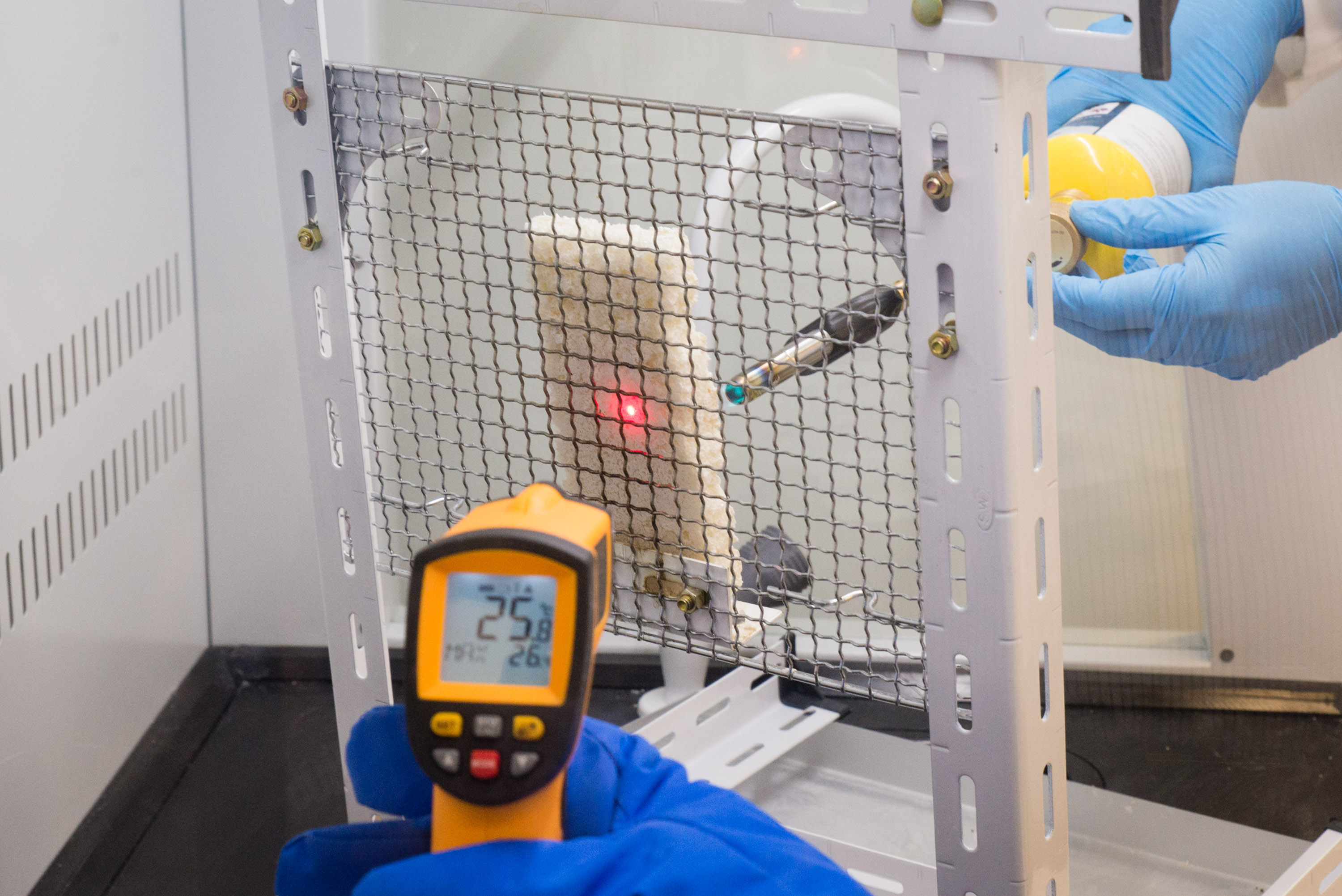
New thin foam subjected to 1,100°C flame while remaining cool at 26°C on the back. (Photo: NTU Singapore)

The new material is expected to hit the market by early 2017 when the production plant is operational.

In May this year, local company Bronx Creative & Design Center (BDC) licensed this aerogel composite technology with a joint venture of S$7 million. The plant will produce the aerogel composites for companies from the automotive, electronics, and oil and gas sectors.

“With global industries moving towards green manufacturing and a lowered carbon footprint, the new foam we produce will help address their needs and yet give a better performance,” the company said.

Source link

Indonesian president moves to stop "growth of radicalism"

0

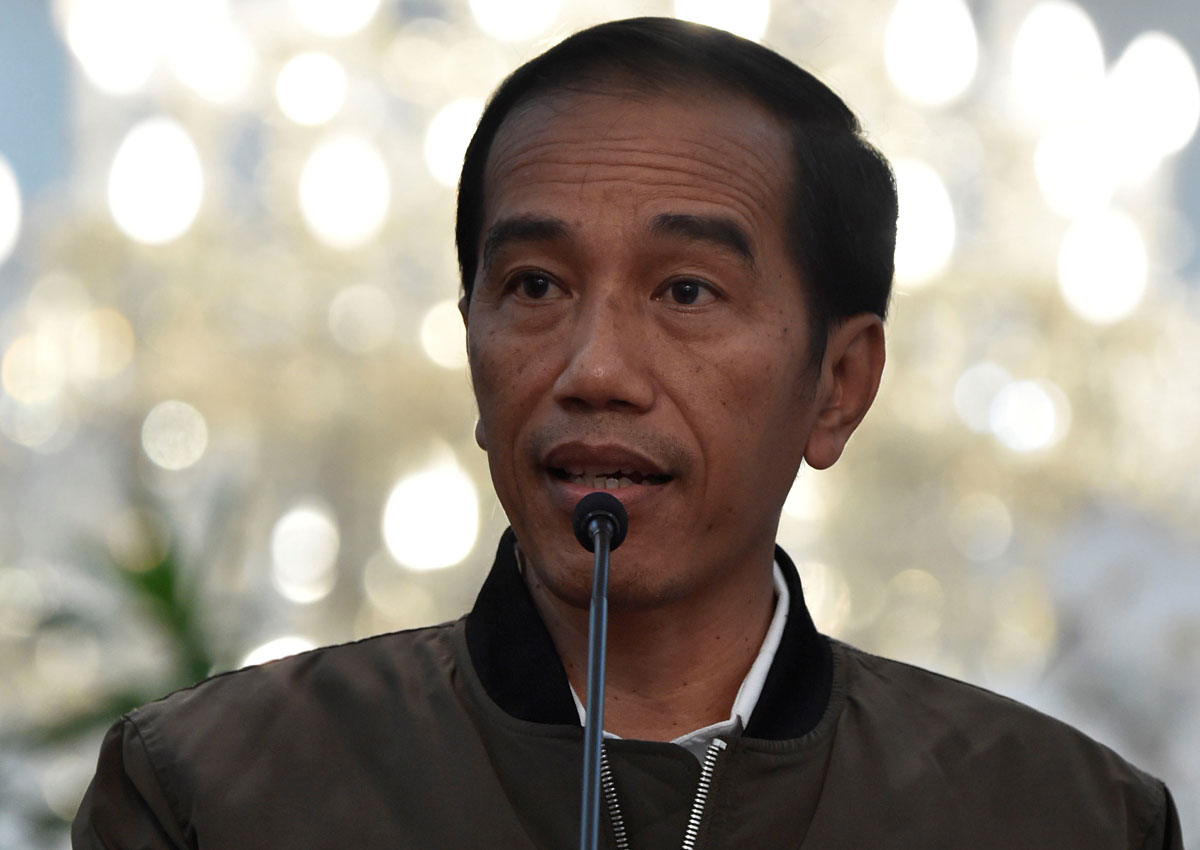
JAKARTA – Indonesian President Joko Widodo said on Tuesday he was determined to “prevent the growth of radicalism”, apparently responding to rumours that Islamist extremists were planning protests to destabilise his government.

Officials say there has been mounting alarm within the government since more than 100,000 Muslims, led by hardliners, took to the streets of Jakarta on Nov. 4 to demand the ouster of the capital’s governor, a Christian, over alleged blasphemy.

National Police Chief Tito Karnavian warned on Monday that certain groups may try to storm parliament during rallies that are expected this Friday and on Dec. 2.

“There are hidden methods by certain groups to enter and occupy parliament… If (these actions) are intended to overthrow the government, that’s a violation of the law,”Karnavian said, according to media.

Widodo has blamed “political actors” for fanning violence that erupted during the Nov. 4 protest, though he has not named anyone.

Analysts have said opponents of Widodo, the first Indonesian president to have come from outside the political elite or military, are using the Islamic furore over the Jakarta governor to undermine him.

Widodo held talks with a senior coalition partner on Tuesday, the latest in a series of meetings with top political, religious and military officials to signal the unity of his government and support from the security establishment.

“I want to emphasise the spirit of pluralism … and the government is determined to prevent the growth of radicalism in this country,” he told reporters after the meeting at the presidential palace.

Widodo has met repeatedly with the military and called for security forces to be on alert against further unrest.

He has also met with top politicians, including the leader of his backing party, Megawati Sukarnoputri, and opposition leader Prabowo Subianto. The three have jointly called for calm.

The trigger for the tension was a comment that Jakarta governor Basuki Tjahaja Purnama, the first Christian and ethnic Chinese in the job, made about his opponents’ use of the Quran in political campaigning.

Indonesia has the world’s largest Muslim population and is also home to sizeable Christian and Hindu populations.

Purnama, popularly known as Ahok, is running for re-election in February against two Muslim candidates, including the son of former President Susilo Bambang Yudhoyono. Widodo has been seen as one of the governor’s main supporters.

Police have opened a probe into allegations Purnama insulted the Quran and questioned him on Tuesday. Prosecutors are expected to bring a case to court in the coming weeks. He could face up to five years in prison if found guilty.

Officials are also investigating a social media campaign calling for a run on banks on Nov. 25 in protest over the government’s handling of the complaint against Purnama, the police press relations department said on Twitter.

“It is our shared responsibility not to follow suggestions that are intended to inflict damage,” Finance Minister Sri Mulyani Indrawati told reporters on Monday, in response to a question about a possible run on banks. “…Economic recovery and stability are very important for the public.”

Image: 
Category: 
Publication Date: 
Tuesday, November 22, 2016 – 15:57
Keywords: 
Send to mobile app: 
Source: 


Story Type: 
Others

Source link

Descendants of Myanmar's last king mark his exile by Britain

0

MANDALAY, MYANMAR – More than a century after the British expelled Myanmar’s last king, descendants held an emotional ceremony in Mandalay’s Golden Palace on Tuesday in a watershed moment for a country rediscovering its royal heritage after decades of colonialism and military rule.

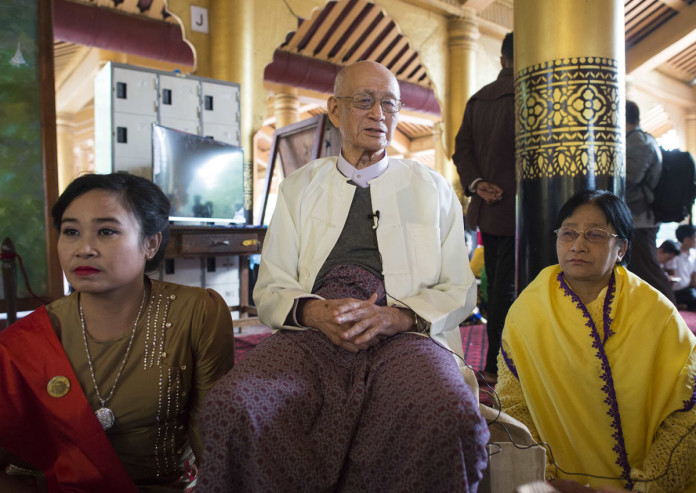
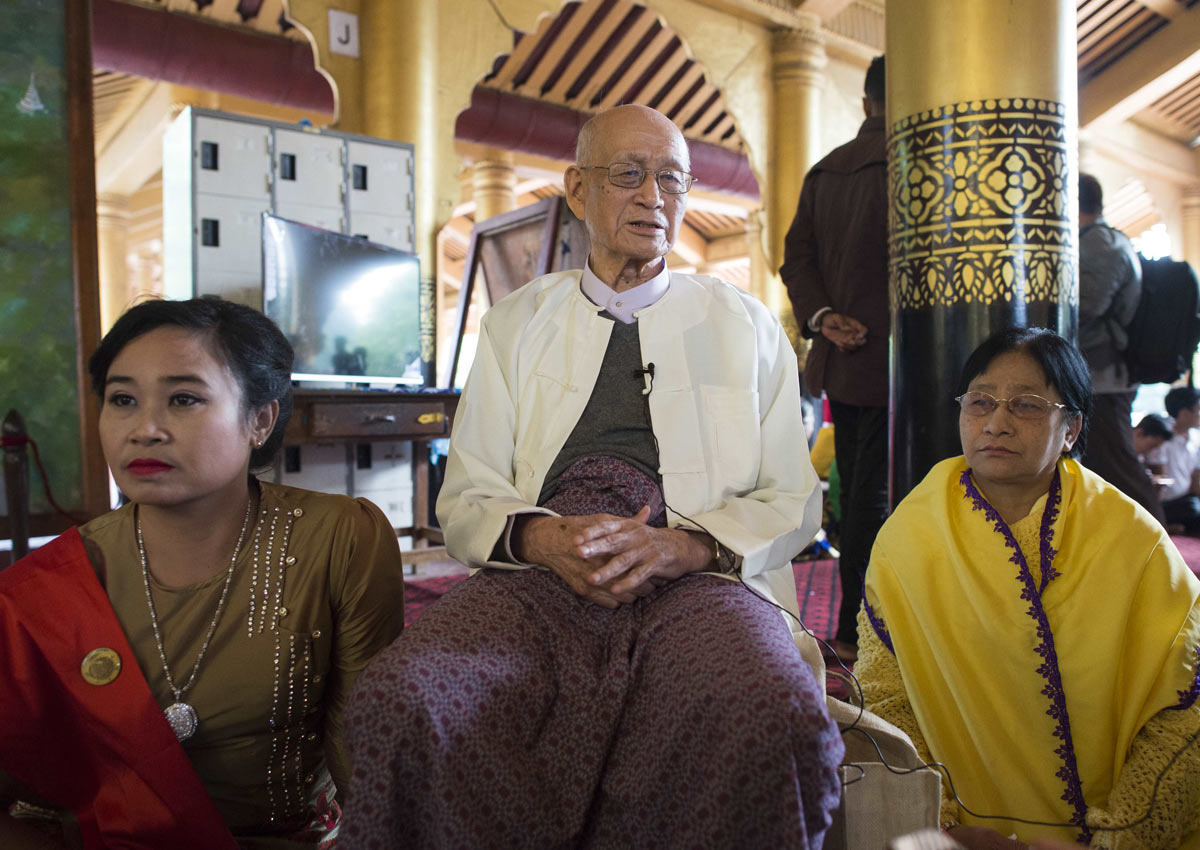
The last scions of the Konbaung dynasty gathered in the former seat of royal power as monks chanted prayers to mark the end of their family’s reign, the first time they have publicly marked King Thibaw’s exile to India 130 years ago inside the palace.

Among them were the only surviving grandchildren of the last monarch – Princess Hteik Su Phaya Gyi and Prince Taw Phaya, now both in their 90s.

“When we were young we used to come and play here,” a beaming Taw Phaya, dressed in traditional maroon sarong and cream jacket, told AFP inside the audience hall where his grandfather once ruled from on high.

“The British tried to keep us away from the common people. But… today the common people will pay respects to royalty,” he added.

Thibaw was only on the throne for seven years before British troops swept into Mandalay on November 28, 1885 and ordered his family to leave the country the very next day.

The sight of the monarch and his heavily pregnant wife being paraded through the streets on old bullock carts as his subjects wept and prostrated themselves was a humiliation that has been seared on Myanmar’s collective memory ever since.

Fearing the royal family would become a focus for dissent, the British closed off the palace to the public and the doors remained shut after independence in 1948.

The brutal junta that seized power in 1962 also sidelined the family, seeking instead to reinvent themselves as the successors to the warrior kings of old during a half-century rule that ruined Myanmar’s economy and closed its people off from much of the outside world.

But interest in the monarchy reignited under the quasi-civilian government that took power five years ago when former president Thein Sein, a reformist general, visited Thibaw’s tomb in the Indian seaside town of Ratnagiri.

Myanmar’s remaining royals, who used to gather in secret for their commemorations, have seized on the renewed interest in their family this year.

In October they held a ceremony to commemorate the death of Thibaw’s father King Midon while Tuesday’s gathering was the first time they have public marked the fall of their dynasty.

The family also plan to hold a commemoration in India in December to mark Thibaw’s death in 1916.

One of Thibaw’s great-grandsons, Soe Win, has described the commemorations as a chance to restore “the (lost) human dignities of our country”.

Experts say the public gathering of royals will help Myanmar rediscover a critical period in its history as it embarks on a hopeful and more open future under the democratically elected government of Aung San Suu Kyi.

“Burmese self-identity congealed around a very defensive attitude to the outside world, because that period of the Burmese kingdom was also a period of extreme threat,” historian Thant Myint U told AFP.

Hla Nyunt Yi, a 48-year-old vendor from western Rakhine state who attended the ceremony, said she had mixed feelings about seeing what remains of Myanmar’s once mighty royal line.

“I feel happy and sad at the same time seeing the king’s relatives here,” she said.

Image: 
Category: 
Publication Date: 
Tuesday, November 22, 2016 – 15:46
Send to mobile app: 
Source: 


Story Type: 
Others

Source link

'Descendants of the Sun' Daniel Spencer marries

0

Actor Cho Jasper Tae-kwan of the hit TV drama “Descendants of the Sun” tied the knot Saturday.


Cho played the philanthropic military medic named Daniel Spencer in the series, which aired from February to April.

Media outlets reported that the 30-year-old had been dating his bride Noh Hye-ri, 24, for about a year.

The two had met in the UK when Cho was there on a business trip.

They are reportedly in Bali for their honeymoon.

Image: 
Category: 
Publication Date: 
Tuesday, November 22, 2016 – 15:40
Send to mobile app: 
Source: 


Story Type: 
Others

Source link

Taiwan's TransAsia closes down after fatal air crashes

0

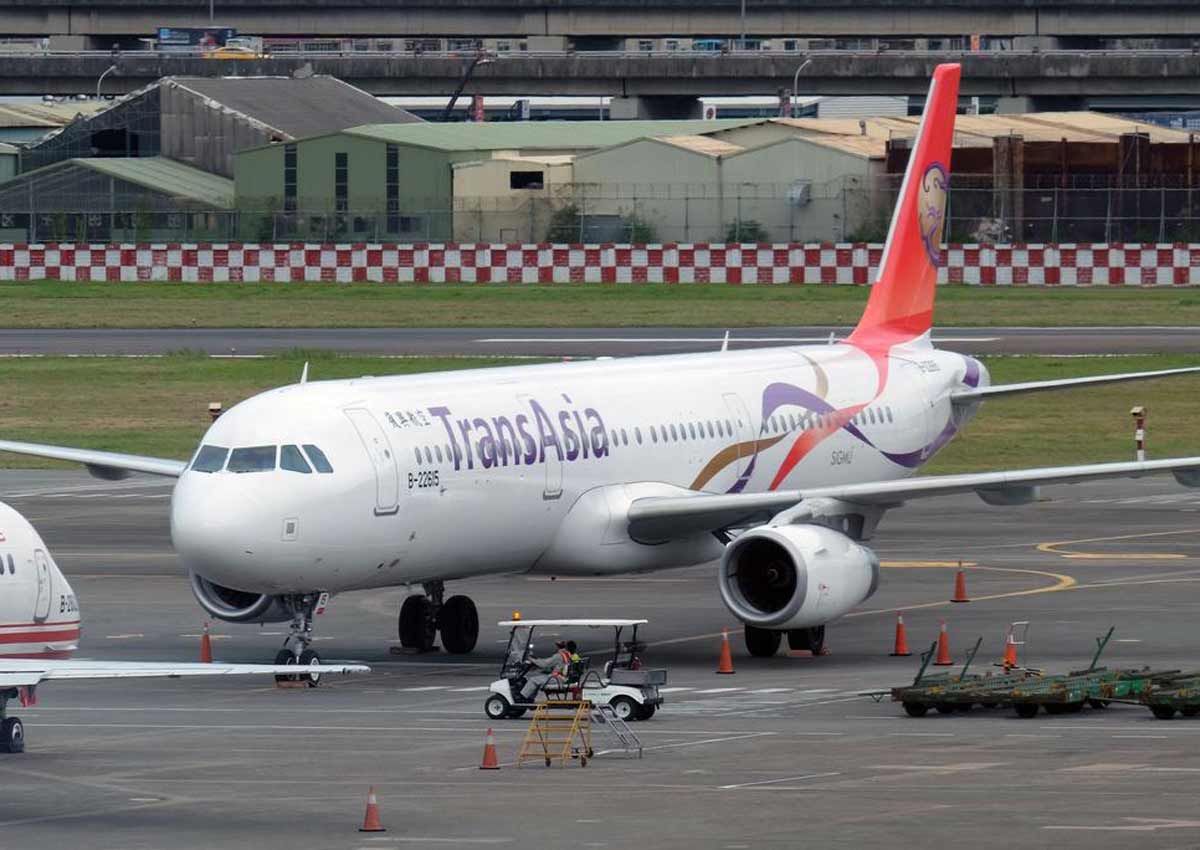
Taipei – Taiwan’s troubled TransAsia Airways said Tuesday the company would be dissolved in the wake of two deadly plane crashes, massive financial losses and an insider trading probe.

Board members reached the decision to close the struggling airline during a hastily called board meeting, with all flights immediately axed.

Chief executive officer Liu Tung-ming bowed in a sign of contrition as he told reporters of the “painful” decision.

“I’m sorry that our recent efforts could not meet public expectations,” Liu said.

“The board meeting convened today has approved the decision to dissolve the company and suspend all flights from today.” The dramatic crash of flight GE235 in February 2015 grabbed global headlines as car dashcam footage showed the jet clipping a road bridge and careering into a river shortly after take-off from Taipei, killing 43 people.

An investigation blamed a catalogue of pilot errors, with one found to have mistakenly switched off the only functioning engine after the other had failed.

It came just seven months after another jet slammed into trees and houses near Magong city on Taiwan’s scenic Penghu island, leaving 48 dead.

Read also: TransAsia’s suspension of flights lambasted

The pilots were flying below the minimum altitude required in poor visibility caused by a typhoon in a procedural mistake widespread among TransAsia’s pilots at the time, the Aviation Safety Council said in its investigation report.

TransAsia – Taiwan’s first private airline, set up in 1951 – said it had introduced six training programmes following the two fatal incidents.

But despite moves to combat safety fears, it incurred losses of Tw$1.1 billion (S$49 million) last year.

Those losses widened to Tw$2.2 billion in the first three quarters of this year, and in October its budget airline V Air folded.

Its woes were exacerbated by a slump in Chinese tourists as relations deteriorated with Beijing under Taiwan’s new president Tsai Ing-wen, who took office in May.

TransAsia is also now mired in a probe over shares trading.

Chairman Vincent Lin and two executives were questioned by prosecutors early Tuesday after the Taiwan Stock Exchange warned of “apparent” insider trading in Monday’s session, as rumours began to swirl that the firm was going under.

Its trading volume on Monday was nearly 27 times higher than on Friday.

TransAsia currently operates a fleet of 16 passenger aircraft serving 27 international and domestic locations. It has a staff of 1,795.

Image: 
Category: 
Publication Date: 
Tuesday, November 22, 2016 – 15:02
Send to mobile app: 
Source: 


Rotator Image: 
Hermes ID: 
2 759 738
Hermes ID String: 
SY_TRANSASIA_1122
Hermes Author: 
SEANYAP
Story Type: 
Others

Source link

Singapore may fall into a technical recession: What that means for Singaporeans

0

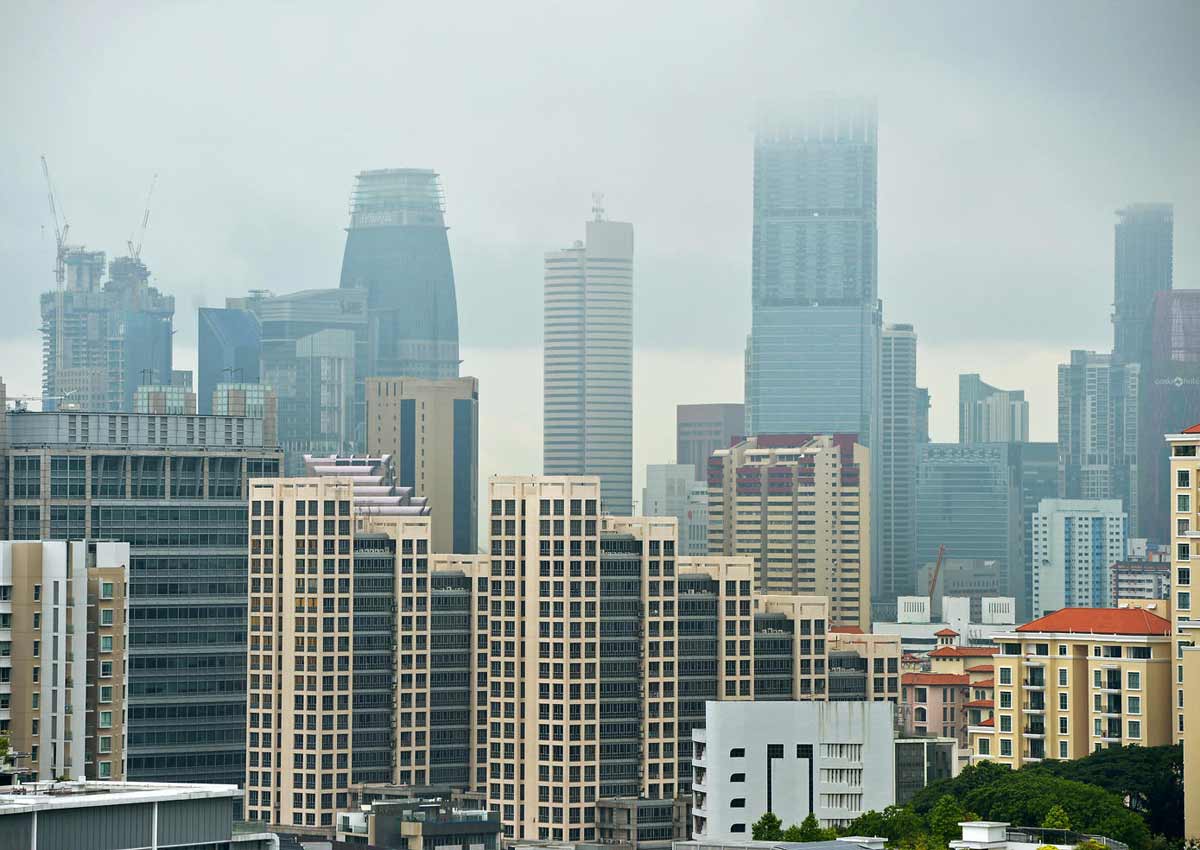
On November 18, The Straits Times reported that exports in Singapore had been disappointing in October 2016, with non-oil domestic exports sinking 12 per cent versus economists’ expectations of only a 3 per cent decline.

Coupled with the fact that on October 14, OCBC bank announced that Singapore’s economy slumped 4.1 per cent between July and August 2016, this raises the probability of Singapore tipping into a technical recession in the immediate term or even a full-blown recession in 2017.

When the working-class face uncertainty – consistently bombarded with stories of weaker growth outlooks, see their pay packets stagnate in the face of rising prices and start to fear for their job security – they will react by saving more for the future.

No one in the right mind would hope for a recession to occur as it brings about a period of slow-to-no growth and a lot of uncertainties for people and businesses. However, as more people start saving more and consuming less in the present, because they are fear for their futures, that is exactly what may happen – the economy spiraling into a self-fulfilling “recession”.

Often, before we reach experience the hard landing of a full-blown recession, there is a technical recession.

Remind me, what is a technical recession again?

To understand this, it is important to know how economists define technical recessions:

“An economy that experiences two consecutive quarters of negative economic growth as measured by a country’s GDP”

Singapore’s GDP at 1960 was $7.6 billion (based on market price). Fast-forward 55 years later it is $391.3 billion. That gives us a compounded annual growth rate (CAGR) of 7.3 per cent for the last 55 years.

Simply speaking, if you had put $1,000 into a bank account that gave you a CAGR rate of return of 7.3 per cent, after 55 years, you would have approximately $47,500 in your account. It’s quite staggering.

So can Singapore continue to growth indefinitely? Logically speaking, yes. As long as the human population is growing, investment capital is growing and there are technological improvements to increase productivity and spur innovation. This is, of course, contingent on Singapore continuing to produce goods and services with decent demand at the global stage.

Why is a technical recession indicator important to me?

This indicator forms the basis of how companies, big or small, plan their annual expenditure going forward. When the country is in technical recession, companies tend to head into their emergency room, brush the dust off their “let’s start restructuring our expenditure book” and implement cost cutting measures.

People who are in the following industries have got to be more concerned with this technical recession benchmark:

1. Manufacturing,

2. Construction,

3. Wholesale and retail trade, and

4. Accommodation and services.

What should I expect in this period of uncertainty?

Bonus

Once the economy hits technical recession mode, many companies will already be facing pressure to produce good results and even those that have done well will try to be more conservative and prudent. What all this means is that workers should not be optimistic over bonuses this year.

We can see it from two ways: Firstly, companies will say that it is a bad year and despite your stellar performance, we need to be conservative, or secondly, companies will just use the technical recession card to pull back bonus payouts.

Of course, we believe the former will outweigh the latter, hopefully, but that does not mitigate the fact that our pockets will be lighter this year.

Job security

If we look at Singapore’s headline unemployment rate, it is one of the lowest in the world. Something we should be proud of.

Nonetheless, if we look deeper into this, the area with lowest unemployment belong to the lower-skilled jobs. PMETs (professionals, managers, executives and technicians) are the ones facing the brunt of the disappointing economy. This is because labour in Singapore is really expensive and PMETs are usually the most expensive sort of labour.

With productivity still in the realms of uncertainty, we should all be prepared for potential headwinds ahead.

Is it easy to hire and fire labour in Singapore?

Unlike popular belief, firing labour is not as simple as it seems because it is expensive to hire or rehire, and no firms want to be in the bad books the Ministry of Manpower (MOM) or the workers’ union (NTUC).

If we try to think from an employer’s perspective, hiring is an extremely expensive activity, especially in Singapore. They have to first source for candidates, which may take them as long as one year to get the suitable person onboard. Even after hiring the best candidate, they need to take a bet that the person will deliver what is required. Lastly, companies cannot expect the person to come in and immediately deliver results. There will usually be a period of acclimatisation lasting a couple of months to get everything in place before the employee gets down to real work.

Of course, certain jobs have seasonal demands – such as increase in the demand for salespeople during Christmas period and the MOM/NTUC would not interfere with how a company operates. Nonetheless, they would provide advice and intermediate when it comes to the labour hire/fire practices.

What can we do in this period of uncertainty?

We try not to sound naggy when it comes to this issue, but we always encourage people to have at least six to 12 months of their monthly average expenditure in their bank deposits. This will enable us sail through periods of unexpected unemployment when it occurs.

What if we do not have one now? Do not worry, simply start saving now!

Remember, we do not need six to 12 months of our monthly salary, it is average expenditure – so hopefully we are not spending more than we earn, else we can never build this buffer required during rainy days.


DollarsAndSense.sg is a website that provides bite-sized and relevant articles to help Singaporeans make better financial decisions.

Image: 
Publication Date: 
Tuesday, November 22, 2016 – 14:11
Send to mobile app: 
Source: 


Rotator Image: 
Story Type: 
Others

Source link

Optician for 42 years at Plaza Sing recalls mall as 'Orchard Yaohan'

0

Madam Theresa Tok probably knows more about one Singapore shopping landmark than most.

She has been working in the same shop at the same mall since 1979.

The 57-year-old optician has seen Plaza Singapura (PS) undergo two major revamps during 42 years she has been there. And she’s still there for its latest new look.

“It used to have the nickname ‘Orchard Yaohan’ when Yaohan was still around,” said the 57-year-old.

“It was also a popular place for Japanese tourists back in the 90s. Nowadays, we see more local youngsters and families.”

ANNIVERSARY

To mark its 42nd anniversary, the mall is organising activities such as Bring Home a Piece of PS and showcasing a wall mural – a depiction of the history of the mall and the Dhoby Ghaut area.

The wall mural makes Madam Tok, who works at Paris Miki, nostalgic.

While she thinks the mall looks more modern now, “I still prefer the previous exterior of the mall, which was more structured” she said.

“The new one is a little too wavy for me.”

How did she come to work there for so long? It was because of her customers, she said.

“I witnessed my customers grow from a kids to adults. It’s really heartwarming,” she said.

“Sometimes they would even wait one to two hours so that I could serve them.”

The mall, which was revamped recently, will conduct woodworking workshops for shoppers to create a hand-carved wooden trinket dish using recycled wood from the mall’s recent refurbishment efforts.

All shoppers need to qualify is a minimum of $30 in a single receipt.


This article was first published on November 22, 2016.
Get The New Paper for more stories.

Image: 
Category: 
Publication Date: 
Wednesday, November 23, 2016 – 00:00
Send to mobile app: 
Source: 


Story Type: 
Others

Source link

Ringgit sinks to weakest level in over one year against Singapore dollar

0

KUALA LUMPUR – Malaysia’s central bank is expected to leave its benchmark rate unchanged on Wednesday, at its first policy meeting since Donald Trump’s win in the US presidential election battered the ringgit.

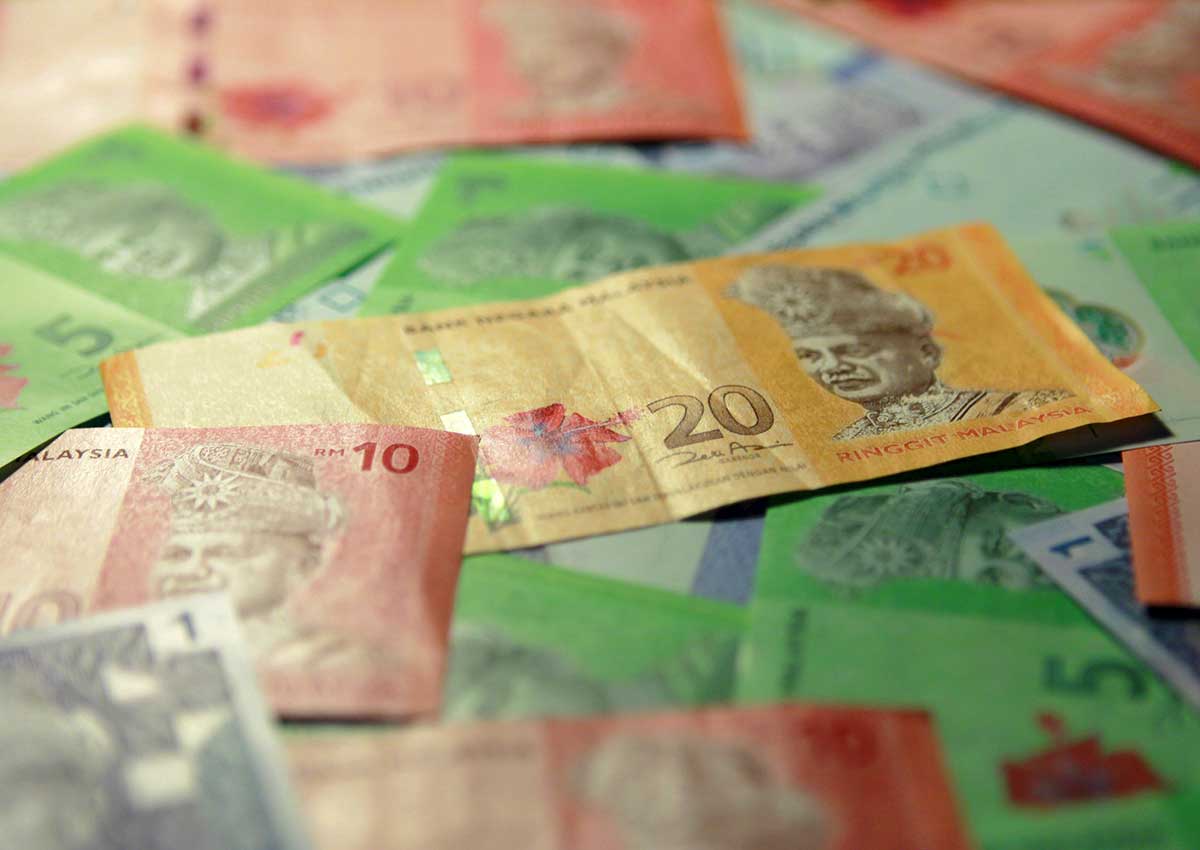
The ringgit has shed more than 5 per cent since his victory, hitting a 13-month low of 4.435 on Tuesday (Nov 22).

It also fell to its weakest level in since last September against the Singapore dollar, with one Singdollar fetching RM3.11, The Straits Times reported.

Bank Negara Malaysia (BNM) cut its overnight policy rate by 25 basis points to 3.00 per cent in July, and some analysts earlier expected another trim this year to try to boost weakening domestic demand. But the tumble in the ringgit since Trump’s win ensures no cut on Wednesday, they say.

Also read: Malaysia’s ringgit may keep tumbling amid the market’s Trump tantrum

All 13 economists polled by Reuters forecast no rate change on Wednesday, on concerns it would put more pressure on the ringgit.

HSBC thinks BNM is likely to cut the key rate by 25 basis points in the first quarter of 2017. “Low inflation, particularly over January and February, will provide scope for easing,” the bank said in a Nov. 18 research note.

July’s rate cut, the first in seven years, came less than two weeks after Britain’s Brexit vote.

The recent ringgit slump has overshadowed a surprise turnaround in Malaysia’s economy, which reported 4.3 per cent annual growth in July-September, ending a five-quarter decline in the expansion pace.

In January, the government trimmed the 2016 growth projection to 4.0-4.5 per cent from 4.0-5.0 per cent.

Nomura says BNM is likely leaning towards a possible 50 basis point cut to its statutory reserve requirement ratio (SRR) to deal with growing financial imbalance risks.

With the weakening ringgit, cutting the SRR is a “more viable option” than the benchmark, it said in a Nov. 21 note.

In January, BNM unexpectedly cut the SRR to 3.5 per cent from 4.0 per cent to add liquidity to the banking system.

The Royal Bank of Scotland (RBS) cautioned against an SRR cut on Wednesday. It said loan growth averaging 5.9 per cent over the first three quarters against overall deposit growth of 0.2 per cent “sets up conditions for a liquidity squeeze”.

Image: 
Publication Date: 
Tuesday, November 22, 2016 – 14:16
Send to mobile app: 
Source: 


Rotator Image: 
Story Type: 
Others

Source link