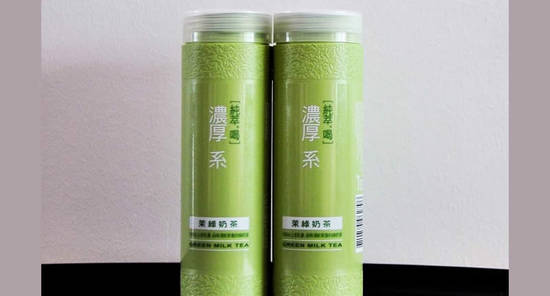
Chun Cui He has unveiled their latest flavour to be launching in Singapore. The new Green Milk Tea flavour will be hitting 7-Eleven shelves progressively from Thursday, 24 November
Convenience stores are raising their game in instant food with fresher choices.
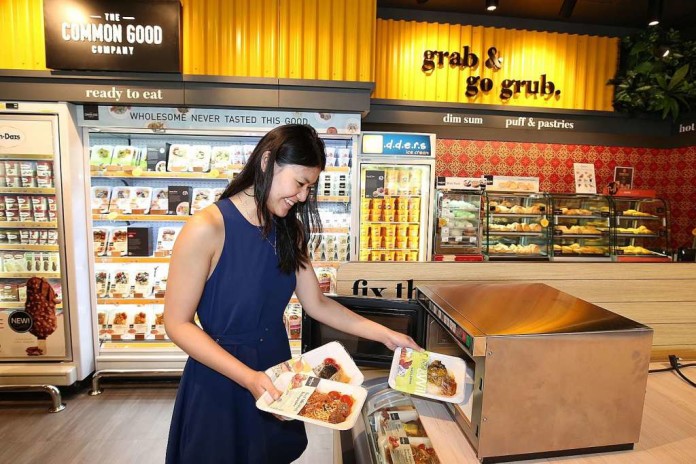
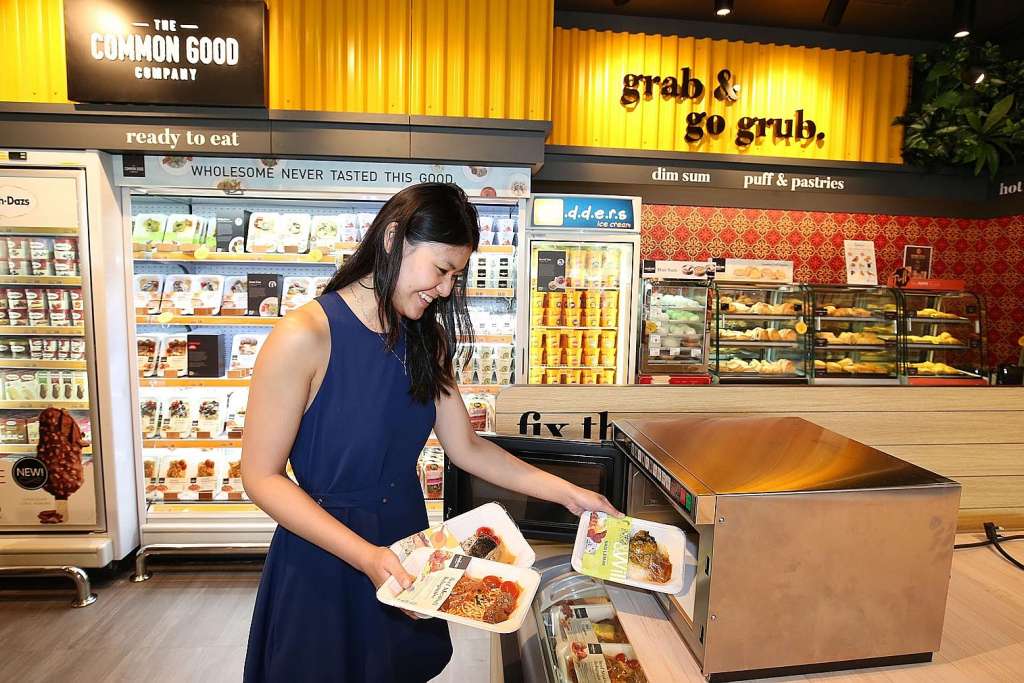
Beef rendang baked rice, salmon with cauliflower quinoa rice and nasi lemak are among ready-to-eat meals that have gone on sale at Cheers and FairPrice Xpress outlets in five Esso service stations from yesterday.
Consumers need only heat up such chilled – not frozen – pre- cooked meals for a minute before tucking in.
And, no, there are no preservatives added.
At convenience store chain 7-Eleven, ready-to-eat meals like braised duck rice, butter chicken briyani and Hainanese chicken rice line store shelves.
By the first quarter of next year, these dishes will replace the current range of frozen meals that need to be thawed.
Caltex petrol kiosks are also in on the action, with the introduction of sandwich vending machines in four of its Star Mart convenience stores.
They also sell beef rendang, chicken rice and claypot rice and pasta.
The interest in ready-to-eat meals is being fuelled, in part, by busy customers. “Today’s consumers are time-strapped and this means a greater demand for convenient solutions,” said NTUC FairPrice chief executive Seah Kian Peng.
Cheers is FairPrice’s convenience store arm. Mr Seah added that market studies have shown the increasing popularity of ready-to-eat meals.
He was speaking yesterday at the launch of a revamped convenience store format for ExxonMobil Asia- Pacific’s Esso petrol service stations that features a new ready-to- eat range of products.
The food is from local eateries – such as The Soup Spoon, PastaMania and ice cream shop Udders – supplied by The Common Good Company, a consortium made up of well-known local brands.
The meals are packed in a new type of vacuum skin packaging, which is expected to preserve the flavour and aesthetics of the food, said the consortium’s managing director Anna Lim.
She said the food does not contain preservatives and can last for up to six days.
Cheers’ refreshed retail format will debut in five Esso stations, including in Holland Road, East Coast Road and Jurong West Avenue 1. It will be rolled out to all 62 stations islandwide over the next two years.
For 7-Eleven, which has more than 400 outlets, besides having ready-to-eat meals replace its frozen food, more outlets are expected to have seats for customers so they can eat at the stores.
7-Eleven Singapore chief executive David Goh said the firm looked to Japan as an example, as well as the consumer-centric nature of the 7-Eleven outlets there.
The change in strategy appears to have helped. So far this year, the firm has seen a 5 per cent to 8 per cent growth in same-store sales over the same period last year, after a steady decline in sales over the past 10 years, said Mr Goh.
He attributed the increase to a widening of offerings to include stationery, groceries, personal care products and ready-to-eat meals.
Mr Peter Anthony Robertson, 53, has taken to these meals. The mixed martial arts instructor said: “I work long hours and the meals are easy to prepare. They taste good and I can store them in my fridge.”
The move to ready-to-eat meals is also aligned with the Government’s recent food service and retail industry transformation maps, which encourage innovative business formats and technology in those sectors, noted FairPrice.
Another push in the same direction are vending machines that serve hot food – such as seafood horfun – launched in August this year.
Mr Denis Ang from Nanyang Polytechnic said that in the past, consumers were sceptical over the nutritional value of packed food. “The adoption of new technology in food handling and food safety has replaced these concerns with optimism, which has since revived demand for cooked ready-to-eat meals in Singapore.”
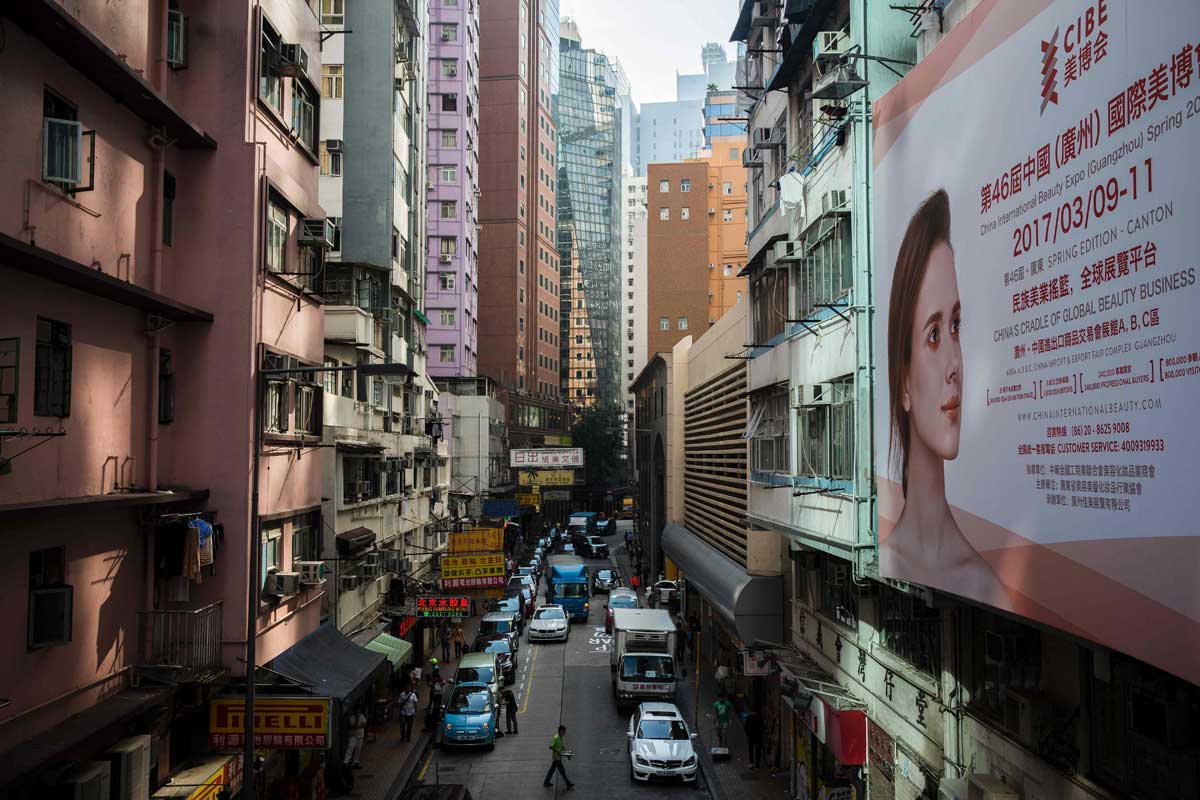
Hong Kong will have to build a million flats by 2046 to accommodate its growing population which will peak at 8.22 million in 2043, a government study has shown.
The population projection-based report that envisions “a more liveable place with larger flats and more public space” also projects larger private flats with an average size of 646 sq ft, up from 620 sq ft. Public housing will remain at an average size of 431 sq ft, smaller than a three-room Housing Board flat in Singapore.
The study was released by the government last month to get feedback from the public on its development strategy for the city called “Hong Kong 2030 Plus: Towards a Planning Vision and Strategy Transcending 2030”.
Secretary for Development Paul Chan said Hong Kong 2030 Plus is a vision-driven plan to shape the built environment of the city beyond 2030. It is the first time in its housing needs study that the government has specified the target date of 2046, a year before the end of China’s promise to keep Hong Kong’s way of life unchanged for 50 years from 1997, when the city returned to the Chinese fold from British rule.
The study has drawn criticism from some lawmakers, who said the government’s vision to build a million flats by 2046 is “unrealistic”.
“The government is being too optimistic to estimate a population of 8.22 million by 2043. Hong Kong continues to face low birth rates and an ageing population, we will not need a million flats,” said Democratic Party lawmaker Andrew Wan.
Noting that the problem is not a shortage of housing, he said: “The real issue is affordability. Hong Kong is not short of flats. There are plenty of empty flats which are not affordable to most people. In Hong Kong, many people buy flats for investments and such activities drive up the prices of flats.”
Lawmaker Edward Yiu, who represents the Architectural, Surveying, Planning and Landscape functional constituency, said with the shrinking population, the city would need just half a million new flats.
Government data shows only half of Hong Kong’s population owns a home, compared with 90 per cent in Singapore.
Earlier this month, in a move to cool the overheated market which saw median home prices rising for the sixth consecutive month in September, the government raised the stamp duty to 15 per cent for second-home buyers.
But three days after the curb, an 8,702 sq ft flat in the exclusive Peak neighbourhood was sold for HK$912 million (S$167 million), with the price per square foot exceeding the previous record at the same development by 23 per cent, reported Bloomberg.
Hong Kong’s property boom has resulted in an increase in household debts, revealed a Legislative Council survey this week.
It showed that the average debt borne by each household almost doubled to HK$646,100 from 2005 to last year. It cited surging flat prices and rentals, which rose by 223 per cent and 100 per cent respectively within the decade, as a reason for people taking out larger loans.
Critics also questioned the government’s plan to reclaim land to increase land supply, when there are vast tracts of undeveloped land in the New Territories.
In its plan, the government is proposing to build two major new towns in the north of the New Territories and on reclaimed land east of Lantau Island, which it said could provide 1,720ha of land to meet a projected shortfall of 1,200ha for housing and economic development.
Even though interest is falling and the economy is slowing, experts believe Singapore should continue hosting the Formula One race beyond its 10th edition, as long as it gets bang for the buck.
And while the race is unique in being the only full night race, organisers need to move beyond that selling point to freshen the event.
Negotiations between Singapore GP and Formula One Management to host the event from 2018 onwards are under way, but were given a surprise twist this week when F1 supremo Bernie Ecclestone suggested Singapore could be leaving the race stable, before backtracking.
The climate has changed from 2012, when the latest deal was inked.
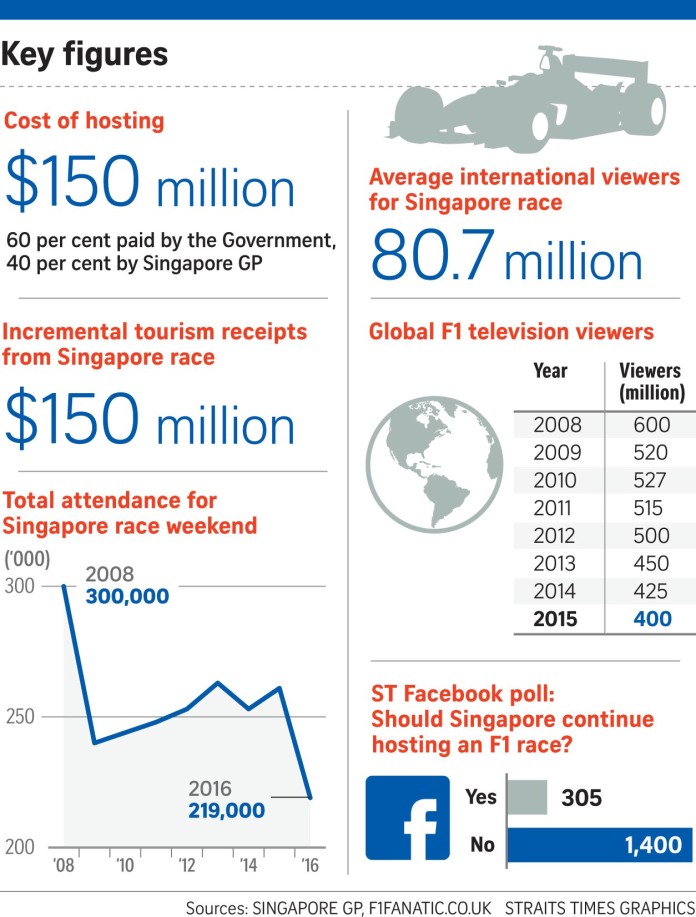
The global economy has slowed, and this has led to a drop in average daily attendance at the Singapore race – from 87,000 last year to 73,000 this year.
Global TV viewership of the sport has fallen from 600 million in 2008 to 400 million last year. Malaysia, which has hosted an F1 race annually since 1999, has decided not to renew its deal beyond 2018 as it is not recouping the costs.
It costs $150 million to host the Singapore race, with the Singapore Government paying 60 per cent and the rest coming from race promoters Singapore GP.
Mercedes AMG Petronas F1 Team’s German driver Nico Rosberg takes a corner during the Formula One Singapore Grand Prix in Singapore on Sept 17, 2016.
To continue making such an investment, Mr Ashoke Sengupta, managing director (Asia and the Middle East) of global sports marketing and entertainment agency Lagardere Sports, said Singapore must continue getting bang for its buck. “If Singapore is to continue hosting the night race, the event needs to be financially viable and underpinned by a long-term vision.”
There is also uncertainty over F1’s new American owner Liberty Media’s plans to rejuvenate the sport.
A pivot away from Asia could be on the cards, with talk of a Las Vegas night race gathering pace.
Still, experts point out that F1 has brought in, for every race, $150 million in incremental tourism receipts, which are over and above the typical tourism spending on a non-race weekend.
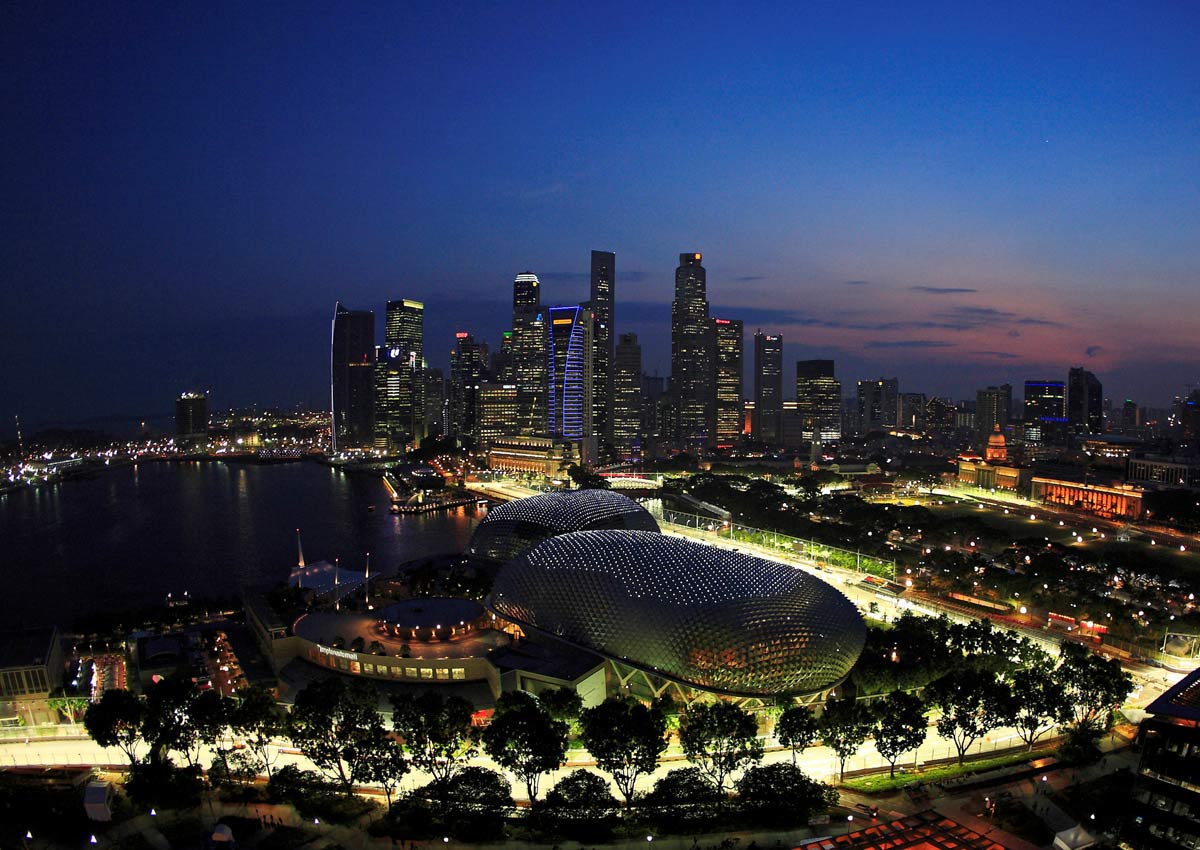
There is also hardly a better worldwide advertisement for the country than having the Marina Bay skyline beamed on TV screens in over 200 territories, said experts.
Viewership for the Singapore race has also gone against declining numbers, staying at about 80.7 million.
The formula may have become staid, but some experts believe Singapore can do a reboot to regenerate interest – including by showcasing F1 alongside the country’s own technological push into areas such as electric vehicles.
Said Mr Kuboshima Yuki, managing partner for clients and industries, Deloitte Asia Pacific: “I believe Singapore is in a great position to utilise F1 events to showcase changes in the automotive industry… This will not only bring excitement but (also) push the Singapore brand to the next level.”
Pulling the plug on the race should be a last resort. Said Adjunct Associate Professor Lynda Wee from Nanyang Technological University’s Nanyang Business School: “It helps that we already have a working relationship with F1, and ultimately it will help if both sides can reach terms that help them reach their objectives.”
But if Singapore does lose the race, the experience it has earned can help it secure other high-profile replacements. She said: “If talks don’t work out, we can approach other global events with confidence knowing we have 10 years of experience under our belt.”
This article was first published on November 23, 2016. Get a copy of The Straits Times or go to straitstimes.com for more stories.
US President-elect Donald Trump appeared to hand China an early win when he revealed plans to pull out of the Trans-Pacific Partnership (TPP) on Day One of his presidency.
His statement, made via a video released on Monday, has led to Asia watchers predicting that the move would result in more countries feeling pushed into signing up for the China-backed alternative, the Regional Comprehensive Economic Partnership (RCEP).
Mr Trump said he was going to issue a note of intent to withdraw from the TPP trade deal, which he called “a potential disaster for our country”.
Instead he said he would “negotiate fair bilateral trade deals that bring jobs and industry back”.
In a short YouTube video spelling out his priorities, Mr Trump said he had ordered his transition team to draft a series of executive actions he could take on his first day at work to deliver quickly on his promises.
Apart from investigating visa fraud, he also promised to “cancel job-killing restrictions” on American shale energy and coal and create “many millions of high-paying jobs” for Americans.
He also said he would rip up the TPP deal.
The stark declaration came just hours after Japanese Prime Minister Shinzo Abe said the TPP would be “meaningless” without the US.
Mr Abe told a parliamentary committee last week that if the TPP did not go through, it would be a pivot towards the China-led RCEP.
Yesterday, Japanese Chief Cabinet Secretary Yoshihide Suga did not comment on Mr Trump’s promise to quit the TPP, but said Japan plans to take the lead in working to ensure the TPP takes effect as soon as possible, and would lobby other signatories to the pact.
New Zealand Prime Minister John Key reacted more bluntly. “The United States is not an island,” he said.
“It can’t just sit there and say it’s not going to trade with the rest of the world.”
Mr Trump made it clear he favoured bilateral pacts.
While the 11 other countries in the TPP may pursue their own deal without the US, the focus has also shifted to the RCEP, which includes the 10 members of ASEAN, plus China, Japan, South Korea, India, Australia and New Zealand.
Viewed as an alternative to the TPP, which excludes China and India, RCEP represents about 40 per cent of world trade, compared with the TPP’s one-third.
Even if the 11 nations decide to go it alone, they face a major problem: At least six original signatories of the TPP representing 85 per cent of the total gross domestic product of the 12 original signatories are needed to ratify the agreement.
352614
2016-11-18 10:10:52
Photo Gallery
Japan’s PM Abe meets with US President-elect Donald Trump
This is not possible without the US, unless the TPP is amended.
“TPP will survive, but it will be a shadow of its originally intended self.
With the absence of the powerful US economy, the accord’s potential to boost growth and generate new markets will be limited,” said Mr Michael Kugelman, a senior programme associate at the Asia Programme of the Wilson Centre in Washington, DC. With the US’ withdrawal, its position in the region would be weakened and China would be emboldened, he said.
Business don Nguyen Quang Trung of RMIT University Vietnam said the US had lost the chance to play a leading role in the region: “We know the RCEP is not comparable to TPP in terms of the change it makes to regulations, but the tariff reductions could immensely help China have influence in the Asia-Pacific.
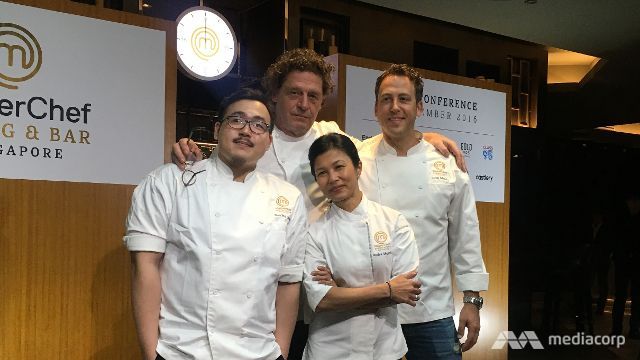
“Fashioned as an epicurean experience aiming to connect fans of the show to the chefs, contestants, and dishes made famous by the show, The MasterChef Dining and Bar is now in Singapore and will be making its Asian debut on Friday (Nov 25). Running till Dec 9 at Ash & Elm in InterContinental Singapore, the pop-up dining event not only allows guests to partake in the creations by MasterChef celebrity chefs and personalities, but also interact with them in an open-kitchen restaurant setting.” – Channel NewsAsia
“Fashioned as an epicurean experience aiming to connect fans of the show to the chefs, contestants, and dishes made famous by the show, The MasterChef Dining and Bar is now in Singapore and will be making its Asian debut on Friday (Nov 25).” – Channel NewsAsia
Friends and loved ones have paid special tribute to one of Singapore’s most well-known nightlife and F&B luminaries a month after his death in an unusual obituary detailing his life accomplishments and milestones.
The obituary published on Nov 23 in The Straits Times described John Jackson “Johnny” Walker as a man who had “incredible loyalty, honesty, generosity and sense of fun”.
Walker who was the managing director and owner of Pacific Beverages died on Oct 24, a just one day after he turned 51, according to a separate obituary published online on Heaven Address.
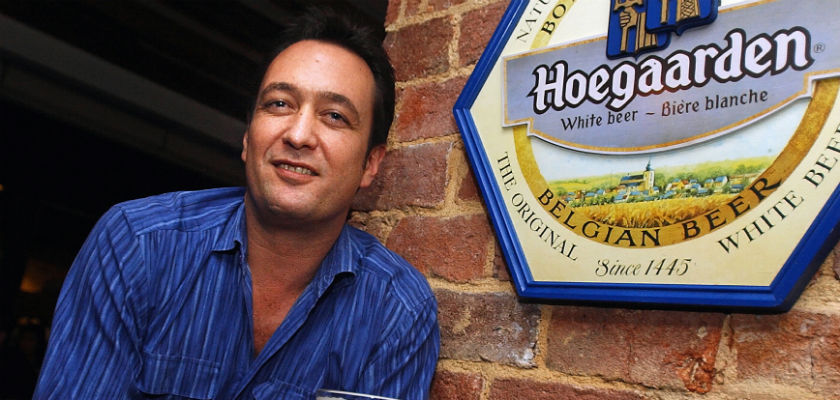
Pacific Beverages is a major distributor of beverages in Singapore which distributes beer brands such as Stella Artois, San Miguel and Hoegaarden.
Born in South Africa, Walker had previously lived in China and moved to Singapore in 1991. He found a job at Zouk before joining the Emerald Hill Group later where he helped to establish iconic bars No. 5, Que Pasa and Ice-Cold Beer.
He started Pacific Beverages in 1996.
He is believed to have died of a cardiac arrest in his own home, according to sources.
Friends Patrick C D MacMahon and Miles Fenley wrote in The Straits Times obituary that Walker “lived life at a break-neck speed but, somehow, left no-one behind”, while Alex Terry and Simon Price said he was a generous giver to charities and friends.
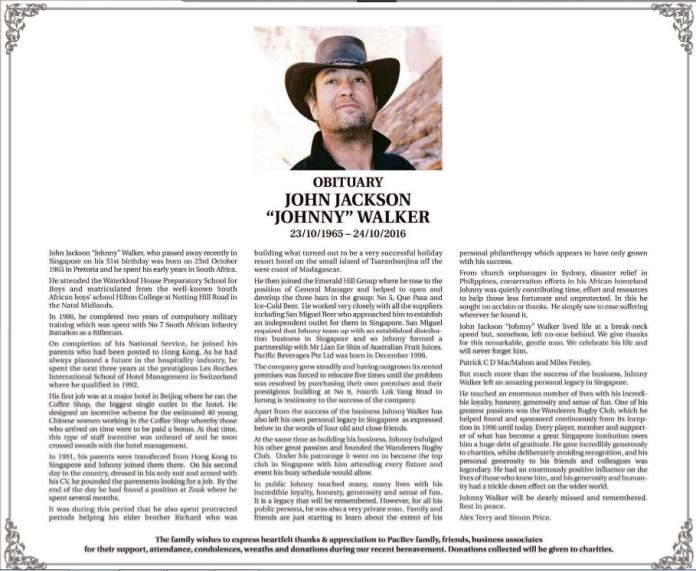
The obituary for “Johnny” Walker published in The Straits Times is as follows:
Photo: The Straits Times screengrab
John Jackson “Johnny” Walker, who passed away recently in Singapore on his 51st birthday was born on 23rd October 1965 in Pretoria and he spent his early years in South Africa.
He attended the Waterkloof House Preparatory School for Boys and matriculated from the well-known South African boys’ school Hilton College at Notting Hill Road in the Natal Midlands.
In 1986, he completed two years of compulsory military training which was spent with No 7 South African Infantry Battalion as a Rifleman.
On completion of his National Service, he joined his parents who had been posted to Hong Kong. As he had always planned a future in the hospitality industry, he spent the next three years at the prestigious Les Roches International School of Hotel Management in Switzerland where he qualified in 1992.
His first job was at a major hotel in Beijing where he ran the Coffee Shop, the biggest single outlet in the hotel. He designed an incentive scheme for the estimated 40 young Chinese women working in the Coffee Shop whereby those who arrived on time were to be paid a bonus. At that time, this type of staff incentive was unheard of and he soon crossed swords with the hotel management.
In 1991, his parents were transferred from Hong Kong to Singapore and Johnny joined them there. On his second day in the country, dressed in his only suit and armed with his CV, he pounded the pavements looking for a job. By the end of the day he had found a position at Zouk where he spent several months.
It was during this period that he also spent protracted periods helping his elder brother Richard who was building what turned out to be a very successful holiday resort hotel on the small island of Tsaranbanjina off the west coast of Madagascar.
He then joined the Emerald Hill Group where he rose to the position of General Manager and helped to open and develop the three bars in the group: No 5. Que Pasa and Ice-Cold Beer. He worked very closely with all the suppliers including San Miguel Beer who approached him to establish an independent outlet for them in Singapore. San Miguel required that Johnny team up with an established distribution business in Singapore and so Johnny formed partnership with Mr Lian Ee Shin of Australian Fruit Juices. Pacific Beverages Pte Ltd was born in December 1996.
The company grew steadily and having outgrown its rented premises was forced to relocate five times until the problem was resolved by purchasing their own premises and their prestigious building at No 9, Fourth Lok Yang Road in Jurong is testimony to the success of the company.
Apart from the success of the business Johnny Walker has also left his own personal legacy in Singapore as expressed below in the words of four old and close friends.
At the same time as building his business, Johnny indulged his other great passion and founded the Wanderers Rugby Club. Under his patronage it went on to become the top club in Singapore with him attending every fixture and event his busy schedule would allow.
In public Johnny touched many, many lives with his incredible loyalty, honesty, generosity and sense of fun. It is a legacy that will be remembered. However, for all his public persona, he was also a very private man. Family and friends are just starting to learn about the extent of his personal philanthropy which appears to have only grown with his success.
From church orphanages in Sydney, disaster relief in Philippines, conservation efforts in his African homeland Johnny was quietly contributing time, effort and resources to help those less fortunate and unprotected. In this he sought no acclaim or thanks. He simply saw to ease suffering wherever he found it.
John Jackson “Johnny” Walker lived life at a break-neck speed but, somehow, left no-one behind. We give thanks for this remarkable, gentle man. We celebrate his life and will never forget him.
Patrick C D MacMahon and Miles Fenley
But much more than the success of the business, Johnny Walker left an amazing personal legacy in Singapore.
He touched an enormous number of lives with his incredible loyalty, honesty, generosity and sense of fun. One of his greatest passions was the Wanderers Rugby Club, which he helped found and sponsored continuously from its inception in 1996 until today. Every player, member and supporter of what has become a great Singapore institution owes him a huge debt of gratitude. He gave incredibly generously to charities, whilst deliberately avoiding recognition, and his personal generosity to his friends and colleagues was legendary. He had an enormously positive influence on the lives of those who knew him, and his generosity and humanity had a trickle down effect on the wider world.
Johnny Walker will be dearly missed and remembered Rest in peace.
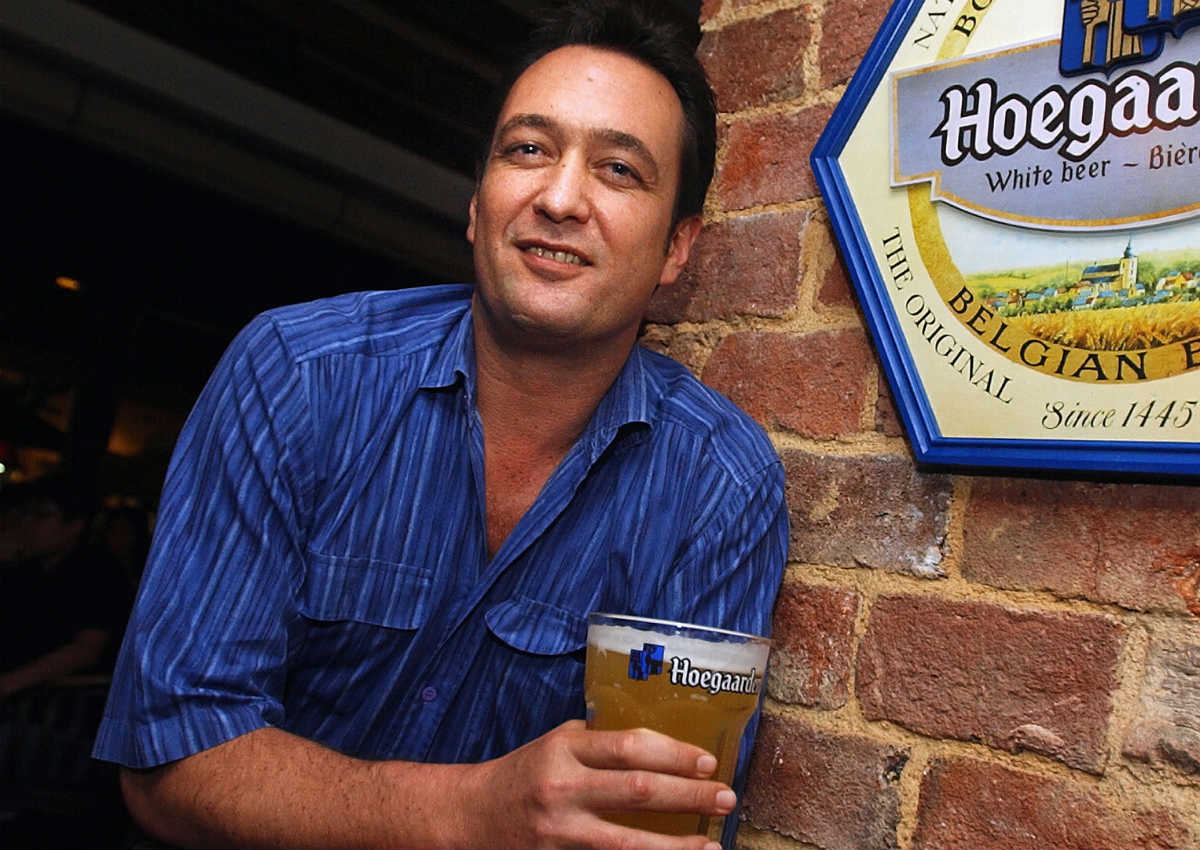
One of Singapore’s most well-known people in the nightlife and F&B industries has died.
An online obituary published on Heaven Address said that John Jackson “Johnny” Walker, the managing director and owner of Pacific Beverages, died on Oct 24, just one day after he turned 51.
Pacific Beverages is a major distributor of beverages in Singapore which distributes beer brands such as Stella Artois, San Miguel and Hoegaarden.
Born in South Africa, Walker had previously lived in China and moved to Singapore in 1991. He found a job at Zouk before joining the Emerald Hill Group later where he helped to establish iconic bars No. 5, Que Pasa and Ice-Cold Beer.
He started Pacific Beverages in 1996.
He is believed to have died of a cardiac arrest in his own home, according to sources.
In an obituary published on Nov 23 in The Straits Times, friends of Walker remembered him as a man who had “incredible loyalty, honesty, generosity and sense of fun”.
Friends Patrick C D MacMahon and Miles Fenley wrote that Walker “lived life at a break-neck speed but, somehow, left no-one behind”, while Alex Terry and Simon Price said he was a generous giver to charities and friends.
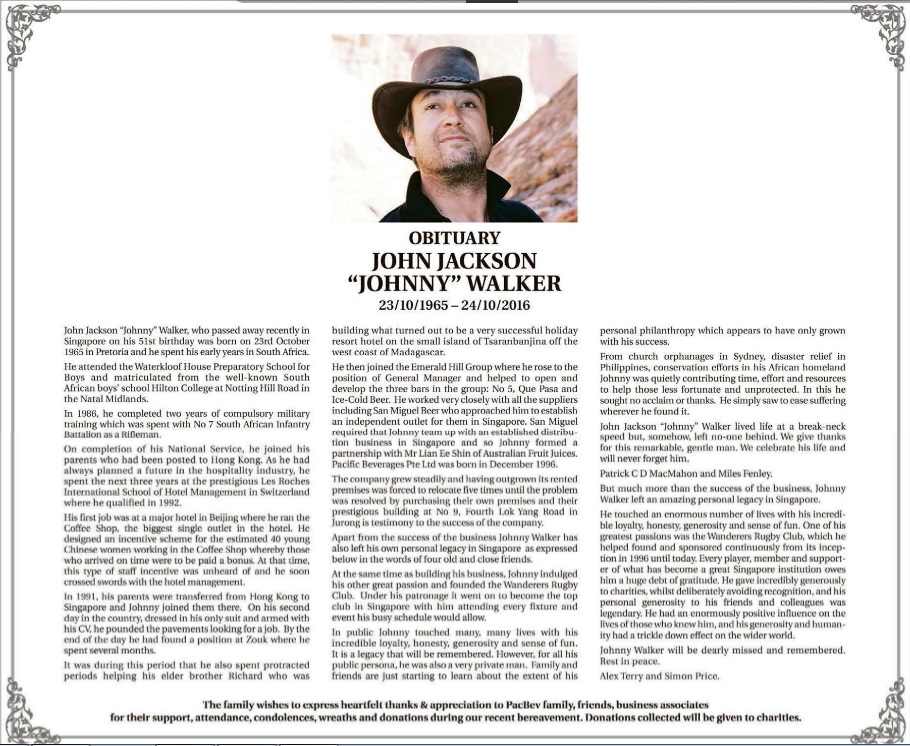
The obituary for Johnny Walker published in The Straits Times is as follows:
Photo: The Straits Times screengrab
John Jackson “Johnny” Walker, who passed away recently in Singapore on his 51st birthday was born on 23rd October 1965 in Pretoria and he spent his early years in South Africa.
He attended the Waterkloof House Preparatory School for Boys and matriculated from the well-known South African boys’ school Hilton College at Notting Hill Road in the Natal Midlands.
In 1986, he completed two years of compulsory military training which was spent with No 7 South African Infantry Battalion as a Rifleman.
On completion of his National Service, he joined his parents who had been posted to Hong Kong. As he had always planned a future in the hospitality industry, he spent the next three years at the prestigious Les Roches International School of Hotel Management in Switzerland where he qualified in 1992.
His first job was at a major hotel in Beijing where he ran the Coffee Shop, the biggest single outlet in the hotel. He designed an incentive scheme for the estimated 40 young Chinese women working in the Coffee Shop whereby those who arrived on time were to be paid a bonus. At that time, this type of staff incentive was unheard of and he soon crossed swords with the hotel management.
In 1991, his parents were transferred from Hong Kong to Singapore and Johnny joined them there. On his second day in the country, dressed in his only suit and armed with his CV, he pounded the pavements looking for a job. By the end of the day he had found a position at Zouk where he spent several months.
It was during this period that he also spent protracted periods helping his elder brother Richard who was building what turned out to be a very successful holiday resort hotel on the small island of Tsaranbanjina off the west coast of Madagascar.
He then joined the Emerald Hill Group where he rose to the position of General Manager and helped to open and develop the three bars in the group: No 5. Que Pasa and Ice-Cold Beer. He worked very closely with all the suppliers including San Miguel Beer who approached him to establish an independent outlet for them in Singapore. San Miguel required that Johnny team up with an established distribution business in Singapore and so Johnny formed partnership with Mr Lian Ee Shin of Australian Fruit Juices. Pacific Beverages Pte Ltd was born in December 1996.
The company grew steadily and having outgrown its rented premises was forced to relocate five times until the problem was resolved by purchasing their own premises and their prestigious building at No 9, Fourth Lok Yang Road in Jurong is testimony to the success of the company.
Apart from the success of the business Johnny Walker has also left his own personal legacy in Singapore as expressed below in the words of four old and close friends.
At the same time as building his business, Johnny indulged his other great passion and founded the Wanderers Rugby Club. Under his patronage it went on to become the top club in Singapore with him attending every fixture and event his busy schedule would allow.
In public Johnny touched many, many lives with his incredible loyalty, honesty, generosity and sense of fun. It is a legacy that will be remembered. However, for all his public persona, he was also a very private man. Family and friends are just starting to learn about the extent of his personal philanthropy which appears to have only grown with his success.
From church orphanages in Sydney, disaster relief in Philippines, conservation efforts in his African homeland Johnny was quietly contributing time, effort and resources to help those less fortunate and unprotected. In this he sought no acclaim or thanks. He simply saw to ease suffering wherever he found it.
John Jackson “Johnny” Walker lived life at a break-neck speed but, somehow, left no-one behind. We give thanks for this remarkable, gentle man. We celebrate his life and will never forget him.
Patrick C D MacMahon and Miles Fenley
But much more than the success of the business, Johnny Walker left an amazing personal legacy in Singapore.
He touched an enormous number of lives with his incredible loyalty, honesty, generosity and sense of fun. One of his greatest passions was the Wanderers Rugby Club, which he helped found and sponsored continuously from its inception in 1996 until today. Every player, member and supporter of what has become a great Singapore institution owes him a huge debt of gratitude. He gave incredibly generously to charities, whilst deliberately avoiding recognition, and his personal generosity to his friends and colleagues was legendary. He had an enormously positive influence on the lives of those who knew him, and his generosity and humanity had a trickle down effect on the wider world.
Johnny Walker will be dearly missed and remembered Rest in peace.
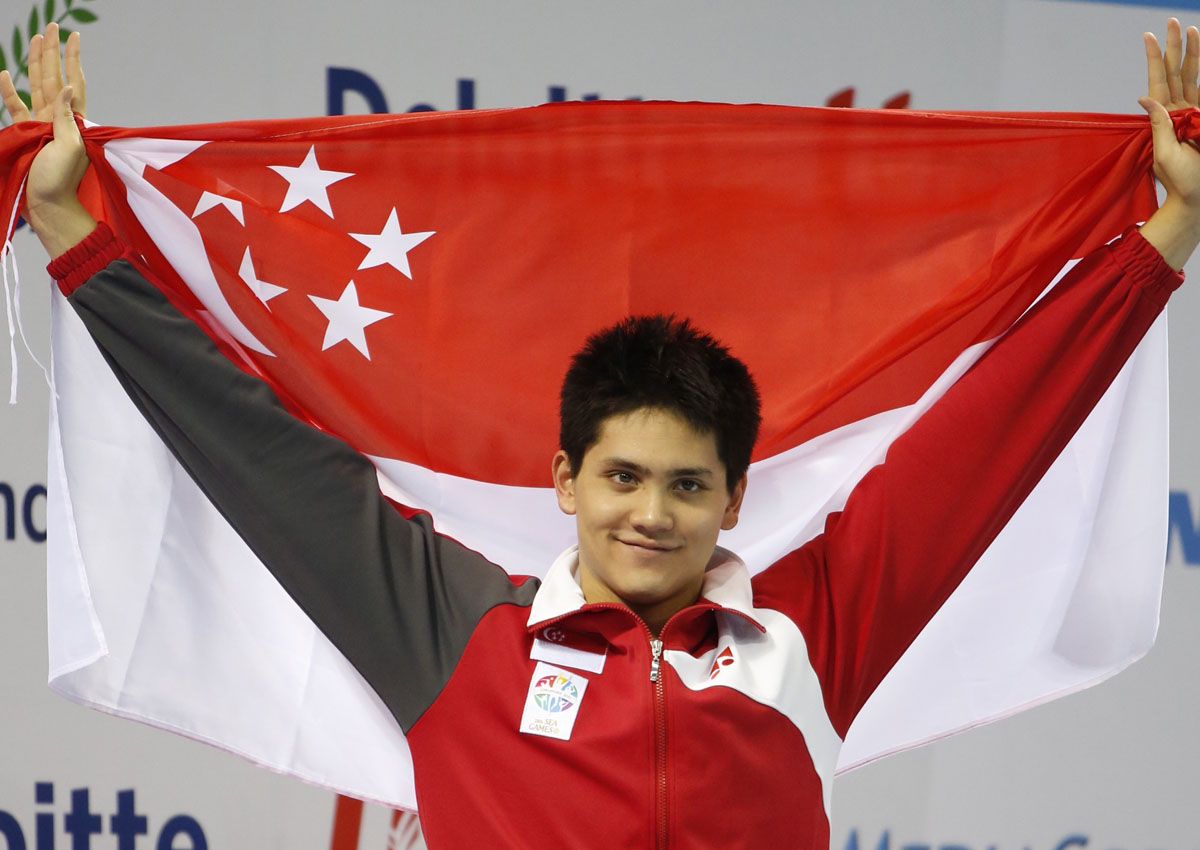
He knows it sits in a ornate wooden box secured by a green ribbon, but Joseph Schooling has no idea where his Olympic gold medal is.
For much of his life, the 21-year-old swimmer got up early in the morning to get wet in training, he worked tirelessly in the gym to hone muscle to realise his dream of winning at the Olympic Games.
And in Rio in August, it all came together in spectacular fashion when he stormed to victory in the men’s 100m butterfly to collect that precious medal.
Imagine the surprise when he revealed the prized possession was not with him.
“I have no idea, it’s probably somewhere in my dad’s office,” Schooling told The New Paper in an interview earlier this week.
“I left it here, I don’t want to be looking at it in my apartment (in the US) all the time.”
Schooling is studying and training at the University of Texas and returned home last week for yesterday’s golf fundraiser organised by the Singapore Swimming Association.
While it will forever be cherished, the star swimmer does not keep the medal because he wants to look ahead and start afresh.
He has new goals, the first of which is to break Michael Phelps’ 100m butterfly world record of 49.82sec.
“I want to break the world record in Budapest next year (July) at the Worlds… I don’t have a specific time in mind; whether it’s 48.9 or 49.81, I don’t care,” he said at a media conference at the Tanah Merah Country Club yesterday.
Schooling has been in contact with University of Texas swim coach Eddie Reese over the last few days – the swimmer arrived in Singapore last Friday and leaves this Friday – and he is ready for hard work when he returns to the United States.
“Eddie sent me a long text yesterday… and the last sentence was, ‘I like you no matter what, except if you get fat’; that’s Eddie’s humour for you.”
Training has been “on and off” for Schooling since the Olympics, and he acknowledged that at times he was tempted to take it easy, especially with all the adulation over his victory.
Schooling’s Rio win made him the first Singaporean Olympic gold medallist and he said: “I definitely felt I had reached the pinnacle and achieved all my goals.
“But there is still a lot of work to be done and improvements to be made, and I’m really excited about that.
“I want to see how good I can get. When I am done swimming, I don’t want any ‘could I’s’ or ‘should I’s’.
“I feel that I am still far from my full potential, and there’s a lot of work to do.”