Home Blog Page 2296

Teacher turns panda droppings into paper

0

A retired teacher in northwestern China has found a novel raw material for making paper-poop from the giant panda.

Liu Xiaodong, 68, has had a paper-making workshop in Qiliang village of Shaanxi province since stepping down as the local primary school principal in 2008.

Two years ago, he began experimenting with panda excrement, mixing it with varying quantities of mulberry tree bark, wild kiwifruit vines and spring water to make paper.

On Nov 17, he finally cracked it.

He got the idea while wandering on Qinling Mountain, just south of his village, which is a major habitat for the endangered giant panda.

“Every day, a panda eats about 35 kilograms of bamboo, but it absorbs only 30 per cent of the nutrients from the bamboo,” said the craftsman, who runs Cai Lun Paper-making Cultural Garden, suggesting that 70 per cent was ending up in their waste.

“I saw a lot of panda poop there, and I wondered if I could make paper with it.”

He got in touch with a panda breeding and protection base on the mountain to discuss his idea and, to his surprise, the experts there were keen to help.

Zhou Juanhua, who runs the facility, said the animals’ waste was previously buried or burned, so he saw Liu’s paper-making proposal as an environmentally friendly alternative.

“We offered to provide fresh droppings,” he said.

Liu Lijie, 66, who helps in Liu Xiaodong’s workshop, said he did not understand the idea of turning panda poop into paper at first, “but his dedication touched me, so I stuck with him to study it further”.

“By using the animal waste, we don’t cut down bamboo or other trees, or use any chemical additives in the paper-making process, which protects our environment,” he added.

Qiliang village, about 60 kilometers southwest of Xi’an, Shaanxi province, is believed to be the birthplace of paper-making, with the invention credited to Cai Lun (61-121), a eunuch, during the Eastern Han Dynasty (25-220).

Since ancient times, families in Qiliang have run paper-making shops or been trained in the skill.

Liu Xiaodong, who was born in the village, said he opened his workshop because he wanted to pass on the traditions to future generations.

His tools are all century-old items, including trolleys, water tanks, hand hay cutters and the double-edged fine-toothed comb for paper fishing, giving a sense of passing through time and space.

“The modern paper-making technology uses industrial caustic soda, but we still use the process of sousing so that the water we use for paper-making is safe for keeping fish in afterward,” Liu Xiaodong said.

Paper-making is regarded as one of the four great inventions of ancient China, along with the compass, gunpowder and the printing press.

Image: 
Category: 
Publication Date: 
Monday, November 28, 2016 – 11:33
Keywords: 
Send to mobile app: 
Source: 


Story Type: 
Others

Source link

Esprit throws 30% off online Cyber Monday week-long promo on 28 Nov – 4 Dec 2016

0

ESPRIT 30% off holiday special till 4 Dec

Esprit throws 30% off online Cyber Monday week-long promo on 28 Nov – 4 Dec 2016

Get 30% Off – Womens, Mens, Kids and more – for a limited time. Discount will be automatically applied at the checkout after you have created and logged in to your free Esprit Friends account. Membership is free

Source

Born and raised in Japan, he thinks he’s local but the country disagrees

0


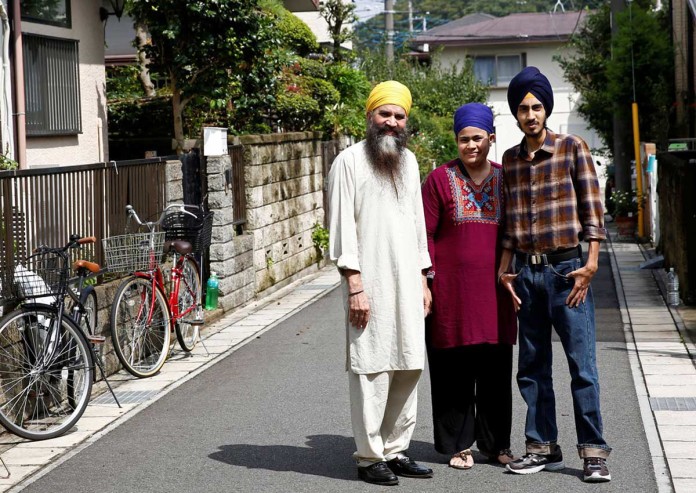
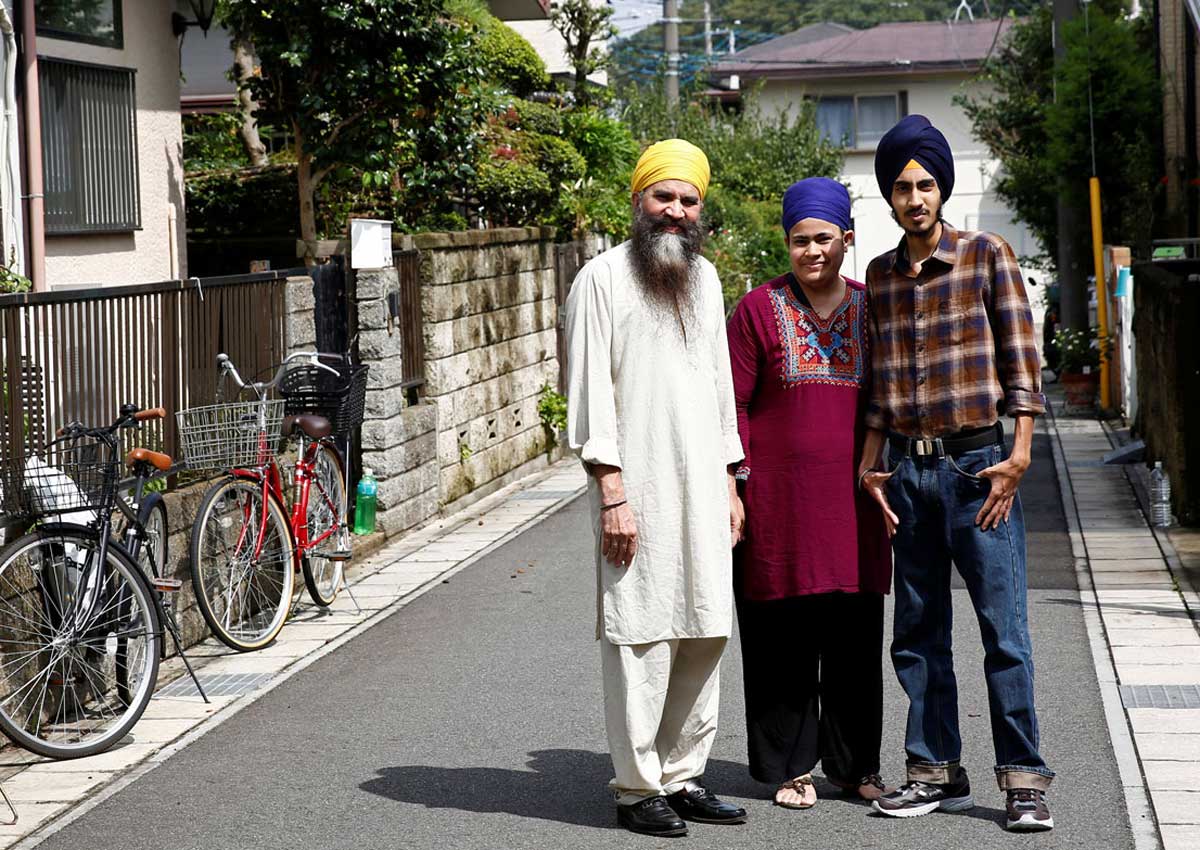
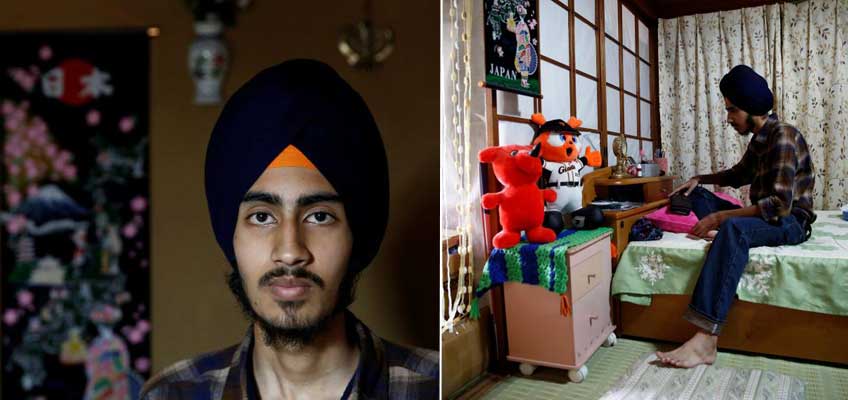
Every other Sunday, 17-year-old Gursewak Singh plays the tabla drums at the Sikh temple located in the basement of a Tokyo building where his father leads the local community in prayers.

He dreams of going to college and working in Japan – the only country he’s ever known – but he doesn’t know if the authorities will let him.

Gursewak was born and raised in Matsudo, Chiba Prefecture, a quiet suburban town east of Tokyo.

“I went to a government-run kindergarten, elementary school, middle school and high school all in Chiba prefecture. My life’s been no different to the life of Japanese people,” said Gursewak, who speaks the language with native fluency and considers himself Japanese.

However, he has inherited the legal limbo status of his Sikh parents who fled to Japan from India to escape religious oppression before he and his siblings were born.

The Japanese government, however, has repeatedly denied them asylum and wants them deported. The system of “provisional release”, which allows applicants to stay in Japan while their asylum case is being reviewed, has kept them in the country until now.

But this status also means they can’t work, they don’t have health insurance and they need permission to travel outside the prefecture where they live. They are also subject to unannounced inspections by immigration officers at their home and they face detention at any time. There are currently some 4,700 people with this status living in Japan.

Gursewak’s whole family has been living off donations from a Sikh charity and Sikhs in the local community.

Now the clock is ticking on his very future as he grows up.

“The most difficult thing now is not being able to work. I want to go to college next year, but without work, I can’t see my future at all,” Gursewak said.

“The immigration authorities tell us to go back to our parents’ home country. But I’ve never been to India. It’s not like going back to your hometown in the countryside. The immigration authorities must be kidding themselves,” Singh said, adding he has no intention of leaving Japan.

His case highlights the plight of hundreds of other children in Japan who have inherited similar legal issues.

Gursewak’s father, Bharpoor, fled his Punjab hometown of Sakruli in 1992 after he said he was arrested by Indian police and tortured for being a Sikh religious leader, according to Japanese court documents of his testimonies.

Last year, immigration officials made his parents an offer: Leave Japan, and your children can stay. The offer was refused.

However, immigration officials say that they never initiate such offers but they are open to the idea if it is first broached by the family. They said they didn’t know how many cases there had been in which parents agreed to separate from their children in the hope of giving them a better life in Japan.

When Gursewak was 10 years old, his father was detained for ten months and he suddenly became much more conscious of his limbo status. He began calling lawyers and NGOs for advice, and collecting signatures from Japanese neighbours to support his family’s petition for visas.

He also started writing the first of dozens of letters to the Justice Ministry then, pleading that his family gain legal status in Japan.

The letters, all written in Japanese, have become more eloquent as Gursewak grows older. But the message is unchanged – a plea to the Japanese authorities to recognise him and his family as residents in a country where he and his younger twin siblings were born and his parents, natives of India, have lived since the 1990s.

He has not received a single reply.

The head of Provisional Release Association in Japan, Mitsuru Miyasako, believes that Japan’s strong sense of homogeneity has made access to legal status extremely difficult especially for some asylum seekers.

Government data shows more than 500 children share Gursewak’s predicament of living in perpetual uncertainty.

They can go to government-run schools, where tuition is largely free, but university is out of reach for most because they and their parents aren’t allowed to work and so can’t afford the fees. These children, many of whom are asylum seekers, will soon face a stark choice between forced unemployment and working illegally.

“These children, high school students without residency permits, their situation stems from the problems which Japan’s immigration authorities have tried to ignore in the past but have gradually come to the surface,” Miyasako said.

Now immigration officials are trying to clamp down on visa overstayers, people working without permits and asylum seekers who fail to abide by the rules of their ‘provisional release’. An internal Justice Ministry memo from September last year called for closer surveillance of those on provisional release.

For Gursewak and the other children sharing his plight, this has cast a dark cloud over their futures.

“These kids worry about what their efforts would amount to in the future-the studying, the money that their parents struggled to gather to send them to college. After four years of college, then what? Would they have just left their parents with a huge amount of debt? Would their efforts be rewarded? These are questions these kids ask themselves, and all they see is darkness in front of them,” Miyasako said.

Japanese authorities say the fact that these children were born or raised in Japan is not an argument for leniency. Japan generally recognises only the right of blood, or jus sanguinis, for citizenship.

The experience of Gursewak and other children born to migrant parents exposes Japan’s deep reluctance to accept foreigners, even as the country’s population ages and its workforce shrinks.

Last year Japan accepted only 27 refugees. At the end of 2015, 14,000 applicants were under review.

Belgium, with a population of less than a tenth the size of Japan’s, had a similar number of asylum applications, but had approved almost two thirds by the end of June.

While Singh is not barred from attending university, his family cannot afford the fees because they can’t work. Average annual tuition for government-run universities in Japan is around US$5,000 (RM22,000), plus a one-off entrance fee of about US$3,600 (RM16,000). The family’s monthly expenses are about US$1,800 (RM8,000).

Singh, who will start his final year of high school in April in 2017, wants to study web design, but he is not sure how he or his parents would be able to facilitate his dream of going to university.

Image:
Category:
Publication Date:
Monday, November 28, 2016 – 10:16
Send to mobile app:
Source:

Rotator Image:
video embed code:
<div style=”display: block; position: relative; max-width: 100%;”><div style=”padding-top: 56.25%;”><iframe src=”//players.brightcove.net/4802324435001/default_default/index.html?videoId=5226178330001″
allowfullscreen
webkitallowfullscreen
mozallowfullscreen
style=”width: 100%; height: 100%; position: absolute; top: 0px; bottom: 0px; right: 0px; left: 0px;”></iframe></div></div>
Video Media:
Other Video Media
Story Type:
Others

Source link

HDB flat owners to pay less property tax next year

0

SINGAPORE: HDB flat owners will pay less property tax next year, while almost all private residential property owners will see lower or no change in their property tax, the Inland Revenue Authority of Singapore (IRAS) said on Monday (Nov 28).

Owners of three-room flats will pay a maximum of S$18.40, down from S$37.60 this year. Those with four-room flats will pay between S$52 and S$100, down from S$71.20 to S$119.20, five-room flats will pay S$83.20 to S$131.20, down from S$104.80 to S$152.80, while executive flats will pay S$95.20 to S$143.20, down from S$116.80 to S$164.80.

All home owners will receive their property tax bills by end of December, and will have to pay their property tax for 2017 by end of January next year, the tax authority said.

IRAS reviews the annual values of properties each year to ensure that they reflect prevailing market rentals. Property tax is computed by multiplying the annual value of the property with property tax rates for residential units.

Property tax is a tax on property ownership and is payable on all properties regardless whether the property is rented out, owner-occupied, or left vacant.

Home owners with financial difficulties can approach IRAS for assistance to discuss a payment plan before Jan 31 next year. Payment plans may include deferment of payment and scheduled instalments.

Those who fail to pay or have not arranged to pay their tax by the due date will face a 5 per cent penalty, IRAS said.

Source link

Another lost pangolin this week, found in NUS this time, rescued and released into the wild

0

SINGAPORE – Days after a pangolin was found in Nanyang Technological University (NTU) on Tuesday (Nov 22), another one showed up at the National University of Singapore (NUS) on Saturday (Nov 26).

A video uploaded by student Ong Kah Jing on Facebook on Saturday night with the caption “Pangolin visiting NUS Utown” showed the critter gingerly finding its way down a flight of stairs at University Town in NUS.

Rescuers from the Animal Concerns Research and Education Society (Acres) turned up at NUS around 10.45pm as the pangolin was making its way towards a railing in the area.

By then, the nocturnal animal had gathered its own entourage – a small, very excited crowd had converged around it.

The animal was “calm and just kept walking”, according to Acres wildlife group director Kalai Balakrishnan. It was given a quick visual check for injuries before being placed in a carrier and handed to the zoo for it to be microchipped and placed in a safe, suitable habitat.

It’s not clear if the pangolin was a male or female, but Mr Kalai estimates that it is of sub-adult to adult age and larger than the one found at NTU.

Pangolins are not aggressive animals, said Mr Kalai.

“But if they feel threatened, they will protect themselves by rolling into a ball,” he added.

Read also: This pangolin’s break-in at NTU has surprise ending 

If you do see one, call the Acres wildlife rescue hotline at 9783-7782.

“Follow it to keep track of where it goes. Photos are good too – they provide clues on whether the animal is injured or whether Acres might need to prepare some rescue tools if they are stuck somewhere,” said Mr Kalai.

In cases where they are in danger of getting run over by vehicles, get help to divert oncoming traffic away from the animal if it is possible and safe, while waiting for Acres to arrive, advised Mr Kalai.

While pangolins are safe from poaching in Singapore due to strict laws, it is endangered in many other places due to wildlife trafficking.

Pangolins are sought after in China and other parts of Asia for their meat, skin and scales. The skin and scales are used in traditional medicine.

“It is a good thing to know these animals are still surviving here, but they are critically endangered animals so we need to do more to protect them,” said Mr Kalai, who estimates that there are about two to three pangolin cases a month which Acres handles.

The National Parks Board (NParks) estimates that there are more than 100 wild pangolins here.

The pangolin also stirred some excitement as it is examination season in NUS. Facebook user Raze Seah felt it boded good fortune to those who chanced upon it. “All A for exam”, she wrote.

Another user, Michael Lim, joked that the pangolin was done with school: “The lecture was so boring, I’m going home now…”

wderek@sph.com.sg


This article was first published on Nov 27, 2016.
Get a copy of The Straits Times or go to straitstimes.com for more stories.

Category: 
Publication Date: 
Monday, November 28, 2016 – 09:31
Send to mobile app: 
Source: 


video embed code: 
<p><iframe allowfullscreen="" frameborder="0" height="355" src="https://players.brightcove.net/4802324435001/default_default/index.html?videoId=5220495798001" width="100%"></iframe></p>
Video Media: 
Other Video Media
Story Type: 
Others

Source link

Aspiring psychiatrist struck by a stroke at 24

0

A 36-year-old Singaporean businesswoman’s recent death from a stroke while on a business trip in Hong Kong has shone the spotlight on a condition that strikes mostly older people.

The median age of stroke patients admitted to public hospitals in Singapore is 67 years old, according to statistics from the National Registry of Diseases Office.

Although being older is a risk factor for stroke, younger victims may have more unusual causes of stroke, says Dr Ho King Hee, a neurologist at Gleneagles Hospital Singapore.

These include congenital heart disease, tears in blood vessels, autoimmune diseases with inflammation of the blood vessels such as lupus or a congenital tendency for blood to clot more easily than normal.

For some women, pregnancy can increase the risk of stroke. They may experience blood coagulation changes or develop high blood pressure during pregnancy, which may predispose them to stroke, adds Dr Ho.

In certain specific circumstances, contraception may be a risk factor for stroke, says Dr N.V. Ramani, a neurologist at Raffles Neuroscience Centre, Raffles Hospital.

Younger women who smoke and have migraine with aura – which is a headache that strikes after or along with sensory disturbances including flashes of light, blind spots or tingling in one’s hand or face – may get a stroke if they are taking some types of contraceptive pills, says Dr Ramani, an executive committee member of the Singapore National Stroke Association (SNSA), whose services for stroke survivors and their families include befriending activities and social integration programmes.

According to national figures from 2005 to 2014, males were generally affected more than females, with the incidence rate for stroke being 1.7 times higher in males.

For most strokes, a clot blocks blood supply to the brain. Patients often experience symptoms such as garbled speech, a drooping face and the inability to lift their arms. Possible long-term side effects of a stroke, especially when treatment is not prompt, include speech and memory problems, paralysis and some vision loss.

To reduce the risk of stroke, Dr Ramani advises regular medical check-ups for blood pressure and cholesterol, a healthy diet, regular exercise, moderate intake of alcohol and no smoking.

VOMITED AND FAINTED IN TAXI

In 2010, Ms Yvonne Lee had just returned to Singapore after completing her bachelor’s degree in psychiatry at Australia’s Curtin University.

A cheerful young woman, she wanted to help others by working as a psychiatrist.

While in a taxi one day, she started vomiting, then fainted. The taxi driver took her to National University Hospital. She had just suffered a stroke at the age of 24, robbing her of her speech, mobility and a promising future.

Today, Ms Lee, 30, has regained some mobility and cognitive function, but she cannot speak properly or walk unsupported.

She had received treatment in hospital for two years, before undergoing rehabilitation. Since April, she has been going at least twice a week to the charity, Able (Abilities Beyond Limitations and Expectations), which serves physically disabled people, for physiotherapy and occupational therapy. This is on top of the daily strengthening exercises she does at home.

She can feed herself, but requires help for daily tasks such as showering and putting on her shoes.

Her mother, Madam Ho Yan Yan, a single parent, looks after her with the family’s domestic helper.

The 60-year-old businesswoman is stoic about her only child’s condition. She says: “As parents, we constantly do our best for our children, but it is exhausting. Even going out can be difficult. We have to help her put on her shoes.”

SUDDENLY COULD NOT TALK

Ms Jagdesh Kaur knew only after she suffered a full-blown stroke at age 46 that she had already experienced six mini-strokes before that.

Three years ago, Ms Kaur, 49, was at home when she had a headache and felt “hazy”. Within half an hour, she could not talk, although she was aware of her surroundings.

She started “floating” in and out of consciousness and her husband, information technology manager Nigel Hall, 50, took her to the hospital. The couple have no children.

“Having a stroke was the last thing on my mind. You think it happens to an older person,” recalls Ms Kaur, a former teacher at a private school who taught English as a foreign language.

After learning more about her condition, she realised in hindsight that she had had about six transient ischaemic attacks, known as TIA and often called mini-strokes, in the six months leading up to her stroke.

Lasting from a few minutes to an hour, these episodes were characterised by a loss in focus, numbness in the arm or needing help to walk. TIA symptoms are transient and stroke-like and a TIA is often a warning for an imminent stroke.

Ms Kaur did not pay much attention to these symptoms as she was not in pain.

For about a year after her stroke, she used a wheelchair. After going through physiotherapy, she usually walks with a walking stick now.

She used to have high blood pressure, a risk factor for stroke, which she has since brought under control by losing more than 10kg of her body weight.

Shortly after the stroke, she hired a domestic helper to care for her, but she can now perform the daily tasks she could not do initially, such as getting dressed or cooking a simple meal.

The stroke, which affected the right side of her body, has also caused her to stammer and stutter occasionally. Writing is difficult as she is right-handed. Her grip is unsteady – when she holds a full cup of coffee, she risks spillage.

“The biggest change has been my lifestyle, my loss of independence and having to depend on somebody else,” she says.

Not only does she need her helper to help in icing cakes when she is baking, but she also does not go shopping alone because she cannot carry the bags.

She is trying to find work, perhaps in an administrative role. She turned down a telemarketing job offered by an agency that helps people with disabilities because of her speech issues.

“I know what I want to say, but it sometimes doesn’t come out how I want it,” she says, adding that she misses teaching.

Her social circle has shrunk.

“I don’t connect with people as much. I have only a handful of friends. I don’t feel comfortable around people who have all their faculties and I don’t. I feel incomplete. I’m not my whole self,” says Ms Kaur.

“Every morning, I get out of bed, I wish I could walk properly. I wake up wanting to feel normal.”

Warning signs: How to detect a mini-stroke

A transient ischaemic attack (TIA) or mini-stroke can present these symptoms: weakness or numbness on one side of the body, difficulty in speaking, drooping of half the face, loss of vision in one eye or double vision.

These symptoms last less than 24 hours. The significance of a TIA is that once it occurs, the risk of a full-blown stroke is high.

To prevent this, people who have experienced a TIA must see a doctor as soon as possible.

Their risk factors can then be addressed and treated to reduce the risk of further clots blocking blood vessels to the brain.

How to detect a stroke

The symptoms of stroke are sudden-onset numbness or weakness of the face, arm or leg, especially on one side, difficulty in speaking, confusion in understanding what others are saying, unsteadiness in walking, and a severe headache or dizziness. If a person has any of these symptoms, he may be having a stroke.

Use the FAST acronym to look out for signs of stroke

F: Face: Ask the person to smile. Does one side of the face droop?

A: Arm: Ask the person to raise both arms. Does one arm drift downwards?

S: Speech: Ask the person to repeat a phrase. Does the speech sound slurred or strange?

T: Time:

If you observe or experience any of these signs, call 995 and go to a hospital immediately.

• Sources: Dr Ho King Hee, a neurologist at Gleneagles Hospital Singapore; and Dr Carol Tham, consultant, Department of Neurology, National Neuroscience Institute

Reducing the risk of stroke: What are the risk factors for stroke and how can they be minimised?

The most common risk factors that could lead to stroke are diabetes mellitus, commonly referred to as diabetes; hypertension, also known as high blood pressure; hyperlipidaemia (high cholesterol); cigarette smoking; and atrial fibrillation, a type of irregular heart rhythm.

Some stroke patients may also have predisposing underlying cardiac conditions such as abnormal heart valves or an abnormal communication between the left and right sides of their heart.

Younger stroke patients may also have antibodies in their blood that make their blood clot more easily.

People with a long family history of stroke, especially at a younger age, are at increased risk of having strokes younger.

There are also certain hereditary conditions, such as autosomal dominant polycystic kidney disease, which are associated with brain aneurysms.

The risk of stroke can be reduced if a person quits smoking and controls risk factors such as diabetes, hypertension and hyperlipidaemia by taking medication and following a diet prescribed by doctors.

Some patients with disorders of blood clotting or certain heart conditions may also be prescribed blood-thinning medication by their doctors to help reduce their risk of ischaemic strokes.

If a person experiences any symptoms of stroke – such as slurred speech or a sudden numbness or weakness of the face, arm or leg, especially on one side – he should seek treatment at a hospital emergency department immediately. Early treatment can help to reduce the disability caused by strokes.

• Source: Dr Carol Tham, consultant, Department of Neurology, National Neuroscience Institute


This article was first published on Nov 27, 2016.
Get a copy of The Straits Times or go to straitstimes.com for more stories.


Image: 
Publication Date: 
Monday, November 28, 2016 – 09:33
Send to mobile app: 
Source: 


Rotator Image: 
Story Type: 
Others

Source link

Lee's 8th nomination hits best actor jackpot at last

0

SEOUL – Actor Lee Byung Hun finally nabbed the Blue Dragon Film Award for best actor for the first time in his 25-year career – after seven previous nominations – for his role as a smooth-talking gangster in political thriller Inside Men.

“When I saw the script for Inside Men, I wondered if it exaggerated reality,” he said in his acceptance speech on Friday at the awards ceremony at Kyung Hee University.

“But ultimately it seems like reality has surpassed Inside Men,” he said, referring to the political scandal sweeping Korea involving Choi Soon Sil, under investigation for peddling unauthorised influence in state affairs and coercing funds from conglomerates.

Lee also addressed the mass candle vigils that have been calling for President Park Geun Hye’s resignation. “I had a belief that those candles would be candles of hope,” he said.

Lee’s character in the film, Ahn Sang Goo, is a mobster who ends up being crushed by larger political powers more ruthless and power-hungry than his group of fist-wielding crooks.

The 46-year-old actor debuted in 2001 with the military drama Joint Security Area.

He has forayed into Hollywood, starring in blockbusters like G.I. Joe: The Rise Of Cobra in 2009, Terminator Genisys in 2015, and The Magnificent Seven this year.

The award for best actress went to Kim Min Hee for her role as a lonely Japanese heiress in The Handmaiden.

Kim, whose affair with married film director Hong Sang Soo was recently made public, did not attend the ceremony.

Producer Yoon Seok Chan of The Handmaiden received the award on her behalf.

“She worked harder than anyone on the film, from 2013 until last year’s sweltering summer,” he said.

The annual Blue Dragon Film Awards, in its 37th edition, is considered one of Korea’s three most influential awards ceremonies

Image: 
Category: 
Publication Date: 
Monday, November 28, 2016 – 09:02
Keywords: 
Send to mobile app: 
Source: 


Story Type: 
Others

Source link

Formula One: Nico Rosberg foils Lewis Hamilton to claim maiden title

0

ABU DHABI – Nico Rosberg clinched his maiden world title on Sunday (Nov 27), finishing second in the Abu Dhabi Grand Prix despite Lewis Hamilton ignoring team orders in his quest to foil the German.

The 31-year-old Rosberg concluded the longest season in the sport’s history with a nail-biting second place under intense pressure after leader and ultimate race winner Hamilton had slowed the field to create a difficult finish.

Hamilton reeled off his 10th win of the season – the most by any driver not to win the title – and the 53rd of his career, but his gamesmanship upset his team and his team-mate in the closing laps.

His final lap was nine seconds slower than the lap that carried him to pole and was clearly designed to push Rosberg into a vulnerable position as Sebastian Vettel closed in in his Ferrari.

Hamilton ignored two instructions from the team to increase his speed at the front, but was unable to create a situation in which Rosberg could be attacked and passed.

Rosberg joined an exclusive club by becoming only the second son of a former champion to take the title, his father Keke having won the championship 34 years ago with the Williams team.

Briton Damon Hill did the same when he won the title with Williams, following his father Graham’s achievements, in 1996.

Rosberg also became Germany’s third champion.

The tension was palpable as the drivers headed for the podium after the race in which Vettel finished third for Ferrari ahead of Dutchman Max Verstappen and his Red Bull team-mate Daniel Ricciardo.

Rosberg celebrated by giving F1 supremo Bernie Ecclestone a massive bear hug, lifting the diminutive octogenarian high into the air, as Hamilton stared glumly at the floor.

Rosberg reliving the final tense laps, said: “With the guys (Vettel and Verstappen) coming up behind me the end was not the most enjoyable.

“I’m very proud to have done the same feat as my Dad achieved.” On the podium Hamilton’s good grace returned and he gave his former teenage go-carting companion a handshake and a hug.

“Big congratulations to Nico, good job man,” said Hamilton.

Of his own attempted spoiling tactics, Hamilton said simply: “We were fighting for the championship, I was in the lead so I control the pace…. That is the rules.” Briton Jenson Button, the 2009 champion, and Brazilian Felipe Massa made emotional exits after competing in their final races of long and successful careers.

Button was forced into retirement after only 12 laps while Massa placed ninth.

As the sun descended at the end of a hot, dry and dusty day at the Yas Marina circuit, Hamilton made a perfect start from his 61st pole position to lead away from Rosberg.

In a frantic opening lap, Verstappen spun after touching the Force India car of German Nico Hulkenberg, dropping him to 17th as he rejoined and advanced through the pack.

After a series of pit stops and mid-field scraps Hamilton was left in control by lap 34 ahead of Rosberg by 1.3 seconds with Verstappen third and Vettel, setting fastest laps, climbing back to fifth to launch himself in pursuit of the two Red Bulls.

“Ok, Lewis, we really need to pick up the pace,” Hamilton is told by his team. “Vettel is a threat.” For the defending champion, it was the news he wanted to hear, even if for Mercedes it presented a dilemma.

With 10 laps remaining, it was obvious Hamilton was driving as cautiously as he could to compress the field and create a threat behind Rosberg.

“Ok, Lewis, this is an instruction – we need 45.1 – this is for a win, said the team on Hamilton’s radio on lap 46. “You should just let us race,” he replied.

Mercedes technical team chief Paddy Lowe followed on the radio. “Lewis, this is Paddy. We need you to pick up the pace to win this race. That’s an instruction.” “I am actually in the lead right now,” said Hamilton. Lowe’s face on the pit wall fell in despair.

On lap 51, Vettel passed Verstappen for third with a bold move to increase the tension, leaving Hamilton backing Rosberg back towards the charging Ferrari, but he survived to take his title.


Image: 
Category: 
Publication Date: 
Monday, November 28, 2016 – 08:55
Send to mobile app: 
Source: 


Story Type: 
Others

Source link

HolyCrit bicycle race gets green light to make comeback on Saturday

0

When night falls this Saturday, a quiet 320m stretch of road in Kallang will transform into a street circuit for around 70 avid cyclists.

The HolyCrit race has received the green light from the authorities to stage its comeback on Saturday at a location near Stadium Drive, its organiser Zulkifli Awab has told The Straits Times.

The night-time race, which involves the use of fixed-gear bicycles with one gear and no brakes, was stopped more than two years ago, after its organisers were prosecuted by the police for organising the event illegally.

Now, with the help of the Singapore Cycling Federation (SCF), the race has received the required permits and approvals from the relevant authorities, such as the Land Transport Authority and Traffic Police.

Mr Zulkifli, 40, a freelance project manager, said the race marks a “fresh start” for him and his co-organiser, bicycle business owner Eric Khoo Shui Yan, 30.

“We want the fixed-gear community to be alive and kicking, and get more people interested in cycling. Hopefully, this will be the first of many more races to come,” he said.

Last month, Mr Zulkifli and Mr Khoo were each jailed for seven days and fined $5,000 for organising and promoting eight editions of the race without permits.

They have since served their sentence.

SCF president Jeffrey Goh said: “We feel that fixed-gear cycling is also part of cycling. How it contributes, whether or not there’s a medal doesn’t matter; it’s still cycling and the SCF would like to support them and organise a legal race.”

Friends Sim Jia Fu and Jason A. Dennis, both 18-year-old students, have been gearing up for their first HolyCrit race by cycling almost every week from Woodlands to Marina Bay.

They hope to complete the race as a tribute to one of their friends, who was involved in a bicycle crash in 2014 and later died from his injuries.

“I am not expecting to win.

“I just hope to gain more experience and finish the race as a way to remember him,” said Mr Sim, who studies at Republic Polytechnic and started fixed-gear cycling about four years ago.

The race will feature a new category for mountain bicycles, which are typically used for off-road cycling.

All participants have to pay $10 to enter the race, but unlike the past, those without an existing SCF insurance have to pay an additional $15.

To enhance safety, the race route will be lined with water barricades and flood lights.

Participants will be guided by about 20 marshals, said Mr Zulkifli.

There will also be about six medics.

The route, which is normally open to traffic, will be kept a secret to participants for now, as the organisers do not want riders to train there for safety reasons.

nghuiwen@sph.com.sg


Get MyPaper for more stories.

Image: 
Category: 
Publication Date: 
Monday, November 28, 2016 – 08:55
Keywords: 
Send to mobile app: 
Source: 


Story Type: 
Others

Source link

Marcos funeral a democracy wake-up call

0


On the surface, it may seem like the funeral of Ferdinand Marcos at the Heroes’ Cemetery recently was nothing more than a sorry effort to make a hero out of a disgraced dictator.

Certainly, a funeral done in secret behind locked gates in fear of Filipino public outrage, limited only to family members and the closest loyalists, was not a hero’s funeral but one for a despised tyrant.

What were the Marcoses thinking?

Was it a miscalculation that triggered more outrage than they anticipated?

Or might this be another piece in the family’s grand strategy of restoring themselves in power?

Read also: Marcos’ mortician says his face was wax

Encouraged perhaps by Ferdinand’s son Bongbong’s strong performance in the May 2016 elections and the election of a very friendly and collaborative president, the family might have decided that now is the time to make some bold moves.

Might they be thinking burying Marcos among soldiers and heroes empowers them to rewrite history and recast him, not as a corrupt dictator and enemy of the Filipino people, but as the best president the Philippines ever had?

Viewed in this light, the funeral could well be a clarion call to their followers, a signal that they have begun their determined march back to Malacanang (the presidential palace).

And the next logical step in this grand strategy?

Bongbong must be installed as vice-president through whatever means it will take.

Just as his father tried to steal the 1986 presidential election from Cory Aquino, Bongbong will leave no stone unturned to snatch the vice-presidency.

And the family is encouraged no end by a presidential pronouncement that the nation may have a new vice president in 2017.

With succession firmly in place, thus will be set the Marcoses’ path back to power, framed in a partnership with neither regard for human rights nor patience for the constraints of democratic government.

As we watch this unfolding scenario, do we sit silently in impotent rage or muster the courage and conviction to do something?

There is, fortunately, a very bright aspect to these unfolding events.

And that is the outrage that the surreptitious funeral has triggered, especially among the students and millennials who had, until now, seemed oblivious to political developments.

It may well be on this rekindled rage that we can base our hopes that this anticipated Marcos onslaught on our democracy can be effectively challenged and defeated.

Image:
Category:
Publication Date:
Monday, November 28, 2016 – 08:36
Send to mobile app:
Source:

Story Type:
Others

Source link