Home Blog Page 2292

Wide range of threats detected in Singapore airspace every day: RSAF

0

SINGAPORE: The Republic of Singapore Air Force (RSAF) detects a wide range of threats on a daily basis and some of the suspicious targets include unidentified aircraft which bear no information on where they are headed.

“Some of these incidents we investigate are linked to potential terror attack categories so we take them very seriously. And when needed, we will activate our air defence responses to deal with them, mostly as a precautionary measure,” Commander of the Air Defence Operations Command, Brigadier General (BG) Tan Chee Wee, said to the media on Monday (Nov 28), after the wrap of the biannual Exercise Vigilant Shield.

The RSAF has been on a heightened air defence alert to thwart terror attacks since the September 11 attacks in 2001.

In 2010, a round-the-clock task force was set up to respond quickly to terror threats. Air Defence Task Force (ADTF), together with the Special Operations Task Force, Island Defence Task Force and Maritime Security Task Force, make up the High Readiness Core that safeguard homeland security, Singapore’s skies and waterways.

Not all incidents, however, will lead to the scrambling of the RSAF fighter jets. “Our air defence team is always looking for potential deviations of traffic in our vicinity,” said BG Tan, who is also the Commander of the Air Defence Task Force. As an air hub, Singapore sees about 1,000 arrivals and departures on a daily basis, said BG Tan.

(Photo: Xabryna Kek)

SIMULATED HIJACKING SCENARIO

In the wee hours of Monday morning, two RSAF F-15SG fighter jets were scrambled to intercept a “suspicious airliner” at about 2.10am in a simulated hijacking scenario as part of the RSAF’s Exercise Vigilant Shield.

RSAF’s KC-135, playing the part of the suspicious civilian airliner, was flying the South China Sea when it began to deviate from its intended flight path. In a matter of minutes, RSAF fighter jets were activated to escort the suspicious civilian plane, which was placed on red alert.

“You’ve been intercepted by the Republic of Singapore Air Force Fighters,” a RSAF fighter pilot said through the radio channel. “You’re to comply with all instructions. Acknowledge.”

The air defence exercise is meant to demonstrate the ADTF capabilities in responding to potential air threats round-the-clock with a robust networked air defence system.

The KC-135 aircraft was chased through the Singapore skies by RSAF fighter jets for more than an hour, before being forced to land at Changi Air Base at 3.30am.

When fighter jets scramble to intercept a suspicious airliner, there is standard procedure to follow, as defined by the International Civil Aviation Organisation (ICAO). These procedures include radio communication or visual signals in night and day situations.

For instance, in a 10 o’clock and 2 o’clock position, fighter jets rock their wings to establish communications with the suspicious plane, signalling interception. The jet in question will then repeat the action, indicating that its pilots have understood the situation and will comply.


Said Chief of Air Force, Major-General (MG) Mervyn Tan: “The successful conduct of this exercise shows that we have a robust networked air defence system and our tight inter-agency linkage with our partners. The RSAF will continue to strengthen our ability to defend and safeguard the sovereignty of Singapore’s airspace.”

The last time RSAF fighter pilots were activated to intercept a civilian aircraft was in 2008, when a small Australian-registered airplane intruded into Singapore air space. Two Australians were on board the Cessna 208 which did not have an approved flight path.

This year’s exercise involved about 400 participants from the RSAF, the Civil Aviation Authority of Singapore and the Singapore Police Force. The RSAF also deployed assets such as the F-15SG fighter aircraft, AH-64D Apache helicopter, I-HAWK, SPYDER and RBS-70 Ground-Based Air Defence systems. 

Source link

Tens of thousands protest against India cash ban

0

KOLKATA – Tens of thousands of people turned out Monday for nationwide protests against India’s controversial ban on high-value banknotes, which opposition party organisers say has caused a “financial emergency”.

India is still reeling from Prime Minister Narendra Modi’s shock decision nearly three weeks ago to pull 86 percent of the currency from circulation overnight, triggering a chronic shortage of notes in an economy that operates almost entirely on cash.

Around 25,000 people took to the streets of the eastern city of Kolkata, capital of West Bengal state, whose left-wing Chief Minister Mamata Banerjee has warned of “riots and epidemics” if the ban continues.

An estimated 6,000 more turned out to protest in Mumbai, India’s western commercial hub, police said.

But many ordinary Indians say they support the scheme if it forces the rich to pay their taxes by making them bank undeclared income. Only a handful of states observed a call for a nationwide protest strike.

“We are protesting against the undeclared financial emergency imposed by the government and the hardships people across the country are facing because of this illegal decision,” said Manish Tiwari of the opposition Congress party.

“The decision to demonetise high-value currency was done without any authority and legislation and is clearly illegal.”

Owners of the banned 500 (S$10) and 1,000 rupee notes have until the end of the year to deposit them in a bank, and can only directly exchange a small number for new currency.

But authorities have struggled to print enough new notes to meet demand and economists say the ensuing cash crunch will hit growth.

Former prime minister Manmohan Singh, a respected economist, said last week it would shave at least two percentage points off growth, which topped seven percent in the first half of the financial year.

“I do not disagree with the objectives but it is a monumental case of mismanagement,” the Congress party lawmaker told parliament.

“The way demonetisation has been implemented, it will hurt agricultural growth and all those people working in the informal sector.”

Over 90 percent of transactions in India are conducted in cash and many of the country’s poorest have no access to banking.

Many have been left without enough cash to buy food or daily essentials, while farmers have been unable to buy seeds and small traders say business has fallen off a cliff.

Nonetheless Modi has repeatedly defended the scheme, accusing its detractors of being tax evaders and urging all Indians to switch to non-cash payment methods.

Image: 
Category: 
Publication Date: 
Monday, November 28, 2016 – 17:56
Keywords: 
Send to mobile app: 
Source: 


Hermes ID: 
2 773 691
Hermes ID String: 
SP_INDIACASH
Hermes Author: 
SPANAECH
Story Type: 
Others

Source link

Moss regains unwanted F1 record after Rosberg title

0

ABU DHABI – Nico Rosberg’s first Formula One championship has had the side-effect of returning an unwanted accolade – the most successful grand prix driver never to win the title – to Britain’s Stirling Moss.

Until Sunday, when he clinched the championship by finishing second in the Abu Dhabi season-ender, Rosberg had carried that dubious honour on his shoulders thanks to his 23 race wins for Mercedes.

The 87-year-old Moss, who competed in a golden but deadly era when there were far fewer races in the championship, ended his career in 1961 with 16 victories.

A team mate at Mercedes to the great Argentine five-times world champion Juan Manuel Fangio, Moss finished runner-up four years in a row from 1955.

Rosberg, who beat Britain’s triple-champion team mate Lewis Hamilton to the title on Sunday, had taken the record from Moss in April when he won the Chinese Grand Prix for his 17th career victory.

The German ended the year with nine wins from 21 races while Hamilton made history with an unwanted record of his own – the first driver to triumph 10 times in a season and not take the title.

Remarkably, only two other drivers have ever won 10 or more races in a season – seven-times champion Michael Schumacher and fellow-German Sebastian Vettel.

Hamilton also won 10 races last year when he sealed the championship with three rounds to spare. The Briton won 11 times in his 2014 title season.

Until this year, the most wins by a driver in a season without taking the title was seven.

Most wins without a Formula One title: 1. Moss 16 2. David Coulthard (Britain) 13 3. Carlos Reutemann (Argentina) 12 4=. Rubens Barrichello (Brazil) 11 4=. Felipe Massa (Brazil) 11 6=. Gerhard Berger (Austria) 10 6=. Ronnie Peterson (Sweden) 10 8. Mark Webber (Australia) 9 Current drivers: Daniel Ricciardo (Australia) 4 (Editing by John O’Brien) Reuters

Image: 
Category: 
Publication Date: 
Monday, November 28, 2016 – 17:15
Send to mobile app: 
Source: 


Story Type: 
Others

Source link

Schools on parade after PSLE results

0

When choosing a secondary school, Aasmiya Mohamed Tahriq, 12, is considering three key points: the school’s cut-off point, proximity to her home, and whether it offers her mother tongue.

She said: “My family and I (listed) several schools around my Primary School Leaving Examination (PSLE) marks and chose those near my home at Farrer Park. Schools not offering Tamil language as mother tongue are also excluded from our list.”

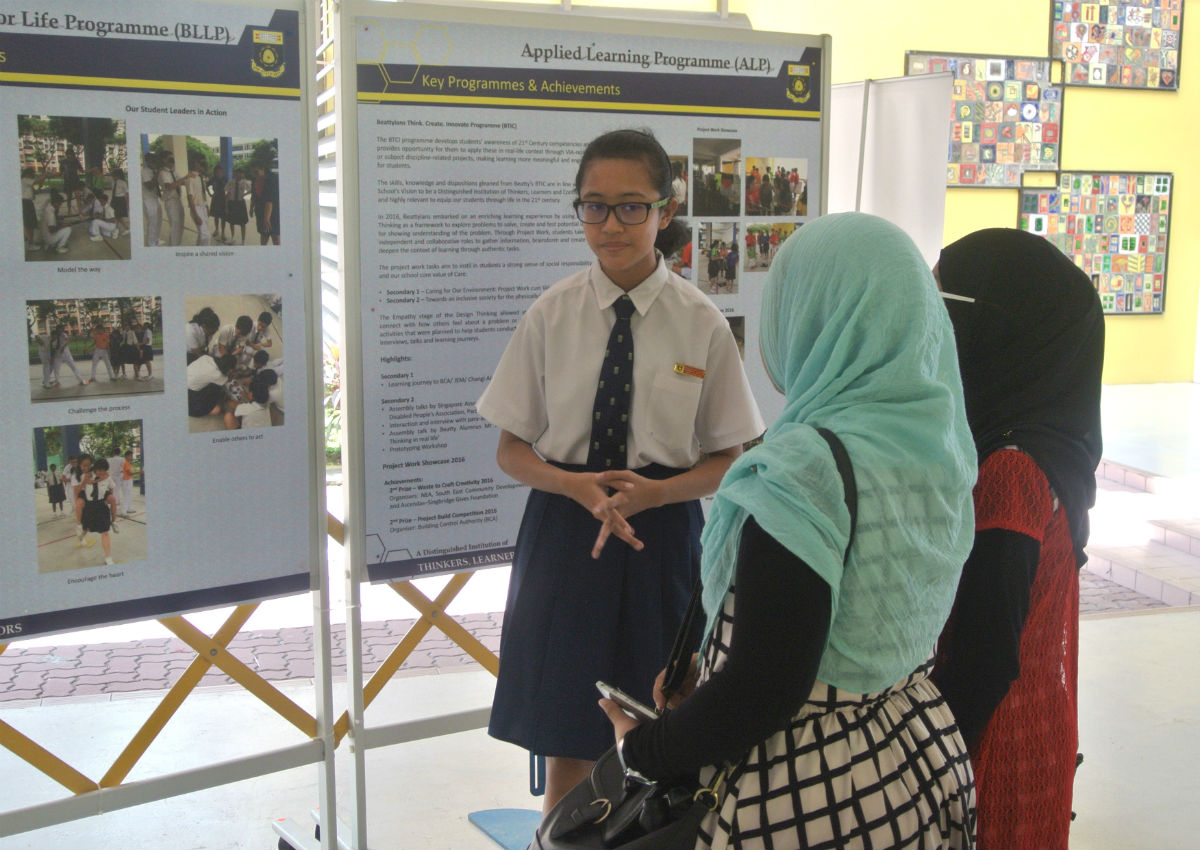
She attended Beatty Secondary School’s open house with her sister last Friday.

The school will open its doors to prospective students and parents until tomorrow .

It is known for its achievements in the performing arts and uniformed groups.

Its principal, Mrs Marion Tan, said: “(Through this open house) we want to highlight the school’s holistic education, which includes developing our students’ critical and inventive thinking, as well as their information literacy skill.

“Such skills are honed through community or subject-based project work, hence making learning more meaningful and engaging for students.”

Another visitor at the open house, customer service executive Chew Ching Huat, 51, explained how his family helped his daughter, Charlene Chew, 12, choose a secondary school.

Cut-off points

Knowing his daughter scored above 220 for PSLE, he zeroed in on schools where the cut-off point last year was between 210 and 230. 

They visited several schools to gauge how helpful the teachers were and how the students behaved.

“After this, we’ll discuss which suits her most, which interests her, taking into account our own observation during the open house,” Mr Chew said.

Ms Elleen Goh, 44, was starting a year early, taking her daughter, who is in Primary 5, to the open houses at four schools.

Ms Goh said: “I think it’ll be helpful so she can see what the schools are like, know for herself what school she wants, and work hard for it.

“Her secondary school (options) depend on her marks and her own preference. 

“She will be the one doing the homework and shouldering the burden of schooling. So I think it’s fair if she decides where to go.”

School’s cut-off point, IP programme are deciding factors

The school’s cut-off point and whether it offers the Integrated Programme (IP) are two deciding factors commonly cited by prospective secondary school students and parents interviewed by The New Paper at Cedar Girls’ Secondary School’s open house last Saturday.

It is a dual-track school, offering both the four-year O-level programme and the six-year Victoria-Cedar Alliance Integrated Programme (VCA IP), jointly offered with Victoria School and Victoria Junior College.

Started in 2012, the VCA IP allows students in the programme to proceed directly to Victoria Junior College after four years in Cedar Girls’ Secondary.

Mr Vijay Khasnavis, who was at the open house with his twin daughters and his wife, Mrs Bindu Khasnavis, said: “We considered schools whose cut-off points are within the range of my daughters’ PSLE score, and how well the cut-off point has (been) maintained throughout the past years.

“Also, my wife’s priority is to choose a school offering Hindi as a mother tongue, as we don’t want our children to attend extra mother tongue classes during the weekend.”

His fraternal twin daughters, Nikhitha and Nishitha, both 12, had scored above last year’s cut-off point for the school’s IP and O-level programmes.

Mr Khasnavis said: “There are many key things to consider, like whether to choose the IP or the O-level track, the demeanour of the students, the dedication of the teachers, proximity to home, and CCAs.

“Such open houses give us a good insight so that all of us as a family can make a prudent choice for a suitable secondary school.”

Another parent, Dr Sivanand Krishnan, 46, a senior scientist, considers the school’s proximity to their home the most important factor.

He said: “We are also considering the IP due to its holistic approach and the chance to defer major exam stress until the A levels.”

His daughter, Prina Sivanand, 12, scored well enough to qualify for a number of schools with IP programmes and was considering schools offering the IP such as Cedar Girls’ Secondary and Singapore Chinese Girls’ School.

When TNP asked who gets the last say, Dr Sivanand said: “Of course we discuss and take her feedback, but we have the final say as she may not have sufficient information.”

Ms Cindy Seow, 40, and her Primary 5 daughter were checking out several schools’ open house, such as Cedar Girls’ Secondary and Temasek Junior College’s IP, so that her daughter could have a target in mind after her PSLE next year.

The housewife said: “We are particularly looking for schools with (Direct School Admisison) programme through dance or choir as my daughter is into the performing arts.

“Schools offering IP would also be good as they can directly go to a junior college.”

The principal of Cedar Girls’ Secondary School, Ms Cheng Hwee Yeang, said that the biannual open house hopes to show the school’s culture, programmes, and facilities to prospective students.

Ms Cheng said: “The highlight of this year’s open house is our school’s niche Social Innovation Programme, where students are given opportunities to develop their innovative thinking to create breakthrough solutions to real-problems.”

Recently, a group of 20 Cedar Girls’ students filmed a short video documenting Dakota Crescent residents’ memories and feelings of the place, in partnership with Tung Ling Elder Care.


This article was first published on November 28, 2016.
Get The New Paper for more stories.

Image: 
Category: 
Publication Date: 
Monday, November 28, 2016 – 21:00
Send to mobile app: 
Source: 


Story Type: 
Others

Source link

Back by popular demand! Get 50% off GrabCar rides with promo code valid from 29 Nov – 2 Dec 2016

1

Extended! Save 50% off GrabCar rides with promo code FIFTY, valid from 29 Nov till 2 Dec, 10am to 5pm daily

Back by popular demand! Get 50% off GrabCar rides with promo code valid from 29 Nov – 2 Dec 2016

Get away from your workday blues! From 29 November – 2 December 2016, get 50% off when you book a GrabCar ride between 10am – 5pm.

Source

Men now have voting rights at AWARE

0

SINGAPORE – Men who are members of the Association of Women for Action and  Research (AWARE) have been granted limited voting rights.

The women’s rights and gender equality advocacy group said in a statement today (Nov 28) that Associate Members who are men as well as non-binary people were given the right to vote in General Meetings at AWARE but subjected to a cap.

Their votes cannot count for more than 25 per cent of the votes on a resolution.

Previously, male Associate Members had no voting rights. Currently, men make up 7 per cent of AWARE’s total membership.

In their statement, AWARE defined non-binary people as those who do not identify as men or women.

On Saturday (Nov 26), 71.8 per cent of the voting members present voted in favour of this change.

Over 60 members voted in an Extraordinary General Meeting (EGM) held at the AWARE Centre on Saturday to amend and upated its Constitution.

Other amendments passed were the renaming and clarification of membership categories.

For the purpose of deciding membership rights, “women” include transgender women and “men” include transgender men.

Provisions were also made for non-binary people to join as Associate Members – they were previously unable to join because members had to specify if they were “male” or “female”.

The amendments relating to membership were proposed following an extended period of consultation and research by a committee appointed by the Board in 2014, in response to queries from members at Annual General Meetings, said the statement.

The committee carried out focus group discussions, administered an online survey of members and conducted interviews by phone and email.

The findings were disseminated to all members and discussed at the April 2016 Annual General Meeting.

“AWARE’s work is multifaceted,” said Teh Hooi Ling, AWARE President. “We work to improve the lives of marginalised groups and the policies that affect them, as well as to improve policies and practices that affect everyone in society, regardless of gender.”

“Our members have approved of our moves in recent years to engage with more men across all levels of our work. The new rules provide for men to stand up and be counted as key co-owners of the movement for gender equality. We also see this as a move toward building the capacity for men to better promote gender equality.”

spanaech@sph.com.sg

Image: 
Category: 
Publication Date: 
Monday, November 28, 2016 – 17:30
Keywords: 
Send to mobile app: 
Source: 


Story Type: 
Rewritten Story

Source link

So much to fix in Singapore football after Suzuki Cup debacle

0

When a football campaign ends prematurely and the beaten team return with their tails between their legs, the finger-pointing starts.

It is par for the course. There is often a villain or two who bear the brunt of the heat.

But, after V Sundramoorthy’s Lions got booted out in the group stages of the AFF Suzuki Cup with only one goal and one point – Singapore’s worst showing in history – there seems to be little consensus as to what went wrong and where the buck should stop.

Was it team selection? Was it Sundram’s ultra-defensive tactics? And if key defender Baihakki Khaizan’s blog post (which was later withdrawn) meant something, was there dissension in the team?

One thing seems more certain – there is much to fix.

Taking a helicopter view, former Hougang United coach K Balagumaran believes the lack of training facilities is a sign of unfulfilled promises.

He said: “If I’m honest, everything is wrong. When we launched Goal 2010, I was in the system, we were hopeful, moving forward, and there were several promises made – but little was carried out.

“And now we have gone even lower. Our development systems are bad, we don’t have enough facilities for youth training, the players don’t have a professional culture, and I don’t think Sundram should take all the blame for this result.

“Because this is the result of all these things going on in the background all these years.”

The Goal 2010 project was aimed at getting Singapore to qualify for the World Cup Finals that year. It included the launch of youth development programmes in S.League clubs and the foreign talent scheme.

SYSTEM

Bala, a former Football Association of Singapore (FAS) youth coach, insists there are no quick fixes, and called for development systems to be set up properly.

R Suria Murthi, a former FAS youth coach and ex-international, believes the problem lies even deeper in the Singapore football psyche.

For one, he is annoyed with the Lions’ fitness.

“Fitness belongs to the player. They are professionals and, if they are not fit, they should be shot,” said the 58-year-old, recalling how in his era of amateur and semi-professional football, he trained up to three times a day to keep in shape.

“Football is now their job and, if they can’t even do this, it is clear that there is no passion to wear the flag on their jersey.”

Suria also believes the footballing culture, fuelled by hotbeds like Farrer Park and Sembawang, is dead, and it is showing in the technical abilities – or the lack thereof – in young players.

“This is one of the reasons I’ve given up coaching – kids these days have no basic fitness, and they want to spend more time on their computers and mobile phones than wanting to go out and play – and I’m not just talking about football,” he said.

NO FITNESS

“And because they don’t play enough, young footballers don’t have fitness, and they don’t have technique.

“They can’t stop a ball properly, and because of all that, there’s no point even talking about tactics.”

Suria believes these issues manifesting in the national team are just the tip of the iceberg.

Former Singapore international Steven Tan agrees with Suria that there is little pride in wearing the Lions’ shirt and called for national players to be picked on current form, with younger players coming up.

“We need to tap on the National Football Academy youth teams, but make it more competitive, with the squad being reviewed every six months – otherwise, players take their spots for granted,” he said.

Tan pointed the finger at the FAS for giving Sundram a short-term contract and calling him the “caretaker” coach of the Lions.

“They put him under pressure to do the job, and do what’s enough to hit the short-term target by bringing in experienced players,” he said.

“It takes two, maybe three years, to build a team, and he should be given time.”

BE BOLDER

It is a fact that Suria agrees with, even if he would have preferred Sundram’s Lions to have played more offensively.

Former Singapore captain Nazri Nasir believes the first step to a short-term fix for the national team is for Sundram to bring in fresh blood – and even that will take a year or two.

“You can see that some players need to retire (from international football) and I’m sure they know that their time is up,” said Nazri.

“We must start to give the young ones a chance to get involved, and even then it will take a few years for them to get to the level we need.”


This article was first published on November 28, 2016.
Get The New Paper for more stories.

Image: 
Category: 
Publication Date: 
Tuesday, November 29, 2016 – 06:00
Send to mobile app: 
Source: 


Story Type: 
Others

Source link

‘It’s important to hold on to my roots’: Malaysian songbird Yuna

0

SINGAPORE: As the 8,000-strong crowd at Neon Lights, a music and arts festival held here on Sunday (Nov 27), screamed her name, and her band tunes up just before her set, Malaysian singer-songwriter Yuna waits in the wings in her stylishly chaste glittery outfit.

Just before stepping on to perform, she flashed her megawatt smile at this Channel NewsAsia reporter, who was waiting with her backstage, and shared a pre-show ritual: “Drink lots of water.”

It might be simple advice, but it was authentic – something that the 30-year-old music superstar has fought for all her career to achieve, even when she decided to move her career to the United States in 2011.

Born Yunalis Zarai, her star has been on the ascent ever since her move to the US and scored a mentorship with Grammy Award-winner Pharrell Williams, who produced much of her 2012 self-titled debut album. International critical acclaim soon followed, as well as her 90s R&B-infused third album, Chapters, which includes her chart hit Crush featuring Usher.

Yuna mesmerising the crowd at the Neon Lights festival.

The latest feather in her cap?  Her picture emblazoned on the Nasdaq billboard in the middle of New York’s Times Square last week.

 “They are always putting up portraits of musicians so it’s cool that they support the music industry,” she said. “Especially for me, this is a great platform to get my music out there.”

So how does the Malaysian songbird feel about managing to bridge the Asian and western gap successfully without giving in on her beliefs and principles?

“America is such a huge melting pot, especially in New York or LA, and I feel like it’s kind of important to do it for the kids to be myself and hold on to my roots and identity,” Yuna said.

“I feel that the younger generation need someone to relate to. Because there are lots of kids out there, not just kids who are just like me, but kids who love their roots, who they are and where they come from. They don’t want to live in a world where they have to shave that away just to be relevant.”

Yuna’s image on the Nasdaq billboard. (Photo: Yuna/Twitter)

NOT ONE FOR COMPROMISES

After spending the last five years honing her craft in the US, Yuna is not one for compromises.

“I guess when you know what you want, it’s not such a huge deal to say ‘no’,” she said with a smile. “Sometimes, no, a lot of times actually, my management would be like: ‘Oh let’s do this!’ And I’ll be like: ‘No, I don’t want to do it!’

“It’s always give and take, and what I’m not comfortable with and what I won’t do. So I’m not shy about expressing that and saying no to certain things so as to protect my identity and my values. Because at the end of the day, you’re the one that has (make your peace before going to) sleep at night.”

It has not always been this way though. Yuna shared that in the beginning, it was a challenge to try and make people understand who she was, what she stands for and her values as a “conservative Asian girl”.

“But now they’re used to it. And I’m used to it, you know? I’m not going to do this or that and it’s not a big deal. I think as you grow older, you get that confidence to be yourself,” she said. 

DOES ASIA GIVE ENOUGH SUPPORT TO ARTISTES?

Now that she has garnered international acclaim, does Yuna believe Asia gives enough support to its music artistes, or must one succeed abroad before local fans embrace them?

“I guess it’s a little bit of both. You definitely have to start from home, like what I did was perform a lot of shows and really tried making a name for myself in Malaysia before heading out to America,” she said thoughtfully.

“So I did that, I got the support. And some of them would criticise me for leaving the music industry but others got really supportive and cheered me on. Once I got to America and started making music, then they get to see and understand that ‘Ah, this is what she’s been doing and this is what she wants to do!’

“You kind of have to slowly change the mindset of people who didn’t give you the support before. So I think it’s important to do a little of both,” the songstress continued. “I try to come back to Malaysia and contribute to the local music industry once in a while. Because that’s my home. I have to be present all the time as well for my fans.” 

ON SOCIAL MEDIA, AND TRUMP-LED USA

With all her travelling, social media takes on an added dimension for the 30-year-old music star, with her extra effort in keeping personally connected and involved is much appreciated by her fans. It is a “great way to promote your music, and to reach out to your fans immediately”, she shared.

More importantly, it’s also a way to show people “you’re human as well”.

“For me, I’m so glad that since the beginning, I stayed true. It was important for me to do this thing where what you see is what you get,” Yuna revealed. “I don’t have an alter ego or anything like that on the side. This is Yuna and when you see me outside, you know, just eating nasi lemak or whatever, it’s still me.  So what social media does is it humanises you … so fans are able to relate and connect to you even more.”

She also commented on another big social media presence: US president-elect Donald Trump.

According to her tweets, she was making music while the US presidential elections were taking place and admitted to “having mini heart attacks” as Trump was leading his opponent Hillary Clinton. He eventually won the race to the White House.

“I think you have to constantly be positive. That’s what I did five or six years ago moving to America when everyone was saying: ‘Aren’t you scared of Islamophobia in America?’” she said.

“I’m like yeah, it doesn’t bother me that much. I’m still going to continue doing what I’ve always been doing: Music. I’m not doing anything wrong or hurting anybody. I’m spreading the love. And that’s exactly the kind of attitude I feel (we should all have).

“Now, I probably have to work twice as hard.  And I’ve been doing the same thing since the very beginning, promoting love at my shows. You see people from different walks of life – different religions, different races, different backgrounds – they are all just under one roof enjoying the music. So I’m going to do that and nothing is going to change for me.”

Source link

OBRO offers premium cooker hood & hob sets from $2,999 nett at Waterway Point from 12 – 18 Dec 2016

0

OBRO premium cooker hood & hob sets going from $2,999 nett at Waterway Point (12 – 18 Dec)!

OBRO offers premium cooker hood & hob sets from $2,999 nett at Waterway Point from 12 – 18 Dec 2016

OBRO is a premium brand of kitchen appliances bringing you a new cooking style with their latest technology and design. They are a professional manufacturer for cooker hoods & hobs. Enjoy greater flexibility, convenience and ease in the kitchen.

Source

7 marine research projects awarded under R&D programme

0

SINGAPORE: Singapore has one of the most urbanised marine environments in the world. And yet coral reefs are thriving in its waters, with more than 200 species of reef-building corals and about 200 species of fishes documented on reefs here.

A research project by the National University of Singapore (NUS) hopes to find out why these reefs have managed to survive.

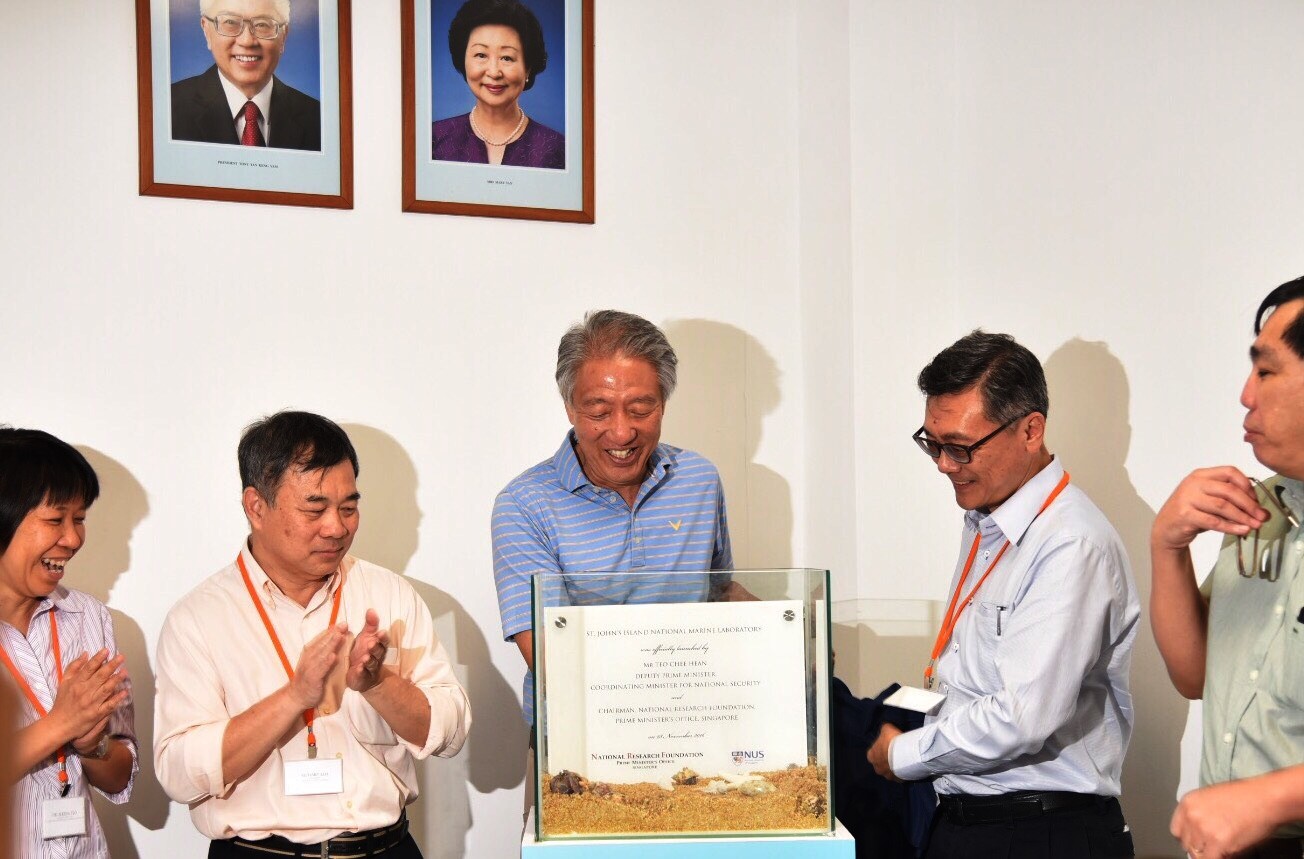
The project is one of seven awarded by the Government under the National Research Foundation’s (NRF) marine science research and development programme. Deputy Prime Minister and NRF chairman Teo Chee Hean made the announcement at the official launch of the St John’s Island National Marine Laboratory on Monday (Nov 28).

NRF will invest S$25 million over five years in the programme, which hopes to develop more talent in marine science research by training research scientists, engineers and PhD students in the field. There will also be internships and collaborative partnerships with industry for technology development and applications. 

“As a low-lying island, global warming and the rise in sea levels and temperatures can pose challenges to our marine ecosystems,” said Mr Teo, adding that the environmental health of Singapore’s waters will also affect Singapore’s water supply, which is partly from desalination. “It will also impact aquaculture which provides a local food source.

“Therefore, it is important for Singapore to build up a good understanding of tropical marine science and our marine environment.”

PROJECTS TO ADDRESS “PERTINENT NATIONAL CHALLENGES”: DPM TEO

Mr Teo said the seven awarded projects will address “pertinent national challenges.” They cover a variety of topics including the development and decline of algal blooms in Singapore, increasing the biodiversity on seawalls in Singapore, and the NUS project on how Singapore’s coral reefs have thrived.

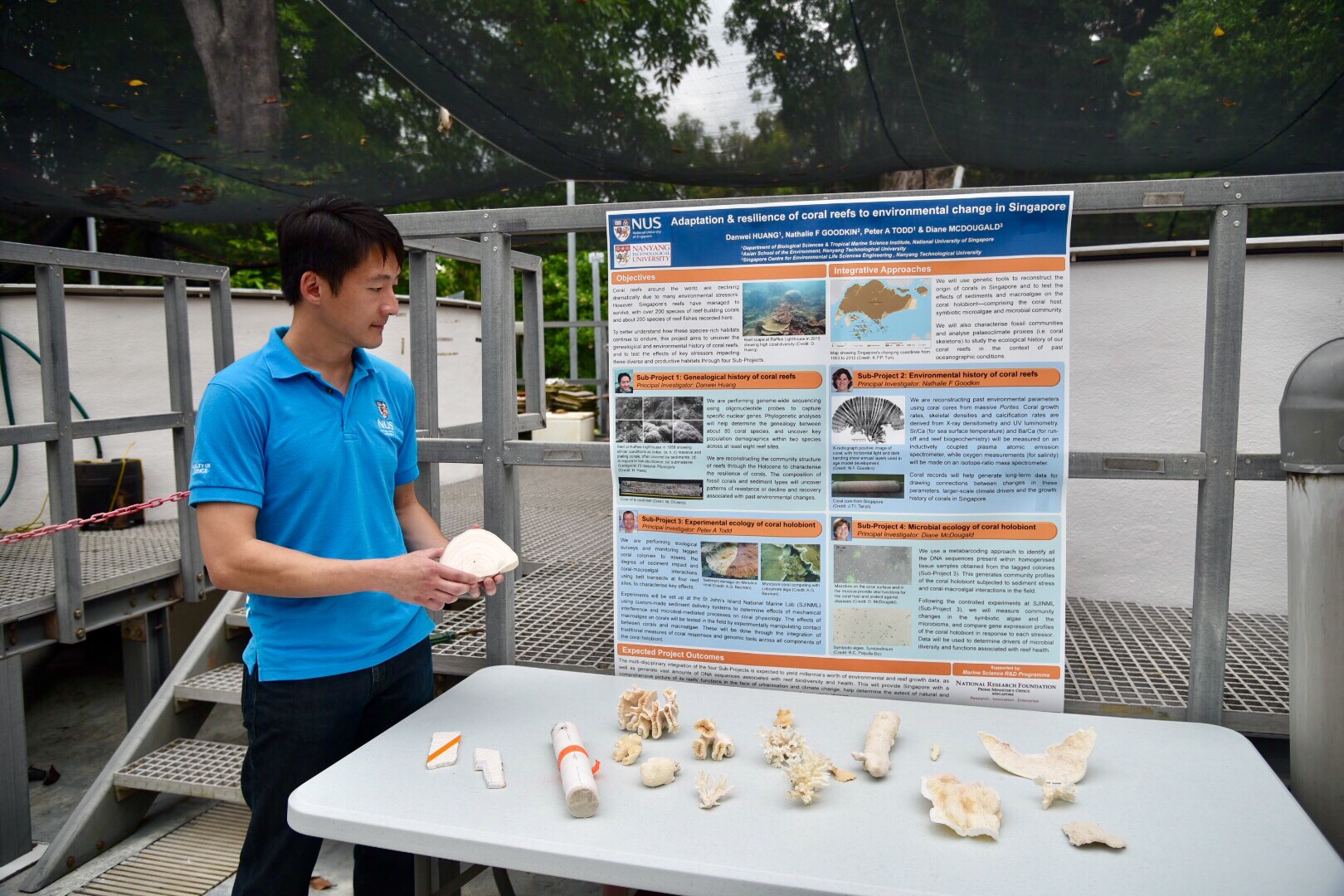
“Given all the environmental impact caused by land reclamation and coastal development, we should actually see no reefs in Singapore,” said the project’s principal investigator Assistant Professor Huang Danwei from NUS’s Department of Biological Sciences. “We want to understand what the reefs were like in the past, and how the circumstances affected what they are today.”

Assistant Professor Huang Danwei from NUS shows how his research project hopes to understand the resilience of coral reefs in Singapore. (Photo: Lianne Chia)

Asst Prof Huang explained that his team will collect samples from at least 10 sites in Singapore to analyse the DNA and genetic makeup of these corals. They hope to understand how the corals in Singapore have adapted to the environment, and how they respond to environmental stressors like sediment or seaweed.

They also plan to examine fossil reefs, which are embedded under the living coral reefs, to find out how the reefs have changed over time. “Hopefully from that, we can build a picture of reefs over the last 50 to 100 years,” he added.

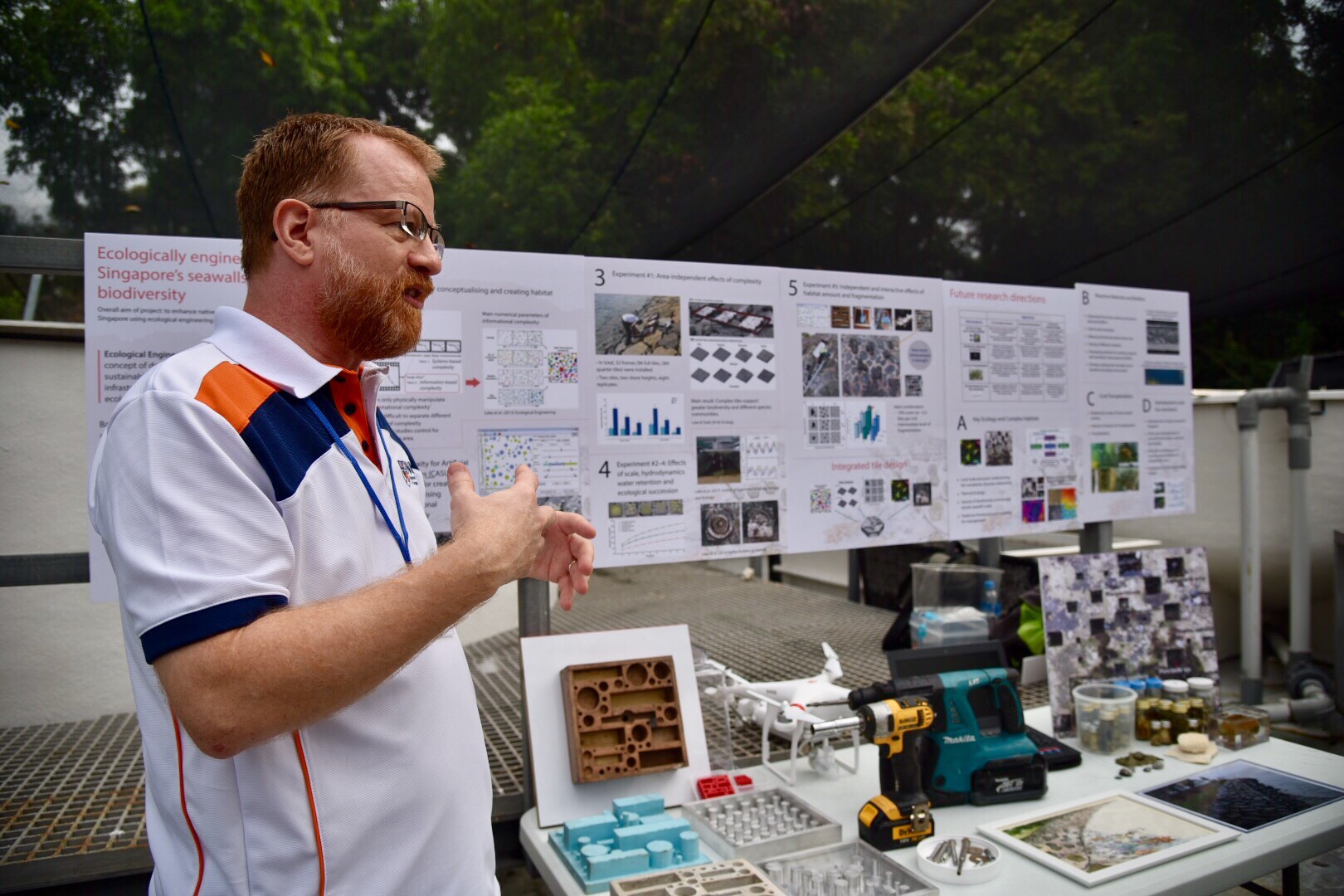
Another awarded project, also by NUS’s Department of Biological Sciences, looks at how seawalls can be built ecologically.

The project’s principal investigator, Assistant Professor Peter Todd explained that about 63 per cent of Singapore’s coastline is made up of seawalls. “We’ve had a lot of habitat loss in Singapore due to urbanisation and coastal development,” he said. “We’ve lost our soft shores, our mangroves, and replaced them with man-made shores that don’t host a lot of biodiversity.”

These seawalls are typically large areas of stone and rock, and are very simple habitats, he said. His team has developed a way of making the seawalls more complex by retrofitting concrete tiles with different types of pits and grooves that attract microorganisms. “When we fix those to existing seawalls, we can see quite a dramatic increase in biodiversity,” he explained.

Assistant Professor Peter Todd from NUS explains how the pits and grooves in his concrete tiles help encourage biodiversity on Singapore’s seawalls. (Photo: Lianne Chia)

“By increasing the biodiversity, you’re increasing the ecosystem services that come with it,” he added. “For example they supply food for the fishes that live in the coastal waters, and they can help with the filtering of water.”

NRF said it received 30 white papers since the call for projects under the programme was launched in October last year. An international evaluation panel recommended awards to the seven projects based on their quality and relevance to Singapore.   

MARINE LAB WILL COMPLEMENT SINGAPORE’S RESEARCH

A well-equipped marine science facility like the St John’s Island National Marine Laboratory will also complement Singapore’s research and development the manage and conserve its waters and coastline, added Mr Teo.

Deputy Prime Minister Teo Chee Hean (centre) officially launching the St John’s Island Marine Laboratory on 28 Nov. (Photo: Lianne Chia). 

The laboratory, which is Singapore’s only offshore marine research facility, was designated a national research infrastructure in March. This means that the laboratory will be open to all researchers in Singapore and international partners.

The facility will also be upgraded with new equipment to support emerging research areas. A skilled core team of scientists and technicians will also train and guide new researchers in marine science, Mr Teo said.

The laboratory will also undertake outreach and education initiatives to share research outcomes with the public. “Activities such as nature walks and residential training workshops will enhance understanding of our marine environment,” added Mr Teo.

Source link