KUALA LUMPUR – A Malaysian footballer has beaten the likes of Neymar and Messi to score a place in FIFA’s shortlist for top three goals of the year.
Midfielder Mohamad Faiz Subri’s cracker of a free kick for Penang state in the Malaysian Super League in February was reminiscent of the swerving thunderbolt by Brazil legend Roberto Carlos against France in 1997.
Footage of the 29-year-old scoring a viciously swerving goal from 35 metres (115 feet) out has gone viral, making him a sensation in football-crazy Malaysia.
“This is something I will never forget and it motivates me to improve my game further,” Faiz told AFP on Thursday.
“Football brings people together and football supporters here are of many races, Chinese, Indians and Malays, and they voted for my goal,” he added.
Ten FIFA Puskas Award 2016 finalists, chosen from thousands of goals scored around the world between September 2015 and September 2016, were revealed last month.
FIFA announced that Brazil’s Marlone and Venezuela’s woman footballer Stephanie Roche were joining Faiz on the shortlist.
The winner will be announced on January 9 in Zurich. For now, Malaysia’s football hero is playing it cool.
“It’s not time for partying yet,” Faiz said. “Let’s wait till January 9.”
BANGKOK – Thai police arrested an anti-junta activist on Saturday for defaming the monarchy in what rights groups said was the first case of lese-majeste brought under Thailand’s new king.
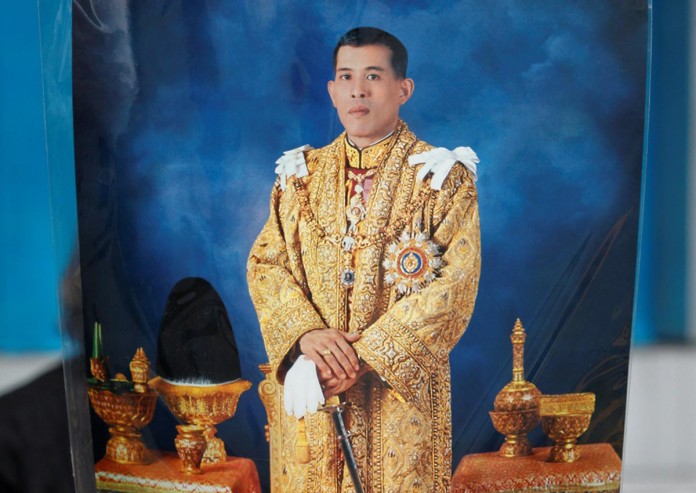
King Maha Vajiralongkorn formally ascended the throne on Thursday following the death of his father, revered King Bhumibol Adulyadej, who died aged of 88 in October.
Police Colonel Jaturon Trakulpan, a superintendent in northeastern Chaiyaphum province, said Jatupat Boonpattararaksa, an activist who has staged several anti-junta protests, was arrested and charged with royal insult under Article 112 of Thailand’s criminal code.
“We caught him at a temple,” Jaturon said.
Thailand’s junta has cracked down on critics of the monarchy since it took power in a May 2014 coup. iLaw, a Bangkok-based group that monitors such cases, said they had increased since King Bhumibol’s death.
Article 112 says anyone who “defames, insults or threatens the king, the queen, the heir-apparent or the regent” will be punished with up to 15 years in prison.
Thai Lawyers for Human Rights, a rights group representing Jatupat, said in a Twitter post that he was charged with royal insult for sharing a link on Facebook to a BBC Thai-language profile of the new king.
Anon Chawalawan of iLaw said the case was the first royal insult case to be filed under the new monarch.
“This post was shared many times. We question why he was singled out,” Anon told Reuters. “It might be because he has a history of staging anti-junta protests.”
International rights groups and some Bangkok-based Western diplomats have decried Thailand’s harsh sentences for lese-majeste convictions.
Last year, two people received record jail sentences of 25 and 30 years respectively for Facebook posts deemed insulting to the monarchy.
King Maha Vajiralongkorn proclaimed new king of Thailand
SEOUL – Hundreds of thousands of protestors gathered in Seoul for the sixth-straight week Saturday to demand the ouster of scandal-hit President Park Geun-Hye ahead of an impeachment vote in parliament.
The latest in a series of massive anti-Park demonstrations in the South Korean capital came just hours after opposition parties filed an impeachment motion that will be put to a vote by MPs on Friday.
Whether the motion is adopted or not, Park is firmly on course to become the first democratically-elected South Korean president not to complete a full, five-year term.
The 64-year-old stands accused of colluding with an old friend who has been formally indicted for attempted fraud and abuse of power.
The ‘female Rasputin’ at centre of S Korean President Park Geun-Hye political scandal
The only real questions that remain are precisely when she will go, and whether she will step down or be removed.
The protestors who have taken to the streets in their millions in recent weeks want her out immediately, but the political establishment is struggling to find a similar unity of purpose.
The impeachment motion introduced in the early hours of Saturday morning carried 171 signatures – accounting for every legislator from the three opposition parties and independents.
In order to secure the two-thirds majority required for impeachment in the 300-seat national assembly, it will need the support of more than two-dozen lawmakers from Park’s ruling Saenuri Party.
Just a week ago, the backing of enough Saenuri rebels had seemed assured, but a rather confused resignation offer by Park on Tuesday strengthened the hand of her loyalists who insist she be allowed to step down voluntarily.
The party has now proposed she resign in April – a timeline it justifies as more conducive to a calm and steady preparation for an early presidential election.
Observers say the Saenuri rebels are likely to fall in line with the proposal and vote against the motion on Friday – much to the opposition’s annoyance.
“If the motion fails to pass due to a lack of co-operation from the ruling party, it must take responsibility for all the consequences”, the main opposition Democratic Party’s floor leader Woo Sang-Ho said.
The prospect of an April departure for Park will do little to assuage the widespread public anger that has driven the mass protests in Seoul and other cities.
“Park is lying when she said she would step down voluntarily. Impeachment is the only option left for stripping her of the office,” said Goh Du-Hwan, a 45-year-old accountant.
Goh was among hundreds of activists who gathered for an early protest outside the Saenuri Party headquarters ahead of Saturday’s mass rally.
Tens of thousands of South Koreans stage protest in Seoul calling for President Park Geun Hye to resign
“I don’t regard Park as our president any more. She must go now,” added Chung Do-Sook, 54, a former English instructor.
Even if impeachment were approved by the assembly on Friday, Park would likely remain in office for some considerable time.
An adopted motion would still require approval of the Constitutional Court – a process that could take up to six months, with no guarantee of how the bench would rule.
The only other impeachment was of then-president Roh Moo-Hyun in 2004. On that occasion, the court rejected the motion and there was a strong public backlash against those who supported it.
Saturday’s main demonstration was set to culminate – as on previous Saturdays – in a candlelit march in the direction of the presidential Blue House.
Police said they had deployed around 20,000 officers to control the event.
A similar rally the previous week drew what organisers claimed was a record 1.5 million people. Police put the turnout at 270,000.
The scandal that has engulfed Park and paralysed her administration has focused on her friendship with long-time confidante Choi Soon-sil.
Choi has been charged with meddling in state affairs and using her Blue House connections to force dozens of conglomerates to donate around US$70 million (S$99.3 million) to two foundations she controlled.
In a first for a sitting South Korean president, Park has been named a “suspect” by prosecutors investigating Choi.
As president, Park cannot be charged with a criminal offence except insurrection or treason, but she would lose that immunity once she steps down.
In the early hours of Saturday, November 5, Feng-Yuan Liu received a call from Singapore’s Ministry of Communications. A particularly nasty and persistent problem in the city’s Massive Rapid Transit (MRT) system had resurfaced once more. Stumped authorities were out of ideas.
Feng-Yuan, director of the Data Science Division of the Government Technology Agency (or GovTech), fired up his team’s WhatsApp group chat. Someone was going to have to come to work that Saturday.
“I was actually in Japan at the time,” he tells Tech in Asia. “So I pinged the team and asked if there were any volunteers who could help. These three guys stepped up.” The three guys are data scientists Daniel Sim, Shangqian Lee, and Clarence Ng.
The trio have documented how they managed to solve the mystery in a blog post that has gone viral, shared on Facebook even by Singapore’s Prime Minister.
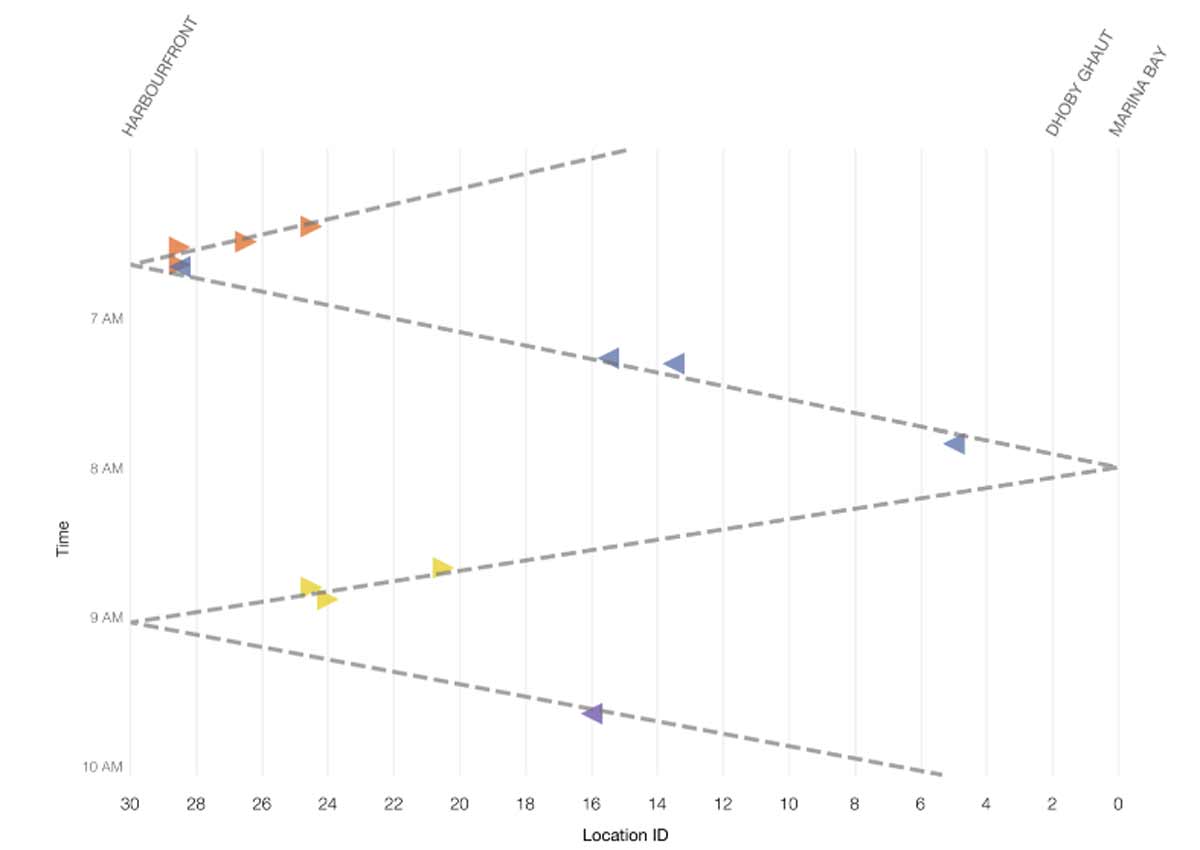
In the blog, they explain the movie plot-worthy “trail of destruction” left by the rogue train designated as PV046 and how they helped stop it. It’s basically the computer geek version of 2010’s Denzel Washington-starring Unstoppable, thankfully with much lower stakes.
The post is a must-read, not only because of the complex problem-solving involved, but also as a look into how much data is generated around us daily and can be put to use.
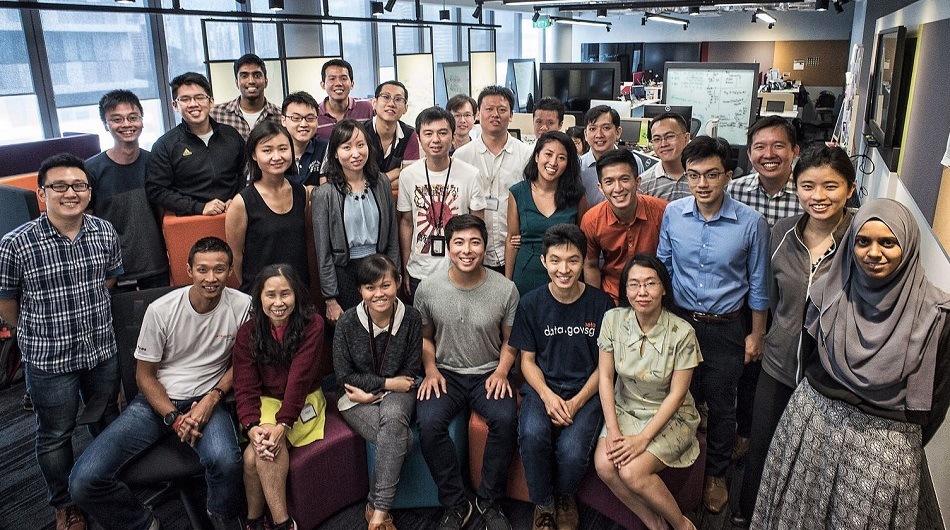
The team comprising the Data Science Division. Photo: GovTech
Runaway train
The crisis the team was called to tackle has been well documented in Singapore, but here’s the gist if you haven’t heard: the MRT, Singapore’s subway system, is largely automated, with trains riding the tracks by bouncing signals off each other and the stations.
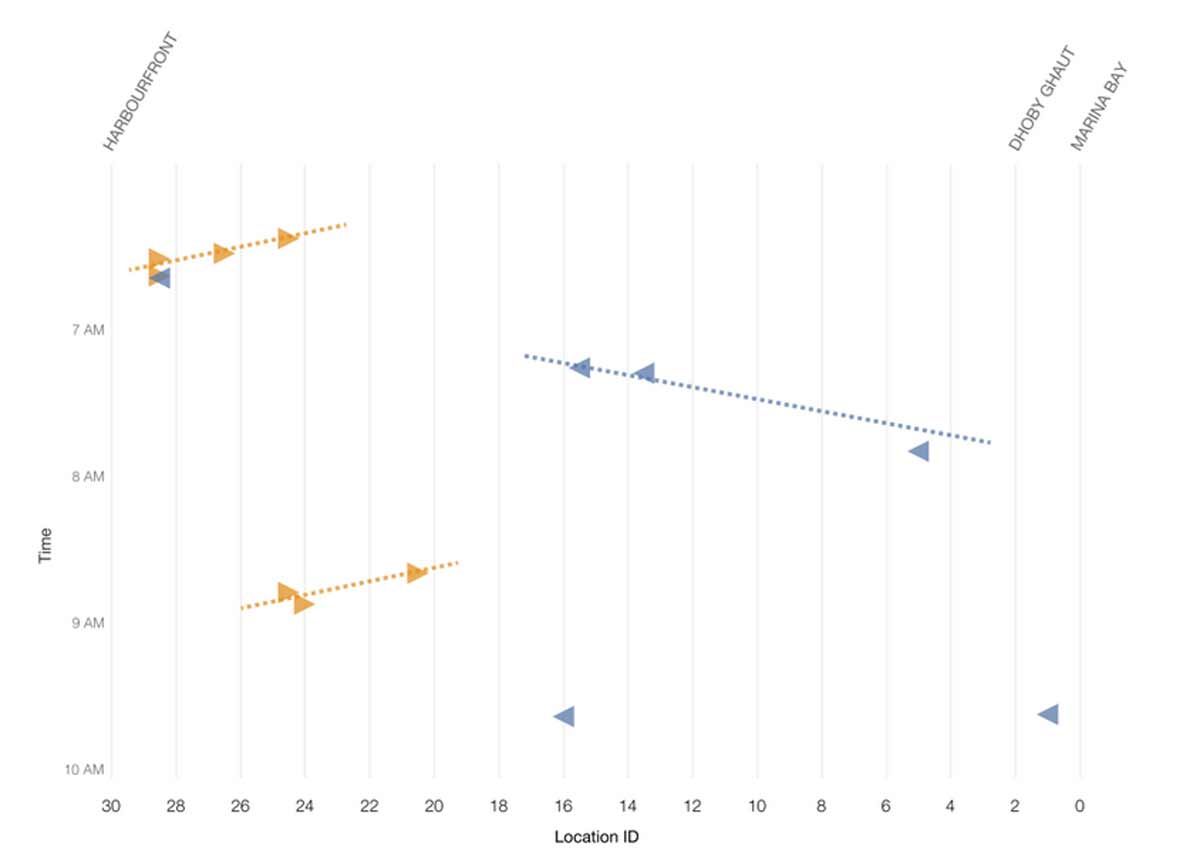
At some point at the end of August, several trains on the system’s Circle Line started braking suddenly for no obvious reason. The culprit was a faulty train sending errant signals, which confused its fellow vehicles, creating disruption in the clockwork system.
In the early hours of Saturday, November 5, Feng-Yuan Liu received a call from Singapore’s Ministry of Communications. A particularly nasty and persistent problem in the city’s Massive Rapid Transit (MRT) system had resurfaced once more. Stumped authorities were out of ideas.
Feng-Yuan, director of the Data Science Division of the Government Technology Agency (or GovTech), fired up his team’s WhatsApp group chat. Someone was going to have to come to work that Saturday.
“I was actually in Japan at the time,” he tells Tech in Asia. “So I pinged the team and asked if there were any volunteers who could help. These three guys stepped up.” The three guys are data scientists Daniel Sim, Shangqian Lee, and Clarence Ng.
The trio have documented how they managed to solve the mystery in a blog post that has gone viral, shared on Facebook even by Singapore’s Prime Minister.
In the blog, they explain the movie plot-worthy “trail of destruction” left by the rogue train designated as PV046 and how they helped stop it. It’s basically the computer geek version of 2010’s Denzel Washington-starring Unstoppable, thankfully with much lower stakes.
The post is a must-read, not only because of the complex problem-solving involved, but also as a look into how much data is generated around us daily and can be put to use.
The team comprising the Data Science Division. Photo: GovTech
Runaway train
The crisis the team was called to tackle has been well documented in Singapore, but here’s the gist if you haven’t heard: the MRT, Singapore’s subway system, is largely automated, with trains riding the tracks by bouncing signals off each other and the stations.
At some point at the end of August, several trains on the system’s Circle Line started braking suddenly for no obvious reason. The culprit was a faulty train sending errant signals, which confused its fellow vehicles, creating disruption in the clockwork system.
Those reindeer turned out to be a lot harder to train than Domino’s had anticipated.
The American pizza company announced on Thursday it was abandoning its plans to use reindeer to deliver pizzas in Japan for Christmas.
Domino’s had made a big announcement last week saying it was preparing a fleet of reindeer-pulled carriages to deliver pizzas over the holidays in wintry parts of Japan.
But in its latest statement [Japanese], the company has had to backtrack on this promise, saying it was “difficult to control” the reindeer.
It’s even released a video showing its staff in Hokkaido scampering after a reindeer running zigzag away from them, as the delivery app tracking the reindeer shows a corresponding icon running wildly over the map.
After they finally catch up to the reindeer, they opened up the pizza storage box on the sleigh and discover that one of the boxes has slipped vertically because of the rough ride.
Domino’s also added that some of the reindeer got frightened and ran away after hearing dogs barking, failing to prove themselves safe and reliable enough for the Christmas task.
To salvage the situation, Domino’s has decided to dress up its delivery scooters as reindeer, complete with brown fur, legs, antlers, ears as side mirrors and muzzles in the front.
Singapore’s first public housing estate in Tiong Bahru is experiencing a second lease of life, after an exodus in the 1990s.
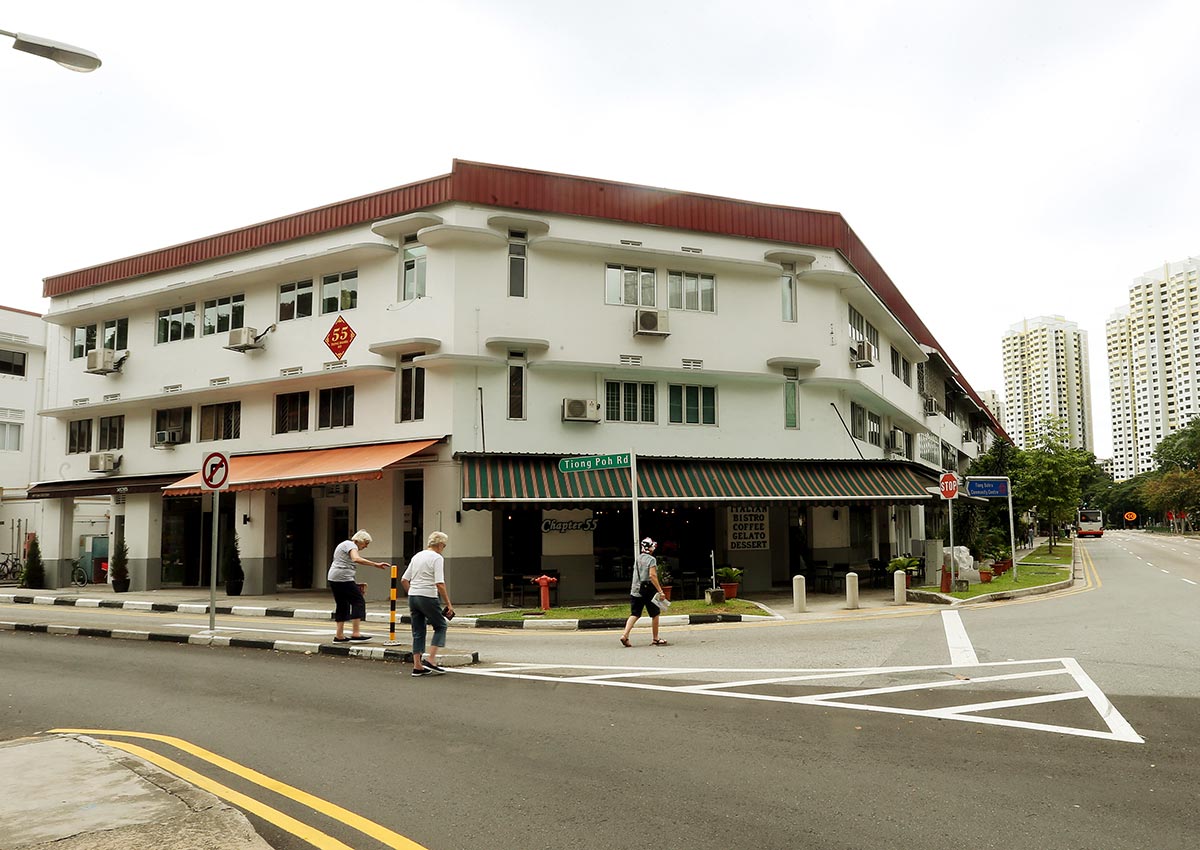
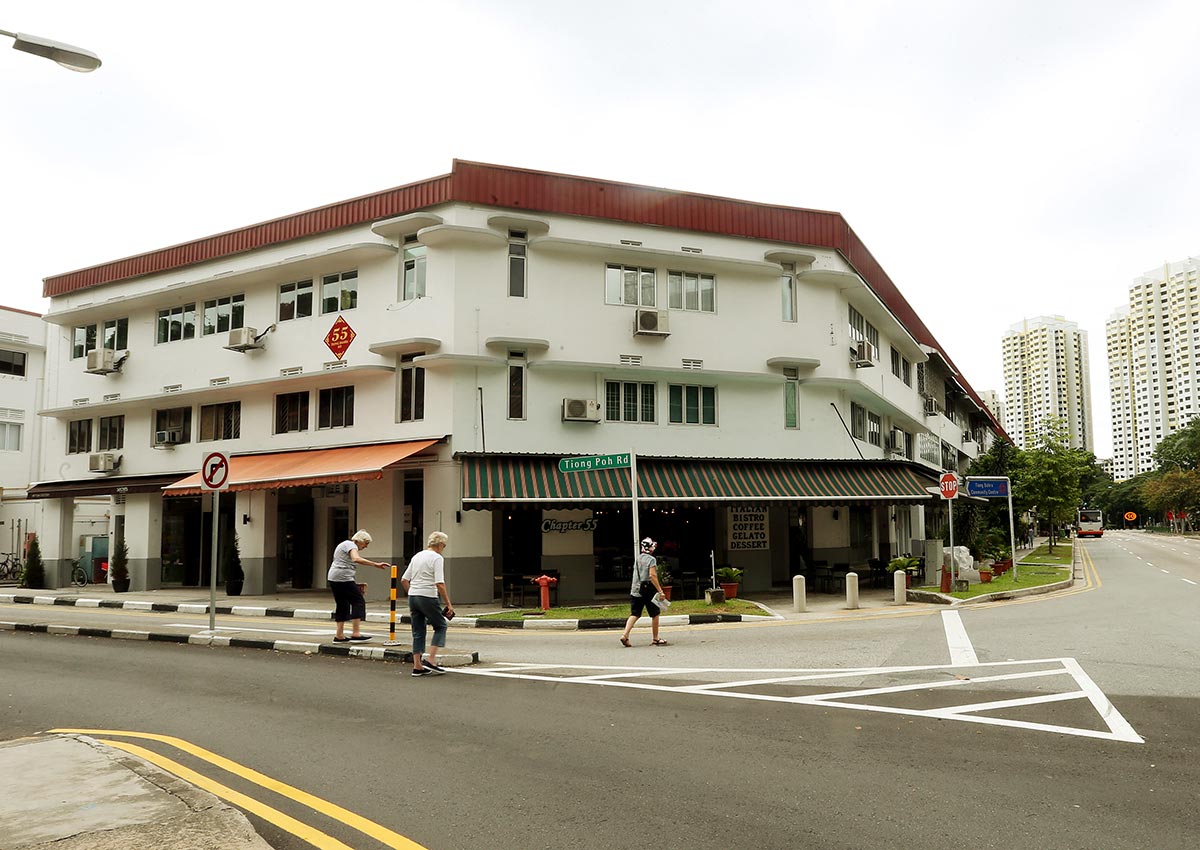
The residential estate at Tiong Bahru, comprising 20 blocks, was built in the Art-Deco style, with geometric lines and motifs on the buildings’ facade. Block 55 is the first of the 20 blocks to be built in 1936.
The rentals charged by the Singapore Improvement Trust were considered high and beyond the reach of many. This led to affluent businessmen, who could afford the rentals, reportedly renting apartments in the estate for their mistresses.
Prices for market produce were also comparatively higher than in other estates.
But by the 1980s and 1990s, the old flats there started to seem less lustrous compared with the newer Housing Board estates elsewhere on the island, with families moving out to these modern estates as well as to condominiums.
Older residents were left behind and foreign workers started moving in to occupy the empty apartments.
This led to a sense of uncertainty among residents, says Professor Lily Kong, Provost and Lee Kong Chian Chair Professor of Social Sciences at Singapore Management University. Fear spread among residents that their maturing estate would get torn down, prompting further departures.
However, such fears were allayed in 2003 when the estate was gazetted for conservation by the Urban Redevelopment Authority (URA) – a move which kick-started a revitalisation of the area.
Hip cafes, bakeries and restaurants such as coffee house Forty Hands and Plain Vanilla Bakery swiftly set up shop in the estate, a stone’s throw away from older establishments such as Tiong Bahru Galicier Pastry and Sin Hoi Sun eatery, which has been there for more than 30 years.
Now, the area is popular with younger residents who frequent the new joints, as well as older residents who make the neighbourhood coffee shops, such as Hua Bee at 78 Moh Guan Terrace (yakitori restaurant Bincho takes over at night), their first port of call in the morning.
While Prof Kong notes that there is now a different feel to the place, one thing has remained: It still serves its purpose of encouraging human interaction.
The estate, which was completed in two phases before and after World War II, was built by the Singapore Improvement Trust and inspired by the urban planning and architecture of British public housing during the same era.
The blocks are low-rise – two to five storeys high – with pockets of green areas around the estate and five-foot-ways to encourage interaction among the residents.
For this purpose, the ground-floor corner units are reserved for coffee shops, eateries and other amenities.
Prof Kong says: “The estate was built with the principle of facilitating social interaction – its structure of low-rise housing, small public spaces interspersed among the apartment blocks and open green pockets provides opportunities for people to run into one another.”
Ms Tan Huey Jiun, director for conservation planning at URA, adds: “Tiong Bahru is dear to many Singaporeans. Its rich history, unique architecture and familiar streetscapes are an important part of our heritage.
“In total, 20 blocks of pre-war flats have been conserved so that Tiong Bahru can continue to evolve with the assurance that the identity and charm of the area will be kept.”
HIGHLIGHTS OF BLOCK 55
1. DIFFERENT CORNER DESIGNS
Photo: The Straits Times
The different corner of each building clearly distinguishes the blocks from one another and acts as a visual motif. The corner of Block 55 has concrete sunshades on its facade as a simple design feature.
2. ORIGINAL WINDOW AND DOOR FRAME DESIGNS
Photo: The Straits Times
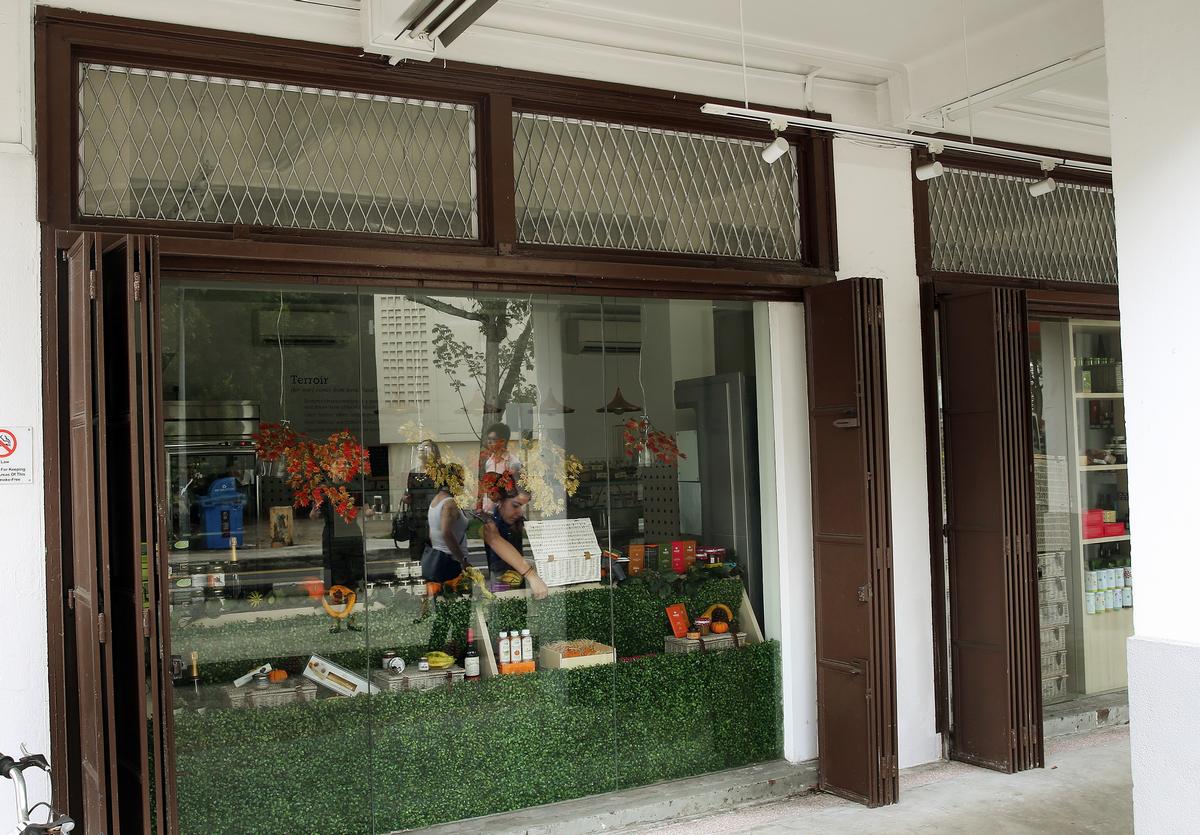
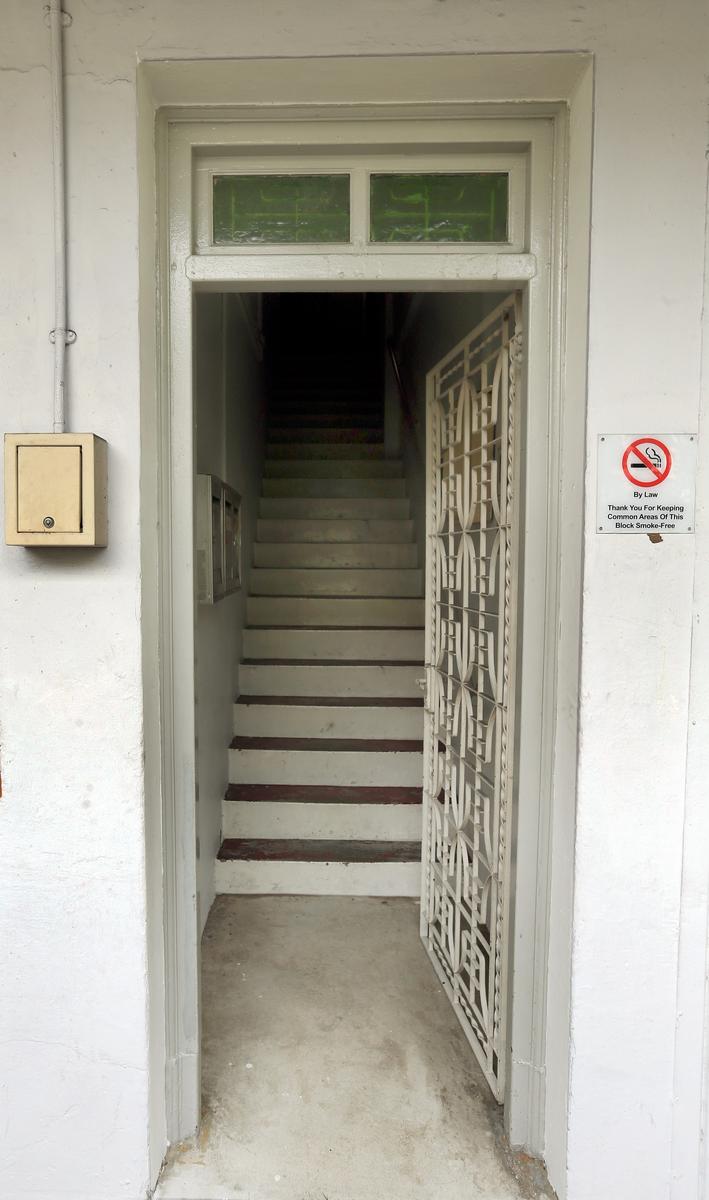
These handmade wooden door frames and metal frames are 80 years old. This estate is the first in Singapore with such high quality frames by well-known British window company Crittall, says Ms Tan Huey Jiun, director for conservation planning at the Urban Redevelopment Authority.
The slim, elegant aesthetic of the steel is a change from the traditional wooden windows often used in that era. They have special features such as top panels which can be left open for ventilation in rainy weather.
3. CLIMATE-FRIENDLY FEATURES
Photo: The Straits Times
The flats have balconies, which act as a buffer from the heat, and concrete sunshades overhanging the steel windows with original green textured panes to cut out the glare – useful features designed in an era before the use of air-conditioning.
The green windows help create a visual sense of coolness and provide privacy, says Ms Tan. “The green glass is now a rare feature in Singapore and in the estate. Overseas, such glass is seen as antique glass and is very expensive.”
This is a monthly column on heritage buildings.
This article was first published on Dec 03, 2016. Get a copy of The Straits Times or go to straitstimes.com for more stories.
Seven political figures known for their strong opposition to the administration of President Joko “Jokowi” Widodo were arrested on charges of treason on Friday, only a few hours before the large-scale rally by conservative Muslims in the capital against Jakarta Governor Basuki “Ahok” Tjahaja Purnama.
The National Police accused the seven people, including Rachmawati Soekarnoputri, the daughter of Indonesia’s first president, Sukarno, of trying to exploit the anti-Ahok rally to overthrow the government.
Rachmawati is the younger sister of Indonesian Democratic Party Of Struggle (PDI-P) chief patron Megawati Soekarnoputri, leader of a coalition of political parties that support Jokowi’s administration. Among the six others charged include retired two-star army general Kivlan Zen and political activist Sri Bintang Pamungkas, both of whom were charged under articles 107, 110 and 87 of the Criminal Code (KUHP) on treason and conspiracy to commit treason.
According to Article 107 of the KUHP, if convicted of treason, the suspects could face 20 years’ imprisonment.
Police spokesman Sr. Comr. Rikwanto said the police were in the midst of investigating whether there had been any communication between the suspects to commit the alleged treason. “We will announce the questioning results tomorrow morning.”
The police accused the suspects of being involved in treason-related activities in the past three weeks, without going into detail.
Tens of thousands of Muslim hardliners in protest march against Jakarta governor for alleged blasphemy
Questioning of the suspects was still ongoing at the Police’s Mobile Brigade (Brimob) headquarters in Depok, West Java, as of Friday evening. The police have only 24 hours to conclude the process, after which they must determine whether they will detain the suspects, as stipulated in the country’s Criminal Law Procedures Code (KUHAP).
Megawati, who was attending a batik exhibition at the Smesco building in Pancoran, South Jakarta, refused to comment on the arrest of her sibling Rachmawati.
On Friday the police also arrested musician-turned-politician Ahmad Dhani for allegedly insulting President Jokowi while partaking in the anti-Ahok rally on Nov. 4, and two other men for allegedly promoting hate speech under Article 28, point 2 of the 2008 Electronic Information and Transactions (ITE) Law. All three men had also been named suspects by the police.
Rachmawati previously said she would not join the massive rally, but instead would visit the People’s Consultative Assembly (MPR) to demand that the legislative body immediately hold an extraordinary meeting to bring back the original version of the 1945 Constitution.
Under the old 1945 Constitution, the MPR had the power to appoint a president and vice president, and the president had to answer to the assembly.
Under the current presidential system, a move against the president in the form of an impeachment proceeding can only occur if the House launches an inquiry, requests a detailed examination of a policy, and only when the policy in question meets the criteria for violations that could be subject to an impeachment trial can the process start.
MPR Speaker Zulkifli Hasan said Rachmawati had several times come to him with the demand, but he always said no because the MPR had decided to only have a limited amendment of the reinstatement of the now-defunct state policy guideline (GBHN). “All people can have their aspirations – we as speakers will accept them – but whether we agree or not is another question.”
PM Lee and Jokowi meet in Semarang for leaders’ retreat
Ms Una Yan cannot seem to get enough of Singapore. She spent three days in the Republic in February and is back again today to not only tour the island but also pound the pavement.
The 35-year-old Taiwanese, who swims and hikes every week, is taking part in the Standard Chartered Marathon Singapore, her first marathon overseas.
“The last time I went to Singapore was during the Chinese New Year period when many shops were closed. I felt I wanted to see more, like East Coast Park, and experience Singapore in a different way,” said Ms Yan, a provision shop owner.
She is one of 50 people from Taiwan who have signed up for Singapore tour packages which include a runner’s pack in this year’s StanChart run, the Republic’s largest running event with more than 50,000 runners a year.
While the Singapore Tourism Board (STB) has long been reaching out to attract foreign sports spectators with events such as the Formula 1 race, it is now gunning for sports fans who like working up a sweat.
And it is starting in Taiwan, where the number of marathons has grown 42 per cent from 521 in 2014 to 740 last year, according to Running Biji, a popular website in Taiwan.
In recent years, there has been greater awareness in Taiwan of the benefits of running, thanks to studies published, said the local media. Running clubs and city and county governments have been promoting the activity.
A poll by Runing Biji found that 73 per cent of respondents say they run marathons overseas with the aim too of touring the place.
In July, STB tied up with Taiwanese tour agency Life Tour to organise sports-related tour packages such as the StanChart Marathon. The four-day tour includes a chance to sample local food and the “usual suspects” like Universal Studios and Marina Bay Sands.
This follows a tour by two other Taiwanese agencies which drew more than 100 Taiwanese to Singapore for the Osim Sundown Marathon in May.
STB’s area director (Eastern China) Kwan Su Min told The Straits Times: “We have seen more Taiwanese marathon enthusiasts travelling to Singapore for such immersive races that showcase Singapore’s vibrancy and attractiveness. Coupled with diverse shopping and entertainment offerings, they get a whole different vacation experience.”
She said STB is working closely with Taiwanese travel agents to develop an array of tour packages.
Apart from Taiwan, Ms Kwan said the board is seeing strong interest from running enthusiasts in China, where there are now more running clubs and travel agents promoting trips to run in the StanChart and Sundown marathons.
Overall, STB is keen to grab a slice of the expanding global sports market pie. Consulting firm A.T. Kearney estimates that the global sports market pie will cross US$90 billion (S$128 billion) by next year.
Singapore faces competition from the likes of Japan, which tourists also visit to take part in marathons. Some Taiwanese visit Okinawa or Osaka to run in marathons, said Ms Jocelyn Yeh, Life Tour’s head of Special Interest Tour Department.
But Singapore’s selling point is its “quality offerings in terms of food, culture and attractions”, she said.
Professional runner Cliff Chiang, 28, notes that the StanChart Marathon is a Gold Label Road Race certified by the International Association of Athletics Federations.
Mr Chiang, who has run in the Berlin Marathon and a few races in China, said: “If I want to be taken seriously in this field, I want to join races such as the one in Singapore and clock a good time.” He also hopes to go round the city, which he has not visited since he was eight.
For Ms Yan, there will be no “running away” from Singapore dishes such as bak kut teh, nasi lemak and bak kwa. “After all that running, I definitely want to reward and pamper my body and tummy,” she said.
This article was first published on Dec 03, 2016. Get a copy of The Straits Times or go to straitstimes.com for more stories.
<p>Ms Una Yan cannot seem to get enough of Singapore. She spent three days in the Republic in February and is back again today to not only tour the island but also pound the pavement.</p>