29.9 C
Singapore, SG
Saturday, September 26, 2026
Home Blog Page 2256

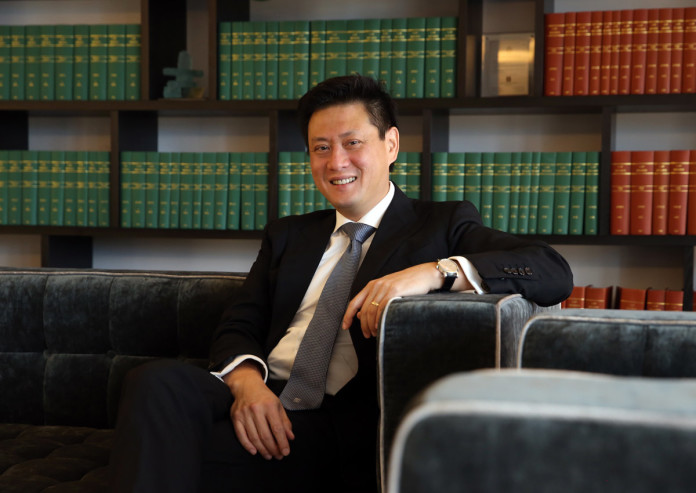
Law Society chief happy to pass on baton

0

Contingency fees, access to justice and access to counsel – these are key areas that the Law Society will help to shape and move in the public interest landscape here, said the society’s president, Mr Thio Shen Yi, as he prepares to hand over the job next month.

Mr Thio, who is also a Senior Counsel, made it clear the society is bigger than any one leader because there is continuity in the form of the governing council.

He said he was fortunate in that he, his successor Gregory Vijayendran and predecessor Lok Vi Ming are all “very much aligned on the big issues”.

“Our styles differ, the way we approach problems may differ, but what we are trying to do in the long run is very much aligned – we’re trying to improve and develop and raise standards of the entire profession,” he said.

Among other things, he said the society has recommended to the Law Ministry that a contingency fee scheme be put in place for access to justice cases with such deals inked between clients and lawyers subject to its approval. “This will ensure an actual check against profiteering in civil cases,” said Mr Thio.

In contingency fees, a lawyer’s remuneration is directly dependent on the outcome and a client does not pay if he does not win the case.

“The check will be the Law Society because the contingency could be, ‘I am going to take $10 from my client, but if I win, I am going to take all the party costs and I’ll take 5 per cent of the winnings.’ “

He said that would be huge in percentage terms as “a cut of the winnings could be a 200 per cent uplift on a lawyer’s regular fees”.

“In the corporate world you can stake contingency fees in the sense that you have an abortive fee, if the deal doesn’t go through, and you have a fee if the deal goes through. You can structure your fees like that,” he noted.

The move would encourage people with bona fide cases to go to court, Mr Thio said.

He steps down at a time when lawyers face increasing challenges of revenue, fee pressure and eroding profit margins; technological changes and practical challenges. But the challenges should not detract from the gains which the society can be justifiably proud of, he said.

He singled out the achievements in the society’s pro bono work and the Criminal Legal Aid Scheme (CLAS).

There are now junior lawyers funded to manage and shore up the scheme of volunteers but this will get a boost with the Law Ministry’s agreement to fund two senior lawyers, which he hopes will take place next year, he said.

“This is a major development in our access to justice story. Other countries may have a public defender’s office, we are very happy with our public-private partnership, the Government funds what we do, we provide the volunteers. Law firms also contribute funds, so this year one of our highlights was a concert where we raised about $768,000 for our pro bono programmes.”

While pro bono work has done “very well”, early access to lawyers for detained suspects is a work in progress.

“The Law Society should realise that we are not going to change the Government’s mind all of a sudden.

“The principle is that someone should have a lawyer, so the only question is how long does the accused person have to wait.

“Right now, we think that the balance is a bit too much in favour of the investigating authorities, and we should roll it back a bit. We also recognise that sometimes the investigations need time, and they need the freedom to investigate, so it’s a balance.”

Deeming it an “honour and privilege” and “deeply fulfilling” to be president, he suggested the phrase, “(that) ‘the least enviable job in the legal profession’ ought to be retired because we’ve been blessed with so much support and goodwill”.

On stepping down after serving two terms, Mr Thio said: “I promised my wife I would stop at two.”


This article was first published on December 5, 2016.
Get a copy of The Straits Times or go to straitstimes.com for more stories.
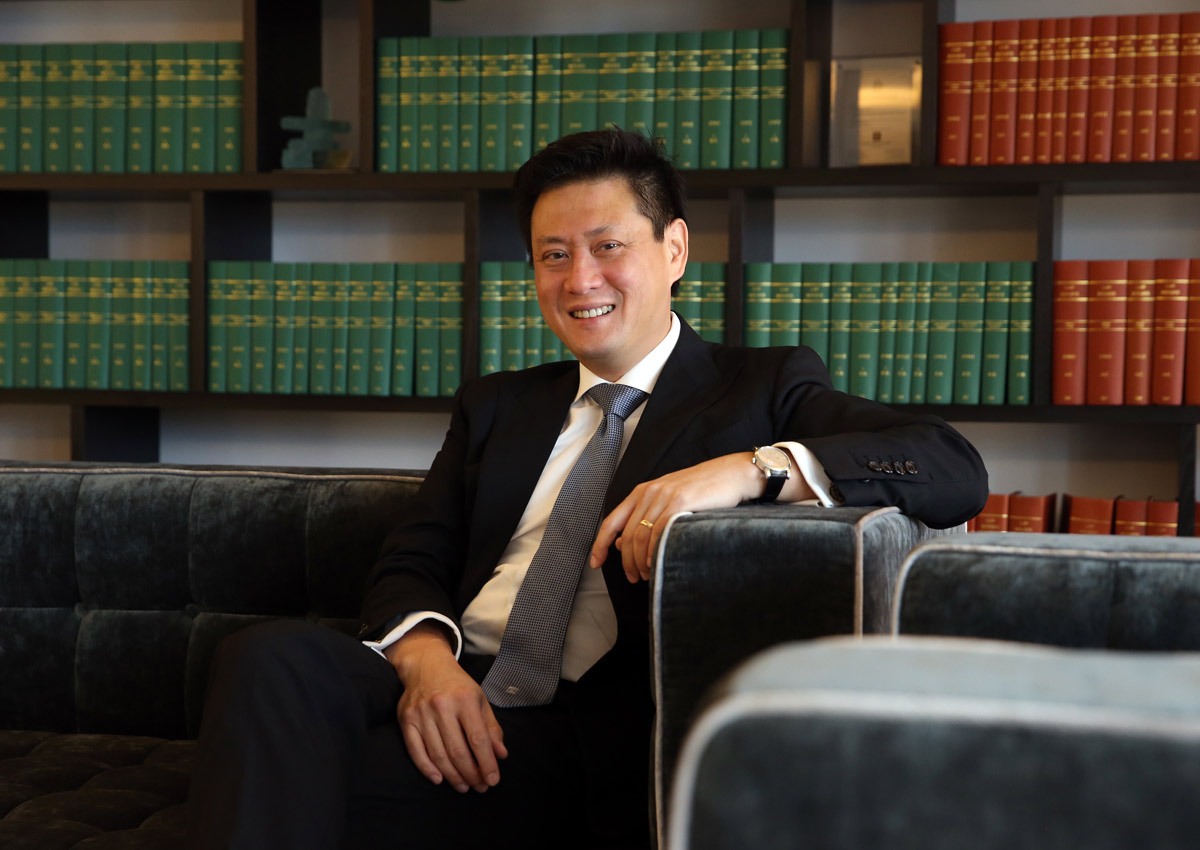
Image: 
Category: 
Publication Date: 
Monday, December 5, 2016 – 16:00
Keywords: 
Send to mobile app: 
Source: 


Story Type: 
Others

Source link

The Great Outram Primary School Reunion

0

Closed in 1984, Outram Primary School (OPS) is long gone. But more than 150 of its former staff and pupils got together two weeks ago in its first school reunion in over 30 years.

After its get-together at the Suntec City National University of Singapore Society (NUSS) Guild House, the group decided to register an alumni association and is hunting down other schoolmates.

Ms Nora Lee, 46, an office manager at Aurecon and member of the Great Outram Primary School Reunion organising committee, said the reunion was “worth the effort”.

The committee even managed to hunt down one of the principals, Mr Soohu Yiew Weng, now 86, who had a reputation for caning his students to maintain discipline.

That fact had lingered so long in their minds that the former pupils presented him with an old-fashioned cane at the reunion, to which Mr Soohu wondered out loud if he really did cane that many pupils.

Even after 32 years, some teachers still remembered their pupils vividly. Ms Christina Tan, 68, who taught English, mathematics and science at OPS and is now retired, remembered Ms Lee as a naughty pupil back in 1982.

Ms Tan recalled extracting a thumbtack from the buttocks of a pupil, the victim of a prank pulled by Ms Lee. Ms Lee, who confessed to the incident at the reunion, said she had wanted to get back at the pupil who had made fun of her large spectacles and called her names.

Though the tape recording of the school song had been lost for years, former pupil Simon Wong Teck Jee, 46, now a deputy director at Surbana Jurong, worked out the tune from memory. He, along with a group of former pupils, sang the song on stage, accompanied by a guitarist.

(From left, standing) Former OPS pupils Peggy Wee, 49, now an accountant, and Edwin Leong, 54, now an educator, presenting their former principal, Mr Soohu, with a gift of a cane, similar to the one he used to discipline pupils with. 

The road to the reunion began in 2014 when Ms Lee and her best friend from OPS came across a blog post about closed and merged schools in Singapore.

The post prompted them to search for their old classmates, some of whom had banded together in a Facebook group.

One of the group members then suggested a larger-scale reunion, partially to express their gratitude to their teachers, all of whom were above 60 years old, as well as their principal Mr Soohu.

During the event, attendees observed a minute of silence to honour the memory of teachers and pupils who had died.

Set up in 1961 and located near Pearl’s Hill Terrace, Outram Primary was a popular school among parents living in Chinatown and the surrounding areas, despite being a neighbourhood school, said Mr Soohu.

The next reunion planned for March or April next year is a walk through spots – including the old school site where Outram Park MRT station now lies, and Pearl’s Hill City Park, where “we (used to) catch spiders, tadpoles, (and play) hide and seek after school hours”, said Ms Lee.

Former pupils of OPS can get in touch via the Outram Primary School (Singapore) public Facebook group at https://www.facebook. com/groups/17894777095


This article was first published on December 05, 2016.
Get a copy of The Straits Times or go to straitstimes.com for more stories.

Image: 
Category: 
Publication Date: 
Monday, December 5, 2016 – 17:01
Send to mobile app: 
Source: 


Story Type: 
Others

Source link

Will Trump derail Asian assets?

0


It’s been a nerve-jangling year for global equities, marked by political upsets and sharp sector rotations.

Even so, the MSCI All Country World Index has defied the odds with a total return of 7 per cent year-to-date, and a number of equity indices are now at all-time highs.

In the region, the MSCI Asia ex-Japan Index has returned a decent 5.3 per cent this year, with the Singapore benchmark lagging behind yet again with 0.5 per cent gain.

And despite some recent setbacks, Asian bonds as measured by the JP Morgan Asia Credit Index rose 5.8 per cent over this same period.

So have investors who remained on the sidelines missed the boat? We don’t think so.

NOT ALL IS DOOM AND GLOOM

2017 will likely shape up to be a good year not just for United States equities, but also emerging markets.

True, US President-elect Donald Trump’s unexpected election victory has raised fears over capital market disruption, while the extent of his protectionist policies remains a source of vulnerability for the region.

But not all emerging markets are made equal.

Latin America sends 47 per cent of all its exports to the US.

Asia, by contrast, trades with a more diverse group of nations, and ships just 16 per cent of all its exports to the US.

Among emerging economies with large domestic markets, particularly Brazil, China and India, we see opportunities for outperformance.

What’s more, while the repricing of inflation expectations in the US should continue – we like inflation-protected bonds in the US – further rises in US yields are likely to be gradual.

Read Also: What a Trump win means for Singapore

With the size and timing of potential fiscal stimulus still unknown, the Fed’s moves will likely remain gradual to help heal the labour market.

Secular forces – ageing demographics, the preponderance of savings over investments and low productivity – should also work to keep longer-term interest rates anchored.

We expect the 10-year US Treasury yield to be no higher than 2.3 to 2.5 per cent by end-2017, likely blunting the current momentum seen in the US dollar.

While Mr Trump’s election is a potential setback for globalisation, the pro-growth elements of his proposals – tax cuts, fiscal spending and deregulation – are reflationary.

Historically, this has led to positive spillovers on Asia, which remains on track for a year of stronger nominal GDP growth, high single-digit earnings recovery and gradually higher lending rates.

Aside from US politics, Asia has its own reform dynamics to contend with in coming years.

The current batch of determined leaders in Asia, many backed by strong popular mandates, lifts the chances of success as the region ploughs ahead with technology and infrastructure upgrades, and industrial renewal.

For China, ahead of the critical political leadership transition in late 2017, Beijing will likely emphasise reasonable growth and financial markets stability, with critical reforms in state-owned enterprises and overcapacity sectors staying gradual over the next 12 months.

ASIAN EQUITIES SHOULD OUTPERFORM BONDS IN 2017

We remain positive on Asian risk assets with a preference for equities over investment grade bonds.

As producer prices rebound and return-on-equity recovers, we expect Asian equities to deliver low-teen returns next year, with an overweight on China and India, versus an underweight on Taiwan and the Philippines.

Singapore is a relative beneficiary of a steepening yield curve and valuations near decade lows should offer downside support.

But while valuations are inexpensive, we expect the market to trade range-bound in the absence of growth catalysts.

With historically low yields still on the horizon, the search for yield may prevail.

But with higher inflation and likely three Fed hikes from now till end-2017, private investors need to be more selective.

“Yield with growth” stocks typically found in Asian cyclical sectors, including consumer discretionary, materials and IT, should outperform.

As bond proxies, Reits would likely be impacted by the ongoing rotation out of defensive equities.

Still, selected Reits from Australia, Singapore and Hong Kong with cyclical growth potential, acquisitive opportunities and conservative debt-hedging profiles should remain well-supported in a gradually higher yield environment.

Within Singapore, we prefer ungeared yield (that is, dividends paid out of a net cash position) over leveraged yield amid rising interest rates.

A sustained increase in interest rates bodes well for banks.

Thematically, “growth at a reasonable price” strategy remains rewarding and we like the new economy and technology leaders.

Read Also: Chinese business execs not worried about Trump getting tough on them

Asian financials and blue-chip cyclicals in the consumer discretionary and materials industries also offer attractive value.

The recently announced Shenzhen-Hong Kong Stock Connect will be a catalyst for the China market and Hong Kong-listed small- and mid-cap stocks.

However, we are less excited about Asian credits, given their stretched valuations, weakening credit quality and increasing supply.

Still, Asian bonds are likely to be more resilient than their global counterparts, due to the higher credit quality of issuers and support of local investors.

In the year ahead, we expect most Asian currencies to gain some ground against the US dollar as the Fed tightens policy gradually and the US twin deficits receive greater attention.

Within the region, higher inflation and a better growth backdrop should spur Asian central banks to shift to a more neutral stance.

Of course, US protectionism is the major unknown.

We enter 2017 preferring high-yielding Asian currencies like the Indonesian rupiah and the Indian rupee.

Conversely, we expect the Singapore dollar and the Chinese yuan to underperform.

Investing in Asia this year was not for the faint-hearted. Next year will likely be no different, given increased policy uncertainty in the US and political risks in Europe.

Still, the underlying economic and earnings fundamentals matter more.

Investors should take a well-diversified investment approach, and be more nimble in 2017 than in recent years.


This article was first published on December 5, 2016.
Get a copy of The Straits Times or go to straitstimes.com for more stories.
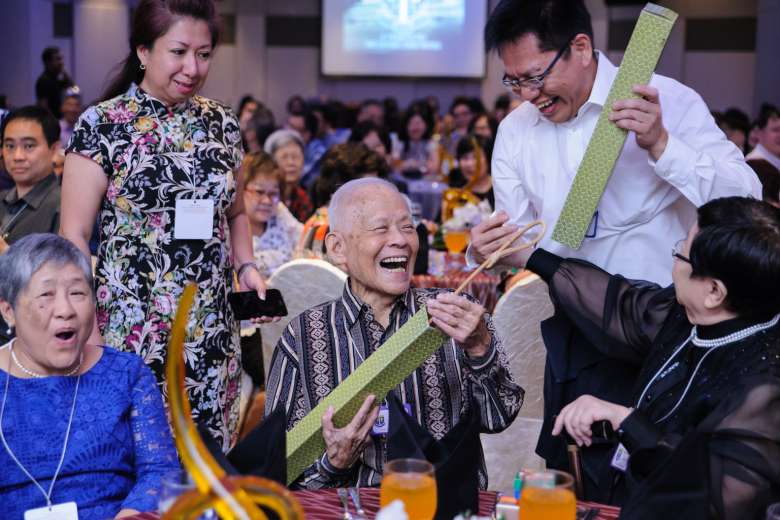
Image:
Publication Date:
Monday, December 5, 2016 – 16:00
Send to mobile app:
Source:

Story Type:
Others

Source link

S'pore-made device to aid in developing cancer therapy

0

The idea of treating cancer with an electric field has been around for years, but it has been slow to take off because of a lack of understanding of the science behind it.

Now, a team of bioengineers from Singapore, Australia and the United States has verified that it works – and invented a gadget that will facilitate clinical testing and a better understanding of the therapy.

Tumour Treating Fields (TTFields), which do not require surgery, are alternating electric fields that disrupt the alignment of molecules necessary in cell division.

It is far different from a controversial kind of electrical therapy that zaps the brain or body with electric currents to treat illnesses ranging from depression to diabetes.

With TTFields, no electric current flows through the body.

About 10 years ago, an international team of researchers showed the therapy slowed the growth of a highly aggressive type of brain tumour called glioblastoma multiforme (GBM).

The only side effect was some inflammation where the electrodes touched the skin.

In 2011, the US Food and Drug Administration approved Optune, a wearable device by US-based firm Novocure that administers TTFields on GBM patients.

Read Also: Hundreds attend funeral of British girl who was ‘true face’ of childhood cancer

Available only in the US, Europe, Israel and Japan, it requires consultation with a specially trained doctor and costs US$21,000 (S$29,800) a month excluding consultation and hospital fees.

Singapore’s Health Sciences Authority said it had not received any application for the use of TTFields therapy here.

Novocure is already conducting trials for other cancers, including lung, ovarian and pancreatic.

Dr Kevin Chua, a radiation oncologist at the National Cancer Centre Singapore, said: “We know the therapy works, in broad strokes… but we don’t actually know a lot beyond that…We don’t yet have a deep understanding of how it affects various stages of cancer development.”

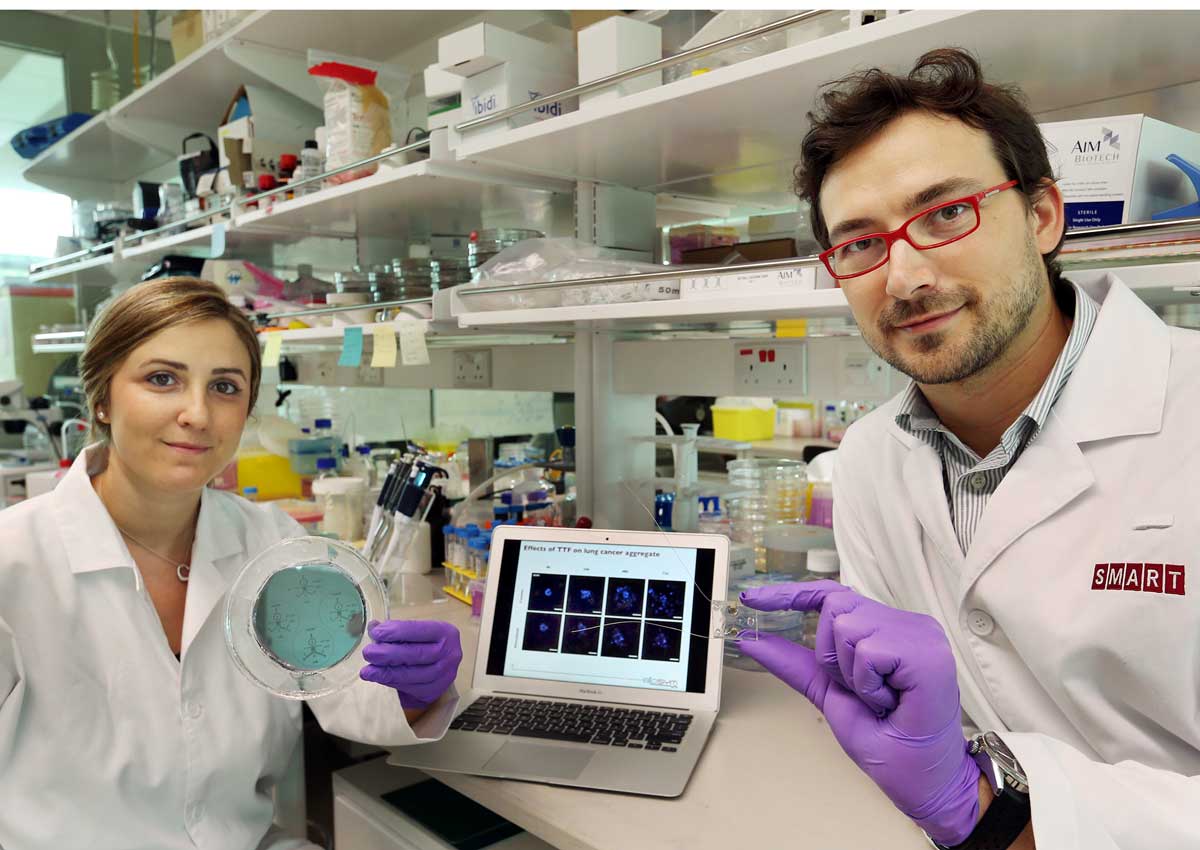
Efforts to better understand TTFields could be boosted by a new gadget from a team led by Dr Andrea Pavesi at the Singapore-MIT Alliance for Research and Technology, with funding from Singapore’s National Research Foundation.

Their work was published in Nature Scientific Reports in May.

Read Also: Mum and toddler in big fight for their lives

No bigger than a postage stamp, the device contains electrodes and tiny channels embedded in a transparent polymer.

It enables TTFields to be applied on cancer cells in a three-dimensional environment; conventional flat cell cultures are done on agar plates.

It uses fewer reagents and facilities because of its small size, so costs can be cut down.

Eventually, a patient’s own cancer cells could be specifically tested.

Every patient’s cancer is slightly different, and customised treatment could become possible.

Using the device, scientists verified earlier findings that TTFields can suppress multiplication of human breast and lung cancer cells.

Read Also: Cancer survivor turns Cinderella

Moreover, the effect on non-cancer cells seems negligible.

This could be because TTFields target cell division, and normal cells do not divide as rapidly as cancer cells, said Dr Pavesi, who came up with the idea for a device to test TTFields after watching a talk by Novocure founder Bill Doyle.

Progress in TTFields research has been slow. Russian scientist Georges Lakhovsky discovered in the 1920s that oscillating electric fields had effects on living cells, but no one took him seriously.

Dr Pavesi said: “For years, people thought he was crazy.”

But now, advances in technology have helped revise that view.

“You need to have engineering knowledge to apply to the biology, as you need to understand what this electric field is… it’s something you can’t see, it’s something that’s hard to measure,” said Dr Pavesi.

He hopes his gadget will give the research a boost.

“It will be nice to use the device to explore different electric fields, different types of cells, different combinations of therapies,” he said.

Dr Wong Seng Weng, who is medical director of Singapore Medical Group’s The Cancer Centre, said: “Much work needs to be done to understand the best utilisation of TTFields and how to optimise it… combination treatment could emerge as the best way forward.”

Dr Pavesi concurs. “It’s not enough using only one technology to fight cancer.

You need to combine as many therapies as possible.”


This article was first published on December 05, 2016.
Get a copy of The Straits Times or go to straitstimes.com for more stories.
Image: 
Publication Date: 
Monday, December 5, 2016 – 14:51
Keywords: 
Send to mobile app: 
Source: 


Story Type: 
Others

Source link

President Tan urges S'pore firms to make mark in Japan

0

Daimaru and Daiso. The duo from Japan are household names in Singapore, and visiting Singapore President Tony Tan Keng Yam said he hopes local brands, too, can leave their mark in Japan.

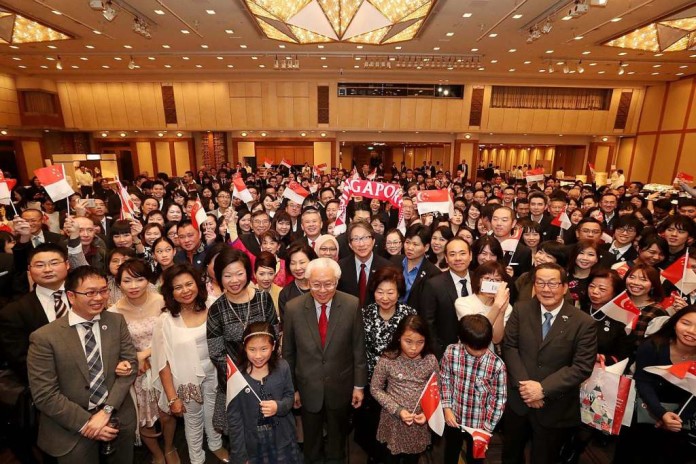
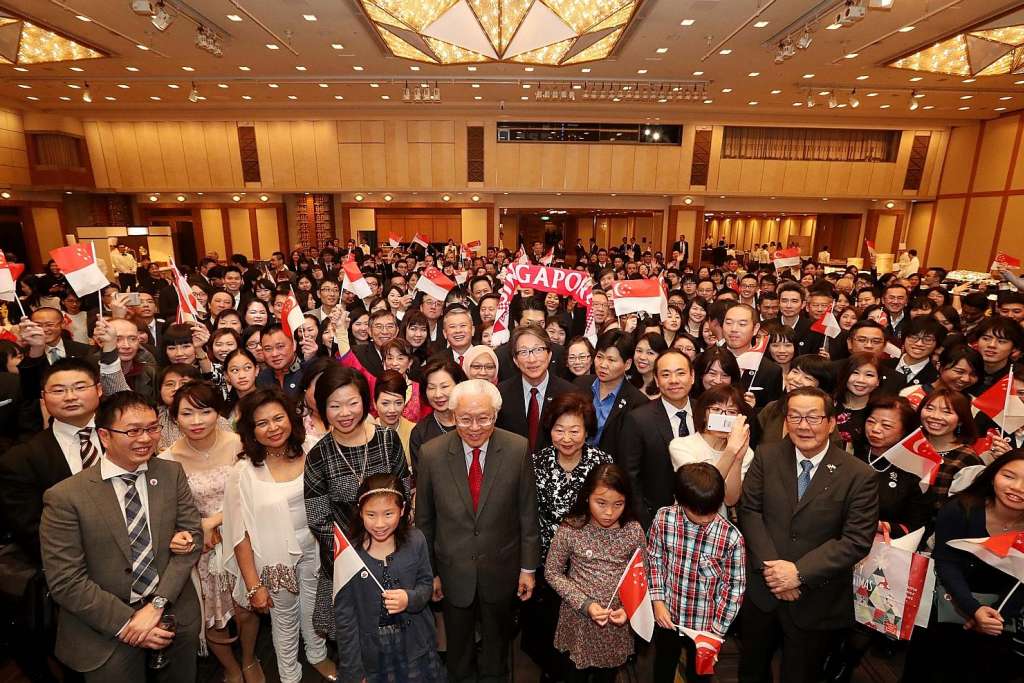
He was speaking at a reception last night at the Imperial Hotel in Tokyo, attended by about 300 of 2,000 Singaporeans living in Japan.

They were treated to Singapore food such as barbecued pork from Bee Cheng Hiang, chicken rice and laksa, as well as Tiger beer.

“Singaporeans grow up shopping at Isetan, Takashimaya or Daiso, or for those who are not as young, Yaohan or Daimaru,” Dr Tan said, adding that it is the strong link “between our peoples that gives the bilateral relationship its depth and vibrancy”.

Singapore companies have been attempting to break into the Japanese market, with SaladStop! opening in Omotesando last month and Bee Cheng Hiang in Ginza in September.

Citing Mr Bean and Wee Nam Kee Chicken Rice, Dr Tan said: “We are also seeing familiar Singapore brand names making their mark in Japan… We hope to see more of such success stories from among our Singaporean companies.”

Auditor Lee Bee Hui, 30, said she believes there is room for more local firms to enter Japan. Among the food she has the most difficulty finding, she said, is “good Hokkien mee and bak kut teh”.

Now the head of information technology management in an international logistics firm, he said that while technology is an area Singapore has been looking to learn from Japan in its Smart Nation quest, it could also consider emulating Japan in waste disposal.

Meanwhile, Mr Bernard Wee, 34, who has been living in Tokyo for five years, observed a huge market for Singaporeans in Japan, with Japanese firms increasingly looking to venture beyond their shores.

The vice-president of sales and marketing at Japanese tech firm Works Applications said: “A lot of Japanese companies are keen on South-east Asia and are looking for people who can manage their market for them.”

Dr Tan, whose visit ends tomorrow, will visit a nursery school in Miyagi prefecture today.

Singaporeans contributed $35.7 million in disaster relief after the 2011 earthquake and tsunami that hit north-eastern Japan, in one of its largest relief efforts.


This article was first published on Dec 05, 2016.
Get a copy of The Straits Times or go to straitstimes.com for more stories.
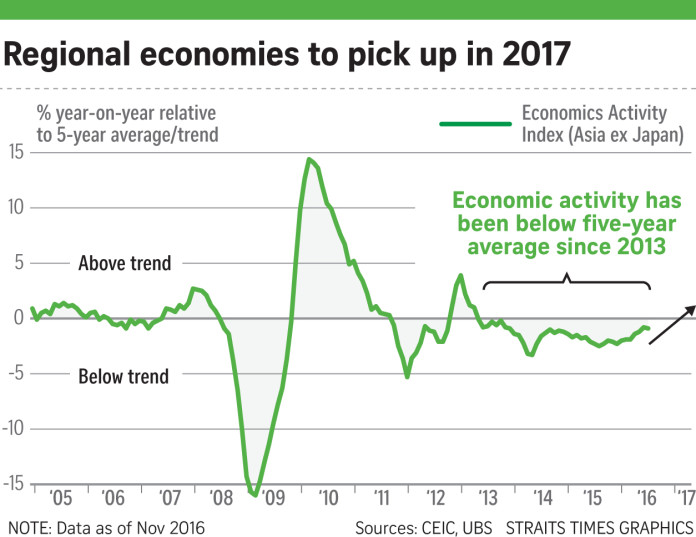
Image: 
Category: 
Blurb: 
<p>Daimaru and Daiso. The duo from Japan are household names in Singapore, and visiting Singapore President Tony Tan Keng Yam said he hopes local brands, too, can leave their mark in Japan.</p>
Publication Date: 
Monday, December 5, 2016 – 13:00
Keywords: 
Send to mobile app: 
Source: 


Story Type: 
Others

Source link

From ashes to diamonds: Different faiths’ stand

0


The contemporary practice of turning the ashes of loved ones into diamonds to be worn as jewellery has been forbidden by the Catholic Church in Rome.

The injunction, for believers, was reiterated by Singapore’s archdiocese in late October, in guidelines on the handling of burials and the conservation of ashes.

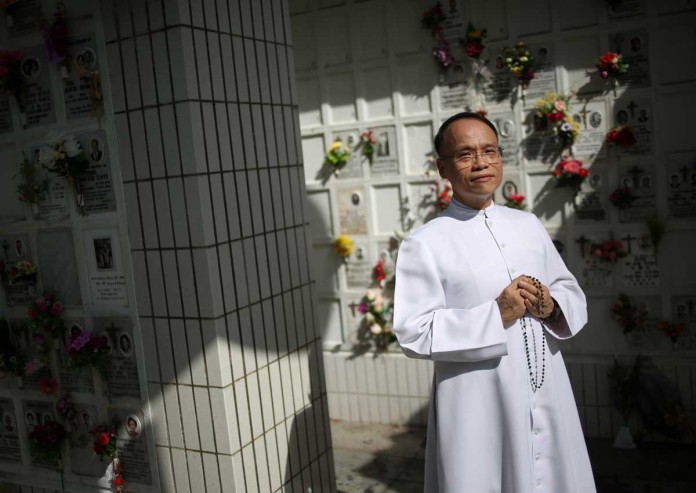
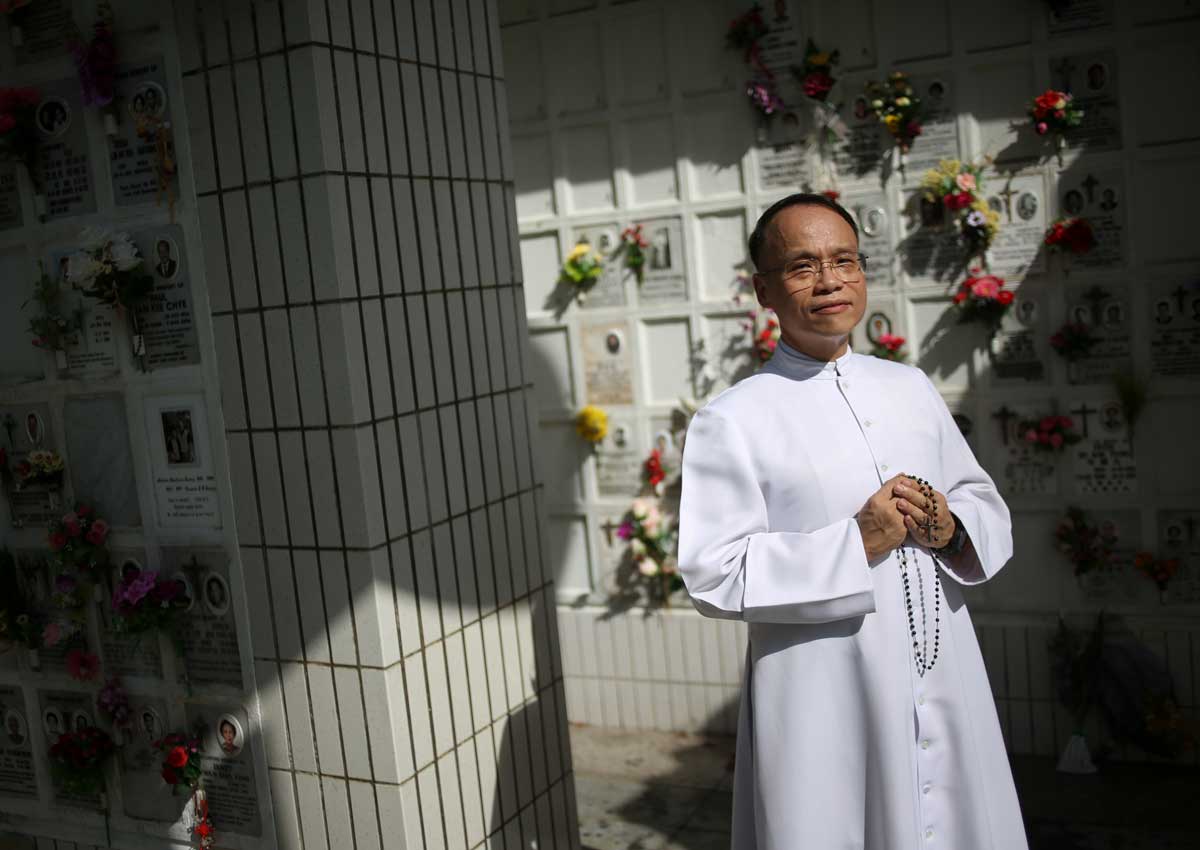
Catholics should not scatter ashes in the air, at sea, in forests or parks, divide them across households, or use them as mementos, as they believe in the resurrection of the body, Father Ignatius Yeo, a professor of sacred liturgy at the Catholic seminary, told The Straits Times.

Father Yeo said it is recommended ashes be interred in a columbarium, so that the dead can be remembered and prayed for by the community of which he or she had been a part.

In the case of sea burials, ashes should be stored in a vessel that is “heavy enough” to sink and lay in its final resting place, said Father Yeo, who is also the Archbishop’s master of ceremonies.

The Catholic Church permitted cremation in 1963 due to the emerging needs of its followers.

While the church maintains that burial is the best way for someone to honour their faith in death, cremation is the most popular option chosen by Catholics in land-scarce Singapore.

About 15,000 cremations were conducted in Singapore last year while about 3,700 people were buried at Choa Chu Kang Cemetery, said a spokesman for the National Environment Agency (NEA).

In response to queries from The Straits Times, the National Council of Churches of Singapore said Protestants generally “do not have serious objections” to the scattering of ashes or keeping of urns at home “as long as this is done solemnly and respectfully”.

The council, which represents about 260 churches of diverse Christian traditions and denominations, including the Orthodox, said its beliefs are similar to those of the Catholic Church.

For instance, the council noted, Protestants would regard turning the remains of the dead into wearable jewellery or any kind of commemorative object as an unacceptable practice.

In a similar vein, Protestants would also regard distributing the remains to family members as disrespectful.

Father Yeo and other religious leaders said most Singaporeans continue to uphold and value traditional after-death rites.

For instance, most Hindus, Buddhists and Taoists continue to practise cremation and choose to inter the remains in a columbarium or scatter them at sea.

Hindus believe all bodies of water join with the nine sacred rivers in India, such as the Ganges, so ashes are scattered at sea in the belief that the soul can be reborn in any part of the world, according to the Hindu Endowments Board.

The scattering of small amounts of ash can be done at a designated site located about 2.8km south of Pulau Semakau, the landfill island south of mainland Singapore.

Read also: Woman dies… giving her hubby her kidney

As for Muslims, it is compulsory that the dead be buried, as far as possible on the same day or the next day that death occurs, said the Islamic Religious Council of Singapore.

The Straits Times understands that the Taoist Federation has yet to advise devotees on how to deal with modern practices.

Master Wei Yi, 32, said Taoists, for the most part, opt for cremation.

He added: “Most priests would advise against turning ashes into jewellery although, ultimately, we leave the final decision to the family.

“Personally, I believe the dead should be laid to rest in a proper resting place, so the soul won’t be disturbed.”

However, the Singapore Buddhist Federation said there are no restrictions as to how devotees commemorate the dead.

Its president, Venerable Seck Kwang Phing, said: “We’re flexible as long as it is done in reverence.

There are no restrictions if Buddhists want to turn ashes into jewellery as consciousness has already left the body.”


This article was first published on December 05, 2016.
Get a copy of The Straits Times or go to straitstimes.com for more stories.
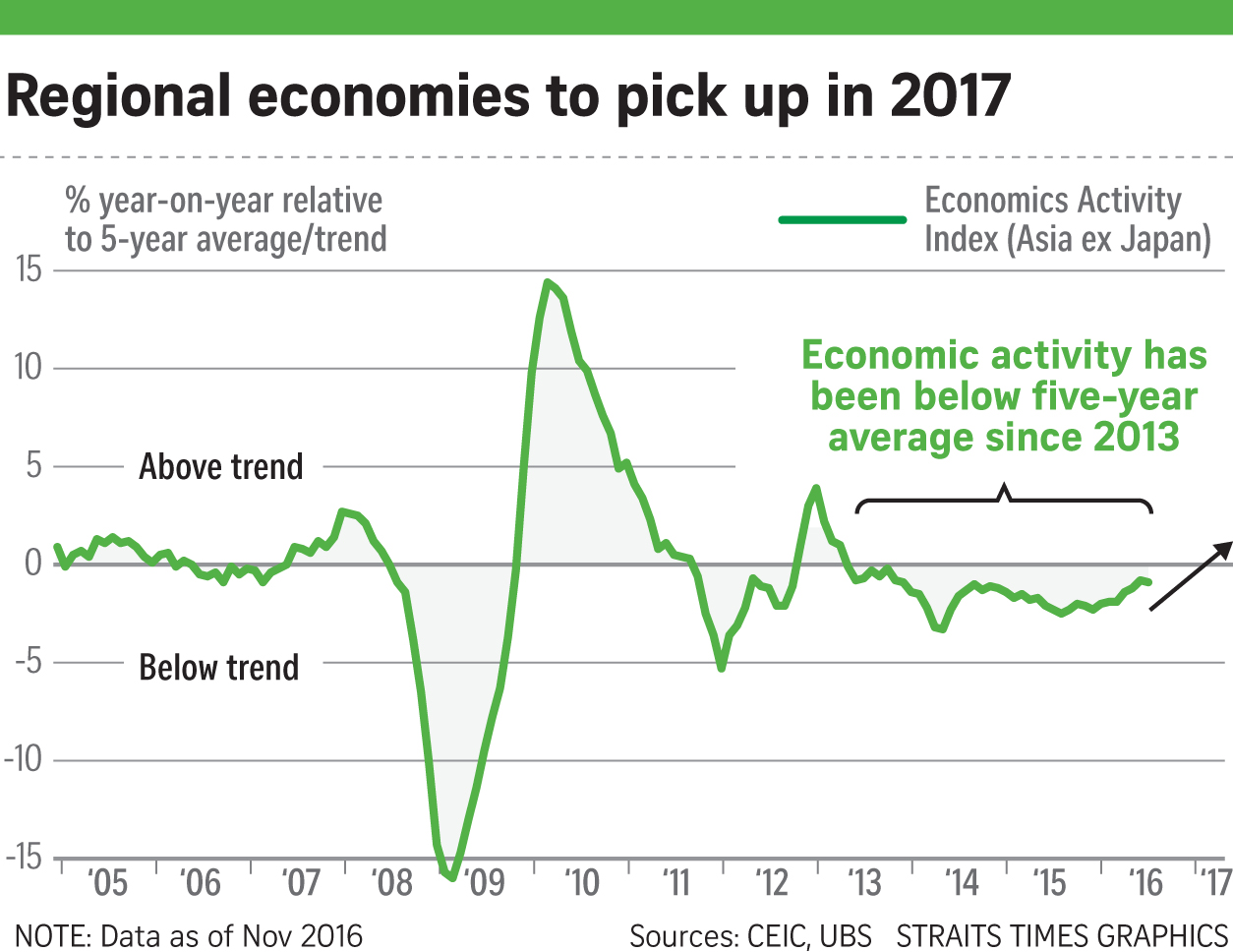
Image:
Category:
Publication Date:
Monday, December 5, 2016 – 17:03
Keywords:
Send to mobile app:
Source:

Story Type:
Others

Source link

App cooks up business for home chefs

0

The weeks leading up to Hari Raya each year are busy for homemaker Suaidah Soib, 25.

The kitchen in her three-room flat turns into a production wonderland filled with cookies and cakes fresh out of the oven. Her baked goods are so good that friends and relatives pay her to bake a few extra.

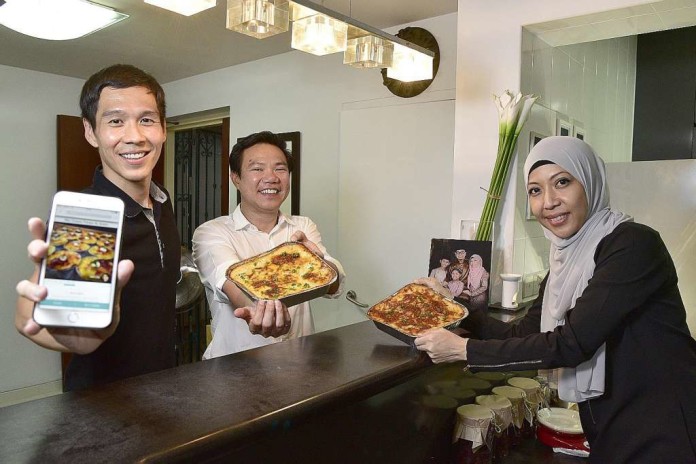
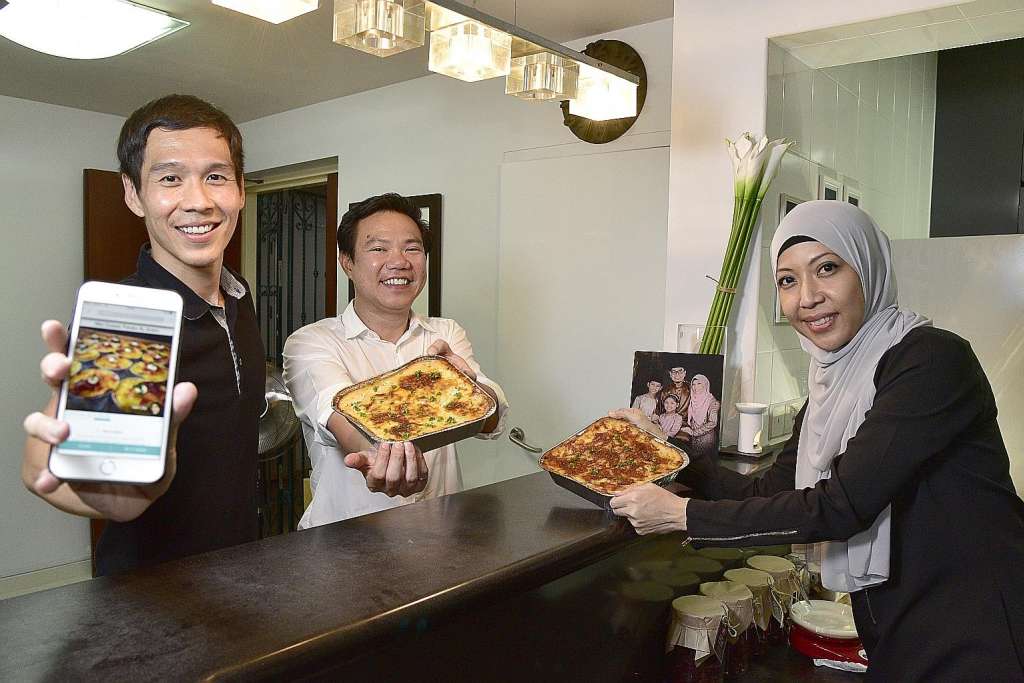
Recently, the mother of one learnt that she can bake for a steady stream of buyers throughout the year and earn about $200 to $300 a month, thanks to a mobile app that connects home cooks with hungry buyers.

Madam Suaidah, who is known as Batter Chatter on the Hcook app, said the additional money helps to supplement her husband’s income.

Hcook was launched in July by two friends and lists home-cooked meals for a pool of hungry buyers. The app features 200 home cooks and more than 1,200 listings of food, ranging from local cuisine to Thai and western dishes.

Registered individuals can upload a photo and list their food on the app, and interested buyers can place orders and collect them.They can also have the food delivered.

Hcook co-founder Renton Yap, 38, said the app enables home chefs to showcase their food and sell their wares to an online audience. He added that it is especially helpful to low-income women, who make up 10 per cent of the home cooks featured.

Madam Suaidah said: “With the extra income, I buy my child’s milk and diapers. And since we just got a home, it helps with the household bills too.”

Madam Herny Kamal, 38, who quit her interior design job in 2014 to focus on caring for her two children, now makes $500 a month by baking and selling cakes and cookies through Hcooks.

“I have always enjoyed taking photos of food I have cooked. The app gives me extra income to spend on myself and my kids,” she said.

There are at least three such food apps in Singapore now.

Just last month, Share Food Singapore was launched with 200 home cooks, while Heartland Chefs has had 144 home-cook sign-ups since it was launched in October.

All the app makers said they adhere to the National Environment Agency’s (NEA) guidelines for the Home Based Small Scale Business Scheme, where individuals can prepare small quantities of food for sale. A licence is not required from the NEA under these guidelines.

Mr Yap of Hcook said those who apply to be home cooks on the Hcook app are assessed by its staff, who visit interested cooks to make sure that their kitchens are clean and the bins are closed, and that the cooks have hygienic practices, including the separation of raw and cooked food.

These Hcook staff have taken the WSQ Conduct Food and Beverage Hygiene Audit course, which trains them in conducting hygiene checks.

Madam Herny said the app is a stepping stone to bigger dreams.

“The app gives me the motivation to start my own cafe. With the app, I am making more connections with other cooks and friends, so maybe I can start my own place one day,” she said.

For more information, visit www.hcook.sg, www.sharefood.sg or www.heartlandchefs.com.


This article was first published on Dec 05, 2016.
Get a copy of The Straits Times or go to straitstimes.com for more stories.
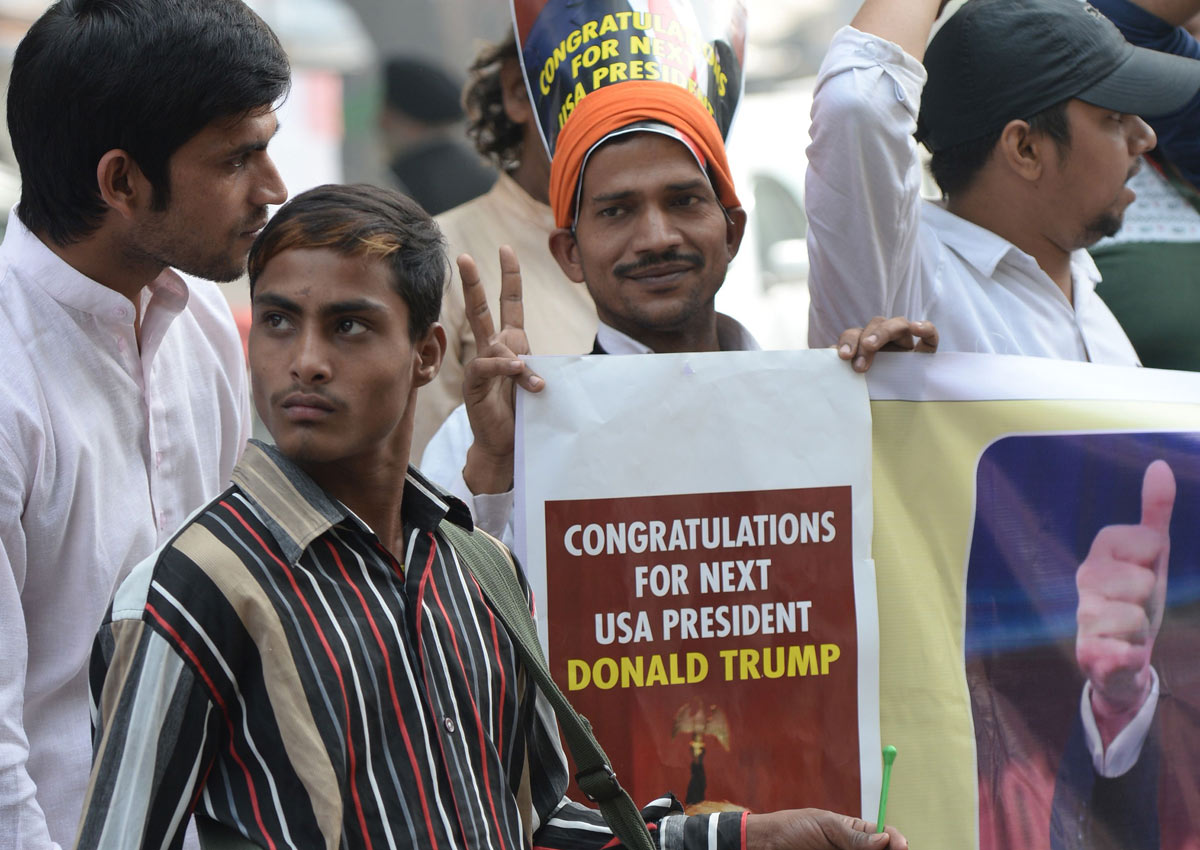
Image: 
Blurb: 
<p>The weeks leading up to Hari Raya each year are busy for homemaker Suaidah Soib, 25.</p>
Publication Date: 
Monday, December 5, 2016 – 15:00
Keywords: 
Send to mobile app: 
Source: 


Story Type: 
Others

Source link

PM: Rising global discontent will affect stability, security

0


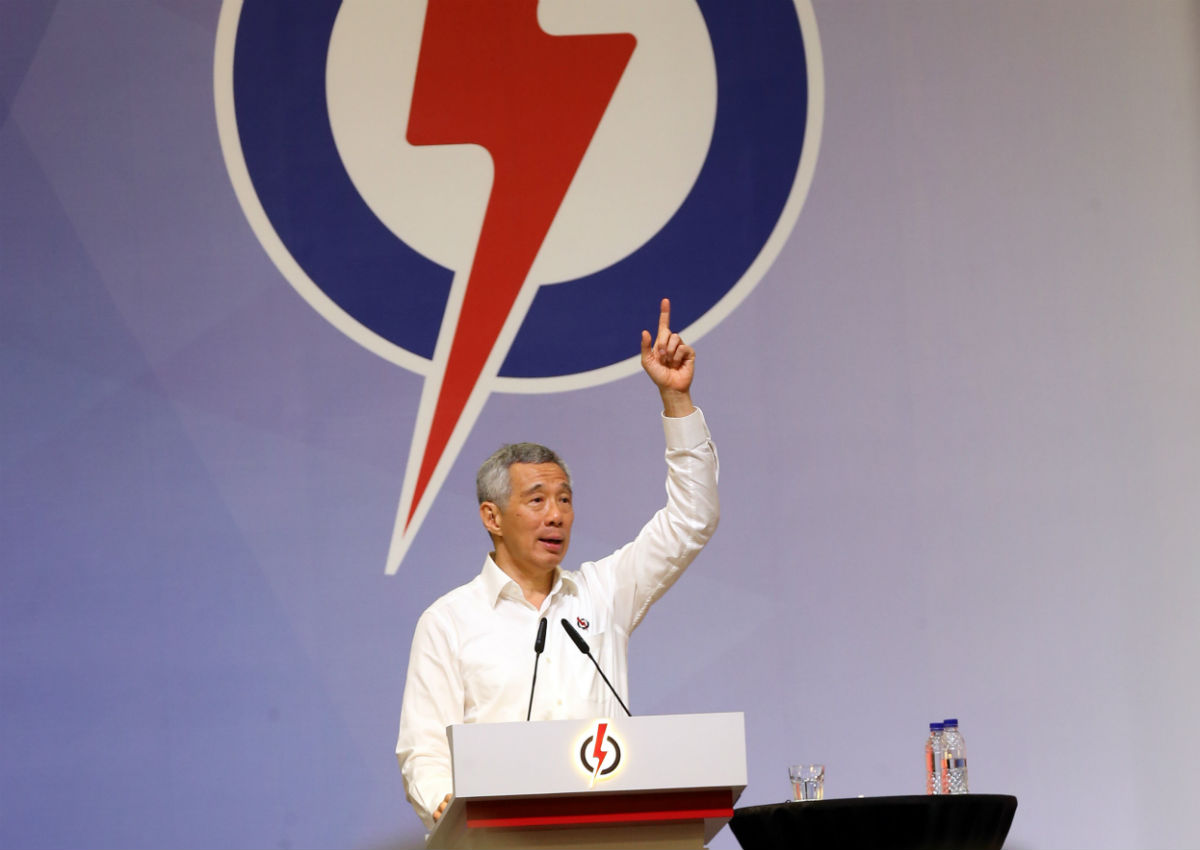
The growing mood of anxiety and discontent and the ground gained by extreme political parties in many developed countries will impact not just the world economy, but global security and stability, Prime Minister Lee Hsien Loong said yesterday.

There will be major consequences for small, open countries such as Singapore that have relied on open trade and making friends, and sought opportunities to cooperate, he said.

It will also be harder to prosper together in this new climate, where countries are turning inward and becoming more protectionist, seeing others’ gains as their loss, he added.

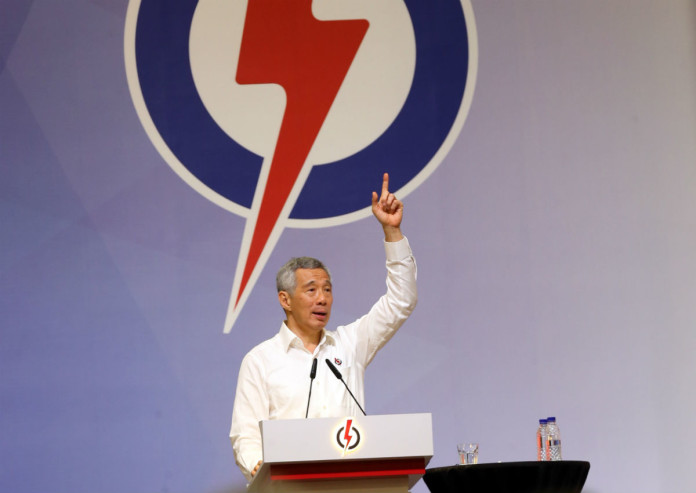
Mr Lee gave this reading of recent trends in a speech to 2,500 People’s Action Party (PAP) members at their biennial party conference.

He called on members to understand what the trend means for Singapore and to help ensure the PAP remains a party with strong support from all segments of society.

“The external world is changing… in a very fundamental way not advantageous to us. We have to watch this, we have to know how this is going to impact us over the next few years,” he said.

Mr Lee, who is PAP secretary-general, noted that voters around the world are unhappy that the benefits of growth are not reaching them, and feel threatened that immigrants are competing for their jobs.

He cited the recent United States election, the Brexit vote and the rise of extreme parties in Europe as examples of voters’ weariness of trade and wariness of immigrants.

“This looks like the trend now. I do not know how far it will go, but I do not like the direction the trend is going,” he said. “If more countries turn this way, the world is going to change, and change for the worse.”

Singapore prospered in the past 50 years by working hard, but it was fortunate to have a favourable external environment: A peaceful Asia and an international order where countries big and small cooperate and compete under rules that are fair to all, giving small countries “a right to their place in the sun”.

Today, countries are flexing their muscles and becoming increasingly assertive.

“Nobody can tell how relations between the big powers will develop,” said Mr Lee. “If US-China relations grow tense, Singapore is going to be in a very difficult spot, because we regard both the US and China as our friends and do not want to have to choose between them.”

Meanwhile, obstacles to trade are increasing and Singapore’s exports – a key pillar of its economy – are not growing by very much either.

But Singapore has to accept the world as it is, not as it wishes it to be, said Mr Lee.

“We ourselves must remain open, because if we close up like other countries, our people will be finished,” he said.

Besides understanding the global climate, Mr Lee spelt out two other ways for the ruling party to prepare for the next general election, which must be held by April 2021.

First, the party must strive to improve the lives of Singaporeans.

He cited two ways of doing so: By equipping Singaporeans with the skills to take care of themselves through schools and training programmes, and by strengthening social safety nets.

Second, the PAP must remain a strong, national party that reaches out to all segments of society and represents them.

It must also stay focused on serving the people, and provide strong leadership, he said.

“Politics is the same everywhere. It is people, it is trust, it is knowing you care for me,” he added.

“Unless we have this deep in our DNA, we will not be able to hold our position in Singapore.”

Read also: PM Lee: We must remain open


This article was first published on Dec 05, 2016.
Get a copy of The Straits Times or go to straitstimes.com for more stories.
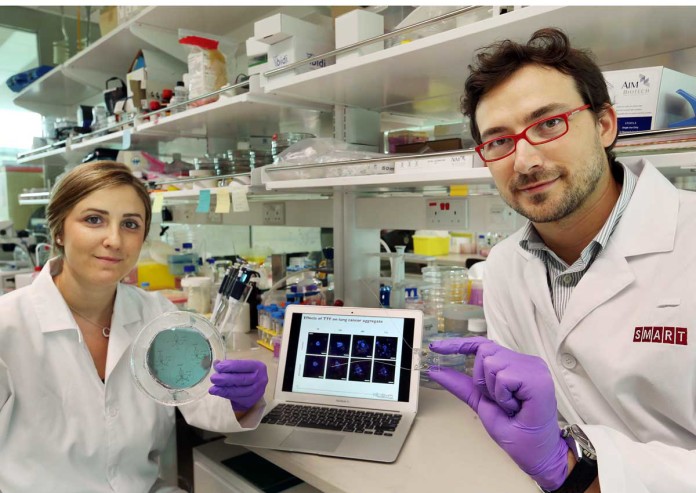
Image:
Category:
Blurb:
<p>The growing mood of anxiety and discontent and the ground gained by extreme political parties in many developed countries will impact not just the world economy, but global security and stability, Prime Minister Lee Hsien Loong said yesterday.</p>
Publication Date:
Monday, December 5, 2016 – 15:00
Send to mobile app:
Source:

Story Type:
Others

Source link

Chinese 'Mad Max' rip-off ‘Mad Shelia’ released online

0

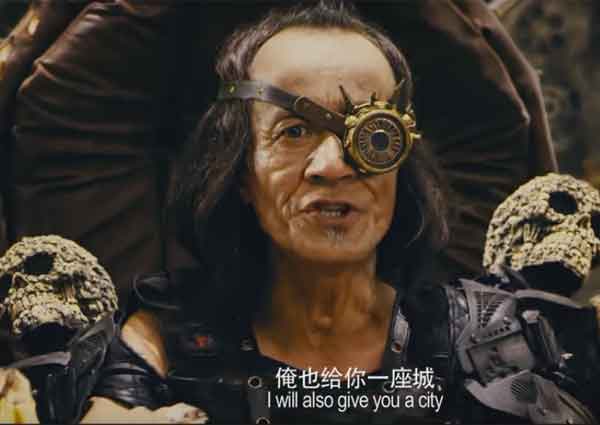
The 2015 film “Mad Max: Fury Road” has already a Chinese duplicate, with an athletic, crime-busting heroine as its lead.

“Mad Shelia” tells the mad tale of Xi Liya “Shelia,” a voluptuous Chinese hunter who meets several punk gangsters who are about to sell virgins. Vowing to shatter them all, Shelia purges the devilish captors in the “sleekest” manner and saves the day. Xi Liya’s courageous character and spirit can be likened to “Mad Max” female lead Imperator Furiosa, played by Charlize Theron.

As noticed, Mad Shelia’s trailer distinctly resembles that of the Hollywood film’s metallic trailer directed by George Miller. Also, the film’s movie poster can be hailed as an eccentric “twinning” to the original film.

It may be accepted for screening in movie houses, and has been streamed on China’s VOD service TenCent Video since Nov. 25, China Film Insider pointed out.

The gender-swapped movie,which was produced by New Film Media and shot in the Inner Mongolia region, has planned sequels, such as “Mad Shelia: Virgin Road” and “Mad Shelia: Vengeance Road,” for next year.

Although the Beijing-based company has not commented about the “similarities” of both films, “Mad Shelia” director Lu Lei expressed her congratulations on Chinese social networking site Weibo. “Mad Max is the biggest winner at this year’s Oscars. Our Mad Shelia salutes,” she posted.

Because international films are banned in China, some Chinese films do adopt elements from American blockbusters. Examples are Zootopia remake “Crazy Toy City,” “The Courier and the Furious” and “Fifty Shades of Black,” a copycat of Fifty Shades of Grey, Telegraph reported. Disney was displeased with “The Autobots,” a Chinese rip-off of “Cars” and filed a lawsuit against the film’s company.

Image: 
Category: 
Publication Date: 
Monday, December 5, 2016 – 14:20
Keywords: 
Send to mobile app: 
Source: 


Story Type: 
Others

Source link

Cheeky Chinese artist critiques society with nudity

0

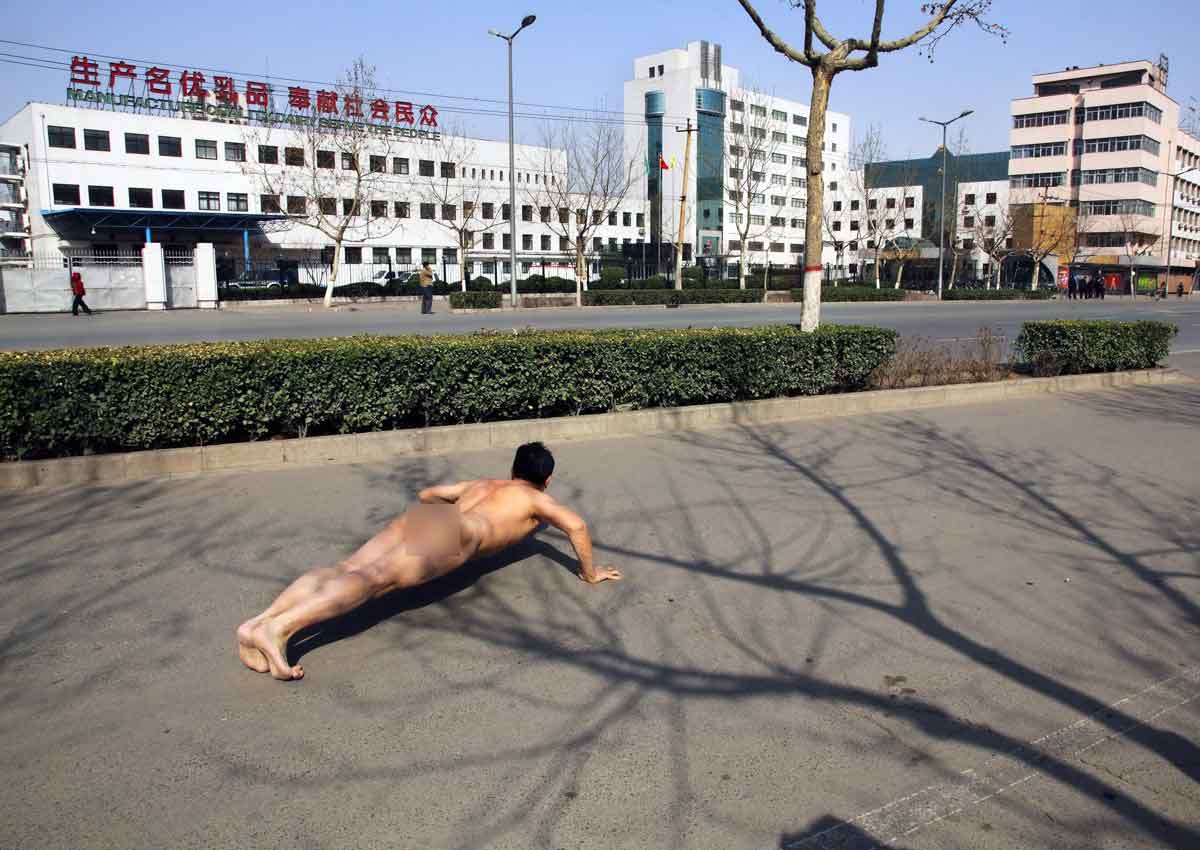
GUANGZHOU – Setting up a camera in a public place, Ou Zhihang hastily removes his clothes, then with just one bottom-exposing press-up – his work is done.

The artist has taken more than 700 photos capturing his nude exercises on streets in China and sometimes abroad – a body of work unmatched in the contemporary art world.

But the locations he chooses – sites of government abuses, protests and disaster – show there is more to his work than just cheek.

“My aim isn’t to get people to look at my press-ups, but to use a method to get society to think,” said the 46-year-old, clothed in a white polo shirt and jeans for a dim-sum lunch in his hometown of Guangzhou.

Taken as a whole, Ou’s work presents an alternative history of China’s last decade – highlighting “sensitive” events that Communist authorities would rather play down.

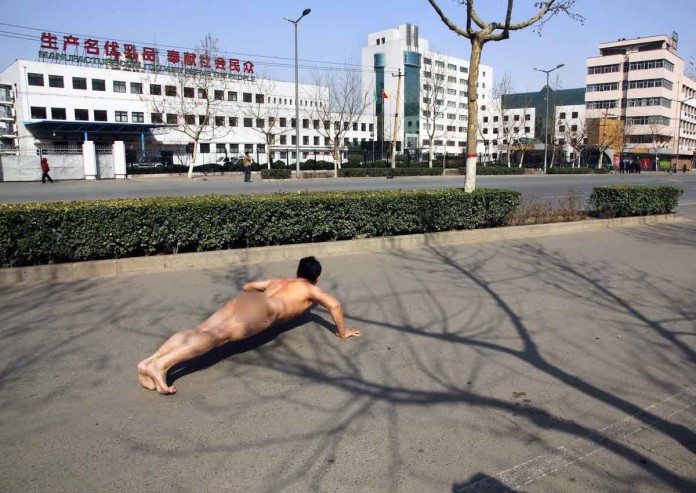
One 2008 photo shows him naked opposite the grey office of a milk powder company at the heart of a scandal which sickened some 300,000 babies that year. Pedestrians walk by opposite apparently oblivious.

Three years later, he stripped at a patch of scrubland near the village of Wukan in southern China, where villagers had risen up against local officials in protest at land grabs.

He has exposed himself at the site of China’s deadliest high speed rail crash in 2011, anti-Beijing protests in Hong Kong in 2014, and chemical explosions in Tianjin last year.

All the events were covered by China’s state-run media, but in a heavily censored form which shifted blame away from central authorities.

“The aim is to make the public remember these incidents,” he said. “People know, if there is a place where something happens, I should make an appearance there.” .

A TV producer, Ou started experimenting with naked photography on work trips to foreign hotels “as a way of reliving stress”, before his first outdoor shot on China’s Great Wall in 2005.

As a method of physical exercise, the press-ups are meant to symbolise “building social strength”.

Perhaps surprisingly, despite its sensitivity Ou has been able to distribute his work on China’s closely controlled internet, and its oblique nature has enabled it to be featured in China’s tightly censored domestic press.

He has been chased by dogs and had run-ins with local police – who on several occasions have detained him and told him to delete photographs.

Last year, he was nabbed by officers outside a cottage in southern China where four children drank pesticide after being abandoned by their migrant worker parents, and only released once he flashed his press credentials.

“As soon as I took the photo, a car pulled up and took me away,” he said.

He credits the survival of his work to his avoiding explicit verbal criticism of Communist authorities, letting his photos speak for themselves with simple titles stating their location and the incident in question.

But China’s online population – who remember incidents even after reports on them are deleted, get the message.

“Using nudity brings a force to his art, it shows the force of an individual in the face of powerful public architecture,” said art critic Li Xianting.

Ou acknowledges the risks. “You have to be careful… at the moment I’m safe,” he said.

“You need to do things which are meaningful for society. It can open a window, and be shared by ordinary people. That’s already a kind of change.” .

Straddling art and journalism – winning a commendation at the World Press Photo Awards in 2010 – his work was the subject of a major exhibition in Venice last year.

“His ‘impertinent’ nudity is a protest against the arrogance and neglect of power to the society and people,” Chinese art critic Gu Zheng said in the exhibition catalogue.

The artist has not had a large-scale exhibition on the mainland, saying he prefers to distribute his work online.

He updates an account on social media service Wechat with his thoughts on China’s latest scandals – from the death of an academic in police custody to the 50th anniversary of the destructive Cultural Revolution.

Most are accompanied by a image from his collection, picked to match the topic. His posts are often deleted, but the account has remained operational.

“I care more about having an impact on society than holding exhibitions for academics,” he said, contrasting himself with high-profile artist Ai Weiwei, who is rarely displayed in China.

“Many people in the West think that Ai Weiwei’s work is great, but over here it’s not shown,” he said. “A lot of his thoughts cannot be exchanged with the masses.” Ultimately, though, Ou would prefer there was no need for him to bare his flesh.

“I hope that China will stop having the kinds of incidents which need my involvement,” he added. “That way I can live quietly”.


Image: 
Category: 
Publication Date: 
Monday, December 5, 2016 – 14:15
Keywords: 
Send to mobile app: 
Source: 


Story Type: 
Others

Source link