Home Blog Page 2225

Former Girls' Generation member Jessica makes comeback with "Wonderland"

0

Jessica

Former Girls’ Generation member Jessica greeted fans while introducing her new solo EP “Wonderland” on Naver’s V app live broadcast, seven months after her first solo album “With Love, J” in May.

“I’m so nervous, it’s been seven months since I last saw you guys,” Jessica said.

Shooting her new music video in Switzerland and France, she said all she can remember about it is the weather.

“It was really cold. But I made a big effort and I want to present it to you as soon as possible,” she said.

Leading the show, she moved on to talk about “Wish Lists” that fans sent to her. One of the fans asked to collaborate with Park Myung-soo, a comedian and a singer, who she previously released the hit song “Naengmyeon,” or cold noodles, with.

She said she is willing to contact Park and make another song called “Onmyeon,” or hot noodles.

“I have love for the song and would like to work with Park again. It was fun,” she said.

“People call me “Noopssica,” because I like to lay anywhere. I may as well lead this show lying down,” she told her fans.

The nickname comes from a Korean verb, “Noopda,” which means to lie down.

She also sang a carol, “Have Yourself a Merry Little Christmas,” to wish the viewers a happy Christmas.

“This is my favourite carol. I love to listen to it at this time of the year,” she said after finishing the song.

Her latest EP “Wonderland” is released on Saturday.

Momoland

K-pop girl group Momoland popped up on Naver’s V app live broadcast Friday, under the show titled “Momoland’s Hatching Out Live.”

The seven-member group that recently debuted in November greeted fans and introduced themselves.

The main vocalist Ahin said she attended school in China and sang a Chinese song for the viewers.

“I’m Korean and I love Kimchi soup. I went to an international school and learned Chinese there,” she said when asked about her nationality.

Introducing herself as the actress of the group, Nayoon picked MissA’s Suzy, a singer-turned-actress, as her role model.

“I recently took the national College Scholastic Ability Test. I will act out the hardships high school seniors go through,” the 19-year-old singer said.

Momoland is a girl group formed from Mnet’s survival programme “Finding Momo Survival,” which aired in July. They officially debuted with the EP “Welcome to Momoland” on Nov. 9.

Naver’s real-time broadcasting app V allows fans to interact with their favourite K-pop stars through live broadcasts. The app is available for Android and iOS. For more information, visit http://www.vlive.tv.

Image: 
Category: 
Publication Date: 
Sunday, December 11, 2016 – 17:28
Keywords: 
Send to mobile app: 
Source: 


Story Type: 
Others

Source link

Free Pain Management Talk

0

Free Pain Management Talk
Wednesday, December 19, 2018 at 8:00 PM

Kirolounge – THE SPINE PLACE

390 Victoria St #03-34, Singapore, Singapore

Source link

S'pore Muslim businesses out to tempt Japanese

0

For Muslim businesses hoping to expand overseas, Japan may not be an obvious draw.

After all, the crescent moon and star is likely not that common in the land of the rising sun – a country of about 127 million people with only around 100,000 Muslims, The Japan Times has previously reported.

But a number of Singapore Muslim businesses see growth potential ahead of the Tokyo Olympics in 2020, when Japan is expected to host a million Muslim visitors.

Last month, 10 Singapore fashion and food and beverage businesses visited Tokyo and Hokkaido on a week-long mission to network and showcase their products.

Designs from Singapore fashion businesses Alia Anggun, Fatimah Mohsin The Wedding Gallery, Sahara Shawl, Meem Clothings and Weddingku Gallery featured in Tokyo’s first “Modest Fashion Show”.

Separately, Singapore companies served up satay, briyani and beef rendang at a tourism expo.

These small and medium-sized enterprises were led by the Singapore Malay Chamber of Commerce and Industry (SMCCI), which was organising its second such mission to Japan.

The first mission visited Tokyo, Kyoto and Osaka last year.

The chamber’s assistant manager for events and special projects, Ms Mariam Moni, told The Sunday Times that none of its members had ventured into the Japanese market.

But this might soon change.

Five Singapore fashion designers aged between 23 and 41 told The Sunday Times that Tokyo’s status as a fashion capital could lead to demand for “modest fashion” as the city’s fashionistas mix and match.

This is exemplified, they said, by Japanese fashion label Uniqlo’s tie- up with British modestwear fashion designer Hana Tajima this year.

Ms Nadiah Khalid Abdat, 30, of Sahara Shawl, cited high-quality fabrics and workmanship as factors that drew her to Japan. A brand’s success in Japan, she said, would be testament to its quality.

Ms Nur Hanis Rohayat, 23, of Meem Clothings, said: “We want to tell people we’re not really stuck in Singapore, and we’re trying to grow regionally and globally as well. People will realise that Singapore designers can actually go far.”

The designers said they are working towards jointly launching an e-commerce portal to make their clothes available overseas.

Singapore restaurateurs are also hoping to make it big in Japan.

Madam Kader Beevi Ayoob, 58, who runs Saffrons Restaurant in Tampines, which is known for its briyani, said that as exposure to Islam increases in Japan, she expects people to “become more adventurous with their tastebuds and open to trying new things”.

She does not have any franchises outside Singapore yet, but said a long-term goal is to open a brick- and-mortar outlet in Japan

There is still a sense that there are “limited choice of places for Muslims to eat” in Japan, said Madam Roszilah Nor, who owns the halal Heiraz Bakery in Changi.

This presents opportunities for Singapore Muslim businesses, especially when the local market is “saturated and shrinking”, said Mr Abdul Kadir Abdul Hamid, founder of food distributor Bagus Foodstuff.

Mr Hasan Abdul Rahman, operations manager of Pondok Abang, which has expanded from a Clementi hawker stall to a food distribution business, said his company is in talks with a Japanese firm “to import our products to Japan, and export theirs to Singapore”.

For Madam Samsiah Suliman, whose company Jumain Sataysfaction already sells satay products to markets such as as Hong Kong, Canada and the United Arab Emirates, the Japan market is no less enticing.

Madam Samsiah, who this year was named SMCCI’s woman entrepreneur of the year, said: “Some of the businesses never thought of coming to Japan to sell, and they say their product is not ready.

“If you feel that you want to wait until your product is ready, we may never be ready.”

Japan to unify Muslim certification

Japan has taken its first step towards standardising its Muslim certification process, with an eye on an expected one million Muslim visitors for the 2020 Tokyo Olympic Games.

Unlike in Singapore, where the Islamic Religious Council of Singapore is the sole body overseeing halal certification, Japan has at least 20 entities with their own standards.

This could be confusing, said Mr Shinya Yokoyama, who runs the Halal Media Japan online portal that compiles Muslim-friendly businesses.

The situation is compounded because different countries recognise different entities.

“What they have to do is to understand the differences among them – for instance, the purity of salt – and how they can adjust to a Japanese standard which could, in turn, be recognised by the Islamic countries as well,” he said.

It was announced last month at the Halal Expo Japan event that four of the biggest groups – the Japan Muslim Association, Japan Halal Association, Japan Islamic Trust and Japan Halal Foundation – willmeet to discuss how to set a common standard.

The certification, to start in April, will be overseen by a newly set up Japan Muslim Council and be monitored by Japan’s mosques, said Mr Yokoyama.

The system will have ratings of one to three stars, based on these criteria:

One star: Has a separate halal menu with food cooked using halal meat – as well as a non-halal menu

Two stars: Serves only halal dishes, but also offers alcohol

Three stars: Serves only halal dishes with no alcoholic drinks, and employs Muslim staff

Mr Yoichiro Shimada, who runs halal-certified ramen shop Naritaya in Tokyo’s Asakusa district, said certification is important for visitor confidence and to help non-Muslim Japanese understand the worldview of Muslims.


This article was first published on December 11, 2016.
Get a copy of The Straits Times or go to straitstimes.com for more stories.

Image: 
Category: 
Publication Date: 
Sunday, December 11, 2016 – 17:00
Send to mobile app: 
Source: 


Story Type: 
Others

Source link

Fond touches from mum can make kid more socially attuned: Study

0

It is often said there is nothing quite like a mother’s touch and science now says that that same touch could make a child more sociable.

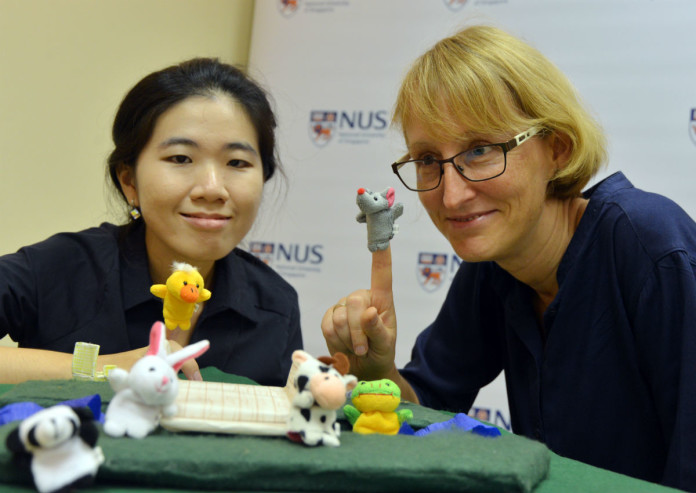
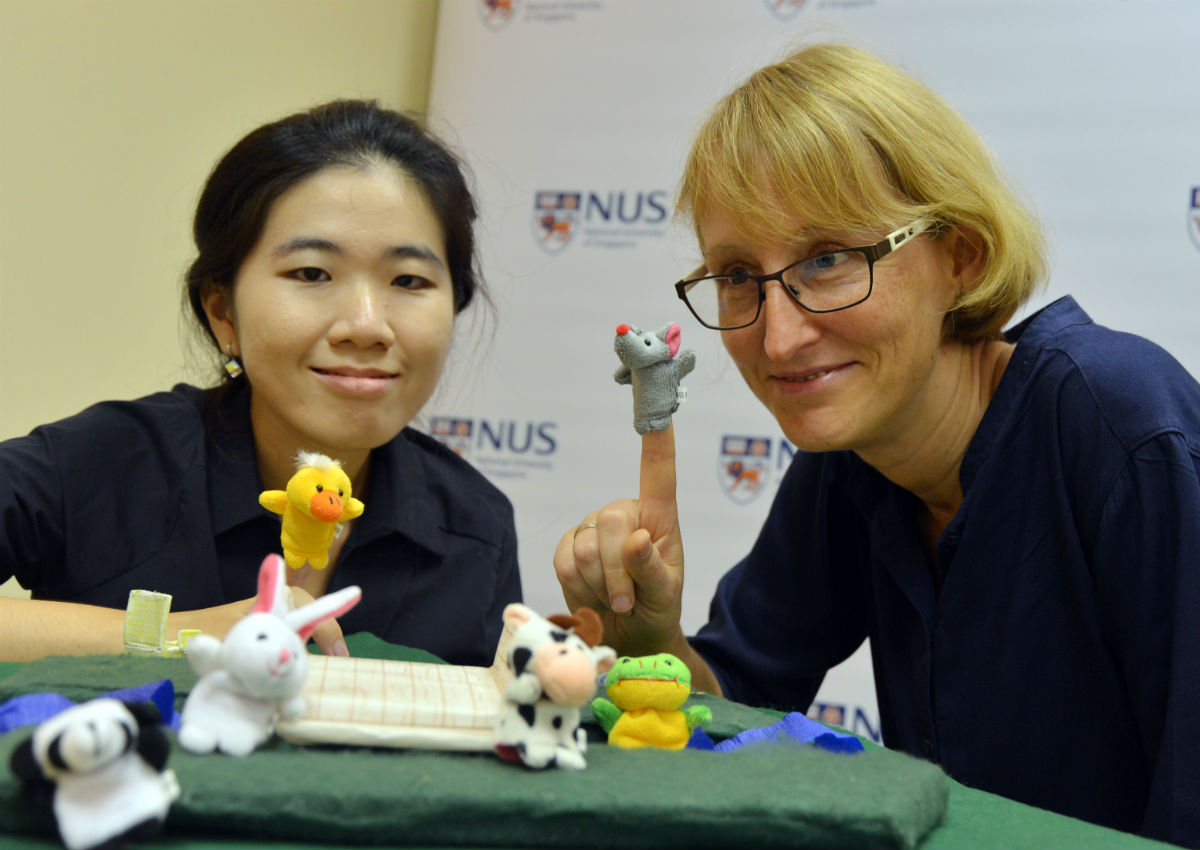
Researchers at the National University of Singapore (NUS) have found that children who received more fond touches from their mothers were more socially attuned.

“For a long time, people believed there are no benefits from touch and that it is something we inherited from our evolutionary history, for things like grooming, and that touch in modern times is just a remnant of this,” said Associate Professor Annett Schirmer from NUS’ Department of Psychology, who supervised the research.

“But it seems we do have some evidence that maps on to what we find in the animal literature, that there is a relationship between social development and the amount of tactile stimulation that kids get when they are young,” she said.

The study was published in the journal Cognitive Development in July.

Prof Schirmer said previous research involving rodents found that offspring that were licked and groomed more by their mothers produced more of a certain neuropeptide responsible for many aspects of social behaviour, including love and trust.

These offspring were also more caring towards their own offspring later on.

The team wanted to find out if humans are also influenced socially by touch.

Over two years, they studied 39 mother-child pairs.

The participants were made to engage in a 10-minute play session where the mother would tell a story to her child using some props.

The researchers recorded the number of times a mother purposefully touched her child, be it stroking or resting a hand on her child’s arm.

After the session, the children, aged four to six years old, were separately given a social-orienting task where they were shown shape outlines overlaid on an image meant to distract – either a face or a house.

They had to push the left button if they saw a circle on the left or the right button if they saw a circle on the right.

The data analysis found that they are more likely to be distracted by faces than by houses if their mother had touched them more during the play period.

What the research suggests is that the more the kids were touched, the more social they became as a consequence, said Prof Schirmer.

She believes a father’s touch should elicit the same effect.

Prof Schirmer said that by extrapolation, this means kids who are touched more often are more likely to orientate towards other people in the environment. “So they are more likely to engage socially.”

Research collaborators in Germany studying the same topic examined brain scans of children two weeks after they played with their mothers.

They found that those who were touched more often had stronger activity in the superior temporal sulcus. That’s the hub for social perception, including the ability to understand facial expressions.

Moving forward, Prof Schirmer said she wants to study if the effect of maternal touch remains throughout one’s lifetime, and if it is something that can be used to shape a person’s social abilities later in life.

“As people get older, they become socially more isolated and they might receive less touch.

I am also wondering if one could institute tactile intervention to facilitate healthy ageing,” she added.

Professor Michael Chee, director of the Centre for Cognitive Neuroscience at Duke-NUS Medical School, said the finding might be relevant in an era where Facetime and Skype are easily accessible.

Working mothers who travel use such technology to “stay in touch” without being physically present.

“This work suggests that such ‘contact’ (Facetime and Skype) could be insufficient to stimulate a young child’s social development normatively,” he said.

He added that more work needs to be done to test if this is indeed true but said “its implications on a society where a family of four can be having dinner at the same table but where everyone is texting someone else is sobering”.

Prof Schirmer said mothers have often been discouraged from being too affectionate, like letting their child sleep with them, lest they spoil their child.

While you would not want to overwhelm the child, she said there is nothing wrong with indulging them with cuddles.

“Don’t think you need to somehow harden them for the world,” she said.


This article was first published on Dec 11, 2016.
Get a copy of The Straits Times or go to straitstimes.com for more stories.

Image: 
Category: 
Blurb: 
<p>It is often said there is nothing quite like a mother's touch and science now says that that same touch could make a child more sociable.</p>
Publication Date: 
Sunday, December 11, 2016 – 17:00
Send to mobile app: 
Source: 


Story Type: 
Others

Source link

Kids raise $41,000 to help the less fortunate students

0

They are aged just two to six years old, but they raised thousands of dollars for less fortunate students.

Some 2,000 children at 27 Star Learners’ childcare centres did handicraft and came up with games for a fun fair on July 30 where over 4,000 people showed up.

The event raised $15,000 for The Straits Times School Pocket Money Fund (SPMF), which supports students from low-income families.

The fund gives pocket money to students whose families earn not more than $625 in per capita gross monthly household income.

Each month, primary school pupils receive $60, secondary school students get $95 and those in junior colleges, polytechnics and the Institute of Technical Education get $120.

Star Learners’ chief executive Tan Meng Wei said the children were creative, with kids at one childcare centre even running a cafe during the fair.

“They decided on the menu, prepared the food, served and took payments. They were told about SPMF and worked with dedication to raise the money.”

Pre-schools have also joined in the fund-raising.

St Anne’s Kindergarten sold cookies and greeting cards in October to raise $1,280.40, while Singapore Hokkien Huay Kuan Pre-School made snowskin mooncakes in August, raising $3,420 for the fund.

Instead of buying gifts for Teachers’ Day, students at Ngee Ann Secondary School put up $10 to name a teacher he or she would like to honour.

The initiative raised $2,420.

Last month, Primary 6 pupils from Nanyang Primary School organised a one-day bazaar.

Some of them got their parents and teachers to commit to buy cookies and crafts.

They raised $28,000 this year, and $16,000 last year.

In total, schools, from pre-school level upwards, contributed $41,000 to SPMF this year.

Ms Tan Bee Heong, SPMF general manager, said: “It is heartening to note that the young are stepping forward to raise funds, and to help their schoolmates and other students who need financial support.”

The fund has received $5.5 million from corporates and individuals so far, and is on track to raise $6 million this year.

In October, SPMF started a partnership with the Education Ministry so that needy students can apply to be SPMF beneficiaries through 300 schools.

Previously, students could apply only through 68 disbursing agencies.

The eligibility criterion for the fund was also raised from a per capita gross monthly household income of $560 to $625.

Since October, SPMF has received 5,700 applications through schools.

Ms Tan said she expects to see more students applying for help next year as the process becomes more accessible and convenient.

“We will have to increase our disbursements to support these students and we hope the public will donate generously to support our cause,” she said.

For more information visit www.spmf.org.sg or call 6319-2121.


This article was first published on Dec 11, 2016.
Get a copy of The Straits Times or go to straitstimes.com for more stories.

Image: 
Category: 
Blurb: 
<p>They are aged just two to six years old, but they raised thousands of dollars for less fortunate students.</p>
Publication Date: 
Sunday, December 11, 2016 – 17:00
Send to mobile app: 
Source: 


Story Type: 
Others

Source link

11th Hour may just clinch the deal

0

Many app developers daydream about the ultimate exit strategy: To be bought over for millions of dollars by a big corporation.

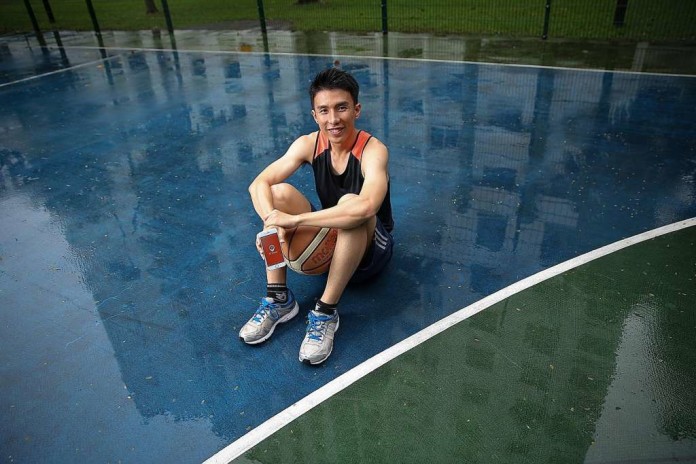
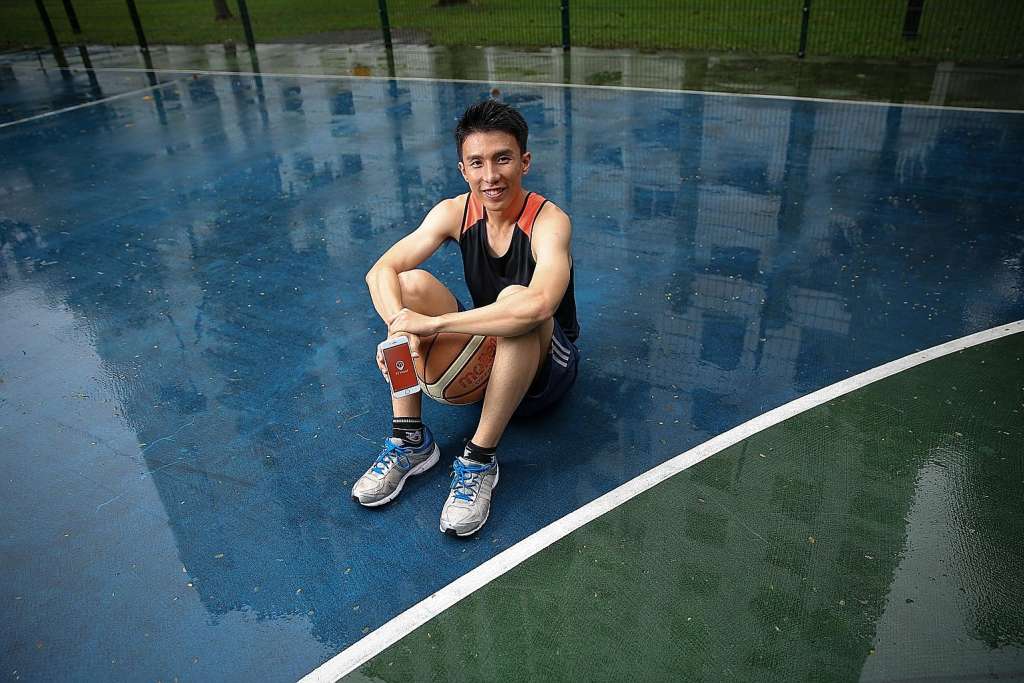
Not Mr Tan Jun Yuan, the earnest 30-year-old behind 11th Hour, a mobile app which clues users in on last-minute food deals.

“You don’t run a business with an exit in mind because if you’re always thinking about three years down the road, you won’t build your foundation properly.

I want to build something serious, something which changes lives,” says Mr Tan, who hopes his app will help to reduce food wastage.

The lean and lanky man has other dreams, one of which is to be like the entrepreneurs whose lives he has read about so much in books.

“People still remember Henry Ford and Milton Hershey,” he says, referring to the founders of the Ford Motor Company and Hershey Chocolate Company respectively.

“Sometimes I tell myself: Why must I keep reading about other people? Why can’t it be me?”

The youngest of three children of a taxi driver and a housewife grew up in Hougang.

He was rambunctious, and had one singular obsession during his formative years: basketball.

“I’d wake up before the sun was out, shoot hoops, hit the gym and play again before sunset until 10pm,” says the former student of Charlton Primary and Sengkang Secondary.

In fact, the game so ruled his life that he opted for the polytechnic instead of going to junior college after his A levels.

“It was a stupid decision.

There was a basketball tournament and because the poly term started six months later than junior college, I decided to enrol in the hospitality course at Temasek Poly.

I wanted more time to train for the tournament,” he says.

Although he graduated, he did badly. “It was quite tough to get into the course because it was popular but I had no interest in it. I probably would have done a lot better if I had applied myself but I didn’t,” he says.

The day came when he suffered a burnout from basketball.

“I realised that I was missing out quite a bit on life, I had no other interests. So I cut back. I still play it now but more as a hobby.”

National service beckoned.

“Because there was no more basketball, I gave it my all,” he says with a laugh. “I was the best trainee in my platoon and made it to Officer Cadet School.”

An army buddy then introduced him to a book which he claims turned his life around.

“It was The 7 Habits Of Highly Effective People,” he says, referring to the bestseller by Stephen R. Covey. “I’d never read self-help books before that.” The book, he says, jolted him out of his complacency.

“I realised I could have made better decisions, and exercised more control and taken more responsibility for my life. But my biggest takeaway was that I could choose my response to situations.”

A voracious appetite for books of the same genre kicked in; he also devoured volumes chronicling the lives of business icons such as Steve Jobs and Ted Turner.

Doing a business degree after national service was a no-brainer.

He got into Singapore Institute of Management, enrolling in a business degree programme conferred by the University of Manchester.

“I wanted to do really well, so I went all out, and studied and studied and studied,” he says with a laugh. He ended up with a first-class honours degree, coming out second in his cohort.

Because his “ego needed affirmation”, he also took the test administered by Mensa, the organisation for people with extremely high IQ. He passed, which put him above the 98th percentile, or in the top 2 per cent of the population.

While waiting for his final-year results, he decided to put his entrepreneurial mettle to the test by forming a company just to run an event.

Called the Ultimate Sales Challenge, it was open to students from tertiary institutions. The idea was to get different teams to outdo one another in selling a range of products.

“We gave them a cut of what they sold, and also ranked them,” he says.

He wrote to different suppliers, and the first to respond was Mr Henn Tan, head honcho of Trek 2000, the company which invented the thumb drive.

“He said he wanted to meet me, and we had a four-hour meeting,” he says, adding that the company eventually supplied him with a range of products for the competition, including thumb drives, disk drives and Wi-Fi cameras.

“We attracted nearly 20 teams from different institutions and, in 11/2 months, sold nearly $50,000 worth of products,” he says, adding that the company he formed made about $9,000. “It wasn’t much but it gave me a big confidence boost. I realised I was recession-proof.”

When he could not decide on a suitable business to start after graduation, he decided to get some working experience.

After a brief stint as a management trainee with security firm Certis Cisco, he joined Trek 2000 as a product manager for nine months.

The itch to start a business did not go away.

Much to the surprise of many of his peers, the first-class honours graduate then decided to become a hawker instead.

“My mother has a very good bak kut teh recipe, so I thought: Why not make a business of it? I wanted to start small; the investment would not be so big. Also, I saw an opportunity. If it worked, I could do a chain in hawker centres,” he says.

He invested $14,000 of his savings and took up half a stall in a coffee shop in Toa Payoh with his mother.

The first few days were quiet. On a hunch, he decided to write to KF Seetoh, founder of food guide Makansutra, who visited his stall, intrigued by a bak kut teh hawker with a university degree.

Seetoh wrote about him and, soon, other publications came a-calling.

“Business just roared to life. I was soon selling 150 bowls a day, which was as much as I could handle,” he says, adding that he and his mother pulled long hours each day.

One thing stood between him and his plans for expansion: difficulty in hiring workers.

“We raised our rates from $7.50 to $9 an hour, but there were no takers. Some would show up for just one day, some said they didn’t like washing dishes, one even stole our money,” he says.

In fact, the situation got so dire that he threw in the towel barely half a year later.

“It was a very public failure. But if I had so many problems with just one outlet, can you imagine what it would be like with 20?”

The media attention, however, prompted other entrepreneurs to offer him words of encouragement, such as not to give up his entrepreneurial dreams and to take the failure in his stride.

Two days after he closed down his stall, he landed a job at Incite, a market research consultancy, thanks to his taxi-driver father.

“My dad was my biggest publicist. He would always boast about me to his passengers. and one of them was the managing director of this UK consultancy. He asked to see me and offered me a job,” he says.

For more than two years, he buckled down to his job as a treasury and market research consultant. By then, he had also completed his Chartered Financial Analyst exams.

The idea for starting 11th Hour had also started percolating in his head.

“I used to have about 10 or 15 bowls of bak kut teh left over each day. Because of the herbal broth, they could not be stored, and there was no space in my fridge any way.

“It was a waste. The economy-rice business across from my stall was worse; they threw away a lot every day,” he says.

The time, he felt, was ripe for an app that allows food and beverage (F&B) merchants to offer last-minute deals and cut down on food wastage.

He says the app will also help cut the risk of cannibalisation that F&B merchants inevitably face if they have daily one-for-one deals at closing time.

“It’s a deals by distance. If you like a deal, you go to the merchant. And merchants are free to create any deals they like,” he says.

Mr Tan rallied a team together to get the idea off the ground.

Many nights were spent brainstorming the idea, but because all of them held down full-time jobs, progress was slow.

“The commitment level was just not there, we failed to launch.”

A second attempt was started with a former colleague from Certis Cisco.

They approached an app developer which said the company would help to build it for equity.

“After four months, we found the work to be really shoddy. So the second time, we failed again.”

The third time around, Mr Tan decided to put up $45,000 of his own money to make the business work; his partner put in $5,000 for a 10 per cent share. By then, he had also taught himself programming and tech design.

“I made up my mind to reinvent myself to be a bit of a tech guy,” says Mr Tan, who designed the app’s interface.

They found another app developer which turned out to be much more competent.

It took one year, including beta testing, to roll out the app in October. He quit his job, roped another partner on board, and got down to marketing 11th Hour.

In just two months, more than 7,000 users have signed up for the service. Mr Tan has also managed to rope in more than 200 merchants, including the Paradise Group, Wine BOS and Julie Bakes.

“I think the market can easily stomach 3,000 merchants. I’m singularly focused on 11th Hour now,” he says, adding that he is in deep negotiations with several interested investors.

“We are very optimistic about this. We are already thinking about taking this overseas.”

Currently seeing someone, he thinks discipline, more than motivation, is vital for success.

“If I say I will wake up at 7.30 every day to do this, I will. If I say I will meet 20 merchants a day, I will not stop until I knock on the 20th door.

“That is discipline, and discipline will see me through.”


This article was first published on Dec 11, 2016.
Get a copy of The Straits Times or go to straitstimes.com for more stories.


Image: 
Blurb: 
<p>Many app developers daydream about the ultimate exit strategy: To be bought over for millions of dollars by a big corporation.</p>
Publication Date: 
Sunday, December 11, 2016 – 13:00
Keywords: 
Send to mobile app: 
Source: 


Story Type: 
Others

Source link

When friendly banter turns lewd and crude

0

Over four days in August last year, a 28-year-old woman was subjected to text messages containing sexual advances made by a senior officer with the Singapore Civil Defence Force (SCDF).

As a result of her making a police report, he lost his job and was later charged in court with one count under the Protection from Harassment Act (Poha).

“I want women to know that bad behaviour from bosses or clients is not something they need to tolerate,” the woman, who cannot be identified, told The New Paper.

The offence occurred when she was working with an events company which has SCDF as its client.

She is not the only one to take action since Poha was enacted in November 2014, but her case has raised the profile of an issue that has been gaining traction.

According to the State Courts, there were 1,233 alleged Poha offences – not limited to sexual harassment – between November 2014 and July this year.

There were also 222 applications for protection orders (PO) during that period.

A PO is issued by the court to stop a harasser and is taken out after victims of harassment first make a police report.

State Courts figures do not say how many of the Poha reports relate to complaints of a sexual nature.

But the Association of Women for Action and Research (Aware) said that last year, 267 people reported to its Sexual Assault Care Centre of being victims of sexual harassment.

About 50 cases were of a non-physical nature but the majority complained that the harassment involved inappropriate touching.

What constitutes sexual harassment?

Mr Rajan Supramaniam, managing director of Hilborne Law, said sexual harassment can be physical, visual or verbal.

And this includes suggestive remarks and unwanted sexual jokes.

It can be through letters, materials of sexual nature, text messages or e-mails.

When touching is involved, it can even lead to a more serious crime. “Outrage of modesty, which covers physical contact, comes under the Penal Code. There are elements of force and assault, and is criminal in nature,” said Mr Rajan.

Sexual harassment is a more pertinent issue now because both genders share more common spaces, said Miss Yeo Miu Ean, founder and president of Women Empowered for Work and Mothering.

“For example, chat apps are pervasive these days, and sometimes in a group with a mixture of men and women, there may be lewd jokes and pictures sent, which make certain parties uncomfortable,” she said.

How common is sexual harassment at the workplace?

There are no official figures and Mr Erman Tan, president of Singapore Human Resource Institute, said many cases may go unreported.

“People won’t want to make a big deal of such things, so some just suffer in silence.

“They think they can just let go and forgive the harasser, and so continue to be victimised.”

Mr Tan said some human resource (HR) departments do have policies clearly stating that physical contact or verbally implied meanings are disallowed, and the rules are implemented company-wide.

“This is because companies don’t want to be faulted that they are condoning such acts, or that they never protect their employees.”

While multinational corporations and larger companies already have these HR policies, that might not be the case with small firms, said Mr Kurt Wee, president of the Association of Small and Medium Enterprises. He said SMEs may lack an official policy on harassment as their HR frameworks are less formal.

“If any such incidents arise, business owners will handle it personally. Any feedback from staff will be investigated, and if it’s reportable, then relevant action will be taken.”

But even if they have these policies in place, some companies might choose not to actively implement them, said Ms Corinna Lim, executive director of Aware.

“They are fearful it might make harassment an issue, when it wasn’t one before. They fear that if employees are aware of what harassment entails, there might be an increase in complaints,” said Ms Lim.

She said that besides a clear policy, staff also need training because it will send a message to the perpetrator to stop, and empower the victim to stop the harasser.

Mr Rajan said existing HR policies may not be comprehensive as there is still “a grey area” as to what constitutes sexual harassment.

“The definitions may not be clear. Sometimes, both parties are flirting and both are consensual.

“But then suddenly one feels offended by the other, and files a complaint. In such a case, it would be one person’s words against another.”

Ms Lim said most harassment cases are escalations.

“It always starts with less threatening acts like holding one’s hand for longer than necessary or certain suggestions or over-friendly remarks.

“It may then proceed to more serious acts just as brushing the victim’s private parts.”

Mr Tan said he encourages victims of sexual harassment, in or out of workplaces, to stand up for themselves and send a message that no one is above the law.

The victim in the SCDF case did just that.

On Dec 2, the former SCDF officer was given a discharge amounting to an acquittal after the victim agreed to compound the offence with compensation of $4,000, which she later donated. An apology was also to be read out in court.

She told The New Paper: “But what I hope is for the public to know what had happened, and that he should not be able to do this again.”

The law on harassment

Victims of harassment, including that of a non-sexual nature, can turn to the law for help.

The Protection from Harassment Act (Poha) provides civil and criminal recourse for victims of harassment. It was passed in Parliament on March 2014, and enacted that November.

Victims may apply directly to the courts for a protection order (PO), which is used to stop a harasser.

Breaching the PO is a criminal offence, with penalties ranging from fines not exceeding $5,000 to jailtime not exceeding 12 months, or both. For repeat offenders, the penalty increases to $10,000 or jail time not exceeding two years, or both.

“For Poha, the victim usually knows and is familiar with the harasser, and there has been repeated attempts of harassment,” said Mr Rajan Supramaniam, managing director of Hilborne Law. “The PO is basically to tell the harasser to refrain from any more of such actions, and to safeguard the victim.”

Ms Corinna Lim, executive director of the Association of Women for Action and Research, said victims who file a police report for harassment have two options to take the case to court.

The first is through the Magistrates’ Court, which is a criminal court. The second is to take up an application for a PO in the civil court.

Unlike the Personal Protection Order (PPO) under the Women’s Charter where a victim can directly file for such an order, a PO generally requires a lawyer to make the application, said Ms Lim.

“It thus may be quite expensive and the processes are more cumbersome than the PPO.” Besides cost, the process is more cumbersome too. Ms Lim said the police cannot act when there is a breach of order until the victim goes to court and files a complaint.

“As a victim, you generally just want the police to step in and protect you, which is why most people would go straight for the criminal remedy and file a complaint in the Magistrates’ Court.”

Besides the law, a Tripartite Advisory on Workplace Harassment was issued in December last year to encourage bosses to take all nature of harassment seriously.

It was drafted by the Manpower Ministry, National Trades Union Congress, and Singapore National Employers Federation, among others.

Employers have been advised to set up a hotline for victims to report harassment safely, and provide better training for human resource personnel to deal with such cases.

Male victims may have it worse

Mr Rajan Supramaniam, managing director of Hilborne Law, said that while victims of sexual harassment are generally women, he has handled “quite a number of cases” in which the victims were men.

“For sexual harassment, I’ve had a couple of male victims coming to me for enquiries and consultations only. None actually pursued the matter in court. They were touched inappropriately at the workplace, or in public places such as shopping malls and dance clubs.”

He has also handled cases of non-sexual harassment.

“Usually what happens is the parties break up on a bad note, and then one begins to victimise and harass the other. It’s the same methods, such as sending text messages, spreading false rumours and allegations, and turning up at the workplace of the victim.”

Some harassers were women, he added.

Male victims of sexual harassment are in a more difficult position than their female counterparts, although the law is gender neutral, the Association of Women for Action and Research’s executive director Corinna Lim told The Sunday Times.

This is because of societal perceptions which make men feel more “shame”, she added.

“The victim may feel ashamed and find it hard to talk to anyone about it because the incident may raise questions about his sexuality,” said Ms Lim.

“As homosexuality is still a taboo topic, they will be wondering, ‘How do I tell anyone about this?’, and this adds another layer of complication as to whether to go public.”

On top of this, some men may feel that people will think badly of them for not being able to stand up for themselves.


This article was first published on Dec 11, 2016.
Get a copy of The Straits Times or go to straitstimes.com for more stories.

Image: 
Category: 
Publication Date: 
Sunday, December 11, 2016 – 16:00
Send to mobile app: 
Source: 


Rotator Headline: 
Women shouldn't tolerate bad behaviour from bosses: Victim
Story Type: 
Others

Source link

Hong Kong Election Committee vote underway

0


HONG KONG – Voting is underway in Hong Kong as members of 25 subsectors representing various trades and professions are choosing their representatives for an Election Committee which will select the city’s next chief executive in 2017.

Some 1,239 candidates from 25 electoral subsectors are vying for 733 seats on the 1,200-member Election Committee in Sunday’s (Dec 11) voting.

Hong Kong’s Basic Law stipulates that the Chief Executive should be elected through a broadly representative Election Committee and appointed by the Central People’s Government.

The Election Committee members serving a five-year term come from four big sectors, comprising 38 subsectors representing various trades, professions, labour and social welfare groups as well as district organisations.

A total of 461 members of the committee have already been automatically elected this year, including those who faced no contest from 13 subsectors and ex-officio members of the committee, such as legislators and Hong Kong deputies to the National People’s Congress (NPC).

The remaining six seats of the 1,200-member committee are either null or vacated for various reasons. They include two ex-legislators who were disqualified in November by a court for declining to take the required Legislative Council (LegCo) oaths accurately, thus violating the Basic Law. The two also lost their seats on the Election Committee.

VOTING

Chief Executive Leung Chun Ying, who is an eligible voter in the Architectural, Surveying and Planning sector, cast his vote Sunday morning.

Chairman of the Electoral Affairs Commission Barnabas Fung Wah told reporters around 11 am that the commission has yet to receive any complaints concerning the election.

This year, more than 230,000 registered voters are eligible to cast their ballots at 119 polling stations citywide, between 7.30am and 10.30pm.

As of 1.30 pm Sunday, the turnout rate was 15.18 per cent, with 35,174 votes cast.

Secretary for Constitutional and Mainland Affairs Raymond Tam Chi Yuen expected the turnout rate would exceed the last election, as each sector has seen growing turnout rate.

In some subsectors, the voter turnout rate is several times the rate in corresponding period during the last election in 2011.

Ballots will be delivered to the central counting station at Asia World-Expo to be counted, once the polls close.

Category:
Publication Date:
Sunday, December 11, 2016 – 15:39
Send to mobile app:
Source:

Story Type:
Others

Source link

Acting president seen as a Park loyalist and key defender

0


He was South Korea’s third prime minister in one year, a largely ceremonial position that kept changing hands under President Park Geun Hye’s administration.

But Mr Hwang Kyo Ahn, 59, a former prosecutor, outlasted even his boss this time round and has in fact taken over her job temporarily.

Ms Park’s powers were suspended on Friday after some of her own Saenuri Party lawmakers joined the opposition in voting to impeach her over an influence-peddling scandal that has driven millions of people into the streets every Saturday to demand her resignation.

While a nine-judge Constitutional Court will take up to six months to decide whether or not to uphold the impeachment, Mr Hwang has stepped in as acting president.

In his first national address on Friday, he called for national unity to resolve the current political crisis and promised to “put every ounce of my energy into bringing state affairs under stable management no matter how difficult the situation may be”.

The path ahead is indeed difficult. South Korea’s economy is sputtering, North Korea is waiting to pounce and collaborations with Japan could stall.

China is ramping up pressure on the South to drop its plan to deploy a US anti-missile system that Beijing fears could compromise its security amid uncertainty in the United States under President-elect Donald Trump’s rule.

Still, Mr Hwang, who is married with two children, has often shown a knack for conquering the odds.

After graduating from Sungkyunkwan University’s law college in 1981, he passed the Bar exam that year and became a prosecutor two years later.

Despite some setbacks, he rose through the ranks and became chief prosecutor at the Busan High Prosecutor’s Office in 2011.

After being named justice minister in 2013, he was grilled in Parliament over allegations including dodging military service and drawing excessive pay as a lawyer, but emerged unscathed.

He was then accused of exerting influence in an election-meddling probe involving the state spy agency and a corruption probe involving Ms Park’s close aides, which he denied.

Mr Hwang also drew flak for cracking down on pro-North Korea activities and disbanding a political group accused of supporting North Korea ideology.

His expertise is in the National Security Law, enacted in 1948 to criminalise pro-North Korea activities, but which critics say is now used to suppress freedom of speech.

The opposition tried but failed several times to push for his dismissal.

Read also: South Korea PM seeks to calm anxiety over national security, financial markets after president’s impeachment

Last year, he was appointed prime minister as part of Ms Park’s drive to root out corruption.

Then senior press secretary Kim Sung Woo said Mr Hwang was “the right man to build a new Republic of Korea by eradicating corruptive practices and achieving political reform”.

From Ms Park’s point of view, Mr Hwang is perhaps the best man to guard her presidency.

He is known to be fiercely loyal to her, so much so that progressive newspaper Kyunghyang Shinmun has called him a “key defenceman” in an editorial.

The paper added he was the “relief pitcher each time the government faced a crisis”, citing how he ousted a key prosecutor in the election- meddling probe who was deemed an “eyesore to the government”.

For now, all Mr Hwang needs to do is to maintain the status quo and ensure that the government runs smoothly.

Analysts say he is merely a caretaker and is not expected to make major decisions.

Political scientist Balbina Hwang, a visiting professor at Georgetown University in Washington, said he is unlikely to offer any real leadership or exert any particular political agenda.

“It is clear that Hwang is a ‘place-holder’ to ensure temporary stability, so I do not expect he will be able to do very much.”

Read also: S Korea’s unexpected, unelected new leader


This article was first published on Dec 11, 2016.
Get a copy of The Straits Times or go to straitstimes.com for more stories.

Image:
Category:
Blurb:
<p>He was South Korea’s third prime minister in one year, a largely ceremonial position that kept changing hands under President Park Geun Hye’s administration.</p>
Publication Date:
Sunday, December 11, 2016 – 16:00
Keywords:
Send to mobile app:
Source:

Rotator Headline:
Acting president ‘outlasted his boss’ & takes over Park’s job temporarily
Story Type:
Others

Source link

Singapore's online shoppers click up a storm

0

First there was online shopping, which opened the door to America’s shopping malls with the help of a ‘manufactured’ local address and a global shipping service.

Now, enter the personal online shopper – a modern-day Santa’s helper who can go where the big players don’t, scouring the farthest corners of the world to fulfil your every buying wish.

Want to buy a samurai sword?

They’ll find one for you in Japan.

Want astronaut food?

No problem.

Black water?

Yes there’s a store for that too.

SHOPANDBOX

www.shopandbox.com

Singaporeans rank as the most “adventurous” shoppers in the region, say Rebecca Chia and Xin-Lung Tai – founders of the online personal shopping provider ShopandBox which sourced the above-mentioned sword, water and space snacks for their clients.

With an average spend of US$252 and a repeat shopper rate of 30 per cent, not everybody is buying weird things.

Most shoppers are into beauty products, especially limited edition releases and brands that can’t be found here, like the trendy US-only brand Glossier and Herbivore Botanicals from Korea.

Fashion is popular too, particularly sneakers from the US, UK, Australia, Korea and Japan.

So are snacks which remind shoppers of their travels, and recently, there’s been an uptick in interest in stationery, homeware, toys, baby clothes and even party accessories.

Not to mention a 3D map from France, smoking pipe and tobacco from Japan, and homemade fragrances from Korea, which are some recent purchases.

As well as a Weber BBQ pit, bee-keeping equipment and third cut timothy hay (top-grade bedding for your pet rabbit).

ShopandBox prides itself on being a truly global online service as they have over 100 “boxers” in 28 countries.

These are real people who are assigned to shoppers after they identify what they want.

The boxers buy the goods in their country, and pack them to be sent via DHL to the shopper wherever he or she lives.

“The key thing is the DHL service which we negotiated for months to get, as it gives ShopandBox customers a preferential rate,” explains Mr Tai. Shoppers pay a service fee to ShopandBox, and a negotiated fee to the boxer.

The savings can range from 10 to 30 per cent, but more importantly, because there’s a “real person” at the other end, it’s much easier to get a hold of limited edition or unique items.

And the DHL rate and service is hard to top.

Plus there’s no limit to the places customers can shop in.

“Shoppers have also ventured out to buy from Italy, Taiwan, Sweden, Brazil and Turkey besides the usual top-selling countries of the US, UK and Japan, and Korea,” says Ms Tan.

AIRFROV

www.airfrov.com

SINGAPORE startup Airfrov began in March 2015 after co-founder Cai Li found himself always buying beauty products, bags and unique local snacks for his girlfriend whenever he travelled.

So he thought, wouldn’t it be awesome if he could help others at the same time?

Instead of the usual seller-listing marketplace, shoppers post requests which serve as “job ads” to travellers.

An Airfrov request normally takes a week to be fulfilled, and if it’s not, the request will be kept open for 30 days for other travellers to take up the task.

“About 80 per cent of our requests receive offers from travellers,” says Mr Cai.

Travellers earn tips on top of the price paid for the requested item. Airfrov charges a service fee of seven per cent plus S$2 on top of the amount the customer is prepared to pay.

The traveller deposits the goods at the Airfrov collection centre, and is paid only when the customer has acknowledged receipt.

What are people buying? Beauty products from Japan and Korea, foodstuffs from all over the world, and limited edition collectibles from Japan.

This year’s bestsellers include Ichiran Ramen packets from Japan, Kraft Handi Snacks from the US, the limited edition Adidas 3D mesh bag which travellers brought back from Australia, Hong Kong and UK.

Unique requests included also include commemorative 100 baht banknotes featuring the late Thai king, coffee beans from a store in a small alley in Paris and even PSLE assessment books because they were sold out in Singapore!

Often, because products are cheaper overseas, it’s still worth getting them through Airfrov like Nan milk formula from Australia, which cost S$160 for six tins instead of three tins here.

“And you’d save over S$50 to buy Jo Malone cologne from the UK, and save 20 per cent for Pandora charms if you buy them in Australia,” says Mr Cai.

PERSONAL SHOPPER JAPAN

Buy from Japan HOME

Singapore shoppers are the top customers (over 700) in Southeast Asia of this Japanese start-up, says CEO Ryuto Matsuda who’s also an antique dealer licensed by the Japanese police department.

Top shopping categories are fashion, followed by electric guitars, Japanese car parts, fishing tackles and bike helmets.

“As for unusual requests, I’ve had Singapore shoppers asking for the Furo Oke (the wooden Japanese bath tub, and the Namahage tribal festival mask.”

The average spend of the Singapore shopper is 16,276 yen (S$203), although the average Hong Konger spends at least twice the amount.

Mr Matsuda is an art auction agent who started his business in Yokohama City in 2011.

His first customer was an Australian who wanted to buy a Shisa (lion-dog) statue.

He had the advantage because very few retailers ship outside of Japan and even if you find what you want online, the store may not accept a Singapore credit card.

“Some buyers may have forgotten to buy a souvenir, or they’re interested in buying limited edition products sold exclusively in Japan,” he says.

Personal Shopper Japan charges 10 per cent of the total item cost, with a minimum charge of 1,500 yen (S$19) for each store.

So if you receive a Christmas gift pack of squid ink cheese crackers and green tea granola from Kyoto, you’ll know the real truth: Santa’s workshop isn’t in the North Pole anymore – he’s moved to cyberspace.


This article was first published on December 11, 2016.
Get The Business Times for more stories.

Image: 
Publication Date: 
Sunday, December 11, 2016 – 14:30
Keywords: 
Send to mobile app: 
Source: 


Story Type: 
Others

Source link