Home Blog Page 2223

Emergence of political Islam puts Indonesian president to a test

0

JAKARTA – As the ranks of protesters thickened in central Jakarta on Dec. 2, turning into Indonesia’s biggest mass demonstration since the end of authoritarian rule in 1998, President Joko Widodo grappled with a dilemma: should he join the rally or stay away?

Recounting what happened behind the scenes that day, two senior officials told Reuters Widodo chose to ignore warnings from security chiefs and went into the crowd, appearing alongside the firebrand leader of a hardline Islamic group.

His move was widely applauded for cooling tensions that had been building for weeks over remarks by Jakarta’s ethnic-Chinese Christian governor that were deemed to be insulting to the Quran.

But critics worry Widodo’s decision may have conferred some legitimacy on a hardline strain of political Islam emerging in the world’s biggest Muslim-majority country, where politics is secular and the majority of believers are moderate, putting social stability at risk.

“Jokowi may have had some tactical gains in the short run,”said Tobias Basuki, an analyst at the Jakarta-based Centre for Strategic and International Studies, referring to the president by his popular name. 

“But, for the longer term, Jokowi, his government and the police have been playing a dangerous game. As a result, political Islam has been co-opted by hardliners and progressive Muslims have been sidelined.” 

The resurgence of political Islam has been accompanied this year by the reappearance of militant Islamic cells who swear allegiance to Islamic State and have been involved in a series of attacks and foiled plots.

Many of the jihadis were first indoctrinated at mosques that spawned various Islamic vigilante groups similar to the Islamic Defenders Front (FPI), which was at the forefront of the Dec. 2 mass protest in Jakarta, according to counter-terrorism police.

The FPI insists it is neither political nor militant but just wants to uphold Islamic principles.

MOTLEY GROUP OF PLOTTERS

A senior government official, who declined to be named because he was not authorised to speak to the media, said the president had voiced some reservations before joining FPI leader Habib Rizieq on the stage.

Before dawn that day, police rounded up a motley group of figures allegedly plotting to use the rally to launch a popular revolt against Widodo by leading protesters to parliament.

Among those detained was a daughter of independent Indonesia’s first president, Sukarno; a rock star who once appeared in a video wearing a Nazi-style uniform, and a former army general who backed one of Widodo’s rivals for the presidency in 2014.

The official, briefed on discussions between the police chief and one of the president’s most trusted ministers, Luhut Pandjaitan, said Rizieq was on an original list of 20 people suspected of sedition. Police could not confirm such a list.

Rizieq was not detained, however. Instead, he was allowed to lead the protest later that morning.

Minister Pandjaitan told police to arrest the least powerful people on the list of 20 to send a message that the government would not tolerate anybody trying to exploit the tensions, the official said.

Widodo’s office did not respond to requests for comment.

SHARIA LAW 

The FPI, which claims around five million members and advocates sharia law across Indonesia’s multi-cultural archipelago, has a history of harrassing minorities. It has forced churches and mosques run by non-Sunni Muslims to close and raids nightclubs and bars it believes foster immorality.

It grabbed the political spotlight by seizing on Jakarta Governor Basuki Tjahaja Purnama’s indelicate remark on the Quran during his re-election campaign, where he is standing against two Muslim candidates. Purnama goes on trial for blasphemy starting on Tuesday in a Jakarta court.

As an ally of the governor, Widodo was the target of some of the outrage from Muslims – at an initial rally on Nov. 4 and then the larger one that brought over 200,000 protesters into the heart of Jakarta a month later.

Ahead of the Nov. 4 rally, Widodo’s security staff persuaded him to leave the presidential palace, said the senior government official. He went to the capital’s airport where, according to his office, he inspected a rail project.

Violence broke out as the demonstration wound up that day.

Another official, at the presidential palace, denied a report that Widodo had gone to the airport as a precaution to flee the country. Underlining his alarm over the situation, however, the president did abruptly call off a visit to Australia the next day.

Widodo was given the same security advice ahead of the Dec. 2 protest, the two officials said. But Pandjaitan urged him to appear at the rally to puncture the mood of animosity. 

“He said he did not want to be seen standing … on the same stage as Habib Rizieq, but Luhut said it was a chance to show real leadership and calm the tensions,” the palace official said.

FALL OF SUHARTO 

Rizieq, 51, was not available for comment.

The chief of FPI’s Jakarta chapter, Novel Bamukmin, responding to rumours FPI will form a political party and nominate Rizieq for president in 2019, told Reuters Rizieq had no political ambitions. “Habib Rizieq’s role has clearly been that of a figure who is pushing togetherness and unity. It is a movement of tolerant Islam,” Bamukmin said.

The movement toward a more conservative and hardline Islam has been developing in Indonesia since the fall in 1998 of strongman Suharto, who had brutally repressed politicised Islam during his three decades in power.

Tim Lindsey, an expert on Indonesian law at the University of Melbourne, said Widodo – perhaps aware of the country’s grim history of popular unrest – had put quelling the masses ahead of squelching the resurgence of political Islam. 

“It’s now about ‘mass’ – the easily manipulated masses that are on the streets, a nightmare for any political leader in Indonesia given the events of 1998, when Suharto was toppled,” Lindsey said. 

“Jokowi now has to crack down because he has let the situation get out of control.”
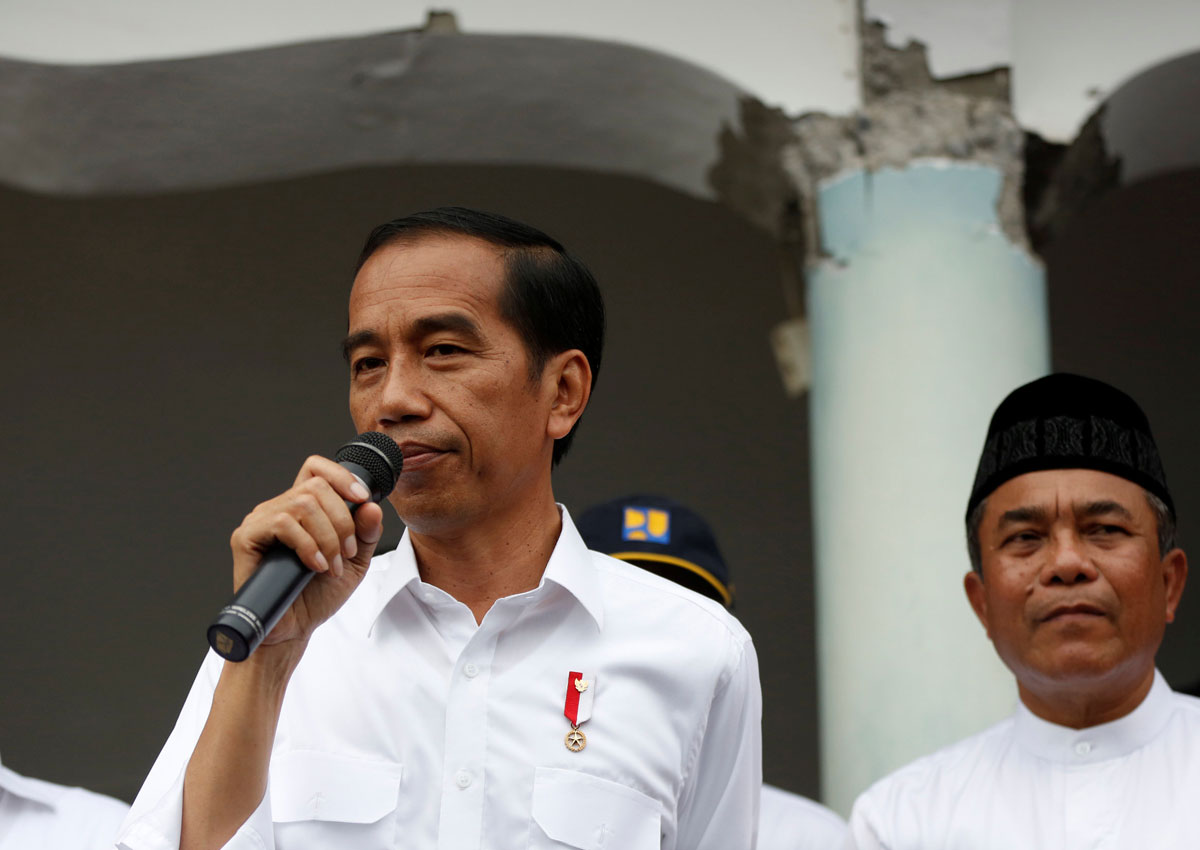
Image: 
Category: 
Publication Date: 
Monday, December 12, 2016 – 09:55
Keywords: 
Send to mobile app: 
Source: 


Story Type: 
Others

Source link

Meet the Ma family: How millennials are changing the way China thinks about debt

0

SHANGHAI – Mr Ma Yiqing, 24, is typical of China’s younger generation – he uses his credit card frequently and borrows from online platforms to fund his shopping habits.

In a pinch, he is happy to fall back on a lender closer to home – his mum and dad.

Interviews with Mr Ma, a single child, his mother and grandmother, show how rapidly attitudes towards credit are changing as the millennial generation – roughly those aged between 18 and 35 – embraces debt like never before.

The frugal attitude of previous generations produced the bedrock of China’s credit worthiness – household savings equal to some 50 per cent of GDP, one of the highest levels globally.

Mr Ma and his cohorts are changing that equation.

Their willingness to borrow has driven up household lending – the fastest growing area of China’s debt.

They are among the most indebted of their peers in Asia, taking on debt 18.5 times their income, significantly higher than their parents’ generation, a report from insurer Manulife shows.

While their spending and borrowing is an opportunity for lenders, brands and economic growth, it is also a risk as they add to China’s fast-growing debt.

Right now, Mr Ma has a safety net – well-heeled and doting parents who can pick up the tab.

He lives in a one-bed flat in Chinese-controlled Lhasa, the administrative capital of the Tibet Autonomous region. His parents are in nearby Shannan.

“I’ll generally turn to mum and dad. They’ve always been able to help me financially,” said Mr Ma.

In May, he asked his parents for financial support to open a restaurant. “I just need to ask and they’ll give me (money).”

Parents paying off the credit card bills of their millennial children is not unusual in China, but it could have ramifications, said Dr Rui Yao, an associate professor in personal finance at the University of Missouri.

“They don’t see the consequences of not paying. The thinking is ‘my mum has it covered'”, she said.

“They’re not prepared for an economic downturn for sure.”

The next generations may not be so lucky either.

They will have to support longer-living parents and potentially more children as China relaxes its one-child policy.

China’s ageing population is already shrinking, which means greater financial pressure on those working to support those who are not.

Mr Ma says he is more frugal than his friends.

He uses his bank card and Ant Check Later, a popular online lending platform owned by tech giant Alibaba Group Holding.

This is a far cry from his parents’ generation. Mr Ma’s mother, who is 49, only started using a credit card three years ago.

“They couldn’t spend on overdraft, so they really didn’t squander any money,” he said.

The gap is clear: Consumer credit is up nearly 300 per cent over the last six years alone, hitting around 23.5 trillion yuan (S$4.88 trillion) in October.

This is set to more than double over the next five years to nearly 53 trillion yuan, according to consultancy Mintel.

While mortgages are the lion’s share of household debt, credit card and consumer loans have shot up from just 4.6 per cent of household debt in 2015 to 16 per cent now, BMI Research shows.

“The young generation today has a totally different attitude to my generation,” said Mr Ma’s grandmother, Ms Wei Chunyin, 76.

She grew up in the 1960s and said she was in debt just once – for 100 yuan, the equivalent today of US$14.50 (S$20.80).

“We were very economical and hardworking,” she said.

“Clothing was just to wear, and we wouldn’t even really eat snacks, just food from our unit,” she said, referring to her workplace.

Mr Ma’s generation is the first in China’s modern history to be raised in relative prosperity and social stability.

They are better educated and already more affluent than their elders.

Boston Consulting Group and AliResearch said they are expected to drive 65 per cent of consumption growth until 2020, when they will make up around 53 per cent of total consumption spending, up from 45 per cent now.

Their potential has not been lost on the banks, with some specifically targeting them for loans.

“Internally our appraisals are skewed towards the young consumer groups. For example, front-line sales staff get a bonus 1.3 times the normal level if they sign a young customer,” said a banker in the credit card department of China Merchants Bank, a leading credit card provider.

“So everyone is out looking for youngster to sign up.”

When asked about the strategy, CMB said it has many credit card products that are welcomed by young people.

Bankers said lenders often know millennials have doting parents to fall back on in a pinch.

“Taking a darker read on it, the parents of the post-90s generation – who were born in the 60s or 70s – haven’t yet retired, and are financially pretty secure,” said a debt collector in the credit card department of a listed city bank.

Like other parents in China, Mr Ma’s mother and father, a nurse and government officer at the local Meteorological Administration respectively, are resigned to supporting their son financially for now – even if he defaults.

Mr Ma’s mother, Ms Zhen Yinchun, said that when she was young she saved around one-third of her income because there was little to spend it on, in contrast to her son.

It is a running joke in the family whether Mr Ma will return any money he has borrowed, she said.

“I’ll say it’s a loan and he’ll agree. But up to now he’s never paid anything back,” she said.

Image: 
Category: 
Publication Date: 
Monday, December 12, 2016 – 09:35
Keywords: 
Send to mobile app: 
Source: 


Story Type: 
Others

Source link

Ex-gambler cooks to give back to community for Christmas

0

Former gambling addict cooks Christmas lunch for senior citizens

He used to own three mobile phone shops and a condominium unit, but lost it all 10 years ago after huge losses betting on football.

One of his daughters had to climb out of a window to get to her Primary School Leaving Examination because loan sharks had locked their flat.

On Saturday, Mr Lim (not his real name) showed no hint of his previous worries as he happily dished out a four-course meal for about 40 senior citizens.

We are not naming him and his family in this report to protect their identities.

The Christmas lunch was co-organised by South Bridge Road cafe The Usual Spot – where Mr Lim, 46, has been the executive chef for four months – and Blessed Grace Social Services (BGSS), which helped him quit gambling completely earlier this year through its Gamblers Recovery Centre.

The lunch, sponsored by Mr Lim’s bosses at The Usual Spot, was a way for him to give back.

“I did not get to contribute back to society when I was earning a lot,” Mr Lim told The New Paper.

He attends weekly support group meetings at BGSS, where he shares his story with problem gamblers.

Even after Mr Lim lost his businesses and his home, he would still gamble occasionally, racking up losses in the thousands.

“He once tricked me into pawning my phone so he could have money to gamble,” said his youngest daughter, a 16-year-old, who helps out at the cafe with her mum and sister.

Mr Lim and his wife have five daughters and a son.

His wife, 49, told TNP she gave her husband an ultimatum earlier this year, after another fight over his gambling.

“I told him it was his last chance. He was remorseful, and tried looking for help.

One day, he found BGSS’ website on his phone and we decided to visit,” she said.

BGSS reaches out to the elderly and drug and gambling addicts.

It was founded in 2012 by Mr Billy Lee, 60.

As a pastor in his previous church, Mr Lee came across cases of families affected by gambling addiction.

One involved a church member who killed his wife and two children before killing himself.

Mr Lee told TNP: “That shook me because I lost a family in one day.”

About 180 people have successfully quit gambling thanks to the support group, said Mr Lee. There are 300 gamblers in the group today.

After two decades of ups and downs, Mr Lim is finally content with what he has – a job, home, family and religion.

He said: “The family has never been filled with so much peace and joy.”


This article was first published on December 12, 2016.
Get The New Paper for more stories.

Image: 
Category: 
Publication Date: 
Monday, December 12, 2016 – 09:19
Send to mobile app: 
Source: 


Story Type: 
Others

Source link

Scrap is not the only solution

0

Can’t decide what to do with your car when the COE expires? Here’s what you should think about

Come March next year, Mr Danny Chua will have a tough choice to make on his Toyota Axio.

That is when his car’s 10-year certificate of entitlement (COE) expires, meaning he has three options – scrap his car and buy a new one, buy a second-hand car, or renew his car’s COE.

Last week, COE prices ended mostly lower with Category A closing at $48,000 and Category B at $46,229 – the first time since May that both categories fell below the $50,000 mark.

But Mr Chua, 49, a regional sales assistant manager, said it was still beyond his budget.

He said: “Right now, a new COE will cost me about $50,000 (not including cost of a new car), while renewing for 10 years will also be that much.

“It’s a big amount, and with my finances a bit tight now, I may have to wait till the last minute to see if the COE drops.”

He is not the only one facing such a dilemma.

According to the Land Transport Authority, there are 101,656 cars that will hit the 10-year mark by Oct 31 next year.

Here is what motoring industry experts said car owners should consider when deciding whether to buy a new car or to renew the COE:

1. COST

Car owners who want to drive their cars beyond 10 years need not bid for a COE, but can simply renew their existing COEs.

They do so by paying a Prevailing Quota Premium (PQP), the three-month moving average of the respective vehicle category the car belongs to.

The December 2016 PQP is $51,271 for Category A cars and $55,187 for Category B cars.

Mr John Ling, founder of SJ Motor Enterprise, said: “If you were to buy a new car with a new COE now, it may cost you $100,000 or more, depending on the brand and model.

“Renewing, on the other hand, will cost about $50,000, with some additional costs for maintenance and servicing.”

2. CAR’S CONDITION

Car owners may want to send their cars to a workshop to get it professionally assessed.

An assessment costs about $60 while revamping the system – including servicing the undercarriage, changing the rubber system hoses, carbon cleaning – can cost between $1,000 and $6,000.

Mr Joey Lim, managing director of repair workshop Harmony Motors, said maintenance of cars aged 10 years and above costs only a few hundred dollars more – not a significant increase from what a brand new car would cost.

“Cars are also generally built to last about 20 years – just look overseas. It’s only in Singapore that we think they last 10 years because that’s the period of the COE,” he said.

3. OTHER MODES OF TRANSPORT

These can be public transport, cycling or even jogging to work.

Transport economist Michael Li, associate professor at Nanyang Technological University, switched from driving to jogging to work from his Lakeside home three years ago.

“Keep an open mind and explore a different way of travelling. You may be pleasantly surprised,” he said.

Financial service consultant Tjio Liang who scrapped her car in March, also made the switch.

Ms Liang, 35, and her husband had just returned from their honeymoon and spent a lot on their home, so she decided to take public transport or Uber instead.


This article was first published on December 12, 2016.
Get The New Paper for more stories.

Image: 
Category: 
Publication Date: 
Monday, December 12, 2016 – 09:08
Keywords: 
Send to mobile app: 
Source: 


Story Type: 
Others

Source link

Star Wars enters "grittier" new chapter with Rogue One premiere

0
Actor Donnie Yen poses next to an "X-wing fighter" on the red carpet as he arrives at the world premiere of the film "Rogue One: A Star Wars Story" in Hollywood, California, U.S., December 10, 2016. REUTERS/Mario Anzuoni TPX IMAGES OF THE DAY


LOS ANGELES – With a new band of rebels and a high-stakes journey, Star Wars ushered in a new chapter on Saturday (Dec 10) by bringing a galaxy far, far away to the heart of Hollywood for the Rogue One premiere.

Directed by Gareth Edwards, Rogue One is the first standalone film in Disney’s Star Wars reboot. It stars a brand new cast in a storyline that does not follow the third trilogy that started with last year’s hit The Force Awakens.

Ben Mendelsohn, who plays Imperial Commander Orson Krennic, described Rogue One as “the really tough cousin” to previous Star Wars films.

“People are going to understand exactly where it lives in the Star Wars world and timeline, and I feel like this is a much grittier, harder-edged film and it really packs a hell of a wallop,” Mendelsohn told Reuters on the red carpet, which featured a life-size Rebel Alliance X-Wing jet.

Rogue One, in theatres on Dec 16, follows Jyn Erso (Felicity Jones), the daughter of a weapons specialist who has been in hiding under another name for years. Her fate is quickly tied in with Rebel Alliance pilot Cassian Andor, played by Diego Luna, and Imperial pilot Bodhi Rook, played by Riz Ahmed, who defects from the dark side.

The trio band together with more rebels to fight the evil Darth Vader’s plans for intergalactic domination.

Jones described Erso as “a bit of a tomboy”, saying she had prepare intensely for the role’s physical demands.

“I had to be in the gym for far too long, which I have to say is not enjoyable. But for the sake of Star Wars, I was prepared to do it,” she said.

The movie explores the journey preceding the events that launched George Lucas’ intergalactic saga with 1977’s Star Wars: Episode IV – A New Hope.

The audience at Hollywood’s Pantages Theatre were among the first to see the full movie, and cheered as homages and references were made to the previous films.

The diverse cast boasts Mexican actor Luna, British-Pakistani actor Ahmed, Danish actor Mads Mikkelsen and Chinese actors Donnie Yen and Wen Jiang.

“All my friends… said ‘We’re so excited for you. You’re the first Chinese actor that’s going to be in the Star Wars universe,’ and everything just dawned on me,” Yen said.

“This is history making here, so I’m so glad that I’m standing here in front of the camera.”

Image:
Category:
Publication Date:
Monday, December 12, 2016 – 08:59
Keywords:
Send to mobile app:
Source:

Rotator Image:
Story Type:
Others

Source link

Street smart? Deaths and injuries involving jaywalking increase

0

SINGAPORE: It was 6pm and the traffic along Eu Tong Sen Street was heavy. Buses were turning in and out of the New Bridge Road bus terminal and cars were whizzing by constantly.

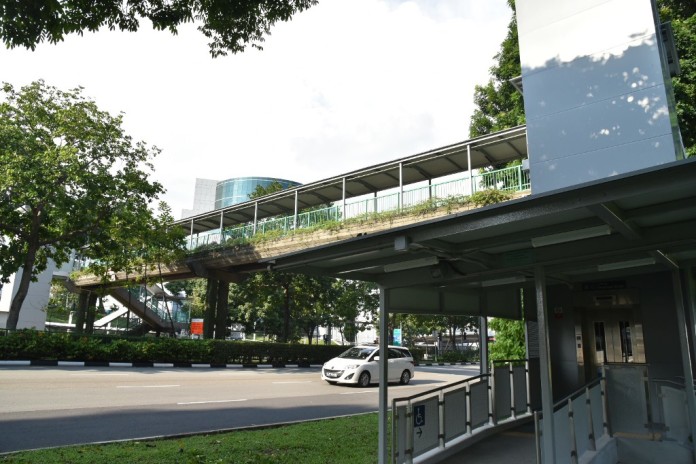
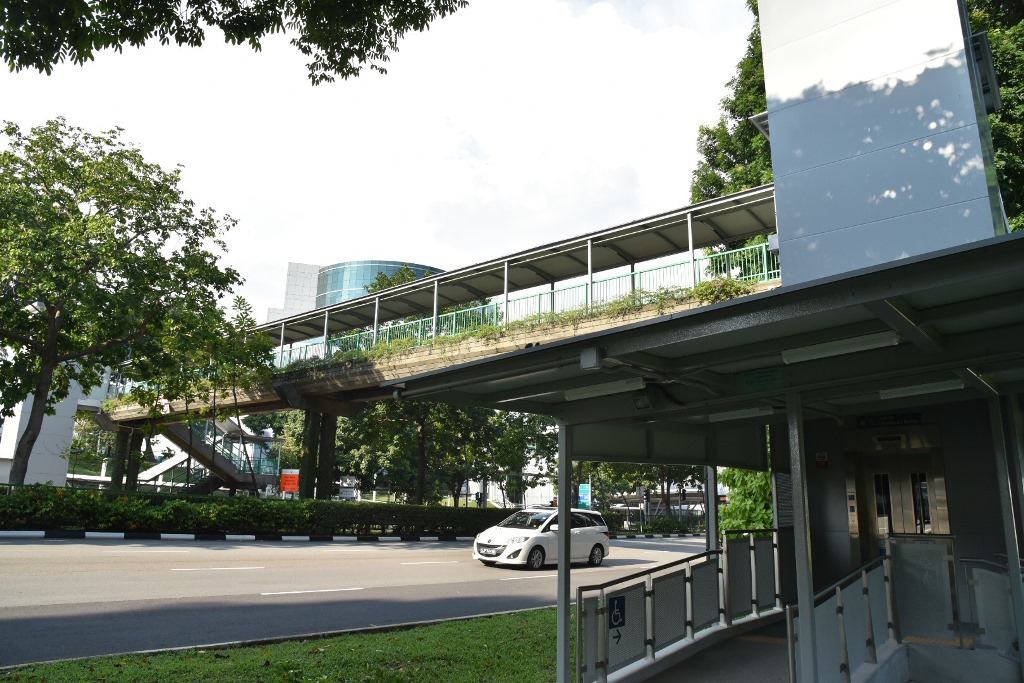
But the heavy traffic did not stop some pedestrians from dashing across the road, even though there is an overhead bridge installed with lifts just 20m away.

“It requires quite a bit of walking to the overhead bridge so it’s faster if I just cross the road,” said Ms Shanmugam, 43, who was on her way to the Singapore General Hospital.

“I know that it’s dangerous but I always look out for traffic,” she said, before stepping into the road.

Ms Shanmugam was not alone. Mr Lee was also seen running across the road. “It’s for convenience, I’m in a rush to go home,” said the 24-year-old.

An overhead bridge installed with lifts can be found just 20m away but many pedestrians chose convenience over safety. (Photo: Lim Jia Qi) 

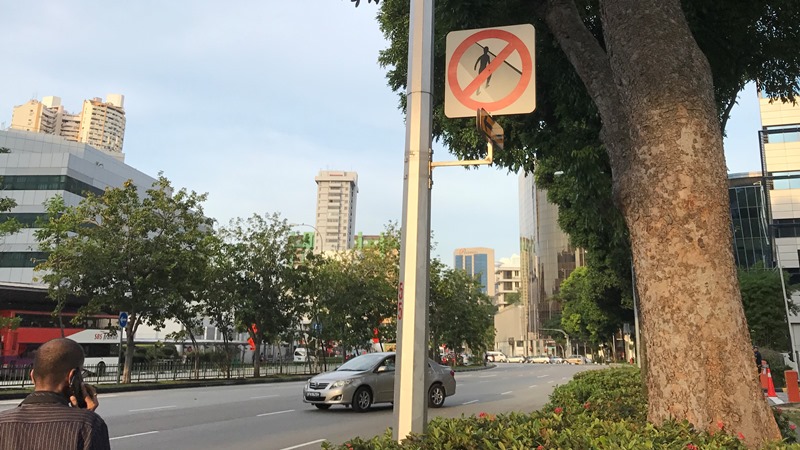
At Eu Tong Sen Street and New Bridge Road, jaywalking is a common sight. To deter the practice, green metal railings were erected along the road and a no-jaywalking sign was also put up along New Bridge Road. But that has not been enough to stop pedestrians from jaywalking. 

A no-jaywalking sign is displayed along New Bridge Road but it was largely ignored by pedestrians. (Photo: Lim Jia Qi)

In December last year, an eight-year-old boy succumbed to his injuries after he was hit by a car while jaywalking with his grandfather at Eu Tong Sen Street.

According to the Singapore Police Force (SPF), the number of jaywalking accidents resulting in death or injury rose from 195 in 2014 to 230 in 2015. The increase came after a slide from 317 cases in 2011.

Over the past five years, Traffic Police issued about 7,400 warnings or summonses for jaywalking per year.

Jaywalkers can be charged and fined up to S$1,000, or jailed up to three months. Repeat offenders face a fine of up to S$2,000 or jailed up to six months. They can also be fined S$20 on the spot.

“Pedestrians are advised to use designated pedestrian crossings such as zebra crossings and overhead bridges, for their own safety,” said SPF. “They should give their undivided attention to the road situation while crossing the roads, regardless of whether the traffic signals are in their favour.”

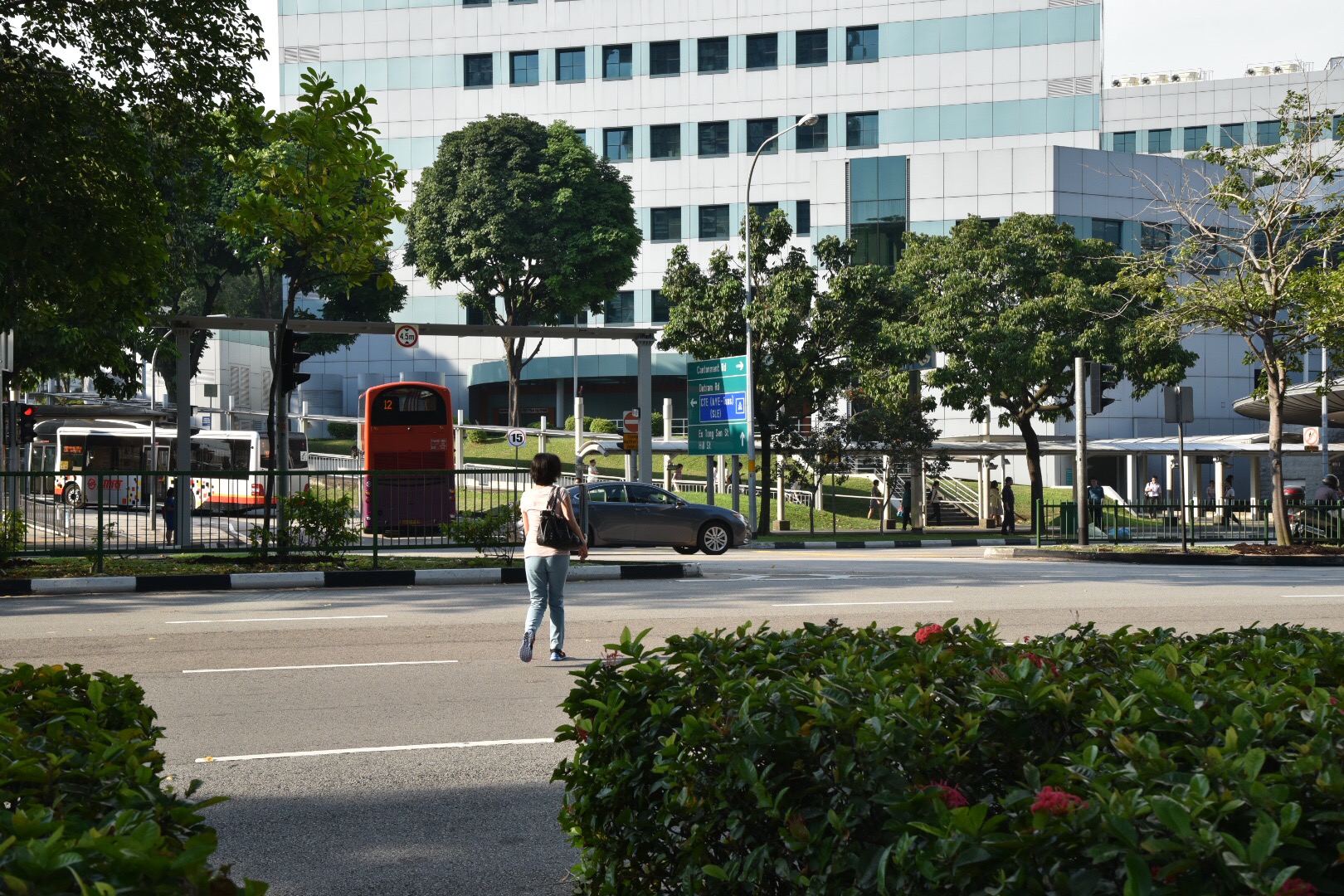
A woman jaywalking across New Bridge Road. (Photo: Lim Jia Qi)

Chairman of the Singapore Road Safety Council (SRSC), Bernard Tay expressed concern over the increase in the number of cases. “Every accident or death is one too many,” he said.

“The motorists don’t know that there are people jaywalking. They are driving at a normal speed. So, there is a risk that the pedestrians are exposing themselves to vehicles and they are vulnerable because they are not protected by anything.” 

ELDERLY PEDESTRIANS

Out of the 230 cases, a quarter of them were elderly pedestrians. Those above 60 years old made up more than half of the total number of pedestrian fatalities last year with 15 out of 22 cases.

“Some elderly may have weak legs, they may not be able to climb the stairs. That’s why some of them dashed across the road,” said Mr Tay as he hopes that the government can install lifts at more overhead bridges.

To enhance road safety for elderly, the Land Transport Authority will also expand the Silver Zone programme from 35 to 50 locations island-wide by 2023.

The programme, which has features to enhance road safety for the elderly, includes having signs to demarcate the zone, speed humps to slow down vehicles and centre dividers with railings to deter jaywalking. There are currently nine silver zones at areas such as Bukit Merah, Hougang and Jurong West. 

CURB JAYWALKING

To address the problem, SPF said it has been engaging pedestrians through road safety talks and exhibitions at various institutions and work places. Officers are also deployed to carry out enforcement against jaywalking, said SPF. 

The SRSC will also work with TP to educate the elderly and young children to practice the kerb drill before crossing the road.

“SRSC will continue to teach school children how to behave on the roads. Hopefully the message will be passed to their parents and grandparents,” said Mr Tay.

Source link

Mismatch of skills, expectations – More under 30 'discouraged'

0

After he graduated with a degree in economics and finance in 2014, Mr Haziq Baharudin spent a year sending out hundreds of resumes as he looked for a permanent job.

Late last year, the 25-year-old decided it was time to give up on his job search after he failed to receive any responses.

He decided he would resume his search for a full-time position when the economy improves and joined his friends and started an F&B business.

Mr Haziq is part of a growing number of discouraged workers here aged under 30.

This year, there were 1,200 young discouraged workers, up from 700 last year.

A discouraged worker is someone who is not actively looking for a job because he or she does not think that a search will yield results.

When the prevailing outlook in the economy is gloomy and there is a shortage of jobs, the incidence of discouraged workers tends to increase.

This year, there were 9,900 discouraged workers, up from 8,700 last year but lower than the 11,100 in 2009.

According to the Ministry of Manpower’s (MOM) advance release on the labour force two weeks ago, 6,900 of discouraged workers – nearly 70 per cent – were aged above 50.

The under 30s were the second largest group at 12 per cent.

The MOM report cited some reasons for workers being discouraged – the belief that there is no suitable work available, employers’ discrimination or the lack of necessary qualifications, training or experience.

National University of Singapore (NUS) labour economist Liu Hao Ming says it is hard to guess if young discouraged workers here are highly educated.

He said: “By definition, these individuals believe that they cannot find a job at the wage rate that is at or above their reservation wages (lowest wage rate at which a worker is willing to accept a particular type of job).

“It… is a mix of expectation of acceptable wages and probability of finding such jobs.”

Mr Haziq admits that his chances of employment could have been limited because he insisted on getting a job in the creative industry.

Eventually, worry over his finances led him to set up SteamHaus with his friends.

SteamHaus sells steamed buns at events and has been quite successful so far.

He said: “I think I would be a lot more stressed if the business was going badly.

I saved quite a bit during National Service and from my freelance jobs, but I was worried this would dry up.”

NUS sociologist Tan Ern Ser thinks that the number of young discouraged workers could rise if there continues to be a mismatch of skills and expectations between job seekers and employers.

He said: “Our young people have been brought up to believe in the Singapore Dream – they want to be able to purchase a flat, settle down and enjoy a decent standard of living.

If their job prospects do not support that kind of aspirations, they would be rather discouraged.


This article was first published on December 12, 2016.
Get The New Paper for more stories.

Image: 
Publication Date: 
Monday, December 12, 2016 – 08:36
Keywords: 
Send to mobile app: 
Source: 


Story Type: 
Others

Source link

Car spins out of control on PIE, crashes on to centre divider

0

SINGAPORE – A car was caught on video spinning out of control on the Pan-Island Expressway last Friday (Dec 9).

A video on road safety community page Roads.sg showed the white car spinning two rounds, and bouncing off the road divider.

on Facebook

Happened 9/12/16 along PIE towards Toa Payoh
2 cars were travelling at high speed and one lost control. Witnessed the fastest accident, park and walk away.

Credit: Vivien Lim

Posted by Roads.sg on Friday, 9 December 2016

The driver parked the car at the road shoulder on the left of the highway, and walked away quickly, the video showed.

The minute-long video of the dramatic crash was time stamped 2.05am. It has been viewed more than 190,000 times.

Police said that they were alerted to the accident at 2.30am on Friday.

Police investigations are ongoing.


This article was first published on Dec 11, 2016.
Get a copy of The Straits Times or go to straitstimes.com for more stories.

Image: 
Category: 
Publication Date: 
Monday, December 12, 2016 – 09:00
Keywords: 
Send to mobile app: 
Source: 


Story Type: 
Others

Source link

Changi's busiest links with four cities

0

South-east Asia and China set to drive most of the growth of airport

More than one in four travellers at Changi Airport is either going to or coming from Jakarta, Bangkok, Kuala Lumpur or Hong Kong.

The four cities have not only topped Changi’s list for the last decade, but also featured among the 10 busiest international air routes worldwide last year.

All 10 are flights within the Asia-Pacific, according to the list compiled by the International Air Transport Association.

Work and leisure are the main reasons why regional visitors come to Singapore, among other purposes.

A Straits Times check with travellers and industry experts found that there are many Indonesians, for example, whose children study in Singapore.

Many wealthy Indonesians also come here for medical and banking purposes.

The Straits Times understands some banks provide services within the restricted areas at Changi Airport so that their premium customers do not even need to step outside.

For travel between Kuala Lumpur and Singapore, about a third of passengers do so for business, while others visit mainly for leisure.

Those who fly to and from Bangkok and Singapore are mainly holidaymakers.

AirAsia said Thai residents form about 40 per cent of passengers on the Bangkok-Singapore routes and Singaporeans, about 20 per cent.

Chinese passengers make up just over 10 per cent of the total traffic, with the remaining traffic from other markets.

Asian budget airlines like AirAsia, Jetstar and Tigerair have fuelled much of the growth in regional travel in the last few years, experts said.

The demand for flights is so strong that even those who fly full-service carriers like Singapore Airlines sometimes end up on the waitlist.

Ms Allison Lim, 45, managing director (South-east Asia) at a public relations firm, travels once or twice a month to Jakarta for work.

She said: “If I book a week or two in advance, there are no issues but if I don’t plan early and book a day or two before, I often end up on the waitlist.”

Changi Airport Group spokesman Ivan Tan said the positive growth trend for the four markets is expected to continue in the medium to long term as Asia develops.

As South-east Asian countries continue to liberalise air links, more regional carriers are also looking for opportunities in Kuala Lumpur, Bangkok and Jakarta, he added.

This could translate into more flight options for passengers, as well as opportunities for travellers to explore multi-destination itineraries within the region.

Changi also continues to work with the Singapore Tourism Board and other partners to grow different traffic segments, such as for the Mice (meetings, incentives, conferences and events) industry and the fly-cruise segment, he said.

While Bangkok, Jakarta, Kuala Lumpur and Hong Kong are the four largest markets for Changi by a wide margin and will likely remain so in the future, Centre for Aviation’s analyst Brendan Sobie expects the biggest growth to come from other routes.

Secondary destinations in South-east Asia, and especially in China, are likely to drive most of the future growth at Changi, he said.

karam@sph.com.sg


This article was first published on Dec 12, 2016.
Get The New Paper for more stories.

Image: 
Category: 
Publication Date: 
Monday, December 12, 2016 – 08:24
Send to mobile app: 
Source: 


Story Type: 
Others

Source link

Mismatch of job skills, expectations – more under 30 'discouraged'

0

Mismatch of skills, expectations lead more workers to give up looking for jobs: MOM

After he graduated with a degree in economics and finance in 2014, Mr Haziq Baharudin spent a year sending out hundreds of resumes as he looked for a permanent job.

Late last year, the 25-year-old decided it was time to give up on his job search after he failed to receive any responses.

He decided he would resume his search for a full-time position when the economy improves and joined his friends and started an F&B business.

Mr Haziq is part of a growing number of discouraged workers here aged under 30.

This year, there were 1,200 young discouraged workers, up from 700 last year. A discouraged worker is someone who is not actively looking for a job because he or she does not think that a search will yield results.

When the prevailing outlook in the economy is gloomy and there is a shortage of jobs, the incidence of discouraged workers tends to increase.

This year, there were 9,900 discouraged workers, up from 8,700 last year but lower than the 11,100 in 2009.

According to the Ministry of Manpower’s (MOM) advance release on the labour force two weeks ago, 6,900 of discouraged workers – nearly 70 per cent – were aged above 50.

The under 30s were the second largest group at 12 per cent.

The MOM report cited some reasons for workers being discouraged – the belief that there is no suitable work available, employers’ discrimination or the lack of necessary qualifications, training or experience.

National University of Singapore (NUS) labour economist Liu Hao Ming says it is hard to guess if young discouraged workers here are highly educated.

He said: “By definition, these individuals believe that they cannot find a job at the wage rate that is at or above their reservation wages (lowest wage rate at which a worker is willing to accept a particular type of job).

“It… is a mix of expectation of acceptable wages and probability of finding such jobs.”

Mr Haziq admits that his chances of employment could have been limited because he insisted on getting a job in the creative industry.

Eventually, worry over his finances led him to set up SteamHaus with his friends.

SteamHaus sells steamed buns at events and has been quite successful so far.

He said: “I think I would be a lot more stressed if the business was going badly. I saved quite a bit during National Service and from my freelance jobs, but I was worried this would dry up.”

NUS sociologist Tan Ern Ser thinks that the number of young discouraged workers could rise if there continues to be a mismatch of skills and expectations between job seekers and employers.

He said: “Our young people have been brought up to believe in the Singapore Dream – they want to be able to purchase a flat, settle down and enjoy a decent standard of living. If their job prospects do not support that kind of aspirations, they would be rather discouraged.”

linheng@sph.com.sg


This article was first published on Dec 12, 2016.
Get The New Paper for more stories.

Image: 
Publication Date: 
Monday, December 12, 2016 – 08:18
Send to mobile app: 
Source: 


Story Type: 
Others

Source link