Home Blog Page 2219

Chinese media warn ‘immature’ Trump over Taiwan policy

0


BEIJING – Chinese media warned Donald Trump Monday that the one-China policy is “non-negotiable” and dropping it could lead to Beijing supporting US enemies, after the president-elect said he might do so unless Beijing made concessions.

“The one-China policy cannot be traded,” an unsigned online commentary in the nationalistic Global Times said Monday, calling Trump “as ignorant of diplomacy as a child”.

It warned that if the US openly supports Taiwan’s independence and ramps up arms sales to the democratically self-ruled island, China could aid “forces hostile to the US”.

Read Also: China lodges protest after Trump call with Taiwan president

“Why couldn’t we publicly support them, or secretly sell arms to them?” it demanded.

The Chinese-language commentary was in response to Trump’s remark in a Fox News interview Sunday that he did not see why the US must “be bound by a one China policy unless we make a deal with China having to do with other things, including trade”.

He vehemently defended taking a call earlier this month from Tsai Ing-wen, the leader of Taiwan, which Beijing has not controlled for more than 60 years but considers a rogue province awaiting unification.

Although the United States is Taiwan’s main ally and arms supplier, it has not had official diplomatic relations with Taiwan since 1979, when it switched recognition from Taipei to Beijing.

The Global Times commentary sounded a more openly menacing tone than previous state-media responses, which had largely blamed Taiwan for the phone call and advocated a wait-and-see response.

But this time it warned that if Trump “openly abandons the one-China policy, there will be a real storm. At that point, what need does mainland China have for prioritising peaceful unification with Taiwan over retaking the island by military force?”

Read Also: Trump questions “one China policy” without Beijing concessions

The English-language edition of the Global Times quoted a Chinese scholar calling Trump a “novice” in diplomacy with a “very superficial” understanding of Taiwan and Sino-US relations.

“As a businessman, he thinks it’s quite normal to do business, but he hasn’t realised that the Taiwan question is not a business to China. The Taiwan question is not negotiable,” it quoted Li Haidong, professor at China Foreign Affairs University, as saying.

But Li cautioned it was “too early” to conclude Trump intended to follow through on his threats.

“He’s very fickle as well, he may eat his words sometime soon.”

Image:
Category:
Publication Date:
Monday, December 12, 2016 – 17:06
Send to mobile app:
Source:

Story Type:
Others

Source link

More than words: Singapore’s migrant workers shine through poetry

0

SINGAPORE: For Bangladeshi worker Bikas Nath, weekends are precious off-days usually spent simply hanging out with his friends. But last Sunday (Dec 11) was slightly different – he was going to make his public debut in Singapore as a poet.

The 22-year-old, who hails from Chittagong and came to Singapore last year to work as a shipyard supervisor, spent the morning practicing in front of his test-audience, fellow shipyard workers Hassan and Raselhossain, in a lead-up to the finals of this year’s Migrant Workers Poetry Competition (MWPC).

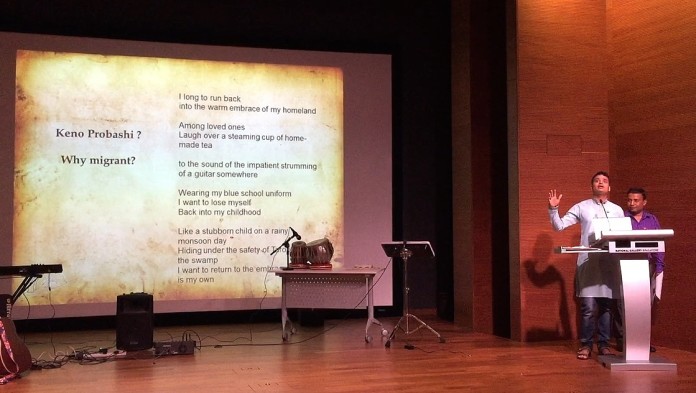
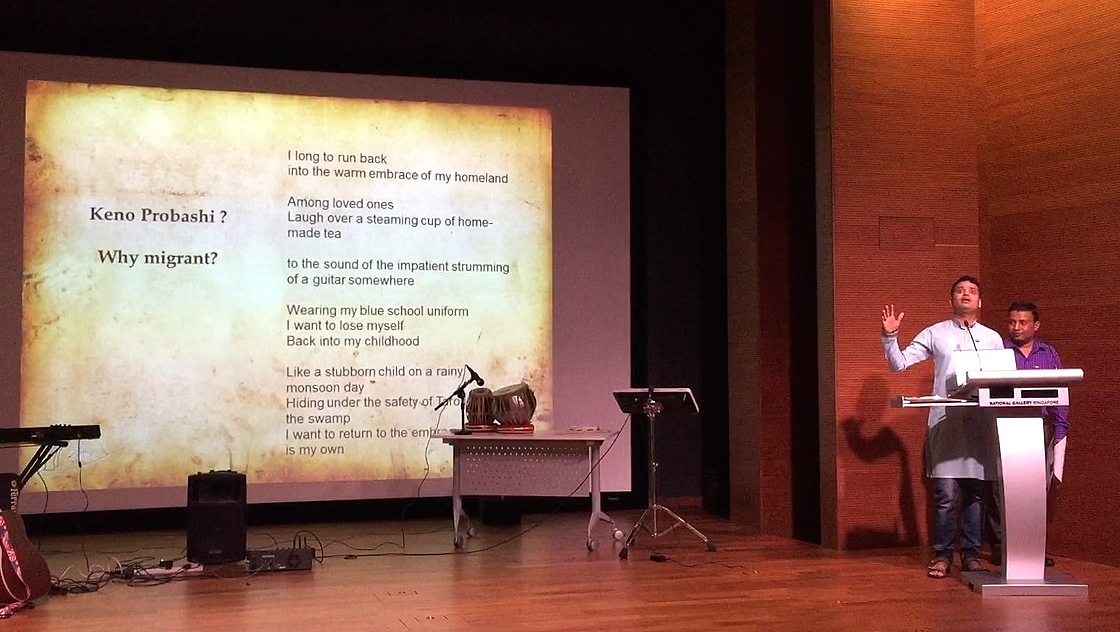
His Bengali poem, Keno Probashi?, or Why Migrant?, was a heartfelt piece about how he misses his homeland and his lost childhood, peppered with descriptions of playing games with friends, and picking mangoes and jackfruits in a lush garden.

Migrant Workers Poetry Competition 2016 winner Bikas Nath reciting his poem Why Migrant? (Photo: Mayo Martin)

Bikas’ preparations paid off. That afternoon, he read his poem with confidence in front of around 200 people – including Hassan and Raselhossain who cheered him on – at the National Gallery Singapore Auditorium. He would eventually bag first prize at the competition.

“I work in the shipyard and when I feel lonely, the pen and paper are my friends. So when I have the time, I try to write down my feelings,” he said.

It was Bikas’ first time participating in the contest, after his friends had encouraged him to submit his writings. And with this success – which comes with a small trophy and a cash prize of S$500 – he said: “It will help me write some more in the future. It will be an inspiration for me.”

‘I HAVE A TALENT TO SHOW’

Three editions on, the annual MWPC has now become a crucial outlet to hear (and read) the voices emerging from Singapore’s fringes – migrant workers from different countries who flex their poetic muscles in various languages.

Bikas was one of the 17 finalists, who were chosen from a crop of 70 entries in Bengali, Tamil, Mandarin, Tagalog, Bahasa Indonesia, Cebuano and English.

The submissions, too, cut across themes, styles and emotions – there were poems with a hint of defiance, romantic lyrical pieces, and bittersweet depictions of their lives as migrant workers. This year’s second-place winner Palanivelu, who hails from Tamil Nadu in India, read an untitled, almost stream-of-consciousness piece about love that wouldn’t be out of place in a hipster poetry slam competition. The poem by third-place co-winner, Filipino Rolinda Espanola, was an autobiographical depiction of her struggles as a domestic worker.

Indeed, for many of them, poetry was a means of catharsis – one finalist remarked how she started writing poems because she could not leave the house for the first two years; another wept as she read her first-ever poem, which was dedicated to the son she had left in Indonesia.

“People belittle and judge us because of our job, but an event like this is a way of saying, here I am and I have a talent to show,” said finalist Edna Pilapil Manatad, a Filipino domestic worker who continues to write poems and stories on her phone, and whose poem was among the 40 entries from female poets.

KEY VOICES IN THE LOCAL SCENE

“The event has been a podium for these talent to surface,” said contest organizer Shivaji Das, a travel writer and consulting partner at management consultancy firm Frost & Sullivan.

“Since the event first happened in 2014, migrant workers have become a key component in the literary scene in Singapore, and the entire cultural scene as well.”

He pointed out how many of the poets have been featured in the past two editions of the Singapore Writers Festival and have also taken part in several poetry reading events. Migrant workers have also participated in events at the Esplanade and at visual arts competitions.

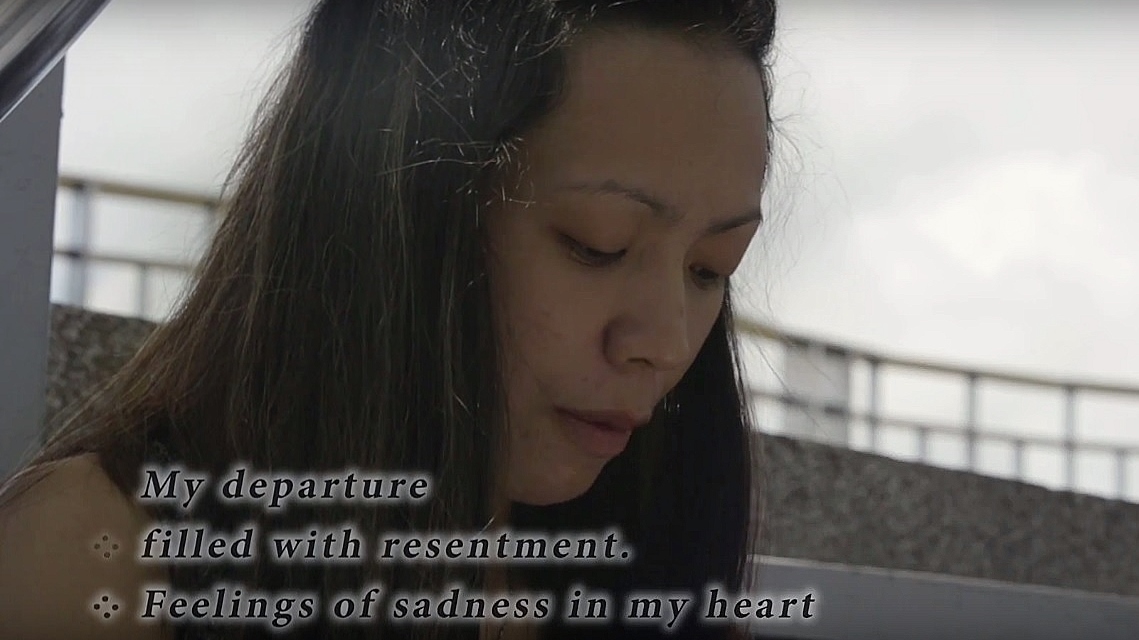
(Filipino domestic worker Glory Ann Balista, one of the poets featured in the documentary Poets On Permits. Photo: Poets On Permits)

“They have really shown the multitude of talent they bring into Singapore,” he said, adding that this year has also seen more involvement among the migrant workers in helping to organize the competition. Sunday’s host, for instance, was Bangladeshi worker Zakir Hossain Khokan, who had won first prize at the first two editions. Others had also enthusiastically helped distribute event flyers at Lucky Plaza and Peninsula Plaza to encourage others to join.

But it doesn’t stop there. Das pointed out how some of the Bangladeshi workers would sometimes hold impromptu poetry readings among themselves at East Coast Park or outside the National Library. Occasionally, they would also invite Indonesian and Filipino domestic workers to join in these readings, he said. Conversely, the latter would also invite some of their male peers to their events.

“There’s a lot of camaraderie that is evident, and that is the spirit of multiculturalism that they have shown throughout the year,” he said.

FROM BOOKS TO FILMS

Interest in the poetry of migrant workers has grown recently, too. During Sunday’s event, a bilingual anthology of Bengali poetry titled Migrant Tales was launched.

Earlier this year, Ethos Books released the book Me Migrant, featuring the poems of Md Mukul Hossine that were “transcreated” by Singaporean poet Cyril Wong.

A featured writer at the recent Singapore Writers Festival and also co-third place winner at Sunday’s event, Md Mukul has been regularly going to speak at schools – when he’s not working in the construction sector. “It was a big opportunity and I’m very happy (to have a book out),” he said, adding that there was initial skepticism about releasing the book in Singapore. But it has been a surprise bestseller – its first print run of 1,500 sold out in a few months and its second print run is doing very well. 

The interest also extends beyond the printed page, with a couple of documentaries springing up from the contest’s efforts.

One of these is Poets On Permits by filmmaker Upneet Kaur-Nagpal, which premieres on Sunday (Dec 18) at Artistry Cafe. The 25-minute documentary features the five finalists from the 2015 edition, who hail from China, Indonesia, the Philippines, India and Bangladesh.

Kaur-Nagpal said she had been planning to do a film on migrant workers in Singapore but had been unable to find the right hook – until she came across an event featuring migrant worker poets at the Singapore Writers Festival that year. Intrigued, she attended the MWPC edition that same year.

“I didn’t want to go through the whole ‘look at them, this is how they live’, but to show their talents. This creative energy (that they have) is very important and it cuts across all boundaries, for me,” she said.

Another documentary in the works is Between Pudukkottai & Singapore, which centres on N Rengarajan, an Indian migrant worker in the construction sector, who was one of the winners at the first MWPC.

It’s by filmmaker Vishal Daryanomel, a volunteer for the contest who decided to take it a step further by collaborating with the poet on the film. Slated for release in February 2017, the 18-minute film will feature Rengarajan talking about his life story as well as three of his poems in Tamil, which will be juxtaposed with scenes from dormitories in Woodlands and Kranji, as well as Little India. The self-funded project will also include music by former The Observatory member Dharma.

GOING BEYOND SINGAPORE

Even as the literary spotlight shines on Singapore’s migrant workers, Das envisions a growing scene beyond the country’s borders.

This year, the second edition of a Malaysian version of the contest took place. Despite describing it as a “much tougher place” to run such an event, Das said he has been heartened by the support of NGOs as well as the United Nations High Commissioner for Refugees. In its initial year, there were only seven participants, but this year it has grown to 45, of which 30 of them were refugees.

Next year, there are also plans to hold a similar event in Abu Dhabi, and there are also discussions taking place for contests in Hong Kong and Indonesia. “We are working closely with the communities to make this a global movement of sorts,” he said.

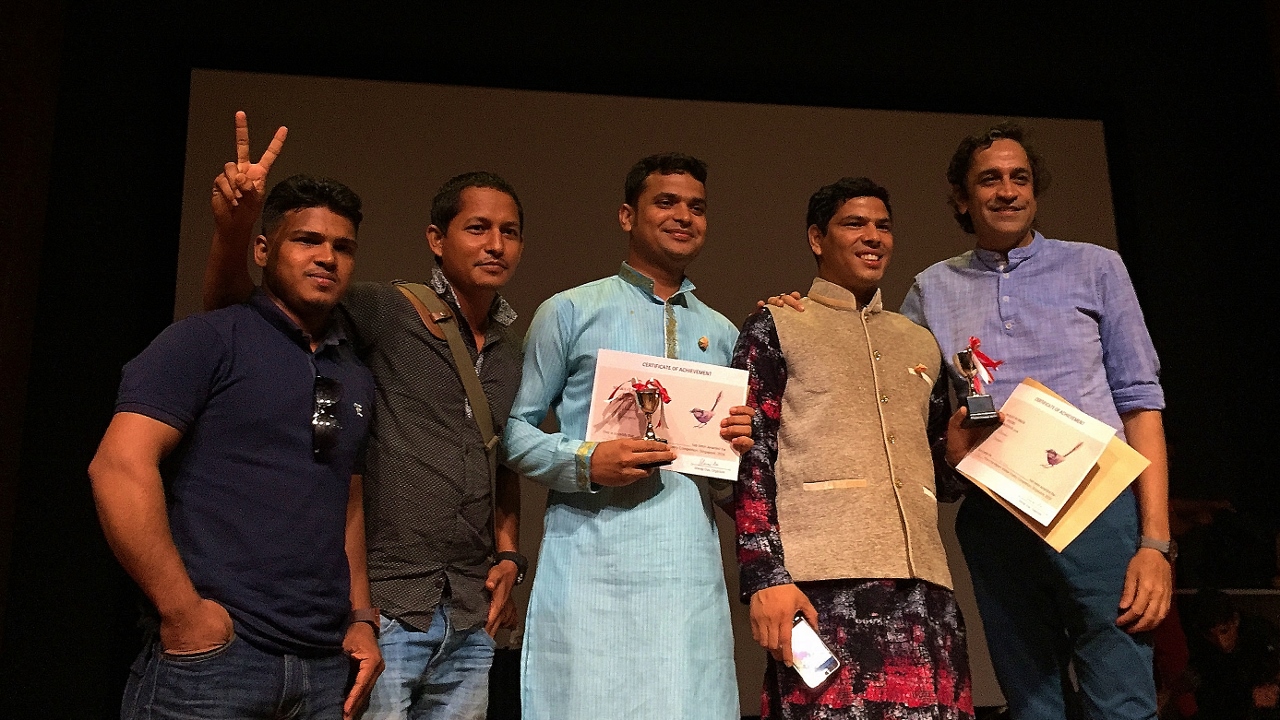
Migrant Workers Poetry Competition 2016 first place winner Bikas Nath (centre) and third-place co-winner Md Mukul Hossine (second from right), with one of the judges, playwright Haresh Sharma (right) and the poets’ friends Hassan and Raselhossain. (Photo: Mayo Martin)

In the meantime, this year’s winner Bikas Nath will be relishing his literary success – and sometimes, words aren’t enough to describe the feeling of being a winner, even if you’re a poet.

When asked how it felt to be able to stand up and recite his poem in front of people, both strangers and friends, migrant workers or otherwise, he paused for a long time before eventually laughing.

“It’s hard to share my feelings, I just feel very excited – that’s why I lost my words!”

Source link

Ace in the science of making videos

0

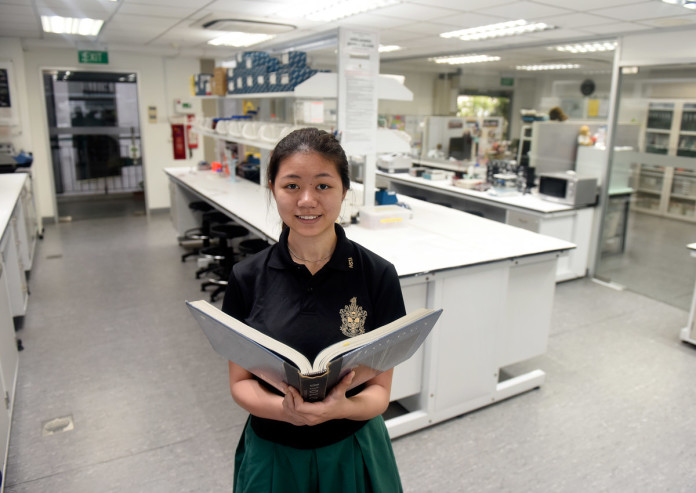
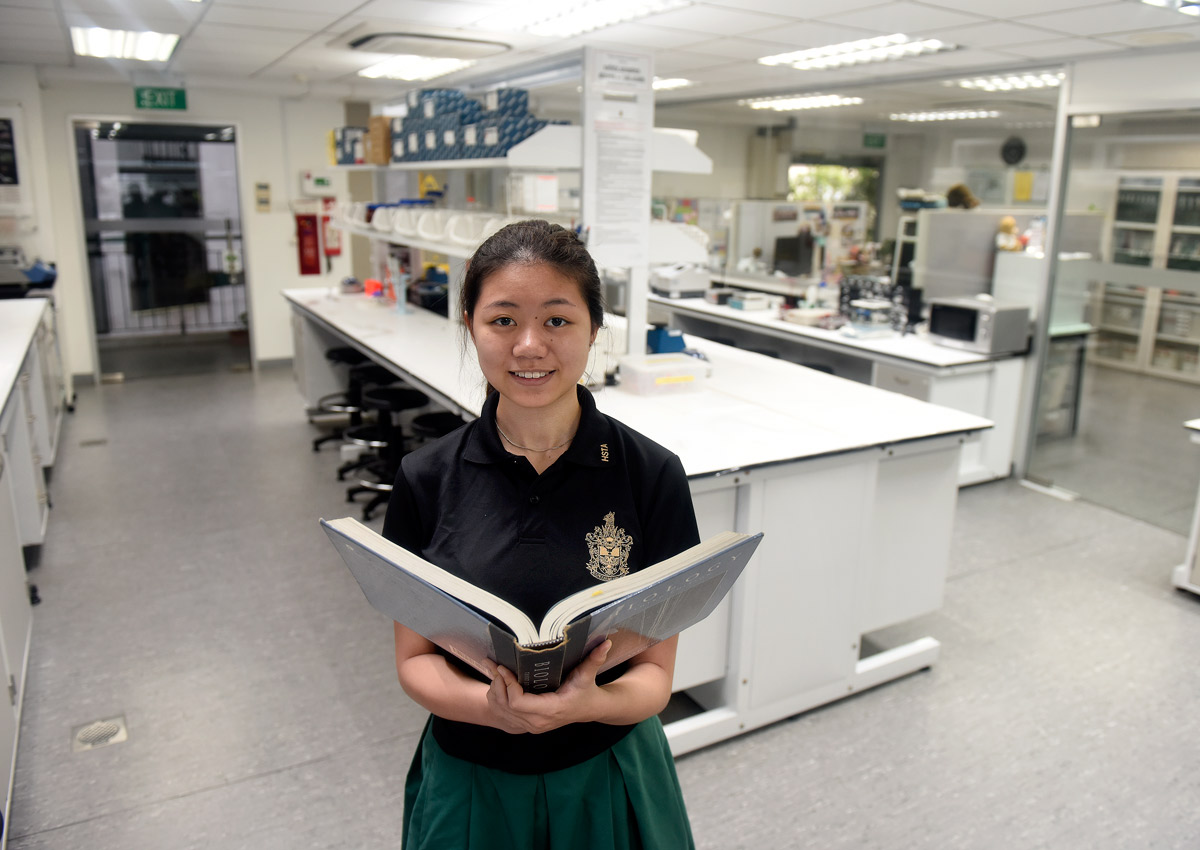
Deanna See loves biology, but instead of poring over a textbook, she would rather watch science videos on YouTube.

“It’s like having a teacher 24/7, or having someone explain things to you,” the 17-year-old Raffles Institution (RI) student said.

“Videos bring concepts to life.”

Rather than loading their productions with jargon, Deanna’s favourite YouTubers spice up topics such as game theory with lively, humorous monologues.

Two months ago, she did the same thing in a homemade video – explaining antibiotic resistance using markers and Lego figurines belonging to her 11-year-old brother.

On Dec 4, that five-minute clip won her a US$250,000 (S$358,000) scholarship from The Breakthrough Prize Foundation funded by Facebook founder Mark Zuckerberg.

She can use the money for any university of her choice.

Deanna had made the video for the global Breakthrough Junior Challenge competition.

It required participants to explain a difficult concept in mathematics, life sciences or physics with an original video.

The competition drew more than 6,000 entries from 146 countries.

There were only two winners – Deanna and 18-year-old Antonella Masini from Peru, whose video was on quantum entanglement.

The foundation paid for Deanna and her family to fly to San Francisco on Dec 2 to receive her prize, which also included a US$50,000 award for a teacher who inspired her and US$100,000 to set up a new science laboratory in her school.

There, both winners had lunch with Mr Zuckerberg and his wife, Ms Priscilla Chan, and attended a dinner hosted by Russian physicist Yuri Milner and his wife, Julia.

Speaking to The Straits Times last week, Deanna said the competition married two of her favourite things – biology and film-making.

In her spare time, she records vlogs – or video logs – of herself talking about anything that comes to mind.

“I enjoy filming myself,” said the bubbly student, who will sit the A-level examinations next year.

“I would say there’s something really interesting in talking to no one.”

To make her video, she had to research the complex topic of antibiotic resistance, which she had only briefly studied in class.

Then she had to break the subject down into bite-sized pieces without sacrificing too much detail.

In the 10 days Deanna took to finish the video, she went through three drafts.

“Videos throw the juiciest bits at you,” she said.

“They’re very different from textbooks, where there is just a lump of words.”

She submitted the video on YouTube just three minutes shy of the deadline on Oct 10.

The former student of Raffles Girls’ School, to which she is donating the US$100,000 lab prize money, said she has been interested in science since she was young.

However, it was her RI biology teacher, Ms Wong Seok Hui, who inspired the quirky doodles seen in her video.

“My class is rowdy but she always manages to make us listen to her,” Deanna said.

“She makes (the subject) dynamic and she’s very passionate about biology.”

Instead of going to Ms Wong, the US$50,000 prize money will be donated to RI’s school scholarship fund.

Deanna’s parents – a pilot and a housewife – were supportive of her work, she said.

During the popular vote segment of the competition, they rallied friends and family to vote for their daughter’s entry.

“Once when I was sick, they even asked people in the clinic to vote,” she recalled, laughing.

The other segments included a peer review and judging by scientists from various fields, including physics and biology.

Deanna plans to study biology or biomedical sciences at a university with a strong scientific track record, either in Singapore or in the United States.

“I hope to be a clinical scientist, where I will be able to interact with patients while still doing research,” she said.

linettel@sph.com.sg


This article was first published on December 12, 2016.
Get a copy of The Straits Times or go to straitstimes.com for more stories.

Image: 
Category: 
Publication Date: 
Monday, December 12, 2016 – 16:56
Send to mobile app: 
Source: 


Video Media: 
Other Video Media
Story Type: 
Others

Source link

Lessons from Finland's startup world

0

HELSINKI: One of the premier startup capitals in the world, Finland is the birthplace of tech titans Linux and Nokia as well as popular games such as Angry Birds and Clash of Clans. 

Like Singapore, the Nordic country has a population of about 5.5 million and ranks highly in education internationally. For instance, Singapore topped the Organisation for Economic Co-operation and Development’s Programme for International Student Assessment (PISA) in 2015, while Finland claimed the fifth spot. 

As GovTech chief Executive Jacqueline Poh pointed out, both countries have also begun to find new ways to use digital technology in education. 

“That’s something we have a lot to learn and share and collaborate with our friends in Finland,” she said. 

A CONVERGENCE OF EDUCATION AND BUSINESS

Finland is well-known for its progressive curriculum and small class sizes, which allows students space and freedom to express themselves.

And ultimately, preparing students for the working world sits at the core of Finland’s education mission.

Counsellor of Education on the Finnish National Board of Education Kristiina Volmari said the Government reforms the education curriculum every 10 years to anticipate skills and knowledge needs in the workforce.

“We also involve all the actors, all the teachers, the parents, the policy makers, the labour market (in the reforms),” she added. 

The education ministry only gives broad guidelines, however, and schools have the autonomy to tailor their lessons to a large extent. Ms Volmari explained that this was to give schools space to fit in changes to the national core curriculum. 

“If you want to have good and committed teachers, they have to create (a sense of) ownership to their course. And this can be achieved by allowing teachers to participate in formulating their school curriculum, which will, in turn, motivate the teachers,” she elaborated. 

For example, a secondary school in the city of Espoo opted to emphasise technology in its curriculum. The school, Saarnilaakson Koulu, set up a special class of just 20 students exploring the application of information and communication technology across different subjects.

This technology-oriented curriculum was suggested by the school’s teachers and implemented early in the school’s history, Saarnilaakson Koulu Principal Jukka Kuittinen said. 

SPEAKING THE SAME LANGUAGE FROM YOUNG
Aside from the school curriculum, non-profit bodies such as the Economic Information Office (EIO) also seek to supplement learning outside of the school curriculum. 

For example, EIO supports Slush Youth – an event offering a circuit of activities ranging from coding to sustainability to foster innovative thinking and entrepreneurship in youth. 

Now in its second year, Slush Youth attracted a total of 300 student participants this year, double that of last year. 
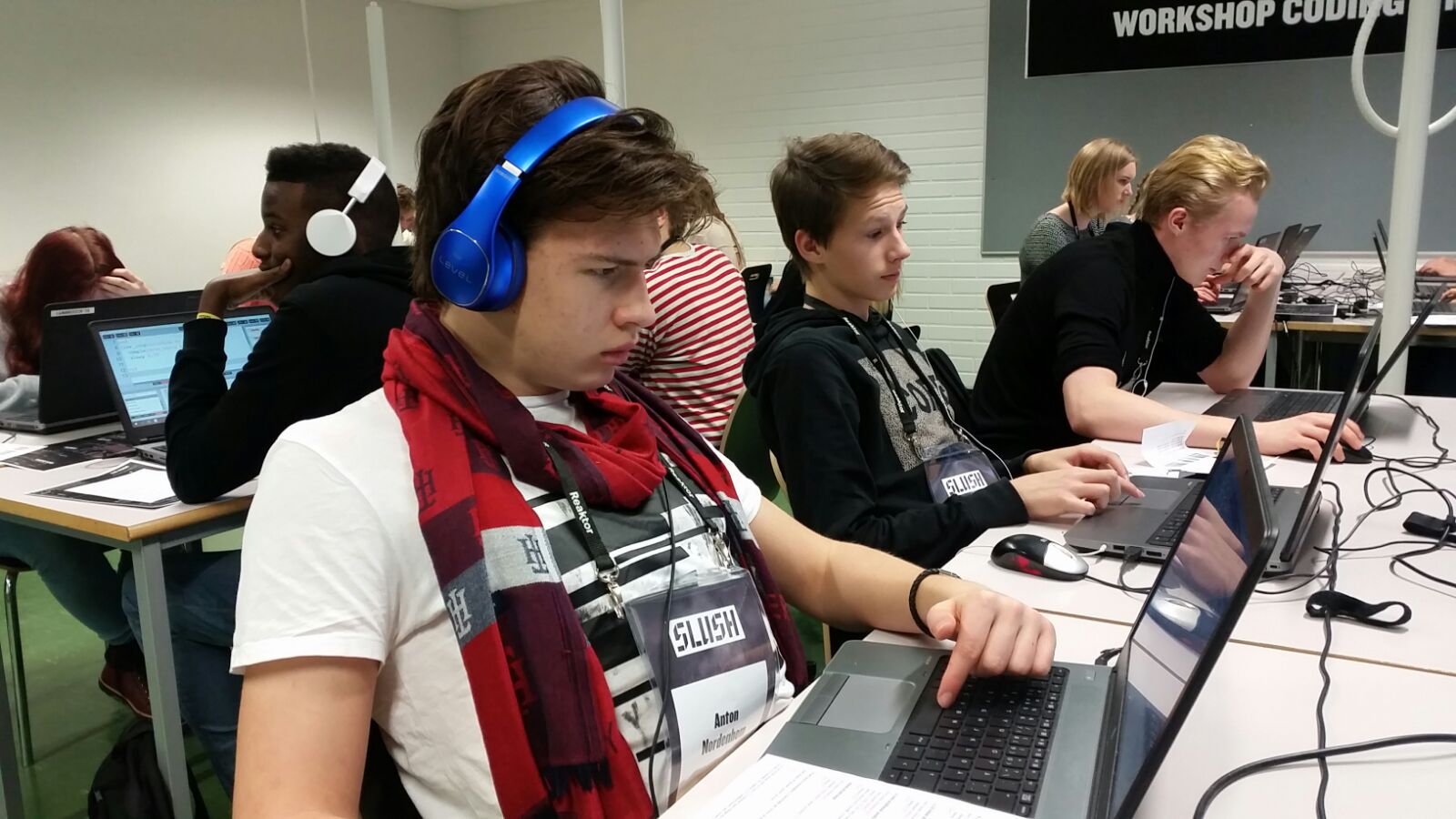
Young people attending a Slush coding workshop in Helsinki, Finland. (Photo: Patrick John Lim)

This is important in reaching out to Finnish youth and getting them interested in the business world at a young age, EIO President Kari Vaisanen said. 

“Society is getting more and more complex so we are seeing even in primary school, it is important that they can talk the same language as at home,” he said.

“We try to give impulse to these youngsters so they are interested about the business life and it is a good choice for them as well, as we want to grow our private sector.”

The chief executive officer of HundrED, a programme that looks into best practices in education and education technology around the world and package it for schools, agreed. 

“We have to be reaching to them at an early age because education has always been about knowing the right answers,” Mr Saku Tuominen said. 

“I think now we have to embrace education that is enhancing the skill to ask the right questions and not to know the right answers. So it’s a totally different kind of mindset.”

LIBERAL FUNDING AT AN EARLY STAGE

Like any successful startup ecosystem, Finland has a range of funding and infrastructure support for the sector.

Startups are supported and eventually curated by the Finnish Funding Agency for Technology and Innovation (Tekes), which plays a similar role to Singapore’s SPRING and National Research Foundation by providing grants and public funding to aspiring technology companies.

Last year, Tekes funded about 700 startups. Its funding for all startups under six years has reached €140 million in total. 

The agency’s executive director, Jukka Hayrynen, said the grants are disbursed fairly liberally at the early stage, allowing companies to find their target market or test a minimum viable product. However, he added, only a few will rise to the top and receive further funding.

“We see that there are a number of teams that believe they are start-ups, probably a thousand teams a year think they are a future big growth startup,” he said.

“But three, four hundred of those can actually show the real signs of being a start-up – they have a scalable business model, they have a product that can find customers, and they have the skills and also the will to grow.”
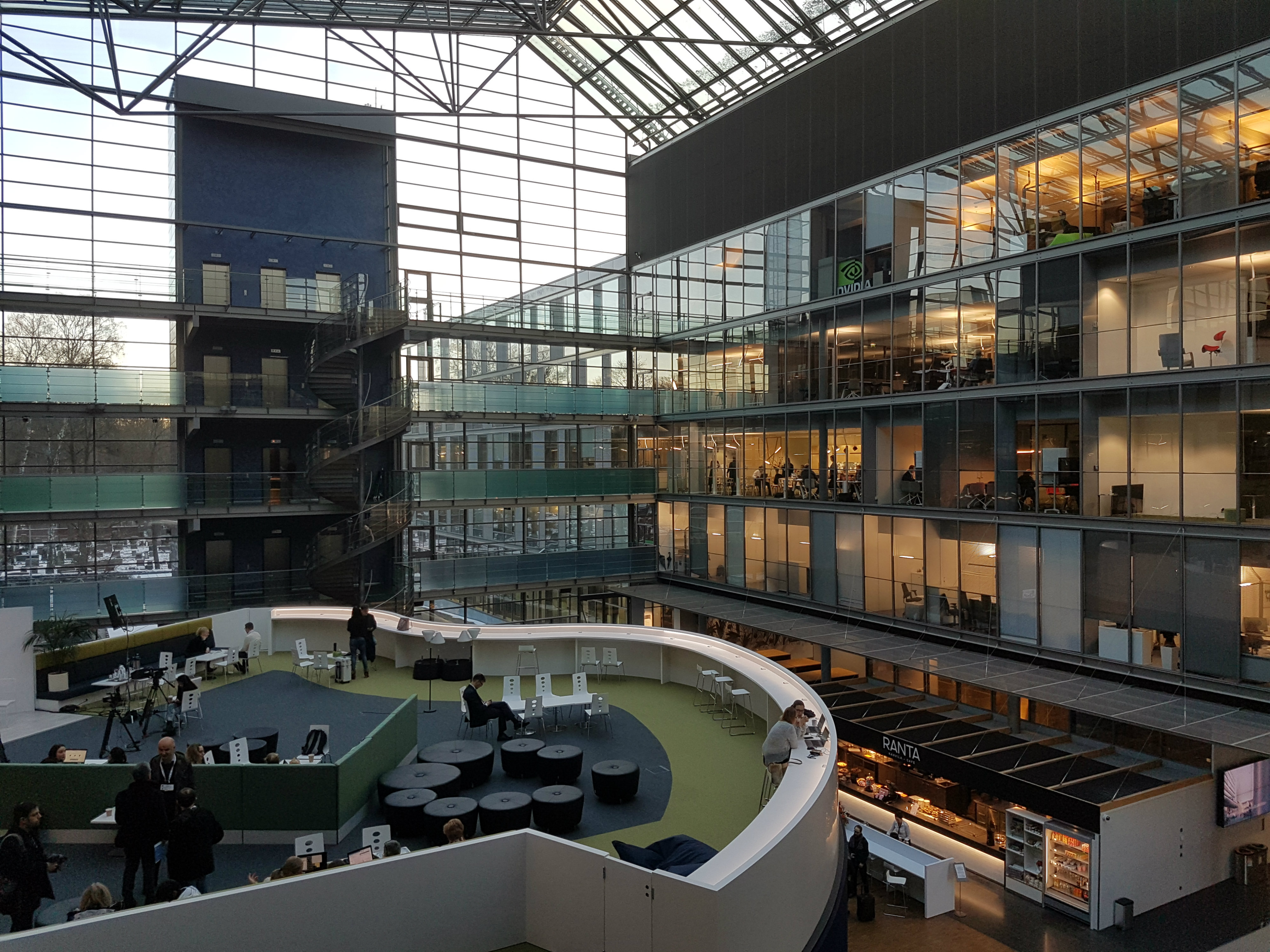
The office of the Finnish Funding Agency for Technology and Innovation (Tekes). (Photo: Patrick John Lim)

PRIVATE INVESTORS ARE KEY

While startups in both Singapore receive strong support from the public sector, it is in the private space where Finland has a head-start, where many of its investors are successful entrepreneurs themselves.

Statistics from the Finnish Venture Capital Association show that venture capitalists and private equity players alone invested about €1 billion (S$1.5 billion) in early and late stage Finnish companies in 2015. In comparison, Singapore saw total funding of US$1.16 billion (S$1.66 billion), including public funding, the same year.

With Tekes providing public funds, the Finnish Business Angel Network (FIBAN) helps organise private funding that can get startups to the next level.

FIBAN Deal Flow Manager Helleke Heikkinen says the association not only runs networking sessions between companies and potential investors, but also works with new investors to get them up to speed with the startup landscape.

“We have many angel investors who are entrepreneurs who have made their own exit and we are trying to ease them into the investor role and evaluate startups,” he said, adding that the network also tries to educate startups about how to attract angel investors.

The network is currently working to expand its presence throughout the Nordics, such as in Sweden and Norway, Mr Heikkinen said.

Meanwhile in Singapore, private investors are more conservative and careful in committing money, according to a chairman and partner at Frontier, a Finnish venture investment firm with a presence in Singapore.

“In Finland, it’s been easy for some companies to get funding even with just a PDF presentation of the startup without any traction,” Mr Mikko Silventola said, while adding that this is starting to change as more investors in Finland are now asking to see financial numbers and looking into the startups’ company direction. 

Slush, a ground-up intiative for startups and entrepreneurs, is another platform fast becoming the poster-child for Finland’s burgeoning startup scene. 

In its eighth year, Slush’s 2016 event from Nov 30 to Dec 1 was attended by more than 17,000 people, including 2,000 startups from around the world and 1,000 global investors. 

Google and Microsoft maintained a presence at Slush, an event for startups in Helsinki. (Photo: Patrick John Lim)

Finland’s Foreign Trade and Development Minister Kai Mykkanen said such events play a crucial role in connecting startups and potential funding.
“It’s not only about money but also the knowledge we’ve seen the investor brings, he said.

“The fact that we have managed to bring more than 1,000 global investors here to Helsinki means tens of new deals and probably several high growth stories such as Rovio and Supercell for example.”

Finnish startup Supercell is behind the popular mobile game Clash of Titans. (Photo: Patrick John Lim)

“SIMILAR GOALS”

Singapore is already taking a page from Finland’s playbook, with Slush coming to Singapore’s shores for the first time earlier this year. 

Another similarity between the two countries is their focus on building up its funding infrastructure. In Singapore, Block 71 in Ayer Rajah Crescent is quickly becoming a startup hub, while co-working spaces are also becoming a trend.

Meanwhile, Finland provides working spaces for start-ups such as in Maria 01, a community house for tech start-ups now occupying an old, refurbished hospital in central Helsinki.
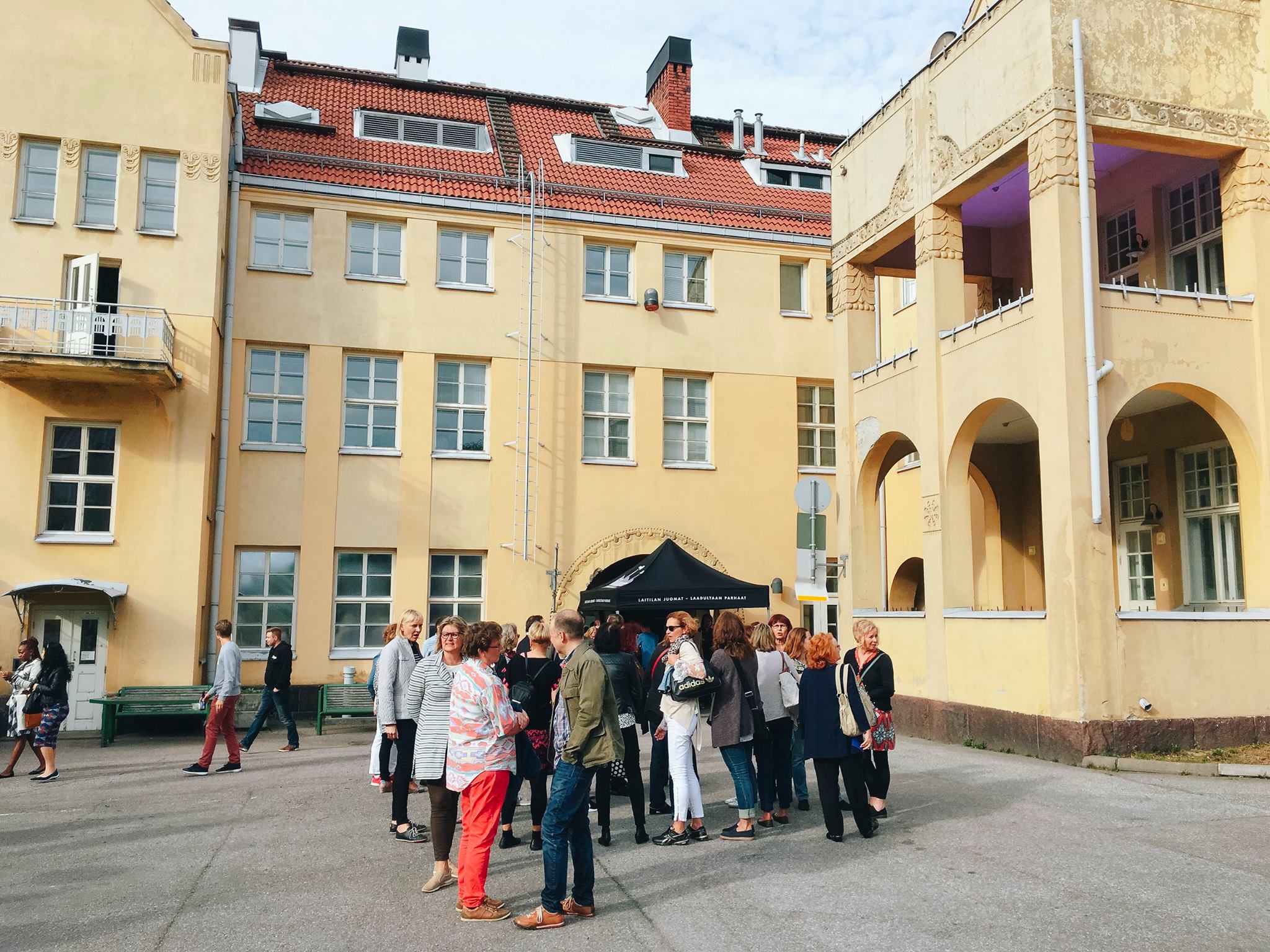
Maria 01, a community house for tech startups. (Photo: Maria 01/Facebook)

Run by a non-profit organisation and supported by the city, Maria 01 functions as a massive co-working space, allowing for tech teams to work side by side with venture capitalists and established companies. It currently houses more than 80 start-ups and renovations are underway to expand the campus into another of the old hospital wings. 

Mr Steve Leonard, the chief executive officer of the Singapore Government’s startup unit SGInnovate, said he saw similarities between Nordic and Singaporean culture that were “crucial” for encouraging entrepreneurship.  

“What we really like working with the Swedes, the Finns and the Danes is that there is a level of creativity, a level of must-solve that we appreciate and we think it’s very similar to what we’ve experienced in Singapore,” he explained.

“We have constraints, but we also have great resources, so we look for bridges that can be built with Sweden and Finland and with others, where we have similar goals.”


Source link

Thousands evacuated as cyclone barrels towards India

0

Chennai, India – India on Monday started evacuating thousands of people from fishing villages as Cyclone Vardah barrelled towards its southeastern coast at speeds of more than 100 kilometres (62 miles) per hour.

Heavy rains accompanied by high-velocity winds pounded the coastal districts of Tamil Nadu and Andhra Pradesh states, uprooting trees and disrupting power supply lines.

A high alert was issued in several affected districts, with eight fishermen having so far been rescued from the sea in view of the “very severe” cyclonic storm.

“We have already moved over 9,400 persons in seven vulnerable mandals (blocks) to safety. All necessary measures have been taken to ensure safety of people,” P Narayana, a minister in the Andhra Pradesh state government, told the Press Trust of India news agency.

Another 7,000 were evacuated in Tamil Nadu state, the National Disaster Management Authority said.

Two navy ships with doctors, food packets and other relief material have also been put on standby, said a navy spokesman.

More than 15 teams of the National Disaster Response Force were deployed, with the storm expected to make landfall in the late afternoon close to Chennai, the state capital of Tamil Nadu.

The Tamil Nadu government ordered all educational institutions in coastal districts to be shut as a precaution.

Devastating floods last year killed at least 250 people in Chennai, India’s fourth-largest city, which is home to nearly 4.6 million people.

On its way inland, Cyclone Vardah hit several islands in the Andamans last week, forcing authorities to evacuate hundreds of stranded tourists from the archipelago.

India’s eastern coast and neighbouring Bangladesh are routinely hit by bad storms between April and December that cause deaths and widespread property damage.

In 1999, more than 8,000 people were killed when a cyclone battered the eastern state of Orissa.

Image: 
Category: 
Publication Date: 
Monday, December 12, 2016 – 16:59
Keywords: 
Send to mobile app: 
Source: 


Hermes ID: 
2 804 308
Hermes ID String: 
12122016_CYCLONE
Hermes Author: 
STEPHLUO
Story Type: 
Others

Source link

Court rejects bid for Queen’s Counsel

0


The High Court has clarified that a Queen’s Counsel will be admitted here only when needed to argue complex cases beyond the competence of local lawyers.

The court overruled the bid by law firm Rajah & Tann to bring in high-profile London-based Queen’s Counsel Toby Landau to argue a judicial review of a US$129 million (S$185 million) arbitration award.

“The fact that foreign counsel would do ‘an even better job’ than local counsel does not really address the question of necessity,” said Justice Steven Chong in judgment grounds issued last month.

The judge noted that China Machine New Energy Corporation (CMNC), the company that sought the QC, had hired leading local firm Rajah & Tann Singapore for the case, which has “five senior counsel within its ranks, each with an impressive track record in arbitration”.

Justice Chong added that he was not prepared to assume that there was only a small pool of local lawyers who could act in the case to justify the need for a QC.

The High Court here has the discretion to admit QCs or their equivalent to argue cases on an ad hoc basis after assessing the complexity of the issues involved in the case, the QC’s expertise, necessity and the availability of local counsel with the requisite experiences, among other things.

In the case, CMNC had lost a deal against Jaguar Energy Guatemala last year that was settled by an arbitration panel here which awarded Jaguar more than US$129 million for CMNC’s breaches of contract.

The US-based Jaguar had contracted for CMNC in 2008 to build a power generation plant in Guatemala for US$450 million which subsequently derailed and led to arbitration.

CMNC then applied to the High Court for a review to set aside the award and sought Mr Landau to be admitted to argue its case.

All parties including the Attorney-General and the Law Society agreed that Mr Landau possessed wide-ranging experience in arbitration and the requisite expertise to address the issues identified in the case.

The Attorney-General supported the move, while the Law Society objected to the admission.

But Justice Chong made clear that although the court hearing the case would certainly benefit from having Mr Landau’s “formidably wide-ranging experience, it does not follow there is a need to admit him”.

He found nothing “exceptional” about the case and the issues involved were not “unduly novel or complex” or beyond the “range of competence” of local lawyers.

Law firm Morgan Lewis Stamford, which represented Jaguar in the proceedings, said the judgment among other things recognises “that the local Bar has the experience and expertise to represent parties in litigation ancillary to international arbitration proceedings”.

Separately, Morgan Lewis lawyers Timothy Cooke and Daniel Chia said on its “Lawflash” online that the judgment “reaffirmed Singapore’s status as a leading international arbitration hub”.

They added: “Parties who wish to engage foreign counsel for Singapore court proceedings may want to consider including a clause in their contract specifying the Singapore International Commercial Court (SICC) as the forum for resolving disputes; in certain defined circumstances, matters heard in the SICC may be argued by foreign counsel.”

vijayan@sph.com.sg


This article was first published on December 12, 2016.
Get a copy of The Straits Times or go to straitstimes.com for more stories.

Image:
Category:
Publication Date:
Monday, December 12, 2016 – 16:48
Send to mobile app:
Source:

Story Type:
Others

Source link

Fewer business trips to Singapore but weaker ringgit draws more to KL

0


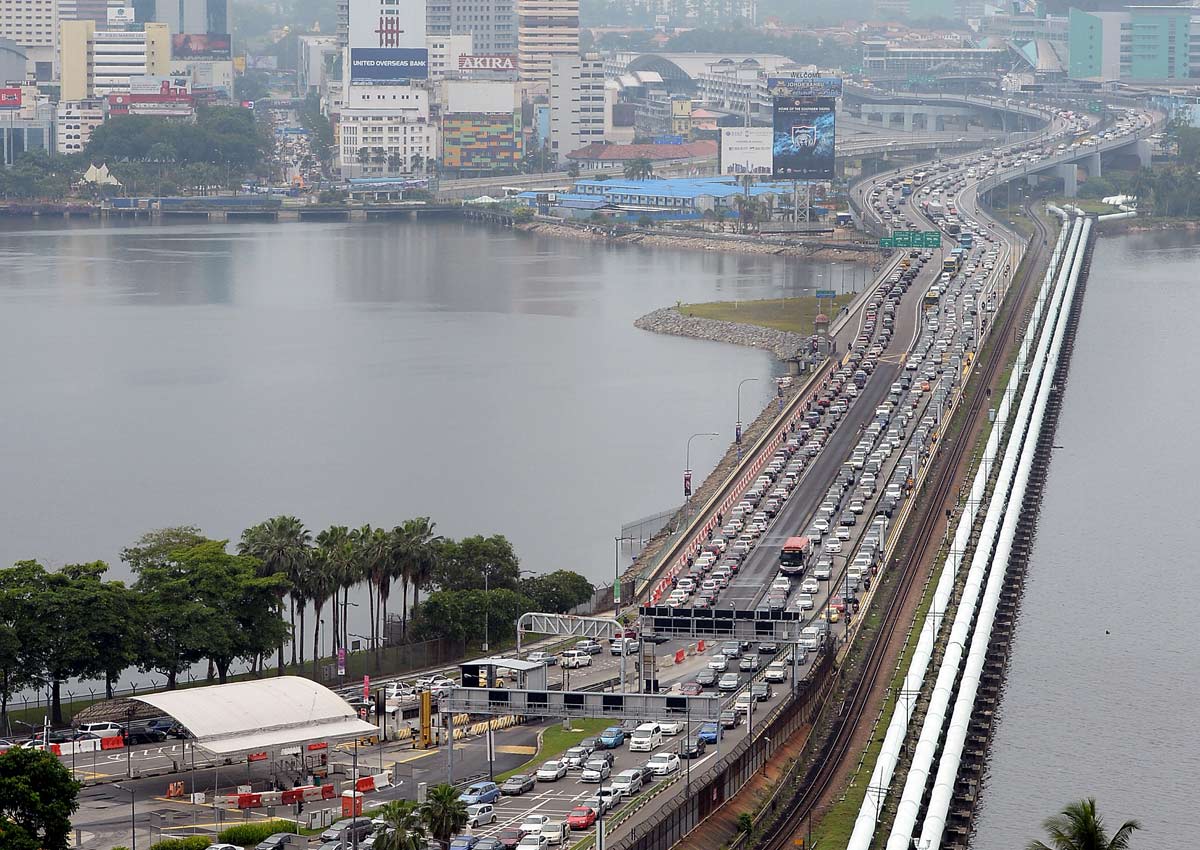
A third of Malaysians heading into Singapore are business travellers such as IT consultant William Ng, 30, who visits about once a month.

Most of the time, he is in and out the same day or overnight.

Even so, he expects these trips to become scarcer.

Read Also: Ringgit continues slide, hits new one-year low against Singdollar

“It is a very competitive market in Singapore. It is not something we can count on. Once these projects come to an end, business in Singapore will dwindle,” he said.

Mr Ng is not alone as the proportion of those flying to Singapore from Kuala Lumpur for work has been shrinking.

According to the Singapore Tourism Board, business travellers made up 37 per cent of all Malaysian arrivals in 2011, but the figure dropped to 33 per cent last year.

The weakening ringgit against the Singapore dollar has seen fewer Malaysians visiting the island, but more Singaporeans are heading north.

Among Malaysians travelling to Singapore, it is those visiting friends or relatives who have been the least impacted by the widening exchange rate.

From just 17 per cent of arrivals in 2010, the proportion grew to 26 per cent last year.

Read Also: Weaker Malaysian ringgit hurts Singapore

Holidaymakers who did not have loved ones in Singapore have dwindled from 24 per cent to 16 per cent in the same period.

According to aviation consultancy Endau Analytics founder Shukor Yusof, “volume has remained healthy with more Singaporeans coming to Kuala Lumpur thanks to the weaker ringgit, even though some Malaysians are taking cheaper ground transport instead of flying to get to the island”.

shannont@sph.com.sg


This article was first published on December 12, 2016.
Get a copy of The Straits Times or go to straitstimes.com for more stories.

Image:
Category:
Publication Date:
Monday, December 12, 2016 – 16:36
Send to mobile app:
Source:

Story Type:
Others

Source link

Singapore No. 1 destination for travellers from Indonesia

0

Singapore remains the top destination for travellers from Indonesia, with more than three million flying from Jakarta to the Republic in the first nine months of this year, according to Changi Airport.

Hundreds of thousands more fly from other Indonesian cities.

Most travel for holidays, work or school, or for day trips to attend to personal needs such as banking and medical appointments.

Whenever cruise consultant Amanda Soebandi, 25, visits Singapore, she will be on the lookout for the next cool cafe to hang out with her Indonesian friends.

She will also eat chicken rice and head to Tiong Bahru Bakery to have her favourite coffee and bread.

“I love to eat. Singapore is tiny, but it is clean, and there is always some place new to explore. My friends and I would look for small, quaint cafes that few people know about to relax,” she told The Straits Times at the Soekarno-Hatta international airport, where she and her colleague Monica Santana, 26, were to head to Singapore to join a five-day cruise to Penang and Kuala Lumpur.

It will be Ms Amanda’s fourth trip to the Republic, and Ms Monica’s first.

Whenever possible, they will fly budget.

They each bought a Lion Air ticket for 1.5 million rupiah (S$158) two weeks ago.

Ms Amanda is looking forward to an all-you-can-eat buffet and swimming during the cruise, while her colleague is excited about shopping at Ion Orchard and in Bugis.

She said she is “feeling the pinch from the falling rupiah”, but will continue to visit the country.

“That will not stop me from visiting Singapore again. I like to jalan-jalan (stroll around), discover new food places, and if I have extra money, then maybe I will go shopping.”

Analysts said the type of travellers to Singapore has not changed, but they see a growing trend of people using the island as a transit point to visit other countries in the region, thanks to more connecting flights from Changi Airport and affordable tickets from budget airlines.

“Domestically, even village folk in flip-flops are now taking planes from city to city in Indonesia and asking for flights as presents. The growing middle class means they will still choose to travel to Singapore for holidays,” Indonesian aviation observer Dudi Sudibyo told The Straits Times.

He said no other airport in the region has been able to match the standards at Changi, so travellers may still choose to transit in Singapore over other airports.

But he cautioned that Dubai has become a “comparable alternative” to Singapore as a transit point for Indonesians, offering affordable shopping and luring Indonesian Muslim travellers to visit the Middle East.

Dubai also offers a good selection of connecting flights to major cities around the world.

Another Indonesian aviation analyst, Mr Gerry Soejatman, said that in the future, fewer passengers may need to transit in Singapore as more direct flights to international destinations are made available from Soekarno-Hatta airport.

However, more travellers from other Indonesian cities may visit Singapore as the government builds more and better airports in the country.


This article was first published on December 12, 2016.
Get a copy of The Straits Times or go to straitstimes.com for more stories.
@sph.com.sg>

Image: 
Category: 
Publication Date: 
Monday, December 12, 2016 – 16:28
Send to mobile app: 
Source: 


Story Type: 
Others

Source link

GCE N-level results to be released on Dec 19

0

The GCE N-level results will be released next Monday (Dec 19) from 2pm onwards, the Ministry of Education (MOE) announced in a press release today (Dec 12).

Students may obtain their result slips from their respective schools.

According to MOE, private candidates will be notified of their individual results by post. The result slips will be mailed on Dec 19 to the addresses provided by the candidates during the registration period.

Students who qualify for the Polytechnic Foundation Programme (PFP) may apply when the window opens in Jan 2017, which is also the day the results of the GCE O-level Examinations are released. 

The PFP is a diploma-specific foundation programme conducted over two academic semesters at the polytechnics. According to MOE, it caters to students who have decided to pursue a polytechnic education and meet the PFP eligibility requirements.

The PFP is an alternative to the Secondary 5 year as GCE N-level graduates under the programme will not sit for the O levels.

Those who are interested in applying for the PFP should first commence their Secondary 5 year on Jan 3 next year, while awaiting notification of eligibility and confirmation of a place in polytechnic, MOE said.

Alternatively, students who wish to apply for courses offered by the Institute of Technical Education (ITE) can submit their applications online via the ITE application portal upon collection of their results.

Hard copy application forms will also be available at customer service centres at each of the three ITE colleges.

For candidates who are in the Direct-Entry-Scheme to Polytechnic Programme (DPP), a copy of Form N will be given to them from their secondary schools, inviting them to apply for the DPP.

Applications for DPP can be submitted online via the ITE application portal between 2.30 pm on Dec 19 and 5pm on Dec 22.

stephluo@sph.com.sg

Image: 
Category: 
Publication Date: 
Monday, December 12, 2016 – 17:08
Send to mobile app: 
Source: 


Story Type: 
Others

Source link

They clocked over 1,050km each on bicycle over 9 weeks

0

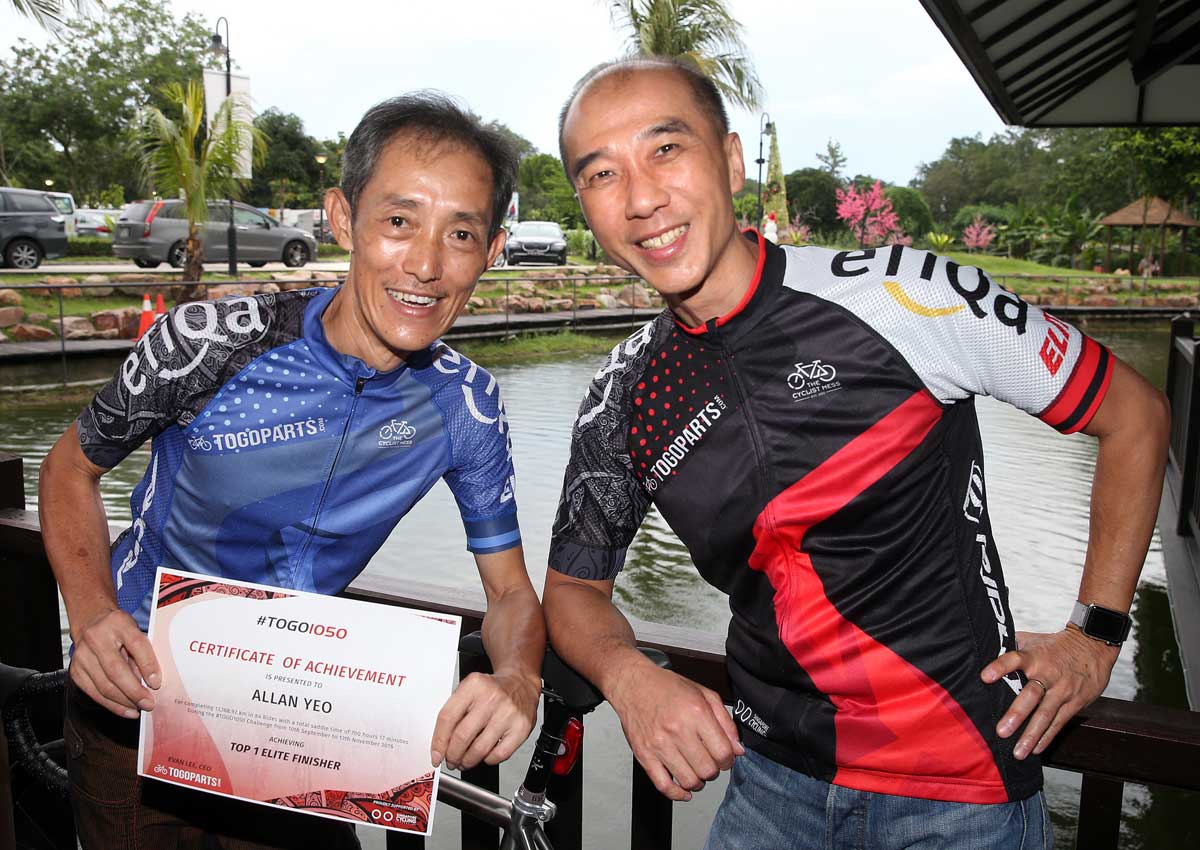
Cycling 200km daily is no mean feat but 54-year-old Allan Yeo did just that – in an effort to inspire more people to hop on their two-wheelers.

Over nine weeks, the retiree clocked more than 13,000km on his road bicycle at popular cycling spot Changi Coastal Road.

His efforts went towards cycling challenge Togo1050, in which participants had to hit 1,050km of riding between Sept 10 and Nov 13 this year. The distances were logged using a mobile app.

Mr Yeo said he wanted to outdo the 7,000km he cycled for the previous edition of the event.

“I’m surprised my body could take it. But I made sure to take breaks and to eat to prevent cramps,” he said, adding that he would rest after covering a distance of 40 to 50km.

Mr Yeo received a certificate and a goodie bag yesterday at an event held at Orto in Yishun to honour the top riders and those who have contributed to the cycling community.

“The main purpose of the event is get people more involved in cycling. With a target, they have more motivation to cycle,” said Mr Evan Lee, founder of cycling marketplace togoparts.com, which organised the event that was attended by about 170 people.

A total of 452 cyclists managed to clock at least 1,050km of riding.

Some of them were given honourable mentions for their inspiring journeys, such as Mr John Koo, 51.

The chemical engineer kept his commitment to the challenge despite having to travel to Indonesia, China and Britain during the nine-week period. Although he did not take his bicycle along, he rented bicycles at the places he travelled to.

Mr Koo, who clocked more than 3,000km for the event, said cycling helps him relieve stress.

“I cycle at about 3am. I can avoid the vehicles, and I like the quiet. It’s peaceful at that time,” he said.


This article was first published on Dec 12, 2016.
Get a copy of The Straits Times or go to straitstimes.com for more stories.

Image: 
Category: 
Publication Date: 
Monday, December 12, 2016 – 16:21
Keywords: 
Send to mobile app: 
Source: 


Story Type: 
Others

Source link