28.7 C
Singapore, SG
Wednesday, September 23, 2026
Home Blog Page 2187

New shelter for distressed maids next year

0

The Centre for Domestic Employees (CDE), a help centre set up by the National Trades Union Congress (NTUC), plans to launch a new shelter for distressed workers in the second quarter of next year.

The shelter will be able to house and support around 100 maids.

This was announced on International Migrants Day (IMD) yesterday, at one of two events by NTUC non-governmental organisations, the Migrant Workers’ Centre and CDE.

The new shelter will bring CDE’s total housing capacity to 150 as it rents 50 bed spaces at an undisclosed location, making it Singa- pore’s biggest shelter for maids.

Most maids in shelters may be embroiled in disputes with the authorities, their employers or employment agencies, said CDE.

Speaking to the media yesterday, CDE’s executive director for strategy, Mr Shamsul Kamar, said that as more maids come to Singapore, “what we want to do is strengthen our capabilities and how we can give humanitarian, social, emotional support (to them)”.

He added that having its own shelter will allow the CDE to “provide direct support to our domestic workers who are having issues”.

The new shelter will have counselling and mediation services.

Ms Sheena Kanwar, executive director of the Humanitarian Organisation for Migration Economics (Home), was heartened to learn of the new shelter and its services.

Currently, Home runs Singa- pore’s largest shelter for maids in distress, with rooms for about 70 workers.

“Once (workers) report abuse or exploitation, their safety might further get undermined and alternative emergency housing becomes essential,” said Ms Kanwar. “Holistic socio-legal support for the shelter residents is very important.”

Home continues to call for maids to be covered under the Employment Act, which will ensure them labour rights such as statutory holidays and paid leave.

To celebrate IMD, the Migrant Workers’ Centre organised a talent show in Hougang.

The centre’s chairman, Mr Yeo Guat Kwang, said on the event’s sidelines: “With the 20,000 cases that we have helped, the main issues are still with salary disputes, workplace injury compensation claims and concerns about workers’ accommodation.”

He hopes for more enforcement in the future to ensure salaries are promptly paid and for effective resolutions to claims submitted.

He also urged the authorities to “consider imposing a deterrent sentence” such as jail for errant employers who collect kickbacks.

Migrant workers performing at a talent show

Read Also: Maid who left Singapore as a businesswoman


This article was first published on Dec 19, 2016.
Get a copy of The Straits Times or go to straitstimes.com for more stories.

Image: 
Category: 
Blurb: 
<p>The Centre for Domestic Employees (CDE), a help centre set up by the National Trades Union Congress (NTUC), plans to launch a new shelter for distressed workers in the second quarter of next year.</p>
Publication Date: 
Monday, December 19, 2016 – 14:00
Send to mobile app: 
Source: 


Story Type: 
Others

Source link

Upheaval ahead, but also opportunities, says Heng Swee Keat

0

Developments in the global economy, including structural changes in the Chinese and American economies, and technological disruptions, will bring upheaval in the next few years.

But they also present opportunities for Singapore, which has to prepare itself to catch and ride the wave, Finance Minister Heng Swee Keat said.

He was giving an insight into what has been on the minds of the committee tasked with charting a blueprint for long-term growth, ahead of the release of its report on how Singapore can prepare its economy for the future.

“On the one hand, there are new opportunities that we need to look for, and on the other hand, we need to build capabilities that will allow us to continue to do well,” Mr Heng said in an interview last week.

“What that means is that it is going to be quite a bit of work to get into a better position.”

The Committee on the Future Economy (CFE), which he chairs, has factored in these major shifts in devising strategies for Singapore’s growth in the long term, he added.

He also indicated that next year’s Budget will likely respond to some of the committee’s recommendations, and touch on restructuring and the broader challenges at hand.

Read also: Government will support workers as economy changes: Heng Swee Keat

Mr Heng’s comments come at a time of growing anxiety about Singapore’s economy, which shrank 2 per cent in the July to September quarter compared with the preceding three months.

The official growth forecast for this year was also recently lowered to 1 per cent to 1.5 per cent, from an earlier estimate of 1 per cent to 2 per cent.

Observers have said the economy is in need of a fillip, and are keenly awaiting the CFE’s report.

Asked about the situation, he said: “I won’t say that I am worried in the negative sense. But I do see that there are new challenges that we will have to deal with.”

These include, for instance, China’s move away from an export- and investment-driven economy to a consumption and services economy, the policy uncertainties of a Donald Trump presidency in the United States, and the trend of digitisation – all of which will have an impact on Singapore’s economy.

“If you think about the changes that are happening, we will have to organise ourselves differently… We have to build new capabilities,” said Mr Heng.

This will involve training Singaporean workers so they can build deep skills and helping companies with research and development to boost innovation, he said.

Alongside that, the Government and businesses will have to “think of how we can work even better together”, he added, citing the track record of a good tripartite relationship and economic agencies that have been facilitative for businesses and training.

Mr Heng acknowledged that the changes will cause some disruption to people. But he is optimistic because the groundwork has been laid with schemes such as SkillsFuture, and Singapore having always had a pro-business stance.

“We are building on strengths built up over the years,” he said.

Asia is also expected to remain the fastest-growing region of the world despite the global slowdown, and Singapore is in a good position to be part of the growth, he added.

Read also: Heng Swee Keat’s first words when out of coma: Is there a Cabinet meeting today?

The CFE, which had its final meeting earlier this month, has held more than 80 discussions with over 1,000 students, educators, parents, union members, business leaders and academics.

Its 30 members have also taken part in events where they reached out to more than 6,000 people.

The CFE will release its recommendations early next year on how Singapore should position itself in the years ahead.

Its report will touch on five key themes of the digital economy, jobs and skills for the future, Singapore as a connected city, innovation, and governance.

Pointing to the previous economic restructuring reviews – such as the Economic Strategies Committee in 2009 chaired by Deputy Prime Minister Tharman Shanmugaratnam, who was then Finance Minister, and the Economic Review Committee chaired by Prime Minister Lee Hsien Loong in 2001, when he was Deputy Prime Minister – Mr Heng said such exercises help to build a common understanding of the challenges the country faces.

He added: “By gathering all these inputs together… we will be able to build the sort of shared understanding and be determined to take action that is necessary for us to forge ahead.”


This article was first published on December 19, 2016.
Get a copy of The Straits Times or go to straitstimes.com for more stories.

Image: 
Category: 
Blurb: 
<p>Developments in the global economy, including structural changes in the Chinese and American economies, and technological disruptions, will bring upheaval in the next few years.</p>
Publication Date: 
Monday, December 19, 2016 – 14:00
Send to mobile app: 
Source: 


Rotator Headline: 
Global economy to bring upheaval, but also opporunities for Singapore, says Heng Swee Keat
Rotator Image: 
Story Type: 
Others

Source link

Five maids working in Singapore radicalised

0

In the past two years, five maids working in Singapore were radicalised, although they “did not pose an imminent security threat” at the time, said the Ministry of Home Affairs (MHA).

The maids were among some 70 foreigners investigated during that period, and had been radicalised through social media. Some of the foreigners were later deported after the authorities in their home countries were informed of their cases.

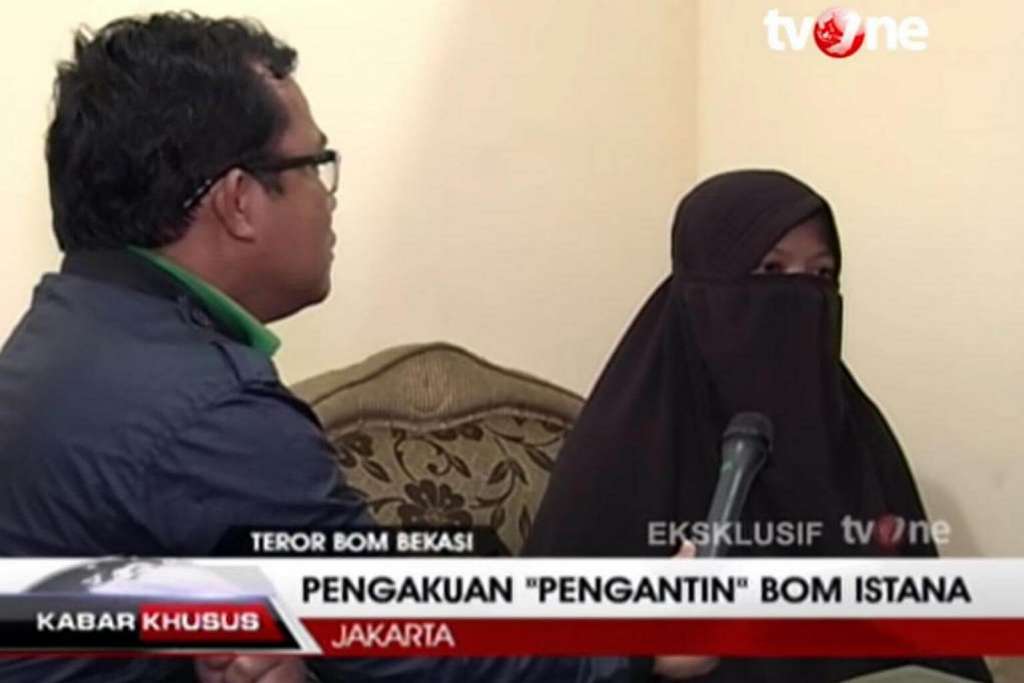
The statement yesterday came after Indonesia’s anti-terror police commandos rounded up four women in the past week on suspicion of terrorism. Among them was Dian Yulia Novi, 27.

She had worked in Singapore between 2008 and 2009, said an MHA spokesman.

Dian had allegedly been planning to mount a suicide bomb attack on the presidential palace in Jakarta.

In a television interview broadcast last Tuesday, she said she was first exposed to radical Islam through Facebook by opening profiles of extremists while working as a maid abroad.

She worked for a family with three children here, and as a maid for three years in Taiwan.

But Dian did not show signs of being radicalised during her time in Singapore, said the MHA spokesman, who added: “Our security agencies are in contact with their counterparts regarding her case.”

Read also: Indonesia’s new worry: Women turning suicide bombers

Most of the 70 foreigners investigated in the past two years “were radicalised through their exposure to radical propaganda on social media”, said MHA. Some then radicalised others using radical propaganda from online sources.

The Straits Times understands that the five maids were among those radicalised via social media.

While they did not plan to carry out acts of violence in Singapore at the time they were investigated, their presence posed a security concern for Singapore, MHA said.

Six Bangladeshis charged with offences under the Terrorism (Suppression of Financing) Act are serving their sentences here.

With radicalisation through the Internet being a worldwide phenomenon, MHA said social media platform owners have to ensure “their platforms are not used to promote radicalism and terrorism”.

A more effective approach in the longer term may be sensitising the public to the dangers of extremist rhetoric and equipping them with social media literacy so they will not be vulnerable to terrorist propaganda online, added the ministry.

Those who notice people showing signs of radicalisation should inform the authorities.

“The security agencies meanwhile continue to work closely with their foreign counterparts to share intelligence on terrorism activities,” said MHA.

Read also: IS shifts focus to female suicide bombers

Dian was a member of a cell based in Solo, Central Java. She had hidden a “rice cooker” bomb in her room, where she was arrested on Dec 10.

The arrests of Dian and three other women mark a shift in strategy, with Indonesian militants recruiting women instead of men to mount attacks, national police chief Tito Karnavian has said.

Maids from Indonesia said they were worried about being typecast after the news.

“It affects us too because people will think other Indonesians will end up the same way,” said Ms Sri Hartatik, 35, who has worked here for 11 years.

“It is common for Muslims, including domestic workers here, to read about religion on social media,” she said. But not everyone does so, she added, and neither does she.

Mr Gary Chin, chief executive of maid agency Nation Employment, said that employers should watch out for sudden changes in their helpers’ behaviour, show them concern and take an interest in who their friends are.

“If they sense anything amiss, they should inform the agency as well, so that we can arrange for counsellors or family members to speak to the domestic helper.”

Dr Rohan Gunaratna, head of the International Centre for Political Violence and Terrorism Research, noted that militant group Islamic State in Iraq and Syria is investing heavily in recruiting in cyber space.

While Singapore has secured its physical space, it “now needs to better protect its citizens and residents, including the labour population, from cyber radicalisation”.


This article was first published on December 19, 2016.
Get a copy of The Straits Times or go to straitstimes.com for more stories.

Image: 
Category: 
Blurb: 
<p>In the past two years, five maids working in Singapore were radicalised, although they "did not pose an imminent security threat" at the time, said the Ministry of Home Affairs (MHA).</p>
Publication Date: 
Monday, December 19, 2016 – 14:00
Keywords: 
Send to mobile app: 
Source: 


Rotator Headline: 
70 foreigners, including 5 maids, working in Singapore radicalised in past two years
Rotator Image: 
Story Type: 
Others

Source link

Cheap and good smashed fish

0

At Imperial Treasure’s relocated Teochew restaurant, duck tongues, pig intestines and pork knuckle have an elegant flavour

When I pop open the takeaway box of my Nasi Bawal Penyet, or “smashed” pomfret rice, I do a double take. Where is the rice and fried tofu?

The fish is so large that it fills the entire box, hiding the other items below.

But I should not have cared too much. The fish is a star on its own.

Deep-fried perfectly to a dark golden-brown, it is sprinkled with crispy bits of fried batter that lend crunch to each bite.

Its flesh is tender and the taste of fish oil comes through strongly, though it is not overpowering.

I do not expect the oil to ooze out as I eat the fish, but I like it.

What takes this dish, from the Ang Mo Kio outlet of the Uncle Penyet Fusion chain, to the next level is the belacan, placed on the side, and the curry over the rice.

I am surprised that I want to have it again as I am not a big fan of penyet dishes.

Most people would be familiar with ayam penyet, or smashed fried chicken.

After the meat is fried, the chicken is hit with a pestle to flatten it slightly.

The dish comes from Surabaya, the capital of Indonesia’s East Java province.

Often, I find ayam penyet too dry. This is not the case here.

When I make a trip to the food stall to have another satisfying go at the Nasi Bawal Penyet ($8), I also decide to try the Nasi Ayam Penyet ($6.50) to see if it would be just as good as the fish.

It lives up to expectations. The chicken is tender and the meat falls off the bone easily – a major plus if you are using a fork and spoon.

Still, if it comes down to picking between the two, I would choose the fish.

Some might think it is a little pricey as it is sold in a coffee shop, but for a whole fish, I think the price is reasonable.

It is also cooked on the spot – I had to wait about 10 minutes for it – and presented nicely in a wooden basket.

Now that I have found a stall that does “smashed” food right, I am making a mental note to return soon and explore the extensive menu, which includes Nasi Bakso Penyet (smashed beefball with rice) and Nasi Lele Penyet (smashed catfish with rice).

natashaz@sph.com.sg


This article was first published on December 19, 2016.
Get a copy of The Straits Times or go to straitstimes.com for more stories.

Image: 
Publication Date: 
Monday, December 19, 2016 – 13:15
Keywords: 
Send to mobile app: 
Source: 


Story Type: 
Others

Source link

1 killed, 4 injured after driver goes against traffic on AYE

0

SINGAPORE: A 37-year-old man was killed on Monday morning (Dec 19) after another driver allegedly went against the flow of traffic on the Ayer Rajah Expressway (AYE) in the direction of Tuas.

The incident, which occurred near Tuas West Road, caused a multi-vehicle collision involving four cars, a motorcycle and a bus, according to the police.

The man was trapped in the driver’s seat of his car, and had to be extricated by Singapore Civil Defence Force (SCDF) personnel using hydraulic rescue tools. He was pronounced dead at the scene.

(Photo: Nurul Zaidy/Facebook)

Channel NewsAsia understands that the accident took place after the other driver made a U-turn and went against the flow of traffic.

A 53-year-old man has been arrested for causing death by a rash act, the police said, adding that investigations are ongoing.

The penalty for causing death by a rash act is up to five years in prison, a fine, or both.

(Photo: Nurul Zaidy/Facebook)

SCDF said it was alerted to the accident at about 8am, and dispatched four ambulances, a fire engine, a Red Rhino, two fire bikes and a support vehicle.

Four other people, aged between 34 and 53, were taken to National University Hospital with unknown injuries. The SCDF said it alerted the hospital to be on standby to receive those injured.

(Photo: Nurul Zaidy/Facebook)

Source link

Special probe, litigation on Choi to begin

0


The special investigation and litigation processes into the corruption scandal surrounding President Park Geun-hye and her now-infamous friend Choi Soon-sil will begin this week, while the embattled president and the parliament prepares for the coming impeachment trial.

The trial of Choi will kick off this week, with the Seoul Central District Court holding official preparations for her trial on Monday.

Legal discussions between the prosecution and Choi’s lawyer who claimed that the charges were “not facts, but stories” is expected, but it is unclear if the accused will appear at the court.

Choi, Park’s long-time friend, is suspected of using her relationship with Park to meddle in state affairs including having state projects allocated to people related to her and coerce local corporations into making donations to the Mir and K-Sports foundations, which authorities believe were used to channel funds to her.

The investigation led by an independent counsel Park Young-soo is also to officially kick off this week.

The team’s spokesman Lee Kyu-chul hinted the actual probe can start during the preparation period that ends on Tuesday.

When asked if the team may summon its first witness this week, Lee said “there is a possibility.”

He added that conglomerate chiefs that made donations to causes related to Choi can “of course be summoned if necessary.”

Suspicions that the donations made by the companies are actually bribes for Park and Choi’s inner circles are considered to be key in the independent counsel’s investigations.

President Park was impeached by the parliament on Dec. 9 for the scandal.

In her first legal argument made to the Constitutional Court, which was revealed to the public Sunday, she claimed to have done nothing that deserves impeachment.

She claimed to have no knowledge of Choi’s alleged wrongdoings and said she may have consulted with Choi on a personal level, but never undermined the democratic value because it was her who made the final decisions regarding state affairs.

Read also: The empty days of S. Korea’s impeached president Park Geun-hye

Litigation process on Park’s former aide An Chong-bum suspected of working with Choi under the president’s orders and key figures in favouritism allegations Cha Eun-taek and Song Sung-gak are also to take place Monday.

While not yet indicted, Park’s former aides Woo Byung-woo and Kim Ki-choon are suspected of knowingly condoning, or even helping Choi in her wrongdoings.

Woo is expected to be the main feature in Thursday’s parliamentary hearing, as he has snubbed the National Assembly’s repeated subpoenas.

The past four hearings have been disputed as “pointless,” with key witnesses like Woo, An, Choi, Choi’s family members, including daughter Chung Yoo-ra, all failing to show up.

Woo in particular, has gone “missing” after the parliament formally summoned him, which roused suspicion that he is abusing a loop in the law that states a parliamentary summon on a person takes effect only after the cited person has received the documents.

Woo last week told the National Assembly that he will appear before the lawmakers.

Another person slated to make her first appearance is a medical officer surnamed Cho, currently in a training programme in Texas, US.

Cho was an officer stationed at Cheong Wa Dae during the 2014 sinking of the Sewol ferry, and her presence was requested by the lawmakers for questioning on what Park had been doing during the worst maritime disaster in Korean history.

Park’s mysterious seven-hour absence from public has sparked suspicion that she was partaking in actions not related to the rescue operation.

The Constitution states that the president is obliged to protect the lives and safety of the people during a national crisis.

Repeat witnesses like Ko Young-tae, considered the closest confidant of Choi Soon-sil, will also be making an appearance.

Ko touched off another controversy by telling local media last week that Saenuri lawmaker Lee Man-hee, a Park loyalist had conspired with an official from the K-Sports Foundation to falsify testimonies at the hearing.

According to Ko’s interview, which took place on Tuesday but was published Saturday, Rep. Lee told the official that he will ask him about Choi’s tablet PC a key piece of evidence in the scandal that held classified presidential and governmental documents.

The official reportedly was instructed to say that he had seen Ko carry the tablet PC in question, supposedly to back Choi’s claim that the device is not hers.

The actual conversation between the two had occurred as implied in the interview.

Rep. Lee has denied the allegations.

In a press conference Sunday, Lee claimed not to have personally contacted the official in question or instructed him to state a false testimony.

He vowed to take legal actions against Ko and the media outlet that published the interview.

Read also: Friend of South Korea’s Park chooses to appear to “get fair trial”

Image:
Category:
Publication Date:
Monday, December 19, 2016 – 12:57
Send to mobile app:
Source:

Story Type:
Others

Source link

Pressure on Myanmar as region holds Rohingya talks

0

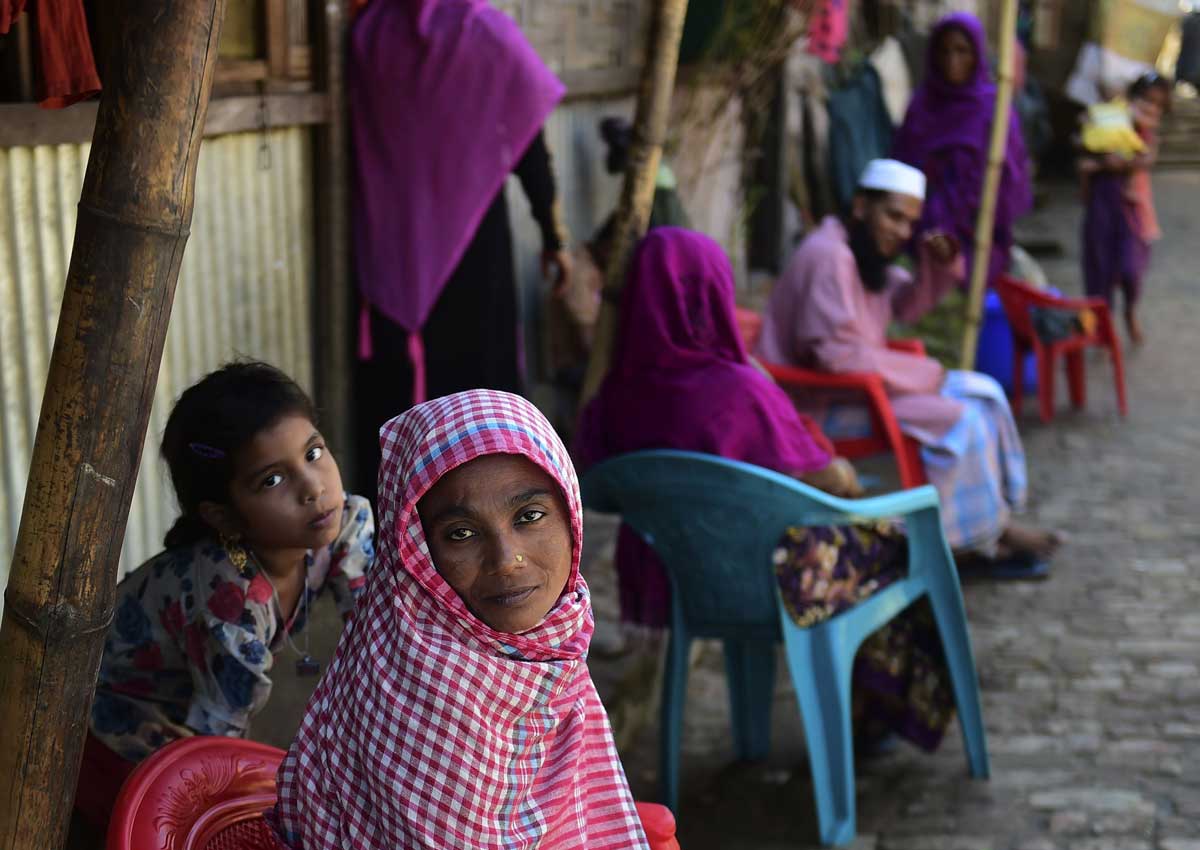
Yangon – The fate of Myanmar’s Rohingya Muslim minority took centre stage Monday as regional ministers held crisis talks over a security crackdown that has drawn rare criticism from neighbouring nations.

More than 27,000 Rohingya have fled northwestern Myanmar for Bangladesh since the start of November to escape a heavy-handed counterinsurgency campaign.

The army says it is hunting militants behind deadly raids on police posts in October.

But Rohingya survivors have described rape, murder and arson at the hands of security forces – accounts that have raised global alarm and galvanised protests in capitals around Southeast Asia.

The exodus has caused an unusual open spat within the Association of Southeast Asian Nations (ASEAN), the regional 10-member block that usually prides itself on consensus diplomacy and non-interference.

On Monday foreign ministers from the bloc met in Yangon for emergency talks, a gathering Malaysia said was the result of pressure building on Myanmar to resolve the crisis.

“Constant pressure from both the international community as well as Malaysia has led us to this point and to the retreat to be held,” Malaysia’s foreign minister Anifah Aman said ahead of the talks.

The vast majority of Myanmar’s Rohingya population are denied citizenship and have lived for years under movement restrictions that many have likened to apartheid.

Thousands have fled over the years on rickety boats, seeking sanctuary in Muslim majority countries like Malaysia and Indonesia.

The latest crackdown in Rakhine generated a fresh wave of public anger, particularly in Malaysia, where tens of thousands of Rohingya eke out tough and often dangerous lives as undocumented workers.

Earlier this month Malaysian Prime Minister Najib Razak accused Myanmar’s de facto leader Aung San Suu Kyi of allowing “genocide” on her watch – an unusually strong rebuke by one ASEAN state of another.

Myanmar, which has vehemently denied the allegations of abuse, responded by angrily summoning Malaysia’s ambassador and banning its workers from going to the country.

Suu Kyi also held talks with the foreign minister of Indonesia this month after cancelling a visit to the country following protests and an attempted attack on the Myanmar embassy.

Ong Keng Yong, a former secretary-general of ASEAN, said neighbouring nations feared the Rohingya crisis could spiral.

“This kind of issue, if it’s not well managed, will impact on the general picture of our peace and security in ASEAN,” he told AFP.

He said Monday’s meeting would likely focus on stopping the violence, smoothing relations between members and better sharing of information between countries.

Myanmar has also seen a cascade of criticism from outside the region over its handling of the Rohingya crisis, including from the United States, the European Union and the United Nations.

Last week UN rights commissioner Zeid Ra’ad Al Hussein criticised the government’s “callous” handling of the crisis, describing it as “a lesson in how to make a bad situation worse”.

It is not the first time the plight of the Rohingya has spilled into a regional crisis.

In 2015 thousands of the stateless group were stranded at sea after authorities closed off a well-worn trafficking route through Thailand.

The overcrowded boats were ping-ponged between countries reluctant to accept them until global pressure eventually spurred Indonesia and Malaysia to let them land.

Image: 
Category: 
Publication Date: 
Monday, December 19, 2016 – 13:09
Keywords: 
Send to mobile app: 
Source: 


Hermes ID: 
2 818 482
Hermes ID String: 
SY_ROHINGYATALKS_1219
Hermes Author: 
SEANYAP
Story Type: 
Others

Source link

Fencer Lau Ywen: Singapore’s next big sporting star?

0

SINGAPORE: The victory was so unexpected that organisers of the 2016 Fencing Cadet and Junior World Championships in Bourges, France, scrambled to find Majulah Singapura in their collection of national anthems.

Even Lau Ywen herself seemed in a state of disbelief after scoring the winning point that clinched her the cadet girls’ sabre world title, turning around to her coach David Chan and mouthing the words “Oh my God!”

But there was nothing unbelievable about the 16-year-old’s victory.

It was the result of careful planning, a systematic training regime and unstinting parental support – all coming together to nurture a precocious talent into a world-beater.

And this may be only the beginning.

In a year when Joseph Schooling broke through for Singapore’s first gold medal at the Olympics, Ywen also made history for her sport at the world championships, becoming the first Southeast Asian to win a fencing world title.

On the strength of this achievement, the smart bet is on fencing to be the next sport to score for Singapore at the Olympics.

German Ralf Bissdorf, who coached in Singapore from 2010 till mid this year, once said that the nation’s young fencers need to start producing results at international youth competitions if Singapore aspires to win an Olympic medal in fencing.

The sport features three distinct weapons – epee, foil and sabre – and the path to Olympic glory is well-trodden. Whatever age the athlete picks up one of the three swords, those with Olympic aspirations will start with competing in age-group competitions, then at Cadet (Under-17) and Junior (Under-20) levels, before graduating to the Senior (or Open) category.

Doing well at these milestones is imperative, and shows whether an athlete’s development is on track.

And Bissdorf, who was the 2000 Sydney Olympics men’s foil silver medallist, thinks Singapore’s fencing future is bright, as he pointed to an unprecedented 10 Singaporeans in the world top 100 in the latest world junior rankings.

Apart from Ywen, who’s 22nd in women’s sabre, men’s sabre has Fong Zheng Jie (41) and Daniel See (49). Foil has Amita Berthier (23) and Nicole Wong (40) in the women’s category, and Kevin Chan (22), Yeo Jing Zhe (45) and Jet Ng (77) in the men’s. Epee is represented by Kiria Tikanah Abdul Rahman (33) and Esther Lai (65).

At the moment, Ywen remains the only teenaged Singaporean athlete in any sport to have hit a significant enough milestone to be regarded as genuine Olympic potential. But the story could have turned out differently had she not been persuaded to switch over from foil, the weapon she started with at the age of six.

A NATURAL

For Ywen, what began as a diversion from the foil would soon become an obsession.

“At first it was just fun to try out, but once I tried out I loved it,” she said. “It’s really fast-paced, and has a different kind of movement to the other weapon groups.”

For coach David Chan, Ywen’s natural attacking style made the switch to sabre a no-brainer.

“In foil, it doesn’t hurt you to also be defensive… but for Ywen, she was very purely aggressive all the time. So when I saw that kind of behaviour, I thought she should be in sabre instead,” said the 30-year-old, who also pointed out his charge was no slouch with the foil.

“She made the switch the day after she won the Under-12 national championship, so you could say she retired on top.”

Since the switch in September 2011, Ywen’s progress has been rapid. By 2013, she had won several competitions, including the Singapore Under-14 title. The next year saw her becoming the first Singapore to crack the top eight at the Asian Fencing Championship, winning the cadet championship at national and Southeast Asian level. She also went to the Asian Games in Incheon, reaching the final 16 as the competition’s youngest fencer.

Her SEA Games debut at home last year yielded bronze medals in individual and team events, but the biggest result would be the world championships this April, with a 15-14 win over German junior champion Larissa Eifler for the cadet world crown.

Former Singapore sabre head coach, Andras Decsi, is not surprised by Ywen’s rapid rise.

“Her competitions and career has been planned systematically, and based on her skills and improvement, the goal was always to first become world champion in the cadet age group,” said 39-year-old Decsi, who continues to play an active role in guiding the teenager’s progress.

Success is a topic Decsi knows well. Last September, he chose to return to his native Hungary following a request from 2012 London Olympics men’s individual sabre gold medallist Aron Szilagyi to train under him. Szilagyi would go on to successfully defend his gold medal in Rio 2016.

Recalling his first meeting with Ywen when she was 12, Decsi said: “She was very enthusiastic from the very beginning, and there was no fear in her eyes.”

That, too, was Chan’s observation as he explained further what stood his star pupil out from the rest.
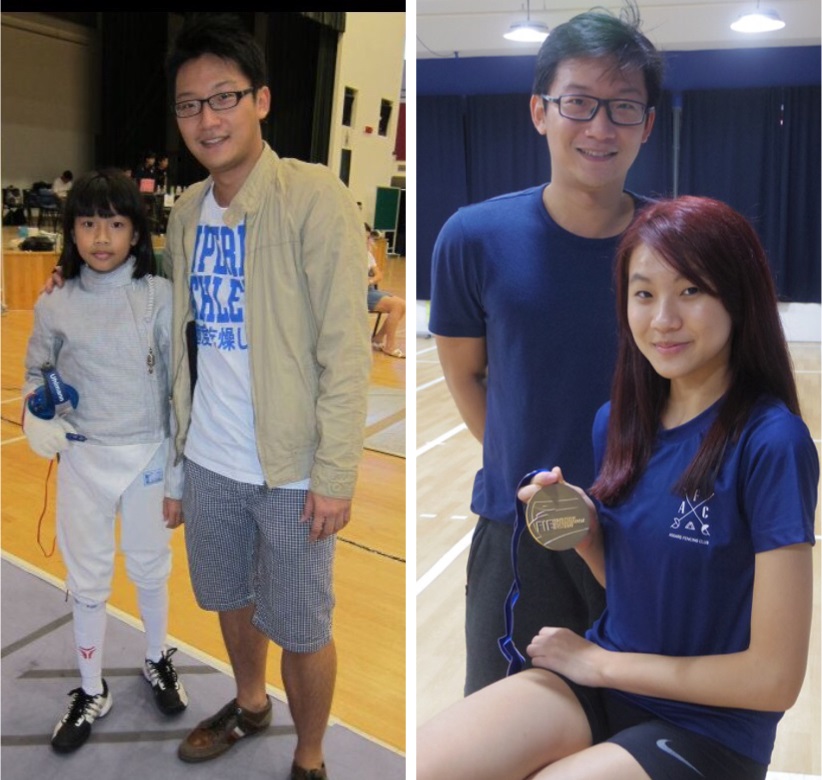
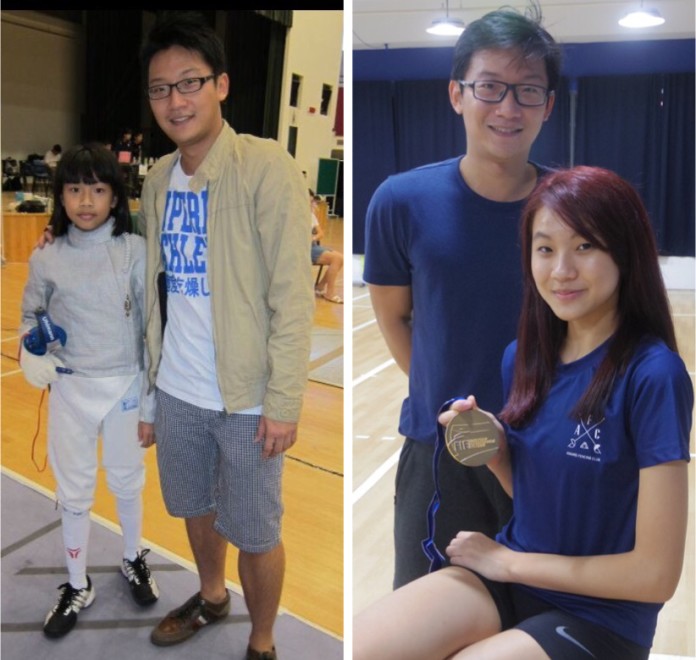
Ywen has known her coach David Chan for half her lifetime as they share the journey to the world title. (Photo: Cynthia Lau)

“Apart from being naturally fast and well-coordinated, Ywen has this ability to make necessary changes during the chaos of a bout,” he said.

“Many fencers do not have the ability or take many years to develop that type of maturity. Some might never ever get it because it’s all about composure, and being able to analyse things under a lot of pressure, in a very short span of time, immediately, and especially in a sabre match where it’s so intense and so short.

“A lot of fencers know when a particular action is clearly not working, but they’re just locked into it, and will do it over and over again and end up losing.

EASY RAPPORT

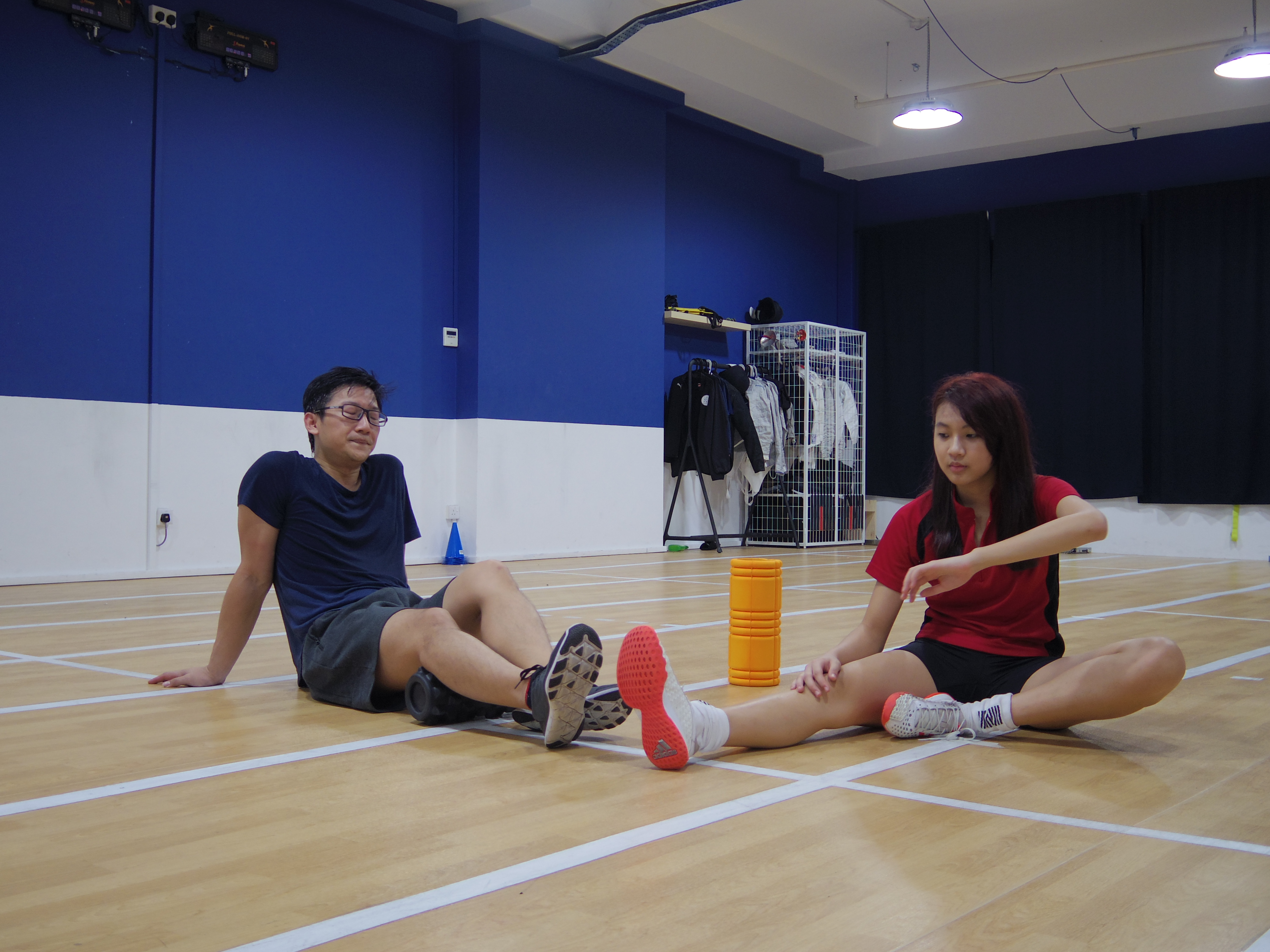
The Bourges triumph now behind them, Ywen continues taking private coaching from Chan three to four times a week, in sessions ranging from an hour to three. The duo work on cleaning up the teenager’s technique, rehearsing situational responses, learning new tactical skills, and interspersing serious fencing talk with matters more trivial.

There is an easy rapport between student and master – after all, he has known her for half her life. They were even team-mates for the 2015 SEA Games, when Chan came out of retirement to win a bronze medal in the men’s team event.

“David’s a fantastic coach and a fantastic friend, training with him is always great because he really motivates me and keeps me calm during my competitions,” said Ywen.

“And during training, I feel like we can tactically evolve a lot in a short period of time because … we’re both interested in it tactically and we’re able to bounce ideas off each other like that.”

The synergy between her and Chan is obvious.

“Right now, we are growing together as a student and a coach, and my exposure to world fencing as a coach is also a huge learning experience for me,” said Chan, who notices a rising level of recognition for Singapore at international meets since Ywen’s win.

In October, Ywen briefly topped the European Cadet Circuit rankings, after winning in Hungary, and emerging runner-up in France. She also competed in two Junior World Cup (JWC) events, reaching the Round of 64 in Bulgaria, and the Round of 32 in Poland, where she was on the wrong end of a 15-14 score to Eifler.

Chan says the focus for Ywen in the new season from October 2016 to April 2017 is greater exposure at the junior level, having already proven herself in the cadet ranks.

“There’s a huge gap in standard between cadet and junior, but less so between junior and senior,” said Chan. “Some of the junior fencers are already Olympic-level athletes, so the next challenge is for Ywen to excel at the junior level.

“That is why we will be competing in five JWCs this season and only two cadet events leading up to the Asian Championships in March, and the World Championships in April.”
THE OLYMPIC DREAM

Inevitably, the question turns to the Olympics, and whether Ywen would qualify and even be a medal contender. A month ago, she reached a career-high of 19th in the World Junior Rankings, quite possibly the highest a Singaporean has ever achieved for any weapon.

“People ask about the Olympics a lot, and it’s a hope (for me),” said Ywen. “I feel like I’d want to (be an Olympian), and I might decide to take gap years to try. But I’m not sure yet.”

Chan could understand his charge’s uncertainty on the matter.

“You know you always want to get there, that’s definitely the end goal,” he said. “But you don’t want it to be too present in your thoughts because there are much more important steps to take before you can say ‘hey, we’re ready for the Olympics’.

“The long-term dream is not just to qualify for the Olympics but to do well, and there are many more milestones she must hit along the way.”

Tokyo 2020 may come too early for Ywen as she would only be fresh off shedding her junior status, but the 2024 Olympics is a more realistic target.

Asked what fencing meant to her, Ywen, who often finds herself visualising the actions, said it is a form of expression, and even an obsession.

“Fencing is like a way to express yourself in a complete way. When you’re in the moment, nothing else matters,” she said. “And the best thing about it is, when I fence I feel like people look at me for my fencing, and look at me for something I work hard for, not for anything else.

“I wear a mask and it’s just my name, but I get to show who I really am.” 

Source link

Chinese women spend big on beauty surgery

0

When it comes to surgical procedures to enhance beauty, Chinese women are twice as generous than their global peers, according a report based on a survey by Insight Engineers, a market research consultancy in the United Kingdom.

The survey found that Chinese women spent the equivalent of about 581 yuan (S$121) per month.

That’s more than twice the global average of about 254 yuan, and 145 yuan higher than the second group on the list-women from South Korea.

Wang Danru, a plastic surgeon from No 9 People’s Hospital affiliated to the medical college at Shanghai Jiao Tong University, said Chinese women are displaying an increasing interest in a range of surgical procedures, mainly to look prettier, rather than fighting aging, which may help explain why the population of plastic surgery patients in the country is much younger than in other places.

The report also said that 74 per cent of Chinese respondents associate beauty directly with facial appearance, the highest of all surveyed countries.

The biggest concern for Chinese women is flabby skin and crow’s feet-the little wrinkles at the corners of the eyes.

The survey interviewed 7,700 “aesthetically aware” women from 16 countries, who were between 18 and 65 years of age.

Aesthetically aware women were defined as those who gave positive answers to at least two of the three questions, including: “It’s important for me to look good for my age”; “I care about improving my facial appearance”; and “Spending money on improving my appearance is worthwhile”.

Most of the women surveyed in China were from wealthy areas of Beijing, Shanghai or Guangzhou, capital of Guangdong province.

“I would say Chinese patients are the most dramatic,” said Woffles Wu, a prominent plastic surgeon in Singapore.

His clinic receives 30 to 40 patients from China every month.

A few years ago, the number was in single digits, he said.

“Some patients come with no financial limit and just want to achieve the best possible results they can. They are willing to fly back and forth again and again,” he said.

Chinese women’s fervour for seeking beauty pushed the country’s aesthetic medicine market to 400 billion yuan in 2015.

It is projected to soar by 20 per cent annually, according to the Chinese Association of Plastics and Aesthetics.

It is now the third-largest market, after the United States and Brazil.

Research for the report-The Changing Faces of Beauty: A Global Report-was conducted in March by pharmaceutical company Allergan Plc, based in Dublin, Ireland.

Image: 
Publication Date: 
Monday, December 19, 2016 – 12:19
Send to mobile app: 
Source: 


Story Type: 
Others

Source link

Long John Silver’s discount coupon deals valid till 22 Jan 2017

0

Save up to $4.60 at Long John Silver’s when you flash any of these coupon images on your mobile device

Long John Silver’s discount coupon deals valid till 22 Jan 2017

Flash any of the coupon images below at any Long John Silver’s outlet and save up to $4.60, valid from 1 Dec 2016 – 22 Jan 2017. Be wowed by the size of the 2pc Battered Pacific Dory and the succulence that is locked within the crispy coat.

Source