31.5 C
Singapore, SG
Wednesday, September 23, 2026
Home Blog Page 2177

Ex-BSI banker found guilty in Singapore of charges linked to 1MDB probe

0


SINGAPORE – A Singapore court found a former wealth manager of Swiss bank BSI guilty of four charges on Wednesday in a case linked to a money-laundering investigation involving Malaysian fund 1MDB, the third BSI banker convicted in the city state this year.

District judge Ng Peng Hong found ex-BSI banker Yeo Jiawei guilty of attempting to pervert the course of justice by urging witnesses to lie to police and destroying evidence during an investigation into illicit money transfers linked to Malaysian sovereign wealth fund, 1Malaysia Development Berhad (1MDB).

Yeo is facing seven separate charges, including money laundering, cheating and forgery, which the prosecution said he would be tried for next year. Prosecutors told reporters after the hearing that he “could face more charges”.

Yeo, 33, has repeatedly denied any wrongdoing during the month-long trial.

He appeared in court with his hands and feet in chains and appeared calm when the verdict was read out. He has been held in remand since April.

The prosecutors had charged that Yeo had amassed S$23.9 million by taking secret profits from 1MDB-linked transactions during his work for the Singapore unit of BSI.

Singapore authorities have called the 1MDB-linked investigation the most complex, sophisticated and largest money laundering case they have handled. It involves at least six different jurisdictions.

Singapore’s central bank in May ordered the closure of the operations of the Singapore unit of the Swiss private bank and asked the Attorney General’s Chambers to investigate six members of its senior management and staff.

Two of them, Yvonne Seah and Yak Yew Chee have already been convicted and sentenced on charges stemming from the money-laundering investigation linked to 1MDB.

Read also: Singapore jails 2nd BSI banker on charges linked to 1MDB probe

The Malaysian fund, founded by Prime Minister Najib Razak, who previously chaired its advisory board, is the subject of money laundering investigations in at least six countries, including Switzerland, Singapore and the United States.

Najib has denied any wrongdoing and said Malaysia will co-operate with the international investigations.

Image:
Publication Date:
Wednesday, December 21, 2016 – 17:18
Keywords:
Send to mobile app:
Source:

Story Type:
Others

Source link

China’s smoggiest city closes schools amid public anger

0


SHIJIAZHUANG, China – China’s smoggiest city closed schools Wednesday, as the country suffered through its sixth day under an oppressive haze, provoking public anger about the slow response to the threat to children’s health.

Since Friday, a choking miasma has covered a large swathe of northeastern China, leaving more than 460 million gasping for breath.

Shijiazhuang, the capital of northern Hebei province, was one of more than 20 cities that went on red alert Friday evening, triggering an emergency action plan to reduce pollution by closing polluting factories and taking cars off the road, among other measures.

Nowhere has been hit as hard as the city, which has seen a huge spike in pollution.

But the city’s education department waited until Tuesday evening to announce it was closing elementary schools and kindergartens, following similar moves in neighbouring Beijing and Tianjin.

The announcement said middle and high schools could close on a voluntary basis.

The statement, which appeared on the education department’s official social media account provoked anger.

“Are middle school students’ bodies’ air purifiers?” one incredulous commenter asked, adding “Are you going to wait for us all to become sick before you step up to fix this?”

A picture from neighbouring Henan province showing more than 400 students sitting an exam on a football pitch after their school was forced to close was widely circulated on social media, further fuelling discontent.

Shijiazhuang has seen 10 bouts of serious air pollution so far this winter, according to the China Daily newspaper, putting it at the top of the environmental ministry’s list of cities with the worst air quality.

Over the last 48 hours, levels of PM 10 in the city have been literally off the charts, with readings of the larger particle, a major source of haze, repeatedly maxing out at 999.

Levels of the smaller PM 2.5, tiny enough to be absorbed into the bloodstream and thought to be a major contributor to respiratory and cardiovascular disease, reached as high as 733, more than 29 times the World Health Organisation’s daily recommended maximum exposure of 25.

Image:
Category:
Publication Date:
Wednesday, December 21, 2016 – 17:12
Keywords:
Send to mobile app:
Source:

Story Type:
Others

Source link

Eggs in short supply as South Korea battles worst bird flu outbreak

0

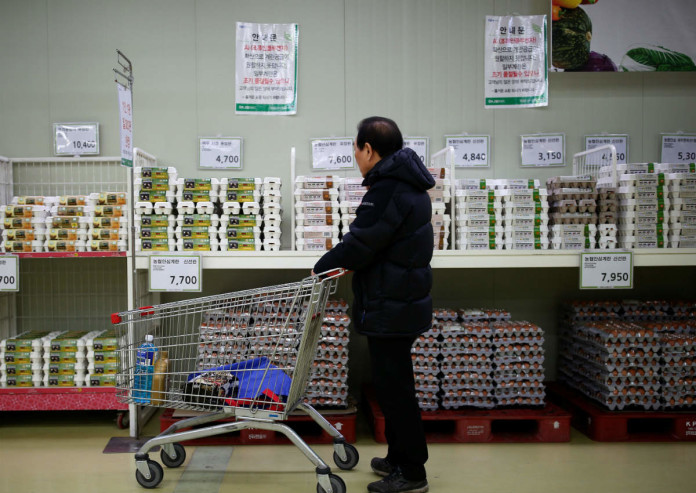
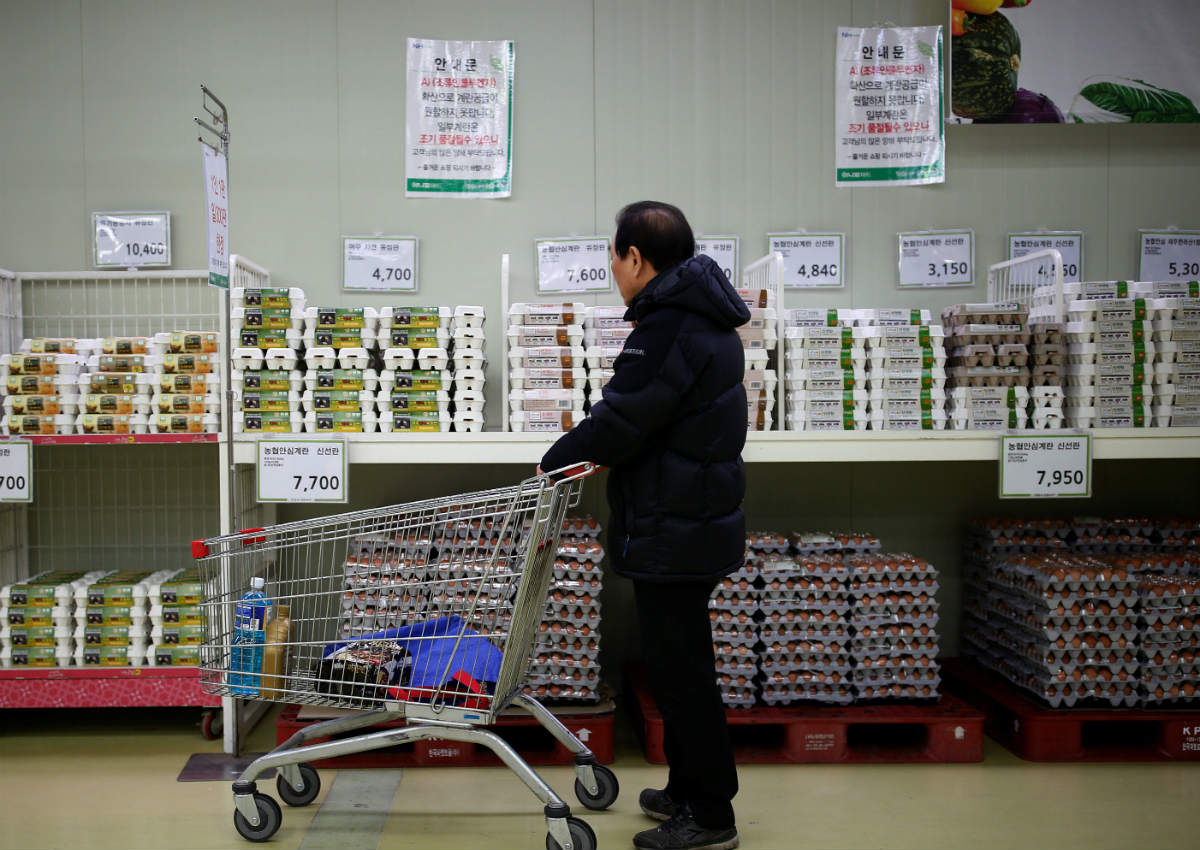
Moon Hong-nam, a pastry chef in Seoul, needs at least 15,000 eggs a day to bake cakes, but after South Korea’s worst outbreak of bird flu and a surge in the prices of eggs, he is considering changing his menu.

“We can ride it out through Christmas with what (supplies) we have secured,” said Moon, who works at the LÈSCARGOT bakery in the South Korean capital. “But if (bird flu) continues until January, we will have to raise prices inevitably and make bakery items that do not need eggs.”

About 20 million birds, nearly a quarter of South Korea’s poultry stock, have been culled to control the outbreak. Most of the birds culled are egg-laying hens.

The flu has spread in other parts of Asia as well, particularly in Japan.

In South Korea, the average retail price for 30 eggs has risen nearly 25 percent to 6,781 won (S$8.20) since the outbreak began on Nov.18, – the highest in more than three years, according to state-run Korea Agro-Fisheries & Food Trade Corp.

According to data from the institution, it is the highest month-on-month increase in egg prices in nearly a decade.

The price hike is putting a dent in the wallets of Koreans, who usually eat more eggs in the winter, including in bread and kimbap, a Korean sushi roll.

Feeling the supply pinch, Lee Sang-hyup, the 55-year-old owner of Jeonju Restaurant, said he has cut down the amount of fluffy steamed eggs served free with the main dish, spicy braised hairtail fish.

“If I can’t have enough eggs, then I have no choice but to stop serving it,” said Lee, adding that it was the first time since he started the restaurant three years ago that he was rationing portions of the side dish.

Besides the price increases, some stores are restricting egg purchases. “We are limiting the amount of egg trays each customer can buy to one because of the egg supply shortage, and it seems it will last for five to six months so we will continue to restrict egg purchases for a while,” said Lee Won-il, a manager at Nonghyup, one of the country’s supermarket chains.

To ease the shortage, South Korea’s agriculture ministry is seeking to import egg-laying chickens and eggs from the United States, Spain and New Zealand.

Analysts said the egg shortage is expected to last at least one year as it could take up to two years for egg and poultry industry to raise baby chickens and rebuild flocks. “Economic losses caused by (avian influenza) is estimated to cost up to 1.4 trillion won ($1.17 billion) if 30 percent of Korea’s poultry population gets infected,” said Chung Min, an analyst at Hyundai Research Institute.

CHICKEN SALES

Although egg consumption is likely to be steady despite the higher prices, the bird flu has cut into sales of chicken meat.

Lee at the Nonghyup store said chicken sales had dropped 25 percent since the bird flu outbreak, while pork sales jumped about 30 percent.

Other major discount stores also saw a drop in chicken sales despite discounts. Chicken sales at E-Mart fell 15.4 percent in the first 15 days of December from a year earlier, whereas imported pork sales surged about 85 percent during the same period, according to E-Mart data.

Kim Dong-jin, manager at Korea Poultry Association, said the recent bird flu outbreak poses a serious threat to the poultry industry as it could lose market share to imported chicken meat from Brazil and the United States, while it can’t supply enough eggs. “(Korean poultry farmers) are in a double whammy situation,”said Kim. “The government needs to come up with better measures to ease (farmers’) concerns.”

Image: 
Category: 
Publication Date: 
Wednesday, December 21, 2016 – 17:02
Send to mobile app: 
Source: 


Hermes ID: 
2 824 288
Hermes ID String: 
JLEGGS21
Hermes Author: 
LJESSICA
Story Type: 
Others

Source link

Chinese woman accused of locking crying baby in dog cage to play mahjong in peace

0

A 35-year-old woman in Central China allegedly locked her crying three-year-old son in a dog cage so that she could continue playing mahjong in peace, Chinese media reported.

But the woman, surnamed Jiang, denies the allegations by passers-by who claimed that they witnessed the incident in Liuyang City, Hunan Province.

Photo: Weibo

She told local broadcaster Hunan Economic TV that she only wanted to put him in the cage for a while.

“I was not doing this for real,” Jiang was quoted as saying.

She added that it was the other children who locked the cage door.

Photo: Weibo

Local government officials will be doing a background check to confirm if she is qualified or capable of taking care of the child, The Coverage reported.


Visit STOMP for more stories.

Image: 
Category: 
Publication Date: 
Wednesday, December 21, 2016 – 16:14
Send to mobile app: 
Source: 


Story Type: 
Others

Source link

Indonesia police say Christmas bomb plot foiled, 3 killed

0

JAKARTA – Indonesian police have foiled plans for a Christmas suicide bombing after killing three suspected militants Wednesday and discovering a cache of bombs, authorities said.

A firefight erupted at a house in South Tangerang 25 kilometres (15 miles) outside the capital Jakarta, with police saying the alleged militants had opened fire at officers.

“We asked the three men to surrender but they fought, with one of them throwing a bomb (at officers). Thankfully the bomb didn’t explode and we took firm action against them,” said national police spokesman Rikwanto, who goes by one name.

He said the group had planned to stab a police officer at a police station and wait for crowds to gather before launching a suicide bomb attack around the Christmas holidays.

The plot was disclosed by a member of the group who was arrested earlier on Wednesday and tipped off police about the three militants and their whereabouts, police said.

The raid came less than two weeks after police arrested four Islamic militants including a female suicide bomber in Bekasi, east of Jakarta. They were plotting to bomb one of the guard posts at the presidential palace.

The men in South Tangerang have links to the Bekasi group, Rikwanto said. Some are members of a local radical outfit which has pledged allegiance to the Islamic State group.

Police said investigations are continuing into the larger network and its agenda.

Indonesia, the world’s most populous Muslim-majority country, suffered a string of deadly homegrown attacks during the 2000s – including the 2002 Bali bombings which killed over 200 people.

A sustained crackdown has weakened many of the most dangerous extremist networks but there have been fears of a resurgence in militancy.

Police believe hundreds of Indonesians have travelled to Syria to fight with militant groups including IS.

Image: 
Category: 
Publication Date: 
Wednesday, December 21, 2016 – 15:32
Send to mobile app: 
Source: 


Rotator Headline: 
Indonesia police foil Christmas bomb plot, 3 suspected militants killed
Story Type: 
Others

Source link

China's first self-developed driverless subway line to open in Hong Kong

0

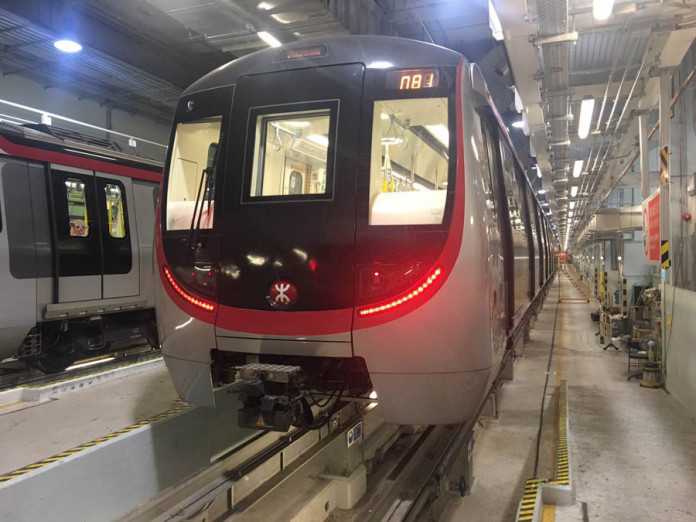
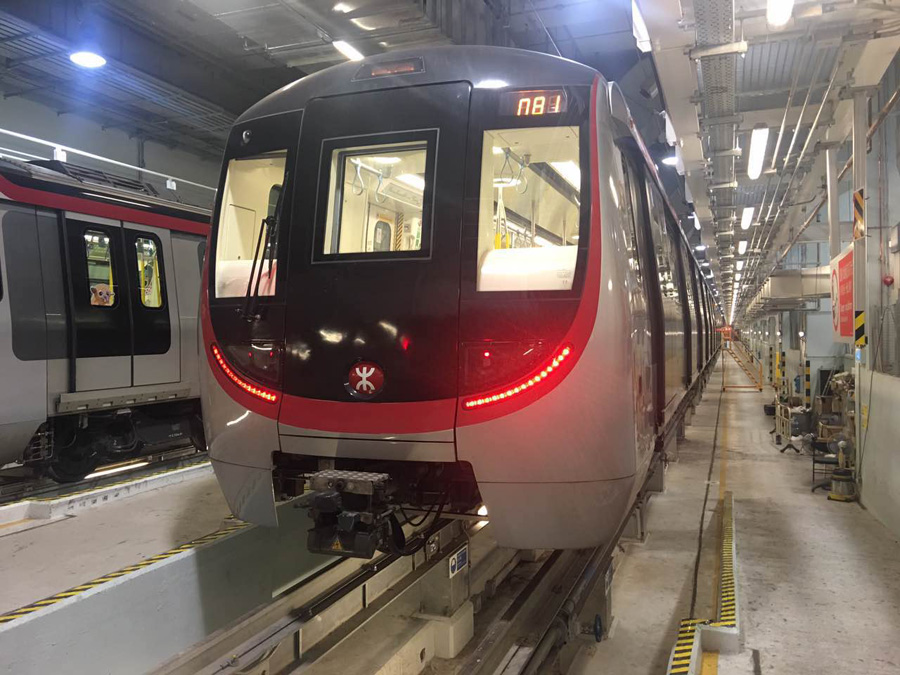
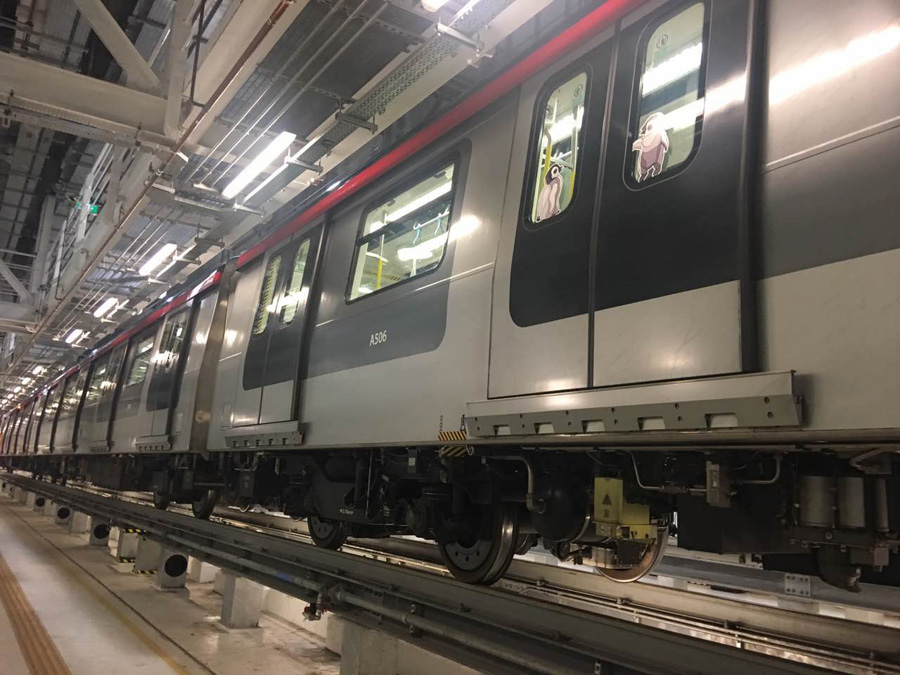
Driverless trains developed by a domestic company will start operating on a new subway line in Hong Kong on Dec 28, according to reports.

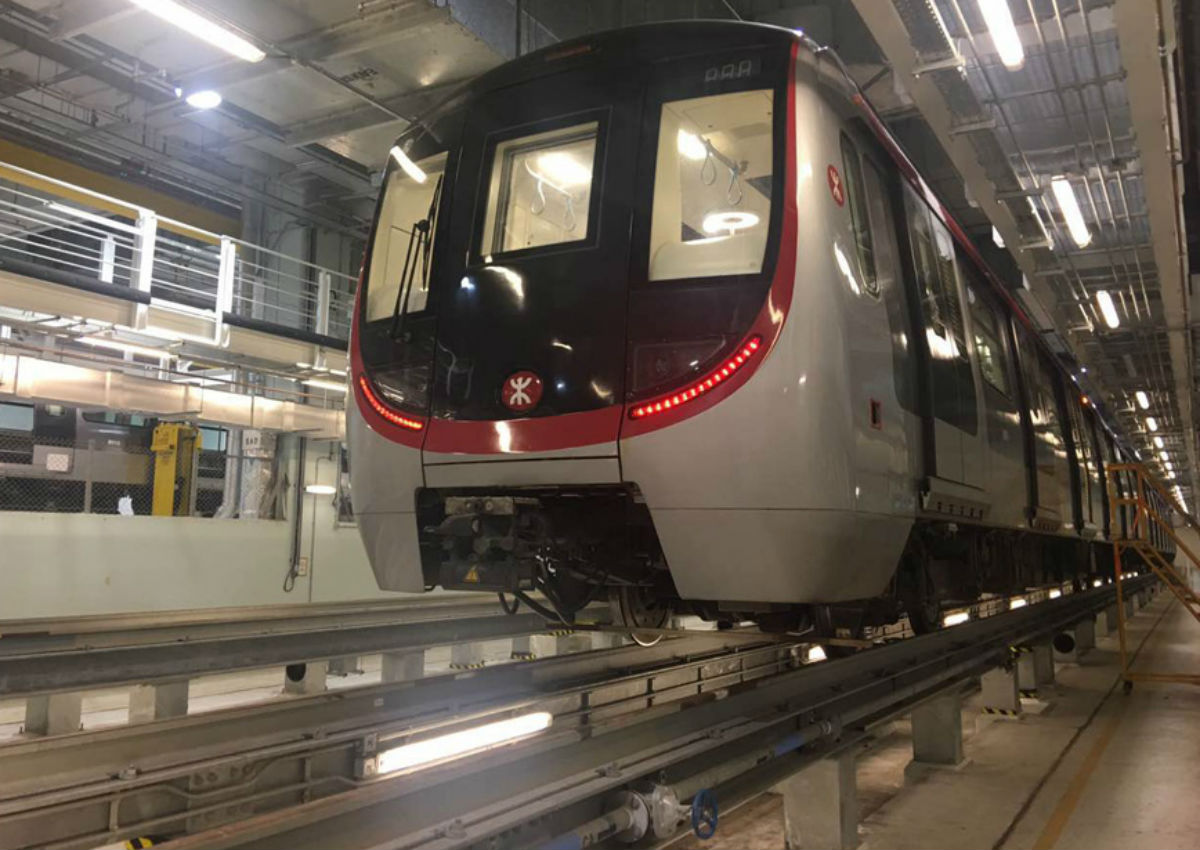
The photo shows a driverless train developed by a domestic company that will start operating on the South Island Line in Hong KongPhoto Credits: China Daily/ANN

Leung Chun-ying, chief executive of Hong Kong Special Administrative Region, attended a ceremony at Ocean Park station on Dec 19 to mark the inauguration of the South Island Line.

The photo shows a driverless train developed by a domestic company that will start operating on the South Island Line in Hong KongPhoto Credits: China Daily/ANN

Hong Kong government launched the seven-km line project in 2007.

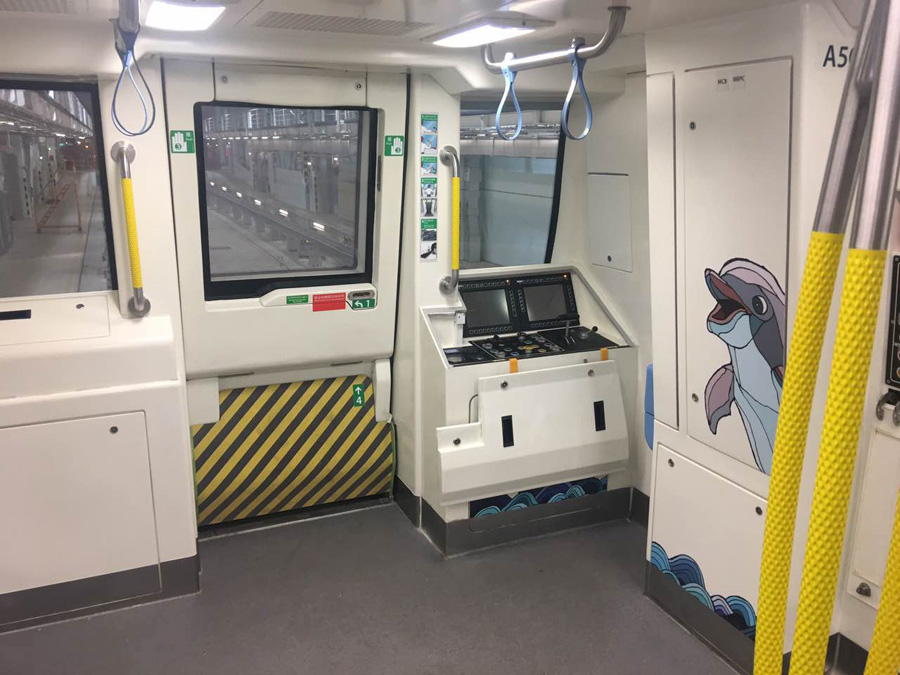
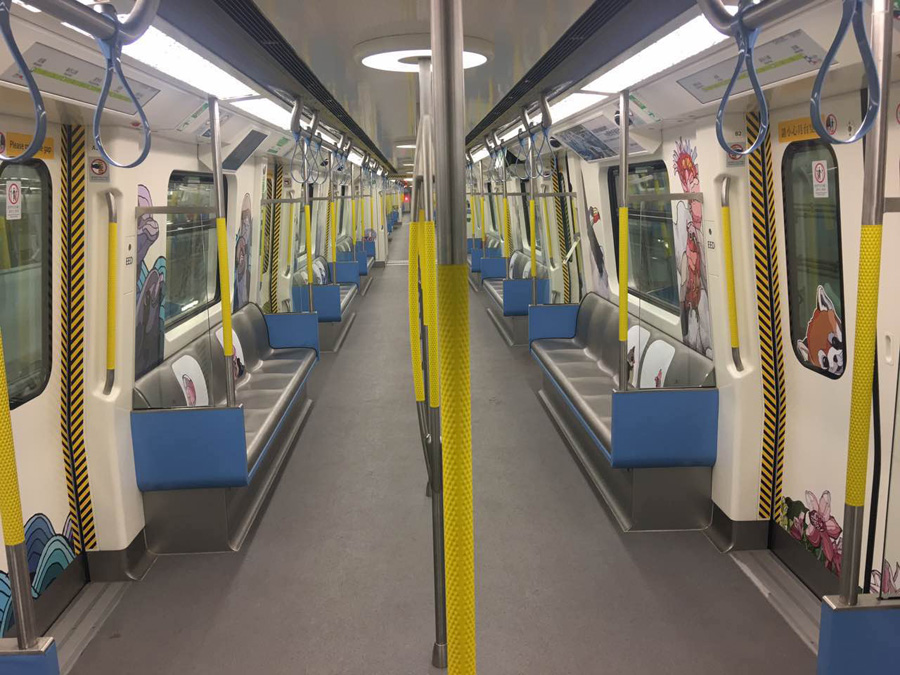
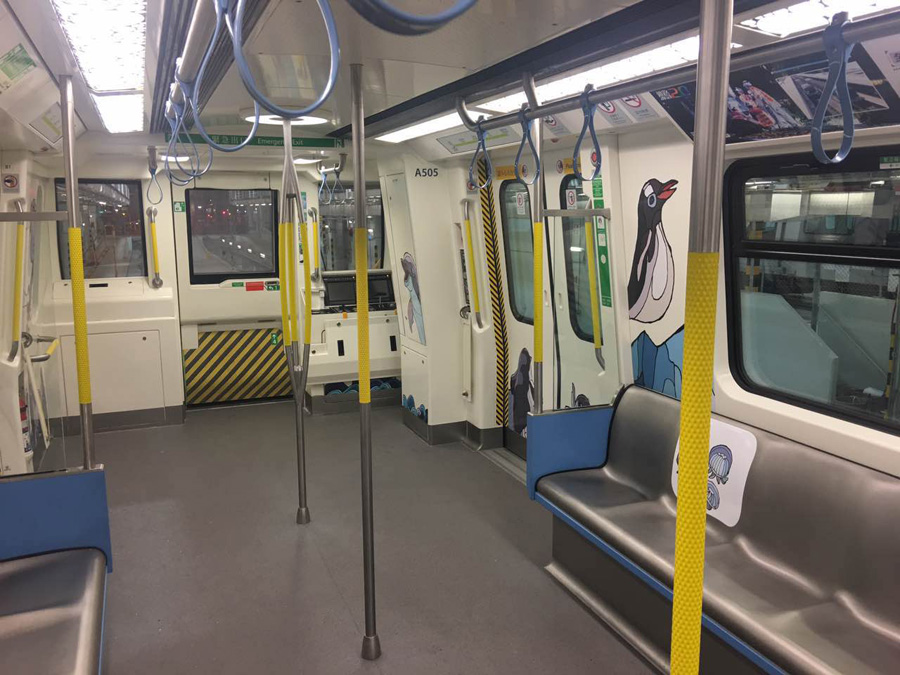
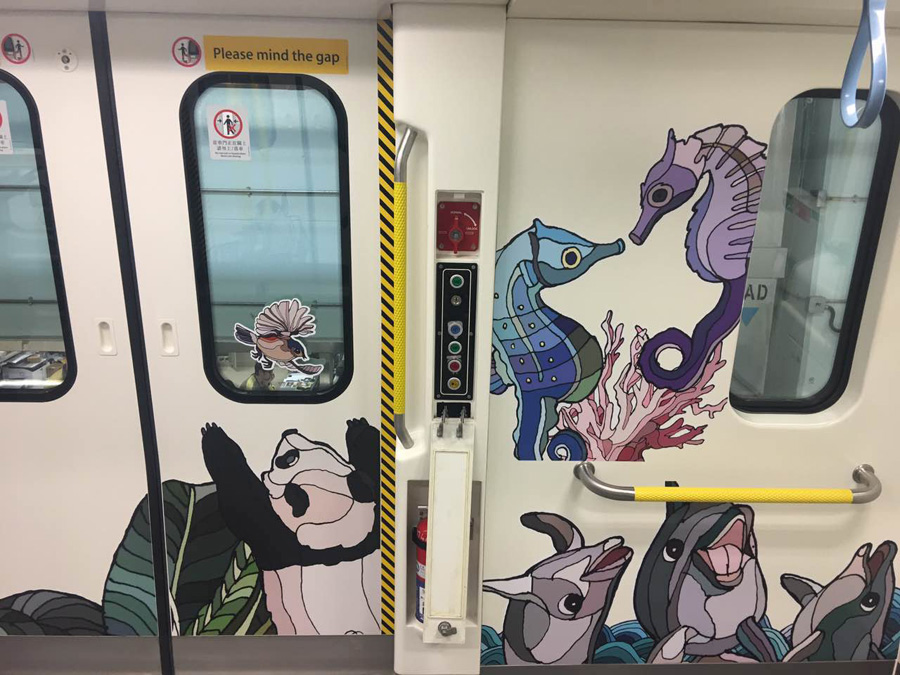
The photo shows the inside of a driverless train developed by a domestic company that will start operating on the South Island Line in Hong Kong Photo Credits: China Daily/ANN

When it opens to passengers, it will extend the MTR network to the Southern District, allowing the special administrative region’s 18 districts to be served by rail.

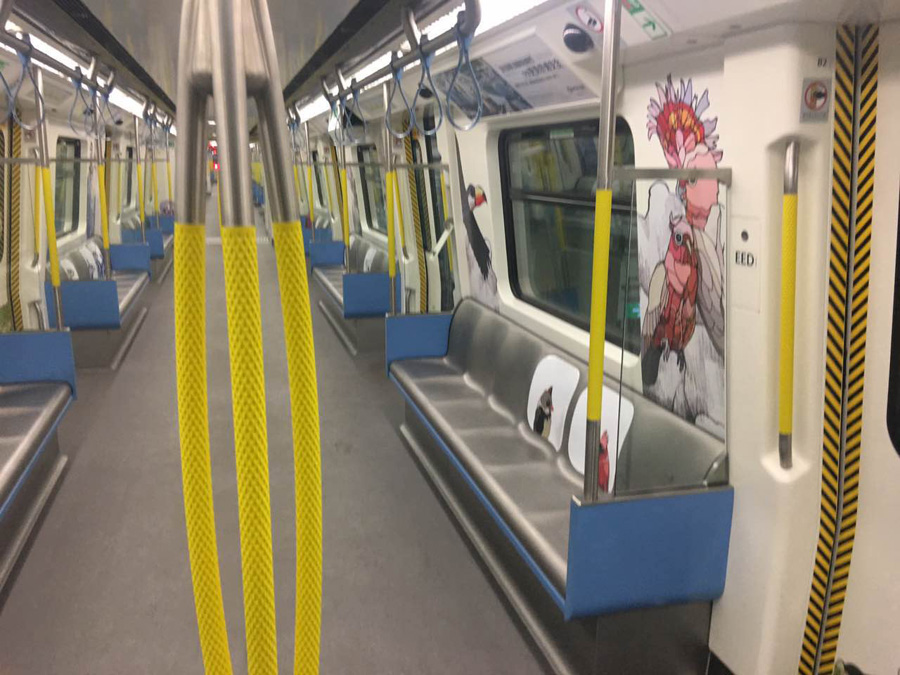
The photo shows the inside of a driverless train developed by a domestic company that will start operating on the South Island Line in Hong KongPhoto Credits: China Daily/ANN

A fleet of 10 three-car driverless trains will run on the South Island Line, connecting the Southern District with the existing Tsuen Wan Line and Island Line at Admiralty.

The CRRC Changchun Railway Vehicles Co manufactured the driverless trains using technologies developed by China.

The first driverless train was produced at a factory in Hong Kong on March 18 this year.

The photo shows the inside of a driverless train developed by a domestic company that will start operating on the South Island Line in Hong KongPhoto Credits: China Daily/ANN

A technician from China Railway Rolling Stock Corp said the line is the first one to use domestically developed and produced driverless subway trains in the country.

“Compared with the normal subway trains, the driverless trains have fully automatic control system,” the technician said.

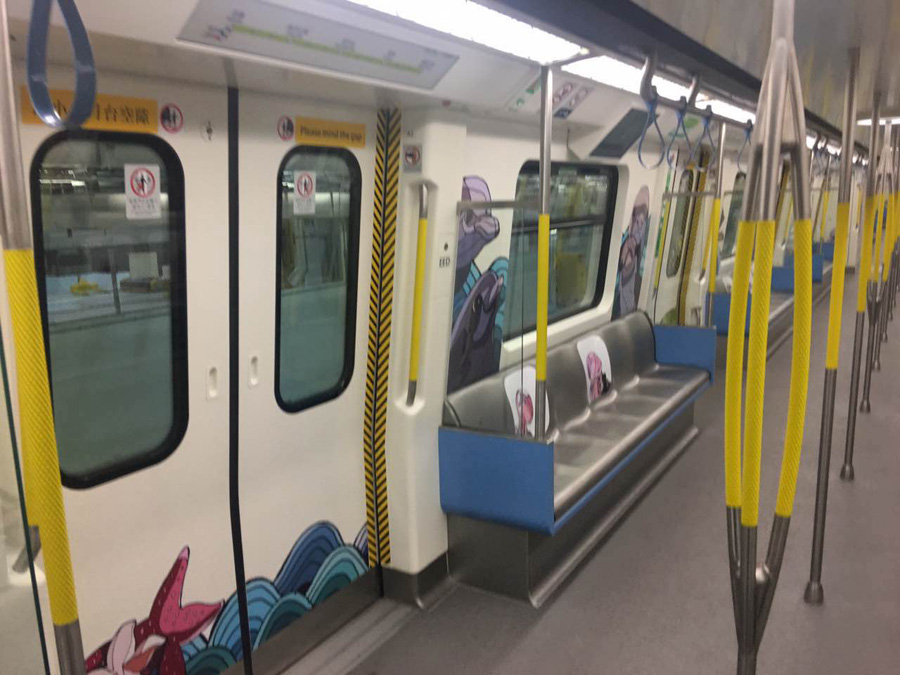
The photo shows the inside of a driverless train developed by a domestic company that will start operating on the South Island Line in Hong Kong Photo Credits: China Daily/ANN

Three “driverless” lines have been in operation in Guangzhou, Beijing and Shanghai, but the technician said these lines still needed operators in drivers’ cabins, and the trains were developed by a foreign company.

Driverless trains started to emerge in Japan and France in early 1980s.

The photo shows the inside of a driverless train developed by a domestic company that will start operating on the South Island Line in Hong Kong Photo Credits: China Daily/ANN

Meanwhile, China’s self-developed technologies began to mature in recent years and CRRC Sifang Co has exported its driverless trains to Singapore, the technician said.

A newly constructed line in Beijing will also use the driverless trains supplied by the CRRC Changchun Railway Vehicles Co, he said.

The photo shows the inside of a driverless train developed by a domestic company that will start operating on the South Island Line in Hong KongPhoto Credits: China Daily/ANN

An open day will be held on Dec 24 at the new South Island Line stations and the extended part of Admiralty Station for passengers to visit and familiarize themselves with the new station facilities.

Image: 
Category: 
Publication Date: 
Wednesday, December 21, 2016 – 14:45
Send to mobile app: 
Source: 


Story Type: 
Others

Source link

Ensure no let-up in push for inclusive society

0

Every five years, the Government releases a national blueprint to meet the needs of people with disabilities.

The first of these Enabling Masterplans ran from 2007 to 2011, the second from 2012 to this year, and the third will cover 2017 to 2021.

Each points out unmet needs and lays out the policies and services that should be developed.

How have the recommendations been implemented? How well have the needs of people with disabilities been met over the past decade?

Certainly, the Government has devoted more resources and finances with each masterplan.

Following the 2007 outline, the Government announced a doubling of the budget allocated to services for people with disabilities.

And in the second masterplan, the budget was increased to more than $1 billion to cater to a variety of needs, especially in the areas of transport and early intervention.

Public transport fare concessions were extended to people with disabilities in 2014.

Those who could not take buses and trains were given subsidies to take cabs.

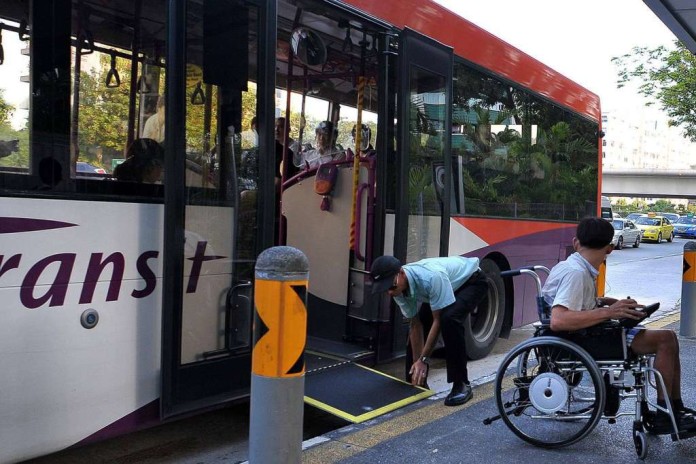
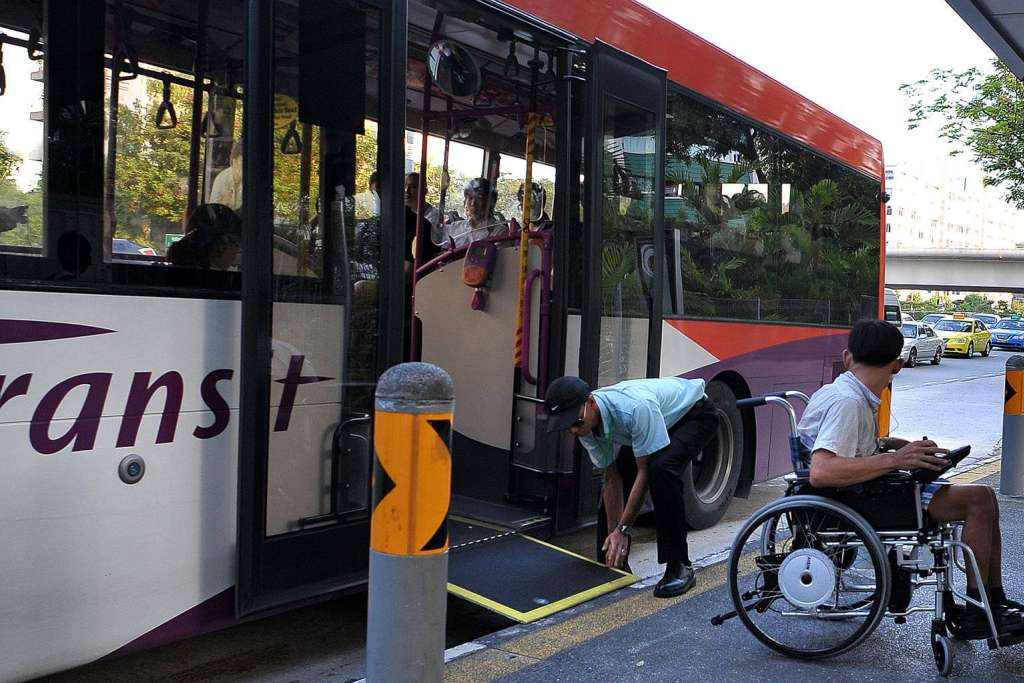
It also became the norm for buses, buildings and common areas to be made wheelchair-friendly or barrier-free.

More resources were allocated to education too. To help children with special needs, subsidies for early intervention programmes were bumped up in 2014.

In that year, a $30 million Open Door Programme was also introduced to help people with disabilities train and look for jobs, and to defray employers’ costs in supporting them.

Last month, the Education Ministry announced compulsory education from 2019 for children with moderate to severe special needs in publicly funded schools.

Changes have also taken place at the macro level, with Singapore ratifying the United Nations Convention on the Rights of Persons with Disabilities in 2013.

It is inevitable that, in spite of all the changes, there are still gaps that need to be addressed.

First, children with special needs who receive therapy should receive assistance to attend pre-school.

For now, many children with more severe developmental difficulties do not attend pre-school because of the long waiting lists at the schools.

Parents also fear that the teachers are either not adequately trained or do not have the bandwidth to handle their children.

The United Nations Educational, Scientific and Cultural Organisation has urged countries to provide access to formal pre-school education for children with disabilities because it is a “powerful means of nurturing diverse abilities and overcoming disadvantages and inequalities”.

Next, people with disabilities need more help to secure jobs. Research has shown that those who are employed lead more fulfilling lives.

The significance of employment goes beyond simply being a means of earning a living.

Official data shows that only about one in 10 of those with disabilities is able to find work in the open market.

Stakeholders say those who are hired are often relegated to service-related, back-end jobs that keep the employees out of sight.

Thirdly, it is time to establish a Disability Office staffed by people from the relevant health, education, manpower and social service agencies.

The work is now split between different agencies and ministries.

The issues people with disabilities face cut across the different sectors. For instance, any attempt to place them in good jobs will involve several agencies.

This includes the Ministry of Manpower to rally the support of employers, the Ministry of Education to ensure people with disabilities are taught relevant vocational skills in school, and social workers to make sure those hired are coping well in the workplace.

Such a Disability Office could be parked with the Prime Minister’s Office under a coordinating minister, said MP Denise Phua, one of the 22 members in the committee that developed the latest masterplan.

Lastly, there should be no let-up in the push for a truly inclusive society.

While several large surveys have found that people support the idea of inclusion, opinions are not always translated into action.

There are still many who are uneasy about marrying a person with a disability, or even having special needs children sitting next to able-bodied children in class.

To make any change lasting, sustainable and useful for those who need it most, there cannot be a let-up in the will to translate each Enabling Masterplan into action.

If we still view those with disabilities as a separate community, and see the plans as something that concerns Them rather than Us, we are denying a group of people their personhood and right to participate in society.

Singapore is one of the most rapidly ageing societies in the world.

The number of those with acquired disabilities due to accidents, illness and old age will rise.

Be it paralysis from a stroke or the loss of basic functions due to dementia, the range of people suffering disabilities will be far wider than those born with physical or mental impairments.

About 2.1 per cent of the student population here – or 9,660 young people below the age of 18 – have disabilities.

When it comes to people aged 50 and above, the figure rises to 13.3 per cent.

Given Singapore’s ageing population, many of its citizens will one day have disabilities.

  • Key proposals

  • Some recommendations for the Government in the Enabling Masterplan:

    •Introduce a standardised case management and care planning system, so people with disabilities can access services easily as they move through different life stages.

    •Explore more opportunities for interaction between children in mainstream and special education schools, as well as such opportunities for children with and without disabilities at the pre-school level.

    •Work with agencies such as Workforce Singapore and the Tripartite Alliance for Fair and Progressive Employment Practices to promote the hiring of people with disabilities.

    •Set up a disability office to improve coordination across government agencies.

    •Develop a central database of people with disabilities to facilitate planning of services.

    •Continue educating the public on features such as parking spaces that are meant for people with disabilities so they will not be misused.

    •Fit homes with technology to enable those with disabilities to live independently in the community.

    Priscilla Goy


This article was first published on December 21, 2016.
Get a copy of The Straits Times or go to straitstimes.com for more stories.


Image: 
Category: 
Blurb: 
<p>Every five years, the Government releases a national blueprint to meet the needs of people with disabilities.</p>
Publication Date: 
Wednesday, December 21, 2016 – 16:00
Keywords: 
Send to mobile app: 
Source: 


Story Type: 
Others

Source link

Kim Woo-bin and his scented characters

0

Kim Woo-bin is known for putting a lot of thought into his roles.

In the past, he would make a list of 100 questions he wanted to ask his characters, imagining their stories. More recently, he’s taken to picking out fragrances that best suit his character, the 27-year-old actor told The Korea Herald at a cafe in northern Seoul on Monday.

“When filming ‘Master,’ director Jo Eui-seok said he would know when I walked past him because of a distinctive scent,” said Kim, who was wearing a comfortable dark sweater. Stretching out his arm, he offered, “Do you want to try smelling it? This is the scent I put on for that role.”

A towering figure at 188 centimeters, Kim started modeling at 19, much to the astonishment of his teachers. “I was a quiet student,” he said. “Until middle school, I was so shy that I couldn’t even look people in the eye to say hello.”

Korean actor Kim Woo Bin.Photo: ONE

Since then, Kim has come out of his shell, both socially and career-wise. He became enthralled by acting while being coached for commercial films and went on to star in hit TV dramas such as “A Gentleman’s Dignity” (2012). He rose to stardom playing a winsome millionaire high-schooler in “The Heirs.”

In the political thriller film “Master,” which opened in local theatres Wednesday, Kim plays the tech-savvy genius Park Jang-goon, acting alongside Korean cinema heavyweights Lee Byung-hun and Gang Dong-won.

“I chose a lime scent for Jang-goon,” said Kim, explaining that he’s partial to sweet, citrusy perfumes. “I think the scent helps me melt into the role. I really wanted him to come alive. There was a vibrant quality to the character.”

Kim’s character Jang-goon invents a computer system for a fraudulent corporation that rakes in investments from unsuspecting clients. But he’s also a fun-loving youth who’s been put in a dangerous situation, and Jang-goon wavers between the police and his callous employer Chairman Jin, played by Lee.

“I observed some of my really smart friends,” Kim said on preparing for the role. “I noticed that their smartness didn’t come through in everyday life. They joked around. But when they began working, they would completely change, and you could tell there was something different about them.”

When Kim debuted in 2009, both the fashion and entertainment worlds heralded him as a unique face.

“I don’t have delicate features, like a lot of models and actors did at that time,” said Kim, citing stars like fellow model-turned-actor and longtime friend Lee Jong-seok. “Modeling coaches and directors always see me and say, ‘What do we make of him?'”

Looking back, Kim commented that his fresh appearance was an advantage. “I was able to book a lot of jobs, thankfully,” he recalled. Nowadays, there is a flood of strong, distinct faces in the Korean entertainment scene, Kim said.

Television still: The Inheritors starring Korean actor Kim Woo Bin.Photo: ONE

With eight years of acting behind him, Kim said it’s still “painful” to watch himself onscreen, but that he’s enjoying his craft more and more. “If being on set was unfamiliar before, it’s comfortable now,” he said. “I love the feeling of communicating with people and creating something.”

Kim said he picked up significant tips — on both work and life — while working alongside cinema veterans Lee and Gang. Asked what he would like to pass onto younger performers 20 years later, Kim smiled.

“That question makes me very happy,” he said. “That means I’ll still be acting at that age.”

By Rumy Doo (doo@heraldcorp.com)

Image: 
Category: 
Publication Date: 
Wednesday, December 21, 2016 – 14:53
Keywords: 
Send to mobile app: 
Source: 


Story Type: 
Others

Source link

COE trend seen continuing in 2017

0

T looks like the motor industry in Singapore is expecting COE (Certificate of Entitlement) premiums in 2017 to head anywhere but south, even as everyone agrees the economic uncertainty is weighing heavily on consumers’ minds.

Two weeks ago, passenger-car COE premiums fell to and below S$50,000, after having stayed above that level for most of the second half of this year. Wednesday’s final COE bidding exercise for 2016 will reveal whether it was a blip or not.

Victor Kwan, Wearnes Automotive managing director for Jaguar Land Rover, thinks it was.

“With the possible further reduction in the COE quota over the next few months, there should be upward pressure on COE premiums,” he says.

Ron Lim of Tan Chong Motor Sales also thinks so but with a caveat.

“The drop in passenger-car premiums in the first tender in December is reflective of the weaker buying sentiment, possibly due to the worsening economic sentiment,” says Mr Lim, the general manager of the authorised Nissan distributor for cars and goods vehicles.

“If premiums were to bounce back up to S$50,000 and above, I expect buying sentiment to weaken again, which will mean COE prices might fall back down.”

Raymond Tang, first vice-president of the Singapore Vehicle Traders Association, does not see premiums softening – at least for the next six months.

He believes the COE Category A premium will “inch up” in 2017, partly because of the motor show in January, when attractive deals attract more buyers, and partly because of steady replacement demand for low to mid-range cars.

Mr Tang says: “The small car COE premium should be stable in the first half of 2017 but for H2, we have to wait and see.

Most people are very cautious because of the economy and are waiting for some Budget goodies.”

Ricky Tay, managing director of Volkswagen Group Singapore, also has his eye on the Budget, but for a different reason.

“We will see whether the vehicle growth rate is cut because of Singapore’s car-lite push,” he says.

Mr Tay is also not convinced that premiums will fall much in 2017, mainly because of private-hire demand.

“Most of the growth in 2016 did not come from private car buyers but from parallel imports and ride-sharing companies,” he explains.

For Mr Lim, the “wild card” next year will be how aggressive the private-hire car companies are.

“If they continue to come in strongly, then we can be sure that COE premiums will remain well-supported or even be pushed higher,” he says.

Vincent Tan, managing director of VinCar, one of the biggest parallel importers here, also believes COE premiums will be stable in 2017, but for a different reason – a smaller COE quota.

He says that although Category A, B and E COEs combined should be up to 10 per cent more next year than this year, a higher number of COE revalidations could whittle them down.

“So COE premiums should be flat or slightly higher than today,” says Mr Tan, who adds that while the economy is a factor, “people still need a car”.

“Mass-market and mass-luxury models will still be okay, but supercars will suffer,” he says.

Also likely to suffer in 2017 are less well-known parallel importers because of recent high-profile cases of such vendors disappearing with customers’ deposits.

“Confidence in parallel imports (PIs) has been hurt, with the smaller importers and newcomers most affected,” says Mr Tan.

But he says VinCar, which has been in the business for 30 years, is not affected.

Mr Tang adds that the PI business has also slowed after authorised distributors began offering the same popular models, such as the Toyota Sienta compact MPV, and a made-in-

Japan Honda HR-V Crossover to take on the Vezel Japanese domestic model.

But second-hand cars will continue to shine.

“Used-car sales have been good in 2016 and will continue to be good in 2017 because of the economic uncertainty,” says Mr Tang, who is also managing director of Yong Lee Seng Motor, an established used-car dealer.

In the first 11 months of 2016, used-car transactions of over 104,000 overtook 2015’s total of about 94,000.

“People prefer to buy an older used car to tide over a difficult period instead of committing to a new car,” he says.

samuelee@sph.com.sg


This article was first published on December 21, 2016.
Get The Business Times for more stories.

Image: 
Category: 
Publication Date: 
Wednesday, December 21, 2016 – 14:30
Keywords: 
Send to mobile app: 
Source: 


Story Type: 
Others

Source link

More hawker centres to be run by social enterprises

0

In a bid to keep prices low, NTUC Foodfare currently sets the ceiling for some basic dishes at its Bukit Panjang centre, and monitors price rises of these at the Bedok centre.

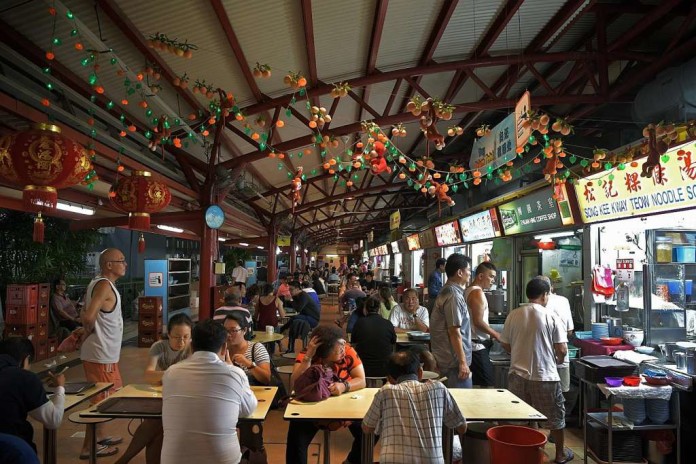
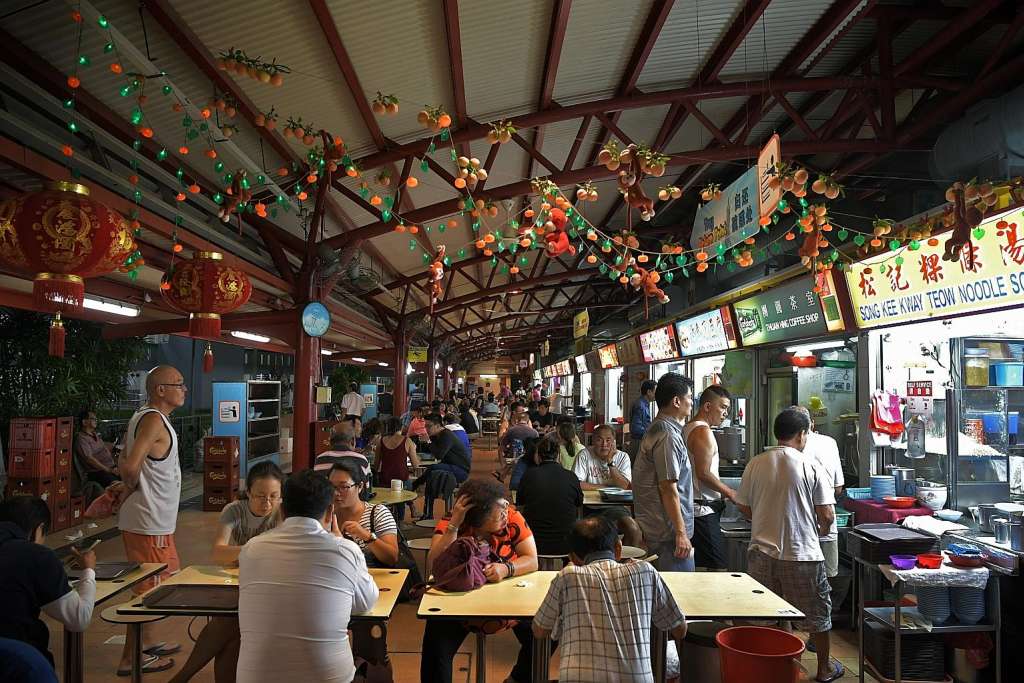
Social enterprises look set to play a bigger role in the management of hawker centres here, with nine more centres slated to be run on a not-for-profit basis next year.

There are currently four such centres, which aim to keep prices low, among other social objectives.

The National Environment Agency (NEA) said yesterday that NTUC Foodfare, which runs two of the four, will have seven more next year, after its successful pilot managing the Bedok Interchange Hawker Centre since 2014.

NTUC Foodfare also operates a centre in Bukit Panjang, and will take over management of five existing centres – in Toa Payoh Lorong 5, Old Airport Road, Chong Pang and two in Whampoa Drive – on July 1.

It will also manage two new centres in Kampung Admiralty and Pasir Ris Central when they are completed in the middle of next year.

NEA has been exploring alternative management models for hawker centres by engaging “socially conscious” operators to improve operational efficiency while ensuring affordable food.

The move to add centres follows positive feedback from stallholders in Bedok on Foodfare’s management approach, said NEA.

The additional centres will offer NTUC Foodfare economies of scale and greater flexibility to experiment with new ideas and operational processes, added NEA.

It also called for socially conscious operators to tender for the management of two new hawker centres in Yishun and Jurong West on a not-for-profit basis.

They are expected to open in August and September respectively.

In a bid to keep prices low, NTUC Foodfare currently sets the ceiling for some basic dishes at its Bukit Panjang centre, and monitors price rises of these at the Bedok centre.

In response to queries, NTUC Foodfare said it will not be setting price caps at the five existing centres it will take over, to minimise disruptions, but price increases will be subject to approval.

Apart from handling management issues including cleaning, each centre will have a dedicated team to provide on-the-ground support to hawkers, said a spokesman.

Mr Steven Koh, chairman of Chong Pang City Merchant and Hawker’s Association, welcomed the new management.

“Currently, the Merchant Association is handling the cleaning and plate collection, and it is very messy. I think it is good to have a third party to handle this, it will be easier for us as they are experienced,” said Mr Koh, 54.

In addition to the two now run by NTUC Foodfare, Ci Yuan Community Club’s hawker centre is run by a social enterprise subsidiary of Fei Siong Food Management, while Our Tampines Hub’s hawker centre is run by OTMH, a unit of foodcourt operator Kopitiam, also on a not-for-profit basis.

Dr William Wan, who sits on the Hawker Centre 3.0 Committee convened by the Government to help rejuvenate Singapore’s hawker scene, said social enterprises help to keep costs low for consumers while providing hawkers with a decent income as no investors have to be paid.

tiffanyt@sph.com.sg


This article was first published on Dec 21, 2016.
Get a copy of The Straits Times or go to straitstimes.com for more stories.

Image: 
Blurb: 
Publication Date: 
Wednesday, December 21, 2016 – 15:00
Send to mobile app: 
Source: 


Story Type: 
Others

Source link