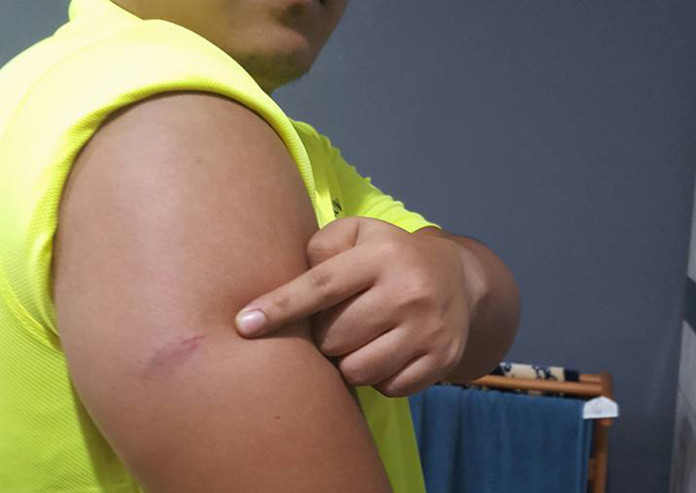
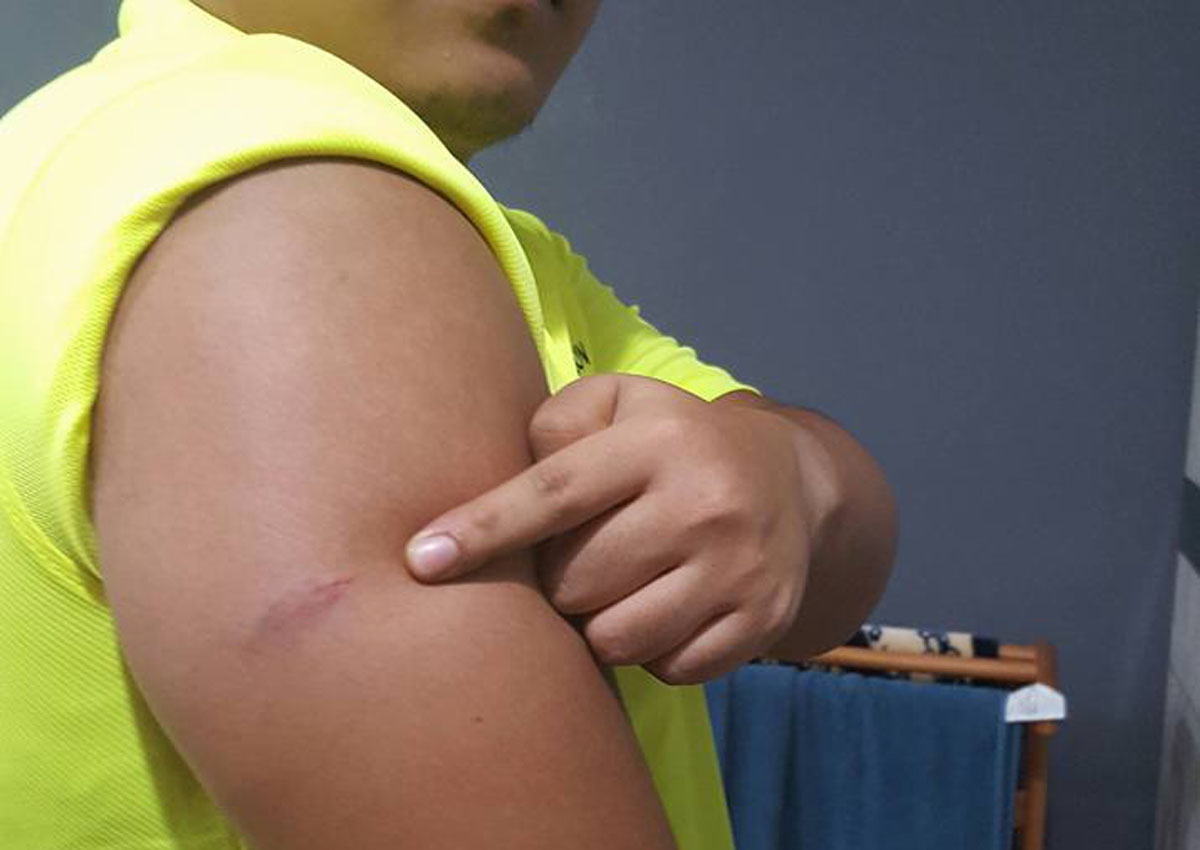
The Agri-Food and Veterinary Authority of Singapore will investigate a dog-biting incident that allegedly involves the use of the GrabHitch service on the early morning of Sunday (25 December).
24-year-old college student Rushdan Eilyaas said in a Monday e-mail that his driver’s Chihuahua was on his right arm at the end of his journey from VivoCity to Bukit Batok.
This lengthy post – which also lists several other dissatisfactions he had with male drivers, including how the latter was rude and displayed in a different car from Rushdan’s GrabHitch booking instructions – virus, smashed more than 3,000 strands.
It also received more than 700 comments, and several users shared similar negative experiences with their drivers and their dogs.
Mr. Rushdan uploaded a photo of a dog biting on Facebook, saying he had already paid $ 117.40 for medical expenses, including tetanus and antibiotics.
Speaking of The Straits Times, Mr. Rushdan said he decided to write his social media experience to warn other drivers of what he called “horrifying.”
GrabHitch, unlike GrabCar or GrabTaxi, is not a commercial platform, drivers pick up passengers. The carpool service matches passengers with the private owner at the same time in the same way.
Passengers pay basic fare to the driver to cover the cost of their petrol in the car.
A Grab spokesman said in a statement on Tuesday night that Mr Rushdan ‘s travel and medical expenses would be reimbursed as a “gesture of goodwill. It also suspended the driver from violating his code of conduct because he had used a car that was not registered on the Grab platform.
“The GrabHitch team is very committed to the user experience and believes in building a driver and passenger community that believes in our community standards,” the spokesman said.
The spokesman added that Grab would not restrict GrabHitch drivers from bringing their certified pets to their vehicles, although it “strongly” encourages them to inform passengers in advance.
“Similarly, passengers planning to travel with their pets should also inform the GrabHitch driver in advance, and if GrabHitch drivers and passengers feel uncomfortable, they have the right to refuse to ride. We want all Grab drivers and passengers to treat each other with respect – and Sensitive to various preferences, so that everyone can enjoy the best ride experience.
In response to queries, AVA said it had received feedback from Mr Rushdan and would be investigating the incident.
This article was first published on Dec 27, 2016. Get a copy of The Straits Times or go to straitstimes.com for more stories.
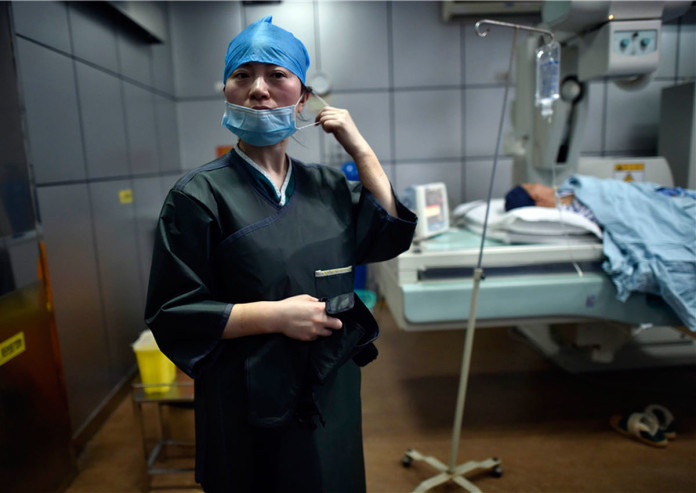
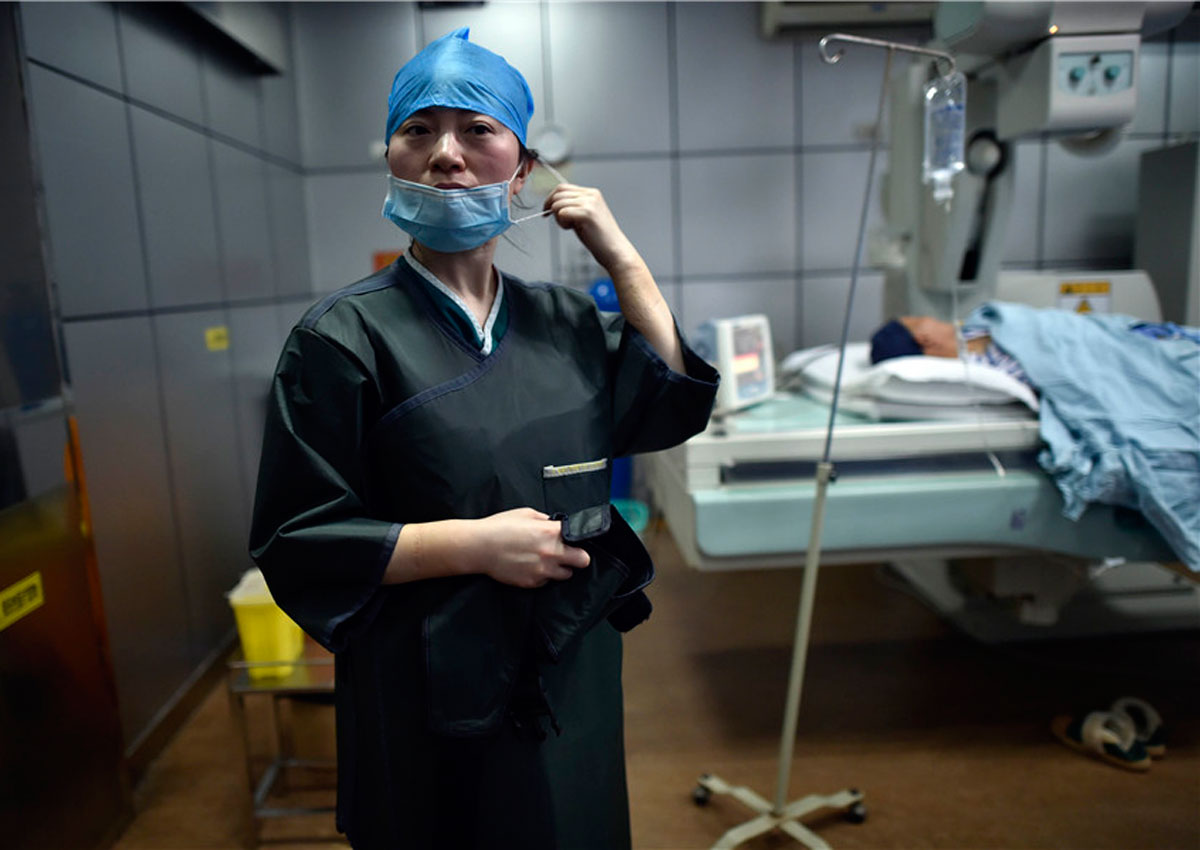
Although most surgeons wear surgical gowns during surgery, some of them must wear a heavy set of lead dressings and save the patient’s life by working under the radiation.
This set of lead devices, about 15 kg, includes lead caps, glasses, collars, gloves, aprons and even underwear. But the doctor’s head, face, legs and arms are not protected, to help them in the operation process easy to operate.
Liu Yayi, a 38-year-old doctor at Chongqing Cancer Hospital’s imaging department, is one of them. She needed to wear a full set of lead clothes with the help of a colleague, and finally a surgical gown. The weight of the entire uniform slowed her walk.
“I’m tired after every operation,” Liu said. But usually she can only rest for about 10 minutes, and then take a bath, put on a new set of lead clothes to prepare another operation.
Imaging director Mao Mingwei said wearing lead suits is a necessary condition for interventional radiological surgery. This type of surgery involves minimally invasive surgery under the guidance of radiographic techniques, which require the physician to work under radiation.
The duration of each operation ranges from 1 hour to 3 hours depending on the condition of the patient and his / her blood vessel. Since X-ray examination is performed continuously during the procedure, the doctor needs to always wear protective clothing.
During surgery, the protected body part will receive a radiation dose equivalent to two or three chest X-rays, and the unprotected region will correspond to about 100 chest X-rays.
Mao said that the hospital has about 400 interventional procedures performed by three doctors each year.
Many long-term intervention surgeons have only 3,000 to 4,000 white blood cells, below the normal threshold of 4,000 to 10,000. This makes these doctors less resistant to viruses and infections than normal healthy people.
Liu and Mao always wear a dosimeter, which automatically records the amount of radiation they have taken. They need to give the dosimeter to the CDC every three months to ensure that it does not exceed the prescribed limits. They need a physical examination every two years organized by the CDC. If their white blood cell count is found to be at an unsafe level, they will be forced to leave their post.
This is a long wait, but in July this year, the Ministry of Education (MOE) announced a major change in the Primary School Leaving Examination (PSLE) scoring system.
Under the new PSLE system, students will no longer be rated for their performance relative to their peers.
The new system will enter into force in 2021 to encourage students to focus on their own learning, not competition.
The current T-score system will replace 8 scoring bands called Achievement Level (AL), and the PSLE score of the medium 1 score will be the sum of the AL of the 4 objects.
Hopefully through the new system, parents will stop pushing their children to chase the last mark, rather than sending them to learn, to encourage them to pursue sport or art, to cultivate creativity and human skills to bring them with the skills needed in a turbulent , Uncertain future thrive.
But even if the announcement of the PSLE reform, the ministry said it was reviewing another key policy, the direct school enrollment program, which also aims to encourage students to go beyond smartphones.
These changes are expected to be announced in the next year, the new plan in the next few years to implement.
In 2004, the DSA was introduced, allowing secondary schools to expand their admission criteria beyond the PSLE score.
For example, schools can admit strong athletic or artistic, even before the PSLE results come out of the student.
Last year, a total of 126 schools enrolled 2,700 students through this program.
The Ministry of Education said it intends to broaden DSA opportunities to more students in schools with specific advantages, as well as “sharpening the focus of DSA” to better identify specific areas of talent and achievement, rather than the general academic reflection of PSLE ability.
CRITICISED
Over the years, the program has been criticized as a channel to ensure that students in the most sought-after comprehensive program schools, where their students bypass the O level.
There are also complaints that top schools use it to retain the best academic talent, including gifted education programs for students.
It is clear that the DSA program has become another way for academically smart students to get early in places of excellence in schools, earlier than PSLE.
This contradicts the core objectives of the DSA program, which means giving those who have other talents the chance to shine.
The change to the DSA program is expected to be far enough, just as with PSLE, the program is seen as the key to turning Singaporeans attention away from academics.
But the PSLE and DSA reforms are just two parts of a broader shift from academia to a wider range of opportunities for children to discover their interests and talents.
Over the past few years, a number of changes have been made at all levels – from primary to tertiary.
The results of national examinations, such as PSLE, have been released, with no top scorer being highlighted.
While the schools still recognize their best performers – as a group – they also celebrate those who show improvement and overcome challenges like disability or disease achievement.
More schools have developed programs that foster interest in the fields of theater and dance.
The Ministry of Education is paying more attention to outdoor education.
Under the Syllabus for Physical Education launched in 2014, 10 to 20 percent of primary and secondary school curricula are left to them.
As part of the new national out-of-home adventure education master plan, from 2020 onwards, all students will also participate in three camps.
This shift also takes place in higher education.
EXPANDING
Polytechnics and universities are expanding their capacity-based admissions to allow students who do not produce results but show passions and interests to enter the process of their choice.
This is related to the broader SkillsFuture program, which advocates mastery of skills and is just a collection of eligibility.
However, even if the Ministry of Education demonstrates the political will to slaughter more sacred cows in education, there will be no transition to more comprehensive education unless parents play a role.
I reminded the Ministry of Education of the announcement a few years ago, in the form of evaluation of primary schools to replace the examination of junior students.
Some parents enter the panic mode, fearing that their children will not study hard and begin to buy expiring exam papers for top primary schools.
Singapore’s first position in international benchmarking will be meaningless if we continue this path.
As the former Minister of Education, Heng Swee Keat, cautioned, this narrow focus on performance and examinations could lead to a “spiral chase of paper”, and we will develop excellent performance in exams but no ability to work Of students in the future.
Hope this one step forward, two-step return to the dance will not continue in the new year.
A bold reform of the education system
sandra@sph.com.sg
This article was first published on December 28, 2016. Get a copy of The Straits Times or go to straitstimes.com for more stories.
Zhang Yimou is not a man who minces his words when it comes to defending himself.
The acclaimed Chinese film-maker came under fire for pandering to the Westerners in his first English language film, The Great Wall.
Zhang, 65, was also criticised for casting US actor Matt Damon as the lead and accused of “whitewashing”, the casting of Caucasian stars in roles that are historically of other ethnicities.
“The Great Wall is a Hollywood production. I was asked to direct it,” Zhang told The New Paper over the phone from Beijing.
“This is a Hollywood movie with Zhang Yimou touches.”
He added that the film had been in production for many years before it came to him. Edward Zwick of The Last Samurai fame was initially attached to direct it in 2012.
The film is about a mythical legend in which China has to defend itself against marauding monsters called Tao Tei, which invade every 60 years. The Wall was thus built, and armies raised, to defend the country.
Damon plays William, a mercenary who is in China to look for gunpowder.
Along with sidekick Pero (Pedro Pascal), he was captured by The Nameless Order, an army of soldiers stationed at the Wall. While imprisoned, they witness a massive Tao Tei attack.
The Great Wall, which opens here tomorrow, also stars Andy Lau, Willem Dafoe and Chinese starlet Jing Tian.
Zhang, who directed classics such as Red Sorghum (1987) and Raise The Red Lantern (1991), as well as martial arts flicks Hero (2002) and House Of Flying Daggers (2004), said: “Hollywood has always been making such monster invasion movies, such as Jaws and Godzilla.
“There is always a formula – monster attacks, hero rises, they fight, more monsters come, then of course, the hero wins.
“I cannot change the Hollywood formula. I cannot make this movie a pure Zhang Yimou film. Then they won’t make it.”
The script, which is based on an original tale by Zwick, Max Brooks (World War Z) and Marshall Herskovitz (Jack Reacher: Never Go Back), had already been completed when the project landed on Zhang’s lap.
“I only added in more Chinese elements to make it appealing to the Chinese moviegoers.
‘CHINESE VIEWPOINT’
“I told them that since the story takes place in China, it must be told from the Chinese viewpoint,” said Zhang.
He explained that while he had the liberty to incorporate more Chinese details, he had to “stick to the story so that it has the blockbuster feel”.
“It was like doing taiji. Compromises were made, and I think I made the most compromises on this film in my entire career,” he said.
Zhang was quick to add that compromises “are normal in film-making – it will forever be that way”.
At US$150 million ($217 million), The Great Wall is the most expensive and biggest Hollywood-Chinese co-production to date.
Apart from the compromises, Zhang faced challenges in navigating what he called the “United Nations” set.
“We had people from 37 different countries working on this film. Many translators were used. It is good that they are all professionals,” he said.
Zhang was able to select his cast, and Damon was his first choice.
“He is my favourite actor. I have watched all his films,” Zhang said.
“For a long time, I have wanted to work with him, so this is like a dream come true.”
Zhang added that Damon’s acting style fits his role well.
“Matt is very manly, and he does action very well,” he said.
“And who doesn’t want to have Jason Bourne to help save the day?” he added, laughing.
Damon thinks Zhang is ‘brilliant’
Matt Damon in The Great Wall.Photo: UIP
Set in an alternate vision of ancient China, The Great Wall film imagines that the Wall was built to defend the country against mythical creatures called Tao Tei, gargoyle-like figures that rise every 60 years to attack in vast, swarming armies and feed on humankind.
The epic film is helmed by Chinese director Zhang Yimou, and stars Matt Damon, Andy Lau, Willem Dafoe, Pedro Pascal and Jing Tian.
Here, Damon, 46, talks about working with Zhang, and how it feels to be China’s next big action hero.
How does it feel to be China’s next big action hero?
Damon: I hope it all works out that way. It was certainly great to go there and shoot a movie for six months.
It was a great experience and also (by how the) movie business is going, China is such an important market now, that I think we are going to be making a lot of movies there. There will be more of this type of co-productions, and more of these stories that appeal to everyone around the world.
You take on a diverse range of roles, from The Martian to being Bourne again. What drew you to this film?
What drew me was really Zhang Yimou. I have been chasing him for a long time, hoping for a role in one of his movies. I think he is such a brilliant director.
Suddenly I got a call on this project, and I met him. I looked at his drawing and everything he wanted to do with it. The scale of it was so huge that I did not want to pass up the chance to see him paint on that bigger canvas.
How is it like working with such a legendary director?
I have worked with a lot of legendary directors in my life, and I really like it that way.
I found them all to be incredibly humble people, and I really think that the thing great directors have in common is that they are open to the ideas of people around them, and they really collaborate.
Just being able to work with Zhang was a real privilege, which was why everybody showed up.
It was so fun to work with Zhang as he listened to the suggestions that I made. It isn’t to say he will take them, but he will always listen and really consider them. It was fun, and it felt like a healthy collaboration.
What was one thing that stood out from working with the international cast and crew?
It was great getting to know them, getting familiar with their works and acting opposite them. They were just fantastic.
There are obviously the ones, such as Andy Lau, whom everyone knows about all over the world. I actually played Andy’s character in The Departed (2006), a remake of Andy’s Infernal Affairs (2002). We had fun talking about that.
joannes@sph.com.sg
This article was first published on Dec 28, 2016. Get The New Paper for more stories.
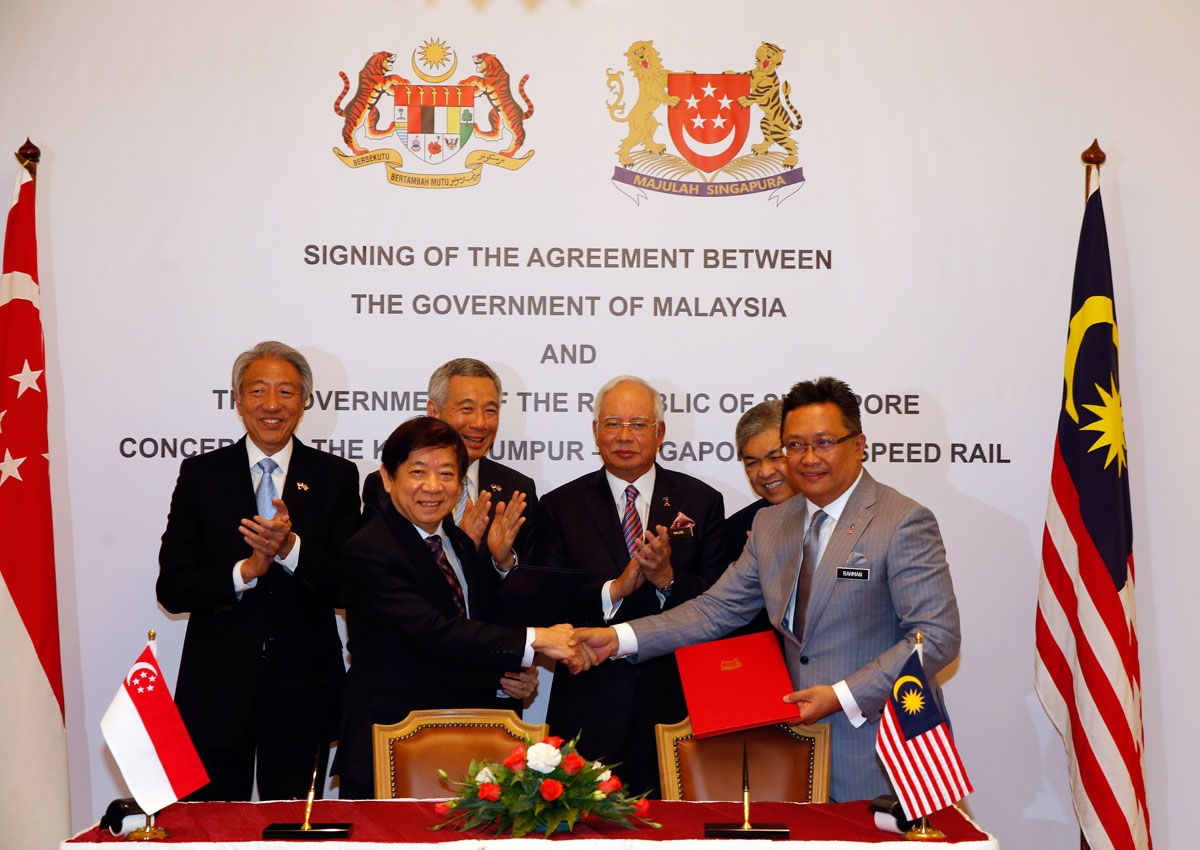
KUALA LUMPUR – Land acquisition for the Kuala Lumpur-Singapore high speed rail (HSR) project will most likely take place by the third quarter of next year, following public display of the alignment plan by the middle of the year, said MyHSR.
MyHSR is the agency tasked with overseeing the bilateral project that aims to bridge Kuala Lumpur (at Bandar Malaysia) with Singapore’s Jurong East via a pair of rail tracks across 350km, with 335km of the tracks within Malaysian territory.
The corporation is now combing through swathes of land measuring 50m wide to be used as the final alignment from Bandar Malaysia, which will be built once the Sungai Besi airfield is vacated, all the way to Iskandar Puteri in Johor.
MyHSR chief executive officer Mohd Nur Ismal Kamal said the 50m-wide band will house the tracks as well as a buffer zone for safety purposes, given that the trains are capable of hitting up to 350kmh at full tilt.
“A mix of private and state land will be acquired, though a lot of them run through plantations,” he said.
The first quarter of 2017 will see two milestones for the project.
One will be the announcement of the results of the tender jointly called with Singapore to appoint a Joint Development Partner (JDP) for the project that will have stops at Putrajaya, Seremban, Ayer Keroh, Muar and Batu Pahat.
Malaysia and Singapore will jointly award the tender for the JDP, which will provide advice on operational, technical and procurement matters, especially in relation to the systems aspect of the project.
EVALUATING
In parallel to the tender for the JDP, MyHSR is also evaluating the bids following the closure of a tender for the services of reference design consultants (RDC) for the Malaysian stretch, which was parcelled out in six packages.
“The RDCs will look at the respective stations and alignments to optimise them all, though it will be more from the civil engineering perspective.
“The decision will likely be made by the first quarter of next year,” said Mr Mohd Nur.
On the future HSR stations, he added these would be built at new areas that must not be too far from existing business and population centres.
“They cannot be too far from population centres, or else the time savings from HSR will be negated by the longer travel time for the last mile.
“The stations also need to be big enough to cater to the expected and future ridership, and have ample space for development around them.
“We have to balance between these factors.”
On calls by some parties to set up a HSR stop within Selangor, Mr Mohd Nur said the Putrajaya station was located at the edge of the Selangor border, and development arising from it would definitely spill into the state.
The final alignment must allow a non-stop journey from Bandar Malaysia to Jurong East to be complete within 90 minutes.
The domestic service that stops at every station is expected to cover the same distance in slightly more than two hours.
The phone beeps, and the text comes from someone offering an active loan or an online gambling invitation.
Perhaps, as young workers Miss Zhang 44, you just delete them, “hope they will go away” and dismissed these messages is a nuisance.
But the sender may be inciting illegal activity, and the number of such messages to reach the subscribers, the authorities fear that people may be low interest rates and rapid growth attracted by the commitment.
According to the latest figures released by the Privacy Commissioner for Personal Data of Singapore, between January and September this year, the public made 8 800 complaints about unsolicited information on loans and online gambling.
This information represents 80 per cent of all complaints received by the Commission, including complaints relating to disclosure of personal data.
While this represents a 20% reduction from 10,700 complaints in the same period last year, the Commission and the Police are urging the public to report police sources to an unknown source when they receive text messages or phone calls related to loans, financial assistance or online gambling.
They can also call the National Crime Prevention Commission’s “X Ah Long” hotline at 1800-924-5664 (1800-X-AH-LONG).
The Straits Times learned that more people could be bombarded by information or telephone loans or online gambling services, but most did not report the news to the authorities.
Sales Manager Aaron Koh, 40, said he received five unsolicited messages this year.
“I did not complain to the authorities because the information came from an overseas number,” he said.
PERSONAL DATA BREACHES
During the period from January to September, the public also submitted 2,200 complaints about personal data leakage and unsolicited telephone calls from private tutors and estate agents.
This is about 20% lower than the 2,700 complaints received in the same period last year.
According to Singapore’s Personal Data Protection Act (which came into effect in July 2014), organizations that fail to protect their personal data are liable to a fine of up to $ 1 million each time.
The company must check the numbers listed on the “Not Called Registry” before sending out marketing messages or making phone calls.
Launched on January 2, 2014, the registry now includes more than 920,000 consumer phone numbers that do not want to receive marketing offers via phone, text message, or fax.
The Commission has so far acted against more than 20 organizations and individuals under the Act.
In 2014, a data breach involving 317,000 customers imposed a maximum fine of $ 50,000 for Karaoke K Box.
itham@sph.com.sg
This article was first published on December 28, 2016. Get The New Paper for more stories.
According to the new terms proposed yesterday, the days of shadow ownership or control of the company will be numbered to enhance the transparency of the corporate sector.
Money laundering is one of the main goals, but the recommendations will extend to many corners of corporate life here.
The changes will be widespread and affect non-listed and non-financial institutional firms, as well as foreign companies and LLPs registered here.
Listed companies are exempted as they are subject to the Securities and Futures Act and the Monetary Authority of Singapore regulates financial institutions.
The amendment addresses the main obstacles to transparency by requiring those entities to maintain a register of their beneficial owners or controllers.
This would be an upgrade to the current system and there is no statutory requirement for the maintenance of the Register of Ownership Information.
This means that these entities must maintain a clear and up-to-date record of direct or indirect control of the business, giving the authorities a clearer understanding of their ownership.
The proposed change is an amendment to the Companies Act and the Limited Liability Partnership Act, filed yesterday by the Ministry of Finance (MOF) and the Accounting and Corporate Regulatory Authority (Acra), for public consultation.
The aim is “to ensure that Singapore’s transparency levels are in line with international standards,” the Treasury and Acra said.
In a September report, the Financial Action Task Force noted that Singapore’s current measures were not sufficient to ensure timely and accurate and up-to-date information on the beneficial owners.
Gibson Dunn partner Robson Lee said: “Unknown owners (foreign companies and LLPs) may be a means of illegal capital inflows and warehousing through Singapore or through Singapore.
“They could, for example, pool these illicit funds into companies in Singapore for office and industrial property purchases and even set up an investment holding company to buy other businesses – all money laundering.
However, the company may have additional compliance costs.
Stefanie Yuen Thio, co-managing director of TSMP, noted that while these new provisions would enable Singapore to adopt the best global approach to combating money laundering and the financing of terrorism, it could also produce “thick paperwork”.
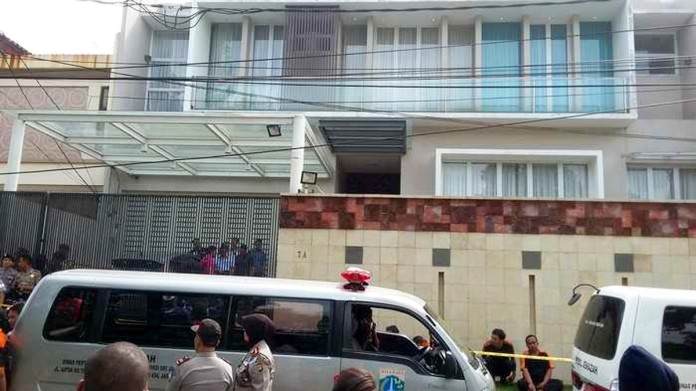
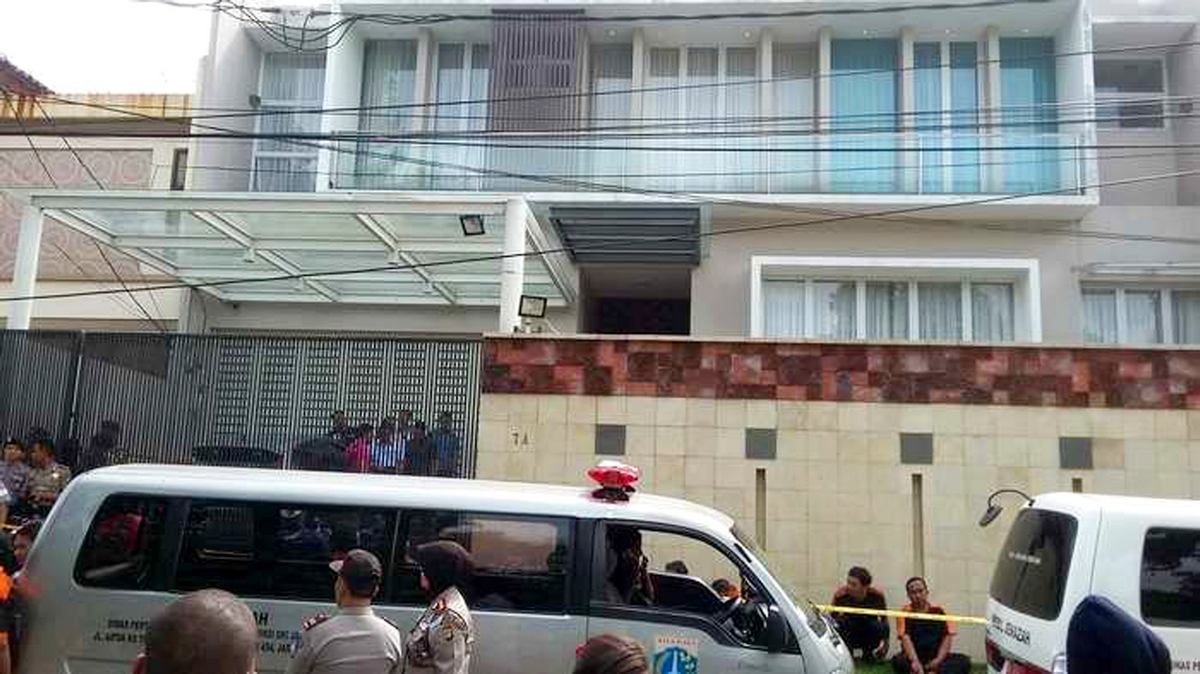
JAKARTA – Six people died and five others were injured possibly due to suffocation after they were locked up by intruders overnight in a 2m by 1m maid’s toilet at a posh house in East Jakarta, media reports said.
“For now, we have classified this case as a murder case. We cannot say a robbery case because our investigation so far reveals that nothing has been taken,” Colonel Argo Yuwono, Jakarta police spokesman, told the media at the crime scene packed with cameramen, reporters and onlookers.
“There is no tampering on the house or the doors,” he said, adding that investigators were working to find the motive.
Photo: The Jakarta Post
The dead victims were the owner of the house, identified by police as 59-year-old Dodi Triyono; two girls believed to be his daughters, 16-year-old Diona Arika Andra Puti and nine-year-old Dianita Gemma Dzalfayla; a friend of the girls identified as Amel, and two drivers of the family named as Yanto and Tasrok, reported Detik.com.
Amel’s mother Rosy Herawati confirmed her loss in an interview with TVOne. Rosy said her last contact with her daughter was 2pm on Monday.
Police did not disclose who the five surviving victims are, reports said.
Col Argo said police would interview some of the surviving victims who were in better conditions.
Photo: Reuters
Witnesses said the intruders arrived at Mr Dodi’s house on Monday afternoon, and the victims were rescued and evacuated only at about 8am on Tuesday after a visiting friend of Mr Dodi’s noticed the main door had been left open and heard voices crying for help.
Some of those who died sustained some light bruises and there was no other cause of death besides suffocation, according to Inspector-General Iriawan.
Mr Dodi was a property entrepreneur, MetroTV said, citing a friend of the man.
This article was first published on Dec 27, 2016. Get a copy of The Straits Times or go to straitstimes.com for more stories.
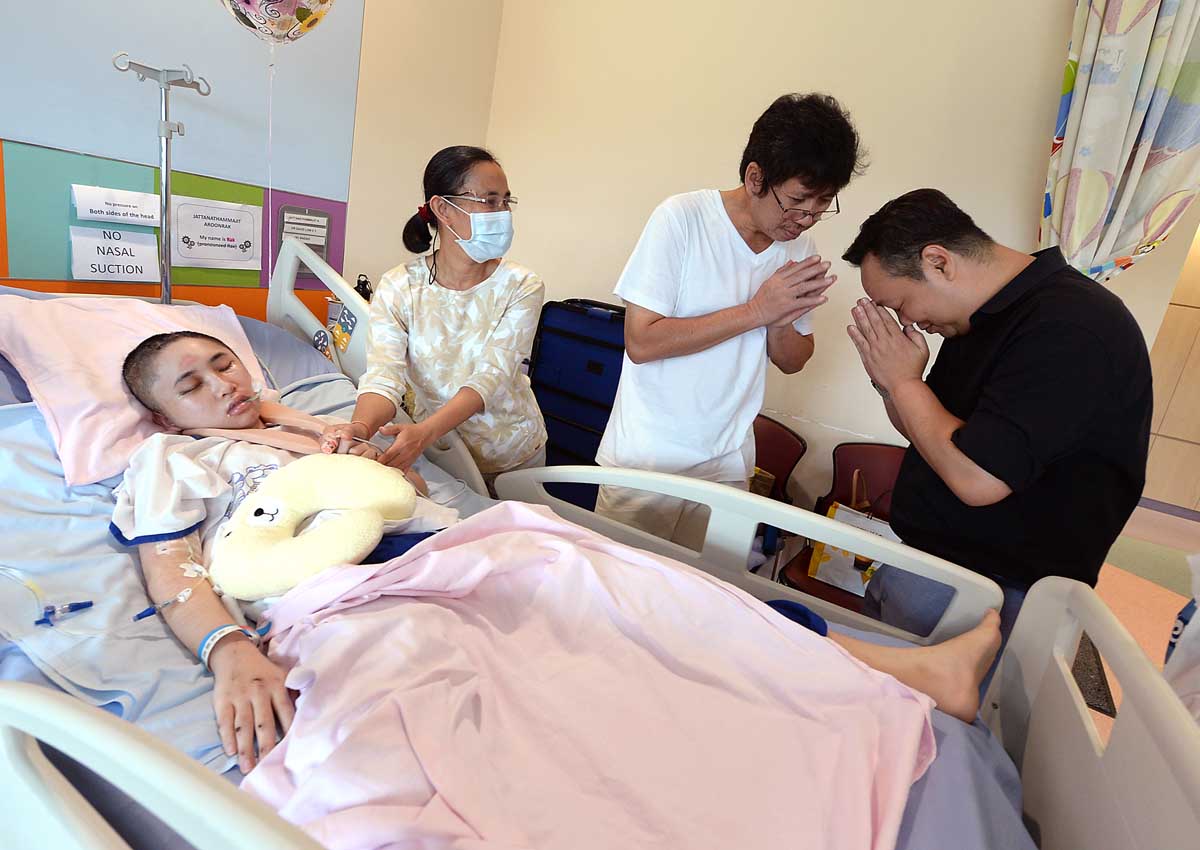
tmraise06/Mr Dennis Yeo, who started the GIVEasia campaign for the Thai teenager who got knocked down by a car in a hit-and-run, will be meeting her family. The campaign has raised $20k in 2 days and will be open until Oct 16. First time they're meeting. NP_05.10.2016_1627936719 Choo Chwee Hua
Crowdfunding platforms see huge growth in projects launched and money pledged this year
This year, $2.9 million was pledged to projects started by Singaporeans on Kickstarter, nearly 3½ times more than the $854,464 pledged last year.
Crowdfunding platforms have seen huge growth this year.
GiveAsia, a charity-focused crowdfunding platform, also saw a growth of 80 per cent in total donations raised this year.
Mr Sean Leow, Kickstarter’s director of international, who helps support its international community, told The New Paper Singapore backers of its projects had grown by 25 per cent.
Kickstarter was officially launched here in August.
Mr Leow said: “We’ve been officially open for creators here for less than four months, but we’ve been blown away by the number of brave creators who are using Kickstarter to bring their ideas to life.”
Singaporeans launched 145 projects on Kickstarter this year, compared to 34 last year.
The projects cover a range of creative categories from art to technology, but Kickstarter does not allow any projects to raise money for charity.
GiveAsia co-founder Aseem Kumar Thakur attributes its boom to Singaporeans becoming more aware and accepting of crowdfunding from when it was founded in 2009.
More than 250 local charities use it as a source to collect donations online, he said.
With the recent launch of GiveAsia’s mobile platform, most of its traffic now comes from mobile.
Singaporeans who started successful crowdfunding campaigns say they are grateful for these platforms.
Ms Lim Li Xue, an industrial design student at the National University of Singapore, and two friends raised more than $280,000 on Kickstarter for their wallet design, which automatically sorts coins from notes.
The 23-year-old said: “We think Kickstarter is a good platform for innovators.”
The scene here is set to further flourish as more crowdfunding platforms make their presence felt.
Israeli platform OurCrowd, which was launched in 2013 and opened an office here last month, told TNP it saw a 200 per cent growth both in the number of investors and amount in the investments from Singapore.
OurCrowd, which also has offices in Israel, North America and Australia, said Singapore provided about 6 per cent of its total investment dollars.
Home-grown company CoAssets said it smashed local records when it raised $200,000 under 30 minutes for a small Singapore business in March.
Next year looks set to be even bigger for crowdfunding.
Mr Thakur told TNP: “We will see a rise in crowdfunding projects to help people in need.
“We believe more charities will rely on online fund-raising platforms to raise funds and awareness, compared to offline third-party fund raising (that is not cost effective).”
Mr Denes Ban, OurCrowd’s managing partner for Asia, predicts more deals will come from Asia, one of its fastest growing markets.
He told TNP: “The financial technology environment in Asia is changing, with more regulators open to collaboration.”
Viral crowdfunding campaigns
BABY YUJIA
Baby Yujia cannot use her mouth to eat because part of her oesophagus is missing.
Last June, her parents turned to crowdfunding sites to raise $2 million for her treatment. By February, they had raised about $1.2 million.
MAID WHO HAD STROKE
Madam Dora Sern turned to GiveAsia after her Filipino maid, Madam Felicidad Muna Mico, 57, had a stroke in October. She raised$50,039 to cover Madam Mico’s hospital bills and her flight to the Philippines.
Watsons will be having a one-day sale on 28 Dec 2016, 10am – 10pm at 62 selected stores exclusively for DBS/POSB Credit/Debit cardmembers and Watsons members. Up to 50% off hot buys. Spend & Redeem Freebies and more