Home Blog Page 2121

More in Singapore at risk of liver failure or cancer

0


Study shows incidents of non-alcoholic fatty liver disease here is rising and half of adults may be affected

Last month, news of Deputy Speaker of Parliament Charles Chong undergoing a liver transplant took many people by surprise.

Three years ago, the MP for Punggol East, 63, was diagnosed with a severe form of non-alcoholic fatty liver disease (NAFLD) steatohepatitis but did not make it public.

While NAFLD is an unfamiliar term to most people, a recently released study by SingHealth doctors found that its incidence is rising in Singapore, and could well be affecting half of the adults here.

This could put more people at risk of liver failure or cancer, the main causes of which are hepatitis or heavy alcohol use.

But the damage caused by NAFLD is similar.

Professor Pierce Chow, the lead doctor in the study, said it suggested the rate here could be higher than the Asian average of about 30 per cent of adults.

While the causes of the disease are not clear, people with NAFLD tend to have hypertension and high cholesterol levels – the same risks for heart disease, diabetes and obesity.

The study looked at Singapore General Hospital patients who had surgery to remove their gall bladder, an organ next to the liver, for the periods 2001 to 2004 and 2011 to 2014.

GROUP

From the pre-operative scans of the earlier group of 127 patients, 40 per cent had NAFLD. Ten years later, 57 per cent of 99 patients had it.

More patients in the later group also had high levels of cholesterol – 46 per cent versus 19 per cent. 
Almost half of the patients in both groups had high blood pressure.

The study, published online on Dec 20 prior to printing by the Singapore Medical Journal, said it was “a significant increase” and intervention is needed to prevent NAFLD’s progression to more advanced liver disease such as liver cirrhosis (hardening) and hepatocellular carcinoma (liver cancer).

Prof Chow said fatty liver disease is a growing concern in many developed countries that face rising obesity. In the US, NAFLD is the third most common cause of liver cancer after hepatitis and alcoholic liver disease.

As it has no symptoms, NAFLD is rarely discovered until much damage has been done. Researchers also found that the more obese the person, the higher the risk of having a fatty liver. Indians also appear to be at higher risk.

According to the National University Hospital, which carries out the bulk of liver transplants here, “common causes of liver failure include hepatitis B, cirrhosis, cancer and autoimmune disease”.

There are about 60 people waiting for a liver transplant, about five times the number 10 years ago. Last year, 38 people had liver transplants.


This article was first published on Dec 3, 2016.
Get a copy of The Straits Times or go to straitstimes.com for more stories.

Image:
Publication Date:
Tuesday, January 3, 2017 – 13:04
Send to mobile app:
Source:

Story Type:
Others

Source link

Startups in spotlight last year for driving record venture capital outlay in S'pore

0

Singapore

2016 was a heartening year for startups, which were propelled into the limelight for driving record venture capital (VC) investments in Singapore, being recognised as vehicles for disruption and innovation, and invoking concerns about their sustainability and burn rates.

Tech startups, in particular, led the Republic’s US$3.5 billion (S$5 billion) worth of private equity and VC investments in 2016, its best showing in the last five years based on a Duff and Phelps report. Among the most notable investments were Alibaba’s US$1-billion acquisition of a controlling stake in Lazada, and Softbank’s US$750-million investment in Grab.

It was, in fact, a banner year for local VC firm Wavemaker, in terms of exits by its portfolio startups. Pie, a chat app, was acquired by Google for an undisclosed sum. Mobile advertising firm ArtofClick was snagged by Philippines-based firm Xurpas for US$45 million. Cosmetics e-commerce site Luxola’s buyout by LVMH won VC Exit of the Year, an award handed out in October by the Singapore Venture Capital and Private Equity Association (SVCA).

There were also acquisitions by local startups of global big-names, which turned the world’s gaze on Singapore. These included gaming company Razer’s buyout of George Lucas’s theatre sound company THX, as well as YuuZoo’s purchase of a majority stake in Beverly Hills-based movie studio Relativity Media.

Mergers and acquisitions aside, Singapore startups exited through IPOs (initial public offerings) as well, though a few were overseas. CMON, a board games company, and Anacle, a property and energy management systems startup, both filed for a public listing on Hong Kong’s GEM (Growth Enterprise Market) board, citing greater publicity and liquidity.

Even as Singapore lost IPO opportunities, it is now home to two of South-east Asia’s largest tech unicorns. Garena is reportedly the highest-valued unicorn in the region with a US$3.5 billion price tag, while Grab is the highest-funded, having raised US$1.43 billion since its incorporation in 2012, going by the same Duff and Phelps report.

More funds were set up this year, many of which were backed by Chinese investors. Pang Shengdong invested S$5 million in Tembusu’s S$70-million ICT Fund I, while Stanley Zhang and George Gong co-founded Jubilee Capital Management, which rolled out a US$100-million tech fund. Venturecraft, whose investors are Alibaba co-founder Sun Tongyu and Xiamen Meitu Technology executive chairman Cai Wensheng, launched a S$50 million medtech fund.

Jeffrey Chi, SVCA chairman, said: “2016 has been a good year for entrepreneurship and startups in Singapore. The ecosystem is becoming more mature. Funding, talent and opportunities are becoming more readily available than before. We are currently in a virtuous cycle that will continue to feed itself as the ecosystem continues to develop.”

Meanwhile, startups have been acknowledged as vehicles for disruption and innovation by the Committee on the Future Economy (CFE), an entity set up by the Singapore government to develop strategies to build a vibrant and resilient economy. Janil Puthucheary, who chairs the CFE’s Group on Disruptive Technologies, said the government will work towards becoming a “flexible regulator”, so that legislation can catch up with startups and their new technologies and business models.

Coworking spaces – popular enclaves for startups and innovators – multiplied in 2016. A*START Central, a co-innovation lab for medtech and biotech firms, opened at the JTC LaunchPad @ one-north. Hub Singapore and The Working Capitol unveiled new coworking facilities at Cuppage Terrace and Robinson Road, respectively. Hong Kong-based The Work Project became the coworking space partner of OUE’s Downtown Gallery in Shenton Way. New player, Spacemob, opened in Claymore Hill with US$5.5 million in seed money.

Focal sectors – among them fintech and cybersecurity – saw prominent activity. For instance, there were at least three inaugural festivals held to celebrate entrepreneurship in these areas – the Singapore Week of Innovation & TECHnology (SWITCH), the Singapore FinTech Festival and the Singapore International Cyber Week.

Isaac Ho, chief of Venturecraft, said: “The fintech industry is receiving a lot of interest with the Singapore FinTech Festival and the Monetary Authority of Singapore’s Regulatory Sandbox for fintech experiments. I believe that fintech will continue to grow and receive strong investment interest locally and regionally.”

For all that, the startup space saw a few upsets during the year, raising age-old concerns about sustainability of new business models and VC funding. Several startups in Singapore closed down, including e-commerce sites Rakuten and Ensogo, ridesharing app Karhoo, and wireless charging solutions provider Novelsys.

Homegrown accelerator JFDI shut down its startup bootcamp programme, after it had raised some S$3 million to support over 70 startups, and is said to be a stalwart of South-east Asia’s tech startup ecosystem. JFDI cited high costs and a tight market for tech talent.

Additionally, e-grocer service RedMart was sold to Alibaba-owned Lazada for a reported US$40 million – an underwhelming price tag given that RedMart had raised over US$55 million from investors. The startup had reportedly chalked up an operating loss of US$21 million for 2014 and an operating loss margin of 78 per cent maintained from 2014.

A spokesman from Cocoon Capital, an early-stage VC fund, said: “The failure of RedMart to return a profit to its investors has surely been a slight damper. But overall, the market capitalisation of startups has seen a strong growth and a high number of follow-on funding rounds have been completed.” (See table)

Photo: The Business Times

Alex Lin, head of Infocomm Investments Pte Ltd (IIPL), said that the year’s developments point to Singapore being at the midpoint of a five-year strategy to transform its startup ecosystem. The strategy – initiated in 2014 by IIPL and now led by new entity SGInnovate (of which IIPL is a part) – has since accelerated over 300 startups. Of these, over 100 have gone on and raised Series A funding.

Dr Lin told BT: “This intensity has drastically changed the Singapore startup ecosystem and resulted in more stakeholders jumping on board the startup bandwagon.”

The spokesman from Cocoon Capital noted that there still needs to be more activity (such as acquisitions) to really put Singapore on the map. “However, we definitely see that South-east Asia and Singapore in particular are getting noticed by the global investor community.”

Xavier Pavie, a professor at ESSEC Business School, is hopeful. He said: “Singapore loves ecosystems. You can easily find partners, institutions and potential clients here. Universities and startups are very close, which is useful for finding fresh eyes and a young, motivated labour force. This diversity means there are greater chances to develop disruptive ideas.”

The startup space saw a few upsets during the year, raising age-old concerns about sustainability of new business models and VC funding. Several startups in Singapore closed down, including e-commerce sites Rakuten and Ensogo, ridesharing app Karhoo, and wireless charging solutions provider Novelsys.


This article was first published on Jan 3, 2017.
Get The Business Times for more stories.

Image: 
Publication Date: 
Tuesday, January 3, 2017 – 14:00
Send to mobile app: 
Source: 


Story Type: 
Others

Source link

Stars born in the year of the rooster

0

This year is the year of the rooster, which is one of 12 Chinese zodiac animal signs.

Some Hallyu stars who were born in the year of the rooster — which comes around every 12 years — are as follows:

1990s

Park Bo-gum (June 16, 1993)

Photo: VIU

Park’s popularity swept Asia following his role as Prince Lee Young in the KBS drama “Moonlight Drawn by Clouds.”

BTS’ Suga (March 9, 1993)

Photo: Youtube

Suga, a member of the high-flying K-pop group BTS, was also born in 1993.

EXO’s Kai (Jan. 14, 1994)

Photo: Youtube

Kai of S.M. Entertainment’s hit group EXO was born in 1994, but his zodiac animal sign is still the rooster as he was born before the start of the next lunar year.

IU, or Lee Ji-eun (May 16, 1993)

Photo: ONE

Singer-actress IU played the lead role in the SBS drama “Moon Lovers: Scarlet Heart Ryeo” (2016).

Yoo Seung-ho (Aug. 17, 1993)Yoo played the lead role in the SBS drama, “Remember: War of the Son,” in which he was a genius lawyer who seeks to prove the innocence of his father, who was framed and convicted of a crime.

Seo Kang-jun (Oct. 12, 1993

Photo: Seo Knag-jun’s Instagram

Seo played the lead role Chae Young-bin in the Korean rendition of “Entourage.”

Girl’s Day’s Minah (May 13, 1993)

Photo: Youtube

Minah was an emcee for the 2016 SBS Drama Awards. She also won an award for her role in the drama “Beautiful Gongshim.”

Song Min-ho (March 30, 1993)

(left) Song Min-ho and (right) Kang Seung-yoonPhoto: YG Entertainment 

Song of YG Entertainment’s K-pop group Winner first made a name for himself with the song “Fear,” which had also featured Big Bang’s Taeyang.

Kang Seung-yoon (Jan. 21, 1994)

Also a member of Winner, Kang was born in the year of the rooster.

VIXX’s Ravi (Feb. 15, 1993)

Photo: Youtube

K-pop group VIXX’s Ravi is set to launch his first solo song “Home Alone,” which will also feature CNBLUE’s Jung Yong-hwa,

Gong Minzy (Jan. 18, 1994)

Photo: MInzy’s Instagram

Gong was formerly a member of the disbanded 2NE1.

1980s

Lee Dong-wook (Nov. 6, 1981)

Photo: ONE

Lee currently plays a grim reaper in the tvN drama “Guardian.”

Park Hyo-shin (Aug. 15, 1981)

Photo: Park Hyo-shin’s Instagram

Singer Park is a heartthrob with a great number of fans in Korea and Japan. One of his best-known songs is “Wild Flower.”

Kim Rae-won (March 19, 1981)

Kim played the male lead next to actress Park Shin-hye in the drama “Doctors” (2016).

Gummy (April 8, 1981)

Photo: Gummy’s Facebook

Singer Gummy, who is in a relationship with actor Jo Jung-suk, is a well-known singer here.

Song Ji-hyo (August 15, 1981)

Photo: Song Ji-hyo’s Instagram

Actress Song is a member of the popular variety show “Running Man.” It was announced late last year that the programme will stop airing this year.

Jo In-sung (July 28, 1981)

Photo: Jo In-sung’s Instagram

Jo stars in the upcoming movie “The King,” which will be released on Jan. 17.

kaylalim@heraldcorp.com

Category: 
Publication Date: 
Tuesday, January 3, 2017 – 11:27
Keywords: 
Send to mobile app: 
Source: 


Story Type: 
Others

Source link

CFE expectations need to be set right

0


Singapore

AS Singaporeans bid a sluggish 2016 adieu, expectations are running high for the Committee on the Future Economy’s (CFE) report – expected later this month – to be the panacea for all economic ills.

But experts say those anticipating big bang recommendations should temper such expectations, given the constraints surrounding Singapore’s more mature economy. The seeds may be cast for future growth, but there will unlikely be quick cures for Singapore’s economy.

CIMB Private Banking economist Song Seng Wun told The Business Times: “There’s a lot of expectation that this (30-member CFE panel) will come up with some magical solution – one that will transform this slower growth environment into something that will leap . . . But we already know we have to operate within certain constraints that all mature economies face – so it’s not like there is some magic wand that the government can wave to make us suddenly vibrant again so that everyone is happy.”

Still, it’s not hard to see why some may be holding out for a miracle pill in the CFE report, which is due for release by end-January. For starters, latest official indications peg 2016’s economic expansion at a mere one-plus per cent – a slowdown from 2015’s meagre 2 per cent, which already marked the country’s slowest pace of growth since 2009. The government will announce advance GDP estimates for Q4 and 2016 on Jan 3.

This has been exacerbated by heightened global uncertainty – not least due to the threat of “de-globalisation” from a looming Donald Trump presidency in the US, as well as talk of a pullback in China’s overseas investments.

Said UOB economist Francis Tan: “If we were living in a year where China is doing well and the global economy is fine, people wouldn’t really pay so much attention to the CFE report. But it’s coming at a time where there’s not much light at the end of any tunnel, so now people are hanging on to it like the last rung on a monkey bar. So people are saying: ‘Don’t worry, there’s still the CFE.’ But those expectations need to be tempered.”

This is especially since earlier strategies – such as picking winning sectors to kick-start economic growth – are far more difficult to execute today, given the rapidly changing global environment and ongoing trends of technological disruption.

Retooling the economy is more difficult these days too, given Singapore’s ageing demographics, anaemic productivity, and foreign labour restrictions. As a more mature economy, there is also a limit to how much infrastructure spending can boost Singapore’s expansion.

“The reality of today is that you can’t plan like how you used to,” stressed Mr Song.

As such, economists like Mr Song, Mr Tan, and Credit Suisse’s Michael Wan aren’t holding their breath for “anything groundbreaking” in the CFE report.

Said Mr Wan: “It’s not going to be big-bang reforms, but more of a continuation of what the government has already been trying to do over the past three to four years . . . There will likely be more of a push on technology and Smart Nation ambitions, perhaps some expansion of the SkillsFuture (initiative) to help encourage lifelong learning, and maybe some assistance to help workers cope with increased automation and disruptive technologies.”

And while those hoping for more may be disappointed by Mr Wan’s assessment, UOB’s Mr Tan thinks there’s no cause to be.

Said Mr Tan: “Traditionally, if you want to push growth, you’d stimulate capital, labour, and technology. Year after year, the government has already been stimulating all three . . . So maybe it’s not a bad thing that they continue on the journey, and keep at what they’ve been doing.”

Both he and Mr Wan think the move to restructure in a more targeted fashion – through the S$4.5 billion Industry Transformation Programme announced in Budget 2016 – is a good one, although they emphasise that its successful execution is crucial.

Noted Mr Wan: “The past policies (like the Productivity and Innovation Credit) have been prone to abuse. So by taking a more targeted approach, the general idea is right in that you can reduce the chance of abuse and cater more to individual sectors. But I think as with anything, implementation will be key – or else it could turn out essentially to be the same thing but wrapped in a different ribbon.”

Schemes and industry roadmaps aside, the common theme emerging in the lead-up to the CFE’s recommendations – at least according to private-sector economists – is that the CFE will be less about weaving magic to evaporate immediate concerns, and more about seeding Singapore’s long-term future.


This article was first published on Jan 3, 2017.
Get The Business Times for more stories.

Image:
Publication Date:
Tuesday, January 3, 2017 – 14:00
Send to mobile app:
Source:

Story Type:
Others

Source link

As smog returns, Beijing says skies are getting cleaner

0


The Chinese capital was on the second-highest orange smog alert in the depth of winter on Tuesday (Jan 3) as city officials said the air quality was improving overall, citing data for the whole of last year.

Over the new year holiday, hundreds of flights were cancelled and highways closed across northern China as average concentrations of small breathable particles known as PM2.5 soared above 500 micrograms per cubic metre in Beijing and surrounding regions.

Pollution alerts are common in northern China, especially during bitterly cold winters when energy demand, much of it met by coal, soars.

But the Beijing Municipal Environmental Protection Bureau told state media that PM2.5 concentrations dropped 9.9 per cent on the year to an average of 73 micrograms per cubic metre in the Chinese capital in 2016.

The total number of “blue sky days” reached 198 in 2016, up 12 from the previous year. However, the average PM2.5 measure still exceeded national air quality standards by 109 per cent, the bureau said.

Despite a brief respite on Monday, smog returned to the Chinese capital on Tuesday, with PM2.5 readings again at”hazardous” levels. The city environment bureau said the orange alert was expected to last until Wednesday.

China is in the third year of a “war on pollution” aimed at reversing the damage done to its skies, soil and water after decades of untrammelled economic growth.

It has created emergency response systems that restrict traffic and shut down factories and construction sites during periods of heavy smog, and it has also vowed to punish local officials and enterprises that break rules.

During a bout of smog in December, inspectors identified 21 enterprises that had violated regulations by failing to close operations on time, and 10 more inspection teams were dispatched to cities across the region over the new year.

But government officials have expressed frustration that persistently heavy winter pollution, brought about by unfavourable weather and the use of coal-fired urban heating systems, has overshadowed the genuine progress China has made to reduce smog.

Image:
Category:
Publication Date:
Tuesday, January 3, 2017 – 12:41
Keywords:
Send to mobile app:
Source:

Story Type:
Others

Source link

Minister Heng Swee Keat to deliver 2017 Budget Statement on Feb 20

0

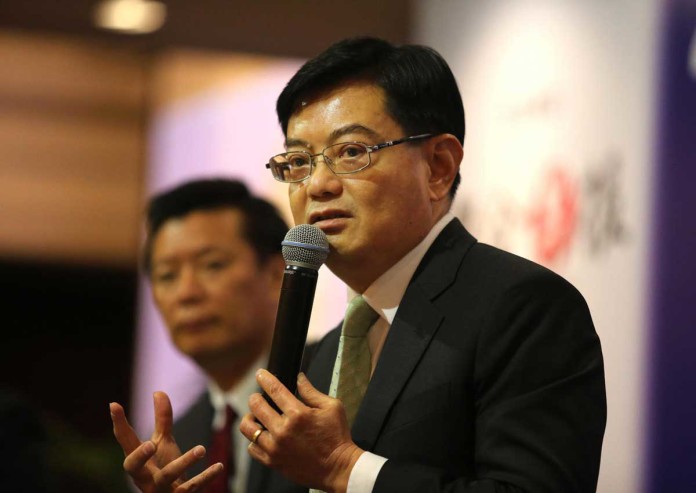
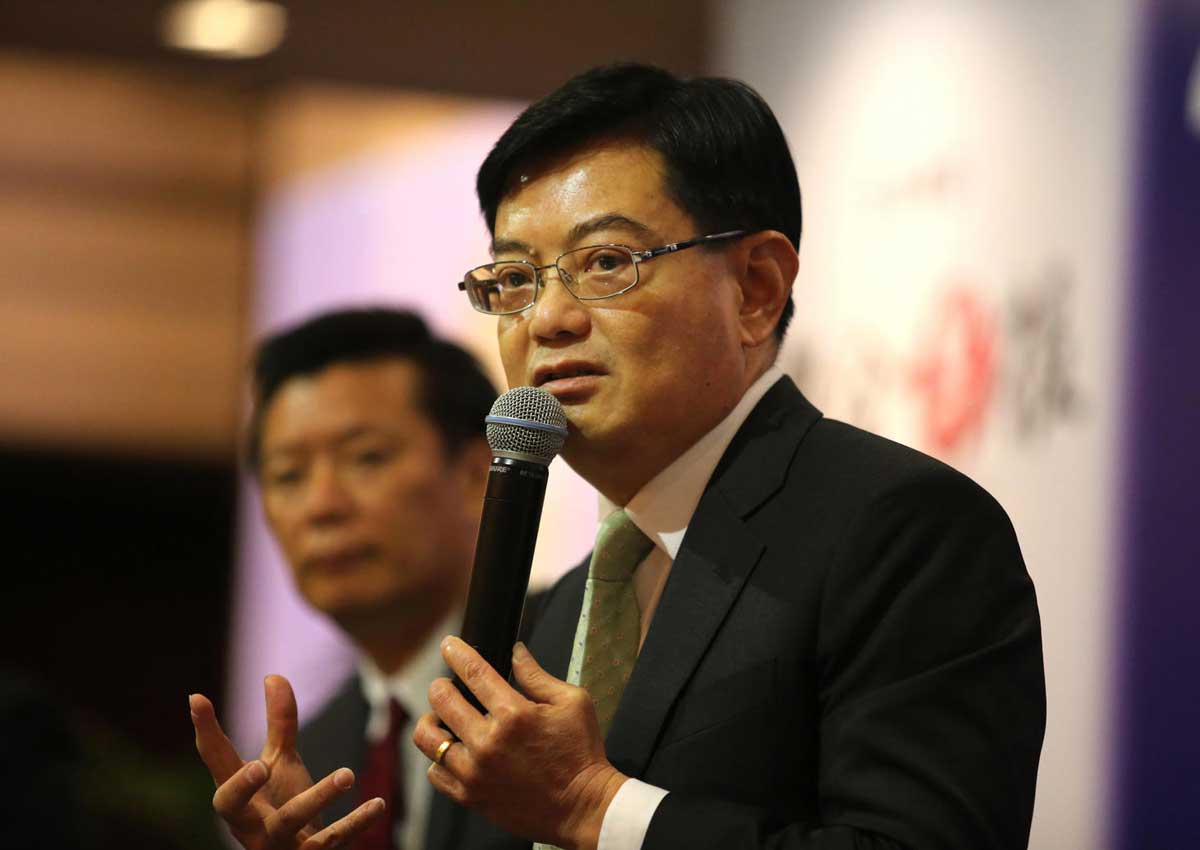
Singapore’s Budget Statement for 2017 will be delivered by Minister for Finance Mr Heng Swee Keat in Parliament on Feb 20, said a statement on Tuesday (Jan 3).

The statement will be broadcast live on TV and radio. A live webcast will also be available as well on the Ministry of Finance’s (MOF’s) Singapore Budget website.

MOF will update its social media platforms on Facebook and Twitter with the latest announcements too.

Those who wish to receive the statement via e-mail after it has been delivered can go to the Singapore Budget website to subscribe to the mailing list.

This free service will be available for subscription from Jan 19 to Feb 19.

The public is encouraged to send in suggestions relevant to Budget 2017. The feedback exercise will end on Jan 13.

Feedback can be submitted here:

Singapore Budget Website 

REACH Discussion Forum

REACH Budget microsite 

REACH Singapore Facebook 

REACH Singapore Twitter (Use the hashtag, #SGBudget2017)

REACH Email Address 

– REACH Toll-Free Hotline 1800-353-5555 (Mon to Fri, 8.30am – 5.45pm)

– SMS 9-SPEAK-UP (9-77325-87)

A pre-Budget Facebook Q&A session will be held on Jan 4 from 8pm to 9.30pm. 

REACH will also stage the last Pre-Budget Listening Point on Jan 8 from 7.30am to 11.30am. It will be held at Hougang Hawker Centre, Blk 681, Hougang Ave 8.

debwong@sph.com.sg


Image: 
Category: 
Publication Date: 
Tuesday, January 3, 2017 – 11:55
Keywords: 
Send to mobile app: 
Source: 


Story Type: 
Others

Source link

Running Man to have ‘Member’s week’

0


SBS’ popular variety show “Running Man” revealed their plan for the New Year project on Monday through Instagram.

Posting a spot photo from their 332nd episode, “RM 2017 kick-off meeting,” RM wrote “Member’s Week” will be their project for this year.

According to them, the project will take the format of the six RM members taking turns to plan a race each week.

The first heroine of this special race will be Song Ji-hyo and the second hero will be Kim Jong-kook whose episodes will be aired on Jan. 8 and 15 respectively.

After the controversy around the programme regarding the re-organisation of the cast members for their second season, the show will be cancelled in February.

Image:
Category:
Publication Date:
Tuesday, January 3, 2017 – 11:44
Keywords:
Send to mobile app:
Source:

Story Type:
Others

Source link

Photos of newborn holding oxygen mask go viral

0

A group of photo taken on Dec 31, 2015, have brought smiles to many faces as one of the photos shows a newborn baby holding an oxygen mask with his little fingers.

The baby was delivered on the last day of 2015 by an obstetrician surnamed Liu.

As the newborn had one day to a full-term, Liu put an oxygen mask on him to help him breathe easily.

But she was surprised to see the baby holding the mask with his fingers.

So she took the photos and posted them online and said, “When the baby is trying so hard, I will work harder in the new year.”

Image: 
Category: 
Publication Date: 
Tuesday, January 3, 2017 – 11:36
Keywords: 
Send to mobile app: 
Source: 


Story Type: 
Others

Source link

Chinese children paying price for shortage of doctors

0

“There are so many people and so few doctors,” said Chen Yang as he sat in a waiting room at Beijing Children’s Hospital late last month.

He had rushed his 6-month-old nephew to hospital early in the afternoon after noticing the child had suddenly developed a severe cough, and at 10 pm, he was still waiting for the result of a chest X-ray.

“There were hundreds of people ahead of us waiting to see a doctor when we arrived,” he said.

“There were long lines everywhere, and the information desk was crowded with patients.”

His nephew was eventually diagnosed with pneumonia and prescribed a series of saline drips, which meant returning to play the same waiting game for the next three days.

Chen’s experience is a common one, not just at Beijing Children’s Hospital, one of the best in the capital, but at similar clinics nationwide.

China is short of nearly 90,000 pediatricians, according to a white paper released in November by the Chinese Medical Doctor Association, which has warned that the universal two-child policy could pile on even more pressure.

With just one pediatrician per 1,800 children, the nation currently lags behind many developed countries, according to the report, which is based on a survey of 13,000 medical institutions nationwide.

Earlier last year, the central government set a target of making it one pediatrician per 1,450 children by 2020.

Children await treatment at Beijing Children’s Hospital in December.Photo: China Daily/Asia News Network

To accomplish that, authorities will need to reverse a trend that has seen 14,310, or more than 10 per cent of pediatricians in China, leave for other professions between 2011 and 2014, according to research by the association.

Yang Qiuli, a doctor at a children’s hospital in Xuzhou, Jiangsu province, said the chief complaints are the low salaries on offer, the heavy workload and the growing risk of conflicts with patients.

Severe pollution, which has affected regions across the north in recent months, has also further compounded the problem, according to health professionals.

Chen’s nephew was among many children taken to Beijing Children’s Hospital on Dec 18 for treatment after developing coughs during the capital’s smog “red alert”.

A woman in the emergency department, with her 3-month-old son who was experiencing respiratory difficulties, said she had been waiting for five hours, and had been told there was a shortage of available beds and only two doctors.

“Pediatrics wards are like a barometer of the weather,” said Zhang Jiao, a pediatrician at Beijing United Family Hospital, who confirmed that the heavy smog had resulted in an increase of infant patients.

“Children are most sensitive to the weather, and conditions such as fevers and coughs are common on days with poor air quality.”

Zhang worked from 7 pm until 7 am on Dec 18 and 19, and within the first three hours, she had received more than 10 patients, she said, adding that the hospital had placed an extra doctor on duty, bringing the total number up to three.

“Pediatricians are in great shortage,” Zhang said.

“In many big hospitals, pediatricians have to struggle to keep up with the excessive number of patients.”

Work pressure, low pay add to talent drain

Yang Qiuli is a pediatrician at Xuzhou Children’s Hospital in Jiangsu province. Photo: China Daily/Asia News Network

I started as a pediatrician in 2001, and was recently transferred to a management role.

In my experience, a pediatrician’s job is more difficult than that of other doctors, and the talent drain of pediatricians is more serious, resulting in a shortage.

The work of pediatricians is more challenging because, unlike adults, children, especially babies, cannot clearly express their condition, which poses difficulties for pediatricians in diagnosis and treatment.

On the other hand, children attract more attention from society and pediatricians may face higher risks if accidents happen during treatment.

Another reason for the loss is tense doctor-patient relations, which has put a lot of pressure on pediatricians.

Many parents want to see their children recover quickly or get better immediately after treatment, but there are certain conditions that medical treatment cannot cure.

Despite more challenging work, pediatricians, in general, earn less than doctors treating adult diseases.

This is also a major reason why many young pediatricians choose to quit.

A few days ago one of my colleagues resigned because she could not stand the heavy workload.

On average, Xuzhou Children’s Hospital receives 3,000 patients every day, and pediatricians generally work with a full load.

It is not uncommon for pediatricians to work for 24 hours straight to cope with the demand from the large number of patients.

A pediatrician can receive more than 80 patients per day during peak seasons.

Heavy workload, less pay and higher risks-all these have contributed to the loss of pediatricians.

And, in turn, the shortage of pediatricians results in a heavier workload. This creates a bad cycle.

We hope to see a better relationship between doctors and patients, so patients can have more trust in doctors.

We also hope the government can make more favourable policies to increase the appeal of being a pediatrician.

I believe pediatricians will have a better working environment with the current medical reform, so it will benefit everyone.

Image: 
Category: 
Publication Date: 
Tuesday, January 3, 2017 – 11:08
Keywords: 
Send to mobile app: 
Source: 


Story Type: 
Others

Source link

Billie Lourd posts touching Instagram tribute to Carrie Fisher and Debbie Reynolds

0


In one tragic week, the world lost two amazing talents – actresses Carrie Fisher, 60, and her mother, Debbie Reynolds, 84.

But while fans mourned the loss of the cultural icons, Fisher’s daughter, Billie Lourd, mourned the loss of a mother and a grandmother.

On Monday, the 24-year-old Scream Queens actress broke her social media silence to share a heartbreaking tribute to both beloved women and thank everyone for their support during this difficult time.

“Receiving all of your prayers and kind words over the past week has given me strength during a time I thought strength could not exist,” Lourd wrote alongside an old photograph of her, Fisher and Reynolds.

“There are no words to express how much I will miss my Abadaba and my one and only Momby. Your love and support means the world to me.”

Fisher passed away on Dec. 27, several days after suffering a heart attack on a plane. Her mother, Reynolds, passed away the following day on Dec 28.

Both actresses will have a joint funeral and be interred at Forest Lawn-Hollywood Hills in Los Angeles. According to Reynolds’ son, the funeral will be private.

Read the full article here.


Mashable is the go-to source for tech, digital culture, and entertainment content for its dedicated and influential audience around the world.

Image:
Category:
Publication Date:
Tuesday, January 3, 2017 – 10:59
Send to mobile app:
Source:

Rotator Headline:
Other Video Media
Story Type:
Others

Source link