31.7 C
Singapore, SG
Saturday, September 19, 2026
Home Blog Page 2051

'Infinite Challenge' to go off air for seven weeks

0

One of the longest-running TV variety shows in the country will take a seven-week break, with the head of “Infinite Challenge” saying it needed the time to “normalise” itself.

The show’s production team has confirmed reports it will be taken off air for seven weeks starting Jan. 28.

The broadcaster is planning to air the pilot programme and special editions of “Infinite Challenge” consisting of clips from past episodes.

Kim Tae-ho, the mastermind behind MBC’s hit, told local media he and other producers will use the time to revamp and organise the overall system, including the processes of preparation, coming up with new ideas and shooting the programme.

“It usually takes two weeks to prepare for a project, but we have to air the show each week. … I just wish to take enough time to provide fun and worthwhile experiences (for the viewers),” he said.

“Infinite Challenge,” which hit airwaves in 2005, is one of most popular TV programs in Korea with among the highest viewership ratings for Saturday prime-time shows.

It is considered a pioneer in the variety show genre in the country, with a special theme each time it airs.

Led by local comedy icon Yoo Jae-suk, the six members of the cast have attempted various ambitions, including acting, dancing, wrestling, singing, job interviews and even taking a jab at parodying election campaigns.

Comedy bits and sketches reflecting the real-life characteristics of the cast have also gained fame.

But the show’s longevity has sparked criticism over the gradual depletion of novelty that was once considered its strong point. Its once-prevalent theme of underdogs — the catchphrase in its fledgling days was “six men who are below average” — has also faded as they each have joined the ranks of entertainment superstars.

Head director Kim recently said the show had covered “virtually everything that could be aired on a Saturday evening” by 2009.

He mentioned that “Infinite Challenge” needs to change its platform from weekly broadcasting to seasonal broadcasting.

“It pains me greatly to see a show that ‘could’ve been better’ but isn’t,” he said.

Despite the criticism, the show’s cast and producers have vowed that “Infinite Challenge” will continue after the break.

Kim emphasised that the break does not equal rest and that the filming and meetings for ideas will continue throughout the seven weeks.

While accepting the grand prize for TV entertainment at MBC’s annual year-end awards ceremony, Yoo Jae-suk expressed his wish that shows goes on.

“People say that we are too old to go on. While I’m older than I ever was, I’m younger than I ever will be. … We will keep trying hard as long as the fans allow it,” he said.

Image: 
Category: 
Publication Date: 
Monday, January 16, 2017 – 12:17
Keywords: 
Send to mobile app: 
Source: 


Story Type: 
Others

Source link

Football: Late Jovetic strike ends Real Madrid's 40-game unbeaten run

0

MADRID – Real Madrid’s remarkable 40-game unbeaten run stretching back to April ended in dramatic fashion on Sunday when Sevilla’s Stevan Jovetic struck in added time to snatch a 2-1 win and blow the La Liga title race wide open.

Real looked set to go five points clear of rivals Barcelona at the top when Cristiano Ronaldo scored a joint-record 56th La Liga penalty to open the scoring in the 67th minute.

But Sevilla drew level in the 85th thanks to an own goal by their former defender Sergio Ramos, whose every touch had been mercilessly booed by the home fans, and new signing Jovetic completed the fightback when he bent in a shot from outside the area, three days after scoring against Real on his debut.

Real remain top with 40 points but saw their lead over Sevilla cut to one point, although they have a game in hand over the Andalusians and Barca, who are third on 38.

The two sides had played out a thrilling 3-3 draw in the King’s Cup on Thursday, with Real fighting back from 3-1 down in the final stages to preserve their record unbeaten run.

Zidane recalled Luka Modric and Ronaldo after resting them on Thursday and employed a 3-5-2 shape for the first time this season, making for a far tighter affair than the whirlwind football both sides had served up three days earlier.

ONLY CHANCE

The only chance of note in the first half fell to Ronaldo courtesy of a scrambled pass from Karim Benzema but the Portuguese mis-hit the ball, sending it wide.

Sevilla’s Wissam Ben Yedder burst forward from the right hand side 10 minutes into the second half but lacked the power to beat Real goalkeeper Keylor Navas, while Benzema later fired over in a moment of chaos in the Sevilla area.

A tight game was forced open when Sevilla left back Sergio Escudero misplaced a backpass and Real’s Dani Carvajal raced onto it and into the box, beating a defender and trying to round goalkeeper Sergio Rico before being tripped.

Rico escaped a caution but was powerless to stop Ronaldo’s powerful low spot kick, which took him level with Real great Hugo Sanchez as the top penalty taker in the history of La Liga.

The game was far from over, however. Ramos headed a Pablo Sarabia free kick into his own net to the delight of the Sevilla fans who he had mocked in the Cup draw after scoring a penalty.

The home supporters had one last laugh when Montenegrin former Manchester City and Inter Milan forward Jovetic let fly from outside the box and sent the ball into the far top corner.

Earlier, Valencia beat Espanyol 2-1 with goals from Martin Montoya and Santi Mina to earn their first league win since October and move four points clear of Sporting Gijon, who lost 3-2 at home to Eibar and occupy the final relegation spot.

Elsewhere the two bottom ranked sides Granada and Osasuna drew 1-1, while Celta Vigo beat Alaves 1-0 to stay eighth.

Image: 
Category: 
Publication Date: 
Monday, January 16, 2017 – 12:15
Keywords: 
Send to mobile app: 
Source: 


Story Type: 
Others

Source link

Tennis: Halep cites knee pain as she crashes to shock defeat

0

MELBOURNE – “Frustrated” fourth seed Simona Halep said she was struggling with a knee injury as she fell at the first hurdle for the second year in a row at the Australian Open on Monday.

The out-of-sorts Romanian, who called for medical attention after losing the first set, went down 6-3, 6-1 to American Shelby Rogers on day one in hot conditions on Rod Laver Arena.

Halep was playing the first match of the tournament on the centre court, and she became the first major casualty.

It was a case of deja vu for the right-hander, who was sent packing at the same stage last year by Chinese qualifier Zhang Shuai.

Halep is one of the fastest movers on court but she was missing her usual zip against the 24-year-old American, who reached the French Open quarter-finals last year.

“I had pain at my knee,” she said, adding that she first felt the tendon problem in October at the WTA Finals in Singapore.

“For me, in the second set, was difficult to move anymore, but she deserved to win. She was aggressive, and she hit very strong.” Asked about crashing out in the first round once again, she replied: “I’m a bit frustrated, but you cannot change much.

“I’m okay. Just looking ahead. It happens, and I just want to be well with the knee. And then I will think about the game.” Rogers, in only her second Australian Open appearance, was ecstatic at claiming such a big scalp, having missed last year’s tournament to focus on a lower-level ITF Tour event in Florida after injury problems.

“It’s pretty incredible, I played really well today,” said the American, ranked 52 in the world.

“There are no easy matches at this level so I am happy to get through and I take a lot of confidence from today.” .

She added that making the last eight at Roland Garros had given her the belief that she can beat the top players.

“The biggest thing I took away from that was just that I can compete with the top players in the world and I’m good enough,” she said.

“So I have definitely carried that away from the French Open and just been enjoying it a little bit. There has been a lot of positive feedback, which has been nice. I’m just trying to keep that going.” Playing the first match of the tournament on centre court, Rogers held serve first up when Halep sent a backhand wide as both players adjusted to the conditions.

As sweat quickly started dripping off them, it went with serve to 2-2 in a close-fought contest as Halep was forced to save two break points to stay at level pegging.

Rogers, coming off a run to the quarter-finals at the Hobart International, finally got the break in the sixth game to lead 4-2 when Halep smashed a volley into the net.

The sluggish Romanian saved two set points on her next service game but Rogers wasn’t to be denied and she wrapped up the set 6-3 in a gruelling 46 minutes.

The usually tenacious Halep was clearly struggling and she called for the trainer at the changeover.

But a confident Rogers broke in the third game of the second set to go 2-1 ahead before quickly reeling off the last four games.

Rogers’ reward is a second-round clash against either Australian qualifier Ashleigh Barty or Germany’s Annika Beck.

Image: 
Category: 
Publication Date: 
Monday, January 16, 2017 – 12:10
Send to mobile app: 
Source: 


Story Type: 
Others

Source link

Save 50% off ten Uber rides when you pay with Android Pay from 16 – 31 Jan 2017

0

Save 50% off ten Uber rides when you pay with Android Pay till 31 Jan

Save 50% off ten Uber rides when you pay with Android Pay from 16 – 31 Jan 2017

Starting today, you can pay for your Uber rides using Android Pay! Uber has partnered with Android Pay as a mobile payment option to bring you another seamless payment experience on Uber.

Source

Made to order at N Korea’s blacklisted art factory

0
In this photo taken on November 28, 2016, artist Lee Gyung-Lan poses for a photo at the Mansudae Art Studio where he works in Pyongyang. / AFP PHOTO / Ed JONES


PYONGYANG – “That was a personal commission,” says renowned North Korean sculptor Ro Ik-Hwa, pointing to a bust of A.Q. Khan, the Pakistani scientist denounced by the US as the world’s greatest nuclear proliferator.

The bust sits in Ro’s workshop in Pyongyang’s sprawling Mansudae Arts Studio complex, which has become the latest target of UN sanctions seeking to curb nuclear-armed North Korea’s access to overseas hard currency revenue.

The Security Council resolution adopted unanimously in early December included a paragraph explicitly preventing UN member states from buying statuary from them.

The clause was aimed at a niche but lucrative business – run from Mansudae – of exporting giant memorials mainly to Africa.

Ro, 77, is among the greatest living practitioners of such works, having been a lead artist behind some of the most iconic of Pyongyang’s monuments.

The Khan bust was commissioned after the Pakistani scientist visited the city’s Revolutionary Martyr’s Cemetery and admired the large bronze sculptures of individuals commemorated there.

“He asked for something similar in size and shape… so I made one,” Ro told AFP during a recent tour of his studio.

“After he saw it, he really liked it and sent me a full-length photo and asked for another, so I made a two-metre tall one,” he said.

Revered by many Pakistanis as the father of the country’s atomic bomb, Khan confessed in 2004 to sending nuclear secrets to Iran, Libya and North Korea, although he later retracted his remarks.

As US secretary of state, Hillary Clinton described him as “probably the world’s worst proliferator.” .

Khan’s vanity purchase is dwarfed in scale and cost by the monumental multi-million dollar projects Mansudae has worked on overseas – including the 50-meter high African Renaissance Monument, completed in 2010 outside the Senegalese capital Dakar.

“We’ll send teams for between one and five years to work on these projects,” said Kim Hyon-Hui, manager of the Mansudae Overseas Project (MOP) group.

A day after the latest UN resolution was adopted, the US Treasury added the MOP to its blacklist of entities that “support North Korea’s illicit activities”.

Ultimate authority over Mansudae technically resides with propaganda chief Kim Ki-Nam. But according to Michael Madden, editor of the website North Korea Leadership Watch, its lucrative status marks it out for special attention from supreme leader Kim Jong-Un.

“Given its prominence as a labour-service contractor and export company, realistic control over its affairs lies with Kim Jong-Un’s sister, Kim Yo-Jong,” Madden told AFP.

A vice-director in the Propaganda and Agitation Department, Kim Yo-Jong has risen swiftly through the ranks of the North Korean leadership to assume what analysts see as an influential position.

Last week, she was added to the US Treasury Department’s blacklist in response to Pyongyang’s “serious” censorship activities.

According to Pier Luigi Cecioni, who has operated as Mansudae’s official sales representative in the West for the past decade, Mansudae and the MOP enjoy an extremely high degree of autonomy.

“They pretty much exist at the level of a ministry,” said Cecioni who sells paintings by Mansudae artists through an English-language website he manages.

African governments have been Mansudae’s main market for large-scale projects, with statues, monuments and buildings ordered by countries like Angola, Botswana, Ethiopia, Namibia, Senegal and Zimbabwe.

Kim declined to provide any details of MOP’s earnings, and estimates of how much hard currency the company brings in range from $5.0 million to $13 million a year.

“In terms of its revenue earnings, Mansudae is a fairly small player,” said Madden.

“Because of its importance and prominence in the country’s political culture – not to mention its “supreme” patronage – Mansudae is not hard pressed to earn more,” he added.

Mansudae’s socialist-realist style has proved popular with revolutionary movements-turned-governments looking to create a post-colonial memorial landscape, and it provides skilled workers at a very competitive price.

“Only the North Koreans could build my statue… I had no money,” the then-Senegalese president, Abdoulaye Wade, told the Wall Street Journal when the African Renaissance Monument was completed at a reported cost of $27 million.

Close to 4,000 people work at Mansudae – a vast complex the size of a small village with hundreds of studios housed inside cavernous cement buildings.

It was founded in 1959 by Kim Il-Sung and a giant statue of the founding president and his son and successor Kim Jong-Il – both on horseback – greets visitors inside the main entrance gates.

The studios employ 700 artists who are ranked in a clearly defined hierarchy.

At the top of the pile sit around 30 designated “People’s Artists” – like Ro Ik-Hwa – who enjoy numerous benefits including foreign travel and individual studios inside the complex.

The North’s art scene is tightly controlled – there is no abstract art, which is regarded as anti-revolutionary by authorities – and even the top artists work for monthly salaries that bear little relation to the sale value of their work.

“We produce pieces that are demanded by revolution… that move people to revolution,” said Hong Chun-Ong, 76 – also ranked as a “People’s Artist” and a 40-year veteran of Mansudae who specialises in wood cuts and propaganda images.

Hong, described by MOP manager Kim as among the “top five” artists in the country, is one of the few to have travelled overseas – attending promotional exhibitions in Asia, as well as some European countries like the Netherlands.

“We sell works at our exhibitions, but also produce as requested,” Kim said.

“Those shown at exhibitions are more expensive because they don’t get re-produced,” she added.

Provenance can be problematic for those not attuned to the peculiarities of the North Korean art market.

Star artists often produce multiple copies of their most popular works which are also copied by other artists, so that more people can see them.

At the same time, Mansudae cranks out a lot of works specifically tailored for foreign consumption.

This makes finding high quality pieces, with a clear provenance and with genuine roots in the fabric of North Korean society, extremely difficult.

Prices vary enormously, with large works by top People’s Artists going for tens, or hundreds of thousands of euros.

“I don’t deal much with expensive works like that,” said Cecioni.

“The artists involved aren’t well known here, so it’s difficult to find buyers at that price range.” Mansudae’s only bricks and mortar foreign representation is the gallery it operates in Beijing’s 798 Art District.

North Korean art remains an extremely niche market, and China is one of the few places where works are bought and sold by collectors with any regularity.

It is possible to buy direct from the complex in Pyongyang, but financial sanctions make it difficult.

“You can’t transfer money to North Korea, so if you can’t go in person, there aren’t that many options,” said Cecioni.

Image:
Category:
Publication Date:
Monday, January 16, 2017 – 12:01
Send to mobile app:
Source:

Story Type:
Others

Source link

14 troupes leap for the title of lion king

0

With deft agility, the “lions” leapt, danced and balanced on poles – as high as 2.5m from the ground – to the rhythm of drums, cymbals and gongs.

But the acrobatic stunts performed yesterday at a carpark in Banda Street were no circus animal act.

Instead, they were a human display of strength, courage and grace.

The 10th International Lion Dance Competition held over the weekend saw 14 troupes from nine territories vying for top honours.

It attracted audiences of up to a thousand each night.

The top prize of $5,000 went to the Jing Ying Tang Dragon & Lion Dance Troupe from Vietnam.

The annual event is organised by the Kreta Ayer-Kim Seng Citizens’ Consultative Committee, as part of Chinese New Year festivities.

Jalan Besar GRC Member of Parliament Lily Neo was the guest of honour at the competition.

Lion dance is a traditional art form which celebrates prosperity and good fortune in homes and businesses.

It requires keen coordination between the “lion head” and “lion tail” dancers.

In competitions, lion dancers balance and pull off acrobatic feats on a series of 21 poles, which range in height from 1.2m to 2.5m.

Mr Willis Koh, 29, who is from Australia’s Jin Wu Koon Dragon & Lion Dance Association and has been a “lion tail” for seven years, said: “It takes a lot of guts, determination and perseverance.”

In the audience yesterday was engineer Cheang Boon Keong, 44.

He said: “It’s my second time here.

The performances were even better than the previous night’s, as the troupes seem to have got used to the venue and are putting on their best show.”

adrianl@sph.com.sg


This article was first published on Jan 16, 2017.
Get a copy of The Straits Times or go to straitstimes.com for more stories.

Image: 
Category: 
Blurb: 
Publication Date: 
Monday, January 16, 2017 – 17:00
Send to mobile app: 
Source: 


video embed code: 
<iframe width="100%" height="355" src="https://www.youtube.com/embed/8V4pvfjxWuI" frameborder="0" allowfullscreen></iframe>
Video Media: 
Other Video Media
Story Type: 
Others

Source link

New guidelines on child maintenance expected next year

0

Divorcing parents will have a better idea of how much they need to pay for child maintenance, when guidelines for this are expected to be released by early next year.

The guidelines will be based on actuarial data on family expenses, giving family lawyers and judges a more objective view of how much is needed to raise a child.

Currently, there are no such rules; information on children’s living expenses is declared – and often inflated – by divorcing parties.

With the move, lawyers expect divorce cases to be settled more quickly as the issue of child maintenance is one of the most acrimonious.

The guidelines will be set by a panel co-chaired by Mr Gerard Ee, president of the Institute of Singapore Chartered Accountants, and Judicial Commissioner Valerie Thean.

Mr Ee said these guidelines will include a table suggesting different maintenance amounts depending on two factors: the child’s age and parents’ income.

“These factors have always been considered in divorce cases but there was no actuarial template to refer to,” he added.

Having such guidelines will “help improve consistency and cost-effectiveness” in divorce cases involving children, said Chief Justice Sundaresh Menon last week at the opening of the legal year, when he announced the setting up of the panel.

Countries with child maintenance guidelines include Germany, Canada and Australia.

The table Mr Ee mentioned is similar to Germany’s Dusseldorf Table, which has been updated nearly every year for the past decade. Mr Ee said the one in Singapore will be refreshed regularly too, to reflect changes in living costs.

The move comes amid a rising number of break-ups, though the divorce rate has been stable.

The latest available data shows there were 7,120 divorces in 2015, a rise of 11 per cent from the number in 2005.

Family lawyers welcomed the move, with some saying child maintenance is one of the most rancorous issues argued about in court as there are inconsistencies over how much is needed to raise a child.

Said Mr Rajan Chettiar: “Often, the father thinks the mother is deliberately inflating the child’s expenses to get more maintenance, and worries that the mother will spend the extra money on herself.”

Ms Gloria James agreed that many divorcing parties inflate expenses, citing a case in which the court’s view of the children’s monthly expenses was about $1,300 less than what the mother had argued for.

The mother had included items like “staycations”, “photography” and “birthday parties”.

Ms Sharanjit Kaur said judges face an “uphill task” in assessing the average cost of living for children owing to changing expectations and needs.”The cost of living for children has changed significantly, with parents spending more on things like enrichment classes.”

Currently, parents must give evidence such as receipts for expenses incurred by the child.

Lawyers Ivan Cheong and Michelle Woodworth said the guidelines could lead to divorce cases being closed more quickly.

This will also reduce parents’ legal costs.

Mr Ee said the panel will consult other lawyers on the guidelines, and possibly the public later this year.

goyshiyi@sph.com.sg


This article was first published on Jan 16, 2017.
Get a copy of The Straits Times or go to straitstimes.com for more stories.

Image: 
Category: 
Blurb: 
Publication Date: 
Monday, January 16, 2017 – 17:00
Send to mobile app: 
Source: 


Story Type: 
Others

Source link

At least 100 bodies go unclaimed each year

0

She spent 17 years in a home for the aged, with no visits from family or friends.

Two weeks ago, the 87-year-old died as she lived – alone.

Her body went unclaimed, and a funeral parlour cremated it pro bono before scattering her ashes in the sea.

Every year, at least 100 bodies go unclaimed in Singapore’s funeral homes and morgues.

There they lie while the search goes on for their next of kin. While most bodies are then cremated, some are sent to hospitals and medical schools for education or research.

According to the Ministry of Health (MOH), an average of 15 unclaimed bodies a year were used for such purposes from 2011 to 2015.

In New York, debate has brewed over a new law that bans the use of unclaimed bodies as teaching cadavers without written consent by a spouse or the next of kin.

Previously, officials there would appropriate unclaimed bodies for medical schools to dissect and mortuary schools to train embalmers.

In Singapore, controls are in place, said an MOH spokesman.

When a body has not been claimed after 24 hours, MOH’s director of medical services may authorise the use of the body or any body part for purposes such as dental or medical education and research.


But the police must confirm that the next of kin or proper claimant is untraceable and approval must be sought from the State Coroner, he said, adding: “Typically, it takes a few weeks for the necessary approvals, as thorough checks must be conducted to ensure that the next of kin is indeed untraceable, and that there are no other claimants.”

The vast majority of unclaimed bodies are those of the elderly, according to funeral directors, nursing homes and hospitals.

Ang Chin Moh Funeral Directors handles funeral arrangements for 70 to 100 unclaimed bodies a year.

It is approached by hospices, charitable hospitals and social workers.

Chief executive Debbie Andres said: “Once all parties have confirmed the deceased has no next of kin… we prepare the deceased with care, provide a funeral casket, arrange for cremation and the appropriate religious rites of the deceased.”

Such cases include those who were abandoned by family members after being checked into a nursing home.

Others were estranged or had no next-of-kin details provided to the home.

“Some families do a few visits initially and stop visiting after they are unable to pay for charges due to financial difficulties, mental stress and other reasons,” said Ms Andres.

Undertaker Roland Tay sees 20 to 30 cases a year.

The case of the 87-year-old was referred to him by the Society for the Aged Sick.

Last week, he received a request to make funeral arrangements for a 69-year-old man who died at home from rectal cancer.

He had been without next of kin after his sister died in 2014.

“It’s very sad to see such cases… When they die, there’s no one to take care of their funeral rites,” said Mr Tay.

If the dead person was estranged from family members, he announces the death in the newspapers so relatives can step forward.

The Health Sciences Authority has a forensic medicine division for cases where a doctor cannot certify the cause of death.

It handles 40 to 75 unclaimed bodies a year.

“Where there is no immediate claimant, we work with the police to confirm the identity of the deceased… These bodies are generally retained in the mortuary for up to 21 days and occasionally longer if more time is needed to locate the next of kin,” it said.

kcarolyn@sph.com.sg


This article was first published on Jan 16, 2017.
Get a copy of The Straits Times or go to straitstimes.com for more stories.

Image: 
Category: 
Publication Date: 
Monday, January 16, 2017 – 17:00
Send to mobile app: 
Source: 


Story Type: 
Others

Source link

Singapore matches Malaysia’s road charge of $6.40 for all foreign-registered cars

0


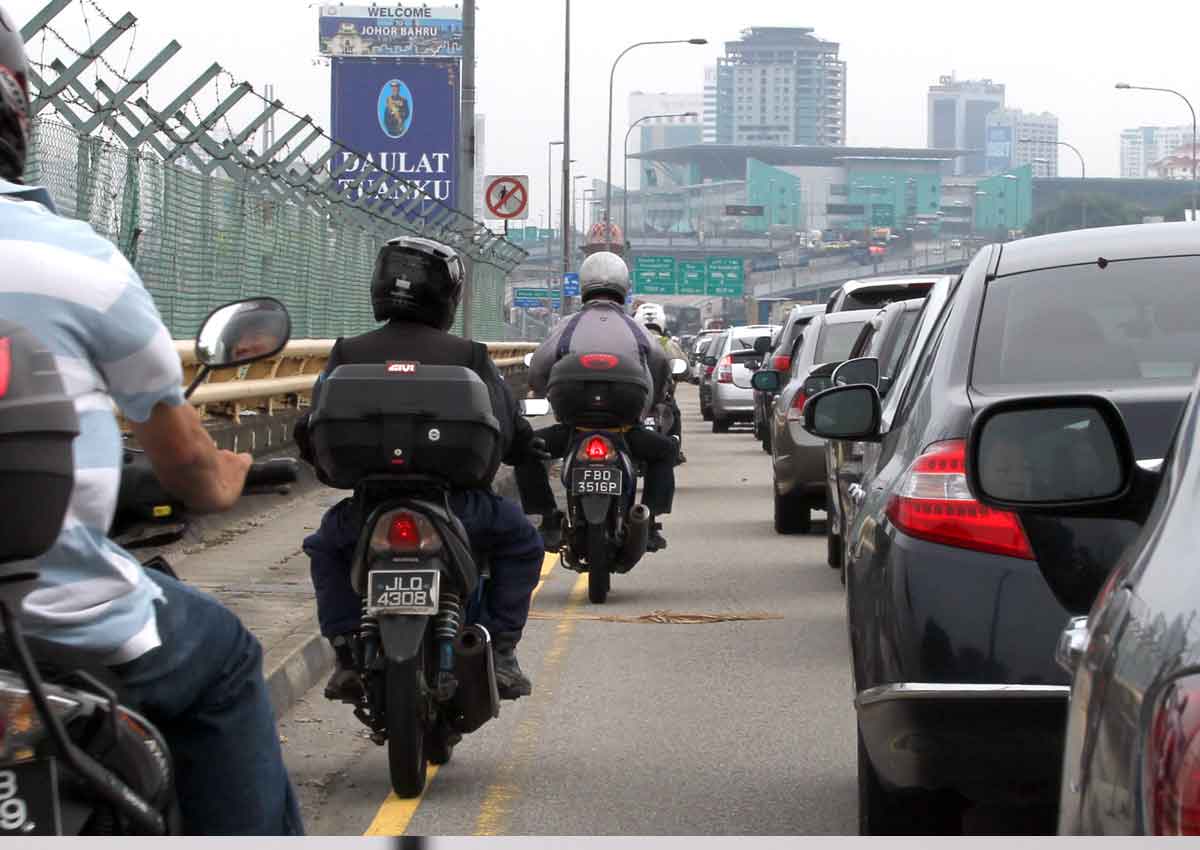
SINGAPORE – Singapore will go ahead with implementing a Reciprocal Road Charge (RRC) of $6.40 on all foreign-registered cars entering Singapore via the Tuas or Woodlands Checkpoints from Feb 15.

In a statement on Monday (Jan 16), the Land Transport Authority said the RRC will be collected together with the Vehicle Entry Permit (VEP), toll charges and fixed Electronic Road Pricing (ERP) fees when vehicles depart from the two checkpoints.

The news comes after Malaysia’s Transport Ministry callled on its Singapore counterpart to reconsider its decision to match Malaysia’s road charge of RM20 ($6.40) for foreign vehicles crossing the causeway.

Toll charges for cars currently vary from $2.70 to $3.80, while VEP fees can cost up to $35.

First-time offenders who evade these fees will be fined $50, while repeat offenders are required to pay $100.

grongloh@sph.com.sg

Image:
Category:
Publication Date:
Monday, January 16, 2017 – 11:21
Send to mobile app:
Source:

Story Type:
Others

Source link

New Mandai eco-tourism hub to feature global wildlife, nature

0

SINGAPORE: Visitors to Mandai will get to experience wildlife and nature from across the globe – such as walking through the wetlands of South and Central America or the cave life forms of Southeast Asia – by 2021. 

Details of the project to transform Mandai into an eco-tourism hub were revealed by developer Mandai Park Holdings (MPH) on Monday (Jan 16), during a ground-seeding ceremony.

The ceremony kicked off the construction phase of the Mandai rejuvenation project, an undertaking that will see the relocation of Jurong Bird Park, as well as a new Rainforest Park developed around the Singapore Zoo, Night Safari and River Safari. 

Masterplan of the Mandai rejuvenation project. (Photo: MPH)

The details come following changes to the project’s Environmental Impact Assessment (EIA) report last year, which were made to include additional measures to mitigate the impact of the development on the area’s wildlife and natural habitat. 

MPH said “arrival nodes” to the precinct will be located in the east and west, connected by walking trails and boardwalks along Upper Seletar Reservoir. 

Visitors to the new Bird Park and the Rainforest Park will arrive from the precinct’s west, welcomed by a key feature of the gateway – a waterfall along a winding forest stream. 

Artist’s impression of the view from inside a waterfall in the park. (Photo: MPH)

The east entrance will provide access to nature-themed indoor attractions, as well as the Zoo, the Night Safari and River Safari. It will also house accommodation options. 

The two arrival points were created following to prevent a large number of visitors entering one entrance, thereby impacting more nature-sensitive areas such as the Central Catchment Nature Reserve. 

NEW BIRD PARK

At the ground-seeding ceremony, MPH said the new Bird Park will be developed around ideas “enabled by latest technologies”.

Visitors will experience the various bird species living in different rainforests, from those in Africa and Papua New Guinea, to the Australian bushland. The avian collection will be among the most significant to be assembled in the world, featuring birds-of-paradise and hornbills, many of them endangered species, according to MPH. 

The attractions include a “fly with the penguins” experience, which will see sub-Antarctic penguins housed in a naturalistic habitat that will create the impression of them “flying” through the waters.

Artist’s impression of the penguin tank. (Photo: MPH)

RAINFOREST PARK

Another highlight, the Rainforest Park, will take visitors through Southeast Asian foliage, and allow them to view the trees from caverns, a boardwalk and an aerial walkway. 

The Rainforest Park is expected to be ready by the end of 2021, earlier than the 2023 completion date previously announced. The Bird Park is expected to be ready by 2020.

Artist’s impression of the Rainforest Walk. (Photo: MPH)

The transformation of Mandai as an eco-tourism hub was first announced by Prime Minister Lee Hsien Loong in September 2014. 

Source link