28.3 C
Singapore, SG
Thursday, September 17, 2026
Home Blog Page 2007

Cable ties sometimes used to secure carpark gantry barriers, HDB says after concerns raised

0


SINGAPORE – After a Shin Min Daily News contributor highlighted the use of cable ties to secure the barrier at some carpark gantries, the Housing Board has clarified that service providers sometimes do so to avoid disrupting the Electronic Parking System (EPS).

HDB told The Straits Times on Tuesday (Jan 24) that the EPS gantry barrier is “designed to be detachable upon being hit”, to minimise damage to both the vehicle and the EPS system.

“Where the impact to the gantry barriers is minor, such as when vehicles bump lightly into them, they may become slightly dislodged,” said the spokesman.

“To reinforce these barriers and prevent them from falling off, the service provider may sometimes choose to use cable ties to secure them so that the EPS operation will not be disrupted.”

The issue of cable ties was first raised by Mr Tan Tee Seng in a special features column in Shin Min earlier this month. He said that he had seen cable ties being used to secure the barriers.

He said: “I saw the bolts loosen and the barrier fall to the ground. It was put back, and fixed just with cable ties.”

Mr Tan claimed that this happened repeatedly, with more cable ties being added each time the barrier came loose.

In response to the article, readers who noticed cable ties being used at the gantries near their homes wrote in to ask if the practice was safe.

Shin Min reported that cable ties were seen at gantries in areas including Bishan and Chua Chu Kang.

HDB first implemented the EPS in HDB carparks in 2004. To date, some 1,500 out of the 2,000 existing HDB carparks have the system.

HDB in its reply to The Straits Times also reminded motorists to “slow down when approaching the EPS barrier and to keep an adequate, safe distance from the vehicle in front” for the safety of all carpark users.


This article was first published on Jan 24, 2016.
Get a copy of The Straits Times or go to straitstimes.com for more stories.

Image:
Category:
Publication Date:
Wednesday, January 25, 2017 – 09:00
Keywords:
Send to mobile app:
Source:

Story Type:
Others

Source link

What if Singapore becomes a two or multi-party system?

0


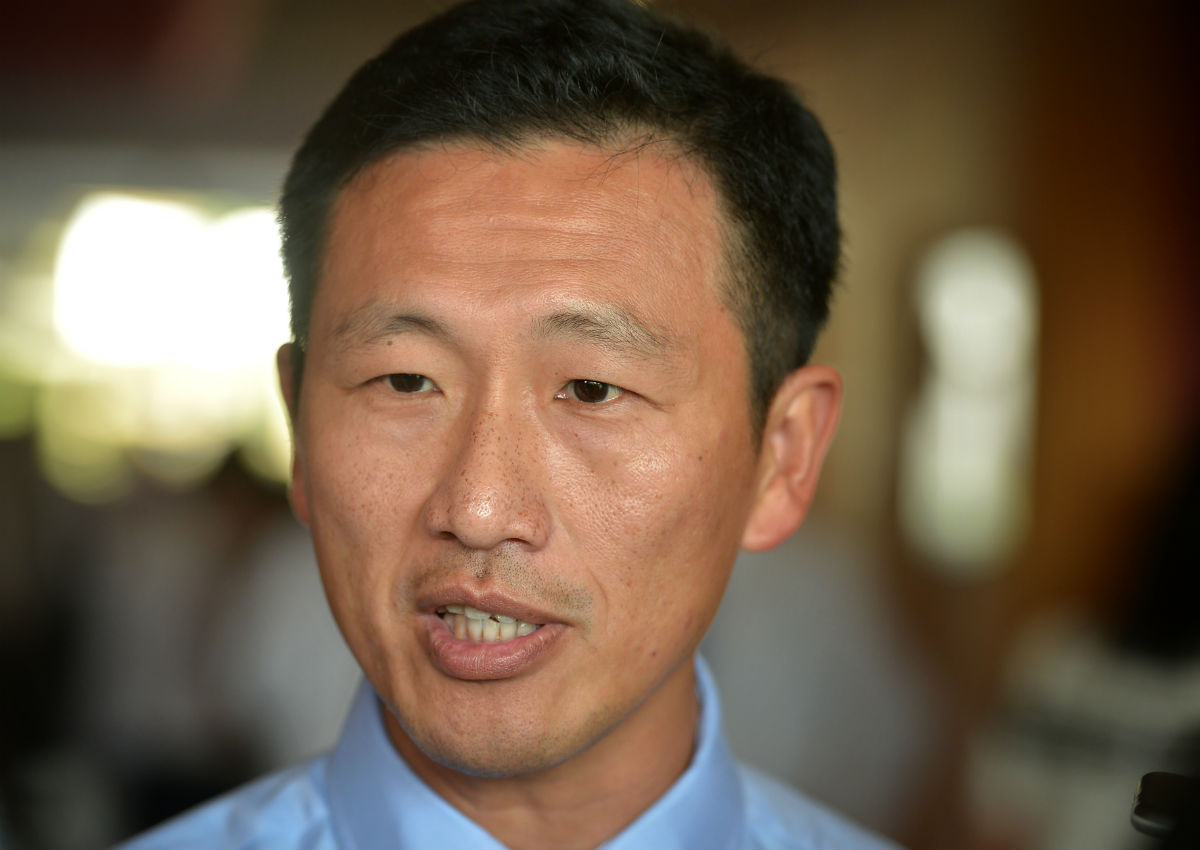
Minister for Education (Higher Education and Skills) Ong Ye Kung addressed the Institute of Policy Studies’ Singapore Perspectives Conference on Monday, where he spoke on the issue of ‘What if Singapore becomes a two or multi-party system?’ Below is an edited excerpt of his speech.

Let’s talk about the elephant in the room – which is the PAP. The scenario painted to us is that by 2065, it is replaced by several smaller elephants that will take turns to govern after each election or rule through coalitions. It’s a drastic departure from the status quo, which we cannot rule out half a century from now. Question is: What happens then?

I would like to present my remarks in three parts. First, while life will change in many ways, we will adapt and in many ways, life goes on. Second, I will explain why this can give rise to a couple of serious long term risks for Singapore. Third, which is what many Singaporeans will ask: ‘What is the Government going to do about it?’

First, what will change and how will life go on?

A major change in a multi-party system will be the shifting of the political ground. Expect intense ground jostling – different parties reaching out to various groups to garner support. The Unions may not be as cohesive as they are today, working with the PAP in a symbiotic relationship. They may be split into two or more groupings, or there will be a competing federation, like the days when we had SATU and NTUC. Likewise, there will be split affiliations amongst associations, clans, societies, even recreational clubs, civil societies, socio-political sites, sports and arts bodies, etc. Media houses can be split too.

It’s not a new phenomenon. It has been the case in more hotly contested constituencies. After GE2011, when the Worker’s Party won Aljunied, I found myself becoming the opposition party in the GRC. Then, there are groups which will invite me as guest-of-honour for their functions, and others that will invite the Workers’ Party MP. Most will invite both, and I got the feeling the guests enjoyed watching the jostling. In a multi-party system, the scale of that happening will be larger, nationwide, at events, and behind the scenes.

I believe the institution that will be most tested will be the civil service. The holy grail of the civil service is to be politically neutral and serve whichever party forms the Government, regardless of their differences in governance philosophy. Offer the policy options, state the pros and cons, let the political leaders with the mandate decide, and civil service will support regardless. It is a professional ideal, but in practice, easier said than done. You can work on one set of policies for five years and someone new comes along and ask you to undo everything you have done and move to a new direction. We see that now happening – the Affordable Healthcare Act in the US is being unwound, Trans Pacific Partnership being put to a stop. That can be very frustrating and disheartening.

It is useful to see how other countries deal with it. America ended up politicizing the top echelons of the civil service. The top few layers of bureaucrats are political appointees, and whenever there is a change in Administration, they are all replaced. That is why the new Trump Administration has to make 4,000 appointments.

The alternative is the Australian or UK system, where all civil servants in the Ministries stay intact, but the Minister’s office is packed with his own staffers – presumably more aligned to his thinking. In Australia, the Ministers spend most of their time with these staffers in Parliament, and not with the civil servants in the Ministries – because Parliament is where the political contest is.

We will have to adapt to all these, which also means status quo as we know it will change. But adapt we will.

Real risks

Second, I will touch on the real long term risks for Singapore in a multi-party system that be beyond adapting and getting used to . The risk is not so much being in a multi-party system per se, but what are the forces and processes that will lead us there.

For a two or multi-party system to take shape, there must first have been at least two paths sufficiently different for our country to take. But these paths can be a narrow fork in the road that can even merge further down, or a T-junction pointing in opposite directions and will never meet.

Take the UK for example. From the mid-1990s to early 2010s, the Conservatives and New Labour in UK both believed in a pro-business, market economy that upholds equality of opportunities instead of equality in outcomes. Both eschew labour unrest and strikes – which was a major shift for New Labour. The key divergence in policy was probably in their attitudes towards the European Union. Today, that has widened into a gulf between those who believed in Brexit and Remain. That difference has split the society between the young and old, urban and rural residents, the more and less educated.

In the US, the key historical divergence between the Republicans and Democrats was slavery. The situation has evolved. Slavery is no more, and today, the two parties hold distinct views on the size of Government, taxation, abortion, and gun control. But in the recent Presidential elections, those positions widened, pitting nationalism against globalisation, whites verses other races. It was a bitter, divisive election which both candidates openly acknowledged.

Political parties are essential in representing the diverse views of people, and elections a necessary and peaceful discourse in finding compromises and seeking a way forward for the country. This is the essence of democracy. But that same essence can take a nasty twist, sow discord and divide societies. Hence Winston Churchill said “…democracy is the worst form of Government except all those other forms that have been tried from time to time.”

Fifty years from now, if we have a multi-party system, what will define the key political difference between parties? What is the partisan line? Is it over the extent to which we should subsidize public services, healthcare and social assistance? If that is so it may well be something we can manage. What if it is over something more sinister that divides Singapore by race, language or religion? As we all know politics, race and religion is a toxic mix. If that happens, we will be broken as a country and society.

Another major risk is whether a multi-party system will slow down decision making, and our nimbleness in navigating an ever changing external environment. If we have a multi-party system back in 1965, would we have come this far so quickly?

Back then, we could move to attract FDI (foreign direct investments) from multi-national companies when it was not politically correct to do so in a post-colonial era. We forged omnidirectional, bilateral free trade agreements while others pledge allegiance to the WTO multilateral system. We must move fast in embracing new digital technologies, even though it can be uncomfortable and disruptive.

If we envisage a future of tough challenges – a shifting geopolitical landscape, more intense economic competition, challenging demographic trends, rising sea levels – unity, common purpose and the ability to move faster than others will be central and vital for us. While other countries are either slow but big, or small but fast, will we end up suffering the worse of both worlds – small and slow?

The current system has worked well for the majority of Singaporeans so far. It still gets my vote as the best system for Singapore.

Ensure current system works

So, given these risks, what can Government do about it?

To answer this question, let me rewind to 2011 when I was first introduced as a PAP candidate. I was asked by a journalist what I thought of a single party system in Singapore. I said that our equilibrium as a small country may well be a single party rule. The party can be PAP today, but another in the future – so long it is the most capable at that time.

Because between Singaporeans living in Changi and Jurong, their concerns and views on national issues may be somewhat different, but nothing like people living in Alaska or New York City, Jakarta or the Eastern and Westernmost places in the Indonesian archipelago. For big countries, geographical separation translates into different lifestyles, outlook, values and political affinities, which then lends itself to multi-party politics.

The single party in the case of Singapore, is not a prescription, but the most likely outcome of choice – a result of free and fair elections. It is not different from Massachusetts being dominated by Democrats for long periods, or Scotland dominated by Labour and now SNP. Smallness and concentration do often come together.

So the answer to the question what are we going to do about it, is to make sure the current system continues to work for Singaporeans!

To do so, we must understand what factors made it work so far. Complacency, elitism, and corruption are not inevitable outcomes of dominant party rule. These ills have shown up across all political systems.

The PAP knows that our integrity must be unquestionable. If something goes wrong, it will be rectified and the perpetrators must face the consequences and action has to be swift.

We must be a party that is open minded and keeps up with the changing expectations of the population – so that we can be at the forefront of new ideas, and policies can adapt to the needs of the society and our people. Never think that today’s solutions are the best they can be. Keep our eyes and ears open to changes in our surroundings, consult widely, improve our co-creation skills, and work together with the citizenry in creating solutions. We must attract talent from as diverse a background as possible to serve. That is why every term, we replace a quarter to a third of our candidates.

The PAP must constantly self-reflect, on areas that it has not done well, and why the Singapore Dream did not work out for some Singaporeans. Our policies must be rooted in the ground. A sizeable proportion of our work must be on the ground. And in this age of inequality, ours cannot just be a system which rewards the best and brightest, it must also be a system that compensates for poor family circumstance and the role of luck.

Every country in the world is different. A country’s success is idiosyncratic and can never be replicated wholesale by another. The formula for success is based on different political processes. Singapore’s formula may well be a single party system.

Ultimately, the political future of a country will be determined by the will of the people. If the people wish for a change to a multi-party system, it will be so. The job of the opposition parties is to highlight to people the risks of the current system. Likewise, it is the job of the PAP to do our best to make sure Singapore flourishes, point out the risks of a multi-party system for a small country like Singapore, and keep out the ills of complacency, elitism and corruption.

Whatever the ‘what ifs’ – single or multi-party – among all parties and all Singaporeans, we need a singularity of purpose and a wide agreement on means of implementing this purpose. This is not mere politics, but it is about our collective journey, as a people, as a country, to improve the lives of yours and mine.


This article was first published on Jan 24, 2016.
Get a copy of The Straits Times or go to straitstimes.com for more stories.

Image:
Category:
Publication Date:
Wednesday, January 25, 2017 – 09:00
Send to mobile app:
Source:

Story Type:
Others

Source link

USS surprises 25 millionth visitor with red carpet, VIP tour

0

SINGAPORE – Universal Studios Singapore USS reached a new milestone on Tuesday (Jan 24) morning when it welcomed its 25 millionth visitor, seven years after it first opened its doors.

The visitor Ms Eun Ji Kim and her travel companion Ms Seon Mi Hwang, both 19-year-old high school students from Gyeong Ju, South Korea, were surprised with a red carpet welcome and greeted by USS’ character mascots.

They were also given a VIP tour and a USS merchandise hamper.

To mark the milestone, USS is launching a Silver Milestone promotion package at $138 from now till March 19. The package includes one-day tickets for two adults as well as photo, retail and F&B vouchers worth up to $55.

ljessica@sph.com.sg

Image: 
Category: 
Publication Date: 
Tuesday, January 24, 2017 – 21:55
Send to mobile app: 
Source: 


Story Type: 
Others

Source link

‘Running Man’ will keep running

0


SBS’ beloved variety show “Running Man” reversed its decision to cancel the programme, SBS said on Tuesday.

After the controversy surrounding the programme regarding the changing line-up of cast members for their second season, SBS said on Dec. 16, 2016 that they decided to cancel the show in February.

Ever since, the fans have been expressing their regret on the cancellation which led the production crew to reconsider the decision.

Nam Seung-yong, the producer who planned the programme at first, has been meeting each cast member to apologise for the controversy caused by the change of line-up.

Read also: The most-watched episodes of Running Man

After the meetings, the production crew and the cast members agreed to keep running the programme with the original cast members.

“I sincerely thank the ‘Running Man’ cast members for making such difficult decisions,” Nam said. “To respond to local and overseas fans who have supported ‘Running Man’ for last seven years, we will try our best to make ‘Running Man’ even more enjoyable.”

Read also: Running Man star Song Ji-Hyo reportedly cut contact and cried for days after being removed from show

Image:
Category:
Publication Date:
Tuesday, January 24, 2017 – 21:37
Keywords:
Send to mobile app:
Source:

Rotator Headline:
Running Man members agree to continue, show no longer cancelled
Story Type:
Others

Source link

Singapore start-up unveils new karaoke-on-demand experience

0

SINGAPORE: It’s the future of karaoke – a small system which plugs into any sound system and television, giving users a “fluid karaoke-on-demand experience.” 

That is what Singapore start-up Popsical is promising with its new karaoke set unveiled on Tuesday (Jan 24). It also gives users access to an online library of more than 20,000 songs in English, Chinese, Malay, Hindi and Tamil. 

Through an app, users will be able to queue songs as well as adjust the pitch, tempo and volume of the song on their smartphones. The library of songs will also be updated on a daily basis, according to Popsical.

“Those who have used Popsical will never want to go back to the obsolete systems that are currently being used in homes and KTVs around the world,” said Popsical’s co-founder and CEO Faruq Marican.

The start-up was founded by three karaoke enthusiasts in 2015. It is part of Mediacorp’s Mediapreneur incubation initiative, under which selected digital media start-ups are put through a one-year programme which provides seed funding, mentoring and networking opportunities.

A crowd-funding campaign was also launched on Kickstarter on Tuesday to gather support for the karaoke product and to allow for pre-orders.

Current investors for Popsical include Quest Ventures, ACE Spring Singapore and Mediacorp.

Source link

The rape case that shadowed Polanski

0

Four decades on, award-winning film director Roman Polanski is still dogged by the greatest stain on his reputation: the rape of a 13-year-old girl.

Next month the filmmaker was scheduled to play honorary host at France’s answer to the Oscars, the Cesar awards, but has now pulled out after pressure from activists.

The case continues to polarise opinion.

In 1977, Polanski and 13-year-old Samantha Gailey were at the Hollywood home of actor Jack Nicholson for what Polanski said was a photo shoot for the Vogue magazine group.

The Franco-Polish filmmaker, then 43, was already a star following the success of his noir thriller “Chinatown” and horror movie “Rosemary’s Baby”.

Gailey, who later went by her married name Samantha Geimer, said Polanski plied her with champagne and part of a Quaalude, a powerful muscle relaxant that stimulates sexual arousal, and got her to undress for pictures in a hot-tub.

He then had oral and anal sex with the girl before taking her home, where her mother learned what had happened and called the police.

Polanski said the sexual act was consensual, although he afterwards apologised to Geimer.

Polanski was charged with five offences including rape by use of drugs and committing a lewd and lascivious act on a child aged under 14.

He initially pleaded not guilty but to avoid a public trial, he accepted a plea bargain under which he would plead guilty to a single, lesser charge of unlawful sexual intercourse.

He spent 42 days in a Californian prison for psychiatric evaluation, and a report was submitted to the court recommending he be given probation.

But in January 1978, Polanski’s lawyers believed the judge was possibly preparing to sentence him to a much longer prison term.

The day before sentencing he fled to Paris, making use of his French citizenship and France’s limited extradition with the US.

He has never been back to America, wary even of going to countries where extradition could be easier.

For years, the scandal seemed peripheral to Polanski’s reputation. He went on to make more acclaimed films, including the triple Oscar-winning “The Pianist” in 2002.

His supporters saw the Geimer episode as just one dark incident in the extraordinary life of an exceptional artist.

Polanski was born in Paris to Polish parents who later brought the family back to Poland. The parents were sent to concentration camps during World War II; his mother never returned from Auschwitz.

Then, in 1969, the filmmaker’s pregnant wife Sharon Tate was slaughtered by Charles Manson’s crazed followers in Hollywood.

Polanski hoped to move on from the Geimer case after he paid her $225,000 in an out-of-court settlement.

But in September 2009, the past caught up with him when he was arrested in Zurich on a US-issued international warrant.

He spent two months in a Swiss prison and eight months under house arrest.

That refuelled debate over whether he was a victim of vindictive US officials or a common criminal who should simply face justice.

A group of European writers and actors weighed in, drafting a petition which called Polanski “a directorial genius” who could end up as “a martyr of an unworthy judicial-political mess” if he were extradited.

The French culture minister at the time, Frederic Mitterrand, said it was “absolutely terrible” to see “a director of international renown… turned into fodder for an old matter which really is pointless”.

Geimer published a book in 2013 in which she personally spoke out against the push to prosecute Polanski, saying it effectively made him a co-victim in the affair and made it more difficult for her to move on.

Switzerland eventually decided not to extradite Polanski, citing a “fault” in the US request.

In October 2014, Polanski was detained again – this time in Warsaw – but was later released.

Poland also refused to extradite him. A new government appealed that decision to the Supreme Court, but in December the court ruled in Polanski’s favour.

Image: 
Category: 
Publication Date: 
Tuesday, January 24, 2017 – 20:58
Send to mobile app: 
Source: 


Hermes ID: 
2 897 013
Hermes ID String: 
JLPOLANSKI24
Hermes Author: 
LJESSICA
Story Type: 
Others

Source link

Dubai disabled centre ‘penalised for hosting Kardashian’

0


UAE authorities have penalised a centre for disabled people in Dubai for hosting US reality television star Kim Kardashian, describing its invitation as “pointless,” media reported Tuesday.

The social development ministry said that the Rashid Centre for the Disabled violated regulations after receiving Kardashian without a permit, the Emirat Al-Youm newspaper said.

The ministry said it would not have granted a permit because it is “pointless to receive her,” according to the report, which did not specify the punishment.

During Kardashian’s visit, the students wore T-shirts featuring her picture that the management said were distributed by the American star.

Kardashian went to the centre in mid-January while she was in the Gulf emirate, apparently on her first visit abroad since the widely reported robbery targeting her in Paris in October.

The centre’s administration said it did not seek permission because time was limited, the paper reported.

The ministry said it was still investigating the case, warning that the penalty could extend to closing the centre, the paper reported.

Image:
Category:
Publication Date:
Tuesday, January 24, 2017 – 20:56
Send to mobile app:
Source:

Rotator Headline:
Dubai disabled centre says Kim Kardashian tees worn by students were distributed by her
Hermes ID:
2 897 003
Hermes ID String:
JLKARDASHIAN24
Hermes Author:
LJESSICA
Story Type:
Others

Source link

New 4km Little India heritage trail launched

0

SINGAPORE: The National Heritage Board (NHB) launched its first official heritage trail of Little India on Tuesday (Jan 24), featuring more than 40 sites and 18 heritage markers along the 4km trail.

Previously, visitors could learn more about the 200-year-old precinct through heritage markers by the Singapore Tourism Board (STB), and there are walking tours organised by various groups. NHB said the new trail “goes the extra mile with specially curated thematic routes to cater to time-crunched trail-goers.”

It offers three “bite-sized” routes which cover different characteristics of the neighbourhood.

The three routes are: Serangoon in the 1900s, a 40-minute walk to learn the early communities that settled in the area; Walk of Faiths, an hour-long walk that highlights Little India’s various places of worship and Shop Till You Drop, a 30-minute route that passes by traditional retail businesses in the district.  

Among the landmarks featured are the Abdul Gafoor Mosque and the Mahatma Gandhi Memorial. The latter was built following a visit by the first Prime Minister of India, Jawaharlal Nehru, in 1950. 

Mahatma Gandhi Memorial. (Image courtesy of National Heritage Board)

This is NHB’s 16th heritage trail. It will also be the first to make use of bluetooth technology to provide more information about the landmarks. Bluetooth beacons will be installed on the heritage markers along the trail and visitors can use their mobile devices to access more information or view photos that are shared by previous trail-goers.

It will also help users identify other heritage markers that are close by, NHB said. 

“These improvements will enable users to enjoy trail content that has been customised to appeal to more specific interests as well as to retrieve additional trail content with greater ease,” said Mr Alvin Tan, NHB’s assistant chief executive of policy and community.

Little India Arcade. (Image courtesy of National Heritage Board)

He added that NHB will gather feedback on the use of technology for this heritage trail before implementing it at the other existing trails.  

Source link

Hong Kong to return 9 SAF Terrex vehicles to Singapore: MFA

0


SINGAPORE – After two months of being detained in Hong Kong, the Singapore Armed Forces’ (SAF) nine Terrex Infantry Carrier Vehicles will finally be returned to Singapore.

The Ministry of Foreign Affairs (MFA) revealed on Jan 24 that Hong Kong’s Chief Executive Leung Chun-ying had informed Prime Minister Lee Hsien Loong that investigations were completed, and that the vehicles would soon be released together with other SAF equipment.

“Prime Minister Lee has replied to Chief Executive Leung to thank him for Hong Kong’s co-operation in resolving this matter,” MFA said.

Read also: ‘Terrex issue needs time to be resolved’

The nine vehicles were seized by Hong Kong authorities while in transit on Nov 23 last year. According to the Ministry of Defence, the vehicles were being transported back to Singapore by a commercial vessel operated by APL after an exercise in Taiwan.

Read also: What’s behind Singapore’s latest run-ins with Beijing

PM Lee subsequently wrote to Leung to ask for the return of the vehicles.

Read also: The Terrex fallacies

ljessica@sph.com.sg

Image:
Category:
Publication Date:
Tuesday, January 24, 2017 – 19:10
Send to mobile app:
Source:

Story Type:
Others

Source link

China says it will not back down on South China Sea

0

China warned Washington Tuesday that it would not back down over its claims in the disputed South China Sea, following vows by the Trump administration to defend US and international interests there.

China’s artificial islands in the sea, some with the potential for military use, are considered a potential flashpoint and tough comments from White House spokesman Sean Spicer and Trump’s nominee for secretary of state have raised the temperature.

“China has indisputable sovereignty over the South China Sea islands and their adjacent waters,” foreign ministry spokeswoman Hua Chunying told a regular press briefing, adding that the country is “firm in safeguarding our rights and interests”.

“The United States is not a party to the South China Sea issue.” Spicer said Monday that the US “is going to make sure we protect our interests” in the sea.

“If those islands are, in fact, in international waters and not part of China proper, yeah, we’ll make sure we defend international interests from being taken over by one country,” he said.

Trump’s nominee for secretary of state, Rex Tillerson, said last week China’s access to the islands might be blocked – raising the prospect of a military confrontation.

China lays claim to a vast swathe of the South China Sea within a so-called “nine dash line,” including waters claimed by several of its neighbours.

Under President Barack Obama’s administration, Washington insisted it was neutral on the question of sovereignty over the islets, reefs and shoals.

But, while calling for the dispute to be resolved under international law, the US supported freedom of navigation by sending naval patrols through Chinese-claimed waters.

Hua said China “firmly upholds freedom of navigation and overflight in the South China Sea in accordance with international law” and urged the US to “fully respect the efforts of regional countries to safeguard peace and stability”.

Despite the recent escalation in rhetoric, China is “not worried” about rising tensions with Washington, Hua said.

Beijing asserts sovereignty over almost all of the resource-rich region despite rival claims from Southeast Asian neighbours and has rapidly built reefs into artificial islands capable of hosting military planes.

Though it lags behind the US in raw military power, experts say China is counting on a strategy of deterrence to keep the world’s most powerful navy at bay.

“Beijing knows that it cannot win a conventional frontal conflict with the US,” Valerie Niquet of French think tank Foundation of Strategic Research told AFP.

“China is therefore seeking to develop capacities that would restore its freedom to manoeuvre by pushing Washington to hesitate before a potentially costly intervention in Asia.” On Tuesday leading Chinese newspaper the Global Times called for the country to expand its nuclear arsenal to “force the US to respect it”.

Citing Trump’s calls for the US to acquire more atomic weapons, the popular paper, known for its inflammatory rhetoric and hawkish views, said that Beijing’s nuclear forces “must be so strong that no country would dare launch a military showdown” with it.

In recent days, Chinese social media has carried pictures purporting to show an advanced intercontinental ballistic missile system deployed in the northeast.

The Dongfeng-41 is reportedly a nuclear road-mobile missile thought to have a payload of 10-12 warheads and a range of 14,000 kilometres, according to the Global Times.

The newspaper said some media claimed the People’s Liberation Army leaked the photos as a warning to Trump.

“They think this is Beijing’s response to Trump’s provocative remarks on China,” it added.

Image: 
Category: 
Publication Date: 
Tuesday, January 24, 2017 – 18:51
Send to mobile app: 
Source: 


Hermes ID: 
2 896 561
Hermes ID String: 
JLCHINASEA24
Hermes Author: 
LJESSICA
Story Type: 
Others

Source link