Home Blog Page 1765

Culling may cause more harm than good: Study

0

Mass culling of animals to prevent the spread of disease is a common practice around the world.

But its effectiveness is debatable, says a group of researchers here.

Disease could spread as animals move away from the areas where culling is taking place, say the scientists from the National University of Singapore (NUS), citing scientific studies that demonstrate this.

Instead, public health policies should take into account the health of both human and animal populations, through means like vaccinating the animals instead of culling them, for example.

The recent backlash against the Agri-Food and Veterinary Authority’s (AVA) move to cull free-ranging chickens here over bird flu concerns has also shown that culling incites an emotional response.

The scientists from NUS pointed out that healthy animals should not be culled as a way of managing zoonotic diseases, or diseases that can be transmitted between humans and animals.

Read Also: Malaysia reports highly pathogenic H5N1 bird flu

This strategy does not consider the impact culling has on ecosystems already threatened by urbanisation.

“Current policies to manage diseases that can be transmitted from animals to humans have prioritised human health,” said Assistant Professor Tamra Lysaght, the study’s lead from the NUS Centre for Biomedical Ethics yesterday.

“But measures such as culling healthy animals do not account for other factors that contribute to the emergence and threat of emerging infectious diseases.”

As ecosystems lose biodiversity, she explained, the number of natural animal hosts for diseases is reduced.

This can lead to the pathogens looking for other hosts, resulting in the emergence of new zoonotic infectious diseases or more dangerous viruses.

She was speaking about her team’s new research paper, which looks at how global public health policies needed to be more aware of both human and animal health.

Read Also: Poultry, egg supply safe from bird flu: AVA

Published in January in scientific journal Plos One, the paper analysed the responses of 32 panellists from AVA, veterinarians, academics and wildlife conservationists on Singapore’s approach to managing zoonotic diseases.

Participants found culling controversial and “extremely difficult to implement effectively within an urbanised area”, the study noted.

Alternatives, such as the use of animal vaccines, were discussed, but participants said these can be difficult to administer, depending on the animal, the type of virus and drug availability.

No uniform policy option to deal with emerging infectious diseases was given, and this illustrates the need to explore other approaches such as medication, good surveillance and open communication to tackle the issue, said the scientists.

One of the study’s authors, NUS infectious diseases expert Paul Tambyah, said that developing surveillance networks will quickly alert the authorities to infections and prevent the spread of diseases, reducing the need for mass culling.

“In Hong Kong, for example, there is a reward system in place for farmers who alert the authorities to cases of bird flu. That has helped Hong Kong keep the virus under control,” he said.

Read Also: S Korea to ban imports of US poultry as bird flu found in US

Developing a comprehensive ecological approach to healthcare would result in a win-win approach to dealing with zoonotic diseases which will not unfairly tax healthy animal populations, he added.

audreyt@sph.com.sg


This article was first published on March 14, 2017.
Get a copy of The Straits Times or go to straitstimes.com for more stories.

Image: 
Category: 
Publication Date: 
Tuesday, March 14, 2017 – 15:00
Keywords: 
Send to mobile app: 
Source: 


Story Type: 
Others

Source link

Myanmar may be trying to 'expel' all Rohingya: UN expert

0

Geneva – Myanmar may be seeking to “expel” all ethnic Rohingya from its territory, a UN rights expert said Monday, pushing for a high-level inquiry into abuses against the Muslim minority community.

The United Nations special rapporteur on human rights in Myanmar, Yanghee Lee, said a full purge could be the ultimate goal of the institutional persecution and horrific violence being perpetrated against the Rohingya.

The evidence “indicates the government may be trying to expel the Rohingya population from the country altogether,” Lee told the UN rights council.

The army launched a bloody crackdown against the Rohingya in October in the northern Rakhine state following attacks by militants on several border posts.

UN investigators say that during the military operation women were gang-raped by soldiers and Rohingya babies were slaughtered.

Lee wants the rights council to establish the UN’s highest-level probe, a Commission of Inquiry (COI), to investigate that crackdown as well as violent episodes in 2012 and 2014.

The council could set up the commission before its session ends later this month, but key players including the European Union have not yet backed Lee’s call because of concern that a damning UN investigation might threaten the country’s fragile democracy drive.

Speaking to reporters after her council appearance, Lee said she believed support for a Commission of Inquiry was tepid, including within the EU.

Countries “won’t say they are not going to support your call, but I do hear … (countries) say that maybe Aung San Suu Kyi needs more time,” Lee said, referring to the Nobel peace laureate who leads Myanmar’s civilian government.

Suu Kyi’s government, which took charge last year after decades of oppressive military rule, has rejected Lee’s bid to set up a Commission of Inquiry and insisted its own national probe can uncover the facts in Rakhine.

Lee conceded to reporters that a full international probe “could have a destabilising affect” in that it may implicate the military in crimes against humanity, but she insisted it was in the government’s interest to get the facts out.

She also told the council that the government’s internal probe had already been proved inadequate.

Representatives from the EU, The Netherlands and Britain all avoided the question of a Commission of Inquiry during Monday’s discussion.

Britain’s envoy to the council, Julian Braithwaite, said the international community needed to “engage (Myanmar) without damaging the delicate civilian/military balance”.

Image: 
Category: 
Publication Date: 
Tuesday, March 14, 2017 – 13:41
Send to mobile app: 
Source: 


Story Type: 
Others

Source link

Different strokes: Underwater hockey makes splash in Hong Kong

0
In this photo taken on February 15, 2017, members of the "HK Typhoon" underwater hockey club take part in exercise drills during the team's once-a-week practise session at a 25-metre school pool in Hong Kong. The gravity defying sport of underwater hockey has gained a worldwide following -- now a Hong Kong team is diving in as the game takes off in Asia. / AFP PHOTO / Anthony WALLACE / TO GO WITH HongKong-sport-lifestyle-underwater-hockey,FEATURE by Aaron TAM


Hong Kong – The gravity-defying sport of underwater hockey has gained a worldwide following – now a Hong Kong team is diving in as the game takes off in Asia.

Invented by British navy divers in the 1950s, the acrobatic six-a-side sport requires participants to hunt a heavy plastic puck and hit it into their opponents’ net with a short curved stick.

Competitors wear snorkels, fins, ear protectors and gloves, resembling a school of fish as they swarm around the puck, diving and somersaulting to gain possession.

The sport has built up a loyal fanbase in Canada, Australia and South Africa and has spread to Asian countries in recent years, including China and Malaysia.

Hong Kong’s amateur team, which has around 25 active players, draws from all walks of life, including teachers, an artist, a pilot and geologist Henry Chan, who founded the club which is nicknamed “HK Typhoon”.

A former competitive swimmer, Chan, 28, learned to play the sport while studying in the US.

He decided to set up a Facebook page seeking fellow fans on his return to Hong Kong in 2010 as he missed playing what he describes as a “fast-paced and three-dimensional” game.

“I started receiving messages from veterans from all over the world who had transferred to Hong Kong to work. They have a lot of experience in playing, teaching and even competing at the highest level,” Chan told AFP.

Chan’s Facebook group is followed by nearly 200 people and his fellow Hong Kong players have now formed a competitive team, taking part in their first tournament in May last year.

They came third out of 11 Chinese cities that participated in the China Cup in Chengdu.

The team’s long-term aim is to secure a place in the underwater hockey world cup – but for now they are setting their sights on this year’s China Cup in May.

“We are aiming for the first prize and I’m very confident about it,” said Chan of the upcoming tournament in Hangzhou.

The Hong Kong team practises once a week at a 25-metre school pool, working to improve their power, endurance and lung capacity.

Experienced players swim whole lengths without coming up for air in training, to help when they dive to chase the puck.

But head coach Nowie Ignacio Cornelia, from the Philippines, says the skills do not come easily.

“Being great comes with time. Your muscles have to get used to being underwater,” said Cornelia, 37, who is a freelance cinematographer.

“The key ingredient is to be very calm and relaxed,” Cornelia added.

But Chan says it is co-operation that is the key. “There are six (opponents) to defeat before scoring,” he said.

“You have to make good use of your teammates and you should really be passing the puck around, take a breath, advance to a better location quicker and receive the puck again.”

Out of the pool, the team reviews tactics and analyses underwater footage, along with visits to the gym.

But while there is a hard core of enthusiasts in Hong Kong, Chan says he would like to see more awareness of the game as well as technology and pools designed to help spectators engage fully with the sport.

Team member Flora Tang, 31, said that while water polo and scuba diving were well-known in the city, underwater hockey was still a mystery for most.

For her, it is a welcome escape from her day job in sales.

She said: “I enjoy the underwater feeling. It feels like you’re dancing.”

Image:
Publication Date:
Tuesday, March 14, 2017 – 13:35
Send to mobile app:
Source:

Story Type:
Others

Source link

Kids find inner calm through mindful breathing

0

It was five minutes before the end of recess at Westwood Primary School on Thursday.

A hush descended over the canteen as pupils seated on benches began a “mindful breathing” session.

“Sit quietly, close your eyes… Keep breathing in and out, slowly,” said a woman’s voice on the speaker system, guiding them through the two-minute exercise.

Some children were fidgety, their eyes darting around as they tried to grab the attention of their friends.

Others, however, took the activity more seriously, closing their eyes and sitting up straight while being aware of their thoughts, and then letting go of them.

Primary 4 pupil Solomon Lim, 10, was a picture of calm. He later told The Straits Times: “It helps me when I’m stressed. I take deep breaths and cool down.”

Following a trial last year, Westwood Primary has since January introduced “mindful breathing” sessions at the end of recess daily for all pupils as part of a broader “positive education” framework.

Mindfulness is a state of being aware of one’s thoughts, sensations and surroundings in the present, and accepting them without judging them.

Mindfulness, which can be achieved by taking deep breaths and focusing on them, has been known to calm people down and reduce stress in their daily lives.

Ms Sophia Tan, the teacher in charge at Westwood, said this was to help pupils re-focus before returning to lessons.

“Mindfulness helps children regulate their emotions and thoughts. As it becomes a routine and habit, they can use it in other aspects of their lives,” she said.

Over the past two years, more than 10 primary and secondary schools here have introduced mindfulness practices, something which has already caught on in schools in countries such as Britain.

Recent studies suggest that mindfulness can have a positive effect on the mental, emotional, social and physical health of young people.

A study examining the effectiveness of the Mindfulness in Schools Programme in several British secondary schools showed that the more often students used mindfulness practices, the higher their levels of well-being. Students involved in it also reported significantly less stress and fewer depressive symptoms than those not involved.

The findings were published in The British Journal Of Psychiatry in 2013.

The five schools which agreed to speak to ST cited benefits such as increased focus, better mood regulation and greater self-awareness as reasons for introducing their students to mindfulness.

At Damai Primary, pupils have been doing three-minute deep breathing sessions since January.

They have also been encouraged to spend more time reflecting on class work.

International school UWCSEA East introduced its students to mindfulness three years ago, teaching them breathing techniques and encouraging them to notice and accept their thoughts and emotions.

Three mindfulness centres told ST they are seeing a growing number of school clients in recent years.

In almost all the cases, the cost is covered by the school.

Ms Angie Chew, 53, the executive director and principal mindfulness trainer at Brahm Centre, said the centre sees at least one new request from a school a month, mostly for an eight-week programme.

Ms Dawn Sim, 43, the director of The Open Centre, which runs mindfulness programmes in schools as part of The Mindfulness Collective, said that over the past three years, the number of schools approaching her has gone up by about 20 per cent.

Ms Chew said that mindfulness is a secular practice. She added: “People of different faiths are embracing it. Yesterday, we had a (sign-up) who turned out to be the pastor of a Baptist church.”

Parent Jane Divakar, 48, said that after the mindful breathing routine was introduced at Westwood Primary, her children are “now more calm and relaxed, more aware and alert”.

She added that this encouraged her to practise mindfulness at home with them and become more aware of her own behaviour.

tohwenli@sph.com.sg


This article was first published on March 14, 2017.
Get a copy of The Straits Times or go to straitstimes.com for more stories.

Image: 
Category: 
Publication Date: 
Tuesday, March 14, 2017 – 15:00
Keywords: 
Send to mobile app: 
Source: 


Story Type: 
Others

Source link

World's 'hottest math teacher' wishes to meet Filipino actress Ellen Adarna

0

Pietro Boselli, dubbed by social media as the world’s “hottest math teacher,” has been mesmerized by the “morena” (dark) beauty of a Filipina actress.

In an Instagram clip uploaded by Danel Louise Calixto of W Talent Management, a smitten Boselli revealed that he wanted to meet Ellen Adarna after seeing her cover for Cosmopolitan Philippines’ March issue.

“I did see your picture and I thought you were really beautiful,” the 28-year-old PhD holder and former university lecturer said.

“I am really looking forward to meeting you. Hopefully very soon. I don’t know why they have not introduced us yet.”

The day after, Adarna replied to Boselli’s sweet greeting, making his wish a step closer to reality.

Math pala eh! +×÷=???? @danellouise @pietroboselli

Math pala eh! +×÷=???? @danellouise @pietroboselli

A post shared by Ellen Adarna (@maria.elena.adarna) on Mar 13, 2017 at 2:43am PDT

“Hi, Pietro! I saw your interview and I realised, all of a sudden, that I love math,” she said in excitement.

“Anyway, I can’t wait to see you, and I will make time for you.”

Prior to modeling, Italian-born Boselli was an undergraduate math teacher from University College London.

His destiny reversed when a student gushed at his robust body and posted what became viral photos of him on social media in 2015.

Boselli signed up for British modeling agency Models 1, and is now in the Philippines as an endorser for clothing line Bench.

He held a meet and greet with fans in Manila on Sunday and is scheduled to have another one in Davao today, March 14, at 5 p.m.

Image: 
Category: 
Publication Date: 
Tuesday, March 14, 2017 – 13:26
Keywords: 
Send to mobile app: 
Source: 


Story Type: 
Others

Source link

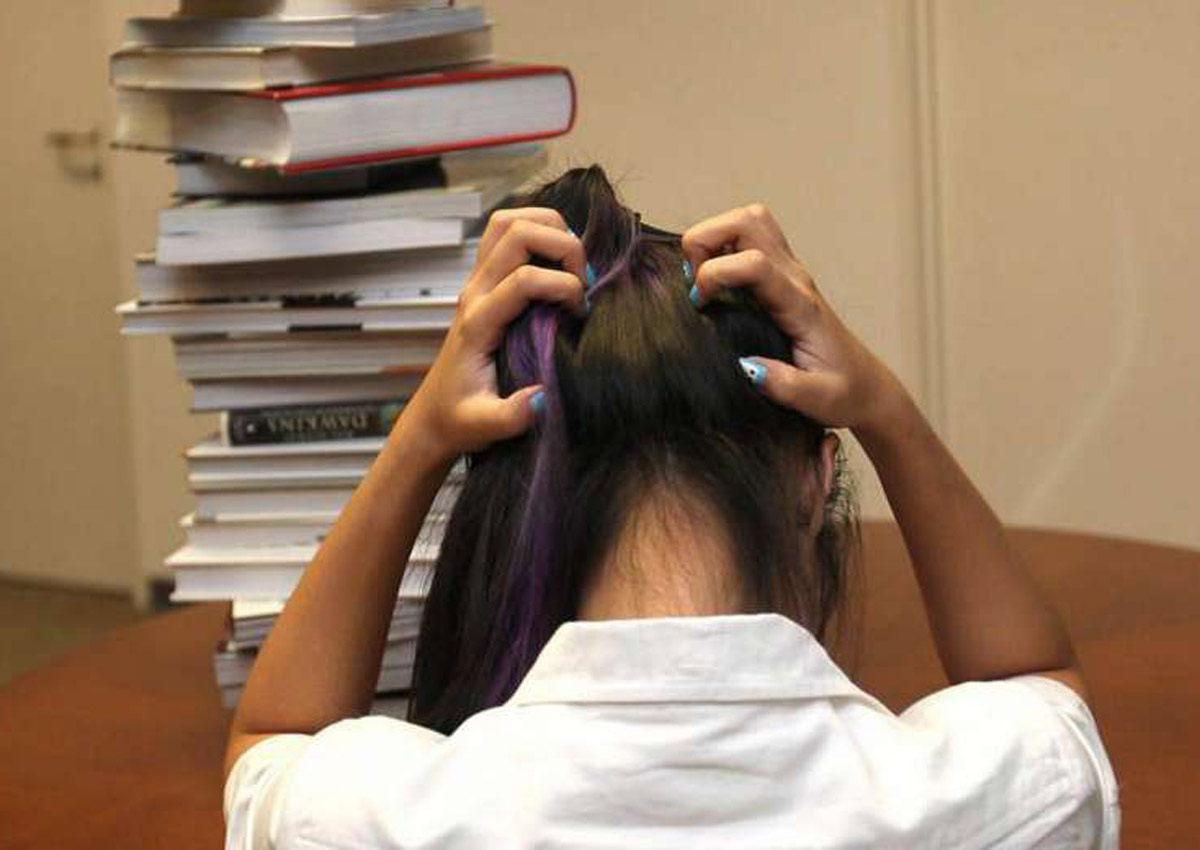
More children and teens are stressed out

0

Last year, a Primary 5 pupil fell 17 floors from his bedroom window on the day he was supposed to take his exam papers home.

He had never fared poorly in his examinations from Primary 1 to 4, and scored an average of 70 marks.

His mother would cane him on his palm “lightly” for every mark he fell short of her stipulated standard of 70 per cent.

But he failed his Higher Chinese and mathematics in his latest mid-year exam. Out of 100 marks, he scored 50 for English, 53.8 for Chinese and 57.5 for science.

This case shows what too much stress can lead to.

Read also: Exam stress among the young: When grades define worth

Stress can trigger anxiety, depression and self-harming behaviour, and cause sleep problems, social withdrawal, angry outbursts and obsessive-compulsive behaviours.

Experts have observed a rise in the number of stressed-out children and youth in Singapore. While the demands of school are often blamed, the stress often stems from multiple sources.

Some have trouble making friends or being accepted by their peers, and face family problems or have high personal expectations.

The NurtureSG committee, a taskforce formed to promote the physical and mental health of children, suggested steps that included training students to look out for peers in distress and setting up a workgroup to study suicidal and self-harming behaviours in children and youth.

Read also: Parents, beware of giving kids more stress

The Health Promotion Board said last month it would enhance the training for pre-school educators so that they can help build emotional resilience in young children.

“There has been an increase in the number of teens who present at KK Women’s and Children’s Hospital (KKH) with stress and emotional problems,” said Dr Vicknesan Marimuttu, a consultant at the child and adolescent mental wellness service of the hospital’s psychological medicine department. “Most of them are between 13 and 16 years old.”

Increased awareness of mental health services as well as efforts to move away from the stigmatisation of seeking help could have led to the rise, said Dr Marimuttu.

Young people may also not be getting adequate support from their parents, who are busy with work.

SCHOOL STRESS IS A BIG THING

Associate Professor John Wong, head of the National University Hospital’s psychological medicine department, said a Primary 6 pupil told him last August that he was stressed because he had to score at least 245 for the PSLE.

His mum wanted him to aim for that score as it was the cut-off point for a good neighbourhood school and she had promised him a laptop.

“The child is not psychologically mature to know he wants 245, but he wants a computer,” said Prof Wong.

“His mum wanted to motivate him. But she didn’t tell him she’d still be happy with a 240 score.”

Academic and social pressures tend to pile up in school. In Singapore, many children attend tuition, enrichment classes or sports activities on top of a long school day.

They do homework when they reach home, leaving little “me” time, and often do not have enough time to sleep.

School is a big stressor because they spend most of their time there, doctors said.

During the Education Ministry’s budget debate last week, Mr Lim Biow Chuan (Mountbatten) asked if some schools were setting the bar too high for non-national examinations. And Dr Intan Azura Mokhtar (Ang Mo Kio GRC) called for an end to streaming students into normal and express classes.

Stress is not necessarily a problem but a challenge, said Prof Wong. “Minimal stress may not motivate a child aged seven to 18, but some stress can facilitate his learning. It’s when it exceeds his capacity that it becomes a problem.”

BUT DON’T JUST BLAME SCHOOL

While academic stress can be a problem in the pressure-cooker education system here, social issues are a big stressor for teens.

Dr Chua Siew Eng, a specialist in psychiatry and consultant at Raffles Counselling Centre, cited the case of a 16-year-old boy who had been seeing a cardiologist for his heart palpitations that surfaced whenever he had a panic attack.

The boy had complained of feeling anxious for an entire year. His anxiety worsened during situations such as speaking up in class and ordering food at the canteen.

He slept poorly and criticised himself for not performing well. This led to fatigue and poor concentration, said Dr Chua. The boy was diagnosed with social anxiety disorder.

Another often-overlooked factor is that each child has his own expectations, said Prof Wong.

A child will want to achieve something that his parents want or he may form his own expectations based on the incentives or how his siblings have performed.

“As a result, stress occurs. It’s not the fault of the school or the curriculum,” added Prof Wong.

CHILD’S TEMPERAMENT IS KEY

“It’s okay for parents to motivate their child but don’t use a blunt approach,” said Prof Wong.

A child’s temperament is something he is born with and it may result in him reacting differently to situations. “Those who are happy- go-lucky tend to be more resilient,” he said.

“For those who are more sensitive and fragile, their parents and teachers must understand their temperament and make sure they do not get rushed.”

Rather than have unrealistic expectations of their child, parents should find out his interests and capabilities, he said.

Parents may also not think through their demands and expectations to make sure these are attainable. As a result, he added, they do not know why their child is depressed or overwhelmed.

“As parents, we may miss opportunities to validate them and recognise their efforts,” said Prof Wong.

“I learnt from a youth social worker that we need to be there for teenagers when they are hurt emotionally, when they are sad and when they are celebrating.”


This article was first published on Mar 14, 2017.
Get a copy of The Straits Times or go to straitstimes.com for more stories.

Image: 
Publication Date: 
Tuesday, March 14, 2017 – 14:00
Send to mobile app: 
Source: 


Rotator Headline: 
More children and teens in Singapore are stressed out
Story Type: 
Others

Source link

3-door double-decker hits road in trial

0

A double-decker bus with three doors hit the road yesterday as part of a study by the Land Transport Authority (LTA) to evaluate its suitability for Singapore’s use.

Unlike other double-deckers here, the prototype has an additional staircase reserved for commuters leaving the upper deck to exit from the third door.

While the layout can help improve the flow of commuters, the three-door bus is around 15 per cent more expensive than a two- door one because of the complexity of the design, the LTA said, based on preliminary estimates.

on Facebook

A new three-door bus will be rolled out soon! Yes – you didn’t read it wrongly – a bus with three doors! Together with…

Posted by SMRT on Sunday, 12 March 2017

The custom-made bus will ply the route of Tower Transit Singapore’s service 143 during a six-month pilot. It is designed by Singapore Technologies (ST) Kinetics using a chassis from Germany’s MAN Truck and Bus.

A three-door single-decker bus will also be tested with operator SMRT from the second quarter of this year. The LTA said it will study how the three-door models might “reduce boarding and alighting time”.

Features of the new bus.Photo: The Straits Times

The three-door double-decker is also 0.8m longer than the usual 12m, and the LTA will evaluate if it is suitable for the current infrastructure, such as bus stops and interchanges.

LTA’s group director of public transport, Mr Yeo Teck Guan, said: “The review of public bus design is a key part of making public transport a choice mode of transport as we move towards a car-lite society.”

While three-door buses are commonly used in Europe, passengers get in and out on the right, so the engine, located in the rear left, does not get in the way.

Mr Vincent Kee, head of MAN Projects at ST Kinetics, said that for Singapore, a custom design was required to make space for the extra door on the left.

on Facebook

Wondering what happened to the three-door buses featured at the inaugural #Bus Carnival last year? 😉 Guess what, it’ll…

Posted by Land Transport Authority – We Keep Your World Moving on Sunday, 12 March 2017

The LTA said it would have a better idea of the eventual cost if a bulk purchase tender was called later.

In general, commuters gave the new bus the thumbs-up. Nurse Desiree Monzon, 25, said: “Getting on and off will be more convenient. The normal double-deck buses have only one staircase, so it is sometimes difficult for passengers to get down, with others trying to climb up.”

But retiree Tham Khai Leng, 69, said it would take time for people to get used to the new design. “After climbing to the upper deck, most commuters will find a seat nearest to the staircase. They will then have to walk to the back to get down,” he added. “For elderly commuters, this may not be so easy.”


This article was first published on Mar 14, 2017.
Get a copy of The Straits Times or go to straitstimes.com for more stories.

Image: 
Category: 
Publication Date: 
Tuesday, March 14, 2017 – 14:00
Send to mobile app: 
Source: 


video embed code: 
<iframe width="100%" height="355" src="https://www.youtube.com/embed/WwFeiZcSl_8" frameborder="0" allowfullscreen></iframe>
Video Media: 
Other Video Media
Story Type: 
Others

Source link

Back by popular demand! Sakae Sushi eat-all-you-can 90-mins weekday buffet from 14 Mar 2017

0

Sakae Sushi’s EAT-ALL-YOU-CAN 90-min buffet is BACK by popular demand. Valid weekdays, 3pm – 6pm!

Back by popular demand! Sakae Sushi eat-all-you-can 90-mins weekday buffet from 14 Mar 2017

YES! It’s back! Sakae Sushi has heard you and has brought back their popular Buffet. Available on weekdays from 3pm to 6pm, choose anything from the menu or conveyor belt with any non-alcoholic beverages and eat to your heart’s content for 90 minutes

Source

New Creation Church founder warns of fake Facebook accounts used to raise funds

0

The founder and senior paster of New Creation Church has warned of fake Facebook accounts in his name being used to canvas for funds and personal details of individuals.

On Joseph Prince’s official Facebook page, a note was posted earlier today (March 14) by “Team JP”, presumably the social media team which managing his account.

It said that there are Facebook users using fake Joseph Prince Facebook accounts to “private message individuals to ask for their personal details or to raise money for their own causes, like orphanages, etc…”

“Please be aware that officially we do not endorse any of these fraudulent organizations and we do advise you NOT to support any of these causes,” the post added.

Team JP also clarified that it does not use Facebook to raise any funds for other organisations and that it does not send private mesages or friend requests to individuals.

Photo: Facebook/Joseph Prince

The post was shared more than 110 times as of Tuesday morning.

A number of Facebook users also commented that they sensed something amiss after receiving such private messages and reported it to the authorities. Others said they just ignored the messages.

One user Cathy Skarsten wrote: “I have already reported on and had one of them removed.”

Mace Chambers wrote: “I got a private message from a fake Joseph Prince profile last night, offering to give me a free $1,500. I reported it and it was shut down.”

The church has more than 31,000 members who meet at its 5,000-seater Star Performing Arts Centre. The venue, which cost $500 million and is located in the Star integrated development in Buona Vista, was reportedly fully paid for early last year.

sujint@sph.com.sg

Image: 
Category: 
Publication Date: 
Tuesday, March 14, 2017 – 12:01
Send to mobile app: 
Source: 


Rotator Image: 
Story Type: 
Original Story

Source link

Enduring pain for Philippine drug war widows

0

Manila – Sally Antonio is exhausted from working three jobs since police killed her husband and son, a typical Philippine drug war widow enduring a life sentence of impoverished misery.

While President Rodrigo Duterte’s unprecedented crackdown has claimed the lives of 7,000 people, the impacts on their families are the largely untold stories in what rights groups have called a “war on the poor”.

Antonio, 43, lost her 19-year-old son – the main breadwinner in the family as a waiter – and her unemployed husband when police conducted a drug raid on their home six months ago and shot the men.

“When they killed my husband and son, they also killed me,” Antonio told AFP as she narrated her struggles since their deaths forced her to take on extra work to look after her five remaining children and grandson.

Antonio said she sometimes slept for just two hours a day to fit in her work washing laundry, running errands for neighbours and as a community security officer.

“Sometimes I am so exhausted and my hands are too painful, I have to stop working for one, two days,” said Antonio, breaking down in tears.

“Then I have to borrow money from neighbours and we have to scrimp on food.” Antonio said her 18-year-old daughter, a psychology student, had to drop out of university to replace her husband as the main caretaker of the younger children.

One of her top concerns is having enough money to buy medicine for her 11-year-old son, who suffers from heart disease.

“I’m angry,” she said. “Why did they have to kill my husband and son and leave families like ours to sacrifice?” .

Antonio acknowledged her husband was a drug user but said he had previously reported to authorities as part of a government monitoring programme, and that he was not a trafficker.

She said her son was never into drugs and believed he was shot because he begged police during the raid to spare his father’s life.

A police report on the deaths seen by AFP stated officers conducted a drug raid and were forced to shoot after being fired upon first.

Antonio, who asked her real name not be used to avoid potential police retribution, insisted her husband and son did not resist when the officers burst into their home.

Police have reported killing more than 2,500 people in self-defence during the eight months of the drug war.

Rights groups have accused police of systematically making up self-defence claims after killing drug addicts and traffickers. Amnesty International has warned police may have committed crimes against humanity.

Duterte, 71, won presidential elections last year after promising to eradicate drugs in society by killing tens of thousands of people.

Duterte said he would be “happy to slaughter” three million drug addicts, although he and his aides have also insisted police are not being instructed to do anything illegal.

Amnesty said in a February report that the killings were overwhelmingly in poor urban areas, with the slain often male breadwinners.

“The death often puts families in an even more precarious financial position and leaves many relatives embittered, as they see authorities overwhelmingly target the poor,” Amnesty said.

Reacting angrily to criticism that his drug war killed mostly poor people, Duterte said this month that small-time drug peddlers “earned so much” and pointed out they were crucial to the trafficking network.

“It does not really matter to me at all if you are the biggest drug distributor or the poorest because you are both conspiring to destroy the people,” he said.

The Catholic Church has increasingly become a source of financial and emotional support for relatives of those killed.

Dennis Febre, who is leading a programme to help relatives at a Manila church, said the killing of drug suspects created more problems than they solved.

“Some of those left behind also sell drugs while others go into prostitution because it’s a matter of survival,” Febre said.

Rose Maninggo, 25, has been given emergency work at one Manila church after losing her husband, a fruit vendor, in a police raid in January.

However she is at a loss over how to raise a five-year-old and a baby when the work, which earns her roughly $10 a day, ends in two months.

The psychological impacts are compounding her struggle.

“I don’t feel safe. I dream about my husband in pools of blood asking me for justice,” said Maninggo, who also asked her real name not be disclosed.

“I worry about my kids and all I want is to keep them safe.” Sally Antonio has another form of mental torture, saying that although she is determined to put food on the table for her children, there is one job she cannot take on.

“My children are growing up without a father,” she said.

“It’s not just the financial loss but the guidance and care that we miss. That’s irreplaceable.”

Image: 
Category: 
Publication Date: 
Tuesday, March 14, 2017 – 12:17
Keywords: 
Send to mobile app: 
Source: 


Story Type: 
Others

Source link