Home Blog Page 1677

Terror attacks unpreventable, but it’s how we react that counts: experts

0


Terror attacks cannot be prevented totally, but what matters is never to stop trying and learning how to respond when they do happen, terrorism experts at the Milipol Asia-Pacific homeland security conference said yesterday.

They also told The New Paper that temporarily shutting down Hougang MRT station on Sunday after an unattended bag was found was the right move and not an overreaction.

Professor Alexander Siedschlag, who chairs the Pennsylvania State University’s homeland security programme in the US, said: “There can be no total homeland security if we maintain a value-based, democratic approach that doesn’t intrude on our privacy and freedom. Even then, we have (the problem of) limited resources.

“So what we can do is to improve the capabilities of our people in how they respond,” he told TNP, citing how the US has trained its people to treat injuries in the event of an attack.

He was among about 30 speakers at the trade conference, which brought together delegates and exhibitors from across the world to discuss and showcase homeland security issues and technology.

Referring to Home Affairs and Law Minister K Shanmugam’s comment that a terror attack “can take place any time, any place”, Professor Rohan Gunaratna, who heads the International Centre for Political Violence and Terrorism Research at the S. Rajaratnam School of International Studies, said this is why Singapore should not take any chances if there is a sign of an attack.

Describing the closure of Hougang MRT station as appropriate, he said: “The security of Singapore is non-negotiable.

“Each terror attack is a failure of intelligence and a lack of public awareness. If the public is fully alert, no attack can take place.”

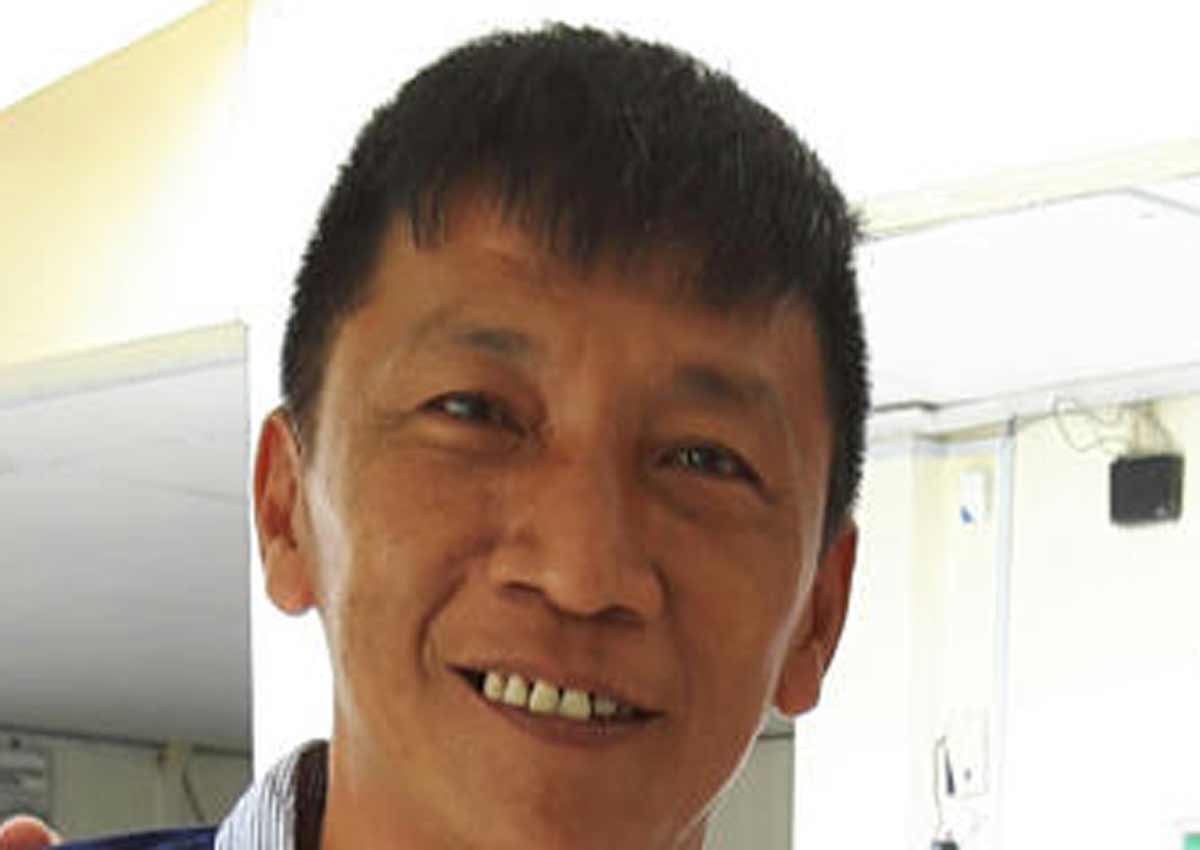
Mr Koh Hong-Eng, Huawei Enterprise Business Group’s global chief public safety expert, agreed.

Mr Koh, who was a policeman for 10 years, said it was vital that government agencies, private sector companies and the people work together to ensure public safety.

“The police can’t be everywhere. When an attack happens, it’s the first 10 minutes before they arrive that is crucial,” he said.

Prof Siedschlag said Singapore’s national service system is one key area in keeping citizens vested in the country’s public safety.

He also noted that Singapore youth are exceptionally savvy in using the Internet and the Government could look to tap on their potential to help detect and stop extremist ideologies from spreading online.

“Instead of warning everyone to be careful of extremist propaganda being spread online and pulling everyone back, you could use them to help fight against this.

“Every risk could be turned into an opportunity,” he said.

rloh@sph.com.sg


This article was first published on Apr 05, 2017.
Get The New Paper for more stories.

Image:
Category:
Publication Date:
Wednesday, April 5, 2017 – 09:02
Send to mobile app:
Source:

Story Type:
Others

Source link

Tom Hiddleston is comfortable doing nude scenes

0

Tom Hiddleston can do it all.

The British actor has carved out such a diverse and unpredictable career trajectory so far, with roles ranging from a vampire in Only Lovers Left Alive and the legendary country-western singer Hank Williams in I Saw The Light to a former soldier turned night manager at a hotel in The Night Manager, which earned him a Best Actor Golden Globe early this year.

“I never wanted to limit myself to one type of project. I came from the theatre (scene) in London, I’ve done small independent films and I’ve done big superhero movies and TV series as well. I just get excited by the breadth and range of storytelling,” says the actor in an interview with international journalists at a press event promoting Kong: Skull Island, in Los Angeles, California.

The 36-year-old actor, who was born in Westminster, London, got his big break in 2011 when he was cast as Thor’s nemesis, Loki, which sealed his involvement in a slew of successful Thor and Avengers film series.

Despite his varied body of work, Hiddleston’s portrayal of Loki is probably his best-known effort so far.

Hiddleston says he isn’t worried about Loki defining the rest of his career, typecasting him into playing villains only.

“I don’t really look like him. It takes a lot of time to look like him in the morning so there’s a really conscious effort. I don’t think I could be typecast in that way,” reasons Hiddleston.

Indeed, the real Hiddleston is worlds apart from the sinister Loki.

At the group interview, he comes off affable and down-to-earth.

In fact, when Hiddleston was whisked away from our group interview a few minutes shy of our allotted time, the thoughtful actor later returned to speak to us.

There are no airs about him but there’s certainly a movie star quality to the actor, which might have something to do with his tall, slender frame (he stands at 1.88m), dreamy blue eyes and flawless skin.

Asked if there were any roles he would not play, Hiddleston responds: “I have turned down certain offers. I judge every project on its own merits. I don’t know if it’s just getting older, I’m more conscious about what I put out to the world.

“Our lives are short and you want to make sure that what you’re making is something that enriches people’s lives, even if it’s just giving people two hours of a good time.”

1. Why do you think viewers are fascinated by monster movies like Kong: Skull Island?

If you look at classical myths whether it’s Odysseus going against the Cyclops or the many-headed Hydra that Hercules has to fight – where if you chop off one head and two more grows back in its place – there’s something about the humility of man when they go up against these big monsters.

Monsters used to roam the Earth before we turned up.

We see archaeologists dig up the remains of dinosaurs.

I think we’re all curious about what that must have been like.

2. You often go above and beyond when it comes to preparing for a role. What’s one character that has been the most difficulty to portray?

I think the one that felt furthest away was (country singer) Hank Williams.

There was so much external and internal transformation I had to do.

I had to profoundly change the way I looked, the way I sounded, they way I sang.

He was born in Alabama in 1923, I was born in London in 1981, so we’ve had very different lives.

And yet, after a while, I found a lot of common ground but that was definitely the hardest.

The research I had to do with Hank felt very necessary because he was a real person and he has surviving family members and people care about his legacy.

It’s my obligation to be respectful about that.

3. How comfortable were you with the idea of having to bare all in some of your recent projects High-Rise and The Night Manager?

Just to slightly correct you, I didn’t bare all.

In both instances, any partial nudity is actually thematically linked to the story.

If you read J.G. Ballard’s High-Rise (in which the film is based on), Dr Laing moves into his apartment on the 25th floor and he sunbathes in the nude because he thinks he can’t be seen.

For the rest of the (film) he actually remains fully clothed. His attachment to his clothing is kind of a suit of armour.

So, it wasn’t about any kind of personal exposure, that was part of the thematic narrative – about how one man is trusting enough to be vulnerable and then realising he can’t be.

If it’s a thematic part of the story, I don’t have a problem with it.

4. How are you navigating life in the public eye?

Being well known in the entertainment industry is to live in a hall of mirrors.

I have to be very careful and vigilant about not allowing those distorted reflections to affect my sense of reality.

I know about the reality of my life.

5. If Kong and Loki got into a fight, who would win?

Kong would flatten Loki in a second, I mean it’s all over don’t you think?

Although, Loki is highly skilled at avoiding his own death so you never know.

He’ll find a way somehow at getting back at Kong. Maybe disguise himself as a horse.

Image: 
Category: 
Publication Date: 
Wednesday, April 5, 2017 – 08:53
Keywords: 
Send to mobile app: 
Source: 


Story Type: 
Others

Source link

Technology is ‘critical in fight against terrorism’: Shanmugam

0


The mindsets and operation methods of terrorists are changing, Home Affairs and Law Minister K Shanmugam said yesterday.

“Terrorists are no longer interested in taking hostages,” he said.

“They want to kill as many people as possible, as quickly as possible, and then keep a small number for reasons of publicity and getting international attention.

“So essentially… a terror attack can take place any time, any place, and they can attack and impact on anyone.”

Mr Shanmugam gave the warning during his opening address at the 2017 Milipol Asia-Pacific Conference at the Marina Bay Sands Expo and Convention Centre.

The three-day international homeland security trade conference, now in its seventh edition, involves international delegates and more than 270 security exhibitors.

On the changing nature of terror attacks, Mr Shanmugam said that nowadays, anything can become a weapon – from a knife to a car – as in the recent Westminster attack in London.

“How do security agencies deal with that kind of attacks? Assault by weapons, rifles, we can identify,” he said.

Focusing on the options, the minister said technology will play a critical role in counter-terrorism efforts.

This would involve collaboration with like-minded countries, the private sector and industry to develop smart technology and artificial intelligence and nurture a pool of technologically-savvy officers.

He said: “It is going to require a fundamental change in the way security agencies think and operate, because they have to keep trying to stay ahead of the terrorists.”

Mr Shanmugam also said that much more could be done using robots or automations to support enforcement officers in carrying out routine or even dangerous activities.

As Singapore progresses into a smart nation, more will need to be done to protect its infocommunications infrastructure, he added.

“The transport (system), communications and your work environment – all of that is now at risk. Really, you have to bulletproof the entire system, which is a massive undertaking,” he said.

APPS

Even crowdsourcing apps could play a role in the fight against terror, he said.

Citing the SGSecure mobile app, which has more than 380,000 users since its launch last September, he noted how it was used to alert residents near Hougang MRT station after its closure following the discovery of an unattended bag on Sunday.

Mr Shanmugam also said closing the station was “the right thing to do”.

After a station camera picked up someone leaving a bag behind and walking off, the “immediate response was to close the station down”, he said.

“There were questions as to whether we overreacted, but if it were really a bomb, then the question will be why we did not, so closing it was the right thing to do.”

rloh@sph.com.sg


This article was first published on Apr 05, 2017.
Get The New Paper for more stories.

Image:
Category:
Publication Date:
Wednesday, April 5, 2017 – 08:35
Send to mobile app:
Source:
Story Type:
Others

Source link

Woman arrested after spewing vulgarities and hitting staff at Tiong Bahru store

0

The police arrested a 45-year-old woman after she lost her temper and started shouting and hitting staff in a optical shop at Tiong Bahru Plaza.

Her angry outburst was captured in a video clip that circulated on Facebook on Tuesday (April 4).

According to OWNDAYS, the incident took place on Monday evening.

In the video, the woman was seen flaring up at the store’s female staff for taking videos of her.

She then told them that she had “had enough” while she hit them. Her bracelet also flung off her wrist during the attack.

The woman demanded that the staff to retrieve her bracelet and even physically pulled one girl by her jacket.

The whole time, she called them “bloody idiots” and continued to hurl vulgarities at them.

on Facebook

Dear all friends of OWNDAYS,
Last evening, an incident took place at our shop in Tiong Bahru Plaza. A female shopper…

Posted by OWNDAYS Singapore on Tuesday, 4 April 2017

OWNDAYS said in a Facebook post on Tuesday evening (April 4) that a shopper had gone into its store to hide from the agressive woman.

And despite the assault, its staff “maintained their professionalism” throughout the encounter, OWNDAYS said.

In the video clip, the person filming the incident could be heard telling a security guard that she didn’t know the woman and that “she just started hitting people for no reason”.

The enraged woman then threatened them to call the police, ‘black cats,’ and MP (Minister of Parliament).

Even when passers-by intervened, she did not calm down and continued to shout at the girls. She also attempted to hit them again.

One passer-by managed to get her to sit down by the end of the video and told the staff to call their manager and close the shop.

In its Facebook post, OWNDAYS said the safety and well-being of its staff have “always been a priority” after receiving messages from members of the public.

It also commended its staff “who stood up for others in this unfortunate incident” and said that it is seeking legal advice.


Visit STOMP for more stories.

Image: 
Category: 
Publication Date: 
Wednesday, April 5, 2017 – 08:42
Keywords: 
Send to mobile app: 
Source: 


Rotator Image: 
video embed code: 
<p><iframe allowfullscreen="" frameborder="0" height="400" src="//players.brightcove.net/4802324446001/default_default/index.html?videoId=5384638558001" width="100%"></iframe></p>
Video Media: 
Other Video Media
Story Type: 
Others

Source link

Fancy paying $30 for one strawberry? Some people do in Hong Kong

0
In this photo taken on February 8, 2017 a premium Japanese Pearl White strawberry (L) and Kotoka strawberry (R) from Nara, Japan, each costing 21.60 USD (168 HKD), are displayed at high-end supermarket City Super in Hong Kong. It might be a healthy food choice, but Hong Kong's latest fruit fad is doing serious damage to shoppers' wallets. From luxury supermarkets to outdoor stalls, expensive premium produce is increasingly on show and sought after by customers. / AFP PHOTO / Anthony WALLACE / TO GO WITH AFP STORY HONG KONG-LIFESTYLE-SHOPPING-FOOD-FRUIT,FEATURE BY VIVIAN LIN


Expensive overseas fruit is the latest food fad and status symbol in Hong Kong.

At the Yau Ma Tei fruit market, a Malaysian durian goes for HK$600 ($77) and Tasmanian cherries for HK$550.

At the high-end supermarket City Super, a single Japanese strawberry was recently priced at HK$168.

The beautifully packaged fruits are often bought as gifts to impress someone.

One customer said he spends around HK$2,000 on imported fruit each month for his family 
of four.

Chinese produce is not favoured, as many are wary of excessive use of pesticides and chemical fertilisers.

Image:
Publication Date:
Wednesday, April 5, 2017 – 08:03
Send to mobile app:
Source:

Story Type:
Others

Source link

National Museum of Singapore explores digital avenues to engage visitors

0

SINGAPORE: The National Museum of Singapore is exploring the use of data analytics and augmented reality (AR) to better engage with its audiences. 

The museum’s senior assistant director Jervais Choo said: “We are constantly exploring with different technology and industry partners, how to engage with our audiences.”

“(These are) means that we can use to engage with our audiences, and also to bring out the stories behind the museum and our collection a bit more,” he added. 

Management of the National Museum, which turns 130 this year, did not reveal how it would use the technology – only saying that it would provide more details when it is ready to launch.

The National Museum is keen to build on the digital model after witnessing how its earlier initiatives have attracted more visitors than ever before. 

For example, the museum unveiled Story of the Forest in October last year. The intiative is a kaleidoscopic, interactive digital space that showcases the region’s rich ecological history.

In January this year, the museum launched Gallery10, a first-of-its-kind gallery that has no physical artefacts. Instead, it uses advanced projection technology to showcase art and history.

The museum began exploring the digital space more aggressively after completing a major revamp in September 2015.

Since then, it has attracted about a monthly average of 60,000 visitors, about two-and-a-half times more than before the makeover.

“Certainly, digital is a means to expand the reach and scope of the museum,” said Mr Choo. “Through digital, for instance, we are able to do things that we were not able to previously – transcending boundaries, having an understanding of our works extended to people who may not naturally come to the museum.”

WHERE COMPUTERS MEET CULTURE

But digital applications within the heritage community need not always be linked to modernity.

Roots.sg is an online repository that helps capture Singapore’s heritage resources, and also lists artefacts from Singapore’s National Collection. It was set up by the National Heritage Board (NHB) in April last year to engage Singaporeans on their heritage.

Roots.sg lists more than 12,000 items from the National Collection, which visitors can view and learn more about online. They include a gold necklace heirloom owned by the family of World War II heroine, Elizabeth Choy.

The gold necklace owned by the Elizabeth Choy’s family. (Photo: National Museum of Singapore) 

The piece of jewellery was given to her by the wife of Singapore’s governor at the time, Sir Shenton Thomas, in appreciation for Mrs Choy help during the war. She had brought Mrs Thomas medicine while she was imprisoned by the Japanese.

The necklace was donated to the National Museum by Mrs Choy’s daughter, Bridget.

“It was precious to me, because it was given to my mother out of gratitude by people she helped during the war,” said Ms Choy. “But if I had kept this necklace to myself, over the years, the story behind the necklace would be gone, would be forgotten,” she added.

“By donating this to the museum, the history of it would remain, and future generations would be able to see the history behind the necklace, the significance of it.”

Mr Choo said the National Museum is happy to receive such items, as it is still an, “object-centric” museum, which leverages on Singaporeans’ artefacts, and adds layers to the existing stories behind them.

Even if the museum does not eventually acquire these pieces, it stresses the need for such stories to stay alive within these households.

KEEPING HERITAGE ALIVE

It is one of the reasons why the National Museum recently hosted a workshop on how to preserve such precious items.

 The event was attended by nearly 70 people, who owned items ranging from Peranakan garments to novelty pieces like ear diggers made of real gold. The sharing was led by a team of conservators from the Heritage Conservation Centre (HCC), an arm of NHB.

The family heirlooms workshop entitled “A Lighter Side of History”. (Photo: John Leong)  

“We cannot handle heirlooms as everyday objects because they may fall apart due to their old age,” said Chuance Chen, an Assistant Conservator from HCC.

While digitising is an accepted method of protecting precious artefacts against the march of time, heritage experts like Mr Chen agree that it is not quite the same as telling a story with a physical object.

“We need to recognise the purpose of heirlooms. Care is better than cure.”

Source link

Diversity Action Committee targets 30% of board seats for women by 2030

0

SINGAPORE: The Diversity Action Committee (DAC) is adopting a new approach to raise the share of women’s participation on boards to 30 per cent by 2030, it said on Tuesday (Apr 4). 

Women’s representations on boards is currently at 9.9 per cent, according to figures at the end of last year and the DAC is setting a “triple-tier target” of 20 per cent by 2020, 25 per cent by 2025 and 30 per cent by 2030.

Calling this a “hop, skip and jump” approach, the DAC, which was formed in 2014 to address the under-representation of women on boards of companies, called on the top 100 Singapore Exchange-listed companies to take the lead.

“Larger companies must lead to create a momentum of change and demonstrate the compelling benefits of having women on boards to the smaller companies,” said DAC chairman Loh Boon Chye.

He added that the multi-year targets were set after the DAC had “examined extensively the feasibility and reasonableness of various targets and the possible steps that companies can take to increase diversity in the context of a good governance structure and process.”

According to a study by the DAC, Singapore falls far behind many international and regional markets as at the end of last year, ranking near the bottom of the list of 15 countries – ahead only of Japan and South Korea.

(Image: Diversity Action Committee)

“CHANGE HAS BEEN SLOW”

The DAC acknowledged that doubling the current women’s representation of 9.9 per cent to 20 per cent by 2020 is a big challenge. “While awareness has been sown in the past two years, change has been slow,” said the committee in a news release.

It hopes that with changes to the code of corporate governance and having active dialogue will encourage companies to actively appoint suitable women to boards.

To increase the number of women board directors, the committee said it will pursue a six-step plan:

1. Require companies to disclose their diversity policies (including gender) for board and key management, measurable objectives that express their policy and progress in achieving their objectives.

2. Ask companies to disclose how their board compositions are suitable for upcoming business needs, drawing women directors with appropriate skills and experience from outside the traditional pool of friends and contacts.

3. Help companies gain an in-depth understanding of the benefits of diversity.

4. Encourage investors, investor associations and the civil society to motivate companies to move forward on diversity.

5. Grow the local conversation and encourage studies regarding the significance of women’s participation on boards and management.

6. Work with organisations and associations which have expressed commitment to promoting board diversity and support their efforts. 

The DAC comprises 19 members from the business, people and public sectors, and is chaired by Mr Loh, who is also CEO of SGX. Members include the chairman of Shell Singapore Goh Swee Chen, Singtel and SingPost chairman Simon Israel, as well as chairman of the Singapore Business Federation Teo Siong Seng.

Source link

City Harvest leaders’ appeals outcome to be delivered on Apr 7: 5 things about the case

0


SINGAPORE – An end to what has been a marathon trial could be in sight, with the six City Harvest church (CHC) leaders convicted of misappropriating millions in church funds due back in the High Court on Friday (April 7).

An outcome of the appeals by the six, including CHC founder and senior pastor Kong Hee, and the prosecution is expected to be delivered at around 9.30am.

At the close of a five-day appeal hearing in September 2016, Justice Chan Seng Oon had called the Crossover Project, a church mission that used the funds to fuel the pop music career of Kong’s wife Ho Yeow Sun, a “very extravagant” way of spreading the gospel.

The prosecution, which is calling for harsher sentences, said during the hearing that the six had not shown remorse for their actions.

Here’s a recap of Singapore’s largest charity financial scandal.

Read also: City Harvest Church leaders return to court for appeals

1. Who are the six church leaders?

Six church leaders were found guilty in October 2015 of misusing around $50 million in church funds. All six were handed jail terms of between 21 months and eight years in November.

Kong Hee, 52, CHC founder

Convicted of: Three charges of criminal breach of trust

Sentence: Eight years

Chew Eng Han, 55, former CHC fund manager

Convicted of: Six charges of criminal breach of trust and four charges of falsification of accounts

Sentence: Six years

Tan Ye Peng, 43 , founding member and deputy senior pastor

Convicted of: Six charges of criminal breach of trust and four charges of falsification of accounts

Sentence: Five and a half years

Serina Wee, 39, former CHC finance manager

Convicted of: Six charges of criminal breach of trust and four charges of falsification of accounts

Sentence: Five years

John Lam, 47, former CHC finance committee member

Convicted of: Three charges of criminal breach of trust

Sentence: Three years

Sharon Tan, 40, former CHC finance manager who took over from Wee

Convicted of: Three charges of criminal breach of trust and four charges of falsification of accounts

Sentence: 21 months

2. What did they do?

They were convicted of misusing church funds, in a project called Crossover, to further the music career of pastor-singer Ho Yeow Sun, the wife of Kong.

This was done by funnelling $24 million into sham bonds to bankroll Ms Ho’s career. The accused then misused a further $26 million to cover their tracks.

Read also: City Harvest accused, prosecution file appeals

3. How did it work?

The Crossover project was conceived by Kong as a way of spreading his church’s message through popular culture.

The project was initially funded directly by the church, but in 2003 church member Roland Poon alleged that the church’s building fund had been used to finance Ms Ho’s music career. Mr Poon later retracted the allegations and apologised.

Music production company Xtron was then set up to manage Ms Ho. It had its own directors, but it was allegedly Kong alone who made decisions regarding his wife’s music career and how much to spend.

When auditors raised concerns about Xtron, funds began to be directed to another company – glass manufacturer Firnas.

A total of $24 million was invested in bonds from Xtron and Firnas that were in fact used to fund the Crossover Project, the court found.

Another $26 million from church funds were later used to offset the bonds.

4. What is the prosecution calling for?

The prosecution had called for stiffer sentences than those passed.

They are appealing for sentences ranging from five to 12 years for the six.

Lawyers said that this move by the prosecution forced the defence to submit appeals for lighter sentences.

5. How long was the trial?

Criminal investigation into the case began in 2010.

The trial stretched over 142 days, from its start in 2013 to sentencing in November 2015. It is one of the longest criminal cases in history, beaten only by a drug trafficking case in the 1990s that went on for 168 days.

The case is also likely to be the costliest criminal trial here. Legal fees for the six church leaders could exceed $10 million, said lawyers.


This article was first published on April 4, 2016.
Get a copy of The Straits Times or go to straitstimes.com for more stories.

Image:
Category:
Publication Date:
Wednesday, April 5, 2017 – 09:00
Send to mobile app:
Source:

Story Type:
Others

Source link

Singapore boat captain faces fresh charges in Indonesia, despite having paid fine for similar offence

0


Indonesian prosecutors on Tuesday (April 4) tendered fresh charges against Singaporean fishing boat captain Shoo Chiau Huat.

He was charged with sailing in Indonesia’s waters in April last year without a permit under the country’s shipping laws.

The move came even though he pleaded guilty in January and recently paid a 50 million rupiah (S$5,300) fine for entering Indonesia illegally for the same incident which led to his arrest.

Shoo did not enter a plea on Tuesday but he will have to decide whether to go to trial or plead guilty to the offences which carries a maximum penalty of one year in jail.

Read also: Singaporean boat captain charged in Indonesia

Shoo had seven Singaporeans and six Malaysians on board MV Selin when the boat was stopped by the Indonesian Navy on April 16 last year in Tanjung Berakit waters, off Bintan island.

The 50-year-old has been in remand for almost a year, even though he was acquitted of the original offence of illegal fishing in July last year.

This was because he was slapped with immigration offences after his acquittal for illegal fishing.

He decided to plead guilty to the charge of entering Indonesia illegally in January and paid the fine last month in hope of being released – but he now faces what he fears would be another long trial.

His extended detention prompted Singapore’s Ministry of Foreign Affairs (MFA) to send a diplomatic note to their Indonesian counterparts late last year.

The MFA in a statement on Tuesday after the hearing said that it was deeply concerned over the long-drawn judicial process against Shoo and his prolonged detention in Indonesia.

The ministry said it has been in constant contact with the Indonesian authorities since Shoo’s detention to ensure that he is accorded his due legal rights under Indonesian law.

“The Singapore Government respects the laws and judicial process of Indonesia in connection with Mr Shoo’s case, but remains deeply concerned over his prolonged detention and long-drawn judicial process,” said the MFA spokesman. “We will continue to reiterate to the Indonesian authorities that Mr Shoo’s case be processed expeditiously, so that he can return to Singapore without further delay.”

MFA also said its officers from the Singapore Consulate in Batam will continue to render all necessary consular assistance to Shoo and his family.

It also reminded Singaporeans operating pleasure crafts, recreational fishing vessels and yachts, as well as Singaporeans engaging in business activities in Indonesia, to familiarise themselves with Indonesian laws and the judicial process.


This article was first published on April 4, 2016.
Get a copy of The Straits Times or go to straitstimes.com for more stories.

Image:
Category:
Publication Date:
Wednesday, April 5, 2017 – 09:00
Send to mobile app:
Source:

Story Type:
Others

Source link

Friends of MP Intan’s son abuse cannabis and offer drug to him

0


SINGAPORE – Two of her son’s friends are not only abusing drugs – they had even invited her 18-year-old boy to join them in smoking cannabis, said Dr Intan Azura Mokhtar (Ang Mo Kio GRC).

He “sensibly declined” the offer, she said in Parliament on Tuesday (April 4).

Dr Intan also revealed how one of her son’s polytechnic mates has been smoking cannabis in school and how another friend of his – an ITE student – was caught smoking the drug.

“While he (the ITE student) is undergoing follow-up checks through routine urine tests, he continues to take synthetic weed, which he claims cannot be detected through the urine tests,” she said, adding that the drug abusers are quite nonchalant about their habit and seem to think it is no big deal.

Dr Intan was among several MPs who debated in Parliament over a motion tabled by Mr Christopher De Souza (Holland-Bukit Timah GRC) to strengthen the fight against drugs in Singapore, as she urged the authorities to do more in schools.

“While I must state that these are only two of his many friends who otherwise lead drug-free and healthy lives, I am calling for the CNB (Central Narcotics Bureau) , the police, the Health Promotion Board, and our institutes of higher learning to go all out to stop such drug use and abuse in our educational institutions, even if the numbers are small and seemingly insignificant,” she added.

Several MPs also warned against an international trend of legalising drug use, with Dr Intan decrying what she labelled as “callous” claims by some pro-cannabis proponents that small amounts of cannabis use is perfectly alright.

She said these proponents also claim there are medical conditions such as glaucoma or Parkinson’s disease that can be managed through daily doses of cannabis or marijuana.

Said Dr Intan: “We would also need the help of medical professionals and research experts to verify such claims, and more importantly to curb the incorrect perception that small doses of drug use on a daily basis is perfectly fine.”

In his speech on Tuesday, Mr De Souza also warned of how cannabis is growing in popularity in Singapore, citing recent figures from the CNB.

He pointed out that the amount of cannabis seized for first six months last year was almost the same amount seized for the whole of 2015. He also said that in 2015, for the first time, cannabis became the second most commonly abused drug in Singapore.

Mr De Souza stressed that cannabis can be a gateway drug to heroin and cocaine, especially among young abusers, and also that using cannabis as rare as once a week may irreversibly lower one’s IQ.

“Compared to the general population, there is a four-fold higher risk of mortality among those with cannabis-use disorder,” he added.

“So you want to call cannabis soft? To do so is plain foolish.”


This article was first published on April 4, 2016.
Get a copy of The Straits Times or go to straitstimes.com for more stories.

Image:
Category:
Publication Date:
Wednesday, April 5, 2017 – 09:00
Keywords:
Send to mobile app:
Source:

Story Type:
Others

Source link