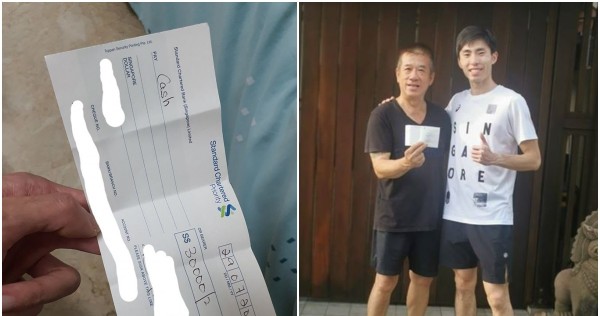
Finders keepers? Not for one Singaporean man who picked up a cash cheque worth $30,000.
National marathoner Soh Rui Yong, 28, shared in a Facebook post yesterday (Aug 3), that he had been walking home on Thursday night (Jul 30) when he stumbled across the cheque, folded and lying on the street.
|Neighbours|
Was walking home at night when I stumbled across a folded cheque on the street. Picking it up I looked at…
If you were ever a mum who struggled with your breastmilk supply, you may have heard of Audrey Yeo.
After all, the 34-year-old made a name for herself locally and even internationally, for donating her excess breastmilk.
And that’s because she used to produce more than five litres of breastmilk, in a day. That’s probably more than what an average adult consumes in a week.
“On day three of pumping (after giving birth to her firstborn), I was already getting 150ml, when usually mummies would be getting 30 to 40ml,” shared Audrey.
Due to her oversupply, Audrey pumped eight times a day, for an hour each time, just to empty her breasts.
Put simply, pumping was basically another full-time job. Saddled with taking care of her baby and also making time for herself, the former school band instructor managed an average of just three hours of sleep each night with her punishing schedule.
She accumulated an excess of breastmilk as her baby clearly could not consume everything she was producing.
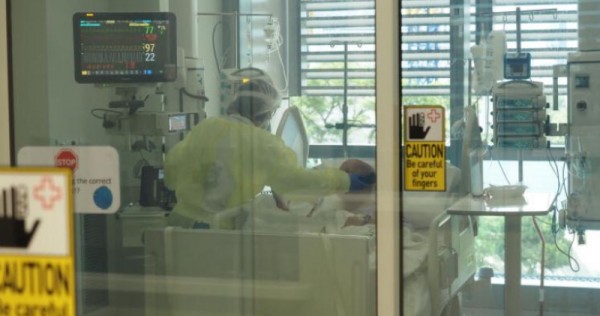
SINGAPORE – A coronavirus patient is in critical condition in the intensive care unit, the first such case here in more than two weeks, according to an update by the Ministry of Health (MOH) on Monday night (Aug 3).
The last time there was a Covid-19 patient in ICU was July 13. Since then, no patients have been reported to need such care until Monday.
Monday’s ICU case is one of the 115 coronavirus patients who are still in hospital.
Together with the 5,730 still recuperating in community facilities, Singapore now has 5,845 active cases.
This makes up 11 per cent of the 53,051 cases that Singapore has recorded to date.
With 253 cases discharged on Monday, 47,164 have now fully recovered from the disease and been discharged.
MOH also announced 226 new coronavirus cases on Monday, including one community case: an inmate who was admitted to Changi Prison Complex on July 30.
The 26-year-old Sri Lankan man, who is on a short-term visit pass, was tested as part of the Singapore Prison Service’s proactive screening of newly admitted inmates.
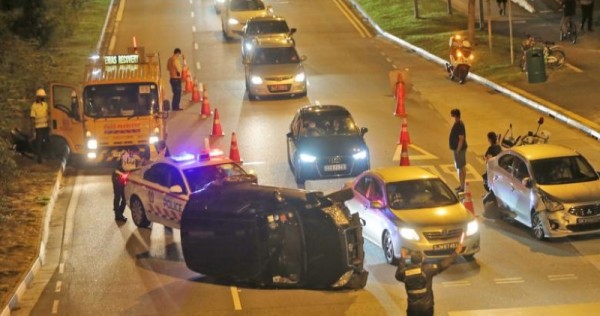
A pregnant woman was one of two people taken to hospital after a four-vehicle accident in which a black Toyota flipped on its side.
The police and Singapore Civil Defence Force were alerted at about 7.40pm on Sunday to the incident involving three cars and a taxi at Punggol East Road towards Punggol Drive, near Riviera LRT station.
The Toyota driver, a 64-year-old man, was conscious when taken to Sengkang General Hospital.
The pregnant woman, 33, who was in a grey Mitsubishi driven by her husband, was also conscious when taken to KK Women’s and Children’s Hospital.
Investigations are ongoing, the police said.
The cabby, who wanted to be known only as Mr Tiah, 60, told Lianhe Wanbao that he was driving on the right lane of the three-lane road when he and the Mitsubishi behind him stopped to let a bus switch lanes.
The Toyota then crashed into the Mitsubishi, which in turn hit his taxi. Mr Tiah said he saw the Toyota flip and hit a fourth car as it landed on its side.
SINGAPORE: A 64-year-old Singaporean man was arrested in Clementi on Monday (Aug 3) for suspected drug activities.
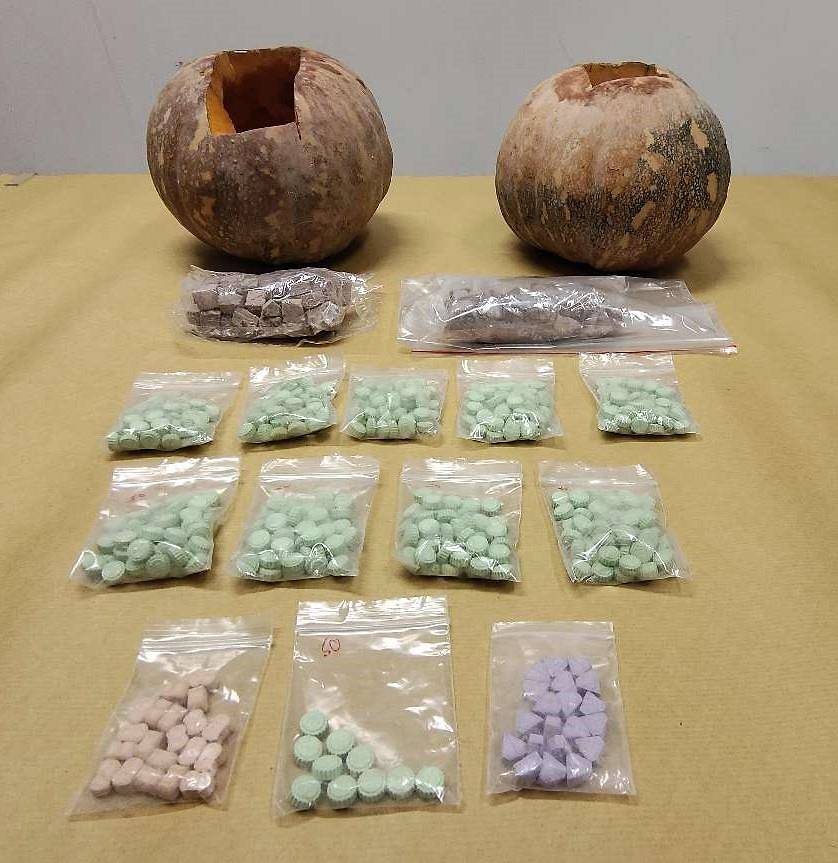
Various drugs with a total estimated street value of S$30,000 were also seized, including heroin and Ecstasy tablets hidden in two pumpkins.
The Central Narcotics Bureau (CNB) said its officers were deployed near Clementi Avenue 5 on Monday evening to observe a 64-year-old man. The man was seen bringing a basket containing vegetables and produce up a residential block in the area.
CNB officers arrested the man when he returned to the ground floor with the basket. A total of about 0.4g of heroin, about 1g of Ice and cash amounting to S$2,276 were seized.
The man was then taken to his residence in the same block and a search was conducted in the unit. Two pumpkins, each used to conceal about 240g of heroin and about 500 Ecstasy tablets respectively, were found.
The pumpkins were found in a residential unit at Clementi Avenue 5. (Photo: Central Narcotics Bureau)
Officers also recovered about 0.3g of heroin, about 0.5g of Ice and other drug paraphernalia from the unit. Investigations into the drug activities of the man are ongoing.
The total amount heroin seized in this operation is sufficient to feed the addiction of about 114 abusers for a week, said CNB.
This is the second reported case in two weeks of drugs hidden in fruit.
On Jul 21, a CNB operation uncovered Ecstasy tablets, ketamine and other narcotics hidden in a coconut.
SINGAPORE: Growing concern over health standards in e-sports has prompted a new federation to pledge to address the problem, as players fall victim to conditions ranging from wrist injuries to obesity, stress and diabetes.
The retirement of top Chinese player Jian Zihao, better known by his gaming handle “Uzi”, sent tremors through the booming sport, whose revenues are predicted to reach US$1.1 billion this year, according to industry analyst firm Newzoo.
The 23-year-old, hailed as an “icon” of the League of Legends game, stepped away from e-sports in June, saying “chronic stress, obesity, irregular diet, staying up late and other reasons” had given him Type 2 diabetes. He also had a hand injury.
However, Uzi’s case is far from isolated in a sport where professional players can perform up to 500 moves a minute, according to the American Osteopathic Association, and train for hours a day.
A report published by the association last year said e-sports’ “sedentary nature” meant “musculoskeletal injuries of the neck, back, and upper extremities” were likely for athletes, also flagging concerns over gaming addiction and social behaviour disorders.
Alarming warnings are nothing new for e-sports, which has met with a mixed welcome from the sporting establishment despite its wildfire popularity, as witnessed by the hundreds of millions who follow big tournaments online.
Attempts to join the Olympics have so far faltered, for reasons including a lack of cohesion between competing companies, the changing nature of games and basic questions over whether gaming can be considered a sport.
“It’s about time that in e-sports we looked into all this,” says Chris Chan, president of the Global Esports Federation. (Photo: AFP/Catherine Lai)
Chris Chan, president of the Global Esports Federation, a new body backed by Chinese gaming giant Tencent, said credibility was a problem, with health and wellbeing one area that needs attention.
“It’s about time that in e-sports we looked into all this,” he told AFP.
Chan said the Singapore-headquartered federation, which launched in December and has a focus on “holistic health”, has already set up an “education, culture and wellness” commission to guide its work.
“We’ve got some very prominent doctors, who are sitting inside sharing with us,” he said.
“PULLING IN DIFFERENT DIRECTIONS”
Coaches do sometimes think of health. Ahead of e-sports’ debut last year in the Southeast Asian Games, a regional multi-sport tournament, physical exercise was part of regular training for many teams.
But Chan said competition between different industry bodies meant important issues, from player well-being to corruption, were not being fully addressed.
“We’re all pulling in different directions now,” he said. “Nobody’s addressing the diversity … the fair play, the health.”
He said GEF was aiming “to be a platform for the ecosystem to bring some credibility to the sports”.
The body has been joined by dozens of national federations from around the world, and last month announced a collaboration with the Olympic Council of Asia to promote e-sports in Asia.
However, it remains unclear what impact it can have on health and other areas.
E-sports’ governance remains a confusing patchwork and the new body has several rivals, including the South Korea-based International Esports Federation.
Remer Rietkerk, head of e-sports at Newzoo, said GEF faces “significant” challenges to being regarded as the sport’s main federation, not least as it only has the backing of one major game publisher, Tencent.
Tencent owns Riot Games, the maker of League of Legends, backs large tournaments, and holds investments in many other game publishers, but GEF has not yet signed agreements with others.
“To have real meaningful global coordination they need buy-in from publishers because the publishers are the ones who can say yes or no to any kind of event or monetised broadcast occurring,” Rietkerk told AFP.
In e-sports, publishers own the rights to games and set rules of play, with governing bodies playing only a limited role.
Alexander Champlin, e-sports analyst from consultancy Niko Partners, said the GEF’s main role initially was likely to be as an advocacy group.
“But expect them to be a contender as e-sports governance does eventually begin to consolidate,” he added.
In case you haven’t already heard, all our NDP favourites will be coming to our doorstep. And of these is the Anthem Moment, when all of us will sing the National Anthem in one voice (but from our own homes, of course).
When the stirring melody of “Majulah Singapura” fills the morning air on Aug 9, 2020, special flag-raising ceremonies will be taking place concurrently at eight locations across Singapore, each symbolising different key national sectors in Singapore.
Each flag-raising ceremony will be presided over by a Cabinet Minister, and, sorry ah, only specially invited guests (including frontline and healthcare workers) will be attending these ceremonies and will not be open to the public due to safe distancing measures.
Nevertheless, we can still take part in the Anthem Moment, which will be broadcast live on TV and radio, and the NDPeeps YouTube channel. At 10:30am on National Day, the Public Warning System will be sounded.
When you hear it, let’s all stand up for Singapore, join our voices as one, and sing our National Anthem together!
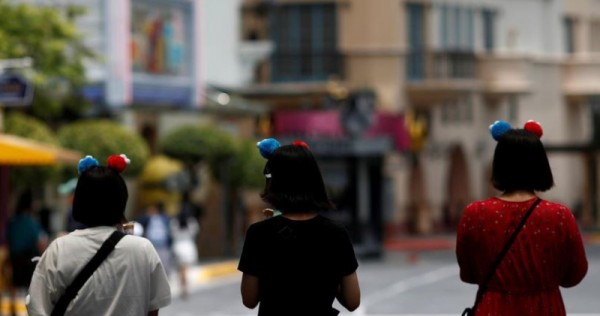
SINGAPORE – Visitors to Universal Studios in Singapore will now have to pass through facial recognition scanners to enter the park, in the city-state’s latest foray with a technology that has stoked privacy concerns.
Resorts World Sentosa (RWS), which owns the sprawling area of tourist attractions, hotels and restaurants in which the park sits, said the scheme which started this month would help smooth access for guests.
“Facial recognition provides contactless verification of tickets and ticket holders, enabling our customers to enjoy our park experience in a more efficient and seamless manner,” RWS said in an emailed statement.
Usage of facial recognition technology – which allows firms or authorities to match people picked up on cameras with those on databases – has risen globally in recent years, stirring worries about surveillance and how data collected will be used.
Digitally-connected Singapore has embarked on many projects that use the technology, including an ambitious scheme to put cameras on lamp-posts linked to facial recognition software.
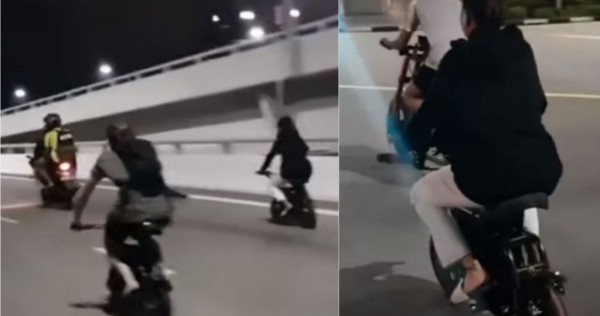
SINGAPORE – Ten people, aged between 16 and 25, have been arrested by the police for allegedly riding dangerously, after a video of them riding on personal mobility devices (PMDs) and power assisted bicycles on the road surfaced online.
Eight male suspects and two female suspects were arrested, the police said in a statement on Monday (Aug 3).
The police were alerted to the video on July 13, showing a group of riders travelling together on PMDs and power assisted bicycles, also called e-bikes, along Sheares Avenue.
From the video, which was posted on the SG Road Vigilante Facebook page, the riders are seen cruising down mostly empty roads at night, often occupying the middle lanes.
Following investigations, traffic police officers established the identities of these people and arrested them between July 17 and 20.
Two PMDs, device parts of an e-bike and mobile phones were seized.
The police and the Land Transport Authority (LTA) are investigating them for dangerous riding and riding a PMD on a road, among other offences.
SINGAPORE: It is COVID-19 rather than trade wars or geopolitical events that has triggered a long overdue global recession in 2020.
In Singapore, where trade in goods and services accounts for over three times of its GDP, the impact of the pandemic was almost immediate.
The economy contracted by a 3.3 per cent annualised rate in the first-quarter, while preliminary estimates for the second quarter shows that the economy shrunk by as much as 41.2 per cent annualised.
That is the worst ever plunge in economic activity since data has been collected on a quarterly basis. Given the circuit breaker between Apr 7 and Jun 1, and phase one restrictions which started on Jun 2, the unprecedented plunge in economic activity is expected.
International visitor arrivals fell from an average of 1.6 million a month in 2019 and 1.7 million in Jan to just an average 815 visitors a month in April and May.
Changi Airport, which handled an average of 1,023 flights daily in May 2019 handled just 144 flights a day this May, with April seeing even 16 per cent lower aircraft movements – the lowest in the airport’s history.
Singapore ports handled 37.2 million twenty-foot equivalent units (TEUs) of containers in 2019 or an average of 3.1 million TEUs every month. For the second quarter of this year though, it fell 6.2 per cent from the previous year to an average of 2.9 million a month.
JOBS MARKET WEAKENED
Given these slowing economic activity indicators, it therefore came as no surprise that the Ministry of Manpower (MoM) reported this week that labour market conditions weakened in the second quarter.
A general view of ships docked at Tanjong Pagar container port in Singapore. (File photo: AFP/Roslan Rahman)
All three key industries, specifically manufacturing, construction and services, saw reduced employment in the second-quarter of this year.
According to the MoM report, the contraction was sharpest in food & beverage services, retail trade, arts, entertainment & recreation and education, within the service-producing industries. Construction also saw a steep decline in employment as construction activities grounded to a halt as workers were confined to their dormitories.
Employment contraction in manufacturing was more modest in comparison as some key manufacturing activities such as semiconductors and the biomedical sector were less affected while it was a different story for transport engineering.
For instance, according to Keppel Corp, Keppel Offshore and Marine’s (O&M) Singapore workforce was reduced to about 1,200 persons at the start of the circuit breaker in April, from about 24,000 in March.
The net effect is that overall unemployment rate in Singapore rose to 2.9 per cent in the second quarter according to preliminary data. The jobless rate for residents and citizens rose to 3.9 per cent and 4.0 per cent respectively.
This marks the highest jobless rate in over a decade. In all, total employment plunged 121,800 in the second quarter, more than four times compared to the 25,600 contraction seen over the previous three months. Retrenchments doubled to 6,700 in the second quarter from 3,220 the quarter before.
MACRO RISKS STILL REMAIN
The worst of the COVID-19 crisis may have passed for some countries, but the macro outlook is dominated by uncertainty even as economies around the world are slowly emerging from their respective lockdown shadows.
However, reopening risks remain, as can be seen from the resurgence in infection cases. How quickly can surviving businesses in advanced economies recover from such deep recessions, let alone those in emerging markets and developing economies?
Governments and central banks around the world are still taking a “whatever it takes” approach to minimise the harm to their economies. “Whatever it takes” in Singapore saw the government rolling out four sets of budgetary measures over four months, equivalent to almost 20 per cent of GDP.
A new National Jobs Council, chaired by Senior Minister Tharman Shanmugaratnam, who has experienced several past recessions, was created.
This comes with the implementation of numerous support programmes to help job-seekers and mid-career individuals gain skills and employment during this challenging time, while the Jobs Support Scheme helped employers with wage costs and cushion the loss of jobs.
Senior Minister Tharman Shanmugaratnam speaking at the New Economy Forum in Beijing. (Photo: New Economy Forum)
These efforts are expected to ease some of the pressure on the local labour market in the coming months.
The increasing use of technology could help policy makers create jobs when businesses may be reluctant to hire during this recessionary period.
The COVID-19 pandemic forces huge changes in how people live and work, and how businesses, big and small operate. Singapore is adapting as well. The Ministerial Committee for Digital Transformation has been set up to accelerate the city-state’s adoption of digital technology.
This is expected to lead to more jobs and business opportunities in the information and communications technology sector.
TOO MANY UNCERTAINTIES REMAIN
Despite these best efforts, Singapore’s labour market is expected to weaken because the bulk of the global economy will still be grappling with recessionary conditions in the second half of this year.
After the record plunge in the second quarter, GDP is expected to rebound in the third quarter as the economy emerges from the circuit breaker.
On a year-on-year basis, the economic contraction will likely narrow in the next two quarters, but for many industries, there are still significant challenges ahead.
For instance, for the local construction sector, when can contractors bring more of their workers to work sites? If subcontractors do not start work soon, they may not receive any payments in the second-half of this year. Can they survive?
Those in aviation, travel, hospitality-related and the F&B industries wonder how long travel restrictions, including social distancing measures, will remain in place. Even if they are eased, when will Singapore see 1.6 million tourists a month again? When will Changi airport handle more than 1,000 flights a day again? When will PSA International handle 37 million TEUs a year at its ports again?
Without any visibilities on these questions, many companies, while keeping costs in check, will ask, how long can they continue to bleed losses every month as they try to ride through the worst recession in Singapore’s history?
The Ministry of Manpower in the accompanying press release to the preliminary the second quarter jobs report warned that the “external economic environment remains weak and some countries are experiencing a second wave of infections. Conditions for travel-related sectors remain particularly challenging. COVID-safe management measures will also moderate the pace of recovery in other sectors. Hence, softness in the labour market is likely to persist with continued weakness in hiring and pressure on companies to retrench.”
People crossing a street in Singapore’s central business district. (File photo: Reuters)
As such, it is likely that Singapore’s jobless rate could increase to 3.5 per cent to 4.0 per cent in the second half of 2020.
MORE MEASURES ARE NEEDED
While this is below the near 5 per cent unemployment rate reached during the worse of the 2009 global financial crisis, given the uncertain and uneven recovery path, the government may have to tweak and extend some of the existing support measures such as the JSS – which is set to expire after covering salaries in August with pay-outs disbursed in October – to give businesses that are still trying to get back on their feet an extra helping hand and ease the pressures on the local labour market.
It is encouraging to note that the government has extended the foreign worker levy waivers for firms in the construction, marine shipyard and process sectors until December. If the situation on the ground warrants, the quantum of these waivers and rebates should be re-adjusted.
Similarly, tweaks to property rental relief measures can be considered since some businesses may not be able to get back on their feet yet even when the Singapore economy emerges from the shadows of the circuit breaker, phase one and phase two measures – especially those in the travel and hospitality-related industries.
On the individual and business levels, although the managing director of the Monetary Authority of Singapore (MAS) Ravi Menon has reassured borrowers, who won the right to defer their loan repayments, that they need not repay their full sums owed when relief measures covering loans repayments, debt and insurance premiums announced in March ends on Dec 31, a further extension may be required.
This will obviously be dependent on the state of the economy towards the end of the year, bearing in mind that extensions of relief measures have wider implications on both borrowers and lenders as well as on the broader property market.
The bottom line is that policy makers who have their work cut out this year, can and will adjust relief measures along the way to contain the impact of this unprecedented economic recession.
Despite these measures, there will still be many businesses who will fail. That is the depressing reality of a deep global recession.
Song Seng Wun is an economist with CIMB Private Bank.