Home Blog Page 1643

Former HUDC estate in Eunos up for sale

0

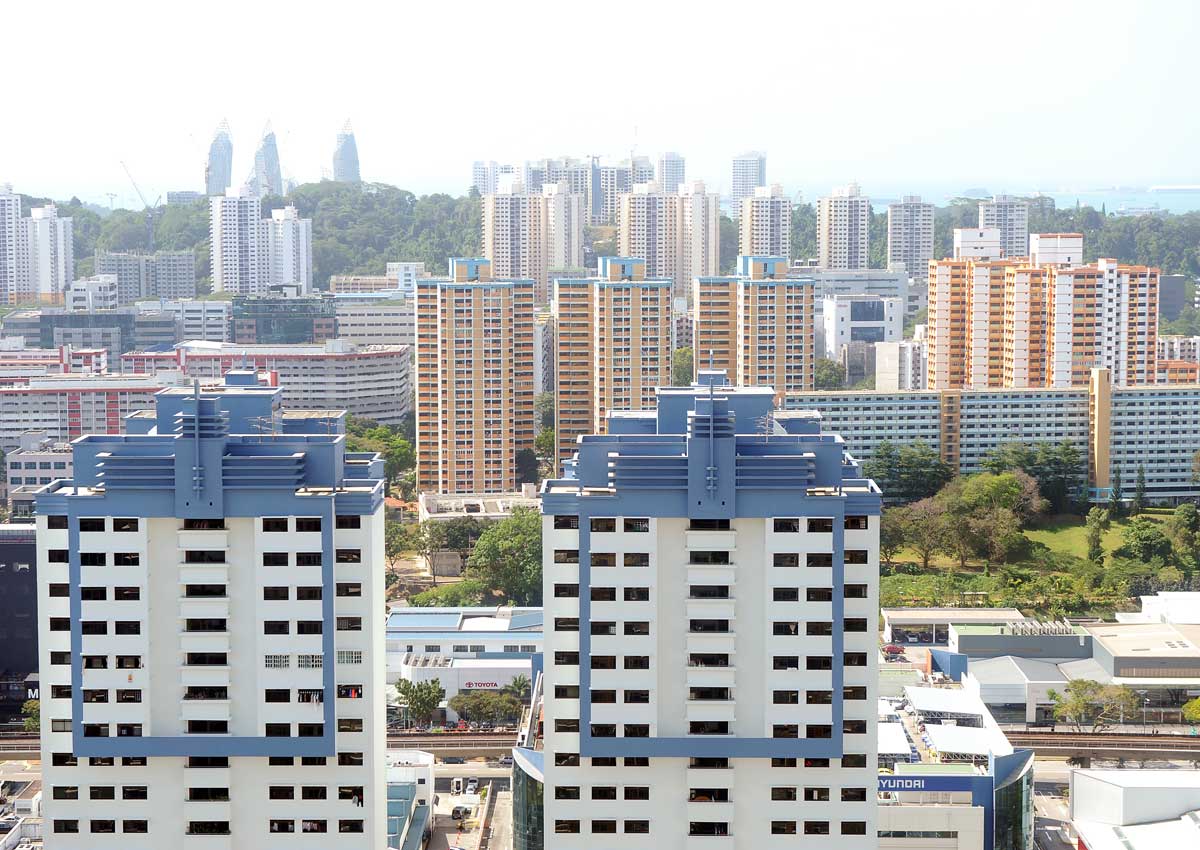
A Housing and Urban Development Company (HUDC) estate in Eunos that had been privatised has gone on the market, just days after a similar estate in Hougang was put up for collective sale.

Owners at Eunosville in Sims Avenue expect offers of between $643 million and $653 million, which translates to about $780 to $790 psf per plot ratio (psf ppr).

That could make the 330-unit Eunosville the largest collective sale in recent years, surpassing the $638 million paid for Shunfu Ville last year, said marketing consultant OrangeTee yesterday.

It would also dwarf Rio Casa in Hougang, which went on sale with expectations of more than $450.8 million, or about $586 psf ppr.

Read also: Former HUDC estate up for en bloc sale

The asking price for Eunosville includes a top-up premium of about $181 million for a new 99-year lease and for intensification of the 376,713 sq ft site, which is less than 100m from Eunos MRT station.

The owners, who reached the requisite 80 per cent consent needed for the collective sale in less than four months, would each get around $1.9 million to just over $2 million.

The estate, which has 70 years left on its lease, has 255 maisonettes in 10 blocks and 75 walk-up apartments across four blocks.

Read also: Last HUDC estate of Braddell View privatised

The strata floor area for a maisonette is between 156 and 165 sq m (1,679 to 1,776 sq ft), and apartment sizes are from 152 to 160 sq m.

A redevelopment could yield about 1,035 units with an average size of 90 sq m each.

Mr Alex Oh, OrangeTee’s director of business solutions, said selling prices would be in the region of $1,450 psf for a new condominium, with a break-even level of about $1,250 psf.

OrangeTee’s executive director of business solutions, Mr Marcus Oh, said: “The recent tweak to the cooling measures has injected some optimism into the residential market… Strong sales results at recent launches such as Grandeur Park Residences… show buyers are still keen to invest in projects with strong locational attributes such as proximity to MRT stations.”

This article by The Straits Times was published in The New Paper, a free newspaper published by Singapore Press Holdings.

Image: 
Publication Date: 
Thursday, April 13, 2017 – 10:57
Send to mobile app: 
Source: 


Story Type: 
Others

Source link

Corruption cases at 32-year low

0

The number of cases tackled by the Corrupt Practices Investigation Bureau (CPIB) last year was the lowest in 32 years.

The bureau received 808 complaints – including some that were not related to corruption – down from 877 in 2015. Of these, 118, or 14.6 per cent, were registered for investigation. This is the lowest number since 1984.

Most of the corruption complaints that were not pursued contained insufficient, vague or unsubstantiated information.

“Corruption in Singapore remains at low levels and… the situation is well under control. But we must not rest on our laurels. Corruption will always be a work-in-progress because of the innate human nature of greed and temptation,” said CPIB director Wong Hong Kuan.

The numbers were disclosed yesterday at the launch of a new anti-bribery standard by the bureau and Spring Singapore which can benefit local companies that are expanding overseas.

Falling NumbersPhoto: The Straits Times

Mr Wong said most of the cases investigated by the CPIB were from the private sector. They accounted for 85 per cent of all cases registered for investigation last year – down by 4 percentage points from 2015.

The remaining 15 per cent came from the public sector. Although this was a slight increase from the 11 per cent recorded in 2015, the CPIB noted that due to the small numbers, the 4 percentage point increase “is not significant”.

Read also: First corruption, now abduction in custody spat?

There were 104 individuals convicted of corruption offences last year: 100 were private-sector employees, and the remaining four were from the public sector.

The CPIB noted that areas of concern highlighted in the private- sector cases centred on maintenance work relating to removal of copper cables, cleaning and water-proofing services and the purchase and supply of fire safety, electrical and mechanical equipment at wholesalers and retailers.

Spring and the CPIB said one way to help businesses enhance anti-bribery controls is to have an effective compliance programme such as the new Singapore Standard ISO 37001 (SS ISO 37001) that was announced yesterday.

Read also: Man gets 90 weeks’ jail, $1.1m penalty for corruption

The ISO 37001 standard that Singapore is adopting was developed by the International Organisation for Standardisation (ISO) in October last year.

The standard, which companies can adopt voluntarily, will help Singapore firms manage corruption risk when they venture overseas. Spring said companies would gain an “additional stamp of confidence” in their systems and processes to help them grow internationally.

“Spring will be working with public and private stakeholders to provide assistance in terms of training, consultancy, certification and funding,” said Ms Choy Sauw Kook, assistant chief executive for quality and excellence at Spring Singapore.

The standard includes a series of measures that represent globally recognised anti-bribery good practices. They include anti-bribery policy and training for staff, project risk assessments, financial and contractual controls.

Spring and the Singapore Accreditation Council will be working with stakeholders to develop an accreditation scheme so that relevant bodies can provide SS ISO 37001 certification services by the end of this year.

The CPIB also launched an anti-corruption guide for businesses yesterday.


This article was first published on Apr 13, 2017.
Get a copy of The Straits Times or go to straitstimes.com for more stories.

Image: 
Category: 
Publication Date: 
Thursday, April 13, 2017 – 10:51
Keywords: 
Send to mobile app: 
Source: 


Story Type: 
Others

Source link

Grab: Enjoy $8 OFF two JustGrab rides to and from Changi Airport! Valid from 13 – 17 Apr 2017

0

Heading overseas this long weekend? Use code FLYAPRIL to enjoy $8 off rides to/fro Changi Airport till 17 April

Grab: Enjoy $8 OFF two JustGrab rides to and from Changi Airport! Valid from 13 – 17 Apr 2017

Enjoy $8 OFF two rides to and from Changi airport! Going somewhere this long weekend? Before you cruise 10,000 feet in the air, start your holiday on a high note by travelling to and from the airport in the comfort of a JustGrab.

Source

oBike introduces points system that penalises 'ungracious' users

0

SINGAPORE: Rewards if you’re good, and penalties if you’re not – Singapore’s first stationless bike-sharing company oBike is introducing a credit system in its app to encourage better behaviour among its users. 

Announcing the oBike credits feature on Thursday (Apr 13), oBike said points will be added for “positive behaviour” such as reporting broken bikes, as well as to encourage frequent use of the app. However, points will be docked for “negative behaviour” such as parking at non-designated bike parking areas and forgetting to lock a bike. The lower the points, the higher the cost of the ride. 

The cost of borrowing the bikes for each 15-minute period will range from S$0.50 for users with 101 to 180 points to a hundred times more, or S$50, for those with less than 60 points. 

In response to Channel NewsAsia’s queries, a spokesperson also explained that users start with 100 points, and once they have zero points, they will no longer be able to use the service. Some offences, such as violating traffic rules, will instantly reduce the user’s points to zero. 

(Source: oBike)

Besides the oBike credits, the company has also added bike parking location indicators in its app, so users know where to park their bikes. These areas include the new bicycle parking zones at seven new locations by the Land Transport Authority (LTA). 

These improvements were made following trials and feedback from users. The bright yellow and white bikes were first spotted in Singapore in January this year but were officially launched on Thursday. 

ONE-YEAR PILOT WITH TAMPINES TOWN COUNCIL

oBike is also partnering with Tampines Town Council on a one-year pilot programme called “Ride and Roll”.

Tampines, the first cycling town in Singapore, was picked for its existing infrastructure that supports cycling, like extensive and dedicated paths for bikes, oBike said. 

“As Singapore’s first cycling town, Tampines Town Council has already put in place various initiatives and infrastructural features that seek to promote cycling within the community, and we believe that this partnership will help to create a stronger cycling ecosystem within Tampines”, said oBike’s general manager Elgin Ee.

The programme will be rolled out in three phases from this month. 

The first phase will seek to build a strong network and infrastructure within Tampines, with on-ground demarcations of bike-sharing spaces in high-traffic areas. Residents will also get one month of free rental service when they sign up.

Phase two aims to strengthen to drive home the message of safe and responsible cycling, with educational programmes organised by oBike and the town council.

Finally, the last phase will be geared towards encouraging the sustainability of bike-sharing, and cycling data from the pilot will be used for the neighbourhood’s future plans. In this phase, oBike will also be adding more people to its maintenance team under its oBike Warden Programme which will provide job opportunities for Tampines residents, especially active senior citizens, it said in the press release. 

Source link

Singapore GDP grew 2.5% year-on-year in Q1, slightly less than expected

0

SINGAPORE – Singapore’s trade-reliant economy contracted 1.9 percent in the first quarter from the previous three months on an annualised basis, data from the Ministry of Trade and Industry (MTI) showed, matching the median forecast in a Reuters survey.

The slump was seen as payback for the outsized 12.3 percent jump in the fourth quarter, with many analysts seeing growth tracking in line with government forecasts for 2017.

Year-on-year, the economy grew 2.5 per cent in the first quarter, easing from the 2.9 per cent growth in the previous quarter, according to MTI.

The central bank acknowledged a “slightly” improved outlook for the global economy but said downside risks remain, alongside”significant policy uncertainty.”

Nomura economist Brian Tan said the Monetary Authority of Singapore (MAS) sounded “cautious” about the economic outlook, which is likely to dampen speculation that the central bank could tighten policy at the next policy review in October. “It’s a bit too soon to tighten policy,” Tan said.

As the global economy perked up from late last year, Singapore’s exports and manufacturing have bounced from depressed levels, helping lift inflation in line with official forecasts.

Meanwhile, the central bank held policy steady as expected on Thursday, saying a “neutral” stance will be needed for an extended period as data showed the city state’s economy contracted in the first quarter.

Analysts said the MAS’ reiteration of the forward guidance from its last review and warning of “significant policy uncertainty” dampened any expectations of tightening in October.

The Singapore dollar rose slightly after the MAS said it will maintain its rate of appreciation of the Singapore dollar at zero percent, with the width of the policy band and the level at which it is centred unchanged. “A neutral policy stance is appropriate for an extended period and should ensure medium-term price stability,” the MAS said in its semiannual monetary policy statement.

18 of 19 analysts in a Reuters survey predicted the MAS would keep monetary policy unchanged – one analyst expected an easing – after having eased policy three times since January 2015, most recently in April 2016.

The MAS manages monetary policy by changes to the exchange rate, rather than interest rates, letting the Singapore dollar rise or fall against the currencies of its main trading partners because trade flows dwarf the city state’s economy.

MAS said core inflation was projected to average 1-2 percent, compared to 0.9 percent in 2016. All-items inflation is expected to rise to 0.5-1.5 percent from minus 0.5 percent last year.

Image: 
Publication Date: 
Thursday, April 13, 2017 – 10:05
Send to mobile app: 
Source: 


Rotator Image: 
Hermes ID: 
3 074 668
Hermes ID String: 
SY_SGGDP_0413
Hermes Author: 
SEANYAP
Story Type: 
Others

Source link

Circle Line loop work starts next year, to finish in 2025

0

Advanced preparatory works to make the Circle Line a complete loop, by joining HarbourFront station to Marina Bay station, have begun.

Tenders for the civil works will be awarded by year end, and construction will begin in the first quarter of next year, the Land Transport Authority said.

The 4km extension is to be completed in 2025 and will have three stations – Keppel, Cantonment and Prince Edward.

Preparatory works include relocating affected facilities at PSA Keppel Terminal for the construction of Keppel station, dismantling the platform canopy structures of Tanjong Pagar Railway Station (which will be repaired and reinstated after the construction of Cantonment station) and the relocation of Shenton Way Bus Terminal for the construction of Prince Edward station.

Read also: Hougang MRT bag scare ‘handled correctly’

The extension project is likely to cost $3.7 billion, with the Government stating in its latest Budget book that the advanced works would cost $30.6 million.

The total cost translates to $925 million per km – more than three times the cost of the Circle Line, which cost an average of $300 million per km when it was completed in 2011.

Separately, another $2.3 billion has been allocated to expand the Kim Chuan depot to stable more trains that the extension will require.

The three additional stations will reach out to new commuters. Keppel station will serve commuters at Keppel Distripark, Cantonment station will serve Spottiswoode Park Estate and Prince Edward station will be near Palmer Road, where heritage landmarks are.

Besides reaching new commuters, the extension will allow those travelling between the south-western and south-eastern ends of the line – such as from Pasir Panjang to Nicoll Highway – to have more direct and quicker access.

Read also: Fatal MRT track accident: Survivor worked to overcome fear of tracks

As for the 2km-long North East Line Extension, which will serve the developing Punggol North, the LTA is in the final stages of engineering and design studies. In the latest Budget book, $6.2 million has been slated for these studies.

LTA said the line “will be built in tandem with the developments there so that future residents in Punggol North will have train access to the city centre as well as other parts of Singapore”.

The extension, which is likely to have two stops, is expected to be completed by 2030. Punggol North will be a mixed-used area. It is slated to be an “enterprise district” housing digital and cyber-security industries.

This article by The Straits Times was published in The New Paper, a free newspaper published by Singapore Press Holdings.

Image: 
Category: 
Publication Date: 
Thursday, April 13, 2017 – 10:05
Send to mobile app: 
Source: 


Story Type: 
Others

Source link

Fewer COEs for cars, more for commercial vehicle

0

Car buyers will have fewer certificates of entitlement (COEs) in the next three-month quota, starting from May.

On the other hand, motorcycle and commercial vehicles buyers will have significantly more COEs to bid for.

The new quota for commercial vehicles is nearly seven times that of the current one, according to figures released by the Land Transport Authority yesterday.

For cars up to 1,600cc and 130bhp, the monthly COE supply will shrink by 7.5 per cent to 3,797. For those above 1,600cc or 130bhp, it will dip by 2.7 per cent to 2,641 a month while Open COEs will grow by 9.6 per cent to 1,055 a month.

Open COEs can be used for any vehicle type but tend to end up with bigger cars. The number of COEs in the three categories combined is 3.7 per cent lower than today’s.

Mr Ron Lim, general manager of Nissan agent Tan Chong Motor, said the decline is partly to do with motorists extending the life of their 10-year-old cars instead of scrapping them. They began doing so two years ago.

Read also: Record-high COE premium for motorcycles in latest tender

Also, from next month, the Open category, which is made up of a 10 per cent contribution from each of the other COE categories, will no longer include that from motorcycles.

The exclusion is part of a move to cool the motorbike COE premium, which has more than trebled in the last three years. From next month, the monthly supply for motorbikes is 907, a 31.1 per cent rise over the current level.

Latest COE ResultPhoto: Land Transport Authority

But the biggest increase is in the commercial vehicle category, where the monthly COE supply will soar from 322 to 2,168, a rise of 573.3 per cent.

The jump had been anticipated as a huge population of vans, trucks and lorries have reached their 20-year statutory lifespan.

Read also: Motorcycle COE hits new high

The phenomenon arose in 2006, when a crash in COE premiums led many owners to renew the COEs of their commercial fleets. The plunge was triggered by an earlier-than-expected introduction of the Euro 4 emission standard.

Mr Neo Nam Heng, chairman of diversified motor group Prime, does not foresee a huge impact on car COE prices.

Demand from private-hire vehicle fleet operators “has dropped”, he said, adding that there is now a surplus of such vehicles waiting to be hired.

But he expects “a huge correction in COE prices” for commercial vehicles.

“This will be good news for small and medium enterprises,” he said. “It’s time for them to replenish their fleets.”

Read also: S$9.2b to come from car taxes and COE premiums in FY2017

In the latest tender yesterday, COEs for two-wheelers remained robust, at $7,589, despite a government probe into alleged COE speculation by a group of motorcycle dealers.

Industry observers said it should ease from next month because of the increase in supply. COE for cars rose yesterday, with all three categories now at their highest in five months. (See table below.)

Dealers said the increase was due to a push to clear stocks ahead of Euro 6 standards taking effect in September and models that will be penalised when the new Vehicle Emissions Scheme starts in January.

This article by The Straits Times was published in The New Paper, a free newspaper published by Singapore Press Holdings.

Image: 
Category: 
Publication Date: 
Thursday, April 13, 2017 – 09:50
Keywords: 
Send to mobile app: 
Source: 


Story Type: 
Others

Source link

Buying an old HDB flat? Here are some things to consider

0

SINGAPORE – Data shows that buyers don’t mind old HDB flats, paying similar prices for units whether they are 25 or 50 years old.

But beware a potential sharp fall when flats cross 64, with less than 35 years of lease remaining. That’s when financing restrictions kick in.

Minister for National Development Lawrence Wong cautioned last month that the vast majority of flats will be returned to HDB when their leases run out.

Flat buyers would best not think of the 99-year lease as a clock that can be reset, The Straits Times’ Wong Siew Ying wrote in a commentary.

We summarise some things to consider if you are planning to buy an old flat:

1. HOW MANY OLD FLATS ARE THERE ON THE MARKET?

There are about one million HDB flats. Of these, 70,000 or 7 per cent are more than 40 years into their leases. About 280,000 units are between 30 and 40 years old, according to HDB figures. That works out to about one in three flats being 30 years or older.

2. WHAT ARE THE AVERAGE RESALE PRICES FOR THESE FLATS?

Average resale prices of flats with 60 years and under of lease was $364,052 in 2016, relatively stable compared with $364,264 in 2015, said Mr Eugene Lim, key executive officer at ERA Realty Network.

For example, the median per sq ft price paid for flats in Bedok with lease commencing in 1970 (aged 46 years in 2016) was $407, just slightly lower than $414 for those built in 1995 (aged 21 years). Median transaction prices were much higher for newer flats built after 1995.

3. WOULD PRICES BE AFFECTED BY MINISTER WONG’S COMMENTS?

Property consultancy Edmund Tie & Company believes it may dampen demand especially for highly priced old units. It noted that there has been more discussion on the lease issue among buyers recently.

“There’s more awareness, people are concerned if they put in a lot of money in the flat, whether they can recoup it in the future… We may see prices of the more expensive units easing 3 to 5 per cent this year,” said Dr Lee Nai Jia, head of South-east Asia research at Edmund Tie & Company.

4. WOULD PRICES STILL BE ROBUST 10, 20 YEARS LATER, AS MORE FLATS HIT 50, THEN 60 YEARS OLD?

Analysts expect property values to drop more sharply towards the tail-end of the lease when loan restrictions and constraints in using Central Provident Fund (CPF) savings to finance the flat kick in.

Analysts highlight three possible key points in the flat’s lease cycle that will mark steeper falls in value:

– At 64 years

With less than 35 years of lease left, banks are unwilling to extend loans to finance the purchase of these flats. That applies to flats that are at least 64 years old.

– At 69 years

With less than 30 years of lease remaining, CPF money cannot be used for down payment or to service the monthly mortgage.

– At 79 years

At this point, the property has to be paid for in cash.

“When leases drop to 20 years and below, the prospective buyers will not be able to get HDB loans, bank loans or use CPF for the purchase. Everything has to be paid in cash in one go,” International Property Advisor chief executive Ku Swee Yong noted.


This article was first published on April 12, 2017.
Get a copy of The Straits Times or go to straitstimes.com for more stories.

Image: 
Publication Date: 
Thursday, April 13, 2017 – 09:30
Keywords: 
Send to mobile app: 
Source: 


Story Type: 
Others

Source link

Internet restored for 3,500 users after a day

0

In the 35 years of operating his office supply shop in Jurong West, Mr Patrick Goh has not faced many problems. But after losing Internet connection on Tuesday afternoon, the owner of Yunnan General Supplier told The New Paper that his business came to a standstill.

Said Mr Goh: “My shop is quite dependent on e-commerce. Without Internet, no e-mail or orders could come in or go out, which was frustrating.

“I had customers complaining why I did not reply to their e-mail or why their orders did not arrive.”

Mr Goh, 61, was among the 3,500 users affectedby the fibre service interruption in the Jurong West area that started at 4.30pm on Tuesday.

After an outage lasting almost 23 hours, Internet services were fully restored last night.

The disruption occurred after a fibre optic cable was damaged by a third-party contractor carrying out sheet piling works at Block 218D, Boon Lay Avenue, affecting Internet connection, some phone lines and TV services.

In a statement last night, fibre operator NetLink Trust said the service interruption was fully resolved by 9pm yesterday.

StarHub, Singtel and M1 said all their customer connections have been restored.

Read also: Internet disruption in Jurong West

Services were supposed to be restored by yesterday morning, but NetLink Trust said progress was hampered “by poor site conditions and heavy rain”.

It also said it discovered more damaged cables yesterday morning, adding to the delay.

The Infocomm Media Development Authority (IMDA) said that it was “concerned with the service disruption” and had started investigating the cause of the incident.

“IMDA will take action against the relevant parties, including the earthwork contractor if it is found to have breached any of IMDA’s regulatory requirements when carrying out the excavating works,” said an IMDA spokesman.

TNP yesterday visited ST Kinetics, Lakeside Primary School, Taman Jurong Shopping Centre and Jurong Point, and found that none of them faced disruptions in Internet and phone line services.

Read also: The Internet is trolling United Airlines so hard right now

But not everyone was as lucky.

Mr Muralidaran, 31, was doing work online at home when his Internet access was cut off on Tuesday.

The quality assurance engineer said: “It was stressful. I did not know what the problem was, and I needed to complete my coursework by 10pm. When I called StarHub customer service, it did not know what was happening as well.”

His request to extend the deadline for his coursework was eventually granted.

Service engineer Kang JianLi, 38, felt like he had wasted his day off because of the disruption.

He said: “My wife and I would usually be watching movies online but we could not do that. I have only two weeks of leave, and I felt like the day was wasted.”

Mr Samuel Tan, course manager of retail management in Temasek Polytechnic’s School of Business, called the incident “unfortunate” and said the outage caused a “communication breakdown” for businesses in the area.

He said: “The communication breakdown is immediate and made liasing with vendors and suppliers difficult. Without Internet for the considerably long period, the businesses’ operations would be affected, leading to a possible loss of potential sales.”


This article was first published on Apr 13, 2017.
Get The New Paper for more stories.

Image: 
Category: 
Publication Date: 
Thursday, April 13, 2017 – 09:45
Send to mobile app: 
Source: 


Story Type: 
Others

Source link

Meteor Garden throwback: 5 things to relive with the reboot of the F4 drama

0

It’s time to dust off your Meteor Garden VCDs – if you have even kept them for 16 years.

Taiwanese producer Angie Chai has announced a reboot of the classic idol drama that gave the world four dreamy boys known as F4. The news has made fans all nostalgic for the 2001 show and the stars. Here are five things we remember.

1. ENTER F4 AND THEIR HAIR

The boys and their hairstyles make a memorable entrance in the first episode. Two cars stop at a school and Van Ness Wu is the first to step out, grinning and tossing his long, straight hair. Ken Chu and Vic Chou are next, both with chin-length hairstyles. Finally, Jerry Yan joins them, standing tall and looking faintly ludicrous with a bouffant hairdo.

(But don’t laugh. This is hair that produced a revolution. In Indonesia, young men would straighten their hair to look like F4. In the Philippines, it was reported that one teenager killed another in a dispute over whose hair looked more like Chou’s.)

2. BREATHLESS PACING

Photo: Sony Music

Apart from the casting and the hairstyling, there is a reason the drama became a runaway success. The adaptation of the girl’s comic series Boys Over Flowers is fast and fun from the word go. The seesawing love-hate relationship between Yan’s cocky Daoming Si and Barbie Hsu’s dogged Shancai starts in the first episode.

3. AWFUL COSTUMES

Photo: EMI

Can we say it now? The rich kids in the show don’t look it probably because the drama was made on a shoestring, for NT$500,000 an episode. Chai has said F4’s costumes were from small shops in Ximending.

4. A YOUNG RAINIE YANG IS IN IT

Before she became a bigger star, she had a small role in Meteor Garden as Xiaoyou, the sweet girl who likes Chu’s playboy Ximen.

5. YAN IS AN UNDERRATED ACTOR

Photo: SCV

As Daoming Si, he had the funniest, cutest lines (“If apologies worked, would the police be needed?”). And you remember them because he said them right.


This article was first published on April 12, 2017.
Get a copy of The Straits Times or go to straitstimes.com for more stories.

Image: 
Category: 
Publication Date: 
Thursday, April 13, 2017 – 08:59
Keywords: 
Send to mobile app: 
Source: 


Rotator Image: 
Story Type: 
Others

Source link