Singapore
Tuesday, January 9, 2018 – 09:38
17 men arrested for taking fuel from Shell, $3.05 million in cash seized
The Straits Times
Others

SINGAPORE: A series of videos promoting the use of mother tongues has recently been released by the Lee Kuan Yew Fund for Bilingualism.
These videos are intended to promote the use of mother tongues, stressing its importance in bridging connections with others and retaining a strong national identity.
The need for these videos may speak to some of the ambivalence and challenges families often face in raising bilingual children. Particularly in families where parents do not speak the mother tongue, they may feel overwhelmed and uncertain when it comes to figuring out how to raise a bilingual child.
Can parents who don’t speak their mother tongue raise children who do?
And can they do so without resorting to expensive tuition classes?
Thankfully, research tells us that parents who do not speak two languages can raise bilingual children who become fully proficient in both languages.
However, unlike bilingual families, these parents will be more dependent on outside sources, such as childcare facilities, community resources, schools or tutors, to provide second language exposure and instruction.
WHO’S TEACHING THE MOTHER TONGUE?
For monolingual families, well-designed and effectively implemented bilingual education programmes can provide an excellent and sustainable route to bilingualism.
Bilingual education programmes that maintain best practices in second language instruction should be sufficient to build up mother tongue proficiency without the need for supplementary tuition.
But what distinguishes good bilingual education?

How can kids pick up their mother tongue if their parents are not fluent in the language, without recourse to expensive tuition classes? (Photo: Pixabay/weisanjiang)
The sheer amount of time that children hear a mother tongue predicts their eventual success. Children with longer exposure to the mother tongue go onto greater proficiency.
However, bilingual education is not just about clocking hours – it is also about how this time is being spent. In learning a mother tongue, it is good for children to have exposure and interaction with a variety of mother tongue speakers and for these interactions to be with fully proficient native speakers. Such speakers can provide the best language model for young learners.
So, the more the better, both in terms of time spent and the number of speakers encountered.
The success of mother tongue education relies on interaction with live partners. While many parents may be tempted to let the television playing cartoons or sitcoms in the mother tongue babysit children in the hope that kids will pick up the language with the passage of time, research shows children learn better from live interaction and conversation than passive media consumption.
The mode of instruction also matters, although some children draw more from spontaneous social opportunities whereas others draw more from more structured learning.
The reality is some children gravitate towards structured learning where they learn rules and word meanings, and armed with this knowledge, feel comfortable to engage in spontaneous conversation. Others much prefer spontaneous conversation and use these conversations to draw out rules and word meanings.
But crucial to both is a chance to interact and converse with a partner.
While mother tongue tuition can be helpful, a good bilingual education should suffice to build up native mother tongue proficiency.
Parents can also resort to social opportunities, such as interest groups via Meetup, or immerse themselves in cultural events at Community Centres to seek out opportunities for their children to use the mother tongue.
Parents can also actively support peer friendships and play opportunities with native speakers of a mother tongue. Children are typically less deterred by a language barrier with those they meet than adults and they are often very willing to enjoy play with another child with shared interests, even if they speak a different language.
The more the better, both in terms of time spent and the number of speakers encountered, in helping kids build up bilingualism.
Community and peer engagement will have to be a more active effort for monolingual families, but it is a worthy investment in their child’s bilingual journey.
ARE KIDS MOTIVATED TO MASTER THEIR MOTHER TONGUE?
Research shows us that motivation for second language learning in children is more important than language learning ability in reaching bilingual proficiency. A child who is highly motivated to learn their mother tongue will typically fare much better than one who is not.
As parents often recognise, creating and sustaining motivation for the mother tongue can present one of the biggest challenges to teaching children their mother tongue.
Many children, even toddlers, simply refuse to talk in a mother tongue choosing to speak English, even though they understand their mother tongue. This is a common scenario that reflects in the child both a language preference and a selective appreciation for the usefulness of one language over the other.
But this barrier must be overcome so that kids don’t stay passive bilinguals (children who understand two languages but only speak in one) but make progress to become active bilinguals.
The reality is that children cannot be pressured to interact in a mother tongue, nor can they be easily convinced of the logic of why learning an additional language is important.
Children are motivated to learn a language when they believe that the language is useful to them in their eyes. For example, many parents believe that learning Chinese is a strategic choice that will give their children opportunities in their future careers, yet this is not a line of reasoning that would readily appeal to a 5-year-old.
For this reason, good bilingual education programmes often have clever, creative ways to engage children in the host culture of a second language to enliven the experience of learning. For example, learning about interesting cultural practices or popular culture in the mother tongue can fuel a curiosity for the language in children.
While this is not directly teaching vocabulary or grammar, it is a crucial step towards building motivation than can bolster an uptake of vocabulary and grammar.
But if one language is actively used in a child’s life to converse in school, maintain friendships and family bonds, and access the ever-appealing world of entertainment while the other language is confined to textbooks and homework exercises, then both languages will start to mean different things.
The child may naturally gravitate towards the language that they actively use at the cost of the second language, limiting a child from realising their bilingual potential.
But a child who views their knowledge of a second language as a means towards forging important social bonds, pursuing their own hobbies or interests, or making valued cultural connections in their life will be more likely to persevere in the hard work of learning another language more than a child who sees a second language as just another examinable subject.
Will our kids see mother tongue as merely another examinable subject, to the detriment of building up bilingualism? (Photo: TODAY)
BILINGUALISM A FAMILY AFFAIR
Finally, as with all aspects of learning, children learn within the bounds of their own “ecosystem”. A child raised in a family environment where bilingualism is valued and prioritised by the parents – even if they are not providing bilingual input at home – is more likely to become bilingual than one whose family holds an indifferent view towards bilingualism.
Many monolingual parents often approach bilingualism in a direction that is less than ideal. Specifically, we teach word by word. In other words, we hope that children will learn words in a Mother tongue to be able to access the “world” of the Mother tongue. But it can be equally important for children to be drawn to the “world” of the mother tongue in a way that makes them want to learn the words.
Children inherit their parents’ attitudes in many respects, and bilingualism is no exception.
For monolingual and bilingual families alike, developing a sustainable and consistent family language policy where each member of the family agrees upon and actively supports bilingual acquisition can greatly benefit a child.
This can mean actively seeking to create opportunities for children to engage in their mother tongue by attending community events or by forging partnerships with peers and neighbors to encourage mother tongue use.
Family language policies vary greatly depending on the languages spoken by each member of the family and on what works best for an individual child. There is no one-size-fits-all solution for all children.
What is important is that children receive similar amounts of high-quality exposure and interaction opportunities for both languages and that children see the relevance and appeal of both languages in their lives.
Leher Singh is director for the National University of Singapore’s Infant and Child Language Centre and Associate Professor of Psychology.
SINGAPORE: Immigration officers will be soon be empowered to search individuals they suspect are carrying offensive weapons within the vicinity of a checkpoint, according to a proposed amendment to the Immigration Act. Currently, Immigration and Checkpoints (ICA) officers’ powers relating to search are limited to authorised areas.
This means that ICA officers may perform searches in public areas in Changi Airport and the bus stop outside Woodlands Checkpoint. ICA and police officers will also be able to search individuals if they suspect an offence has been committed within or in the vicinity of authorised areas.
Speaking during the second reading of the Immigration (Amendment) Bill in Parliament on Monday (Jan 8), Second Minister for Home Affairs Mrs Josephine Teo said that existing powers are not sufficient to protect the checkpoints in today’s security climate.
“To be more effective, the powers have to be expanded so that ICA officers can intervene in any suspected security incident within or in the vicinity of the checkpoints. On the ground, this will allow any ICA officer nearest to a security incident at the checkpoints to be the first responder,” she said.
ICA OFFICERS TO BE GIVEN SIMILAR POWERS AS POLICE OFFICERS TO ARREST
ICA officers operating within and in the vicinity of authorised areas will also be accorded similar powers as those given to the police under the Criminal Procedure Code (CPC). ICA officers will be empowered to arrest the individual if he is reasonably suspected to have committed an arrestable offence under Singapore laws.
“This will enable ICA officers to respond to any security threat without having to wait for the arrival of police officers,” Mrs Teo said.
Second Minister for Home Affairs Mrs Josephine Teo in Parliament.
For non-arrestable offences, similar to prescribed rules in the CPC, ICA officers will only be able to arrest an individual if the person refuses to give his or her name and residential address, or if the person gives a name or residential address believed to be false, or gives an overseas residential address.
Post-incident investigations, including the prosecution of the arrested persons in the Courts, will remain the police’s responsibility, Mrs Teo said. Once ICA officers have made an arrest, they will have to hand over the accused to a police officer as quickly as possible, for police to start their investigations.
The Bill will also allow ICA to collect personal identifiers, such as photographs, from travellers transiting through Singapore.
“This will allow ICA to screen transit passengers more effectively, to better detect travellers of interest,” Mrs Teo said, adding that the Bill will also make clear that ICA has the powers to collect personal identifiers from Singapore visa applicants, including photographs and other biometric identifiers.
MPs RAISE QUESTIONS ON PREPAREDNESS OF ICA OFFICERS
MPs asked if ICA officers are prepared to take on more responsibilities that will come with these expanded powers.
MP for West Coast GRC Patrick Tay asked if arrangements will be made to ease ICA officers into their new duties so that the additional duties are not too onerous, given that they already dealing with large numbers of travellers daily while under expectations from travellers for timely clearance at checkpoints .
Mr Tay, who is also a member of Government Parliamentary Committee for Home Affairs, also noted that the training requirements for ICA officers and police officers are different.
A Direct-Entry Sergeant in ICA would have undergone a 16-week non-residential basic course, while a Direct-Entry Sergeant in the police force would have undergone a six-month residential training including lessons in criminal law, physical training, community policing, as well as leadership development.
Fitness level requirements are also different, he added, as he queried the measures being taken to prepare ICA officers to carry out their functions. He also asked if the salaries of ICA officers will be raised to take into account their extra responsibilities.
MP for Nee Soon GRC Patrick Tay in Parliament.
MP for Marine Parade GRC Associate Professor Fatimah Lateef also asked if there will be some psychological preparedness training , briefing and counselling for these ICA officers.
“My concern is that police officers have been prepared for these types of work from the beginning of their career but these ICA officers may not,” she said.
While MP for Nee Soon GRC Louis Ng asked if it was necessary for ICA officers to be given the powers to detain a person for up to 24 hours under before handing them over to a police officer, given that the powers are transitory, MP for Bishan-Toa Payoh GRC Saktiandi Supaat described such a procedure as “cumbersome”, asking why ICA cannot be given the authority to detain the suspect for more than 24 hours and carry out the investigations required if it was a simple offence.
In response, Mrs Teo said that joint and on-the-job training are underway, and that more than 900 officers have been trained. She stressed that ICA officers will not have to become police officers, and that their training will be specific to becoming first responders.
Appropriate training courses will equip them in a few areas, including interview skills and search techniques. She added that ICA officers undergo psychological training during their basic training.
Jetstar Asia was also ranked the second-most punctual low-cost carrier in the world in the OAG Punctuality League 2018.
File photo of a passenger checking arrival timings at Changi Airport.
SINGAPORE: Jetstar Asia has emerged as Singapore’s most punctual airline, beating national carrier Singapore Airlines, according to an annual ranking of the most punctual carriers by aviation consultant OAG.
The OAG Punctuality League 2018 is based on 57 million flight records for the world’s largest airlines and airports throughout 2017, according to the report released last Wednesday (Jan 3).
The ranking defines on-time performance (OTP) based on the percentage of flights that arrive or depart in less than 15 minutes of their schedules arrival or departure times.
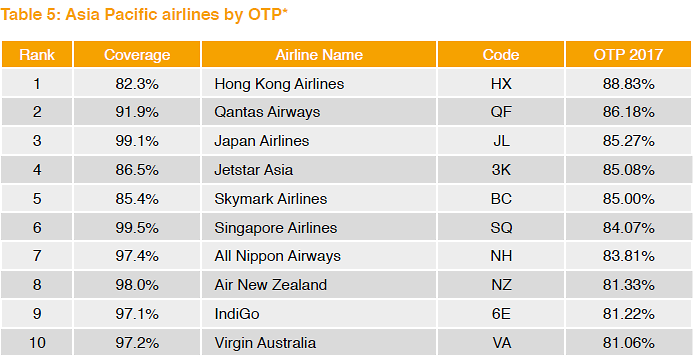
The data showed that Jetstar Asia was also the fourth-most punctual airline in the Asia Pacific region, with 85.08 per cent of its flights on time, beating Singapore Airlines, which came in sixth with 84.07 per cent OTP.
Hong Kong Airlines topped the regional punctuality chart at 88.83 per cent OTP, followed by Qantas Airways (86.18 per cent) and Japan Airlines (85.27 per cent).
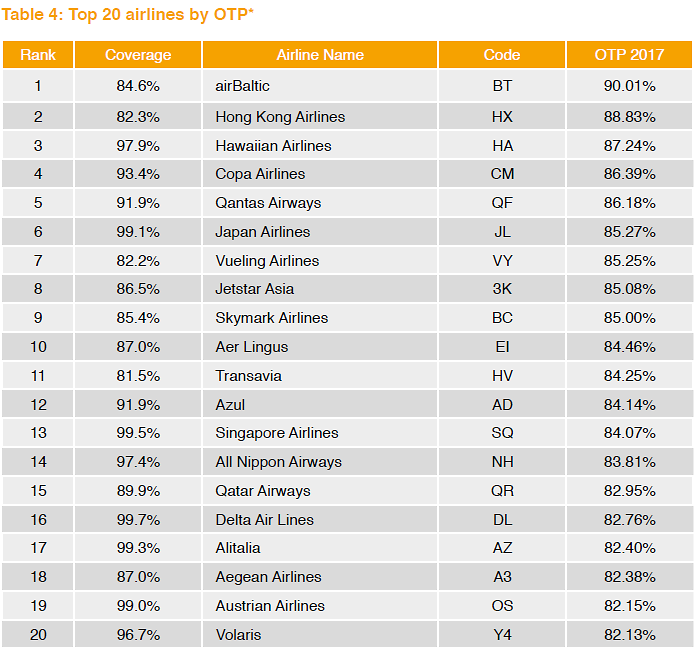
Globally, Jetstar Asia and Singapore Airlines came in eighth and 13th respectively.
Latvian low-cost carrier airBaltic was rated the most punctual in the world with 90.01 per cent of flights on time, with Hong Kong Airlines and Hawaiian Airlines coming in second and third respectively.
Jetstar Asia was also rated as the second-most punctual low-cost carrier in the world, with a lower percentage of “on-time” flights than only Vueling Airlines from Spain, which had 85.25 per cent.
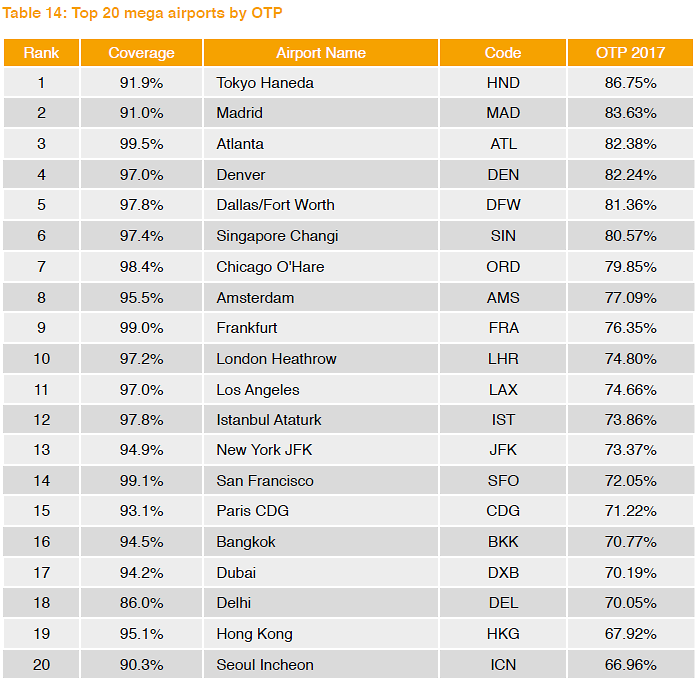
Singapore’s Changi Airport also got a mention in OAG’s punctuality ranking of top 20 mega airports, or those with more than 30 million annual departing seats.
The aviation consultant’s data showed that 80.57 per cent of flights handled at Changi Airport last year arrived or departed on time, ranking it sixth among those in this category.
Tokyo’s Haneda Airport was the most punctual, with 86.75 per cent of flights on time, while Madrid and Atlanta came in second and third respectively with 83.63 per cent and 82.38 per cent.
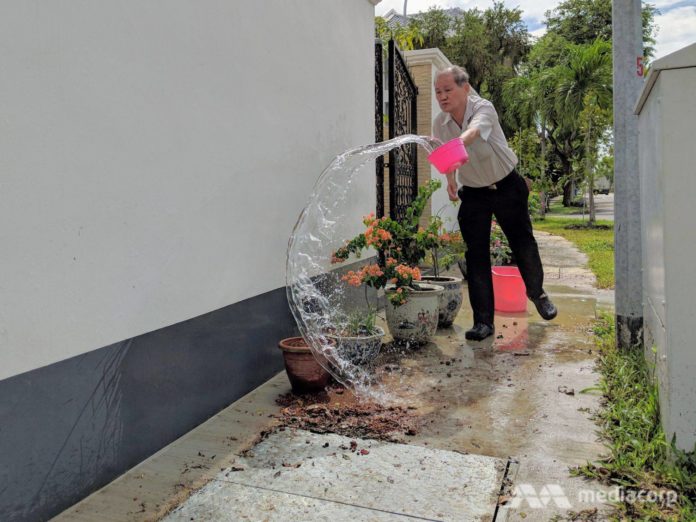
SINGAPORE: Some residents in the eastern parts of Singapore woke up to more than Monday blues on Monday (Jan 8) – some had to face murky brown water, coming right up to their doorsteps.
“The water came into the driveway, up to the front of my car,” said retiree Mr Lim, who lives along a stretch of terrace houses along Jalan Greja. The low-lying residential area in Bedok was one of those affected by the flash floods on Monday.
“I’ve lived here for over 30 years. This is the worst flash flood we have experienced,” said the 67-year-old.
Floods were reported at nine areas in total – including Tampines, Sims Avenue and Upper Changi Road – said national water agency PUB.
PUB also sent out alerts on social media, warning that there was “high flood risk” at several waterways such as Bedok Canal, Sungei Kallang and Sungei Tongkang.
Channel NewsAsia visited the private estates next to Bedok Canal shortly after the PUB alerts came in. While the flash floods had subsided, there were signs of water damage.
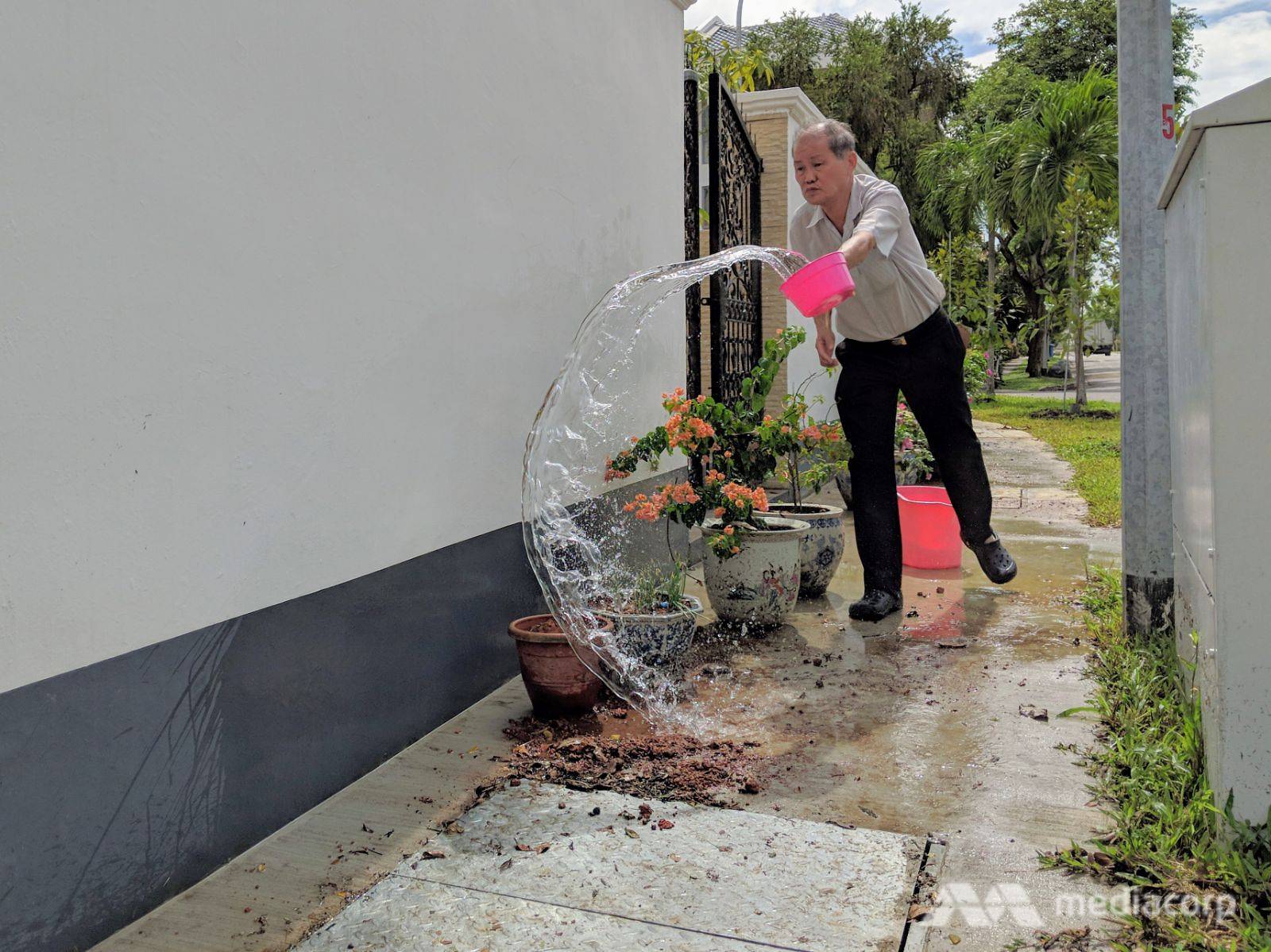
Mr Lim clearing the loose soil left from his fallen potted plants, some of which were submerged in the flash flood. (Photo: Christy Yip)
Mr Lim was in the midst of clearing up debris from fallen potted plants outside his house. He said water at the walkway outside his house came up to 20cm, submerging some of his smaller plants.
Resident Mr Lim showing where the flash flood water levels came up to. (Photo: Christy Yip)
He said that the last time flash floods occurred here was eight to nine years ago.
Businessman Alex Lo said he thought it was just another rainy Monday morning until his wife alerted him that flood waters were gathering outside. “(I was) so worried that the water level would rise further,” his wife Corinne said.
Water coming into the Lo family’s house along Jalan Greja in Bedok. (Photo: Alex Lo)
The Los live in a corner terrace along Jalan Greja, three streets down from Jalan Nipah which was flooded. Drainage in the area is connected to Bedok Canal and is subject to tidal influence, PUB said.
Mr Lo said water levels peaked at around 9.30am, making it impossible for cars to drive through to get to Bedok Road.
“One driver was unfortunately caught in the high waters. He had a tough time climbing out of his car,” recounted Mr Lo. The driver had to call a tow company to take the stalled car away, he added.
A stalled car from the flash flood being towed away. (Photo: Christy Yip)
“I can’t imagine if it was during high tide. The flash flood would have been worse,” said Mr Lo.
A couple of Jalan Greja residents noted that construction works are ongoing at the canal behind their estate. PUB said in a statement on Monday that drainage improvement works are already underway to improve flood protection for the various locations which were hit by flash floods.
Part of Bedok Canal flooding over its banks. (Photo: Alex Lo)
The agency also said the flooding was caused by intense rain and that half of Singapore’s average monthly rainfall in January fell on Kim Chuan Road in Bartley in the span of four hours.
SINGAPORE: A 63-year-old man was arrested for the suspected trafficking of new psychoactive substances on Jan 4 following an early morning raid, the Central Narcotics Bureau said on Monday (Jan 8).
In a news release, the CNB said that about 250g of a substance believed to be tobacco stained with new psychoactive substances were seized.
New psychoactive substances produce the same or similar effects as controlled drugs such as cannabis, cocaine, ecstasy, methamphetamine and heroin.
The chemical compounds added to the drugs are unknown, and could cause serious health problems such as severe intoxication, seizures, renal failure and even death, CNB warned.
Preliminary investigations by the CNB showed that the man would contaminate the tobacco with other substances including thinner and contact cement.
Vegetable matter believed to be tobacco stained with a new psychoactive substance seized on Jan 4, 2018. (Photo: Central Narcotics Bureau)
He would then repack them into plastic packets and disguise them as normal tobacco for sale, CNB said.
A bottle of rubbing alcohol, numerous tobacco labels, a weighing scale, rolling papers and a printer was also found at the hotel room located along Geylang Road where the raid took place.
The Singaporean man and his wife, a foreigner, were staying there.
Investigations into the suspect’s drug activities are ongoing.
“Products such as thinner and contact cement often carry labels warning about possible poisoning from its ingestion, inhalation or consumption,” CNB added.
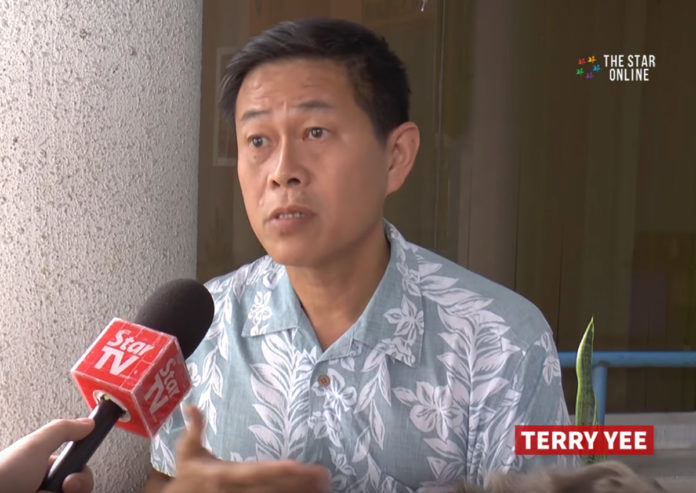
A Singaporean in Malaysia was fined RM8,000 (S$2,700) in default of eight months’ jail for an act of animal cruelty on Monday (Jan 8).
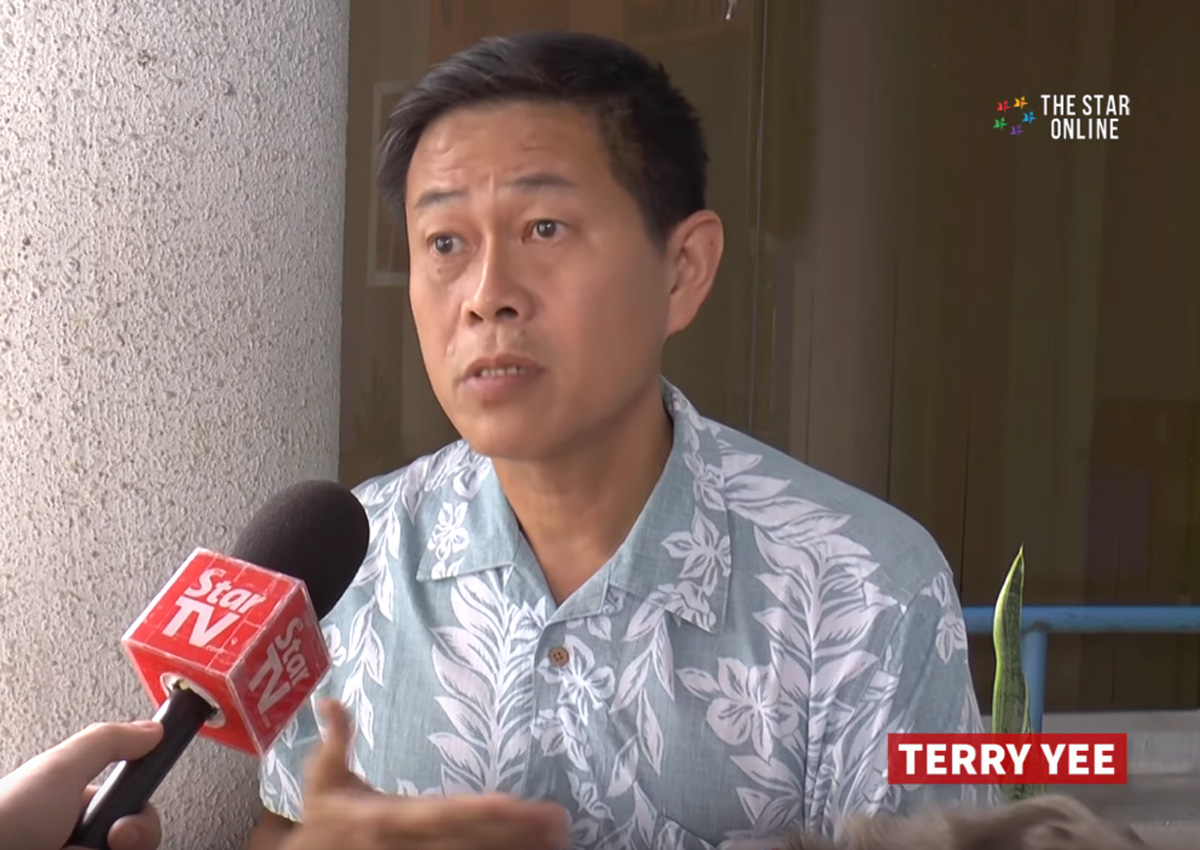
Terry Yee, 58, changed his plea to guilty after the charge was read to him in English at PJ Magistrate’s Court in Selangor, Bernama reported.
In a video clip that went viral on social media last April, Yee was seen repeatedly hitting a guard dog with a helmet at the entrance of a housing estate in Puchong.
The video sparked outrage from netizens after it was shared on Facebook.
Yee apologised for his actions a few days after the incident and told The Star in an interview that he was an animal lover. The man said he had “snapped” after the dog “attacked” him that day.
However, he later claimed trial and pleaded not guilty to animal abuse in August.
According to New Straits Times, Yee’s counsel Jerald Gomez had asked for a lighter sentence for his client, saying that the dog was not seriously injured.
“My client lost his job (in the franchise business) after the video of the incident went viral on social media. He is also remorseful for his act,” Gomez said.
However, the deputy public prosecutor from the Veterinary Services Department said that Yee’s offence was serious and asked the court for a deterrent sentence.
a1admin@sph.com.sg
animal abuse

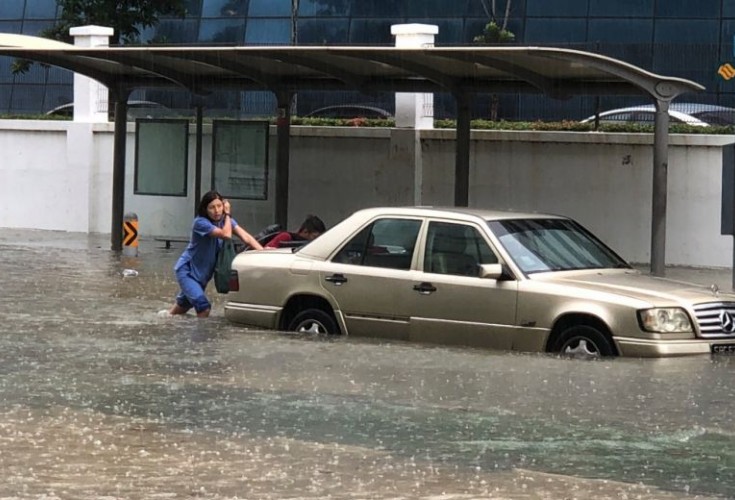
It was a wet and dreary Monday (Jan 8) for many commuters and motorists early this morning, as the heavy rain caused flash floods at several locations in eastern Singapore.
According to a statement from water agency PUB, flooding occurred at these nine areas:
1. Tampines Road (Opp Jalan Teliti)
2. Tampines Ave 12 (Opp Tampines Eco Green)
3. Arumugam Road
4. Sims Ave/Eunos Road 8
5. Sims Ave/Tanjong Katong Road
6. Jalan Nipah
7. Bedok Road/New Upper Changi Road
8. Upper Changi Road/Bedok North Ave 4
9. Bedok Road/Upper Changi Road East
Some of the locations are known to be hotspots, or are subject to tidal influence, such as areas surrounding Upper Changi Road which lead to the Bedok canal.
PUB added that there are already ongoing drainage improvement works to improve flood protection for these locations.
Describing the rainfall on Monday as “intense”, PUB said the wet weather conditions caused by the prevailing Northeast Monsoon was aggravated by the development of a Sumatra squall over the Straits of Malacca which moved eastwards, affecting Singapore.
//afarkas.github.io/lazysizes/lazysizes.min.js
Widespread rain fell over Singapore this morning, with the heaviest rainfall (118.8mm) recorded at the Kim Chuan Road rain gauge between 6.20am to 10.25am. Rainfall at the Kim Chuan Road area peaked between 8am and 8.30am, with an intensity of 56mm per hour.
The 118.8mm of rainfall is about half of Singapore’s average monthly rainfall in January.
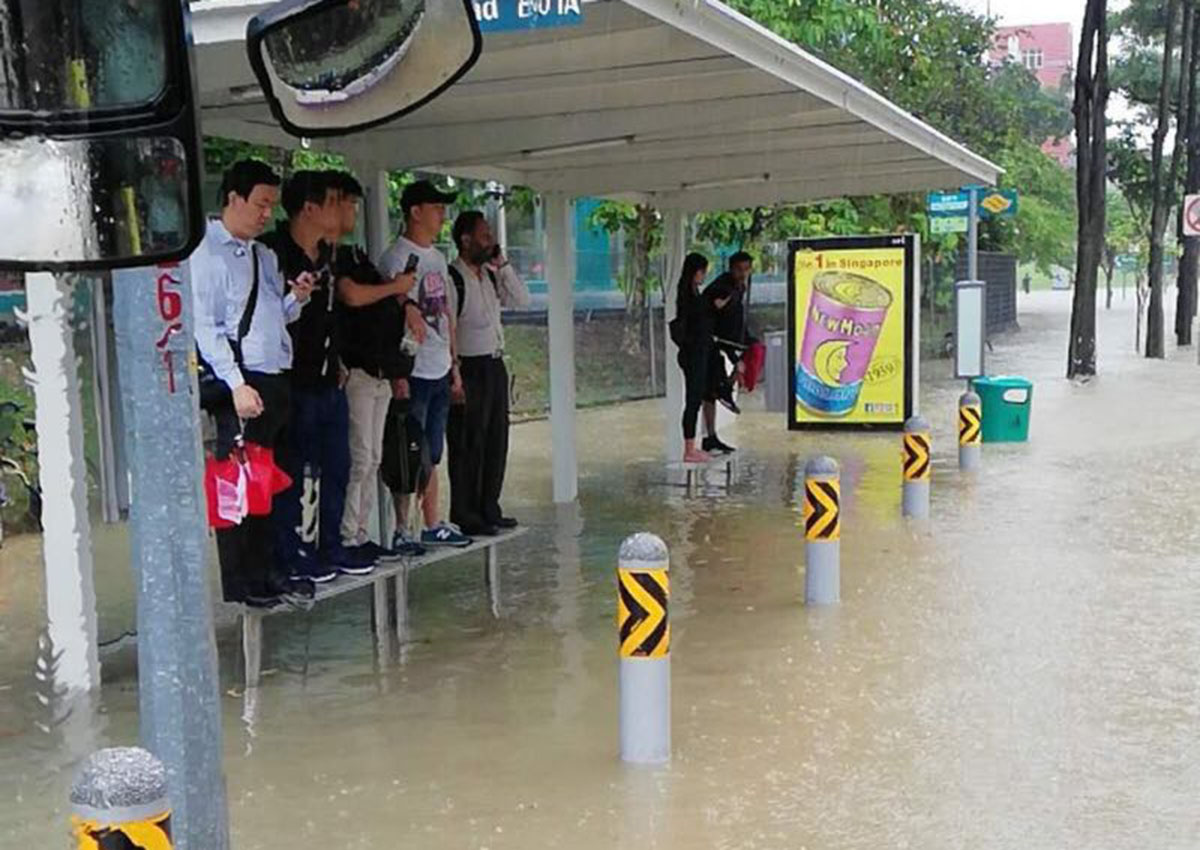
On social media, netizens have been sharing photos and videos of the flooding, including one which showed vehicles stuck in the water. Commuters at a flooded bus stop were also forced to stand on the seats while waiting for their rides.
Another video circulating on mobile messaging platforms showed water pouring down the roof of a HDB lift, although the source of the clip is not known.
candicec@sph.com.sg
SINGAPORE: The cabin door of a Scoot aircraft was damaged at Changi Airport as it was preparing to undergo maintenance.
A Scoot spokesperson told Channel NewsAsia on Monday (Jan 8) that a door on a 787 aircraft “sustained some damage and is currently undergoing recovery”.
According to aviation website Flight Global, the incident happened on Sunday.
The low-cost carrier said no passengers were involved and that no injuries were reported. However, it did not want to confirm when the incident happened, as investigations are underway.
A Facebook post claimed that the aircraft’s brakes were not on, causing it to roll back and hit the aerobridge. (Photo: Jetline Marvel/Facebook)
Photos of the damaged plane door were shared on an aviation Facebook page, Jetline Marvel, at around midnight on Monday.
They show a Scoot aircraft making contact with an aerobridge, with the plane’s door partially dislodged.
The Facebook post claimed that the airplane chocks were removed before the “airtug”, or an airplane tow, was connected.
Wheel chocks are wedges that are placed against the wheels of a vehicle to prevent additional movement.
The post also claimed that the aircraft’s brakes were not engaged, causing it to roll back and “hit” the aerobridge.
Channel NewsAsia has contacted Changi Airport Group for more information.